Preparation is the key to success in any interview. In this post, we’ll explore crucial Painting & Finishing interview questions and equip you with strategies to craft impactful answers. Whether you’re a beginner or a pro, these tips will elevate your preparation.
Questions Asked in Painting & Finishing Interview
Q 1. What surface preparation methods are you familiar with?
Surface preparation is crucial for a long-lasting, high-quality paint job. It’s like prepping the soil before planting – you wouldn’t plant directly into hard, rocky ground, would you? Similarly, painting onto an unprepared surface leads to poor adhesion and premature failure. My experience encompasses several methods, including:
- Cleaning: Removing dirt, grease, and mildew using appropriate cleaners like TSP (trisodium phosphate) for heavily soiled surfaces or a simple solution of water and mild detergent for lighter cleaning. I always ensure complete rinsing and thorough drying afterward.
- Scraping: Removing loose paint, flaking material, and rust using various scrapers, depending on the substrate and the extent of damage. This ensures a clean, sound surface for the new coat.
- Sanding: Smoothing surfaces, feathering edges of repairs, and creating a tooth for better paint adhesion. I use varying grits of sandpaper, starting with coarser grits for aggressive smoothing and gradually moving to finer grits for a smooth finish. For larger areas, I might use power sanders with appropriate dust collection systems.
- Priming: Applying a primer to seal the surface, improve adhesion, and provide a uniform base for the topcoat. Primer selection depends on the substrate (wood, metal, drywall etc.) and the topcoat (oil or water-based). A good primer is like a foundation for a house – it ensures the whole structure stands strong.
- Caulking: Filling gaps and cracks in the substrate to create a smooth, continuous surface. I choose caulk appropriate for the location (interior/exterior, wet/dry areas) and carefully tool it for a neat finish.
The specific method(s) I use depend on the condition of the surface and the type of paint being applied. For example, a new drywall surface might only need priming, while an older, weathered exterior might require extensive scraping, sanding, and priming before painting.
Q 2. Explain the difference between oil-based and water-based paints.
Oil-based and water-based paints differ significantly in their composition, application, and performance characteristics. Think of it like comparing cooking oil to water – they have very different properties.
- Oil-based paints: These paints are typically solvent-based, using mineral spirits or turpentine as thinners. They offer excellent durability, a richer color depth, and better resistance to moisture and abrasion. However, they have a strong odor, take longer to dry, require mineral spirits for cleanup, and are less environmentally friendly due to their VOC (volatile organic compound) content. They’re ideal for trim work, doors and cabinets where durability is key.
- Water-based paints (also known as latex paints): These paints use water as a thinner and are generally easier to clean up with soap and water. They dry faster, have less odor, and are considered more environmentally friendly due to their lower VOC content. While offering good durability, they are generally less durable and less water-resistant than oil-based paints in the long run. These are excellent for walls and ceilings where ease of application and quick drying times are important.
The choice between oil-based and water-based paint depends entirely on the project’s specific requirements and the desired outcome. For instance, I’d choose oil-based paint for exterior trim in a harsh climate but water-based paint for interior walls in a living room.
Q 3. Describe your experience with various paint spraying techniques.
My paint spraying experience spans various techniques, each suited to different situations and desired finishes. Precision is paramount, and the right technique can dramatically impact the final outcome.
- Airless spraying: This is my go-to method for large-scale projects like exterior house painting. It’s efficient, offering a fast and even coat. However, it requires careful control to avoid runs and overspray.
- HVLP (High Volume Low Pressure) spraying: This technique provides a finer finish with less overspray compared to airless spraying, making it suitable for detailed work and finer finishes. It’s slower than airless but offers better control.
- Airbrush spraying: This is used for extremely detailed work, such as intricate designs or artistic painting. It offers the highest level of precision but requires more skill and is less efficient for larger areas.
Choosing the appropriate technique requires understanding the material properties, the surface area, and the desired finish. Each project presents unique challenges; for example, I might use airless for a large fence but opt for HVLP for a fine piece of furniture.
Q 4. How do you ensure proper ventilation during painting projects?
Proper ventilation is non-negotiable for any painting project, especially when working with oil-based paints or strong solvents. These materials release VOCs that can cause headaches, nausea, and other health problems. Think of it as clearing out smoke from a room – you wouldn’t want to stay in a smoky room, right?
- Open windows and doors: This is the simplest way to increase airflow and remove VOCs.
- Use exhaust fans: Exhaust fans effectively draw out fumes from the work area, significantly improving ventilation.
- Work outdoors whenever possible: Painting outdoors eliminates the need for extensive ventilation systems.
- Use respirators: Even with good ventilation, respirators protect against inhaling paint particles and fumes.
The level of ventilation required depends on the size of the project, the type of paint, and the number of people working. I always prioritize worker safety and ensure sufficient ventilation to minimize health risks.
Q 5. What safety precautions do you follow when working with paints and solvents?
Safety is paramount in painting and finishing. I adhere to strict safety protocols throughout every project:
- Eye protection: Safety glasses or goggles are worn at all times to protect against splashes and debris.
- Respiratory protection: Respirators are worn when working with paints, primers, and solvents to prevent inhalation of harmful fumes.
- Skin protection: Gloves are worn to protect the hands from contact with paints and solvents. Long sleeves and appropriate clothing protect the skin from spills and splashes.
- Proper ventilation: As mentioned, maintaining adequate ventilation is crucial to reduce exposure to VOCs.
- Handling of solvents: Solvents are handled in well-ventilated areas, away from ignition sources, and disposed of properly according to local regulations.
- Material Safety Data Sheets (MSDS): I always review the MSDS for all products used to understand their hazards and safety precautions.
Safety is not just a guideline; it’s an ingrained part of my work ethic. Neglecting these precautions can lead to serious health issues or accidents, so I never compromise on safety.
Q 6. How do you handle color matching discrepancies?
Color matching discrepancies can be frustrating, but with the right tools and techniques, they can be effectively addressed.
- Use a color matching system: Professional paint stores offer color matching systems that can accurately replicate a specific color code or sample.
- Multiple coats: Sometimes, subtle color differences can be minimized by applying multiple thin coats of paint.
- Test patches: Before committing to a large area, I always recommend creating test patches in an inconspicuous spot to ensure the color matches the desired shade.
- Adjustments: Minor color adjustments can be made by adding tints or tones to the paint. I always follow the manufacturer’s instructions for making such adjustments.
- Communication: If a significant color discrepancy persists, open communication with the client is vital to find a mutually acceptable solution.
For instance, if a client provides a paint chip, I’ll use the store’s color matching system to create the closest possible match and then do a test patch to make sure we are on the same page.
Q 7. What are your preferred methods for repairing minor surface imperfections?
Repairing minor surface imperfections before painting is essential for a smooth, professional finish. It’s like smoothing out wrinkles before putting on a nice shirt – you want the final product to look flawless.
- Spackling compound: For small holes and cracks, I use spackling compound to fill the imperfections. After it dries, I sand the area smooth.
- Wood filler: For wood surfaces, I use wood filler to repair cracks and holes. I select a filler that matches the wood’s grain and color.
- Caulk: For gaps and cracks between surfaces, caulk provides an effective and durable seal. I carefully tool it for a smooth, even finish.
- Sandpaper: Sandpaper of various grits is used to smooth out repaired areas and create a uniform surface.
- Putty knife: A putty knife is essential for applying spackling compound, wood filler, and caulk neatly.
The specific method used depends on the type of imperfection and the substrate material. I always ensure the repair is thoroughly dry and sanded smooth before applying paint to ensure a seamless, professional finish. For example, small nail holes in drywall are easily filled with spackle, while a larger crack might require a more involved repair.
Q 8. Explain your experience with different types of paint rollers and brushes.
My experience with paint rollers and brushes spans a wide range of types, each suited for specific applications. The choice depends heavily on the surface being painted, the paint type, and the desired finish. For example:
Rollers: I’m proficient with various nap lengths – short naps (1/4” to 3/8”) for smooth surfaces like walls, and longer naps (3/4” to 1 1/2”) for textured surfaces like stucco or masonry. I understand the difference between foam rollers (for smooth, even finishes with low-viscosity paints like latex) and microfiber rollers (better for absorbing and releasing paint, ideal for thicker paints). I also have experience using specialty rollers like those with textured patterns for decorative effects.
Brushes: My brush collection includes natural bristle brushes (hog bristle for oil-based paints, sable for fine detail work) and synthetic bristle brushes (nylon/polyester blends for water-based paints). I know that a higher-quality brush, with its finer tips, offers superior control and creates a smoother finish, especially with trim work and detailed painting. The choice often depends on the paint type and the desired effect; a natural bristle brush, for instance, offers excellent flow with oil-based paints, while synthetic brushes are better suited for water-based paints to prevent damage.
Understanding these nuances helps me choose the right tool for every job, ensuring efficiency and a high-quality finish. For instance, on a recent project with intricate crown molding, I used a high-quality 2-inch angled sash brush for precise application and a flawless finish.
Q 9. How do you determine the appropriate paint sheen for a given surface?
Choosing the appropriate paint sheen involves considering both the surface and the desired aesthetic and durability. Sheen refers to the amount of light reflected from the painted surface, and different sheens offer varying levels of washability and hiding power.
Flat/Matte: Offers excellent hiding power, minimizing imperfections, but is less washable. Best for ceilings and low-traffic areas.
Eggshell: A slightly more durable option than flat, offering a subtle sheen and better washability. Ideal for walls in low-traffic areas.
Satin: More durable and washable than eggshell, with a low-luster sheen. A good choice for trim, doors, and high-traffic areas.
Semi-gloss: Highly durable and washable, with a noticeable sheen. Best for trim, doors, cabinets, and areas prone to moisture like bathrooms and kitchens.
Gloss: The most durable and washable sheen, with a high-luster finish. Primarily used for trim, doors, and areas requiring exceptional durability.
For instance, I’d choose a satin finish for a child’s bedroom, balancing durability with a less stark look than semi-gloss. For a kitchen, semi-gloss or even gloss would be preferred due to its washability and resistance to grease and moisture.
Q 10. Describe your process for estimating paint quantities for a project.
Accurately estimating paint quantities is crucial for avoiding costly overages and frustrating shortages. My process involves a series of steps:
Measure the surface area: I meticulously measure the length and width of all surfaces to be painted, subtracting areas like windows and doors.
Calculate the total square footage: I then calculate the total square footage by multiplying length and width for each surface and summing the results.
Check the paint can for coverage: Paint manufacturers typically provide coverage information (e.g., square feet per gallon) on the can. I carefully review this information, considering the type of paint and the number of coats needed (usually two coats for optimal coverage).
Add a buffer for waste and unforeseen circumstances: I always add a 10-15% buffer to my calculations to account for wasted paint, spills, and unexpected areas needing extra attention.
Adjust for texture and porosity: Highly textured surfaces or porous materials (such as unprimed wood) might require more paint than smooth, non-porous surfaces. I factor this into my calculations.
For example, if I’m painting a room with 300 square feet of wall space, requiring two coats of paint with a coverage of 350 square feet per gallon, I’d calculate as follows: (300 sq ft * 2 coats) / 350 sq ft/gallon = approximately 1.7 gallons. Adding a 15% buffer, I’d buy around 2 gallons to ensure I have enough paint.
Q 11. How do you manage multiple painting projects simultaneously?
Managing multiple painting projects simultaneously requires meticulous planning and organization. My strategy involves:
Detailed scheduling: I create a detailed schedule outlining each project’s timeline, including start and end dates, and allocate specific time slots for each project, minimizing overlap and maximizing efficiency.
Prioritization: I prioritize projects based on deadlines, urgency, and client requirements. This ensures that time-sensitive projects are completed on time.
Resource allocation: I carefully manage the allocation of resources, including paint, tools, and personnel, to ensure each project has the necessary materials and manpower at the right time.
Communication: I maintain clear communication with clients, informing them of progress, potential delays, and any changes to the schedule. This helps manage expectations and ensures client satisfaction.
Teamwork: When working with a team, I assign specific tasks and responsibilities, ensuring clear communication and collaboration among team members.
For instance, I might dedicate mornings to a large commercial project and afternoons to smaller residential projects, using a project management app to track progress and deadlines for each.
Q 12. What is your experience with different types of painting equipment?
My experience encompasses a wide range of painting equipment beyond rollers and brushes. I’m proficient in using:
Spray guns (HVLP and airless): I have extensive experience with both HVLP (high-volume, low-pressure) and airless spray guns, understanding their strengths and limitations for different applications and paint types. HVLP is ideal for fine finishing, while airless is better for larger areas and faster application.
Paint sprayers (airless, electrostatic): I’m comfortable working with various paint sprayers, understanding the importance of proper preparation and cleanup to ensure optimal performance. Electrostatic sprayers are particularly useful for even coating, especially on intricate surfaces.
Power tools: I use various power tools for surface preparation, including sanders (orbital, belt), scrapers, and caulking guns. I understand the appropriate techniques for each tool to achieve the desired surface smoothness and ensure a quality finish.
Scaffolding and lift equipment: Safety is paramount, so I’m trained in the safe and proper use of scaffolding and lift equipment for high-reach painting projects.
Understanding the capabilities and limitations of each piece of equipment allows me to select the optimal tools for each project, boosting efficiency and minimizing errors.
Q 13. How do you troubleshoot common painting problems?
Troubleshooting painting problems is a crucial aspect of my work. I approach these challenges systematically:
Identify the problem: I carefully examine the issue, noting its location, appearance, and any contributing factors (e.g., type of paint, surface, weather conditions).
Determine the cause: Based on my observation, I determine the likely cause of the problem. Common problems include improper surface preparation, incorrect paint selection, or application errors.
Develop a solution: I then develop a solution tailored to the specific problem. This might involve re-preparing the surface, using a different paint, adjusting the application technique, or applying a specialized product like a primer or bonding agent.
Test the solution: Before applying the solution across the entire surface, I often test it on a small, inconspicuous area to confirm its effectiveness and prevent further damage.
Document the solution: I document the problem, its cause, the solution implemented, and the outcome for future reference.
For instance, if I encounter lap marks (visible streaks where wet paint overlaps dry paint), I would investigate the paint application technique, potentially thinning the paint slightly or adjusting my speed and technique to prevent this.
Q 14. Describe your experience with different types of finishes (e.g., varnish, lacquer, polyurethane).
My experience with different types of finishes extends beyond paint. I’m skilled in applying and finishing with:
Varnish: I use varnish to protect and enhance the natural beauty of wood, understanding the differences between oil-based and water-based varnishes, and selecting the appropriate sheen (gloss, satin, semi-gloss) for the desired aesthetic. Oil-based varnishes provide excellent durability and depth, while water-based options are lower in VOCs (Volatile Organic Compounds).
Lacquer: Lacquer offers a fast-drying, hard finish, often used for furniture and other applications requiring a durable, smooth surface. I’m proficient in spray application, understanding the importance of proper ventilation and safety precautions.
Polyurethane: I use polyurethane to protect wood and other surfaces from moisture, scratches, and wear, knowing its various formulations (oil-based, water-based, and conversion varnish) and selecting the appropriate one for the project. Polyurethane offers superior durability and water resistance.
The choice of finish depends on the specific needs of the project and the desired properties like durability, sheen, and ease of application. I always take into account factors like the substrate, environment, and the desired longevity of the finish.
Q 15. What is your understanding of VOC regulations?
VOC regulations, or Volatile Organic Compound regulations, are government-mandated limits on the amount of volatile organic compounds that can be released into the atmosphere during the application of paints and coatings. VOCs are chemicals that readily evaporate at room temperature and contribute significantly to air pollution, smog, and respiratory problems. These regulations vary by region and are constantly evolving to become stricter. Think of it like this: every time you open a paint can, you’re releasing some VOCs. Regulations aim to reduce the total amount released.
My understanding encompasses the specific limits for different paint types, the testing procedures to ensure compliance, and the implications for paint selection and application methods. For instance, low-VOC or zero-VOC paints are increasingly common due to these regulations, but they may have slightly different application properties or require specialized techniques for optimal results.
Career Expert Tips:
- Ace those interviews! Prepare effectively by reviewing the Top 50 Most Common Interview Questions on ResumeGemini.
- Navigate your job search with confidence! Explore a wide range of Career Tips on ResumeGemini. Learn about common challenges and recommendations to overcome them.
- Craft the perfect resume! Master the Art of Resume Writing with ResumeGemini’s guide. Showcase your unique qualifications and achievements effectively.
- Don’t miss out on holiday savings! Build your dream resume with ResumeGemini’s ATS optimized templates.
Q 16. How do you ensure a smooth and even finish on a variety of surfaces?
Achieving a smooth and even finish across diverse surfaces requires a multi-faceted approach. It begins with proper surface preparation. This includes cleaning the surface to remove dust, grease, or old paint, filling any imperfections with appropriate fillers, and sanding to create a uniform texture. The type of sanding (fine vs. coarse) depends on the surface and the subsequent finish. For example, a very smooth finish like lacquer might require multiple sanding stages with increasingly finer grit sandpaper.
Next, the choice of paint and application method are critical. For instance, a roller might work well for large, flat surfaces, but a brush provides more control over intricate details. Airless spray systems are efficient for large-scale projects, but require careful control to avoid runs or drips. Finally, multiple thin coats consistently applied are far superior to one thick coat, giving the paint time to fully dry and level between applications. Think of it like layering a cake – many thin layers create a smooth surface, while one thick layer is prone to unevenness.
Q 17. What are the different stages of paint application?
The stages of paint application can be broadly categorized as follows:
- Surface Preparation: This crucial initial step involves cleaning, repairing, and priming the surface to ensure optimal adhesion and finish. This may include sanding, filling, caulking, and the application of a primer appropriate for the surface and topcoat.
- Primer Application: The primer creates a uniform surface for the topcoat to adhere to. It helps to seal the substrate and improve the topcoat’s appearance and durability. Sometimes multiple primer coats are needed for porous surfaces.
- Topcoat Application: This involves applying the chosen paint, usually in multiple thin coats to build up the desired film thickness. Each coat should be allowed to dry completely before applying the next.
- Finishing: This stage might include light sanding between coats (for certain finishes), applying a clear coat for added protection and shine, or simply allowing the final coat to cure completely.
Throughout the entire process, attention to detail and proper techniques are crucial to achieving a professional-quality finish.
Q 18. Describe your experience with high-pressure spraying.
I have extensive experience with high-pressure spraying, employing both airless and HVLP (High Volume Low Pressure) systems. Airless sprayers excel at quickly covering large areas, making them ideal for exterior projects and large-scale industrial applications. However, they require careful control to avoid overspray and runs. HVLP systems offer more control and reduce overspray but are slower.
My expertise includes choosing the right nozzle size and pressure settings for different paint types and substrate materials. I understand the importance of proper safety precautions, including wearing appropriate personal protective equipment (PPE) and maintaining a safe working distance from the spray nozzle. I’ve worked on various projects, ranging from residential repaints to commercial building projects, where the efficient and precise application of paint using high-pressure spraying was paramount.
Q 19. How do you clean and maintain painting equipment?
Cleaning and maintaining painting equipment is paramount for both efficiency and longevity. For brushes, thorough cleaning with appropriate solvents (e.g., mineral spirits for oil-based paints, water for water-based paints) is crucial. For rollers, I typically clean the sleeve or cover separately and rinse the roller cage thoroughly. Airless sprayers require a thorough flushing with the appropriate solvent, sometimes requiring multiple flushes to ensure complete removal of paint residue. The sprayer’s pump needs to be lubricated as recommended by the manufacturer.
I also regularly inspect my equipment for damage or wear and tear, promptly replacing worn-out parts. Proper storage, such as keeping brushes in airtight containers with a brush conditioner for oil-based brushes, extends the lifespan of my tools significantly, reducing both costs and wasted materials. A well-maintained toolbox contributes to a higher-quality job and saves time and effort in the long run.
Q 20. What is your experience with automotive painting?
My automotive painting experience encompasses preparation, priming, application of basecoats and clear coats, and final polishing and buffing. I understand the importance of achieving a flawless, mirror-like finish, and the unique demands of automotive paints, which are often more delicate and require specialized application techniques and environmental controls (e.g., dust-free spray booths). This includes knowledge of color matching, different types of clear coats (single-stage vs. multi-stage), and the specific requirements for different car makes and models. I have experience in both spot repairs and full vehicle repaints.
Q 21. Describe your knowledge of different paint types and their applications (e.g., epoxy, acrylic, latex).
Different paint types offer unique properties and are suited to different applications.
- Epoxy paints are known for their exceptional durability and chemical resistance, making them ideal for floors, industrial settings, and areas requiring high protection. They often require specific surface preparation and curing times.
- Acrylic paints are versatile, water-based paints offering good adhesion, durability, and ease of cleanup. They’re popular for interior and exterior walls, trim, and furniture. They come in various sheens and are available as both low-VOC and conventional formulas.
- Latex paints are another type of water-based paint, known for their ease of application, breathability, and relatively low VOC content. Latex paints are a frequent choice for interior walls due to their ease of cleaning and relative lack of strong odor. They’re also used in some exterior applications, but some formulations aren’t as durable as acrylics in harsh weather conditions.
Choosing the right paint type is essential for achieving a long-lasting, high-quality finish tailored to the specific project requirements. For example, using latex on a floor subjected to heavy traffic and chemicals would be inappropriate. A more durable epoxy or urethane would be much better suited.
Q 22. How do you deal with difficult customers or unexpected project changes?
Handling difficult customers requires a blend of empathy, clear communication, and professional problem-solving. I start by actively listening to their concerns, validating their feelings, and then clearly explaining the project scope and my approach. If unexpected changes arise, I immediately communicate the impact on the timeline and budget, offering alternative solutions while maintaining transparency. For example, if a customer requests a significant design change mid-project, I’d calmly explain the extra time and materials needed, providing a revised estimate. I always aim to find a mutually agreeable solution, keeping the customer informed every step of the way. This proactive approach builds trust and minimizes conflict.
Q 23. What are your skills in managing budgets and materials?
Budget and material management is crucial in painting. My experience includes detailed cost estimations based on project scope, material requirements, and labor costs. I meticulously track expenses, comparing actual costs against the initial budget. I leverage my knowledge of different paint types and brands to select the most cost-effective options without compromising quality. For instance, I might choose a higher-quality primer for better adhesion on challenging surfaces, saving on paint costs in the long run. I also implement strategies to minimize material waste, such as precise measuring and careful application techniques. I regularly review progress against the budget to identify any potential overruns and proactively adjust the plan if needed.
Q 24. Explain your experience with different types of surface preparation (e.g., sanding, priming).
Surface preparation is the foundation of a successful paint job. My experience encompasses various techniques, including sanding, scraping, and priming. Sanding involves removing imperfections and creating a smooth surface for better paint adhesion. I use different grit levels, starting with coarser grits to remove significant flaws and gradually moving to finer grits for a smooth finish. Scraping removes loose paint, old wallpaper, or other debris. Priming is crucial for sealing the surface, improving adhesion, and ensuring even color distribution. I select primers appropriate for the substrate; for example, an oil-based primer for porous surfaces like wood or a stain-blocking primer for surfaces with existing stains. I always test a small area first to check for compatibility and ensure proper coverage.
Q 25. How do you determine the correct drying time for various paints and finishes?
Determining the correct drying time is critical for achieving a durable and high-quality finish. Drying time depends on several factors: paint type, ambient temperature, humidity, and film thickness. I always consult the manufacturer’s instructions on the paint can for the recommended drying times. For example, oil-based paints generally require longer drying times than water-based paints. In hot, dry conditions, paints may dry faster, while high humidity can slow down the drying process. I allow sufficient time between coats to ensure proper adhesion and prevent problems like cracking or peeling. I also monitor the weather conditions to adjust the schedule accordingly, delaying work if needed to avoid issues.
Q 26. What is your experience with using specialized tools such as airless sprayers?
I have extensive experience using airless sprayers for large-scale painting projects. I’m proficient in setting up the sprayer, adjusting the pressure and nozzle size to achieve the desired finish, and maintaining the equipment to ensure optimal performance. Airless sprayers offer efficiency and a smooth finish, especially on large surfaces. However, they require careful handling to prevent overspray and ensure uniform coverage. I’m skilled in techniques such as fanning and overlapping passes for consistent results. I also understand the importance of safety precautions when using airless sprayers, including wearing appropriate protective gear like respirators and eye protection.
Q 27. How do you maintain quality control throughout the painting process?
Maintaining quality control is a continuous process throughout the painting project. I start by carefully inspecting the surface before beginning any work. During the painting process, I regularly check for even coverage, drips, runs, or other imperfections. I use quality control checklists to ensure that all steps are followed according to industry standards. Between coats, I carefully inspect the dried surface for any flaws before applying the next coat. At the end of the project, I conduct a final inspection to ensure the customer’s satisfaction. Any issues are addressed promptly and professionally. This methodical approach ensures a consistent, high-quality outcome.
Q 28. Describe your experience with working at heights and using safety equipment.
Working at heights is a common aspect of many painting projects. I’m experienced and comfortable working safely from ladders, scaffolding, and lifts. I strictly adhere to safety regulations, ensuring that all safety equipment, such as harnesses, lifelines, and fall protection systems, is properly inspected and used correctly. Before starting any work at heights, I assess the work area for potential hazards and plan the work to minimize risks. Regular training and adherence to safety protocols are crucial for preventing accidents. I always prioritize safety, ensuring both my own well-being and that of my team.
Key Topics to Learn for Your Painting & Finishing Interview
- Surface Preparation: Understanding different surface types (wood, metal, drywall), appropriate cleaning methods, and the importance of proper priming for optimal paint adhesion and finish durability. Consider practical applications like choosing the right primer for various substrates and dealing with challenging surfaces like rusted metal or porous wood.
- Paint Selection & Application: Knowledge of various paint types (latex, oil-based, epoxy), their properties, and suitability for different projects. Mastering application techniques like brushing, rolling, spraying, and understanding the impact of factors like temperature and humidity on the outcome. Explore techniques for achieving different finishes (gloss, matte, satin).
- Color Theory & Matching: Understanding color mixing, color schemes, and the impact of light on color perception. Practical application involves matching existing colors, creating custom blends, and advising clients on color choices. This includes theoretical concepts like the color wheel and how colors interact.
- Finishing Techniques: Exploring various finishing techniques beyond painting, such as staining, varnishing, lacquering, and applying specialized coatings for protection and aesthetic enhancement. Understand the different properties and applications of each finish, and how to achieve a professional, high-quality result.
- Health & Safety: Understanding and adhering to safety regulations and best practices related to handling paints, solvents, and other finishing materials. This includes proper ventilation, personal protective equipment (PPE) usage, and waste disposal procedures.
- Troubleshooting & Problem-Solving: Ability to identify and address common issues like paint defects (e.g., sagging, blistering, cracking), uneven application, and color inconsistencies. This includes understanding the root causes of these problems and implementing corrective measures.
Next Steps
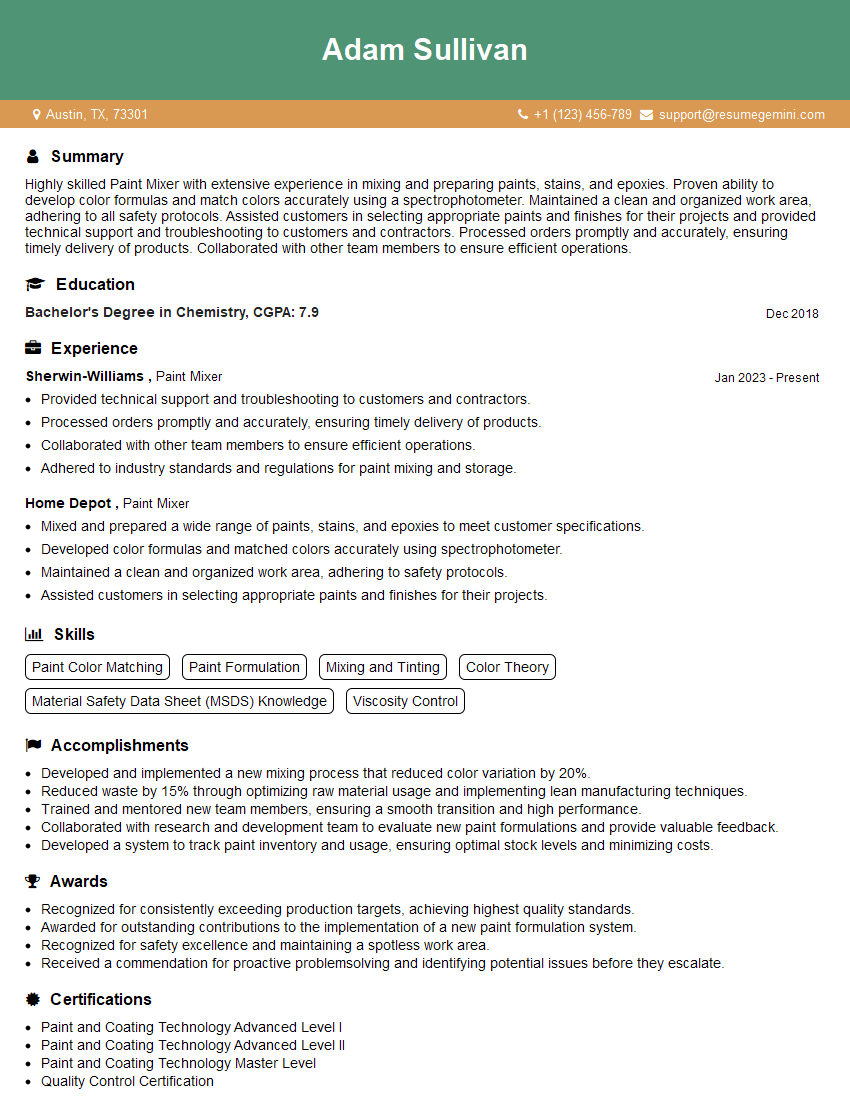
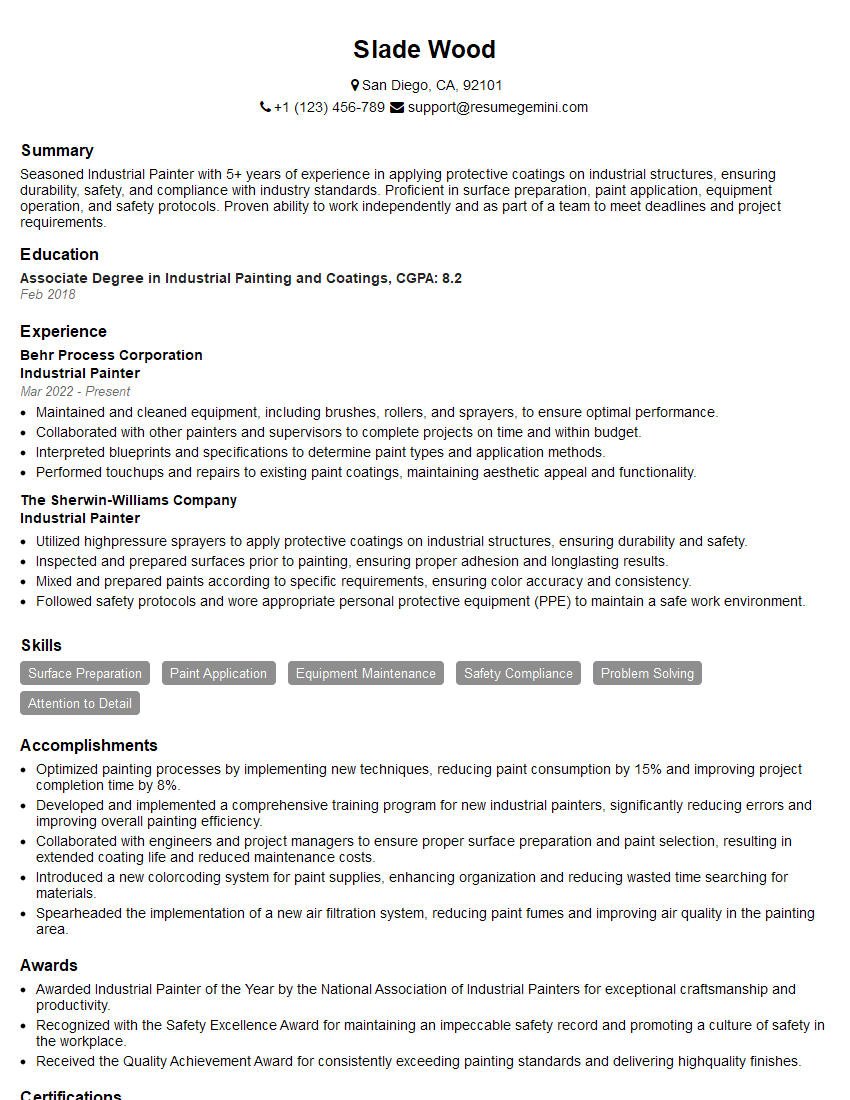
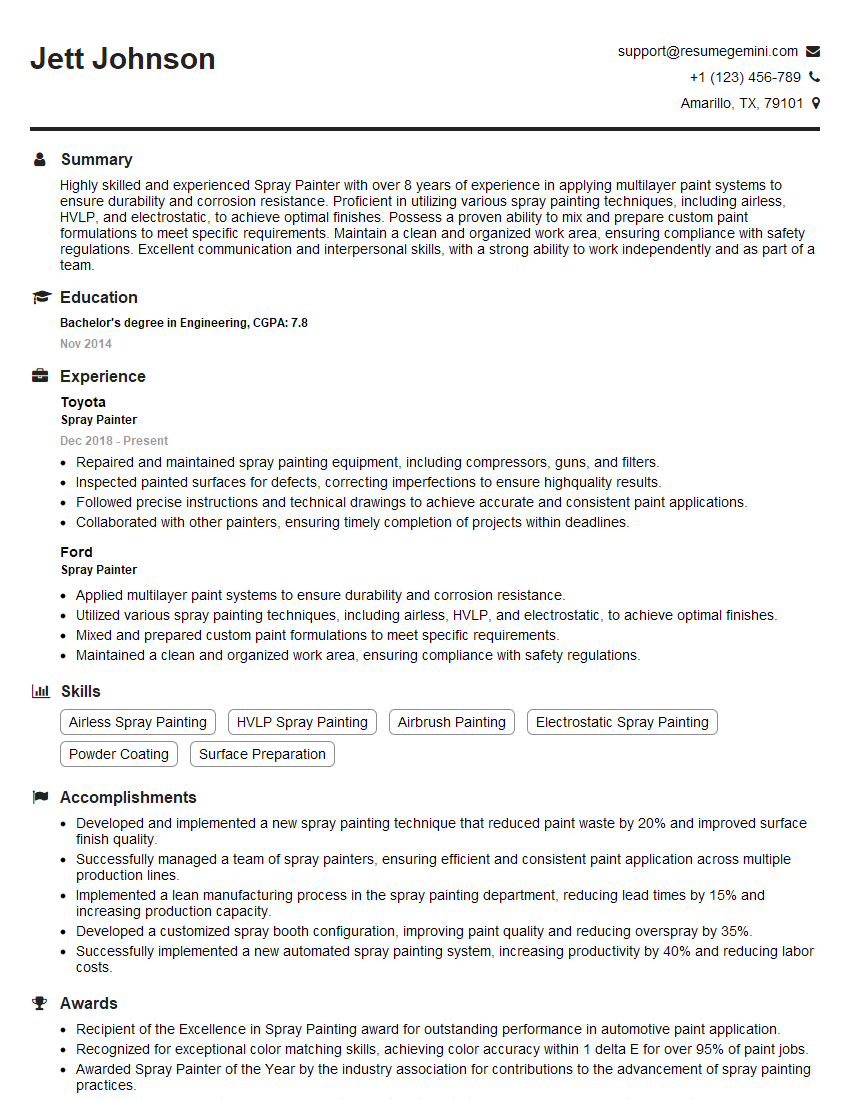
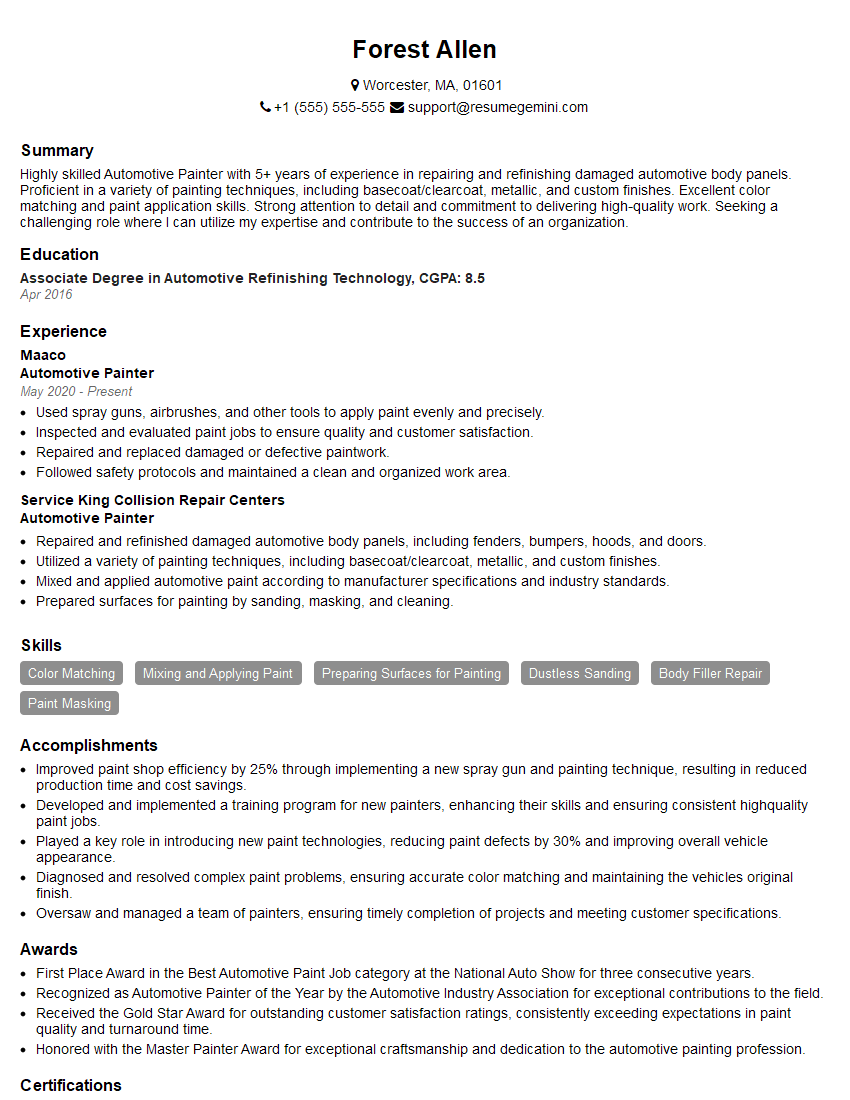
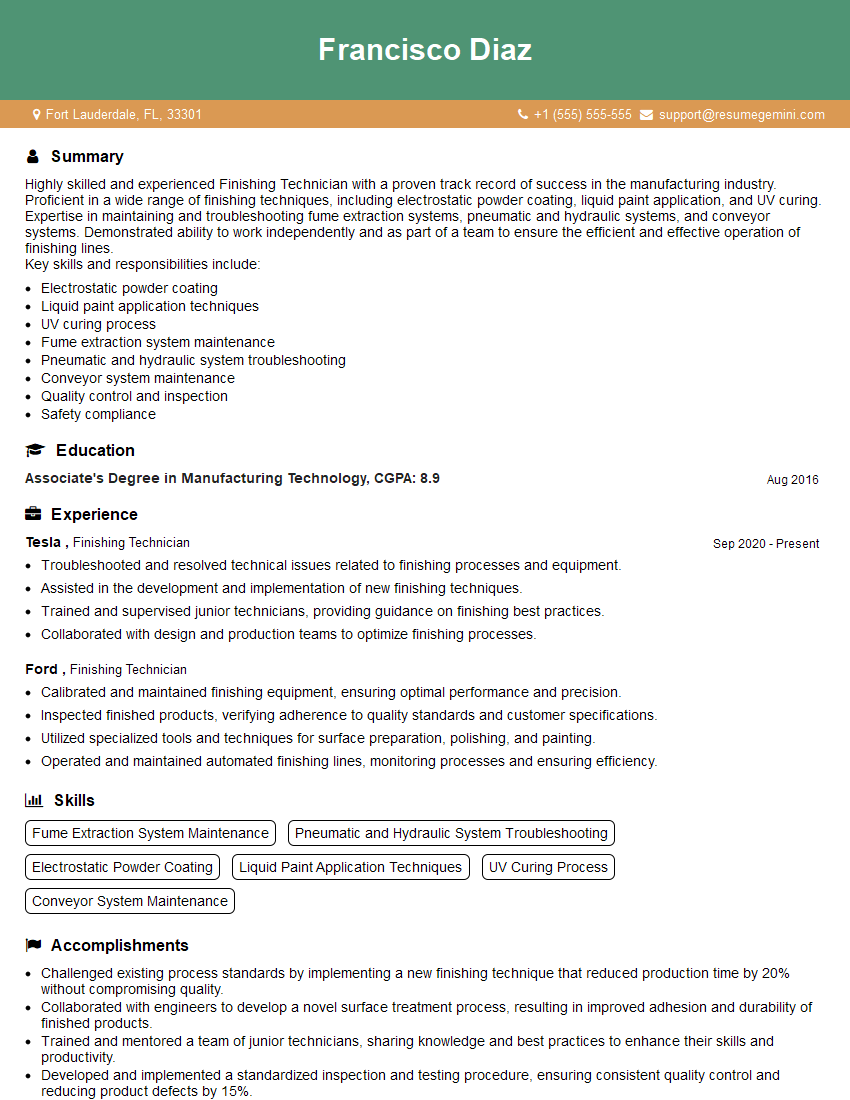
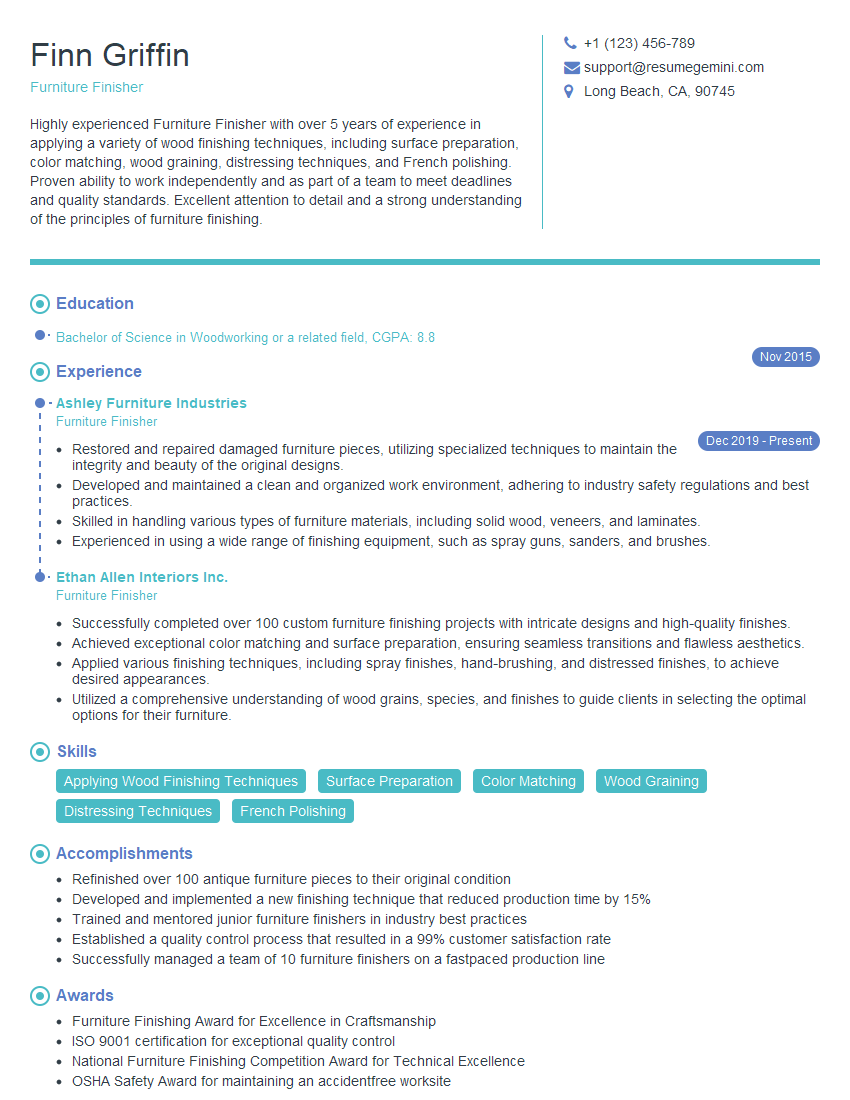
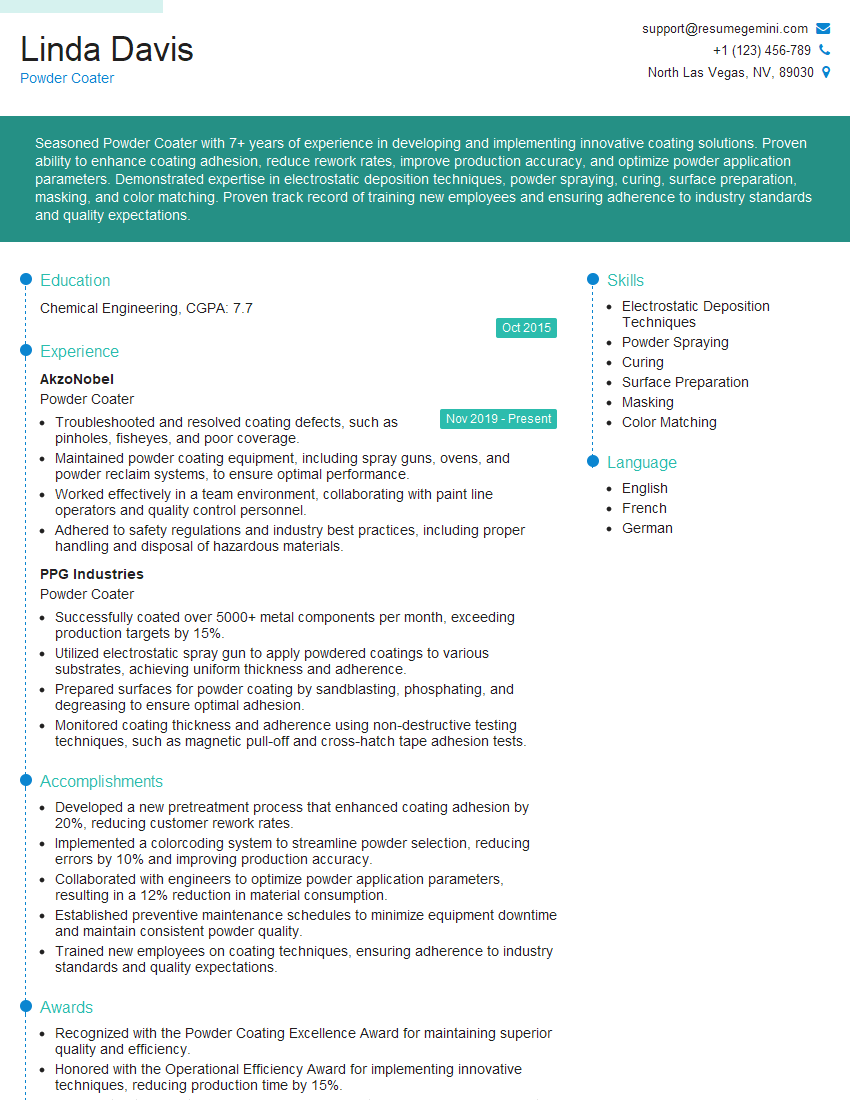
Mastering Painting & Finishing opens doors to diverse and rewarding career opportunities, offering potential for specialization and growth within the industry. A strong resume is crucial for showcasing your skills and experience to potential employers. Building an ATS-friendly resume significantly increases your chances of getting noticed by recruiters. To craft a professional and impactful resume, leverage the power of ResumeGemini. ResumeGemini provides a user-friendly platform and offers examples of resumes tailored to the Painting & Finishing field to help you present yourself effectively. Use this resource to create a resume that highlights your expertise and sets you apart from the competition.

Explore more articles
Users Rating of Our Blogs
Share Your Experience
We value your feedback! Please rate our content and share your thoughts (optional).
What Readers Say About Our Blog
Very informative content, great job.
good