Cracking a skill-specific interview, like one for Understanding of freight brokerage, requires understanding the nuances of the role. In this blog, we present the questions you’re most likely to encounter, along with insights into how to answer them effectively. Let’s ensure you’re ready to make a strong impression.
Questions Asked in Understanding of freight brokerage Interview
Q 1. Explain the difference between a freight broker and a 3PL.
While both freight brokers and 3PLs (Third-Party Logistics providers) manage the movement of goods, their roles differ significantly. A freight broker acts as an intermediary, connecting shippers (those who need goods transported) with carriers (trucking companies, railroads, etc.). They don’t own the transportation assets; they arrange the transportation on behalf of the shipper. Think of them as transportation matchmakers. A 3PL, on the other hand, offers a broader range of services. They can handle freight brokerage, but also warehousing, inventory management, order fulfillment, and other supply chain functions. They often own or manage their own transportation assets, offering more control and potentially greater cost savings for large-scale operations. In essence, a freight broker focuses solely on transportation procurement, while a 3PL provides a more comprehensive, integrated logistics solution.
Analogy: Imagine you need to move furniture across the country. A freight broker would find a trucking company to do it for you. A 3PL would not only find the truck but might also offer packing services, storage at a warehouse along the way, and even insurance.
Q 2. Describe your experience with various transportation modes (truckload, LTL, intermodal).
My experience encompasses all major transportation modes. With truckload (TL) shipments, I’ve managed high-volume, single-shipper loads, focusing on securing the most efficient routes and cost-effective carriers. For less-than-truckload (LTL) shipments, I’ve expertly consolidated smaller shipments to optimize space and reduce costs for my clients, negotiating rates with LTL carriers based on weight, dimensions, and distance. My experience with intermodal transportation involves coordinating the seamless transfer of goods between different modes, typically truck and rail, leveraging the cost-effectiveness of rail for long distances and the flexibility of trucks for shorter hauls. I’ve successfully streamlined intermodal processes, minimizing transit times and ensuring timely delivery. I also have experience in optimizing transportation based on shipment characteristics and using different modes when it was beneficial.
Example: For a recent client moving oversized equipment, using a combination of rail for long-distance transport and specialized trucking for the final leg proved significantly more cost-effective than using solely over-the-road trucking.
Q 3. How do you find and negotiate rates with carriers?
Finding and negotiating rates involves a multi-faceted approach. I utilize a combination of established carrier relationships, online rate platforms, and direct outreach. My network of trusted carriers provides me with competitive quotes quickly. Online platforms offer broader reach and market visibility allowing for comparison shopping. Direct outreach to carriers is valuable for unique or complex shipments requiring specialized equipment or services. Negotiation is key—I leverage my understanding of market dynamics, fuel surcharges, accessorial charges, and seasonal fluctuations to secure the best possible rates for my clients, always striving to balance cost and reliable service.
Example: For a time-sensitive shipment, I might prioritize a carrier known for on-time performance, even if their initial rate is slightly higher, because potential penalties from missed deadlines outweigh the extra cost.
Q 4. What software or tools do you use for freight management?
I use a variety of software and tools for freight management. My primary system is a Transportation Management System (TMS) which allows me to track shipments in real time, manage documents (BOLs, PODs), generate reports, and communicate with carriers efficiently. I use online rate platforms to access market rates, and a Customer Relationship Management (CRM) system to organize client information and maintain communications. I also use specialized mapping and route optimization software to plan efficient delivery routes and predict potential delays. Finally, I leverage communication tools like email and instant messaging to maintain constant contact with shippers and carriers throughout the shipping process.
Q 5. Explain your process for managing customer expectations.
Managing customer expectations begins with clear and proactive communication. Before a shipment is even booked, I provide detailed quotes that clearly outline transit times, potential delays, and all associated costs. I regularly update clients on the shipment’s status, using email, phone calls, and occasionally text messages to ensure they’re informed of any changes. For any unexpected delays, I communicate promptly and transparently, offering viable solutions and alternative plans. Building trust through open and honest communication is paramount. I actively listen to client concerns and address them promptly, turning potential complaints into opportunities for improved service.
Q 6. How do you handle unexpected delays or disruptions in the supply chain?
Handling unexpected delays or disruptions requires a proactive and resourceful approach. My first step is to identify the root cause of the delay (weather, equipment failure, traffic congestion, etc.). Once the cause is identified, I assess the impact on the shipment schedule and communicate the delay to the client. Then I work collaboratively with the carrier to find a solution, whether that’s rerouting, securing alternative transportation, or negotiating a revised delivery timeline. I monitor the situation closely and provide consistent updates to the client, keeping them informed every step of the way. Documentation of the disruption and the corrective actions taken is crucial for accountability and future reference.
Example: During a severe snowstorm, I rerouted a shipment to avoid a major highway closure, coordinating with the carrier to use a less-traveled route and successfully delivering the goods albeit slightly behind schedule.
Q 7. Describe your experience with load planning and optimization.
Load planning and optimization are critical for efficiency and cost savings. I consider various factors like shipment dimensions, weight, delivery locations, and available carrier capacity. I use software tools to analyze different loading configurations and route options to maximize space utilization and minimize transportation costs. Consolidating shipments whenever possible is a key strategy. For example, grouping LTL shipments to fill a truck fully reduces costs significantly. Effective load planning also involves considering potential risks such as weight restrictions on certain roads or bridges, and ensuring compliance with all relevant regulations.
Example: By carefully planning the loading sequence of several pallets for a single truckload shipment, I was able to reduce the number of trucks needed, saving the client significant transportation costs.
Q 8. How do you ensure compliance with FMCSA regulations?
Ensuring FMCSA compliance is paramount in freight brokerage. It’s not just about avoiding penalties; it’s about maintaining ethical operations and ensuring the safety of drivers and cargo. My approach is multifaceted and proactive.
- Thorough Due Diligence on Carriers: Before engaging any carrier, I meticulously verify their USDOT number, Safety Fitness Electronic Records (SAFER) profile, and insurance coverage. This involves checking for any violations, accidents, or safety concerns. For example, I recently identified a carrier with a history of speeding violations, which would have put a client’s shipment at risk. By rejecting them, we preserved the shipment’s integrity and our client’s reputation.
- Maintaining Accurate Records: I meticulously maintain detailed records of all brokerage activities, including contracts, invoices, bills of lading, and communications. This makes it easier to track shipments, manage compliance, and respond to audits. For instance, I use a transportation management system (TMS) that automatically generates reports for easy access and analysis.
- Staying Updated on Regulations: The FMCSA regulations are constantly evolving, so staying informed is crucial. I subscribe to industry publications, attend webinars, and actively engage in professional development to keep my knowledge current. This allows me to proactively adapt our processes to maintain compliance.
- Driver Hours of Service (HOS) Compliance: I strictly adhere to HOS rules, ensuring drivers are not exceeding their legal driving limits. This is done by reviewing driver logs and communicating effectively with carriers about reasonable delivery schedules.
Ultimately, compliance isn’t a checklist but a continuous process. It’s about building a culture of safety and responsibility within the brokerage operations.
Q 9. What is your experience with freight claims and disputes?
Handling freight claims and disputes is a common aspect of brokerage. My experience involves a structured approach that minimizes losses and maintains positive relationships.
- Prompt Investigation: Upon receiving a claim, I immediately initiate a thorough investigation, gathering all relevant documentation such as bills of lading, proof of delivery, and photos of damaged goods. I often start by communicating directly with the carrier and the shipper to understand the situation from all sides.
- Negotiation and Mediation: I utilize strong negotiation skills to reach a fair settlement with the responsible party (carrier or shipper) while advocating for my client’s best interests. Sometimes, mediation is necessary, and I’m experienced in using neutral third-party services to resolve disputes amicably.
- Documentation and Legal Counsel (If Necessary): Every step of the claim process is meticulously documented. If a claim cannot be resolved through negotiation, I’m prepared to utilize legal counsel to protect my client’s interests and enforce their rights.
For example, I once successfully negotiated a full reimbursement for a client whose shipment was damaged due to improper handling. The key was presenting compelling evidence quickly and demonstrating a clear understanding of the applicable regulations and liability.
Q 10. How do you build and maintain relationships with carriers?
Building and maintaining strong carrier relationships is vital for a successful freight brokerage. Think of it like cultivating a garden; it requires consistent nurturing and attention.
- Fair and Timely Payments: Prompt payment is crucial for trust. I ensure carriers are paid according to agreed-upon terms and promptly address any discrepancies.
- Open Communication: Maintaining open and honest communication is essential. I actively engage with carriers, providing updates on shipments, addressing concerns, and offering feedback.
- Consistent Volume: Providing consistent shipment volume demonstrates loyalty and reliability, encouraging carriers to prioritize our business.
- Mutual Respect: Treating carriers with respect and professionalism fosters a mutually beneficial relationship. This includes recognizing their hard work and valuing their expertise.
- Technology: Utilizing a robust TMS helps streamline communication, payment processes, and document sharing, improving efficiency and transparency in our interactions with carriers.
I often build relationships with carriers based on mutual respect and reliability, leading to long-term partnerships and access to preferred rates and capacity.
Q 11. How do you prioritize shipments based on urgency and deadlines?
Prioritizing shipments is crucial, especially in time-sensitive industries. My approach balances urgency with efficiency.
- Categorization: I categorize shipments based on delivery deadlines, service requirements (e.g., expedited, standard), and value of goods. This allows me to quickly identify high-priority shipments.
- Communication and Proactive Planning: I communicate proactively with carriers about deadlines and any potential delays. This ensures they’re aware of the urgency and can allocate resources accordingly.
- Real-time Tracking: I use real-time tracking systems to monitor the progress of shipments, allowing me to intervene quickly if any issues arise. This proactive monitoring often helps to avoid significant delays.
- Risk Assessment: I assess the risk associated with each shipment, considering factors like weather conditions, traffic patterns, and carrier reliability. This helps in allocating resources effectively.
For example, if I have two shipments, one requiring delivery within 24 hours and another with a 72-hour deadline, I’ll prioritize the first, ensuring it’s assigned to a reliable carrier known for its on-time delivery record and that tracking is closely monitored.
Q 12. Describe your experience with different types of freight (hazardous materials, oversized loads).
My experience encompasses a range of freight types, including hazardous materials and oversized loads, requiring specialized handling and expertise.
- Hazardous Materials (Hazmat): I am knowledgeable about the regulations governing the transportation of hazmat, ensuring compliance with all relevant DOT and other regulations. This includes proper documentation, packaging, and carrier selection. I’ve handled shipments of chemicals, flammable liquids, and other hazardous materials, always prioritizing safety and compliance.
- Oversized Loads: Transporting oversized loads necessitates careful planning, route selection, and coordination with permitting authorities. My experience includes securing necessary permits, coordinating escorts, and selecting carriers with the appropriate equipment and expertise to handle these specialized shipments safely and efficiently.
Working with these specialized types of freight often requires a deeper understanding of regulations and the ability to anticipate potential challenges and develop solutions accordingly. I consider it a crucial aspect of my experience in freight brokerage.
Q 13. How do you manage multiple shipments simultaneously?
Managing multiple shipments simultaneously requires organization and effective use of technology. My approach revolves around a structured workflow.
- Transportation Management System (TMS): I rely heavily on a TMS to track shipments, manage communication, and generate reports. This system allows me to oversee multiple shipments in real-time.
- Prioritization and Scheduling: I utilize my prioritization strategies (as discussed previously) to manage shipments effectively, coordinating resources and communication accordingly.
- Teamwork (If Applicable): In larger brokerage firms, teamwork is essential. Effective delegation and clear communication within the team are key to successfully managing multiple shipments.
- Regular Review and Reporting: I conduct regular reviews of all active shipments, identifying potential issues and proactively addressing them.
Think of it like air traffic control. A successful freight broker manages the flow of multiple shipments, ensuring that each one reaches its destination safely and efficiently. My experience allows me to handle this complexity effectively.
Q 14. Explain your understanding of different pricing models (per mile, per shipment, etc.).
Understanding various pricing models is essential in freight brokerage. Different models suit different scenarios.
- Per Mile Rate: This model charges a specific rate per mile traveled. It is commonly used for long-haul shipments where distance is a significant factor in the cost.
- Per Shipment Rate: This model charges a flat fee per shipment, regardless of distance. It’s often used for short-haul or less-than-truckload (LTL) shipments where the complexity of the shipment is more significant than the distance.
- Flat Rate: A fixed price is charged for the entire transport, regardless of distance or other factors. This is often used for predictable shipments.
- Fuel Surcharges: These are added to the base rate to compensate for fluctuating fuel costs.
- Accessorial Charges: These are additional charges for services beyond basic transportation, such as liftgate service, hazardous materials handling, or detention fees.
Selecting the appropriate pricing model depends on the specific shipment’s characteristics, distance, and the complexity of the service required. My experience enables me to effectively negotiate and apply the most suitable pricing model for each situation, ensuring both profitability and client satisfaction.
Q 15. What are your strategies for maximizing profitability?
Maximizing profitability in freight brokerage requires a multi-pronged approach focusing on revenue generation and cost optimization. It’s like running a highly efficient machine – every part needs to work smoothly and effectively.
Negotiating favorable rates: Building strong relationships with carriers allows me to negotiate competitive rates, ensuring my margins are healthy. For example, I recently secured a long-term contract with a carrier specializing in refrigerated transport, which gave us a significant rate advantage on our perishable goods shipments.
Optimizing load capacity: I focus on maximizing the utilization of trucks by consolidating shipments whenever possible. This reduces empty miles and increases overall efficiency. Imagine fitting several smaller shipments into one truck instead of sending multiple trucks separately – it’s like a well-organized Tetris game!
Effective load planning and route optimization: Using advanced tools like TMS (Transportation Management Systems) to plan routes efficiently, factoring in things like traffic patterns, weather conditions, and driver hours of service, significantly reduces transit times and fuel consumption, directly impacting profitability.
Strong customer relationships: Building trust and rapport leads to repeat business and referrals. It’s more than just shipping goods; it’s building partnerships.
Efficient back-office operations: Streamlining processes like invoicing, payment collection, and data entry reduces administrative overhead and frees up time for strategic activities. Automating tasks whenever possible is key.
Career Expert Tips:
- Ace those interviews! Prepare effectively by reviewing the Top 50 Most Common Interview Questions on ResumeGemini.
- Navigate your job search with confidence! Explore a wide range of Career Tips on ResumeGemini. Learn about common challenges and recommendations to overcome them.
- Craft the perfect resume! Master the Art of Resume Writing with ResumeGemini’s guide. Showcase your unique qualifications and achievements effectively.
- Don’t miss out on holiday savings! Build your dream resume with ResumeGemini’s ATS optimized templates.
Q 16. How do you handle customer complaints effectively?
Handling customer complaints effectively is crucial for maintaining positive relationships and retaining business. My approach is rooted in empathy, prompt action, and clear communication. It’s about turning a negative experience into an opportunity to demonstrate our commitment to service.
Active Listening: I start by carefully listening to the customer’s concerns without interruption, ensuring they feel heard and understood. This sets the stage for a positive resolution.
Empathetic Response: I acknowledge their frustration and express my sincere apologies for any inconvenience caused. Even if the issue isn’t directly our fault, taking ownership of the situation helps diffuse tension.
Prompt Investigation: I quickly investigate the root cause of the complaint. This involves reviewing documentation, contacting carriers, and gathering all relevant information to understand the situation accurately.
Transparent Communication: I keep the customer updated throughout the investigation process, providing regular updates and explaining the steps taken to resolve the issue. Transparency builds trust and helps manage expectations.
Fair Resolution: I work towards a fair and mutually acceptable resolution. This may involve offering compensation, discounts, or other forms of redress. The goal is to ensure customer satisfaction.
Q 17. Describe your experience with TMS (Transportation Management Systems).
I have extensive experience utilizing Transportation Management Systems (TMS) for various tasks related to freight brokerage. TMS is like the central nervous system of our operation, handling everything from order entry to tracking and reporting.
Load planning and dispatch: TMS allows for efficient load matching, route optimization, and carrier selection based on various factors like transit time, cost, and equipment type.
Real-time tracking and monitoring: I leverage TMS to monitor shipments in real-time, providing clients with accurate updates and proactively addressing any potential delays. This gives clients peace of mind.
Document management: The system facilitates efficient document management, from proof of delivery (PODs) to invoices, streamlining administrative processes and reducing errors.
Reporting and analytics: TMS provides crucial data insights on key performance indicators (KPIs) like on-time delivery rates, cost per mile, and overall efficiency, allowing for data-driven decision-making.
Communication and collaboration: Many TMS platforms integrate with communication tools, enhancing collaboration among brokers, carriers, and customers.
I’ve worked with various TMS platforms, including [TMS Platform Name 1] and [TMS Platform Name 2], adapting my skills to different system interfaces.
Q 18. Explain your understanding of fuel surcharges and accessorial charges.
Fuel surcharges and accessorial charges are essential components of freight pricing. They represent additional costs beyond the base transportation rate and are crucial for understanding the total cost of a shipment.
Fuel Surcharges: These fluctuate based on market fuel prices and compensate carriers for the rising cost of fuel. They are usually calculated as a percentage of the base rate or based on a fuel index. For instance, a fuel surcharge might be 20% of the base rate if fuel prices are significantly high.
Accessorial Charges: These cover additional services beyond basic transportation, such as:
Liftgate service: Using a liftgate to load or unload freight at locations without docks.Residential delivery: Delivering to a residential address instead of a commercial location.Detention time: Charges for driver wait times at loading or unloading locations.Hazmat handling: Handling hazardous materials.
These charges are typically specified separately on the invoice and can significantly impact the total cost of a shipment.
Understanding and accurately calculating both fuel surcharges and accessorial charges is critical for accurate quoting, managing costs, and ensuring profitability. They are key components of a transparent and fair pricing structure for the client.
Q 19. How do you track and monitor shipments throughout the entire process?
Tracking and monitoring shipments is paramount in freight brokerage, ensuring timely delivery and addressing any potential issues promptly. It’s like being the air traffic controller for our shipments, guiding them safely to their destination.
Proactive Tracking: I utilize various methods, including GPS tracking devices on trucks, TMS platforms, and carrier-provided tracking portals, to track shipments in real-time. This allows me to proactively identify potential delays or problems.
Communication with Carriers: I maintain open communication with carriers, requesting regular updates and addressing any concerns they may have.
Exception Management: I have established procedures for handling shipment exceptions, such as delays, accidents, or other unforeseen circumstances. This involves immediate communication with the client and carrier to implement corrective actions.
Proof of Delivery (POD): Once a shipment is delivered, I obtain and review the POD, confirming successful delivery and updating the client.
Data Analysis: I regularly analyze shipment data to identify trends, patterns, and areas for improvement in our tracking and monitoring processes.
Q 20. Describe your experience with different types of contracts (spot market, contract rates).
My experience encompasses both spot market and contract rate agreements, each offering distinct advantages and requiring different strategies.
Spot Market: This involves securing transportation on a per-shipment basis, offering flexibility and responsiveness to immediate needs. However, rates can fluctuate significantly, impacting predictability. It’s like buying groceries at a farmer’s market – the prices change daily.
Contract Rates: These are long-term agreements with carriers, offering stability and predictable pricing. Negotiating favorable contract rates requires strong relationships with carriers and accurate volume forecasting. This is like having a subscription box – you pay a consistent price and know what you’re getting.
I strategically utilize both approaches. For example, I secure contract rates with reliable carriers for high-volume, consistent shipments, ensuring predictable costs. For less predictable volumes or specialized needs, I leverage the spot market’s flexibility. This balanced approach optimizes cost and efficiency.
Q 21. How do you identify and mitigate risk in freight transportation?
Risk mitigation is a cornerstone of successful freight brokerage. It’s about anticipating potential problems and implementing strategies to prevent them from impacting our operations or clients’ businesses. It’s like having a robust insurance policy for our shipments.
Carrier Selection: I rigorously vet carriers, considering their safety records, insurance coverage, and financial stability. Choosing reliable carriers minimizes the risk of delays or damages.
Cargo Insurance: I recommend and help clients secure cargo insurance to protect against loss or damage during transit.
Contractual Agreements: I ensure that contracts with carriers clearly outline responsibilities, liabilities, and dispute resolution mechanisms. A well-defined contract minimizes ambiguity and potential conflicts.
Monitoring and Communication: Closely monitoring shipments and maintaining open communication with carriers allow for prompt identification and resolution of any potential problems. Early intervention can prevent minor issues from escalating.
Contingency Planning: I develop contingency plans for unforeseen circumstances, such as severe weather or unexpected delays. Having a backup plan ensures business continuity.
Q 22. What are your strategies for improving efficiency and reducing costs?
Improving efficiency and reducing costs in freight brokerage requires a multi-pronged approach focusing on technology, negotiation, and strategic partnerships.
- Technology: Investing in Transportation Management Systems (TMS) is crucial. A robust TMS automates many manual tasks like finding carriers, tracking shipments, and generating reports, significantly reducing administrative overhead and human error. For example, a TMS can instantly compare rates from multiple carriers, ensuring we secure the most cost-effective option. Real-time tracking minimizes delays and allows for proactive problem-solving.
- Negotiation & Carrier Relationships: Strong relationships with carriers are paramount. Negotiating favorable rates and consistent service agreements are essential. This isn’t just about getting the lowest price; it’s about building trust and reliability, leading to more consistent and predictable pricing. For example, consistently using a reliable carrier for a specific lane can often lead to discounted rates over time due to volume.
- Strategic Partnerships: Collaborating with other brokers or logistics providers expands our network and access to more carriers and shipping options, increasing our efficiency and negotiating power. This allows us to offer a wider range of services to clients and find the most efficient solution for each shipment, even in challenging situations.
- Load Consolidation: Combining smaller shipments into larger loads reduces per-unit costs. This strategy involves careful planning and coordination to optimize truck utilization and minimize empty miles.
By employing these strategies, we not only reduce costs but also enhance the overall speed and efficiency of our operations, leading to increased profitability and customer satisfaction.
Q 23. Explain your understanding of insurance and liability in freight brokerage.
Insurance and liability in freight brokerage are critical aspects that require careful consideration. Freight brokers act as intermediaries, connecting shippers with carriers. However, we are not directly responsible for the transportation itself. Understanding our liability is key.
- Cargo Insurance: While we don’t typically insure the cargo itself, we advise clients on obtaining appropriate insurance coverage. This protects the shipper’s goods against damage, loss, or theft during transit. We often work with insurance providers to offer this as an added-value service.
- Broker’s Liability Insurance: We carry a comprehensive broker’s liability insurance policy to protect against potential claims arising from errors or omissions in our services, such as selecting an unsuitable carrier or providing inaccurate information. This is crucial for mitigating financial risk.
- Carrier Insurance: We verify that carriers maintain adequate insurance coverage, including cargo insurance and liability insurance. This ensures that they can cover potential damages or accidents during transit. We may request certificates of insurance as part of our onboarding process.
- Contractual Agreements: Clear and comprehensive contracts with both shippers and carriers are essential to clearly define responsibilities and liabilities. These contracts should specify who is responsible for different aspects of the shipment, from pickup to delivery, and explicitly address potential contingencies.
By carefully managing these aspects of insurance and liability, we minimize risks for both ourselves and our clients, fostering trust and ensuring a smooth transportation process.
Q 24. How do you stay up-to-date with industry trends and changes in regulations?
Staying current in the dynamic freight brokerage industry demands continuous learning and engagement. I utilize several strategies to stay informed about industry trends and regulatory changes:
- Industry Publications and Websites: I regularly read publications like the Journal of Commerce and FreightWaves, and monitor websites of regulatory bodies such as the FMCSA (Federal Motor Carrier Safety Administration).
- Networking and Conferences: Attending industry conferences and trade shows provides opportunities to connect with peers, learn about best practices, and hear about the latest developments from industry leaders.
- Professional Organizations: Membership in professional organizations such as the Transportation Intermediaries Association (TIA) keeps me updated on legislative changes, industry best practices, and networking opportunities.
- Online Courses and Webinars: I take advantage of online courses and webinars offered by industry experts and educational institutions to enhance my knowledge on topics such as new technologies, compliance regulations, and effective business strategies.
- Government Websites: Regularly checking government websites for updates on regulations is essential for compliance and to understand potential changes that affect our business practices.
This multi-faceted approach ensures I maintain a high level of professional competence and keep our operations compliant and efficient.
Q 25. Describe a time you had to resolve a difficult situation with a carrier or customer.
I once faced a challenging situation where a carrier experienced a significant delay due to unforeseen weather conditions impacting a crucial shipment for a major client. The client was understandably upset, as the delay threatened to disrupt their production schedule.
My response involved:
- Immediate Communication: I immediately contacted both the client and the carrier to assess the situation and understand the extent of the delay.
- Transparency and Proactive Updates: I maintained constant communication with the client, providing regular updates on the carrier’s progress and exploring alternative solutions.
- Problem-Solving and Alternative Solutions: I explored alternative transportation options, including chartering a smaller aircraft to expedite a portion of the shipment. Although more expensive, this mitigated the client’s losses.
- Negotiation and Damage Control: I negotiated with the carrier to mitigate the costs associated with the delay. I worked with both parties to arrive at a mutually agreeable solution that addressed both cost and time sensitivity.
Ultimately, through proactive communication, creative problem-solving, and open communication, we managed to minimize the impact of the delay on our client. This experience highlighted the importance of building strong relationships, having backup plans, and transparent communication in handling unexpected events.
Q 26. How do you measure your success as a freight broker?
Success as a freight broker is measured by a combination of factors, including:
- Client Satisfaction: This is paramount. Positive client feedback and repeat business are strong indicators of success. I track client satisfaction through surveys and regular communication.
- Profitability: Achieving consistent profitability is vital for the long-term health of the business. This is monitored through key performance indicators (KPIs) like gross margin, operating expenses, and net profit.
- Carrier Relationships: Maintaining strong, reliable relationships with carriers is essential for consistent service and favorable pricing. I evaluate this through on-time delivery rates and the number of ongoing successful partnerships.
- Operational Efficiency: Streamlining operations through technology and process improvement is essential for minimizing costs and maximizing efficiency. KPIs like average shipment turnaround time and the percentage of shipments delivered on time are indicators of efficiency.
- Growth and Expansion: Consistent growth in revenue and market share demonstrates successful business development and market penetration. This is tracked through sales growth and new client acquisition.
By tracking these key metrics, I gain a comprehensive understanding of my performance and identify areas for improvement.
Q 27. What are your salary expectations?
My salary expectations are commensurate with my experience and the industry standards for a freight broker with my skillset and proven track record. I am open to discussing a competitive compensation package that reflects my value and contributions to the company.
Q 28. What are your long-term career goals?
My long-term career goals include becoming a leader in the freight brokerage industry. I aspire to build and lead a high-performing team, develop innovative solutions within the logistics sector, and contribute to the overall growth and efficiency of the transportation industry. Ultimately, I envision myself as a respected and influential figure, known for my expertise, leadership, and contributions to the field.
Key Topics to Learn for Understanding of Freight Brokerage Interview
- Freight Market Dynamics: Understanding supply and demand, seasonal fluctuations, and market trends influencing pricing and availability.
- Carrier Relationships: Building and maintaining strong relationships with trucking companies, negotiating rates, and managing performance.
- Logistics Software & Technology: Proficiency in Transportation Management Systems (TMS), Load Boards, and other relevant software for efficient operations.
- Rate Negotiation & Pricing Strategies: Mastering the art of negotiating favorable rates with carriers while ensuring profitability for the brokerage.
- Contract Negotiation & Management: Understanding and drafting contracts with carriers and shippers, ensuring compliance and managing potential disputes.
- Regulatory Compliance: Familiarity with FMCSA regulations, insurance requirements, and other legal aspects of freight brokerage.
- Customer Service & Communication: Excellent communication skills to effectively interact with shippers, carriers, and internal teams.
- Risk Management & Problem Solving: Identifying and mitigating potential risks, such as delays, damage, and claims, through proactive solutions.
- Financial Management: Understanding revenue generation, cost control, and profitability analysis within the brokerage context.
- Load Planning & Optimization: Efficiently matching loads with available carriers to minimize costs and maximize efficiency.
Next Steps
Mastering freight brokerage principles opens doors to exciting career opportunities with significant earning potential and professional growth. A strong understanding of these concepts will significantly enhance your interview performance and job prospects. To further boost your chances, focus on creating an ATS-friendly resume that highlights your skills and experience effectively. ResumeGemini is a trusted resource that can help you build a professional and compelling resume tailored to the freight brokerage industry. Examples of resumes tailored to Understanding of freight brokerage are available to guide you. Invest in your future – build a resume that showcases your expertise and lands you your dream job.
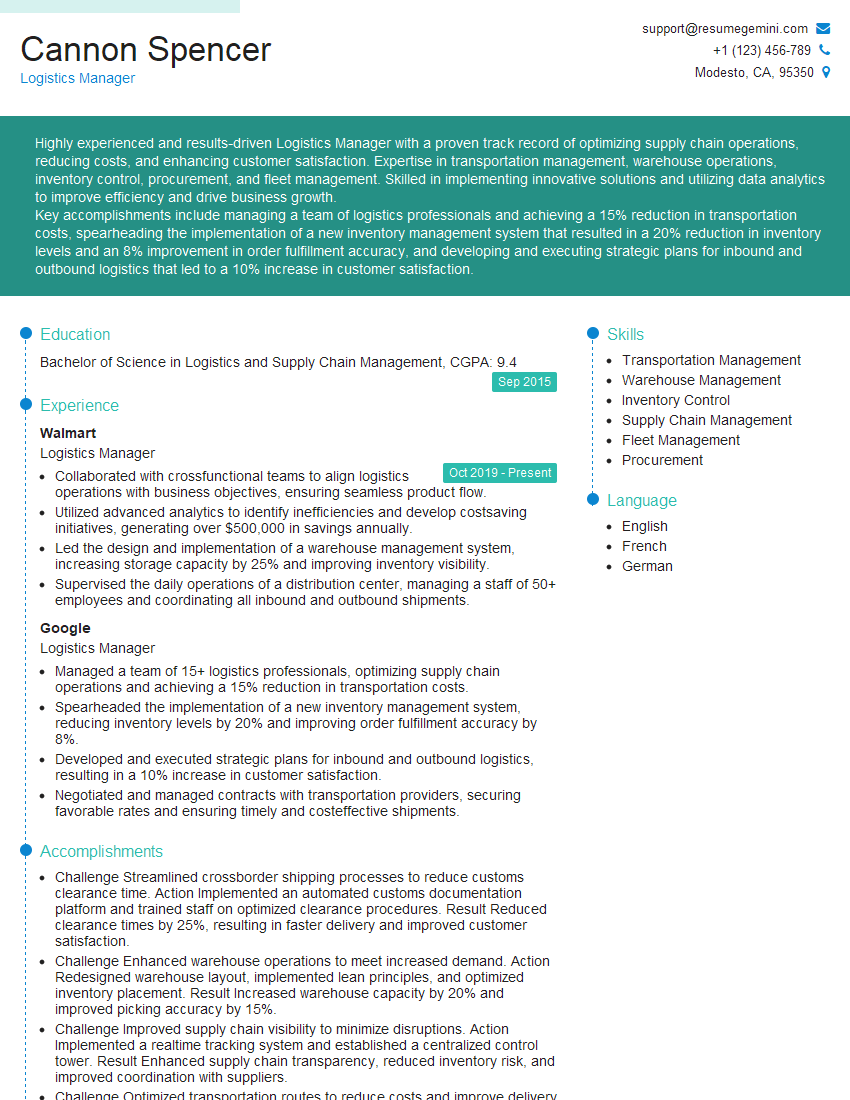
Logistics Manager Resume Sample
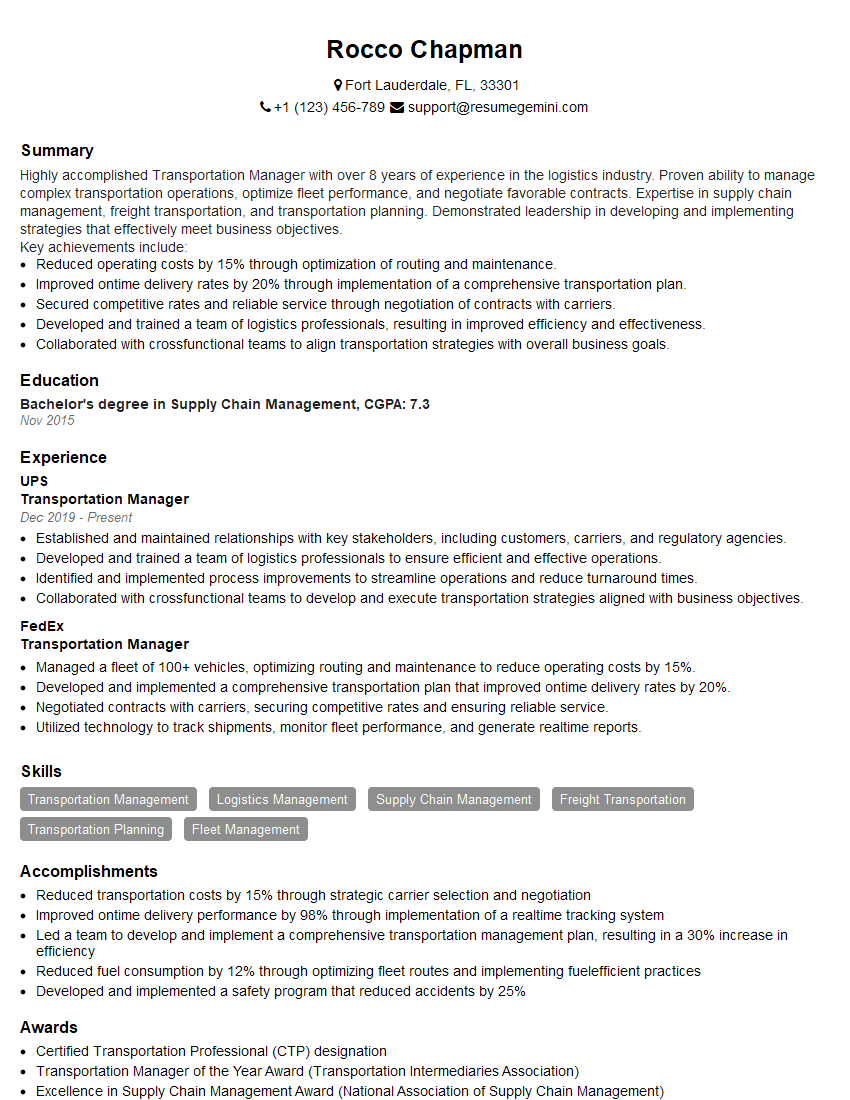
Transportation Manager Resume Sample
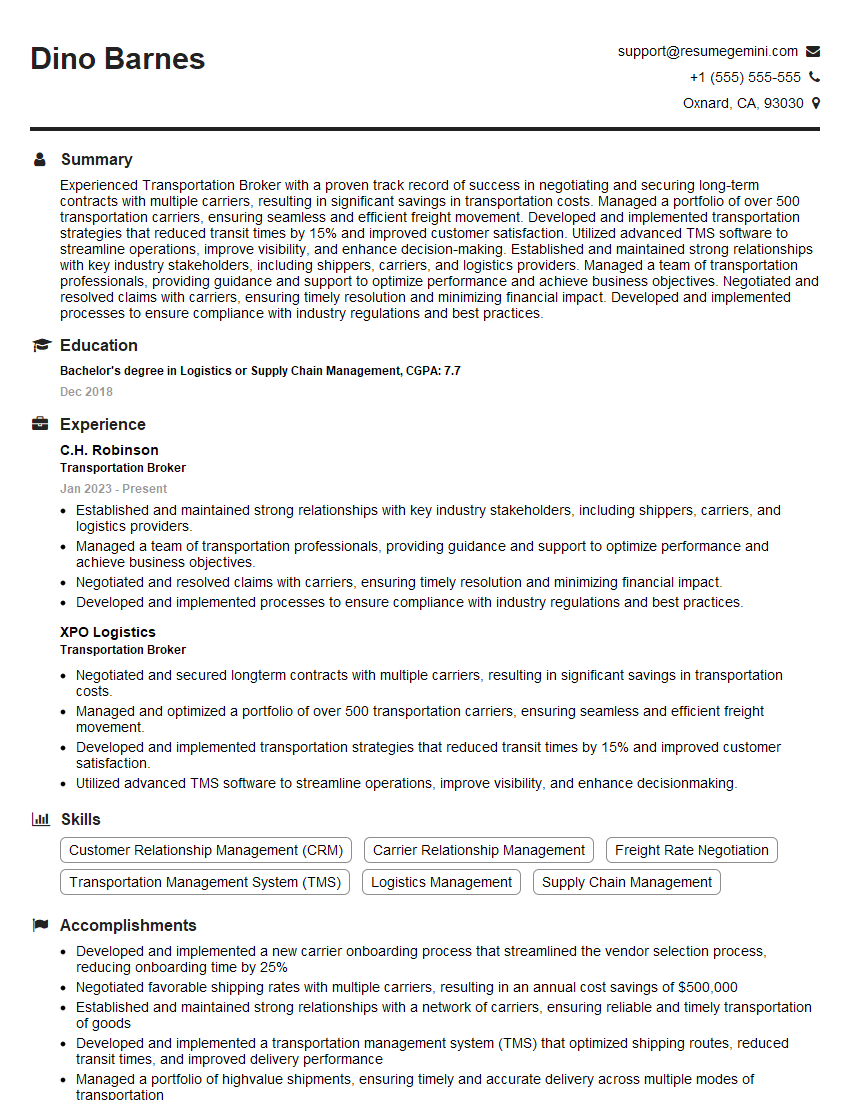
Transportation Broker Resume Sample
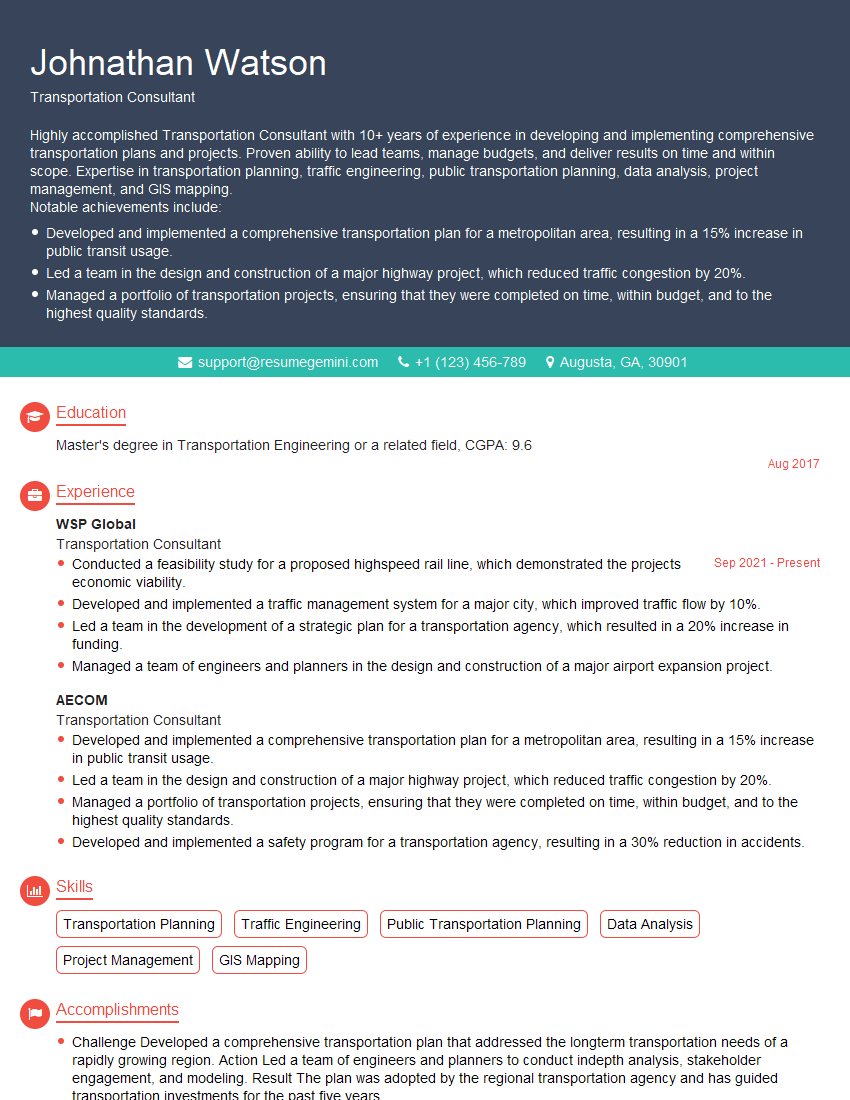
Transportation Consultant Resume Sample
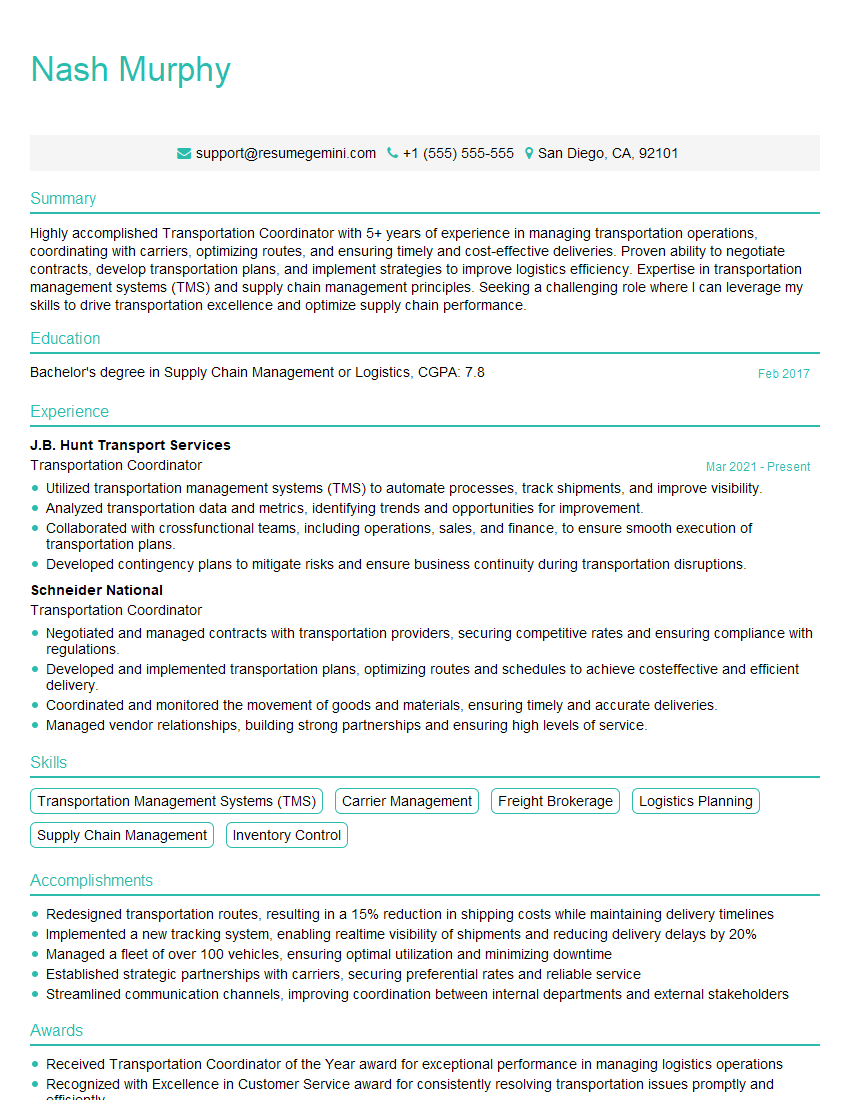
Transportation Coordinator Resume Sample
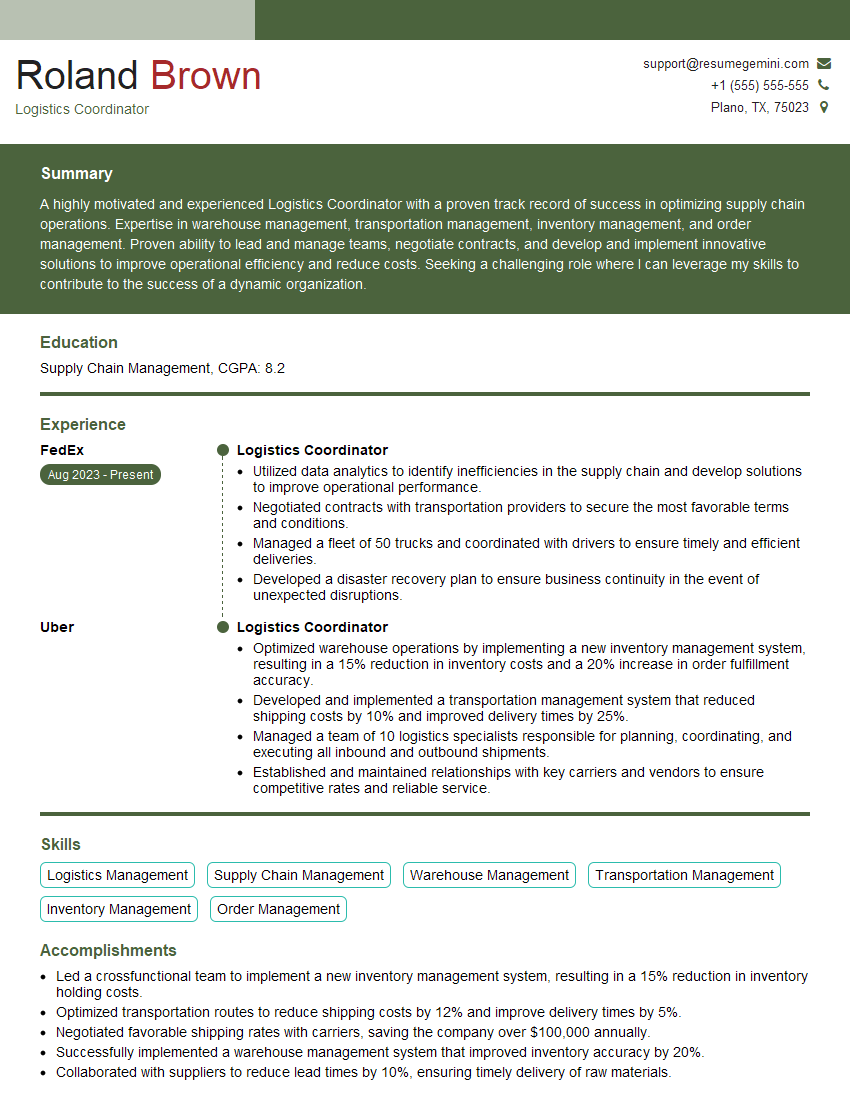
Logistics Coordinator Resume Sample
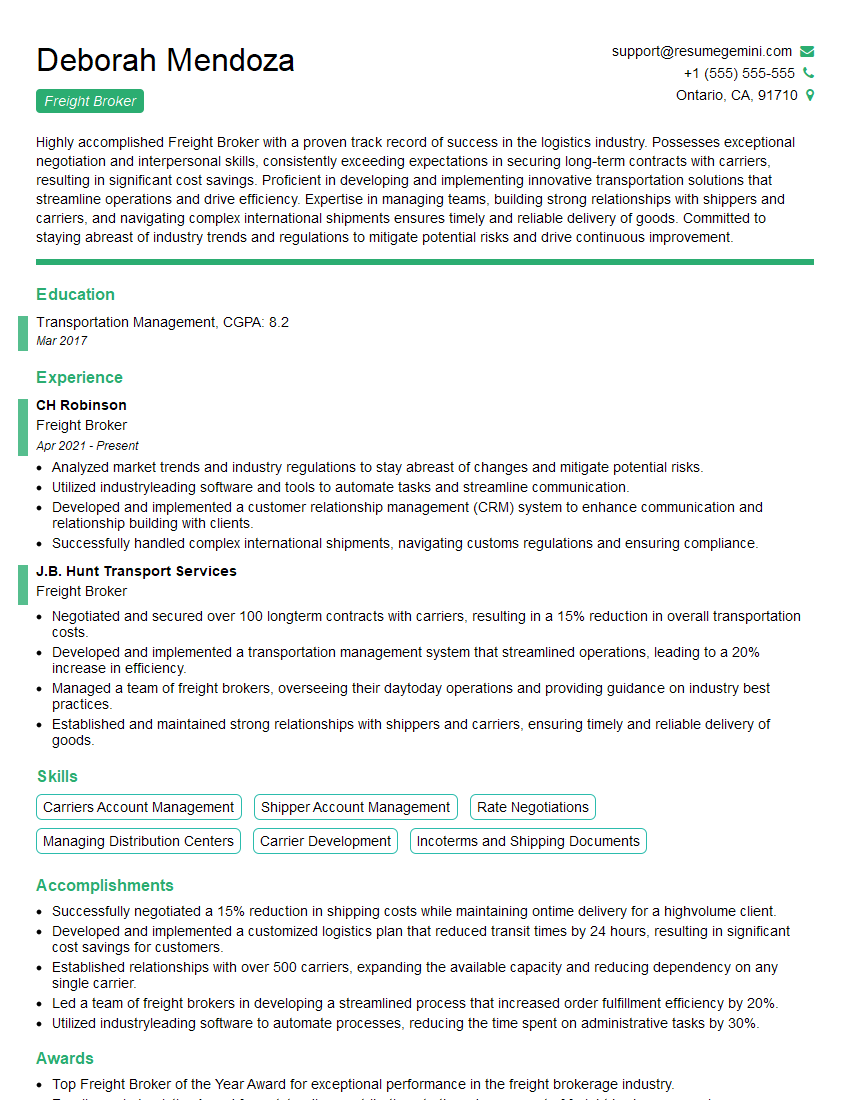
Freight Broker Resume Sample
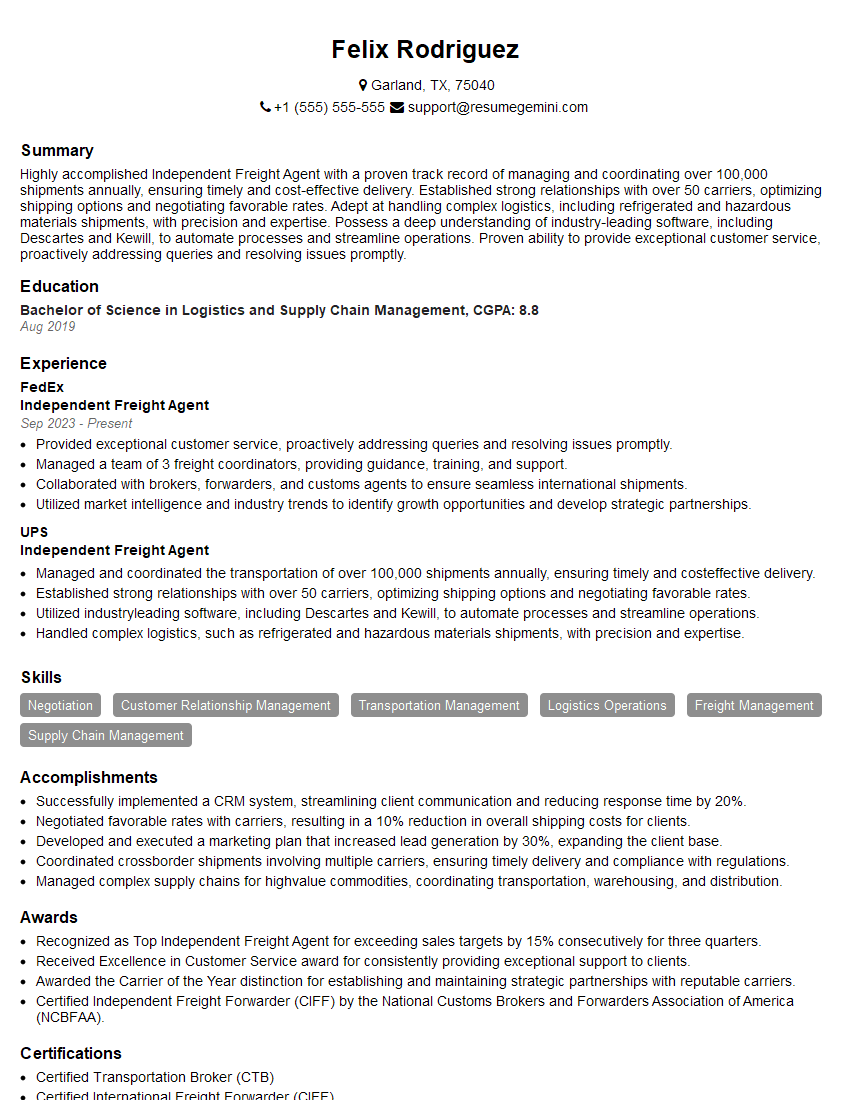
Independent Freight Agent Resume Sample
Explore more articles
Users Rating of Our Blogs
Share Your Experience
We value your feedback! Please rate our content and share your thoughts (optional).
What Readers Say About Our Blog
Very informative content, great job.
good