Interviews are more than just a Q&A session—they’re a chance to prove your worth. This blog dives into essential Understanding of Load Distribution and Weight Capacity interview questions and expert tips to help you align your answers with what hiring managers are looking for. Start preparing to shine!
Questions Asked in Understanding of Load Distribution and Weight Capacity Interview
Q 1. Explain the concept of load distribution in a structural element.
Load distribution in a structural element refers to how a load (force) is spread throughout the element. Imagine a bridge: the weight of cars isn’t concentrated at a single point but distributed across the entire structure. Effective load distribution is crucial for preventing localized failure and ensuring structural integrity. It’s achieved through careful design, utilizing materials with suitable properties, and employing appropriate structural elements like beams, columns, and supports to spread the forces efficiently. A poorly distributed load can lead to excessive stress in specific areas, causing cracks, bending, or even collapse.
For example, a simple beam supported at both ends with a central load will experience maximum bending moment at the center and zero bending moment at the supports. The load is effectively distributed along the beam’s length through internal bending stresses. A wider, thicker beam would distribute the load more effectively than a narrow, thin one.
Q 2. Describe different types of loads (dead load, live load, etc.) and their impact.
Loads are broadly classified into several types, each with unique characteristics and impact on structures:
- Dead Load: The self-weight of the structure and any permanently attached elements. This is a constant load. Example: weight of the building materials, roofing, etc.
- Live Load: Variable loads that change over time. Example: occupants in a building, vehicles on a bridge, snow accumulation.
- Wind Load: Force exerted by wind on structures. It’s dependent on wind speed, building shape, and height.
- Seismic Load: Force exerted during an earthquake. It causes vibrations and shaking, stressing the structure in various ways.
- Snow Load: Weight of accumulated snow on a roof. The amount of snow load depends on climate and local snowfall patterns.
- Impact Load: Sudden, forceful application of load, like a heavy object dropping onto a floor.
The impact of each load type is crucial in design. For instance, a bridge designed to withstand a certain live load (cars) might fail under a significantly larger impact load (e.g., a collision). Engineers must carefully account for all load types to ensure a structure’s safety and longevity.
Q 3. How do you calculate the center of gravity of an object?
The center of gravity (CG) of an object is the point where the entire weight of the object can be considered to act. For simple shapes, it’s straightforward to locate. For complex shapes, more advanced methods are needed.
For simple shapes: The CG of a uniform, symmetrical object lies at its geometric center. For example, the CG of a uniform square plate is at its center.
For complex shapes: We can use the method of moments. Consider an object divided into smaller elements, each with its own weight and CG. The overall CG is calculated using the weighted average of the individual CGs. Mathematically:
xCG = (Σ(mi * xi)) / ΣmiyCG = (Σ(mi * yi)) / ΣmiWhere: xCG and yCG are the coordinates of the overall CG, mi is the mass of each element, and xi and yi are the coordinates of each element’s CG.
In practice, software tools and advanced techniques like numerical integration are often used for complex shapes.
Q 4. Explain the principles of static equilibrium.
Static equilibrium is a fundamental principle in structural mechanics. It states that for a body to remain at rest (or in uniform motion), the net force and net moment acting upon it must be zero. This means that all forces and moments are balanced.
In simpler terms: imagine a see-saw. It’s in equilibrium when the forces (weights) on both sides and the distances from the pivot point are balanced. If one side is heavier, or if the weights are at unequal distances, the see-saw will tilt, indicating a lack of equilibrium.
Mathematically, static equilibrium is expressed by three equations:
- ΣFx = 0 (Sum of horizontal forces is zero)
- ΣFy = 0 (Sum of vertical forces is zero)
- ΣM = 0 (Sum of moments about any point is zero)
These equations are crucial for analyzing structures and ensuring stability. Engineers use these principles to determine the forces in structural members and to verify that the structure can withstand the applied loads without collapsing.
Q 5. What are the different methods for analyzing stress and strain in structures?
Several methods are available for analyzing stress and strain in structures:
- Analytical Methods: These involve using mathematical equations and formulas to calculate stress and strain. They are suitable for simple structures and load cases. Examples include simple beam bending theory, torsion analysis, and stress concentration factors.
- Experimental Methods: Involve conducting physical tests on the structure or its components to measure stress and strain directly. Strain gauges, extensometers, and photoelasticity are some common experimental techniques. This approach provides real-world data but is often costly and time-consuming.
- Numerical Methods (FEA): Finite Element Analysis (FEA) is a powerful computational technique to analyze complex structures and load cases. It divides the structure into smaller elements, solves the governing equations for each element, and assembles the results to determine the overall stress and strain distribution.
The choice of method depends on the structure’s complexity, accuracy requirements, cost constraints, and available resources. For simple structures, analytical methods might suffice. For complex geometries or load conditions, FEA is usually preferred.
Q 6. How does material selection affect load-bearing capacity?
Material selection significantly affects a structure’s load-bearing capacity. The strength, stiffness, and ductility of a material determine how much load it can support before yielding, fracturing, or undergoing excessive deformation.
For example, steel has a high yield strength and is commonly used for structural members requiring high load-carrying capacity. Concrete is strong in compression but weak in tension, hence its use with reinforcing steel (rebar) in reinforced concrete structures. Aluminum is lightweight and strong, making it suitable for applications where weight is a concern, such as aircraft.
The selection also involves considering factors like material cost, availability, environmental impact, corrosion resistance, and maintainability. The optimal material choice balances structural performance, economic factors, and environmental considerations. A thorough understanding of material properties and behavior is essential for selecting appropriate materials for a given application.
Q 7. Describe your experience with Finite Element Analysis (FEA) for load distribution.
I have extensive experience using Finite Element Analysis (FEA) software (e.g., ANSYS, Abaqus) for analyzing load distribution in various structures. In my previous role, I used FEA to model and analyze a complex bridge structure subjected to different load combinations (dead load, live load, wind load, seismic load). The analysis helped identify areas of high stress concentration and refine the design to optimize structural performance and safety.
I’m proficient in meshing, material property definition, boundary condition application, and post-processing of FEA results. I have experience with linear and nonlinear analysis, and I’m familiar with various element types (e.g., beam, shell, solid elements). I’ve used FEA to troubleshoot existing structures, assess the effects of modifications, and design new structures to meet specific load requirements. My work has involved validating FEA results against experimental data and code requirements. I find FEA to be an indispensable tool for complex structural analysis and optimization.
Q 8. Explain the concept of factor of safety and its importance.
The factor of safety (FOS) is a crucial concept in engineering design that represents the ratio of the ultimate strength of a material or component to the expected or actual stress it will experience. It’s essentially a buffer built into the design to account for uncertainties and unexpected loads. A higher FOS indicates a more robust and reliable design.
For instance, if a beam is designed to withstand a maximum load of 1000 kg, and its ultimate strength is 5000 kg, the FOS is 5 (5000/1000). This means the beam can withstand five times the expected load before failure. The importance of FOS lies in preventing catastrophic failures. Unforeseen factors like material imperfections, manufacturing defects, or unexpected environmental conditions can all affect the strength of a structure. The FOS ensures that even with these uncertainties, the structure remains safe and functional.
In practice, choosing the appropriate FOS involves balancing safety with cost and efficiency. Overly conservative designs (very high FOS) can lead to unnecessary material usage and higher costs, while designs with a low FOS increase the risk of failure.
Q 9. How do you account for dynamic loads in structural design?
Dynamic loads, unlike static loads which are constant, involve forces that change over time, such as those from wind, earthquakes, or moving vehicles. Accounting for them is crucial in structural design to prevent failure. We use several methods:
- Dynamic Load Analysis: This involves using specialized software and techniques to simulate the behavior of the structure under dynamic loading conditions. These analyses often consider the frequency and amplitude of the dynamic forces to predict the response of the structure, including stresses, vibrations, and displacements.
- Dynamic Load Factors (DLFs): DLFs are multipliers applied to static loads to simulate the increased stress caused by dynamic effects. The value of the DLF depends on the type of dynamic load and the characteristics of the structure. For example, a higher DLF might be used for a bridge designed to withstand heavy truck traffic compared to one designed for pedestrian use.
- Material Selection: Choosing materials with high strength, ductility, and fatigue resistance is important for structures subjected to dynamic loading. For example, using high-strength steel or specialized concrete mixes designed to withstand impact forces is essential for structures expected to experience high dynamic loads.
Imagine designing a bridge. Simply calculating the weight of the cars on the bridge won’t suffice. We need to consider the dynamic impacts of accelerating and decelerating vehicles, the vibrations from traffic, and potential wind gusts. Dynamic load analysis helps us ensure the bridge can withstand these forces without failing.
Q 10. What are the common failure modes related to load distribution?
Common failure modes related to load distribution include:
- Fracture: This occurs when the applied stress exceeds the material’s ultimate tensile strength, causing the material to break or crack.
- Yielding: This involves permanent deformation of the material under load. Once the yield strength is exceeded, the material will not return to its original shape.
- Buckling: This is a sudden collapse of a structural member, often a column, under compressive load. It usually occurs when the slenderness ratio of the member is high.
- Shear Failure: Occurs when the applied shear stress exceeds the material’s shear strength. This can cause the material to slide or split along the plane of shear.
- Fatigue Failure: This type of failure occurs due to repeated cyclic loading, even if the load is less than the material’s ultimate strength. Over time, micro-cracks develop and propagate, ultimately leading to failure.
Consider a poorly designed shelf overloaded with books. It could experience a fracture if the wood is weak, buckling if a long, thin shelf is used without enough support, or shear failure if the shelf’s joints are poorly designed. Understanding these failure modes is critical in preventing structural collapse.
Q 11. How do you handle unexpected or extreme loading conditions?
Handling unexpected or extreme loading conditions requires a multi-faceted approach:
- Robust Design: Incorporating a high factor of safety is crucial. This provides a margin for error and helps the structure withstand loads exceeding the design loads.
- Redundancy: Designing the structure with multiple load paths ensures that even if one member fails, the rest of the structure can continue to function. Think of a bridge with multiple support beams—if one fails, others are still available to support the load.
- Emergency Procedures: Establishing clear protocols and procedures for handling extreme loading events (like evacuating a building during an earthquake) is essential. These procedures should outline safety measures and actions to take during and after the event.
- Monitoring and Maintenance: Regular inspections and monitoring help detect potential problems early on and allow for timely maintenance and repairs. This can prevent small issues from escalating into major failures under extreme loading.
For example, a building designed in an earthquake-prone zone might have extra reinforcement and be built on a flexible foundation. These features provide redundancy and resilience to handle the unexpected and extreme loading caused by seismic activity.
Q 12. Describe your experience with load testing and analysis.
I have extensive experience with load testing and analysis, both in the laboratory and in the field. In the lab, I’ve conducted various tests, including tensile, compressive, shear, and fatigue tests, to determine the material properties and the structural performance of components. This involved using sophisticated testing equipment like universal testing machines and strain gauges. I’ve also conducted finite element analysis (FEA) simulations to model the behavior of complex structures under various load conditions.
In the field, I’ve supervised load testing of various structures, including bridges, buildings, and industrial equipment. This involved instrumentation of the structure with sensors to measure strain, displacement, and other relevant parameters under controlled loading scenarios. The data obtained from field testing was compared against the predicted values from FEA and other analytical methods to validate the design and to identify any potential issues.
For example, on a recent bridge project, we performed a live load test by driving heavy trucks across the bridge to monitor its behavior and ensure it could handle the design load and beyond. The data analysis helped validate the bridge’s structural integrity and safety.
Q 13. Explain the importance of considering environmental factors in load distribution.
Environmental factors significantly influence load distribution and must be considered for a safe and functional structure. These factors include:
- Temperature: Temperature changes can cause thermal expansion and contraction, which can induce stresses in the structure. This is particularly important in structures made of materials with different thermal expansion coefficients.
- Humidity: High humidity can affect the strength and durability of certain materials, leading to deterioration and reduced load-bearing capacity.
- Wind: Wind loads can exert significant forces on structures, especially tall buildings and bridges. Wind speed and direction should be considered during design.
- Snow and Ice: Accumulation of snow and ice can add substantial weight to structures, particularly roofs. This should be accounted for in the design to prevent collapse.
- Corrosion: Exposure to environmental elements can cause corrosion in structural components, leading to deterioration and reduction of strength. Protective measures, like coatings and corrosion-resistant materials, should be considered.
For instance, a bridge designed in a coastal area needs to account for corrosion caused by salt spray and the higher wind loads it might experience.
Q 14. How do you ensure compliance with relevant safety regulations and codes?
Ensuring compliance with safety regulations and codes is paramount in structural engineering. My approach involves:
- Thorough Code Review: I meticulously review all relevant safety codes and standards applicable to the project. These codes vary depending on location and type of structure (e.g., building codes, bridge codes, industrial codes).
- Design Documentation: Comprehensive documentation of the design process, including calculations, analyses, and drawings, ensures compliance and allows for scrutiny by relevant authorities.
- Third-Party Reviews: Engaging independent third-party experts for peer reviews and audits helps identify potential design flaws and ensures compliance with safety regulations.
- Material Testing and Certification: Using certified materials ensures they meet the required strength and quality standards specified in the relevant codes. This may involve conducting material testing to validate the properties.
- Inspections and Audits: Regular inspections during and after construction ensure the structure is built according to the design and that it meets safety requirements.
Failure to comply with regulations can lead to legal repercussions, project delays, and potential safety hazards. Therefore, adherence to safety codes is an essential part of my professional practice.
Q 15. What software tools are you proficient in for load distribution analysis?
For load distribution analysis, my proficiency spans several software tools, each suited to different project scales and complexities. I’m highly experienced with Finite Element Analysis (FEA) software like ANSYS and Abaqus, which are industry-standard tools capable of handling complex geometries and material properties. These programs allow for detailed stress and strain analysis, crucial for understanding load distribution. For simpler structures or preliminary analysis, I also utilize more streamlined software such as RISA-3D and SAP2000. My selection depends on the project’s demands: complex geometries and material nonlinearities call for ANSYS or Abaqus, while simpler projects benefit from the speed and ease of use of RISA-3D or SAP2000. I’m also adept at using scripting languages like Python to automate tasks and post-process results from these analyses, increasing efficiency and accuracy.
Career Expert Tips:
- Ace those interviews! Prepare effectively by reviewing the Top 50 Most Common Interview Questions on ResumeGemini.
- Navigate your job search with confidence! Explore a wide range of Career Tips on ResumeGemini. Learn about common challenges and recommendations to overcome them.
- Craft the perfect resume! Master the Art of Resume Writing with ResumeGemini’s guide. Showcase your unique qualifications and achievements effectively.
- Don’t miss out on holiday savings! Build your dream resume with ResumeGemini’s ATS optimized templates.
Q 16. How do you determine the weight capacity of a structure?
Determining the weight capacity of a structure is a multi-step process that involves a thorough understanding of structural mechanics and material science. First, we need to define all potential loads acting on the structure – dead loads (self-weight of materials), live loads (occupancy, furniture, snow, etc.), and environmental loads (wind, seismic activity). Next, we perform a structural analysis, often using FEA software, to calculate stresses and deflections throughout the structure under these loads. The analysis results reveal the critical points of stress concentration. Then, we compare these stresses to the material’s allowable stress, which is a fraction of the ultimate strength (the maximum stress a material can withstand before failure) determined from material testing and safety factors. Safety factors are crucial; they incorporate uncertainties in loading, material properties, and construction. For example, a safety factor of 2 means that the allowable stress is half of the ultimate stress. Finally, the weight capacity is determined by the load that produces stresses equal to the allowable stress at the critical points. This ensures the structure remains within safe operational limits.
Q 17. Explain the difference between ultimate load and allowable load.
The ultimate load and allowable load are crucial distinctions in structural design. The ultimate load represents the theoretical maximum load a structure can withstand before complete failure. This is determined through rigorous testing and analysis, often involving material failure. In contrast, the allowable load is a significantly lower load, designed to ensure safety and prevent failure under normal operating conditions. It’s a fraction of the ultimate load, incorporating safety factors that account for uncertainties and potential variations in material properties, construction quality, and actual loads. Imagine a bridge: its ultimate load might be the weight that would cause it to collapse completely. The allowable load, however, is considerably less, ensuring that the bridge remains structurally sound and safe even under unexpectedly high loads or unforeseen circumstances. The difference between these two loads highlights the importance of safety margins in structural engineering.
Q 18. What are the limitations of different load distribution models?
Different load distribution models have inherent limitations depending on their assumptions and simplifications. For example, simple beam theory assumes linear elastic material behavior and small deflections, which might not be accurate for complex structures or those subjected to significant loads. Simplified models can be computationally efficient, but they might not capture the true stress distribution accurately, leading to potentially unsafe designs. More advanced methods like FEA are capable of handling non-linear material behavior, large deflections, and complex geometries, but they require significant computational resources and expertise. Also, the accuracy of any model depends heavily on the quality and accuracy of the input data – material properties, geometry, and loading conditions. An error in any of these can significantly impact the accuracy of the results. Furthermore, all models inherently have limitations in considering unforeseen events or complex interactions such as soil-structure interaction or dynamic loading effects that aren’t easily incorporated.
Q 19. How do you interpret structural analysis results?
Interpreting structural analysis results requires careful attention to detail and a solid understanding of structural mechanics. The analysis output usually includes stress and strain distributions, displacement fields, and reaction forces. I typically start by identifying the areas with the highest stresses, which represent potential points of failure. These areas need to be carefully compared to the material’s allowable stress to ensure the structure is adequately designed. Then, I examine the displacements or deflections to make sure they are within acceptable limits, as excessive deformations can lead to serviceability issues. Reaction forces provide valuable information about how the structure interacts with its supports, helping ensure that the foundations are adequately sized and that the load is transferred safely. Finally, I always look for any unexpected or unusual results that could signal errors in the model or indicate a need for further investigation. A thorough understanding of the underlying assumptions and limitations of the analysis is vital for accurate interpretation. Visualization tools within FEA software are extremely helpful in this process.
Q 20. How would you approach the design of a structure for a specific loading scenario?
Designing a structure for a specific loading scenario is a systematic process. It begins with clearly defining the intended use of the structure and identifying all potential loads. This includes dead loads (weight of the structure), live loads (occupants, furniture, equipment), and environmental loads (wind, snow, earthquakes). I then select appropriate materials and create a preliminary design that satisfies the requirements. A detailed structural analysis is performed using FEA or other methods to determine stresses, deflections, and other relevant parameters under the specified loads. These results are compared with allowable stresses and deflections to ensure safety and serviceability. Iterations are typically required, adjusting the design based on the analysis results until an acceptable solution is achieved. This may involve changing material selection, altering the geometry of the structure, or adding reinforcements. The design must meet all relevant codes and regulations, and throughout this process, safety remains the highest priority.
Q 21. Describe your experience with load path analysis.
Load path analysis is critical for understanding how forces are transferred through a structure. My experience in this area involves tracing the flow of loads from the point of application to the supports. This helps identify critical load-bearing members and connections. I’ve used this extensively for designing various structures, from simple buildings to complex industrial facilities. For example, in designing a multi-story building, load path analysis helps to determine the appropriate sizing of columns, beams, and foundations by tracing the load from the roof, down through the floors, to the ground. A detailed understanding of the load path is essential to ensure that the structure can safely support its intended loads. Visualizing this path, often using diagrams and the FEA results, allows for efficient identification of potential weak points. In one project, load path analysis revealed a potential weakness in a connection between two major structural elements; correcting this resulted in a significantly safer and more robust design.
Q 22. Explain the concept of load transfer mechanisms.
Load transfer mechanisms describe how forces, originating from a load (like the weight of a building or the pressure of a fluid), are distributed through a structure to its supports. Think of it like a game of tag – the load is ‘it’ and it tries to reach the ground. The structure is the playground, and the load transfer mechanisms are the pathways it uses.
These mechanisms can be quite complex and involve several components working together. For instance, a simple beam might transfer a load to its supports primarily through bending. However, a more complex structure like a high-rise building might utilize a combination of bending, shear, torsion (twisting), and axial forces (compression and tension) to distribute the load through columns, beams, walls, and foundations. In many cases, specific components such as trusses, arches, or connections (e.g., welded joints, bolts) are designed precisely for efficient load transfer.
- Beams: Transfer loads primarily through bending, distributing them to supporting columns or walls.
- Columns: Transfer vertical loads downwards, mainly through compression.
- Trusses: Distribute loads among many members through a network of interconnected triangles, converting them into primarily tensile and compressive forces.
- Connections: These are crucial; a poorly designed connection can cause a structural failure, even if the individual members are strong enough.
Q 23. How do you validate your load distribution calculations?
Validating load distribution calculations is paramount for safety and involves multiple steps. We primarily use a combination of analytical methods and simulations.
- Analytical Calculations: These are based on established engineering principles, like statics and structural mechanics. We use equations to determine internal forces and stresses within the structure under different load scenarios. This includes hand calculations, spreadsheets and dedicated structural analysis software.
- Finite Element Analysis (FEA): This numerical method uses computer software to model the structure’s behavior under load. It divides the structure into smaller elements, allowing for detailed stress and strain analysis, particularly useful for complex geometries and load conditions. FEA can identify stress concentrations and areas of potential weakness.
- Experimental Verification: While not always feasible due to cost and scale, physical testing of a prototype or scaled model can provide invaluable validation. This could involve loading tests to measure deflections and confirm that the structure behaves as predicted by the calculations.
- Code Compliance: Our final design always needs to comply with relevant building codes and standards. These codes define safety factors and limits to ensure that the structure can withstand various loads safely.
Comparing the results from different methods helps catch errors. For example, discrepancies between hand calculations and FEA results might indicate mistakes in either the input parameters or the modeling approach. Each validation method provides a different perspective and contributes to overall confidence in the structural design.
Q 24. Describe a challenging load distribution problem you’ve solved.
One challenging project involved designing the load distribution system for a pedestrian bridge spanning a busy river with limited support points. The bridge needed to withstand high pedestrian loads, wind loads, and seismic activity. The biggest challenge was minimizing the bridge’s weight to reduce its environmental impact and construction costs while maintaining a high safety margin.
We tackled this using advanced FEA modeling to optimize the bridge’s geometry and material selection. We explored different truss configurations to effectively distribute loads across the supports, minimizing stress concentrations. By integrating lighter, high-strength materials and optimizing the structural layout, we were able to achieve a design that met all safety and performance requirements while keeping the weight within budget. The final design significantly reduced the material usage compared to traditional designs, illustrating the benefits of optimized load distribution.
Q 25. What are some common mistakes to avoid in load distribution analysis?
Common mistakes in load distribution analysis include:
- Ignoring dynamic loads: Many structures experience dynamic loads (like wind gusts, vehicle impacts, or seismic events), which can induce significantly higher stresses than static loads. Ignoring these can lead to significant underestimation of the structural requirements.
- Oversimplifying the model: Using simplified assumptions about the structure’s behavior or load conditions without proper justification can lead to inaccurate results. Real-world structures are complex, and oversimplification can mask critical details.
- Neglecting material properties: Accurately characterizing the material properties (strength, stiffness, and ductility) is crucial. Using inaccurate or outdated material data can compromise the safety and reliability of the analysis.
- Insufficient consideration of boundary conditions: The way a structure is supported greatly influences load distribution. Inaccurate definition of boundary conditions can lead to grossly inaccurate results.
- Ignoring stress concentrations: Stress concentrations can occur at points of geometric discontinuity or load application, leading to localized failure even if the overall stresses are low. Proper consideration of these concentrations is essential.
Q 26. How do you balance safety and efficiency in structural design?
Balancing safety and efficiency in structural design is a constant challenge. It’s a delicate act of optimization. We aim for structures that are both safe and cost-effective. Here’s how we achieve that:
- Safety Factors: Building codes incorporate safety factors to account for uncertainties in material properties, loads, and analysis methods. These factors increase the design strength beyond the calculated requirements, providing a margin of safety.
- Material Selection: Choosing the right materials plays a significant role. High-strength materials can reduce the overall weight and size of the structure, while still meeting safety standards. However, cost and other factors need to be considered.
- Optimized Design: Through analysis and simulation, we refine the structural design to minimize material usage while ensuring adequate strength. This often involves iterative refinement and exploration of different design alternatives.
- Redundancy: Incorporating redundancy ensures that even if one structural element fails, the structure retains its load-carrying capacity, thereby improving safety without necessarily increasing overall material.
- Regular Inspections and Maintenance: Regular inspections and maintenance help to identify and address potential problems early on, before they compromise the structure’s safety.
Ultimately, it’s about creating a robust and reliable design that meets all safety criteria while minimizing cost, material usage, and environmental impact.
Q 27. Explain the significance of redundancy in structural design.
Redundancy in structural design means incorporating extra structural elements or pathways for load transfer. Think of it as having backup systems in place. If one element fails, others are available to carry the load, preventing catastrophic collapse.
The significance of redundancy is immense for safety. It provides resilience against unexpected events such as material defects, overloading, or damage from natural disasters. Redundancy enhances the structure’s reliability and reduces the risk of total failure. While it might seem counterintuitive as it increases material cost, the increased safety is often worth the expense, especially in critical structures.
Examples include multiple load-bearing columns or walls, or alternate load paths within a complex truss system. The level of redundancy depends on the importance of the structure and the potential consequences of failure.
Q 28. Discuss your understanding of buckling and its impact on load-bearing capacity.
Buckling is a sudden and often catastrophic failure mode that occurs in slender structural members subjected to compressive loads. Imagine trying to crush a long, thin straw – it doesn’t simply get shorter, it bends and folds unexpectedly. That’s buckling.
It happens when the compressive stress exceeds a critical value, causing the member to lose its stability and deform laterally. The load-bearing capacity is significantly reduced during buckling, often leading to complete collapse. The slenderness of the member (length-to-cross-section ratio) plays a crucial role; longer and thinner members are more susceptible to buckling.
Several factors influence buckling, including the material’s elastic modulus, the member’s geometry, and the type of end support conditions. To prevent buckling, engineers often use techniques such as:
- Increased cross-sectional area: Making the member thicker increases its resistance to buckling.
- Using stronger materials: Materials with higher elastic moduli are less prone to buckling.
- Bracing: Adding lateral bracing to the member prevents lateral deflection and enhances stability.
- Reduced length: Shorter members are less likely to buckle.
Understanding buckling is critical for designing safe and reliable structures. Failure to account for buckling can have devastating consequences.
Key Topics to Learn for Understanding of Load Distribution and Weight Capacity Interview
- Fundamental Principles of Statics and Dynamics: Understanding forces, moments, equilibrium, and their application to load-bearing structures.
- Center of Gravity and Load Centering: Calculating and understanding the impact of the center of gravity on stability and load distribution.
- Stress and Strain Analysis: Applying concepts of stress, strain, and material properties to assess structural integrity under load.
- Load Distribution in Different Structural Systems: Analyzing load distribution in beams, trusses, frames, and other common structural elements.
- Factors of Safety and Design Codes: Understanding the importance of safety factors and adhering to relevant design codes and standards.
- Practical Application in Engineering Design: Applying theoretical knowledge to real-world scenarios, such as bridge design, building construction, or vehicle engineering.
- Failure Modes and Analysis: Identifying potential failure points and analyzing the causes of structural failures due to overloading or improper load distribution.
- Finite Element Analysis (FEA) Basics: Understanding the principles and applications of FEA in analyzing complex load distribution scenarios.
- Material Selection and its Impact on Weight Capacity: Choosing appropriate materials based on strength, weight, and cost considerations.
- Solving Practical Problems Involving Load Distribution and Weight Capacity: Developing problem-solving skills through case studies and practical exercises.
Next Steps
Mastering the understanding of load distribution and weight capacity is crucial for career advancement in various engineering and technical fields. A strong grasp of these concepts demonstrates essential problem-solving skills and a commitment to safety and efficiency. To maximize your job prospects, create an ATS-friendly resume that highlights your relevant skills and experience. ResumeGemini is a trusted resource to help you build a professional and impactful resume. We offer examples of resumes tailored to showcasing expertise in Understanding of Load Distribution and Weight Capacity to help you create a compelling application.

Operations Manager Resume Sample

Supply Chain Manager Resume Sample

Logistics Manager Resume Sample
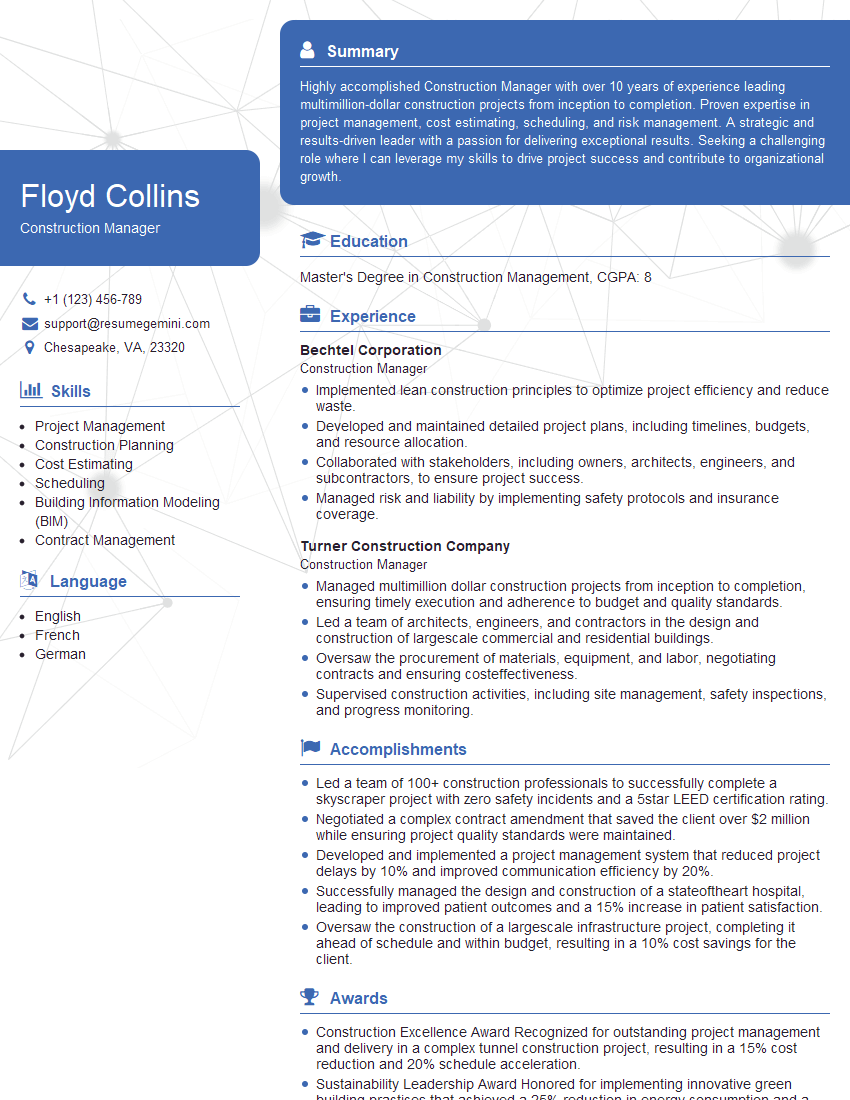
Construction Manager Resume Sample

Project Engineer Resume Sample

Process Engineer Resume Sample

Automation Engineer Resume Sample

Design Engineer Resume Sample

Aerospace Engineer Resume Sample

Weight Engineer Resume Sample

Civil Engineer Resume Sample

Geotechnical Engineer Resume Sample

Structural Engineer Resume Sample

Safety Engineer Resume Sample
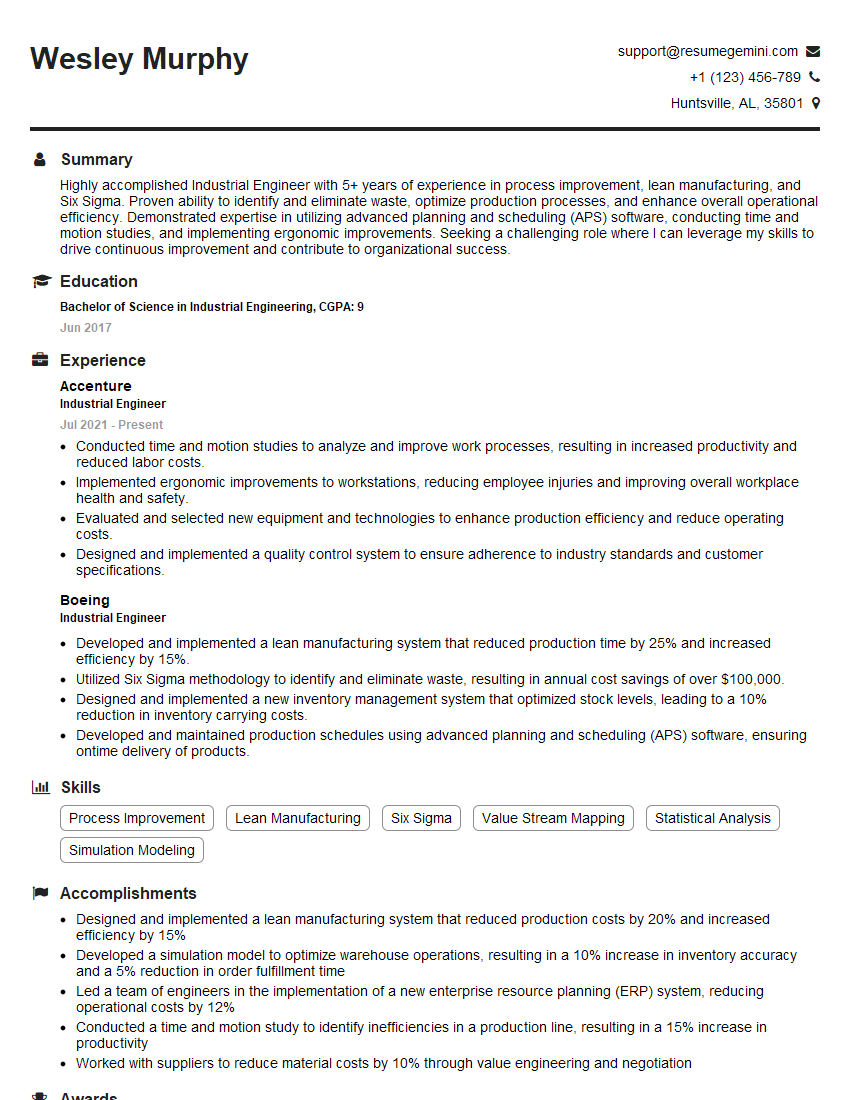
Industrial Engineer Resume Sample

Manufacturing Engineer Resume Sample

Packaging Engineer Resume Sample

Quality Control Engineer Resume Sample

Naval Architect Resume Sample

Mechanical Engineer Resume Sample

Robotics Engineer Resume Sample

Materials Scientist Resume Sample
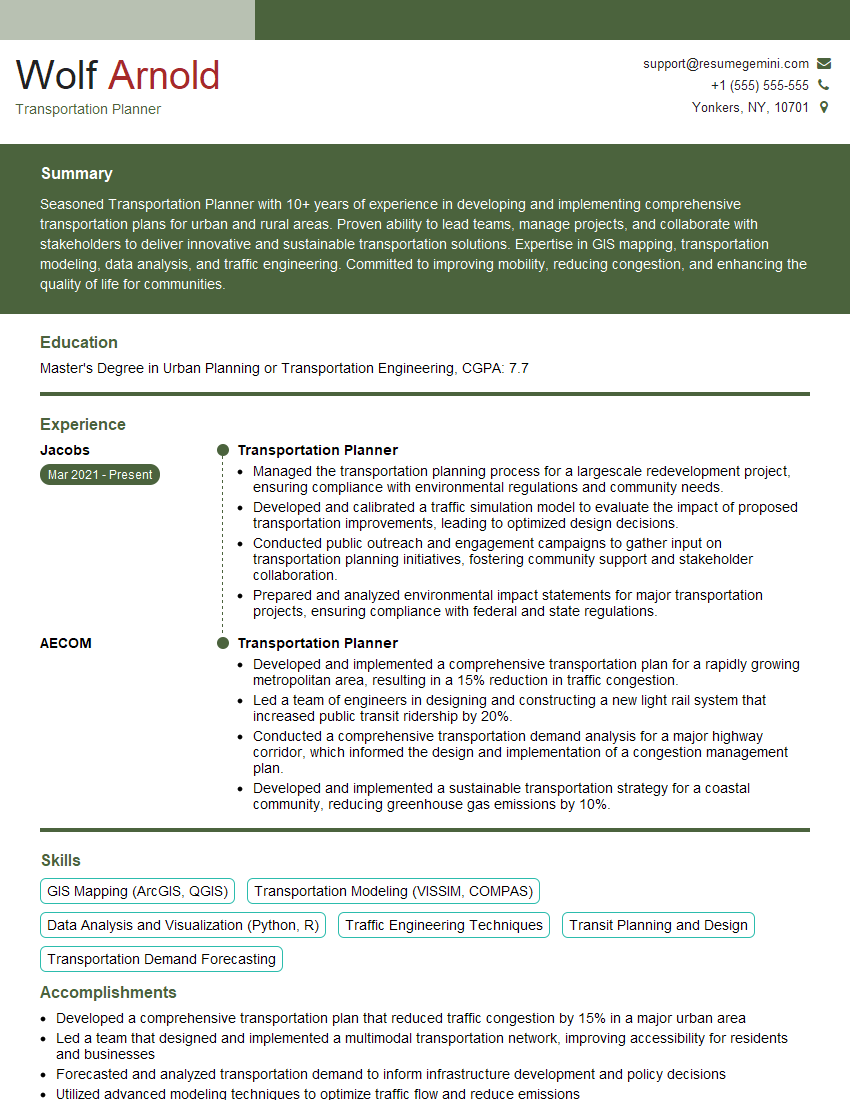
Transportation Planner Resume Sample
- Operations Manager
- Supply Chain Manager
- Logistics Manager
- Construction Manager
- Project Engineer
- Process Engineer
- Automation Engineer
- Design Engineer
- Aerospace Engineer
- Weight Engineer
- Civil Engineer
- Geotechnical Engineer
- Structural Engineer
- Safety Engineer
- Industrial Engineer
- Manufacturing Engineer
- Packaging Engineer
- Quality Control Engineer
- Naval Architect
- Mechanical Engineer
- Robotics Engineer
- Materials Scientist
- Transportation Planner
Explore more articles
Users Rating of Our Blogs
Share Your Experience
We value your feedback! Please rate our content and share your thoughts (optional).
What Readers Say About Our Blog
Very informative content, great job.
good