Cracking a skill-specific interview, like one for Understanding of Material Handling Equipment, requires understanding the nuances of the role. In this blog, we present the questions you’re most likely to encounter, along with insights into how to answer them effectively. Let’s ensure you’re ready to make a strong impression.
Questions Asked in Understanding of Material Handling Equipment Interview
Q 1. Describe your experience with different types of conveyor systems.
My experience with conveyor systems spans a wide range of types, each suited to different material handling needs. I’ve worked extensively with:
- Belt Conveyors: These are the workhorses of many industries, ideal for moving bulk materials like grain, aggregates, or even packaged goods over long distances. I’ve been involved in projects optimizing belt speed, incline, and material flow to maximize throughput and minimize wear. For instance, I helped a food processing plant improve their potato transfer system using a specialized cleated belt to prevent slippage.
- Roller Conveyors: Excellent for lighter items that can be easily rolled, like boxes or totes. I’ve seen these used extensively in warehouses and distribution centers, often in gravity-fed systems to streamline order fulfillment. A recent project involved designing a roller conveyor system that integrated smoothly with their existing automated picking system.
- Screw Conveyors: These are perfect for moving powders, granules, and other free-flowing materials. I’ve assisted in selecting appropriate screw diameters and pitch to achieve optimal conveyance speed and prevent material bridging. One challenging project involved designing a screw conveyor for highly abrasive materials, requiring special wear-resistant components.
- Overhead Conveyors: Often used in manufacturing environments to move parts between workstations. I have experience in optimizing their layout to minimize travel time and improve overall production efficiency. This includes selecting appropriate carriers and drive systems based on weight and speed requirements.
- Chain Conveyors: These use chains to transport items, often used for heavier or irregularly shaped objects. I’ve worked with both slat and flight conveyors, selecting the appropriate design based on the weight and fragility of the items being handled. One project included designing a custom chain conveyor for large, fragile automotive parts.
In each case, my work involved careful consideration of factors like material properties, throughput requirements, space constraints, and budget to ensure the selection and implementation of the most efficient and cost-effective system.
Q 2. Explain the principles of ergonomics in material handling.
Ergonomics in material handling focuses on designing workplaces and tasks to minimize physical strain and discomfort for workers. The goal is to prevent musculoskeletal disorders (MSDs) like carpal tunnel syndrome, back injuries, and repetitive strain injuries. This involves:
- Proper Lifting Techniques: Training employees on safe lifting practices, using equipment like lift assists, and ensuring loads are within safe weight limits. For example, implementing a ‘lift team’ for exceptionally heavy objects.
- Workstation Design: Optimizing workstation height, layout, and tools to promote proper posture and reduce strain. Consider adjustable work benches and ergonomic chairs.
- Material Handling Equipment Selection: Choosing equipment that reduces the need for manual lifting and awkward postures. For example, using conveyors, lift trucks, or automated guided vehicles (AGVs).
- Automation: Incorporating automation where possible to reduce manual handling tasks and improve efficiency. Robotic arms can take over strenuous, repetitive lifting.
- Regular Breaks and Rotation: Preventing fatigue by scheduling regular breaks and job rotations.
Ignoring ergonomics leads to higher injury rates, increased worker’s compensation costs, and decreased productivity. A well-designed ergonomic system results in a healthier, happier, and more productive workforce.
Q 3. What are the safety regulations surrounding forklift operation?
Forklift safety regulations vary by location but generally cover:
- Operator Training and Certification: Operators must be properly trained and certified to operate forklifts safely. This includes pre-shift inspections and knowledge of operating procedures.
- Pre-Operational Inspection: Before each use, operators should inspect the forklift for any mechanical issues, leaks, or damage. A checklist should be used.
- Safe Operating Procedures: These include maintaining a safe speed, avoiding sharp turns, and following proper load handling procedures. Operators should never exceed the rated load capacity of the lift.
- Personal Protective Equipment (PPE): Operators must use appropriate PPE such as safety glasses, gloves, and steel-toed boots.
- Vehicle Maintenance: Regular maintenance is crucial for ensuring the forklift is in good working order and safe to operate. This involves scheduled inspections and repairs.
- Workplace Safety: The operating environment should be free of hazards such as obstructions and uneven surfaces. Traffic management and pedestrian safety zones must be defined.
- Load Securement: Proper load securement is critical to prevent accidents. Loads must be stable and secured to prevent shifting or falling.
Non-compliance with these regulations can lead to severe accidents, injuries, and legal repercussions. A robust safety program, combined with regular training and enforcement, is essential.
Q 4. How do you select the appropriate material handling equipment for a specific task?
Selecting the right material handling equipment involves a systematic approach:
- Analyze the Task: What materials need to be handled? What are their weight, size, and fragility? What are the distances involved? What is the required throughput?
- Consider the Environment: Is the environment indoors or outdoors? What are the floor conditions? Are there space constraints?
- Evaluate Equipment Options: Based on the task and environment, identify potential equipment options (e.g., forklifts, conveyors, cranes, AGVs). Consult datasheets to check specifications and ratings.
- Assess Capacity and Safety: Ensure the chosen equipment has sufficient capacity for the loads being handled and meets all safety regulations.
- Evaluate Cost and Maintenance: Consider the initial purchase price, operating costs, and maintenance requirements.
- Consider Future Needs: Will the chosen equipment be suitable for future expansion or changes in operations?
For example, a small warehouse handling light packages might opt for roller conveyors and hand trucks, while a large distribution center handling pallets might use forklifts and automated systems. A thorough analysis ensures the right equipment maximizes efficiency and minimizes costs.
Q 5. What are the common causes of equipment malfunctions and how are they addressed?
Common causes of material handling equipment malfunctions include:
- Wear and Tear: Regular use leads to wear and tear on components, especially in high-volume operations. This can manifest as worn belts, damaged rollers, or hydraulic leaks.
- Lack of Maintenance: Inadequate or infrequent maintenance can lead to premature failure of components.
- Operator Error: Improper operation, exceeding load limits, or neglecting safety procedures can damage equipment.
- Environmental Factors: Exposure to extreme temperatures, humidity, or dust can negatively impact equipment performance and lifespan.
- Component Failure: Individual components such as motors, hydraulic pumps, or sensors can fail due to age, wear, or manufacturing defects.
Addressing these issues involves a comprehensive maintenance program including regular inspections, preventative maintenance, and prompt repairs. This can involve scheduled lubrication, component replacement, and operator training. A well-maintained fleet leads to reduced downtime, increased safety, and lower operating costs.
Q 6. Describe your experience with warehouse management systems (WMS).
My experience with Warehouse Management Systems (WMS) encompasses their implementation, integration, and optimization. I’ve worked with various WMS platforms to streamline warehouse operations, improve inventory control, and enhance order fulfillment accuracy. My roles have included:
- System Selection and Implementation: Evaluating different WMS platforms based on specific needs and integrating them with existing ERP systems. This involves careful consideration of features like inventory tracking, order management, and reporting capabilities.
- Process Optimization: Analyzing warehouse workflows and identifying areas for improvement. This could involve optimizing picking routes, improving storage strategies, or automating tasks like picking and packing.
- Data Analysis and Reporting: Using WMS data to track key performance indicators (KPIs) such as order accuracy, cycle time, and inventory turnover. This helps to identify areas for improvement and measure the effectiveness of implemented changes.
- Training and Support: Providing training to warehouse personnel on the use of the WMS and offering ongoing support to ensure smooth operation.
A well-implemented WMS is crucial for optimizing warehouse efficiency, reducing operational costs, and improving customer service. I’ve seen firsthand how a properly configured WMS can transform a warehouse from a chaotic environment into a highly organized and productive operation.
Q 7. Explain the importance of preventative maintenance for material handling equipment.
Preventative maintenance (PM) is crucial for maximizing the lifespan, reliability, and safety of material handling equipment. A proactive approach is far more cost-effective than dealing with costly breakdowns and repairs. PM involves a schedule of regular inspections, lubrication, and component replacements to prevent issues before they occur.
- Reduced Downtime: PM minimizes unexpected equipment failures, keeping the warehouse running smoothly and efficiently.
- Extended Equipment Lifespan: Regular maintenance extends the useful life of the equipment, reducing the need for frequent replacements.
- Improved Safety: Regular inspections identify potential safety hazards early on, preventing accidents and injuries.
- Lower Operating Costs: Preventative maintenance is far cheaper in the long run than dealing with costly emergency repairs.
- Improved Efficiency: Well-maintained equipment operates more efficiently, leading to increased productivity.
A typical PM program includes regular inspections, lubrication schedules, component replacements based on usage, and detailed records tracking maintenance activities. The specific PM plan will depend on the type of equipment and usage patterns. Ignoring preventative maintenance is akin to ignoring a car’s service schedule – you may save money in the short term, but it will invariably lead to expensive repairs and potential damage later on.
Q 8. How do you calculate the optimal storage density in a warehouse?
Calculating optimal storage density involves maximizing the usable space in your warehouse while maintaining efficient material handling. It’s a delicate balance between cramming in as much as possible and ensuring easy access and movement.
Key Factors:
- Product Dimensions and Weight: Knowing the size and weight of your inventory is crucial for determining how much can fit into a given area. Consider palletized goods, individual items, and irregular shapes.
- Storage Methods: Different storage methods (shelving, racking, bulk storage) offer varying densities. High-density racking systems, for instance, use vertical space more efficiently than conventional shelving.
- Aisle Width: Sufficient aisle space is vital for forklift or AGV movement. Narrow aisles increase density but may slow down operations. You need to find the sweet spot.
- Throughput Requirements: How quickly do you need to access and move inventory? High throughput may require more space between storage units for faster retrieval.
- Safety Regulations: Adhering to safety regulations is paramount. Complying with weight limits and providing adequate clearance for workers and equipment will impact density.
Calculation Approach: There isn’t a single formula, as it’s context-dependent. I usually start with a warehouse layout software, inputting dimensions, storage methods, and inventory details. The software will provide a simulated storage density, enabling adjustments and analysis. For example, by altering aisle width or storage system, you can see the impact on density and retrieval times. Continuous monitoring and adjustment are key.
Q 9. What are the different types of automated guided vehicles (AGVs) and their applications?
Automated Guided Vehicles (AGVs) are robots that move materials autonomously within a warehouse. They come in various types, each suited for specific tasks:
- Unit Load AGVs: These carry large loads (like pallets) and are ideal for transporting goods between storage locations and shipping docks. They often use laser guidance or magnetic tape for navigation.
- Tuggers: These pull trains of carts or trailers, moving multiple loads simultaneously. They are very efficient for transporting many items in a defined route.
- Forklift AGVs: These combine the functionality of a forklift with autonomous navigation. This allows for more flexibility than unit-load AGVs, handling diverse items and storage locations.
- Very Narrow Aisle (VNA) AGVs: Designed to operate in extremely narrow aisles, maximizing storage density. These vehicles often have a specialized design for efficient movement in confined spaces.
Applications:
- Order Fulfillment: Picking and transporting goods to packing stations.
- Material Movement: Transferring raw materials, work-in-progress, and finished goods within the warehouse.
- Cross-docking: Quickly transferring goods between receiving and shipping docks without intermediate storage.
- Inventory Management: Assisting with inventory counts and audits through their tracking capabilities.
The choice depends on warehouse layout, throughput needs, and the type of goods handled. In my experience, a thorough needs assessment is crucial before choosing an AGV system. A poorly implemented AGV system could create bottlenecks rather than efficiencies.
Q 10. How do you ensure the efficient flow of materials within a warehouse?
Efficient material flow is the backbone of a productive warehouse. It’s all about minimizing delays and bottlenecks. I approach this strategically:
- Optimized Warehouse Layout: The design should promote a smooth, linear flow, avoiding unnecessary crossings or backtracking. High-demand items should be placed in easily accessible locations. This often involves using a warehouse management system (WMS) to simulate different layouts and optimize placement.
- Effective Inventory Management: Using a WMS to track inventory levels in real-time aids in quick order fulfillment and prevents storage inefficiencies.
- Proper Material Handling Equipment: Selecting the right equipment (forklifts, conveyors, AGVs) for the job minimizes handling time and improves overall efficiency.
- Clear Processes and Procedures: Establish clear, standardized processes for receiving, storing, picking, packing, and shipping goods. Proper training is crucial for ensuring adherence to these procedures.
- Cross-Docking (where applicable): If feasible, implementing cross-docking significantly reduces handling time by bypassing intermediate storage.
- Data Analysis: Using data analytics to identify bottlenecks and areas for improvement. Tracking key metrics like order fulfillment time and inventory turnover can reveal valuable insights.
Think of it like a well-oiled machine; every part works seamlessly, contributing to the overall performance. One common mistake is overlooking the importance of standardized processes. If people aren’t following the same procedures, efficiency plummets.
Q 11. What are your strategies for improving warehouse efficiency and reducing costs?
Improving warehouse efficiency and reducing costs are intertwined goals. My strategies involve a multi-pronged approach:
- Lean Principles: Eliminating waste in all forms (excess inventory, unnecessary movement, defects) is fundamental to lean warehousing. This includes implementing 5S (sort, set in order, shine, standardize, sustain) for a well-organized space.
- Automation: Automating repetitive tasks (picking, packing, transport) with robots and AGVs significantly improves speed and accuracy, reducing labor costs. However, automation requires careful planning and implementation to prevent unforeseen issues.
- Technology Integration: Using a WMS, inventory management software, and other tools to track performance, optimize operations, and provide real-time visibility.
- Staff Training: Well-trained staff are more efficient and less prone to errors. Regular training ensures everyone is familiar with best practices and safety procedures.
- Space Optimization: Maximizing warehouse space and using vertical space effectively via high-density racking systems.
- Improved Slotting: Strategic placement of frequently accessed items to minimize travel time.
- Preventative Maintenance: Regularly maintaining equipment to reduce downtime and unexpected repairs.
A key success factor is a continuous improvement mindset. Regularly reviewing performance, analyzing data, and implementing changes based on the results is crucial for sustained efficiency gains. For example, in one project, implementing a new WMS reduced order fulfillment time by 15% and inventory costs by 10%.
Q 12. Describe your experience with RFID technology in material handling.
I have extensive experience with RFID (Radio-Frequency Identification) technology in material handling. RFID tags attached to pallets or individual items allow for real-time tracking of inventory throughout the warehouse. This contrasts with barcodes which require line-of-sight scanning.
Benefits:
- Improved Inventory Accuracy: Real-time tracking minimizes discrepancies between physical and recorded inventory levels.
- Enhanced Efficiency: Faster location identification allows for quicker picking and loading. Automated tracking speeds up cycle counting and inventory audits.
- Reduced Labor Costs: Automated tracking eliminates manual counting and reduces labor costs associated with searching for misplaced items.
- Improved Security: RFID tags can be used for access control and security measures, enhancing security of valuable or sensitive materials.
Challenges:
- Cost of Implementation: The initial investment in RFID tags, readers, and software can be significant.
- Integration Complexity: Integrating RFID technology with existing warehouse management systems requires careful planning and expertise.
- Read Range Limitations: The reading range of RFID tags can be affected by various factors such as metal objects or environmental conditions.
In a recent project, implementing RFID improved inventory accuracy by 95%, significantly reducing stockouts and inventory write-offs. However, careful planning for potential challenges is essential. The integration process, for example, must align with existing systems, and staff require proper training.
Q 13. Explain the concept of lean manufacturing principles in material handling.
Lean manufacturing principles, when applied to material handling, focus on eliminating waste and maximizing efficiency. This is achieved by streamlining processes and minimizing unnecessary movements, inventory, and delays.
Key Concepts in Lean Material Handling:
- Value Stream Mapping: Analyzing the entire material flow to identify and eliminate non-value-added steps. This can be done by charting the movement and identifying areas that create delays or waste.
- 5S Methodology: Organizing the warehouse to ensure that everything is in its place and easily accessible (Sort, Set in Order, Shine, Standardize, Sustain).
- Just-in-Time (JIT) Inventory: Minimizing inventory levels by receiving materials only when needed, reducing storage costs and minimizing waste from obsolescence or damage.
- Kanban Systems: Visual signaling systems to manage material flow and prevent overproduction.
- Pull System: Manufacturing and replenishing inventory based on actual demand instead of forecasts.
- Continuous Improvement (Kaizen): A culture of continuous improvement through ongoing process optimization and employee involvement.
In practical terms, a lean approach involves rigorously evaluating every aspect of material handling, from receiving to shipping, identifying inefficiencies, and implementing systematic improvements. It requires a committed team to work towards a shared goal. One successful lean implementation I managed reduced material handling time by 30% and inventory holding costs by 20%.
Q 14. How do you manage inventory levels effectively to minimize storage costs?
Effective inventory management is crucial for minimizing storage costs. It’s about striking a balance between having enough stock to meet demand and avoiding excessive inventory which leads to increased storage and handling costs.
Strategies for Effective Inventory Management:
- Demand Forecasting: Accurately predicting future demand to ensure adequate stock levels without overstocking. Sophisticated forecasting methods and sales history analysis can greatly enhance the accuracy of demand forecasts.
- Inventory Classification (ABC Analysis): Categorizing inventory based on value and consumption rate. High-value items (‘A’ items) require closer monitoring and tighter control than low-value items (‘C’ items).
- Just-in-Time (JIT) Inventory: Receiving materials only when needed, minimizing storage requirements.
- Inventory Tracking Systems: Using a WMS or other inventory management software to track stock levels accurately in real-time. This minimizes the risk of stockouts or excess inventory.
- Regular Stock Audits: Conducting regular physical inventory checks to verify accuracy and identify discrepancies.
- Efficient Storage Methods: Utilizing appropriate storage methods to optimize space and minimize storage costs. This includes high-density storage solutions like racking systems and pallet racking.
- Inventory Optimization Software: Employing software that analyzes inventory data and makes recommendations for optimal stock levels and ordering patterns.
A common pitfall is failing to regularly analyze inventory data. Without regular review and adjustment, even the best strategies can fail to minimize storage costs. For example, by implementing ABC analysis and optimizing storage, we reduced storage costs by 12% in a previous project.
Q 15. What are the key performance indicators (KPIs) you track in material handling?
Key Performance Indicators (KPIs) in material handling are crucial for optimizing efficiency, safety, and cost-effectiveness. They provide a measurable way to track progress and identify areas for improvement. I typically focus on a suite of KPIs, categorized for clarity.
- Throughput and Efficiency: Units handled per hour, order fulfillment rate, inventory turnover rate. For example, tracking units handled per hour helps identify bottlenecks in the process. A low rate might indicate a need for additional equipment or personnel.
- Cost Management: Cost per unit handled, equipment maintenance costs, labor costs. Analyzing cost per unit handled allows for comparison of different handling methods and identification of cost-saving opportunities.
- Safety: Accident rates, near-miss incidents, safety training compliance. Regular monitoring of these metrics is paramount; a single serious accident can outweigh any cost savings achieved through efficiency gains.
- Inventory Accuracy: Inventory cycle count accuracy, stock discrepancies. Maintaining accurate inventory is vital for smooth operations and prevents stockouts or overstocking.
- On-Time Delivery: Percentage of orders delivered on time, lead time reduction. This KPI directly impacts customer satisfaction and ensures operational reliability.
By regularly monitoring these KPIs, I can identify trends, predict potential problems, and make data-driven decisions to improve the overall material handling system.
Career Expert Tips:
- Ace those interviews! Prepare effectively by reviewing the Top 50 Most Common Interview Questions on ResumeGemini.
- Navigate your job search with confidence! Explore a wide range of Career Tips on ResumeGemini. Learn about common challenges and recommendations to overcome them.
- Craft the perfect resume! Master the Art of Resume Writing with ResumeGemini’s guide. Showcase your unique qualifications and achievements effectively.
- Don’t miss out on holiday savings! Build your dream resume with ResumeGemini’s ATS optimized templates.
Q 16. Describe your experience with different types of storage systems (e.g., racking, shelving).
My experience with storage systems spans various types, each suited to specific needs. I’ve worked extensively with:
- Selective Pallet Racking: This is the most common type, offering high-density storage and easy accessibility to individual pallets using forklifts. In one project, we optimized a warehouse using selective racking, increasing storage capacity by 15% and reducing order picking times by 10%.
- Drive-In/Drive-Through Racking: Ideal for high-volume storage of similar products, utilizing forklift access from one or both sides. This system is efficient for FIFO (First-In, First-Out) inventory management.
- Push-Back Racking: A space-saving solution where pallets are pushed back into lanes. This system maximizes space utilization, perfect for cold storage or areas with limited space. In another project, we implemented push-back racking, resulting in a 20% increase in storage density.
- Shelving: Used for smaller items and parts, shelving offers versatile storage solutions for various warehouse operations. We employed various shelving systems—from light-duty to heavy-duty—tailored to specific product weights and sizes.
- Automated Storage and Retrieval Systems (AS/RS): For high-throughput operations, AS/RS offers automated storage and retrieval capabilities, significantly enhancing efficiency. While complex to implement, the long-term benefits in speed and accuracy are substantial.
Selecting the right storage system requires careful consideration of factors such as product type, volume, handling equipment, and warehouse layout. My approach involves a thorough needs assessment before recommending the optimal system.
Q 17. How do you ensure the safety of workers operating material handling equipment?
Worker safety is paramount in material handling. My approach is multi-faceted and proactive:
- Regular Training and Certification: All operators must receive comprehensive training on equipment operation, safety procedures, and emergency response. Regular refresher courses and certifications ensure ongoing competency.
- Pre-Operational Checks: Before each shift, equipment undergoes a thorough inspection to identify and address potential hazards, like malfunctioning brakes or hydraulic leaks. A checklist system ensures consistency.
- Proper Personal Protective Equipment (PPE): Providing and enforcing the use of appropriate PPE, such as safety shoes, high-visibility vests, and hearing protection, minimizes risks of injury.
- Clear Signage and Markings: Well-marked walkways, designated traffic zones, and clear signage improve visibility and reduce accidents. Traffic management strategies, such as one-way aisles, are implemented where applicable.
- Regular Maintenance and Inspections: Preventative maintenance and routine inspections of equipment significantly reduce breakdowns and potential accidents. This includes scheduled servicing and repairs.
- Incident Reporting and Investigation: A robust system for reporting and investigating all accidents and near misses identifies root causes and prevents future incidents. These investigations are used to improve safety protocols.
Safety isn’t just a policy; it’s an ingrained culture. By promoting a safety-first environment and actively engaging employees, I build a proactive approach to reducing workplace risks.
Q 18. Explain the different types of industrial trucks and their applications.
Industrial trucks are the backbone of many material handling operations. They vary greatly in type and application:
- Forklifts: The most common type, used for lifting and transporting pallets. Different types include counterbalance, reach, side-loader, and narrow-aisle forklifts, each suitable for specific environments and tasks.
- Order Pickers: Designed for efficient order picking in warehouses, enabling operators to reach various heights. These are essential for high-density storage environments.
- Stackers: Used for vertical transport of pallets or goods, typically in smaller warehouses or loading docks.
- Pallet Jacks: Manual or powered hand trucks for moving pallets over short distances. A cost-effective solution for smaller operations.
- Tow Tractors: Used for pulling trailers or carts in larger facilities, improving efficiency in transporting large volumes of materials.
- Automated Guided Vehicles (AGVs): Sophisticated robotic trucks that follow pre-programmed routes, increasing efficiency and reducing labor costs in large-scale operations.
The selection of an industrial truck depends on factors like load capacity, handling requirements, warehouse layout, and budget. For instance, a narrow-aisle forklift is best for high-density storage, while a tow tractor is ideal for large-scale material movement.
Q 19. What are the best practices for loading and unloading trucks safely and efficiently?
Safe and efficient loading and unloading of trucks are critical for preventing accidents and maintaining productivity. Best practices include:
- Proper Planning: Clear communication between drivers, loaders, and warehouse personnel is vital. Pre-planned loading sequences optimize efficiency and prevent delays.
- Secure Loading and Unloading Techniques: Using proper securing methods (e.g., straps, dunnage) prevents shifting loads during transit. Ensuring loads are stable and evenly distributed is critical for safety.
- Designated Loading/Unloading Zones: Clearly marked loading docks and designated zones ensure organized traffic flow and prevent congestion.
- Equipment Inspection: Forklifts and other handling equipment must be inspected before use to ensure proper functionality and safety.
- Appropriate Training: All personnel involved in loading and unloading must receive comprehensive training on safe procedures, including load securing techniques and hazard identification.
- Communication and Coordination: Clear hand signals and communication systems minimize misunderstandings and accidents, especially in busy environments. Using checklists and standardized procedures helps enforce consistency.
By adhering to these practices, we can create a safe and efficient loading and unloading process, minimizing the risk of accidents and optimizing throughput.
Q 20. How do you handle material handling equipment breakdowns and emergencies?
Equipment breakdowns and emergencies are inevitable, so a well-defined plan is critical. My approach is based on:
- Preventive Maintenance: Regular servicing and inspections drastically reduce the frequency of breakdowns. A preventative maintenance schedule is key to minimize downtime.
- Emergency Response Plan: A clearly defined plan, including contact information for repair personnel, emergency procedures, and alternative handling methods, is essential for quick response to unexpected events.
- Spare Parts Inventory: Maintaining a stock of common spare parts reduces repair time and minimizes downtime. This can be adjusted to reflect the types of equipment you commonly use.
- Service Contracts: Having service contracts with reputable suppliers ensures prompt repair services and minimizes downtime. This contract should include response times and service level agreements.
- Contingency Planning: Developing alternative strategies for handling material in case of major equipment failures is important for maintaining operations. This might involve using backup equipment or temporarily outsourcing services.
- Post-Incident Analysis: After an incident, a thorough investigation identifies the root cause to prevent similar events in the future. This involves analyzing the failure modes of the equipment.
A proactive approach to maintenance and a well-defined emergency response plan minimizes the impact of equipment failures on operations.
Q 21. Describe your experience with different types of palletizing equipment.
My experience includes working with various palletizing equipment:
- Manual Palletizers: These are simple and cost-effective for low-volume operations, requiring manual stacking of products onto pallets.
- Semi-Automatic Palletizers: These offer partial automation, typically with robotic arms or conveyors for layer forming, but still require some manual intervention.
- Fully Automatic Palletizers: These are highly efficient for high-volume applications, automatically stacking products onto pallets with minimal human intervention. I’ve worked with systems using robotic arms, layer pads, and pallet conveyors. One project involved integrating a fully automatic palletizer which increased throughput by 30% and reduced labor costs.
- Robotic Palletizers: Offer flexibility and precision, adapting to various product shapes and sizes. They improve efficiency and reduce the risk of workplace injuries.
Choosing the right palletizing equipment depends on factors such as production volume, product characteristics, space constraints, and budget. A thorough assessment of these factors helps determine the optimal system to maximize efficiency and minimize costs.
Q 22. Explain your experience with implementing new material handling technology.
Implementing new material handling technology requires a structured approach. It begins with a thorough needs assessment, identifying bottlenecks and inefficiencies in the current system. This involves analyzing workflow, material flow, space constraints, and current equipment limitations. For example, in a warehouse I previously managed, we identified slow order picking as a major issue. After analyzing the process, we determined that a new automated guided vehicle (AGV) system could significantly improve efficiency.
Next, I evaluate various technological solutions, comparing their capabilities, costs, and potential integration challenges. This involves researching vendors, requesting demos, and analyzing technical specifications. For the AGV system, we compared several vendors, considering factors like payload capacity, navigation technology, and integration with our existing Warehouse Management System (WMS).
The implementation phase involves careful planning, including training staff on the new technology, coordinating installation, and developing comprehensive testing protocols to ensure smooth operation and to identify any unforeseen issues. In the AGV example, we conducted extensive simulations and staged roll-outs to minimize disruption to operations and ensure worker safety.
Finally, post-implementation monitoring is crucial. We track key performance indicators (KPIs) such as throughput, order accuracy, and equipment uptime to measure the success of the implementation and identify areas for further optimization. The AGV system’s performance was closely monitored for several weeks post-implementation, allowing for adjustments to optimize routing and address minor issues that arose.
Q 23. How do you assess the ROI of material handling equipment investments?
Assessing the ROI of material handling equipment investments involves a multifaceted approach. It’s not just about the initial cost, but also the long-term benefits and potential risks. I use a discounted cash flow (DCF) analysis, which considers the time value of money. This involves projecting the equipment’s costs (purchase price, maintenance, energy consumption) and benefits (increased efficiency, reduced labor costs, improved safety) over its lifespan, discounting future cash flows to their present value.
For instance, let’s say a new conveyor system costs $100,000 and is projected to save $20,000 annually in labor costs for 10 years. We would calculate the present value of those savings and compare it to the initial investment to determine the net present value (NPV). A positive NPV indicates a worthwhile investment.
Beyond financial metrics, I also consider qualitative factors like improved worker safety, increased throughput, enhanced product quality, and better inventory control. These factors are often difficult to quantify but contribute significantly to the overall value proposition. A detailed cost-benefit analysis including both quantitative and qualitative factors gives a more holistic view of the investment’s worth.
Q 24. What are the environmental considerations in material handling?
Environmental considerations are increasingly crucial in material handling. This involves minimizing the environmental footprint of equipment and operations. Key aspects include energy efficiency, reducing emissions, and waste management.
For energy efficiency, we might select equipment with energy-saving features like regenerative braking systems in forklifts or energy-efficient motors in conveyor systems. To reduce emissions, we prioritize electric or alternative fuel vehicles over gasoline-powered equipment. Proper waste management includes recycling packaging materials and implementing systems for responsible disposal of used equipment and batteries.
Furthermore, we can use environmentally friendly packaging materials, reduce transportation distances through efficient route planning, and optimize warehouse layout to minimize energy consumption. For example, choosing a warehouse location close to suppliers and customers significantly reduces transportation-related emissions. Considering the entire lifecycle of equipment and its environmental impact during the selection process is essential for sustainable material handling.
Q 25. How do you ensure compliance with relevant safety regulations and standards?
Ensuring compliance with safety regulations and standards is paramount in material handling. This involves a proactive approach, combining thorough training, regular inspections, and adherence to industry best practices. We start by identifying the relevant regulations and standards applicable to our operations, which vary by location and industry. These may include OSHA (Occupational Safety and Health Administration) guidelines in the US, or equivalent standards in other countries.
Comprehensive training programs are crucial for all material handling personnel, covering safe operating procedures, emergency response protocols, and proper use of personal protective equipment (PPE). Regular equipment inspections are essential to identify potential hazards before they cause incidents. We use checklists and maintain detailed records of inspections and maintenance activities.
Furthermore, we implement safety measures such as clearly marked pathways, adequate lighting, and proper signage to prevent accidents. We also conduct regular safety audits and implement corrective actions based on identified shortcomings. A culture of safety, where everyone takes responsibility for their safety and the safety of others, is essential for a safe working environment.
Q 26. Explain your experience with different types of overhead cranes and their applications.
I have extensive experience with various overhead crane types, including:
- Overhead bridge cranes: These are versatile and widely used for lifting and moving heavy loads in large industrial spaces like factories and warehouses. I’ve overseen the installation and operation of numerous bridge cranes, optimizing their utilization for maximum efficiency. For instance, in one project, we strategically positioned bridge cranes to minimize travel time and optimize workflow.
- Gantry cranes: These are ideal for outdoor operations or where a fixed overhead structure isn’t feasible. I’ve worked with gantry cranes in shipyards and construction sites, understanding their specific safety requirements and operational limitations.
- Jib cranes: These are smaller and more compact, suitable for lifting loads within a limited radius. I’ve used them in workshops and assembly lines for smaller, more precise lifting tasks.
- Monorail cranes: These systems run along tracks and are efficient for moving loads along a defined path, often used in manufacturing processes with multiple workstations.
Selecting the appropriate crane type depends on factors like load capacity, lifting height, reach, workspace dimensions, and the nature of the materials being handled. Each type has its strengths and limitations; a thorough assessment of these factors is crucial for choosing the right crane for the specific application.
Q 27. Describe your approach to managing a team of material handlers.
Managing a team of material handlers requires a combination of leadership, communication, and training. I focus on creating a safe and productive work environment through clear communication and fostering teamwork. Regular team meetings allow for open discussion, addressing concerns and brainstorming improvements. Clear roles and responsibilities are defined to ensure accountability and avoid confusion.
Effective training is key to ensuring safe and efficient operation. I provide both initial training on equipment operation and safety protocols, as well as ongoing training to enhance skills and knowledge. This might include training on new technologies, safety updates, or process improvements. Regular performance evaluations provide feedback and identify areas for improvement.
Motivating the team is essential for achieving high performance. I recognize and reward good work, fostering a culture of appreciation and achievement. I also encourage open communication and provide opportunities for professional growth and development. A positive and supportive work environment leads to increased productivity and a reduction in turnover.
Key Topics to Learn for Understanding of Material Handling Equipment Interview
- Types of Material Handling Equipment: Familiarize yourself with various equipment types (forklifts, conveyors, cranes, automated guided vehicles, etc.), their functionalities, and limitations. Consider the differences in operation and application for each.
- Safety Procedures and Regulations: Mastering safety protocols is crucial. Understand OSHA regulations (or equivalent in your region) related to material handling, including pre-operational checks, safe operating procedures, and hazard identification and mitigation.
- Maintenance and Troubleshooting: Demonstrate knowledge of preventative maintenance schedules, common malfunctions, and basic troubleshooting techniques for various equipment types. Be prepared to discuss practical solutions to potential issues.
- Capacity and Load Considerations: Understand the importance of load capacity, weight distribution, and center of gravity calculations to ensure safe and efficient operation. Be able to explain how these factors impact equipment selection and operation.
- Ergonomics and Efficiency: Discuss how material handling equipment contributes to workplace ergonomics and overall operational efficiency. Be ready to explain how proper equipment selection and usage can minimize worker strain and optimize workflow.
- Warehouse Layout and Design: Understand the principles of efficient warehouse layout and how the selection and placement of material handling equipment impacts overall productivity and safety. Consider the impact of different equipment on space utilization.
- Technological Advancements: Stay updated on modern technologies in material handling, such as automation, robotics, and data analytics. Demonstrate awareness of emerging trends and their potential impact on the industry.
Next Steps
Mastering the intricacies of material handling equipment significantly enhances your career prospects within logistics, warehousing, and manufacturing. A strong understanding of these concepts demonstrates valuable skills and expertise highly sought after by employers. To maximize your chances of landing your dream role, crafting an ATS-friendly resume is essential. This ensures your application gets noticed by recruiters and hiring managers. ResumeGemini is a trusted resource to help you build a professional and impactful resume. Examples of resumes tailored to highlight expertise in Understanding of Material Handling Equipment are available within ResumeGemini, allowing you to present your qualifications effectively.
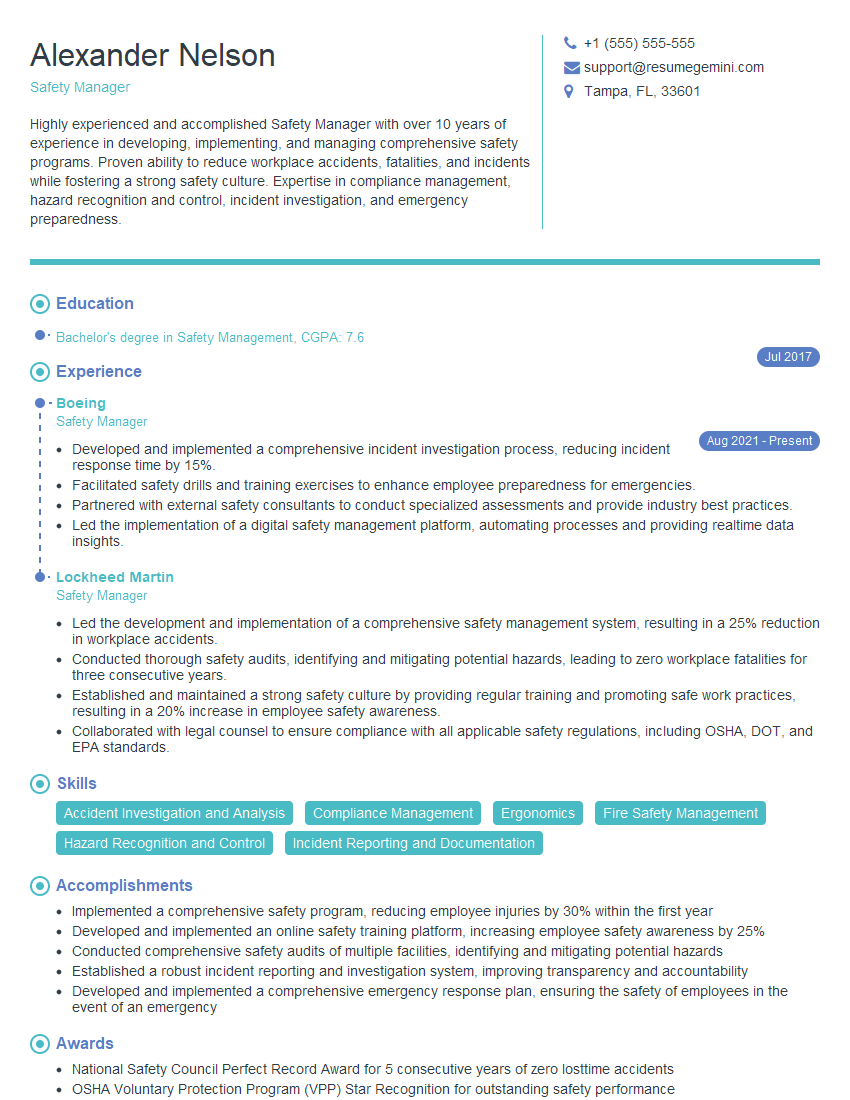
Safety Manager Resume Sample
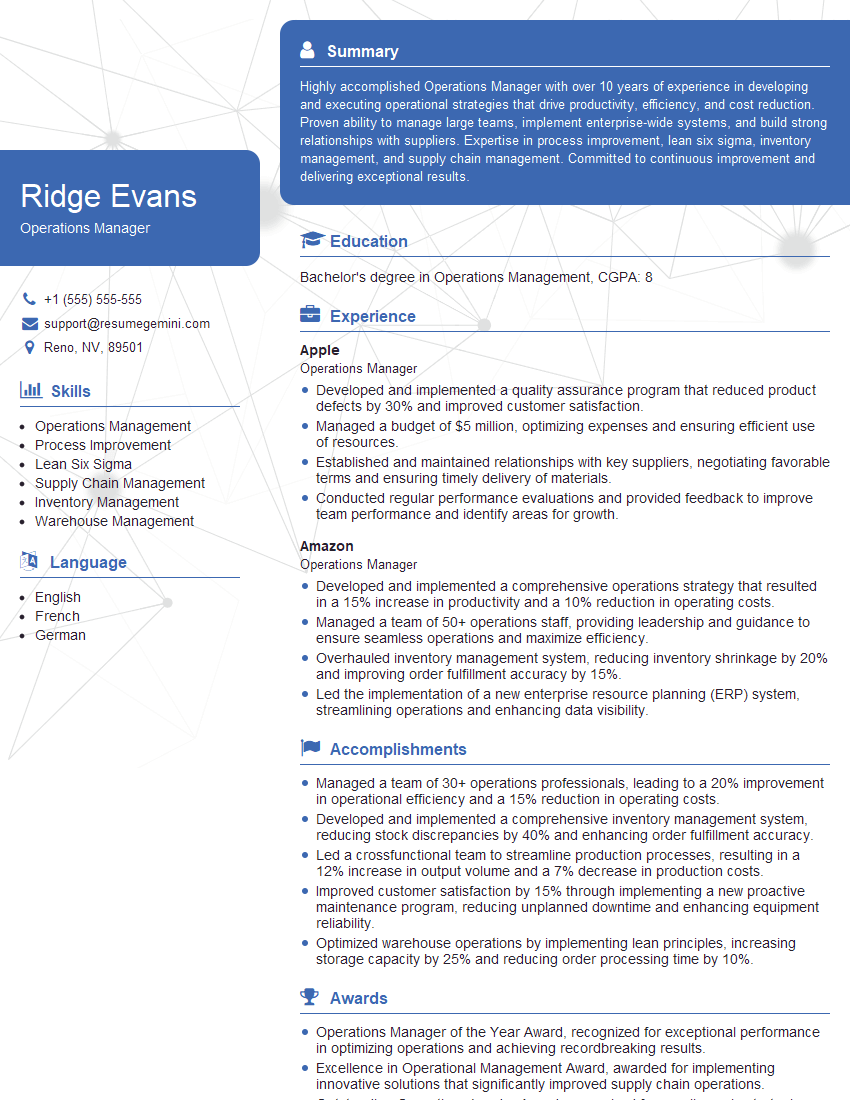
Operations Manager Resume Sample
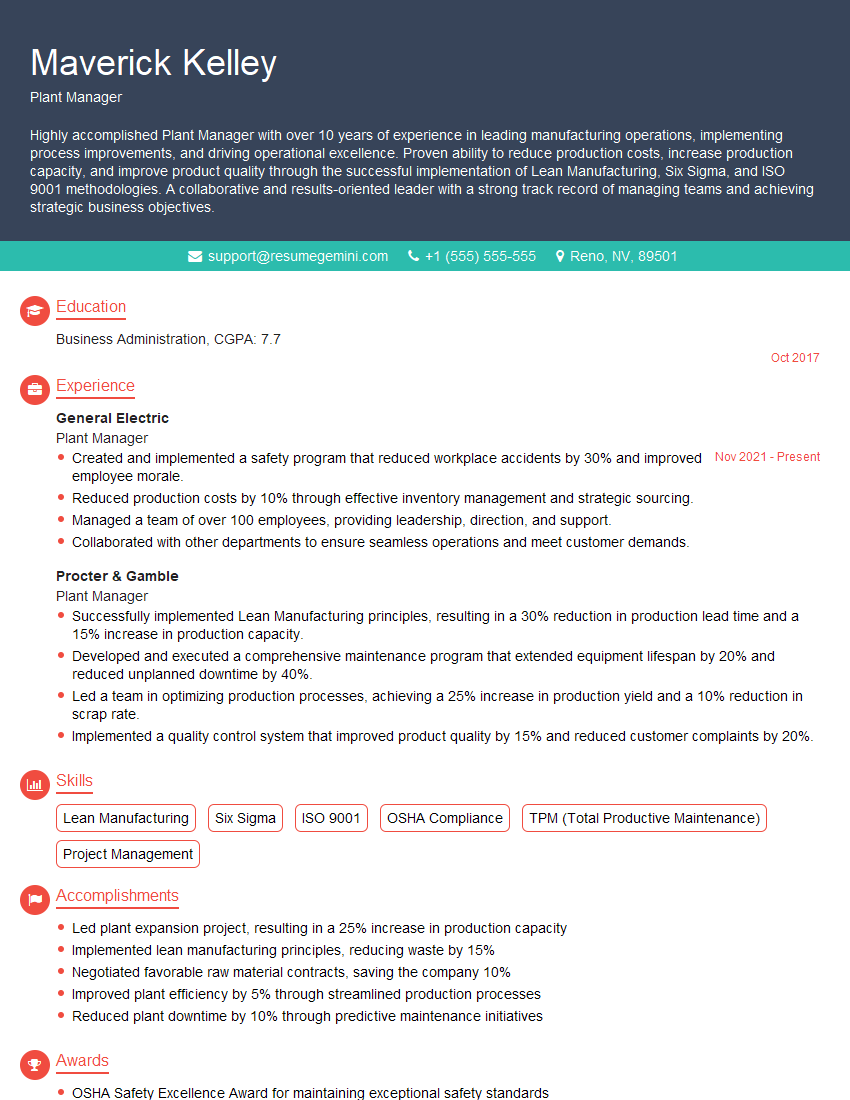
Plant Manager Resume Sample
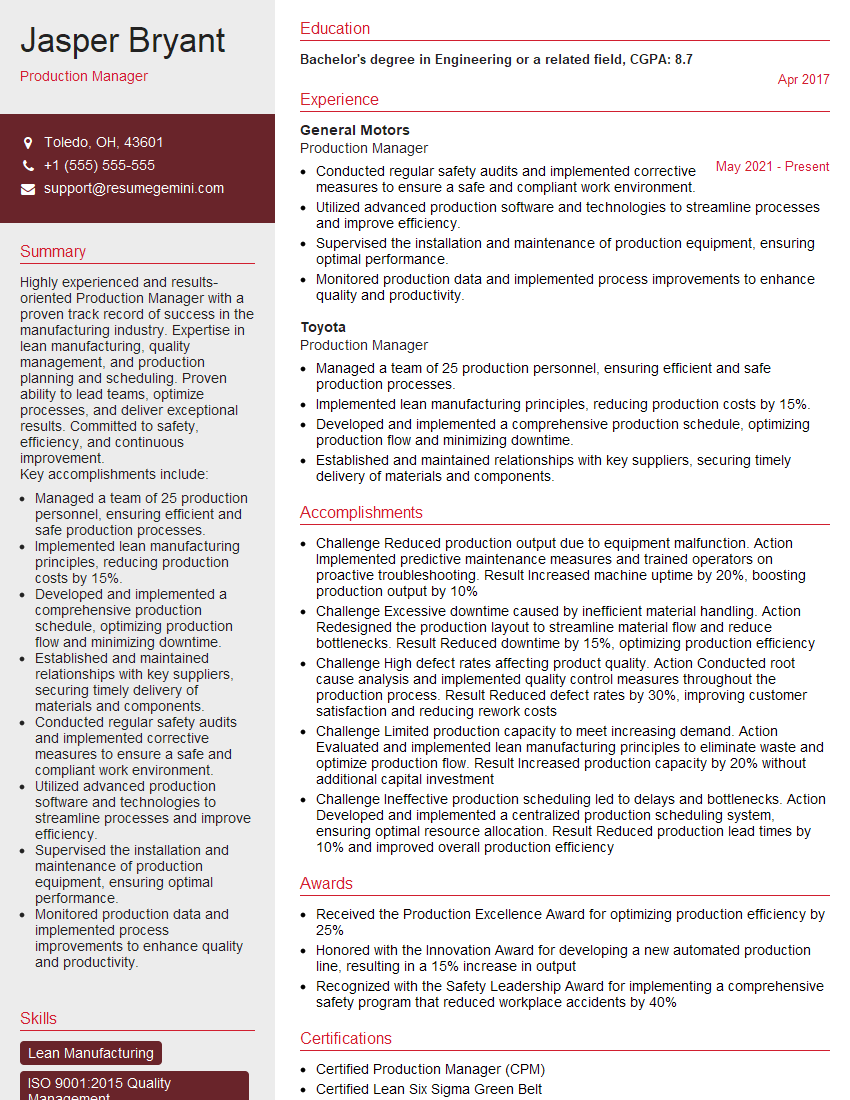
Production Manager Resume Sample

Maintenance Manager Resume Sample

Procurement Manager Resume Sample
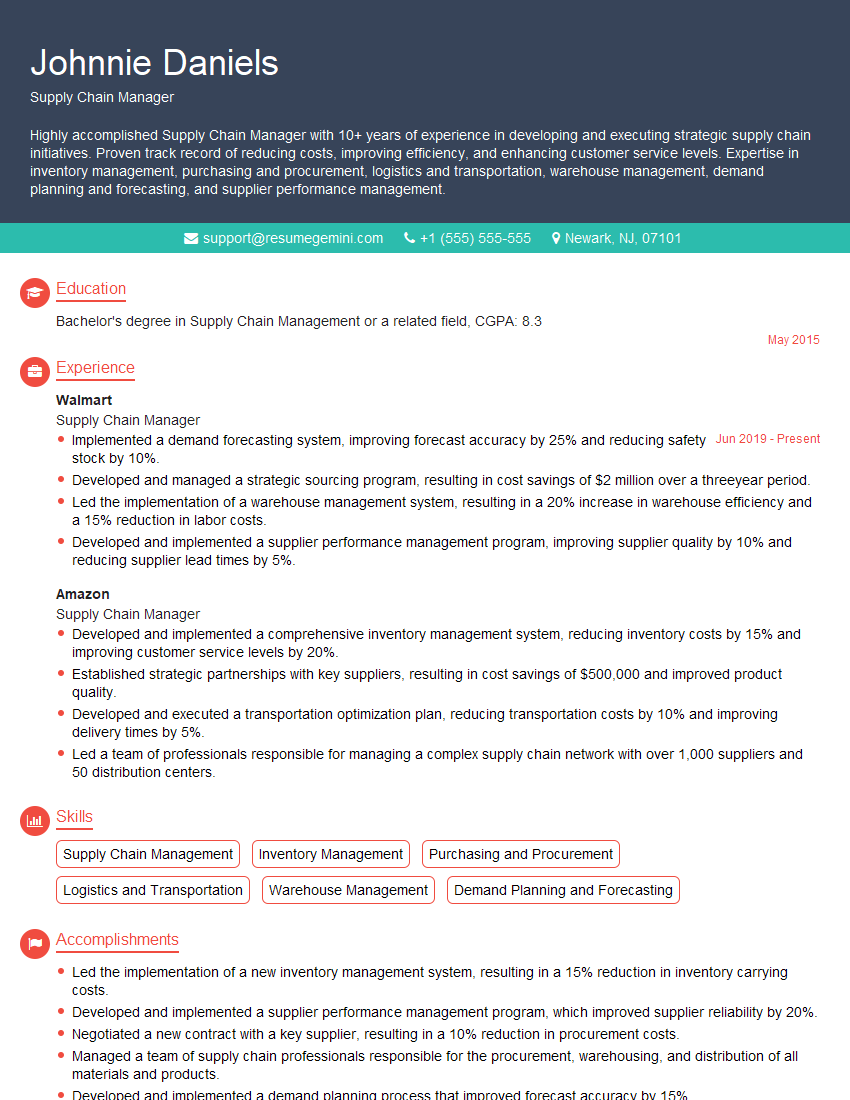
Supply Chain Manager Resume Sample
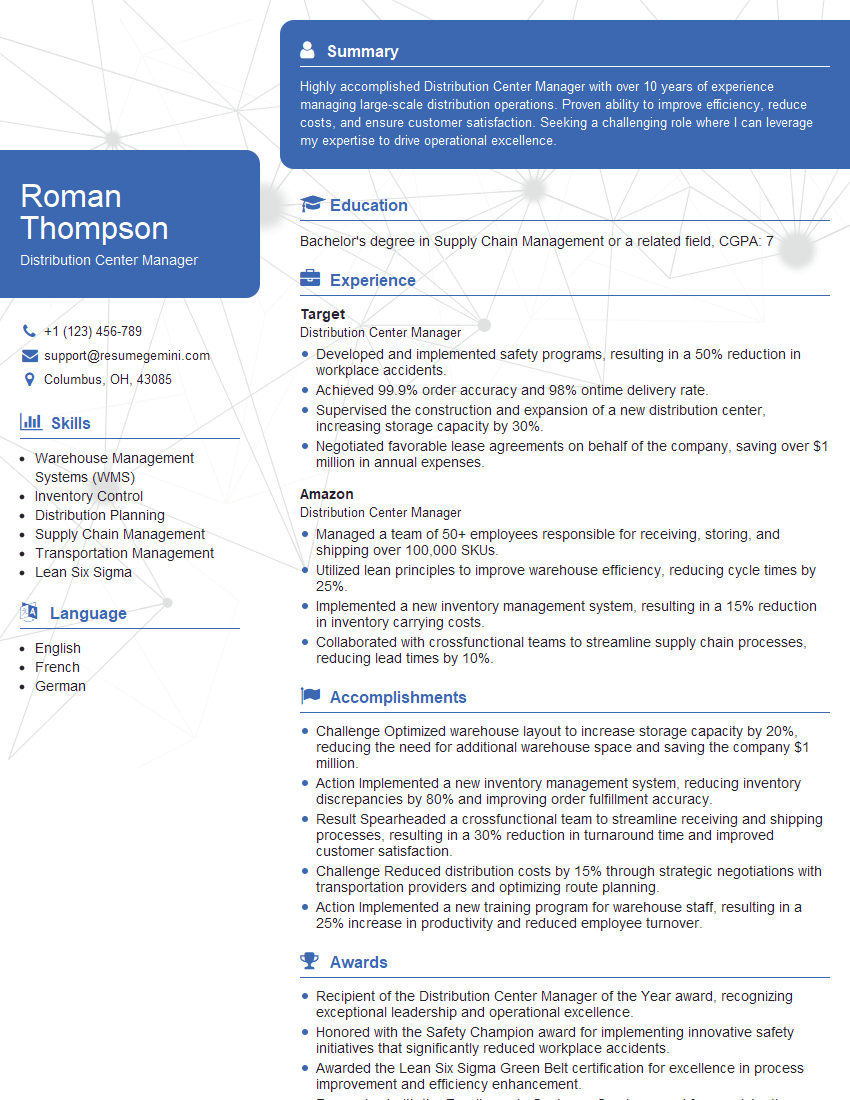
Distribution Center Manager Resume Sample

Logistics Manager Resume Sample
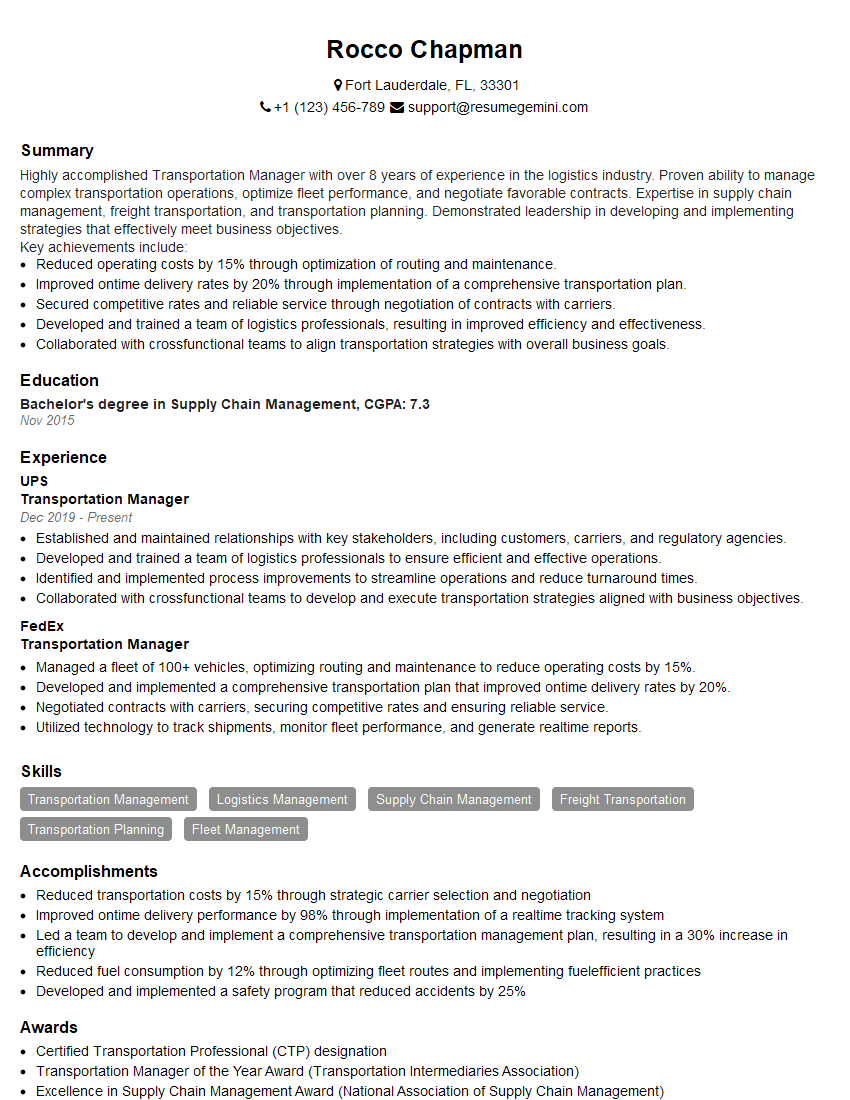
Transportation Manager Resume Sample
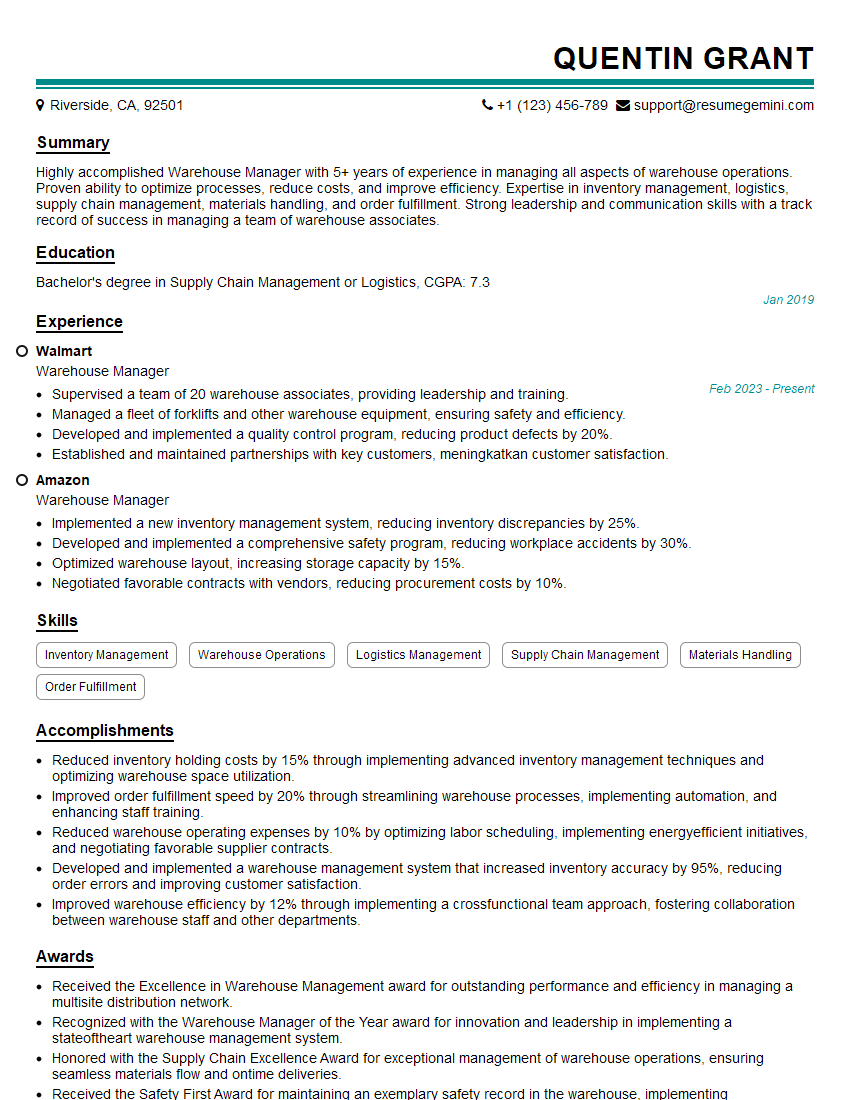
Warehouse Manager Resume Sample
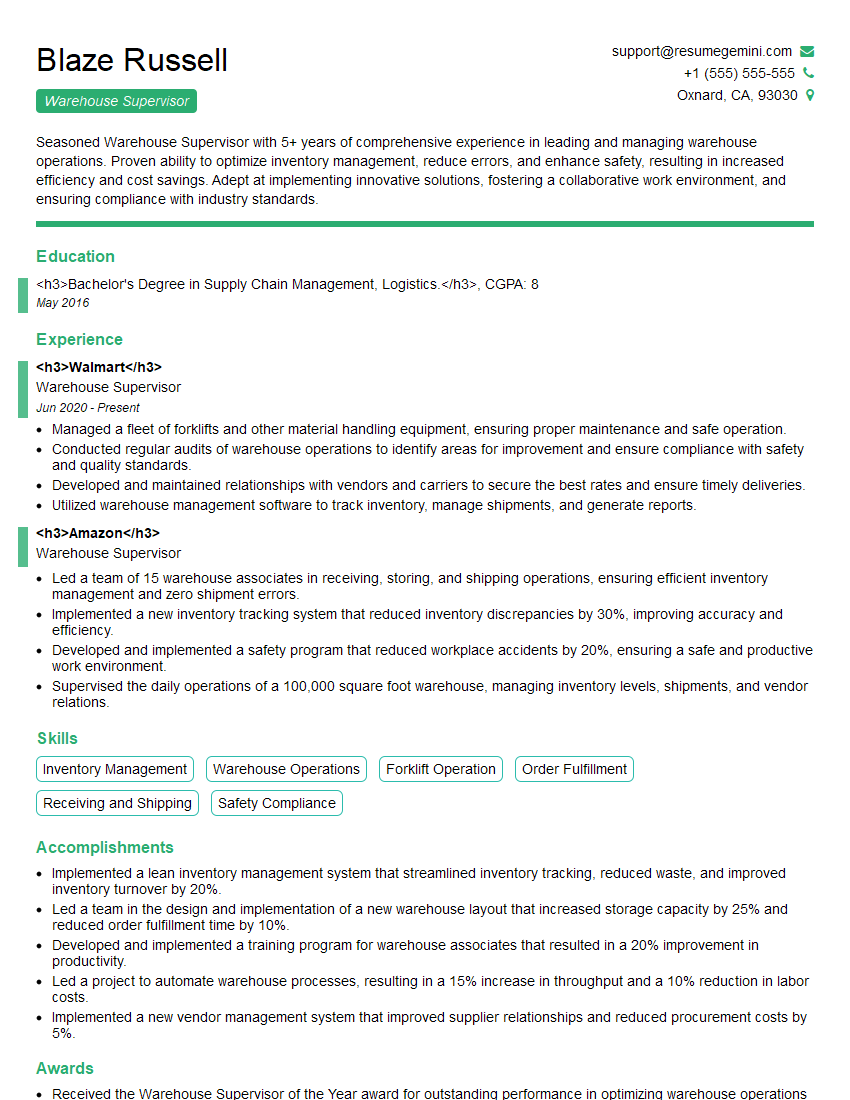
Warehouse Supervisor Resume Sample
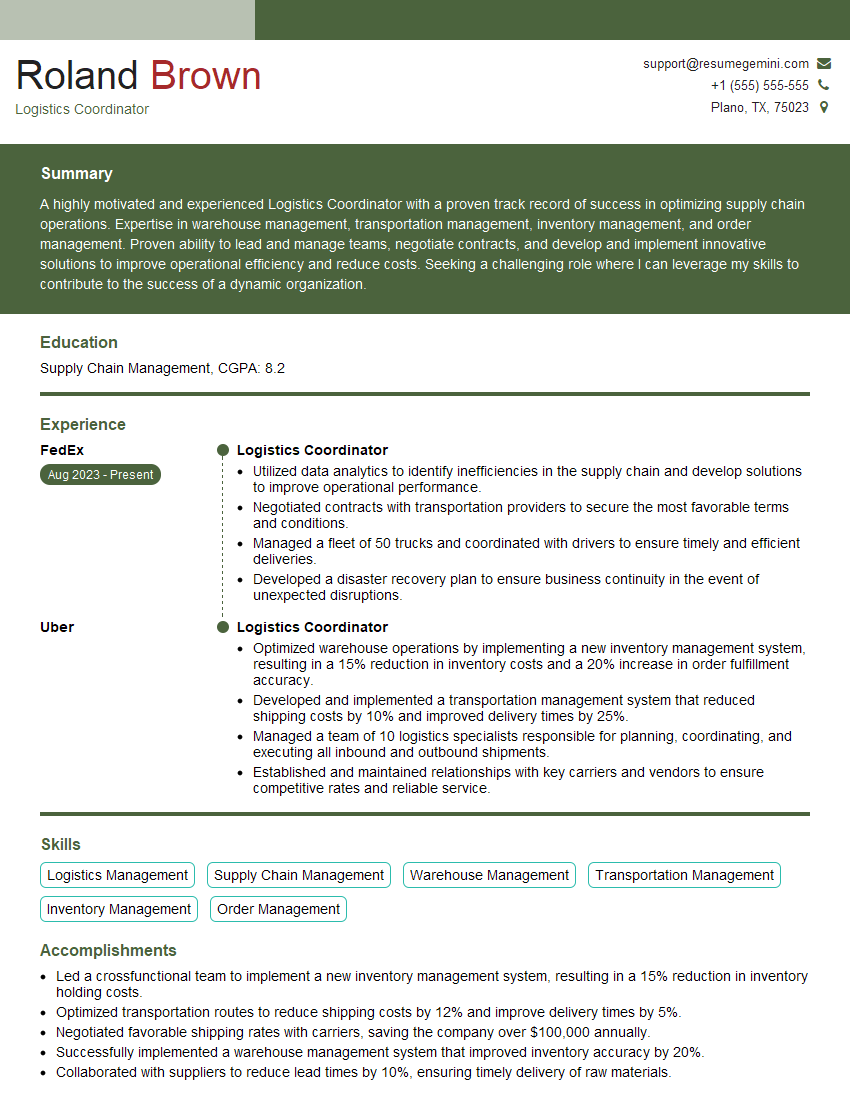
Logistics Coordinator Resume Sample
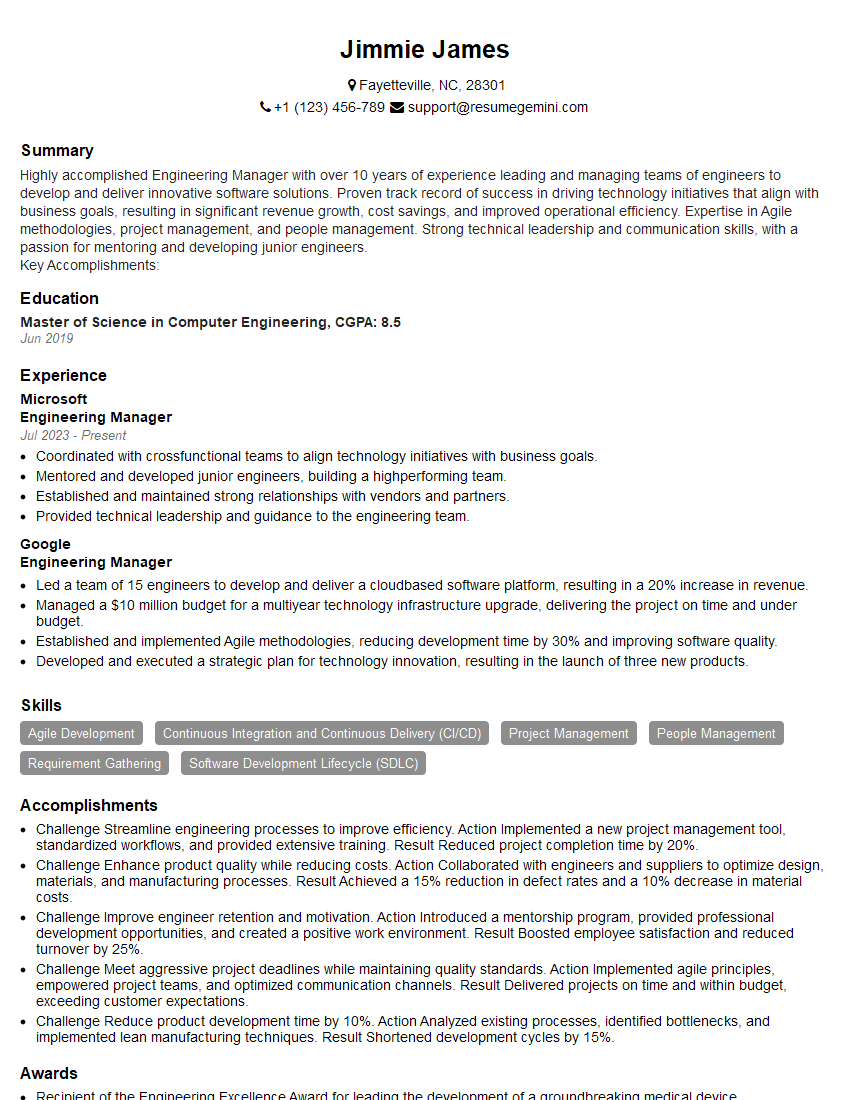
Engineering Manager Resume Sample
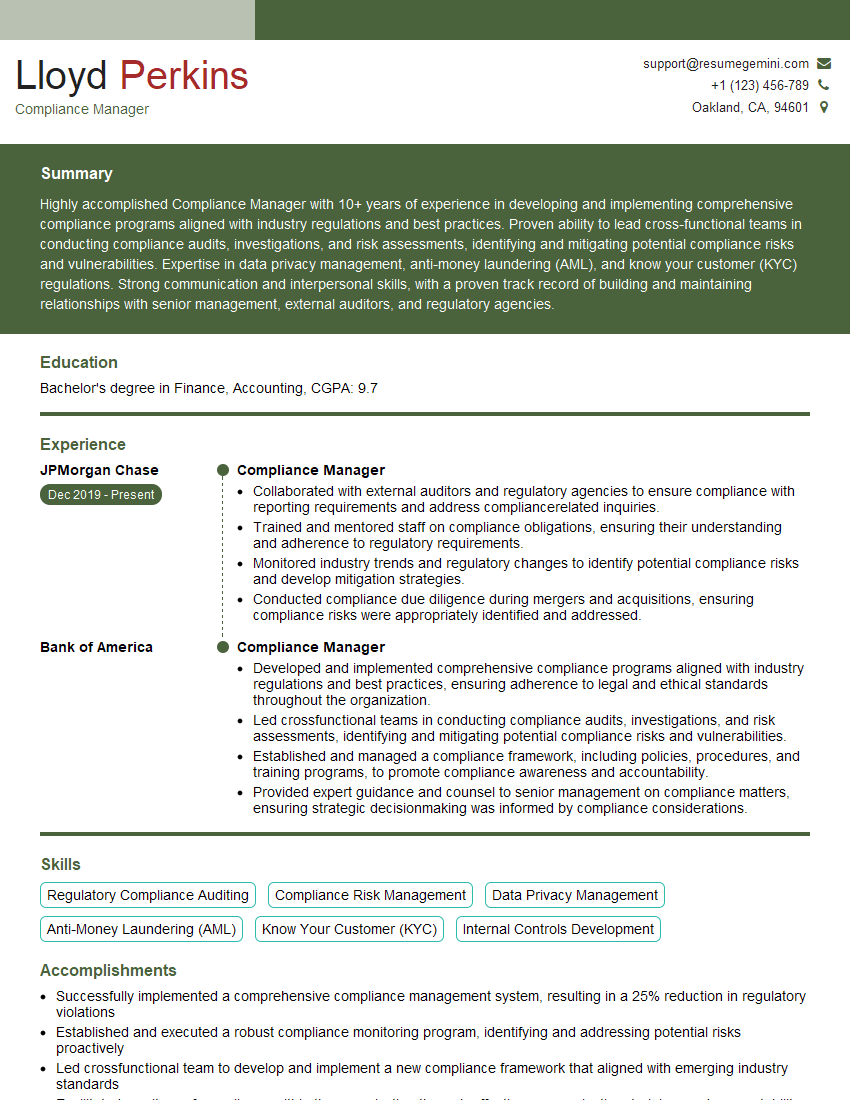
Compliance Manager Resume Sample
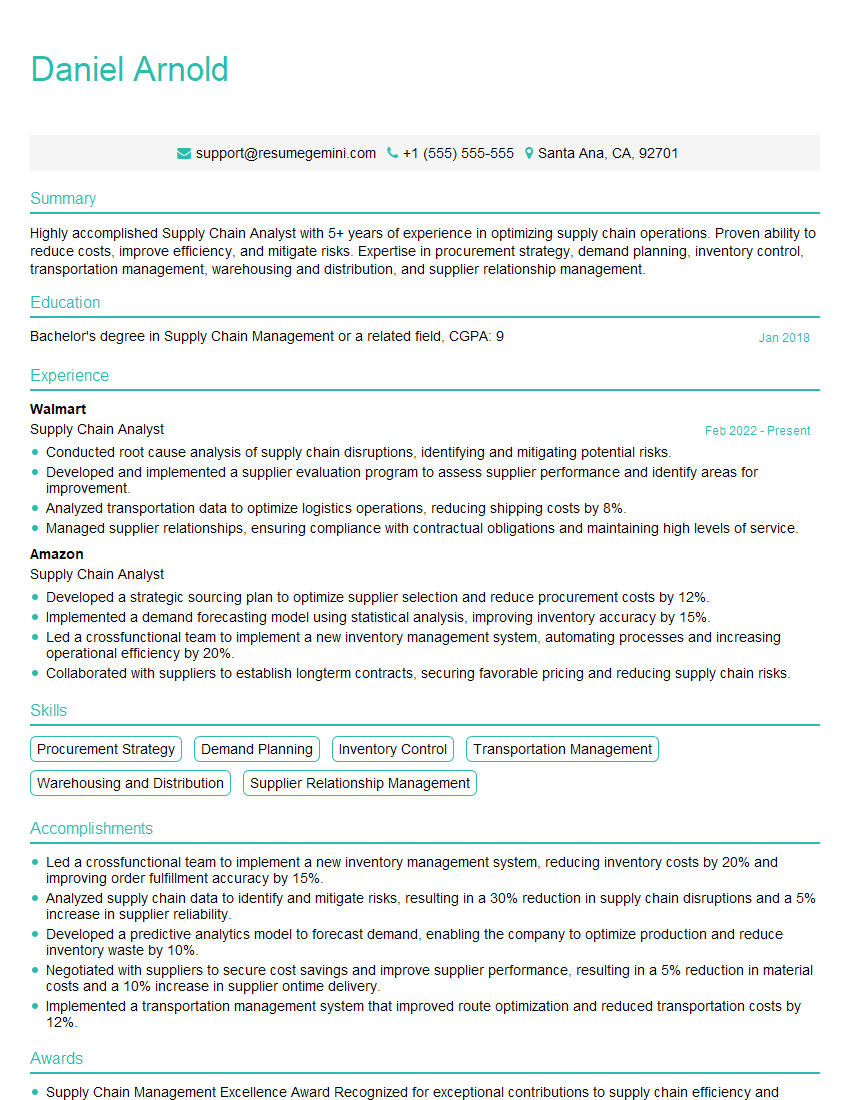
Supply Chain Analyst Resume Sample
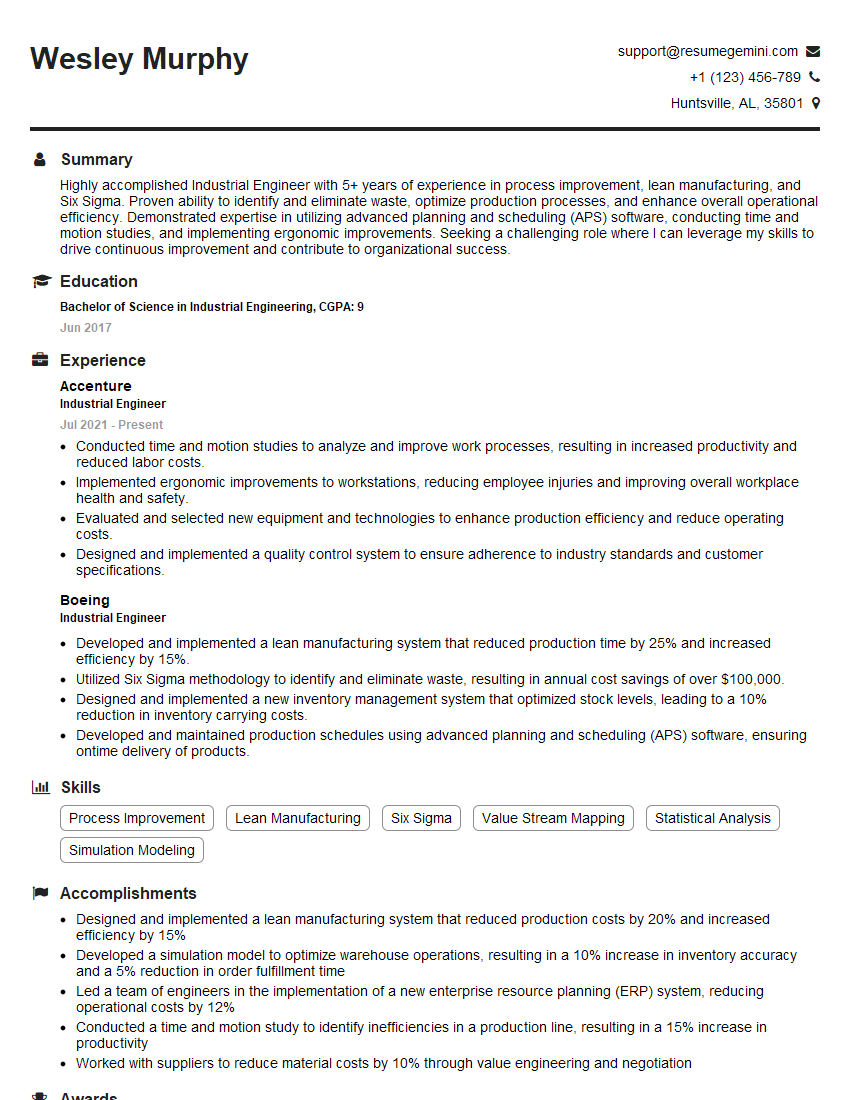
Industrial Engineer Resume Sample
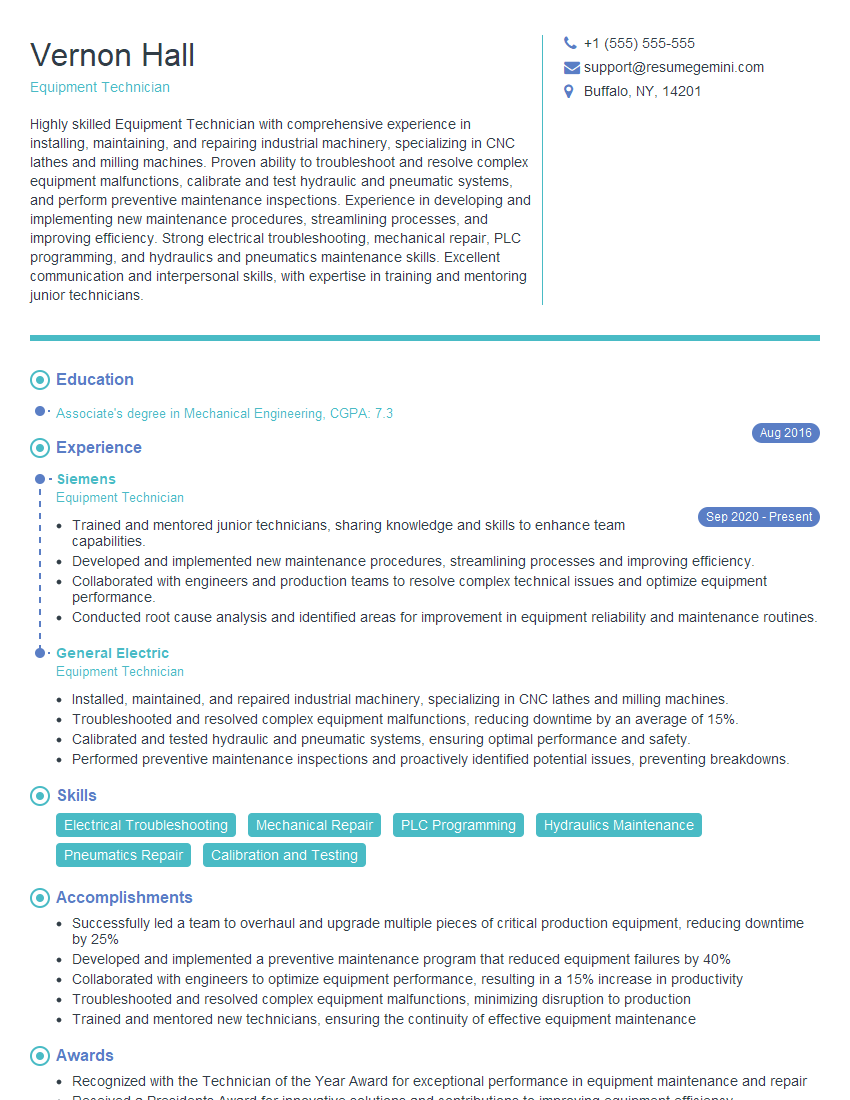
Equipment Technician Resume Sample

Crane Operator Resume Sample
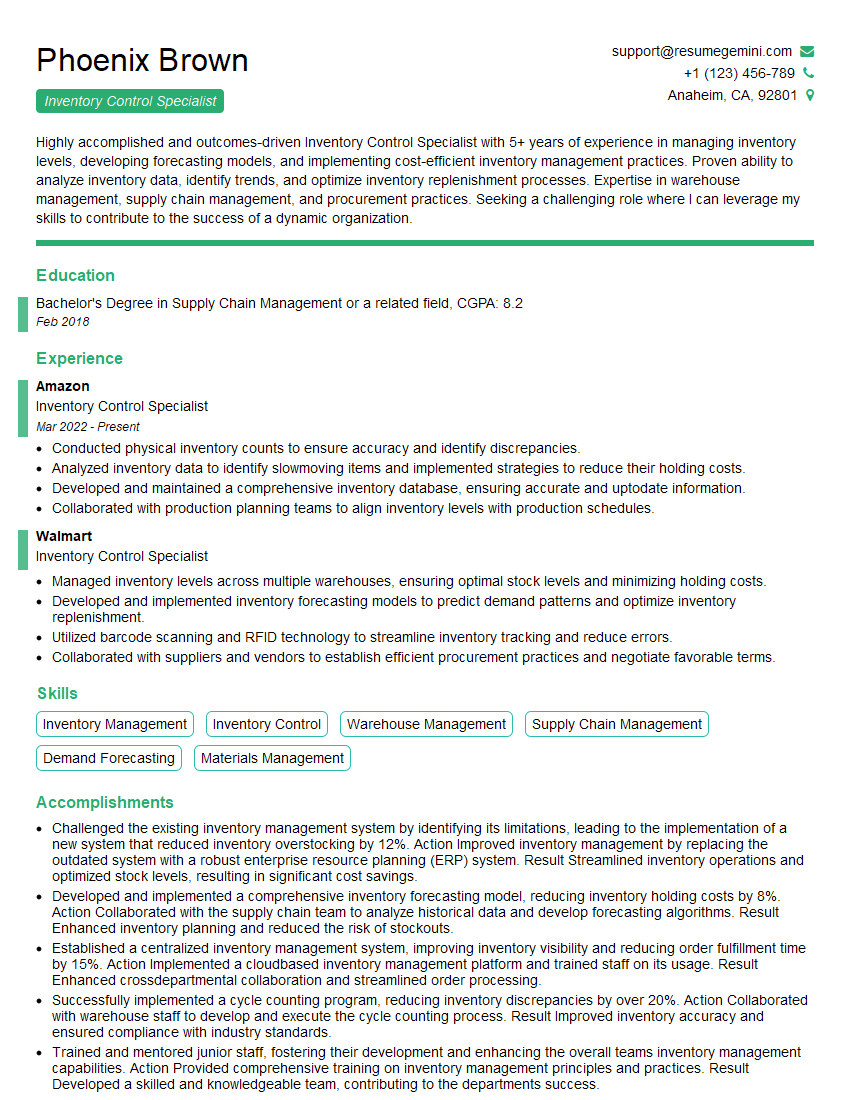
Inventory Control Specialist Resume Sample
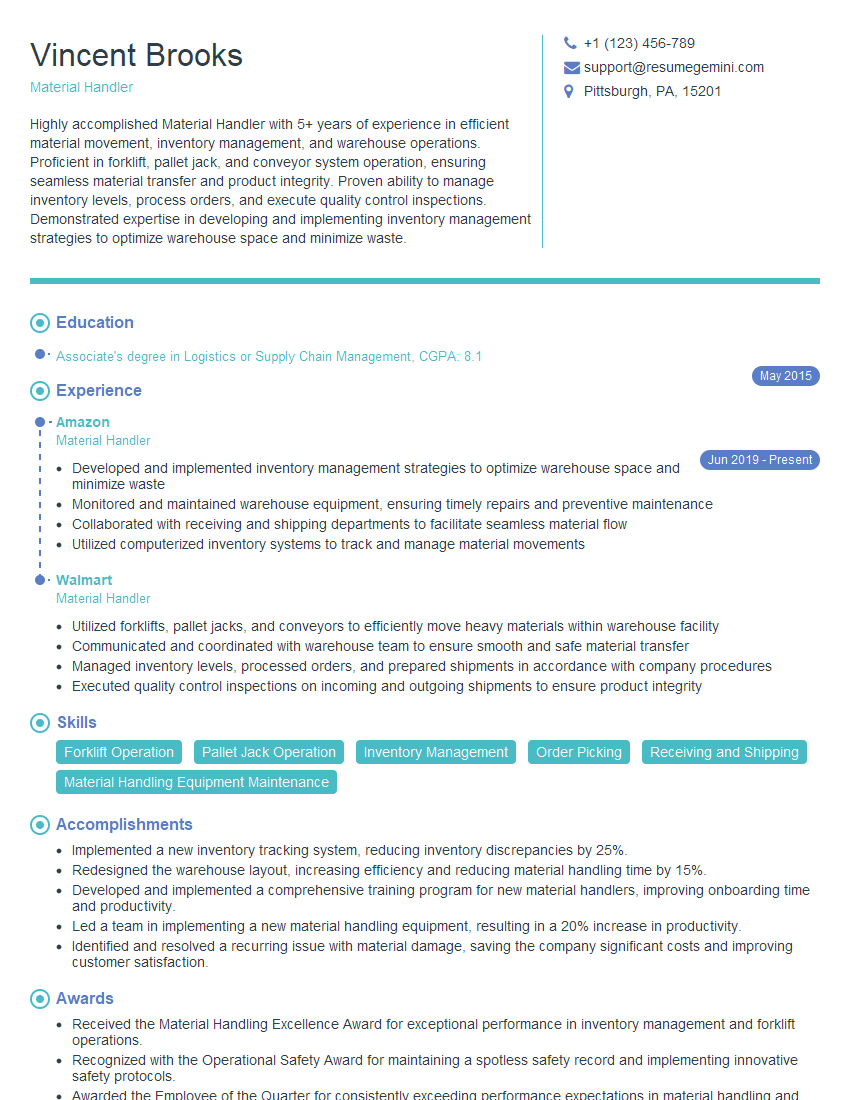
Material Handler Resume Sample
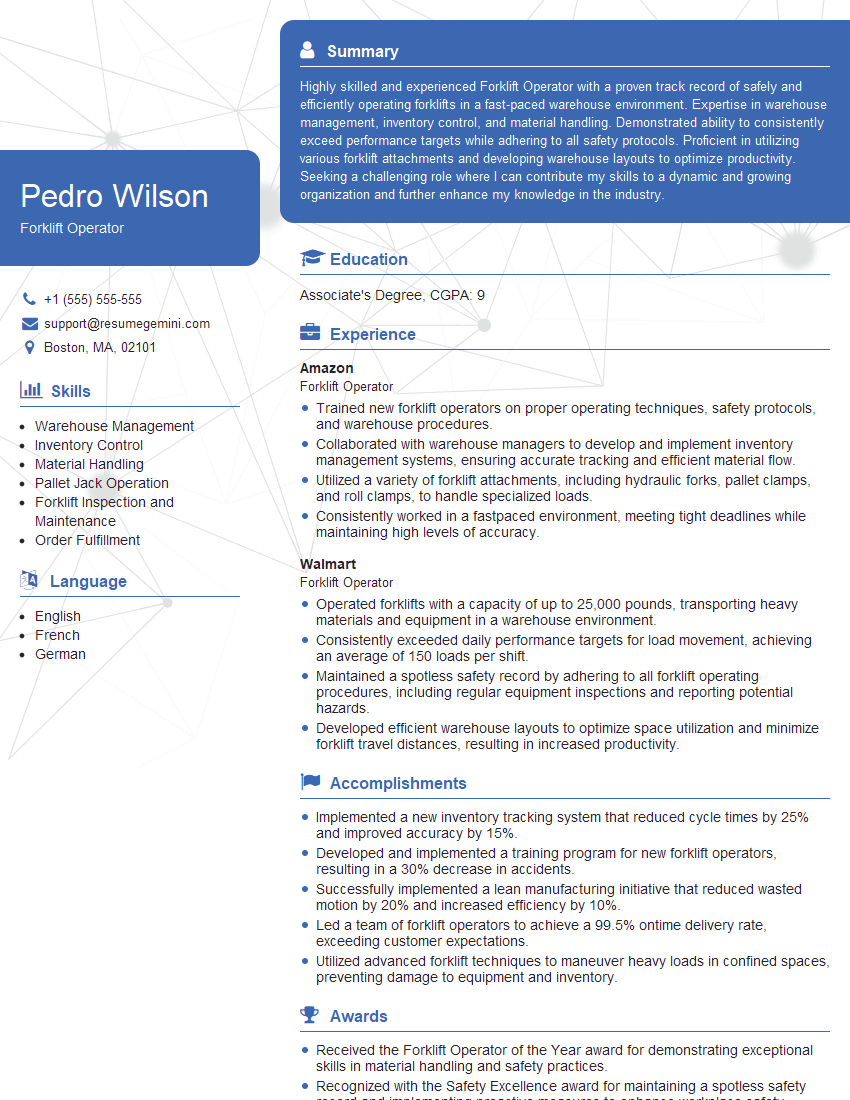
Forklift Operator Resume Sample
- Safety Manager
- Operations Manager
- Plant Manager
- Production Manager
- Maintenance Manager
- Procurement Manager
- Supply Chain Manager
- Distribution Center Manager
- Logistics Manager
- Transportation Manager
- Warehouse Manager
- Warehouse Supervisor
- Logistics Coordinator
- Engineering Manager
- Compliance Manager
- Supply Chain Analyst
- Industrial Engineer
- Equipment Technician
- Crane Operator
- Inventory Control Specialist
- Material Handler
- Forklift Operator
Explore more articles
Users Rating of Our Blogs
Share Your Experience
We value your feedback! Please rate our content and share your thoughts (optional).
What Readers Say About Our Blog
Very informative content, great job.
good