The thought of an interview can be nerve-wracking, but the right preparation can make all the difference. Explore this comprehensive guide to Camera Blocking interview questions and gain the confidence you need to showcase your abilities and secure the role.
Questions Asked in Camera Blocking Interview
Q 1. Explain the importance of pre-visualization in camera blocking.
Pre-visualization in camera blocking is absolutely crucial. It’s essentially a detailed rehearsal, but instead of actors, we use storyboards, animatics, or even just detailed sketches to map out the camera movements, actor positions, and the overall flow of the scene. Think of it as building a blueprint before you start constructing a house. Without it, you risk inefficient shooting days, missed opportunities for compelling visuals, and a disjointed final product.
The importance lies in identifying potential problems before they occur on set. For instance, pre-vis allows you to spot potential blocking conflicts, awkward camera angles, or moments where the action doesn’t flow smoothly. It allows for collaboration amongst the team before the expensive and time-consuming process of shooting begins.
A good pre-vis process ensures efficient resource allocation, minimizes retakes, and ultimately contributes to a more cohesive and visually stunning final product.
Q 2. Describe your process for blocking a scene with multiple actors and complex movements.
Blocking a complex scene with multiple actors requires a methodical approach. I typically begin with a detailed read-through of the script, focusing on the emotional arc and the physical actions of each character. Then, I’ll work closely with the director to establish the overall style and tone of the scene. Is it fast-paced and chaotic, or slow and intimate? This dictates our choices.
Next, I’ll create a rough blocking plan, often using storyboards or even simple stick figures. This helps visualize the actors’ movements in relation to the camera. I then start with one actor, blocking their movement to highlight key moments. We gradually build upon this, adding more actors and considering their interactions, line of sight, and physical relationships within the space. I constantly keep in mind the camera’s perspective and ensure that important moments are showcased effectively. For complex movements, we may use rehearsals to refine the action, making adjustments based on practical limitations and achieving a natural, believable flow.
For example, in a scene with a heated argument, I might start by blocking the lead actor, then position the supporting actors to visually emphasize their emotional responses and relationships. The blocking should complement the dialogue and build tension or release it as needed.
Q 3. How do you ensure continuity of camera angles and actor positions across multiple takes?
Maintaining continuity across multiple takes relies on meticulous planning and clear communication. Before shooting, I make sure everyone, including the actors, camera operator, and assistants, understand the blocking and camera positions precisely. We use markers on the floor, tape to indicate actor positions, and detailed camera reports.
During the shoot, I use a combination of methods to maintain consistency. The most crucial is a detailed shot list with clear descriptions of camera angles, actor positions, and any relevant notes. I also employ a camera operator who understands and adheres to the blocking plan scrupulously. Any deviation should be noted and documented. Then, we review the takes and communicate immediately if adjustments are needed to maintain continuity.
A good example is a close-up/wide shot sequence. We’ll mark the exact position of the actor for the close-up and ensure the wider shot is framed in a way that incorporates the close-up area without noticeable disparities. We also use slates to keep accurate records.
Q 4. What are the key considerations when blocking a scene for a specific camera type (e.g., Steadicam, handheld)?
The camera type significantly impacts camera blocking. A Steadicam shot, for example, requires fluid, flowing movements that can smoothly traverse a location. Blocking for a Steadicam involves considering the physical limitations and capabilities of the operator, ensuring enough space for smooth movements while also keeping the scene dynamic. You need wide, open spaces free from obstacles to allow for these unrestricted movements.
Handheld camera work, on the other hand, allows for more intimate and dynamic shots, often reflecting a more raw, documentary-style feel. Blocking might involve more improvisational and spontaneous movements. However, even with handheld shots, some pre-planning is necessary to ensure clarity and avoid jerky or disorienting camera movements.
For example, a dramatic chase scene may benefit from a handheld camera to convey the urgency and intensity. But, even with handheld, the camera path needs to be planned out to maintain the audience’s awareness of the action and not feel chaotic. A Steadicam might be chosen for a long, flowing shot across a large landscape, showcasing the scale and beauty of the location, emphasizing the characters’ journey.
Q 5. How do you handle unexpected challenges during a camera blocking session on set?
Unexpected challenges are inevitable on set. My approach involves a combination of adaptability, problem-solving, and open communication. If an actor suggests an alternative movement that feels more natural, I’ll work with them to see if it fits the overall scene. If a prop is unavailable or a location is different than anticipated, I adjust the blocking accordingly, maintaining the essence of the scene while working within the new constraints.
For instance, a sudden rain shower might necessitate a shift from exterior to interior shots or a change in the scene’s timing. I’ll then collaborate with the director, art department, and other crew members to find the best solution, ensuring that changes maintain narrative flow and visual coherence. Maintaining flexibility and a positive attitude is key to navigating such unexpected situations effectively.
Q 6. Explain your understanding of shot composition and its relation to camera blocking.
Shot composition is intrinsically linked to camera blocking. It’s the art of arranging visual elements within the frame to create a specific mood, emphasize certain aspects of the scene, and guide the viewer’s attention. Blocking decisions directly influence composition. The placement of actors within the frame, their relationships to each other and the background, and the overall balance of the shot are all aspects determined during blocking.
For example, using the rule of thirds can dramatically improve a shot. By strategically placing actors off-center rather than in the middle of the frame, a more visually interesting and balanced composition is achieved. The blocking dictates which character is positioned where within this framework, affecting the narrative emphasis. A close-up focuses attention on an actor’s emotions, while a wide shot establishes the context. Both are influenced by the blocking process.
Q 7. How do you collaborate effectively with the director and other department heads during camera blocking?
Effective collaboration is paramount during camera blocking. I begin by establishing clear communication channels with the director, ensuring we’re both on the same page regarding the scene’s intent, style, and overall vision. I present my blocking plan, outlining the rationale behind my choices, and welcome feedback and suggestions. This is a collaborative effort; we all work together to achieve the best possible outcome.
With other department heads, such as the art director and the lighting team, I coordinate closely to ensure the set design and lighting complement the blocking plan. For example, I might work with the art director to confirm the availability of necessary props or to adjust set pieces to optimize camera angles. With the lighting team, I’d discuss lighting setups to highlight key moments and create the desired mood and atmosphere.
Open communication, active listening, and a willingness to adapt and compromise are crucial for harmonious and effective collaboration. It’s about creating a shared vision and working together to bring that vision to life.
Q 8. Describe your experience with storyboarding and its use in camera blocking.
Storyboarding is crucial for pre-visualization in filmmaking, acting as a blueprint for camera blocking. It’s a series of drawings or images depicting key scenes and camera angles. In camera blocking, storyboards help to translate the script’s narrative into visual language, determining camera placement, character movement, and overall shot composition before stepping onto the set. I extensively use storyboards to communicate my vision to the director, cinematographer, and actors. For example, in a scene depicting a tense confrontation, the storyboard might show a low-angle shot emphasizing the imposing figure of the antagonist, followed by a close-up on the protagonist’s worried expression, showcasing the power dynamic.
My process usually involves creating detailed storyboards, including shot descriptions, camera movement notations (like ‘dolly in,’ ‘pan left’), and character actions. This ensures everyone is on the same page and reduces on-set confusion. I’ve found that a well-executed storyboard significantly speeds up the blocking process and improves the overall quality of the final product, particularly in complex scenes.
Q 9. How do you incorporate practical limitations (set design, lighting, etc.) into your camera blocking?
Incorporating practical limitations is paramount. Ignoring them leads to costly reshoots and creative compromises. My approach begins with a thorough understanding of the set design and lighting plan. Before even considering camera placement, I’ll review blueprints, lighting diagrams, and discuss limitations with the set designer and lighting director. For instance, if a scene requires a specific lighting setup that restricts camera movement, I’ll adapt the blocking to work within those constraints.
I consider elements like available space, furniture placement, and existing lighting fixtures, using them to my advantage whenever possible. If a limited space restricts wide shots, I might opt for tighter shots focusing on character interactions, enhancing intimacy. Similarly, if lighting restricts camera angles, I’ll work with the lighting team to achieve the best possible lighting for the chosen angles. This collaborative approach is key to overcoming practical limitations and achieving a visually appealing and cohesive final product.
Q 10. Explain your approach to blocking dialogue scenes versus action scenes.
Blocking dialogue scenes and action scenes requires different approaches. Dialogue scenes prioritize clear communication and emotional connection. My approach here focuses on creating intimate compositions that emphasize character interaction. I often use over-the-shoulder shots, close-ups, and two-shots to highlight expressions and subtle shifts in body language. The camera movement is typically minimal, ensuring the focus remains on the performers and their interaction. I might use subtle camera movements like a slow pan to follow a character’s gaze or a slight tilt to emphasize a specific emotion.
Action scenes, conversely, require dynamic camera movement to create energy and excitement. I often utilize techniques like fast pans, zooms, and tracking shots to convey speed and momentum. Establishing master shots first is crucial, followed by coverage with various angles and close-ups to capture the action’s details. Here, clear communication about the choreography and timing with the stunt coordinator or action director is critical to ensure safety and proper camera placement to capture the action clearly and dynamically. Think of a car chase sequence: You’ll have wide shots establishing the overall chase, close-ups on the actors’ reactions, and quick cuts for suspense.
Q 11. What software or tools do you use to plan and visualize camera blocking?
I utilize a combination of software and tools to plan and visualize camera blocking. Storyboarding software like Storyboard Pro is invaluable for creating detailed, animatic-style previews. It allows me to experiment with different camera angles, movements, and character positions before actual filming. I also use 3D modeling software, such as Blender or Cinema 4D, to create virtual sets and rehearse the blocking in a 3D environment, which is particularly useful for complex scenes or those with intricate set designs. This allows me to visualize the final product in a more realistic and detailed way.
Beyond software, I find simple tools like storyboards drawn on paper, along with shot lists and detailed descriptions, to be equally important. These serve as a quick and efficient way to communicate ideas and to plan shots on the fly, especially when changes arise during filming. The combination of advanced software and traditional methods provides a comprehensive approach to planning and visualizing camera blocking, catering to different scales and complexity of projects.
Q 12. How do you maintain efficiency and manage time constraints during camera blocking?
Maintaining efficiency and managing time constraints is critical. Thorough pre-production is key; meticulous planning, including detailed storyboards, shot lists, and discussions with the director and other crew members before stepping onto the set, significantly reduces on-set time. Clear communication is also vital, ensuring everyone understands the plan. I use a collaborative approach, involving the director, cinematographer, and actors in the blocking process early on, which saves time and ensures buy-in from the entire team.
On set, I prioritize quick decision-making and adaptable strategies. I’m prepared to adjust the blocking as needed based on unforeseen circumstances or actor suggestions. Efficient communication through clear instructions and concise feedback keeps the workflow smooth, allowing us to focus on the most important aspects of the scene without wasting precious time. I’ve found that detailed planning and adaptability is a winning combination in managing time constraints during camera blocking.
Q 13. Describe your experience with different camera movements (e.g., dolly, crane, zoom).
I have extensive experience with various camera movements. A dolly shot, for example, involves moving the camera smoothly along a track, allowing for controlled and precise movement, often used for creating dynamic tracking shots following a moving subject. A crane shot utilizes a crane to lift the camera, providing aerial perspectives and dramatic visual impact, effectively changing the height and angle of the camera to add depth and perspective. Zooms, on the other hand, adjust the camera lens to change the magnification, creating a sense of closeness or distance.
I carefully choose each movement based on the scene’s requirements. A dolly shot might emphasize the pursuit in a chase scene, a crane shot might showcase the vastness of a landscape, and a zoom could highlight a crucial detail or emphasize a character’s emotional state. Understanding the nuances of each movement and its effect on the viewer is fundamental to making informed decisions about camera movement, ensuring its purpose is relevant and enhances the overall scene. The choice is never arbitrary but driven by narrative intent.
Q 14. How do you ensure the camera blocking supports the emotional tone and pacing of the scene?
Camera blocking directly influences the emotional tone and pacing of a scene. For example, a low-angle shot can make a character appear powerful and menacing, while a high-angle shot can make them seem vulnerable or insignificant. Slow, deliberate camera movements can heighten suspense, while fast, jarring movements can create a sense of chaos. In a romantic scene, close-ups and slow pans might underscore intimacy and connection; whereas, in a fast-paced action sequence, quick cuts and dynamic camera movements would accentuate the thrill and urgency.
My approach involves carefully considering the scene’s emotional arc and pacing. I work closely with the director to determine the desired tone and rhythm, ensuring the camera blocking supports and enhances this. By selecting the appropriate camera angles, movements, and shot lengths, I contribute to crafting an impactful and emotionally resonant cinematic experience for the viewer. It is a crucial element in creating a consistent and effective storytelling approach.
Q 15. Explain how you would block a scene requiring a complex camera setup with multiple cameras.
Blocking a complex scene with multiple cameras requires meticulous planning and coordination. I start by thoroughly understanding the scene’s action and the director’s vision. This often involves reviewing the script, storyboards, and discussing the director’s intentions.
Next, I create a visual representation, perhaps a rough sketch or using a digital tool like Storyboard Pro, mapping out the camera positions and movement for each shot. This helps visualize the interplay between different camera angles and ensures smooth transitions. I consider factors like coverage (master shot, medium shots, close-ups), continuity, and the overall narrative flow. For instance, if we’re filming a tense negotiation scene, I might have a wide shot establishing the environment, a medium shot focusing on the main characters’ expressions, and close-ups to highlight key moments.
The process then involves assigning specific camera operators to each position, detailing their shot responsibilities. This is done in collaboration with the director of photography (DP) and the first assistant director (1st AD) who manages the overall schedule and crew. Clear communication is vital to ensure everyone understands their role. Rehearsals with the actors help fine-tune the blocking and camera movement, allowing adjustments for timing and performance subtleties. Finally, a detailed shot list is created that documents each camera’s setup and movement, serving as a guide during filming.
Career Expert Tips:
- Ace those interviews! Prepare effectively by reviewing the Top 50 Most Common Interview Questions on ResumeGemini.
- Navigate your job search with confidence! Explore a wide range of Career Tips on ResumeGemini. Learn about common challenges and recommendations to overcome them.
- Craft the perfect resume! Master the Art of Resume Writing with ResumeGemini’s guide. Showcase your unique qualifications and achievements effectively.
- Don’t miss out on holiday savings! Build your dream resume with ResumeGemini’s ATS optimized templates.
Q 16. How do you ensure safety for actors and crew during camera blocking and shooting?
Safety is paramount on any film set. My approach to ensuring safety during camera blocking and shooting is proactive and multi-faceted. It begins with a thorough risk assessment of the location and proposed shots. This includes identifying potential hazards such as uneven terrain, props that could be dangerous, or proximity to moving vehicles.
Next, I work closely with the safety officer and the 1st AD to establish clear safety protocols. This might involve designating specific safety personnel for each camera setup, using appropriate safety equipment such as harnesses and spotters for elevated camera positions, and establishing clear communication channels to handle emergencies. For example, if a scene involves a stunt, I’ll collaborate with the stunt coordinator to ensure the cameras are positioned in safe zones while capturing the action effectively.
During rehearsals, I emphasize safe actor movement and camera operation. This includes ensuring there’s enough space for the actors to move freely without colliding with cameras or crew members. All crew members are briefed on potential hazards and safety procedures before filming begins. A regular safety check of the set is conducted throughout the day to proactively mitigate any developing risks. Clear communication and mutual respect for safety are crucial components of a successful and safe production.
Q 17. Describe your experience with working with different types of lenses and their impact on blocking.
My experience spans a wide range of lenses, and each lens type significantly impacts camera blocking. Wide-angle lenses (e.g., 14-35mm) allow for a broader field of view, often used for establishing shots or capturing large-scale action. However, they can also distort perspective, requiring careful consideration of actor placement and framing.
Telephoto lenses (e.g., 70-200mm) compress perspective and offer shallow depth of field, ideal for isolating subjects against a blurred background. This affects blocking as it allows for tighter compositions, potentially limiting the actors’ movement within the frame. Medium lenses (e.g., 35-50mm) offer a more natural perspective and are versatile, often used for a variety of shots. The choice of lens directly dictates the required shooting distance and affects the overall aesthetic of the scene.
For example, when using a wide-angle lens in a dialogue scene, I might position the actors further apart than I would with a telephoto lens to maintain a comfortable framing. I carefully consider the lens’ characteristics and how they influence the emotional impact of a scene. The interplay between the lens’ focal length, depth of field, and the actors’ movements all inform my blocking decisions.
Q 18. How do you incorporate the director’s vision and artistic style into your camera blocking?
Incorporating the director’s vision is fundamental to effective camera blocking. I begin by thoroughly understanding the director’s artistic style and overall vision for the film. This often involves detailed discussions, reviewing previous work, and analyzing the script for thematic elements and intended mood.
For example, if the director prefers a naturalistic style, my blocking would favor long takes and minimal camera movement, focusing on capturing spontaneous actor interactions. Conversely, a director who favors a more stylized approach might require complex camera movements and unique angles to convey the intended atmosphere. I actively translate their artistic choices into concrete blocking decisions, always keeping the narrative and emotional impact of the scene at the forefront.
This collaboration extends to shot composition, camera angles, and even the type of lenses used. I might use specific camera angles to emphasize a character’s vulnerability or power, mirroring the director’s intention. The process is iterative and collaborative; I often present different blocking options to the director, allowing for discussion and adjustments before settling on the final approach.
Q 19. How do you adjust your camera blocking to accommodate changes in the script or set design?
Adaptability is critical in camera blocking. Script changes or set design alterations necessitate a flexible and responsive approach. If the script changes, I reassess the scene’s action and adjust the camera angles and movements to reflect the new dialogue or narrative flow. This might involve removing or adding shots, modifying camera positions, or adjusting the timing of camera movements.
Similarly, changes to the set design require me to re-evaluate the camera positions and blocking to ensure the shots remain effective and visually appealing. For example, if a crucial piece of furniture is removed from the set, I might need to adjust camera angles to maintain the desired composition or find alternative ways to frame the scene. I always prioritize maintaining consistency and narrative clarity, ensuring that any modifications enhance rather than detract from the scene’s overall impact.
My approach involves close communication with the director, production designer, and other key crew members to ensure the changes are incorporated seamlessly. Flexibility, quick thinking, and a collaborative spirit are essential to navigate these unexpected situations effectively.
Q 20. Explain your experience with blocking scenes in various locations (e.g., interiors, exteriors).
My experience with blocking scenes in diverse locations—interiors and exteriors—emphasizes the importance of adapting to the environment. Interior blocking is often more controlled, with limited space and pre-existing lighting conditions. I focus on optimizing the use of available space, carefully considering lighting placement and camera positioning to avoid shadows or unwanted reflections.
Exterior blocking presents different challenges, often involving unpredictable elements such as weather, sunlight, and ambient sounds. I adapt by carefully selecting shooting times to optimize lighting conditions and by considering the impact of natural elements on the scene. For example, I might block a scene to take advantage of the golden hour lighting or to minimize the effect of strong winds on the actors or equipment. Careful consideration of the location’s surroundings and potential hazards is paramount.
Irrespective of the location, the key to successful blocking remains consistent: a thorough understanding of the scene’s needs, clear communication with the crew, and a meticulous approach to planning and execution. I always strive to create visually compelling and narratively effective scenes, regardless of the environment.
Q 21. What are the key differences between blocking for film and television?
The primary difference between blocking for film and television lies in the constraints of time and resources. Film often allows for more extensive rehearsals, more elaborate camera setups, and longer takes, enabling more complex and nuanced blocking. Television, due to its faster pace and tighter budgets, generally necessitates more efficient blocking, often relying on shorter takes and simpler camera movements.
Film might utilize more complex camera techniques, such as Steadicam shots or crane movements, which require more time and planning. Television typically prioritizes coverage that is efficient and easy to edit, favoring simpler camera setups and established shot patterns to meet shorter shooting schedules. However, the narrative considerations of continuity and emotional impact remain crucial to both media, guiding the blocking process in each case.
Furthermore, television often requires a higher number of scenes within a given timeframe, demanding a more streamlined blocking approach. While the aesthetic goals might overlap—achieving a compelling visual narrative—the practical considerations of production schedules and resources greatly influence the execution of blocking in film versus television.
Q 22. How do you prioritize different camera angles to achieve the desired visual storytelling?
Prioritizing camera angles for effective visual storytelling is a crucial aspect of filmmaking. It’s not just about choosing pretty shots; it’s about strategically selecting angles to reveal character, build tension, control the pace, and guide the audience’s emotional response. I approach this by first understanding the scene’s objective: what emotion or information needs to be conveyed? Then, I build a hierarchy of shots based on their impact.
Master Shot: This wide shot establishes the location and the overall action of the scene. It provides context and sets the stage. Think of it as the foundation upon which everything else is built.
Coverage Shots: These are medium and close-up shots focusing on specific characters or actions. They offer detail and intimacy. For instance, a close-up on an actor’s face can emphasize their emotional state more effectively than a wide shot.
Point-of-View (POV) Shots: These shots show the scene from the perspective of a character, allowing the audience to connect directly with their experience and internal world. A POV shot during a tense confrontation can amplify the suspense.
Reaction Shots: These capture the reactions of characters to events unfolding in the scene. These shots are vital for enhancing the scene’s emotional impact. A reaction shot of a character’s surprise can subtly amplify the weight of the preceding action.
I prioritize the master shot first, ensuring it captures all the essential action. Then, I carefully select coverage shots to complement it, focusing on moments needing emphasis. POV and reaction shots are strategically placed to enhance emotional impact and audience engagement. The goal is a dynamic sequence that seamlessly combines these angles for a compelling narrative.
Q 23. Explain your process for creating a shot list based on your camera blocking.
My shot list creation process begins with a thorough understanding of the script and the director’s vision. I often start by creating a storyboard—visual representations of each scene. This allows me to visualize the camera movement and blocking before stepping onto the set. I then create a shot list, directly derived from the storyboard, that includes:
Shot Number: A unique identifier for each shot.
Scene Number: The scene in the script the shot belongs to.
Shot Type: Wide, medium, close-up, POV, etc.
Camera Angle: High, low, eye-level, over-the-shoulder, etc.
Camera Movement: Pan, tilt, zoom, track, etc. (if any).
Action Description: A brief description of the action happening in the shot. This should be concise but descriptive enough for the crew to understand.
For example, a typical entry in my shot list might look like this:
Shot #1, Scene 3, MCU, Eye-Level, Static, John reacts to Mary's confession.This detailed shot list is not just for me; it’s a crucial communication tool for the entire crew—the director of photography, the camera operator, the gaffer, etc. It ensures everyone is on the same page, and we can work efficiently towards a common visual goal. It also helps in budgeting time and resources effectively.
Q 24. How do you handle changes or revisions to the camera blocking during filming?
On-set revisions are an inevitable part of filmmaking. Flexibility and adaptability are key. My approach involves a collaborative spirit. Changes are never implemented unilaterally; they are always discussed and agreed upon with the director and DP. A revised shot list is created and distributed immediately. Sometimes, a simple verbal adjustment is sufficient; other times, we need to revise the entire storyboard and shot list. The key is quick response and clear communication to prevent delays and maintain morale. For example, if an actor suggests a spontaneous line delivery that improves the scene, I’ll quickly adjust the camera angle and blocking to capture it, and the shot list gets updated accordingly. I always prioritize capturing moments that enhance the narrative, even if it means deviating from the original plan.
Q 25. Describe your experience with working under pressure and tight deadlines.
I thrive under pressure. Working on film sets often means tight deadlines and unexpected challenges. In my experience, meticulous planning and efficient execution are crucial. I maintain calm composure under stress, focusing on problem-solving rather than panic. For instance, I remember a shoot where we had to film a complex scene involving multiple actors and moving vehicles in a short time frame. We faced unexpected technical issues that needed immediate resolution. By prioritizing tasks effectively and communicating clearly with the crew, we not only completed the shots on schedule but also maintained high standards in visual quality. The key is proactive planning, thorough preparation, and teamwork.
Q 26. What are your preferred methods for communicating your camera blocking plan to the crew?
Clear communication is paramount in camera blocking. I utilize a multi-pronged approach:
Storyboards: Visual aids are invaluable. A well-crafted storyboard serves as the primary communication tool. It conveys the visual essence of the scene quickly and effectively.
Shot List: This provides the technical details for each shot, ensuring everyone is on the same page regarding camera angles, movements, and action.
Walk-throughs/Rehearsals: A practical walk-through with the actors and crew helps to solidify the blocking and identify any potential issues before filming begins. This allows for collaborative problem-solving and ensures everyone has a clear understanding of their roles.
Open Communication: Constant and open communication with the director and DP is crucial for addressing any concerns or adjustments needed during filming. Active listening and responsiveness to feedback are vital.
By combining these methods, I ensure that the camera blocking plan is thoroughly understood and successfully implemented.
Q 27. How do you adapt your camera blocking to different lighting conditions?
Lighting is crucial for camera blocking, and adaptability is vital. I work closely with the gaffer and lighting crew. We collaborate to ensure that the lighting complements the camera angles and enhances the scene’s mood. For example:
Low-Light Scenarios: If shooting in low light, I might choose to utilize wider apertures to let more light into the camera, potentially accepting a shallower depth of field. I might also strategically use available light or add minimal fill light to maintain the atmosphere while preserving clarity.
Backlit Scenes: When dealing with backlighting, I’ll account for the resulting silhouette or light spill by adjusting the camera angles, possibly using fill light or reflectors to manage the contrast and prevent the subject from being completely underexposed.
High-Contrast Lighting: For high-contrast scenes, I’d consider choosing shots that emphasize the contrast effectively, perhaps employing specific camera angles to highlight the dramatic interplay of light and shadow, adding depth and visual interest.
The key is creative problem-solving. The camera blocking should not be dictated solely by lighting; rather, they work together to create the desired visual effect. I always prioritize adapting my blocking to the available lighting to achieve the director’s artistic vision while maintaining technical excellence.
Key Topics to Learn for Camera Blocking Interview
- Master Shot & Coverage: Understanding the relationship between establishing shots, coverage shots (master, medium, close-up), and the overall storytelling through camera placement.
- Blocking Actors & Movement: Practical application of blocking techniques to enhance the scene’s flow and clarity, considering actor movement in relation to the camera and other elements.
- Camera Angles & Perspectives: Exploring the impact of different camera angles (high, low, eye-level, Dutch angle) on conveying emotion and narrative.
- Continuity & Matching Action: Maintaining consistency in camera angles, actor positions, and prop placement across different shots to ensure seamless editing.
- Shot Composition & Framing: Understanding the rules of composition (rule of thirds, leading lines) and applying them to create visually engaging and balanced shots.
- Collaboration with the Director & DP: Practical application of communication and collaboration skills to effectively translate the director’s vision into camera blocking decisions.
- Problem-Solving in Blocking: Developing strategies for resolving logistical challenges in camera blocking, such as limited space, difficult camera angles, and actor availability.
- Pre-Visualization & Storyboarding: Utilizing storyboards and pre-visualization techniques to plan and refine camera blocking before shooting.
- Technical Considerations: Understanding the technical limitations and possibilities of different camera equipment and lenses and how they affect blocking decisions.
Next Steps
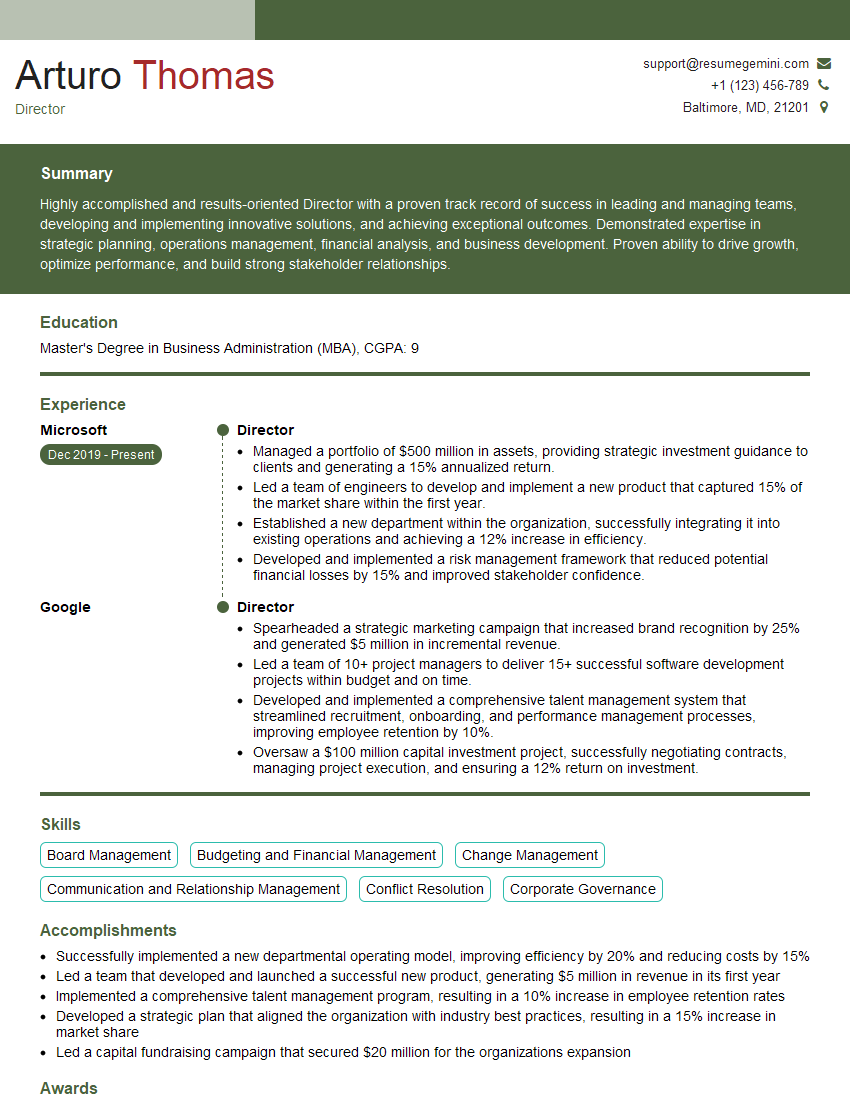
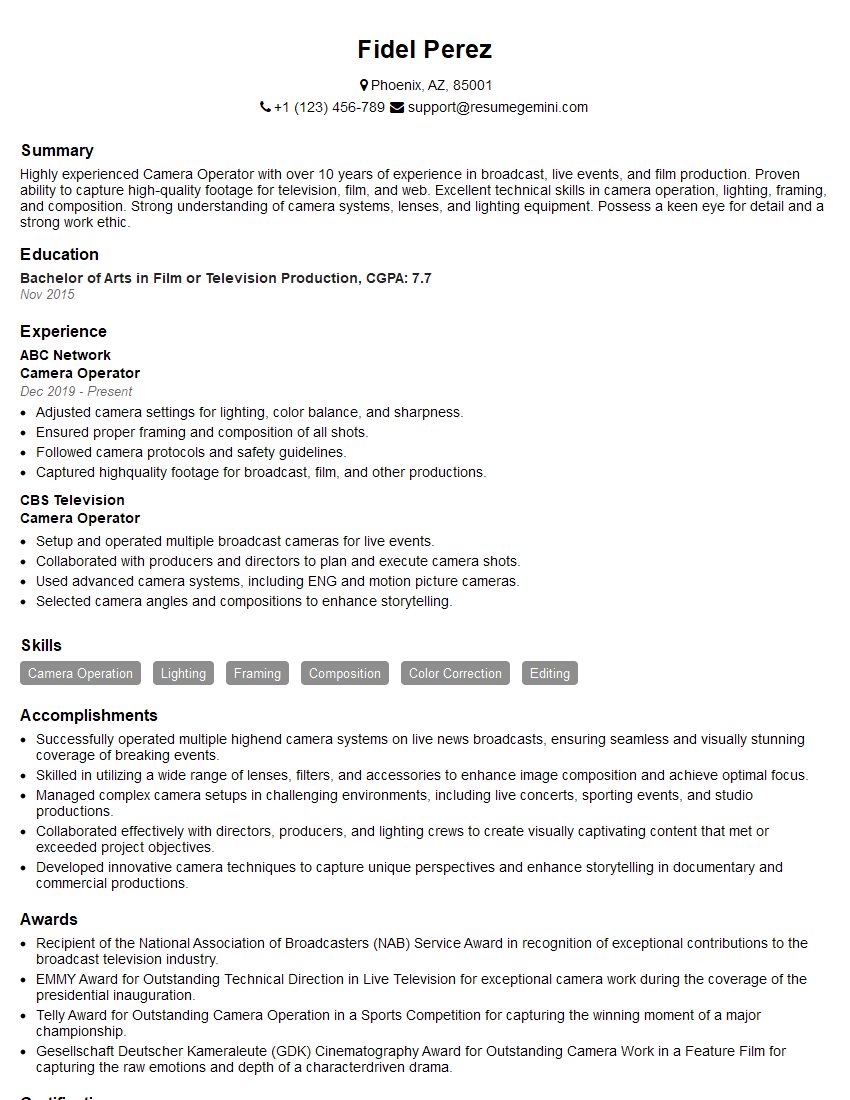
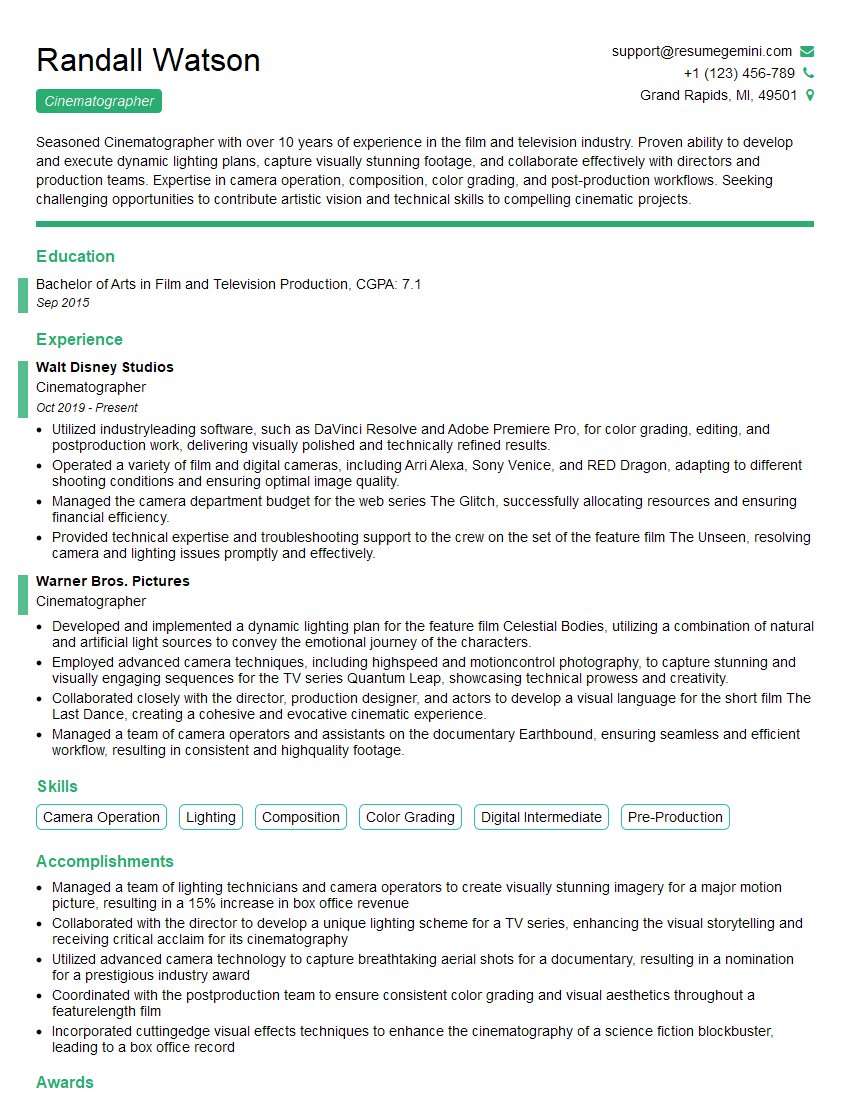
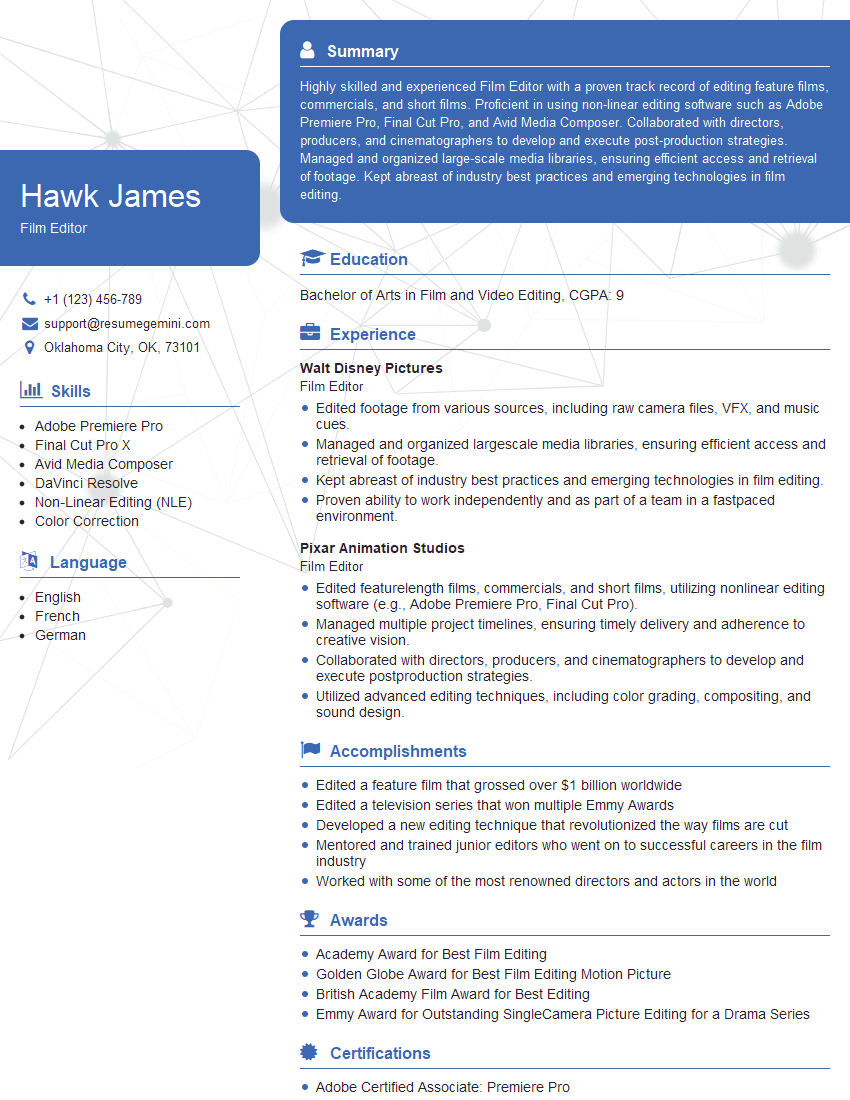
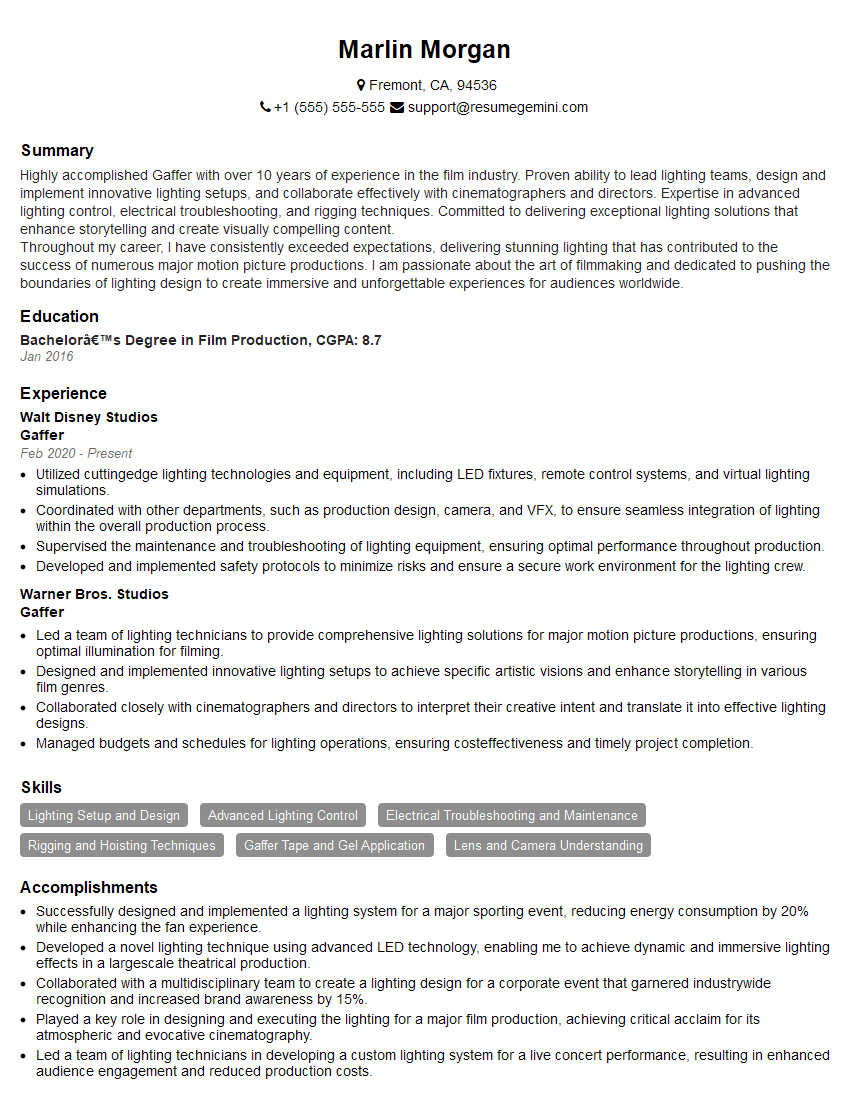
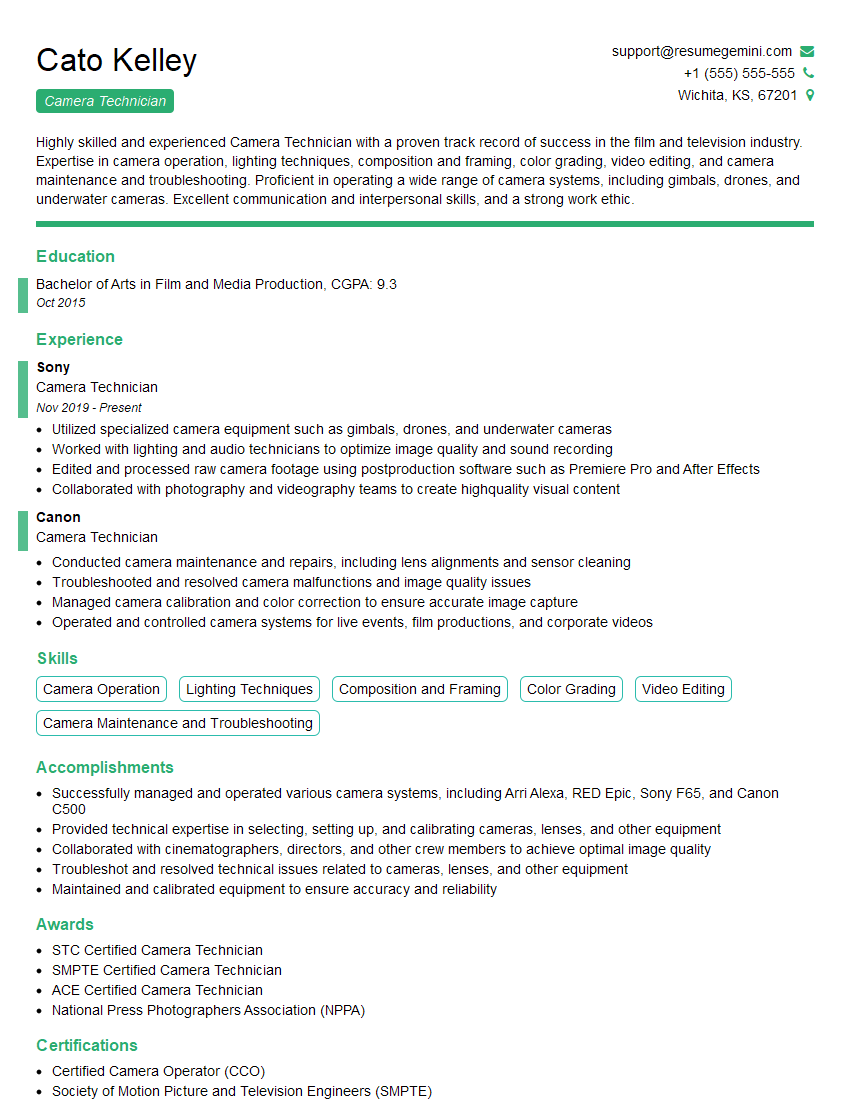
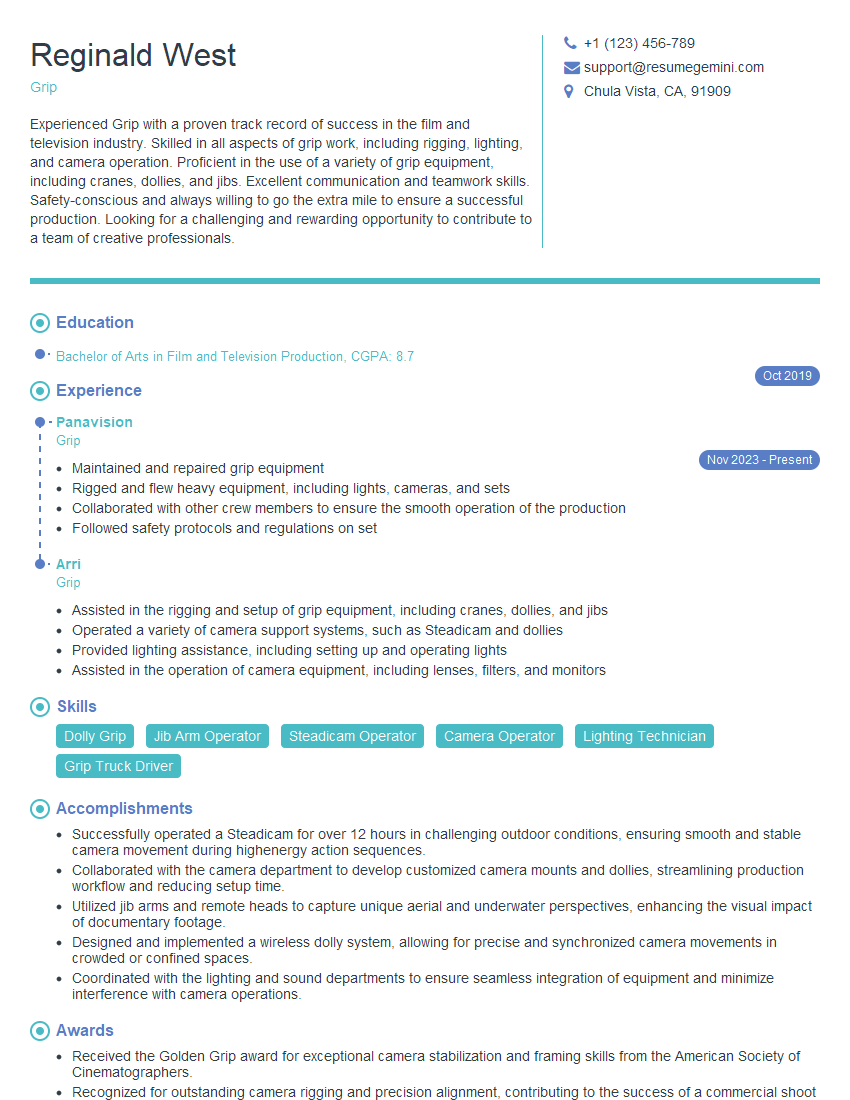
Mastering camera blocking is crucial for career advancement in film and television production. A strong understanding of these techniques demonstrates your ability to contribute to efficient and creative filmmaking. To maximize your job prospects, it’s vital to present your skills effectively. Create an ATS-friendly resume that highlights your expertise and accomplishments. ResumeGemini is a trusted resource to help you build a professional and impactful resume tailored to the specific requirements of the Camera Blocking role. Examples of resumes tailored to Camera Blocking are available to guide you.
Explore more articles
Users Rating of Our Blogs
Share Your Experience
We value your feedback! Please rate our content and share your thoughts (optional).
What Readers Say About Our Blog
Very informative content, great job.
good