Unlock your full potential by mastering the most common Understanding of Music Business Practices interview questions. This blog offers a deep dive into the critical topics, ensuring you’re not only prepared to answer but to excel. With these insights, you’ll approach your interview with clarity and confidence.
Questions Asked in Understanding of Music Business Practices Interview
Q 1. Explain the different revenue streams for a recording artist.
A recording artist’s revenue streams are diverse and interconnected, extending beyond just album sales. Think of it like a multi-faceted business; success hinges on maximizing income from various sources.
- Physical and Digital Album Sales: This is the most traditional method, though its dominance has declined with the rise of streaming. Revenue is split according to the artist’s contract with their record label.
- Streaming Royalties: Services like Spotify and Apple Music pay artists based on the number of streams their music receives. These payouts are often small per stream, but can add up significantly with high numbers of plays.
- Mechanical Royalties: These are paid when someone legally copies and distributes your music, such as through CDs, vinyl, or digital downloads. These are separate from performance royalties.
- Performance Royalties: Collected from performances on radio, TV, and other public venues. Organizations like ASCAP, BMI, and SESAC collect these fees and distribute them to the songwriters and publishers.
- Synchronization Licenses (Sync): This lucrative stream involves licensing music for use in film, television, commercials, and video games. These deals can generate substantial revenue depending on the project and length of usage.
- Merchandising: Selling branded merchandise like t-shirts, posters, and other related products directly to fans provides additional income.
- Live Performances: Concert tours and smaller gigs generate revenue through ticket sales, merchandise sales, and potential sponsorships.
- Publishing Royalties (if applicable): If the artist also owns the publishing rights to their songs (more on this in a later answer), they’ll receive royalties every time their songs are played or used.
Many artists now actively cultivate a direct-to-fan approach through platforms like Patreon or Bandcamp, building stronger relationships with their audience while creating alternative income streams.
Q 2. Describe the process of securing a music publishing deal.
Securing a music publishing deal is a crucial step for songwriters, as it protects their intellectual property and generates revenue from the use of their songs. It’s a process that requires showcasing your talent and understanding the industry landscape.
- Building a Strong Catalog: Publishers are looking for a consistent output of high-quality songs that demonstrate commercial potential. A strong demo is essential.
- Networking: Attend industry events, connect with other songwriters, and build relationships with publishers. Word-of-mouth referrals can be incredibly effective.
- Finding the Right Publisher: Research publishers known for working with artists in your genre. Look for a good fit in terms of their artist roster, reputation, and business practices.
- Submitting Your Music: Many publishers have online submission portals. Carefully follow their guidelines; a poorly presented submission won’t get far. Highlight your most promising songs.
- Negotiating the Deal: Once you’ve gained interest, you’ll negotiate the terms of the publishing agreement. This includes your royalty rate, the length of the agreement, and the types of uses covered (e.g., mechanical, performance, sync).
- Legal Review: It’s crucial to have a lawyer review the contract before signing to ensure you understand all the terms and protect your interests.
Think of it as a partnership: the publisher provides resources like promotion, administration, and legal support, while you provide the creative output. The success depends on mutual benefit.
Q 3. What are the key performance indicators (KPIs) for a successful music marketing campaign?
Key Performance Indicators (KPIs) are essential for measuring the success of a music marketing campaign. They allow artists and their teams to track progress, identify what’s working, and optimize strategies.
- Streaming Numbers: Total streams, unique listeners, and average listening time on platforms like Spotify and Apple Music.
- Social Media Engagement: Follower growth, likes, comments, shares, and reach across various platforms. This is crucial for building a strong fanbase.
- Website Traffic: Number of visitors to the artist’s website, time spent on the site, and conversion rates (e.g., newsletter sign-ups, merchandise purchases).
- Playlisting Success: Getting featured on prominent playlists on streaming services can significantly boost exposure and streams.
- Sales Figures: Tracking album sales (physical and digital), merchandise sales, and ticket sales from live shows is key.
- Brand Mentions: Tracking the number of times an artist or their music is mentioned in press, blogs, or other media outlets.
- Return on Investment (ROI): Calculating the overall return on the marketing budget invested. This is crucial for assessing long-term campaign effectiveness.
For example, a campaign aimed at increasing streaming numbers could focus on improving playlist placement and social media engagement. By carefully monitoring KPIs, you can refine the strategy as you go.
Q 4. How do you calculate artist royalties?
Calculating artist royalties is a complex process that varies greatly depending on the contract with the record label and other agreements. There’s no single formula.
Simplified Example (Illustrative, not exhaustive):
Let’s say an artist receives a 15% royalty rate on album sales. If an album sells 10,000 copies at $10 each, the total revenue is $100,000. The artist’s share would be 15% of $100,000 = $15,000. However, this isn’t the final amount the artist receives. The record label deducts expenses (production, distribution, marketing, etc.), resulting in a smaller net royalty payment to the artist.
Streaming Royalties: Streaming services have complex payout models based on factors like total streams, market share, and subscriber base. The artist’s share is usually a much smaller percentage per stream but adds up with high numbers of plays.
Mechanical Royalties: The calculation is typically based on a statutory rate per unit sold (e.g., a CD) or a per-stream rate for digital downloads. The complexity arises from having numerous collecting societies and different jurisdictions.
Performance Royalties: These are handled by performing rights organizations (PROs) like ASCAP, BMI, and SESAC, and are distributed based on the frequency of airplay or usage. The specific calculations are complex and proprietary.
The key takeaway is: royalty calculations are highly specific to individual contracts and the type of revenue stream. A detailed understanding of the contract and its clauses is paramount.
Q 5. What are the legal considerations involved in music sampling?
Music sampling, the act of incorporating a portion of a pre-existing recording into a new musical work, is subject to significant legal considerations. It’s not simply a matter of liking a sound; it’s governed by copyright law.
Copyright Infringement: Sampling a copyrighted sound recording without permission is copyright infringement. This applies to both the underlying composition (melody, harmony, rhythm) and the actual sound recording (the specific performance).
Securing Permission: To legally sample, you must obtain permission from both the copyright holder of the composition (usually the publisher) and the copyright holder of the sound recording (usually the record label).
Copyright Clearance Agencies: Companies like Harry Fox Agency (HFA) can help navigate the complexities of securing clearance, but their services come with a cost.
Fair Use Doctrine (Limited Applicability): In certain rare cases, the Fair Use doctrine might allow for limited sampling without permission. However, fair use is a very narrow exception, and it’s usually only successful if it’s transformative (significantly alters the original work) and uses only a small portion.
Sampling and Litigation: Many high-profile legal battles have surrounded music sampling. Significant legal fees and potential financial penalties make obtaining clearance crucial. The risk-reward often favors securing permissions.
Best Practice: Always obtain the necessary licenses before including a sample in your work. While some may claim “de minimis” (too insignificant to be a violation), this is a dangerous claim, and relying on it is strongly discouraged.
Q 6. Explain the role of a music publisher in the music industry.
A music publisher plays a vital, often underestimated, role in the music industry. They act as the guardians and administrators of musical compositions.
- Copyright Administration: Publishers register copyrights, manage and protect the rights to musical works, and handle licensing agreements.
- Licensing: They grant licenses for the use of songs in various contexts (mechanical, performance, synchronization, print). Think of it as controlling how the song is used and ensuring compensation for that use.
- Revenue Collection: They collect royalties generated from the use of the songs, distributing these royalties to the songwriters according to the terms of their agreements.
- Song Promotion and Placement: Many publishers actively promote songs to increase their visibility and placement in various media. This could involve working with music supervisors for film and TV or pitching songs to artists for potential recordings.
- Legal Protection: Publishers handle legal matters related to copyright infringement and other issues, ensuring the songwriter’s rights are protected.
- Creative Development: Some publishers actively support the creative development of their songwriters, offering guidance, feedback, and networking opportunities.
In essence, a music publisher takes care of the business side of songwriting, freeing up the songwriter to focus on the creative process. It’s a symbiotic relationship.
Q 7. What are the different types of music licenses?
Music licenses grant permission to use copyrighted musical works in specific ways. Different licenses cater to different needs and usages.
- Mechanical License: Grants permission to reproduce and distribute a musical composition, typically on physical media (CDs, vinyl) or in digital downloads. This doesn’t cover public performance.
- Performance License: Grants permission to publicly perform a musical composition, such as in a concert, on radio, or in a television broadcast. This is often handled through Performing Rights Organizations (PROs).
- Synchronization License (Sync): Grants permission to synchronize a musical composition with visual media, such as in a film, television show, commercial, or video game. These licenses are often negotiated directly and can be quite lucrative for songwriters.
- Print License: Grants permission to reproduce musical notation, such as in sheet music or songbooks.
- Master Use License: Grants permission to use a specific sound recording (the master recording), as opposed to just the composition itself. This is crucial for sampling and other uses of existing recordings.
- Grand Rights License: For dramatic presentations (plays or musicals), a grand rights license is required. This grants the right to perform or stage the work.
The specific terms of each license, including usage rights, territories, and fees, will vary significantly depending on the negotiation between the parties involved. Legal guidance is often necessary to secure the appropriate license.
Q 8. Describe the process of pitching a song for sync licensing.
Pitching a song for sync licensing involves securing permission for a song’s use in visual media like films, TV shows, commercials, or video games. It’s a highly competitive process that requires a strategic approach.
Identify Target Projects: Research upcoming projects and identify those whose tone and style align with your music. Consider the target audience and the overall message the project aims to convey.
Create a Compelling Pitch Package: This typically includes a high-quality audio recording of the song, a detailed description of the song’s mood and themes, and information about the songwriter(s) and any previous sync placements. A short video showcasing the song’s potential in a visual context can be highly effective.
Research Music Supervisors and Their Preferences: Find the relevant music supervisors or licensing agents responsible for selecting music for the target projects. Tailor your pitch to their known preferences and past choices.
Direct Outreach: Contact music supervisors directly through email, their website, or established industry platforms. Avoid generic mass emails. Personalize your communication, highlighting how your song specifically suits the project.
Negotiate Licensing Agreements: Once interest is shown, you’ll negotiate the terms of a licensing agreement, covering usage rights, fees, and payment schedules. This stage often involves legal professionals.
Example: I once successfully pitched a track for a heartwarming documentary about family reunions. I researched the documentary’s production company, found the music supervisor’s contact information, and sent a tailored pitch package including a video montage featuring clips from the documentary intercut with my song.
Q 9. How do you build and maintain relationships with key stakeholders in the music industry?
Building and maintaining relationships in the music industry requires consistent effort, genuine connection, and a mutual understanding of value exchange. It’s about more than just networking; it’s about creating meaningful collaborations.
Attend Industry Events: Conferences, showcases, and festivals offer excellent networking opportunities. Engage genuinely with people, listen to their stories, and build connections based on shared interests.
Leverage Online Platforms: LinkedIn, social media platforms (but strategically!), and industry-specific online forums can help you connect with professionals and stay updated on industry trends.
Offer Value: Be proactive in sharing information, offering help, and providing support to others. This builds trust and reciprocity.
Follow Up: After networking events or initial contacts, follow up with individuals to maintain the connection. Sending a thoughtful email or engaging in a relevant conversation demonstrates your ongoing interest.
Be Professional and Respectful: Treat everyone with respect, regardless of their position in the industry. Integrity and professionalism build lasting credibility.
Build Long-Term Relationships: Cultivate deeper relationships by collaborating on projects, sharing knowledge, and staying in touch regularly. These relationships become your strongest assets.
Example: I’ve maintained strong relationships with several music supervisors by consistently providing them with relevant music options, even when it wasn’t for a project they were immediately working on. This demonstrates my ongoing commitment to our collaboration and ultimately, this has led to significant licensing deals.
Q 10. What are the current trends in music streaming and their impact on the music business?
Music streaming dominates the current music landscape, presenting both opportunities and challenges. Key trends include:
The Rise of Short-Form Video and Audio: Platforms like TikTok and Instagram Reels have redefined music discovery and consumption, emphasizing shorter snippets of songs and viral trends. This influences song creation and marketing strategies.
Increased Competition and Algorithm Dependence: Streaming platforms operate on algorithms that heavily impact song discovery. Artists must understand and adapt to these algorithms, often investing in marketing and promotion tailored to these platforms.
Artist Direct-to-Fan Engagement: Artists are increasingly bypassing traditional labels and distributors by engaging directly with fans through their own websites, merchandise sales, and exclusive streaming services.
Personalized Playlists and Curation: Streaming services provide personalized music recommendations, leading to more fragmented listening experiences and a challenge for artists to reach wider audiences.
Subscription Model Dominance: The subscription model has become the prevailing revenue stream, impacting royalty rates and the overall financial landscape of the music industry.
Impact on the Music Business: These trends necessitate artists to adapt their strategies, invest more in digital marketing, build direct fan relationships, and diversify their revenue streams. It’s essential to understand algorithm optimization, data analytics, and fan engagement tactics to thrive in this environment.
Q 11. How do you analyze music sales data to inform strategic decisions?
Analyzing music sales data is crucial for making informed business decisions. It helps identify trends, predict future performance, and allocate resources effectively. The process involves:
Data Collection: Gather comprehensive data from various sources including streaming platforms, digital retailers, and physical sales reports. This data may include streams, downloads, sales figures, geographic distribution, and demographic information.
Data Cleaning and Preparation: Clean the data, addressing any inconsistencies or missing values. This step ensures the accuracy and reliability of subsequent analysis.
Descriptive Analysis: Identify key trends and patterns in the data. For example, calculate overall sales figures, identify top-performing songs, and analyze geographic sales patterns.
Predictive Analysis: Use statistical models and machine learning algorithms to forecast future sales based on historical trends and relevant factors.
Segmentation and Targeting: Identify distinct audience segments based on their listening habits and demographics to better tailor marketing campaigns and content strategies.
Example: Analyzing sales data might reveal that a particular song performs exceptionally well in a specific region. This insight can guide targeted marketing campaigns to increase exposure and sales in that area.
Q 12. What are the ethical considerations of working in the music industry?
Ethical considerations in the music industry are paramount. They include:
Fair Compensation and Royalties: Ensuring artists and songwriters receive fair compensation for their work is crucial. Transparency in royalty payments and contract negotiations is essential.
Respect for Intellectual Property: Protecting copyrights and intellectual property rights is vital. Combating unauthorized copying, sampling without permission, or fraudulent practices is a key ethical responsibility.
Transparency and Honesty in Business Dealings: Maintaining transparent and honest communication with artists, labels, publishers, and other stakeholders is critical for building trust and maintaining ethical standards.
Environmental Sustainability: Considering the environmental impact of physical media production and touring activities is becoming increasingly important.
Social Responsibility: Promoting diversity and inclusion within the industry and using the platform to speak out against injustice are essential ethical considerations.
Example: Actively supporting initiatives that promote fair compensation for songwriters and artists who are underrepresented in the industry is a key ethical commitment. This includes advocating for changes in royalty structures or supporting organizations focused on fair compensation and improved transparency.
Q 13. Explain the role of an A&R representative in artist development.
An A&R (Artists and Repertoire) representative plays a pivotal role in artist development. Their responsibilities span talent scouting, artist management, and creative guidance.
Talent Scouting: Identifying and signing promising artists with commercial potential is a core function. This involves attending live shows, reviewing demos, and networking extensively.
Artist Management: Guiding artists’ careers involves providing creative direction, managing their public image, and overseeing their recording process.
Creative Guidance: Working closely with artists on songwriting, production, and overall artistic direction, helping them refine their musical style and develop a distinct brand identity.
Strategic Planning: Developing marketing strategies and release plans for artists’ music, ensuring their music reaches the intended target audience.
Relationship Building: Cultivating strong relationships with producers, songwriters, and other industry professionals to facilitate collaboration and resource access.
Example: An A&R might guide an artist to collaborate with a specific producer whose style would enhance the artist’s sound, or they might suggest a specific marketing campaign that leverages the current trends and their target demographic.
Q 14. Describe your experience with music budgeting and financial planning.
Music budgeting and financial planning are crucial for success in the music industry. My experience encompasses a broad range of financial aspects.
Project Budgeting: Creating detailed budgets for recording projects, including studio time, musician fees, production costs, marketing, and distribution expenses.
Financial Forecasting: Predicting future revenue and expenses based on projected sales, streaming royalties, and licensing income.
Royalty Tracking and Management: Monitoring and managing royalty payments from various sources, ensuring accurate reporting and reconciliation.
Investment Analysis: Evaluating potential investments in music projects or artist development based on risk assessment and potential return on investment.
Negotiating Contracts: Understanding and negotiating contracts to ensure favorable financial terms for artists and their teams.
Example: I once developed a detailed budget for a recording project that helped the artist secure funding and manage expenses throughout the recording process, ensuring the project stayed within budget and delivered a high-quality final product.
Q 15. How do you handle disagreements between artists and record labels?
Disagreements between artists and record labels are unfortunately common, often stemming from differing artistic visions, financial expectations, or contractual interpretations. Handling these requires a delicate balance of strong communication, legal expertise, and a genuine desire to find mutually beneficial solutions.
My approach involves:
- Open and Honest Communication: Facilitating direct dialogue between both parties, ensuring everyone feels heard and understood. This often involves active listening, clarifying misunderstandings, and re-framing perspectives.
- Mediation and Negotiation: If direct communication fails, I leverage mediation techniques to help find common ground. This might involve exploring alternative options, compromising on key issues, and creating win-win scenarios. Strong negotiation skills are essential here, understanding both sides’ leverage points.
- Legal Counsel: When necessary, I involve legal professionals to ensure that all agreements are legally sound and compliant. This is crucial to avoid costly disputes later on.
- Documentation: Maintaining clear and comprehensive documentation throughout the process is critical. This ensures that agreements are well-defined, expectations are transparent, and any future disputes can be easily resolved.
For example, I once mediated a dispute between an artist and their label concerning the direction of a new album. Through open discussion, we identified the core concerns – creative control versus commercial viability – and collaboratively developed a plan that allowed the artist significant creative input while still ensuring the album had a reasonable chance of market success.
Career Expert Tips:
- Ace those interviews! Prepare effectively by reviewing the Top 50 Most Common Interview Questions on ResumeGemini.
- Navigate your job search with confidence! Explore a wide range of Career Tips on ResumeGemini. Learn about common challenges and recommendations to overcome them.
- Craft the perfect resume! Master the Art of Resume Writing with ResumeGemini’s guide. Showcase your unique qualifications and achievements effectively.
- Don’t miss out on holiday savings! Build your dream resume with ResumeGemini’s ATS optimized templates.
Q 16. What are some effective strategies for promoting an artist’s music on social media?
Effective social media promotion for artists requires a multi-faceted strategy that goes beyond simply posting music links. It’s about building a community and engaging with fans authentically.
- Consistent Posting Schedule: Regular updates keep fans engaged and remind them of your artist’s presence. This could be a mix of music snippets, behind-the-scenes content, photos, and interactive polls.
- High-Quality Visuals and Videos: Invest in professional-looking photos and videos that are visually appealing and capture attention in a crowded online space.
- Targeted Advertising: Utilize paid advertising on platforms like Facebook, Instagram, and TikTok to reach specific demographics interested in the artist’s genre and style.
- Influencer Marketing: Collaborate with relevant influencers to promote the artist’s music to their established audience.
- Interactive Content: Engage followers through polls, Q&As, live streams, and contests to foster a sense of community and encourage interaction.
- Cross-Promotion: Collaborate with other artists to cross-promote each other’s music and expand reach.
- Analytics and Tracking: Monitor social media analytics to understand what content resonates with fans and adapt the strategy accordingly.
For instance, I helped an emerging singer-songwriter gain significant traction on TikTok by creating short, engaging video clips showcasing their unique musical style and personality. This boosted their follower count and drove traffic to their other platforms, leading to increased streaming numbers.
Q 17. What are the challenges of managing an artist’s career?
Managing an artist’s career is a demanding role involving a wide range of responsibilities, presenting several unique challenges:
- Balancing Creative Vision with Commercial Success: Finding the right balance between the artist’s artistic integrity and the demands of the market can be a constant tightrope walk.
- Financial Management: Effective budgeting, revenue tracking, and expense management are critical to ensuring the artist’s financial stability.
- Time Management: Juggling touring, recording, promotion, and administrative tasks requires meticulous organization and prioritization.
- Team Management: Building and managing a strong team of collaborators – including publicists, managers, lawyers, and potentially a band – is crucial.
- Dealing with the Pressures of the Industry: Navigating the intense competition and high-pressure environment of the music industry requires resilience and adaptability.
- Maintaining Artist Well-being: Protecting the artist’s mental and physical health is paramount, especially given the demanding nature of the career.
A relatable example: An artist might be passionate about a very niche genre, but the market demand might be low. The manager then has to find creative ways to balance the artist’s creative vision with exploring avenues to build a wider audience, without compromising the artistic integrity.
Q 18. How do you identify and cultivate emerging talent?
Identifying and cultivating emerging talent requires a keen ear, a strong network, and a strategic approach. It’s not just about finding someone with raw talent; it’s about assessing their potential for growth, marketability, and longevity in the industry.
- Networking: Attending live music events, industry conferences, and collaborating with other music professionals expands your reach and increases the chances of discovering hidden gems.
- Online Platforms: Actively scouring online platforms like SoundCloud, Bandcamp, YouTube, and TikTok to find artists with unique sounds and engaging content.
- A&R (Artists and Repertoire): Developing strong relationships with A&R representatives at labels provides access to a wider pool of potential talent.
- Assessing Potential: Evaluating an artist’s musical abilities, stage presence, songwriting skills, and overall potential for market success is crucial. This might involve analyzing their online presence, reviewing their music, and observing their live performances.
- Mentorship and Development: Providing guidance and support to help artists refine their skills, build their brand, and navigate the complexities of the music industry is essential.
I once discovered a talented singer-songwriter through a small, local open mic night. By providing mentorship, strategic guidance, and connecting them with relevant industry professionals, we helped them develop their skills, build a following, and ultimately secure a record deal.
Q 19. What is your understanding of digital music distribution platforms?
Digital music distribution platforms are the backbone of the modern music industry, enabling artists to reach global audiences and monetize their music. Understanding these platforms is crucial for success.
- Major Platforms: Spotify, Apple Music, Amazon Music, YouTube Music are the dominant players, each with its own algorithms, user base, and payout structures.
- Distribution Aggregators: Services like DistroKid, CD Baby, and TuneCore act as intermediaries, simplifying the process of uploading music to multiple platforms simultaneously. They often handle royalty collection and reporting.
- Direct-to-Fan Platforms: Bandcamp and Patreon allow artists to sell music directly to their fans, offering greater control over pricing and distribution but requiring a more active marketing approach.
- Royalties and Payouts: Each platform has a different royalty model, typically based on streams or downloads. Understanding these models is critical for accurate revenue projection.
- Metadata and Optimization: Properly tagging music with accurate metadata – including artist name, song title, genre, and album art – is essential for discoverability and efficient royalty payments.
For example, understanding how Spotify’s algorithm prioritizes certain types of music can influence an artist’s marketing strategy. Knowing the different payout structures across platforms allows for informed decisions about where to prioritize distribution efforts.
Q 20. How do you negotiate music licensing deals?
Negotiating music licensing deals requires a strong understanding of copyright law, market value, and negotiation techniques. The goal is to secure a fair and mutually beneficial agreement.
- Understanding Rights: Clearly defining which rights are being licensed (mechanical, synchronization, performance, etc.) is crucial. Mechanical licenses cover the reproduction of musical works, synchronization licenses cover the use of music in visual media, and performance licenses cover public performances.
- Market Research: Researching comparable licensing deals for similar artists and works helps establish a fair market value for the license.
- Negotiation Strategies: Developing strong negotiation skills is critical, involving understanding your own leverage points and those of the licensee.
- Legal Counsel: Having a lawyer review the license agreement ensures it’s legally sound and protects the artist’s interests.
- Terms and Conditions: Carefully examining the terms and conditions, including payment schedules, usage limitations, and territorial restrictions, is essential.
For instance, when negotiating a synchronization license for a song to be used in a film, you need to consider factors like the film’s budget, anticipated audience reach, and the song’s prominence in the film to determine a fair licensing fee.
Q 21. What is your experience with music copyright law?
Music copyright law is a complex area governing the legal rights of music creators. My understanding encompasses the different types of rights, registration procedures, and enforcement mechanisms.
- Copyright Ownership: Understanding who owns the copyright to a musical work (composer, lyricist, publisher) and the different types of ownership (sole, joint, etc.).
- Copyright Registration: Registering a musical work with the appropriate copyright office provides legal protection and strengthens the claim to ownership.
- Infringement: Recognizing instances of copyright infringement (unauthorized reproduction, distribution, or performance of copyrighted music) and the legal remedies available.
- Licensing and Permissions: Knowing the process of granting licenses for the use of copyrighted music and the importance of obtaining necessary permissions.
- Digital Copyright: Understanding the unique challenges and considerations related to copyright in the digital realm, including online streaming, downloads, and file sharing.
For example, I have advised artists on registering their copyrights, negotiated licensing agreements, and assisted in addressing instances of online piracy. A strong understanding of copyright law is essential to protect artists’ creative works and ensure they receive proper compensation for their music.
Q 22. Describe your experience with music contract negotiation.
Music contract negotiation is a complex process requiring a deep understanding of legal language, industry standards, and the artist’s specific needs. It’s not just about getting the best deal; it’s about building a mutually beneficial long-term partnership. My experience encompasses a wide range of contracts, from recording agreements and publishing deals to merchandise and endorsement contracts. I’ve negotiated deals for both emerging and established artists, across various genres. This involves carefully analyzing each clause, ensuring the artist’s rights are protected, and advocating for favorable terms related to royalties, advances, ownership, and control over their work. A key aspect is understanding the artist’s career goals and aligning the contract to those aspirations. For example, an artist focused on touring might prioritize favorable touring clauses over upfront advances, while an artist aiming for major label success might prioritize a higher advance and significant marketing support.
I approach each negotiation strategically, focusing on establishing clear communication and a collaborative environment. I always prioritize transparency and ensure the artist fully understands the terms of the contract before signing. I’ve successfully negotiated contracts that have resulted in significantly increased revenue streams for artists, secured better creative control, and protected them from exploitation.
Q 23. How do you manage artist expectations?
Managing artist expectations is crucial for maintaining healthy working relationships and ensuring project success. It involves a combination of clear communication, realistic goal-setting, and consistent feedback. Early on, I establish a strong rapport built on trust and honesty. I work closely with the artist to understand their vision, ambitions, and concerns. Then, I help them develop realistic expectations based on their current market position, genre trends, and available resources. This often involves explaining the complexities of the music industry, the time it takes to build a career, and the potential challenges along the way. I use data-driven insights and market analysis to present a balanced perspective, avoiding unrealistic promises while still inspiring optimism and motivation. For example, I might temper an artist’s initial expectations about immediate chart success by highlighting successful strategies for building a loyal fanbase organically through consistent content creation and community engagement.
Regular check-ins and open communication channels are vital. I ensure artists are kept informed about progress, challenges, and any changes in strategy. Transparent reporting on key metrics and consistent feedback on their performances help to maintain realistic expectations and build trust. My approach emphasizes collaboration and partnership, helping artists understand that their success is my success.
Q 24. What is your understanding of the current state of the music industry?
The music industry is currently undergoing a period of significant transformation. The rise of streaming platforms has fundamentally altered how music is consumed, distributed, and monetized. While streaming has democratized music access, it has also led to a decline in per-stream payouts for artists, making it challenging for many to earn a sustainable income. The independent artist scene has flourished, empowered by accessible production tools and distribution platforms. However, navigating the complexities of digital distribution, marketing, and fan engagement requires significant expertise and strategic planning. The industry also faces challenges related to copyright infringement, artist exploitation, and the need for fair compensation models for creators.
We are seeing a resurgence in the value of live performances, fan engagement, and merchandise as crucial revenue streams. Artificial intelligence and emerging technologies are also playing an increasingly significant role in music creation, distribution, and fan engagement. The industry is becoming increasingly data-driven, requiring a nuanced understanding of analytics to make informed decisions about artist development and marketing strategies. The future success in the music industry will likely hinge on an artist’s ability to cultivate a strong direct-to-fan relationship, diversify their income streams, and leverage technology effectively.
Q 25. What are some innovative strategies for monetizing music in the digital age?
Monetizing music in the digital age requires a multifaceted approach. While streaming remains a primary revenue source, artists need to diversify their income streams to achieve financial stability. Innovative strategies include:
- Direct-to-fan engagement: Building a strong fanbase through social media, email marketing, and exclusive content offers provides direct revenue through merchandise sales, subscriptions, and paid online events.
- Merchandise and brand partnerships: Creating and selling branded merchandise (t-shirts, posters, etc.) and collaborating with brands aligns with the artist’s image and expands revenue streams.
- Live performances and touring: Live shows remain a significant revenue source, and artists can explore different formats, such as virtual concerts and smaller, more intimate performances.
- Sync licensing and placements: Licensing music for use in films, television shows, advertisements, and video games can generate significant income, especially if a song gains popularity through its use in a high-profile production.
- NFTs and blockchain technology: Non-fungible tokens (NFTs) offer unique opportunities for selling digital music and artwork directly to fans, creating a new revenue stream and a deeper connection with their audience.
- Subscription services: Artists can create their own subscription services offering exclusive content, early access to music, and behind-the-scenes experiences.
The key is to create a cohesive strategy that integrates these various revenue streams and leverages the artist’s unique brand and personality.
Q 26. How do you track and report on key metrics related to music sales and streaming?
Tracking and reporting on key metrics is essential for informed decision-making in the music industry. I leverage various data analytics tools and platforms to monitor key performance indicators (KPIs) related to music sales and streaming. This involves using platforms like Spotify for Artists, Apple Music for Artists, and other distributor dashboards to access data on streams, downloads, plays, and listener demographics. I also use social media analytics tools to track engagement metrics, such as follower growth, post reach, and audience interaction.
For physical sales, I rely on data from distributors and retailers. The data collected is then organized and analyzed to identify trends, measure campaign effectiveness, and inform future strategies. I regularly generate reports summarizing key performance indicators and present these findings to artists, offering insights and recommendations for optimization. For example, a significant drop in streams for a particular song might indicate the need for a promotional campaign, while high engagement on a social media post might suggest the need for similar content strategies in the future. This data-driven approach ensures that we can make informed decisions to maximize the artist’s potential for success.
Q 27. Describe your experience with artist branding and image management.
Artist branding and image management are critical for building a successful and sustainable music career. It’s about crafting a unique identity that resonates with the target audience. My experience involves working closely with artists to define their brand essence, including their musical style, lyrical themes, visual aesthetics, and overall persona. This often involves creating a brand strategy that considers market trends, competitor analysis, and the artist’s unique personality and strengths. This includes the creation of a brand style guide to ensure consistent visual branding across all platforms.
I develop comprehensive marketing and PR strategies to build brand awareness and visibility. This may involve securing media coverage, building online communities, designing visually appealing social media content, creating engaging video content, and collaborating with influencers. I also work with artists to manage their public image, ensuring their online presence reflects their brand and values. This can involve crisis communication planning, media training, and proactive reputation management. The goal is to create a cohesive and authentic brand that strengthens the artist’s connection with their audience and fosters long-term loyalty.
Q 28. How would you handle a crisis situation involving an artist’s reputation?
Handling a crisis situation involving an artist’s reputation requires swift, decisive action and a well-defined crisis communication plan. The first step is to assess the situation, identify the key issues, and understand the potential impact. This may involve reviewing social media, news articles, and other relevant sources to ascertain the full extent of the problem. Next, I assemble a crisis communication team, including legal counsel, PR professionals, and other relevant stakeholders. The goal is to create a unified message that addresses the situation openly and honestly.
I then develop a communication strategy that focuses on transparency, accountability, and empathy. This might involve issuing a public statement, engaging with concerned parties, and taking corrective actions. It’s crucial to respond promptly and proactively, avoiding silence or misinformation. The approach should be tailored to the specific nature of the crisis and the artist’s personality and brand. For example, a crisis involving inappropriate online behavior might require a public apology, community service involvement, and a social media detox, while a crisis involving contractual disputes might require legal action and a statement emphasizing the artist’s commitment to resolving the issue fairly. Throughout the process, maintaining open communication with the artist, their team, and the public is paramount to mitigating damage and restoring trust.
Key Topics to Learn for Understanding of Music Business Practices Interview
- Copyright and Royalties: Understanding different types of copyrights, royalty structures (mechanical, performance, publishing), and the role of collecting societies like ASCAP, BMI, and SESAC. Practical application: Analyzing a royalty statement and identifying potential discrepancies.
- Music Publishing: The role of publishers, songwriter agreements, and the process of pitching and placing songs. Practical application: Evaluating a publishing deal and understanding its implications for an artist or songwriter.
- Record Labels and A&R: The functions of different departments within a record label (A&R, marketing, distribution), artist development, and the process of securing a record deal. Practical application: Analyzing an artist’s marketing campaign and identifying areas for improvement.
- Music Licensing and Synchronization: Understanding the process of licensing music for film, television, advertising, and video games. Practical application: Negotiating a synchronization license and understanding the associated fees.
- Digital Music Distribution and Streaming: The role of digital distributors, streaming platforms (Spotify, Apple Music, etc.), and the impact of streaming on artist revenue. Practical application: Developing a digital distribution strategy for an artist’s music.
- Music Marketing and Promotion: Understanding different marketing strategies (social media, radio promotion, touring), building an artist’s brand, and engaging with fans. Practical application: Designing a marketing plan for a new artist release.
- Contracts and Negotiations: Understanding standard music industry contracts (recording agreements, publishing agreements, etc.) and the importance of legal counsel. Practical application: Identifying key clauses in a contract and understanding their implications.
- Financial Management in the Music Industry: Budgeting, forecasting, profit and loss statements, and understanding royalty accounting. Practical application: Creating a simple budget for an artist’s tour.
Next Steps
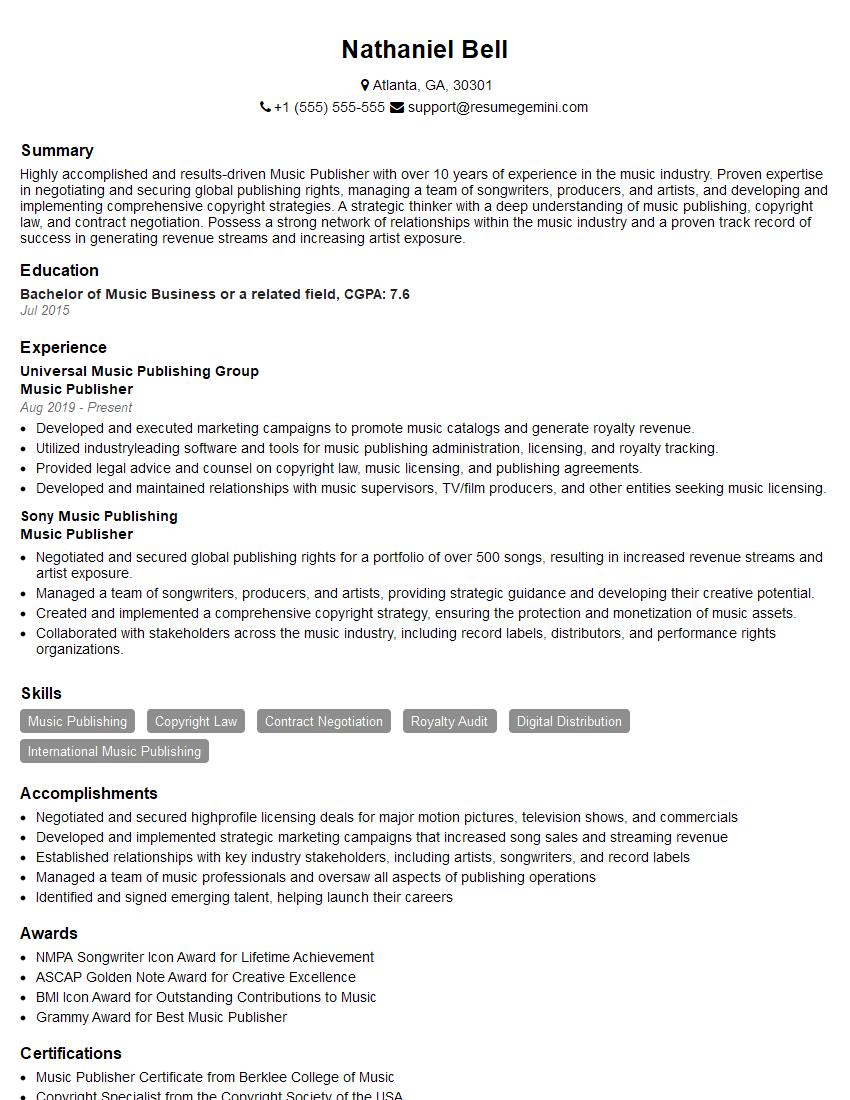
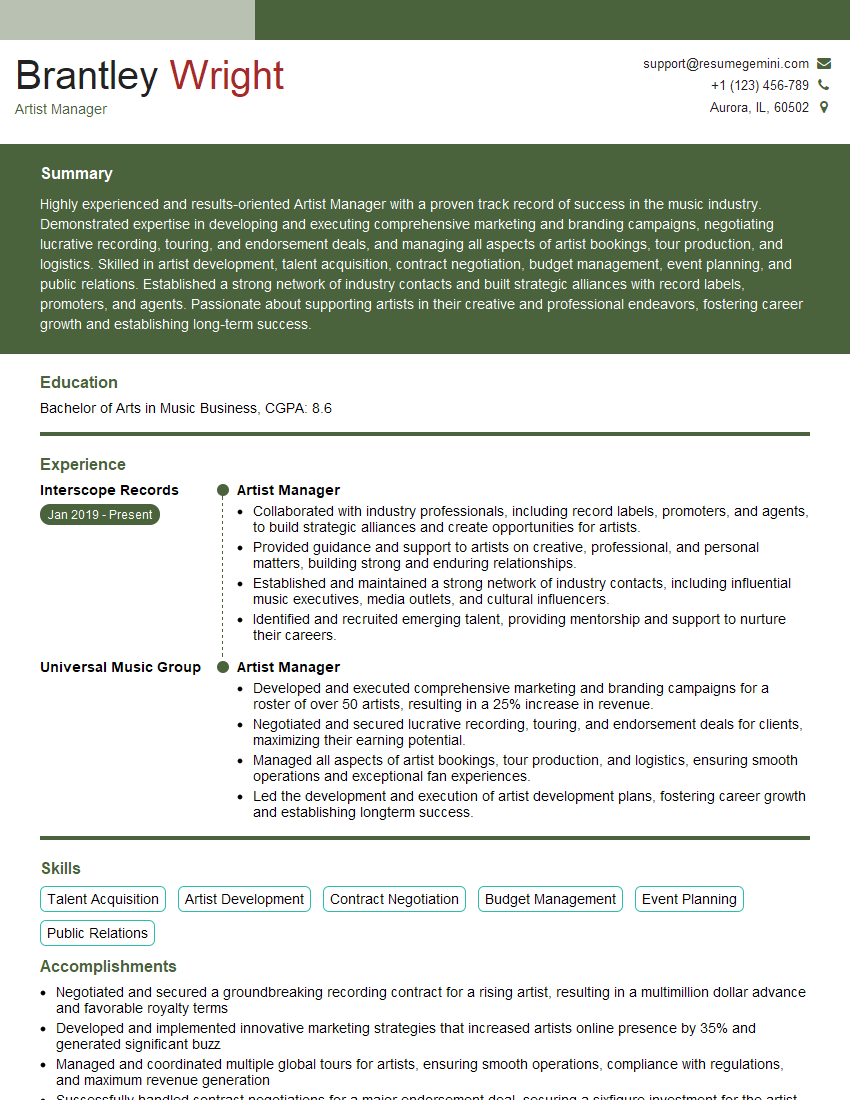
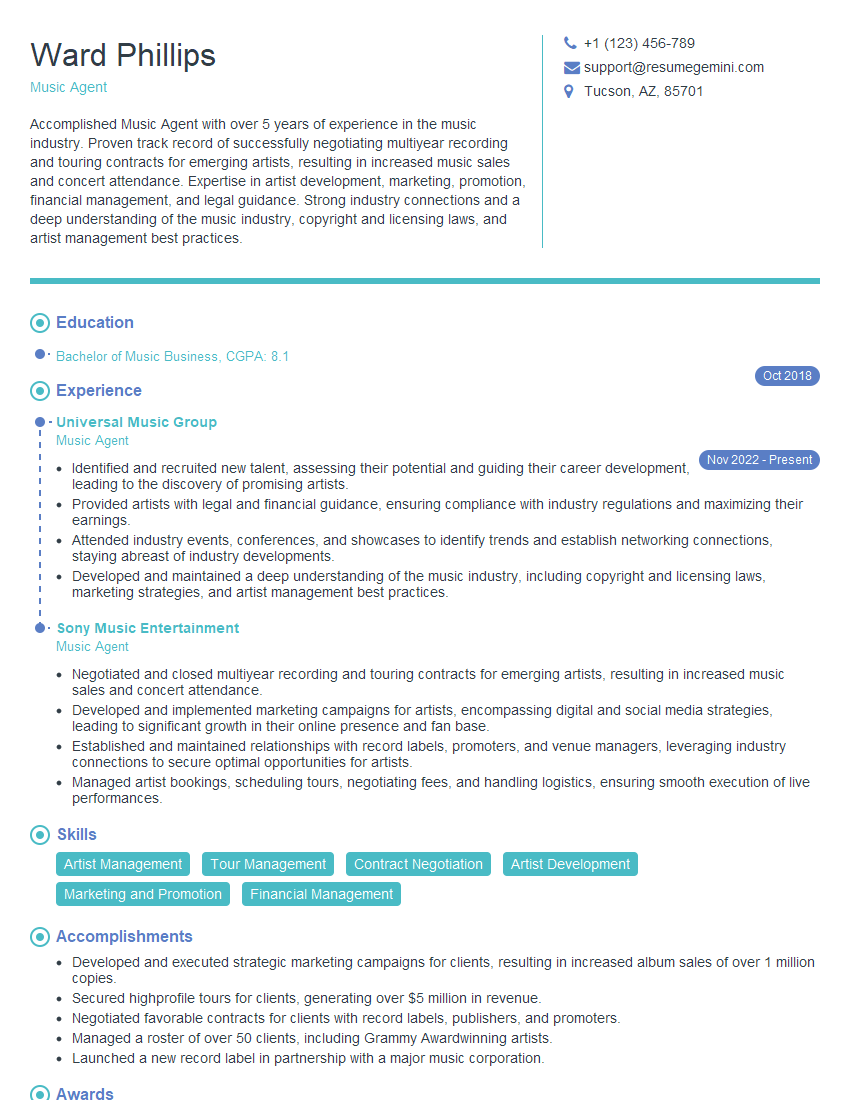
Mastering Understanding of Music Business Practices is crucial for a successful career in the dynamic music industry. A strong grasp of these concepts demonstrates your preparedness for the challenges and opportunities within this field, significantly boosting your job prospects. Creating an ATS-friendly resume is essential to ensure your application gets noticed by recruiters. ResumeGemini is a trusted resource that can help you build a professional and impactful resume tailored to highlight your skills and experience in this area. Examples of resumes tailored to Understanding of Music Business Practices are available, showcasing how to effectively present your qualifications to potential employers.
Explore more articles
Users Rating of Our Blogs
Share Your Experience
We value your feedback! Please rate our content and share your thoughts (optional).
What Readers Say About Our Blog
Very informative content, great job.
good