Feeling uncertain about what to expect in your upcoming interview? We’ve got you covered! This blog highlights the most important Understanding of Music History and Context interview questions and provides actionable advice to help you stand out as the ideal candidate. Let’s pave the way for your success.
Questions Asked in Understanding of Music History and Context Interview
Q 1. Describe the major stylistic shifts between the Baroque and Classical periods.
The shift from the Baroque (roughly 1600-1750) to the Classical period (roughly 1730-1820) represents a fundamental change in musical aesthetics. Think of it as moving from a highly ornamented, dramatic, and emotionally intense style to one that prioritizes clarity, balance, and elegance.
- Harmony and Texture: Baroque music is characterized by complex counterpoint, terraced dynamics (sudden shifts in volume), and the use of basso continuo (a continuous bass line). Classical music, in contrast, favors homophony (a melody with accompanying chords), smoother dynamics, and clearer melodic lines. Imagine the difference between a richly embroidered tapestry (Baroque) and a finely tailored suit (Classical).
- Form and Structure: Baroque forms are often less defined, with improvisational elements playing a significant role. Classical music emphasizes standardized forms like sonata form, with its clear exposition, development, and recapitulation sections. This creates a sense of order and predictability that was less prominent in the Baroque.
- Melody and Rhythm: Baroque melodies are often ornate and elaborate, with frequent ornamentation. Classical melodies are generally simpler, more lyrical, and easier to grasp. Rhythms are more regular and less complex in the Classical style.
- Ornamentation: Baroque music is full of embellishments and ornamentation, often added by the performer. Classical music reduces this ornamentation, favoring a cleaner, more straightforward presentation of the melody.
Composers like Johann Sebastian Bach epitomize the Baroque, while Haydn, Mozart, and the early Beethoven represent the Classical style. The transition wasn’t abrupt; many composers bridged the gap, but the overall shift is significant and easily discernible.
Q 2. Compare and contrast the musical aesthetics of the Romantic and Renaissance eras.
The Renaissance (roughly 1400-1600) and Romantic (roughly 1780-1910) eras represent vastly different approaches to music. The Renaissance focused on clarity, balance, and intellectual rigor, while the Romantic era prioritized emotional expression, individualism, and dramatic intensity.
- Harmony and Texture: Renaissance music emphasized consonance (pleasant-sounding chords) and clear textures, often using polyphony (multiple independent melodic lines). Romantic music embraced dissonance (unpleasant-sounding chords) and chromaticism (use of notes outside the key), creating a sense of tension and release. Think of the calm, serene soundscapes of Renaissance music versus the passionate, sometimes turbulent sounds of Romantic music.
- Form and Structure: Renaissance forms were often based on established structures like the Mass and motet. Romantic forms were more flexible and varied, reflecting the composer’s individual expression. The structured dances of the Renaissance contrast sharply with the expansive symphonies and emotionally charged narratives of Romantic composers.
- Melody and Rhythm: Renaissance melodies are often graceful and flowing, with a balanced and restrained use of rhythm. Romantic melodies are often more passionate and expressive, with a wider range of dynamics and rhythms.
- Emotional Expression: The Renaissance prioritized intellectual and spiritual aspects. Romantic music placed immense emphasis on evoking strong emotions in the listener, ranging from joy and ecstasy to sorrow and despair.
Compare the serene beauty of a Josquin des Prez motet with the passionate drama of a Beethoven symphony to fully grasp this contrast.
Q 3. Explain the development of opera from its origins to the present day.
Opera’s development is a fascinating journey spanning centuries. It began in Florence around 1600 with the Florentine Camerata, a group of intellectuals who sought to revive the style of ancient Greek drama through music. Their experiments led to the first operas, characterized by recitative (speech-like singing) and simple melodies.
- Early Opera (Baroque): This period saw the flourishing of opera in Italy, with composers like Claudio Monteverdi pushing the boundaries of dramatic expression. Opera became increasingly elaborate, incorporating elaborate costumes, staging, and instrumental accompaniment.
- Opera Seria and Opera Buffa: The 18th century witnessed the emergence of distinct operatic styles. Opera seria focused on serious, mythological subjects, while opera buffa offered lighter, comedic fare. This diversification reflected evolving audience tastes.
- Classical and Romantic Opera: Composers like Mozart (The Marriage of Figaro, The Magic Flute) and Verdi (Rigoletto, Aida) transformed opera, introducing deeper character development and more emotionally resonant music. The Romantic era emphasized dramatic intensity and larger-than-life characters.
- 20th and 21st Century Opera: The 20th century saw experimentation with atonality, dissonance, and new dramatic techniques. Opera today continues to evolve, embracing diverse musical styles and theatrical approaches, ranging from minimalist compositions to works incorporating multimedia and contemporary dance.
Opera’s journey reflects the changing cultural and aesthetic sensibilities of each era, showcasing its enduring power as a dramatic art form.
Q 4. Discuss the influence of Gregorian chant on later musical styles.
Gregorian chant, the monophonic liturgical music of the medieval church, has had a profound and lasting impact on Western music. Its influence can be traced through many subsequent styles.
- Modal System: Gregorian chant established the modal system, a system of scales and melodic patterns that became foundational for much of Western music for centuries. These modes, different from major and minor scales, provided a unique melodic character that continued to inspire composers long after the dominance of Gregorian chant itself.
- Melodic Contour and Phraseology: The characteristic melodic lines and phrasing of Gregorian chant have left their mark on later vocal music. The flowing, often stepwise melodies of Gregorian chant have resonated in the works of many composers, from Renaissance polyphonists to Romantic songwriters.
- Development of Polyphony: While Gregorian chant is monophonic (single melodic line), its melodies served as the basis for the development of polyphony during the Middle Ages and Renaissance. Composers added independent melodic lines to existing Gregorian chant melodies, creating more complex and expressive textures. This process shows how a seemingly simple musical style could pave the way for sophisticated musical developments.
- Liturgical Music Influence: The influence of Gregorian chant on later liturgical music is obvious. Many musical styles used in church services reflect the inherent solemnity and spiritual depth of Gregorian chant.
Understanding Gregorian chant provides a crucial key to unlocking the development of Western music. It is the foundational building block upon which many subsequent styles were constructed.
Q 5. Analyze the use of counterpoint in a specific Baroque composition.
Let’s analyze the use of counterpoint in Bach’s Brandenburg Concerto No. 5. This concerto showcases Bach’s masterful command of counterpoint, a compositional technique where two or more independent melodic lines are interwoven simultaneously.
In the first movement, the opening features a vibrant interplay between the harpsichord and solo violin. The harpsichord’s part, often in the continuo role in other Baroque works, here takes a more prominent melodic position. The violin’s melodic line moves independently, yet harmoniously interacts with the harpsichord. This isn’t just a simple accompaniment; the two lines are equal partners in a dynamic conversation.
Throughout the movement, Bach employs both imitative counterpoint (where a melodic line is imitated by another voice) and free counterpoint (where the lines are less strictly related). The interplay between the different instruments creates a rich and complex texture, demonstrating the sophistication of Baroque counterpoint. The careful balancing of independent voices, the rhythmic interplay, and the harmonic resolutions all work together to create a vibrant and intricate musical tapestry.
The fugue in the final movement provides a further example of contrapuntal mastery. This section’s subject is clearly defined and undergoes various transformations as it’s developed throughout the different instrumental voices, showcasing a high level of compositional skill and control over complex polyphonic textures. The skill in balancing the voices and crafting the interplay between them contributes to both the intellectual and the aesthetic appeal of this work.
Q 6. Identify the key characteristics of a specific composer’s style (e.g., Bach, Mozart, Beethoven).
Let’s examine the distinctive style of Wolfgang Amadeus Mozart. Mozart’s music is characterized by its clarity, elegance, and balance, representing the pinnacle of the Classical style, yet showcasing originality and depth of emotion.
- Clarity and Transparency: Mozart’s melodies are often simple yet memorable, with a focus on clarity and elegance. The harmonic language is clear and straightforward, with balanced textures. Imagine a beautifully crafted sculpture – each element is visible and contributes to the overall harmony.
- Emotional Range: While known for his graceful elegance, Mozart’s music also possesses a surprising emotional range. His works can be joyful, playful, somber, dramatic, and even tragic, depending on the context. His music can evoke a wide array of emotional responses.
- Form and Structure: Mozart is a master of classical forms, including sonata form, symphony, concerto, and opera. His mastery lies in his ability to adhere to these forms while still allowing for individual expression and creativity. He doesn’t merely follow the rules; he uses them to build something new and beautiful.
- Orchestration: Mozart’s orchestration is transparent and balanced. Each instrument has its role in the overall texture, and there is a sense of clarity and precision in the way the music is scored. This is a key element that sets his compositions apart.
Mozart’s genius lies in his ability to combine technical mastery with emotional depth, creating music that is both intellectually satisfying and profoundly moving. Comparing his works to those of his contemporaries reveals the uniqueness of his style.
Q 7. How did the invention of the printing press affect the dissemination of music?
The invention of the printing press in the mid-15th century revolutionized the dissemination of music. Before the printing press, music was primarily transmitted through handwritten manuscripts, a slow and laborious process that limited its reach.
- Wider Accessibility: Printing allowed for the mass production of music scores, making musical works more readily available to a wider audience than ever before. Composers could reach larger audiences, and musicians had access to a greater range of repertoire.
- Standardization: Printing helped to standardize musical notation, which reduced variations in performance and interpretation. This had implications for performance practice and the understanding of different compositions.
- Increased Creativity: The ability to easily disseminate works spurred musical creativity. Composers had a larger potential audience to appeal to, leading to more diverse forms and styles of musical compositions. Greater circulation meant greater exposure and feedback, potentially contributing to increased experimentation and refinement.
- Development of Music Publishing: The printing press led to the development of music publishing as an industry, which further facilitated the dissemination of music. This industry itself evolved and expanded with changes in printing technology, further affecting the speed and accessibility of music across different regions.
The printing press marked a turning point in music history, transforming it from a largely local phenomenon to one with international reach and influence. It’s comparable to the impact of the internet on music today – it fundamentally altered how music was created, shared, and experienced.
Q 8. What is the significance of the twelve-tone technique in 20th-century music?
The twelve-tone technique, also known as serialism, revolutionized 20th-century music by abandoning traditional tonality. Instead of basing compositions on a central tonic (like C major), it uses a twelve-tone row – a series of all twelve notes of the chromatic scale arranged in a specific, predetermined order. This row, and its various transformations (inversion, retrograde, retrograde inversion), becomes the compositional foundation, ensuring that no single note or chord dominates.
Its significance lies in its radical departure from centuries of tonal harmony. Composers like Arnold Schoenberg, Anton Webern, and Alban Berg employed it to create music that was atonal – lacking a tonal center – and often perceived as complex and challenging. This technique opened up vast new avenues for musical exploration, allowing for a greater degree of chromaticism and a freeing of musical structure from the constraints of traditional harmony. However, its intellectual rigor and perceived lack of emotional accessibility led to both enthusiastic adoption by some and significant resistance by others.
Think of it like a painter abandoning traditional perspective and color palettes to create a completely abstract work. The rules are different, the result is unconventional, and the impact on the artistic landscape is undeniable.
Q 9. Explain the role of patronage in the development of music during a specific historical period.
Patronage played a crucial role throughout music history, but its influence is particularly striking during the Baroque period (roughly 1600-1750). Composers were largely dependent on the financial support of wealthy patrons, including royalty, the aristocracy, and the Church. These patrons commissioned works, provided financial security to composers, and often dictated the style and content of the music.
For example, Johann Sebastian Bach served as Kapellmeister (music director) in various courts, composing cantatas and other works tailored to the tastes and religious observances of his patrons. Similarly, George Frideric Handel’s operas and oratorios were commissioned by wealthy patrons and performed for their entertainment. The patronage system shaped the direction of musical development, with composers adapting their styles to satisfy their patrons’ expectations. Without this system, many of the great works of the Baroque era might never have been created. Imagine a world where artists had to rely solely on ticket sales – the artistic landscape would be drastically different.
Q 10. Discuss the influence of technology on musical composition and performance.
Technology has profoundly impacted both the composition and performance of music throughout the 20th and 21st centuries. The invention and evolution of recording technology, from Edison’s phonograph to digital audio workstations (DAWs), has revolutionized music dissemination and access. Composers can now easily record and share their work, reaching wider audiences than ever before.
In composition, electronic instruments like synthesizers and samplers have expanded the palette of sounds available to composers, opening new possibilities for sonic exploration. DAWs like Logic Pro, Ableton Live, and Pro Tools provide composers with powerful tools for composing, editing, and mixing music. The ability to manipulate sounds with precision and create complex musical textures has led to the emergence of entirely new genres and styles.
Performance has also been dramatically altered. The use of amplification and electronic effects allows musicians to reach larger audiences and create dramatic sonic landscapes. The development of digital instruments has created opportunities for musicians to collaborate remotely and experiment with new performance techniques.
Q 11. How did World War I impact musical styles and trends?
World War I had a profound and multifaceted impact on musical styles and trends. The horrific experiences of the war led to a widespread disillusionment with romantic ideals and a rejection of the late-Romantic excesses of the pre-war era. This contributed to the rise of new musical movements like Expressionism and Neoclassicism.
Expressionism, exemplified by composers like Arnold Schoenberg and Alban Berg, reflected the psychological trauma and emotional turmoil of the war through dissonance, atonality, and intense emotional expression. Neoclassicism, on the other hand, represented a reaction against the perceived excesses of Romanticism. Composers like Igor Stravinsky sought clarity, simplicity, and objectivity in their music. The war also disrupted the flow of musical ideas and collaborations across national borders, leading to a degree of isolationism in musical developments in different countries. The sense of loss and uncertainty permeated the artistic landscape, impacting the tone and direction of musical output for years to come.
Q 12. Analyze the development of jazz music in the early 20th century.
Jazz music emerged in the early 20th century in African American communities in New Orleans, evolving from a blend of African rhythms, European harmonies, and various American musical traditions. Its development involved several key stages.
- Early Jazz (1900-1920s): This period is characterized by ragtime’s influence and the development of collective improvisation, particularly in New Orleans’ brass bands. Notable figures include Buddy Bolden and Jelly Roll Morton.
- The Swing Era (1930s-1940s): Big bands, led by figures like Duke Ellington, Count Basie, and Benny Goodman, dominated the scene. Larger ensembles and sophisticated arrangements became characteristic of this period.
- Bebop (1940s-1950s): This era saw a shift towards smaller ensembles and a focus on complex harmonies, rapid tempos, and virtuoso improvisation. Charlie Parker, Dizzy Gillespie, and Thelonious Monk were central figures in bebop’s development.
Jazz’s influence spread globally, constantly evolving and incorporating elements from other musical genres, demonstrating its remarkable adaptability and enduring appeal.
Q 13. Compare the musical characteristics of different national schools (e.g., French, German, Italian).
Comparing national schools of music reveals fascinating differences in style and expression. While generalizations can be risky, certain tendencies emerge:
- French Music: Often characterized by elegance, clarity, and a sense of refinement. French composers have shown a strong emphasis on instrumental music, particularly during the Impressionist era (Debussy, Ravel), where they explored textures and colors rather than traditional forms.
- German Music: Known for its profound emotional depth, complex harmonies, and its strong influence on the development of Romanticism (Beethoven, Wagner, Brahms). German composers often explored weighty themes and dramatic narratives in their work.
- Italian Music: Historically associated with opera, Italian music is characterized by melodic beauty, vocal virtuosity, and dramatic expression. It has strongly influenced the development of musical theater and forms like the concerto.
These are broad strokes, and within each national school exist diverse styles and individual expressions. These national characteristics, however, often reflect broader cultural and historical contexts.
Q 14. Describe the impact of musical nationalism on 19th-century composers.
Musical nationalism in the 19th century was a powerful movement that saw composers actively seeking to express their national identity and cultural heritage in their music. This often involved incorporating folk melodies, rhythms, and harmonies into their compositions, creating a uniquely national musical style.
Composers like Antonín Dvořák (Czech Republic), incorporating Czech folk melodies into his symphonies and other works, and Edvard Grieg (Norway), whose music prominently featured Norwegian folk songs and landscapes, are prime examples. This wasn’t merely about using folk tunes; it was about creating a distinct musical language that reflected the unique character of their nations. This movement contributed to the rise of national identities and the development of distinct national musical traditions, leaving a lasting legacy on the musical landscape.
Imagine a painter using distinctly national colors and motifs in their artwork – the same principle applies to musical nationalism. It’s a powerful way of expressing cultural identity and influencing national pride.
Q 15. Discuss the development of musical notation throughout history.
The development of musical notation is a fascinating journey reflecting humanity’s evolving need to record and transmit musical ideas. Early attempts, like the rudimentary notation found in ancient Greece and Mesopotamia, used simple symbols to indicate melodic contours, lacking precise rhythmic information. The evolution significantly accelerated in the medieval period with the development of neumes, small symbols placed above a text indicating the melodic shape. These were initially quite ambiguous, relying heavily on oral tradition to clarify their meaning.
The crucial shift came with the invention of the staff (a set of horizontal lines), which provided a framework for placing neumes with greater precision, ultimately leading to the development of modal notation. This system, prevalent in the 12th and 13th centuries, used letters and neumes placed on the staff lines, with a rudimentary understanding of musical modes. The rise of polyphony in the late Middle Ages demanded a more sophisticated system. The addition of mensural notation during this period provided a way to notate rhythm accurately, using different note shapes to represent different durations.
The Renaissance saw further refinements, particularly in the standardization of note values and the development of more comprehensive musical vocabulary. The barline, which divides music into regular measures, emerged during the Baroque period, greatly assisting in reading and understanding rhythmic structure. Finally, the modern system of notation, which we use today, developed over several centuries, building upon previous innovations and achieving a high degree of precision in representing pitch, rhythm, and dynamics.
Career Expert Tips:
- Ace those interviews! Prepare effectively by reviewing the Top 50 Most Common Interview Questions on ResumeGemini.
- Navigate your job search with confidence! Explore a wide range of Career Tips on ResumeGemini. Learn about common challenges and recommendations to overcome them.
- Craft the perfect resume! Master the Art of Resume Writing with ResumeGemini’s guide. Showcase your unique qualifications and achievements effectively.
- Don’t miss out on holiday savings! Build your dream resume with ResumeGemini’s ATS optimized templates.
Q 16. Explain the difference between monophony, polyphony, and homophony.
These terms describe different ways voices or instrumental parts can be combined in a musical composition. Think of it like a conversation:
- Monophony is like a single person speaking – a single melodic line without accompaniment. Gregorian chant is a prime example. It’s simple, but powerful in its directness.
- Homophony is like a group of people speaking in unison, with slight variations in tone or volume, but generally saying the same thing. A simple hymn tune with a chordal accompaniment is homophonic; the melody is the main focus, supported by the chords.
- Polyphony is like a lively group discussion where several people are talking simultaneously, each with their own distinct ideas, but weaving together in a coherent way. A Renaissance motet or a Bach fugue are perfect examples of polyphony, where several independent melodic lines are heard simultaneously.
The distinctions are not always clear-cut. Many pieces blend these textures, moving seamlessly between them. Understanding these distinctions allows for a richer appreciation of musical structure and expression.
Q 17. What is the significance of musical form in the analysis of a composition?
Musical form provides the blueprint of a composition, outlining its structure and organization. Just as a painter uses composition to arrange elements on a canvas, composers use form to arrange musical ideas. Identifying the form of a piece reveals the composer’s overarching plan, how they present and develop their musical material, and how they create a cohesive and satisfying experience for the listener.
For instance, a sonata form movement typically includes exposition, development, and recapitulation sections, each serving a specific purpose in presenting and transforming thematic material. Recognizing this framework helps us understand how the movement unfolds, how themes are introduced, developed, and ultimately resolved. Other forms, like rondo form (ABACA) or theme and variations, exhibit distinct structural characteristics which impact the listener’s experience. Analysis of musical form allows us to move beyond a purely sensory response and engage with the underlying intellectual framework of the piece.
Q 18. Identify the various types of musical texture and their uses.
Musical texture refers to the way different melodic and harmonic elements are combined to create a sonic effect. Think of it as the fabric of the music:
- Monophonic texture (as discussed above) is the simplest, featuring a single melodic line. It is often found in chants and folk songs.
- Homophonic texture involves a melody accompanied by chords. This is incredibly common in many genres, from pop to classical music.
- Polyphonic texture, featuring two or more independent melodic lines, can range from simple counterpoint to intricate fugues. This texture is prominent in Baroque music and beyond.
- Heterophonic texture features multiple performers playing slight variations of the same melody simultaneously. This is common in some folk music traditions.
The composer’s choice of texture significantly impacts the expressive quality of a piece. A dense polyphonic texture might evoke feelings of complexity and grandeur, whereas a simple homophonic texture might create a sense of clarity and intimacy.
Q 19. Analyze the harmonic progressions in a selected musical excerpt.
To analyze harmonic progressions, we need a specific musical excerpt. However, I can illustrate the process with a hypothetical example. Let’s consider a simple four-bar phrase in C major:
Bar 1: Cmaj7 - G7
Bar 2: Am7 - D7
Bar 3: Dm7 - G7
Bar 4: Cmaj7 - G7
This progression shows a common pattern using secondary dominant chords (G7 leading to Cmaj7, and D7 leading to G7) and a ii-V-I progression (Am7-D7-G7) in G major, which is a common way of modulating and building back to the tonic chord of C major. Analyzing a real excerpt would involve identifying the chords (their quality: major, minor, diminished, augmented; and their function within the key), tracing the movement from one chord to another, and observing the patterns, which are created by the relationships between the chords. Identifying these relationships reveals the harmonic structure and its role in shaping the overall mood and direction of the piece. Key features such as cadence types (perfect, imperfect, plagal) should also be identified.
Q 20. Explain the concept of tonality and its evolution in Western music.
Tonality refers to the principle of organizing a musical work around a central tone, or tonic, and its related harmonies. In Western music, this was predominantly based on the major and minor scales for centuries. This created a sense of ‘home’ (the tonic) and a system of hierarchical relationships between chords and notes. This sense of direction and stability creates strong emotional effects and impacts how we understand musical structure.
The evolution of tonality is a complex story. Early Western music used modal systems where the relative importance of notes within a scale varied. The major-minor system gradually emerged during the Renaissance, becoming the dominant tonal system during the Baroque, Classical, and Romantic periods. Composers manipulated this system to create tension and release, leading to profound expressive possibilities.
The late 19th and early 20th centuries witnessed a gradual decline of traditional tonality with composers like Debussy and Schoenberg experimenting with atonality and other systems of harmony. Atonal music abandons a central tonic, creating a more ambiguous and often dissonant sound world. However, even in atonal music, other organizing principles of pitch often take over. While tonality is no longer the main way to organize music in many 20th and 21st-century styles, its history is crucial in shaping music’s structure and meaning. Understanding tonality’s evolution helps us grasp the context and impact of different musical styles.
Q 21. Discuss the role of improvisation in different musical genres and periods.
Improvisation, the spontaneous creation of music, has played a vital role in many musical genres and periods. Its importance varies significantly across different contexts:
- Jazz: Improvisation is central to jazz, providing a space for individual expression and creativity within a given harmonic framework. Soloists build upon the underlying chord structure of a tune, creating unique melodic lines, often based on themes, motifs, and scales.
- Classical Music: While less prevalent in notated classical music, improvisation played a role in ornamentation, cadenzas (solo sections in concertos), and the realization of basso continuo (a system used in Baroque music where a bass line was ornamented and harmonized). The improvisation was often unwritten and guided by established compositional principles.
- Folk Music: Improvisation is frequently used in many folk traditions. Musicians often embellish melodies, add variations, or create entirely new musical passages based on a shared repertoire of scales, modes and rhythmic patterns.
- World Music: Many world music traditions incorporate a strong improvisational element, with musicians often responding spontaneously to each other and creating unique musical events.
The role and style of improvisation often vary according to cultural and stylistic norms. Understanding the role of improvisation in a specific musical context offers valuable insights into the nature of musical creativity and expression within that context.
Q 22. What is the significance of the ‘Gesamtkunstwerk’ concept in Wagner’s operas?
Richard Wagner’s concept of Gesamtkunstwerk, meaning ‘total work of art,’ aimed to synthesize all art forms into a single, unified experience. Instead of treating music, drama, poetry, visual spectacle, and dance as separate elements, Wagner sought to fuse them seamlessly to create a holistic artistic statement. Think of it like a perfectly orchestrated symphony where every instrument (art form) plays its part in contributing to the overall emotional impact.
In his operas, this manifested as a complete integration of the orchestra, vocalists, staging, costumes, and libretto. The orchestra wasn’t merely accompaniment but a vital dramatic force, shaping the emotional landscape and mirroring the characters’ inner lives. The librettos were deeply interwoven with the musical themes, often using leitmotifs – recurring musical phrases associated with specific characters, objects, or ideas – to enhance narrative coherence and emotional depth.
For example, in Der Ring des Nibelungen, the use of leitmotifs allows the listener to follow the complex narrative threads with ease, understanding the emotional states of characters like Wotan or Brünnhilde through the associated musical themes. The visual spectacle, with its elaborate stage designs and costumes, further amplified the narrative’s power, creating a truly immersive theatrical experience. The Gesamtkunstwerk ideal influenced later artistic movements, demonstrating the potential for a collaborative and multifaceted artistic approach.
Q 23. Explain the rise of minimalism in late 20th-century music.
Minimalism in late 20th-century music emerged as a reaction against the perceived excesses and complexities of serialism and other avant-garde styles. It’s characterized by its simplicity, repetitive structures, and limited use of musical materials. Think of it as a musical equivalent of stripping away layers to reveal the essence.
Composers like Philip Glass and Steve Reich pioneered this approach, focusing on gradual transformations of simple melodic and rhythmic patterns. They often employed techniques like phase shifting (gradually displacing rhythmic patterns) and looping (repeating short musical phrases with subtle variations). This created hypnotic, meditative effects, emphasizing the process of transformation rather than the arrival at a climactic point.
The rise of minimalism can be attributed to several factors. The post-Vietnam era saw a growing disillusionment with complex artistic forms, leading to a yearning for clarity and directness. Minimalist music offered a stark contrast to the complexities of earlier styles, appealing to listeners seeking a sense of order and tranquility. The growing accessibility of recording technology also played a role, allowing minimalists to easily create and disseminate their music through accessible recordings.
Q 24. How did the development of recording technology change the music industry?
The development of recording technology revolutionized the music industry in profound ways. Before recording, musical experiences were ephemeral, tied to live performances. Recording allowed for the capture, dissemination, and preservation of music, fundamentally changing how music was created, consumed, and distributed.
- Accessibility: Music became widely accessible, transcending geographical limitations. Listeners could enjoy music from around the world and across different eras.
- Distribution: The recording industry emerged as a major economic force, creating new pathways for artists to reach audiences and generating revenue streams from sales and royalties.
- Creation: Recording technology impacted music creation itself. Composers and performers could experiment, edit, and layer sounds in ways that were previously impossible. The advent of multi-track recording radically altered composition and production techniques.
- Consumption: The way music was consumed shifted. The rise of formats like vinyl, cassette tapes, and CDs created new listening experiences and affected the evolution of music genres. Today’s streaming services represent yet another major transformation.
The impact is multifaceted and continues to evolve with the rise of digital platforms, streaming, and artificial intelligence.
Q 25. Discuss the influence of popular music on classical music and vice versa.
Popular and classical music have a complex and intertwined history, constantly influencing each other. The relationship is not always a one-way street; both genres have borrowed techniques, styles, and even specific melodies from one another.
Popular music’s influence on classical: Many classical composers have incorporated elements of popular music into their work, often as a means of engaging a wider audience or exploring new expressive possibilities. Think of the use of blues scales in certain jazz-influenced works, or the incorporation of rock and roll rhythms in some contemporary compositions.
Classical music’s influence on popular: The influence of classical music on popular music is equally significant. Composers like Bach, Mozart, and Beethoven have been sampled and reinterpreted in countless popular songs. The use of classical instrumentation, orchestration, and harmonic structures has also enriched many genres in popular music, ranging from pop and rock to hip-hop.
This reciprocal influence enriches both genres, constantly pushing creative boundaries. It demonstrates the malleability of musical forms and the ability of music to bridge stylistic divides.
Q 26. Analyze the impact of music on society throughout history.
Music has played a crucial role in shaping societies throughout history. Its impact is evident in various aspects of social life, from religious ceremonies and rituals to political movements and daily routines.
- Social cohesion: Music has always served as a unifying force, bringing people together through shared experiences. Think of communal singing, dancing, and celebrations.
- Cultural identity: Musical styles often reflect cultural identity, preserving traditions and contributing to the sense of belonging within communities. National anthems are prime examples of music reinforcing national identity.
- Emotional expression: Music serves as a powerful means of expressing emotions, from joy and sorrow to anger and hope. This role has been particularly important in times of conflict or social change.
- Social commentary: Throughout history, music has been used to critique social inequalities, raise awareness about political issues, and inspire social movements. Protest songs often exemplify this function.
Music’s influence on society is dynamic and pervasive, constantly evolving alongside the societies it shapes.
Q 27. How has music been used to express political or social viewpoints?
Music has been a powerful tool for expressing political and social viewpoints throughout history. It has been used to rally support for political causes, protest against injustice, and inspire social movements. Think of it as a soundtrack for social change.
Examples abound: The American Civil Rights Movement utilized gospel music and blues to express struggles and hopes for equality. Protest songs of the 1960s and 70s, like Bob Dylan’s work, voiced dissent against the Vietnam War and social inequalities. Punk rock emerged as a rebellious counter-culture movement, using its music to challenge authority and express discontent.
Music’s power stems from its ability to bypass linguistic barriers and connect with listeners on an emotional level. It can convey messages with greater impact than purely verbal communication, stirring consciences and motivating action. Its ability to unite people in shared causes is remarkable.
Q 28. Discuss the ethical considerations involved in the preservation and dissemination of musical heritage.
The preservation and dissemination of musical heritage involve several crucial ethical considerations. It’s not simply about archiving sound recordings; it’s about ensuring equitable access and acknowledging the cultural contexts of the music.
- Copyright and intellectual property: The rights of composers, performers, and record labels need to be respected and fairly compensated. Digital technologies raise complex questions concerning the unauthorized copying and distribution of music.
- Cultural sensitivity: Music often holds deep cultural and spiritual significance. When preserving and disseminating musical heritage, it’s critical to avoid misrepresentation or appropriation of cultural traditions. Respect for indigenous communities and their ownership of their musical traditions is paramount.
- Access and equity: Ensuring equitable access to musical heritage for all, regardless of socioeconomic status or geographical location, is a key ethical consideration. Digital platforms can help democratize access but raise concerns about digital divides.
- Authenticity and preservation: Careful consideration must be given to preserving the authenticity of musical recordings and performances. This involves using appropriate technologies and methods to ensure accurate reproduction and minimize deterioration.
Addressing these ethical challenges requires collaboration between musicians, archivists, scholars, and policymakers, striving for a balance between preservation and accessibility while respecting cultural ownership and copyright regulations.
Key Topics to Learn for Understanding of Music History and Context Interview
- Major Periods and Styles: Develop a strong understanding of significant periods in music history (e.g., Baroque, Classical, Romantic, 20th Century) and their defining characteristics. Be prepared to discuss key composers and their contributions.
- Musical Forms and Structures: Master the terminology and understanding of various musical forms (e.g., sonata form, fugue, concerto) and their structural elements. Practice analyzing musical scores to identify these forms.
- Social and Cultural Contexts: Explore how music reflects and shapes social, cultural, and political landscapes throughout history. Consider the relationship between music and other art forms, as well as its impact on society.
- Genre Development and Evolution: Analyze the evolution of specific genres (e.g., opera, jazz, rock) tracing their historical development and influences. Understand how these genres interact and influence each other.
- Theoretical Concepts: Familiarize yourself with key theoretical concepts, such as tonality, harmony, melody, rhythm, and form. Be able to apply these concepts in analyzing musical works.
- Analytical Skills: Practice analyzing musical excerpts, identifying stylistic features, and explaining their historical significance. Develop your ability to articulate your analysis clearly and concisely.
- Critical Listening and Interpretation: Develop your critical listening skills by actively listening to a wide range of musical works from different periods and styles. Practice formulating your own interpretations and supporting them with evidence.
Next Steps
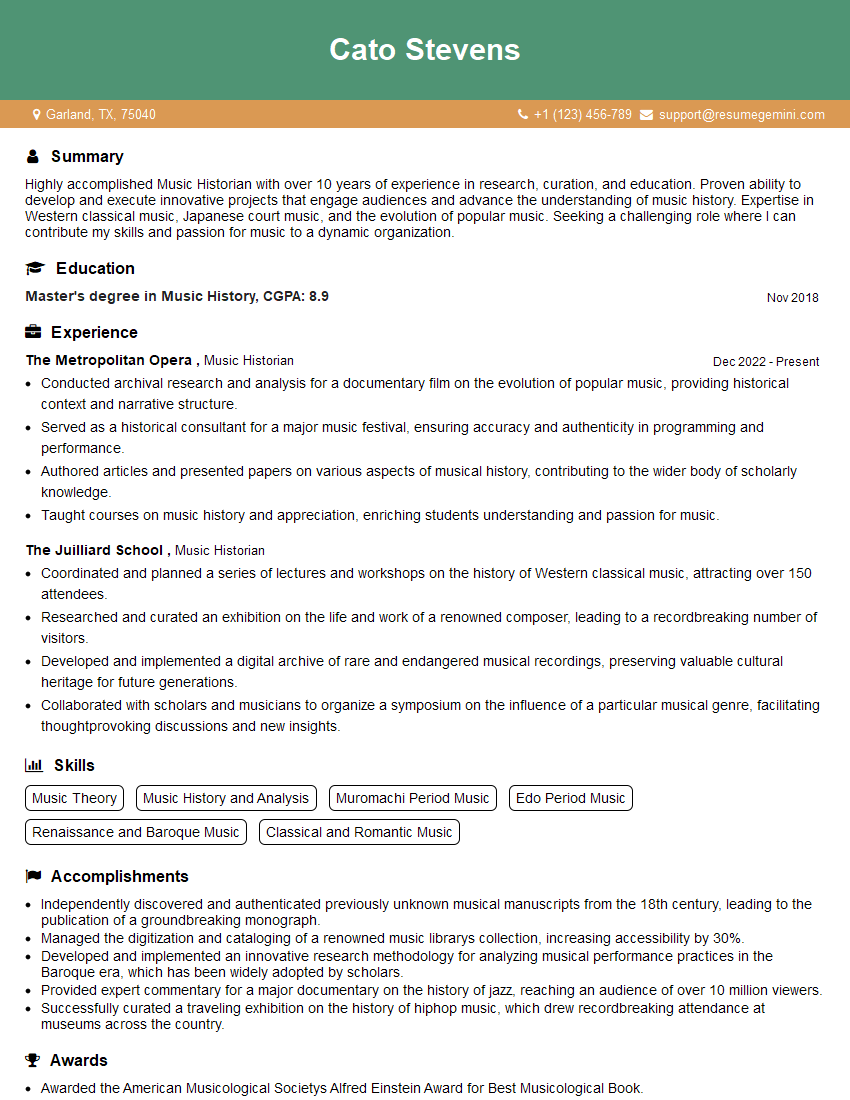
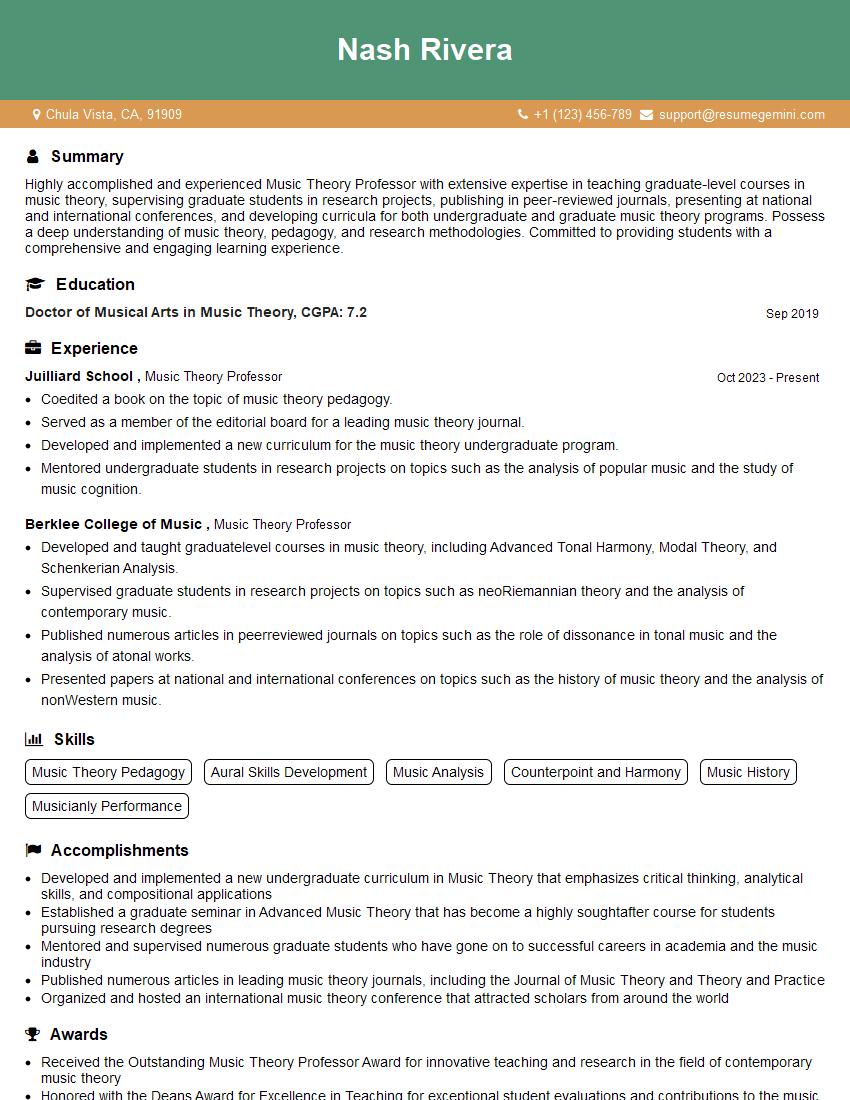
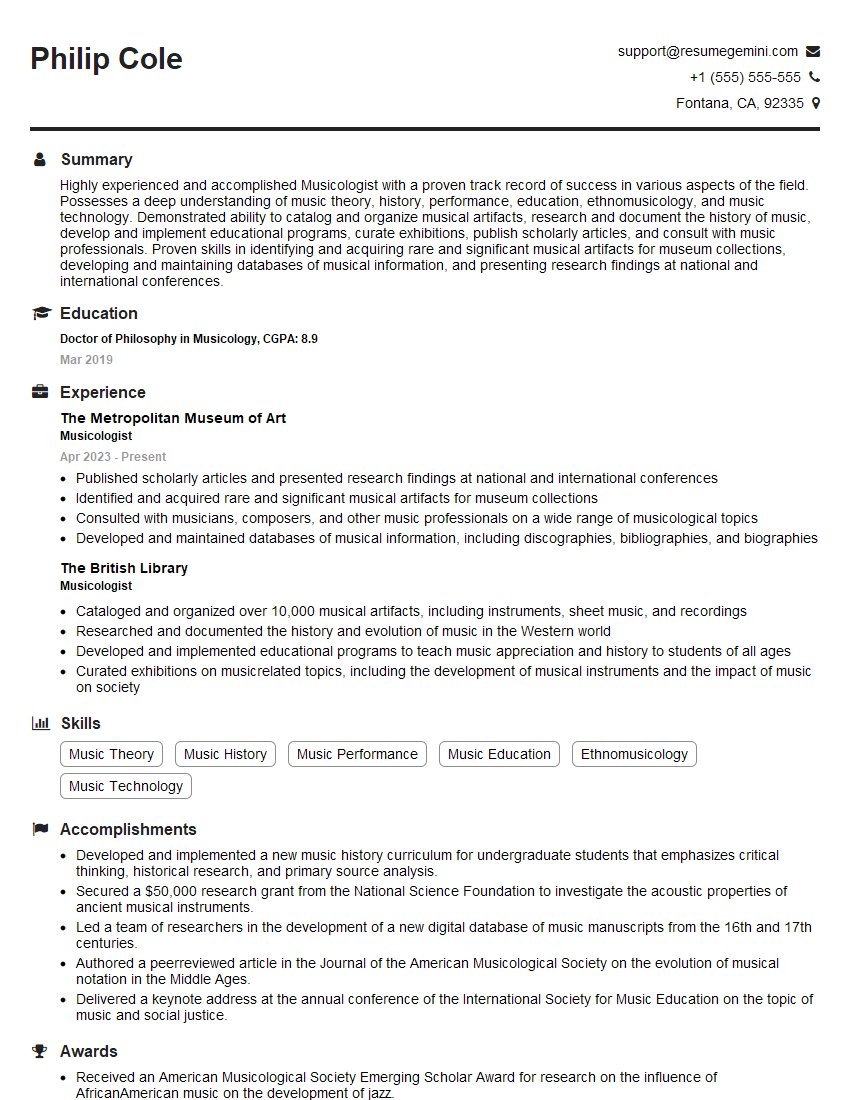
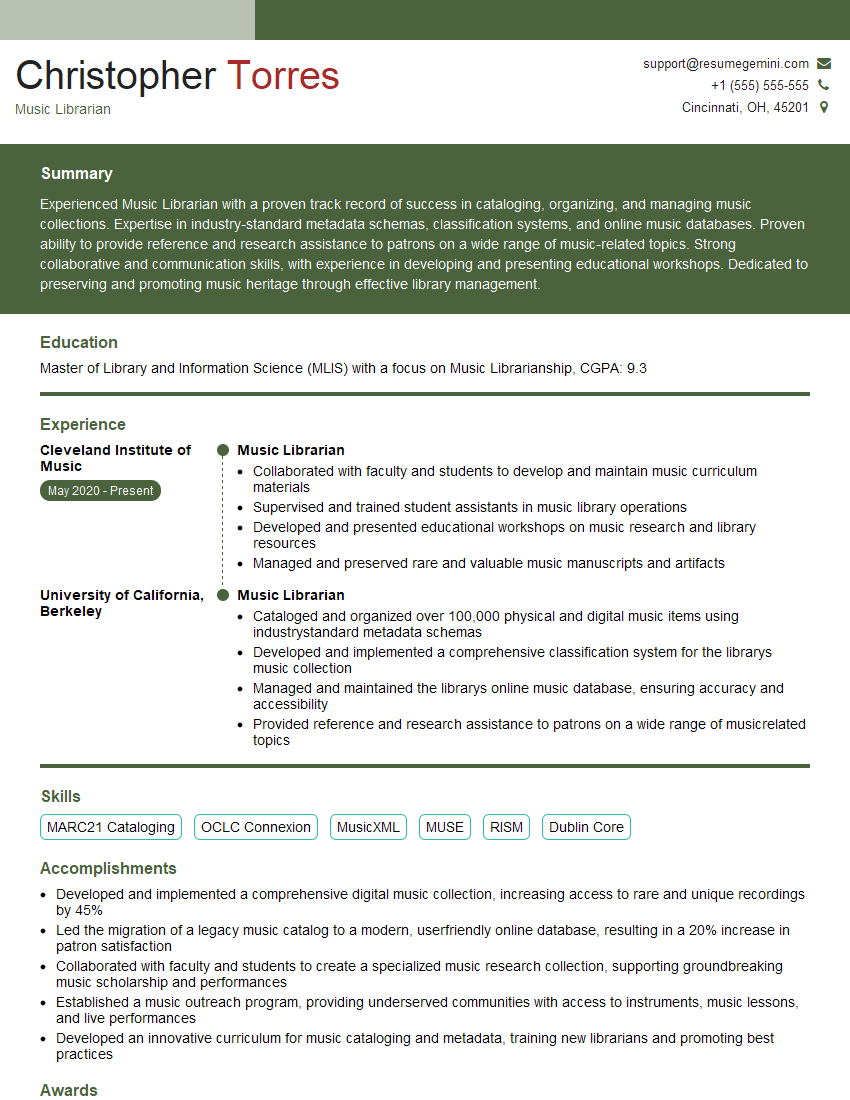
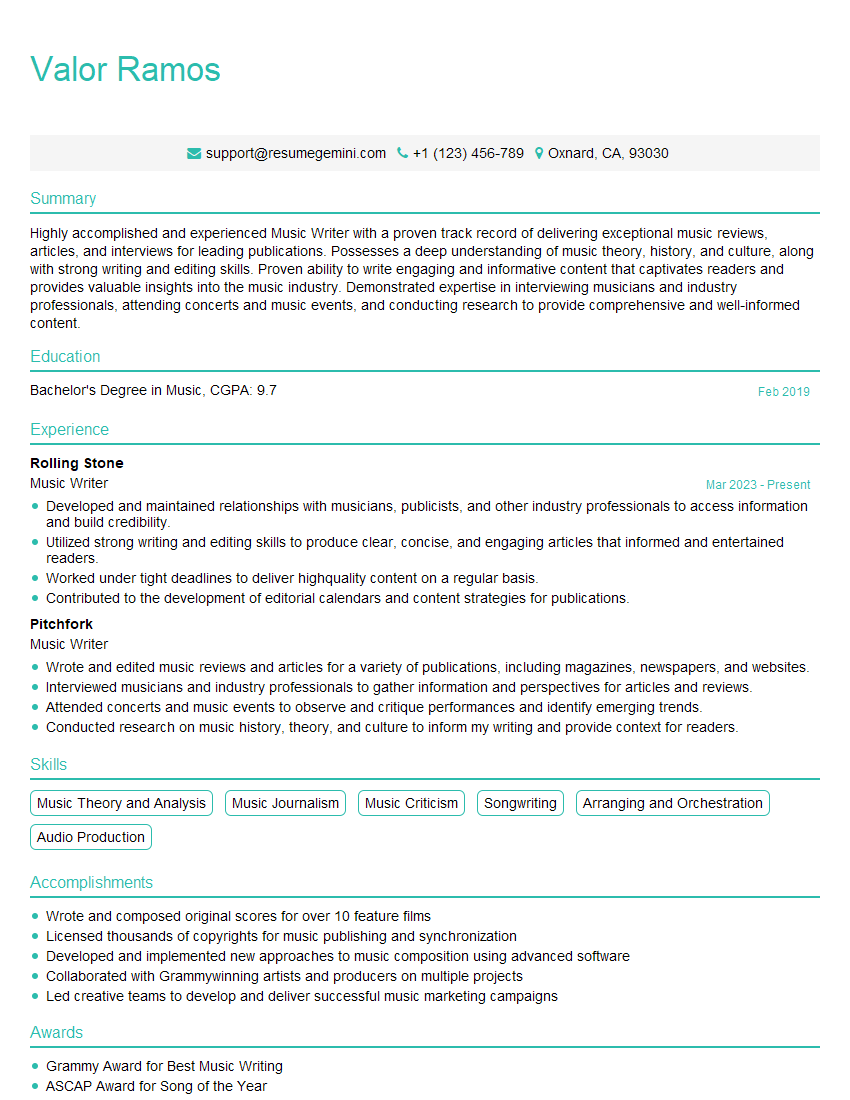
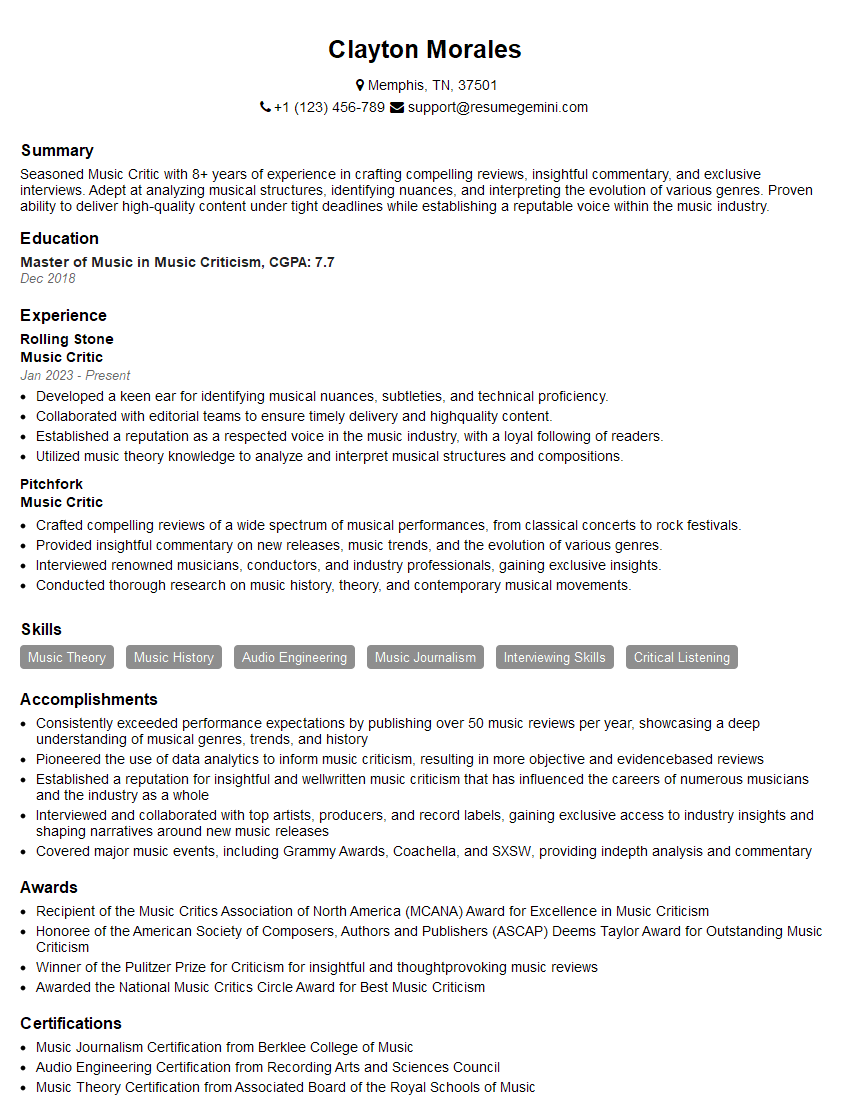
A strong understanding of music history and context is crucial for career advancement in various music-related fields, demonstrating a deep appreciation for the art form and its evolution. To enhance your job prospects, create an ATS-friendly resume that highlights your skills and experience effectively. ResumeGemini is a trusted resource that can help you build a professional and impactful resume tailored to your specific experience and career goals. Examples of resumes tailored to showcasing expertise in Understanding of Music History and Context are available to guide you. Investing time in crafting a strong resume significantly increases your chances of securing an interview and landing your dream job.

Explore more articles
Users Rating of Our Blogs
Share Your Experience
We value your feedback! Please rate our content and share your thoughts (optional).
What Readers Say About Our Blog
Very informative content, great job.
good