Are you ready to stand out in your next interview? Understanding and preparing for Multi Needle Machine Operation interview questions is a game-changer. In this blog, we’ve compiled key questions and expert advice to help you showcase your skills with confidence and precision. Let’s get started on your journey to acing the interview.
Questions Asked in Multi Needle Machine Operation Interview
Q 1. Explain the different types of multi-needle sewing machines.
Multi-needle sewing machines come in various types, categorized primarily by their stitch formation and application. The most common types include:
- Flat-bed multi-needle machines: These are the workhorses of many industries, featuring a flat bed for easy fabric handling. They’re ideal for straight stitching applications like sewing seams on garments or upholstery.
- Cylinder-bed multi-needle machines: These machines use a cylindrical bed, enabling the sewing of tubular items like sleeves or socks. The fabric is fed around the cylinder as it’s sewn.
- Post-bed multi-needle machines: These are specialized machines used for sewing specific parts of garments or other items that require more intricate manipulation of fabric.
- Chain-stitch multi-needle machines: These produce a chain stitch, a less durable stitch but useful for applications where speed and low cost are prioritized, such as temporary stitching in manufacturing.
- Lockstitch multi-needle machines: These machines, producing the most common and durable stitch, are used for many applications requiring high strength and quality.
The choice of machine depends heavily on the type of fabric, the desired stitch quality, and the production volume. For example, a garment manufacturer might use flat-bed machines for seams and cylinder-bed machines for sleeves, while a specialized shop might use post-bed machines for intricate designs.
Q 2. Describe your experience with various stitch types and their applications.
My experience encompasses a wide range of stitch types, each with specific applications. For instance:
- Straight stitch: The most basic and versatile stitch, used extensively for seams, hems, and various other applications. Its strength and reliability make it a staple in most sewing operations.
- Zigzag stitch: Used for decorative purposes, overlocking seams to prevent fraying, and attaching elastic. The width and length can be adjusted for different effects.
- Blind stitch: Creates almost invisible seams, perfect for finishing hems on garments or other items where a discreet finish is needed.
- Chain stitch: While less durable, it is faster and more economical, often used in temporary stitching for assembly or other applications where high strength isn’t critical.
I’ve worked with these stitches on a variety of materials including lightweight fabrics like silk, heavy-duty materials like canvas, and even leathers. Selecting the appropriate stitch type and adjusting parameters like stitch length and width is crucial to achieve optimal results based on the material and application.
Q 3. How do you troubleshoot common multi-needle machine malfunctions?
Troubleshooting multi-needle machines requires a systematic approach. I begin by identifying the problem. Common malfunctions include:
- Needle breakage: This often stems from using the wrong needle size or type for the fabric, improper needle threading, or hitting obstructions in the fabric.
- Looping or skipped stitches: Issues with thread tension, needle timing, or improper lubrication can lead to this.
- Uneven stitch length: This could be due to inconsistent feed dog operation, incorrect stitch length setting, or problems with the machine’s motor.
- Thread jams: These can arise from improper threading, lint buildup, or damaged thread guides.
My troubleshooting process involves:
- Visual inspection: Checking for obvious problems like broken needles, tangled threads, or obstructions.
- Systematic elimination: Testing each component of the machine, starting with the simplest solutions. For example, I’d check the thread tension before inspecting the intricate timing mechanisms.
- Manual operation: Sometimes, manually operating parts of the machine can help pinpoint the source of the malfunction.
- Documentation and record keeping: Detailed notes on past maintenance and repairs are invaluable in troubleshooting complex issues.
I always prioritize safety during the troubleshooting process, ensuring the machine is unplugged before any internal inspection or repair.
Q 4. What safety procedures do you follow when operating multi-needle machines?
Safety is paramount when operating multi-needle machines. My procedures include:
- Proper machine setup: Ensuring the machine is securely fastened to a stable work surface and that all guards are in place.
- Personal Protective Equipment (PPE): Always wearing safety glasses to protect my eyes from flying debris and using appropriate gloves when handling sharp needles or potentially abrasive materials.
- Machine inspection: Thoroughly inspecting the machine before each use to ensure there are no loose parts or potential hazards.
- Safe operation: Never reaching into the machine while it is running. Following all manufacturer’s guidelines for machine operation is critical.
- Emergency procedures: Knowing the location of emergency stop buttons and procedures for handling any accidents or injuries.
- Proper machine shutdown: Always unplugging the machine and following the prescribed shutdown procedure before leaving it unattended.
I treat safety as a non-negotiable aspect of my work, viewing it as a personal responsibility and essential for maintaining a safe and productive work environment.
Q 5. Explain the importance of proper thread tension in multi-needle sewing.
Proper thread tension is crucial in multi-needle sewing for several reasons. It directly impacts:
- Stitch quality: Balanced tension ensures consistent, even stitches. Uneven tension can result in skipped stitches, puckering, or broken threads.
- Seam strength: The right tension creates a strong, secure seam that can withstand stress. Incorrect tension can weaken the seam, making it prone to failure.
- Fabric appearance: Proper tension helps to prevent distortion or damage to the fabric during the sewing process. For delicate materials, incorrect tension can cause tearing or damage.
Achieving the correct tension often involves adjusting the upper and lower tension dials on the machine, with the specifics depending on the machine and the type of fabric. Think of it like a tug-of-war between the upper and lower threads; a balanced pull creates the ideal stitch.
Q 6. How do you maintain and clean a multi-needle sewing machine?
Regular maintenance and cleaning are essential for optimal performance and longevity of a multi-needle sewing machine. My maintenance routine includes:
- Daily cleaning: Removing lint, thread scraps, and dust buildup from the machine using a brush or compressed air. This prevents jams and ensures smooth operation.
- Lubrication: Applying appropriate lubricating oil to moving parts, following the manufacturer’s recommendations. Proper lubrication reduces friction, extends the life of the machine, and prevents wear.
- Periodic inspection: Regularly checking the condition of the needles, feed dogs, and other critical components. Replacing worn parts promptly can prevent bigger problems down the line.
- Thread path cleaning: Clearing the thread path of lint and debris to prevent jams and ensure smooth thread flow.
- Professional servicing: Scheduling regular professional servicing for more extensive checks, adjustments, and repairs.
Think of it like maintaining a car. Regular maintenance prevents major breakdowns and extends the lifespan of the machine, preventing costly repairs.
Q 7. Describe your experience with different needle types and their uses.
My experience covers a variety of needle types, each suited for specific fabrics and applications. Here are some examples:
- System needles: Standard needles for general sewing purposes, available in various sizes and types for different materials.
- Ballpoint needles: Designed for knit fabrics to prevent snagging or damaging the delicate loops.
- Sharp needles: Suitable for woven fabrics and provide clean, precise stitching.
- Leather needles: Have a sharp point and a triangular shape, suited for thicker materials like leather and upholstery.
- Denim needles: Reinforced to withstand heavy-duty sewing on dense fabrics like denim.
Selecting the correct needle is critical to prevent needle breakage and maintain the quality of the stitches. Choosing the wrong needle for the fabric can result in damaged needles, broken threads, and inferior stitches. I always refer to manufacturer’s recommendations and use the appropriate needle type and size for the job.
Q 8. How do you adjust the stitch length and width on a multi-needle machine?
Adjusting stitch length and width on a multi-needle machine is crucial for achieving the desired seam quality. Most machines have dedicated dials or digital displays for these settings. The stitch length, measured in millimeters or stitches per inch (SPI), controls the distance between each stitch. A shorter stitch length creates a more durable seam, ideal for heavier fabrics or areas needing strength, while a longer stitch length is faster but less durable, suitable for lighter fabrics. The stitch width, usually controlled separately, determines the horizontal spacing of the needles, influencing the density of the stitching and the resulting seam’s appearance. Think of it like adjusting the spacing between individual threads in a woven fabric.
For example, a shorter stitch length (e.g., 2mm) might be used for a heavy-duty denim garment, while a longer stitch length (e.g., 3.5mm) would be appropriate for a lightweight blouse. Similarly, stitch width would be adjusted depending on the fabric’s weight and the desired aesthetic. A wider stitch width might be used for decorative stitching, whereas a narrower width is better suited for precision work. The exact method will vary depending on the machine’s brand and model, so consulting the operator’s manual is always recommended.
Q 9. What are the common causes of skipped stitches on a multi-needle machine?
Skipped stitches are a common frustration in multi-needle sewing. Several factors can contribute to this, including:
- Improper Thread Tension: Incorrectly adjusted thread tension, either too tight or too loose, can cause the thread to break or skip. This is like trying to weave a fabric with some threads too loose and some too tight; it creates inconsistencies.
- Damaged or Bent Needles: A bent or damaged needle won’t consistently penetrate the fabric, leading to skipped stitches. Regular needle checks are therefore essential.
- Incorrect Needle Type or Size: The wrong needle type or size for the fabric can cause skipped stitches. Just as you wouldn’t use a thin needle for thick leather, you must select the correct needle for the fabric being sewn.
- Dirty or Damaged Feed Dogs: The feed dogs move the fabric under the needle. If dirty or damaged, they can cause inconsistent fabric feed, resulting in skipped stitches.
- Poor Fabric Quality: Very thin or stretched fabrics, or fabrics with irregularities, can sometimes disrupt the stitching process.
- Thread Problems: Damaged, frayed, or the wrong type of thread can be problematic.
Troubleshooting: Systematically check each of these points. Start by checking thread tension, examine the needles carefully, clean the feed dogs, and ensure you are using the right needle for your fabric.
Q 10. How do you handle thread breakage during operation?
Thread breakage is a frequent occurrence, especially on multi-needle machines. The key is to respond quickly and effectively. Firstly, stop the machine immediately to prevent further damage.
Next, carefully retrace your steps to locate the broken thread. This may involve inspecting the thread path from the spool to the needle. Common areas for breakage include the tension discs, the needle clamp, or even a snag in the fabric. Once you’ve located the break, carefully remove the broken thread, ensuring no knots or tangles remain to cause more problems.
Then, rethread the machine correctly, paying close attention to the tension settings. It’s crucial to use the correct thread type and ensure that the thread path is clear. After rethreading, test the stitching on a scrap piece of fabric before continuing on the actual garment. If the breakage continues, consider the possibility of the machine needing maintenance or having a component that is worn out.
Q 11. Describe your experience with different fabrics and their sewing requirements.
My experience with various fabrics and their sewing requirements is extensive. I’ve worked with everything from lightweight silks and delicate laces to heavy-duty denim and canvas. Each fabric requires a different approach. For instance, delicate fabrics like chiffon require a fine needle, low stitch tension, and potentially a special presser foot to avoid damage. In contrast, heavy fabrics like leather or upholstery often require stronger needles, higher stitch tension, and increased machine speed. Understanding the characteristics of each fabric is crucial: some are prone to stretching, others to fraying, and some require special handling to avoid puckering. I adapt accordingly by adjusting needle size, stitch length, stitch width, and feed dog settings, and choosing the appropriate presser foot. This ensures that the stitching is both functional and aesthetically pleasing.
Example: When sewing denim, I use a strong needle and a shorter stitch length to create a robust seam. With silk, I would use a finer needle and a longer stitch length to avoid damaging the delicate fibers.
Q 12. How do you identify and resolve problems with needle breakage or bending?
Needle breakage or bending is a common problem, often caused by hitting pins or other obstructions in the fabric, using the wrong needle for the fabric, or due to needle wear and tear.
Identification: A broken or bent needle will immediately cause skipped stitches or result in uneven stitching. A visual inspection is usually enough to identify the problem. Carefully check each needle for any bending, damage, or dullness.
Resolution: The solution is straightforward – replace the damaged needle. Before doing so, ensure there are no obstructions beneath the needle plate or in the fabric that could be causing damage. Select a needle that is appropriate for the fabric you are using. Finally, lubricate the machine’s needle bar periodically to minimize friction that might contribute to needle damage. Prevention is key here—regular needle checks, proper machine maintenance, and the use of the correct needle type are crucial.
Q 13. Explain your understanding of different types of presser feet and their functions.
Different presser feet are designed for various sewing tasks and fabrics. The standard presser foot is suitable for general sewing, but specialized feet enhance precision and control.
- Roller Foot: Ideal for sewing on difficult fabrics like leather, vinyl, or canvas, it prevents sticking and puckering.
- Teflon Foot: This foot smoothly glides over slippery fabrics like synthetics and coated fabrics.
- Zipper Foot: Designed to stitch close to a zipper, ensuring a neat and even seam.
- Buttonhole Foot: Used for creating precise buttonholes.
- Walking Foot: This foot has multiple feed dogs and prevents slippage when sewing multiple layers of thick fabrics or difficult fabrics.
- Blind Stitch Foot: Creates an almost invisible seam.
Choosing the correct presser foot is critical for optimal stitch quality and fabric handling. Using the wrong foot can result in skipped stitches, poor seam appearance, or even damage to the fabric.
Q 14. How do you ensure consistent seam quality across multiple garments?
Consistent seam quality across multiple garments requires careful attention to detail and process control. Here’s how I ensure consistent results:
- Consistent Machine Settings: Maintain consistent stitch length, stitch width, and thread tension throughout the sewing process. Regularly check the machine settings to prevent drifting.
- Regular Machine Maintenance: Clean and lubricate the machine regularly to ensure smooth operation and consistent performance. A well-maintained machine is less prone to malfunction and will result in better stitching.
- Quality Control Checks: Perform regular quality checks on the seams during the process to promptly identify and correct any inconsistencies. It’s better to catch small issues early rather than at the end.
- Pre-Cutting and Marking: Ensure accurate fabric cutting and consistent marking of seam allowances to guarantee precise stitching. The foundation for consistent results begins with a properly prepared fabric.
- Consistent Fabric Handling: Handle fabrics with care, avoiding stretching or pulling, to ensure even fabric feed. This is especially crucial for delicate and stretchy materials.
- Proper Needle Selection: Using the appropriate needle size and type for the specific fabric reduces the likelihood of skipped stitches or fabric damage.
By following these steps, I maintain a high level of consistency and quality in my work, ensuring that each garment receives the same high standard of stitching.
Q 15. Describe your experience with different types of bobbins and their use.
Different bobbin types are crucial for achieving optimal stitch quality and machine performance on multi-needle sewing machines. The choice depends on the fabric, thread type, and desired stitch density.
- Metal Bobbins: These are durable and offer consistent thread feed, ideal for heavier fabrics and high-speed sewing. They’re generally preferred for industrial settings due to their robustness. I’ve extensively used these with heavier-weight denim and canvas materials.
- Plastic Bobbins: Lighter and cheaper than metal, plastic bobbins are suitable for lighter fabrics and less demanding sewing applications. They’re often used in lower-speed machines or for specific thread types. I’ve used these frequently for delicate silks and rayon fabrics where the lighter weight is beneficial.
- Pre-Wound Bobbins: These save time and improve efficiency by eliminating the need for manual bobbin winding. Different manufacturers offer varying sizes and thread types, each tailored to specific applications. I rely heavily on pre-wound bobbins for large-scale production runs to maintain speed and consistency.
Selecting the correct bobbin size and type is critical. An improperly sized or damaged bobbin can cause skipped stitches, thread breakage, and even machine damage. My experience includes diagnosing issues arising from bobbin mismatch and recommending appropriate replacements based on project specifications.
Career Expert Tips:
- Ace those interviews! Prepare effectively by reviewing the Top 50 Most Common Interview Questions on ResumeGemini.
- Navigate your job search with confidence! Explore a wide range of Career Tips on ResumeGemini. Learn about common challenges and recommendations to overcome them.
- Craft the perfect resume! Master the Art of Resume Writing with ResumeGemini’s guide. Showcase your unique qualifications and achievements effectively.
- Don’t miss out on holiday savings! Build your dream resume with ResumeGemini’s ATS optimized templates.
Q 16. What is your experience with computerized multi-needle sewing machines?
My experience with computerized multi-needle sewing machines is extensive. I’m proficient in operating and maintaining machines with varying needle counts (from 6 to 24 needles), different stitch patterns and lengths, and various automated features. These machines significantly enhance efficiency and precision.
I’ve worked with machines that offer features like:
- Programmable stitch patterns: Allowing for complex designs and customization based on project requirements.
- Automatic thread trimming: Reducing downtime and improving productivity.
- Needle position control: Enabling precise placement for intricate designs.
- Speed and tension controls: Allowing for adjustments to suit the fabric and thread.
Beyond operating, I possess the skills to troubleshoot and resolve common issues such as sensor errors, stitch inconsistencies, and programming glitches. For instance, I once diagnosed a problem with a machine’s sensor misreading the fabric thickness, resulting in inconsistent stitch formation. By carefully adjusting the sensor settings and calibrating the machine, I solved the problem and got the production line back on track.
Q 17. How do you handle production deadlines and targets?
Meeting production deadlines and targets is paramount in this industry. My approach involves a combination of careful planning, efficient execution, and proactive communication.
My strategy includes:
- Thorough project analysis: Assessing the complexity, material requirements, and time constraints for each project upfront.
- Effective time management: Breaking down large tasks into smaller, manageable components with realistic timelines.
- Proactive problem-solving: Identifying potential bottlenecks early on and implementing solutions before they impact production.
- Continuous monitoring and adjustments: Regularly checking progress against the timeline and adapting my workflow as needed.
- Teamwork and communication: Collaborating with colleagues to ensure smooth workflow and efficient resource allocation.
For example, on a recent rush order, I identified a potential delay due to a shortage of a specific thread type. By quickly communicating this to the procurement team and suggesting an alternative thread that would produce an acceptable outcome, I avoided a major setback and ensured the timely completion of the project.
Q 18. Explain your experience working in a team environment.
I thrive in team environments. My experience shows I’m adept at collaborating with colleagues across different departments, such as pattern makers, cutters, and quality control personnel. Effective communication and mutual respect are key to my approach.
I’ve always been ready to offer support to my team members, share my expertise, and assist with tasks beyond my core responsibilities. This collaborative approach fostered a positive and productive environment in my previous roles. For instance, during a particularly busy period, I assisted a less experienced colleague in troubleshooting a machine malfunction, improving their skills and ensuring timely completion of the project.
My belief is that a team’s success relies on open communication, shared goals, and a willingness to help each other. I contribute by actively listening to others’ opinions, offering constructive feedback, and fostering a spirit of cooperation.
Q 19. Describe your problem-solving skills when dealing with machine issues.
Troubleshooting machine issues is a regular part of this job, and I possess a systematic approach to problem-solving. My process typically involves:
- Identifying the problem: Carefully observing the machine’s behavior and noting any unusual sounds, patterns, or error messages.
- Analyzing the cause: Using my knowledge of the machine’s mechanics and electronics to determine the possible root cause. This could involve checking thread tension, needle alignment, bobbin winding, or motor functionality.
- Testing solutions: Implementing potential solutions one by one, carefully observing the results and making adjustments as necessary.
- Documenting the solution: Recording the problem, the steps taken to solve it, and the outcome for future reference.
For example, I once encountered a situation where a multi-needle machine was producing inconsistent stitches. Through systematic troubleshooting, I identified a worn-out needle plate as the culprit. After replacing the plate, the issue was resolved, demonstrating my ability to diagnose complex mechanical problems effectively.
Q 20. How do you prioritize tasks and manage your workflow efficiently?
Prioritizing tasks and managing workflow efficiently is crucial for maintaining productivity and meeting deadlines. I use a combination of techniques to optimize my workflow:
- Prioritization Matrix: I employ a matrix that categorizes tasks based on urgency and importance (e.g., urgent/important, important/not urgent, etc.). This helps me focus on high-priority tasks first.
- Task Breakdown: Complex tasks are broken down into smaller, more manageable subtasks, making them less daunting and easier to track.
- Time Blocking: I allocate specific time blocks for different tasks to improve focus and avoid multitasking.
- Regular Review and Adjustment: I regularly review my progress and adjust my schedule as needed to stay on track.
Utilizing these methods, I manage to consistently prioritize tasks effectively, even during periods of high workload. I’m adept at adapting to changing priorities without compromising the quality of my work. Flexibility and responsiveness are key to maintaining efficient workflow in a dynamic production environment.
Q 21. What is your understanding of quality control in the sewing process?
Quality control is an integral part of the sewing process. It’s not just about checking for defects at the end; it’s about building quality into every step. My understanding encompasses:
- Input Material Inspection: Checking the quality of fabrics and threads before they are used in production to prevent issues later on.
- In-Process Monitoring: Regularly checking the stitches, seam integrity, and overall quality of the sewn items during the production process.
- Final Inspection: A thorough examination of completed items for defects, inconsistencies, and adherence to specifications.
- Defect Tracking and Analysis: Identifying the root cause of defects to implement corrective actions and prevent recurrence.
I’m proficient in using various quality control tools and techniques, including statistical process control (SPC) methods to monitor key parameters and ensure consistent product quality. I actively contribute to implementing process improvements to minimize defects and enhance the overall quality of our output.
Q 22. How do you maintain accurate records and documentation of your work?
Maintaining accurate records is crucial for efficient multi-needle machine operation. I utilize a combination of digital and physical methods. For each job, I create a detailed log, either digitally using a spreadsheet or dedicated software, or manually in a bound notebook. This log includes the job number, date, machine used, materials (fabric type, weight, etc.), stitch settings (stitch length, needle spacing, etc.), any issues encountered, and the total output. I also attach any relevant quality control checks or inspection reports. This meticulous record-keeping allows for easy troubleshooting, performance analysis, and ensures consistent product quality over time. For example, if a specific fabric type consistently leads to thread breakage, the log helps me identify this and adjust settings or maintenance accordingly. Digital records also allow for easy data analysis and reporting to management.
Q 23. Describe your experience with different types of sewing machine oils and lubricants.
My experience encompasses various sewing machine oils and lubricants, each suited for specific applications and machine components. I commonly use high-quality, lightweight sewing machine oil for general lubrication of moving parts, like the shuttle hook and needle bar mechanisms. This oil ensures smooth operation and prevents wear. For heavier-duty components or those experiencing high friction, I might employ a slightly thicker, specialized lubricant. I’ve also worked with silicone-based lubricants for specific situations where it’s crucial to prevent corrosion or gumming, such as in humid environments. The choice of lubricant hinges on the specific machine type, the workload, and the environmental conditions. Incorrect lubrication can lead to increased wear, malfunctions, and costly repairs – a point I emphasize in my training sessions.
Q 24. How do you adjust the timing and synchronization of multiple needles?
Adjusting the timing and synchronization of multiple needles requires precision and understanding of the machine’s mechanics. It typically involves fine-tuning the needle bar timing to ensure all needles penetrate the fabric simultaneously. This often requires using the machine’s adjustment screws – often small and requiring careful manipulation. I start by visually inspecting the needle penetration to identify any inconsistencies. Then, using the appropriate tools (often small screwdrivers or wrenches), I make minor adjustments, consistently checking the results after each small tweak. This is an iterative process that may involve adjusting multiple screws, and the exact method varies depending on the machine’s brand and model. In some advanced machines, this adjustment can be controlled electronically, offering higher precision. Improper synchronization can lead to uneven stitching, skipped stitches, and ultimately, fabric damage and production delays.
Q 25. What are your experiences with different feeding mechanisms of multi-needle machines?
Multi-needle machines employ various feeding mechanisms, each with its advantages and disadvantages. I’ve worked extensively with both feed dogs and roller feed systems. Feed dogs provide a consistent, precise feed suitable for lighter-weight fabrics and simpler stitching patterns. However, with multiple needles and heavier fabrics, roller feed systems are often preferred as they offer a more powerful and even feed, preventing fabric slippage or puckering. I’ve also had experience with differential feed systems, essential for specialized applications requiring precise control over fabric movement, such as quilting or garment construction. The selection of the feeding mechanism depends on the fabric type, stitch density, and the overall requirements of the sewing job. Understanding the strengths and limitations of each mechanism is crucial for optimal production and quality.
Q 26. How do you identify and rectify issues with differential feed mechanisms?
Identifying and rectifying issues with differential feed mechanisms often involves a systematic approach. Problems can range from uneven fabric feed to skipped stitches. I begin by visually inspecting the mechanism for any obvious damage, such as bent or broken parts. If visual inspection doesn’t reveal the problem, I’ll then check the machine’s settings, ensuring the differential feed is properly adjusted for the fabric type and stitch pattern. A common cause of issues is dirt or debris buildup within the feed mechanism, so thorough cleaning is often the solution. Sometimes, the problem lies in the timing of the differential feed in relation to the needle movement, necessitating careful adjustment of the relevant components. This may involve consulting the machine’s manual or contacting the manufacturer’s technical support for guidance.
Q 27. Describe your experience with preventative maintenance of multi-needle sewing machines.
Preventative maintenance is paramount for ensuring the longevity and reliability of multi-needle sewing machines. My routine includes daily lubrication of moving parts, regular cleaning of bobbins and feed mechanisms, and periodic inspection of needles for bending or breakage. I also check the tension of the threads, and routinely replace worn or damaged parts as needed. Beyond the daily checks, I perform more thorough preventative maintenance on a scheduled basis – usually weekly or monthly, depending on the machine’s usage intensity. This may include a more deep cleaning, inspecting belts and motor components, and tightening any loose screws or bolts. A well-maintained machine produces better quality work, reduces downtime due to unexpected breakdowns, and extends the lifespan of the equipment, reducing long-term costs.
Q 28. How do you adapt to changes in production demands or machine specifications?
Adapting to changes in production demands or machine specifications is a critical skill in this field. I approach these changes with a combination of flexibility and thorough preparation. If production demands increase, I may need to adjust stitch settings to maintain quality, optimize workflow processes, or even explore the possibility of adding more machines. Changes in machine specifications, such as a new model or upgraded components, may require me to undertake specific training or study relevant manuals. I’m comfortable using various troubleshooting methods to find new solutions, and I am proactive in staying updated on industry advancements and new technologies. My ability to quickly adapt helps to maintain production efficiency and ensures consistent quality under various circumstances. I believe continuous learning is crucial to excel in this ever-evolving field.
Key Topics to Learn for Your Multi-Needle Machine Operation Interview
- Machine Setup and Maintenance: Understanding the intricacies of setting up different types of multi-needle machines, including threading, tension adjustment, and preventative maintenance procedures. This includes recognizing potential issues before they arise.
- Fabric Handling and Feeding: Mastering the techniques for smoothly feeding various fabrics through the machine, minimizing fabric wrinkles and ensuring consistent stitch quality. Consider the impact of different fabric types on machine settings.
- Stitch Types and Applications: Familiarity with various stitch types achievable with multi-needle machines and their appropriate applications in different garments or projects. Be able to discuss the advantages and disadvantages of each stitch type.
- Troubleshooting and Problem-Solving: Developing a systematic approach to diagnosing and resolving common multi-needle machine malfunctions, such as broken needles, skipped stitches, or thread jams. This includes understanding the root cause analysis process.
- Safety Procedures and Regulations: Demonstrating a thorough understanding of all relevant safety protocols associated with operating multi-needle machines, including personal protective equipment (PPE) and emergency procedures.
- Production Efficiency and Optimization: Understanding techniques to maximize production output while maintaining high quality standards. This includes optimizing machine settings and workflow processes.
- Quality Control and Inspection: Developing a keen eye for identifying defects in stitching and fabrics, and understanding the importance of maintaining consistent quality throughout the production process.
Next Steps
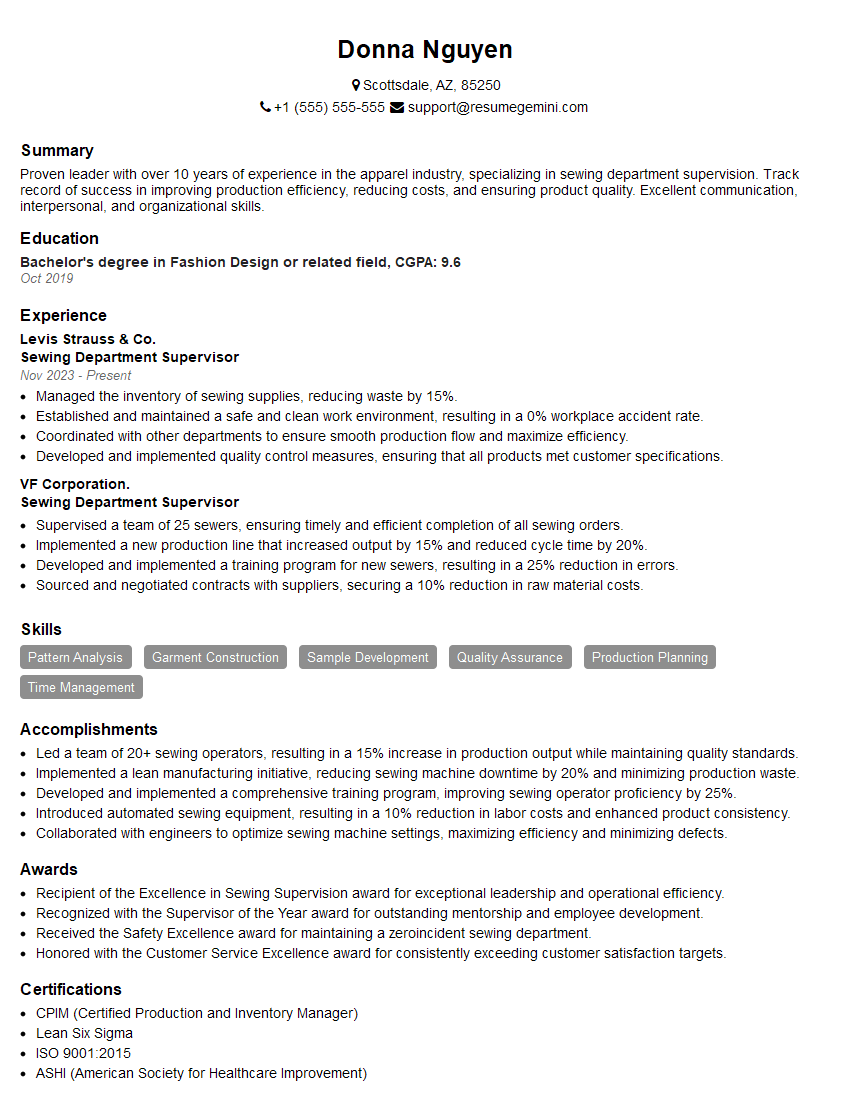
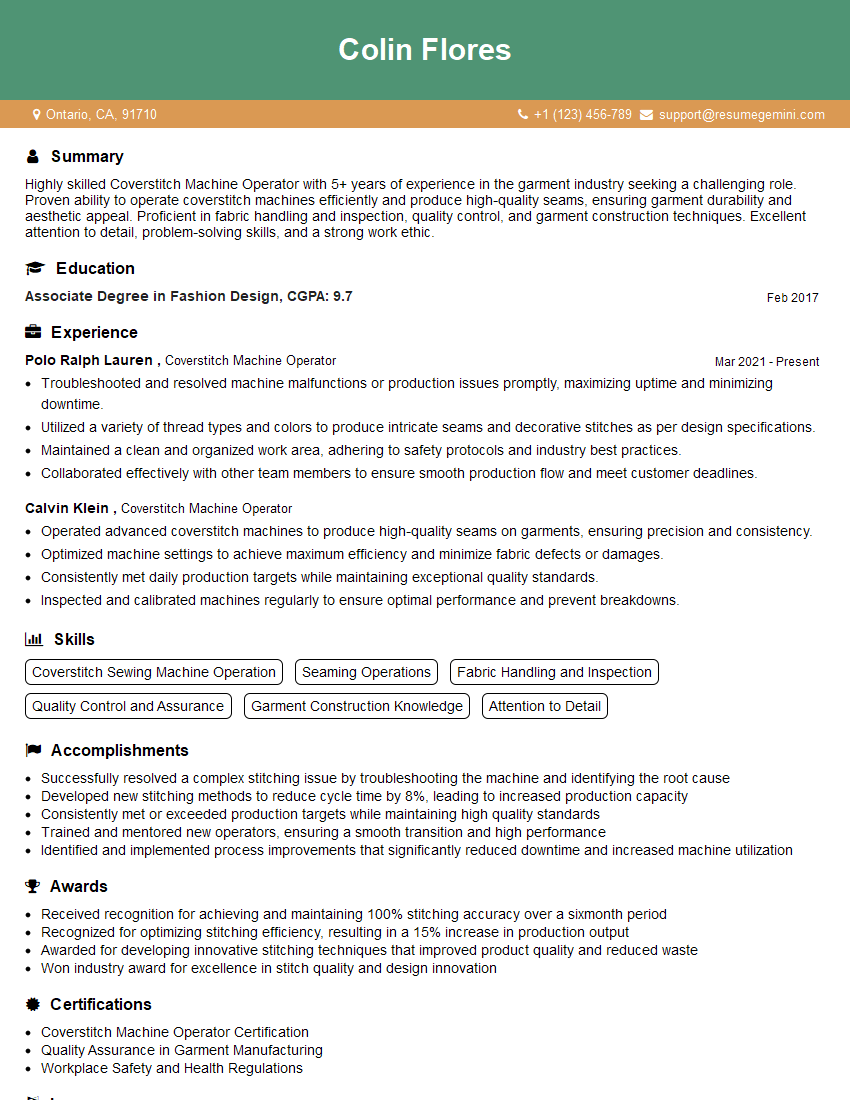
Mastering multi-needle machine operation opens doors to exciting career opportunities with significant growth potential in the garment manufacturing industry. To maximize your job prospects, creating a strong, ATS-friendly resume is crucial. ResumeGemini is a trusted resource that can help you build a professional resume that showcases your skills and experience effectively. We offer examples of resumes tailored specifically to multi-needle machine operation to guide you in crafting a compelling application that highlights your expertise. Invest the time to build a resume that reflects your abilities – it’s an investment in your future.
Explore more articles
Users Rating of Our Blogs
Share Your Experience
We value your feedback! Please rate our content and share your thoughts (optional).
What Readers Say About Our Blog
Very informative content, great job.
good






