Every successful interview starts with knowing what to expect. In this blog, we’ll take you through the top Understanding of woodworking principles and techniques interview questions, breaking them down with expert tips to help you deliver impactful answers. Step into your next interview fully prepared and ready to succeed.
Questions Asked in Understanding of woodworking principles and techniques Interview
Q 1. Explain the difference between hardwoods and softwoods.
The terms “hardwood” and “softwood” are somewhat misleading because they don’t necessarily correlate with the actual hardness of the wood. Instead, they refer to the type of tree the wood comes from. Hardwoods come from deciduous trees – trees that lose their leaves seasonally – while softwoods come from coniferous trees – trees that bear cones and typically have needles.
Hardwoods generally have a more complex cellular structure, resulting in denser, stronger, and often more aesthetically pleasing wood. They tend to be more expensive and harder to work with. Examples include oak, maple, cherry, walnut, and mahogany. These woods are often favored for furniture, flooring, and fine cabinetry due to their durability and beauty.
Softwoods, on the other hand, typically have a simpler cellular structure, making them softer, less dense, and easier to work with. They are often more affordable. Common examples include pine, fir, spruce, and cedar. These are frequently used for construction, framing, and less demanding applications where cost-effectiveness is a priority. Note that some softwoods, like yew, can be surprisingly hard.
Q 2. Describe various wood joinery techniques (e.g., mortise and tenon, dovetail, biscuit joinery).
Wood joinery is the art of joining pieces of wood together in a strong and aesthetically pleasing manner. There are many techniques, but some of the most common include:
- Mortise and Tenon: This is a very strong joint where a tenon (a projecting piece) is fitted into a mortise (a hole). Think of it like a peg-in-hole. Variations include through tenons, blind tenons, and wedged tenons, each offering different strength and aesthetic qualities. It’s fantastic for framing and furniture construction.
- Dovetail Joint: Known for its strength and interlocking design, dovetail joints feature interlocking ‘tails’ and ‘pins’ that create a strong, visually appealing joint. Through dovetails are entirely visible, while half-blind and blind dovetails hide some of the joinery, offering different aesthetic choices. This is frequently seen in drawers and fine woodworking.
- Biscuit Joinery: This uses oval-shaped wood biscuits (thin pieces of compressed wood) inserted into slots cut into the joining pieces. Glue is then added, and the biscuits swell slightly, creating a strong bond. It’s a faster and less precise method suitable for less demanding projects or where speed is prioritized. It’s great for frames and cabinets.
Other techniques include dadoes, rabbets, lap joints, and finger joints, each with its own strengths and weaknesses depending on the project requirements.
Q 3. What are the advantages and disadvantages of different wood finishes (e.g., lacquer, varnish, oil)?
Choosing the right finish is crucial for protecting the wood and enhancing its beauty. Each type has advantages and disadvantages:
- Lacquer: Dries quickly, is durable, and offers a hard, protective finish. It’s available in various sheens, but it can be difficult to repair if damaged. It’s great for furniture that needs a hard, protective coating.
- Varnish: Similar to lacquer but often more durable and offers better protection against moisture. It can be more time-consuming to apply due to longer drying times and may yellow over time. It’s suitable for outdoor projects or areas with high moisture.
- Oil: Penetrates the wood, enhancing its natural beauty and providing some protection. It’s less durable than lacquer or varnish and requires more frequent reapplication. It’s ideal for enhancing the natural grain and is often used on cutting boards and butcher blocks.
The best choice depends on the wood type, the project’s intended use, and the desired aesthetic. For example, a fine piece of cherry might be best served with oil to highlight its rich grain, while a kitchen table might benefit from the durability of a polyurethane varnish.
Q 4. How do you select the appropriate wood for a specific project?
Selecting the right wood for a project involves considering several factors:
- Strength and Durability: Hardwoods like oak are ideal for structural components or high-traffic areas, while softer woods like pine are suitable for less demanding projects.
- Appearance: The grain pattern, color, and texture of the wood significantly impact the final aesthetic. Some projects benefit from a dramatic grain (like walnut), while others call for a more subtle look.
- Workability: Some woods are easier to work with than others. Softwoods are generally easier to cut and shape, while hardwoods can require more skill and specialized tools.
- Budget: Exotic hardwoods can be significantly more expensive than common softwoods.
- Project Requirements: Outdoor projects require weather-resistant woods, while interior projects may call for woods with specific aesthetic qualities.
For example, a sturdy outdoor bench would benefit from pressure-treated lumber or a naturally durable hardwood like cedar, while an elegant dining table might call for a beautiful, hard wood like mahogany or cherry.
Q 5. Explain the process of wood drying and its importance.
Wood drying is a critical process that removes moisture from the wood. Green wood (freshly cut wood) contains a significant amount of moisture, typically 30-50%. This moisture can cause warping, cracking, and shrinking as it dries. Proper drying is crucial for dimensional stability and preventing defects.
Wood drying can be achieved through various methods, including:
- Air Drying: This is a slow, natural process where wood is stacked in a well-ventilated area, allowing moisture to evaporate gradually. It’s a cost-effective method but can take months or even years, depending on the wood and environmental conditions.
- Kiln Drying: This is a faster, controlled process using a kiln to regulate temperature and humidity, speeding up the drying process significantly. Kiln drying can reduce the drying time to weeks, but improper kiln drying can create internal stresses that lead to defects.
The importance of proper wood drying cannot be overstated. Wood that is not adequately dried is prone to warping, checking (cracking), and shrinking, rendering it unusable for many projects. Understanding the moisture content of the wood is vital in preventing these issues.
Q 6. Describe your experience with different woodworking tools (hand and power).
My experience spans a wide range of woodworking tools, both hand and power. Hand tools like chisels, hand planes, saws (rip saws, crosscut saws, tenon saws), and mallets are crucial for fine woodworking and allow for precise control. I’m proficient in sharpening and maintaining these tools, ensuring optimal performance. My experience with these tools allows me to work on detailed joinery and intricate projects where precision is paramount.
Power tools are equally important for efficiency and tackling larger projects. I’m experienced with various power tools, including table saws, band saws, jointers, planers, routers, and sanders. I understand the safety procedures and best practices associated with operating these tools, emphasizing safety and precision throughout the process. I can efficiently cut and shape wood using power tools, maintaining accuracy and minimizing waste.
I’m particularly adept at using a router for creating decorative elements and precise cuts. I’ve worked extensively with both fixed and hand-held routers and understand the various bits and their applications.
Q 7. How do you ensure the accuracy and precision of your cuts?
Accuracy and precision in woodworking are paramount. Several strategies contribute to achieving this:
- Sharp Tools: Dull tools require more force and are more likely to create inaccurate cuts. Regular sharpening is essential for both hand and power tools.
- Proper Tool Setup and Adjustment: Power tools, like table saws and planers, require precise adjustments to ensure accurate cuts. Understanding the various settings and adjustments is crucial.
- Accurate Measurement and Marking: Using accurate measuring tools (like squares, measuring tapes, and calipers) and marking techniques (like marking gauges and pencils) is fundamental.
- Jigs and Fixtures: Using jigs and fixtures helps to ensure repeatability and consistency, particularly when making multiple cuts of the same type. Examples include miter boxes, crosscut sleds, and router jigs.
- Test Cuts: Making test cuts on scrap wood allows for verifying tool setup and adjustments before cutting into the final workpiece.
For instance, when making a complex joinery like a dovetail, I’ll always create a test joint first to ensure my layout and technique are correct before working on the final piece. This saves time and material.
Q 8. How do you plan and manage a woodworking project?
Planning a woodworking project is like creating a recipe for a delicious meal. It requires careful consideration of several key aspects. First, I thoroughly analyze the design, understanding the final product’s dimensions, functionality, and aesthetic appeal. This involves reviewing the plans, noting all dimensions, joints, and materials specified. Next, I create a detailed bill of materials, accounting for all lumber, hardware, and finishes needed. This ensures I have everything on hand before starting, minimizing delays. A crucial step is also sequencing the process. I break down the project into manageable tasks, creating a timeline that allows for efficient workflow and avoids potential bottlenecks. This might involve rough cutting all pieces first, then moving to shaping, assembly, and finally finishing. Finally, throughout the process, I maintain meticulous records, including material usage, time spent on tasks, and any adjustments made to the original plan. This documentation is crucial for future projects and helps improve my efficiency over time. For example, recently I built a custom bookshelf. I began by sketching the design, specifying the wood type (oak), dimensions, and shelf spacing. Then, I carefully cut all the oak pieces, ensuring accuracy, before assembling the shelving units, and finally finishing it with a clear coat.
Q 9. Describe your experience with wood shaping techniques (e.g., carving, turning).
Wood shaping is where the artistry truly shines! I’m proficient in both carving and turning. Carving, whether with hand tools or power carving tools, demands precision and patience. I’ve carved everything from intricate decorative elements for furniture to realistic bird sculptures. My experience ranges from basic relief carving to more complex three-dimensional work. It requires understanding wood grain direction to avoid splits and choosing the right tools for the job. For example, a gouge is ideal for removing large amounts of wood, while a chisel is better for fine details. Woodturning, on the other hand, involves manipulating wood on a lathe to create symmetrical shapes. I’m experienced in producing bowls, spindles, and even complex segmented vessels. Safety is paramount here, and I always use appropriate safety equipment and techniques. Learning to anticipate how the wood will react to the cutting tools, especially at high speeds, is crucial for successful and safe turning. One memorable project involved turning a large burl into a stunning bowl. The challenge lay in dealing with the unpredictable grain patterns, but the final result was incredibly rewarding.
Q 10. How do you handle different types of wood defects?
Wood defects are a fact of life for any woodworker, and knowing how to handle them is essential. Common defects like knots, cracks, and warping can influence the structural integrity and aesthetic appeal of a project. My approach varies depending on the defect’s severity and location. Small knots are often incorporated into the design, adding character. For larger knots, I might carefully cut around them or reinforce the area with additional supports. Cracks can be filled with wood filler, epoxy, or carefully spliced using matching wood pieces. Warping can sometimes be corrected by using clamps and humidity control, but sometimes the piece needs to be rejected if the warp is too severe. The key is to carefully assess the defect and decide on a repair strategy that maintains both the structural integrity and aesthetic look of the finished piece. For example, I once used a large knot in a table leg as a focal point, emphasizing its unique character rather than trying to hide it.
Q 11. Explain the safety precautions you take while using woodworking tools.
Safety is my top priority in the workshop. I follow a strict set of safety guidelines, beginning with proper personal protective equipment (PPE). This includes safety glasses or a face shield, hearing protection, dust masks, and appropriate gloves for specific tasks. Before operating any machinery, I thoroughly inspect it for any damage or loose parts. I always ensure that all guards are in place and functioning correctly. When using hand tools, I keep my work area clean and organized, and I always use the correct tool for the job. I maintain a safe working distance from moving parts and blades, and I never rush. I also teach others who work in my shop about these safety protocols. It’s a constant awareness and commitment, rather than just a checklist. A careless moment can lead to serious injury, so vigilance is key.
Q 12. How do you read and interpret woodworking plans or blueprints?
Reading woodworking plans involves a combination of understanding symbols, dimensions, and construction techniques. I start by reviewing the overall design to get a good understanding of the project’s structure and function. Then, I meticulously examine each component, noting its dimensions, material specifications, and the types of joints used. The plans often use standardized symbols for various cuts, joints (like mortise and tenon, dovetail, etc.), and hardware. Understanding these symbols is fundamental. I use a combination of rulers, squares, and sometimes even digital measuring tools to double-check the dimensions. Any ambiguity is clarified before proceeding. For example, plans might indicate a ‘1/4′ dado’ – I would know exactly what type of cut is required and its dimensions. Effective plan reading ensures the project is built accurately and safely.
Q 13. Describe your experience with various woodworking machinery (e.g., planer, jointer, lathe).
My experience with woodworking machinery is extensive. I’m proficient in using planers for surfacing lumber, jointers for creating perfectly flat and square edges, and lathes for turning wood. The planer removes material from the surface of a board to create a uniform thickness. I know how to adjust the planer’s cutting depth carefully to avoid tear-out, especially with softer woods. The jointer is used for creating perfectly straight and square edges, and it’s essential for creating accurate joints. Proper technique and maintaining the knives are critical for safe and efficient operation. The lathe, as mentioned earlier, is indispensable for creating turned objects, and the key here is precision in both speed and tool manipulation. My experience extends beyond these machines to include table saws, band saws, and shapers. I know how to safely operate and maintain each of these machines.
Q 14. How do you maintain and care for your woodworking tools and machinery?
Maintaining my tools and machinery is as important as using them. Regular cleaning and lubrication are crucial for extending their lifespan and ensuring safe operation. Hand tools are cleaned after each use, sharpened regularly, and stored properly. Power tools require more involved maintenance. I inspect blades and bits for damage, and I replace or sharpen them as needed. I regularly lubricate moving parts, following the manufacturer’s recommendations. I also pay attention to any unusual noises or vibrations that might indicate a problem. Regular servicing by professionals is part of my maintenance plan, particularly for more complex machinery. A well-maintained tool is a safe tool, and it also produces better results. This preventative maintenance not only saves money in the long run but also enhances the quality of my work.
Q 15. What is your experience with wood finishing techniques (e.g., sanding, staining, polishing)?
Wood finishing is crucial for both aesthetics and durability. My experience encompasses the entire process, from initial sanding to final polishing. Sanding involves progressively finer grits to achieve a smooth surface, starting with coarser grits like 80-grit to remove imperfections and ending with very fine grits like 320-grit or higher for a flawless finish. I’m proficient in various staining techniques, including wiping stains for a subtle effect, gel stains for deeper color penetration, and using dye stains for transparent colors. Polishing techniques I employ include hand-rubbed oil finishes for a warm, natural look, and using polyurethane or lacquer for a durable, high-gloss sheen. I’m also skilled in applying multiple coats with appropriate drying time between each, ensuring an even, protective layer. For example, on a recent cherry table project, I used a combination of dye stain for richness, followed by several coats of hand-rubbed tung oil for a deep, luminous finish that brought out the wood grain beautifully.
Career Expert Tips:
- Ace those interviews! Prepare effectively by reviewing the Top 50 Most Common Interview Questions on ResumeGemini.
- Navigate your job search with confidence! Explore a wide range of Career Tips on ResumeGemini. Learn about common challenges and recommendations to overcome them.
- Craft the perfect resume! Master the Art of Resume Writing with ResumeGemini’s guide. Showcase your unique qualifications and achievements effectively.
- Don’t miss out on holiday savings! Build your dream resume with ResumeGemini’s ATS optimized templates.
Q 16. Explain your experience with different types of wood adhesives.
Wood adhesives are essential for strong joints. I’ve worked extensively with various types, each with its strengths and weaknesses. Polyurethane glues are my go-to for exterior projects due to their exceptional water resistance and strong bond. For interior projects requiring a strong, gap-filling capability, I often use yellow carpenter’s glue, known for its versatility. In situations demanding high clamping pressure or extremely precise alignment, I rely on epoxy resins, which offer incredibly strong bonds even on porous materials. I also have experience with PVA (polyvinyl acetate) glues for less demanding applications and hide glue for traditional woodworking, where the reversibility of the bond is an advantage. The choice of glue always depends on the specific application, wood type, and desired durability of the project. For instance, in a recent chair repair, I used epoxy to repair a broken leg due to its gap-filling and high strength, while I utilized yellow carpenter’s glue to assemble the seat frame.
Q 17. How do you ensure the structural integrity of your woodworking projects?
Structural integrity is paramount in woodworking. I ensure this through careful planning, selecting appropriate joinery techniques, and using the right materials. My approach starts with detailed design and plans, considering stress points and load-bearing elements. I utilize strong joinery methods, such as mortise and tenon joints, dovetail joints, and through-tenons, which have been proven over centuries to be extremely strong and resistant to failure. Properly sizing lumber based on the project’s requirements is crucial and I meticulously check for any defects in the wood before assembly. In addition to the strength of the joinery, I always ensure appropriate glue coverage to maximize the bond and utilize reinforcing techniques, such as dowels or biscuits, where necessary. For example, building a sturdy bookshelf required not only accurate mortise and tenon joints but also extra support via dowels in the shelf supports to prevent sagging.
Q 18. Describe a challenging woodworking project you completed and how you overcame the challenges.
A particularly challenging project was building a curved staircase for a client’s home. The difficulty lay in achieving the precise curve while ensuring structural integrity and aesthetic appeal. The main challenge was bending the hardwood without cracking it, so I employed a steam-bending technique, which requires careful control of temperature and moisture levels. I had to create a custom-built bending form and meticulously monitor the wood’s condition during the bending process. After bending, the pieces needed to be precisely fitted and glued, necessitating very careful measurements and execution. The project required patience, precision, and a good understanding of wood behavior under stress. The final result was a beautiful, structurally sound staircase that exceeded the client’s expectations, proving the value of meticulous planning and a methodical approach to overcome complex woodworking challenges.
Q 19. What types of wood are best suited for outdoor applications?
Choosing the right wood for outdoor applications is critical. The best options are those naturally resistant to rot, decay, and insect infestation. Cedar, redwood, and cypress are excellent choices due to their high natural oil content, which makes them naturally water-resistant. I also often use treated lumber that undergoes a pressure-treating process to imbue it with preservatives, preventing rot and insect damage. However, even treated wood should be properly maintained with oil or sealant to extend its lifespan in harsh weather. For example, building a deck will generally involve pressure-treated lumber for its strength, affordability, and durability. However, using cedar or redwood for the railings would create a more visually appealing and naturally weather-resistant element.
Q 20. How do you prevent wood warping or cracking?
Wood warping and cracking are caused by changes in moisture content. Prevention involves controlling the wood’s environment and using proper techniques during the construction process. Acclimating the wood to the surrounding environment prior to using it is essential; this allows the wood to reach an equilibrium moisture content, minimizing the likelihood of warping or cracking later. Using wood with the proper grain orientation for the project is also critical, placing the strongest parts of the wood in the areas of greatest stress. Proper joinery techniques that allow for movement, such as using floating tenons, can also help mitigate warping and cracking. Finally, finishing the wood with a high-quality sealant helps to protect it from moisture fluctuations. This comprehensive approach minimizes the risk of issues. For instance, when constructing a table, careful attention to the wood’s moisture content and using a finish to seal the surface is very important, especially if it will be located in a climate with fluctuating humidity levels.
Q 21. What software or design programs are you familiar with?
I’m proficient in several software and design programs commonly used in woodworking. SketchUp is my primary program for 3D modeling and design, allowing me to create detailed plans and visualize the project before construction begins. I also utilize AutoCAD for precise drawings and dimensions, especially for more complex projects. I’m familiar with other programs, such as Fusion 360, which blends CAD, CAM, and CAE, allowing for integration from design to CNC machining. For simpler projects, I often use a combination of hand-drawn sketches and digital measurements using a laser measure. Having proficiency in these programs aids significantly in efficient project planning and execution.
Q 22. Explain your understanding of different wood species and their properties.
Understanding wood species and their properties is fundamental to successful woodworking. Different species possess unique characteristics impacting their workability, durability, and aesthetic appeal. For instance, hardwoods like oak and maple are known for their strength, density, and beautiful grain patterns, making them ideal for furniture and flooring. However, their hardness can make them challenging to work with, requiring sharper tools and more experience. Conversely, softwoods like pine and fir are easier to work with, readily accepting nails and screws, but are generally less durable and prone to dents.
- Hardwoods: Oak (strength, durability), Maple (hardness, smooth finish), Mahogany (rich color, easy to work), Walnut (dark color, beautiful grain).
- Softwoods: Pine (affordable, readily available), Fir (light weight, good for framing), Cedar (aromatic, insect-resistant).
Choosing the right wood depends on the project’s requirements. A sturdy table needs a robust hardwood like oak, while a simple birdhouse might be adequately constructed from pine. Understanding the grain direction is also crucial – working against the grain can lead to splintering and tear-out.
Q 23. How do you measure and mark wood accurately?
Accurate measuring and marking are paramount for precision woodworking. I use a combination of tools for this, depending on the project’s complexity and scale. For straight cuts, a combination square and a marking gauge are essential. The combination square allows for precise measurements and marking of angles, while the marking gauge ensures consistent spacing for repetitive tasks like mortise and tenon joints.
For curved lines, I rely on flexible measuring tapes and marking knives to scribe accurate shapes. A sharp pencil is crucial; dull pencils lead to inaccurate and smudged markings. I always double-check my measurements before making any cuts. This helps avoid costly mistakes, especially when working with expensive wood.
For larger projects, I often utilize a digital measuring tape for quick and accurate measurements. These tools help to increase efficiency and reduce the risk of human error.
Q 24. What is your experience with creating custom designs?
I have extensive experience creating custom designs, from intricate furniture pieces to bespoke architectural details. My process typically begins with a thorough consultation with the client to understand their vision, needs, and budget. I then create detailed sketches and, often, 3D models to visualize the design and address potential challenges proactively. This collaborative approach ensures the final product meets the client’s expectations and incorporates their personal preferences.
For example, I recently designed and built a custom entertainment center for a client that integrated their existing audio-visual equipment seamlessly. The design included hidden storage compartments, custom shelving, and intricate joinery techniques to ensure both functionality and aesthetic appeal. I always prioritize functionality, durability, and aesthetic harmony in my custom designs.
Q 25. Describe your knowledge of wood preservation techniques.
Wood preservation is crucial for extending the lifespan of wood projects, especially those exposed to the elements. The most common method is applying a protective finish, such as paint, varnish, or stain. These finishes act as a barrier, protecting the wood from moisture, UV rays, and insects.
- Paints: Offer excellent protection from moisture and UV damage but hide the natural wood grain.
- Varnishes: Provide a clear, protective layer, showcasing the wood’s natural beauty.
- Stains: Enhance the wood’s color and grain while offering some protection.
- Oil finishes: Penetrate the wood, enhancing its natural beauty and offering some protection, but generally require more frequent reapplication.
Beyond finishes, pre-treatment methods like pressure treating (for outdoor projects) are effective for preventing rot and insect infestation. Proper ventilation and avoiding prolonged exposure to moisture are also key to preserving wood’s integrity. I always advise clients on the best preservation techniques based on the project’s intended use and location.
Q 26. How do you estimate the cost of materials and labor for a woodworking project?
Estimating costs involves a detailed breakdown of materials and labor. For materials, I obtain quotes from reputable suppliers, considering factors like wood species, quantity, and dimensional lumber. Hardware costs (screws, hinges, etc.) are also factored in. I meticulously calculate the amount of wood required to minimize waste and accurately reflect the material cost.
Labor costs are estimated based on the project’s complexity, the time required for each stage (design, cutting, assembly, finishing), and my hourly rate. I account for potential unforeseen issues, adding a contingency buffer for unexpected complexities or material defects. I provide clients with a comprehensive cost breakdown before starting a project, ensuring transparency and managing expectations effectively.
Q 27. What are some common woodworking mistakes and how to avoid them?
Many common woodworking mistakes stem from inadequate planning or improper technique. One frequent error is neglecting to account for wood movement due to changes in humidity. This can lead to cracks, warping, and joints failing over time. Proper acclimation of wood before use is crucial to mitigate this.
- Using dull tools: Leads to tear-out, inaccurate cuts, and increased effort.
- Ignoring grain direction: Working against the grain leads to splintering and tear-out.
- Improper clamping: Results in uneven surfaces and weak joints.
- Rushing the process: Can lead to mistakes and compromises in quality.
To avoid these mistakes, meticulous planning, careful measurement, use of sharp tools, and a systematic approach are essential. It’s better to take your time and work methodically than rush through the process and compromise the quality of the finished project.
Q 28. How do you stay up-to-date with the latest trends and techniques in woodworking?
Staying current in woodworking involves continuous learning and engagement with the community. I actively subscribe to woodworking magazines and online publications. Attending workshops and seminars hosted by experienced craftspeople provides valuable hands-on learning opportunities and exposure to new techniques. Online forums and communities are great resources for exchanging ideas, troubleshooting problems, and discovering new tools and materials.
Furthermore, experimenting with new tools and techniques and seeking feedback from fellow woodworkers allows me to refine my skills and stay ahead of the curve. Woodworking is a constantly evolving field, and staying current is key to maintaining excellence and innovation in my craft.
Key Topics to Learn for Understanding of Woodworking Principles and Techniques Interview
- Wood Selection and Properties: Understanding different wood species, their grain patterns, hardness, and suitability for various projects. Practical application: Choosing the right wood for a specific project based on its strength, durability, and aesthetic qualities.
- Joinery Techniques: Mastery of various joinery methods such as mortise and tenon, dovetail, dado, rabbet, and their applications in different furniture and woodworking projects. Practical application: Analyzing the strength and aesthetic appeal of different joinery choices for a specific design.
- Wood Finishing Techniques: Knowledge of various finishing methods, including staining, painting, varnishing, lacquering, and their impact on the final product’s appearance and durability. Practical application: Selecting and applying appropriate finishes to protect and enhance the wood’s natural beauty or create a specific aesthetic.
- Tool Knowledge and Safety: Proficiency in using hand tools (chisels, saws, planes) and power tools (routers, planers, jointers) and understanding safe operating procedures. Practical application: Demonstrating safe and efficient tool usage and troubleshooting common tool-related problems.
- Project Planning and Design: Ability to read and interpret woodworking plans, create accurate measurements, and manage project timelines effectively. Practical application: Developing a detailed plan for a complex woodworking project, including material lists and construction steps.
- Woodworking Principles: Understanding concepts like grain direction, wood movement, stress points, and their impact on structural integrity. Practical application: Designing and building strong and stable structures that account for wood’s natural properties.
- Troubleshooting and Problem Solving: Ability to identify and resolve common woodworking issues, such as warping, cracking, and joint failures. Practical application: Diagnosing and correcting problems encountered during the construction process.
Next Steps
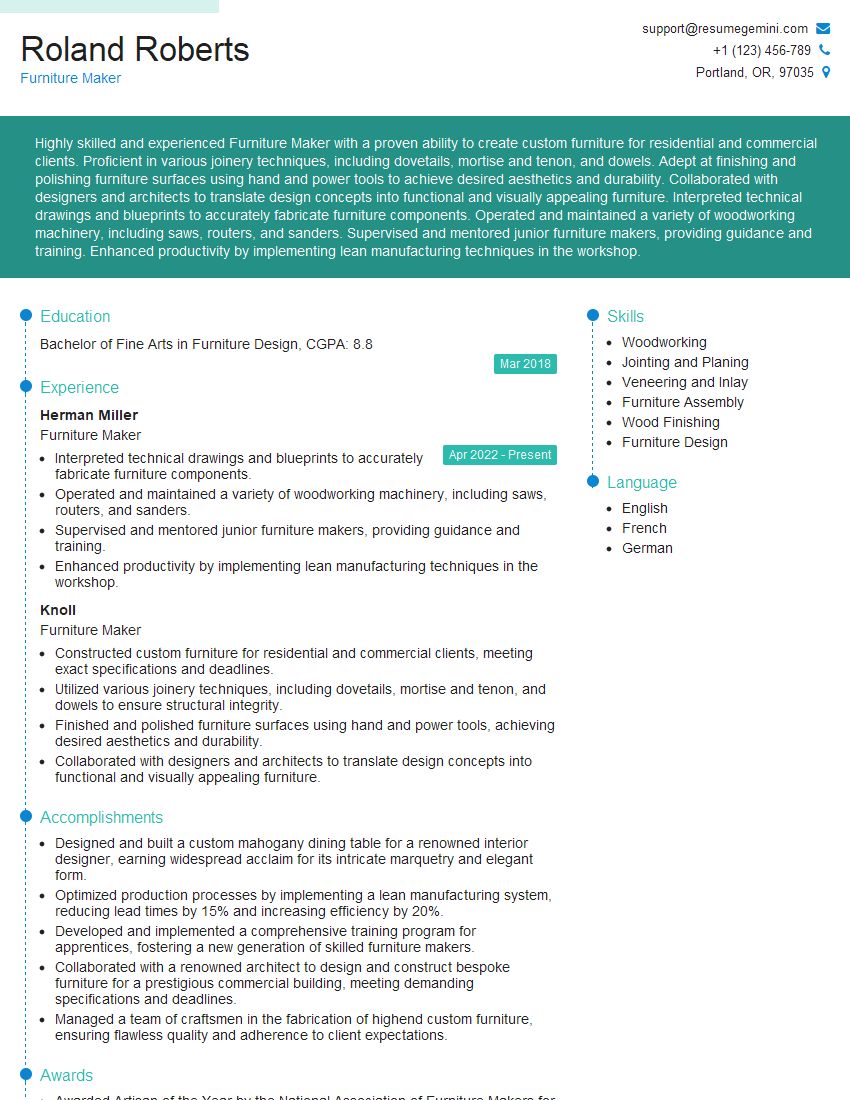
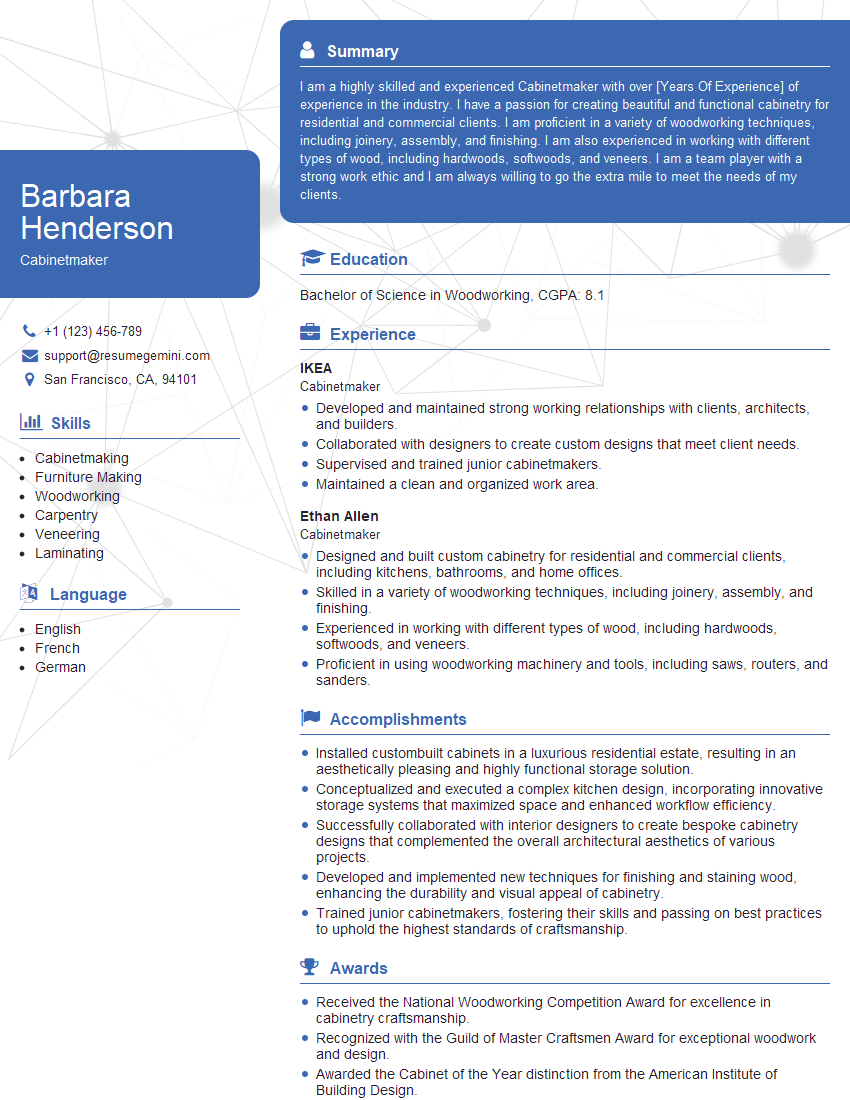
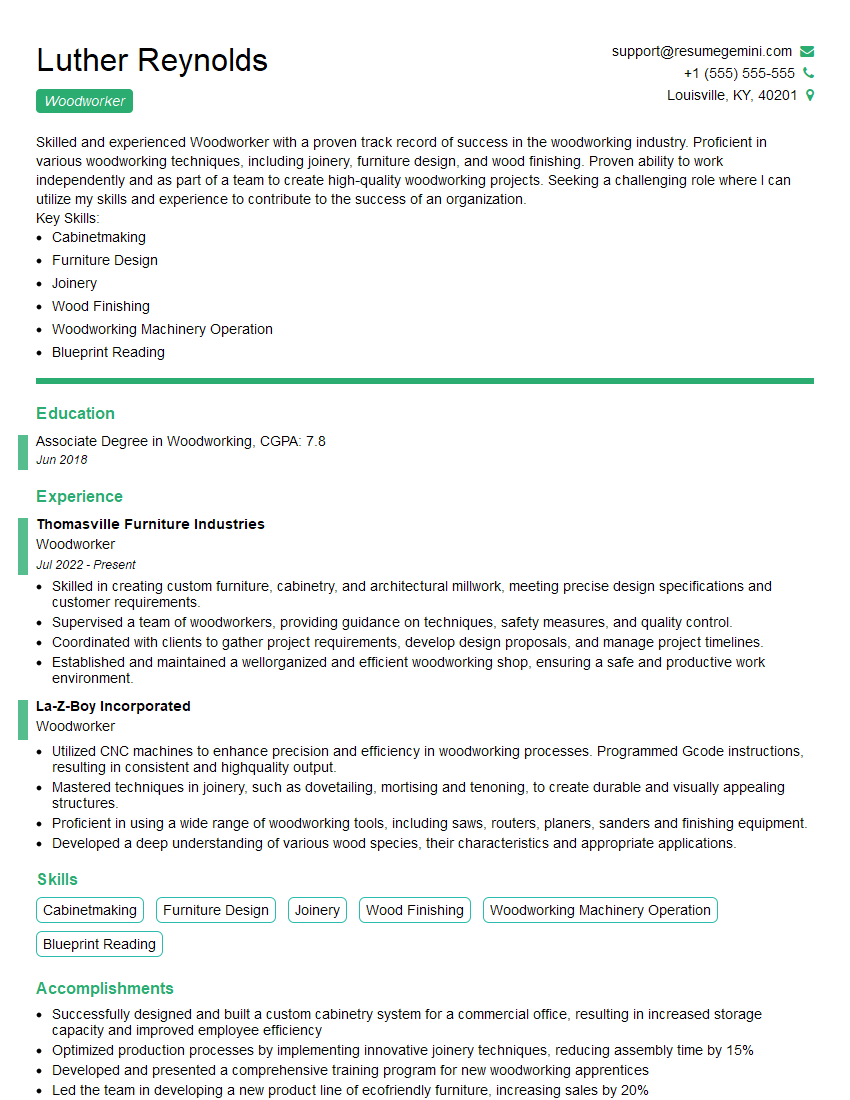
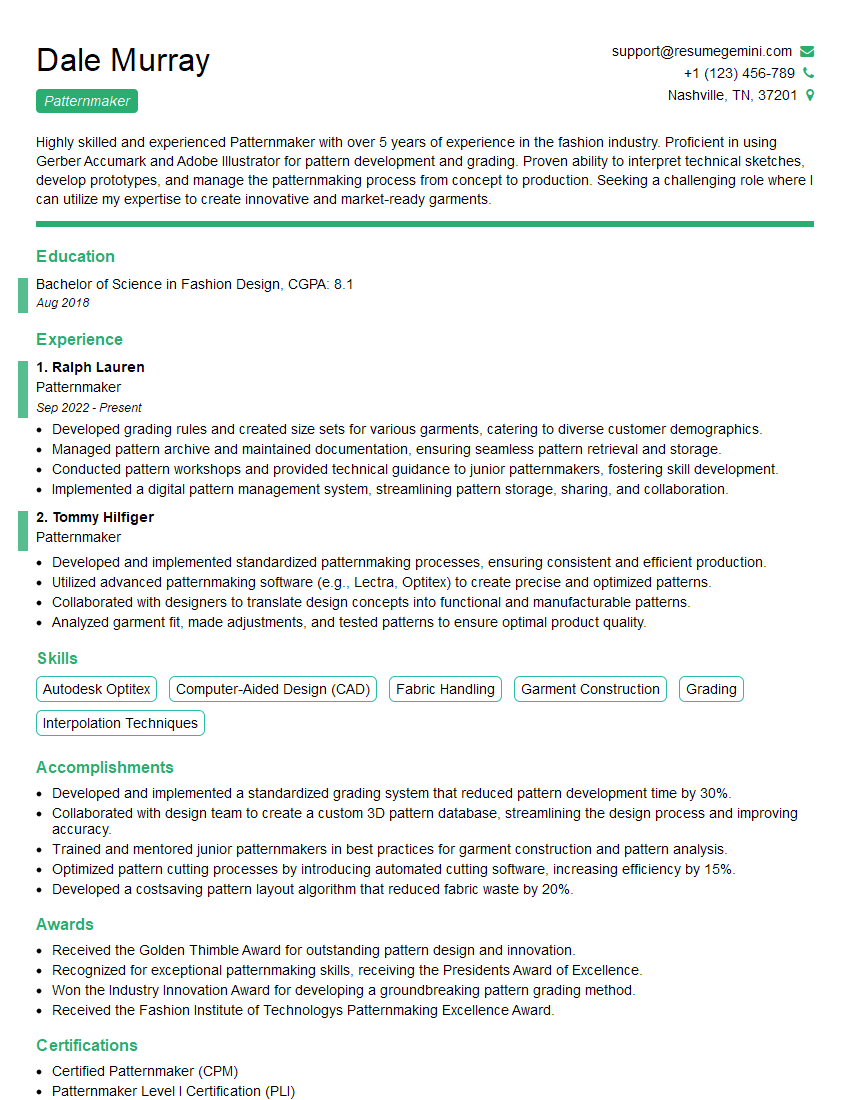
Mastering woodworking principles and techniques is crucial for career advancement in this skilled trade. A strong understanding of these concepts opens doors to diverse opportunities and demonstrates your commitment to craftsmanship. To stand out, create an ATS-friendly resume that highlights your skills and experience effectively. ResumeGemini is a trusted resource to help you build a professional and impactful resume that showcases your woodworking expertise. Examples of resumes tailored to woodworking principles and techniques are available to guide you. Take the next step towards your dream career today!






Explore more articles
Users Rating of Our Blogs
Share Your Experience
We value your feedback! Please rate our content and share your thoughts (optional).
What Readers Say About Our Blog
Very informative content, great job.
good