Are you ready to stand out in your next interview? Understanding and preparing for UnderstandingOfElectronicControlSystems interview questions is a game-changer. In this blog, we’ve compiled key questions and expert advice to help you showcase your skills with confidence and precision. Let’s get started on your journey to acing the interview.
Questions Asked in UnderstandingOfElectronicControlSystems Interview
Q 1. Explain the difference between open-loop and closed-loop control systems.
The core difference between open-loop and closed-loop control systems lies in their feedback mechanisms. An open-loop system operates without feedback; it simply executes a pre-programmed action without monitoring its effect. Think of a toaster: you set the time, and it runs for that duration regardless of whether the bread is perfectly toasted. The output is independent of the desired outcome.
Conversely, a closed-loop system, also known as a feedback control system, uses feedback to continuously monitor its output and adjust its input accordingly to achieve a desired setpoint. A cruise control system in a car is a prime example. The system monitors the car’s speed, compares it to the set speed, and adjusts the throttle to maintain the desired speed. The output is directly influenced by the desired outcome and any deviations from it.
In essence, open-loop systems are simpler but less accurate, while closed-loop systems are more complex but offer greater precision and robustness. The choice depends on the application’s requirements for accuracy and complexity.
Q 2. Describe different types of controllers (PID, etc.) and their applications.
Several types of controllers exist, each with unique characteristics and applications. The Proportional-Integral-Derivative (PID) controller is by far the most common, used in countless industrial and consumer applications. It comprises three terms:
- Proportional (P): The output is proportional to the error (difference between the setpoint and the actual value). A larger error results in a larger corrective action.
- Integral (I): This term addresses persistent errors. It accumulates the error over time, ensuring the system eventually reaches the setpoint even with persistent disturbances.
- Derivative (D): This term anticipates future error by considering the rate of change of the error. It helps dampen oscillations and improve stability.
Other controllers include:
- On-Off controllers: These are simple controllers that switch the output between two states (on/off) based on whether the error exceeds a threshold. Think of a thermostat controlling room temperature.
- Lead-Lag controllers: These controllers modify the system’s response to improve transient performance and stability.
- State-space controllers: These controllers use a mathematical model of the system to determine optimal control actions. They are often used in complex systems.
The choice of controller depends on the specific application and its performance requirements. For simple systems, an On-Off controller might suffice, while more complex systems require PID or other advanced controllers for optimal performance.
Q 3. What are the advantages and disadvantages of using a digital controller versus an analog controller?
The choice between digital and analog controllers involves weighing several factors:
- Flexibility and Precision: Digital controllers offer greater flexibility and precision. They can be easily programmed to implement complex control algorithms and adapt to changing conditions. Analog controllers, while simpler, are limited in their adaptability and precision.
- Cost: Generally, analog controllers are less expensive to manufacture than digital controllers, especially for simple applications.
- Noise Immunity: Digital controllers typically have better noise immunity compared to analog controllers. Digital signals are less susceptible to noise interference.
- Maintenance: Digital controllers often require less maintenance than their analog counterparts. Software updates can address issues and add features without physical hardware changes.
- Implementation Complexity: Implementing complex control logic is significantly easier with a digital controller.
In applications demanding high precision, flexibility, and robustness, digital controllers are preferred. Simple, cost-sensitive applications may benefit from analog controllers. The choice is often a trade-off between cost, complexity, and performance requirements.
Q 4. How do you handle sensor noise in a control system?
Sensor noise is a common challenge in control systems. Several techniques can be employed to mitigate its effects:
- Filtering: Applying low-pass, high-pass, or band-pass filters to the sensor signal can attenuate noise within specific frequency ranges. This is a widely used and effective method.
- Averaging: Averaging multiple sensor readings over a short time interval can reduce the impact of random noise.
- Kalman filtering: This sophisticated technique combines sensor measurements with a system model to estimate the true state of the system, minimizing the effect of noise.
- Sensor Calibration and Selection: Choosing high-quality, low-noise sensors and calibrating them regularly are crucial steps in reducing noise from the source.
The best approach often involves combining several techniques. For instance, averaging sensor readings before applying a low-pass filter can significantly improve signal quality. The specific method chosen depends on the nature of the noise and the application’s requirements.
Q 5. Explain the concept of system stability and how to analyze it.
System stability refers to a system’s ability to maintain its equilibrium point or return to it after a disturbance. An unstable system will exhibit unbounded oscillations or diverge from its setpoint. Stability analysis is crucial for ensuring a control system’s reliable operation.
Several methods exist for analyzing system stability:
- Routh-Hurwitz criterion: This algebraic method determines stability by examining the coefficients of the characteristic polynomial of the system’s transfer function. It provides a definitive answer regarding stability without requiring simulations.
- Bode plots: These plots graphically depict the system’s frequency response, enabling the identification of gain and phase margins, which provide indicators of stability margins.
- Root locus method: This graphical method tracks the location of the closed-loop poles as a system gain varies, visually illustrating how changes in gain affect stability.
- Nyquist stability criterion: This method uses the system’s frequency response to assess stability, considering encirclements of the -1 point in the complex plane.
The choice of method depends on the complexity of the system and the available information. For simple systems, the Routh-Hurwitz criterion can be sufficient, while more complex systems might require Bode plots or the root locus method for a thorough stability analysis.
Q 6. Describe your experience with different types of feedback mechanisms.
My experience encompasses various feedback mechanisms, including:
- Position feedback: Using sensors like potentiometers or encoders to measure the position of a mechanical component. This is common in robotic systems and precision motion control applications.
- Velocity feedback: Using tachometers or rate gyroscopes to measure the rate of change of a system’s position. This is crucial for controlling speed and preventing overshoots.
- Current feedback: Measuring the current flowing through an actuator to control the force or torque. This is important in motor control applications.
- Temperature feedback: Using thermocouples or thermistors to measure temperature and control heating or cooling systems. This is widely used in industrial processes and climate control.
- Optical feedback: Using optical sensors to measure position, displacement, or other parameters. This is used in applications requiring high accuracy and non-contact sensing.
Selecting the appropriate feedback mechanism depends on the system’s specific requirements, the type of parameter being controlled, and the desired level of accuracy. I have worked on projects where a combination of feedback mechanisms are implemented to achieve optimal control performance.
Q 7. What is a state-space representation of a control system?
The state-space representation is a mathematical model that describes a dynamic system using a set of first-order differential equations. It’s particularly useful for analyzing and designing control systems, especially those with multiple inputs and outputs.
The state-space representation is typically expressed in the form:
ẋ = Ax + Bu
y = Cx + Du
where:
xis the state vector, representing the internal variables of the system.ẋis the derivative of the state vector.uis the input vector.yis the output vector.A,B,C, andDare matrices that define the system’s dynamics.
This representation provides a powerful framework for analyzing system stability, controllability, and observability. It allows for the design of advanced control algorithms such as optimal controllers and state feedback controllers. Its advantage lies in its ability to handle complex, multivariable systems more effectively than traditional transfer function approaches.
Q 8. Explain the role of a transfer function in control system analysis.
The transfer function is the cornerstone of control system analysis. It’s a mathematical representation of a system’s response to an input. Imagine you’re baking a cake; the recipe is the system, the ingredients are the input, and the cake itself is the output. The transfer function describes the relationship between the ingredients and the resulting cake – how much of each ingredient affects the cake’s final properties (like texture or taste). In control systems, it shows the relationship between a system’s input (like a control signal) and its output (like the position of a robotic arm).
Specifically, it’s usually expressed as the ratio of the Laplace transform of the output to the Laplace transform of the input, assuming zero initial conditions. For example, a simple first-order system might have a transfer function of G(s) = K/(τs + 1), where K is the gain and τ is the time constant. This tells us how the system responds to changes in input over time. Analyzing the transfer function allows us to understand stability, frequency response, and other crucial system characteristics, paving the way for designing effective controllers.
Q 9. How do you design a control system to meet specific performance requirements (e.g., rise time, settling time)?
Designing a control system to meet specific performance requirements, like rise time and settling time, is a multifaceted process. Let’s use the analogy of driving a car: you want it to accelerate smoothly (rise time) and reach a steady speed quickly and without oscillations (settling time). To achieve these in a control system, we utilize tools like root locus analysis and frequency response techniques.
We start by defining the desired performance specifications. For example, we might require a rise time of less than 0.5 seconds and a settling time of less than 2 seconds for a particular system. Next, we choose a suitable controller structure, often a PID controller (Proportional-Integral-Derivative), which allows for adjusting parameters to fine-tune the response. We then use techniques like Bode plots or Nyquist plots to assess the system’s frequency response and adjust the controller gains (proportional, integral, and derivative) to meet the specifications. Simulation software (like MATLAB/Simulink) plays a critical role in verifying the design and tweaking the parameters before implementing it in hardware. Root locus analysis helps visualize how the system poles move in the s-plane as we change the controller gains, giving us insight into stability and transient response. It’s an iterative process, requiring simulation, analysis, and refinement until the desired performance is achieved.
Q 10. Describe your experience with different types of actuators (e.g., motors, valves).
My experience encompasses a wide range of actuators, each with its own strengths and weaknesses. I’ve worked extensively with DC motors, servo motors, stepper motors, and various types of pneumatic and hydraulic valves.
- DC Motors: Simple, cost-effective, and widely used for applications requiring continuous rotation, such as conveyor belts or robotic arm movement. I’ve used them in projects requiring precise speed control, often implementing feedback mechanisms for accurate positioning.
- Servo Motors: Offer high precision and accuracy, making them ideal for applications demanding precise positioning, such as CNC machines or robotic manipulators. My experience includes designing control systems for servo motors using advanced control algorithms to minimize errors and ensure smooth movement.
- Stepper Motors: Excellent for applications requiring precise step-by-step movement, frequently employed in 3D printers or automated assembly lines. I’ve worked with microstepping techniques to enhance the resolution and smoothness of motion.
- Pneumatic and Hydraulic Valves: Used in applications requiring high force or fast response times, often found in industrial processes or robotics. My experience extends to designing and implementing control systems for these valves, considering factors like pressure regulation, response time, and safety.
The selection of an actuator always depends on the specific application requirements, considering factors such as power, precision, speed, cost, and environmental conditions.
Q 11. Explain the concept of controllability and observability.
Controllability and observability are fundamental concepts in control system theory, determining whether a system can be effectively controlled and monitored. Think of it like controlling a robot arm: controllability ensures you can move the arm to any desired position, while observability means you can determine the arm’s current position.
Controllability refers to the ability to steer the system’s state to any desired value within a finite time interval using allowed control inputs. A system is controllable if there’s a control input that can force the system from any initial state to any final state in finite time. Mathematical tests, like the controllability matrix rank test, are used to determine controllability.
Observability, conversely, refers to the ability to determine the system’s internal state from its output measurements. A system is observable if it’s possible to estimate the internal state from knowledge of the input and output signals. Similar mathematical tests exist to verify observability, commonly involving the observability matrix.
If a system is uncontrollable, it means there are certain states that can’t be reached using available control inputs. Similarly, if a system is unobservable, it means that there are parts of the system’s behavior that can’t be determined from the available measurements, impacting the design of the control system.
Q 12. How do you tune a PID controller?
Tuning a PID controller involves adjusting its three parameters – proportional (P), integral (I), and derivative (D) – to achieve the desired performance. It’s like fine-tuning a musical instrument; you adjust each component until the overall sound is perfect.
Several methods exist, from trial and error (Zeigler-Nichols method) to more sophisticated techniques. The Zeigler-Nichols method involves setting the integral and derivative gains to zero, then gradually increasing the proportional gain until the system starts to oscillate. This oscillation point provides estimates for the PID gains. However, this method is often inaccurate and depends heavily on the specific system.
More advanced techniques involve using frequency response analysis or optimization algorithms. These methods allow for a more precise tuning and often result in better performance. Software tools like MATLAB and Simulink offer powerful tools for PID controller tuning, allowing users to simulate the system response under different tuning scenarios. The key is understanding the trade-offs; a higher proportional gain provides faster response but may lead to overshoot and oscillations. The integral gain eliminates steady-state error, but can introduce slow response. The derivative gain reduces overshoot and improves stability, but can make the system too sensitive to noise.
A systematic approach, involving careful monitoring of the system response to changes in the PID gains, iterative adjustments, and simulations, is crucial for effective PID controller tuning.
Q 13. What are some common troubleshooting techniques for electronic control systems?
Troubleshooting electronic control systems often involves a systematic approach combining theoretical understanding and practical skills. I typically start by identifying the symptoms and then use a process of elimination to pinpoint the root cause.
- Visual Inspection: Start with a thorough visual check for loose connections, damaged wiring, or any physical signs of failure. Often, a simple visual inspection can reveal the problem.
- Signal Tracing: Using oscilloscopes, multimeters, and logic analyzers, I trace the signals throughout the system, checking for expected voltages, currents, and timing. This helps isolate faulty components or circuits.
- Software Diagnostics: Many systems incorporate self-diagnostic routines or logging capabilities that can pinpoint potential issues. Reviewing error logs and diagnostic reports can provide valuable clues.
- Component-Level Testing: If necessary, I’ll isolate and test individual components (sensors, actuators, controllers) to verify their proper operation. This could involve using benchtop equipment to perform functional tests.
- Simulation: If the problem isn’t easily identifiable, I’ll often simulate the system’s behavior to identify potential issues. This could involve recreating the problem in a simulation environment, providing better insight.
Systematic troubleshooting, careful record-keeping, and familiarity with system architecture are critical for successfully resolving issues in electronic control systems.
Q 14. Describe your experience with different programming languages used in control systems (e.g., C, C++, Ladder Logic).
My experience encompasses several programming languages commonly used in control systems. Each offers unique advantages depending on the application and hardware platform.
- C/C++: These languages provide low-level access to hardware, crucial for embedded systems and real-time control applications. Their efficiency and speed make them ideal for demanding applications requiring precise timing and resource management. I’ve used them extensively to develop firmware for embedded controllers and real-time control algorithms.
- Ladder Logic: Primarily used for programmable logic controllers (PLCs), ladder logic offers a graphical programming environment well-suited for industrial control applications. It’s intuitive and easy to understand, particularly for technicians with experience in relay-based control systems. I’ve utilized ladder logic for numerous PLC programming projects involving automated machinery and process control.
- MATLAB/Simulink: While not strictly a programming language in the traditional sense, MATLAB and Simulink provide powerful tools for modeling, simulating, and designing control systems. I’ve used them extensively for system analysis, controller design, and code generation for embedded systems. They simplify prototyping and testing of control algorithms.
My proficiency in these languages allows me to adapt to diverse control system development environments and implement optimized solutions for various applications.
Q 15. Explain your understanding of real-time operating systems (RTOS).
A Real-Time Operating System (RTOS) is a specialized operating system designed for applications requiring extremely fast and predictable response times. Unlike general-purpose operating systems like Windows or macOS, which prioritize user experience and multitasking, RTOSes prioritize deterministic behavior – meaning tasks are executed within precisely defined time constraints. This is critical in control systems where a delayed response can have significant consequences.
Think of it like this: imagine a self-driving car. A general-purpose OS might take a fraction of a second longer to react to an obstacle, leading to an accident. An RTOS, however, ensures the car’s braking system reacts instantly, preventing the accident.
Key features of RTOSes include:
- Real-time scheduling: Tasks are scheduled based on priorities and deadlines, ensuring critical tasks are always executed first.
- Interrupt handling: RTOSes efficiently manage interrupts, allowing them to respond quickly to external events like sensor readings.
- Deterministic behavior: The system’s response time is predictable and consistent, crucial for reliability.
- Memory management: RTOSes often employ memory management techniques that prevent tasks from interfering with each other.
Examples of RTOSes commonly used in control systems include FreeRTOS, VxWorks, and QNX.
Career Expert Tips:
- Ace those interviews! Prepare effectively by reviewing the Top 50 Most Common Interview Questions on ResumeGemini.
- Navigate your job search with confidence! Explore a wide range of Career Tips on ResumeGemini. Learn about common challenges and recommendations to overcome them.
- Craft the perfect resume! Master the Art of Resume Writing with ResumeGemini’s guide. Showcase your unique qualifications and achievements effectively.
- Don’t miss out on holiday savings! Build your dream resume with ResumeGemini’s ATS optimized templates.
Q 16. What is your experience with simulation tools for control systems?
My experience with simulation tools for control systems is extensive. I’ve worked extensively with MATLAB/Simulink, a leading platform for modeling, simulating, and analyzing control systems. I’ve used it to develop and test control algorithms for various applications, from robotic arms to industrial process control. Simulink’s graphical interface allows for easy model creation and modification, while its extensive libraries provide pre-built blocks for common control components and sensors.
Beyond Simulink, I’m familiar with other tools such as LabVIEW, which excels in data acquisition and visualization, and dSPACE systems, which offer real-time testing capabilities for hardware-in-the-loop (HIL) simulation. HIL simulation allows you to test control algorithms with actual hardware components under realistic conditions before deploying them to the actual system, reducing the risk of failure.
For example, in a recent project involving a drone control system, I used Simulink to model the drone’s dynamics and develop a PID controller. The simulation allowed me to tune the controller parameters virtually, optimizing performance before deploying the code on the actual drone’s embedded system. This significantly reduced development time and improved the reliability of the final product.
Q 17. Describe your experience with different communication protocols used in control systems (e.g., CAN, Modbus, Ethernet/IP).
I have extensive experience with various communication protocols used in control systems. These protocols are essential for coordinating the interaction between different components in a distributed system.
- CAN (Controller Area Network): I’ve worked extensively with CAN, a robust and reliable protocol frequently used in automotive and industrial applications. Its deterministic nature makes it suitable for real-time control applications, and its ability to handle multiple nodes efficiently is a major advantage. I’m proficient in using CAN bus analyzers and software tools for configuration and diagnostics.
- Modbus: Modbus is a simpler, more widely adopted protocol commonly used in industrial automation. It’s known for its ease of implementation and support for a wide range of hardware. I have used Modbus to integrate PLCs (Programmable Logic Controllers) with various sensors and actuators.
- Ethernet/IP: Ethernet/IP, based on the Ethernet standard, provides higher bandwidth and more sophisticated communication capabilities than CAN or Modbus. It’s frequently used in larger, more complex industrial networks requiring faster data transfer rates. I’ve used Ethernet/IP in projects involving large-scale automation systems that necessitate high-speed data exchange between numerous devices.
Understanding the strengths and weaknesses of each protocol is critical for selecting the appropriate protocol for a specific application, ensuring optimal performance and reliability.
Q 18. How do you ensure the safety and reliability of a control system?
Ensuring the safety and reliability of a control system is paramount. It involves a multi-faceted approach, combining careful design, rigorous testing, and adherence to relevant safety standards.
- Redundancy: Implementing redundant components, such as backup sensors or controllers, ensures that the system continues to function even if one component fails.
- Fault tolerance: Designing the system to detect and handle errors gracefully, preventing cascading failures, is crucial. This might involve implementing watchdog timers, error detection codes, and self-diagnostic routines.
- Safety standards compliance: Adhering to relevant safety standards, such as IEC 61508 or ISO 26262 (for automotive applications), is essential. These standards define requirements for safety-related systems, including hazard analysis, risk assessment, and functional safety requirements.
- Rigorous testing: Thorough testing, including unit testing, integration testing, and system testing, is indispensable to identify and resolve potential issues before deployment.
- Formal methods: For critical systems, employing formal methods like model checking can help verify the correctness of the control algorithms and ensure that they meet the specified safety requirements.
Ultimately, a layered approach with multiple safety mechanisms is critical for high-reliability systems.
Q 19. Explain your experience with different types of sensors (e.g., temperature, pressure, position).
My experience encompasses a broad range of sensors used in control systems. The choice of sensor depends heavily on the specific application and the type of data needed.
- Temperature sensors: I’ve worked with thermocouples, thermistors, and RTDs (Resistance Temperature Detectors), selecting the appropriate sensor based on factors like temperature range, accuracy, and cost.
- Pressure sensors: I have experience using various pressure sensors, including strain gauge-based sensors, piezoelectric sensors, and capacitive sensors, choosing the appropriate sensor based on the pressure range, accuracy requirements, and environmental conditions.
- Position sensors: My experience includes using potentiometers, encoders (both incremental and absolute), and LVDTs (Linear Variable Differential Transformers) to accurately measure the position of mechanical components. The selection depends on factors such as resolution, accuracy, and the environment.
- Other sensors: I also have experience with other sensor types such as accelerometers, gyroscopes, proximity sensors, and flow sensors, and am proficient in integrating them into control systems.
Sensor selection and calibration are crucial steps, as inaccurate sensor readings can lead to incorrect control actions.
Q 20. Describe a project where you designed or implemented an electronic control system. What were the challenges and how did you overcome them?
In one project, I designed and implemented an electronic control system for a robotic arm used in a manufacturing assembly line. The goal was to improve the speed and precision of the robotic arm’s movements.
Challenges: The primary challenge was developing a control algorithm that could achieve the desired speed and precision while maintaining stability and avoiding vibrations. The system also needed to be robust enough to handle variations in load and environmental conditions. Another challenge was integrating the various components, including the robotic arm’s motors, sensors, and the control system.
Solutions: I employed a cascaded control strategy, combining PID controllers for position and velocity control. Simulink simulations were crucial in tuning the control parameters. Robustness was achieved by incorporating feedforward compensation to predict the system’s response to changes in load and disturbances. Sensor fusion techniques were utilized to improve the accuracy of position measurement. A real-time operating system was selected to ensure the system’s responsiveness and determinism.
The project successfully achieved a 20% increase in throughput and a 15% improvement in positioning accuracy compared to the previous system. This success highlights the importance of careful system design, thorough simulation, and robust control algorithms in industrial applications.
Q 21. What is your experience with different control system architectures (e.g., distributed control systems, centralized control systems)?
I have experience working with both centralized and distributed control system architectures. The optimal choice depends heavily on the scale and complexity of the system.
- Centralized control systems: In these systems, a single controller manages all aspects of the process. This simplifies control algorithm design and implementation but can be a single point of failure and may not be scalable for large systems.
- Distributed control systems (DCS): In DCS, control functionality is distributed across multiple controllers, each responsible for a specific part of the process. This approach offers improved reliability, scalability, and modularity. However, it introduces complexities in communication, synchronization, and data management. I’ve worked with DCS architectures using protocols like Ethernet/IP and Profibus to effectively manage complex industrial processes.
For instance, a small-scale process like controlling a single machine tool might best suit a centralized architecture, while a large-scale refinery or power plant requires a distributed architecture for redundancy and maintainability. The choice is always a tradeoff between complexity, cost, and performance.
Q 22. Explain the concept of feedback linearization.
Feedback linearization is a powerful nonlinear control technique that transforms a nonlinear system into an equivalent linear system, making it easier to design a controller. Think of it like this: you have a complicated, curvy road (nonlinear system). Feedback linearization is like straightening that road, making it easier to drive (control) a car along it. This is achieved by finding a transformation of the system’s state variables and input, effectively canceling out the nonlinearities.
The process involves two main steps: finding a diffeomorphism (a smooth, invertible transformation) that transforms the nonlinear system into a linear representation, and then designing a linear controller for the equivalent linear system. The controller’s output is then transformed back into the original nonlinear system’s input via the inverse diffeomorphism.
For example, consider a simple pendulum. Its dynamics are highly nonlinear. Feedback linearization can transform these dynamics into a linear double integrator, allowing the application of simple linear control techniques like PID control. The success depends heavily on finding the appropriate transformation, which can be challenging for complex systems.
Q 23. How do you handle nonlinearities in a control system?
Handling nonlinearities in control systems is crucial because linear control techniques often fail to provide satisfactory performance or stability in the presence of significant nonlinearities. There are several strategies:
- Feedback Linearization: As discussed earlier, this transforms the nonlinear system into an equivalent linear one.
- Gain Scheduling: This involves designing multiple linear controllers for different operating points of the nonlinear system. The controller is switched or interpolated between these operating points based on the system’s current state.
- Sliding Mode Control: This robust technique uses a switching control law to force the system’s trajectory to stay on a specific sliding surface in the state space, making it insensitive to certain types of nonlinearities and disturbances.
- Nonlinear Control Techniques: These include methods like backstepping, passivity-based control, and Lyapunov-based control, which directly address the nonlinearity in the system’s equations.
- Neural Networks and Fuzzy Logic: These can approximate complex nonlinear functions and be used to design controllers for nonlinear systems. They offer adaptability and learning capabilities.
The choice of method depends on the specific nonlinearity, the complexity of the system, and the desired performance specifications. Often a combination of these techniques is used.
Q 24. Describe your experience with model predictive control (MPC).
Model Predictive Control (MPC) is a powerful advanced control strategy that uses a model of the system to predict its future behavior over a specific time horizon. It then optimizes the control actions to minimize a cost function that penalizes deviations from the desired trajectory and control effort. Imagine it like planning a road trip using a map; MPC looks ahead at the route and adjusts your driving based on anticipated obstacles and desired arrival time.
My experience includes developing and implementing MPC controllers for several industrial applications. For example, I designed an MPC controller for a chemical process to optimize the production rate while maintaining strict constraints on temperature and pressure. The key challenges in implementing MPC are accurate model development, computational efficiency, and handling constraints effectively. I’ve worked with both linear and nonlinear MPC formulations, utilizing software packages like MATLAB and Python with specific optimization toolboxes. The process typically involves model identification, controller design using optimization algorithms, and rigorous testing and validation.
Q 25. What is your experience with fault detection and diagnosis in control systems?
Fault detection and diagnosis (FDD) in control systems is critical for ensuring safety, reliability, and availability. My experience involves designing and implementing FDD schemes using various techniques. These techniques include:
- Model-based methods: These use system models to identify deviations from expected behavior. This includes approaches like parity space methods and observer-based fault detection.
- Data-driven methods: These use historical data and machine learning techniques to detect unusual patterns indicative of faults. This includes methods like principal component analysis (PCA) and support vector machines (SVM).
- Signal processing techniques: These analyze sensor signals to identify abnormalities, such as spectral analysis and wavelet transforms.
In a real-world project, I developed a FDD system for a robotic arm using a combination of model-based and data-driven approaches. The system successfully detected and identified various faults such as sensor failures, actuator malfunctions, and unexpected external forces. The system prioritized fault isolation to guide maintenance and minimize downtime.
Q 26. Explain your understanding of system identification techniques.
System identification is the process of building mathematical models of dynamical systems from measured input-output data. It’s like trying to understand how a black box works by observing its inputs and outputs. Several techniques exist:
- Nonparametric methods: These methods don’t assume a specific model structure and are often used for initial model exploration. Examples include impulse response identification and frequency response identification.
- Parametric methods: These assume a specific model structure (e.g., ARX, ARMAX) and estimate the model parameters using optimization techniques. Examples include least squares estimation and prediction error methods.
- Subspace identification: These techniques use state-space models and are particularly effective for systems with high order or hidden states.
In my work, I’ve used these methods to create models for various systems ranging from mechanical systems to biological processes. The choice of method depends on data quality, system characteristics, and the desired model complexity. Proper data pre-processing is crucial, and model validation is always necessary to ensure the identified model adequately represents the real system.
Q 27. How do you ensure the cybersecurity of a control system?
Cybersecurity in control systems is paramount, given the potential for catastrophic consequences from cyberattacks. A layered security approach is vital:
- Network Security: This includes firewalls, intrusion detection systems (IDS), and intrusion prevention systems (IPS) to protect against unauthorized access. Regular network vulnerability scans and penetration testing are crucial.
- System Hardening: This involves securing individual control system components by disabling unnecessary services, regularly updating software and firmware, and enforcing strong password policies.
- Data Encryption: Encrypting data both in transit and at rest protects sensitive information from unauthorized access.
- Access Control: Implementing strict access control measures, such as role-based access control (RBAC), limits access to system components based on user roles and responsibilities.
- Regular Audits and Monitoring: Continuously monitoring system logs and conducting regular security audits are essential for detecting and responding to potential threats.
Beyond technical measures, a strong security culture and regular employee training are crucial for mitigating human error, a major vulnerability in any security system.
Q 28. Describe your experience with different testing methodologies for control systems (e.g., unit testing, integration testing, system testing).
Testing control systems is crucial for ensuring reliability and safety. Different testing methodologies are employed at various stages:
- Unit Testing: This involves testing individual components (e.g., controllers, sensors, actuators) in isolation to verify their functionality. This often involves simulations and test benches.
- Integration Testing: This verifies the interaction between different components and subsystems. It helps identify integration problems that might not be apparent during unit testing.
- System Testing: This tests the entire control system as a whole, including its interaction with the plant or process it controls. This often involves hardware-in-the-loop (HIL) simulations or real-world testing.
- Acceptance Testing: This final phase verifies the system meets the user’s requirements and specifications before deployment.
In my experience, I’ve used a combination of these methods, incorporating both simulations and real-world testing where appropriate. Automated testing is frequently employed to improve efficiency and ensure thorough testing coverage. Thorough documentation of the testing procedures and results is essential for traceability and future maintenance.
Key Topics to Learn for Understanding of Electronic Control Systems Interview
- Fundamentals of Control Systems: Understanding open-loop vs. closed-loop systems, feedback mechanisms, and system stability. Be prepared to discuss transfer functions and block diagrams.
- Sensor and Actuator Technologies: Familiarize yourself with various sensor types (e.g., potentiometers, thermocouples, accelerometers) and actuators (e.g., motors, valves, solenoids) and their applications in control systems.
- Control System Design Techniques: Review different control strategies like PID control, state-space control, and their tuning methods. Understand the trade-offs between different design approaches.
- Digital Control Systems: Explore the principles of digital signal processing (DSP) as applied to control systems, including sampling, quantization, and the use of microcontrollers and embedded systems.
- Practical Applications: Be ready to discuss real-world examples of electronic control systems in various industries (automotive, aerospace, robotics, process control, etc.). Consider analyzing case studies and highlighting your understanding of their design and implementation.
- Troubleshooting and Problem-Solving: Practice diagnosing and resolving common issues in control systems, such as instability, poor performance, and sensor/actuator malfunctions. Demonstrate your ability to approach problem-solving systematically.
- System Modeling and Simulation: Understanding how to model control systems using tools like MATLAB/Simulink or similar software is highly beneficial. Be prepared to discuss simulation results and their interpretations.
Next Steps
Mastering the understanding of electronic control systems is crucial for career advancement in numerous high-demand fields. A strong grasp of these concepts will significantly enhance your job prospects and open doors to exciting opportunities. To maximize your chances, focus on creating an ATS-friendly resume that showcases your skills and experience effectively. ResumeGemini is a trusted resource that can help you build a professional and impactful resume tailored to the specific requirements of the jobs you’re targeting. Examples of resumes tailored to highlight expertise in Understanding of Electronic Control Systems are available through ResumeGemini, allowing you to see best practices in action. Take the next step and craft a resume that makes you stand out from the competition.
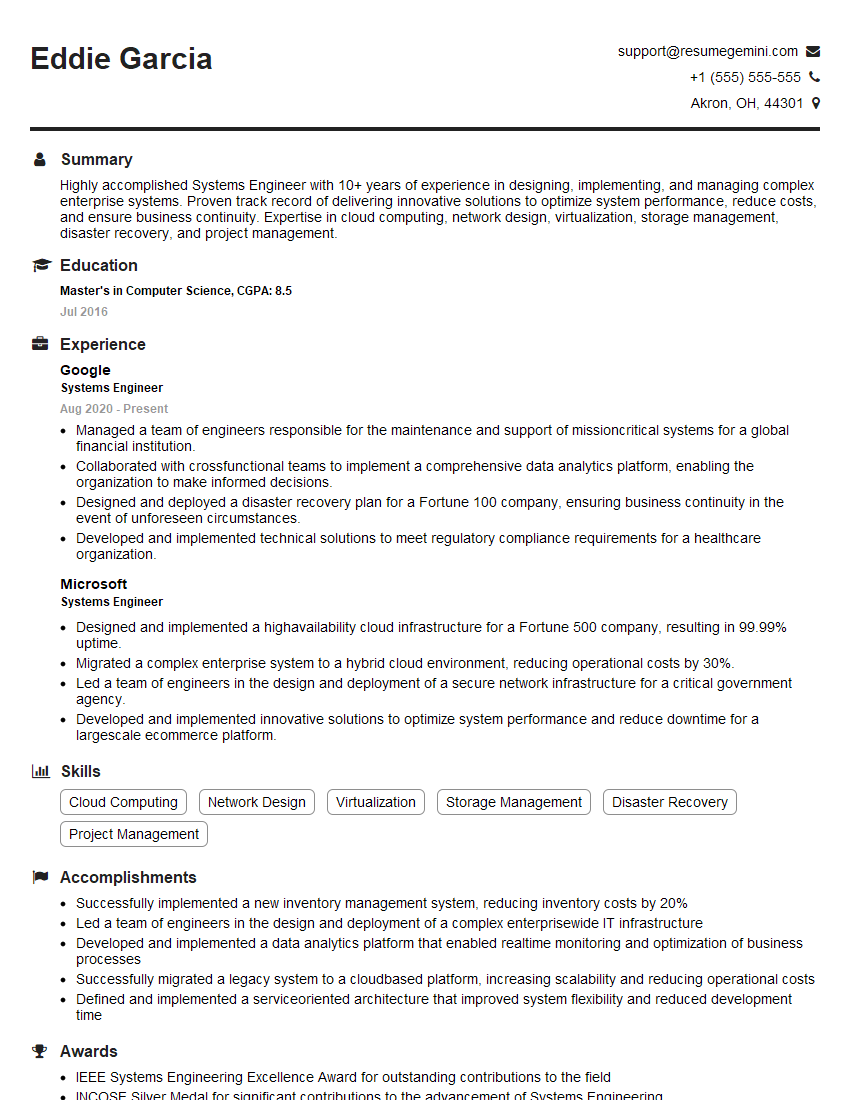
Systems Engineer Resume Sample
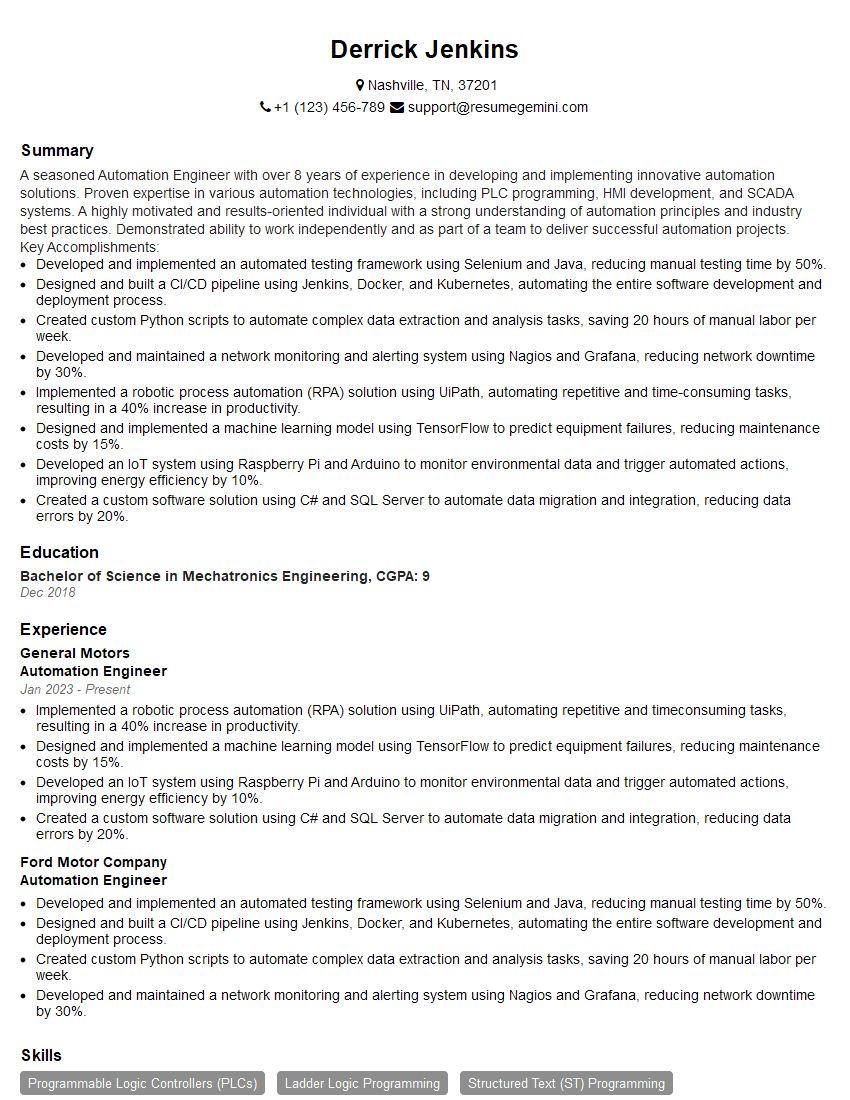
Automation Engineer Resume Sample
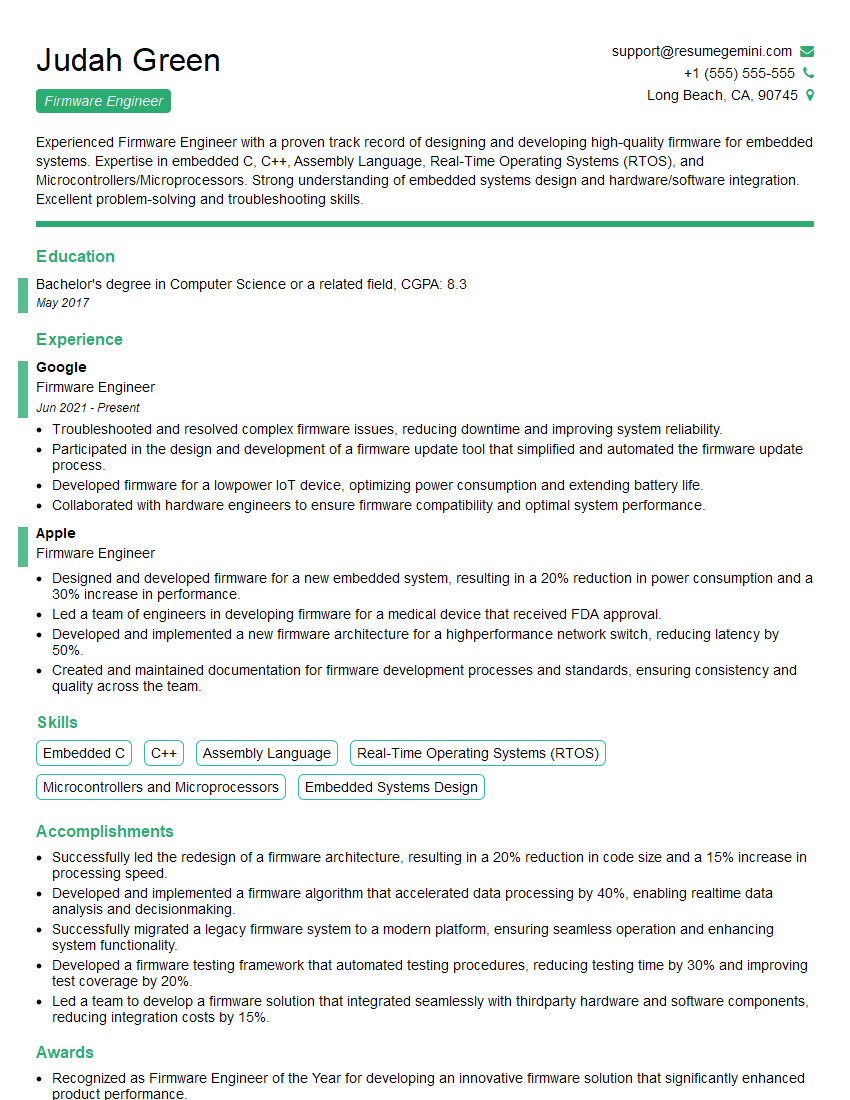
Firmware Engineer Resume Sample
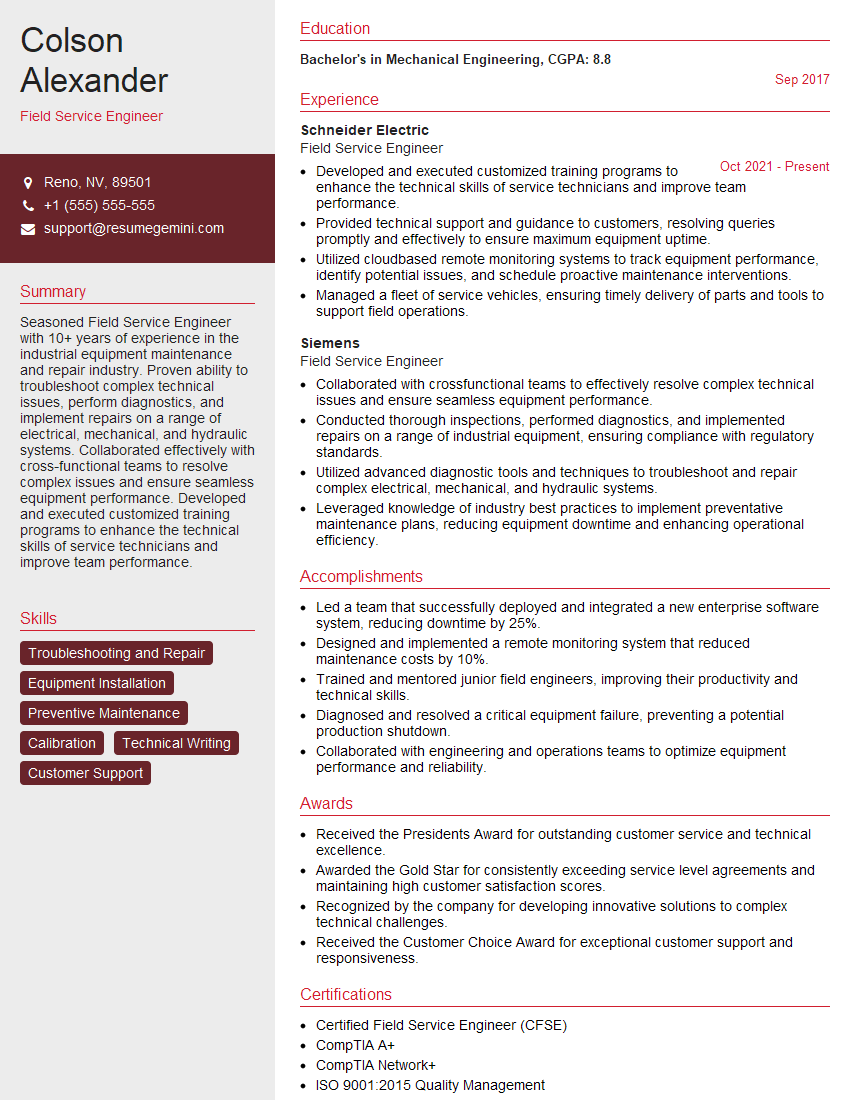
Field Service Engineer Resume Sample

Hardware Engineer Resume Sample
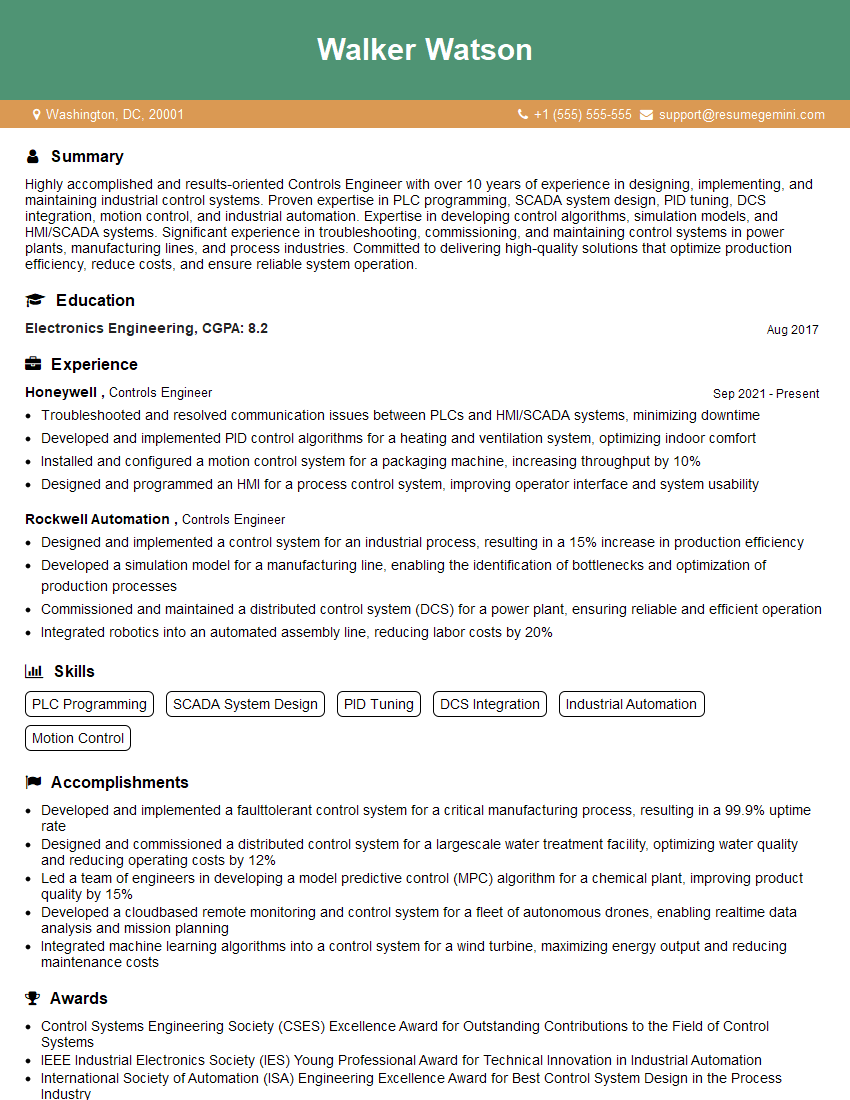
Controls Engineer Resume Sample
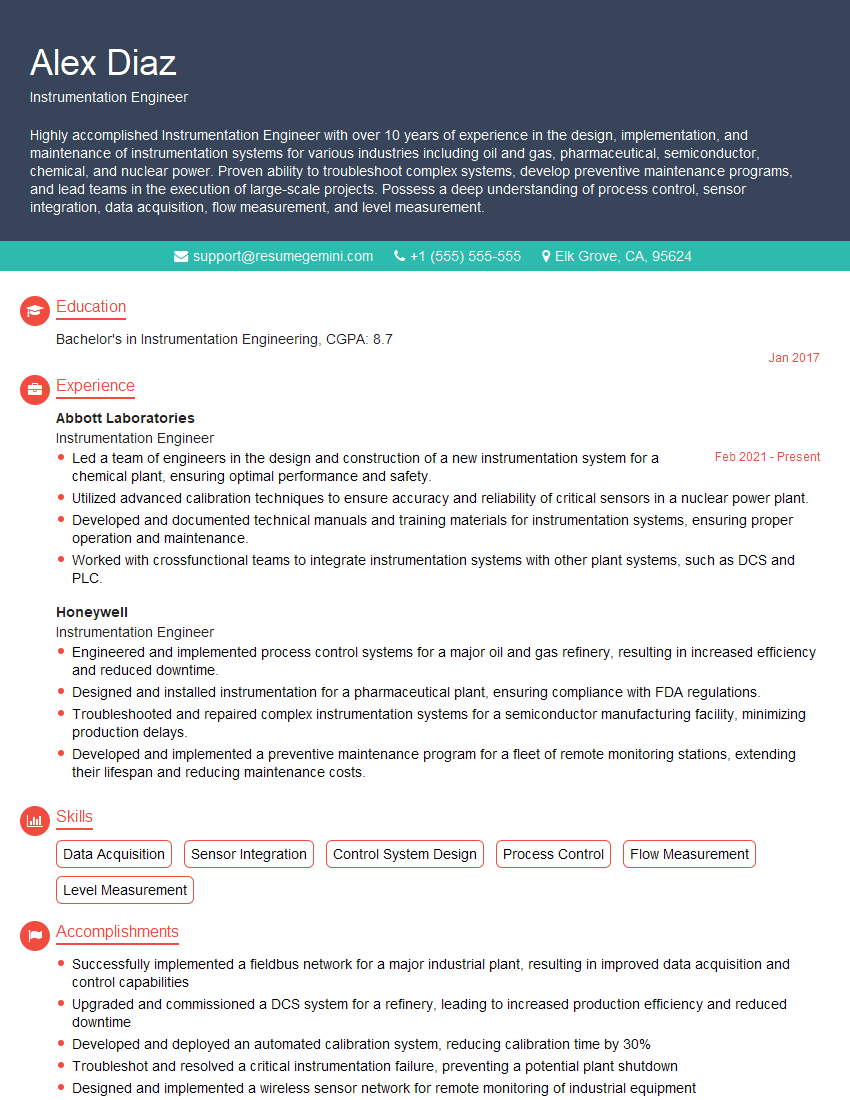
Instrumentation Engineer Resume Sample
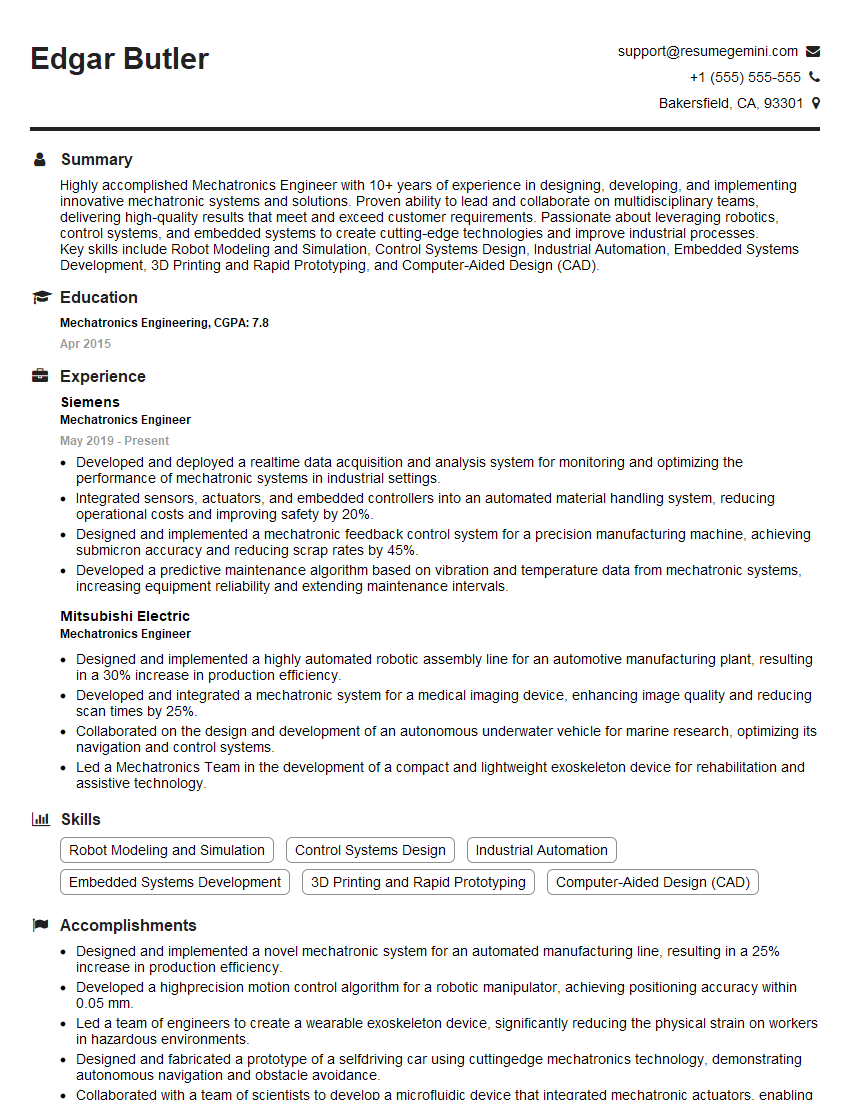
Mechatronics Engineer Resume Sample
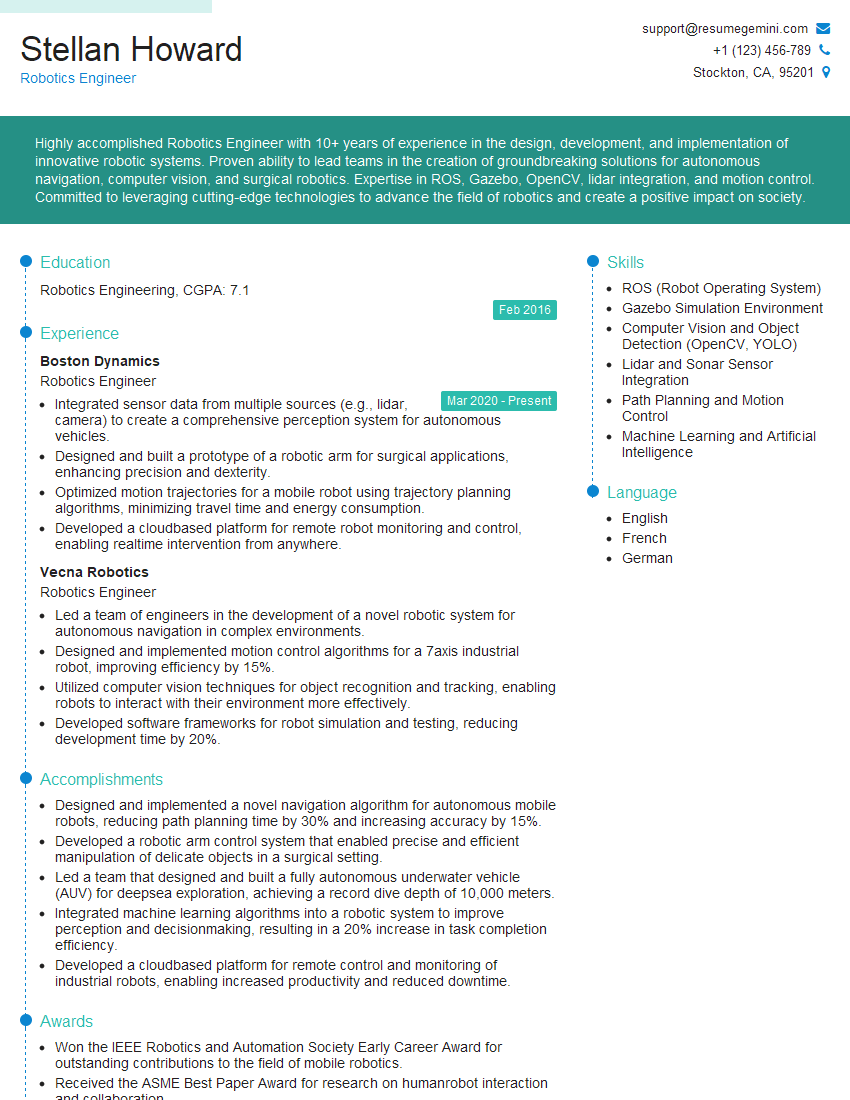
Robotics Engineer Resume Sample
Explore more articles
Users Rating of Our Blogs
Share Your Experience
We value your feedback! Please rate our content and share your thoughts (optional).
What Readers Say About Our Blog
Very informative content, great job.
good