Preparation is the key to success in any interview. In this post, we’ll explore crucial Underwater Construction and Repair interview questions and equip you with strategies to craft impactful answers. Whether you’re a beginner or a pro, these tips will elevate your preparation.
Questions Asked in Underwater Construction and Repair Interview
Q 1. Describe your experience with different underwater welding techniques.
Underwater welding presents unique challenges compared to its terrestrial counterpart. My experience encompasses several techniques, each suited to specific conditions and materials. These include:
- Wet Welding: This is the most common method, involving welding directly underwater within the water column. It utilizes special electrodes and techniques to shield the arc from water interference and maintain a stable weld pool. I’ve extensively used this method for repairing pipelines and offshore structures, often employing a specialized constant current power supply designed for wet welding environments.
- Dry Welding: This technique involves creating a dry chamber around the weld area, typically using a bell or hyperbaric chamber. This eliminates water interference and allows for welding processes similar to those used above water. I’ve utilized this approach for more complex repairs requiring higher precision and quality, particularly on intricate structures like underwater pressure vessels.
- Hyperbaric Welding: This method is used for extremely deep-water operations, working within a hyperbaric environment, usually within a diving bell or saturation diving system. It requires specialized training and safety protocols due to the increased pressure and potential risks involved. I have experience with this technique on deep-sea oil and gas platforms.
Choosing the right technique depends on factors such as depth, water currents, visibility, and the complexity of the repair. For instance, wet welding is typically cost-effective for smaller repairs, while dry welding is preferred for critical structural components requiring high weld quality.
Q 2. Explain the safety procedures for underwater cutting operations.
Safety is paramount during underwater cutting operations. A thorough risk assessment is the cornerstone of every project, identifying potential hazards like gas build-up, fire, electric shock, and entanglement in underwater debris. Key safety procedures include:
- Pre-Dive Planning: Thorough planning is critical; including identifying the cutting location, assessing environmental conditions (currents, visibility, marine life), selecting appropriate cutting equipment, and establishing clear communication protocols. A detailed dive plan needs to be approved before commencement.
- Emergency Procedures: A comprehensive emergency plan must be in place. This includes emergency escape procedures, communication protocols with surface support, and standby divers ready for immediate intervention. A full understanding of the site is essential for proper emergency response.
- Equipment Safety: The cutting equipment, including torches, hoses, and power supplies, must be rigorously inspected and maintained, ensuring they are fit for purpose and compliant with all relevant safety standards. Regular servicing and pressure testing are critical.
- Environmental Monitoring: Continuous monitoring of the water’s oxygen levels and gas build-up is essential. Proper ventilation and gas detection equipment are crucial to mitigate risks associated with certain cutting processes.
- Diver Supervision and Training: Experienced and trained divers are a must. Divers must be proficient in underwater cutting techniques and understand all associated safety procedures. Dedicated supervision from a qualified dive supervisor is mandatory.
For instance, when cutting through a pipeline, we’d first purge it with inert gas to minimize fire hazards before cutting. Each step must be meticulously documented, ensuring compliance with regulations and contributing to overall job safety.
Q 3. What are the common challenges in underwater pipeline repair?
Underwater pipeline repair presents several significant challenges:
- Environmental Conditions: Strong currents, poor visibility, and marine growth can significantly hinder access to the pipeline and complicate repair work. These conditions can impact the safety and efficiency of repair operations. For example, strong currents can make the stable positioning of equipment difficult.
- Pipeline Integrity Assessment: Accurately assessing the extent of damage and the structural integrity of the pipeline before undertaking repairs is crucial but challenging underwater. This usually requires advanced non-destructive testing methods.
- Access and Positioning: Reaching and securely accessing the damaged section of the pipeline can be challenging, often requiring specialized equipment like remotely operated vehicles (ROVs) or saturation diving systems.
- Repair Techniques: Selecting and executing the appropriate repair technique (clamping, patching, welding) underwater requires specialized expertise and tools. The need for divers or ROVs increases complexity and cost.
- Corrosion and Marine Growth: Corrosion and marine growth can worsen the pipeline’s condition and complicate repair efforts. Often, extensive cleaning is necessary before repairs can begin.
A practical example involves repairing a corroded section of an offshore pipeline. We might use an ROV to initially assess the damage, then deploy divers to clean the area, followed by the application of a specialized epoxy patch or weld repair using a hyperbaric welding system.
Q 4. How do you assess the structural integrity of an underwater structure?
Assessing the structural integrity of an underwater structure requires a multi-faceted approach. It’s not just a visual inspection; it often involves a combination of techniques:
- Visual Inspection: Divers or ROVs equipped with high-definition cameras and lighting conduct a thorough visual inspection to identify any obvious damage, corrosion, or signs of structural weakness. This gives an initial overview of the structure’s condition.
- Non-Destructive Testing (NDT): NDT methods are crucial for detecting internal flaws without damaging the structure. Common NDT techniques include ultrasonic testing (UT), magnetic particle inspection (MPI), and radiographic testing (RT). UT is often used to detect cracks or voids in metal, while MPI is useful for detecting surface defects in ferromagnetic materials.
- Structural Analysis: Data from visual inspections and NDT are used to perform structural analysis, often using finite element analysis (FEA) software to model the structure’s behavior under various load conditions. This helps determine its remaining capacity and assess any potential risk of failure.
- Data Acquisition and Analysis: Sensors and instruments can be deployed to gather data on factors like stress, strain, and pressure. This data is then analyzed to provide a comprehensive assessment of the structure’s condition.
For example, when assessing the integrity of an offshore platform, we might use ROVs for the initial visual inspection, follow this with UT to check for internal cracks in the support legs, and then use FEA to simulate the platform’s response to environmental loads like waves and currents.
Q 5. Describe your experience with ROV operations in underwater construction.
ROVs (Remotely Operated Vehicles) have become indispensable in underwater construction, significantly enhancing safety and efficiency. My experience involves their use in:
- Pre-Construction Surveys: ROVs equipped with high-resolution cameras and sonar provide detailed surveys of the seabed and the existing underwater infrastructure, enabling accurate planning and design of the construction project.
- Inspection and Maintenance: ROVs are regularly used to inspect underwater structures for damage or signs of deterioration, allowing for timely intervention and preventing more extensive repairs. They can also perform minor maintenance tasks.
- Construction Support: ROVs can assist in various construction tasks, such as guiding underwater welding, positioning equipment, and handling materials, greatly improving precision and safety. They can work in environments too hazardous for human divers.
- Data Acquisition: ROVs are increasingly equipped with advanced sensors and instruments capable of collecting data on water quality, currents, and other environmental parameters relevant to the construction project.
For instance, during the construction of an offshore wind farm, ROVs were vital in surveying the seabed, positioning foundations, and inspecting the installed turbines for damage post-installation.
Q 6. What are the limitations of underwater welding compared to above-water welding?
Underwater welding faces several limitations compared to above-water welding:
- Reduced Visibility and Accessibility: The underwater environment limits visibility and accessibility, making it difficult to precisely control the welding process and monitor the weld quality. It is more challenging to manipulate equipment and maintain a stable welding position.
- Environmental Factors: Water pressure, currents, and temperature significantly impact the welding process. Water pressure can affect the arc stability and weld pool characteristics. Water currents can interfere with electrode manipulation and gas shielding.
- Material Properties: The underwater environment can influence material properties, potentially leading to increased corrosion or different weld characteristics. Wet welding electrodes need special design and protective features.
- Safety Concerns: Underwater welding is inherently riskier than above-water welding, due to the potential for equipment failure, gas build-up, electric shock, and other hazards. Safety considerations dominate the planning and execution of underwater welds.
- Cost and Complexity: Underwater welding often requires specialized equipment, trained divers, and safety procedures, leading to higher costs and increased complexity compared to above-water welding.
For example, the weld penetration and bead shape achieved in wet welding might be less consistent than in dry welding environments, requiring more specialized expertise to ensure quality.
Q 7. Explain the process of underwater inspection using non-destructive testing methods.
Underwater inspection using non-destructive testing (NDT) methods is crucial for assessing the structural integrity of submerged structures without causing damage. The process typically involves the following steps:
- Planning and Preparation: This phase involves selecting the appropriate NDT method based on the material, structure type, and expected defects. It also includes selecting suitable equipment, and planning the inspection strategy for optimal data acquisition.
- Equipment Deployment: The selected NDT equipment is carefully deployed using divers, ROVs, or autonomous underwater vehicles (AUVs). This requires precise positioning and careful handling to obtain reliable data.
- Data Acquisition: The NDT equipment collects data reflecting the structure’s condition. The data collection needs to be documented and calibrated for later analysis.
- Data Analysis and Interpretation: The acquired data is analyzed to identify any defects, corrosion, or other anomalies. Sophisticated software is often used to interpret the results and quantify the severity of detected defects.
- Report Generation: A comprehensive report detailing the inspection findings, including defect locations, sizes, and severity, is prepared. Recommendations for repair or further inspection may be included.
For example, ultrasonic testing (UT) might be employed to detect internal flaws in a metal pipeline. The UT probe is carefully scanned along the pipeline’s surface, and any changes in sound wave reflection indicate the presence of internal defects. The size and location of these defects are then determined and documented. After this, a decision can be made on the need for repair.
Q 8. How do you manage risk in underwater construction projects?
Risk management in underwater construction is paramount due to the inherent dangers. It’s a multifaceted process involving rigorous planning, meticulous execution, and constant monitoring. We employ a layered approach, starting with a thorough hazard identification process. This includes identifying potential risks like equipment failure, adverse weather, decompression sickness, and environmental damage. Next, we develop a detailed risk assessment matrix, quantifying the likelihood and severity of each risk. This allows us to prioritize mitigation strategies.
Mitigation strategies range from using redundant systems (e.g., having backup communication and life support systems) to implementing strict safety protocols, like pre-dive briefings and rigorous decompression procedures. Regular safety audits and close collaboration with all stakeholders, including divers, engineers, and support personnel, are crucial. We also maintain comprehensive emergency response plans, ensuring we’re prepared for any eventuality. For instance, during a recent offshore platform repair, we pre-positioned a hyperbaric chamber near the work site to minimize response time in case of decompression sickness.
Finally, continuous monitoring and post-incident analysis are vital. We document all activities, analyze near misses, and incorporate lessons learned into future projects to continuously improve our safety performance. This iterative process of risk identification, assessment, mitigation, monitoring, and review forms the backbone of our safety management system.
Q 9. What are the different types of diving equipment used in underwater construction?
Underwater construction utilizes a variety of diving equipment, categorized broadly by the type of diving operation. For surface-supplied diving (where the diver receives air from a surface compressor), we commonly use full-face masks offering better communication and protection. These masks are often connected to a diving suit, ranging from lightweight wetsuits for shallow work to heavy-duty atmospheric diving suits (ADS) for extreme depths and harsh conditions. ADSs essentially create a self-contained, pressurized environment for the diver.
Scuba gear, while used for certain tasks like inspections, is less common in extensive construction due to limited bottom time and air supply. Specialized equipment for underwater tasks is also essential – this includes underwater cutting and welding tools, remotely operated vehicles (ROVs) for inspection and manipulation, and underwater lighting and cameras for enhanced visibility and documentation. The selection of equipment always depends on factors like water depth, visibility, the task’s complexity, and environmental considerations. For example, in a cold-water environment, we might use a heated undersuit to prevent hypothermia.
Q 10. Describe your experience with hyperbaric chambers and procedures.
Hyperbaric chambers are critical for treating decompression sickness (DCS), also known as ‘the bends,’ a potentially fatal condition that can occur when divers ascend too quickly. My experience involves both operating and maintaining hyperbaric chambers, as well as assisting in the treatment of divers. We use them for recompression therapy, where divers are placed under increased pressure to help dissolve excess nitrogen bubbles in the bloodstream.
Procedures involve careful monitoring of the diver’s vital signs throughout the recompression process, adjusting pressure levels according to established protocols, and administering oxygen therapy. Strict adherence to protocols and regular chamber maintenance, including rigorous checks of its pressure integrity, are non-negotiable. I’ve personally been involved in several successful recompression treatments, highlighting the vital role of well-trained personnel and properly maintained equipment. One memorable case involved a diver suffering from severe DCS following a deep-sea repair operation. Thanks to the immediate deployment and use of our on-site chamber, we were able to stabilize him and successfully reverse the condition, demonstrating the effectiveness of rapid intervention.
Q 11. Explain the challenges of working in saturation diving environments.
Saturation diving, where divers live in a pressurized environment for extended periods, presents unique challenges. The most significant is the psychological impact of prolonged isolation and confinement in a hyperbaric environment. Divers can experience stress, anxiety, and even cabin fever. To mitigate this, rigorous psychological screening is performed before divers are selected for saturation diving projects. Psychological support is also provided during the saturation period.
Another challenge is maintaining the divers’ health and safety. The increased pressure and prolonged exposure to the underwater environment increase the risk of DCS, even with careful decompression procedures. Monitoring divers’ health closely, and adhering strictly to established safety procedures, is critical. Equipment reliability is also a key concern, as any malfunction in a saturated diving environment could have catastrophic consequences. Regular maintenance and redundancy are essential. Finally, logistical complexities are substantial, involving specialized vessels, support systems, and a highly trained team, thus significantly raising project costs.
Q 12. How do you ensure the quality control of underwater welding and repairs?
Quality control in underwater welding and repairs is crucial for structural integrity and safety. We utilize a multi-layered approach starting with meticulous pre-weld preparation. This involves thorough cleaning of the underwater surface, ensuring it’s free of contaminants that could compromise the weld’s integrity. We then use non-destructive testing (NDT) methods, like ultrasonic testing (UT) and radiographic testing (RT), to inspect the welds before and after the repair. These methods help to detect any internal flaws or defects.
Welders must be highly skilled and certified to meet stringent industry standards. Their performance is constantly monitored, and weld samples are regularly taken and tested in a laboratory to ensure consistency and compliance with specified materials and procedures. Regular calibration and maintenance of welding equipment are also vital to maintain the weld quality. Finally, post-repair inspections include underwater visual inspections and NDT to ensure that the repairs have effectively addressed the issues and met the required standards.
Q 13. What are the environmental considerations in underwater construction projects?
Environmental considerations are paramount in underwater construction. We must minimize our impact on the marine ecosystem. This starts with thorough environmental impact assessments (EIAs) before any project commences. EIAs help us identify potential impacts on marine life, habitats, and water quality.
Mitigation strategies may include using environmentally friendly materials, employing techniques that minimize sediment disturbance, implementing proper waste management procedures, and adhering to strict regulations on noise and light pollution. We frequently use specialized equipment to prevent damage to sensitive ecosystems. For example, during a recent pipeline installation, we used remotely operated vehicles (ROVs) to minimize seabed disturbance. Environmental monitoring throughout the project lifecycle is essential to track the project’s impact and ensure we’re meeting our environmental objectives. Post-project monitoring can also help us assess the long-term effects of our activities, allowing us to refine our practices for future projects.
Q 14. Describe your experience with underwater demolition techniques.
Underwater demolition techniques vary greatly depending on the material to be removed and the environment. For concrete structures, we often use specialized underwater cutting tools, such as water jets or diamond wire saws. These tools offer precise cuts and minimize the spread of debris. For metal structures, techniques like underwater plasma arc cutting or oxy-fuel cutting may be employed. Safety is paramount in underwater demolition, necessitating strict adherence to established protocols and the use of appropriate safety equipment to protect divers from flying debris and collapsing structures.
The selection of techniques depends on many factors, including the structure’s size, material, and location. In a recent project involving the demolition of an old pier, we employed a combination of water jet cutting and controlled explosive demolition, carefully managing the debris field to prevent environmental damage. Debris is often collected and disposed of according to environmental regulations. Careful planning and execution are essential to ensuring safety and minimizing environmental impact in all underwater demolition projects.
Q 15. Explain the principles of buoyancy control in underwater operations.
Buoyancy control is fundamental to underwater operations. It’s all about managing the forces acting on an object submerged in water – primarily, gravity pulling it down and buoyancy pushing it up. The principle is based on Archimedes’ principle: an object submerged in a fluid experiences an upward buoyant force equal to the weight of the fluid displaced by the object.
In practice, we achieve buoyancy control through several methods. For divers, this might involve adjusting the amount of air in their buoyancy compensator (BCD) to achieve neutral buoyancy (neither sinking nor rising). For underwater vehicles and equipment, it can involve controlled release or intake of air or specialized fluids, use of ballast tanks, or even employing syntactic foam for long-term buoyancy.
For example, during an underwater pipeline repair, remotely operated vehicles (ROVs) use ballast tanks to precisely position themselves near the damaged section. Adding water to the tanks increases negative buoyancy, allowing the ROV to descend, while releasing water increases positive buoyancy for ascent. Similarly, a diver working on a submerged structure might carefully adjust their BCD to maintain a stable position while performing a weld.
Career Expert Tips:
- Ace those interviews! Prepare effectively by reviewing the Top 50 Most Common Interview Questions on ResumeGemini.
- Navigate your job search with confidence! Explore a wide range of Career Tips on ResumeGemini. Learn about common challenges and recommendations to overcome them.
- Craft the perfect resume! Master the Art of Resume Writing with ResumeGemini’s guide. Showcase your unique qualifications and achievements effectively.
- Don’t miss out on holiday savings! Build your dream resume with ResumeGemini’s ATS optimized templates.
Q 16. How do you handle emergencies during underwater construction or repair?
Emergency response in underwater construction is paramount. Our procedures follow a strict protocol, prioritizing diver safety and environmental protection. A dedicated emergency response team is always on standby, equipped with readily available emergency decompression chambers and surface support craft.
Common emergency situations include equipment failure, diver distress, or uncontrolled leaks. Our response strategy involves a coordinated effort: immediately activating the emergency response plan, assessing the situation using underwater communication systems, and taking swift action based on the specific emergency. This could involve initiating a rescue operation, deploying a standby diver, or securing the work area to prevent further damage. Regular training and drills ensure our team is well-prepared to handle various scenarios.
For instance, if a diver experiences a rapid ascent, the standby diver will immediately initiate a rescue, guiding the distressed diver to a safe ascent rate. Post-emergency, a thorough investigation is conducted to determine the root cause and implement preventative measures to avoid future incidents. Thorough documentation and debriefing are crucial for continuous improvement of safety protocols.
Q 17. What are the different types of underwater adhesives and sealants?
Underwater adhesives and sealants must withstand immense pressure, corrosion, and often extreme temperatures. We use a variety of materials depending on the application and environment.
- Epoxy resins: These are commonly used due to their strength, durability, and ability to cure underwater. They are often reinforced with fillers for added strength and to reduce shrinkage.
- Polyurethane adhesives: These are excellent for bonding a variety of materials and can form a flexible, waterproof seal. They are also suitable for underwater applications due to their fast curing times.
- Acrylic adhesives: Fast curing and suitable for bonding various surfaces. They are often favored in situations needing rapid repairs but might not be as durable as epoxies for long-term underwater use.
- Silicone sealants: Primarily used for sealing and preventing leaks, they’re flexible and resistant to water and many chemicals.
The choice of adhesive depends on factors such as the materials being bonded, the depth of the water, the expected lifespan of the repair, and the environmental conditions. For example, repairing a crack in a concrete underwater structure might require a high-strength epoxy reinforced with silica filler. Meanwhile, sealing a small leak in a pipe might only require a quick-setting silicone sealant.
Q 18. Describe your experience with underwater robotics and automation.
Underwater robotics and automation have revolutionized underwater construction and repair, offering enhanced safety, precision, and efficiency. My experience encompasses working with various ROVs (Remotely Operated Vehicles) and AUVs (Autonomous Underwater Vehicles).
ROVs are controlled remotely by a human operator, enabling intricate tasks like inspections, cutting, welding, and manipulation of tools. I’ve utilized ROVs equipped with high-definition cameras, manipulator arms, and various specialized tools to perform complex repairs on offshore oil platforms and underwater pipelines. The precise control offered by ROVs minimizes the risks associated with human divers, especially in hazardous environments.
AUVs, on the other hand, are pre-programmed to perform specific tasks autonomously, often used for surveying and data acquisition. I’ve worked on projects where AUVs were deployed to map the seabed, inspect large structures, and gather data for structural assessments before human intervention. This automation significantly reduces project timelines and cost.
Integrating these technologies has vastly improved safety and efficiency. For example, instead of risking human divers to inspect a damaged section of an underwater cable, we can deploy an ROV equipped with a high-resolution camera and manipulators. This allows for a thorough inspection and repair, if needed, with minimal human exposure to the dangerous environment.
Q 19. Explain the process of planning and executing an underwater construction project.
Planning and executing an underwater construction project is a complex, multi-stage process. It begins with a detailed assessment of the project’s scope, location, and environmental considerations. This involves site surveys, risk assessments, and environmental impact studies. We meticulously plan each stage, creating detailed timelines and procedures.
Next, we select appropriate equipment and materials, considering factors like water depth, current conditions, and the nature of the work. This stage often includes specialized underwater tools, remotely operated vehicles, and diving support systems.
The construction phase itself involves a series of coordinated operations involving divers, support vessels, and potentially ROVs. Safety protocols are meticulously implemented and monitored throughout this process. Regular communication between divers, support teams, and project management is critical. After the work is complete, a thorough inspection is carried out to ensure the integrity of the structure and the environment.
For example, when constructing an underwater foundation for an offshore wind turbine, we start by surveying the seabed to assess its stability. Then, we design and fabricate the foundation according to the specific site conditions. During construction, divers work in teams, using ROVs for assistance and placing pre-fabricated components according to the detailed plans. Finally, after installation, we carefully inspect the foundation for any damage or defects before the turbine is erected.
Q 20. What software or tools do you use for underwater project management?
Effective underwater project management relies on specialized software and tools. We use a combination of project management software, specialized diving planning tools, and data acquisition and analysis software.
Project management software like Primavera P6 or MS Project helps us create and manage project schedules, track progress, and allocate resources efficiently. These tools allow us to visualize the project timeline and identify potential delays or conflicts. Diving planning software specifically calculates dive profiles, decompression procedures, and gas consumption, ensuring diver safety. It considers factors like depth, duration, and gas mixtures.
Data acquisition and analysis software is essential for processing data from underwater surveys, inspections, and monitoring systems. This often involves specialized software for processing sonar data, ROV camera footage, and sensor readings. This data is critical for assessing the project’s progress, identifying potential problems, and ensuring the quality of our work.
We also rely on specialized communication systems, such as underwater acoustic communication for divers and ROV control systems, that are seamlessly integrated within our overall project management workflow.
Q 21. How do you communicate effectively in a diving team environment?
Effective communication within a diving team is absolutely crucial for safety and efficiency. We use a multi-faceted approach, combining standard diving hand signals, underwater voice communication, and surface-to-diver communication systems.
Hand signals are essential for underwater communication, particularly when ambient noise levels are high or voice communication is unreliable. We use a standardized set of hand signals that cover a wide range of information, from simple instructions to emergency alerts.
Underwater voice communication systems, such as underwater telephones or diver-to-diver communication systems, enable verbal communication in many situations, but their range is often limited and they can be susceptible to interference.
Surface support teams maintain constant communication with divers through surface-to-diver lines or specialized communication systems. This communication is vital for conveying information about changing conditions, adjusting plans, or relaying emergency instructions. Regular briefings and debriefings before and after dives help maintain a cohesive team and address any potential issues or concerns.
Clear, concise, and unambiguous communication is the cornerstone of successful diving operations. Regular drills and practice ensure everyone understands the communication protocols and can react efficiently in diverse scenarios.
Q 22. Describe your experience with different types of underwater habitats.
My experience encompasses various underwater habitats, ranging from simple bell diving systems to advanced saturation diving systems. Bell diving, a relatively simpler method, involves a pressurized bell lowered to the seabed, allowing divers to work for limited durations before resurfacing. Saturation diving, on the other hand, is significantly more complex. Divers live in a pressurized underwater habitat, typically a habitat module on the seafloor, for extended periods (weeks even), eliminating the need for repeated decompression. This allows for much longer work periods and increased efficiency for deep-sea projects. I’ve also worked with pressurized underwater chambers used for hyperbaric treatments and temporary refuge during emergency situations.
- Bell Diving: Ideal for shallower operations, quicker work durations.
- Saturation Diving: Essential for deep-sea construction, extensive underwater operations.
- Pressurized Chambers: Critical for decompression safety, emergency response.
Q 23. Explain the impact of water pressure on materials and equipment.
Water pressure dramatically increases with depth. This immense pressure significantly impacts materials and equipment. Steel, while strong, can be compressed under extreme pressure, especially over prolonged periods. This can lead to structural weakening and failure. Equipment seals and gaskets must be designed to withstand the tremendous forces and prevent leaks. We use specialized high-pressure resistant materials such as high-strength alloys and polymers. Materials need to be chosen carefully, with considerations for compressive strength, creep (slow deformation under constant load), and fatigue resistance (ability to withstand repeated stress cycles).
For example, a remotely operated vehicle (ROV) operating at 3000 meters depth experiences pressure exceeding 300 times atmospheric pressure. The ROV’s pressure housing requires extremely strong materials and rigorous testing to ensure its integrity. Even small leaks at these depths can be catastrophic.
Q 24. How do you maintain underwater tools and equipment?
Maintaining underwater tools and equipment is crucial for safety and operational success. Post-dive, rigorous cleaning and inspection are mandatory. We remove any sediment, marine growth (biofouling), and corrosive saltwater residue. All moving parts receive thorough lubrication with specialized marine-grade greases. Corrosion protection is paramount; we often use anti-corrosion coatings and sacrificial anodes. Regular inspections of seals, pressure housings, and electrical components are critical. Tools are stored in climate-controlled environments to prevent further damage. Faulty equipment is immediately flagged for repair or replacement to avoid any potential problems during operations.
Imagine a hydraulic cutter used for subsea pipeline repair. Regular maintenance, including cleaning, lubrication, and checking hydraulic fluid levels, ensures the cutter remains operational underwater, preventing costly delays or equipment failure during critical repair tasks.
Q 25. Describe your experience with subsea cable installation and repair.
I have extensive experience with subsea cable installation and repair. This involves a multi-stage process. Firstly, detailed route planning is needed to consider factors like seabed topography, presence of obstructions, and environmental sensitivities. Then comes the cable lay, often employing specialized cable-laying vessels. Subsea ploughs are often used to bury the cable for protection. Repair requires locating the fault (often using sophisticated sonar and ROV inspection) and then employing techniques to repair the damaged cable, sometimes requiring underwater splicing of the cable. This may involve using remotely operated vehicles (ROVs) or divers depending on the water depth and complexity of the repair.
One memorable project involved repairing a fiber optic cable that was severed during a storm. Precise location using sonar, followed by ROV-assisted splicing of the cable in a depth of over 1500 meters, was a major challenge, successfully completed by careful planning and precision work.
Q 26. What are your experience with different types of underwater structures (e.g., bridges, pipelines)?
My experience spans various underwater structures. I’ve worked on subsea pipeline installations, focusing on welding, inspections, and leak detection. The challenges here involve managing buoyancy, dealing with currents, and ensuring the pipeline’s integrity. Underwater bridge construction presents a different set of problems, with a focus on foundation work and bracing against water currents. I’ve also been involved in the inspection and repair of offshore oil and gas platforms, which necessitates specialized training and equipment due to the hazardous environment. Each structure demands unique strategies and safety protocols due to its size, location, and the complexity of underwater operations.
For example, inspecting the structural integrity of a bridge’s underwater piers requires careful planning for diver safety, deployment of advanced underwater inspection equipment and potential for using ROV’s to assist divers in the inspection process.
Q 27. Explain your familiarity with relevant safety regulations and standards (e.g., IMCA).
I am deeply familiar with relevant safety regulations and standards, primarily those established by the International Marine Contractors Association (IMCA). These guidelines cover various aspects of underwater operations, from diver safety and equipment standards to emergency response protocols. We adhere to strict protocols for diving operations, including pre-dive medical checks, buddy systems, and continuous monitoring of diver parameters. Equipment must meet stringent quality standards, and all procedures follow risk assessment and mitigation strategies. Regular training and competency assessments are essential to ensure everyone operates safely and effectively within established safety regulations. Compliance with environmental regulations is also a major priority, and work plans are often developed taking into account marine ecosystems and potential impact of the work being conducted.
IMCA’s guidelines on diving operations are particularly crucial for ensuring the well-being of our divers and maintaining a safe work environment. We regularly refer to these guidelines to ensure our practices are up to par.
Q 28. Describe a situation where you had to solve a complex problem in underwater construction.
During a subsea pipeline repair project, a significant leak was detected. Initial attempts to locate the precise leak point using conventional methods proved unsuccessful due to strong currents and poor visibility. The solution involved a multi-pronged approach: First, we used an advanced ROV equipped with high-resolution cameras and sonar to meticulously scan the pipeline’s entire length in the affected area. This generated a detailed map of the pipeline’s surface. The leak was subsequently pinpointed using a combination of acoustic sensors and visual inspection via the ROV. Once precisely located, a specialized remotely operated clamping system, a subsea clamping device, was deployed using the ROV. This device successfully sealed the leak temporarily allowing us to formulate a permanent solution and mitigate further environmental issues.
This situation highlighted the importance of combining different technologies and problem-solving strategies when facing complex challenges in underwater construction.
Key Topics to Learn for Underwater Construction and Repair Interview
- Diving and Saturation Diving Techniques: Understand the principles of diving physics, decompression procedures, and the challenges of working in saturated diving environments. Consider the practical applications in various underwater construction scenarios.
- Underwater Welding and Cutting: Master the specialized techniques and equipment used for welding and cutting underwater, including hyperbaric welding processes and their limitations. Explore troubleshooting common issues and ensuring weld quality under pressure.
- Subsea Inspection, Repair, and Maintenance (IRM): Learn about the different IRM techniques used in underwater construction, including remotely operated vehicles (ROVs) and autonomous underwater vehicles (AUVs). Focus on practical application of these technologies for various underwater structures.
- Underwater Robotics and Remotely Operated Vehicles (ROVs): Gain a solid understanding of ROV operation, maintenance, and repair. Explore different types of ROVs and their applications in underwater construction and repair projects.
- Materials Science and Corrosion Prevention: Understand the impact of the marine environment on different materials used in underwater structures. Learn about corrosion prevention techniques and material selection for optimal performance and longevity.
- Project Management and Safety Procedures: Familiarize yourself with the unique safety protocols and project management strategies employed in underwater construction. Understand risk assessment and mitigation strategies in this challenging environment.
- Environmental Considerations and Regulations: Learn about environmental regulations and best practices for minimizing the environmental impact of underwater construction projects. This includes understanding marine life impact and pollution control.
Next Steps
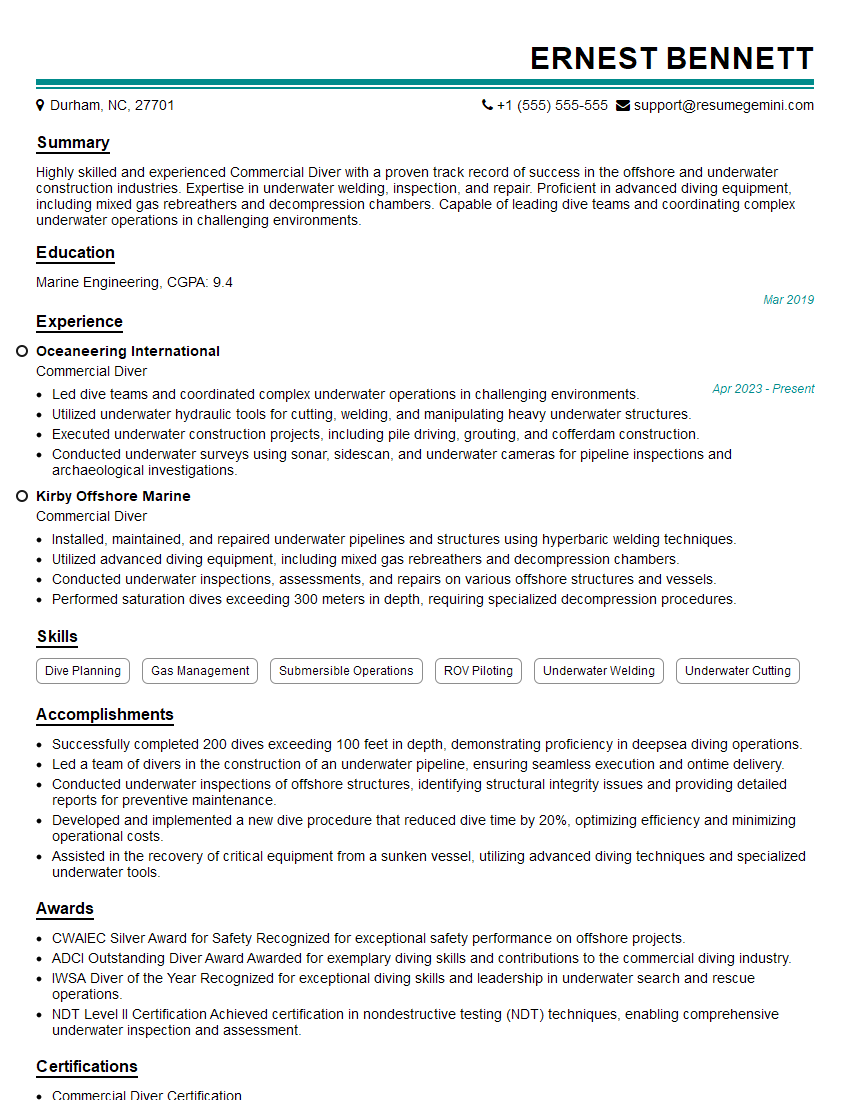
Mastering Underwater Construction and Repair opens doors to a rewarding and specialized career with excellent growth potential. Demand for skilled professionals in this field is high, making now the ideal time to enhance your job prospects. Creating a strong, ATS-friendly resume is crucial for getting your application noticed. We strongly encourage you to utilize ResumeGemini, a trusted resource for building professional resumes. ResumeGemini provides tailored resume examples for Underwater Construction and Repair, helping you showcase your skills and experience effectively.
Explore more articles
Users Rating of Our Blogs
Share Your Experience
We value your feedback! Please rate our content and share your thoughts (optional).
What Readers Say About Our Blog
Very informative content, great job.
good