Cracking a skill-specific interview, like one for Experience managing and developing draft picks, requires understanding the nuances of the role. In this blog, we present the questions you’re most likely to encounter, along with insights into how to answer them effectively. Let’s ensure you’re ready to make a strong impression.
Questions Asked in Experience managing and developing draft picks Interview
Q 1. Explain your process for evaluating a college quarterback’s potential.
Evaluating a college quarterback involves a multi-faceted approach that goes beyond just raw statistics. It’s like assembling a puzzle, where each piece contributes to the overall picture of their potential at the NFL level.
- Film Study: I meticulously review game film, focusing on arm strength, accuracy, decision-making under pressure, pocket presence, and ability to read defenses. I look for consistency – does he make the same mistake repeatedly, or does he learn and adapt? For example, I might analyze a quarterback’s completion percentage on throws over 20 yards to assess arm talent and accuracy under pressure.
- Physical Attributes: Height, weight, arm length, and mobility are all important factors. While a taller quarterback might have a better view of the field, mobility is crucial in today’s NFL, where quarterbacks need to evade pressure and extend plays. I’d use specific metrics like 40-yard dash time and agility drills to assess these attributes.
- Intangibles: Leadership qualities, competitiveness, and coachability are often overlooked but equally important. Do they inspire their teammates? How do they handle adversity? I achieve this through interviews, discussions with coaches and teammates, and observing their behavior on and off the field. For instance, observing how a quarterback reacts to an interception can reveal a lot about their character.
- Projections: Finally, I project how well their skills translate to the NFL. Can their style of play withstand the increased speed and complexity of professional football? This involves comparing their strengths and weaknesses to successful NFL quarterbacks and adjusting for the differences in competition levels. For instance, a quarterback who dominates in a spread offense at the college level may struggle in a pro-style offense if they lack the requisite skillset.
Q 2. How do you assess a player’s character and work ethic?
Assessing a player’s character and work ethic is crucial. It’s about understanding not just their on-field performance but their overall demeanor and commitment to improvement. Think of it as assessing their ‘soft skills’ that often determine long-term success.
- Background Checks and Interviews: I conduct thorough background checks and interviews with the player, their coaches, teammates, and family members. I look for consistency in their responses and try to identify any red flags. Are there instances of poor behavior or questionable decisions?
- Observational Analysis: I observe their interactions with teammates, coaches, and support staff. Do they show respect and accountability? Are they willing to take coaching and learn from their mistakes? For example, a player who consistently complains or blames others instead of accepting responsibility reveals a poor work ethic.
- Academic Record: A player’s academic performance often reflects discipline and commitment. While not a direct measure of character, it is an indirect indicator of self-management and responsibility.
- Social Media and Public Image: I carefully review their social media activity and public appearances for anything that might indicate poor character or judgment. This is done responsibly and with awareness of privacy considerations.
This holistic approach allows me to build a comprehensive picture of their character and commitment to excellence – aspects that are as important, if not more so, than athletic talent.
Q 3. Describe your experience using scouting databases and software.
Scouting databases and software are invaluable tools in the modern NFL. They streamline the process of gathering and analyzing player data, enhancing efficiency and objectivity. Think of them as high-powered spreadsheets for player information.
- Data Aggregation: I utilize software to collect data from various sources, including college game statistics, combine results, and scouting reports from other teams. This consolidates information into a central database for easy access and analysis.
- Statistical Analysis: Many platforms offer advanced statistical tools to analyze player performance and identify trends. For example, I might use a software to compare a running back’s yards after contact to determine their elusiveness and power.
- Video Analysis: Software aids in the breakdown of game film, allowing for tagging of specific plays, measuring player speed, and tracking routes. This significantly enhances the efficiency of film study, allowing us to identify key strengths and weaknesses with greater precision. I might utilize video analysis tools to track a wide receiver’s speed on deep routes, then use a database to compare this speed to other wide receivers in the draft.
- Report Generation: These tools help create standardized scouting reports that improve consistency and reduce bias across our scouting team. The reports serve as templates, encouraging consistent formatting and ensuring all relevant information is included.
Ultimately, software improves the accuracy, efficiency, and objectivity of our draft evaluations, enhancing our chances of selecting high-value players.
Q 4. What metrics do you prioritize when evaluating offensive linemen?
Evaluating offensive linemen demands a different approach compared to skill position players. It’s less about flashy stats and more about identifying the subtle nuances of technique and power. I see it as an assessment of their ‘unsung hero’ attributes.
- Film Study: I assess their pass protection, run blocking, and overall technique. I look for consistent hand placement, footwork, and ability to sustain blocks. I pay close attention to how well they handle different defensive techniques and how quickly they recover from mistakes.
- Physical Measurements: Height, weight, arm length, and hand size are crucial. Larger linemen often have an advantage in terms of power and leverage. I would leverage data from the combine, including bench press reps and vertical jump, to measure their strength and explosiveness.
- Agility and Speed: While not as critical as strength, agility and quickness are important for offensive linemen to reach and sustain blocks effectively. I’d study their performance in agility drills to assess their ability to adjust to shifting defensive formations.
- Intangibles: Similar to other positions, leadership, toughness, and coachability are important. Can they inspire their teammates and play through pain? Are they self-motivated to improve their technique?
The goal is to identify linemen with the right combination of physical attributes, technical skill, and intangible qualities to excel at the professional level. I seek consistent performance across the board rather than a focus on a single metric.
Q 5. How do you identify players who are likely to succeed at the professional level?
Identifying players likely to succeed at the professional level involves a blend of objective data analysis and subjective judgment. It’s a process of separating the wheat from the chaff and identifying players who possess the necessary combination of talent, work ethic, and adaptability.
- Production vs. Potential: While impressive college statistics are a good indicator, I also analyze their production relative to the level of competition. A player who dominated in a weaker conference might not translate as well as a player with slightly lower stats in a more competitive environment.
- Measurables and Athleticism: Combine results and athletic testing provide valuable insights into a player’s physical capabilities. However, these are merely supplemental information that needs to be viewed in context of their on-field performance.
- Scheme Fit: The NFL is full of varying offensive and defensive schemes. Identifying players whose skills and styles best fit our system is a key part of the process. We’ll also assess their ability to adapt to new systems quickly.
- Character and Work Ethic: This is possibly the most crucial factor. Players with high character and a strong work ethic have a much higher chance of overcoming the challenges of professional football.
- Coachability and Adaptability: The ability to learn and improve is essential. Players who are coachable and can adapt to changes in schemes and game plans have a much better chance of long-term success.
Essentially, I look for players who possess a combination of high-level talent, strong character, and a willingness to work hard and improve. I use a holistic approach to minimize the chance of selecting players who lack the crucial traits necessary to thrive at the next level.
Q 6. What is your approach to building a scouting report?
Building a comprehensive scouting report is a systematic process, blending both quantitative and qualitative data to produce a well-rounded assessment of a player. Think of it as a detailed biography of the player’s on-field performance.
- Data Collection: This phase begins with gathering all available information, including statistics, game film, combine results, and background checks. The software greatly assists in streamlining this collection.
- Film Breakdown: I meticulously review game film, focusing on specific aspects like technique, decision-making, and athleticism. I use a standardized framework to ensure consistency and avoid bias.
- Interview and Character Assessment: I conduct interviews with the player, coaches, teammates, and other relevant individuals to assess their character, leadership skills, and work ethic.
- Comparative Analysis: I compare the player’s performance to other players at their position, both past and present, to evaluate their potential for NFL success.
- Report Writing: I synthesize all collected information into a detailed scouting report that includes a comprehensive profile of the player’s strengths, weaknesses, and overall potential.
The report is structured logically and includes detailed explanations and supporting evidence for every evaluation made. It’s not just about listing facts; it’s about providing context, insights, and a clear judgment on the player’s potential.
Q 7. How do you handle conflicting opinions among members of your scouting team?
Handling conflicting opinions within a scouting team is an inevitable challenge. It’s crucial to foster a collaborative environment where differing viewpoints are not just tolerated but actively encouraged to reach an informed consensus. It’s like a diverse jury deliberating a case.
- Open Communication: I encourage open and respectful dialogue among team members. Each scout is given the opportunity to explain their evaluation, supported by evidence from their research. No opinion is dismissed out of hand.
- Data-Driven Discussions: We focus on the data and evidence supporting each opinion, avoiding emotional or biased arguments. If discrepancies exist, we revisit the relevant data and film together.
- Consensus Building: The goal is not to force agreement but to reach a consensus based on a thorough analysis of all available information. Sometimes, a compromise is reached; other times, a clear majority opinion emerges.
- Respectful Debate: Disagreements are seen as opportunities for learning and refinement of our evaluation process. We aim to understand each other’s perspectives and learn from them, even if we ultimately disagree on a particular player.
- Final Decision: While individual opinions are valued, the final decision is made by the leadership team after a thorough review of all scouting reports and discussions. This decision process is transparent and accounts for all viewpoints.
Managing differing opinions strengthens our collective understanding and results in more informed and comprehensive player evaluations.
Q 8. How do you prioritize draft needs versus best player available?
Prioritizing draft needs versus best player available (BPA) is a constant balancing act. It’s not a simple either/or proposition, but rather a nuanced decision-making process that requires careful consideration of various factors. Ideally, the best scenario is when the BPA perfectly aligns with a team’s biggest need. However, that rarely happens.
Need-based drafting prioritizes filling specific positional voids on the roster. For example, if a team’s offensive line is consistently struggling, they might prioritize an offensive lineman even if a higher-rated defensive player is available. This approach is often favored by teams aiming for immediate improvement.
BPA drafting focuses on selecting the player with the highest projected overall talent, regardless of positional need. The rationale is that a highly talented player can contribute significantly, even if their position isn’t a glaring need. This approach emphasizes long-term value and building a strong foundation.
My approach involves creating a weighted system. I use a points-based evaluation incorporating player talent, positional value (relative to the team’s specific needs), projected impact, and character assessments. This allows for a more data-driven, but flexible approach, enabling adjustments based on evolving roster needs and unexpected player availability during the draft. Ultimately, context is crucial – a team with several years of success at a position can afford to go BPA, whereas a team in rebuild mode may prioritize need.
Q 9. Describe your experience with the NFL Draft process.
My experience with the NFL Draft process spans over [Number] years, encompassing [mention specific roles like scouting, personnel management etc.]. I’ve been involved in every stage, from initial player identification and evaluation through to the final draft selection and subsequent player development. This includes:
- Extensive film study and game analysis.
- Attending college games and pro days, observing players in various competitive scenarios.
- Conducting player interviews and background checks.
- Collaborating with scouting colleagues and coaches to compile comprehensive player evaluations.
- Participating in draft-room discussions and contributing to final draft board rankings.
- Post-draft player follow-up and development strategies.
In a past draft, we identified a player whose college production was remarkable, but whose film displayed inconsistencies. Through extensive background checks and interviews, we uncovered character concerns that were initially not apparent from the surface-level evaluation. We had to weigh the risk-reward trade-off. Although the player possessed immense talent, the off-field concerns ultimately prompted us to choose another player. This decision highlights the importance of a holistic approach to player evaluation.
Q 10. How do you integrate data analytics into your scouting process?
Data analytics plays a vital role in modern NFL scouting. We use a variety of data sources, including:
- Traditional Statistics: Yards, touchdowns, completion percentage, tackles, sacks, etc.
- Advanced Metrics: Expected Points Added (EPA), success rate, completion percentage over expectation (CPOE), pressure rate, etc. These provide a deeper understanding of player performance beyond basic box scores.
- Tracking Data: Speed, acceleration, agility, route running efficiency – often acquired from tracking systems like Next Gen Stats.
- College and Pro Game Film Data: We analyze film to validate and contextualize the statistical data. Machine learning tools can analyze film to identify patterns that may be missed by human eyes.
We don’t rely solely on data; it’s a complementary tool. The data assists us in identifying players worthy of further investigation, but the final decision requires qualitative analysis based on film study, coaching opinions, and player interviews. For example, a player might have outstanding advanced metrics but poor film quality, indicating inconsistency or flaws in play style. A robust scouting process needs to balance the objective data analysis with subjective human evaluations.
Q 11. How do you identify potential red flags in a player’s background?
Identifying red flags is a crucial aspect of player evaluation. We use a multi-faceted approach:
- Background Checks: Thorough background investigations are conducted to look for academic issues, legal troubles, or behavioral patterns that indicate potential problems.
- Interviews: We conduct in-depth interviews with players, coaches, and teammates to assess character, maturity, and work ethic. We aim to understand a player’s motivations, responses to adversity, and overall personality.
- Character References: We seek input from various sources, including college coaches, trainers, and even former opponents. This approach provides a well-rounded picture of a player’s character and behavior.
- Social Media Scrutiny: While not definitive, we analyze a player’s social media presence for any hint of concerning behavior or patterns.
- Performance Patterns: Consistent poor performances, especially those linked to behavioral or attitude issues, can be a major red flag.
A specific example: A player might have incredible athletic talent but a history of disciplinary issues. Our evaluation process would carefully weigh this talent against the risk associated with his behavioral history. In such cases, team culture and coaching staff’s capabilities to manage such players become crucial factors in the decision-making process.
Q 12. How do you use film study to evaluate a player’s skills?
Film study is foundational to our evaluation. It allows us to see a player’s strengths, weaknesses, and tendencies in real game situations. We use a systematic approach, including:
- Multiple Viewings: We watch each game multiple times, focusing on different aspects of the player’s performance. The first viewing might be a general overview, while subsequent viewings focus on specific skills like pass rushing technique, route running, or ball-handling.
- Specific Situations: We examine performance under pressure, against top competition, and in various game situations (e.g., two-minute drill). This provides a more comprehensive understanding of a player’s adaptability and resilience.
- Contextual Analysis: We consider the overall scheme and context of the player’s college team. For example, an edge rusher’s production might be skewed if his team consistently runs a base-defense.
- Comparison with Peers: We compare the player’s film with other players at the same position to benchmark their skill level and potential.
For instance, when evaluating a quarterback, we look beyond just completion percentage. We focus on pocket presence, decision-making under pressure, accuracy on deep throws, and their ability to read defenses. Film allows us to dissect these nuances that traditional statistics might miss.
Q 13. What are some common mistakes teams make in the draft?
Many teams make common mistakes during the draft process:
- Reaching for Need: Selecting a player too early due to positional need, overlooking higher-value players at other positions.
- Ignoring Character Concerns: Overlooking red flags in a player’s background, leading to off-field issues and team disruptions.
- Overvaluing Athleticism: Prioritizing athletic traits over football IQ, skill, and character.
- Insufficient Film Study: Relying too heavily on statistics without sufficient film study, missing key flaws or limitations in a player’s game.
- Neglecting Role Fit: Drafting a player without a clear understanding of how they will fit into the team’s scheme and coaching style.
- Ignoring Medical Reports: Insufficient medical evaluation leading to unforeseen injuries or limitations impacting the player’s career trajectory.
These mistakes can lead to wasted draft picks, roster imbalances, and ultimately, a less successful team.
Q 14. How do you manage the expectations of the coaching staff during the draft process?
Managing coaching staff expectations during the draft process is critical. Open communication and transparency are key. I employ the following strategies:
- Regular Communication: Frequent meetings and discussions with coaches throughout the scouting process, ensuring everyone is on the same page.
- Shared Evaluation Criteria: Establishing shared criteria for player evaluation, incorporating input from coaches on positional needs and scheme fit.
- Transparency on Draft Strategy: Explaining the rationale behind draft decisions, addressing any concerns or disagreements openly and respectfully.
- Incorporating Coaching Feedback: Actively soliciting and incorporating input from coaches into the player evaluation process, including film reviews and positional needs assessments.
- Managing Expectations: Setting realistic expectations about player development, acknowledging that not every draft pick will become a star player immediately.
For instance, a coach might strongly advocate for a specific player at a position, while the data suggests a different player might be a better fit. By effectively explaining the data-driven evaluation and weighing the pro’s and con’s transparently, we ensure that the coaching staff understands and accepts the rationale behind the final decision, even if it differs from their initial preference. Building trust and mutual respect is crucial to ensure collaborative decision-making.
Q 15. How do you handle pressure during the draft?
Handling pressure during the draft is crucial. It’s akin to being a surgeon during a complex operation – every decision carries significant weight. My approach is threefold: meticulous preparation, a calm demeanor, and a robust decision-making framework. Preparation involves extensive scouting, data analysis, and scenario planning, reducing the element of surprise. Maintaining composure helps avoid impulsive decisions driven by panic. Finally, I rely on a pre-defined decision matrix that weighs various factors – player talent, team needs, positional value, and potential future impact – to guide my choices, regardless of the surrounding frenzy.
For example, in a past draft, we were unexpectedly offered a late first-round pick for our second-rounder and a future pick. The pressure to make a quick decision was immense. However, our pre-determined valuation system, combined with a calm assessment of the available players, allowed us to make a calculated decision that ultimately benefited the team’s long-term vision.
Career Expert Tips:
- Ace those interviews! Prepare effectively by reviewing the Top 50 Most Common Interview Questions on ResumeGemini.
- Navigate your job search with confidence! Explore a wide range of Career Tips on ResumeGemini. Learn about common challenges and recommendations to overcome them.
- Craft the perfect resume! Master the Art of Resume Writing with ResumeGemini’s guide. Showcase your unique qualifications and achievements effectively.
- Don’t miss out on holiday savings! Build your dream resume with ResumeGemini’s ATS optimized templates.
Q 16. Explain your understanding of different player evaluation systems.
Player evaluation is a multi-faceted process, combining quantitative and qualitative data. Different systems emphasize various aspects. Some focus heavily on statistical analysis (like advanced metrics in basketball or WAR in baseball), while others prioritize film study, focusing on a player’s physical attributes, skills, and intangible qualities like work ethic and leadership.
I utilize a blended approach. Statistical models provide a baseline understanding of a player’s performance, but I don’t rely solely on them. I believe deep film review, complemented by input from our scouting network, is essential. This allows us to assess a player’s potential beyond just past statistics, factoring in their playing style, coachability, and adaptation potential in our specific system.
For instance, a player might have excellent statistics but show inconsistencies in high-pressure situations; film analysis would reveal this, where statistics alone might not. Another example would be a player with raw talent but lacking in technical skills, something easily identifiable through film, but not inherently reflected in raw numbers.
Q 17. How do you balance long-term and short-term needs when making draft picks?
Balancing long-term and short-term needs is a constant juggling act. It’s like building a house – you need both a strong foundation (long-term) and immediate livability (short-term). A purely short-term strategy risks jeopardizing future success, while a solely long-term strategy might leave your team lacking in competitive ability in the present.
My approach involves creating a tiered system of needs. We identify critical immediate gaps (e.g., a weak offensive line) and address them with some early-round picks. Simultaneously, we prioritize selecting players with high potential but possibly needing more development (long-term assets) in later rounds. This creates a blend of immediate impact and future potential.
For example, in one year we used an early pick to address our need for an immediate defensive playmaker, filling a pressing short-term need. Later picks then focused on developing young talents with high ceilings at positions where we had less immediate urgency. This strategy ensured both immediate on-field improvement and long-term positional depth.
Q 18. Describe your experience with trading draft picks.
Trading draft picks is a high-stakes poker game requiring strategic thinking and an understanding of market value. It’s not simply about accumulating picks; it’s about maximizing their value to acquire assets that best serve the team’s goals.
My experience includes numerous trades, ranging from small swaps to major deals involving multiple picks and players. I approach each trade by assessing the potential value of the pick, both in its current slot and in potential future positions if we decide to move up or down in the draft order. This involves detailed analyses of other teams’ needs, comparing their player rankings with ours, and assessing the potential risk vs. reward of each trade scenario.
In one instance, we traded a later round pick to a team desperate for a specific position, acquiring a higher pick in the same draft. This turned out to be crucial, allowing us to select a player who turned out to be a franchise cornerstone.
Q 19. How do you evaluate the value of a draft pick?
The value of a draft pick isn’t fixed; it’s dynamic and context-dependent. Factors influencing its value include the round, the overall pick number, the team’s needs, and the perceived talent pool in that draft.
I use a combination of methods to evaluate a pick’s value. This includes proprietary models that account for historical draft success rates, player performance projections, and a subjective assessment based on the current talent pool. This subjective component accounts for factors not easily quantifiable, like leadership potential or character. We also track the trade value of picks throughout the draft, providing a dynamic understanding of their worth.
Imagine two teams, one with a rich history of successful late-round picks and another with a consistently poor track record. The same late-round pick would hold more value for the former team due to their established ability to identify hidden talent.
Q 20. What is your experience with different types of scouting combines?
My experience encompasses various scouting combines, including the NFL Combine, college all-star games, and pro days. Each offers a unique perspective on player evaluation. The NFL Combine provides a standardized environment for measuring physical attributes and athleticism. All-star games offer insights into a player’s competitive spirit and teamwork in a game setting. Pro days, held at individual colleges, allow for more in-depth analysis of a player’s skill set tailored to their specific position.
I utilize data from all three, understanding that each has its strengths and weaknesses. The combine provides quantitative data that can be compared across players, whereas all-star games and pro days provide qualitative observations on how players perform under pressure and in different contexts. A comprehensive evaluation involves integrating information from all three sources.
For instance, a player might excel in the physical tests at the combine but show poor decision-making during the all-star game. This would trigger further analysis of game film and discussions with our scouts to understand the discrepancy and make a more informed decision.
Q 21. How do you deal with information asymmetry during the scouting process?
Information asymmetry is inherent in the scouting process. Some teams might have superior access to information, leading to an uneven playing field. My strategy involves three key elements: building a robust and diverse scouting network, meticulous data analysis, and fostering strong relationships within the league.
A wide-ranging scouting network—including personal scouts, college coaches, and other league contacts— provides a broader perspective, mitigating the risk of relying on incomplete or biased information. Data analysis helps to independently verify information, identifying trends and patterns that might not be immediately apparent. Finally, cultivating strong relationships within the league (while abiding by all ethical rules, of course) can provide insights and perspectives that aren’t publicly available.
For example, by building relationships with college coaches, we’ve gained valuable insights into a player’s character and work ethic – qualities often difficult to gauge purely from game footage. This information, combined with data analysis, can help us make more informed decisions even with limited direct access to the player.
Q 22. How do you incorporate medical information into player evaluations?
Medical information is crucial, but it’s not about simply disqualifying players. We integrate it into the holistic evaluation process. This means considering the severity and nature of any injury, the prognosis for recovery, and the potential long-term impact on performance. For example, a player with a history of concussions needs careful consideration; we’d assess the frequency, severity, and recovery time of each concussion, as well as consulting medical experts to understand the long-term risk. Similarly, a minor injury that’s fully healed shouldn’t be a major concern, but the recovery process itself—the player’s commitment to rehabilitation and their overall resilience—is a valuable data point revealing their work ethic and mental fortitude. We often rely on independent medical evaluations to verify information and provide unbiased perspectives.
We use a tiered approach: A simple injury report might be sufficient for minor issues, while more significant concerns necessitate full medical records review and consultations with team doctors or specialists. We also consider the player’s medical history in the context of their overall athletic profile: A significant knee injury might be less concerning for a smaller, skill-position player than for a large offensive lineman.
Q 23. How do you identify players with high upside potential?
Identifying players with high upside potential is an art and a science. We look for a combination of factors: exceptional athletic traits, raw talent, high football IQ, and a strong work ethic. It’s not just about measurable skills; we assess ‘coachability’ – a player’s willingness to learn and adapt. For example, a quarterback with a rocket arm but poor decision-making might have incredible potential, but requires significant coaching and refinement. We also look at ‘positional value’: a player’s worth to a team is partially determined by the need for that position. The draft is about getting the best value possible, meaning that sometimes a player with lower raw talent but at a high-need position can be more valuable than a higher-talented player in an already stacked position.
We utilize advanced scouting tools and analytics, including metrics that measure speed, agility, strength, and other physical attributes. Beyond the physical, we examine game film meticulously, assessing their instincts, decision-making under pressure, and their ability to consistently execute plays. Finally, we conduct thorough background checks and interview the player and their coaches to assess character, maturity, and leadership qualities. This holistic assessment helps us to minimize risk and maximize the chances of identifying players who can significantly outperform their draft position.
Q 24. How do you handle situations with limited information about a particular player?
Limited information is a common challenge. Our approach involves a multi-pronged strategy. First, we aggressively seek out additional information: This might include reaching out to coaches at different levels (high school, college, etc.), talking to other scouts, and analyzing available game film even if it’s limited. We often use a comparative approach: If we lack extensive film on a specific player, we’ll compare their performance against others in similar situations or with similar athletic profiles. This allows us to infer potential based on known quantities.
Furthermore, we leverage advanced statistical analysis techniques to extract insights from the available data. We may use smaller sample sizes, recognizing the increased uncertainty but still trying to extract meaningful trends. This could involve adjusting our thresholds for certain metrics or being more cautious in our projections. Finally, we recognize the inherent uncertainty; limited information means a higher level of risk, so our draft strategy might prioritize players with more comprehensive information while being willing to take calculated risks on high-upside, lower-information players in later rounds.
Q 25. Describe your experience in contributing to team’s overall draft strategy.
My contribution to the team’s overall draft strategy is multifaceted. I actively participate in the initial identification and evaluation of prospects. I use my expertise to help prioritize targets based on our team’s needs, available resources, and overall strategic goals. For example, if the team needs a pass-rusher and a quality edge player is available relatively early in the draft, I would advocate for that selection, even if another position might have other attractive options later in the draft. My role also involves creating detailed scouting reports, presenting comprehensive evaluations to the coaching staff and front office, and participating in the final consensus-building process.
Beyond individual player evaluations, I contribute to the development of our overall drafting strategy. I help to build our draft board, analyzing our needs, the projected strengths of the draft class, and potential trade scenarios. This often involves using statistical models and projecting player performance, allowing us to identify trade possibilities that maximize our chances of success. I collaborate closely with the general manager, coaching staff, and other members of the scouting department to ensure alignment on our overall approach. My goal is to align our draft picks with the larger team goals and ensure we get maximum value from each selection.
Q 26. What are some factors that might impact a player’s success transition to the NFL?
Several factors impact a player’s transition to the NFL. The most obvious is the significant increase in competition level. NFL players are bigger, faster, and more skilled than college players. Adapting to the speed and complexity of the NFL game is a key challenge. Scheme fit is also critical. A player excelling in a spread offense in college might struggle to adapt to a pro-style system. Another important factor is the off-field transition: Managing the increased pressure, media scrutiny, and financial responsibilities can be overwhelming for young players. Coaching quality and development also plays a key role. The support and guidance received after joining an NFL team will have a significant impact on the player’s development.
Beyond this, we consider mental fortitude and resilience: How does the player handle adversity? How quickly does he adapt to new systems or challenges? We also assess maturity levels and how well a player can handle the demands and pressure of being a professional athlete. Physical maturity matters. Some players are physically ready for the NFL straight out of college, while others require more time to develop strength and build the physical tools to compete at the highest level. The transition to the NFL isn’t just about on-field skills; the mental, emotional, and social aspects also make or break a player’s career.
Q 27. How do you quantify the potential return on investment for a draft pick?
Quantifying the return on investment (ROI) for a draft pick is a complex challenge, as it’s not simply a financial calculation. We use a multi-faceted approach. We first consider on-field performance metrics such as Pro Bowl selections, All-Pro recognition, and statistics relative to position. We also look at the player’s contribution to team success, measured by wins, playoff appearances, and championships. Beyond on-field impact, we consider the player’s overall value and contract compared to his draft position. Did the player exceed expectations or fall short?
We also consider less tangible aspects. Did a player become a team leader and a positive influence on the locker room? Did his presence increase the team’s marketability? A high-performing player drafted late has a higher ROI than a lower-performing player drafted earlier. We use statistical models and predictive analytics to assess the probability of various performance outcomes, considering factors like draft position, college production, athletic testing, and scouting grades. This allows for a more quantitative measure of expected value, but we always remember the inherent limitations of these models and acknowledge the qualitative aspects of assessing a player’s contribution.
Q 28. How do you stay up-to-date on the latest trends and developments in player evaluation?
Staying up-to-date is crucial. I maintain a comprehensive network of contacts within the scouting community, attending various scouting combines and coaching clinics to engage with other professionals. I regularly review publications such as scouting reports, NFL media analysis, and academic research on sports analytics. I also utilize advanced statistical and analytical tools to assess player performance and trends. This includes staying current on new metrics and methodologies used to evaluate players.
Moreover, I use advanced statistical techniques, machine learning algorithms, and data visualization tools to analyze large datasets of player performance data. This helps to identify patterns and trends that may not be readily apparent through traditional scouting methods. I also actively participate in professional development opportunities, attending conferences and workshops to expand my knowledge and skill set. By utilizing a combination of traditional and advanced methods, I consistently improve my understanding of the current landscape of player evaluation.
Key Topics to Learn for Experience managing and developing draft picks Interview
- Player Evaluation: Understanding scouting reports, statistical analysis, and projecting future performance. Consider different evaluation metrics and their limitations.
- Draft Strategy & Board Management: Developing a comprehensive draft strategy aligned with team needs and long-term goals. Practice simulating draft scenarios and navigating unexpected situations.
- Negotiation & Contract Management: Understanding the complexities of player contracts, negotiating with agents, and managing salary cap implications. Explore different contract structures and their impact.
- Player Development & Integration: Designing and implementing player development programs. Consider the importance of coaching staff, training facilities, and mentorship in player progression.
- Risk Assessment & Mitigation: Identifying and mitigating risks associated with draft picks, including injury, performance inconsistencies, and character concerns. Explore different risk management strategies.
- Data Analysis & Technology: Utilizing data analytics tools and technologies to inform decision-making throughout the draft process. Consider the ethical considerations of using data.
- Communication & Collaboration: Effectively communicating with coaches, scouts, and management to build consensus and make informed decisions. Practice your communication and collaboration skills.
- Long-Term Vision & Sustainability: Developing a sustainable draft strategy that balances immediate needs with long-term goals. Consider the impact of different draft strategies on team building.
Next Steps
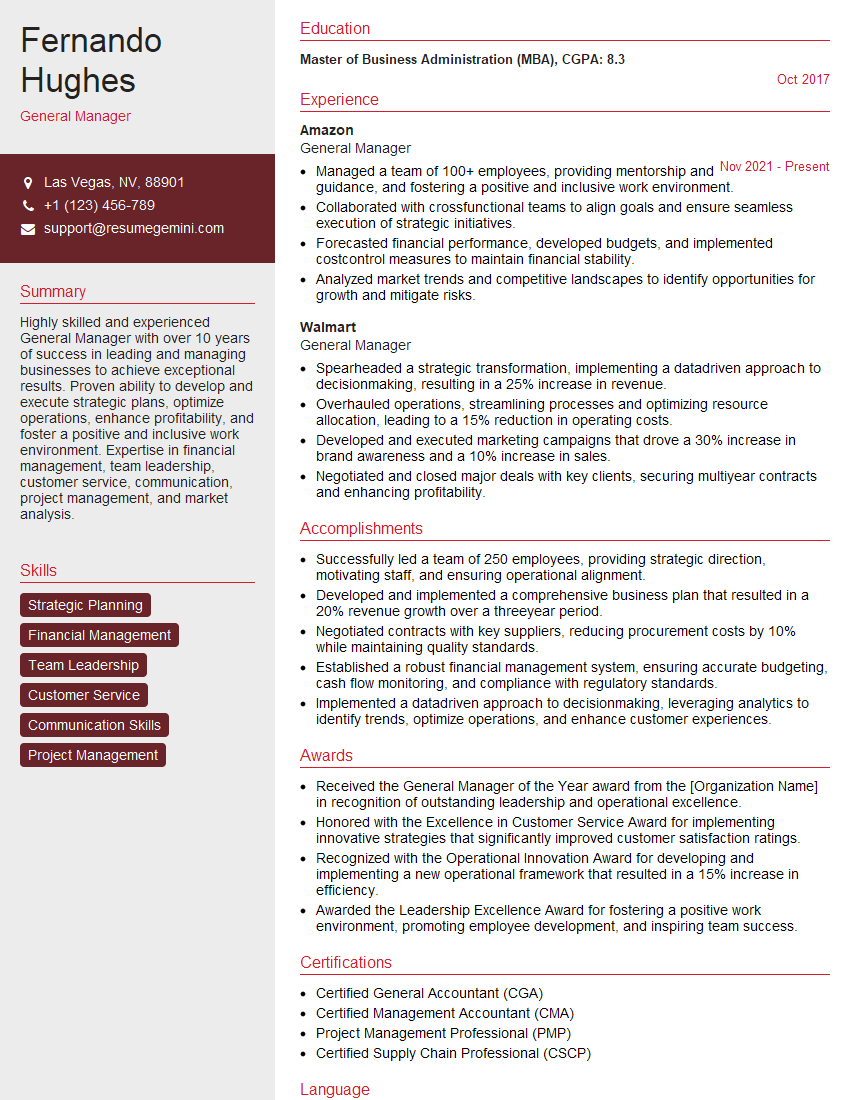
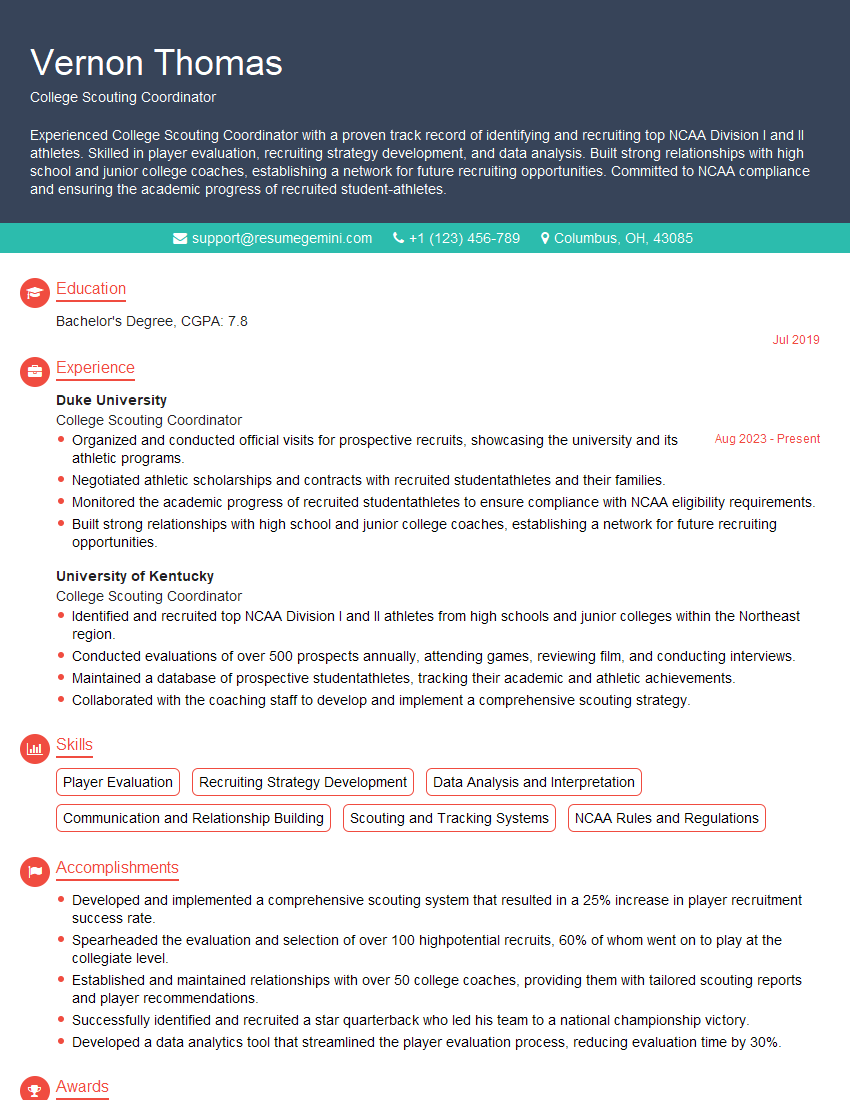
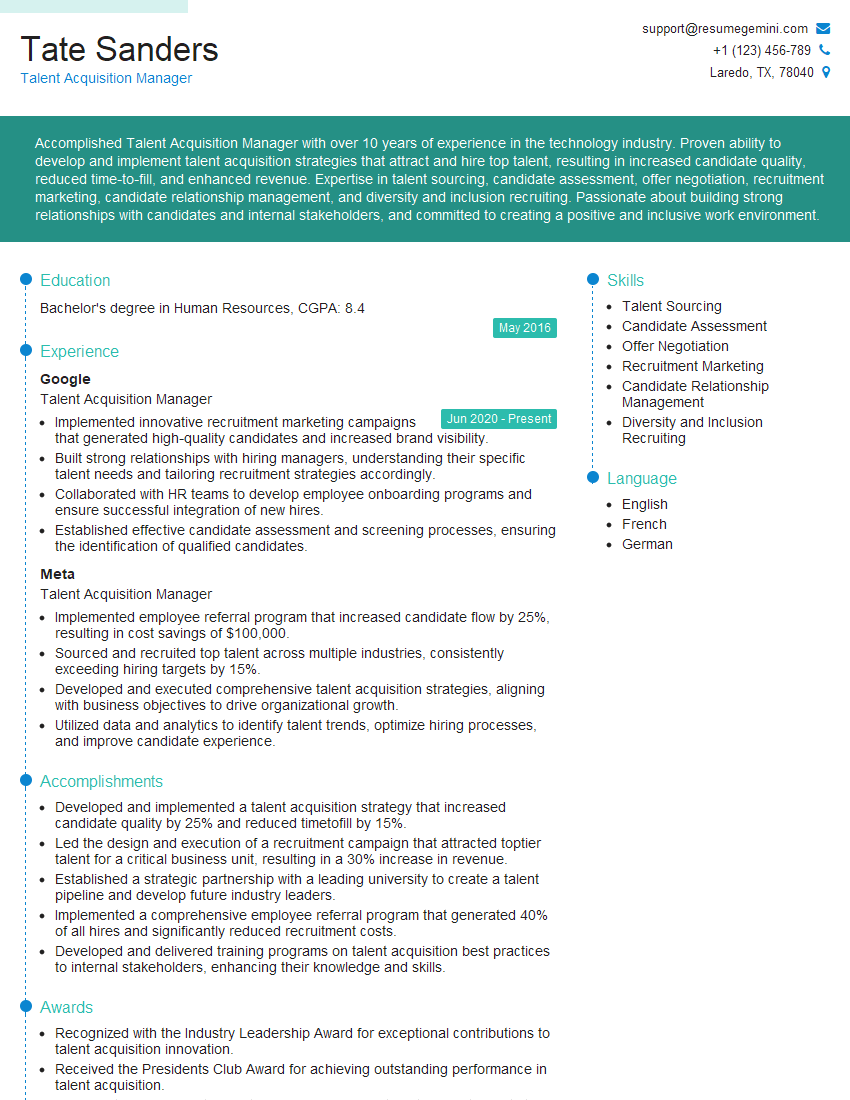
Mastering the art of managing and developing draft picks is crucial for career advancement in sports management. A strong understanding of these key areas demonstrates strategic thinking, problem-solving skills, and a deep understanding of the industry. To significantly improve your job prospects, create an ATS-friendly resume that effectively showcases your abilities. ResumeGemini is a trusted resource that can help you build a professional and impactful resume. Examples of resumes tailored to highlight experience in managing and developing draft picks are available to help you get started.
Explore more articles
Users Rating of Our Blogs
Share Your Experience
We value your feedback! Please rate our content and share your thoughts (optional).
What Readers Say About Our Blog
Very informative content, great job.
good