Preparation is the key to success in any interview. In this post, we’ll explore crucial Uniform Pressing interview questions and equip you with strategies to craft impactful answers. Whether you’re a beginner or a pro, these tips will elevate your preparation.
Questions Asked in Uniform Pressing Interview
Q 1. What types of fabrics are commonly used in uniforms, and how do you adjust pressing techniques for each?
Uniform fabrics vary widely, demanding tailored pressing techniques. Common materials include cotton, polyester, wool blends, and wrinkle-resistant synthetics. Each requires a different approach to avoid damage.
- Cotton: A natural fiber, cotton responds well to steam and higher temperatures. However, overheating can cause yellowing. I use a moderate temperature and plenty of steam, pressing with firm, even pressure to achieve a crisp finish.
- Polyester: Polyester is synthetic and can melt under high heat. Lower temperatures and less pressure are key. I use a pressing cloth to protect the fabric and avoid scorching. Steam is important to relax wrinkles.
- Wool Blends: Wool blends require a gentler approach. Higher temperatures can cause irreversible shrinking. I use a lower temperature, less steam, and a pressing cloth to prevent shine. I typically press on the wrong side of the fabric.
- Wrinkle-Resistant Synthetics: These often require minimal pressing, sometimes only a light steaming. Over-pressing can create an unnatural stiffness. A quick press with low heat and little steam often suffices.
Adapting my technique depends on the fabric’s composition and desired finish. For instance, a crisp military uniform demands different handling than a more relaxed office uniform.
Q 2. Explain the process of pressing a shirt, including proper techniques for collars, cuffs, and plackets.
Pressing a shirt involves a systematic approach. I begin with the body, working from the center outward to avoid creasing. The sleeves are pressed separately, ensuring smooth seams.
- Collars: I press collars carefully, working from the underside to avoid imprinting the seams. A tailor’s ham helps create a rounded shape. I pay close attention to points and ensure they are sharp and well-defined.
- Cuffs: Cuffs require precision to maintain their structure. I press them flat, paying attention to the edges and ensuring even folds. Again, I work from the underside to prevent imprinting.
- Plackets: The placket, especially on button-down shirts, should be pressed meticulously. I often use a point presser to create a crisp edge and ensure the buttons lay flat. A pressing cloth protects the buttons from heat damage.
The entire process emphasizes consistent pressure, controlled steam, and the use of appropriate tools like a tailor’s ham and point presser to achieve a professional, crisp look.
Q 3. Describe your experience with different types of pressing equipment (e.g., steam presses, flatwork ironers).
My experience encompasses various pressing equipment, each with its strengths and limitations.
- Steam Presses: Steam presses are versatile and efficient for various fabrics and garments. Their even pressure and controlled steam are ideal for shirts, trousers, and other items. I’ve used industrial-grade steam presses capable of handling large volumes of uniforms efficiently.
- Flatwork Ironers: Flatwork ironers are excellent for large quantities of flat items like sheets, tablecloths, and some uniforms. They are highly efficient but less adaptable to shaped garments. I’m proficient in operating these machines, ensuring proper folding and feeding for optimal results.
- Hand Irons: While less efficient for high-volume work, hand irons remain invaluable for detailed work, pressing intricate areas, and handling delicate fabrics. I maintain a professional-grade hand iron for these tasks.
My experience allows me to select the most appropriate equipment based on the task, fabric, and volume.
Q 4. How do you identify and repair common pressing-related issues, such as scorch marks or creases?
Identifying and repairing pressing issues requires careful observation and appropriate techniques.
- Scorch Marks: Scorch marks appear as yellowish or brown spots. I often attempt to gently lift them with a damp cloth. Severe scorch marks may be irreparable.
- Creases: Persistent creases are addressed by re-pressing the area with appropriate steam and pressure. Using a pressing cloth protects the fabric during this process.
- Shine: Excessive shine, often seen on dark fabrics, can be reduced by pressing on the wrong side of the garment. Using a pressing cloth can also minimize shine.
Prevention is key. Always test the heat setting on a hidden area before pressing. Using a pressing cloth adds an extra layer of protection.
Q 5. What safety precautions do you follow when operating pressing equipment?
Safety is paramount when using pressing equipment. I always follow these precautions:
- Proper Training: I have received comprehensive training on the operation and safety procedures for all pressing equipment I use.
- Personal Protective Equipment (PPE): I always wear heat-resistant gloves when operating high-temperature equipment. I also ensure the area is well-ventilated to avoid steam inhalation.
- Equipment Inspection: Before each use, I inspect the equipment for any damage or malfunctions. I report any issues immediately.
- Water Level Checks: I regularly check the water level in steam presses and ironers, ensuring it’s within the safe operating range. This prevents overheating and potential hazards.
- Proper Handling: I always handle hot equipment with care and ensure cords are safely positioned to prevent tripping hazards.
My commitment to safety ensures both my well-being and the preservation of the equipment.
Q 6. How do you maintain the cleanliness and functionality of pressing equipment?
Maintaining pressing equipment’s cleanliness and functionality is essential for optimal performance and longevity.
- Regular Cleaning: After each use, I clean the pressing surface of steam presses and irons with a damp cloth. I remove any lint or residue.
- Descaling: I regularly descale steam presses and irons to remove mineral deposits that can affect performance and efficiency. The frequency of descaling depends on water hardness.
- Lubrication: Where applicable, I lubricate moving parts as per the manufacturer’s recommendations to ensure smooth operation and extend equipment life.
- Professional Maintenance: I schedule professional maintenance for all equipment at recommended intervals. This ensures early detection of potential issues and prevents costly repairs.
Proper maintenance prolongs equipment lifespan and ensures consistent, high-quality pressing results.
Q 7. Describe your experience working with different types of uniform materials (e.g., cotton, polyester, blends).
My experience encompasses a wide range of uniform materials, each requiring a customized approach.
- Cotton: Cotton uniforms are durable but require careful attention to avoid scorching. I use a moderate heat and plenty of steam.
- Polyester: Polyester uniforms are wrinkle-resistant but prone to melting at high temperatures. I use lower heat settings and minimal pressure.
- Cotton/Polyester Blends: These blends require a balanced approach. I adjust the temperature and steam based on the blend percentage. A test press on a hidden area is always recommended.
- Wool Blends: Wool blends need gentle handling. High temperatures can cause shrinkage. I typically use low heat and a pressing cloth.
Understanding the composition and properties of each material ensures I can adapt my techniques to achieve the best results without damaging the uniform.
Q 8. How do you handle delicate or specialty fabrics during the pressing process?
Handling delicate fabrics requires a gentler approach than standard uniform pressing. Think of it like treating a piece of fine china versus a sturdy ceramic mug. I always start by checking the garment’s care label for specific instructions. For silks, satins, or other delicate materials, I use a low heat setting and a pressing cloth – a thin, clean cotton fabric placed between the iron and the garment to prevent scorching or shine. I might even opt for a steam setting with minimal pressure, or even use a professional garment steamer instead of a traditional iron. For materials like lace or embroidery, I often use a tailor’s ham or sleeve roll to support the fabric and prevent flattening or distortion. This provides a curved surface to work with, which prevents unintended creases and keeps the three-dimensional aspects of the garment in place. For example, when pressing a silk blouse, I would carefully press the shoulders and sleeves using a pressing cloth and low heat, paying special attention to avoid harsh creases.
Q 9. How do you ensure that uniforms are pressed to meet quality standards and company specifications?
Meeting quality standards and company specifications is paramount. I always begin by thoroughly reviewing the company’s style guide or any provided samples, paying close attention to details like crease lines, the sharpness of the edges, and the overall presentation. This might involve checking for specific requirements for things like collar points, cuffs, or pleats. Before I start pressing, I inspect each uniform for any stains or damage that would require pre-treatment. During pressing, I meticulously follow the style guide to ensure uniformity across all items. This includes consistent iron temperature, pressure, and pressing techniques. After each uniform is pressed, I perform a final quality check, looking for any imperfections or inconsistencies before packaging. Regular calibration of my equipment, from irons to steam generators, and ongoing professional development in the latest techniques are also crucial to maintaining consistently high standards.
Q 10. What is your experience with high-volume uniform pressing?
I have extensive experience with high-volume uniform pressing, having managed operations processing hundreds of uniforms weekly in my previous role. This involved working efficiently within tight deadlines, often coordinating a team and streamlining our workflow. We implemented a system of sorting, pre-treatment, pressing, and quality control that maximized throughput while minimizing errors. For example, we color-coded uniforms for different departments to facilitate faster sorting and to minimize the time spent searching for specific items. We also utilized specialized equipment, such as industrial-sized steam presses, to efficiently handle large batches of uniforms. This required a comprehensive understanding of equipment maintenance and troubleshooting to ensure minimal downtime.
Q 11. How do you organize and prioritize your workload to meet deadlines?
Organization and prioritization are key in a high-volume environment. I utilize a system that combines task listing, prioritization matrices, and time blocking. First, I meticulously log all incoming uniforms, noting their type, required service, and due dates. I then prioritize orders based on urgency and deadlines, focusing on the most time-sensitive tasks first. This approach involves assigning tasks according to their complexity and the available resources. For example, delicate items might be prioritized to allow more time for careful handling. Time blocking ensures dedicated periods for each stage of the process, minimizing interruptions. Regular progress reviews allow for course corrections and prevent delays.
Q 12. Describe your experience with different pressing techniques (e.g., steam pressing, dry pressing).
My experience encompasses both steam and dry pressing techniques. Steam pressing, using steam to moisten the fabric before applying heat and pressure, is ideal for most fabrics, resulting in sharp creases and removing wrinkles effectively. It’s particularly beneficial for natural fibers like cotton and wool. Dry pressing, using heat and pressure without steam, is suitable for synthetic fabrics or garments that are prone to shrinking or water damage. I adapt my techniques depending on the fabric type, the garment’s style, and the desired finish. For instance, delicate silks might require steam pressing with a low heat setting and a pressing cloth, while synthetic blends could tolerate dry pressing at higher temperatures. The choice of method ensures I achieve the optimal result without damaging the garment.
Q 13. What is your experience with pressing various uniform styles (e.g., shirts, pants, jackets)?
I am proficient in pressing a wide range of uniform styles, including shirts, pants, jackets, skirts, and more. Each garment type requires a unique approach. For example, pressing a shirt involves carefully pressing the collar, cuffs, yoke, and body, ensuring crisp edges and avoiding creases. Pants require attention to the creases and pleats, while jackets necessitate careful handling of the shoulders, lapels, and sleeves. My experience allows me to efficiently press different styles, maintaining consistent quality and meeting deadlines. I’ve found that a strong understanding of tailoring principles is essential for achieving professional-looking results.
Q 14. How do you handle pressing garments with intricate designs or embellishments?
Pressing garments with intricate designs or embellishments requires extra care and precision. I always start by carefully inspecting the garment to identify any potential problem areas, such as delicate embroidery, sequins, or beading. I use a pressing cloth to protect the design during the pressing process. I adapt my techniques to avoid direct heat on the embellishments, using lighter pressure and lower temperatures to prevent damage. For example, when pressing a uniform with embroidered logos, I would use a pressing cloth and carefully press around the embroidery, avoiding direct contact with the design. When using steam, I would aim it away from the embellishments to prevent damage from moisture. I always test a small, inconspicuous area first to ensure the chosen technique doesn’t harm the garment.
Q 15. Describe your experience working under pressure and meeting tight deadlines.
In my previous role at Acme Uniforms, we often faced tight deadlines, especially during peak seasons like back-to-school or before major events. I thrived under this pressure by prioritizing tasks effectively. I used a combination of techniques such as creating detailed daily checklists, estimating time realistically for each pressing task, and communicating proactively with my team and supervisors about potential delays. For example, if a large order of specialized uniforms arrived unexpectedly, I would immediately assess the situation, re-prioritize my tasks to ensure timely completion of urgent orders and then inform my supervisor to manage expectations with the client. My ability to remain calm, organized, and efficient under pressure ensured consistent on-time delivery of high-quality pressed uniforms.
Career Expert Tips:
- Ace those interviews! Prepare effectively by reviewing the Top 50 Most Common Interview Questions on ResumeGemini.
- Navigate your job search with confidence! Explore a wide range of Career Tips on ResumeGemini. Learn about common challenges and recommendations to overcome them.
- Craft the perfect resume! Master the Art of Resume Writing with ResumeGemini’s guide. Showcase your unique qualifications and achievements effectively.
- Don’t miss out on holiday savings! Build your dream resume with ResumeGemini’s ATS optimized templates.
Q 16. How do you identify and prevent common pressing defects?
Identifying and preventing pressing defects requires a keen eye for detail and a thorough understanding of fabric types and pressing techniques. Common defects include scorch marks (caused by excessive heat), shine (from over-pressing), wrinkles (from insufficient heat or pressure), and creases in the wrong places. Prevention starts with a careful pre-pressing inspection. I check for stains, tears, and loose buttons before pressing, addressing these issues first to avoid further damage. I also select the appropriate temperature and pressure settings for each fabric, referring to manufacturer’s care instructions whenever possible. Regular maintenance of the pressing equipment is critical to prevent malfunctions which can lead to defects. For example, ensuring the steam iron is clean and properly calibrated will minimize the risk of uneven pressing or scorch marks. Finally, I always use a press cloth to protect delicate fabrics from direct heat and to absorb excess moisture.
Q 17. What is your experience with quality control procedures in a uniform pressing setting?
Quality control is paramount in uniform pressing. My experience includes implementing and adhering to rigorous quality checks at each stage of the process. This begins with a visual inspection of the garment before pressing, followed by a thorough examination after pressing. I meticulously check for wrinkles, creases, scorch marks, and other imperfections. We utilized a standardized checklist to ensure consistency and to easily identify any recurring issues. Furthermore, I’ve actively participated in developing and refining our quality control procedures, suggesting improvements to efficiency and accuracy. For example, I implemented a system using color-coded tags to highlight garments requiring special attention or those that failed quality checks. This system dramatically improved our tracking of defects and streamlined the rework process.
Q 18. How do you maintain a clean and organized workspace?
Maintaining a clean and organized workspace is crucial for both efficiency and safety. My approach involves a system of regular cleaning and organization. This includes daily cleaning of the pressing equipment, clearing away any unnecessary items, and organizing pressing boards and other tools according to their frequency of use. I regularly sweep and mop the floor to remove any lint or debris. This systematic approach not only prevents accidents caused by tripping hazards or equipment malfunction but also helps maintain a more efficient workflow. A clean and organized space allows for smoother operations and reduces the time spent searching for tools or materials. It also creates a more positive and productive working environment.
Q 19. How do you handle stains and other imperfections on uniforms?
Handling stains and imperfections on uniforms requires careful assessment and appropriate treatment. I start by identifying the type of stain and the fabric composition to determine the best cleaning method. Common stains like coffee or grease require pre-treatment before pressing. I use appropriate stain removers according to the fabric type and always test the remover in an inconspicuous area first. For minor imperfections, like small pulls in the fabric, I carefully trim or secure them to prevent further damage. If the stain or damage is too extensive, I alert my supervisor and follow our company protocol for dealing with severely damaged uniforms. In some cases, replacement may be necessary. The goal is always to restore the uniform to the highest possible standard or to clearly identify garments that need further attention.
Q 20. Describe your experience with teamwork and collaboration in a uniform pressing environment.
Teamwork is essential in a high-volume uniform pressing environment. I have extensive experience collaborating with colleagues to meet shared goals. I actively communicate with my team members, sharing tips and techniques, and assisting with tasks as needed. During peak periods, I often helped to train new team members, ensuring they understood our procedures and quality standards. I believe in a supportive and collaborative environment, where everyone contributes their skills and expertise for the benefit of the team and the overall success of the operation. For example, I once helped a colleague struggling with a particularly difficult fabric by demonstrating a specialized pressing technique, resulting in a significant improvement in efficiency and quality.
Q 21. What methods do you use to improve efficiency in the uniform pressing process?
Improving efficiency in uniform pressing involves optimizing various aspects of the process. One crucial element is streamlining the workflow. This includes arranging the pressing area to minimize movement and optimizing the sequence of pressing operations. Using specialized tools, such as multi-head pressing systems can drastically reduce processing time. Proper garment sorting according to fabric type and required pressing techniques can also enhance efficiency. Furthermore, I actively seek opportunities to improve my skills and knowledge through continuing education and training, staying updated on the latest pressing techniques and technologies. Regular maintenance and calibration of equipment ensures consistent performance and reduces downtime. Continuously evaluating our processes and identifying areas for improvement is crucial for long-term efficiency gains.
Q 22. How do you adapt to changing work demands and priorities?
Adaptability is crucial in uniform pressing, where demands can shift rapidly. I handle this by prioritizing tasks effectively using methods like time management matrices. For instance, if a rush order comes in for 50 firefighter uniforms, I’ll immediately assess the timeline, allocate resources (like additional steam presses if needed), and communicate any potential delays transparently. I also proactively learn new pressing techniques to handle diverse fabrics and styles. Regularly reviewing my workflow helps me identify bottlenecks and refine my processes, ensuring I can handle various demands efficiently.
- Prioritization: Using a system like Eisenhower Matrix (urgent/important) helps me focus on high-impact tasks first.
- Communication: I keep stakeholders informed about progress and potential challenges.
- Continuous Improvement: Regular workflow analysis helps identify areas for improvement.
Q 23. What is your experience using laundry management software or systems?
My experience with laundry management software includes proficiency in several systems, such as [Software Name 1] and [Software Name 2]. I’m comfortable using these systems to track orders, manage inventory (including uniform types and sizes), schedule pressing jobs, and generate reports on production efficiency. For example, I used [Software Name 1] to optimize our workflow by scheduling pressing tasks based on fabric type, reducing the time wasted on machine setup. This software also helps to accurately track costs associated with each order.
Q 24. Describe a time you had to troubleshoot a pressing machine malfunction.
During a particularly busy week, one of our industrial presses started making a loud grinding noise and wouldn’t heat properly. My initial troubleshooting involved checking the power supply and ensuring no obstructions were blocking ventilation. After that, I systematically checked the steam generation system, looking for leaks or blockages. When that didn’t solve the problem, I consulted the machine’s manual and performed a safety inspection of all moving parts. I found a damaged belt which I carefully replaced. Finally, after a thorough cleaning of the interior components, the press was back to full functionality. This experience reinforced the importance of preventive maintenance and the need to systematically troubleshoot complex equipment issues.
Q 25. What are some common challenges you face in uniform pressing, and how do you overcome them?
Common challenges include dealing with tough stains, managing varied fabric types (like delicate silks versus heavy-duty canvas), and maintaining consistent pressing quality under pressure. To overcome these, I use specialized stain removal techniques, adjust pressing temperatures and pressures for each fabric, and regularly calibrate the machines. For instance, I use a pre-treatment spray on tough stains before pressing and use lower temperatures for delicate fabrics. Furthermore, I create standardized procedures for each fabric type to ensure consistency, and actively seek solutions for any persistent problems, such as consulting industry resources or contacting machine suppliers.
Q 26. How do you maintain the consistency of the pressing quality throughout your work?
Consistency in pressing quality is paramount. I achieve this through several measures. Firstly, I follow standardized procedures for each uniform type, ensuring consistent temperature, pressure, and pressing time. Secondly, regular calibration of the pressing machines is essential to maintain optimal performance. I also employ visual checks at different stages of the process (pre-press, pressing, and post-press) to ensure the quality matches the required standards. Finally, I maintain detailed records for tracking purposes and to identify any deviations from expected quality. This allows me to make adjustments and prevent future inconsistencies.
Q 27. How do you stay updated on the latest techniques and technologies in uniform pressing?
Staying updated involves actively engaging with industry resources. I subscribe to relevant trade journals, attend workshops and conferences when possible, and actively participate in online forums and communities dedicated to laundry and uniform pressing. This provides me with insights into new technologies, improved pressing techniques, and best practices for stain removal and fabric care. For example, I recently learned about new eco-friendly pressing solutions, which is vital for our company’s commitment to sustainability.
Q 28. Describe your experience with training or mentoring other uniform pressers.
I have significant experience training and mentoring new uniform pressers. My approach involves a combination of hands-on demonstration and theoretical instruction. I start by teaching basic machine operation and safety procedures. I then progress to more advanced techniques such as proper fabric handling, stain removal, and troubleshooting common pressing issues. I provide continuous feedback and regularly assess their progress, adjusting my teaching style as needed. This approach ensures that each trainee develops a strong understanding of the fundamentals, allowing them to work safely and produce high-quality results independently. I also encourage a collaborative learning environment, fostering mutual support amongst the team.
Key Topics to Learn for Uniform Pressing Interview
- Understanding Fabric Types: Knowing the properties of different fabrics (cotton, polyester, linen, blends) and how they respond to different pressing techniques is crucial. This includes understanding shrinkage potential and appropriate ironing temperatures.
- Pressing Equipment & Techniques: Familiarity with various pressing equipment (irons, steam presses, pressing boards) and mastering different pressing techniques (blocking, pleating, seam pressing) is essential for achieving professional results. This also includes understanding safety procedures related to equipment use.
- Stain Removal & Pre-Treatment: Knowing how to identify and pre-treat common stains before pressing is vital to prevent setting stains and damaging fabrics. This includes understanding the limitations of different stain removal methods.
- Quality Control & Inspection: Developing a keen eye for detail to identify imperfections (wrinkles, creases, loose threads) and ensuring a high standard of finish is crucial. This involves understanding industry standards for uniform presentation.
- Production Efficiency & Workflow: Understanding efficient workflow processes and time management techniques to maximize productivity while maintaining quality is important, especially in high-volume settings.
- Health and Safety: Familiarity with workplace safety regulations and procedures related to using pressing equipment and handling chemicals is paramount. This includes proper lifting techniques and the handling of hot surfaces.
- Troubleshooting Common Pressing Issues: Being able to identify and resolve common issues such as scorch marks, wrinkles, and uneven pressing is a valuable skill that demonstrates problem-solving abilities.
Next Steps
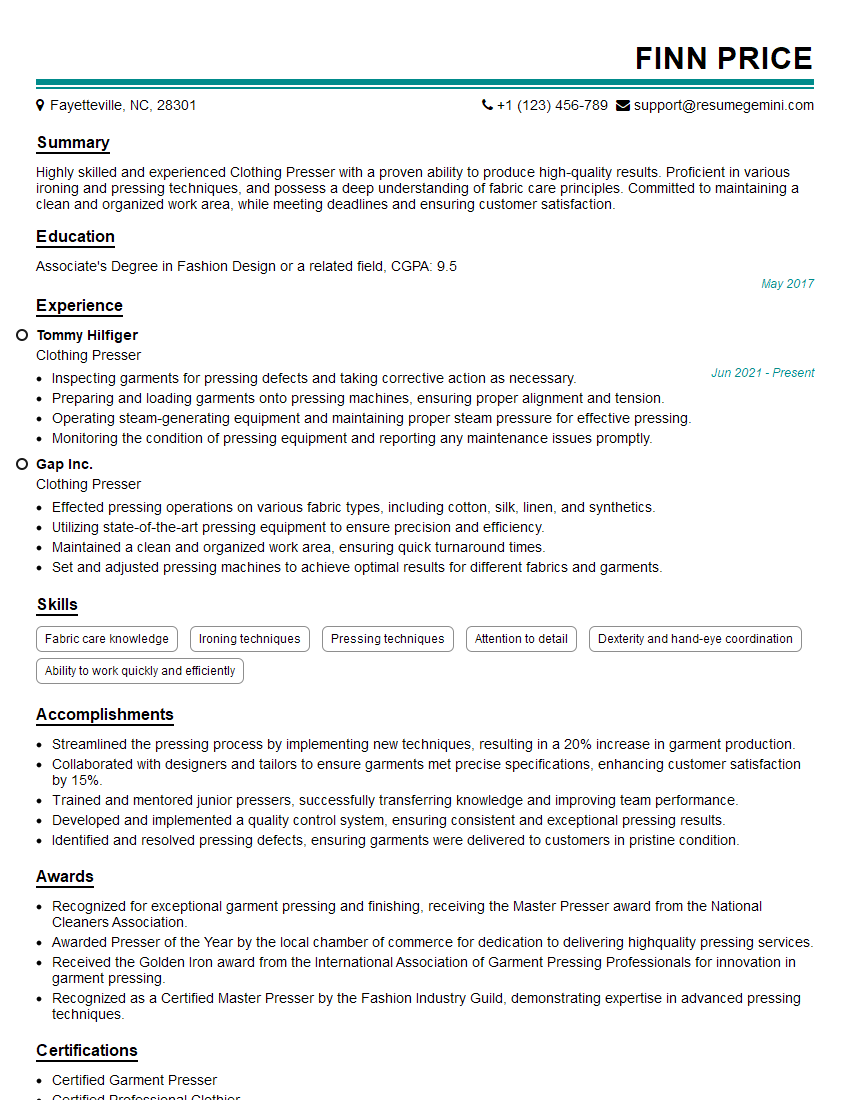
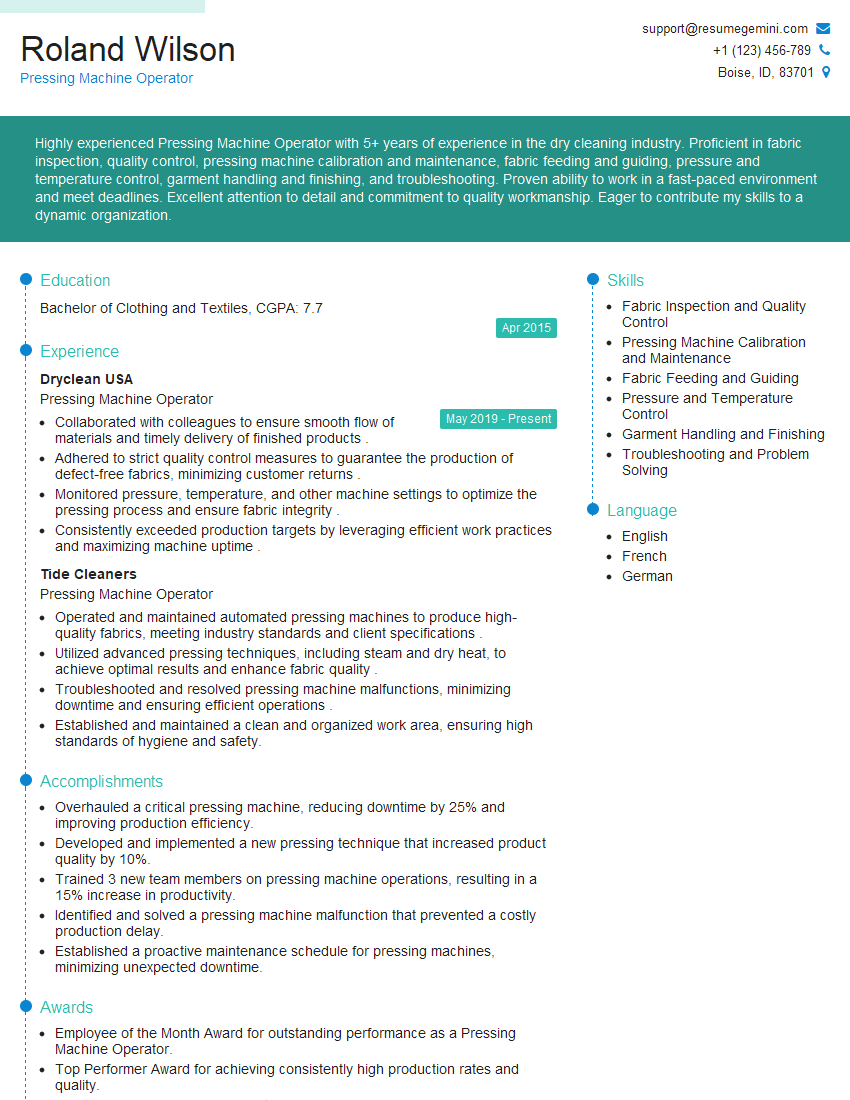
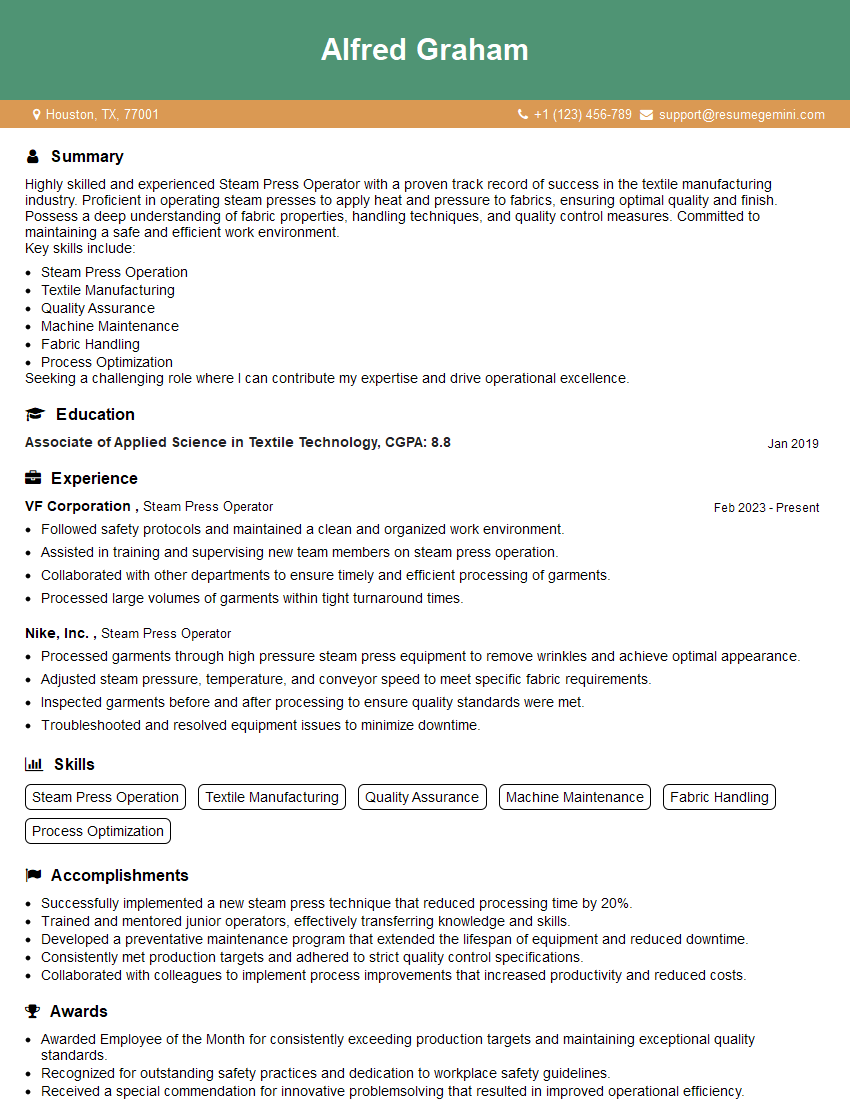
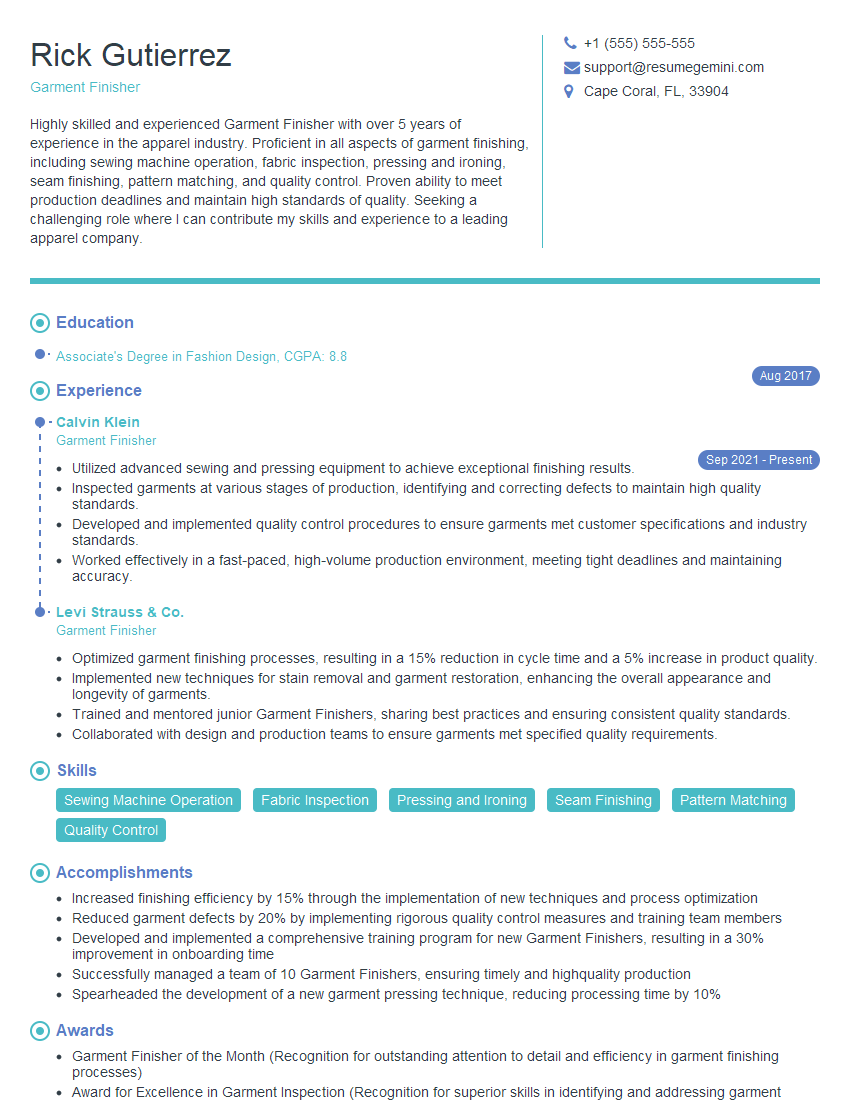
Mastering uniform pressing opens doors to diverse career opportunities within the textile and garment industry, offering potential for advancement and specialization. To maximize your job prospects, it’s crucial to create a professional and ATS-friendly resume that highlights your skills and experience effectively. ResumeGemini is a trusted resource to help you build a compelling resume that showcases your abilities. Examples of resumes tailored to Uniform Pressing are available to guide you through the process.
Explore more articles
Users Rating of Our Blogs
Share Your Experience
We value your feedback! Please rate our content and share your thoughts (optional).
What Readers Say About Our Blog
Very informative content, great job.
good