Unlock your full potential by mastering the most common Use of GPS and Satellite Communication Devices interview questions. This blog offers a deep dive into the critical topics, ensuring you’re not only prepared to answer but to excel. With these insights, you’ll approach your interview with clarity and confidence.
Questions Asked in Use of GPS and Satellite Communication Devices Interview
Q 1. Explain the difference between GPS, GLONASS, Galileo, and BeiDou.
GPS, GLONASS, Galileo, and BeiDou are all Global Navigation Satellite Systems (GNSS) that provide positioning, navigation, and timing (PNT) services worldwide. They differ primarily in their ownership, the number of satellites in their constellations, the frequency bands they use, and their accuracy.
- GPS (United States): Operated by the U.S. Air Force, it’s the oldest and most widely used GNSS, with a constellation of around 30 satellites. It uses L1 and L2 frequencies.
- GLONASS (Russia): The Russian equivalent of GPS, GLONASS also has a constellation of around 24 operational satellites and utilizes different frequency bands than GPS.
- Galileo (European Union): A modern GNSS developed by the European Union, Galileo boasts high accuracy and features like search and rescue capabilities. Its constellation is fully operational with more than 24 satellites.
- BeiDou (China): China’s GNSS, BeiDou, offers global coverage and is rapidly expanding its capabilities and user base. It’s known for its focus on both civilian and military applications.
Think of them like different mobile phone networks – they all provide similar services (communication), but they have different coverage areas, technologies, and providers.
Q 2. Describe the process of GPS signal acquisition and tracking.
GPS signal acquisition and tracking is a multi-step process. First, the receiver searches for signals from visible satellites. It does this by listening for the characteristic signal structure on specific frequencies. Once a satellite signal is detected (acquisition), the receiver then continuously measures the time it takes for the signal to travel from the satellite to the receiver. This time is directly proportional to the distance. This process is called tracking. The receiver uses precise atomic clocks within the satellite and its own (much less precise) clock to compute this time difference.
Imagine you’re trying to locate a friend in a city. You call them, and based on the time it takes for them to answer (signal travel time) and their known location (satellite’s ephemeris data), you can estimate their position.
During tracking, the receiver continually updates its measurements to account for the satellite’s movement and any changes in the signal strength. This allows the receiver to maintain a lock on the satellite signal and refine its position estimate over time.
Q 3. What are the sources of error in GPS measurements, and how can they be mitigated?
Several sources of error can affect GPS measurements. These include:
- Atmospheric Delays: The signal travels through the ionosphere and troposphere, which can delay its arrival time. The ionosphere’s effects are more significant and variable.
- Multipath Errors: Signals can bounce off buildings or other objects before reaching the receiver, leading to inaccurate distance measurements. Imagine an echo distorting your measurement of the signal’s travel time.
- Satellite Clock Errors: While very precise, the atomic clocks in satellites are not perfect. These small errors propagate into positional errors.
- Receiver Noise: The receiver’s electronic components introduce noise, which can affect the accuracy of signal processing.
- Ephemeris and Almanac Errors: Errors in the satellite’s predicted position (ephemeris) or the general information about satellite positions (almanac) can affect positioning accuracy.
Mitigation strategies include using multiple frequencies (like L1 and L2), employing advanced signal processing techniques to filter out noise and multipath, and using models to correct for atmospheric delays. Differential GPS (DGPS) and RTK GPS are also powerful mitigation techniques which are described in later answers.
Q 4. Explain the concept of Differential GPS (DGPS).
Differential GPS (DGPS) improves the accuracy of GPS measurements by using a known, fixed reference station. This reference station receives the same GPS signals as the user’s receiver and compares its calculated position with its known position. The difference (the error) is then broadcast to the user’s receiver, which can correct its own measurements to improve accuracy.
Imagine you’re trying to pinpoint a location using a map. A base station (reference station) with a very precise, already known position, identifies an error in the map (similar to GPS errors). It broadcasts this error correction to your device, effectively helping you refine your location on the map (improve GPS accuracy).
DGPS typically achieves centimeter-level accuracy in comparison to several meters for standard GPS.
Q 5. What is the difference between single-point positioning and differential positioning?
Single-point positioning uses only the signals from GPS satellites to determine a receiver’s position. It’s relatively simple but can be less accurate, typically within several meters.
Differential positioning, on the other hand, uses additional information, such as corrections from a reference station (like in DGPS) or another receiver, to enhance accuracy significantly. This leads to centimeter-level accuracy in many cases.
Think of it like finding a house using just street address (single-point) versus using both the address and a detailed map with specific building highlights (differential positioning). The second method is much more precise.
Q 6. How does Real Time Kinematic (RTK) GPS work?
Real Time Kinematic (RTK) GPS is a highly accurate differential technique that uses carrier-phase measurements. Instead of just measuring the time it takes for the signal to travel, RTK also measures the phase of the carrier wave (a much more precise aspect of the signal). This allows for centimeter-level accuracy. However, it requires a network of reference stations or a base station communicating with the rover receiver in real-time.
RTK is like using a very precise measuring tape to measure the distance to multiple points, instead of just using a general estimate (like with standard GPS). The increased precision comes at the cost of increased complexity in the equipment and setup.
Applications of RTK include precision agriculture, surveying, and construction, where high-accuracy positioning is crucial.
Q 7. Describe various satellite communication systems and their applications.
Satellite communication systems utilize satellites orbiting the Earth to relay signals over long distances. Several systems exist, each with different characteristics and applications:
- Geostationary Satellites (GEO): These orbit at a fixed point above the equator, providing continuous coverage over a wide area. They are commonly used for television broadcasting, internet access (e.g., satellite internet), and communication networks.
- Low Earth Orbit (LEO) Satellites: These satellites orbit closer to Earth, offering lower latency (faster communication speeds) but requiring a larger constellation to provide global coverage. Examples include Starlink and other satellite internet constellations.
- Medium Earth Orbit (MEO) Satellites: These satellites orbit at an altitude between GEO and LEO satellites. They are used in various applications, including navigation systems like GPS and global communication networks.
- Navigation Satellites (GNSS): As discussed previously, these satellites are specifically designed for providing positioning, navigation, and timing services (e.g., GPS, GLONASS, Galileo, BeiDou).
The choice of system depends on the specific application’s needs. For example, GEO satellites are ideal for continuous broadcast coverage, while LEO satellites are better for low-latency applications like real-time data transmission.
Q 8. Explain the concept of satellite constellations and orbit types.
A satellite constellation is a group of artificial satellites working together to provide a specific service, like global positioning or communication. Think of it like a network of interconnected satellites covering the Earth. The type of orbit dictates their functionality and coverage.
Different orbit types include:
- Geostationary Orbit (GEO): Satellites orbit at the same speed as the Earth’s rotation, appearing stationary above a specific point on the equator. This provides continuous coverage for a large area but requires high altitude.
- Low Earth Orbit (LEO): Satellites orbit at relatively low altitudes (up to 2,000 km), providing high-resolution data and reduced signal delay, but requiring more satellites for global coverage because of their limited view of the Earth.
- Medium Earth Orbit (MEO): A compromise between GEO and LEO, offering a blend of coverage and latency. Examples include GPS satellites.
- Polar Orbit: Satellites pass over the Earth’s poles, providing coverage of the entire globe over time. Used for Earth observation missions.
For example, GPS uses a constellation of MEO satellites to provide global positioning, while communication satellites often utilize GEO for continuous coverage of a region.
Q 9. What are the advantages and disadvantages of using geostationary vs. low Earth orbit satellites?
Geostationary and Low Earth Orbit satellites each have advantages and disadvantages:
- Geostationary Orbit (GEO) Advantages: Continuous coverage of a wide area, stable signal, fewer satellites needed for regional coverage.
- GEO Disadvantages: High altitude leading to increased signal delay (latency), weaker signal strength, limited coverage at higher latitudes.
- Low Earth Orbit (LEO) Advantages: Lower latency, stronger signal strength, higher resolution data (for Earth observation), global coverage achievable with a large constellation.
- LEO Disadvantages: Requires a large number of satellites for global coverage, signal interruptions as satellites pass out of view, more complex network management.
Imagine trying to watch TV: A GEO satellite would be like a reliable, always-on channel, but with a slight delay. LEO satellites would be many channels with better quality but needing to switch between them frequently.
Q 10. How does satellite link budget calculation work?
Satellite link budget calculation determines whether a satellite communication link will perform as expected. It involves calculating the power received by a satellite or ground station, accounting for various losses along the signal path. A positive budget ensures sufficient signal strength for reliable communication.
The calculation considers:
- Transmitter Power: Power output from the transmitting antenna.
- Antenna Gain: Focuses the signal, increasing its strength in a specific direction.
- Path Loss: Signal attenuation due to distance and atmospheric effects (rain fade, etc.). This is a significant factor.
- System Losses: Losses in cables, connectors, and other equipment.
- Receiver Noise: Thermal noise and interference affecting signal reception.
- Required Signal-to-Noise Ratio (SNR): Minimum SNR for reliable data transmission. Higher SNR means better quality but often needs more power.
The link budget equation is essentially an energy balance equation, ensuring sufficient received signal power exceeds the noise floor to achieve the required SNR. Specialized software is often used for these complex calculations.
Q 11. Explain the concept of signal propagation in satellite communication.
Signal propagation in satellite communication is the journey of the radio wave from the transmitting antenna to the receiving antenna. It’s affected by various factors:
- Free Space Loss: The signal weakens as it travels through space, inversely proportional to the square of the distance.
- Atmospheric Attenuation: Gases and water vapor in the atmosphere absorb and scatter the signal.
- Rain Fade: Rain drops absorb and scatter radio waves, significantly impacting signal strength, particularly at higher frequencies.
- Ionospheric and Tropospheric Effects: The ionosphere and troposphere can refract and scatter signals, causing variations in signal strength and delay.
- Multipath Propagation: Signals may take multiple paths to the receiver, leading to interference and signal distortion.
Understanding signal propagation is crucial for designing satellite communication systems that account for these losses and ensure reliable performance. For example, techniques like error correction coding and adaptive power control mitigate the effects of signal fading.
Q 12. Describe different types of satellite antennas and their characteristics.
Satellite antennas come in various types, each with specific characteristics:
- Parabolic Antennas (Dish Antennas): Focus the signal efficiently, offering high gain and narrow beamwidth. Common in satellite TV and communication systems.
- Horn Antennas: Simple design, good for broad coverage, but less efficient than parabolic antennas.
- Array Antennas: Multiple antenna elements combined to achieve specific radiation patterns, including beam steering and shaping.
- Helical Antennas: Circularly polarized antennas suitable for satellite applications, often offering wide bandwidth.
The choice of antenna depends on factors like frequency, desired coverage area, gain requirement, and size constraints. For instance, a small, handheld satellite phone might use a low-gain antenna for wider coverage, whereas a large satellite earth station might employ a high-gain parabolic antenna for greater signal strength.
Q 13. What are the challenges associated with satellite communication in remote areas?
Satellite communication in remote areas faces several challenges:
- Terrain Obstructions: Mountains and forests can block the line-of-sight to the satellite, hindering signal reception.
- Atmospheric Conditions: Heavy rainfall, snow, or fog can attenuate the signal significantly.
- Infrastructure Limitations: Power supply, internet connectivity, and skilled technicians may be scarce in remote locations.
- Cost: Satellite equipment and services are often expensive, making it a barrier for some users.
- Regulatory Issues: Obtaining necessary licenses and approvals can be complex in certain regions.
Overcoming these challenges often involves using specialized antennas with high gain or employing advanced signal processing techniques to improve reliability. Reliable power backup is also essential in remote areas with unreliable electricity.
Q 14. How do you troubleshoot connectivity issues in a satellite communication system?
Troubleshooting connectivity issues in a satellite communication system involves a systematic approach:
- Check the Physical Connections: Verify that all cables and connectors are securely connected at both the satellite terminal and the modem.
- Check the Satellite Signal Strength: Use a signal meter to assess the strength and quality of the satellite signal. Low signal levels indicate potential problems like antenna misalignment or atmospheric interference.
- Check the Modem Status: Examine the modem’s status indicators and logs for errors or warnings.
- Check for Equipment Malfunction: Test the components individually to isolate faulty equipment.
- Verify Antenna Alignment: Ensure the satellite antenna is properly aligned with the satellite. This is crucial and often overlooked.
- Check for Obstructions: Identify and remove any obstructions blocking the line-of-sight to the satellite.
- Check Weather Conditions: Severe weather, such as heavy rain, snow, or fog, can significantly impact signal quality.
- Contact Your Service Provider: If the problem persists, contact your satellite service provider for technical support.
A methodical approach, utilizing appropriate tools like signal meters and documentation, is key to efficiently identify and resolve the issue. Remember to document your troubleshooting steps for future reference.
Q 15. Describe the different modulation techniques used in satellite communications.
Satellite communication employs various modulation techniques to efficiently transmit data. The choice depends on factors like bandwidth, power limitations, and the desired level of robustness against noise and interference. Common techniques include:
- Amplitude Shift Keying (ASK): The amplitude of the carrier signal is altered to represent data. Simpler but susceptible to noise.
- Frequency Shift Keying (FSK): The frequency of the carrier signal is changed to represent data. More robust to noise than ASK.
- Phase Shift Keying (PSK): The phase of the carrier signal is shifted to represent data. Higher data rates are possible compared to ASK and FSK, with variations like Binary PSK (BPSK), Quadrature PSK (QPSK), and more advanced versions offering increased spectral efficiency.
- Quadrature Amplitude Modulation (QAM): Combines both amplitude and phase modulation, achieving high spectral efficiency and data rates. Widely used in modern satellite systems.
- Code Division Multiple Access (CDMA): Allows multiple users to share the same frequency band by using unique codes to separate their signals. Offers good resistance to interference.
For instance, a low-power satellite might utilize BPSK for its simplicity and robustness, while a high-bandwidth satellite TV broadcast might use QAM for its efficiency.
Career Expert Tips:
- Ace those interviews! Prepare effectively by reviewing the Top 50 Most Common Interview Questions on ResumeGemini.
- Navigate your job search with confidence! Explore a wide range of Career Tips on ResumeGemini. Learn about common challenges and recommendations to overcome them.
- Craft the perfect resume! Master the Art of Resume Writing with ResumeGemini’s guide. Showcase your unique qualifications and achievements effectively.
- Don’t miss out on holiday savings! Build your dream resume with ResumeGemini’s ATS optimized templates.
Q 16. Explain the concept of error correction codes in satellite communication.
Error correction codes are crucial in satellite communication because signals are vulnerable to noise, interference, and attenuation during transmission through the atmosphere and space. These codes add redundant information to the transmitted data, allowing the receiver to detect and correct errors introduced during transmission. Common techniques include:
- Hamming Codes: Simple, single-bit error correction codes.
- Reed-Solomon Codes: Powerful codes capable of correcting multiple errors, widely used in satellite systems.
- Turbo Codes: High-performance codes achieving near-Shannon-limit performance, offering exceptional error correction capabilities.
- Low-Density Parity-Check (LDPC) Codes: Another class of high-performance codes with excellent performance characteristics.
Think of it like proofreading a document: error correction codes are like adding extra information (redundancy) to ensure that even if some parts get corrupted during transmission, the receiver can still reconstruct the original message accurately. The choice of code depends on the desired level of error correction and the available bandwidth.
Q 17. What is the importance of frequency allocation in satellite communications?
Frequency allocation in satellite communication is vital for managing the limited radio frequency spectrum and preventing interference between different satellite systems and terrestrial services. International organizations like the International Telecommunication Union (ITU) allocate frequency bands to specific satellite operators and services. This allocation ensures:
- Avoidance of Interference: Prevents one satellite’s signal from interfering with another, ensuring reliable communication.
- Efficient Spectrum Use: Maximizes the use of the limited radio frequency spectrum.
- International Coordination: Allows for global coordination of satellite operations to prevent conflicts and promote efficient resource management.
Imagine a busy highway: frequency allocation is like assigning different lanes to different vehicles (satellite systems) to prevent collisions and ensure smooth traffic flow. Incorrect allocation leads to signal interference, resulting in communication failures.
Q 18. Explain the principles of satellite uplink and downlink.
Satellite communication involves an uplink and a downlink. The uplink is the transmission of data from an earth station (e.g., a ground station or a mobile device) to a satellite, while the downlink is the transmission of data from the satellite back to an earth station.
Uplink: A high-power transmitter at the earth station sends the signal to the satellite. This involves careful consideration of signal strength, antenna design, and frequency selection to ensure the signal reaches the satellite despite the significant distance. The satellite receives this signal via its onboard receiver.
Downlink: The satellite’s transponder receives, amplifies, and re-transmits the signal to the earth station. This is often at a different frequency than the uplink to prevent interference. The earth station’s receiver then decodes and processes the received signal. The power of the downlink signal is often weaker than the uplink because the satellite’s transmitter has lower power.
Think of it as a conversation: you (earth station) speak to the satellite (uplink) and the satellite replies back to you (downlink).
Q 19. What are the security considerations for satellite communication systems?
Security is paramount in satellite communication, as signals are transmitted over long distances and are potentially vulnerable to interception and manipulation. Key security considerations include:
- Data Encryption: Protecting data from unauthorized access using encryption algorithms.
- Authentication: Verifying the identity of the communicating parties to prevent spoofing and impersonation.
- Integrity: Ensuring data hasn’t been altered during transmission.
- Availability: Maintaining the continuous availability of the communication system.
- Physical Security: Protecting ground stations and satellite infrastructure from physical threats.
- Jamming and Interference: Implementing measures to mitigate deliberate interference with satellite signals.
A breach in satellite communication security could have severe consequences, from unauthorized access to sensitive data to disruption of critical infrastructure. Robust security measures are essential to maintaining the confidentiality, integrity, and availability of satellite communications.
Q 20. How does data encryption and decryption work in satellite communications?
Data encryption and decryption in satellite communications use cryptographic algorithms to protect data confidentiality. The process typically involves:
Encryption: The sender uses a cryptographic key to transform the plaintext message into an unreadable ciphertext. This ciphertext is then transmitted through the satellite link. Advanced Encryption Standard (AES) and other symmetric encryption algorithms are commonly used.
Decryption: The intended receiver uses the same or a related key to transform the ciphertext back into the original plaintext message. Only the authorized recipient with the correct key can decrypt the message.
For example, AES-256, a highly secure encryption standard, could be used to encrypt data before transmission, ensuring that only the recipient with the correct 256-bit key can decrypt and read the information. The key exchange process itself requires careful consideration to prevent interception or compromise. Public key cryptography methods like RSA are often employed for secure key exchange.
Q 21. Describe your experience with GIS software and its applications in GPS data analysis.
I have extensive experience with GIS software, primarily ArcGIS and QGIS, and their application in analyzing GPS data. My work has involved:
- GPS Data Preprocessing: Cleaning and correcting GPS data for errors, such as outliers and inconsistencies.
- Spatial Analysis: Performing spatial analysis techniques like buffering, overlay analysis, and proximity analysis on GPS tracks to understand spatial patterns and relationships.
- Trajectory Analysis: Analyzing movement patterns from GPS data to derive insights on speed, direction, and stops.
- Data Visualization: Creating maps and visualizations to effectively communicate findings derived from GPS data analysis.
- Integration with other Data: Combining GPS data with other geospatial data (e.g., elevation data, land use data) to gain a more comprehensive understanding of the environment and phenomena being studied.
For example, I used ArcGIS to analyze GPS data collected from wildlife tracking collars to understand their movement patterns in relation to habitat features. This involved cleaning and processing the raw GPS data, performing spatial analysis to identify areas of high habitat use, and creating maps to visualize these findings. The results were crucial in informing conservation efforts.
Q 22. Explain how you would use GPS data to create a map.
Creating a map from GPS data involves transforming raw GPS coordinates (latitude and longitude) into a visual representation. This process typically begins with importing the GPS data – often a series of points representing a track or a collection of points representing locations – into a Geographic Information System (GIS) software or a mapping application.
The software then uses these coordinates to plot points on a map. The accuracy of the map depends on the accuracy and density of the GPS data. For instance, if you have GPS data points recorded every second during a hike, the resulting track will be highly detailed. However, if you only have a few data points marking locations of interest, you’ll get a simpler map showing only those points. Many GIS software packages allow you to enhance the map by adding layers (e.g., roads, elevation data), symbols, and labels to improve readability and provide contextual information.
For example, imagine tracking your daily commute via GPS. The raw data would be a series of latitude and longitude coordinates collected over time. Importing this data into Google Maps or a similar platform would create a visual representation of your route, complete with the start and end points. Further enhancements could include overlaying street names and traffic information to enrich the map’s value.
Q 23. What are the different map projections and their applications?
Map projections are mathematical transformations that flatten the three-dimensional Earth’s surface onto a two-dimensional map. This inevitably causes distortions in area, shape, distance, or direction. The choice of projection depends on the intended use.
- Mercator Projection: Preserves shape and direction at the expense of area distortion. It’s commonly used for navigation because straight lines represent constant compass bearings. However, areas near the poles are drastically exaggerated.
- Lambert Conformal Conic Projection: Minimizes distortion within a specific zone, making it suitable for mapping relatively small areas with high accuracy. It’s often used for aeronautical charts.
- Albers Equal-Area Conic Projection: Preserves area accurately but distorts shapes, particularly near the edges. It’s a good choice for displaying data where the area is important, like population density maps.
- WGS 84 (World Geodetic System 1984): This is a coordinate system, not a projection per se, but it’s the foundation for many GPS applications. It’s an Earth-centered, Earth-fixed (ECEF) coordinate system often used as an intermediate step before projecting onto a 2D map.
For example, a Mercator projection is ideal for nautical navigation because it allows sailors to plot courses using a straight line. However, it would be unsuitable for mapping the Arctic, where areas would be grossly inflated.
Q 24. How do you interpret and analyze geospatial data?
Interpreting and analyzing geospatial data involves understanding the spatial relationships between features and attributes. This begins with data exploration to identify patterns, outliers, and relationships. Tools like GIS software are essential. Analysis techniques include:
- Spatial Query: Identifying features that meet specific criteria, such as finding all buildings within a certain distance of a river.
- Spatial Overlay: Combining multiple layers of spatial data to find overlaps or relationships (e.g., overlaying land use data with pollution levels).
- Spatial Statistics: Applying statistical methods to geospatial data to quantify patterns (e.g., calculating the average house price within a specific area).
- Geostatistics: Analyzing spatially autocorrelated data, considering the spatial relationship between observations (e.g., interpolating rainfall data from scattered weather stations).
For example, to analyze the spread of a disease, one might overlay a map of reported cases with data on population density, proximity to water sources, and land use patterns to identify potential hotspots and contributing factors. The analysis could involve spatial statistics to measure the spatial clustering of disease incidence.
Q 25. Describe your experience with GPS data processing and post-processing techniques.
My experience encompasses both pre-processing and post-processing of GPS data. Pre-processing involves cleaning and preparing the raw GPS data for analysis. This includes handling errors like outliers, smoothing noisy data, and converting coordinate systems. I’m proficient in using software packages like ArcGIS and QGIS to perform these tasks. For example, I’ve employed various filtering techniques to remove spurious GPS points caused by signal interruptions or multipath effects.
Post-processing involves improving the accuracy of GPS data using additional information, such as base station data (Differential GPS) or precise ephemeris data (Precise Point Positioning). I have extensive experience in using post-processing software to correct systematic errors and achieve centimeter-level accuracy. In one project, I used RTK-GPS data, which utilizes real-time corrections from a base station, to map an archaeological site with exceptional precision.
Q 26. Explain your understanding of various coordinate systems used in GPS.
GPS uses several coordinate systems, each with its advantages and disadvantages. The most common ones are:
- Geographic Coordinate System (GCS): Uses latitude and longitude to define points on the Earth’s surface. Latitude measures north-south position, while longitude measures east-west position. This is a common way to display GPS data on maps.
- Projected Coordinate System (PCS): Transforms the spherical Earth’s surface into a planar (flat) surface, resulting in a two-dimensional representation. Different map projections (as discussed earlier) lead to different PCS. These are used for calculations and analysis where distances and areas need to be measured directly.
- UTM (Universal Transverse Mercator): A specific type of PCS that divides the Earth into 60 zones, each projected using a transverse Mercator projection. This minimizes distortion within each zone, making it suitable for large-scale mapping.
- ECEF (Earth-Centered, Earth-Fixed): A three-dimensional Cartesian coordinate system with its origin at the Earth’s center. This is commonly used for satellite positioning and geodetic computations.
Understanding these systems is crucial for data interoperability. For example, GPS receivers might initially output data in ECEF coordinates, but for visualization on a map, these coordinates need to be converted to latitude and longitude (GCS) or a projected coordinate system appropriate for the map’s region.
Q 27. How would you handle GPS signal blockage or interference?
GPS signal blockage and interference are common challenges. Strategies for handling them depend on the severity and cause.
- Signal Blockage (e.g., by buildings, trees): If blockage is temporary, one can try to move to a location with better signal reception. For persistent blockage, techniques like signal averaging or interpolation can be used to fill gaps in the data. In urban canyons, specialized GPS receivers with multipath mitigation algorithms are employed.
- Interference (e.g., from other electronic devices): Identifying and mitigating sources of interference is essential. Shielding GPS receivers, using specialized antennas, or choosing frequencies less prone to interference are some solutions. Post-processing techniques can help remove some effects of interference. For instance, using carrier-phase measurements in RTK-GPS provides better resistance to multipath.
In a real-world example, when surveying in a dense forest, I’ve used a combination of techniques – moving to more open areas for data collection and then employing interpolation to fill gaps in the data during post-processing to create a continuous track.
Q 28. What are some ethical considerations related to using GPS and satellite communication technology?
Ethical considerations regarding GPS and satellite communication are paramount. Key concerns include:
- Privacy: GPS tracking can infringe on personal privacy, particularly when used without informed consent. This is a major concern in surveillance applications.
- Security: GPS signals can be spoofed or jammed, leading to inaccurate positioning or complete denial of service. This poses risks in critical applications like navigation and transportation.
- Data Security and Ownership: Data collected using GPS devices must be handled securely and in accordance with relevant data protection regulations. The ownership and usage rights of geospatial data need to be clearly defined.
- Environmental Impact: The increasing reliance on satellite-based technologies contributes to space debris and energy consumption.
For instance, before deploying GPS tracking devices for fleet management, it’s crucial to inform employees and obtain their consent. Furthermore, robust security measures should be implemented to protect against potential spoofing attacks.
Key Topics to Learn for Use of GPS and Satellite Communication Devices Interview
- GPS Fundamentals: Understanding GPS signal acquisition, triangulation, and error sources (e.g., atmospheric effects, multipath).
- Satellite Communication Principles: Familiarize yourself with satellite orbits (GEO, LEO, MEO), link budgets, and different modulation techniques.
- Practical Applications: Explore real-world uses such as navigation, tracking assets (vehicles, people, etc.), surveying, and emergency response.
- Data Processing and Interpretation: Learn how to process GPS and satellite communication data, interpret coordinates, and identify potential inaccuracies.
- System Integration: Understand how GPS and satellite communication systems integrate with other technologies (e.g., GIS, IoT).
- Troubleshooting and Problem Solving: Develop skills in diagnosing and resolving common issues related to signal loss, accuracy degradation, and equipment malfunctions.
- Safety and Regulations: Be aware of safety procedures and relevant regulations surrounding the operation of these devices.
- Emerging Technologies: Research advancements like GNSS augmentation systems, satellite constellations, and new applications.
Next Steps
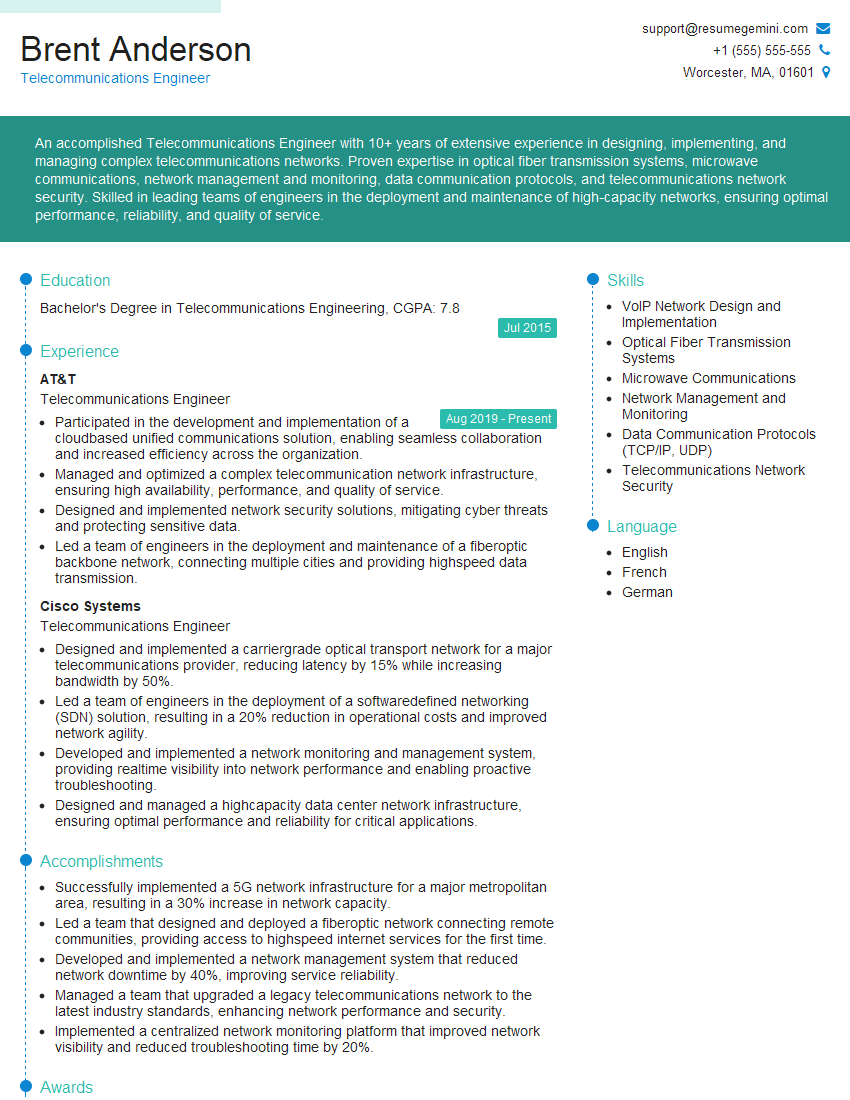
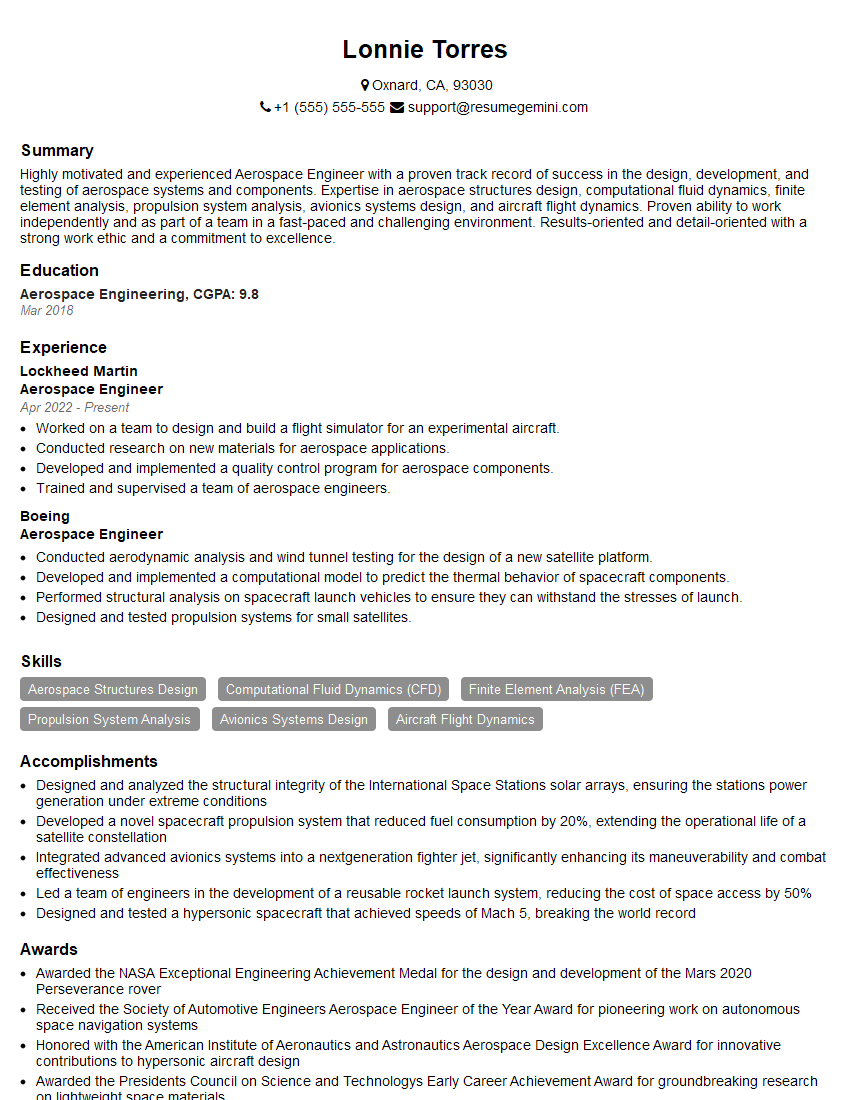
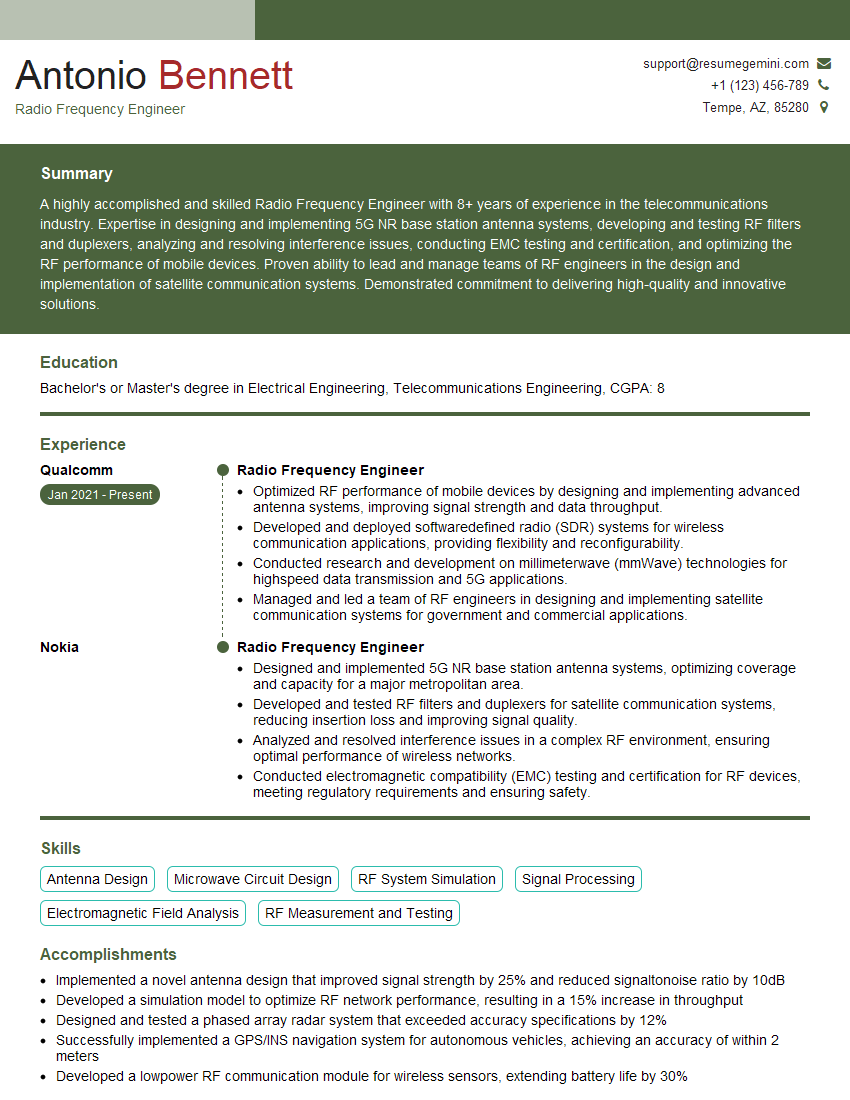
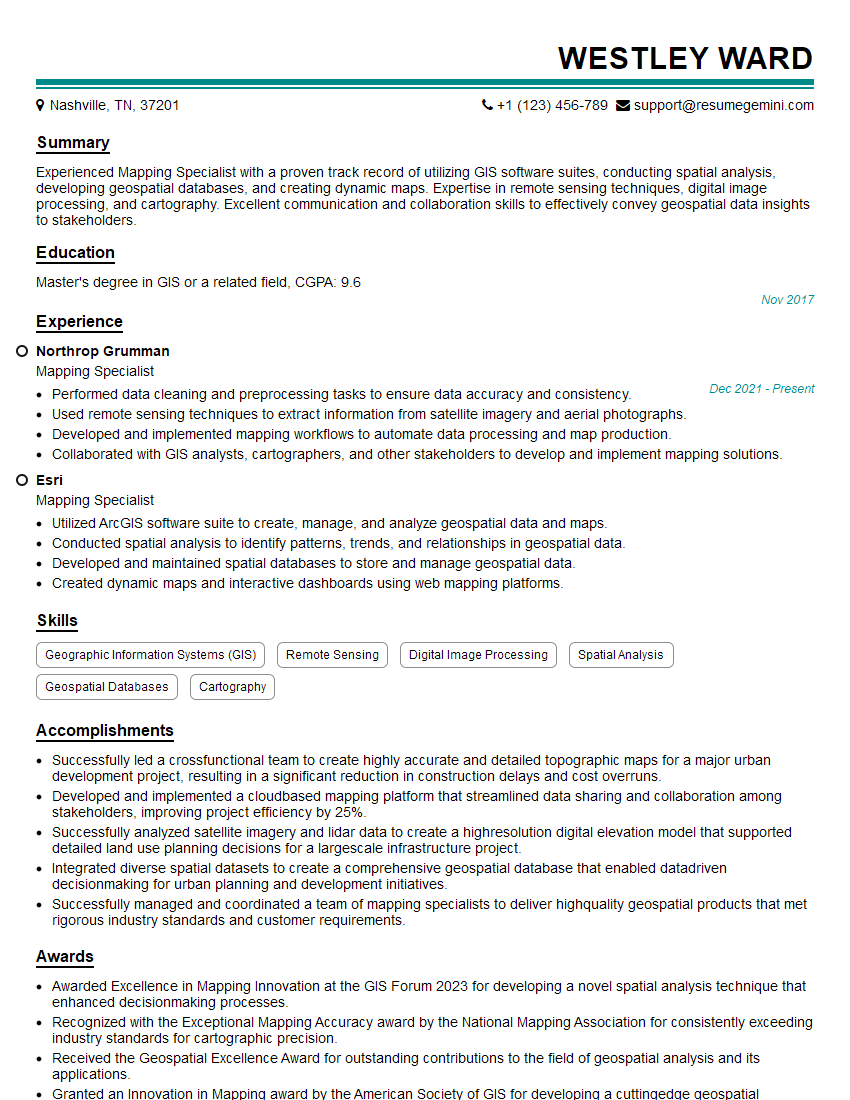
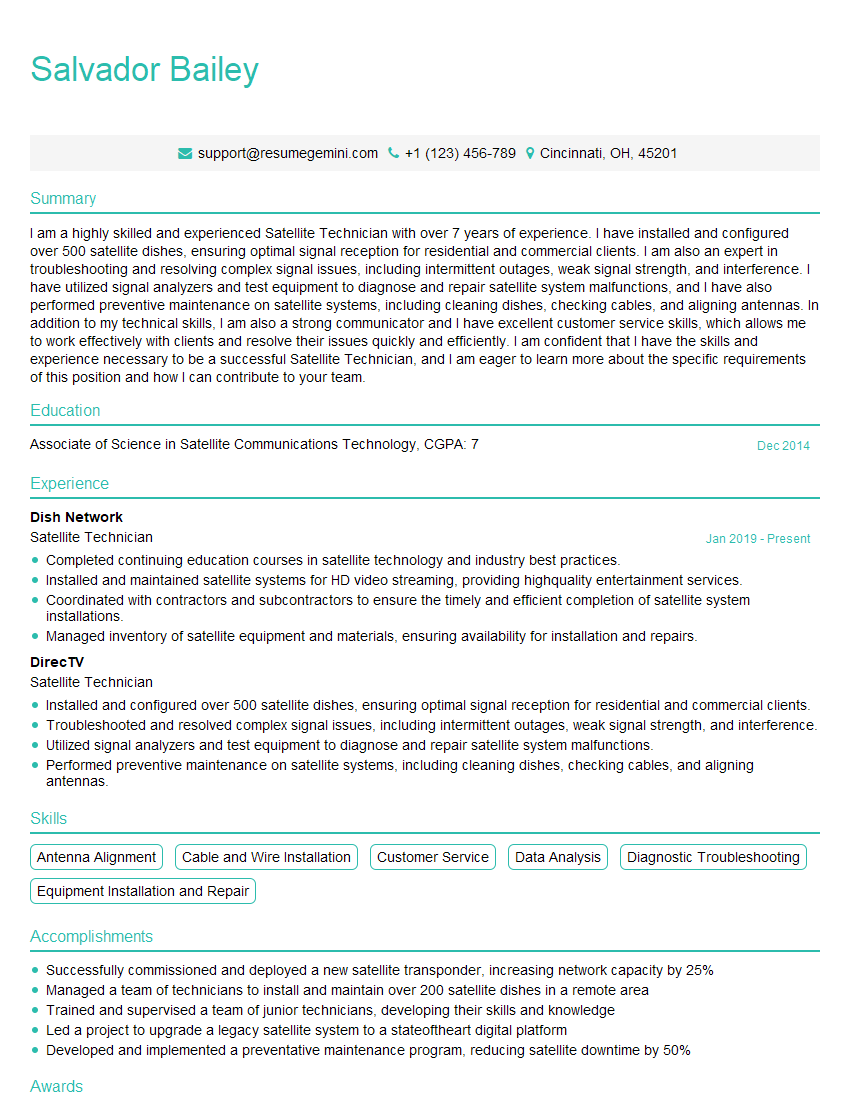
Mastering the use of GPS and satellite communication devices opens doors to exciting career opportunities in various sectors, including transportation, logistics, surveying, and emergency services. A strong understanding of these technologies significantly enhances your employability and allows you to contribute effectively to innovative projects. To maximize your job prospects, it’s crucial to present your skills and experience clearly and effectively through an ATS-friendly resume. ResumeGemini is a trusted resource to help you build a professional and impactful resume that highlights your expertise. We provide examples of resumes tailored to the Use of GPS and Satellite Communication Devices field to guide you in creating a compelling application.


Explore more articles
Users Rating of Our Blogs
Share Your Experience
We value your feedback! Please rate our content and share your thoughts (optional).
What Readers Say About Our Blog
Very informative content, great job.
good