Cracking a skill-specific interview, like one for Valet Parking Management, requires understanding the nuances of the role. In this blog, we present the questions you’re most likely to encounter, along with insights into how to answer them effectively. Let’s ensure you’re ready to make a strong impression.
Questions Asked in Valet Parking Management Interview
Q 1. Describe your experience managing a valet parking team.
Managing a valet parking team requires a blend of operational efficiency, customer service excellence, and team leadership. My experience encompasses overseeing teams ranging from 5 to 20 attendants, depending on the venue and event. This involves everything from scheduling and training to performance monitoring and conflict resolution. I’ve successfully implemented systems to optimize workflow, reduce wait times, and improve overall customer satisfaction. For example, at a previous high-end hotel, I streamlined the ticketing system, resulting in a 15% reduction in processing time during peak hours. This was achieved by implementing a color-coded system for tickets that allowed attendants to prioritize based on urgency and vehicle type.
Beyond the day-to-day operations, I focus on fostering a positive and productive team environment. This involves regular team meetings, performance feedback, and opportunities for professional development. I believe in empowering my team, giving them the autonomy to make decisions, and providing support when needed. This leads to increased morale and a more engaged workforce, ultimately translating to better service for our clients.
Q 2. How do you handle high-volume situations during peak hours?
Handling high-volume situations during peak hours demands proactive planning and efficient execution. My strategy revolves around preemptive measures and adaptable on-the-ground adjustments. Before peak periods, I ensure adequate staffing, confirm all equipment (like ticket printers and two-way radios) is functioning correctly, and review parking lot layout for optimal vehicle flow. This might involve designating specific areas for different vehicle types or implementing a queue management system to minimize congestion. During peak hours, real-time communication with the team is crucial. I use two-way radios to coordinate vehicle movement, assign attendants to specific tasks (like retrieving vehicles or managing the ticket counter), and address any immediate issues. If necessary, I’ll implement a ‘traffic control’ system, guiding drivers through the lot to prevent bottlenecks.
Furthermore, I regularly monitor real-time data on vehicle arrival and departure rates to anticipate potential surges and adjust staffing levels accordingly. Think of it like air traffic control – constant monitoring and adjustments to maintain a smooth operation.
Q 3. What strategies do you employ to ensure efficient vehicle retrieval?
Efficient vehicle retrieval hinges on a well-organized system and meticulous record-keeping. My approach starts with a clear and concise ticketing system. Each ticket includes crucial information like the vehicle’s make, model, color, and license plate number, along with the time of arrival and the attendant’s initials. We use a designated system for storing tickets (either physically or digitally), often organized by parking zone or retrieval time. This allows for quick identification and location of the vehicle. When retrieving vehicles, attendants are instructed to double-check the ticket information against the car before handing it over to the customer. This step is essential to prevent mix-ups and potential errors.
Furthermore, I regularly review the efficiency of our retrieval process, identifying potential bottlenecks or areas for improvement. This might involve optimizing the parking lot layout, adjusting staffing assignments, or implementing new technologies, such as digital vehicle tracking systems. I view this as a continuous improvement process aiming for minimal retrieval times and maximum customer satisfaction.
Q 4. Explain your process for training new valet attendants.
Training new valet attendants is a multi-phased process that combines classroom instruction, hands-on experience, and ongoing mentorship. The initial training covers company policies, safety procedures, customer service protocols, and proper vehicle handling techniques. I emphasize the importance of safety, both for themselves and the vehicles under their care, including demonstrating proper driving techniques and emphasizing careful inspection of vehicles before and after parking.
Hands-on training involves shadowing experienced attendants, gradually taking on more responsibilities. I provide continuous feedback and coaching, addressing any mistakes or areas for improvement. This includes role-playing scenarios involving difficult customers or challenging situations. Once they’ve demonstrated competence, they’re gradually given more independent responsibilities. Ongoing training and refresher courses are essential to maintaining skill levels and ensuring compliance with updated policies or safety procedures. Regular performance reviews and open communication create a supportive environment for growth and development.
Q 5. How do you maintain the safety and security of parked vehicles?
Maintaining the safety and security of parked vehicles is paramount. My strategies employ a multi-layered approach, starting with secure parking lot design. This involves adequate lighting, clear signage, and potentially security cameras covering all key areas. Attendants are thoroughly trained on vehicle inspection procedures, checking for pre-existing damage before parking and documenting it on the ticket. Regular patrols of the parking lot are conducted to ensure no unauthorized access or suspicious activity.
We also employ a strict key control system, with keys kept in a secure location and only accessed by authorized personnel. In some cases, we use valet key systems that provide a secure and traceable method of managing vehicle keys. Regular maintenance checks on the parking lot (looking for potential hazards) and security systems are crucial to preventative maintenance. Furthermore, I ensure all attendants are aware of emergency procedures and have access to communication devices in case of incidents. This commitment to safety and security builds customer trust and safeguards the assets entrusted to our care.
Q 6. What key performance indicators (KPIs) do you track in valet parking?
Tracking key performance indicators (KPIs) is crucial for monitoring performance and identifying areas for improvement. The KPIs I typically track include:
- Average vehicle turnaround time: This measures the efficiency of our parking and retrieval process.
- Customer satisfaction rating: Gathered through surveys or feedback forms, this reflects the overall customer experience.
- Attendant performance metrics: This tracks individual attendant performance based on speed, accuracy, and customer feedback.
- Vehicle damage incidents: This helps to identify patterns and implement preventative measures.
- Lost and found items: Tracking this metric helps ensure a smooth process for returning lost items and reduces liability.
- Staff turnover rate: A higher rate might indicate issues with management, pay or working conditions that need to be addressed.
Analyzing these KPIs allows us to identify bottlenecks, assess staff performance, and make data-driven decisions to optimize our operations and improve customer satisfaction.
Q 7. How do you manage customer complaints or concerns?
Managing customer complaints or concerns requires a proactive and empathetic approach. My process begins with actively listening to the customer’s complaint, showing empathy and understanding their perspective. I avoid becoming defensive and focus on finding a resolution. Depending on the nature of the complaint (e.g., damaged vehicle, long wait times, lost items), I take appropriate action, which might involve apologizing sincerely, offering compensation (such as a discount on future services), or investigating the issue thoroughly.
For instance, if a customer complains about a damaged vehicle, I’ll initiate an investigation, reviewing security footage and attendant records. If damage is confirmed, I’ll work with insurance to resolve the claim. All complaints are documented, allowing us to identify recurring issues and make improvements to prevent future occurrences. The goal is to turn a negative experience into a positive one, enhancing customer loyalty and improving the company’s reputation.
Q 8. Describe your experience with valet parking software or systems.
My experience with valet parking software spans several systems, from simple, ticket-based systems to sophisticated cloud-based solutions. I’ve worked with systems that manage everything from vehicle registration and key tracking to staff scheduling and customer billing. For example, I implemented a system at a high-end hotel that integrated with their property management system, allowing for seamless guest check-in and billing. This system improved efficiency drastically, reducing wait times and minimizing errors. Another system I used employed a barcode scanner for tickets, dramatically reducing manual data entry and enhancing accuracy in vehicle retrieval. I’m proficient in evaluating different systems based on their features, scalability, and integration capabilities, choosing the most effective solution for each specific business need.
My experience also includes troubleshooting system malfunctions, training staff on proper software usage, and generating reports for performance analysis and revenue tracking. I’m adept at understanding the technical aspects and translating technical information to non-technical staff, making training efficient and understandable.
Q 9. What are your strategies for optimizing valet parking operations?
Optimizing valet parking operations requires a multifaceted approach. My strategies focus on efficiency, customer satisfaction, and safety. This begins with intelligent staff scheduling, ensuring adequate coverage during peak hours and minimizing downtime. We use real-time data analysis to predict fluctuations in demand and adjust staffing accordingly.
- Efficient Vehicle Flow: We optimize the parking lot layout to ensure quick and easy access and retrieval of vehicles. Strategic placement of parking attendants helps to manage the flow of vehicles seamlessly.
- Technology Integration: Utilizing valet parking software, as mentioned earlier, is key to tracking vehicles, managing tickets, and generating reports. This allows us to identify bottlenecks and areas for improvement.
- Team Training and Communication: Regular training on best practices and clear communication protocols are essential for a smooth operation. This includes standardized procedures for vehicle handling, guest interactions, and incident reporting.
- Customer Service Excellence: Prioritizing friendly and prompt service enhances the customer experience. We train our staff to be courteous, efficient, and knowledgeable about the facility and surrounding areas.
For example, by implementing a new queuing system and optimizing the vehicle retrieval process at a previous location, we reduced average wait times by 20% and improved customer satisfaction scores significantly.
Q 10. How do you handle lost keys or vehicle damage incidents?
Lost keys and vehicle damage are serious incidents that demand immediate and effective responses. Our procedures prioritize the safety and security of both the vehicle and the customer.
- Lost Keys: We have a detailed protocol that begins with immediate reporting of the incident. We then work with the customer to establish ownership and explore options for retrieving a replacement key, often working directly with locksmiths or dealerships. We maintain detailed records of the incident and communicate transparently with the customer throughout the process.
- Vehicle Damage: Any damage, however minor, is documented meticulously with photographs and witness statements. We immediately report the damage to the customer and initiate a damage claim process that often involves our insurance provider. Transparency and clear communication are vital to maintain positive relations with the customer.
We also conduct regular risk assessments and staff training to minimize the likelihood of such incidents. For example, we implement strict protocols for handling vehicle keys, emphasizing the importance of secure storage and proper documentation. We also equip staff with the skills to handle minor incidents and prioritize customer care.
Q 11. What is your experience with inventory management of valet parking tickets?
Inventory management of valet parking tickets is crucial for ensuring accurate record-keeping and preventing losses. We utilize several strategies to maintain a precise inventory.
- Sequential Numbering: All tickets are sequentially numbered to facilitate tracking and prevent duplicates. This allows us to easily identify missing tickets and investigate potential issues.
- Regular Counts: We conduct regular physical counts of tickets on hand to compare against the number of tickets issued. Any discrepancies are investigated immediately.
- Software Integration: Ideally, the valet parking software tracks ticket issuance and return, providing real-time inventory data. This allows us to monitor ticket usage and identify potential problems proactively.
- Secure Storage: Tickets are stored securely in designated areas, preventing loss or theft. Access to ticket inventory is restricted to authorized personnel.
We’ve implemented a system using a barcode scanner that automatically updates our inventory software, reducing manual data entry and human error, leading to a far more accurate inventory count and minimizing ticket loss.
Q 12. How do you maintain a positive and professional team environment?
Maintaining a positive and professional team environment is paramount to successful valet operations. I believe in fostering a culture of respect, teamwork, and accountability.
- Open Communication: I encourage open and honest communication between team members and management. Regular team meetings provide a forum for feedback, concerns, and suggestions.
- Recognition and Rewards: I recognize and reward exceptional performance and teamwork. This could involve public acknowledgment, bonuses, or opportunities for advancement.
- Team Building Activities: Organizing team-building activities helps to foster camaraderie and improve teamwork. These activities can be as simple as informal gatherings or more structured events.
- Fair and Consistent Treatment: I ensure fair and consistent treatment of all team members, regardless of their seniority or background. This creates a sense of fairness and equity.
One example of this is creating a ‘Valet of the Month’ award, recognizing outstanding customer service and teamwork. This simple gesture significantly improves morale and boosts team spirit.
Q 13. Describe your experience with scheduling and shift management for valet staff.
Scheduling and shift management for valet staff require careful planning and consideration of peak hours, staff availability, and legal requirements. I use a combination of strategies to ensure optimal staffing levels.
- Forecasting Demand: We analyze historical data and consider upcoming events to forecast demand and adjust staffing accordingly. This might involve increased staffing during peak seasons or special events.
- Staff Scheduling Software: Utilizing specialized scheduling software helps to optimize staffing levels while considering employee availability and preferences. This ensures fair distribution of shifts and minimizes conflicts.
- Flexible Scheduling: Offering flexible scheduling options, where possible, enhances employee morale and improves retention. This might include options for part-time work or shift swapping.
- Compliance with Labor Laws: All scheduling practices must comply with local labor laws, ensuring fair wages and appropriate rest periods.
We’ve had success with a software that predicts peak demand with a high degree of accuracy, allowing us to proactively schedule staff, leading to better customer service and reduced overtime costs.
Q 14. What is your approach to resolving conflict among team members?
Resolving conflict among team members requires a fair, impartial, and timely approach. My approach emphasizes open communication and finding mutually acceptable solutions.
- Private Discussions: I address conflicts privately, allowing individuals to express their concerns without feeling pressured or embarrassed.
- Active Listening: I actively listen to all parties involved, ensuring each person feels heard and understood.
- Mediation: I act as a mediator, facilitating a discussion that helps the parties find a mutually acceptable solution. This involves identifying the root causes of the conflict and guiding them to a resolution.
- Fair and Consistent Enforcement: If the conflict involves a violation of company policy, I enforce the rules fairly and consistently. This ensures everyone understands expectations and contributes to a positive work environment.
For example, a conflict between two valets over a vehicle assignment was resolved through a private discussion where we clarified communication protocols and expectations, leading to a far more harmonious work environment.
Q 15. How do you ensure compliance with all relevant safety regulations?
Ensuring safety compliance in valet parking is paramount. It’s not just about avoiding accidents; it’s about fostering a culture of safety that protects both our staff and our clients’ vehicles. We achieve this through a multi-pronged approach:
- Regular Training: All valet attendants undergo comprehensive training on safe driving practices, vehicle handling, and emergency procedures. This includes defensive driving techniques, proper vehicle inspection before and after parking, and knowledge of fire safety protocols. We regularly conduct refresher courses to reinforce these vital skills and adapt to any changes in regulations.
- Background Checks and Drug Testing: We meticulously screen all potential employees, performing thorough background checks and drug tests to ensure we have a trustworthy and responsible team. This is a critical step in mitigating risk.
- Vehicle Inspection Procedures: A standardized vehicle inspection process is followed before and after each valet service. This includes noting any pre-existing damage and meticulously documenting any new damage, which reduces the likelihood of disputes and demonstrates our commitment to vehicle safety. We utilize a digital system to track inspections and ensure no step is skipped.
- Compliance with Local Regulations: We stay abreast of all local, state, and potentially federal regulations regarding valet parking, vehicle safety, and employee safety. This includes licensing, insurance requirements, and any specific rules related to our operating locations. We regularly review these regulations and adjust our practices accordingly.
- Emergency Preparedness: We have comprehensive emergency protocols in place, including procedures for fire, accidents, and medical emergencies. This involves regular drills and clear communication channels to ensure a swift and organized response to any unforeseen event.
For instance, one time a sudden downpour caused flooding in our parking area. Our pre-established emergency procedures ensured the safe evacuation of both staff and clients’ vehicles with minimal disruption.
Career Expert Tips:
- Ace those interviews! Prepare effectively by reviewing the Top 50 Most Common Interview Questions on ResumeGemini.
- Navigate your job search with confidence! Explore a wide range of Career Tips on ResumeGemini. Learn about common challenges and recommendations to overcome them.
- Craft the perfect resume! Master the Art of Resume Writing with ResumeGemini’s guide. Showcase your unique qualifications and achievements effectively.
- Don’t miss out on holiday savings! Build your dream resume with ResumeGemini’s ATS optimized templates.
Q 16. Explain your experience with budgeting and cost control in a valet operation.
Budgeting and cost control are essential for a profitable valet operation. My experience involves a multi-faceted approach:
- Detailed Budgeting: I start with a comprehensive budget that incorporates all anticipated expenses, including labor costs (wages, benefits, training), insurance, vehicle maintenance and repair, supplies (tickets, uniforms), and rent or lease payments for the valet area. I also forecast revenue based on historical data, projected volume, and market trends.
- Cost Tracking and Analysis: I use sophisticated software and spreadsheets to track all revenue and expenses meticulously. This allows for regular analysis of performance against the budget, identifying areas of potential cost savings or revenue enhancement. For example, analyzing fuel consumption allows for optimizing driving routes and reducing unnecessary idling.
- Staffing Optimization: Efficient staffing is crucial. I carefully schedule staff based on predicted demand, ensuring appropriate coverage during peak and off-peak hours. This avoids overstaffing, reducing unnecessary labor costs, while maintaining adequate service levels.
- Vendor Negotiation: I negotiate favorable rates with vendors for supplies, insurance, and maintenance services. This requires careful research, comparing offers, and negotiating contracts to secure the best possible pricing.
- Inventory Management: Efficient management of tickets, uniforms, and other supplies minimizes waste and reduces costs. We use a system to track inventory and automatically reorder when levels drop below a pre-determined threshold.
In my previous role, I implemented a new system for tracking fuel consumption, resulting in a 15% reduction in fuel costs within six months.
Q 17. How do you handle challenging or difficult customers?
Handling difficult customers requires a calm, professional, and empathetic approach. My strategy is based on:
- Active Listening: I begin by actively listening to the customer’s concerns without interrupting. This allows me to fully understand their perspective and identify the root of their dissatisfaction.
- Empathy and Apology: Even if the customer is wrong, I express empathy and sincerely apologize for any inconvenience or frustration they may be experiencing. This de-escalates the situation quickly.
- Problem-Solving: I focus on finding a solution to the problem. This may involve offering a discount, issuing a complimentary service, or finding an alternative solution that meets their needs.
- Clear Communication: I communicate clearly and concisely, ensuring that the customer understands the steps being taken to address their concerns. I avoid using jargon and keep my language simple and easy to understand.
- Escalation Procedures: If the situation is beyond my ability to resolve, I follow established escalation procedures, involving a supervisor or manager as needed.
For example, I once had a customer who was extremely upset about a minor scratch on their vehicle. While the damage was not our fault, I apologized for their frustration, offered a free car wash, and carefully documented the incident to avoid any future disputes. This calmed the customer down, and he left feeling satisfied.
Q 18. What is your approach to improving customer satisfaction in valet services?
Improving customer satisfaction is a continuous process. My approach focuses on several key areas:
- Fast and Efficient Service: Minimizing wait times is crucial. This involves optimizing staffing levels, using efficient parking strategies, and implementing a well-organized ticketing system. We aim to provide swift and courteous service at all times.
- Professionalism and Courtesy: Our staff are trained to be courteous, respectful, and professional at all times. This includes maintaining a neat appearance, using polite language, and being helpful and accommodating to customer needs.
- Vehicle Security: Customers want peace of mind knowing their vehicles are safe. We maintain a secure parking area, implement security measures (CCTV, lighting), and ensure proper vehicle handling to prevent damage.
- Feedback Mechanisms: We actively solicit customer feedback through surveys, comment cards, and online reviews. This helps identify areas for improvement and address any recurring concerns.
- Employee Recognition and Training: Motivated and well-trained employees are key to providing excellent customer service. We regularly recognize outstanding employees and provide opportunities for continued professional development.
For instance, implementing a text message system to notify customers when their vehicles are ready significantly reduced wait times and improved overall satisfaction.
Q 19. How familiar are you with different valet parking systems (e.g., automated, manual)?
I am familiar with various valet parking systems, both manual and automated. My experience encompasses:
- Manual Valet Systems: This traditional approach relies on valet attendants who manually park and retrieve vehicles. I have extensive experience managing these systems, optimizing parking strategies, and ensuring efficient workflow.
- Automated Valet Systems: These systems utilize robotic or automated parking technologies. I understand the operational aspects of these systems, including software integration, maintenance requirements, and staff training for managing any human-machine interactions.
- Hybrid Systems: Many modern valet operations incorporate a hybrid approach, combining elements of both manual and automated systems. This might involve using automated parking for high-volume periods and manual systems for overflow or special requests.
The choice of system depends on various factors such as the size of the parking area, budget, anticipated volume, and the specific needs of the establishment. I am capable of evaluating the pros and cons of each system and recommending the most appropriate solution for a given context.
Q 20. Describe your experience with managing valet parking revenue and expenses.
Managing valet parking revenue and expenses requires careful financial planning and control. My experience involves:
- Revenue Tracking: I utilize point-of-sale (POS) systems and other software to accurately track all revenue streams, including valet fees, additional services (like car washes or detailing), and any other income sources.
- Expense Control: I monitor all expenses, including staff wages, benefits, insurance, maintenance, and supplies. Regular review of these expenses allows identification of potential cost-saving measures.
- Financial Reporting: I prepare regular financial reports, including income statements, balance sheets, and cash flow statements. These reports provide insights into the financial health of the operation and highlight areas that require attention.
- Pricing Strategies: I develop and implement pricing strategies that balance profitability with market competitiveness. This may involve adjusting pricing based on demand, seasonality, and competitor analysis.
- Budget Variance Analysis: I conduct regular analyses of budget variances, identifying the causes of any discrepancies between the planned and actual figures. This allows for corrective actions and improved forecasting.
In one instance, I implemented a new pricing model that incorporated dynamic pricing based on real-time demand, resulting in a 10% increase in revenue within three months.
Q 21. What is your experience with handling tips and gratuity for valet staff?
Handling tips and gratuities for valet staff requires transparency, fairness, and proper accounting procedures. My approach involves:
- Clear Policy: We have a clear written policy outlining how tips and gratuities are handled, ensuring transparency and fairness for both employees and customers. This includes procedures for collecting, recording, and distributing tips.
- Secure Tip Collection: We employ secure methods for collecting and managing tips, preventing loss or theft. This might involve using secure tip jars, credit card processing systems for digital tips, or a combination of both.
- Fair Distribution: Tips are distributed fairly amongst staff, based on hours worked, performance, or other pre-determined criteria. We use a transparent system to ensure equitable distribution and prevent disputes.
- Compliance with Regulations: We adhere to all relevant regulations and laws concerning tip reporting and taxation. This includes accurate record-keeping and compliance with any reporting requirements.
- Regular Reconciliation: We regularly reconcile tip collections against reported income, ensuring accuracy and accountability.
We encourage the use of credit card tips whenever possible to provide a more secure and transparent method for both employees and customers. This reduces the chance of mishaps and increases accuracy in recording and distribution.
Q 22. Describe a time you had to solve a complex problem in valet operations.
One of the most challenging situations I faced involved a major event at a venue I managed valet services for. Unexpectedly, a significant number of attendees arrived simultaneously, creating a massive backlog of vehicles and causing considerable frustration among guests. The existing system for managing vehicle flow simply couldn’t handle the surge. To solve this, I immediately implemented a three-pronged approach.
- Re-routing and Staging: I quickly redirected incoming vehicles to a secondary staging area, utilizing space that was previously unused. This alleviated immediate congestion at the main drop-off point.
- Team Re-allocation: I reassigned valet attendants to focus on specific tasks – some handled incoming vehicles at the staging area, others retrieved vehicles from parking lots, and a few focused exclusively on customer service at the main point. This optimized resource allocation.
- Communication Enhancement: I established clear and consistent communication with the event organizers and my team. We implemented a real-time system for tracking vehicle arrival and processing times, allowing for dynamic adjustments to our strategy. We also communicated the situation and estimated wait times transparently to guests, managing expectations effectively.
The result was a significant reduction in wait times and improved guest satisfaction despite the initial surge. This experience taught me the crucial importance of adaptability, effective communication, and resource optimization in handling unexpected high-volume situations.
Q 23. How do you prioritize tasks and manage your time effectively?
Effective task prioritization and time management are essential for success in valet parking. I use a combination of techniques, including:
- Prioritization Matrix: I utilize an Eisenhower Matrix (Urgent/Important) to categorize tasks and focus my efforts on high-impact activities. For example, ensuring customer satisfaction takes priority over administrative tasks during peak hours.
- Time Blocking: I allocate specific time blocks for different tasks in my daily schedule. This helps me avoid multitasking and stay focused.
- Delegation: I delegate tasks effectively to my team members, empowering them to take ownership and fostering a sense of responsibility. This frees up my time to focus on strategic initiatives and problem-solving.
- Technology Integration: We use valet parking management software which helps optimize scheduling, track performance, and manage resources more efficiently.
By consistently applying these methods, I ensure that I manage my time effectively while optimizing my team’s productivity.
Q 24. What are your strategies for dealing with inclement weather conditions?
Inclement weather presents unique challenges in valet parking. My strategies for handling these situations include:
- Enhanced Safety Procedures: In rain or snow, I implement heightened safety protocols including extra lighting, increased staff vigilance to ensure guests are safely escorted, and the use of waterproof signage to prevent slips and falls.
- Vehicle Protection: We provide additional protection for vehicles, such as covering them with protective sheets when possible to minimize exposure to rain or snow.
- Team Preparedness: I ensure my team is equipped with appropriate gear for adverse weather, including raincoats, boots, and warm clothing to ensure their safety and comfort.
- Flexible Scheduling: In cases of severe weather, I may adjust staffing levels or operating hours based on projected demand to prevent overburdening the team and ensure safety.
Proactive planning and a safety-first approach are crucial for handling weather-related challenges.
Q 25. How do you ensure the efficient flow of vehicles in and out of the parking area?
Efficient vehicle flow is paramount. I achieve this through a combination of strategies:
- Well-Defined Traffic Flow: Clear signage and designated lanes for drop-off and pick-up are essential. We ensure these are well-maintained and easy to understand.
- Optimized Parking Layout: The physical layout of the parking area is crucial; efficient organization and clear markings are key for preventing congestion and confusion. This includes designated zones for different vehicle types.
- Technology: Valet management software often includes features for tracking vehicle locations and wait times, allowing for dynamic adjustments to optimize workflow.
- Staff Training: Thorough training on traffic management, efficient vehicle parking techniques, and customer service is provided to ensure staff operate seamlessly and safely.
By implementing these strategies, I create a smooth and efficient operation for both drivers and valet attendants, minimizing wait times and maximizing guest satisfaction.
Q 26. What is your experience with staff performance management and evaluations?
Staff performance management is a critical aspect of my role. My approach involves:
- Regular Feedback: I provide consistent, constructive feedback to my team members, both positive and critical, focusing on specific behaviors and outcomes.
- Performance Reviews: Formal performance reviews are conducted regularly, based on predefined performance indicators (KPIs) like vehicle handling efficiency, customer satisfaction ratings, and adherence to company policies.
- Training and Development: Ongoing training and professional development opportunities are provided to enhance skills and knowledge. This might include advanced driving techniques, customer service training, or technology-related courses.
- Motivation and Recognition: I actively encourage a positive and supportive work environment. Recognizing and rewarding strong performance boosts morale and productivity.
I believe in leading by example and fostering a culture of continuous improvement through open communication and supportive guidance.
Q 27. How do you stay updated on industry best practices and new technologies in valet parking?
Staying updated on industry best practices and new technologies is crucial in this dynamic field. My approach involves:
- Industry Publications and Websites: I regularly read trade publications and visit industry websites to learn about new developments in valet parking management and technology.
- Conferences and Trade Shows: Attending industry conferences and trade shows provides opportunities to network with colleagues, learn about new technologies, and gain insights from leading experts.
- Professional Organizations: Membership in relevant professional organizations provides access to resources, networking opportunities, and industry best practices.
- Technology Exploration: I actively explore new technologies such as valet parking apps, automated parking systems, and data analytics tools that can improve efficiency and customer experience.
Continuous learning ensures that I maintain a competitive edge and implement cutting-edge solutions.
Q 28. What are your salary expectations for this role?
My salary expectations for this role are in the range of [Insert Salary Range] annually. This is based on my experience, skills, and qualifications, and considers the responsibilities and compensation offered in the market for similar roles.
Key Topics to Learn for Valet Parking Management Interview
- Customer Service Excellence: Understanding and exceeding customer expectations in a fast-paced environment. This includes handling difficult situations with grace and professionalism.
- Team Management & Leadership: Efficiently directing and motivating a team of valet attendants to ensure smooth operations and exceptional service. Consider scenarios involving scheduling, conflict resolution, and performance management.
- Operational Efficiency & Flow: Optimizing valet parking operations for maximum efficiency, minimizing wait times, and maximizing vehicle throughput. Think about strategies for managing peak hours and unexpected events.
- Safety & Security Procedures: Implementing and enforcing safety protocols to protect vehicles and ensure the safety of both staff and customers. This includes understanding liability and risk management.
- Financial Management & Reporting: Understanding revenue tracking, expense management, and preparing accurate financial reports. Consider analyzing key performance indicators (KPIs) to improve profitability.
- Technology Integration: Familiarity with parking management software, ticketing systems, and other technological tools used to enhance efficiency and customer experience.
- Problem-Solving & Decision-Making: Developing quick and effective solutions to unexpected challenges, such as vehicle damage, lost keys, or customer complaints. Practicing your ability to think critically under pressure is essential.
Next Steps
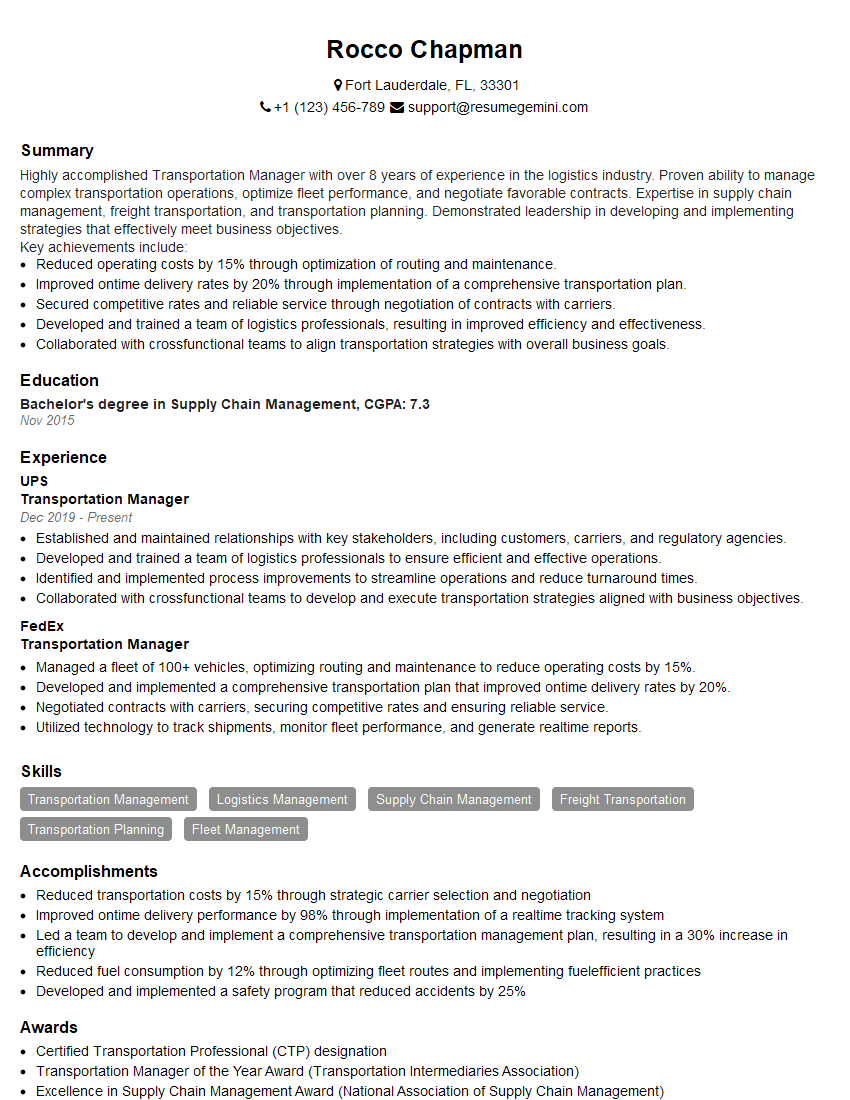
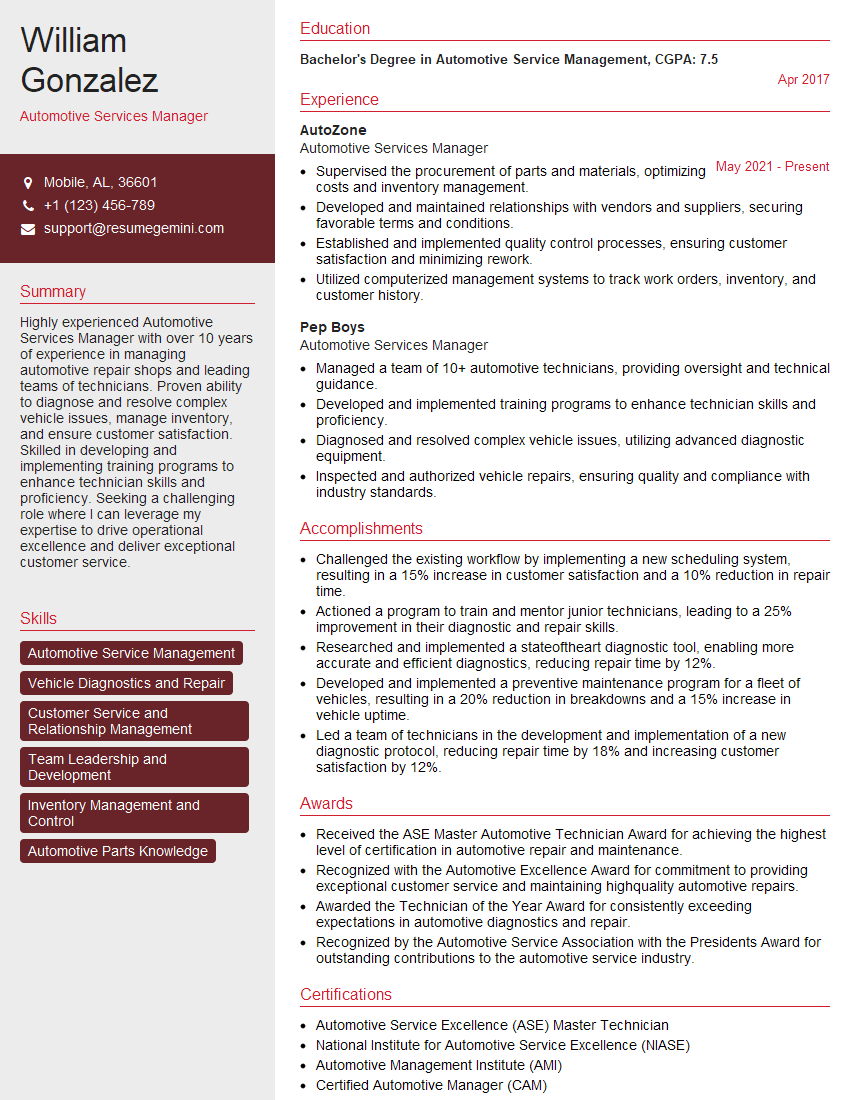
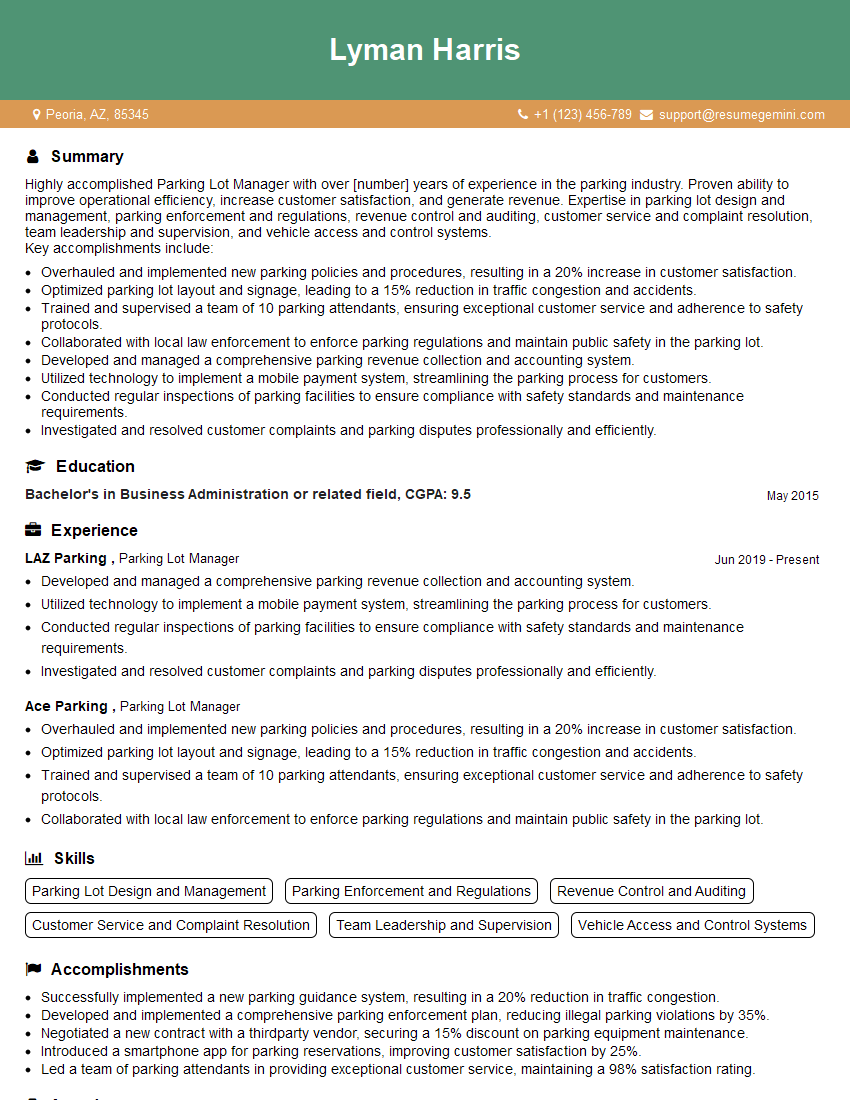
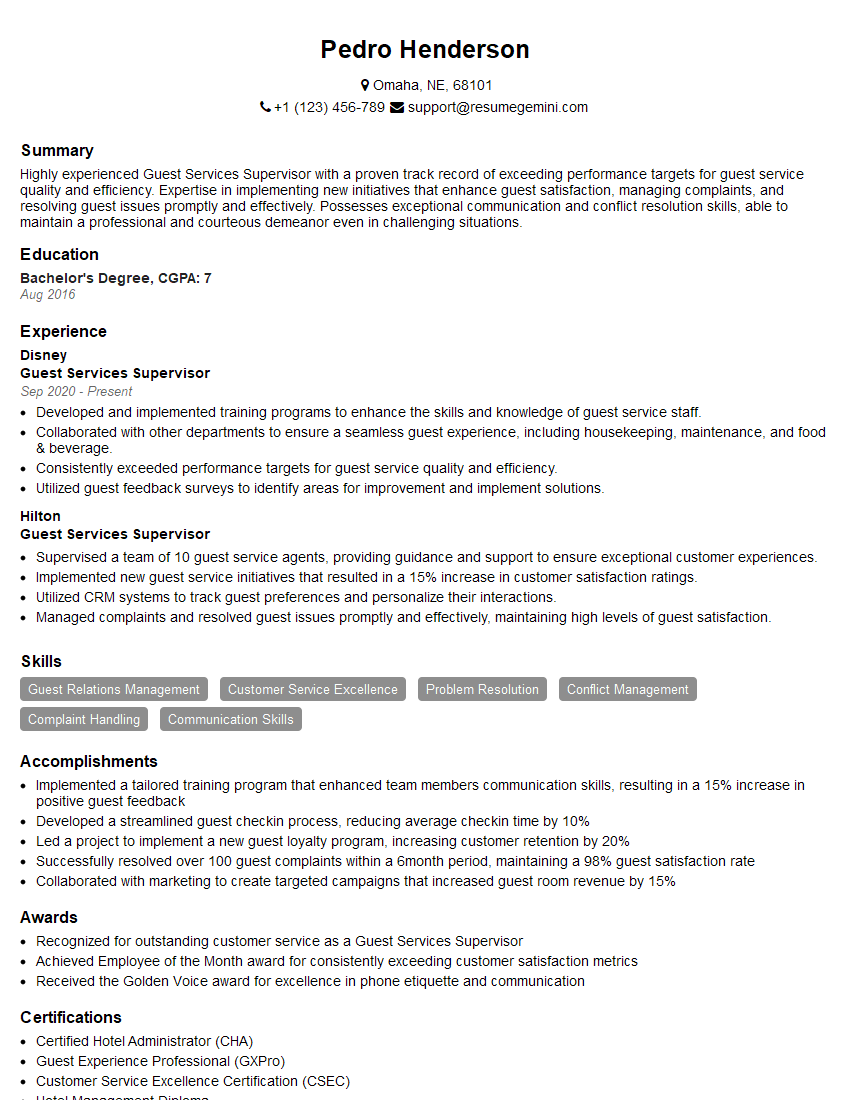
Mastering Valet Parking Management opens doors to leadership roles within the hospitality and service industries, offering excellent career progression and competitive salaries. To maximize your job prospects, creating an ATS-friendly resume is crucial. This ensures your application is effectively screened by applicant tracking systems used by many employers. We highly recommend using ResumeGemini to build a professional and impactful resume that showcases your skills and experience. ResumeGemini provides valuable tools and resources, including examples of resumes tailored to Valet Parking Management, to help you present yourself effectively to potential employers.
Explore more articles
Users Rating of Our Blogs
Share Your Experience
We value your feedback! Please rate our content and share your thoughts (optional).
What Readers Say About Our Blog
Very informative content, great job.
good