Are you ready to stand out in your next interview? Understanding and preparing for Vegetable Preparation Knowledge interview questions is a game-changer. In this blog, we’ve compiled key questions and expert advice to help you showcase your skills with confidence and precision. Let’s get started on your journey to acing the interview.
Questions Asked in Vegetable Preparation Knowledge Interview
Q 1. Describe your experience with various knife cuts (dicing, mincing, julienning, brunoise).
Knife cuts are fundamental to vegetable preparation, impacting both the aesthetics and cooking time of a dish. My experience encompasses a wide range of cuts, including dicing, mincing, julienning, and brunoise. Each requires a specific technique and knife control.
- Dicing: This involves cutting vegetables into uniformly sized cubes. The size varies depending on the recipe, but I’m proficient in creating dice from small (1/8 inch) to large (1/2 inch). For instance, I might dice potatoes for a stew or carrots for a mirepoix.
- Mincing: This produces very finely chopped pieces, almost like a paste. I use this for aromatics like garlic and ginger, ensuring an even distribution of flavor throughout the dish. A sharp chef’s knife is essential for this technique.
- Julienne: This cut creates long, thin strips, typically about 1/8 inch square. It’s ideal for vegetables like carrots or zucchini that need to cook quickly or provide a visually appealing garnish. Maintaining consistent thickness and length requires precise knife skills.
- Brunoise: This is the smallest and most precise cut, resulting in tiny, 1/16 inch cubes. It’s time-consuming but perfect for adding texture and visual appeal to a dish such as a finely diced mirepoix or a delicate garnish. A sharp knife and patience are crucial.
In my experience, mastering these cuts has improved my efficiency and consistency in the kitchen. I regularly practice to maintain precision and speed.
Q 2. How do you ensure proper food safety procedures during vegetable preparation?
Food safety is paramount in vegetable preparation. My procedures are built around preventing contamination and ensuring the safety of the final product. This starts with proper hand hygiene – frequent washing with soap and water. I also meticulously clean and sanitize all surfaces and equipment before and after use.
I strictly adhere to FIFO (First In, First Out) principles for storing vegetables, ensuring older produce is used before newer stock to minimize spoilage. I meticulously inspect all vegetables for signs of spoilage before using them, discarding any that show signs of decay or damage. Cross-contamination is avoided by using separate cutting boards and knives for raw and cooked foods. Maintaining a clean and organized work environment is also key – I always dispose of waste properly and keep the area free of clutter.
For example, when working with leafy greens, I always thoroughly wash them under running water, inspecting each leaf individually. If using a pre-washed salad mix, I still visually inspect it before using.
Q 3. Explain your method for cleaning and sanitizing different types of vegetables.
Cleaning and sanitizing vegetables depends on the type and its inherent characteristics. The process always begins with thorough washing under cold running water.
- Leafy Greens: These require extra attention. I submerge them in a bowl of cold water, gently swishing to loosen any dirt or debris. Then, I rinse them thoroughly under running water, inspecting each leaf for imperfections. Some leafy greens might benefit from a quick soak in a solution of water and white vinegar to help remove any lingering pesticides.
- Root Vegetables: I typically scrub root vegetables like potatoes and carrots with a vegetable brush under cold running water to remove any soil or grit.
- Other Vegetables: For vegetables with hard exteriors like peppers or squash, I wash them thoroughly under running water, and remove any blemishes before cutting.
Sanitizing is generally done through a final rinse under cold running water. However, for more stringent sanitation, especially in high-volume environments, I might use a food-safe sanitizer according to manufacturer instructions. This is crucial to minimize the risk of contamination.
Q 4. What are the best practices for storing different vegetables to maintain freshness?
Proper storage is crucial for maintaining the freshness and quality of vegetables. The method varies depending on the type of vegetable:
- Leafy Greens: Store in airtight containers lined with paper towels to absorb excess moisture, in the crisper drawer of the refrigerator.
- Root Vegetables: Store in a cool, dark, and well-ventilated place, like a pantry or basement. Avoid storing them in the refrigerator unless they are already showing signs of wilting.
- Other Vegetables (e.g., Peppers, Onions, Tomatoes): Store at room temperature, away from direct sunlight. Avoid refrigeration for most of these, as it can damage their texture and flavor.
Proper storage significantly extends the shelf life of vegetables, reduces waste, and maintains their nutritional value and flavor.
Q 5. How do you efficiently prep large quantities of vegetables for a busy service?
Preparing large quantities of vegetables efficiently for a busy service requires planning, organization, and the right equipment. Mise en place (everything in its place) is crucial. I start by carefully reviewing the recipes and determining the exact amount of each vegetable needed, creating a prep list to ensure nothing is missed.
I often utilize batch cooking techniques and efficient knife skills. Using a mandoline slicer for vegetables like potatoes or carrots can significantly speed up the process, ensuring even and consistent cuts. When possible, I involve the team, assigning tasks according to individual skills and abilities, thereby fostering collaboration and division of labor. Proper storage of prepped ingredients, utilizing labeled containers and FIFO method, is essential for maintaining quality and freshness during service.
For example, if preparing for a large catering event, I might assign one person to chop onions, another to dice carrots, etc. Each person then properly labels and stores their prepped items.
Q 6. Describe your experience with using various kitchen equipment for vegetable preparation (e.g., mandoline, food processor).
My experience includes extensive use of various kitchen equipment for vegetable preparation, significantly improving efficiency and consistency.
- Mandoline Slicer: Essential for creating even slices and cuts, especially with root vegetables. It dramatically increases speed and consistency compared to manual cutting, which is crucial for high-volume preparation. However, safety is paramount – I always use the hand guard to prevent injuries.
- Food Processor: This is invaluable for tasks like chopping, shredding, and pureeing vegetables. It allows for quick and even processing of large quantities of vegetables. I use it for making sauces, purees, and other preparations that require finely processed vegetables.
- Vegetable Chopper/Dicer: These tools allow for efficient dicing and chopping, especially for larger quantities. They save time and ensure consistent size.
The selection of equipment depends on the specific task and the volume of preparation needed. Proficiency in using these tools is crucial for efficient and safe vegetable preparation in a professional kitchen.
Q 7. How do you identify and handle spoiled or damaged vegetables?
Identifying and handling spoiled or damaged vegetables is critical for food safety and quality control. I always visually inspect each vegetable for signs of spoilage before using it. Key indicators include:
- Discoloration: Brown spots, bruising, or unusual color changes can indicate spoilage. For example, a mushy, brownish section on a lettuce leaf, or wilted leaves on herbs should be removed immediately.
- Softness or Mushiness: This is a clear sign of decay, especially in root vegetables or tomatoes.
- Unpleasant Odor: A sour or off-putting smell often indicates that vegetables are spoiled and should be discarded immediately.
- Mold or Fungi Growth: Any visible mold or fungal growth renders the vegetable unsafe for consumption.
Any spoiled or significantly damaged portions are removed immediately and discarded properly. The remaining portions are thoroughly inspected before use. Preventing cross-contamination is crucial – using separate cutting boards and utensils for handling spoiled and fresh produce ensures food safety.
Q 8. What are the common quality standards for prepared vegetables in a professional kitchen?
In a professional kitchen, prepared vegetables must meet stringent quality standards focusing on appearance, texture, and safety. Think of it like this: a beautifully plated dish is only as good as its components.
- Appearance: Vegetables should be uniformly cut, free from blemishes, bruises, or discoloration. The size and shape should be consistent, following the recipe’s specifications. For example, diced carrots should all be roughly the same size for even cooking.
- Texture: The vegetables should have the appropriate texture for the intended dish. Overcooked vegetables will be mushy, while undercooked vegetables will be too firm. This requires a deep understanding of cooking methods and times for different vegetables.
- Safety: Thorough washing to remove soil and pesticides is crucial. Proper storage at the correct temperature prevents bacterial growth, ensuring food safety. We adhere to strict FIFO (First In, First Out) procedures to minimize waste and maintain freshness.
- Yield: Careful trimming and cutting techniques maximize the usable portion of each vegetable, minimizing waste and controlling costs.
Q 9. How do you maintain consistency in vegetable portion sizes?
Maintaining consistent portion sizes is essential for both culinary presentation and cost control. We achieve this through a combination of techniques:
- Portioning tools: Using standardized scoops, measuring cups, and vegetable cutters ensures uniformity. For instance, a #8 scoop consistently provides the same amount of diced vegetables.
- Visual cues: Experienced chefs develop a keen eye for portion sizes and can quickly estimate quantities without tools. This comes with practice and training.
- Recipe standardization: Recipes should include detailed specifications for portion sizes, ensuring consistency across all preparations. This is particularly crucial when multiple cooks are working on the same dish.
- Pre-portioning: In high-volume kitchens, vegetables are often pre-portioned and stored in labeled containers, ready for immediate use.
Q 10. Explain your experience with different vegetable cooking methods (e.g., blanching, steaming, roasting).
My experience encompasses a wide range of vegetable cooking methods, each suited to different vegetables and desired outcomes.
- Blanching: This involves briefly immersing vegetables in boiling water, then plunging them into ice water to stop the cooking process. It’s ideal for preserving vibrant colors and crisp-tender textures, perfect for vegetables like green beans or broccoli used in salads or stir-fries.
- Steaming: Steaming cooks vegetables gently using steam, preserving nutrients and maintaining a delicate texture. It’s excellent for delicate vegetables like asparagus or peas.
- Roasting: Roasting vegetables in the oven at high temperatures brings out their natural sweetness and creates a caramelized exterior. Root vegetables like carrots, potatoes, and sweet potatoes are particularly well-suited to roasting. I often experiment with different herbs and spices to enhance flavor.
The choice of method depends on factors like the type of vegetable, desired texture, and the overall recipe.
Q 11. How do you manage your time effectively when preparing multiple vegetables simultaneously?
Efficient time management when preparing multiple vegetables is critical in a busy kitchen. My approach involves a combination of planning and execution:
- Mise en place: Thorough preparation before cooking is crucial. This includes washing, peeling, chopping, and measuring all ingredients.
- Prioritization: I identify vegetables with longer cooking times and start those first, optimizing oven or stovetop space.
- Parallel cooking: I utilize different cooking methods simultaneously – roasting in the oven while simultaneously steaming or blanching on the stovetop.
- Task delegation: In a team setting, tasks are strategically assigned to optimize workflow and minimize bottlenecks.
I’ve learned that planning and organization are essential to managing time effectively and working efficiently under pressure.
Q 12. Describe your experience working under pressure in a fast-paced kitchen environment.
Working in fast-paced kitchen environments is second nature to me. I thrive under pressure, and my experience has honed my ability to remain calm, focused, and efficient even during peak service times. One memorable instance involved a large catering event with unexpected last-minute orders. By calmly delegating tasks, prioritizing, and working quickly with my team, we met the demand without compromising quality or safety.
The ability to prioritize, adapt, and maintain a positive attitude is vital for success in high-pressure situations. A good support system within the team is crucial for handling these periods.
Q 13. How do you handle unexpected changes or challenges during vegetable preparation?
Unexpected changes are inevitable in a kitchen. My approach involves problem-solving and adaptability:
- Assess the situation: Quickly determine the nature and scope of the problem.
- Seek solutions: Brainstorm solutions with the team, considering available resources and time constraints.
- Adapt the plan: Adjust the preparation plan based on the solution chosen, ensuring the final product remains consistent with expectations.
- Learn from the experience: Review the incident to identify areas for improvement, enhancing future preparedness.
For example, if a delivery of a key vegetable is delayed, I might substitute with an alternative, or adjust the menu to compensate. Flexibility is key.
Q 14. How do you ensure proper yield when preparing vegetables?
Ensuring proper yield involves minimizing waste and maximizing the usable portion of each vegetable. This is achieved through:
- Careful selection: Choosing high-quality vegetables with minimal blemishes reduces waste during preparation.
- Efficient trimming: Trimming vegetables precisely while preserving the maximum usable portion is crucial.
- Appropriate cooking methods: Choosing cooking methods that minimize shrinkage and preserve the vegetable’s texture improves yield.
- Creative repurposing: Vegetable scraps can be used in stocks, sauces, or other dishes, minimizing waste.
By paying attention to detail and using effective techniques, I can control food costs and reduce waste while maintaining high-quality dishes.
Q 15. Describe your knowledge of different vegetable varieties and their optimal preparation techniques.
My knowledge of vegetable varieties and their optimal preparation techniques is extensive. Understanding a vegetable’s properties – its texture, flavor profile, and water content – is crucial for proper preparation. For instance, delicate vegetables like asparagus benefit from gentle steaming or sautéing to preserve their tenderness, while heartier vegetables such as broccoli can withstand more robust methods like roasting or stir-frying.
- Root vegetables (carrots, potatoes, beets): Roasting enhances sweetness, boiling provides a soft texture, while raw preparations offer a crispness.
- Leafy greens (spinach, kale, lettuce): Quick sautéing or blanching prevents wilting; some, like lettuce, are best enjoyed raw in salads.
- Cruciferous vegetables (broccoli, cauliflower, Brussels sprouts): Roasting or steaming brings out their flavor; overcooking can lead to mushiness.
- Alliums (onions, garlic, shallots): Slicing, mincing, or chopping techniques vary depending on the desired intensity of flavor and texture. Sautéing, roasting, or even pickling are excellent preparation methods.
I always consider the intended dish when selecting preparation techniques. A delicate vegetable soup calls for gentle handling, whereas a robust stir-fry necessitates heartier methods.
Career Expert Tips:
- Ace those interviews! Prepare effectively by reviewing the Top 50 Most Common Interview Questions on ResumeGemini.
- Navigate your job search with confidence! Explore a wide range of Career Tips on ResumeGemini. Learn about common challenges and recommendations to overcome them.
- Craft the perfect resume! Master the Art of Resume Writing with ResumeGemini’s guide. Showcase your unique qualifications and achievements effectively.
- Don’t miss out on holiday savings! Build your dream resume with ResumeGemini’s ATS optimized templates.
Q 16. What are your strategies for reducing food waste during vegetable preparation?
Reducing food waste during vegetable preparation is a top priority. My strategies involve meticulous planning, proper storage, and creative repurposing.
- Careful Planning: I meticulously plan my recipes, using only the necessary quantity of vegetables to minimize excess.
- Proper Storage: I store vegetables according to their type and characteristics – leafy greens in airtight containers, root vegetables in cool, dark places. This helps maintain freshness and extends shelf life.
- Creative Repurposing: Vegetable scraps (onion skins, carrot tops) can be used to create flavorful stocks or broths. Vegetable peels can be composted or used in fertilizer.
- Precise Cutting: Efficient cutting techniques ensure minimal waste. For instance, using the entire carrot, even the smaller ends, for stocks or salads instead of discarding them.
For example, when preparing a large batch of soup, I often save the vegetable scraps to make a flavorful broth the following day, eliminating waste and maximizing efficiency.
Q 17. How do you maintain a clean and organized workstation during vegetable preparation?
Maintaining a clean and organized workstation is paramount for efficiency and food safety. My approach incorporates several key elements:
- Mise en Place: I thoroughly prepare all ingredients (washing, chopping, measuring) before beginning the cooking process. This is also known as ‘mise en place’ in culinary terms.
- Designated Areas: I establish designated areas for different tasks – chopping, washing, and cooking – preventing cross-contamination.
- Regular Cleaning: I consistently wipe down surfaces and sanitize cutting boards between tasks.
- Organized Storage: Utensils and ingredients are conveniently placed, easily accessible yet out of the way to avoid accidents and maintain a tidy workspace.
Think of it like a painter’s palette – everything is neatly arranged for quick and efficient access.
Q 18. How do you follow standardized recipes and portion control guidelines?
Following standardized recipes and portion control guidelines is crucial for consistency and cost-effectiveness. My approach involves careful reading, precise measuring, and consistent application.
- Recipe Adherence: I meticulously follow the recipe’s instructions, including ingredient measurements and cooking times.
- Consistent Measuring: I utilize calibrated measuring cups and spoons for accurate ingredient measurements.
- Portion Control: For larger-scale operations, I utilize portioning scales and standardized containers to ensure uniform portion sizes.
- Documentation: I maintain clear and detailed records of recipe modifications or deviations for future reference.
Using a standardized recipe ensures that a dish will taste the same every time and reduces variations in quality.
Q 19. Describe your understanding of FIFO (First-In, First-Out) inventory management.
FIFO, or First-In, First-Out, inventory management is essential for minimizing food spoilage. I apply this principle to all perishable goods, including vegetables.
This means that the oldest items are used first, ensuring that nothing sits unused and spoils. I label items with their arrival dates and arrange them accordingly in storage. Older vegetables are placed at the front, while newer ones are at the back, making sure that the older ones are used up first.
This simple method helps reduce waste and maintain inventory efficiency.
Q 20. What are your methods for preventing cross-contamination during vegetable preparation?
Preventing cross-contamination is critical for food safety. My methods include:
- Separate Cutting Boards: I use different cutting boards for raw meat and vegetables, preventing the transfer of harmful bacteria.
- Handwashing: I wash my hands thoroughly with soap and water before and after handling different food items.
- Sanitation: I regularly sanitize cutting boards, utensils, and work surfaces using a food-safe disinfectant.
- Temperature Control: I maintain proper temperature control for both raw and cooked vegetables to inhibit bacterial growth.
Think of it as preventing a chain reaction – one contaminated item can spoil the entire batch. Proactive measures are key.
Q 21. Explain your experience with different types of vegetable garnishes and presentation techniques.
My experience with vegetable garnishes and presentation techniques is broad. Garnishes not only enhance visual appeal but also add texture and flavor complexity.
- Classic Garnishes: I’m proficient in using herbs (parsley, chives, dill), microgreens, and edible flowers to add visual interest and flavor.
- Creative Garnishes: I also incorporate more complex garnishes such as vegetable ribbons, julienned vegetables, or vegetable carvings depending on the dish and its intended presentation.
- Plating Techniques: I understand different plating styles, from simple and rustic to more elegant and sophisticated arrangements, choosing the method that best showcases the dish and garnishes.
For example, a simple salad might benefit from a scattering of microgreens, while a more elaborate dish might call for intricate vegetable carvings. The key is choosing garnishes that complement both the flavors and aesthetics of the dish.
Q 22. How do you adapt your vegetable preparation techniques based on different culinary styles?
Adapting vegetable preparation techniques to different culinary styles is crucial for achieving the desired flavor profiles and textures. For example, in French cuisine, vegetables are often finely diced (diced) or julienned (julienned) for delicate sauces and refined presentations. Think of a classic French ratatouille, where the vegetables are meticulously cut into small, even pieces to ensure even cooking. In contrast, Italian cuisine might emphasize larger, roughly chopped vegetables (bronzé) to retain more texture and rustic appeal, as seen in a hearty minestrone soup. Similarly, Asian cuisine often incorporates techniques like stir-frying that necessitate quickly blanching vegetables prior to cooking, preserving a crisp texture. I always consider the final dish’s desired aesthetic and taste when choosing my cutting techniques and cooking methods.
- Fine Dining: Precision cuts, delicate sauces, showcasing individual vegetable flavors.
- Casual Dining: Rustic cuts, bolder flavors, emphasizing hearty textures.
- Ethnic Cuisine: Specific cutting and cooking methods dictated by cultural traditions and flavor profiles.
Q 23. Describe your experience with using standardized recipes and adjusting portion sizes.
Standardized recipes are essential for maintaining consistency and efficiency in any kitchen environment. My experience involves using these recipes as a base, then adjusting portion sizes based on the number of servings required. For instance, if a recipe calls for 1 kg of potatoes for 10 servings, I can easily calculate the necessary potato quantity for 20 servings by doubling the amount. I’m proficient in using a variety of culinary calculation methods, including simple ratios and percentage adjustments. This is especially important in high-volume settings like catering where accurate portioning is paramount. I also factor in factors like potential waste and over-preparation to ensure sufficient quantity for service.
Example: Recipe yields 10 servings; 1 kg potatoes; Scale up to 20 servings requires 2 kg potatoes.Q 24. How familiar are you with HACCP principles related to vegetable preparation?
HACCP (Hazard Analysis and Critical Control Points) principles are fundamental to safe food handling. My knowledge encompasses all seven principles, particularly as they apply to vegetable preparation. This includes identifying potential hazards (e.g., cross-contamination from raw to cooked vegetables), establishing critical control points (e.g., proper handwashing, temperature control), setting critical limits (e.g., safe storage temperatures), establishing monitoring procedures (e.g., regular temperature checks), and implementing corrective actions (e.g., discarding contaminated vegetables). I’m experienced in maintaining proper sanitation protocols, including the use of appropriate cleaning and sanitizing agents, and regularly participating in food safety training. Following HACCP guidelines ensures food safety and minimizes risks of foodborne illnesses.
Q 25. How do you ensure the proper temperature for storing different types of vegetables?
Proper temperature control is crucial for maintaining vegetable quality and preventing spoilage. Leafy greens, for example, should be stored at close to 0°C (32°F) in a high-humidity environment to preserve their crispness. Root vegetables like carrots and potatoes can be stored at slightly warmer temperatures, around 4-10°C (39-50°F) in a cool, dark place. Storing vegetables at the incorrect temperature can lead to rapid deterioration, impacting both quality and safety. I meticulously monitor and maintain the appropriate storage temperature for each type of vegetable using calibrated thermometers and refrigeration equipment. Proper labeling of stored vegetables with their ideal storage temperatures and dates is also a key part of my process.
Q 26. What is your experience working with seasonal vegetables and adapting menus accordingly?
Working with seasonal vegetables is a priority for maintaining menu freshness and sustainability. I actively research seasonal produce availability and incorporate these ingredients into our menus. This not only provides the highest quality produce, at its peak flavor and nutritional value, it also reduces food miles and supports local farmers. For example, during the summer months, we might feature dishes highlighting seasonal tomatoes and zucchini. In the autumn, we might incorporate squash and root vegetables. Adapting our menu based on seasonal produce often requires recipe adjustments, such as substituting ingredients, while maintaining overall dish balance and quality. It’s a creative process that enhances our restaurant’s offerings and commitment to sustainable practices.
Q 27. Describe a time you had to solve a problem related to vegetable preparation. What was the solution?
During a busy service, we experienced a significant shortage of our signature dish’s key ingredient – fresh basil. The problem was immediate and we needed a solution fast. Instead of panicking, I methodically assessed our options. First, I checked our inventory for any alternative herbs that could complement the dish. We found a sufficient amount of oregano, which has a similar but slightly bolder flavor profile. Then, I quickly adjusted the recipe, incorporating the oregano while maintaining the overall flavor balance. The chef and I tasted the modified version and were satisfied with the result. We then communicated the minor change to our waitstaff and highlighted the substitution on the menu with a brief explanation. The solution allowed us to maintain our high standard of quality and service and avoid disappointing our customers.
Q 28. How do you handle a situation where you run out of a specific vegetable during service?
Running out of a specific vegetable during service is a common challenge that requires a quick and effective response. My first step is to assess the impact on the menu. If the vegetable is crucial to a signature dish, I immediately inform the chef and together we brainstorm alternative solutions. This might involve substituting with a similar vegetable or modifying the recipe slightly. If the shortage is less critical, I may inform the waitstaff to politely explain the situation to the guests and offer alternative dishes. Ultimately, my aim is to minimize disruption to service, maintain guest satisfaction, and prevent food waste. Proactive inventory management and careful forecasting helps prevent such situations, but having a backup plan is always essential.
Key Topics to Learn for Vegetable Preparation Knowledge Interview
- Knife Skills: Understanding various cutting techniques (dicing, mincing, julienning, brunoise) and their applications in different recipes. Practice achieving consistent sizes and shapes for professional presentation.
- Vegetable Selection & Quality: Identifying fresh, high-quality produce; understanding seasonal availability and its impact on flavor and texture; recognizing signs of spoilage and appropriate handling techniques.
- Food Safety & Hygiene: Implementing proper sanitation procedures, including handwashing, surface cleaning, and safe food storage to prevent cross-contamination and ensure food safety.
- Basic Cooking Methods: Familiarity with blanching, steaming, roasting, sautéing, and other common methods used for preparing vegetables and their impact on texture and nutrient retention.
- Yield & Portion Control: Accurately estimating and calculating the yield of prepared vegetables from raw ingredients, and efficiently portioning for specific recipes or serving sizes.
- Waste Reduction Techniques: Strategies for minimizing food waste through proper storage, utilizing vegetable scraps creatively (stocks, purees), and efficient preparation methods.
- Understanding Different Vegetable Types: Knowledge of various vegetable families (e.g., root vegetables, leafy greens, brassicas), their unique properties, and appropriate preparation techniques.
- Equipment Knowledge: Familiarity with common kitchen tools and equipment used in vegetable preparation, such as mandolines, food processors, and specialized knives.
- Recipe Interpretation & Adaptability: Understanding recipe instructions and adapting them based on available ingredients or dietary restrictions while maintaining quality and consistency.
- Troubleshooting & Problem-Solving: Identifying and addressing common challenges in vegetable preparation, such as uneven cooking or undesirable textures, and implementing corrective measures.
Next Steps
Mastering vegetable preparation knowledge is crucial for career advancement in the culinary arts and related fields. It demonstrates essential skills valued by employers, such as efficiency, precision, and attention to detail. To increase your job prospects, create an ATS-friendly resume that highlights your skills and experience effectively. ResumeGemini is a trusted resource that can help you build a professional resume that stands out. Examples of resumes tailored to vegetable preparation knowledge are available to guide you.
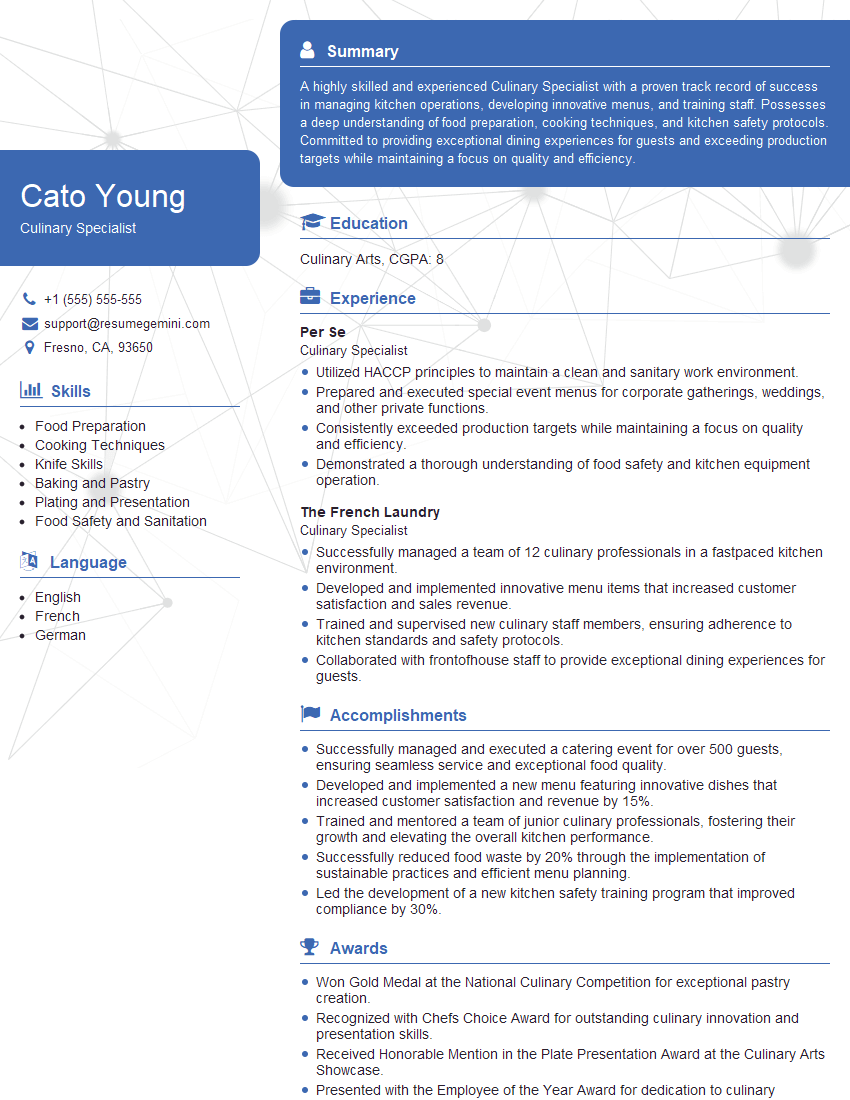
Culinary Specialist Resume Sample
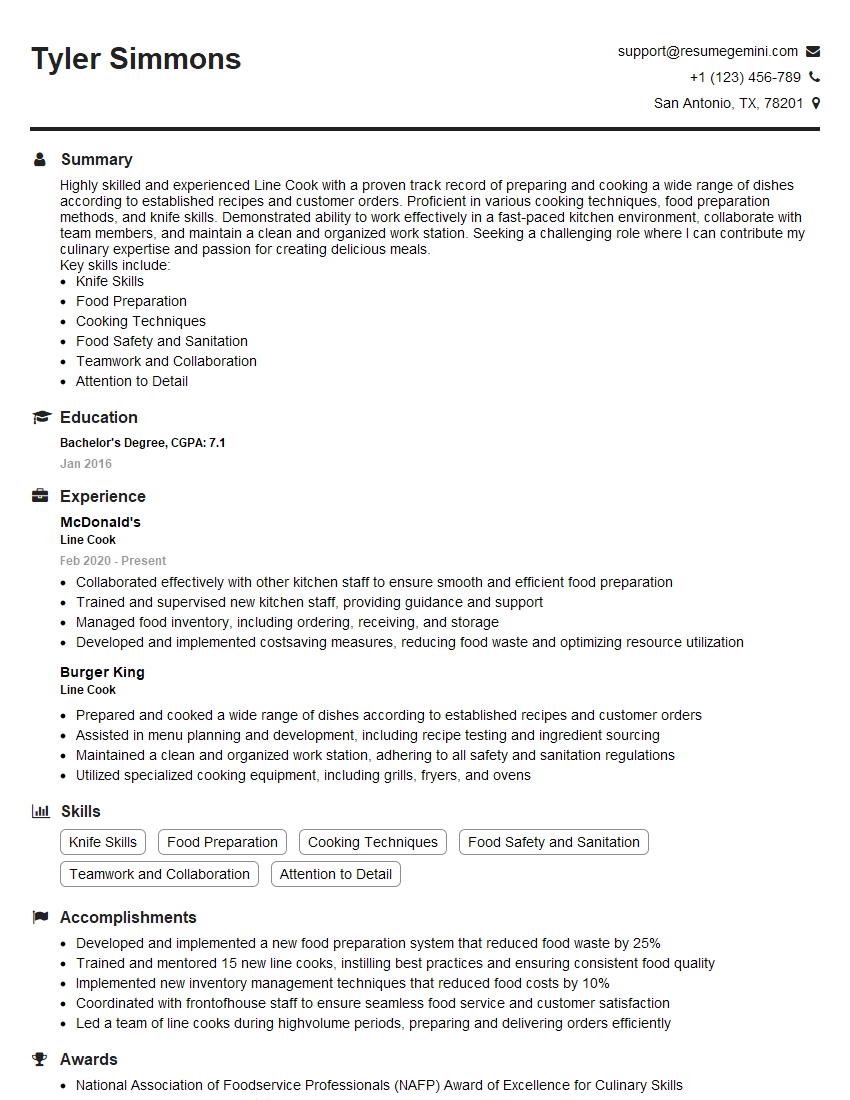
Line Cook Resume Sample
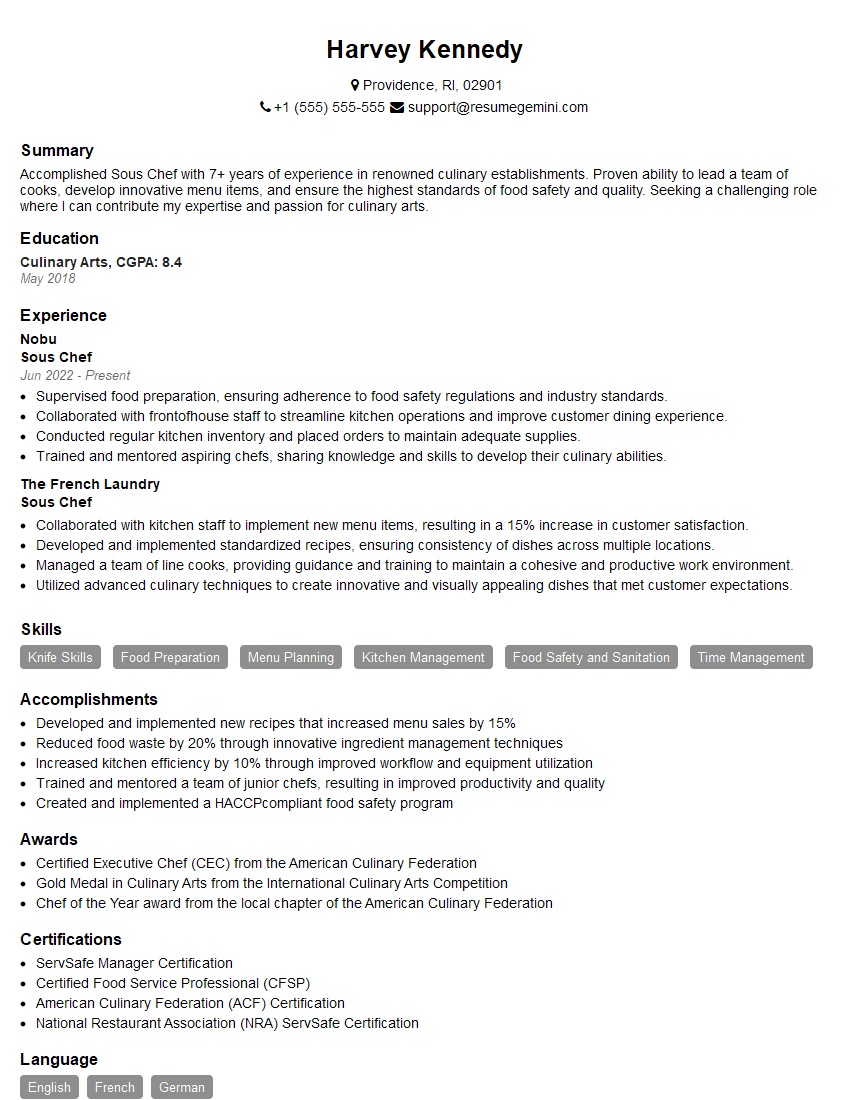
Sous Chef Resume Sample
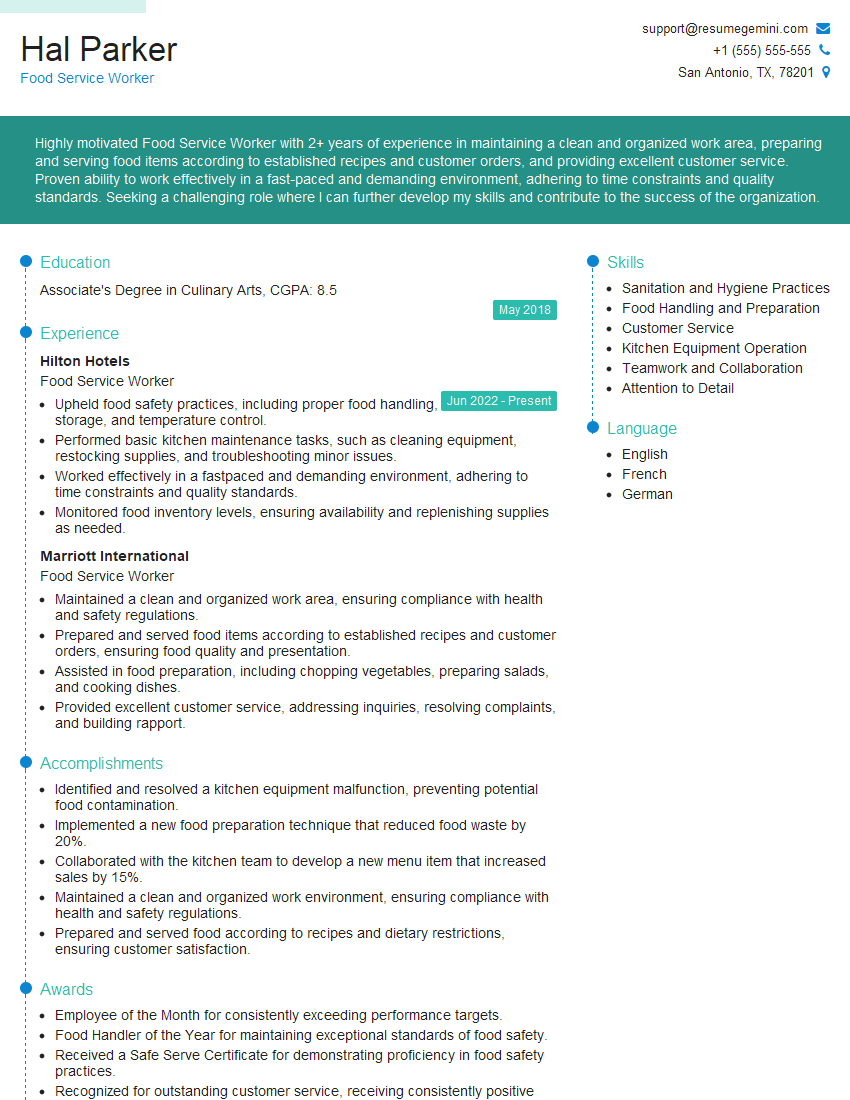
Food Service Worker Resume Sample
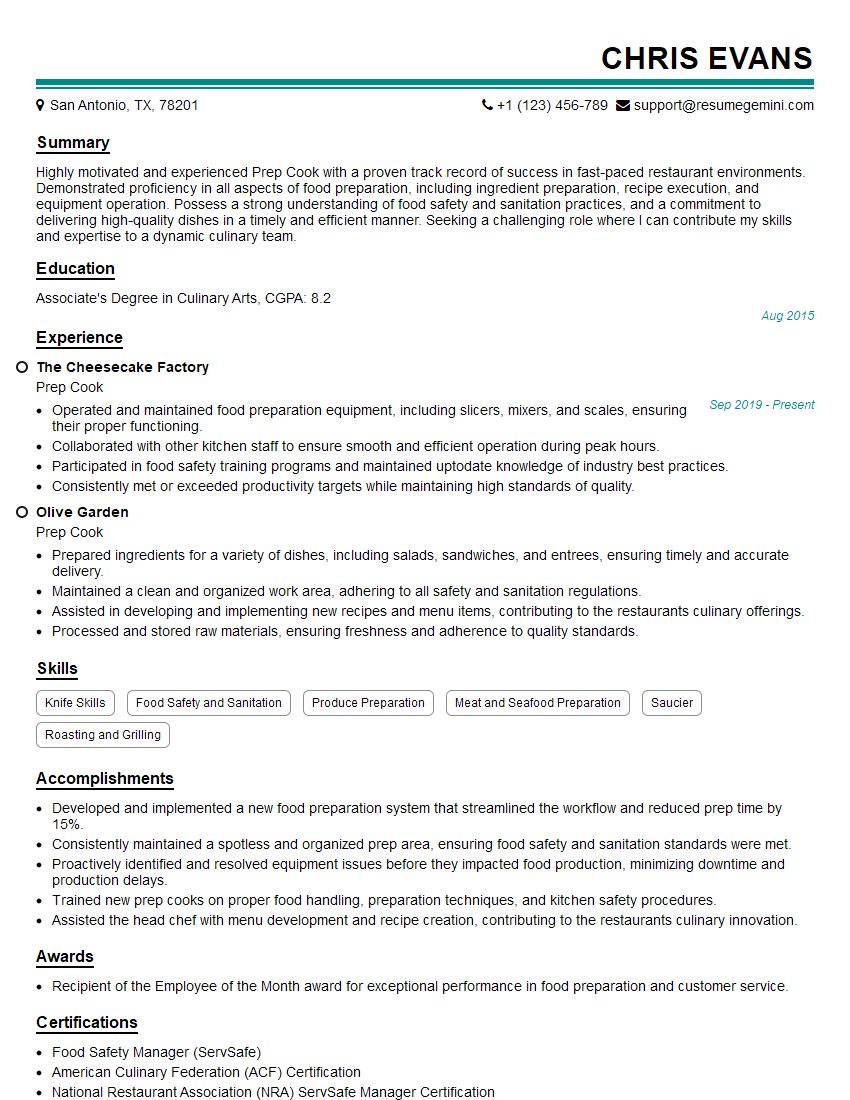
Prep Cook Resume Sample
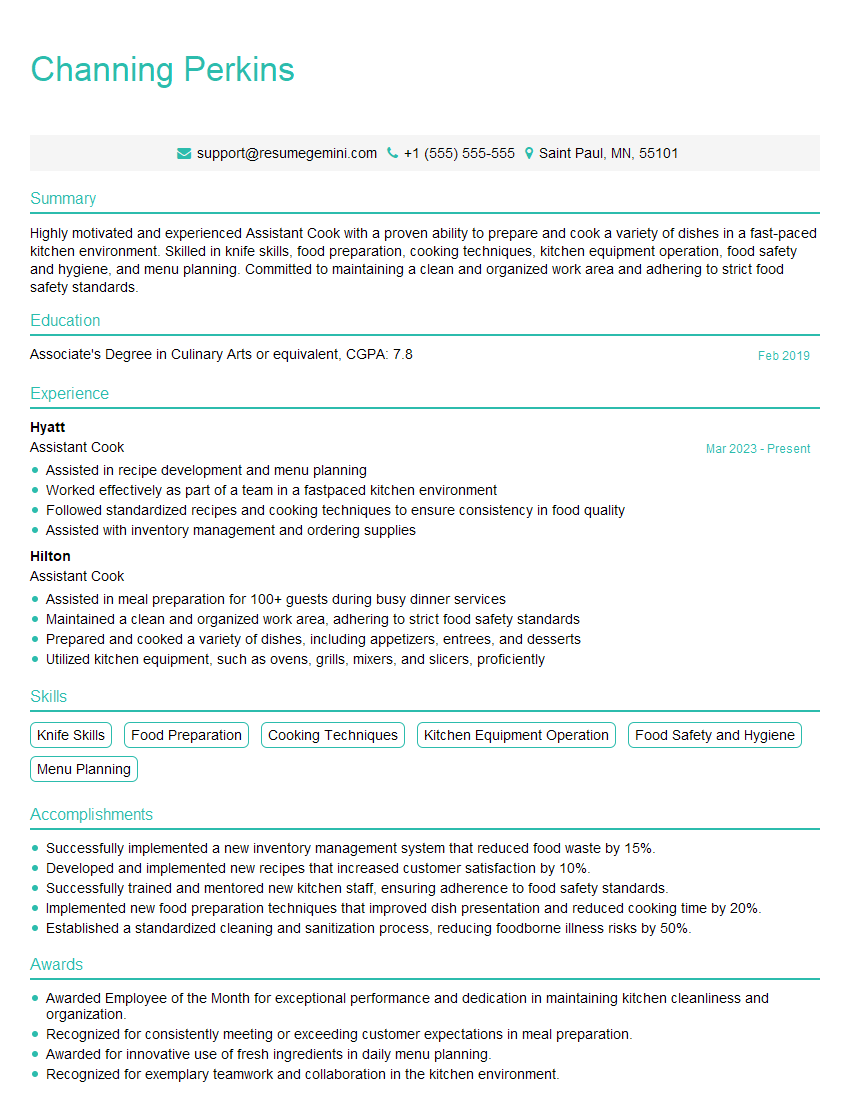
Assistant Cook Resume Sample

Chef De Partie Resume Sample
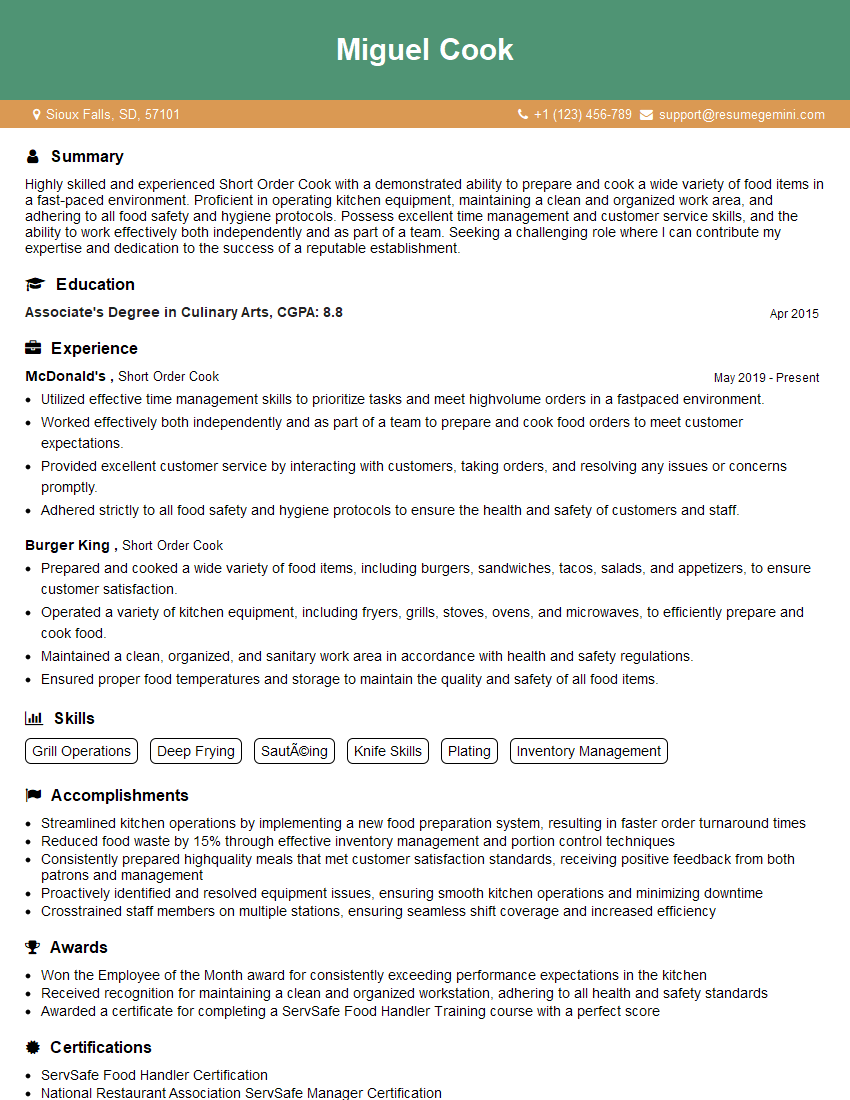
Short Order Cook Resume Sample
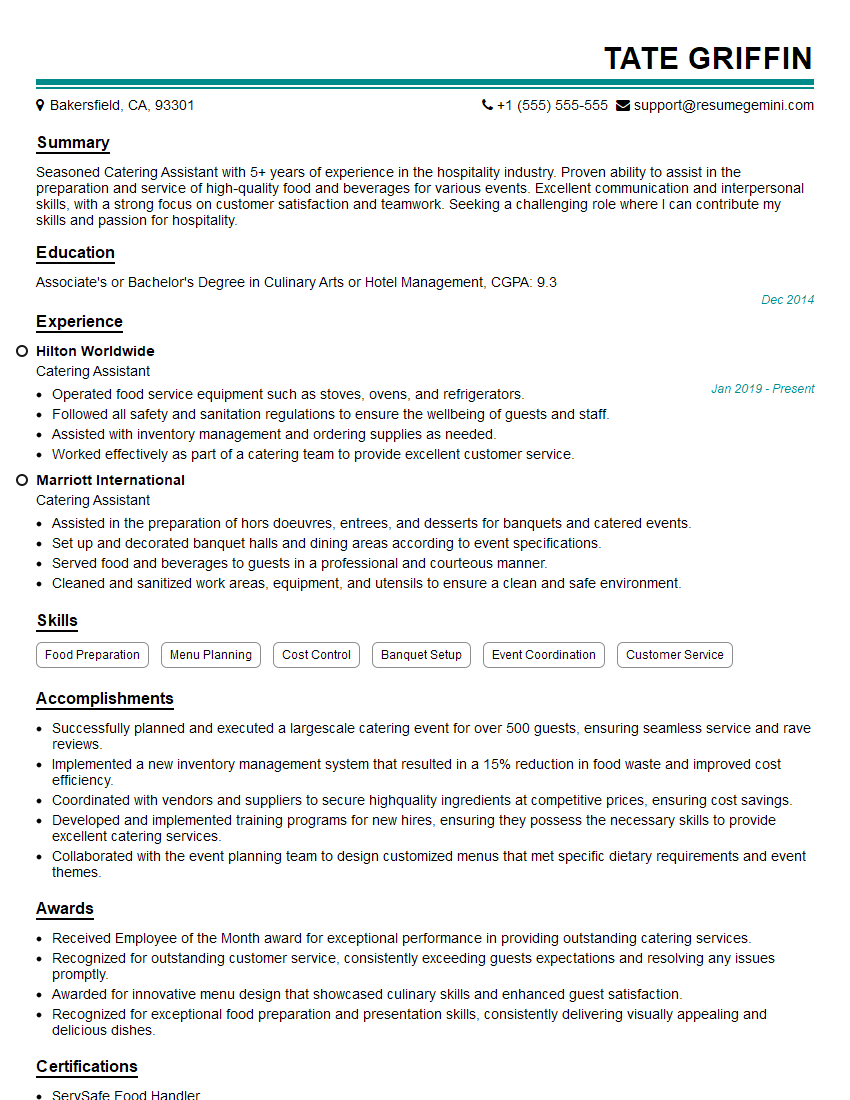
Catering Assistant Resume Sample
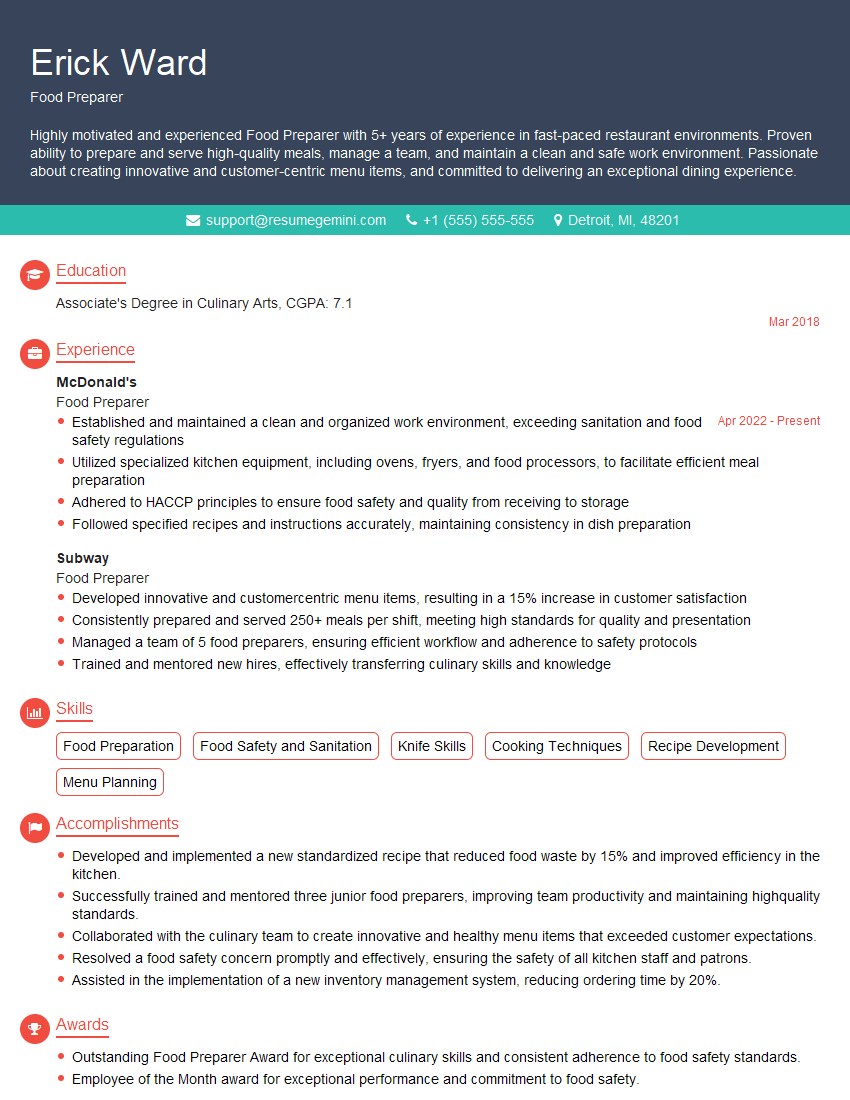
Food Preparer Resume Sample
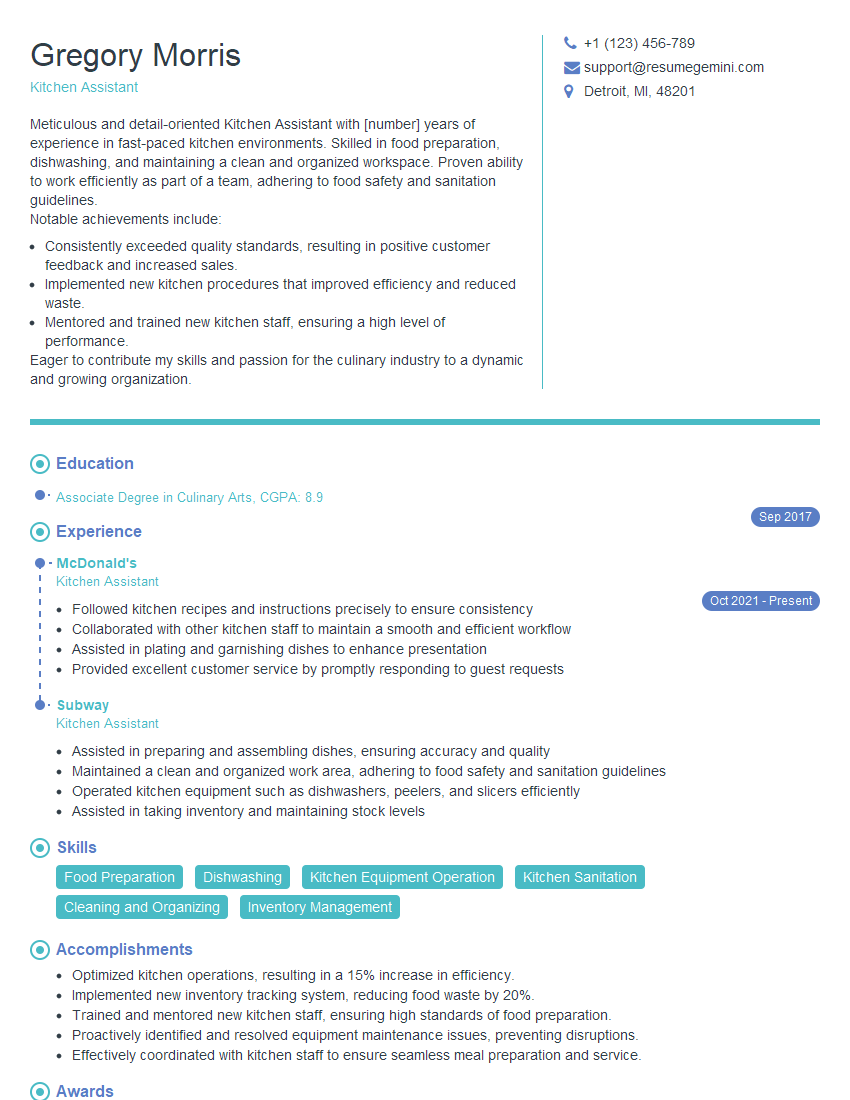
Kitchen Assistant Resume Sample
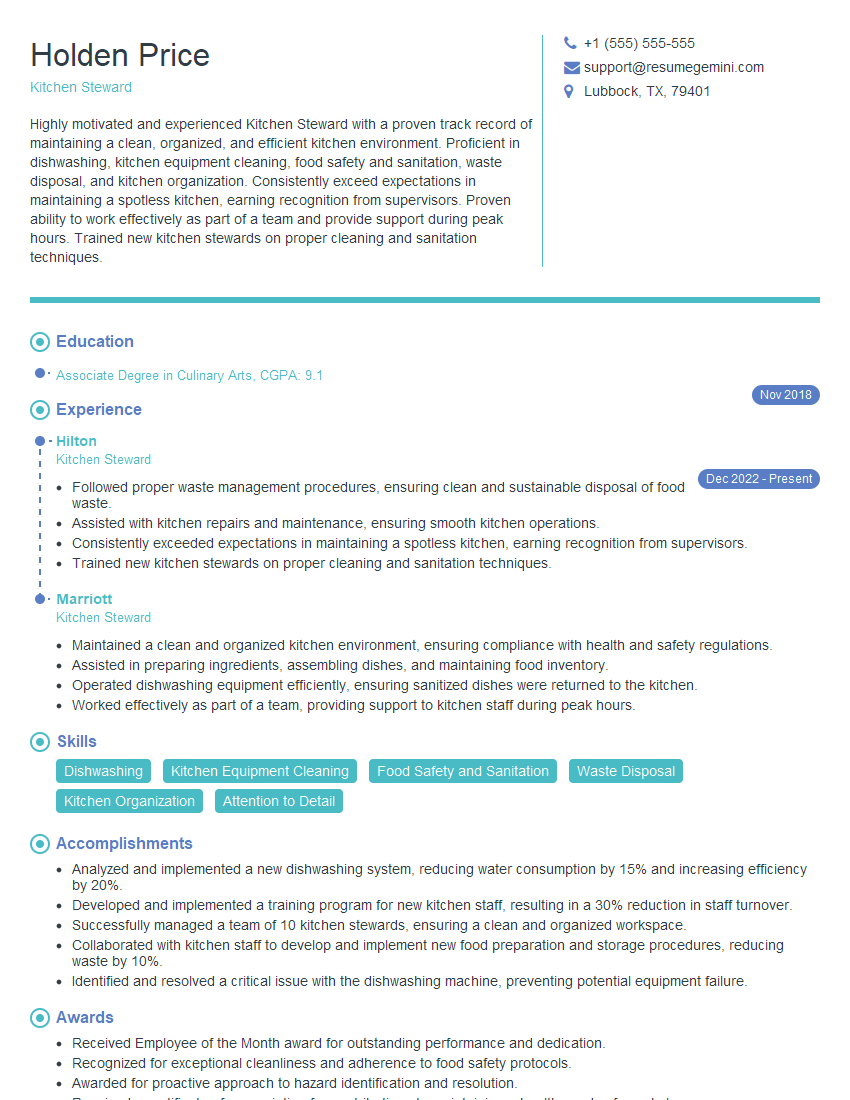
Kitchen Steward Resume Sample
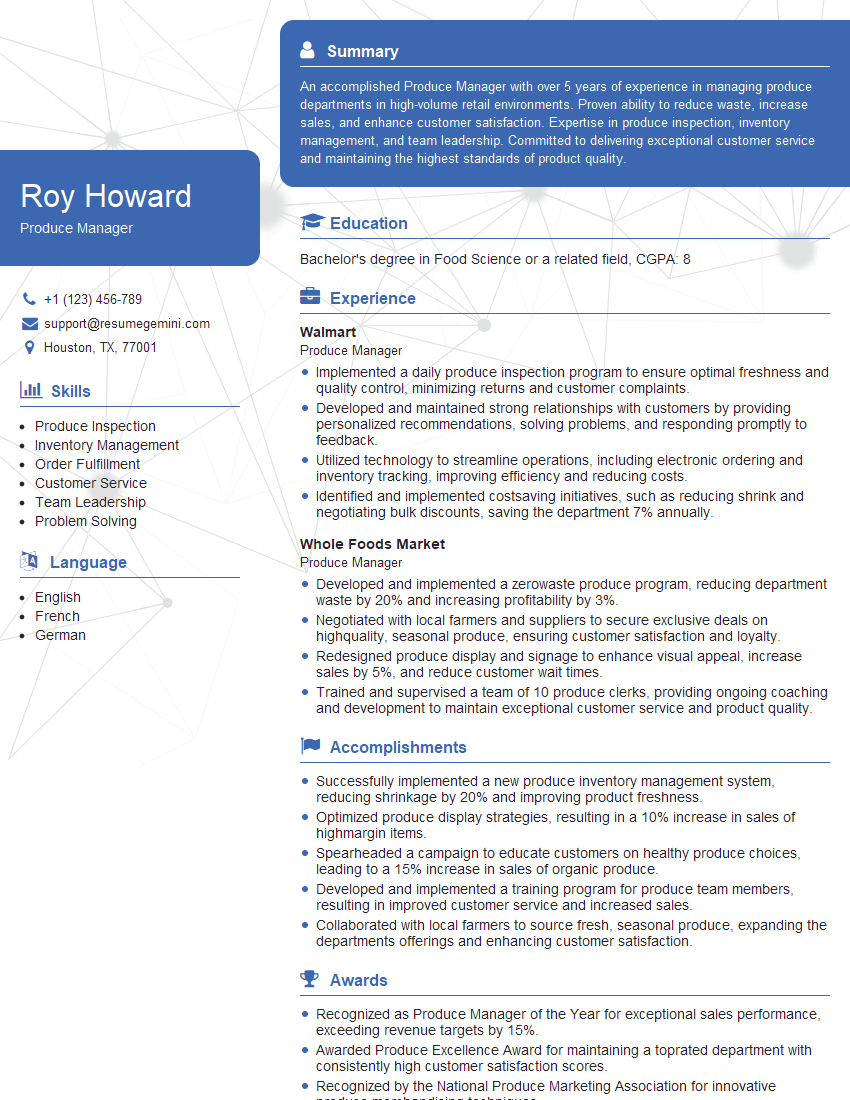
Produce Manager Resume Sample
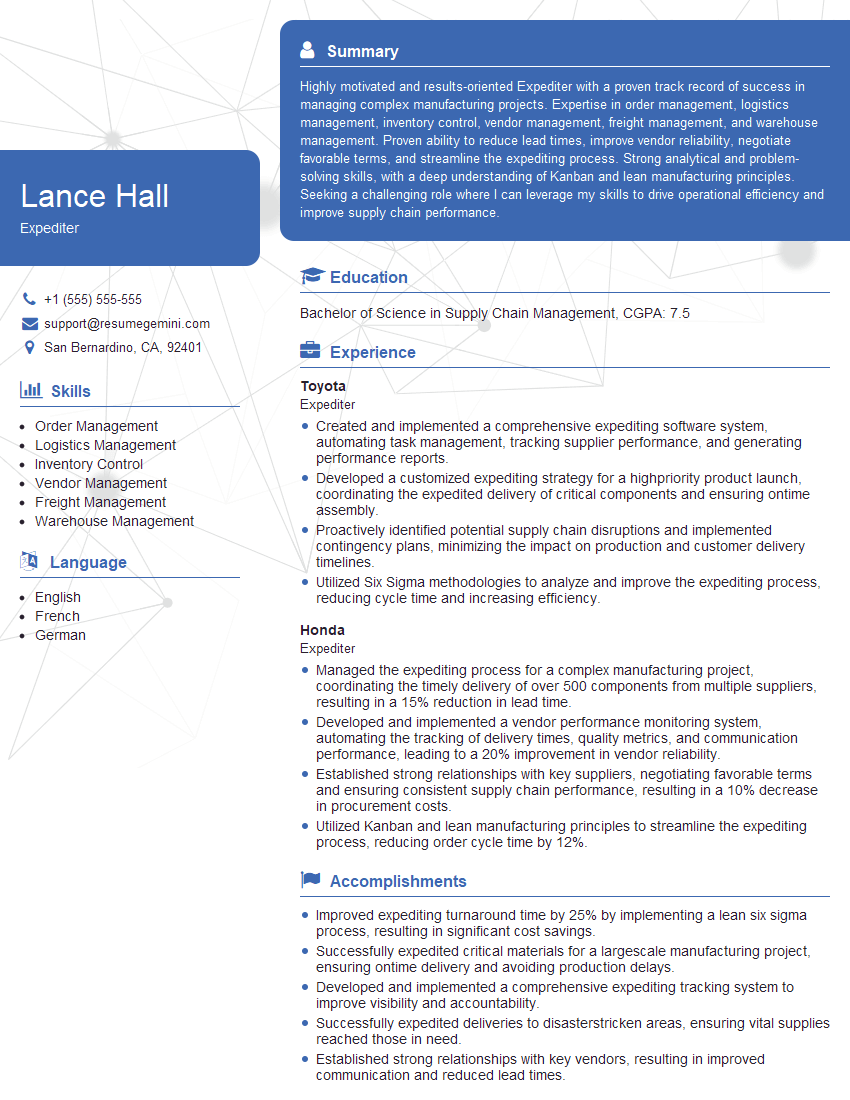
Expediter Resume Sample
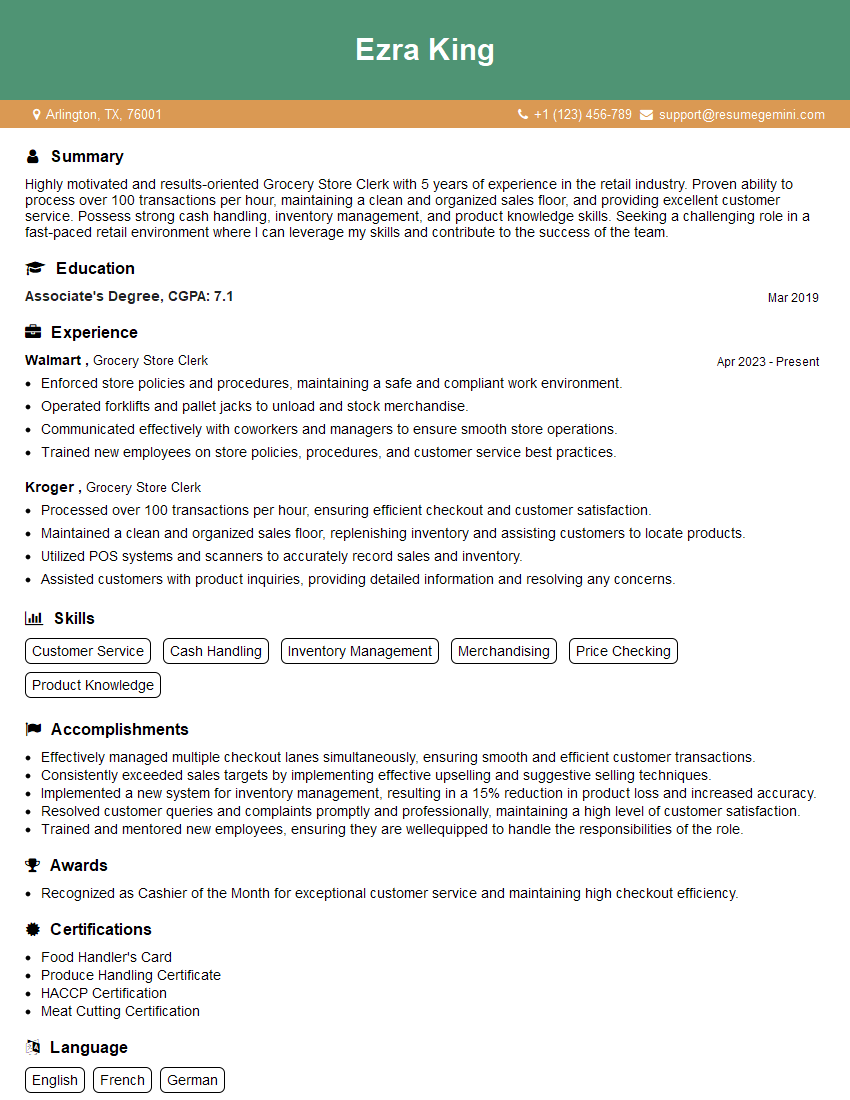
Grocery Store Clerk Resume Sample
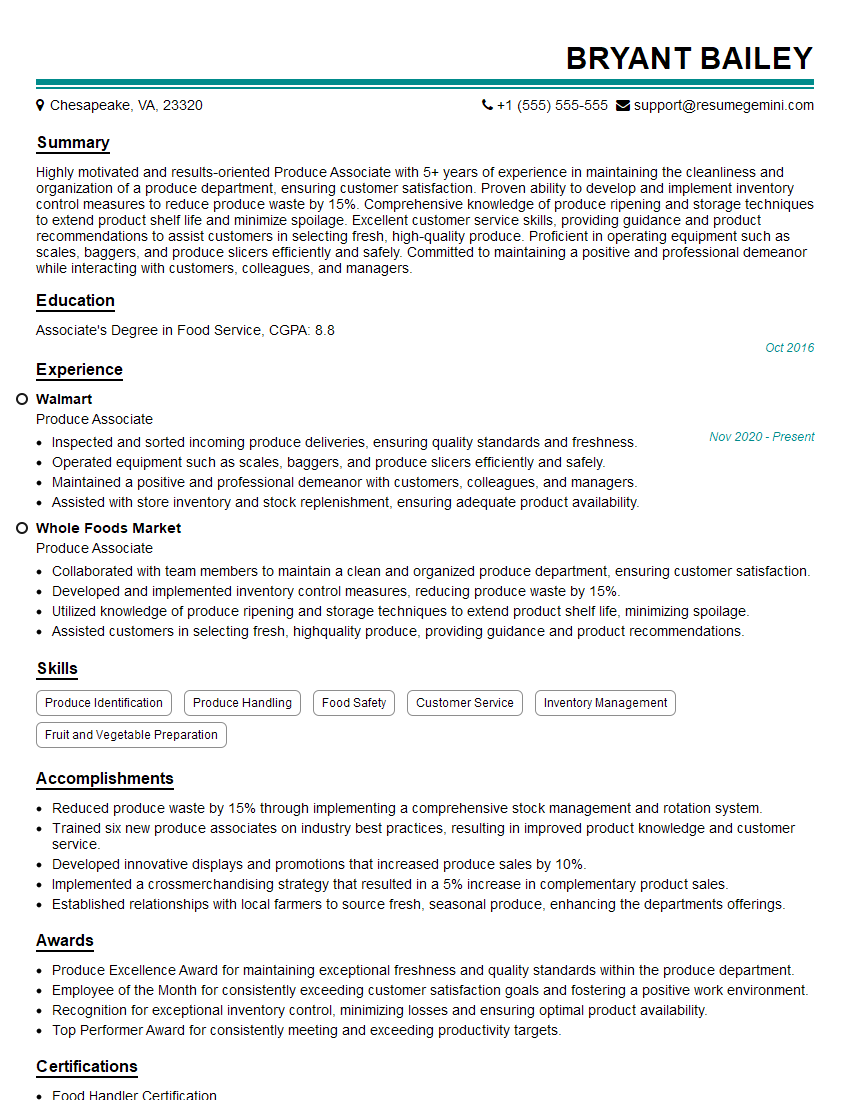
Produce Associate Resume Sample

Produce Clerk Resume Sample
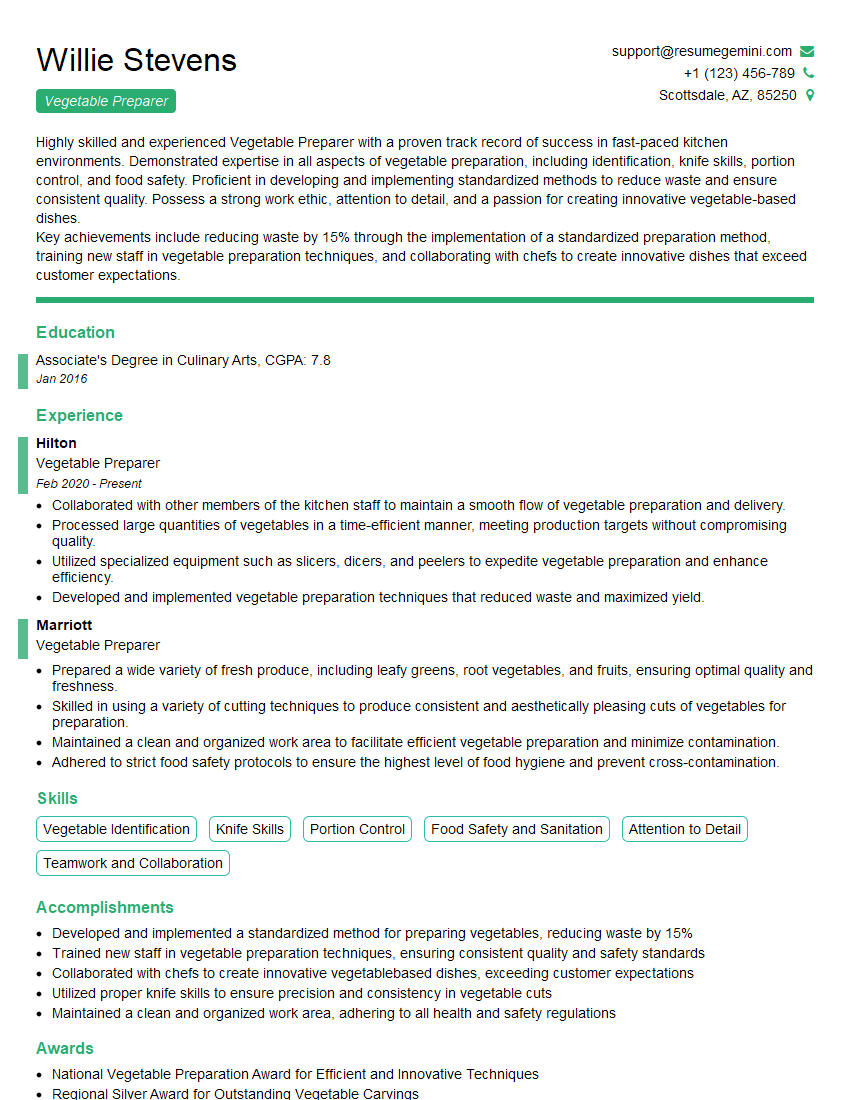
Vegetable Preparer Resume Sample
Explore more articles
Users Rating of Our Blogs
Share Your Experience
We value your feedback! Please rate our content and share your thoughts (optional).
What Readers Say About Our Blog
Very informative content, great job.
good