Cracking a skill-specific interview, like one for Vehicle Safety and Occupant Protection, requires understanding the nuances of the role. In this blog, we present the questions you’re most likely to encounter, along with insights into how to answer them effectively. Let’s ensure you’re ready to make a strong impression.
Questions Asked in Vehicle Safety and Occupant Protection Interview
Q 1. Explain the difference between active and passive safety systems.
Active and passive safety systems work together to protect vehicle occupants, but they differ fundamentally in how they prevent or mitigate accidents. Active safety systems prevent crashes or lessen their severity by intervening before an impact occurs. Passive safety systems, on the other hand, are designed to protect occupants during a crash.
- Active Safety: Think of these as systems that help you avoid a crash. Examples include Anti-lock Braking Systems (ABS), Electronic Stability Control (ESC), Adaptive Cruise Control (ACC), Lane Departure Warning (LDW), and Automatic Emergency Braking (AEB). These systems actively monitor driving conditions and intervene to maintain control or prevent collisions.
- Passive Safety: These systems are deployed after a collision has occurred to minimize injuries. Examples include seatbelts, airbags, crumple zones, and side impact beams. Their purpose is to absorb impact energy and cushion the occupants from the forces of a crash.
Imagine a scenario where a driver is distracted and veers off the road. The active safety systems like LDW might alert the driver, and AEB could automatically brake the vehicle to avoid a collision. If a collision still occurs, the passive safety systems like airbags and seatbelts will work to protect the occupants from the impact.
Q 2. Describe your experience with Finite Element Analysis (FEA) in crash simulation.
I have extensive experience using Finite Element Analysis (FEA) in crash simulation, specifically with LS-DYNA and Abaqus. My work involves creating detailed finite element models of vehicle structures, including materials like steel, aluminum, and composites. These models are used to simulate various crash scenarios, such as frontal, side, and rollover impacts. The software calculates stress, strain, and deformation during the impact, helping to understand how the vehicle behaves and how effectively it protects its occupants.
For example, in one project we used FEA to optimize the design of a vehicle’s front bumper beam. By modifying the beam’s geometry and material properties in the FEA model, we were able to reduce peak forces transmitted to the passenger compartment during a frontal impact, improving overall occupant safety. This involved iterative simulations and analysis of the results to achieve the desired performance, ensuring compliance with relevant safety regulations.
My expertise also extends to validating FEA results against physical crash test data. This process ensures the accuracy and reliability of the simulations and enables the use of simulations to guide design improvements with greater confidence.
Q 3. What are the key regulations and standards you are familiar with (e.g., FMVSS, ECE R)?
I am very familiar with numerous vehicle safety regulations and standards. These guidelines ensure consistent safety levels across different vehicles and manufacturers. Key regulations I frequently work with include:
- Federal Motor Vehicle Safety Standards (FMVSS): These are US regulations that cover various aspects of vehicle safety, including crashworthiness, lighting, and braking.
- United Nations Economic Commission for Europe Regulations (ECE R): These are globally recognized regulations, often adopted by countries outside the US, providing a harmonized approach to vehicle safety.
- Euro NCAP: While not strictly a regulation, Euro NCAP’s independent crash testing and rating system significantly influences vehicle design and consumer perception of safety. Similar programs exist worldwide, such as IIHS in the US.
My work frequently involves ensuring designs meet or exceed these standards through simulations, physical testing, and analysis. Understanding these regulations is crucial for developing safe and legally compliant vehicles.
Q 4. How do you determine the severity of an injury in a vehicle crash?
Determining injury severity in a vehicle crash involves a multi-faceted approach, combining data from various sources. The most common method utilizes the Abbreviated Injury Scale (AIS). This scale assigns a numerical value (1-6) to each injury based on its severity, with 6 being fatal. This is often combined with the Maximum Abbreviated Injury Scale (MAIS), which identifies the most severe injury sustained by an occupant.
Data sources include:
- Crash test dummies: Instrumented dummies provide kinematic data (movement) and acceleration data during a crash, allowing us to estimate injury risk based on forces experienced by different body parts.
- Human Body Models (HBMs): Sophisticated computer models simulate human response to crash forces, providing detailed injury predictions. These models are crucial for understanding injury mechanisms and optimizing vehicle design.
- Post-crash investigation: In real-world accidents, medical reports, accident reconstruction, and occupant statements are crucial for understanding injury patterns and severity.
Analyzing this combined data allows for a comprehensive assessment of injury severity and helps identify areas for vehicle design improvement to minimize the likelihood and severity of injuries.
Q 5. Explain your understanding of Human Body Models (HBM) in crash simulation.
Human Body Models (HBMs) are sophisticated computer models that represent the human body’s anatomical structure, material properties, and biomechanical behavior. They are crucial for predicting occupant injuries in vehicle crashes. HBMs range in complexity, from simple models focusing on a few key body segments to highly detailed models incorporating thousands of elements representing individual bones, organs, and tissues.
In crash simulations, HBMs interact with the vehicle’s interior and restraint systems. The model simulates the forces acting on the body during a crash and predicts injuries based on these forces and the body’s response. Different HBMs are used depending on the specific needs of the simulation and the type of injury being studied. For example, a simpler HBM might suffice for assessing overall impact forces, while a more complex model would be necessary for analyzing head injuries.
The accuracy of injury predictions relies heavily on the fidelity of the HBM and its calibration to experimental data. Constant refinement and validation are necessary to ensure their reliability and contribute to improved vehicle safety.
Q 6. Describe your experience with different types of crash testing (e.g., frontal, side, rollover).
My experience encompasses a wide range of crash testing, including frontal, side, rear, rollover, and pole impacts. Each test type assesses different aspects of vehicle safety and requires specific test procedures and instrumentation.
- Frontal Impact: This assesses the vehicle’s ability to protect occupants in head-on collisions, focusing on the structure’s ability to absorb energy and prevent intrusion into the passenger compartment.
- Side Impact: Evaluates the vehicle’s ability to withstand side collisions, often focusing on the protection of the chest and pelvis.
- Rear Impact: Assesses the effects of being struck from behind, commonly examining whiplash risk and seat-back integrity.
- Rollover: Focuses on the vehicle’s behavior during a rollover event, evaluating roof strength and the effectiveness of occupant restraint systems.
- Pole Impact: Simulates impacts against a rigid object, often used for assessing side impact performance.
Each test uses instrumented crash dummies and high-speed cameras to record the event, providing data for analyzing the vehicle’s structural performance and the protection it offers to occupants. The data gathered informs design improvements and enhances vehicle safety.
Q 7. How do you evaluate the effectiveness of a restraint system (seatbelts, airbags)?
Evaluating the effectiveness of a restraint system like seatbelts and airbags involves a combination of crash testing, simulation, and data analysis. We assess several key aspects:
- Load Distribution: How effectively do the restraints distribute impact forces across the occupant’s body, minimizing concentrated forces that could cause injuries?
- Kinematic Performance: How well do the restraints control the occupant’s movement during a crash, preventing excessive excursions (movement) that could lead to contact with the interior?
- Injury Prediction: Using HBMs in simulations, we predict the severity of injuries that would likely occur with and without the restraint systems in place.
- Deployment Timing and Sequencing: For airbags, the proper deployment timing and coordination with the seatbelt are crucial for optimal protection. Too early, and the airbag could hit the occupant before they are in position; too late, and its effectiveness is reduced.
- Restraint System Integrity: We assess whether the seatbelts or airbags performed as designed and maintained structural integrity during the impact.
The combination of crash test data and simulation results enables a comprehensive assessment of the restraint system’s performance and guides improvements to enhance occupant protection.
Q 8. What are the challenges in designing safety systems for autonomous vehicles?
Designing safety systems for autonomous vehicles presents unique challenges beyond those in traditional vehicles. The core issue lies in the shift from a human driver’s reactive responses to a pre-programmed, algorithmic approach. This introduces complexities in predicting behavior in unexpected scenarios, managing sensor limitations, and ensuring fail-safe mechanisms.
- Unpredictable Environmental Interactions: Autonomous vehicles must react safely to unpredictable human actions (pedestrian jaywalking, erratic driving), weather conditions (heavy rain, snow), and unexpected road obstacles (debris, animals).
- Sensor Fusion and Reliability: ADAS relies on multiple sensors (cameras, lidar, radar) which can fail individually or provide conflicting data. Robust fusion algorithms are crucial to create a reliable perception of the environment.
- Ethical Decision-Making: In unavoidable accident scenarios, the autonomous system must make difficult ethical decisions, potentially involving minimizing harm to occupants, pedestrians, or other vehicles. Defining and programming these decisions is a significant ethical and engineering challenge.
- Cybersecurity Threats: Autonomous vehicles are susceptible to hacking, which could compromise their safety systems. This requires robust cybersecurity measures to prevent malicious attacks.
- Validation and Verification: Testing and validating the safety of autonomous systems is significantly more challenging than traditional vehicles due to the vast number of possible scenarios and interactions. Rigorous simulation and testing methodologies are essential.
For example, consider a scenario where a child unexpectedly darts into the street. A human driver might instinctively react, but an autonomous system must quickly process sensor data, make a decision (brake, swerve), and execute it safely within milliseconds. The complexity of this scenario highlights the significant challenges in ensuring safety in autonomous driving.
Q 9. Explain your understanding of occupant kinematics during a crash.
Occupant kinematics describes the movement of the body’s parts during a crash. Understanding this is crucial for designing effective restraint systems. In a collision, the body experiences significant forces, and its movement is determined by factors such as the vehicle’s deceleration, the type of impact, and the effectiveness of the restraint system.
The initial impact causes the vehicle to decelerate rapidly. The unrestrained occupant continues moving at the pre-impact speed until stopped by contact with the interior of the vehicle (dashboard, steering wheel, windshield) or by the restraint system (seatbelt, airbag). This movement can result in severe injuries, such as head impact, chest compression, or extremity fractures. Effective restraint systems are designed to control this movement, minimizing the forces experienced by the occupant.
For example, during a frontal impact, an occupant’s head can move forward violently, potentially striking the windshield or dashboard. A properly functioning airbag can mitigate this movement by reducing the head’s deceleration rate and distributing the impact force over a larger area. Seatbelts prevent ejection and control the overall occupant movement, reducing the risk of impact with interior components.
Sophisticated crash test dummies are instrumental in studying occupant kinematics. They are instrumented to measure various parameters such as acceleration, forces, and displacements at multiple body locations. This data is used to refine the design of restraint systems and improve their effectiveness.
Q 10. How do you interpret crash test data and reports?
Crash test data and reports are meticulously analyzed to assess the safety performance of vehicle structures and restraint systems. The process involves examining various metrics and interpreting them within the context of safety regulations and industry best practices.
- Injury Criteria: The primary focus is on evaluating occupant injury risk using metrics like Head Injury Criterion (HIC), chest acceleration, and femur load. These are compared to established thresholds to determine the severity of potential injuries.
- Structural Performance: Analyzing the vehicle’s structural response involves assessing intrusion levels in the passenger compartment, evaluating the integrity of critical structural members, and determining the load paths during the collision.
- Restraint System Performance: The analysis focuses on evaluating the effectiveness of the seatbelts, airbags, and other restraint systems in controlling occupant movement and mitigating injury risk. Belt load, airbag deployment timing, and occupant kinematics are key aspects considered.
- Data Visualization: Crash test data is often visualized using high-speed video analysis, finite element analysis (FEA) simulations, and other visualization techniques to better understand the collision sequence and identify areas for improvement.
For instance, a high HIC value indicates a high risk of head injury. Excessive intrusion into the passenger compartment suggests weaknesses in the vehicle’s structure. Understanding these correlations allows engineers to pinpoint design weaknesses and implement improvements to enhance occupant protection.
Reports are usually created following standardized formats which outline the test conditions, test results, and conclusions. These reports are crucial for regulatory compliance, vehicle development, and understanding the safety performance of different vehicles.
Q 11. What are some common failure modes of safety-critical components?
Safety-critical components, like airbags, electronic control units (ECUs), and sensors, can fail in various ways, potentially leading to severe consequences. Understanding these failure modes is crucial for designing robust and reliable systems.
- Mechanical Failures: Wear and tear, fatigue, corrosion, or manufacturing defects can cause mechanical failures in components like seatbelts, steering systems, and braking systems.
- Electrical Failures: Short circuits, open circuits, component degradation, or power supply issues can lead to malfunctions in ECUs, sensors, and actuators.
- Software Failures: Bugs in software code can cause unexpected behavior or malfunctions in electronic control systems, including ADAS features.
- Environmental Failures: Exposure to extreme temperatures, moisture, or vibrations can degrade the performance or cause failure of electronic and mechanical components.
- Human Error: Incorrect installation, maintenance, or operation can contribute to the failure of safety-critical components.
For example, an airbag deployment failure could occur due to a faulty sensor, a malfunctioning ECU, or a problem with the airbag inflator. Similarly, a brake system failure could result from hydraulic leaks, wear and tear of brake pads, or malfunctioning electronic control systems. Systematic failure analysis techniques, including Fault Tree Analysis (FTA) and Failure Modes and Effects Analysis (FMEA), are employed to identify and mitigate potential failures.
Q 12. Describe your experience with durability and fatigue analysis related to safety components.
Durability and fatigue analysis are crucial in ensuring the long-term reliability and safety of safety components. My experience involves using various methods to predict and prevent component failure under repeated loading conditions.
Durability analysis focuses on evaluating a component’s ability to withstand expected loads and stresses throughout its design life. This often involves FEA simulations that apply realistic load cases to the component’s model and evaluate its structural integrity. Material properties, manufacturing processes, and service environments are all carefully considered.
Fatigue analysis assesses a component’s resistance to failure under cyclic loading. This is particularly important for components subjected to repeated stress variations, such as suspension parts, seatbelts, and chassis components. Fatigue analysis often uses stress-life curves or strain-life curves, which relate the applied stress or strain to the number of cycles to failure. This helps to estimate the component’s lifespan under real-world operating conditions.
I have extensive experience in utilizing software such as Abaqus and ANSYS for conducting both durability and fatigue analyses. These tools allow us to model complex geometries and loading scenarios, predicting the potential for failure before physical prototypes are built. The results help in optimizing designs to improve component life and overall safety.
For example, in analyzing a seatbelt’s durability, we would simulate repeated loading cycles to ensure it can withstand the stresses of many years of use, preventing sudden breakage during a collision. Likewise, fatigue analysis of a suspension component would ensure it can handle repeated loading from road imperfections without developing cracks.
Q 13. How do you ensure the safety and reliability of a new safety system?
Ensuring the safety and reliability of a new safety system requires a multi-faceted approach encompassing rigorous testing, verification, and validation processes.
- Requirements Definition: Clearly define functional and safety requirements for the system, ensuring they meet relevant standards and regulations.
- Design Reviews: Conduct thorough design reviews involving experts from different disciplines to identify potential weaknesses and risks.
- Simulation and Testing: Extensive testing is crucial, including virtual simulations using FEA and hardware-in-the-loop (HIL) testing for realistic scenarios. Testing must encompass both normal and abnormal operating conditions.
- Verification and Validation: Verify that the system design and implementation meet the defined requirements. Validate that the system performs its intended function reliably and safely in real-world conditions.
- Certification and Compliance: Ensure the system complies with all relevant safety standards and regulations, obtaining necessary certifications.
- Failure Mode and Effects Analysis (FMEA): Conduct a comprehensive FMEA to identify potential failure modes and their effects on the system’s performance. This analysis helps mitigate risks and improve the system’s robustness.
For example, a new airbag system would be tested extensively using crash dummies and real-world crash scenarios to validate its effectiveness in different collision types. The ECU would be subjected to environmental tests to ensure reliable operation under harsh conditions. After all testing is complete and the system meets safety standards, the product will receive necessary certifications.
Q 14. Explain your understanding of different types of sensors used in advanced driver-assistance systems (ADAS).
Advanced Driver-Assistance Systems (ADAS) rely on a diverse array of sensors to perceive the vehicle’s surroundings and assist the driver or automate driving functions. Different sensors offer unique capabilities and limitations.
- Cameras: Cameras provide visual information about the environment, enabling features such as lane keeping assist, adaptive cruise control, and automatic emergency braking. They are cost-effective but can be affected by poor lighting and weather conditions.
- Radar: Radar sensors use radio waves to detect objects and measure their range and relative velocity. They are effective in various weather conditions but provide less detailed information compared to cameras.
- LiDAR (Light Detection and Ranging): LiDAR uses lasers to create a high-resolution 3D map of the environment. It provides highly accurate distance and object information but can be more expensive and sensitive to environmental conditions.
- Ultrasonic Sensors: Ultrasonic sensors use sound waves to detect nearby objects. They are mainly used for parking assistance and collision avoidance at low speeds. Their range is limited.
- GPS (Global Positioning System): GPS provides location and navigation information, supporting features such as lane departure warning and navigation systems. It can be affected by signal interference and accuracy limitations.
The effectiveness of ADAS relies on the intelligent fusion of data from multiple sensors to create a comprehensive and reliable perception of the environment. For example, a system combining cameras, radar, and ultrasonic sensors can provide a more robust and reliable object detection and tracking capability than any single sensor alone. This sensor fusion is crucial for handling challenging scenarios and improving overall safety.
Q 15. Describe your experience with safety validation and verification processes.
Safety validation and verification are crucial processes to ensure a vehicle meets its safety targets. Validation confirms the design meets the specified requirements, while verification checks if the design and implementation align with the specifications. My experience spans all phases, from initial concept design reviews to final vehicle testing. This includes:
- Requirements Traceability: Ensuring each safety requirement is addressed throughout the design and testing process, often using tools to manage this complex relationship.
- Testing and Simulation: Extensive use of both physical crash testing (e.g., frontal impact, side impact, rollover) and computational simulations (LS-DYNA, MADYMO) to assess performance against targets.
- Failure Mode and Effects Analysis (FMEA): Proactively identifying potential failure modes and their impact on safety, allowing for mitigation strategies during the design phase. We use a structured approach to document the likelihood, severity, and detectability of each potential failure.
- Data Analysis: Thorough analysis of test data (both physical and simulated) to identify areas needing improvement and to demonstrate compliance with regulatory standards and internal targets. This often involves statistical analysis techniques to quantify uncertainty and risks.
For example, during a recent project involving pedestrian safety, we employed high-speed cameras and advanced sensor systems to capture detailed data during pedestrian impact simulations. This data helped us fine-tune the design of the front bumper to meet stringent pedestrian protection requirements.
Career Expert Tips:
- Ace those interviews! Prepare effectively by reviewing the Top 50 Most Common Interview Questions on ResumeGemini.
- Navigate your job search with confidence! Explore a wide range of Career Tips on ResumeGemini. Learn about common challenges and recommendations to overcome them.
- Craft the perfect resume! Master the Art of Resume Writing with ResumeGemini’s guide. Showcase your unique qualifications and achievements effectively.
- Don’t miss out on holiday savings! Build your dream resume with ResumeGemini’s ATS optimized templates.
Q 16. How do you balance safety performance with cost and weight constraints?
Balancing safety performance with cost and weight constraints is a constant challenge in vehicle design. It’s a delicate act of optimization. We achieve this through a multi-faceted approach:
- Material Selection: Choosing cost-effective yet high-strength materials like advanced high-strength steels (AHSS) or aluminum alloys. This optimizes both weight and crash performance.
- Design Optimization: Employing computational simulations (e.g., FEA) to optimize the structural design, maximizing crashworthiness while minimizing weight. This allows us to identify the most efficient use of material.
- Targeted Safety Features: Prioritizing the implementation of safety systems based on their effectiveness and cost-benefit analysis. For example, we might prioritize advanced driver-assistance systems (ADAS) with a proven impact on accident reduction.
- Modular Design: Designing components and subsystems that can be shared across multiple vehicle platforms, achieving economies of scale and reducing costs.
Imagine designing a new side impact beam. We might initially explore several materials. A high-strength steel option provides excellent safety performance but might be expensive. An aluminum alloy provides a good balance of weight, strength and cost, which might be the optimal choice after a detailed cost-benefit analysis.
Q 17. What are the ethical considerations in designing vehicle safety systems?
Ethical considerations are paramount in vehicle safety system design. We must consider:
- Safety for all users: Designing systems that protect all occupants, pedestrians, cyclists, and other vulnerable road users, regardless of their size, age, or physical capabilities. This includes considering potential biases embedded in algorithms.
- Fairness and equity: Ensuring that safety technologies are accessible and affordable to all, preventing a disparity in safety based on socio-economic factors.
- Data privacy: Protecting the privacy of users’ data collected by ADAS and other safety systems. We need robust data anonymization and security protocols.
- Transparency and explainability: Making the decision-making processes of autonomous safety systems transparent and understandable, fostering trust and accountability.
- Environmental impact: Considering the environmental impact of materials and manufacturing processes throughout the vehicle lifecycle.
For instance, the design of an autonomous emergency braking (AEB) system must consider its potential to disproportionately affect certain demographic groups if not properly calibrated and tested. Rigorous testing and validation are critical to ensure fairness and equity in its performance.
Q 18. Explain your experience with data acquisition and analysis in crash testing.
My experience with data acquisition and analysis in crash testing is extensive. We use a variety of sensors and data acquisition systems to capture high-fidelity data during physical crash tests. This includes:
- Accelerometers: Measure acceleration and deceleration forces at various points on the vehicle structure.
- Strain gauges: Measure strain in critical structural components.
- High-speed cameras: Provide visual documentation of the crash event for detailed analysis.
- Load cells: Measure forces acting on specific components (e.g., seatbelts, airbags).
The acquired data is then processed and analyzed using specialized software. This involves filtering noise, calibrating sensors, and correlating data from various sources. Techniques like finite element analysis (FEA) are used to validate and refine simulation models using physical test data. For example, accelerometer data from a side impact test might be used to validate the accuracy of a finite element model and improve its prediction capabilities.
Q 19. Describe your experience with different types of safety simulations (e.g., LS-DYNA, MADYMO).
I have extensive experience with various safety simulations, primarily LS-DYNA and MADYMO. LS-DYNA is a powerful explicit finite element code widely used for crashworthiness analysis. MADYMO is a multi-body dynamics code that focuses on occupant kinematics and injury biomechanics. Both are essential for virtual prototyping and optimization of vehicle safety systems.
- LS-DYNA: Used for structural analysis, predicting vehicle deformation and assessing occupant compartment integrity during various crash scenarios (frontal, side, rollover).
- MADYMO: Used for human body modeling, simulating occupant movement and predicting injury risks during crashes. This helps optimize restraint systems (e.g., airbags, seatbelts).
In a recent project, we used LS-DYNA to simulate the performance of a new front-end structure under various impact conditions. We then used MADYMO to assess the impact on the occupant, refining the airbag deployment parameters to minimize injury risk. The combined use of these simulations significantly reduced the need for expensive physical crash testing.
Q 20. How do you stay updated on the latest advancements in vehicle safety technology?
Staying updated on advancements in vehicle safety technology requires a multi-pronged approach:
- Professional Organizations: Active membership in organizations like SAE International provides access to publications, conferences, and networking opportunities with leading experts.
- Industry Publications and Journals: Regularly reading industry publications (e.g., Automotive Engineering International) and scientific journals to stay abreast of the latest research and developments.
- Conferences and Workshops: Attending relevant conferences and workshops (e.g., International Congress and Exposition) to learn from presentations and interact with other professionals.
- Online Resources: Utilizing online resources, databases, and professional networks to access technical papers, presentations, and industry news.
For instance, I actively participate in SAE committees focused on vehicle safety and attend their conferences regularly to learn about new standards and emerging technologies. This constant engagement ensures my expertise remains at the forefront of the field.
Q 21. Describe your experience with root cause analysis of safety-related incidents.
Root cause analysis of safety-related incidents is critical for improving vehicle safety. This typically involves a systematic approach such as the ‘5 Whys’ method or a more formal approach like Fault Tree Analysis (FTA). My experience includes:
- Data Collection: Gathering comprehensive data from various sources including accident reports, witness statements, vehicle data recorders (black boxes), and forensic investigations.
- Incident Reconstruction: Reconstructing the events leading up to the incident to identify contributing factors and sequence of events.
- Failure Analysis: Conducting detailed analysis of components and systems involved in the incident to identify failures and their root causes.
- Corrective Actions: Developing and implementing corrective actions to prevent similar incidents from occurring in the future. This might involve design modifications, improved manufacturing processes, or enhanced driver training programs.
In one case, we investigated a series of similar accidents involving a specific model’s braking system. Through a systematic analysis, we identified a manufacturing defect in a critical brake component as the root cause. This led to a recall and subsequent design improvements to prevent future occurrences.
Q 22. What are the key factors influencing pedestrian safety in vehicle design?
Pedestrian safety in vehicle design hinges on minimizing the severity of impact during a collision. This involves a multi-faceted approach focusing on vehicle design features that protect pedestrians from initial impact and subsequent secondary impacts.
External Vehicle Design: Features like rounded edges, deformable front-end structures, and strategically placed impact-absorbing materials (like energy-absorbing foams) help reduce pedestrian injuries by distributing impact forces more effectively. Think of it like crumple zones, but for pedestrians.
Active Safety Systems: Advanced Driver-Assistance Systems (ADAS) play a crucial role. Automatic Emergency Braking (AEB) systems with pedestrian detection can significantly reduce the likelihood of a collision altogether. Similarly, speed limitation and adaptive cruise control contribute by ensuring safer speeds in urban areas where pedestrians are more prevalent.
Vehicle Hood Design: The shape and height of the vehicle’s hood directly affect the trajectory of a pedestrian’s body after impact. A well-designed hood can help prevent the pedestrian from sliding under the vehicle, reducing the risk of serious injury to the head and lower limbs.
Sensor Integration: Integrating sensors into the vehicle’s front end to detect pedestrians and initiate countermeasures is crucial. This is closely linked to AEB systems and contributes to overall pedestrian safety by providing early warning of potential collisions.
For example, I worked on a project where we optimized the bumper design to reduce the risk of leg injuries by using a specific combination of materials with varying stiffness to absorb and distribute impact forces more effectively.
Q 23. Explain your understanding of the role of material science in occupant protection.
Material science is absolutely fundamental to occupant protection. The choice of materials directly influences a vehicle’s ability to absorb and distribute energy during a crash, thereby minimizing the forces transferred to the occupants. This involves a deep understanding of material properties like tensile strength, yield strength, ductility, and energy absorption capabilities.
High-Strength Steels: These steels are essential in creating strong yet lightweight vehicle structures that can withstand significant impact forces. Different grades offer varying properties, allowing engineers to optimize the design for specific areas of the vehicle.
Aluminum Alloys: Lightweight yet strong, aluminum is increasingly used in vehicle bodies and structures to reduce overall vehicle weight, thereby improving fuel efficiency without compromising safety. It also helps improve the energy absorption characteristics of certain vehicle components.
Composite Materials: Carbon fiber reinforced polymers (CFRP) and other composite materials offer high strength-to-weight ratios, making them suitable for critical structural components like the passenger compartment. These materials offer greater design flexibility compared to traditional steel.
Energy-Absorbing Foams: These are used in various applications, including dashboards, steering wheels, and seat components, to reduce the impact forces during a collision. The selection of foam type and density is crucial in optimizing energy absorption.
For instance, in a recent project we evaluated the performance of various high-strength steel grades in crash simulations to determine the optimal material for the B-pillar to meet stringent safety regulations while minimizing vehicle weight.
Q 24. Describe your experience working with regulatory bodies on safety compliance.
My experience working with regulatory bodies like NHTSA (National Highway Traffic Safety Administration) and similar international bodies has been extensive. This involves ensuring that all vehicle designs and safety systems comply with the relevant safety standards and regulations. This process often requires meticulous documentation, rigorous testing, and close collaboration with certification agencies.
Regulatory Compliance: This involves understanding and adhering to all applicable safety standards, such as those related to crashworthiness, pedestrian protection, and occupant restraint systems. This includes keeping abreast of any updates or revisions to these standards.
Testing and Validation: Rigorous testing is essential to demonstrate compliance. This typically involves physical crash tests and sophisticated computer simulations to validate the performance of safety systems under various impact scenarios.
Data Submission and Reporting: Detailed documentation and submission of test data to regulatory bodies is a critical aspect of the compliance process. This involves precise reporting of test methodologies, results, and any deviations from established standards.
Collaboration and Communication: Effective communication and collaboration with regulatory bodies are crucial throughout the process. This ensures that any queries or concerns are addressed promptly and transparently. Open communication helps prevent costly delays and potential design revisions.
For example, I led a team that successfully navigated the certification process for a new vehicle model, ensuring that it met all the stringent safety requirements of NHTSA and Euro NCAP, resulting in a successful market launch.
Q 25. How would you approach the design of a new safety system for a specific vehicle type?
Designing a new safety system for a specific vehicle type is a systematic process. It requires a deep understanding of the vehicle’s unique characteristics, its intended use, and the specific safety challenges it may face.
Needs Assessment: This initial phase involves identifying the primary safety concerns related to the specific vehicle type. This might include analyzing crash data for similar vehicles or identifying specific vulnerabilities based on the vehicle’s design and intended operating environment.
Conceptual Design: Based on the needs assessment, we generate several conceptual designs for the new safety system. This involves exploring various technologies and approaches to address the identified safety concerns. Feasibility studies are conducted to assess the practicality and cost-effectiveness of each concept.
Detailed Design and Simulation: The most promising concept is then developed into a detailed design using computer-aided design (CAD) tools. Extensive computer simulations are employed to evaluate the system’s performance under various crash scenarios. This allows for iterative refinement of the design.
Prototyping and Testing: A prototype of the safety system is built and rigorously tested, both in virtual simulations and physical crash tests. The test results are analyzed to identify areas for improvement and to validate that the system meets the performance targets.
Validation and Certification: Once the system’s performance meets the required standards, it undergoes validation and certification by the relevant regulatory authorities. This involves submitting detailed documentation and test reports to obtain the necessary approvals.
For example, when designing a new safety system for a commercial van, we might prioritize side-impact protection given its higher risk of side collisions compared to passenger cars.
Q 26. Explain your understanding of the different types of airbag systems and their deployment mechanisms.
Airbag systems are crucial for occupant protection. Several types exist, each with unique deployment mechanisms:
Frontal Airbags: These are the most common type, deployed from the steering wheel and dashboard to protect the driver and front passenger in frontal collisions. They typically use a pyrotechnic inflator that rapidly fills a nylon bag with gas.
Side Airbags: These deploy from the side of the seats or the door panels to protect occupants from side impacts. They are often curtain airbags or thorax airbags focusing on head and torso protection. Their deployment relies on the same pyrotechnic inflator principle, but sensors are positioned strategically to detect side impacts.
Knee Airbags: Located beneath the dashboard or in the instrument panel, these airbags help protect the driver’s knees and legs in a frontal collision, preventing under-riding injuries.
Curtain Airbags: These airbags deploy from the roofline to protect occupants’ heads in side impacts or rollovers. They provide head and neck protection, and their deployment is often coordinated with side airbags.
Deployment Mechanisms: Most airbags use a pyrotechnic inflator, which is a small explosive charge that rapidly generates gas to inflate the airbag. The inflator is activated by crash sensors that detect a sudden deceleration or impact. These sensors use accelerometers and gyroscopes to assess the severity and type of impact, triggering the inflator only when necessary. Advanced systems may use multiple sensors and algorithms to refine the deployment logic and optimize the protection provided.
For example, in a recent project I worked on, we investigated improving the deployment algorithm of curtain airbags to better respond to side impacts with varying angles and speeds.
Q 27. What are the key performance indicators (KPIs) used to measure the effectiveness of vehicle safety systems?
Key Performance Indicators (KPIs) for measuring the effectiveness of vehicle safety systems are crucial for continuous improvement and benchmarking. They are often categorized into several areas:
Crash Test Results: These are based on standardized crash tests, such as frontal, side, and rollover tests. Metrics include injury criteria (e.g., AIS – Abbreviated Injury Scale), dummy kinematics (movement of the dummy), and structural performance (deformation of the vehicle).
Real-World Accident Data: Analysis of real-world accidents involving the vehicle provides valuable insights into the system’s effectiveness in real-life scenarios. This data informs continuous improvement and helps understand the limitations of existing systems.
Injury Severity Reduction: The percentage reduction in injury severity (measured using AIS) resulting from the implementation of a safety system is a key metric. It quantifies the effectiveness of the system in preventing or mitigating injuries.
System Deployment Rates: For active safety systems (e.g., AEB), the deployment rate is important. It shows how often the system correctly identifies and responds to hazardous situations.
False-Positive/False-Negative Rates: For active systems, analyzing the rates of unnecessary deployments (false positives) and failures to deploy when needed (false negatives) is critical to assess the system’s reliability and accuracy.
These KPIs, when evaluated together, provide a comprehensive assessment of the effectiveness of a vehicle’s safety systems. For instance, a high injury severity reduction combined with a low false-positive rate indicates a well-designed and highly effective safety system.
Q 28. How do you handle conflicting design requirements related to safety and other vehicle performance aspects?
Handling conflicting design requirements between safety and other vehicle performance aspects (e.g., fuel efficiency, cost, weight) is a common challenge in vehicle engineering. It requires a balanced approach to find optimal solutions:
Prioritization and Trade-off Analysis: This step involves clearly defining priorities and identifying potential trade-offs between safety and other performance aspects. A weighted scoring system can be used to quantify the relative importance of different design criteria.
Multi-Objective Optimization: Optimization techniques are employed to find the best compromise solution that meets all design requirements as closely as possible. This often involves using computer simulations and optimization algorithms.
Material Selection and Design Innovation: The choice of materials and innovative design solutions play a significant role in balancing conflicting requirements. For example, using lightweight yet high-strength materials helps reduce vehicle weight while maintaining safety.
Iterative Design Process: An iterative design process allows for continuous refinement and adjustment based on simulation results and testing data. This approach helps identify and address potential conflicts early in the design process.
Collaboration and Communication: Open communication and collaboration among different engineering teams (safety, design, manufacturing, etc.) is vital. This ensures that all concerns are addressed and a holistic solution is developed.
For instance, in one project, we needed to balance weight reduction for better fuel economy with the need for robust crashworthiness. We used advanced high-strength steel in critical areas, coupled with aluminum in less critical sections, to achieve a balance between weight savings and safety performance.
Key Topics to Learn for Vehicle Safety and Occupant Protection Interview
- Crashworthiness: Understanding vehicle structural design, impact dynamics, and energy absorption mechanisms. Consider the role of different materials and their properties in mitigating injury.
- Passive Safety Systems: Deep dive into the design, function, and limitations of seatbelts, airbags (various types), and child restraints. Analyze real-world crash scenarios and how these systems performed.
- Active Safety Systems: Explore technologies like Electronic Stability Control (ESC), Anti-lock Braking Systems (ABS), Autonomous Emergency Braking (AEB), and lane departure warnings. Understand their operational principles and limitations.
- Injury Biomechanics: Familiarize yourself with the mechanics of human injury in crashes, including head injuries, spinal cord injuries, and other common trauma. Knowing the injury criteria (e.g., HIC, G-forces) will be beneficial.
- Regulations and Standards: Understand relevant safety standards and regulations (e.g., FMVSS, ECE R regulations). Discuss how these standards influence vehicle design and testing procedures.
- Testing and Simulation: Gain familiarity with various crash testing methods (e.g., frontal, side, rollover) and numerical simulation techniques (e.g., finite element analysis, FEA) used in vehicle safety assessment.
- Occupant Modeling and Simulation: Understand the use of human body models (e.g., Hybrid III) in simulating occupant kinematics during a crash and predicting injury risk.
- Data Analysis and Interpretation: Practice interpreting crash test data, analyzing sensor measurements, and drawing meaningful conclusions for design improvements.
Next Steps
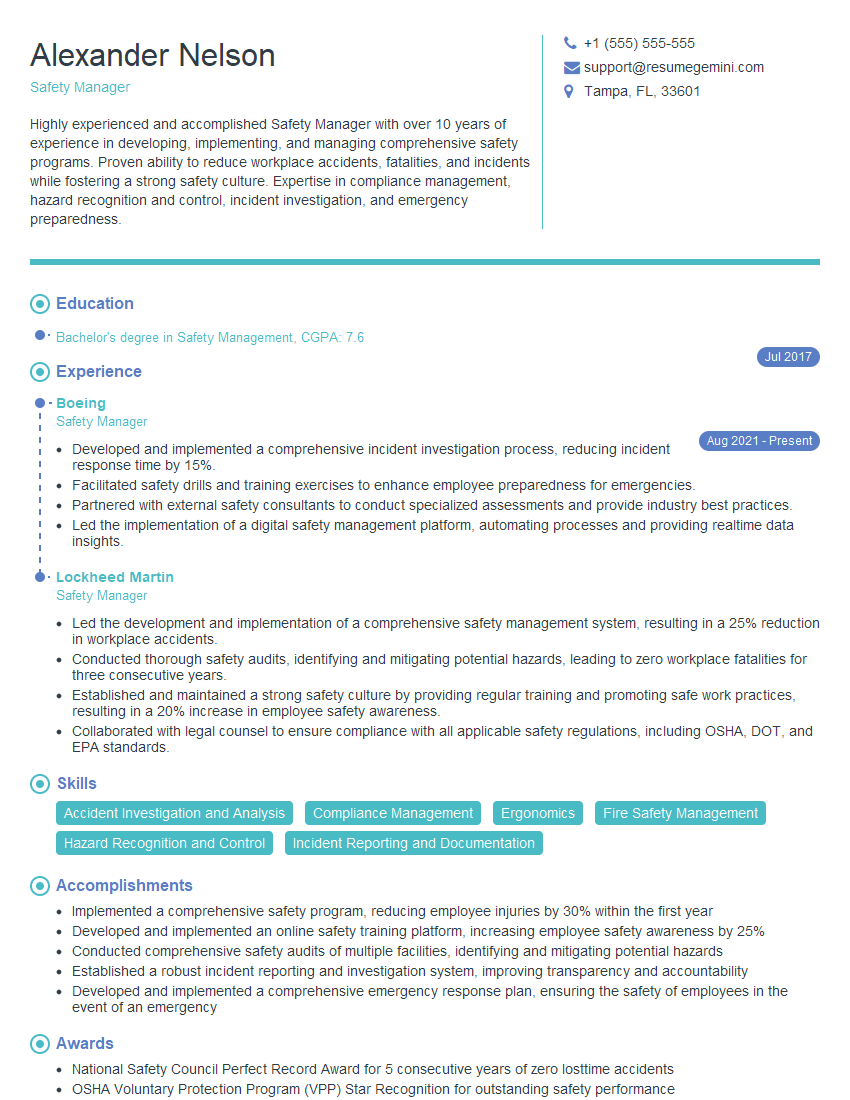
Mastering Vehicle Safety and Occupant Protection opens doors to exciting career opportunities and allows you to contribute significantly to enhancing road safety and saving lives. To maximize your job prospects, create a compelling and ATS-friendly resume that highlights your skills and experience effectively. ResumeGemini is a trusted resource to help you build a professional resume that showcases your qualifications to potential employers. We provide examples of resumes tailored specifically to the Vehicle Safety and Occupant Protection field to help you get started. Invest time in crafting a strong resume; it’s your first impression and crucial for landing your dream job.
Explore more articles
Users Rating of Our Blogs
Share Your Experience
We value your feedback! Please rate our content and share your thoughts (optional).
What Readers Say About Our Blog
Very informative content, great job.
good