The right preparation can turn an interview into an opportunity to showcase your expertise. This guide to Fire Support Planning interview questions is your ultimate resource, providing key insights and tips to help you ace your responses and stand out as a top candidate.
Questions Asked in Fire Support Planning Interview
Q 1. Describe the process of target acquisition and designation in fire support.
Target acquisition and designation are critical first steps in effective fire support. Target acquisition is the process of locating and identifying enemy targets, while target designation is the process of precisely pinpointing those targets for the fire support assets to engage. Think of it like this: acquisition is finding the enemy, and designation is giving the artillery the exact address.
The process typically involves several steps:
- Intelligence Gathering: Utilizing reconnaissance assets (drones, scouts, etc.) to identify potential enemy positions, concentrations, or equipment.
- Target Confirmation: Verifying the identity and location of the target, ensuring it’s a legitimate military objective and not a civilian area. This often involves using multiple sources of information for validation.
- Target Location Determination: Precisely determining the target’s geographic coordinates using GPS, maps, or other location systems. Accuracy is paramount here as it directly affects the accuracy of fire.
- Target Designation: Transmitting the target’s location and other pertinent information (size, type, etc.) to the fire support coordination center (FSCC) or relevant fire support asset. This often involves using standardized formats and communication protocols to ensure clarity and avoid errors.
- Confirmation of Engagement: After the fire mission is completed, assessing the effectiveness and confirming target destruction or neutralization.
For example, a forward observer (FO) might spot an enemy tank column using binoculars. They would then use their GPS and a communication system to provide the precise grid coordinates, number of tanks, and type of threat to the FSCC. The FSCC would then pass this information on to the artillery unit for engagement.
Q 2. Explain the difference between suppressive and destructive fire.
Suppressive and destructive fire have distinct purposes. Suppressive fire aims to neutralize enemy forces without necessarily destroying their equipment or positions. It’s about making them unable to effectively fight back, forcing them to take cover or limiting their actions. Destructive fire, on the other hand, aims to physically destroy enemy equipment, infrastructure, or personnel.
Think of a boxer: suppressive fire is like a flurry of jabs – keeping your opponent on the defensive and preventing them from launching a devastating counter-attack. Destructive fire is the knockout punch – a single, powerful blow that ends the fight.
Suppressive fire might use high volume of relatively small caliber rounds, while destructive fire might involve fewer, larger, high-explosive rounds aimed at a specific target. The choice depends on the tactical situation and desired outcome.
Q 3. How do you coordinate fire support with maneuver elements?
Coordinating fire support with maneuver elements is crucial for combined arms success. It requires seamless communication, careful planning, and a shared understanding of objectives. The maneuver commander identifies targets of opportunity and needs, then passes this information to the fire support coordinator (FSCOORD). The FSCOORD integrates these requests into the overall fire support plan, considering the timing, location, and capabilities of both maneuver and fire support assets.
Effective coordination involves:
- Close communication channels: Constant contact between maneuver commanders, FSCOORDs, and fire support assets is essential, often using dedicated communication networks.
- Integrated planning: Fire support plans must be directly integrated into the overall maneuver plan, ensuring that fires are synchronized with the movement of troops and achieve the desired effects.
- Clear target prioritization: Targets must be prioritized based on their impact on the maneuver element’s mission. This ensures that fire support is employed efficiently and effectively.
- Continuous assessment: The effectiveness of fire support should be continually assessed and adjusted based on the evolving tactical situation.
For instance, an infantry company advancing on a fortified position might request suppressive fire on enemy machine gun nests to reduce their effectiveness, allowing the company to advance with fewer casualties. This would be coordinated through the FSCOORD and then executed by the appropriate fire support assets.
Q 4. What are the key considerations for selecting the appropriate type of fire support?
Selecting the appropriate type of fire support depends on several factors:
- Type of Target: Different targets require different types of munitions and fire support assets. A lightly armored vehicle might be effectively engaged with artillery, while a heavily fortified bunker may require close air support (CAS) or precision-guided munitions.
- Desired Effects: What outcome is needed? Suppressive fire, destructive fire, or a combination of both?
- Collateral Damage Concerns: Minimizing civilian casualties and property damage is paramount. This often dictates the type and precision of munitions used.
- Time Sensitivity: How quickly is the fire support needed? Immediate suppressive fire may be required to prevent an enemy attack, while more deliberate fires may be planned for a later stage of the operation.
- Available Assets: The fire support assets available significantly influence the type of fire that can be delivered. If only mortars are available, then artillery will not be an option.
For example, engaging a fleeting target like a fast-moving vehicle might necessitate CAS due to its speed and agility, while suppressing a group of enemy soldiers could be achieved with a barrage of indirect fire from mortars.
Q 5. How do you assess the effectiveness of fire support operations?
Assessing the effectiveness of fire support involves a multi-faceted approach:
- Battlefield Observation: Direct observation from forward observers or other ground units is often the most immediate way to assess the impact of fire. This may include reports on target destruction, enemy casualties, or disruption of enemy activities.
- After-Action Reports (AARs): Detailed reports from units involved in the fire support operation, documenting the planning, execution, and effects achieved.
- Imagery Analysis: Drone footage, aerial reconnaissance photos, or satellite imagery can provide visual confirmation of target damage and enemy actions.
- Intelligence Reports: Intelligence gathered after the fire support operation can shed light on the enemy’s reaction, casualties sustained, and impact on their operational capabilities.
A combination of these methods is crucial. For example, after a fire mission targeting an enemy supply depot, analysts might review satellite imagery to confirm damage, assess AARs from ground units to understand how the mission affected the enemy’s subsequent actions, and even utilize intelligence reports to gauge the long-term impact on enemy logistics.
Q 6. Describe the limitations of various fire support assets.
Fire support assets each have limitations:
- Artillery: Limited range, accuracy can be affected by weather, requires precise target location, and is vulnerable to counter-battery fire.
- Mortars: Shorter range than artillery, lower accuracy, but more mobile and adaptable to rapidly changing situations.
- Close Air Support (CAS): Requires clear weather conditions, is vulnerable to anti-aircraft fire, and may have restrictions on the use of certain munitions near friendly forces.
- Naval Gunfire Support: Limited availability, dependent on proximity to sea, and may have limitations on target engagement due to safety concerns.
Understanding these limitations is crucial for effective planning. For example, planning a fire support mission in poor weather conditions would necessitate the use of assets less sensitive to such limitations. Also, relying solely on artillery for a rapid, close-in response to a sudden enemy threat is likely inappropriate – a more agile solution like mortars might be necessary.
Q 7. How do you integrate close air support (CAS) into fire support plans?
Integrating Close Air Support (CAS) into fire support plans requires close coordination and clear communication. CAS offers unique capabilities, but its integration must be carefully considered. The process typically involves:
- Joint Targeting: Identifying targets suitable for CAS, considering factors such as target location, type, and potential for collateral damage.
- Air Coordination Center (ACC): The ACC acts as the central hub for coordinating air assets. They work closely with the FSCOORD to ensure that CAS requests are integrated into the overall fire support plan.
- Rules of Engagement (ROE): Strict adherence to ROE is crucial to prevent fratricide or unintended civilian casualties. CAS missions often require detailed briefing and coordination to ensure compliance.
- Joint Communication: Seamless communication between ground forces, the ACC, and air assets is critical for the success of CAS missions. This often involves dedicated communication channels and standardized procedures.
For instance, if an enemy armored column is detected and needs to be quickly neutralized, a CAS mission might be requested. The FSCOORD would work with the ACC to select appropriate aircraft and weapons, determine the optimal time and approach, and ensure deconfliction with friendly ground forces. The mission would then be executed, with ground forces providing target updates and assessing the results.
Q 8. Explain the importance of battle damage assessment (BDA) in fire support operations.
Battle Damage Assessment (BDA) is absolutely critical in fire support operations. It’s essentially the process of determining the effects of our fires on the enemy and the environment. Without accurate BDA, we’re firing blindly, potentially wasting ammunition, failing to achieve our objectives, and even risking friendly casualties. Think of it like this: you wouldn’t know if your surgery was successful without checking the patient’s recovery, right? Similarly, we need BDA to confirm our fire missions have achieved their intended effects.
BDA involves a variety of methods, from visual observation (using drones, aircraft, or ground observers) to analyzing imagery from satellites or even employing technical intelligence. The information gathered informs future fire support planning by providing a crucial feedback loop. For instance, if we’re targeting a bunker and the initial strike doesn’t destroy it, BDA helps us adjust our targeting parameters – perhaps using a larger caliber or a different type of munition – to improve our chances of success on subsequent strikes.
A robust BDA process improves mission effectiveness, optimizes resource allocation, and ultimately enhances overall combat power by providing vital feedback that can be used to refine fire support plans and tactics.
Q 9. What are the key elements of a fire support plan?
A comprehensive fire support plan is built upon several key elements. First, we need a clear understanding of the commander’s intent – their overall goals for the operation. This helps tailor fire support to directly support the maneuver element’s actions. Next, we define the target acquisition plan, describing how we’ll identify and locate enemy targets. This may involve using forward observers, drones, or other intelligence sources.
We then develop a fire support execution matrix, which outlines the specific fire missions, their priorities, and the supporting assets (e.g., artillery batteries, mortars). We also must account for target prioritization, deciding which targets require immediate attention and which can wait. This often depends on factors like the enemy’s capabilities and the threat posed to our friendly forces. Finally, we must outline communications plans, ensuring seamless communication between all parties involved in the fire support operation. This is crucial for the timely and accurate execution of fire missions. Regular rehearsals and effective communication protocols are vital in minimizing errors and ensuring the success of the plan.
Q 10. How do you ensure the safety of friendly forces during fire support operations?
Ensuring the safety of friendly forces is paramount and is addressed throughout the fire support planning process. We implement strict target selection procedures to avoid civilian casualties and unintended collateral damage. This includes using detailed maps, thoroughly vetting target coordinates, and adhering to stringent rules of engagement (ROE). We incorporate a robust system of fire control measures such as target coordination and clearance procedures, ensuring all fire missions are vetted and cleared before execution.
We must also clearly define and maintain friendly force locations and avoid areas where friendly troops are likely to be present. This involves constant communication with maneuver units, sharing locations and planned movements. The use of digital fire control systems, which help visualize the battlefield and reduce the risk of friendly fire, is essential. Finally, post-fire mission BDA helps assess the impact, ensuring that no unintended harm has been caused. A culture of safety and stringent adherence to procedures are the cornerstones of friendly fire prevention.
Q 11. Describe your experience with different fire support systems (e.g., mortars, artillery, rockets).
My experience encompasses a wide range of fire support systems. I’ve worked extensively with both mortars, providing close-in fire support for infantry units, and artillery, offering longer-range precision fires. I understand the capabilities and limitations of each system. Mortars are excellent for immediate, short-range effects, whereas artillery systems are preferred for longer-range, higher-volume attacks on larger targets. My experience includes planning and executing fire missions utilizing both conventional and precision-guided munitions (PGMs).
I’ve also worked with rocket artillery systems, focusing on their devastating power against area targets and their value in suppressing enemy activity. Each system presents its own unique challenges. For instance, mortar crews need detailed communication and coordination due to the close proximity to friendly forces. Conversely, artillery and rocket systems need careful planning for logistics and the accuracy of long-range fires. Effective fire support necessitates proficiency and experience with a variety of systems and the ability to select the most suitable system for a specific tactical situation.
Q 12. How do you manage and mitigate risks associated with fire support operations?
Risk management in fire support operations is a continuous and multifaceted process. We use a systematic approach that starts with identifying potential hazards such as inaccurate targeting data, communication failures, or unforeseen weather conditions. We then assess the likelihood and severity of each risk. This assessment informs the development of mitigation strategies, which could involve using redundant communication systems, establishing clear target verification protocols, or delaying the fire mission until weather conditions improve.
Risk management is not a one-time activity. We continuously monitor the situation, ensuring the mitigation strategies remain effective. We also regularly conduct after-action reviews to learn from past experiences, identify weaknesses in our processes, and refine our risk management approach. This iterative process ensures we’re constantly improving our ability to manage and mitigate risks, improving our overall safety and the effectiveness of our fire support operations.
Q 13. What are the legal and ethical considerations for fire support?
Legal and ethical considerations are paramount in fire support. We must strictly adhere to the Law of Armed Conflict (LOAC), ensuring our actions are proportionate, discriminate, and only target lawful military objectives. This means we avoid targeting civilian populations or civilian infrastructure unless absolutely necessary and proportional to the military advantage gained. Careful target selection, comprehensive BDA, and adherence to ROE are all vital aspects of maintaining legal and ethical conduct.
Maintaining ethical standards goes beyond mere legal compliance. It involves a culture of accountability and careful consideration of the potential human cost of our actions. We continuously train personnel on LOAC, ethics, and the importance of minimizing collateral damage. Transparency and a commitment to accountability are vital in maintaining high ethical standards and building trust among our allied forces and the local populace.
Q 14. How do you handle communication failures during fire support operations?
Communication failures can be catastrophic during fire support operations. That’s why we employ redundant communication systems, using a combination of methods to ensure reliable contact. These might include radio systems, satellite communications, or even messengers as last resort. In addition to redundancy, we utilize clear communication protocols and standardized terminology to prevent misunderstandings. Regular communication checks are performed to ensure all systems are functioning properly.
Should a communication failure occur, our first step is to identify the nature and extent of the breakdown. Then, we immediately activate contingency plans, using backup systems to re-establish communication. We may also re-evaluate the urgency of the fire mission, prioritizing tasks based on the available information and the ongoing situation. In some cases, we might have to delay or even cancel the fire mission until communication is fully restored. The importance of robust contingency plans and rigorous training for communication procedures cannot be overstated.
Q 15. Explain the concept of ‘fires in support’ vs. ‘fires on target’.
The terms ‘fires in support’ and ‘fires on target’ represent distinct phases in the fire support process. ‘Fires in support’ refers to the overall planning and coordination of fires to achieve a tactical objective. This encompasses the entire process, from initial target identification and prioritization to the execution and assessment of the fires. It’s a broader, more strategic level of planning. ‘Fires on target,’ on the other hand, indicates the actual delivery of fire onto a specific target. This is the execution phase, the culmination of the planning detailed in ‘fires in support’.
Think of it like building a house. ‘Fires in support’ is designing the blueprint, gathering materials, and coordinating the construction crew. ‘Fires on target’ is the act of hammering the nails, laying the bricks, and actually building the house itself.
For example, in an offensive operation, ‘fires in support’ would involve coordinating artillery, mortars, and air strikes to suppress enemy defenses before an infantry assault. ‘Fires on target’ would then be the actual firing of those weapons systems against pre-determined targets during the assault.
Career Expert Tips:
- Ace those interviews! Prepare effectively by reviewing the Top 50 Most Common Interview Questions on ResumeGemini.
- Navigate your job search with confidence! Explore a wide range of Career Tips on ResumeGemini. Learn about common challenges and recommendations to overcome them.
- Craft the perfect resume! Master the Art of Resume Writing with ResumeGemini’s guide. Showcase your unique qualifications and achievements effectively.
- Don’t miss out on holiday savings! Build your dream resume with ResumeGemini’s ATS optimized templates.
Q 16. How do you use terrain analysis to inform fire support plans?
Terrain analysis is absolutely crucial for effective fire support planning. It helps us understand the battlefield’s geometry and how it will affect our ability to deliver effective fire, and also the enemy’s ability to maneuver and defend. We use terrain analysis to identify:
- Observation and Fields of Fire (OF): Identifying areas where we can effectively observe targets and where our weapons systems can engage them without being hindered by obstacles.
- Dead Space: Pinpointing areas that are hidden from our observation and where enemy forces may be concealed.
- Avenues of Approach (AOA): Determining likely enemy routes and positioning our fires to interdict their movement.
- Cover and Concealment: Assessing the availability of cover and concealment for both friendly and enemy forces, which informs target selection and prioritization.
- Obstacles: Identifying natural or man-made obstacles that can affect the trajectory and effectiveness of our fires, such as mountains, forests, or urban structures.
We often employ digital mapping tools, combined with satellite imagery and other intelligence, to create detailed terrain models. This enables us to conduct sophisticated simulations, ensuring we understand how our fires will interact with the environment and effectively support the maneuver elements.
Q 17. Describe your experience with fire support planning software or systems.
I have extensive experience with various fire support planning software systems, including Advanced Field Artillery Tactical Data System (AFATDS) and the Fire Support Web (FSW). AFATDS is a powerful system that allows us to manage all aspects of fire support planning, from target acquisition and prioritization to firing mission execution and assessment. FSW, on the other hand, offers a web-based platform for collaboration and information sharing amongst fire support teams, allowing real-time updating and modifications to fire support plans.
My experience includes using these systems to plan complex fire missions, incorporate real-time intelligence updates, and conduct detailed simulations to predict the impact of different fire plans on the battlefield. I’m proficient in their functionalities, including target designation, adjusting firing parameters based on environmental factors, and analyzing fire mission effectiveness.
For example, during a recent exercise, I used AFATDS to plan a coordinated artillery barrage in support of a night assault. The system’s ability to model terrain and weather conditions allowed us to refine the firing parameters, minimizing collateral damage while maximizing the impact on the enemy position.
Q 18. How do you prioritize targets in a dynamic battlefield environment?
Prioritizing targets in a dynamic battlefield is a complex process requiring constant reevaluation. It’s a balance between immediate needs and long-term objectives. We typically use a combination of factors:
- Time Sensitivity: Immediate threats to friendly forces (like ambushes or attacks) take priority.
- High-Value Targets (HVTs): Targets that significantly impact enemy capabilities (like command posts or weapon systems) are highly prioritized.
- Decisive Points (DPs): Key terrain features or choke points that control the battlefield’s flow are targets which can fundamentally change the fight.
- Impact on the Maneuver Element: Fires are prioritized to support the ongoing operation, removing enemy resistance in the path of advancing troops.
- Available Resources: The amount of available ammunition, weapons systems, and the time constraints also factor into the equation. We must optimize our resources for maximum impact.
We use a combination of automated tools and human judgment to constantly reassess target priority. Software systems can help with some aspects of automated prioritization, but the human element is critical to account for factors that are difficult to quantify, such as situational awareness and changing priorities.
Q 19. What is your experience with different targeting methods (e.g., grid coordinates, geographic references)?
I am proficient in various targeting methods, including grid coordinates (using Military Grid Reference System – MGRS), geographic references (using landmarks and descriptions), and target location data from various intelligence sources. Understanding and utilizing the appropriate targeting method is vital for accurate and timely fire support.
MGRS coordinates offer precise targeting, particularly critical for artillery and air strikes. Using geographic references, when MGRS is unavailable, requires a more thorough understanding of the terrain and careful description of the target’s location. This demands experience and strong communication with ground forces. Combining both improves accuracy and reduces the risk of fratricide.
For instance, a fast-moving target may initially be described geographically, then updated with MGRS coordinates as they are refined through observation.
Q 20. How do you account for weather conditions in fire support planning?
Weather conditions significantly influence fire support. Factors like wind speed and direction, temperature, humidity, and precipitation all affect the trajectory and accuracy of projectiles. We use meteorological data, often obtained from weather stations and weather forecasts, to adjust firing solutions to compensate for these environmental influences.
For example, strong headwinds can significantly reduce the range of an artillery round, while crosswinds can cause deviation from the intended target. We use sophisticated ballistic calculators, both in software systems like AFATDS and through manual calculations, to factor in these variables. Poor visibility due to fog or rain can also limit observation and make target acquisition challenging, impacting the overall planning process.
Accurate weather data is crucial for precise firing, ensuring the effectiveness of fire support and minimizing potential risks.
Q 21. Describe your understanding of the military decision-making process (MDMP) as it relates to fire support.
The Military Decision-Making Process (MDMP) is the cornerstone of military planning, and fire support is an integral part of it. Fire support planning is systematically integrated throughout the MDMP, influencing and being influenced by each step.
- Receipt of Mission: Fire support requirements are identified based on the mission’s objectives and the expected enemy situation.
- Mission Analysis: We analyze the enemy, terrain, troops, and time available to develop initial fire support plans and identify potential challenges.
- Course of Action Development: Fire support plans are developed for each course of action, considering the various factors (e.g., target prioritization, resource allocation).
- Course of Action Analysis: Each COA’s fire support plan is analyzed for feasibility, effectiveness, and risk. This often involves wargaming and simulations.
- Course of Action Comparison: The COAs are compared, and the one with the most effective fire support plan, while accounting for risks, is usually chosen.
- Orders Production: Fire support plans are detailed in orders, ensuring that all elements understand the plan and are prepared to execute it.
- Supervision: Fire support plans are monitored and adapted as the situation evolves and new information is gained.
Fire support planning is not an isolated activity; it is an ongoing process throughout the entire MDMP, ensuring that fire support effectively contributes to the overall mission success.
Q 22. How do you coordinate with adjacent units to ensure seamless fire support?
Coordinating fire support with adjacent units requires meticulous planning and seamless communication. Think of it like a well-orchestrated symphony – each instrument (unit) plays its part to create a harmonious whole, avoiding dissonance (collateral damage or conflicting fires).
- Joint Fire Support Coordination Board (JFSB): This is our primary tool. The JFSB brings together representatives from all adjacent units to share targeting information, coordinate fire plans, and resolve potential conflicts before they arise. We establish clear boundaries of responsibility for each unit’s fires to prevent friendly fire incidents.
- Digital Communication Systems: We rely heavily on secure digital communication networks to rapidly exchange information like target locations, planned fire missions, and any changes in the tactical situation. This real-time data sharing minimizes confusion and ensures everyone is on the same page.
- Regular Briefings and Meetings: Frequent updates during planning and execution phases are crucial. This includes pre-mission briefings outlining target areas, engagement priorities, and potential risks, and post-mission debriefings to analyze the effectiveness and identify areas for improvement.
For instance, during Operation Desert Storm, effective coordination between Coalition forces’ artillery and air support was vital to successfully neutralizing Iraqi positions while minimizing friendly casualties. This required the meticulous synchronization of fire missions across multiple units and nations, which relied heavily on robust communication and planning.
Q 23. How do you handle conflicts between different fire support requests?
Conflicts between fire support requests are inevitable in dynamic battlefield environments. Resolving these conflicts requires a systematic approach prioritizing mission objectives and minimizing risks.
- Prioritization Matrix: We use a prioritization matrix that weighs factors like urgency, target value, and potential for collateral damage. Requests are ranked, and those with the highest priority are addressed first. This might involve delaying less critical requests.
- De-confliction Procedures: Clear de-confliction procedures are crucial. This involves checking for potential overlaps in target areas and adjusting fire missions to avoid friendly fire or unintended consequences. We may employ techniques like time-separation, or altering aiming points to ensure distinct targets.
- Negotiation and Compromise: In some cases, negotiation and compromise may be necessary. This involves working with requesting units to adjust their requests based on the overall fire support plan and available resources. We often have to explain the limitations and constraints imposed by terrain, available ammunition, or other factors.
Imagine two units requesting fire support on targets in close proximity. Using the prioritization matrix, we might determine that one target offers a more significant strategic advantage. Then, through de-confliction procedures, we might adjust the fire mission for the lower-priority target to ensure there’s no overlap with the higher-priority engagement.
Q 24. What are the key performance indicators (KPIs) for evaluating fire support effectiveness?
Evaluating fire support effectiveness requires a multifaceted approach using Key Performance Indicators (KPIs). We don’t just look at the number of rounds fired; we focus on the impact of those rounds on the enemy.
- Target Neutralization Rate: This measures the percentage of targets successfully neutralized, indicating the accuracy and effectiveness of fire missions.
- Collateral Damage Assessment: This is critical to gauge the unintended harm to civilians or friendly forces. A low rate is a major success factor.
- Timeliness of Response: This assesses how quickly fire support was delivered in response to requests, directly impacting mission success and potentially saving lives.
- Ammunition Consumption Efficiency: This measures the effectiveness of fire support in relation to the amount of ammunition used – high efficiency means less waste and more bang for the buck.
- Enemy Casualties: While difficult to precisely determine in real-time, intelligence gathering after the event can estimate the effectiveness in terms of enemy losses.
By tracking these KPIs and analyzing trends, we can make data-driven decisions to improve our tactics, enhance training, and ultimately improve the lethality and efficiency of our fire support operations.
Q 25. Describe your experience with pre-planned fires and their execution.
Pre-planned fires are crucial for setting the conditions for success before any major engagement. Think of them as the carefully laid groundwork for a building, ensuring a robust foundation before construction begins.
My experience includes developing pre-planned fires for various scenarios, from defensive positions to offensive maneuvers. This involves:
- Detailed Target Analysis: Identifying high-value targets and assessing their vulnerabilities using intelligence reports, aerial reconnaissance, and other sources. We carefully select firing points and plan routes for artillery movements to minimize exposure.
- Fire Support Coordination Measures (FSCM): Defining clear lines of fire, target reference points, and engagement priorities in advance. These are critical to prevent friendly fire.
- Rehearsal and Verification: Simulating the execution of pre-planned fires using maps and digital tools to ensure seamless integration. We conduct rehearsals in as realistic conditions as possible to identify potential issues.
- Contingency Planning: Developing backup plans to address unexpected events, such as changes in enemy disposition or environmental conditions.
In one operation, we pre-planned fires to suppress enemy artillery positions before an infantry assault. The precise and timely execution of these plans significantly reduced enemy fire and minimized friendly casualties during the assault. The success of the operation underscored the critical role of meticulous planning and rehearsal.
Q 26. Explain the role of the forward observer (FO) in fire support operations.
The Forward Observer (FO) is the eyes and ears of the fire support coordination cell, acting as the critical link between the ground commander and the artillery units. They’re the quarterbacks of the fire support game, directing the artillery to achieve the desired effects.
- Target Acquisition and Location: The FO is responsible for identifying and precisely locating enemy targets using a variety of tools, such as laser range finders, GPS, and other sensors.
- Communication: They maintain constant communication with artillery units, relaying target data and adjusting fire based on observed results.
- Adjusting Fire: Based on the impact of the rounds, the FO provides corrections to ensure accuracy and effectiveness. This is a crucial skill that requires precise observation and excellent communication.
- Battle Damage Assessment: After the fire mission, the FO assesses the damage inflicted on the target and communicates this information back to the commander.
A skilled FO is indispensable for successful fire support operations. Their accuracy, judgment, and communication skills directly impact the effectiveness of the artillery and the overall success of the mission. They are truly the unsung heroes, often working in dangerous and demanding environments.
Q 27. How do you ensure the accuracy of target data and location information?
Ensuring the accuracy of target data and location is paramount. Inaccurate information can lead to missed opportunities, friendly fire incidents, and mission failure. Think of it like using a faulty GPS – you might end up miles from your destination!
- Multiple Sensors and Data Sources: We use multiple sources, such as UAVs, ground sensors, and intelligence reports, to triangulate target locations and verify information. Cross-referencing data from various sources helps eliminate errors.
- Grid Coordinates and Military Grid Reference System (MGRS): We utilize precise coordinate systems, like MGRS, to minimize location errors. This ensures that artillery units know exactly where to aim their fire.
- Laser Rangefinders and Designators: These provide highly accurate range and location data, reducing reliance on less precise methods.
- Quality Control and Verification Procedures: We implement strict quality control procedures to verify the accuracy of all data before a fire mission is initiated. This includes double-checking coordinates and other vital information.
We had a situation where initial intelligence placed a target in a slightly incorrect location. By using multiple sensor data and carefully verifying the information using MGRS coordinates, we were able to correct the error and successfully engage the target without causing friendly fire.
Q 28. How do you adapt fire support plans based on changing battlefield conditions?
Adaptability is key in fire support planning. Battlefield conditions are constantly evolving, requiring dynamic adjustments to plans to maintain effectiveness.
- Continuous Monitoring and Assessment: We continuously monitor the battlefield situation using intelligence reports, reconnaissance data, and feedback from forward observers. Any significant changes trigger an immediate review of the fire support plan.
- Real-time Intelligence Integration: We incorporate new intelligence in real-time to update target priorities and adjust fire missions as needed. This ensures the fire support plan always reflects the current situation.
- Flexible Fire Support Plans: We design fire support plans with flexibility in mind, allowing for quick adjustments to react to unforeseen events. This includes creating contingency plans for various scenarios.
- Close Coordination with Commanders: Maintaining close communication with ground commanders is critical to ensure the fire support plan aligns with overall mission objectives. This often involves impromptu adjustments based on battlefield feedback.
During a recent exercise, enemy forces unexpectedly shifted their positions. Using real-time intelligence and feedback from the FO, we rapidly adjusted our fire support plan to engage the new enemy locations, preventing them from gaining a foothold. This adaptability significantly contributed to the exercise’s success.
Key Topics to Learn for Fire Support Planning Interview
- Target Acquisition and Location: Understanding methods for identifying and locating enemy targets, including the use of various intelligence sources and technological aids. Practical application includes analyzing sensor data and interpreting coordinates for accurate targeting.
- Fire Support Coordination: Mastering the process of coordinating fire support assets, including artillery, mortars, and close air support, to achieve tactical objectives. This includes understanding the roles of different fire support elements and the procedures for requesting and controlling fire missions.
- Effects-Based Operations (EBO): Developing an understanding of how to plan and execute fires to achieve specific effects on the enemy, such as suppression, neutralization, or destruction. This involves considering the desired effects, the means to achieve them, and the assessment of results.
- Synchronization and Integration: Understanding how fire support integrates with maneuver elements and other combat support functions. This involves coordinating fire plans with maneuver plans and ensuring that fire support contributes to the overall success of the operation.
- Risk Assessment and Management: Analyzing potential risks associated with fire support operations, including fratricide and collateral damage. Developing mitigation strategies to minimize these risks and ensure the safety of friendly forces and civilians.
- Fire Support Planning Process: Understanding the steps involved in the entire fire support planning process, from initial planning through execution and assessment. This includes familiarizing oneself with relevant doctrine and procedures.
- Technological Proficiency: Demonstrating familiarity with relevant fire support technologies, such as fire support coordination systems and digital mapping tools. This includes understanding their capabilities and limitations.
Next Steps
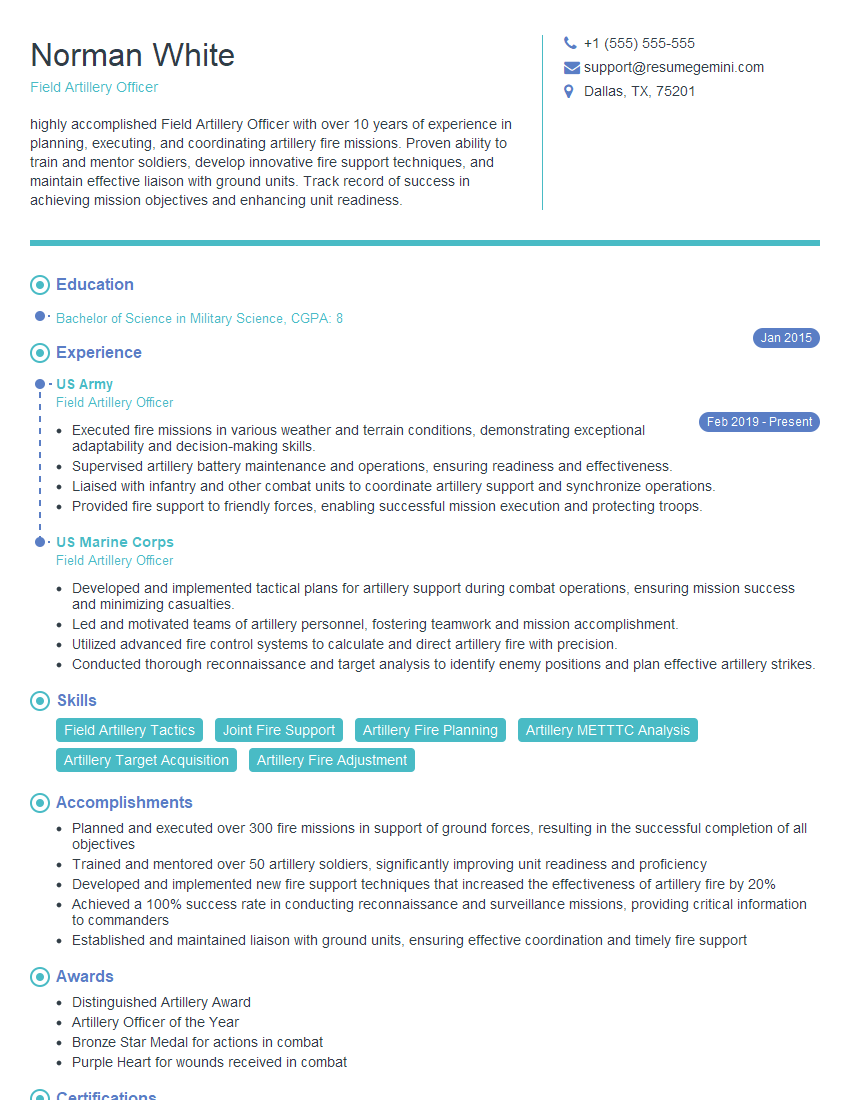
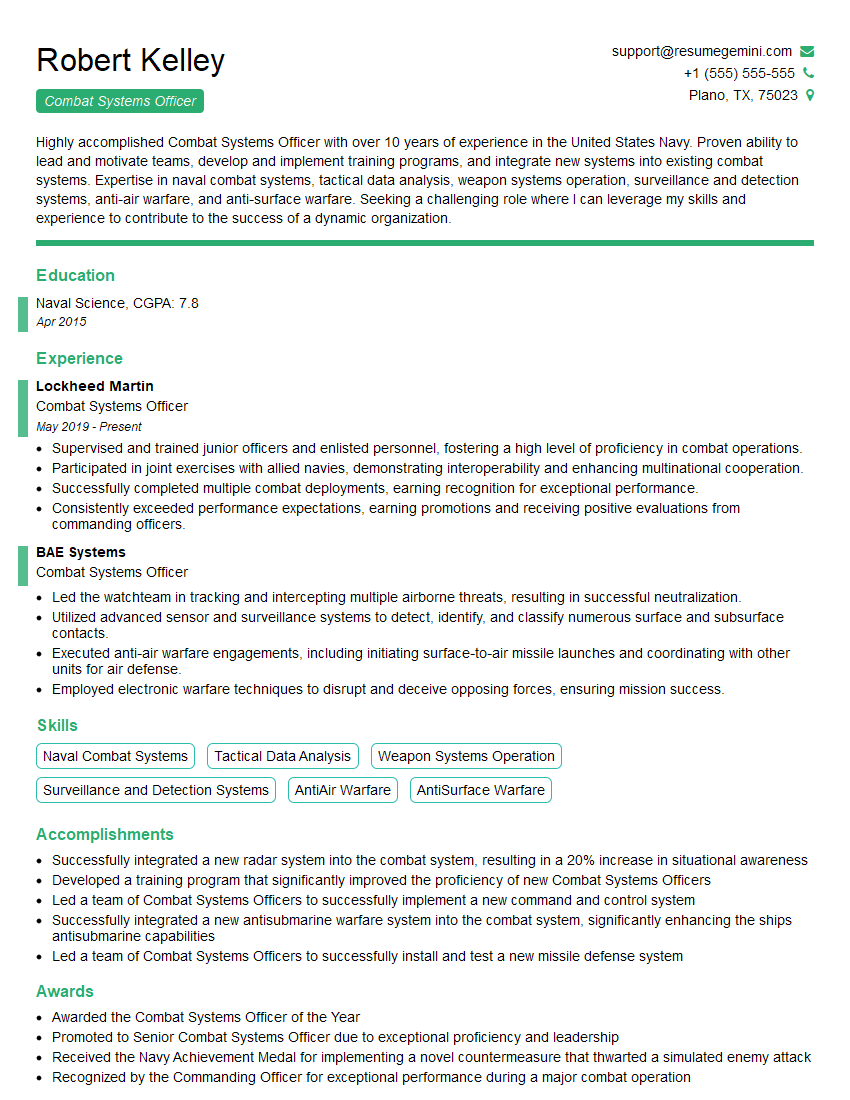
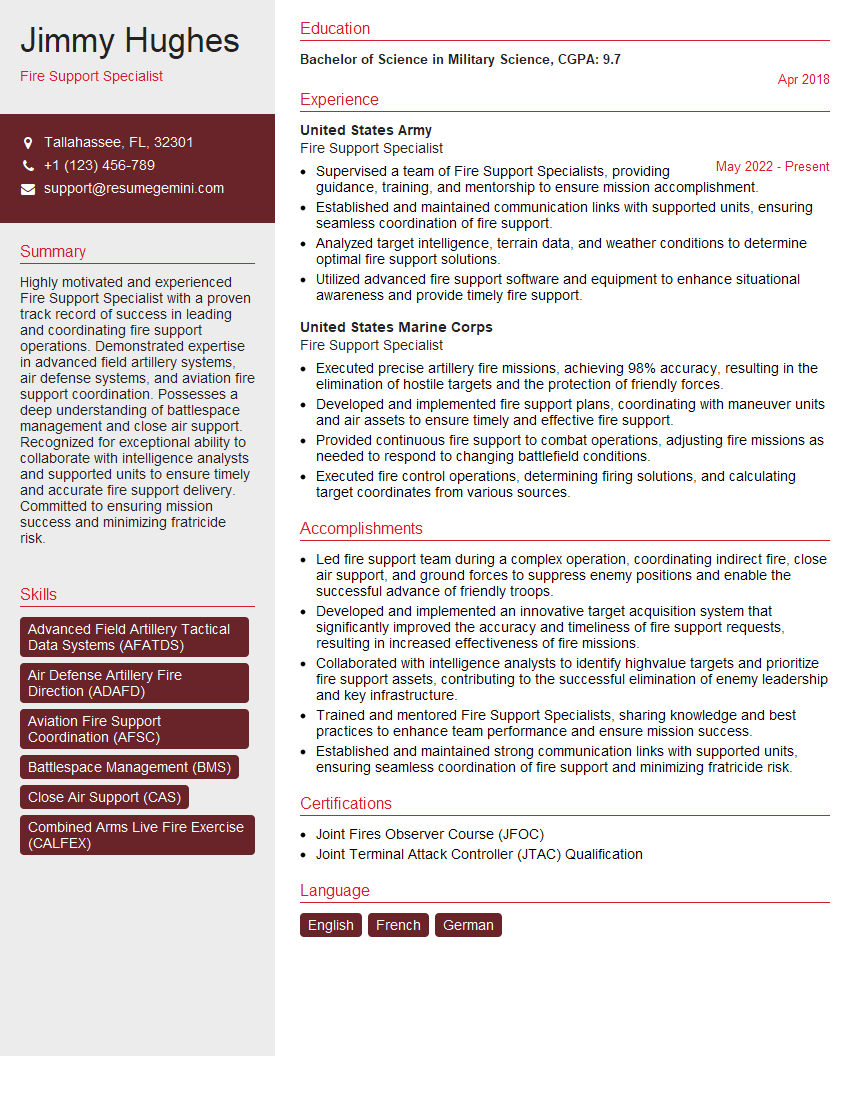
Mastering Fire Support Planning is crucial for career advancement within the military and related fields. It demonstrates a deep understanding of tactical operations and showcases your ability to contribute significantly to mission success. To enhance your job prospects, it’s essential to create a resume that is both ATS-friendly and highlights your unique skills and experience in Fire Support Planning. We strongly encourage you to utilize ResumeGemini to build a professional and effective resume that showcases your expertise. ResumeGemini provides examples of resumes tailored to Fire Support Planning, giving you a head start in crafting a compelling application.
Explore more articles
Users Rating of Our Blogs
Share Your Experience
We value your feedback! Please rate our content and share your thoughts (optional).
What Readers Say About Our Blog
Very informative content, great job.
good