Are you ready to stand out in your next interview? Understanding and preparing for Vessel Navigation and Piloting interview questions is a game-changer. In this blog, we’ve compiled key questions and expert advice to help you showcase your skills with confidence and precision. Let’s get started on your journey to acing the interview.
Questions Asked in Vessel Navigation and Piloting Interview
Q 1. Explain the process of calculating a vessel’s position using GPS and celestial navigation.
Calculating a vessel’s position combines the precision of GPS with the traditional accuracy of celestial navigation. GPS, or Global Positioning System, uses satellites to determine latitude, longitude, and altitude. The receiver calculates position by measuring the time it takes for signals to travel from multiple satellites. This is a very accurate and instantaneous method, typically providing a position within a few meters.
Celestial navigation, on the other hand, uses the positions of celestial bodies (sun, moon, stars) to determine latitude and longitude. It involves measuring the altitude of these bodies above the horizon using a sextant and comparing these measurements to their calculated positions from astronomical tables or a nautical almanac. This method is less precise than GPS but offers a critical backup system in case of GPS failure. To determine position using celestial navigation, multiple sights are taken at different times, and the lines of position (LOPs) generated are intersected to find the fix.
In practice, many navigators will use both systems. GPS provides a continuous, accurate position, allowing for efficient route planning and monitoring. Celestial navigation acts as a crucial backup and offers a valuable skill for situations where GPS is unavailable or unreliable. Imagine a scenario where you’re sailing in a remote area with limited or no GPS coverage – celestial navigation ensures you still have the means to accurately determine your position.
Q 2. Describe the different types of charts used in vessel navigation.
Various charts are used in vessel navigation, each designed for specific purposes. The most common types include:
- Paper Charts: Traditional nautical charts printed on paper. They provide a wealth of information including depths, hazards, navigation aids, and coastlines. While they’re becoming less common, they serve as excellent backups.
- Electronic Navigational Charts (ENCs): Digital representations of paper charts, conforming to international standards (S-57). ENCs are used with an Electronic Chart Display and Information System (ECDIS), offering features such as route planning, integration with other navigation sensors, and automated warnings.
- Raster Charts: Digital images of paper charts. They offer high resolution and detail but lack the intelligent features of ENCs.
- General Charts: Charts covering large areas with less detail, useful for planning long voyages.
- Coastal Charts: Show more detail of coastal areas, suitable for coastal navigation.
- Harbor Charts: Provide extremely detailed information about harbors and ports, crucial for safe docking and maneuvering.
The choice of chart depends on the vessel’s size, the area of operation, and the type of navigation being undertaken. For example, a large vessel transiting a busy shipping lane would use ENCs with an ECDIS, while a smaller vessel in a sheltered harbor might rely on a paper harbor chart.
Q 3. How do you handle a situation where your GPS fails?
GPS failure is a serious situation requiring immediate action. The first step is to understand *why* the GPS has failed – is it a temporary glitch, a receiver problem, or interference?
My immediate response involves a series of actions:
- Check the GPS receiver: Power cycle the unit, check for any error messages, and ensure proper antenna connection.
- Utilize backup systems: Transition to alternative positioning methods immediately. This may involve celestial navigation (as described previously), using a hand-bearing compass and visual landmarks for dead reckoning, or contacting other vessels for their position and bearing to you.
- Refer to paper charts: If available, revert to paper charts and traditional navigation techniques. Dead reckoning, though less precise, can be valuable to estimate position until other methods yield a fix.
- Assess the surrounding environment: Analyze the immediate environment for visual aids like buoys, lighthouses, and prominent land features to aid navigation. Remember, careful observation is vital.
- Reduce speed and increase vigilance: The loss of GPS reduces situational awareness. Decrease speed to allow more time to react to hazards and maintain a sharp lookout.
- Contact relevant authorities: Inform coastal radio stations or other appropriate authorities of the GPS failure and your planned course of action. This ensures safety and potentially offers assistance.
The key here is to prioritize safe navigation and inform others of the situation. Having a robust understanding of traditional navigation techniques is essential for competent seamanship.
Q 4. Explain the concept of tidal currents and their impact on navigation.
Tidal currents are the horizontal movement of water caused by the gravitational forces of the sun and moon. They can significantly impact navigation, particularly in coastal waters and estuaries. The strength and direction of tidal currents vary depending on location, time, and the phase of the moon.
Understanding tidal currents is paramount for safe and efficient navigation. For instance, a strong opposing current can significantly increase the time taken to reach a destination and requires increased fuel consumption. Conversely, a favorable current can reduce travel time and fuel expenditure. Navigators use tidal charts, tide tables, and current prediction tools to estimate current speed and direction. These predictions are factored into voyage planning, influencing the chosen route and speed of the vessel to mitigate the impact of currents on the schedule and fuel efficiency.
Ignoring tidal currents can lead to significant delays, increased fuel consumption, or even grounding in shallow areas. Imagine a scenario where a vessel is approaching a shallow channel during a strong ebb tide; proper consideration of the current is absolutely critical to avoid running aground.
Q 5. What are the COLREGs and how do they apply to different navigation situations?
COLREGs, or the International Regulations for Preventing Collisions at Sea, are a set of rules designed to prevent collisions and enhance safety at sea. They establish standards for navigation lights, shapes, sound signals, and conduct for vessels of all types.
COLREGs are divided into sections addressing various aspects of safe navigation:
- Rule 1: Application: Outlines the scope of the rules.
- Rules 2-10: General obligations: Covers aspects such as safe speed, lookout, and proper use of navigational equipment.
- Rules 11-24: Conduct of vessels in various situations: Describes the conduct of vessels in different encounters, including head-on, crossing, overtaking, and situations with restricted visibility.
Application varies based on several factors: The type of vessels involved (power-driven vessel, sailing vessel, vessel restricted in its ability to maneuver), the visibility, and the prevailing navigational environment. For example, two power-driven vessels meeting head-on will follow specific rules for altering course to port to achieve a safe passage. In conditions of restricted visibility, the rules emphasize reduced speed and the use of appropriate sound signals. Understanding and applying COLREGs is fundamental for avoiding collisions and promoting a safe maritime environment.
Q 6. Describe your experience with Electronic Chart Display and Information Systems (ECDIS).
I have extensive experience with Electronic Chart Display and Information Systems (ECDIS). I’ve utilized ECDIS on various vessels, ranging from small yachts to large tankers. My experience includes planning voyages, monitoring vessel position, setting up alarms and safety zones, and integrating ECDIS with other navigational equipment such as GPS, radar, and AIS.
ECDIS offers significant advantages compared to paper charts, particularly in safety and efficiency:
- Route planning: ECDIS allows for quick and easy route planning with automatic calculation of shortest routes, considering depth, hazards, and other navigational constraints. This ensures efficient and safe passage.
- Alarm capabilities: ECDIS can be configured to generate alarms for various events, such as approaching shallow water, nearing a navigational hazard, or exceeding a set speed. This helps ensure early detection of potential problems.
- Integration with other systems: ECDIS integrates with other navigation sensors such as radar and AIS (Automatic Identification System), presenting a comprehensive picture of the surrounding environment.
- Enhanced situational awareness: By combining information from multiple sources, ECDIS significantly enhances situational awareness, making it easier to make informed decisions during navigation.
Moreover, I am proficient in updating ECDIS charts, ensuring they’re current and accurate. My ECDIS training includes extensive familiarization with S-57 standards and maintaining chart data integrity, ensuring compliance with regulations and safety standards.
Q 7. How do you plan a voyage, considering factors such as weather, currents, and traffic?
Voyage planning is a critical process requiring meticulous attention to detail and consideration of various factors. It’s a multi-stage process starting with determining the route, estimating the time of arrival (ETA), and accounting for potential risks.
My voyage planning process typically includes:
- Defining the voyage parameters: This includes establishing the departure and arrival points, the desired ETA, and the type of vessel.
- Route planning: Using ECDIS or paper charts, I plan the optimal route, considering factors such as water depth, currents, traffic density, and weather forecasts.
- Weather forecasting: I incorporate weather forecasts into the plan, considering potential challenges like high winds, heavy seas, or reduced visibility. Route adjustments might be necessary based on the predicted weather.
- Tidal analysis: Tidal currents are analyzed to determine their impact on the route and schedule. Optimal transit times may be selected to minimize the adverse effects of strong currents.
- Traffic considerations: Shipping lanes, areas of high vessel traffic, and potential congestion are assessed to determine the safest and most efficient route. AIS data is utilized to track vessels in the vicinity.
- Contingency planning: Alternative routes and contingency plans are developed to address unexpected events such as equipment malfunction, adverse weather, or navigational hazards.
- Document preparation: All relevant information, including the planned route, ETA, weather forecasts, and contingency plans, is documented for safe keeping.
The entire process emphasizes a proactive and adaptable approach to navigation, ensuring safety and efficiency throughout the voyage. Regular monitoring and adjustments to the plan are essential to address unforeseen circumstances.
Q 8. Explain the process of entering and leaving a port.
Entering and leaving a port is a complex maneuver requiring careful planning and execution. It involves a series of steps, starting well before the vessel reaches the port. First, we obtain necessary port information including pilotage requirements, berth assignments, and any local regulations or restrictions. We then plan our approach considering factors like tides, currents, wind, and the presence of other vessels. As we approach, we closely monitor our position using GPS, radar, and electronic charts, ensuring we stay within the designated channels and safe distances from other ships and obstacles. Communication with the Vessel Traffic Service (VTS) and harbor authorities is crucial throughout this process. This communication includes reporting our arrival, intentions, and any potential issues. Upon arrival at the berth, we use our engines and maneuvering aids to carefully berth the vessel, securing it properly. Leaving a port mirrors this process in reverse, requiring careful unberthing, departure planning, and communication with relevant authorities. For example, during a recent transit into a busy container port, we carefully adjusted our speed to manage the effects of strong cross-currents, and coordinated our movements with tugs to ensure a precise and safe berthing.
Q 9. What are the different types of navigational aids and how do you interpret them?
Navigational aids are essential for safe and efficient vessel navigation. They provide information about position, depth, and potential hazards. Types include:
- Lighthouses and Buoys: These mark channels, shorelines, and dangers. Buoys are categorized by color and shape (e.g., red buoys mark the port side of a channel, and lateral marks can signal safe or dangerous water) and their lights provide visual cues even at night.
- Beacons: Fixed structures that emit light or radio signals to mark positions.
- Radiobeacons (Racon): Transmit identifying signals to aid in position fixing with a directional finder.
- Electronic Navigational Charts (ENCs): Digital charts that provide detailed information and integrate other navigational data, creating a dynamic picture of the maritime environment.
- GPS (Global Positioning System): Provides precise position information using satellite signals.
- AIS (Automatic Identification System): Transmits and receives information about nearby vessels, including position, course, and speed, improving collision avoidance.
Interpretation involves understanding the meaning of each aid’s characteristics (light characteristics, shapes, colors), its position relative to others, and cross-referencing this information with the chart and other navigational data. For instance, a red buoy with a flashing light indicates a danger, and we must keep it to our port side (left).
Q 10. How do you handle a situation where another vessel is on a collision course?
A collision course requires immediate and decisive action. The first step is to assess the situation using radar, AIS, and visual observations. Next, we determine if the other vessel is taking any action to avoid collision. Then, we initiate evasive maneuvers according to the COLREGs (International Regulations for Preventing Collisions at Sea). This typically involves altering course and/or speed. If the other vessel is not responding or the situation is critical, we may sound fog signals or use the vessel’s whistle to alert the other vessel and make our intentions clear. Maintaining clear communication with the other vessel’s crew through radio, if possible, can also be a critical step. Documenting the entire event, including timestamped records, is essential for any potential investigations. For example, I once had to take immediate evasive action when a fishing trawler was on a collision course with my vessel in a narrow channel. The rapid and decisive action I took prevented an accident.
Q 11. Describe your experience with radar and its use in navigation.
Radar is a crucial navigational tool, providing information on the location and movement of other vessels, landmasses, and potential hazards regardless of visibility. I have extensive experience using radar for collision avoidance, navigation in restricted waters, and determining a vessel’s position in conditions of low visibility. I use it to track targets, monitor their course and speed, and predict potential close encounters. Radar data is integrated with other navigational systems to enhance situational awareness. For instance, I use radar to track the movement of a large container ship approaching in a dense fog, alerting me to any potential risk of collision far enough in advance to take appropriate action. Interpreting radar images requires understanding factors such as range, bearing, and target characteristics, which involves knowing how to adjust the radar parameters, filter out clutter and differentiate between various targets.
Q 12. Explain the concept of dead reckoning and its limitations.
Dead reckoning (DR) is a method of estimating a vessel’s position by using its known starting point, course, speed, and time. It’s a fundamental navigational technique, particularly useful when other navigational aids are unavailable or unreliable. However, it is crucial to understand that dead reckoning is inherently an estimation. Errors accumulate due to inaccuracies in speed and course calculations, as well as influences from currents and winds. Therefore, its limitations are apparent; the longer the duration of reliance on dead reckoning, the larger the potential error becomes. DR is best used in conjunction with other navigational methods. Using DR alone for extended periods can lead to significant positional errors, highlighting the need for confirmation using GPS, celestial navigation, or other techniques.
Q 13. How do you use a compass to determine your heading and course?
A magnetic compass shows the vessel’s heading relative to magnetic north. To determine heading, one aligns oneself with the compass and reads the direction indicated by the compass needle. This is the vessel’s magnetic heading. However, the magnetic compass will be subject to magnetic deviation (caused by the vessel itself) and magnetic variation (the angle between true north and magnetic north), so this is often corrected for to find True Heading. To set a course, you must first determine the desired True Course, correcting for variation and deviation. Then you set the compass to the required magnetic heading. For example, if my desired course is 270° true, and the variation is 10° East and deviation is 5° West, I would steer a magnetic heading of 265° (270° – 10° + 5°).
Q 14. What are the safety procedures for navigating in restricted waters?
Navigating restricted waters demands heightened awareness and adherence to strict safety procedures. This includes:
- Thorough pre-planning: Studying charts, publications, and notices to mariners to understand the local regulations, hazards, and traffic patterns.
- Reduced speed: Maintaining a safe speed appropriate for the conditions and the level of congestion in the area.
- Enhanced lookout: Keeping a sharp lookout for other vessels, obstacles, and any potential hazards. In narrow channels, this becomes even more critical.
- Effective communication: Maintaining constant communication with the VTS and other vessels to ensure safe passage.
- Proper use of navigational equipment: Utilizing radar, GPS, AIS, and other equipment to maintain accurate position, track other vessels, and monitor environmental conditions.
- Adherence to COLREGs: Following international collision regulations to prevent accidents. This is particularly important in congested waters.
- Contingency Planning: Having a plan for dealing with emergencies such as equipment failure, sudden changes in weather, or unexpected encounters.
For example, in a busy narrow channel, I would slow down significantly, maintain close communication with the VTS, keep a vigilant lookout, and precisely follow the rules of the road (COLREGs) to ensure safe passage for myself and all other vessels.
Q 15. Explain the different types of ship’s logs and their purpose.
A ship’s log is a crucial record-keeping system, detailing all significant events during a voyage. Different types of logs serve distinct purposes:
- Official Logbook: This is the most important log, legally mandated by many maritime authorities. It records details like departure and arrival times, courses steered, speeds maintained, weather conditions, any incidents or accidents, engine room entries, and crew changes. It’s a chronological account, vital for investigations and audits. Think of it as the ship’s official diary.
- Navigation Log: This focuses solely on navigation details. It includes position fixes (using GPS, celestial navigation, etc.), bearings taken, courses plotted, estimated times of arrival (ETAs), and any navigational challenges encountered. This log is essential for post-voyage analysis and route optimization.
- Engine Room Log: This log tracks all aspects of the ship’s engine room operations. It documents engine performance, fuel consumption, maintenance activities, any malfunctions, and repairs. This is crucial for monitoring the vessel’s mechanical health.
- Deck Log: This details all activities on deck, such as cargo operations, mooring and unmooring procedures, anchor handling, and any noteworthy events related to the vessel’s external operations.
Maintaining accurate and complete logs is paramount for safety, legal compliance, and efficient ship management. For instance, in the event of a collision, the logs provide invaluable evidence for accident investigations. Regular entries are key; skipping entries can lead to serious legal repercussions.
Career Expert Tips:
- Ace those interviews! Prepare effectively by reviewing the Top 50 Most Common Interview Questions on ResumeGemini.
- Navigate your job search with confidence! Explore a wide range of Career Tips on ResumeGemini. Learn about common challenges and recommendations to overcome them.
- Craft the perfect resume! Master the Art of Resume Writing with ResumeGemini’s guide. Showcase your unique qualifications and achievements effectively.
- Don’t miss out on holiday savings! Build your dream resume with ResumeGemini’s ATS optimized templates.
Q 16. How do you respond to an emergency situation at sea?
Responding to an emergency at sea requires swift, decisive action based on a well-rehearsed emergency plan. The priority is always to protect life and prevent further damage. My response would be guided by the following steps:
- Assess the situation: Identify the nature and extent of the emergency (fire, grounding, collision, medical emergency, etc.).
- Activate emergency procedures: This involves raising the appropriate alarms, contacting relevant authorities (coast guard, company, etc.), and assembling the emergency response team.
- Implement damage control measures: Take immediate actions to mitigate the emergency. This could involve fighting a fire, containing a spill, stabilizing a listing vessel, or providing first aid.
- Ensure crew and passenger safety: This is paramount. Implement procedures to evacuate, if necessary, or to secure the crew and passengers in a safe location.
- Maintain communication: Keep all relevant parties updated on the situation and the response efforts.
- Post-incident actions: After the immediate emergency is over, complete a thorough investigation to determine the root cause, implement corrective actions to prevent future occurrences, and submit detailed reports to the relevant authorities.
For example, if a fire breaks out in the engine room, I would immediately activate the fire alarm, initiate the fire-fighting procedures, contact the coast guard, and ensure the crew is safely evacuated from the affected area. My actions would be guided by the ship’s fire-fighting plan and international maritime regulations. Throughout the incident, communication would be maintained with all relevant parties to ensure a coordinated response.
Q 17. What are the procedures for reporting a navigational hazard?
Reporting a navigational hazard is crucial for the safety of all vessels. The procedures involve:
- Immediate action: If the hazard is immediate and dangerous (e.g., a drifting derelict vessel), take evasive maneuvers to avoid it and immediately notify nearby vessels via VHF radio.
- Report to the appropriate authority: This typically involves contacting the coast guard or other relevant maritime authorities in the region. They are responsible for disseminating navigational warnings.
- Provide detailed information: This includes the nature of the hazard (e.g., wreck, floating debris, shoal), its location (precise latitude and longitude, using GPS coordinates), and any other relevant details (size, shape, color, etc.).
- Follow up: If the hazard persists, submit a formal written report, with supporting documentation like photographs or navigational charts, to the relevant authority.
For instance, discovering an uncharted shoal would require reporting its location using GPS coordinates, providing details about its size and depth, and submitting a chart correction to the relevant hydrographic office. Accurate and timely reporting of navigational hazards is essential for safe navigation and reduces the risk of accidents.
Q 18. How do you maintain accurate navigation records?
Maintaining accurate navigation records is fundamental to safe and efficient vessel operation. This involves:
- Regular position fixing: Use multiple methods (GPS, celestial navigation, visual bearings, etc.) to obtain frequent and independent position fixes. This provides cross-checking and enhances accuracy.
- Detailed log entries: Record all navigation-related activities in the navigation log meticulously, including times, positions, courses steered, speeds, and any adjustments made. Clearly note any unusual circumstances or navigational challenges encountered.
- Proper chart work: Use up-to-date charts and publications. Mark planned routes, position fixes, and other relevant information directly on the charts. Maintain a clear and organized chart table.
- Regular equipment checks: Ensure the navigational equipment (GPS, compass, radar, etc.) is functioning correctly and calibrated regularly. Regular maintenance and calibration logs must be maintained.
- Backup systems: Use backup navigational systems and methods to ensure continued operational capability in case of equipment failure.
For example, maintaining a parallel log alongside electronic charting systems provides an independent record and aids in cross-verification. This practice helps to detect potential errors and maintain high navigational accuracy. A meticulous approach to record-keeping safeguards against navigational errors and legal implications.
Q 19. Describe your experience with using various types of nautical publications.
My experience with nautical publications is extensive. I routinely use:
- Nautical Charts: These are my primary navigation tools, providing detailed information about water depths, hazards, aids to navigation, and coastlines. I regularly update my charts to reflect the latest corrections and notices to mariners.
- Sailing Directions (Pilots): These provide detailed descriptions of coastal areas, ports, harbors, and other navigational features. They are invaluable for planning voyages and understanding the local conditions.
- List of Lights: This publication lists all lighthouses, buoys, and other aids to navigation, providing information about their characteristics and location. It’s crucial for night navigation.
- Tide Tables: These are crucial for planning navigation, especially in shallow-water areas, as they provide information on the predicted times and heights of tides.
- Notices to Mariners: These are essential updates on navigational hazards, chart corrections, and other important information affecting navigation. I regularly check them to ensure my charts and publications are up-to-date.
I’m proficient in interpreting and applying information from these sources to ensure safe and efficient navigation. For instance, using sailing directions to plan a route through a narrow channel, considering tidal currents and local hazards, is crucial for safe passage.
Q 20. Explain the principles of gyrocompass operation.
A gyrocompass uses the principle of gyroscopic precession to find true north. It’s a sophisticated instrument that overcomes the limitations of a magnetic compass, which is affected by magnetic fields.
Here’s how it works:
- Gyroscope: A rapidly spinning rotor within a gimbal system is the heart of the gyrocompass. Due to its inertia, the rotor resists any change in its orientation.
- Earth’s Rotation: The Earth’s rotation causes a precessional force on the spinning rotor. This force tries to align the rotor’s axis with the Earth’s axis of rotation (which points to true north).
- Damping System: A damping mechanism counteracts the precessional force, gradually aligning the rotor with true north. This system ensures the compass settles and points to true north rather than oscillating around it.
- Error Correction: Gyrocompasses are not perfect and have some inherent errors. These errors (like those caused by latitude and ship’s movement) are typically corrected through sophisticated algorithms and internal calculations within the compass system.
Unlike a magnetic compass, a gyrocompass indicates true north, regardless of the ship’s magnetic heading or the presence of nearby magnetic disturbances. This is crucial for accurate navigation, especially for long voyages or in areas with significant magnetic anomalies.
Q 21. How do you calculate estimated time of arrival (ETA)?
Calculating Estimated Time of Arrival (ETA) involves considering several factors:
- Distance to Destination: Determine the distance from the current position to the destination using nautical charts, electronic charts, or GPS.
- Speed Over Ground (SOG): Determine the vessel’s speed over ground, taking into account currents, winds, and other factors affecting speed. This is often different from the vessel’s speed through water.
- Course Corrections: Account for any planned course alterations, for example, to avoid hazards or to adjust the route for optimal conditions.
- Time Zone Changes: If crossing time zones, factor in the time difference.
- Tidal Effects: In shallow waters, tidal currents can significantly affect the SOG, requiring adjustments in ETA calculations.
- Other Delays: Consider potential delays, such as port formalities, waiting times for berthing, or unforeseen circumstances.
The ETA can be calculated using the formula: ETA = Current Time + (Distance / SOG). For instance, if the distance is 100 nautical miles and the SOG is 10 knots, the time taken would be 10 hours. However, it is vital to adjust this based on the factors listed above, for example, adding 1-2 hours buffer time for potential delays. Accurate ETA calculation is crucial for port scheduling and overall voyage planning.
Q 22. What is the significance of the International Regulations for Preventing Collisions at Sea (COLREGs)?
The International Regulations for Preventing Collisions at Sea (COLREGs) are a crucial set of rules that govern the safe navigation of vessels at sea. Think of them as the ‘rules of the road’ for ships, preventing collisions and ensuring safe passage. They are internationally recognized and legally binding, aiming to establish a standardized framework for preventing accidents. These rules cover various aspects, including:
- Rules of the Road: Defining the responsibilities of vessels based on their courses and visibility (e.g., stand-on vessel vs. give-way vessel).
- Navigation Lights and Shapes: Specifying the types of lights and shapes vessels must display to indicate their presence and maneuvers (e.g., red/green sidelights, masthead lights).
- Sound Signals: Establishing the use of various sound signals to warn other vessels of a ship’s actions or position (e.g., fog signals, distress signals).
- Restricted Visibility: Detailing procedures to be followed in conditions of reduced visibility, such as fog.
Non-compliance with COLREGs can have serious legal consequences, including hefty fines and even criminal charges in cases of gross negligence leading to accidents. Understanding and applying COLREGs is paramount for safe and responsible seafaring.
Q 23. Explain your understanding of the different types of navigational errors.
Navigational errors can be broadly classified into several types. Think of them as systematic flaws in the process that can lead to misjudgment of a vessel’s position or course. These include:
- Systematic Errors: These errors are consistent and repeatable, often stemming from faulty equipment (like an improperly calibrated gyrocompass) or misinterpretations of charts. For instance, consistently misreading a chart’s scale could lead to cumulative position errors.
- Random Errors: These errors are unpredictable and vary in magnitude and direction. They can be due to factors like momentary distractions, human error in reading instruments, or slight variations in the environment (e.g., wave action influencing GPS readings).
- Human Errors: These are errors caused by human factors such as fatigue, stress, poor training, or inadequate communication within the bridge team. A simple miscalculation or a lapse in attention can have significant consequences. For example, misjudging the distance to another vessel could result in a close-quarters situation.
- Sensor Errors: These errors originate from imperfections or malfunctioning navigational sensors such as GPS, radar, or compass. A faulty GPS receiver might provide inaccurate position data, leading to a significant error in navigation.
Effective error management involves a combination of thorough training, regular equipment maintenance, and vigilant use of multiple navigational aids. Cross-checking data from different sources is critical in minimizing the impact of errors.
Q 24. How do you manage bridge resource management (BRM) effectively during navigation?
Bridge Resource Management (BRM) is a crucial aspect of safe navigation. It involves optimizing the use of all resources – human, technical, and environmental – on the bridge to achieve the most efficient and safest outcome. Imagine it as a well-orchestrated team effort. Effective BRM involves:
- Clear Communication: Maintaining open, clear, and concise communication amongst the bridge team. Using standardized terminology and avoiding ambiguity is crucial.
- Workload Management: Distributing tasks efficiently among team members to prevent overload and ensure everyone can perform their duties effectively. This avoids fatigue and burnout, reducing the likelihood of errors.
- Decision-Making: Utilizing a structured approach to decision-making, considering all relevant factors and perspectives before making critical navigational choices. This ensures informed decisions based on a collective understanding.
- Situational Awareness: Maintaining a high level of situational awareness by constantly monitoring the surrounding environment, navigational equipment, and the vessel’s status. Regular checks and vigilance are crucial.
- Error Prevention and Management: Implementing procedures to detect and correct errors early on, minimizing the impact of potential problems. This includes regularly cross-checking information and conducting thorough pre-voyage checks.
A well-managed bridge team using BRM principles is proactive, anticipates problems, and works together to ensure a safe voyage. It’s not just about following procedures; it’s about collaborative problem-solving and a shared commitment to safety.
Q 25. How do you handle adverse weather conditions during navigation?
Handling adverse weather conditions requires careful planning and execution. Imagine sailing into a storm: it demands foresight and a structured approach. Key steps include:
- Pre-voyage Planning: Checking weather forecasts thoroughly before departure, assessing the potential risks, and adjusting the voyage plan accordingly. Choosing alternative routes or delaying departure might be necessary.
- Sea State Awareness: Continuously monitoring the sea state, wind speed and direction, and wave height through meteorological reports and onboard equipment (e.g., barometer, anemometer). This informs decisions on vessel speed and course adjustments.
- Vessel Manoeuvrability: Adjusting the vessel’s speed and course to maintain safe handling characteristics. Reducing speed significantly is often crucial in heavy seas to prevent damage and maintain control.
- Navigation Safety: Utilizing additional navigational aids in reduced visibility (such as radar) to avoid collisions and maintain safe distances from other vessels and hazards.
- Crew Safety: Ensuring the safety of the crew by securing loose objects, implementing appropriate safety procedures, and conducting regular crew checks.
Remember, safety is paramount in adverse weather. Prioritizing crew safety, minimizing risks, and making informed decisions based on up-to-date information are crucial to navigate safely through challenging conditions.
Q 26. Describe your experience with using Automatic Identification System (AIS).
The Automatic Identification System (AIS) is a crucial tool for collision avoidance and situational awareness. Think of it as a ship’s ‘electronic voice,’ broadcasting its position, course, speed, and other vital information to other vessels within range. My experience with AIS encompasses:
- Collision Avoidance: Using AIS to track the movements of nearby vessels, predicting potential collision scenarios, and taking preventative actions (such as altering course or speed).
- Traffic Monitoring: Monitoring traffic density in busy waterways, identifying potential congestion areas, and planning routes accordingly. This enhances navigational efficiency and safety.
- Search and Rescue: AIS plays a crucial role in search and rescue operations, providing real-time position information of vessels in distress and assisting search efforts.
- Port Entry/Exit: Using AIS to communicate with port authorities, facilitating efficient port entry and exit procedures. This minimizes delays and ensures smooth operations.
While AIS is a valuable tool, it’s important to remember it’s not infallible. It relies on vessels having functioning transponders, and its accuracy can be affected by various factors. It’s always a good practice to corroborate AIS information with other navigational aids, like radar and visual observations.
Q 27. What is your experience with using various types of plotting equipment?
Throughout my career, I’ve extensively used various types of plotting equipment, ranging from traditional paper charts and parallel rules to modern electronic chart display and information systems (ECDIS). Each tool has its strengths and weaknesses. My experience includes:
- Paper Charts and Parallel Rules: Proficient in using traditional methods of plotting position, course, and speed, including the use of parallel rules, dividers, and protractors. This provides a fundamental understanding of navigation principles.
- ECDIS: Extensive experience using ECDIS, including chart management, route planning, and integration with other navigational systems (like GPS and radar). This provides a highly accurate and efficient way to manage navigation data.
- GPS Plotters: Proficient in using GPS plotters for position fixing, route planning, and tracking the vessel’s progress. This offers real-time updates and enhances situational awareness.
- Radar Plotters: Experience in using radar plotters to detect and track other vessels and hazards, particularly in conditions of reduced visibility. This enhances safety and helps avoid collisions.
The key is understanding the capabilities and limitations of each tool, and using them in conjunction to ensure accurate and safe navigation. Modern systems offer increased efficiency and accuracy, but a thorough understanding of traditional techniques remains essential as a backup and for fundamental understanding.
Key Topics to Learn for Vessel Navigation and Piloting Interview
- Chartwork and Chart Reading: Understanding various chart types, symbols, and scales; practical application in route planning and position fixing.
- Navigation Equipment: Proficiency with GPS, radar, AIS, and ECDIS; troubleshooting common equipment malfunctions and interpreting displayed data.
- Collision Avoidance Rules (COLREGs): In-depth knowledge of the International Regulations for Preventing Collisions at Sea; application in various traffic scenarios and decision-making under pressure.
- Celestial Navigation: Understanding the principles of celestial navigation (though less frequently used now, demonstrating foundational knowledge is valuable).
- Meteorology and Oceanography: Interpreting weather forecasts and understanding their impact on navigation; knowledge of tides, currents, and their effect on vessel handling.
- Piloting Techniques: Maneuvering in confined waters, berthing procedures, and anchoring techniques; problem-solving approaches in challenging piloting situations.
- Navigation Calculations: Proficiency in performing various calculations related to speed, distance, time, and course; understanding of error propagation and mitigation.
- Ship Handling and Stability: Understanding the factors affecting a vessel’s stability and maneuverability; applying this knowledge to safe and efficient navigation.
- Emergency Procedures: Knowledge of emergency response procedures, including man overboard, fire, and grounding; demonstrating quick thinking and problem-solving skills under pressure.
- Bridge Resource Management (BRM): Understanding teamwork and communication on the bridge; demonstrating leadership and effective decision-making in a team environment.
Next Steps
Mastering Vessel Navigation and Piloting opens doors to exciting career advancements within the maritime industry, offering opportunities for increased responsibility, higher earning potential, and global travel. To maximize your job prospects, crafting a strong, ATS-friendly resume is crucial. ResumeGemini is a trusted resource that can help you build a professional and impactful resume tailored to the specific requirements of the Vessel Navigation and Piloting field. Take advantage of our resume examples designed specifically for this career path and elevate your application to stand out from the competition.
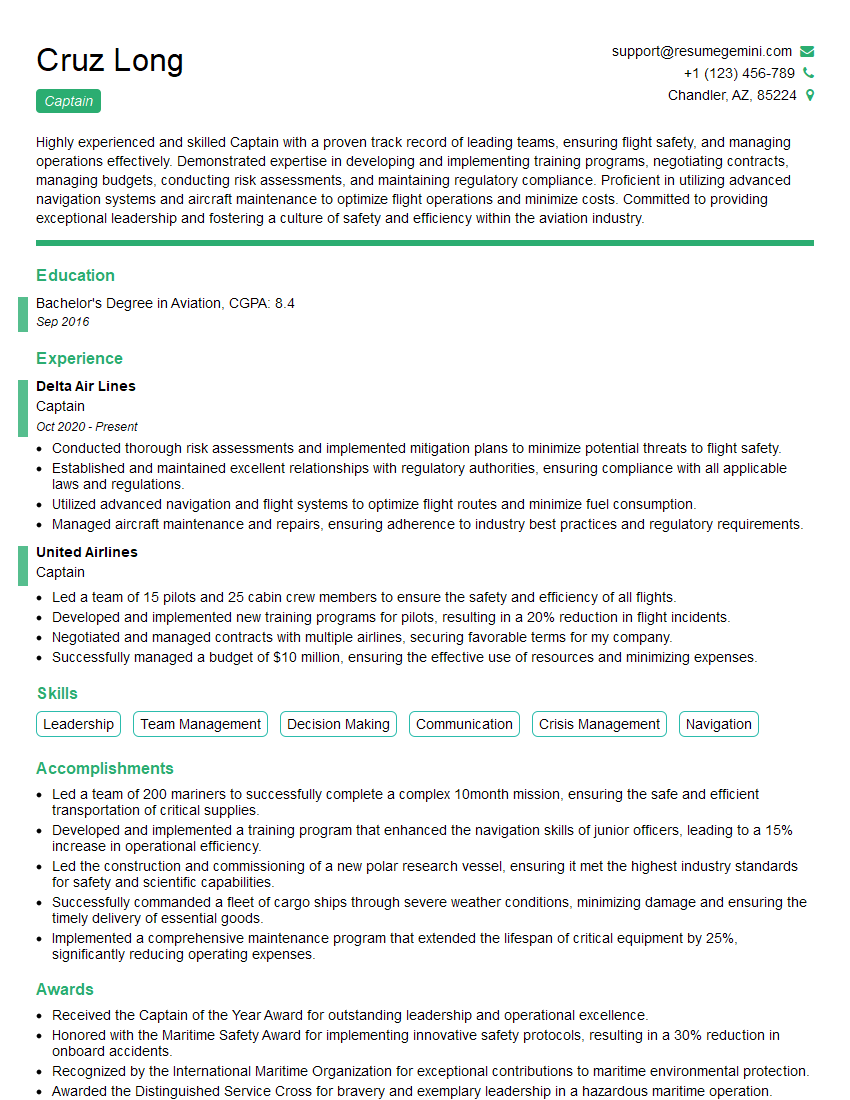
Captain Resume Sample
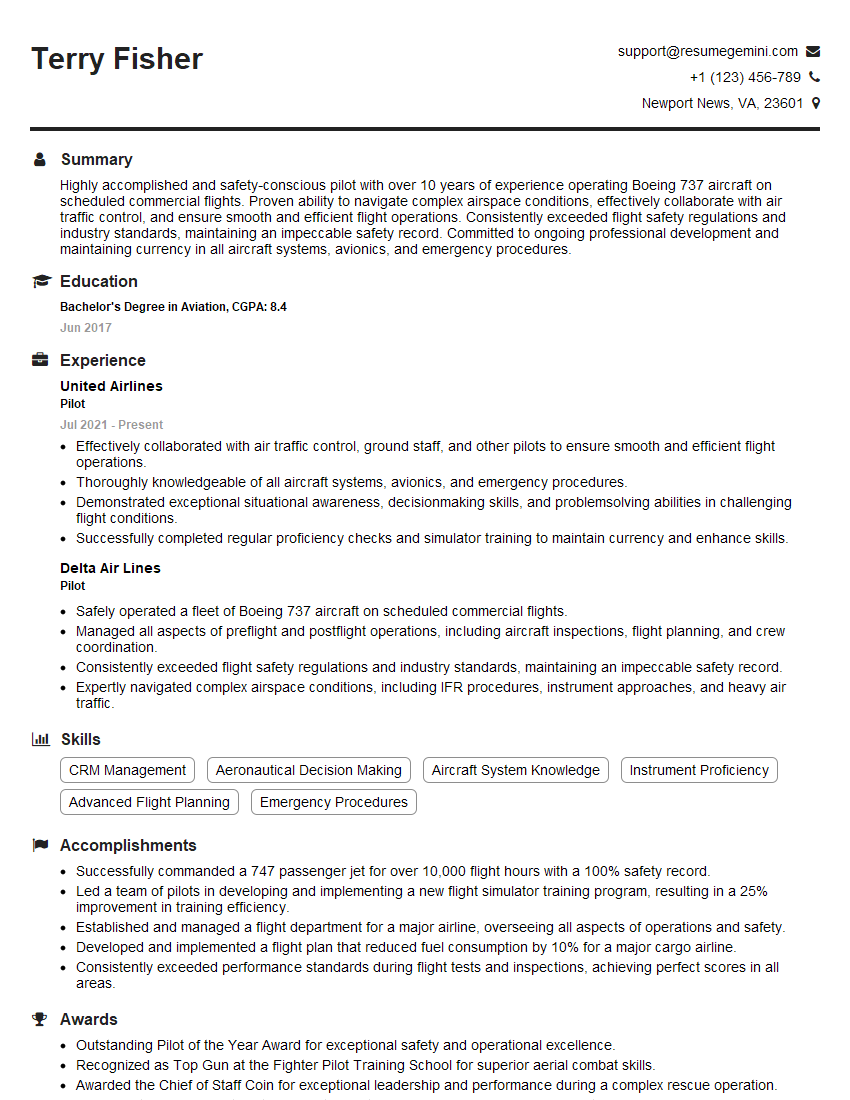
Pilot Resume Sample
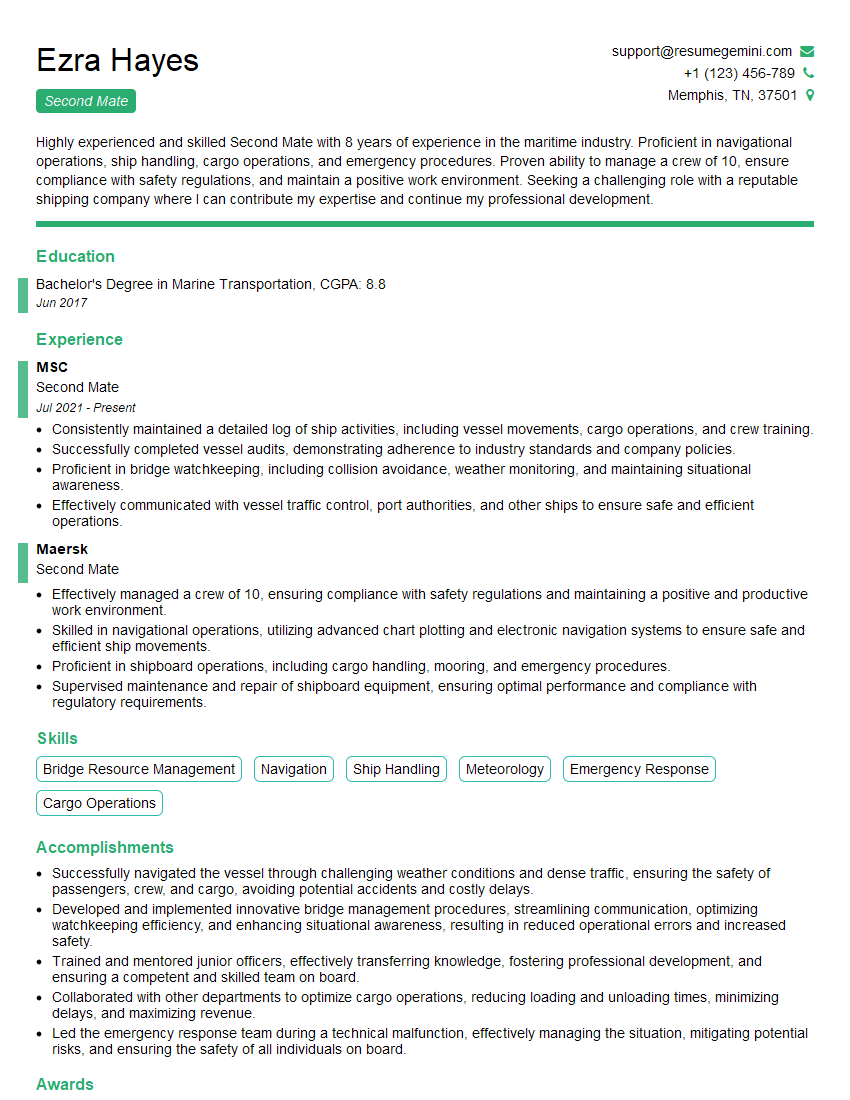
Second Mate Resume Sample
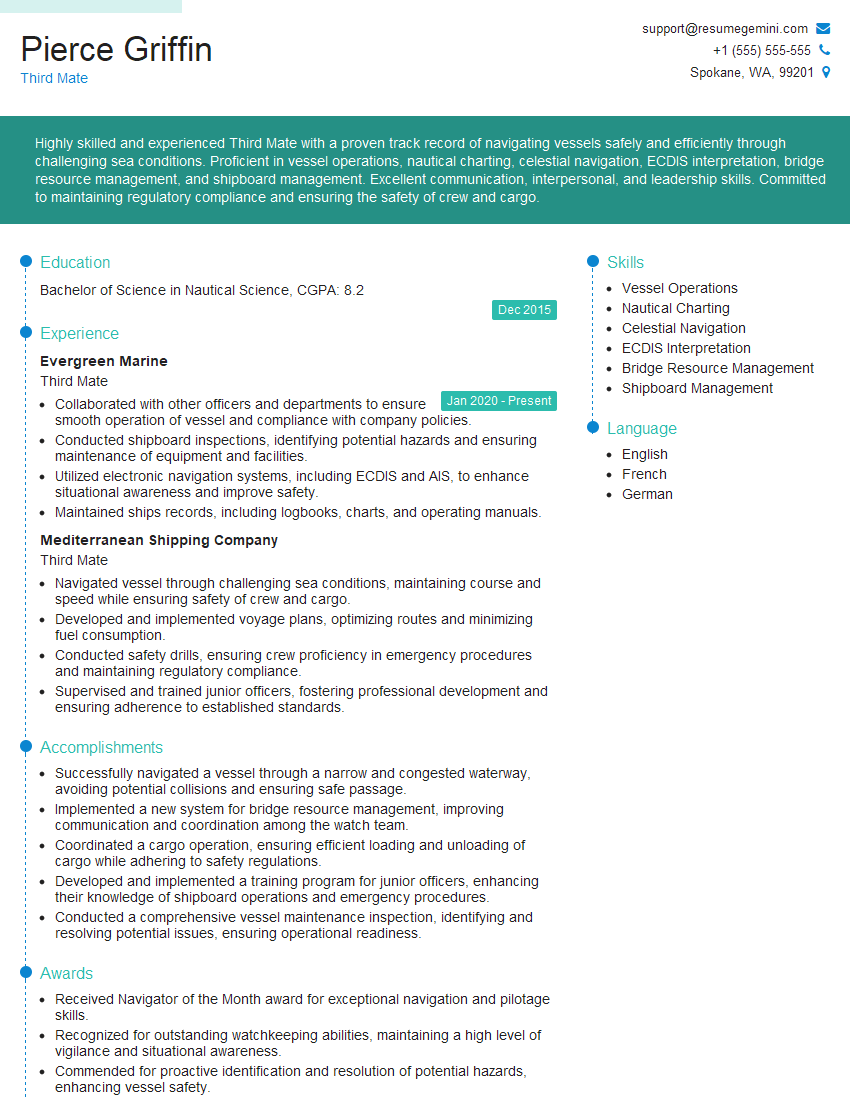
Third Mate Resume Sample
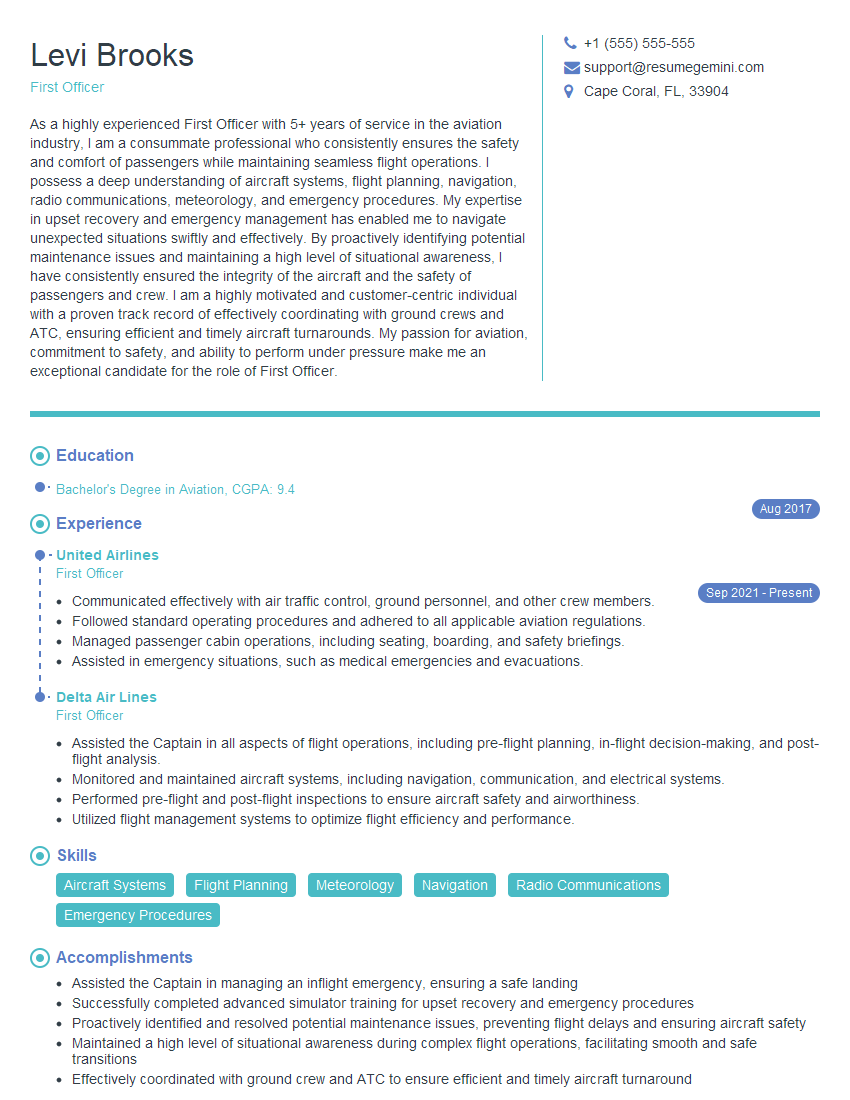
First Officer Resume Sample
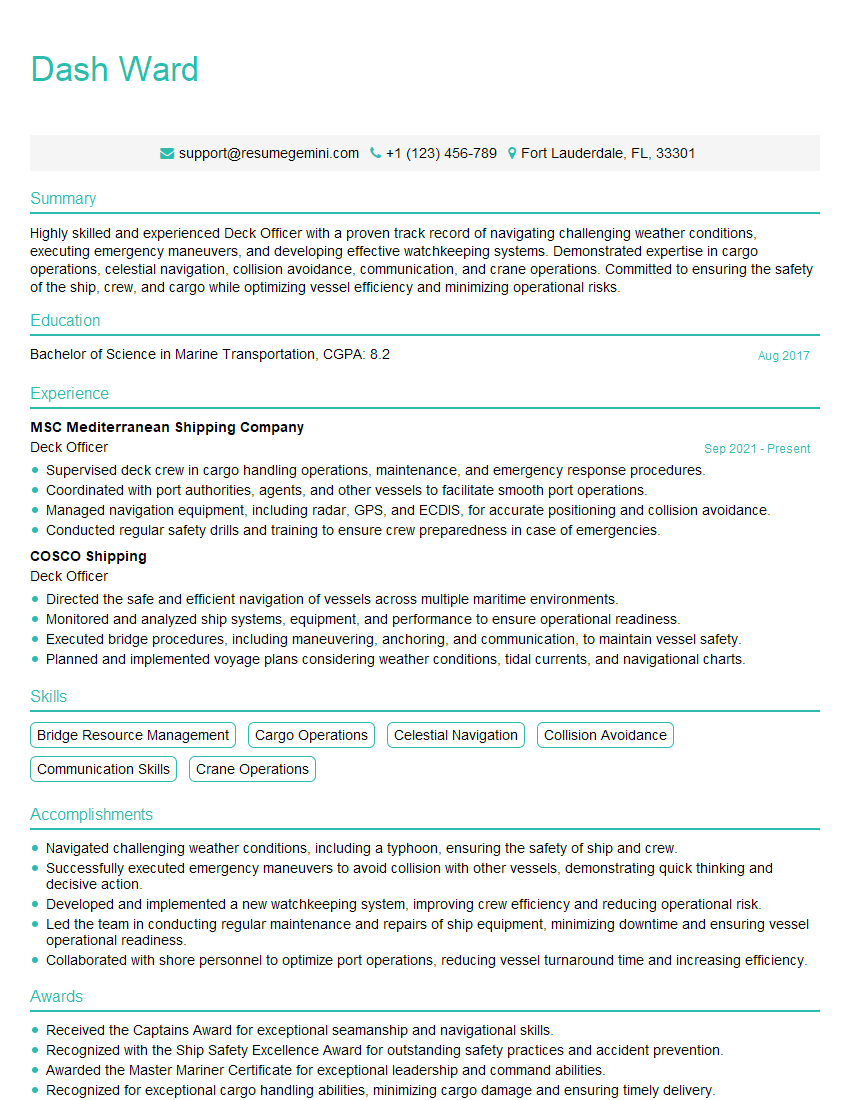
Deck Officer Resume Sample
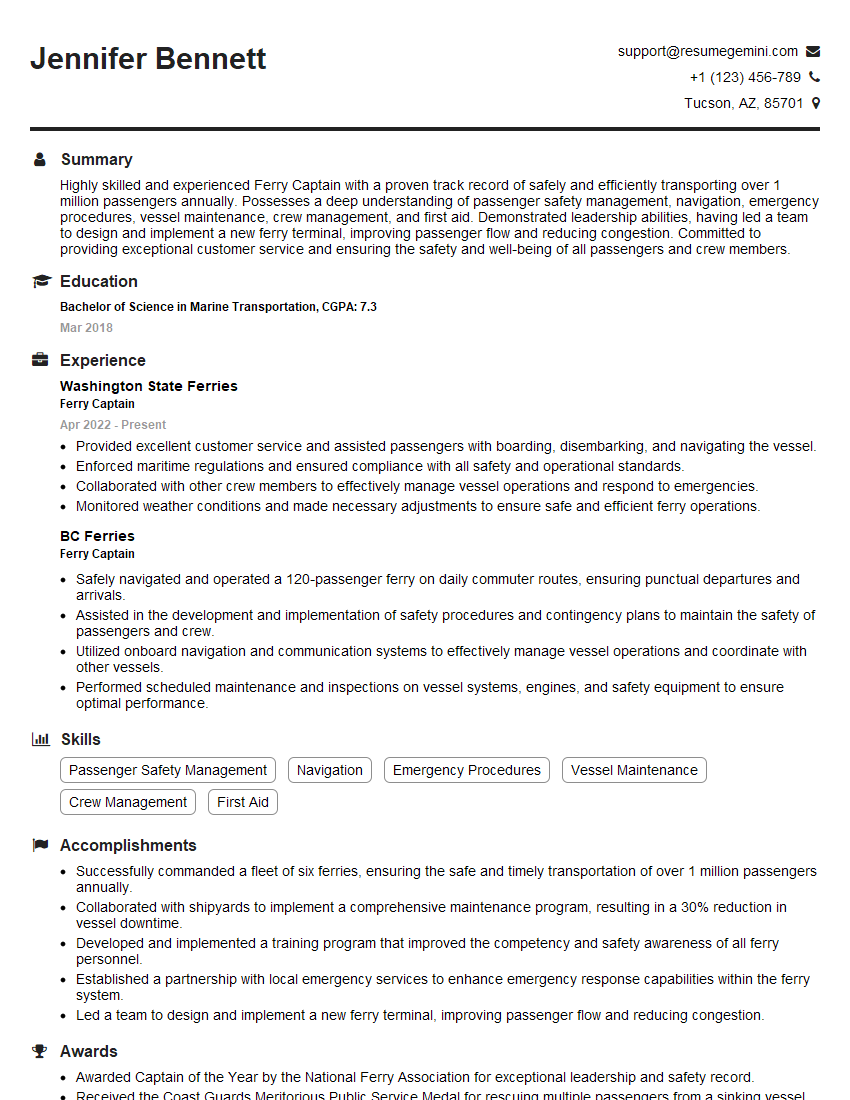
Ferry Captain Resume Sample
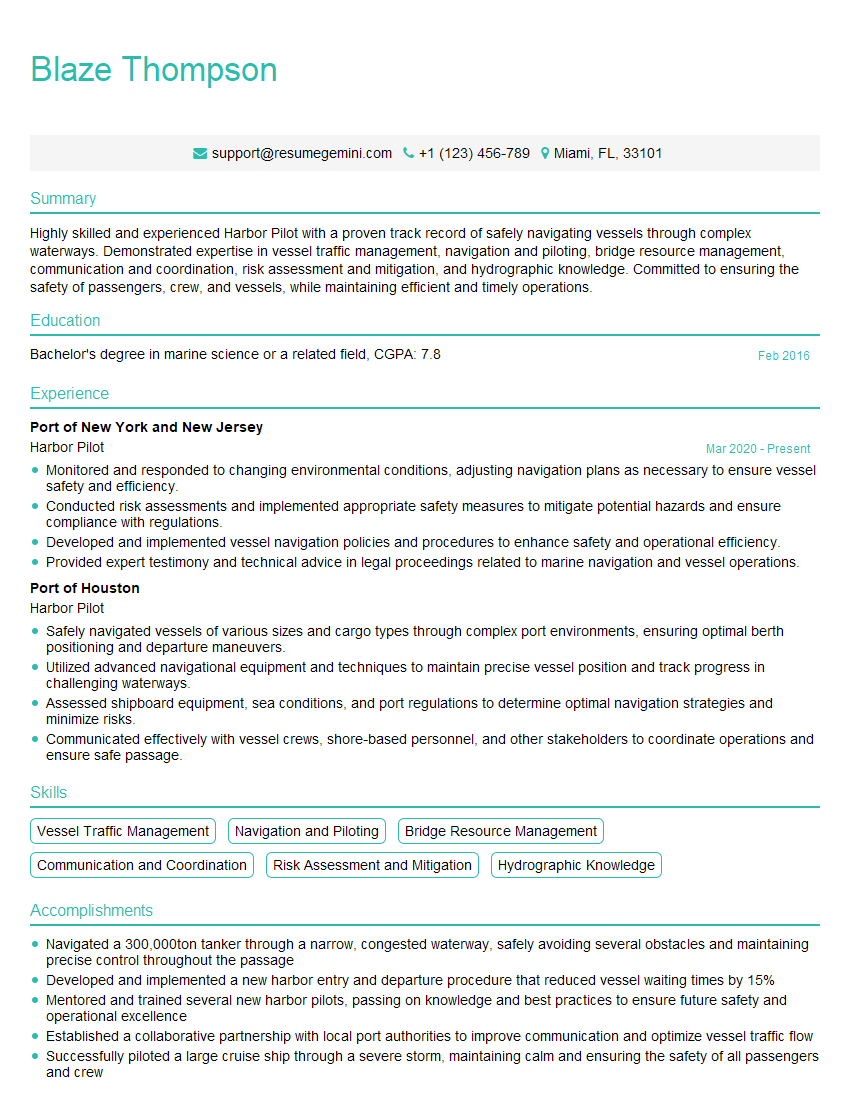
Harbor Pilot Resume Sample
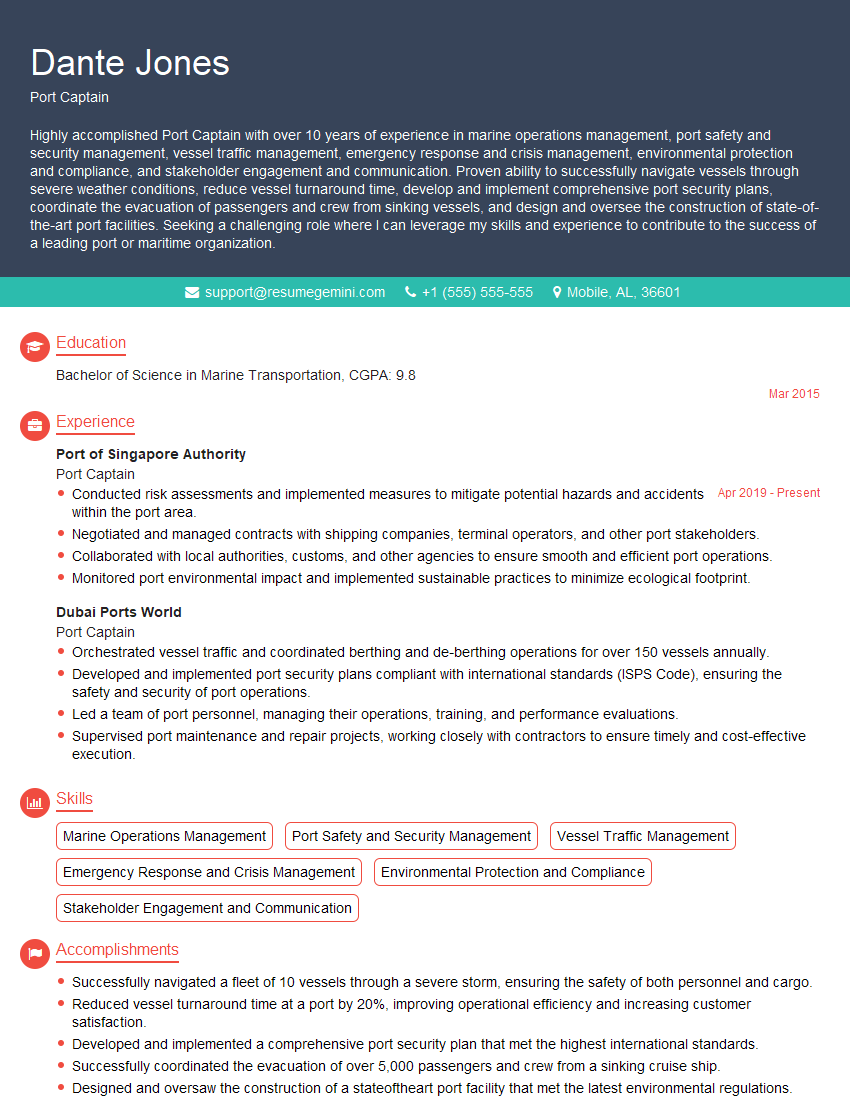
Port Captain Resume Sample
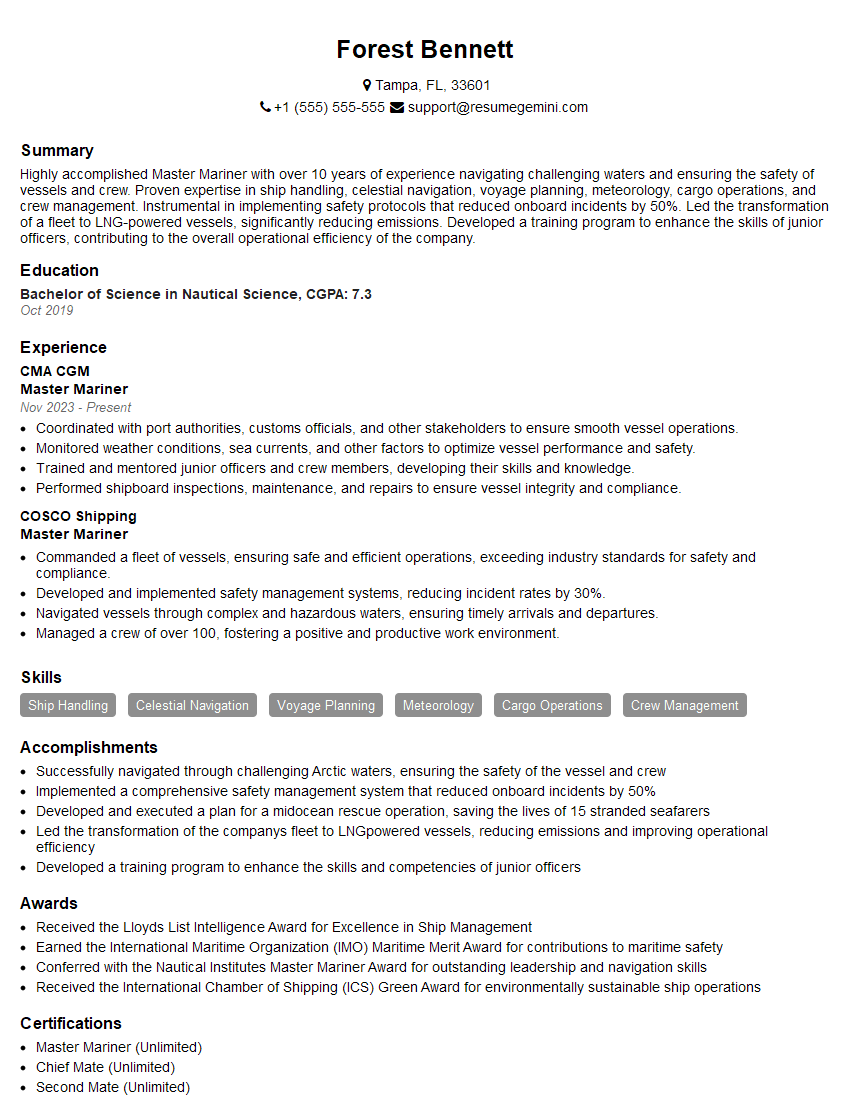
Master Mariner Resume Sample
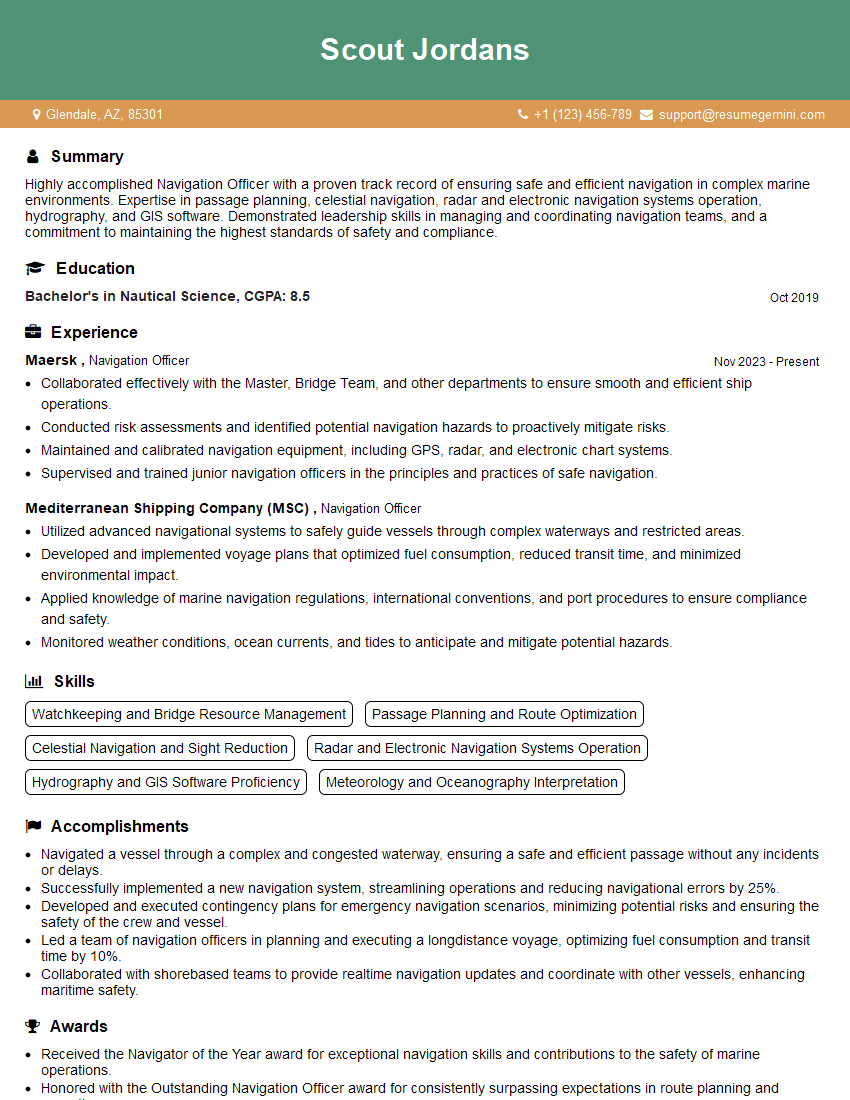
Navigation Officer Resume Sample
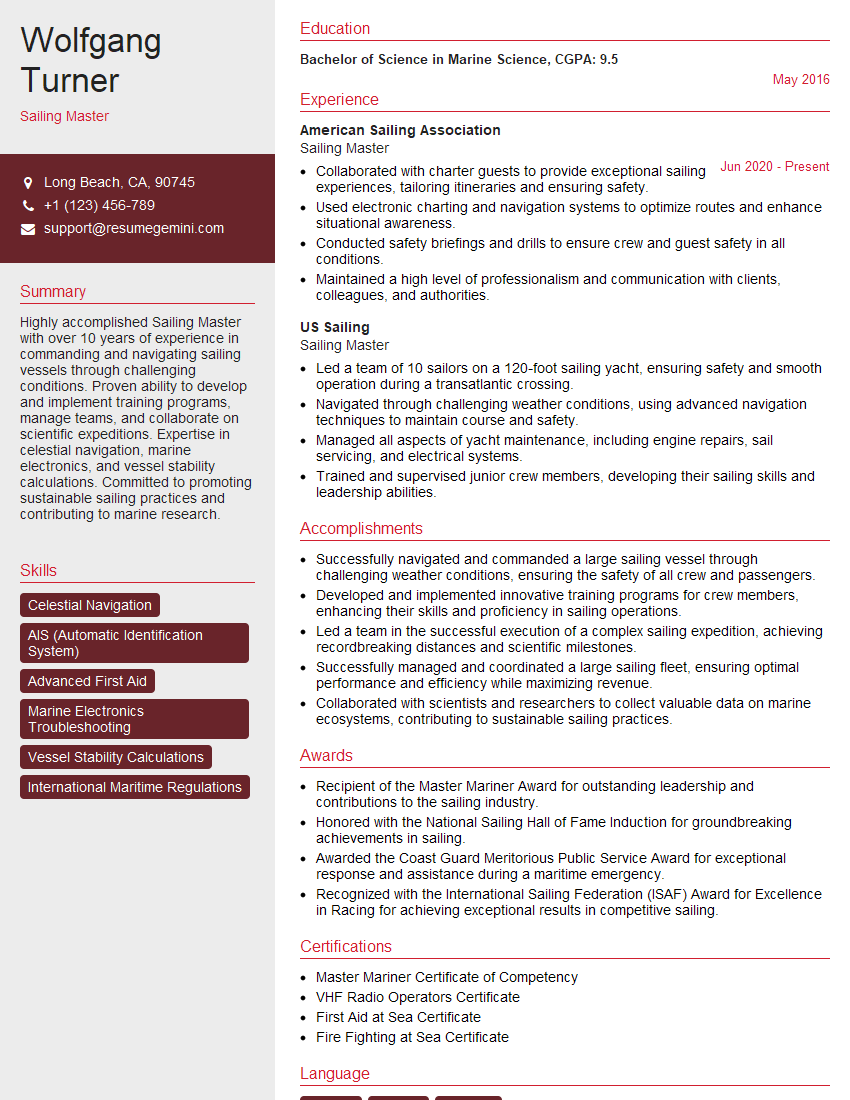
Sailing Master Resume Sample
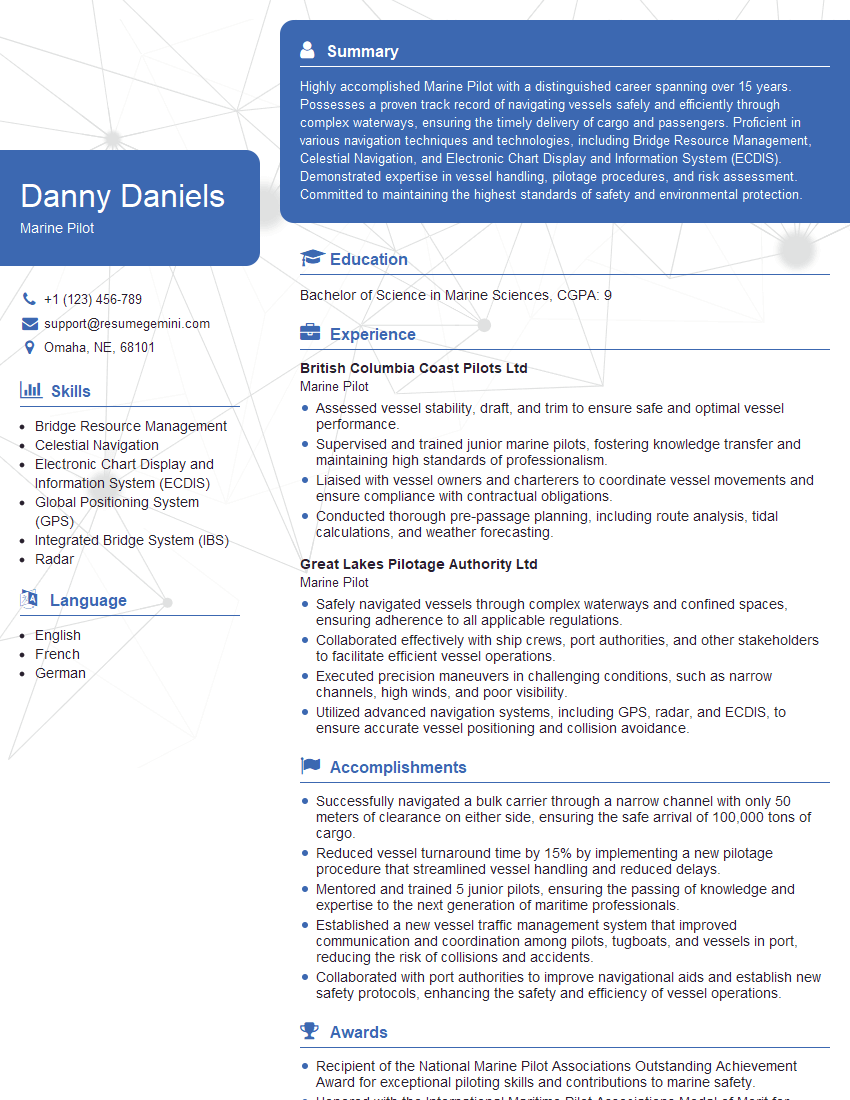
Marine Pilot Resume Sample
Explore more articles
Users Rating of Our Blogs
Share Your Experience
We value your feedback! Please rate our content and share your thoughts (optional).
What Readers Say About Our Blog
Very informative content, great job.
good