Cracking a skill-specific interview, like one for Offensive Scheme Implementation, requires understanding the nuances of the role. In this blog, we present the questions you’re most likely to encounter, along with insights into how to answer them effectively. Let’s ensure you’re ready to make a strong impression.
Questions Asked in Offensive Scheme Implementation Interview
Q 1. Explain the difference between black box, white box, and grey box penetration testing.
The key difference between black box, white box, and grey box penetration testing lies in the level of information provided to the tester about the target system. Think of it like trying to solve a puzzle:
- Black Box Testing: This is like having no clues about the puzzle – you only know the final image you’re aiming for. The tester has no prior knowledge of the system’s architecture, code, or internal workings. They rely solely on external tools and publicly available information to identify vulnerabilities. This simulates a real-world attack where attackers have limited knowledge.
- White Box Testing: This is like having the puzzle’s solution manual – you know every piece and where it goes. The tester has complete access to the system’s source code, architecture diagrams, and internal documentation. This allows for a thorough assessment of potential vulnerabilities from the inside out.
- Grey Box Testing: This is a middle ground, like having some pieces of the puzzle already in place. The tester has partial knowledge of the system, such as network diagrams or some internal documentation, but not complete access to the source code. This approach balances the realism of a black box test with the thoroughness of a white box test.
For example, a black box test might focus on identifying vulnerabilities through external network scans and exploiting web application weaknesses. A white box test would delve into the application’s code, looking for flaws in the logic or security implementation. A grey box test might use partial network diagrams to focus its scanning efforts, while still relying on external testing to identify surface-level vulnerabilities.
Q 2. Describe your experience with various penetration testing methodologies (e.g., OSSTMM, NIST).
I’ve had extensive experience with various penetration testing methodologies, including OSSTMM and NIST. OSSTMM (Open Source Security Testing Methodology Manual) provides a comprehensive and flexible framework, allowing for customized testing based on the specific needs and risks of the target system. I’ve used it to conduct thorough assessments, focusing on areas like network security, application security, and physical security. The detailed reporting structure within OSSTMM aids in prioritization and remediation.
NIST (National Institute of Standards and Technology) provides a wide range of publications and guidelines that directly influence penetration testing practices. I’ve leveraged the NIST Cybersecurity Framework and Special Publications, such as SP 800-115, for guidance on conducting risk assessments, defining the scope of penetration testing engagements, and reporting vulnerabilities in a standardized way. The NIST framework helps align the testing process with an organization’s overall risk management strategy.
My experience with these methodologies isn’t just about following the steps; it’s about adapting them to the unique context of each engagement. For instance, I’ve used OSSTMM’s flexible structure to tailor assessments for clients with specific regulatory requirements while incorporating NIST best practices for vulnerability identification and reporting.
Q 3. How do you identify and prioritize vulnerabilities found during a penetration test?
Identifying and prioritizing vulnerabilities is crucial for effective remediation. I use a multi-step process:
- Vulnerability Discovery: This involves using automated scanning tools, manual testing techniques, and source code reviews (where applicable) to identify potential weaknesses.
- Vulnerability Verification: Once a potential vulnerability is identified, I carefully verify it to ensure it’s a genuine weakness and not a false positive. This might involve attempting to exploit the vulnerability in a controlled environment.
- Severity Assessment: I assign a severity level (critical, high, medium, low) to each verified vulnerability based on factors like its potential impact, exploitability, and the likelihood of successful exploitation. The CVSS (Common Vulnerability Scoring System) framework is a valuable resource here.
- Prioritization: I prioritize vulnerabilities based on their severity, business impact, and ease of remediation. Critical vulnerabilities that directly affect business-critical systems are addressed first.
For example, a critical SQL injection vulnerability in a database containing sensitive customer data would take precedence over a low-severity cross-site scripting vulnerability on a less critical website. The prioritization ensures that the most impactful vulnerabilities are addressed promptly to minimize the risk to the organization.
Q 4. What are some common exploitation techniques you’ve used?
I’ve employed a wide range of exploitation techniques, always within the scope of an authorized penetration test. These techniques include:
- SQL Injection: I’ve used various techniques to exploit SQL injection vulnerabilities, from simple string manipulation to advanced blind SQL injection methods to extract sensitive data from databases.
- Cross-Site Scripting (XSS): I’ve exploited XSS vulnerabilities by injecting malicious scripts into web applications to steal session cookies, redirect users to malicious websites, or perform other harmful actions.
- Cross-Site Request Forgery (CSRF): I’ve leveraged CSRF vulnerabilities to trick users into performing unauthorized actions on their behalf, such as transferring funds or changing account settings.
- Command Injection: I’ve exploited command injection vulnerabilities in web applications or servers to execute arbitrary commands on the underlying operating system.
- Buffer Overflow: In appropriate contexts (with client authorization and within a controlled environment), I have used buffer overflows to gain unauthorized access.
Each exploitation attempt is meticulously documented, including the steps taken, the tools used, and the results obtained. Ethical and legal boundaries are strictly adhered to throughout the process.
Q 5. Explain your process for reporting vulnerabilities and findings.
My vulnerability reporting process is structured and comprehensive, aiming for clear communication and efficient remediation. It follows these steps:
- Initial Report Summary: A concise executive summary providing an overview of the findings, including high-level risks and prioritized vulnerabilities.
- Detailed Vulnerability Reports: Comprehensive reports detailing each vulnerability found, including its type, severity, location, proof of concept, and remediation advice. I use clear and concise language, avoiding overly technical jargon wherever possible.
- Remediation Guidance: Detailed instructions on how to fix each vulnerability. This often includes specific code snippets or configuration changes.
- Vulnerability Tracking System: Using a standardized tracking system, allowing the client to track the progress of remediation efforts.
- Follow-up Reporting: Post-remediation validation to confirm that the vulnerabilities have been successfully addressed. This involves a retest of the affected areas.
The goal is not only to identify weaknesses but to empower the client with the knowledge and tools to enhance their security posture. Reports are tailored to the client’s technical expertise, ensuring that the information is both accurate and understandable.
Q 6. Describe your experience with different types of network attacks (e.g., DDoS, SQL injection).
My experience with network attacks encompasses a range of techniques, always conducted ethically and legally, within the boundaries of a penetration test.
- Distributed Denial-of-Service (DDoS): I’ve simulated DDoS attacks using various tools and techniques to assess the resilience of network infrastructure. This involves understanding the target’s network architecture and identifying potential points of weakness.
- SQL Injection: As mentioned before, I’ve used SQL injection techniques against vulnerable databases to access sensitive data.
- Man-in-the-Middle (MitM) Attacks: I’ve used MitM techniques to intercept and analyze network traffic, demonstrating vulnerabilities in encryption or network security protocols.
- Session Hijacking: I have investigated session hijacking vulnerabilities, demonstrating how an attacker could gain unauthorized access to a user’s account.
Each type of attack requires a different approach, and understanding the underlying mechanisms is crucial for effective testing. For example, a DDoS simulation might involve using a network of virtual machines to generate a massive amount of traffic, while a MitM attack would require more sophisticated techniques like ARP poisoning or SSL stripping.
Q 7. How do you handle unexpected issues or roadblocks during a penetration test?
Unexpected issues and roadblocks are inevitable during penetration testing. My approach involves a combination of problem-solving skills, resourcefulness, and a methodical approach:
- Troubleshooting: I systematically analyze the issue, examining logs, network traffic, and system configurations to identify the root cause.
- Research: I conduct thorough research to identify potential solutions, leveraging online resources, documentation, and security communities.
- Adaptation: I adapt my testing strategy based on the encountered issues, exploring alternative approaches to achieve the testing objectives. This may involve using different tools or techniques.
- Collaboration: When necessary, I collaborate with other team members or security experts to brainstorm solutions or seek advice.
- Documentation: I meticulously document all encountered issues, the troubleshooting steps taken, and any changes made to the testing strategy. This documentation is invaluable for future reference and learning.
For example, if I encounter an unexpected firewall rule that blocks access to a specific port, I might explore alternative ports, protocols, or techniques to bypass the restriction while still adhering to the test scope. The key is to remain adaptable and resourceful, while maintaining a high level of ethical and professional conduct.
Q 8. How do you ensure you remain compliant with legal and ethical guidelines while performing penetration testing?
Legal and ethical compliance is paramount in penetration testing. Before any testing begins, I always ensure I have a signed contract that clearly outlines the scope of work, including permitted targets and prohibited actions. This contract acts as a legal framework, protecting both the client and myself. Furthermore, I adhere strictly to the principle of informed consent – the client is fully aware of what I’ll be doing and what the potential consequences might be. I never perform unauthorized activities or access systems beyond the agreed-upon scope. For example, if the contract only covers web application testing, I wouldn’t access internal networks or attempt to exploit physical security vulnerabilities. Finally, I meticulously document all findings and actions, creating an audit trail for review and legal compliance. This includes timestamped logs of all activities and a detailed report that summarizes vulnerabilities and remediation steps. This comprehensive approach ensures ethical and legal boundaries are not crossed.
Q 9. What are some common tools you use for penetration testing?
My penetration testing toolkit is constantly evolving, but some core tools I frequently rely on include:
- Nmap: For network discovery and port scanning to identify active hosts and services. For example, I use
nmap -sS 192.168.1.0/24to perform a stealthy scan of a given IP range. - Metasploit Framework: A comprehensive platform for developing and executing exploits against known vulnerabilities. I often use it to verify the exploitability of identified vulnerabilities.
- Burp Suite: A powerful proxy tool for intercepting and manipulating HTTP traffic, enabling the identification of web application vulnerabilities like SQL injection and cross-site scripting (XSS). For example, I would use Burp to perform automated scans and manual testing to detect various vulnerabilities.
- Wireshark: A network protocol analyzer that allows me to inspect network traffic in detail, helping to identify unusual activity or security flaws.
- John the Ripper: A password cracker used to test the strength of passwords and identify weak credentials.
Beyond these core tools, I use specialized tools depending on the specific testing requirements, such as tools for analyzing malware, fuzzing applications, or exploiting specific operating system weaknesses. The choice of tool depends entirely on the context and objectives of the penetration test.
Q 10. Explain your experience with vulnerability scanners and their limitations.
Vulnerability scanners are valuable tools for identifying potential weaknesses in systems, but they have limitations. They are excellent for automated scanning of large numbers of hosts and applications, quickly identifying known vulnerabilities based on signature matching. For instance, Nessus and OpenVAS are popular examples. However, scanners often produce many false positives, requiring manual verification. They may miss zero-day vulnerabilities or custom-developed weaknesses, as these aren’t included in their vulnerability databases. Scanners also can’t truly assess the exploitability of a vulnerability – they might identify a vulnerability, but not if it’s actually possible to compromise the system using that vulnerability. Think of them as a first step in a much larger process. They provide a broad overview, but human expertise is crucial to validate findings, prioritize risks, and perform in-depth analysis. A scanner can flag a potential SQL injection vulnerability, but it’s up to the penetration tester to confirm its exploitability and determine the potential impact of successful exploitation.
Q 11. How do you perform reconnaissance during a penetration test?
Reconnaissance is the initial phase of a penetration test, crucial for gathering information about the target. I employ both passive and active techniques. Passive reconnaissance involves gathering publicly available information like the target’s website, social media presence, and WHOIS records. I use tools like Shodan and Google Dorking to search for publicly exposed information about the target’s network infrastructure and applications. For example, searching for specific service versions or technologies used by the target organization. Active reconnaissance involves interacting directly with the target systems, using tools like Nmap for port scanning and identifying open services. The goal is to create a comprehensive picture of the target’s attack surface before attempting any exploitation. It’s like casing a building before a robbery – you want to know the layout, security measures, and weak points before making your move. The level of active reconnaissance is always carefully controlled within the defined scope of the engagement.
Q 12. Describe your experience with social engineering techniques.
Social engineering is a powerful technique used to manipulate individuals into revealing confidential information or performing actions that compromise security. It’s a critical skill in penetration testing, as human error is often the weakest link in any security system. My experience includes using techniques like phishing, pretexting, and baiting to assess the susceptibility of individuals to social engineering attacks. For instance, I might craft a realistic phishing email to test the effectiveness of the organization’s security awareness training and the employees’ ability to detect malicious emails. Ethical considerations are paramount in this area; I always obtain explicit permission from the client before conducting any social engineering tests and ensure that the activities are clearly within the scope of the engagement, avoiding any potential harm or damage. The goal is to demonstrate vulnerabilities, not to cause real-world harm. Each test is carefully documented, highlighting the effectiveness of the attacks and suggesting improvements in security awareness training and procedures.
Q 13. Explain your understanding of different types of malware and their impact.
Malware encompasses various types of malicious software designed to damage, disrupt, or gain unauthorized access to systems. Some common types include:
- Viruses: Self-replicating programs that attach themselves to other files.
- Worms: Self-replicating programs that spread independently across networks.
- Trojans: Malicious programs disguised as legitimate software.
- Ransomware: Malware that encrypts data and demands a ransom for its release.
- Spyware: Software that secretly monitors user activity and transmits data to attackers.
- Rootkits: Software that provides attackers with hidden, persistent access to a system.
The impact of malware can vary widely, from minor inconvenience to catastrophic data loss and financial damage. For example, ransomware can cripple a business by encrypting critical data, while spyware can steal sensitive information, leading to identity theft or financial fraud. Understanding different malware types and their potential impact is essential for developing effective security measures.
Q 14. How do you analyze malware samples?
Malware analysis is a crucial aspect of penetration testing and incident response. I use both static and dynamic analysis techniques. Static analysis involves examining the malware without executing it, using tools like disassemblers (like IDA Pro) to understand the code’s structure and functionality. This allows me to identify potential malicious behaviors without risking infection. Dynamic analysis involves executing the malware in a controlled environment (like a sandbox), observing its behavior and network activity. I use tools like process monitors and network analyzers to track its actions and identify potential damage or data exfiltration attempts. A combination of both techniques provides a comprehensive understanding of the malware’s capabilities and its potential impact. Careful documentation of the analysis process is essential for understanding the malware’s behavior and creating effective countermeasures. The process is similar to investigating a crime scene – meticulously examining evidence to reconstruct events and identify the perpetrator.
Q 15. Describe your experience with reverse engineering techniques.
Reverse engineering is the process of analyzing a system to understand its functionality and inner workings. My experience encompasses a wide range of techniques, from static analysis – examining code without execution – to dynamic analysis – observing the system during runtime. I’m proficient in using disassemblers like IDA Pro and Ghidra to dissect binaries, identifying functions, data structures, and control flow. I frequently use debuggers like x64dbg and LLDB to step through code, set breakpoints, and inspect memory, allowing me to understand how malware operates or to uncover vulnerabilities within software. For example, I once reverse-engineered a piece of obfuscated malware to understand its communication channels and C2 (Command and Control) infrastructure, ultimately leading to its neutralization. My approach often involves combining these techniques, leveraging open-source intelligence (OSINT) and documentation to accelerate the process and gain a deeper understanding of the system’s design and intent.
Beyond binary analysis, I have experience reverse engineering firmware from embedded devices. This often involves specialized tools and techniques, such as JTAG debugging and using specialized scripting languages to extract firmware images. This is particularly important in identifying vulnerabilities within IoT devices, which often lack robust security measures.
Career Expert Tips:
- Ace those interviews! Prepare effectively by reviewing the Top 50 Most Common Interview Questions on ResumeGemini.
- Navigate your job search with confidence! Explore a wide range of Career Tips on ResumeGemini. Learn about common challenges and recommendations to overcome them.
- Craft the perfect resume! Master the Art of Resume Writing with ResumeGemini’s guide. Showcase your unique qualifications and achievements effectively.
- Don’t miss out on holiday savings! Build your dream resume with ResumeGemini’s ATS optimized templates.
Q 16. How do you secure cloud-based environments?
Securing cloud-based environments requires a multi-layered approach that considers the shared responsibility model. This model divides security responsibilities between the cloud provider (e.g., AWS, Azure, GCP) and the customer. The provider is responsible for the underlying infrastructure security, while the customer is responsible for securing their own data and applications running on that infrastructure.
My approach starts with a strong foundation of identity and access management (IAM). This includes implementing robust password policies, using multi-factor authentication (MFA), and leveraging the principle of least privilege to grant only necessary access to users and applications. I also employ regular security audits, vulnerability scanning, and penetration testing to identify and mitigate potential threats. Cloud security posture management (CSPM) tools provide continuous monitoring and alerts for misconfigurations and vulnerabilities. Furthermore, encryption at rest and in transit is essential for protecting sensitive data. For sensitive data, I utilize encryption techniques like AES-256 and utilize tools such as AWS KMS or Azure Key Vault for key management. Implementing a well-defined data loss prevention (DLP) strategy is also critical to prevent data breaches.
Finally, comprehensive logging and monitoring are crucial for incident response. I implement centralized logging and utilize Security Information and Event Management (SIEM) systems to aggregate and analyze security events, providing alerts for suspicious activities. Regular security awareness training for employees is also a key component of a holistic cloud security strategy.
Q 17. Explain your experience with DevSecOps practices.
DevSecOps integrates security practices throughout the software development lifecycle (SDLC). My experience includes implementing various DevSecOps practices, from static and dynamic application security testing (SAST/DAST) to integrating security into CI/CD pipelines. I’ve used tools like SonarQube for SAST, Burp Suite for DAST, and automated security scanners like OWASP ZAP to identify vulnerabilities early in the development process.
I’ve worked extensively with Infrastructure as Code (IaC), using tools such as Terraform and Ansible to automate the provisioning and configuration of cloud infrastructure. This approach allows us to enforce security best practices consistently across different environments. Implementing automated security checks within the CI/CD pipeline ensures that security is not an afterthought but an integral part of the entire development workflow. For example, I helped implement a system where automated security tests were run before each code deployment, preventing vulnerable code from reaching production.
Collaboration is key in DevSecOps. I’ve fostered a culture of shared responsibility by educating developers about security best practices and actively engaging them in the security process. This includes providing them with the necessary training and tools to effectively secure their code and contributions.
Q 18. Describe your experience with securing web applications.
Securing web applications involves a multi-faceted approach encompassing various security practices and technologies. The OWASP Top 10 provides a great framework for addressing common vulnerabilities. My experience covers several key areas, including:
- Input Validation and Sanitization: Preventing injection attacks (SQL injection, cross-site scripting (XSS)) by rigorously validating and sanitizing user inputs. I frequently use parameterized queries or prepared statements to prevent SQL injection and encode user inputs to prevent XSS attacks.
- Authentication and Authorization: Implementing strong authentication mechanisms, such as multi-factor authentication (MFA), and using role-based access control (RBAC) to restrict user access based on their roles and responsibilities.
- Session Management: Utilizing secure session management techniques, including HTTPS, secure cookies (HttpOnly, Secure flags), and regular session timeouts to prevent session hijacking.
- Protection Against Cross-Site Request Forgery (CSRF): Implementing CSRF tokens to prevent malicious websites from forcing users to perform unwanted actions on the target web application.
- Security Headers: Configuring web servers to send appropriate security headers, such as Content-Security-Policy (CSP) and HTTP Strict Transport Security (HSTS), to mitigate various threats.
- Regular Security Audits and Penetration Testing: Conducting regular security assessments and penetration testing to identify and remediate vulnerabilities.
For example, I recently worked on a project where we implemented a robust security architecture that included parameterized queries for database interactions, input validation using regular expressions, and secure session management with short timeouts and appropriate cookie attributes. This prevented several potential vulnerabilities from being exploited.
Q 19. How do you identify and mitigate vulnerabilities in network infrastructure?
Identifying and mitigating vulnerabilities in network infrastructure requires a proactive and layered approach. My methodology starts with regular vulnerability scanning using tools like Nessus or OpenVAS to identify known weaknesses in network devices, servers, and applications. I then perform penetration testing to simulate real-world attacks and assess the effectiveness of existing security controls. This involves techniques like port scanning, network mapping, and exploiting identified vulnerabilities to assess the impact on the organization’s network.
Network segmentation is crucial for limiting the impact of a breach. By segmenting the network into smaller, isolated zones, we can contain the spread of malware or unauthorized access. Intrusion Detection/Prevention Systems (IDS/IPS) monitor network traffic for malicious activity and can block or alert on suspicious behavior. Firewalls act as the first line of defense, controlling network access based on pre-defined rules. Regular patching and updating of network devices and software are essential for addressing known vulnerabilities.
Furthermore, I leverage security information and event management (SIEM) systems to collect and analyze security logs from various sources, providing real-time monitoring and alerting capabilities. This allows for timely response to security incidents and facilitates forensic analysis in the event of a breach. For example, I once used a SIEM system to detect a distributed denial-of-service (DDoS) attack and implemented mitigating actions such as rate limiting and traffic rerouting to minimize the impact.
Q 20. Explain your understanding of different authentication and authorization mechanisms.
Authentication verifies the identity of a user or system, while authorization determines what actions that user or system is permitted to perform. A variety of mechanisms exist for both.
Authentication Mechanisms:
- Password-based authentication: The most common method, but susceptible to weak passwords and credential stuffing attacks. Multi-factor authentication (MFA) significantly enhances security by requiring multiple factors for verification.
- Token-based authentication: Uses tokens (e.g., JWT – JSON Web Tokens) to verify user identity. This is often used in APIs and web applications for stateless authentication.
- Biometric authentication: Uses biometric data like fingerprints or facial recognition for authentication. Offers strong security but requires careful consideration of privacy implications.
- Public Key Infrastructure (PKI): Uses digital certificates to verify the identity of users and systems.
Authorization Mechanisms:
- Access Control Lists (ACLs): Define permissions for specific users or groups to access resources.
- Role-Based Access Control (RBAC): Assigns roles with specific permissions to users. This simplifies management of permissions.
- Attribute-Based Access Control (ABAC): Uses attributes of the user, resource, and environment to determine access. Offers more granular control.
Choosing the right authentication and authorization mechanisms depends on the specific security requirements of the system. For high-security applications, a combination of methods is often recommended, employing defense in depth.
Q 21. How do you perform post-exploitation activities?
Post-exploitation activities focus on maintaining access to a compromised system and expanding the attacker’s control. These activities are ethically performed during penetration testing to assess the impact of a successful attack. My experience includes several key techniques:
- Privilege Escalation: Attempting to gain higher privileges on the compromised system, potentially gaining root or administrator access.
- Lateral Movement: Moving to other systems within the network to expand the attack surface. This often involves exploiting vulnerabilities in other systems or using network shares.
- Data Exfiltration: Stealing sensitive data from the compromised system. Methods include copying files, using network tunnels, or exploiting vulnerabilities to exfiltrate data unnoticed.
- Persistence: Establishing mechanisms to maintain access to the compromised system even after a reboot. This might involve creating scheduled tasks, modifying system startup scripts, or installing backdoors.
- Maintaining Obfuscation: Using techniques like code obfuscation, process injection, and rootkit techniques to hide the attacker’s presence on the system.
Ethical post-exploitation activities, performed as part of penetration testing, are crucial in identifying vulnerabilities and weaknesses in an organization’s security posture. The information gathered is used to develop effective mitigation strategies and improve overall security.
Q 22. Describe your experience with incident response procedures.
Incident response procedures are the steps taken to identify, analyze, contain, eradicate, recover from, and learn from a security incident. My experience involves a structured approach following established frameworks like NIST Cybersecurity Framework or ISO 27001. This includes:
- Identification: Detecting the incident through security monitoring systems (SIEM, IDS/IPS) or user reports.
- Containment: Isolating affected systems to prevent further damage. This might involve disconnecting a compromised server from the network or blocking malicious IP addresses.
- Eradication: Removing malware or vulnerabilities; this can range from simple file deletion to a full system reimaging.
- Recovery: Restoring systems and data from backups, ensuring business continuity.
- Post-Incident Activity: Analyzing the incident to identify root causes, improving security controls, and documenting lessons learned. This often involves creating a detailed report for management and stakeholders.
For example, during an incident involving a ransomware attack, I led the team in isolating the affected servers, deploying emergency patching, engaging with forensic specialists, and ultimately recovering data from offsite backups. We then implemented multi-factor authentication and strengthened our endpoint protection to prevent future occurrences.
Q 23. How do you develop and implement security policies and procedures?
Developing and implementing security policies and procedures requires a collaborative approach, involving stakeholders from various departments. I begin by conducting a thorough risk assessment to identify vulnerabilities and potential threats. This is then used to define security objectives and create policies that align with the organization’s risk tolerance. These policies must be:
- Clear and Concise: Easy to understand and follow by all employees.
- Comprehensive: Covering all relevant areas, including access control, data security, incident response, and acceptable use.
- Enforceable: Including consequences for non-compliance.
- Regularly Reviewed and Updated: To adapt to changing threats and technologies.
I then work to develop procedures that provide practical steps for implementing these policies. For example, a policy on password management might be supplemented by a detailed procedure outlining password complexity requirements, regular password changes, and the use of password managers. Training and awareness programs are crucial to ensure employees understand and adhere to these policies and procedures. Regular audits are also vital to confirm compliance.
Q 24. Explain your experience with security awareness training.
Security awareness training is essential to build a security-conscious culture. My experience includes designing and delivering training programs that cater to different roles and technical proficiency levels. I focus on interactive methods, avoiding long, dull lectures. This includes:
- Phishing Simulations: Testing employees’ ability to identify and report phishing attempts.
- Interactive Workshops: Covering topics like social engineering, password security, and data protection through engaging exercises.
- Gamification: Using quizzes and games to make learning fun and memorable.
- Tailored Content: Creating materials that are relevant to specific job roles and responsibilities.
- Regular Reinforcement: Providing regular reminders and updates to keep security top-of-mind.
For instance, I once created a phishing simulation that successfully identified several employees susceptible to social engineering attacks. This allowed us to provide targeted training to improve their awareness and reduce the risk of future incidents.
Q 25. How do you measure the effectiveness of your security programs?
Measuring the effectiveness of security programs involves using key performance indicators (KPIs) to assess progress. I utilize a combination of quantitative and qualitative metrics. These include:
- Number of security incidents: Tracking the frequency and severity of security events.
- Mean Time To Detect (MTTD) and Mean Time To Respond (MTTR): Measuring the speed and efficiency of incident response.
- Security awareness test scores: Assessing the effectiveness of training programs.
- Vulnerability scan results: Evaluating the number and severity of identified vulnerabilities.
- Employee feedback: Gathering input on the effectiveness of security policies and procedures.
By regularly monitoring these metrics, we can identify areas for improvement and adjust our programs accordingly. For example, a high number of phishing incidents might indicate the need for more robust security awareness training or improved email filtering.
Q 26. Describe a time you had to adapt your approach to a complex security challenge.
A particularly challenging situation involved a zero-day exploit targeting a critical application. Our initial security measures failed to detect the intrusion. We needed to adapt quickly. Instead of focusing solely on reactive measures, I advocated for a multi-pronged approach:
- Immediate Containment: Isolating the affected systems to prevent further spread.
- Threat Hunting: Actively searching for signs of compromise beyond the initial detection point.
- Vulnerability Analysis: Identifying the root cause of the exploit.
- Emergency Patching: Developing and deploying a temporary patch to mitigate the vulnerability.
- Collaboration: Engaging with external security experts and vendors to obtain information about the zero-day exploit and its mitigation.
This proactive approach, moving beyond standard procedures, allowed us to contain the incident, minimize damage, and learn from the experience to strengthen our defenses. We integrated additional threat intelligence feeds and implemented advanced threat detection capabilities. This situation highlighted the need for agility and adaptability in tackling complex and evolving threats.
Q 27. Explain your experience with different types of security assessments.
My experience encompasses various security assessments, including:
- Vulnerability Assessments: Using automated tools to identify known vulnerabilities in systems and applications. This involves using tools like Nessus or OpenVAS to scan for vulnerabilities and providing prioritized remediation recommendations.
- Penetration Testing: Simulating real-world attacks to identify weaknesses in security controls. This goes beyond vulnerability scanning, actively attempting to exploit vulnerabilities to assess the effectiveness of security defenses.
- Security Audits: Reviewing security policies, procedures, and controls to ensure compliance with standards and best practices. This involves a comprehensive review of documentation and processes to assess compliance and identify areas for improvement.
- Code Reviews: Examining application source code to identify security flaws. This helps prevent vulnerabilities from being introduced in the development lifecycle.
Each assessment serves a different purpose and uses different methodologies. For example, a penetration test might reveal a weakness that a vulnerability scan missed, highlighting the importance of a layered security approach.
Q 28. How do you stay up-to-date with the latest security threats and vulnerabilities?
Staying current in cybersecurity is a continuous process. I leverage multiple sources to stay informed:
- Threat Intelligence Feeds: Subscribing to reputable threat intelligence platforms that provide up-to-date information on emerging threats and vulnerabilities.
- Security Blogs and Newsletters: Following industry experts and organizations to stay informed about the latest trends and research.
- Industry Conferences and Webinars: Attending conferences and webinars to learn from leading professionals and network with peers.
- Certifications and Training: Pursuing certifications (like CISSP, CISM) and participating in ongoing training to maintain and enhance my skills.
- Vulnerability Databases: Regularly reviewing databases like the National Vulnerability Database (NVD) to track newly discovered vulnerabilities.
By actively engaging with these resources, I can proactively identify and address emerging threats and ensure that our security measures remain effective.
Key Topics to Learn for Offensive Scheme Implementation Interview
- Exploit Development Lifecycle: Understanding the stages involved, from initial vulnerability research to exploit creation and testing.
- Assembly Language and Reverse Engineering: Proficiency in analyzing disassembled code, identifying vulnerabilities, and crafting exploits.
- Memory Management and Exploitation Techniques: Deep knowledge of buffer overflows, heap overflows, and other memory corruption vulnerabilities and how to leverage them.
- Shellcoding and Payload Delivery: Crafting shellcodes for various operating systems and architectures, and understanding techniques for reliable payload execution.
- Network Protocols and Exploitation: Understanding network protocols and how vulnerabilities can be exploited to gain remote access.
- Binary Exploitation: Practical experience in analyzing and exploiting binary files, including static and dynamic analysis techniques.
- Vulnerability Research and Discovery: Methods for identifying potential vulnerabilities in software and systems.
- Debugging and Troubleshooting: Effective debugging skills to identify and resolve issues during exploit development.
- Ethical Hacking and Security Best Practices: Understanding the ethical considerations and legal implications of offensive security work.
- Advanced Exploitation Techniques: Exploring advanced topics such as Return-oriented Programming (ROP), and exploitation of specific hardware or software features.
Next Steps
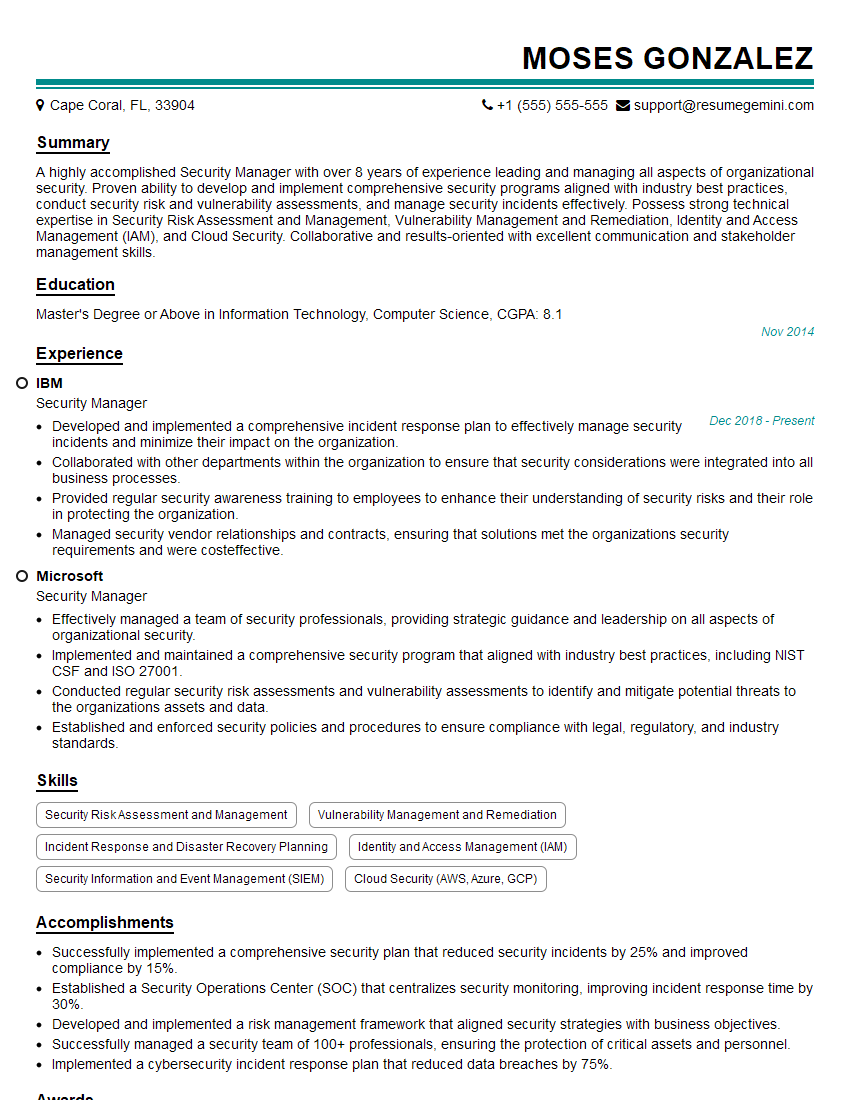
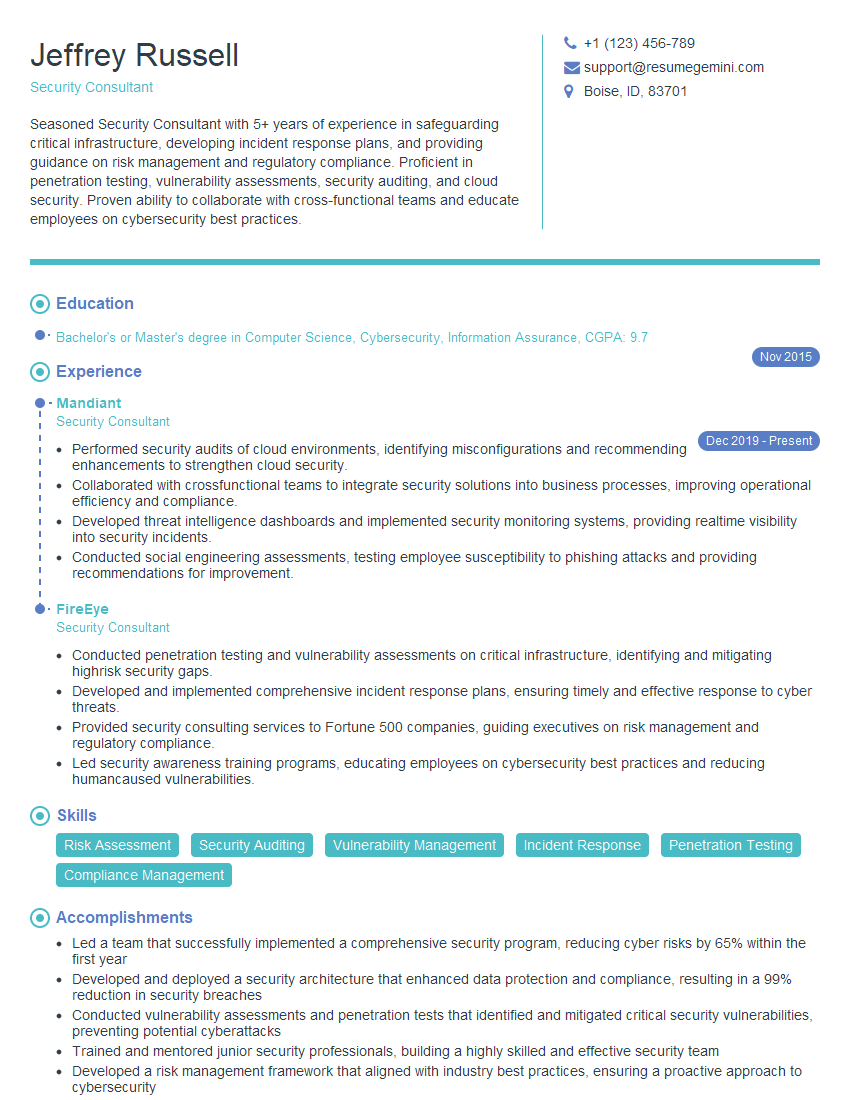
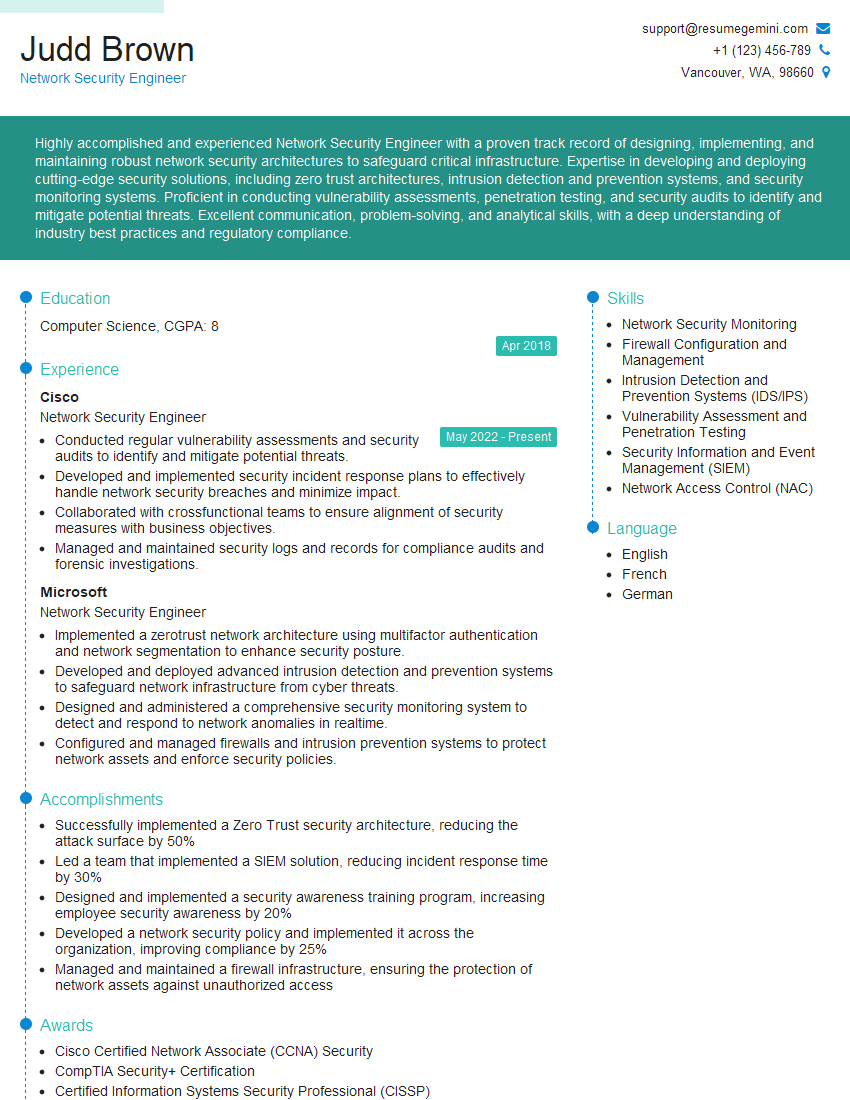
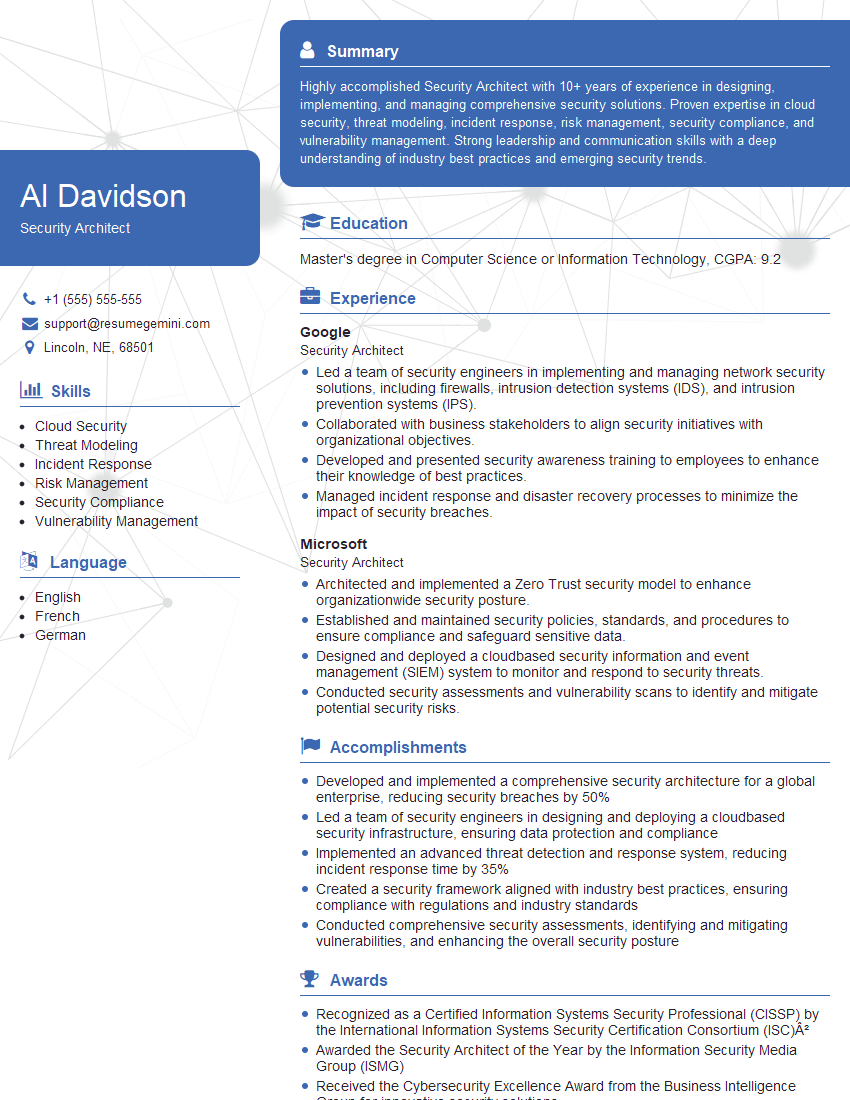
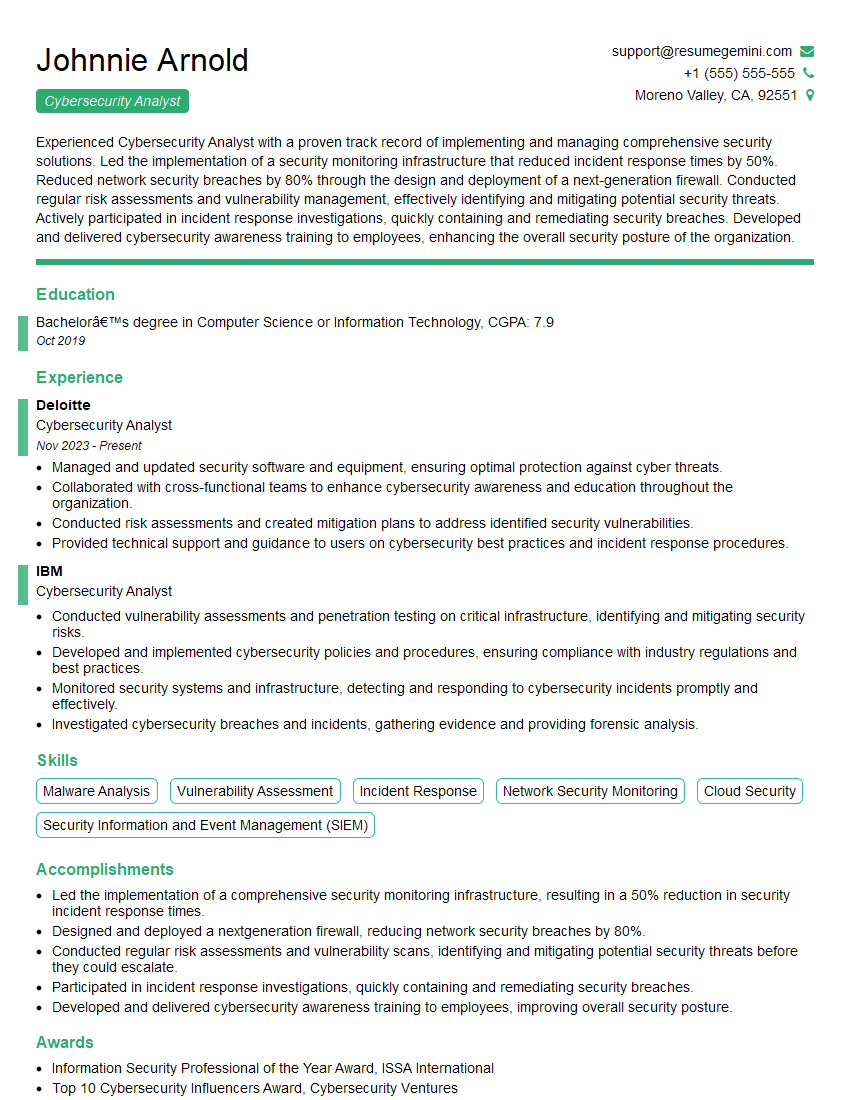
Mastering Offensive Scheme Implementation opens doors to exciting and high-demand roles in cybersecurity. Demonstrating your expertise effectively is crucial, and a well-crafted resume is your first step. An ATS-friendly resume, optimized to highlight your skills and experience in a way Applicant Tracking Systems recognize, significantly increases your chances of landing an interview. To build a powerful, ATS-friendly resume tailored to showcase your Offensive Scheme Implementation skills, consider using ResumeGemini. ResumeGemini provides a streamlined process and offers examples of resumes specifically designed for this field. Let your skills shine – build a resume that gets noticed.
Explore more articles
Users Rating of Our Blogs
Share Your Experience
We value your feedback! Please rate our content and share your thoughts (optional).
What Readers Say About Our Blog
Very informative content, great job.
good