Feeling uncertain about what to expect in your upcoming interview? We’ve got you covered! This blog highlights the most important Vessel Navigation and Seamanship interview questions and provides actionable advice to help you stand out as the ideal candidate. Let’s pave the way for your success.
Questions Asked in Vessel Navigation and Seamanship Interview
Q 1. Explain the process of taking a celestial fix.
Taking a celestial fix involves determining a vessel’s position using the observed altitude of celestial bodies (sun, moon, stars) and their calculated altitudes at a specific time. It’s a traditional method, though less common now with the prevalence of GPS, which is still valuable as a backup or in GPS-denied areas.
The process involves these steps:
- Sight Reduction: Using a nautical almanac or ephemeris, you calculate the Greenwich Hour Angle (GHA) and declination of the celestial body. You then use your estimated position (Dead Reckoning or DR position) and the local apparent time (LAT) to compute the body’s calculated altitude.
- Observation: You accurately measure the body’s altitude above the horizon using a sextant. This requires correcting for factors such as index error, dip of the horizon, and refraction.
- Plotting the Line of Position (LOP): The difference between the observed and calculated altitude represents a circle of position. Due to the scale, we use a small segment of that circle – the Line of Position (LOP) – which is a line drawn on the chart perpendicular to the azimuth (direction) of the body.
- Intersection of LOPs: At least two LOPs from different celestial bodies are required. The intersection of these LOPs provides the fix. Three or more observations provide a more accurate and reliable fix. The more LOPs you take, the better the precision of your fix.
Example: Imagine observing the sun and a star. Each provides an LOP. Where those two lines intersect on your chart gives you your position.
Q 2. Describe your experience with Electronic Chart Display and Information Systems (ECDIS).
I have extensive experience using ECDIS, having served as both a navigator and training officer onboard various vessels. My proficiency includes chart management, route planning, setting up safety contours, and utilizing the integrated functionalities of the system.
My experience specifically includes:
- Route Planning and Monitoring: I’m skilled in planning optimal routes considering factors like weather, currents, traffic density, and navigational hazards. ECDIS allows real-time monitoring of the vessel’s position relative to the planned route.
- Chart Management and Updates: I understand the importance of chart updates and ensure the system is always equipped with the latest ENC (Electronic Navigational Charts) data to avoid outdated information leading to potential hazards.
- Safety Contours: I utilize ECDIS to set up safety contours (e.g., minimum depth, proximity alarms) that alert the bridge team to potential dangers before they become immediate concerns.
- Integration with other navigation systems: I can integrate ECDIS with other navigational equipment such as GPS, radar, and AIS for a more comprehensive and safer navigational picture. For example, using AIS data overlayed on the ECDIS can help avoid collisions.
- Emergency situations: I have experience utilizing ECDIS during emergency situations, allowing rapid decision-making in conditions like restricted visibility or equipment failures.
I’m also familiar with various ECDIS manufacturers’ systems and their specific features.
Q 3. How do you handle a collision at sea?
Handling a collision at sea is a critical situation demanding immediate and decisive action. The primary focus is to prevent or minimize damage and injuries.
The steps involved are:
- Initial Assessment: Rapidly assess the situation. Determine the other vessel’s intentions and capabilities. Identify the immediate threat.
- Emergency Maneuvers: Take immediate action to avoid collision, using appropriate maneuvering techniques based on the COLREGs (International Regulations for Preventing Collisions at Sea). This might involve a hard turn, a speed change, or a combination of both.
- Communication: Use the ship’s horn and radio to communicate with the other vessel. Attempt to establish contact and coordinate actions.
- Damage Control: Assess and address any damage sustained. This includes damage to the hull, machinery, or cargo. Implement damage control procedures.
- Post-Collision Procedures: Following the immediate crisis, follow post-collision procedures, including reporting the incident to relevant authorities (e.g., Coast Guard), documenting the event thoroughly, and cooperating with any investigations.
Example: If facing a head-on collision, the COLREGs state both vessels should alter course to starboard (right). Failing to do so can result in a collision and serious consequences.
Q 4. What are the different types of navigational hazards?
Navigational hazards are any obstacle or condition that could endanger a vessel’s safe passage. These hazards can be categorized broadly as:
- Environmental Hazards: These are naturally occurring, including shallow water, rocks, reefs, ice, strong currents, heavy weather (storms, fog, high seas), and tidal variations.
- Man-made Hazards: These are human-created, including wrecks, obstructions (like submerged pipelines or cables), bridges with low clearances, artificial islands, and poorly marked channels.
- Traffic Hazards: These are dangers from other vessels or maritime traffic, including congested waterways, areas with poor visibility, and vessels operating unsafely.
Example: A shallow patch of water, unmarked on a chart, is a navigational hazard. Similarly, a busy shipping lane during low visibility is another hazard that requires extra caution and effective navigational practices.
Q 5. Describe your experience with passage planning.
Passage planning is a systematic process of planning a voyage from origin to destination, ensuring safe and efficient transit. It involves a thorough assessment of potential risks and the development of mitigation strategies.
My experience includes:
- Route Selection: Using various resources, such as charts, nautical publications, and weather forecasts, I plan optimal routes considering factors like distance, speed, weather, currents, and traffic separation schemes.
- Risk Assessment: I conduct a thorough assessment of all potential navigational and operational risks, such as shallow water, poor visibility, heavy traffic, and equipment failures.
- Contingency Planning: I develop alternative plans to account for unforeseen circumstances like bad weather or equipment malfunction. This includes selecting alternate routes and anchorages.
- Documenting the Plan: I meticulously document the passage plan in accordance with company and regulatory standards. The plan includes details such as route, estimated times of arrival (ETA), safety information, and emergency procedures.
- Regular Monitoring: During the voyage, I regularly monitor the plan’s progress, making any necessary adjustments based on real-time conditions.
Example: For a voyage across the Atlantic, passage planning would involve considering the North Atlantic Current, potential storm tracks, and the need for fuel stops.
Q 6. How do you maintain a safe watch?
Maintaining a safe watch involves constant vigilance and proactive observation to ensure the safe navigation and operation of the vessel.
Key aspects of a safe watch include:
- Regular Checks: Frequent checks on navigational equipment (GPS, radar, ECDIS, etc.), communication systems, and the ship’s machinery.
- Environmental Monitoring: Continuous observation of the environment, including weather, visibility, sea state, traffic, and any potential hazards.
- Bridge Teamwork: Effective communication and coordination with the bridge team and other personnel.
- Adherence to Regulations: Strict adherence to the COLREGs, company safety regulations, and any relevant national or international regulations.
- Proactive Navigation: Anticipating potential problems and taking preventative measures, such as adjusting speed or course to avoid hazards.
- Situational Awareness: Maintaining a constant awareness of the vessel’s position, course, speed, and surrounding environment.
- Proper Rest and Fatigue Management: Ensuring adequate rest to avoid fatigue, which can significantly impair judgment and performance.
Example: During fog, a safe watch involves using radar to monitor traffic, reducing speed, and using fog signals.
Q 7. Explain the use of radar in navigation.
Radar plays a crucial role in navigation, particularly in conditions of reduced visibility (fog, heavy rain, darkness). It’s an electronic system that detects and displays objects based on their reflection of radio waves.
Uses of radar in navigation include:
- Collision Avoidance: Radar helps detect other vessels, navigational markers, and other potential hazards in poor visibility. It allows for timely maneuvering to avoid collisions.
- Navigation in Restricted Visibility: Radar provides information about the surrounding environment even when visual observation is limited, aiding navigation in fog, heavy rain, or darkness.
- Fixing Position: By identifying known objects or landmarks on the radar screen, it can aid in determining the vessel’s position.
- Estimating Course and Speed of Other Vessels: Radar can be used to predict the course and speed of other vessels, enabling the navigator to assess collision risks.
- Weather Observation: Some radar systems can detect weather phenomena such as rain showers and thunderstorms, allowing the navigator to plan accordingly.
Example: In thick fog, radar helps in detecting nearby vessels, assisting in avoiding a collision. By identifying known buoys or landmarks on the radar, you can confirm your vessel’s location.
Q 8. What actions would you take if you encountered a person overboard?
A person overboard (MOB) is a critical emergency. Immediate and coordinated action is paramount. The first step is to immediately yell “Man overboard!” to alert everyone on board. This triggers a pre-planned MOB drill. Simultaneously, I would:
- Activate the MOB button: This automatically marks the location on the GPS and often triggers an alarm.
- Throw a life ring and buoyant equipment: Aiming slightly ahead of the person to account for the current.
- Immediately turn the vessel into the wind or current to maintain closest proximity to the person: This crucial action prevents the person from drifting further away.
- Note the location using GPS and other navigational tools: This precise location helps guide the rescue operation.
- Inform the Coast Guard or other emergency services: Providing location, vessel details, number of people involved, and the situation’s urgency.
- Deploy any other rescue equipment: Life raft, rescue boat, etc.
- Prepare for recovery: This includes having a rescue boat ready or using the vessel itself carefully. The recovery must be done with caution to avoid injuring the rescued person further.
- Post-rescue actions: Assessing and providing first aid to the person, checking the safety and integrity of the ship. Completing accident reports and logging the incident.
Imagine a situation at night with limited visibility. The accuracy of the MOB button location and immediate action are critical to a successful outcome. Training and drills are key to a smooth and efficient response to this critical emergency.
Q 9. How do you handle a fire onboard a vessel?
Fire onboard is a terrifying event, requiring immediate and decisive action based on the PASS acronym – Pull, Aim, Squeeze, Sweep. My response will follow the ship’s fire plan, but generally includes:
- Raise the alarm: Alerting everyone onboard via the ship’s alarm system.
- Contain the fire: Using fire extinguishers appropriate for the fire type (e.g., Class A for wood, Class B for liquids, Class C for electrical).
- Evacuate the area: Safely moving people away from the fire and any potential hazards such as smoke inhalation.
- Fight the fire: If safe to do so, using available resources and following established procedures to put out the fire.
- Contact emergency services: Coast Guard or local fire department.
- Cool down hotspots: After putting out the fire, using water to cool down affected areas to prevent re-ignition.
- Damage assessment: Examining the extent of the damage caused by the fire to determine further actions.
For example, if I encounter a small grease fire in the galley, I would use a Class B extinguisher. But a large engine room fire necessitates a more systematic response, potentially involving deploying the fire-fighting equipment and potentially abandoning the ship if necessary.
Q 10. Describe your experience with GPS navigation.
I have extensive experience with GPS navigation, using it daily throughout my career. I’m proficient in using both handheld and integrated chart plotters. I understand how to:
- Plan routes: Using GPS to plot courses, factoring in waypoints, tides, and currents.
- Monitor position: Regularly checking our position against the planned route and making adjustments as needed, including correcting for drift.
- Calculate ETA: Using speed, distance, and potential delays to accurately estimate the time of arrival.
- Use GPS in conjunction with other navigational tools: Such as charts, compasses, and other electronic aids to enhance situational awareness and provide redundancy in case of GPS failure.
- Understand GPS limitations: Recognizing that GPS signals can be affected by atmospheric conditions or obstructions. Knowing how to utilize alternative methods in case of GPS failure.
For instance, during a recent voyage, unexpected strong currents forced a course correction mid-journey. Using the GPS, I adjusted the course and waypoints to compensate, ensuring the safe and timely arrival despite the unpredictable current.
Q 11. Explain the significance of COLREGS.
COLREGs, or the International Regulations for Preventing Collisions at Sea, are crucial for safe navigation. These rules establish standards to prevent collisions between vessels and to ensure safety at sea. They cover various aspects, including:
- Rules of the Road: Defining the responsibilities of vessels meeting, overtaking, and crossing paths.
- Navigation lights: Specifying the types and placement of lights that vessels must display to indicate their presence and course.
- Sound signals: Establishing the use of horns and other sounds for communication during restricted visibility.
- Shapes and markings: Defining the use of shapes and markings to identify vessel type and purpose.
- Action to be taken in special circumstances: Outlining what to do in situations such as vessel restrictions, narrow channels, or crossing traffic lanes.
Failure to comply with COLREGs can lead to serious accidents. For example, a vessel failing to give way to a stand-on vessel could result in a collision. A thorough understanding of COLREGs is fundamental to safe seamanship.
Q 12. How do you use tide and current information in navigation?
Tide and current information are essential for accurate navigation, especially in coastal waters. I use this information to:
- Plan routes: Choosing routes that minimize the impact of strong currents or adverse tidal flows.
- Calculate ETA: Accounting for the effects of currents on vessel speed.
- Determine safe anchorages: Selecting locations that are sheltered from strong currents and tidal flows.
- Correct for set and drift: Adjusting course to compensate for the influence of currents on the vessel’s position.
- Understand water depths: Using tidal information to ensure sufficient water depth for safe passage.
For example, when approaching a shallow harbor entrance, I’d consult tidal charts to determine the optimal time to enter, avoiding grounding due to low tide. Similarly, knowledge of strong currents is vital when navigating narrow channels to anticipate and compensate for drift.
Q 13. What are the different types of anchors and their uses?
Several types of anchors are used depending on the vessel’s size, the seabed type, and the intended use. Some common types include:
- Danforth anchor: A lightweight anchor suitable for sand or mud bottoms. Its fluke design provides good holding power for its weight.
- Bruce anchor: A high-holding-power anchor suitable for various bottom types, including rocky and weed-infested areas.
- Plow anchor (CQR): A versatile anchor with good holding power in sand, mud, and clay.
- Fluke anchor: A heavier, more robust anchor suitable for large vessels in various bottom conditions.
- Mushroom anchor: Often used as a mooring anchor in sheltered areas with soft bottoms. It’s less efficient in holding in harsh conditions.
The choice of anchor depends heavily on the circumstances. A small sailboat might use a Danforth anchor in a sheltered bay, while a large cargo vessel would employ a heavy fluke anchor in exposed waters. Anchor selection is a critical decision influencing the safety and security of the vessel.
Q 14. How do you calculate the estimated time of arrival (ETA)?
Calculating the Estimated Time of Arrival (ETA) involves several factors. It’s not just a simple speed-distance calculation; it takes into account various variables. The process generally involves:
- Determining the distance: Using navigational charts or electronic charting systems to measure the distance between the current position and the destination.
- Estimating the speed: Considering the vessel’s speed made good (actual speed over ground, accounting for currents and wind). Speed made good can be determined from GPS data, log readings or by calculating speed from course and time.
- Accounting for currents and tides: Calculating the impact of currents and tides on the vessel’s speed and course, adjusting the estimated speed accordingly.
- Adding in potential delays: Factoring in potential delays such as adverse weather, traffic congestion, or scheduled stops.
- Utilizing navigation software: Many electronic chart display and information systems (ECDIS) automatically calculate ETA based on the planned route and vessel speed.
For example, if the distance is 100 nautical miles and the vessel’s speed is 10 knots, the basic calculation would suggest a 10-hour ETA. However, a strong headwind and adverse currents might increase the actual time by several hours. Accurate ETA calculation is crucial for efficient voyage planning and safe arrival.
Q 15. Explain the procedure for entering and leaving a port.
Entering and leaving a port is a crucial maneuver requiring meticulous planning and execution. It involves a series of steps to ensure safe passage through congested waters and adherence to port regulations.
- Pre-arrival Planning: This includes studying the port’s navigational charts, noting any pilotage requirements, checking weather forecasts, and communicating with port authorities regarding arrival time and berthing instructions. We need to confirm the availability of tugs or other assistance as needed.
- Approach: Once we approach the port, we reduce speed and maintain a safe distance from other vessels. We carefully monitor the traffic separation schemes and follow the designated channels. Precise navigation is crucial to avoid collisions.
- Pilotage (if required): A pilot, familiar with the local waters, usually boards the vessel to guide it through the port. Their expertise enhances safety and efficiency.
- Berthing: This involves maneuvering the vessel alongside a berth or pier, using engines, anchors, and potentially tugs for precise positioning. Effective communication with the mooring team on the dock is vital.
- Departure: The reverse process is followed, carefully releasing moorings, conducting a final check of the vessel, and navigating out of the port following the same safe procedures used for arrival.
For example, during my time on the MV Ocean Voyager, we encountered unexpectedly strong currents while entering the Port of Rotterdam. By coordinating closely with the pilot and utilizing the vessel’s maneuvering capabilities, we successfully berthed without incident.
Career Expert Tips:
- Ace those interviews! Prepare effectively by reviewing the Top 50 Most Common Interview Questions on ResumeGemini.
- Navigate your job search with confidence! Explore a wide range of Career Tips on ResumeGemini. Learn about common challenges and recommendations to overcome them.
- Craft the perfect resume! Master the Art of Resume Writing with ResumeGemini’s guide. Showcase your unique qualifications and achievements effectively.
- Don’t miss out on holiday savings! Build your dream resume with ResumeGemini’s ATS optimized templates.
Q 16. How do you maintain proper stability of the vessel?
Maintaining proper vessel stability is paramount for safety and operational efficiency. It involves understanding and managing the forces acting upon the vessel, primarily weight distribution and buoyancy.
- Weight Distribution: Cargo must be properly stowed to maintain the vessel’s center of gravity within acceptable limits. Improper weight distribution can lead to excessive list (tilting) or trim (fore-and-aft inclination). This requires careful planning and execution of the cargo plan.
- Free Surface Effect: Liquids in tanks can shift during motion, significantly affecting stability. Compartmentalization and proper tank filling procedures mitigate this effect. For example, keeping tanks partially filled is more stable than having them completely full or almost empty.
- Ballast Water: For vessels without cargo or carrying insufficient cargo, ballast water is used to maintain stability and draft (depth of the hull in the water). Proper management of ballast water is essential for preventing the spread of invasive species.
- Heel and Trim: Constant monitoring of the vessel’s heel (lateral inclination) and trim (longitudinal inclination) is crucial. Adjustments to cargo or ballast water can be made to correct any deviations from the desired condition.
Imagine a seesaw; proper weight distribution ensures it remains balanced. Similarly, a ship needs a balanced distribution of weight to maintain its stability.
Q 17. What are the different types of seamanship techniques used in mooring?
Seamanlike mooring involves a range of techniques that depend on the type of berth, environmental conditions, and available equipment. Some common techniques include:
- Spring Lines: These lines run from the vessel’s bow or stern to a point on the dock at an angle, preventing fore-and-aft movement.
- Breast Lines: These lines run perpendicular to the dock, preventing sideways movement.
- Head and Stern Lines: These lines run from the bow or stern directly to the dock, assisting in controlling the vessel’s position.
- Mooring Winches: These mechanical devices assist in controlling the tension on the mooring lines.
- Use of Tugs: In challenging conditions or with larger vessels, tugs provide additional power and precision to maneuver during mooring.
- Handling of Anchor: In certain situations, an anchor can provide extra security, especially in exposed moorings.
Effective mooring requires a high degree of coordination between the crew on board and the shore-based mooring gang. It’s a coordinated dance of precision and teamwork.
Q 18. Describe your experience with cargo handling and securing.
My experience encompasses a wide range of cargo handling and securing procedures, ensuring the safety and integrity of the cargo during transit. This involves:
- Cargo Planning: Thorough planning of cargo stowage, considering weight, volume, stability, and the compatibility of different types of cargo.
- Cargo Stowage: Properly securing cargo using appropriate lashing techniques, dunnage (packing material), and securing devices to prevent shifting during transit.
- Documentation: Maintaining accurate cargo records, including the quantity, type, and stowage location of each item. This is crucial for insurance purposes and efficient cargo handling at destination.
- Inspection: Regular inspection of secured cargo during the voyage to identify and rectify any potential issues early on.
- Compliance: Adherence to all relevant safety regulations and best practices related to cargo handling and stowage.
During my time on the MV Global Trader, I was responsible for the safe handling of a large consignment of specialized machinery. Through careful planning and execution of the securing procedure, the cargo was delivered to its destination without damage.
Q 19. How do you ensure the safety of the crew and passengers?
Ensuring the safety of crew and passengers is the highest priority. This involves a multi-faceted approach:
- Safety Training: Regular training and drills covering emergency procedures, fire safety, man overboard drills, and personal safety.
- Risk Assessment: Continuously identifying and mitigating potential hazards on board, such as slipping hazards or equipment malfunction.
- Maintenance: Ensuring that the vessel and its equipment are properly maintained and in good working order.
- Emergency Procedures: Having clear and well-rehearsed emergency procedures in place and readily accessible.
- Compliance: Adherence to all relevant safety regulations, including SOLAS (Safety of Life at Sea) and ISM (International Safety Management) code.
- Communication: Open and transparent communication channels between officers and crew to foster a positive and safe working environment.
For instance, our weekly safety meetings on the SS Voyager allowed for proactive discussion of any safety issues and immediate action where needed.
Q 20. What are the procedures for conducting a safety drill?
Conducting safety drills is essential for maintaining a high level of preparedness for emergencies. Drills should be:
- Regular: Conducted regularly according to a predetermined schedule, typically weekly or monthly.
- Realistic: Simulate real-life emergency scenarios as closely as possible, incorporating unexpected elements to test preparedness.
- Comprehensive: Cover all aspects of emergency response, including fire drills, man overboard drills, abandon ship drills, and medical emergencies.
- Documented: The results of drills should be documented, providing valuable feedback for improvement and highlighting any deficiencies.
- Evaluative: Post-drill analysis should identify areas for improvement in emergency response procedures and crew performance.
For example, a recent abandon ship drill on the MV Seafarer helped us pinpoint a weakness in the muster point organization, subsequently leading to an improvement in efficiency.
Q 21. Explain the concept of dead reckoning.
Dead reckoning (DR) is a method of estimating a vessel’s position by using its known course, speed, and previous position. It’s a crucial navigation technique, particularly when electronic navigation systems are unavailable or malfunctioning.
The process involves:
- Determining the Course: The vessel’s heading and any known deviations due to current or wind.
- Measuring the Speed: Using instruments like the log, to determine the vessel’s speed over ground.
- Calculating Distance: Using the formula
Distance = Speed × Timeto calculate the distance traveled since the last known position. - Plotting the Position: Using a chart and compass to plot a new estimated position based on the course and distance traveled.
It is essential to understand that DR is an estimate. It’s affected by factors like currents, wind, and inaccuracies in speed and course measurements. Therefore, DR is usually used in conjunction with other navigation methods, such as GPS or celestial navigation, to ensure the most accurate position estimate. Think of it like following a map but making adjustments based on your observations as you go. The final destination is what’s important.
Q 22. What are the effects of wind and currents on navigation?
Wind and currents are significant environmental factors impacting vessel navigation. They exert forces on a vessel, causing deviations from its intended course and speed. Understanding their effects is crucial for safe and efficient voyage planning.
Wind’s effect: Wind pushes against the vessel’s hull and superstructure, creating leeway (lateral drift). The magnitude of leeway depends on the wind’s speed and direction, the vessel’s size and shape, and its speed and heading. For instance, a strong headwind can significantly reduce a vessel’s speed, requiring adjustments to the course to compensate for leeway. A strong beam wind can push the vessel sideways, requiring constant steering corrections.
Current’s effect: Currents are water movements that transport the vessel along their path. Their speed and direction affect the vessel’s actual track over ground (the path the vessel follows relative to the earth). A strong current can significantly alter the vessel’s position over time, even if its heading and speed remain constant. For example, a strong tidal current running against a vessel’s intended course can necessitate a course correction or increased engine power to maintain the desired speed and schedule.
Combined Effects: Wind and currents often act together, making navigation more complex. Predicting and accounting for their combined effects requires careful consideration of weather forecasts, tidal charts, and current prediction models. Navigational software and electronic chart display and information systems (ECDIS) play a crucial role in modeling and compensating for these factors.
Q 23. How do you handle communication failures at sea?
Communication failures at sea can be critical, especially in emergencies. A robust communication plan and a layered approach to communication are essential. My strategy involves prioritizing different communication methods and escalating through them in case of failure.
- Initial Confirmation and Troubleshooting: Firstly, I’d verify the problem; is it a transmitter problem, receiver issue, or a broader communication blackout? I’d check equipment settings and try different communication channels (VHF, Inmarsat, satellite phone, etc.).
- Alternative Channels: If VHF fails, I’d attempt contacting nearby vessels using their VHF frequencies, which may have better coverage in the area. If satellite communication is available, I would immediately establish contact with the vessel’s management or relevant authorities.
- Visual Signals: In the event of a total communication breakdown, visual distress signals (flares, flags, etc.) would be employed to attract attention from other ships or aircraft.
- Navigation: I’d ensure accurate navigation without relying on real-time communications. This involves careful chartwork, constant position fixing using GPS, and relying on pre-planned navigation strategies.
- Documentation: I’d diligently record all attempts at communication, including times, frequencies, and the responses (or lack thereof). This documentation is vital for any subsequent investigations.
Safe navigation inherently relies upon maintaining multiple layers of communication. A layered approach offers redundancy, mitigating the risk of failure.
Q 24. Explain the importance of maintaining navigational equipment.
Maintaining navigational equipment is paramount for safe and efficient navigation. Regular maintenance prevents failures, enhances accuracy, and ensures compliance with regulations. This impacts everything from safe arrival to avoiding costly delays and potential collisions.
- Accuracy: Proper maintenance guarantees the accuracy of navigational instruments. An improperly calibrated gyrocompass, for example, can lead to significant navigational errors over time, potentially resulting in grounding or collisions. Regular calibration and testing are essential.
- Reliability: Regular servicing and preventative maintenance ensure the reliability of equipment. Malfunctioning equipment at sea can be disastrous, leaving the vessel vulnerable. Scheduled servicing helps prevent failures in critical situations.
- Safety: Well-maintained equipment contributes to a safe operating environment. Reliable GPS, radar, and AIS (Automatic Identification System) systems are critical for collision avoidance and safe navigation in congested waters or poor visibility.
- Compliance: Maintenance records are crucial for demonstrating compliance with international and national maritime regulations. These records are reviewed during inspections, and failure to comply can result in penalties and port-state control detentions.
- Cost-effectiveness: Preventive maintenance is significantly more cost-effective than dealing with emergency repairs or equipment failure at sea. Routine checks and maintenance can detect minor problems early on, preventing major and costly repairs later.
Imagine a scenario where a GPS receiver malfunctions due to lack of maintenance. The captain might find themselves in a difficult position, especially in an area with poor visibility and without clear landmarks. Maintenance not only prevents problems but also enhances confidence and efficiency for the crew.
Q 25. Describe your experience in using various types of compasses.
My experience encompasses various types of compasses, each with its strengths and limitations. Understanding their operating principles and limitations is critical for effective navigation.
- Magnetic Compass: I’ve extensively used magnetic compasses, understanding their susceptibility to deviation (caused by the ship’s magnetic fields) and the need for regular compensation. I’m proficient in taking deviation corrections and understand how to use the compass for both steering and taking bearings.
- Gyrocompass: I have significant experience with gyrocompasses, understanding their operation based on the principles of gyroscopic precession. I’m familiar with their maintenance requirements, including proper alignment and error correction. A gyrocompass provides a more stable and accurate heading than a magnetic compass, especially in high latitudes or during rapid maneuvers.
- GPS Compass: I’m proficient in using GPS compasses integrated into modern navigation systems. These compasses provide accurate heading information based on GPS satellite data and are less susceptible to deviations and external magnetic influences. However, understanding their limitations, such as potential signal loss in certain conditions, is vital.
- Hand Bearing Compass: I am also skilled in using hand bearing compasses to take bearings on land marks and other vessels for position fixing and navigation. This is often a critical skill for emergency situations or when electronic systems are down.
The choice of compass depends on the specific navigational task and the available equipment. A combination of different types provides redundancy and enhances navigational accuracy and safety.
Q 26. How do you respond to distress calls?
Responding to a distress call requires immediate action, swift decision-making, and adherence to established maritime procedures. The GMDSS (Global Maritime Distress and Safety System) procedures form the basis of my response.
- Acknowledgement and Assessment: I’d immediately acknowledge the distress call, noting the time, source, and nature of the emergency. A careful assessment of the situation is crucial to determine the best course of action.
- Relaying the Message: I would relay the distress message to the appropriate authorities (Coast Guard, rescue coordination center) as quickly as possible, providing all pertinent information from the initial transmission.
- Navigational Actions: I’d alter my course and speed as necessary to provide assistance, while maintaining a safe distance and ensuring the safety of my own vessel. If there’s an immediate danger, I’d proceed with caution.
- Assistance and Rescue: I would provide any assistance possible, such as offering shelter, communicating with rescuers, or using onboard equipment to aid the rescue effort. This assistance is always dependent upon the ability to do so safely.
- Documentation: I’d meticulously document all actions taken, including time, position, actions performed, and communications with relevant parties. This record is vital for any subsequent investigation.
Responding to a distress call is a moral and legal obligation for seafarers. Every situation is different; it necessitates swift judgment, coordination, and efficient resource management to help those in distress.
Q 27. Explain your understanding of various types of nautical charts.
Nautical charts are fundamental tools for navigation, providing vital information about the water area, including depth, hazards, aids to navigation, and other critical details. Various chart types cater to different navigational needs.
- Paper Charts: I have extensive experience using paper charts, including their proper handling, plotting courses, and taking bearings. Understanding chart symbols, scales, and projections is critical. Paper charts serve as a vital backup in case of electronic equipment failure.
- Electronic Charts (ENCs): I’m proficient in using Electronic Navigational Charts (ENCs) displayed on an ECDIS (Electronic Chart Display and Information System). ECDIS offers various navigational capabilities, including route planning, collision avoidance, and tidal calculations. Understanding its capabilities and limitations, such as potential software errors or system failures, is equally crucial.
- Specific Chart Types: I understand the purpose and application of various chart types, including harbor charts, general charts, coastal charts, and ocean charts. Each chart type provides different levels of detail depending on the scale and the area covered. The selection of a chart is determined by the vessel’s intended route and the scale required.
The modern mariner must be proficient in both paper and electronic chart usage to ensure redundant navigational capability. Each has its advantages and disadvantages, and a comprehensive understanding of both is necessary for safe and effective navigation.
Q 28. Describe your experience with ship handling in confined waters.
Ship handling in confined waters demands exceptional skill, precision, and a thorough understanding of the vessel’s characteristics and the local environment. It requires careful planning, precise maneuvering, and constant awareness of surrounding vessels and potential hazards.
- Planning and Preparation: Before entering confined waters, I meticulously plan my route using charts, tide predictions, and local knowledge. This includes identifying potential hazards, such as shallow water, obstructions, and other vessels.
- Maneuvering Techniques: I’m skilled in various maneuvering techniques, including using tugs if needed, employing slow speed maneuvering, and understanding the effects of wind and currents on the vessel’s movement. I can efficiently use engines and rudder to execute turns and changes in direction.
- Communication: Clear and concise communication with other vessels, pilots, and harbor authorities is essential. Using the VHF radio to establish communication is critical, sharing intentions and coordinates to ensure safe navigation.
- Situational Awareness: Maintaining constant situational awareness is crucial. This involves monitoring radar, AIS, and visual observation to identify and react to potential hazards and other vessels’ movements.
- Emergency Procedures: I’m well-versed in emergency procedures for confined waters, including actions to take in case of engine failure, steering gear failure, or collision risk.
An example would be navigating a large container vessel through a narrow canal. Precise maneuvering, careful speed control, and constant communication are essential to avoid collisions with the canal walls or other vessels. Such situations require a high level of expertise in ship handling and situational awareness.
Key Topics to Learn for Vessel Navigation and Seamanship Interview
- Chartwork and Navigation: Understanding chart symbols, plotting courses, calculating ETA, using electronic charting systems (ECDIS), and performing position fixing using various methods (GPS, celestial navigation).
- Practical Application: Scenario-based problem-solving, such as navigating through restricted waters, dealing with equipment malfunctions, and responding to unexpected situations at sea. Think about how you’d explain your decision-making process in these scenarios.
- Collision Regulations (COLREGs): Thorough knowledge of the International Regulations for Preventing Collisions at Sea (COLREGs) and their practical application in various traffic situations. Be prepared to discuss specific rules and their implications.
- Meteorology and Oceanography: Understanding weather patterns, interpreting weather forecasts, and their impact on navigation. Knowledge of ocean currents, tides, and their effects on vessel maneuvering.
- Ship Handling and Manoeuvring: Understanding the principles of ship handling, including factors affecting maneuverability (e.g., speed, draft, wind, current). Be ready to discuss various maneuvering techniques and emergency procedures.
- Cargo Operations and Safety: Knowledge of safe cargo handling procedures, relevant regulations (e.g., SOLAS), and emergency response protocols.
- Communication Procedures: Proficiency in using various communication systems (VHF radio, GMDSS), understanding maritime communication protocols, and effective communication with other vessels and shore-based authorities.
- Bridge Resource Management (BRM): Understanding the principles of BRM and how to effectively manage a bridge team to ensure safe and efficient navigation.
- Emergency Procedures: Knowledge of various emergency procedures, including man overboard, fire fighting, and search and rescue operations.
- Regulations and Documentation: Familiarity with relevant international and national maritime regulations and documentation requirements.
Next Steps
Mastering Vessel Navigation and Seamanship is crucial for career progression within the maritime industry, opening doors to higher-paying roles and increased responsibilities. To maximize your job prospects, create a strong, ATS-friendly resume that highlights your skills and experience effectively. ResumeGemini is a trusted resource that can help you build a professional and impactful resume tailored to the maritime sector. They offer examples of resumes specifically designed for candidates in Vessel Navigation and Seamanship, providing a valuable template to guide you. Invest the time to craft a compelling resume – it’s your first impression on potential employers.
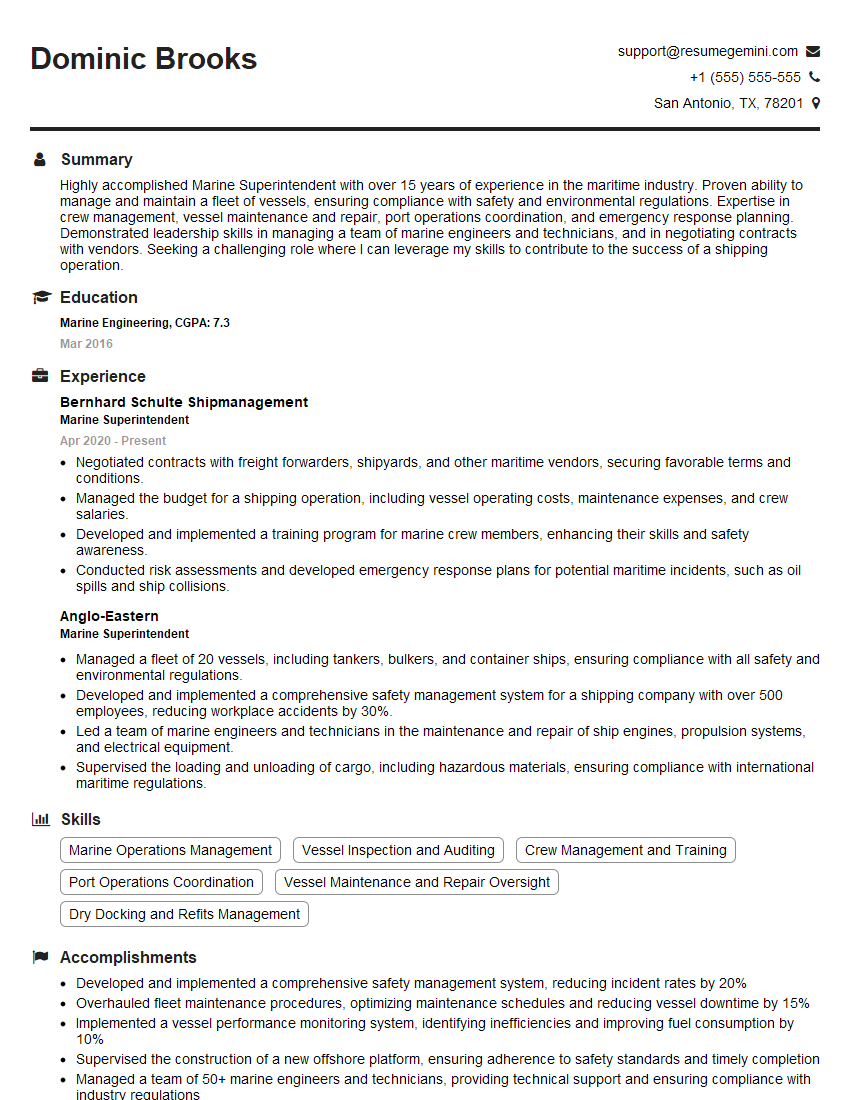
Marine Superintendent Resume Sample
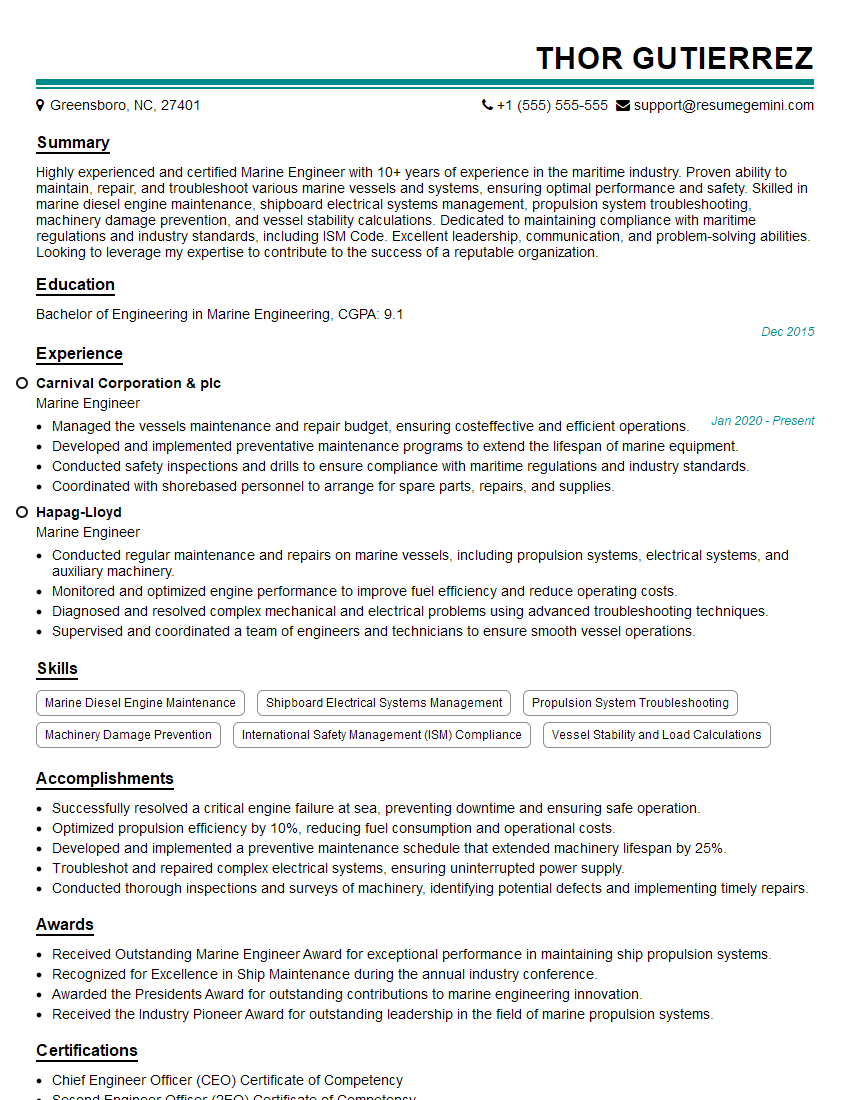
Marine Engineer Resume Sample
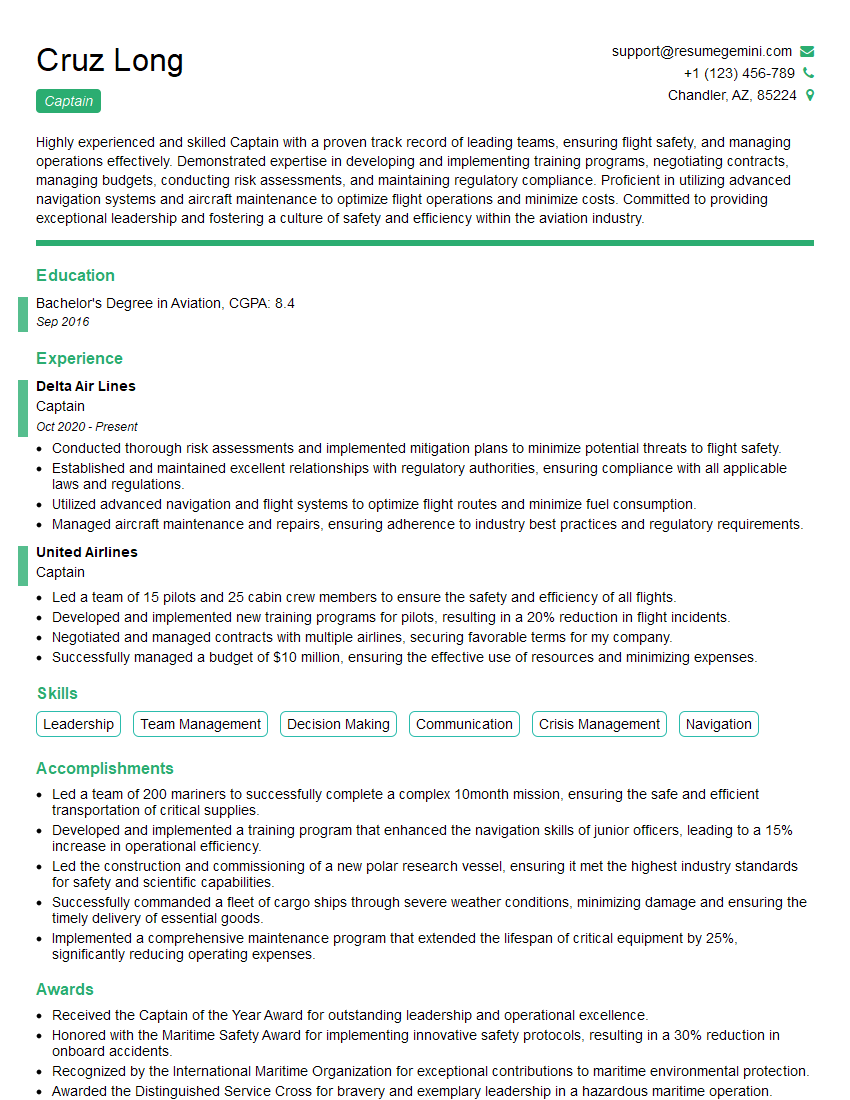
Captain Resume Sample
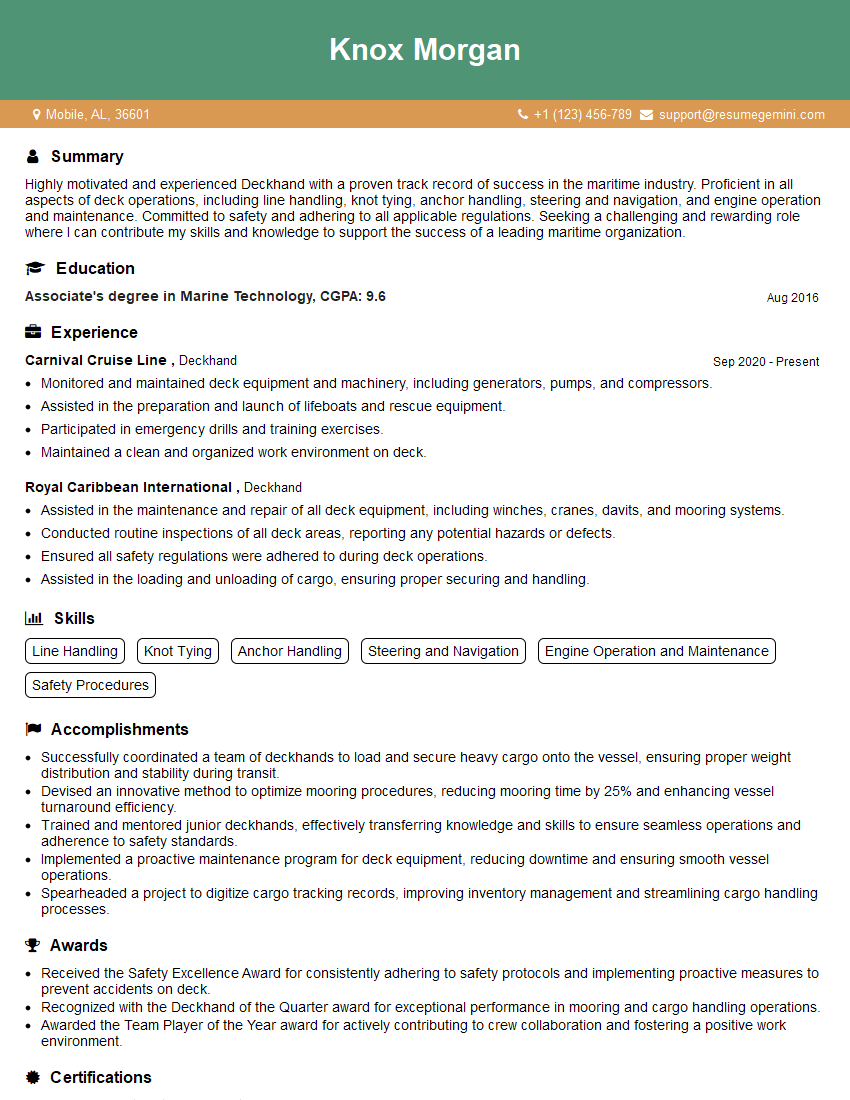
Deckhand Resume Sample
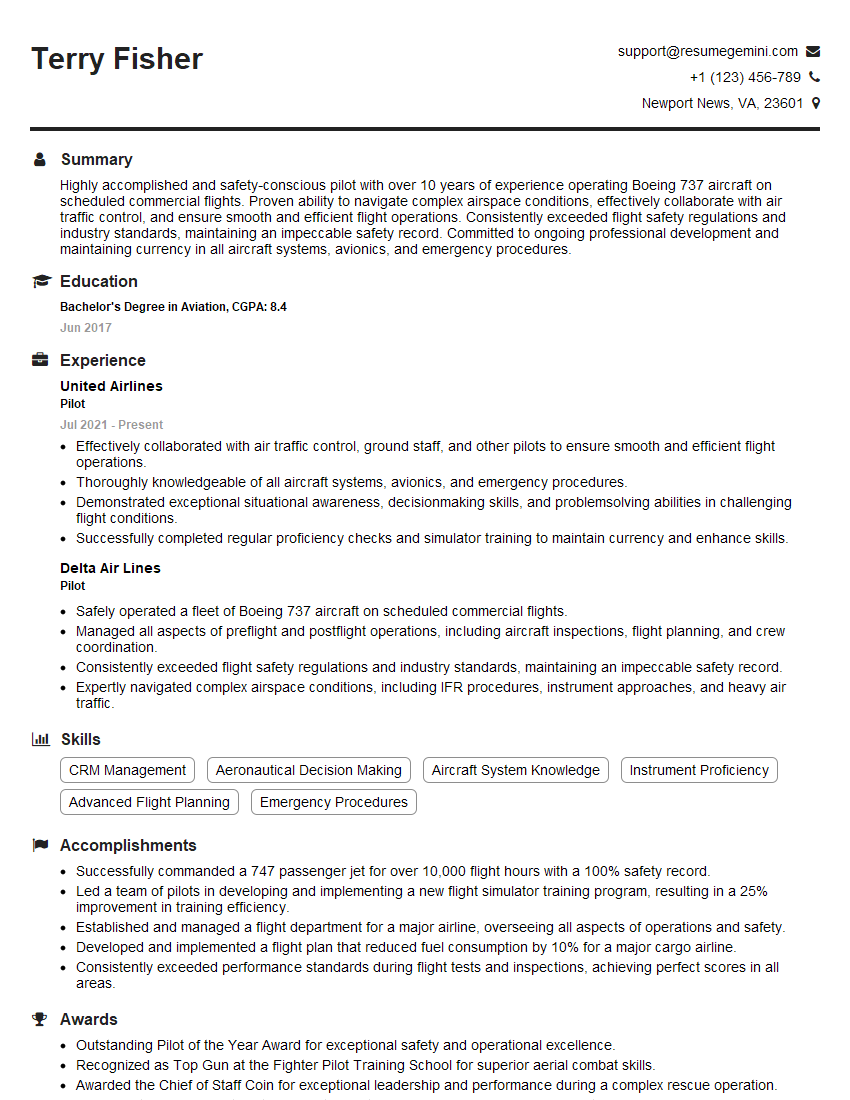
Pilot Resume Sample
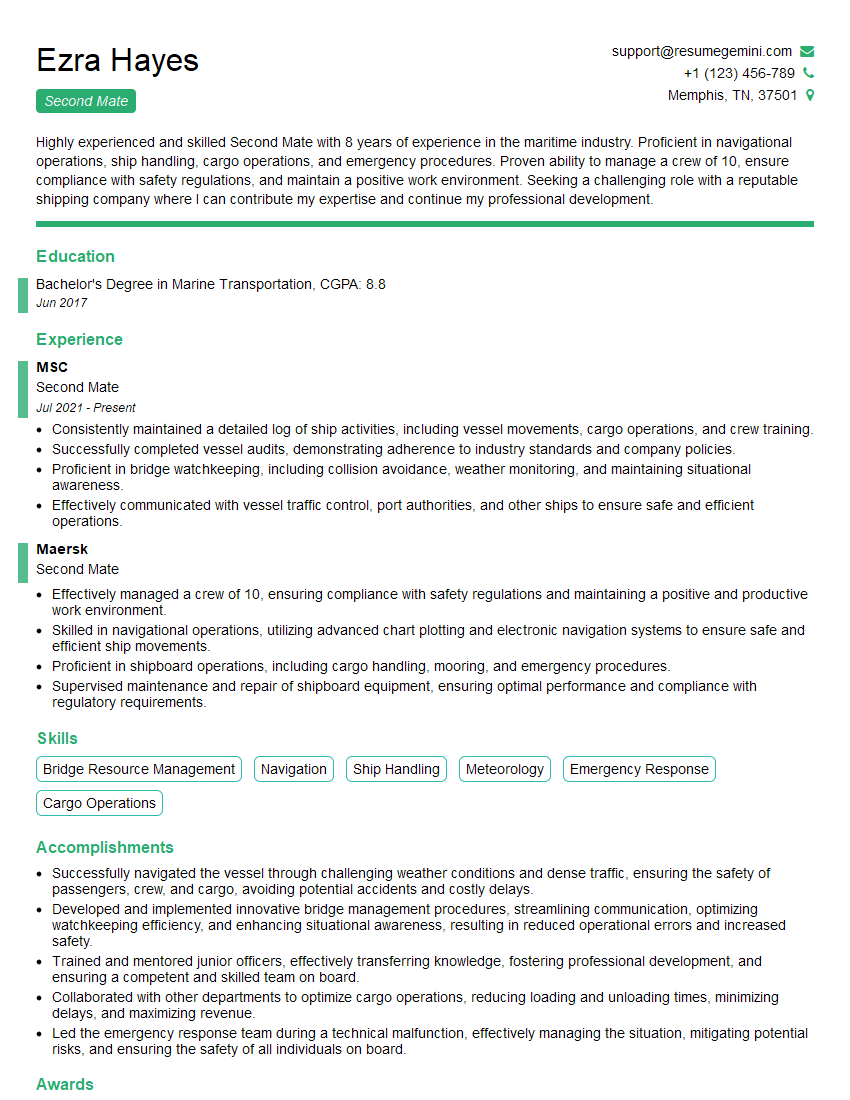
Second Mate Resume Sample
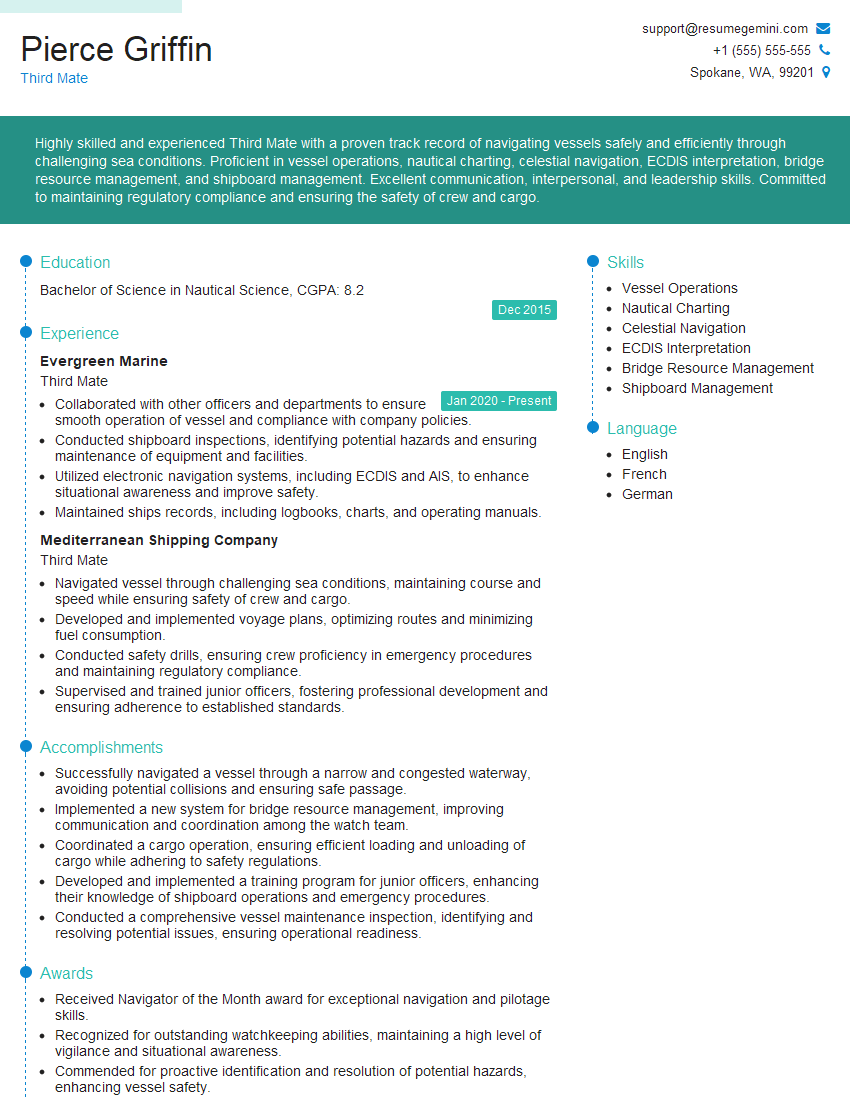
Third Mate Resume Sample
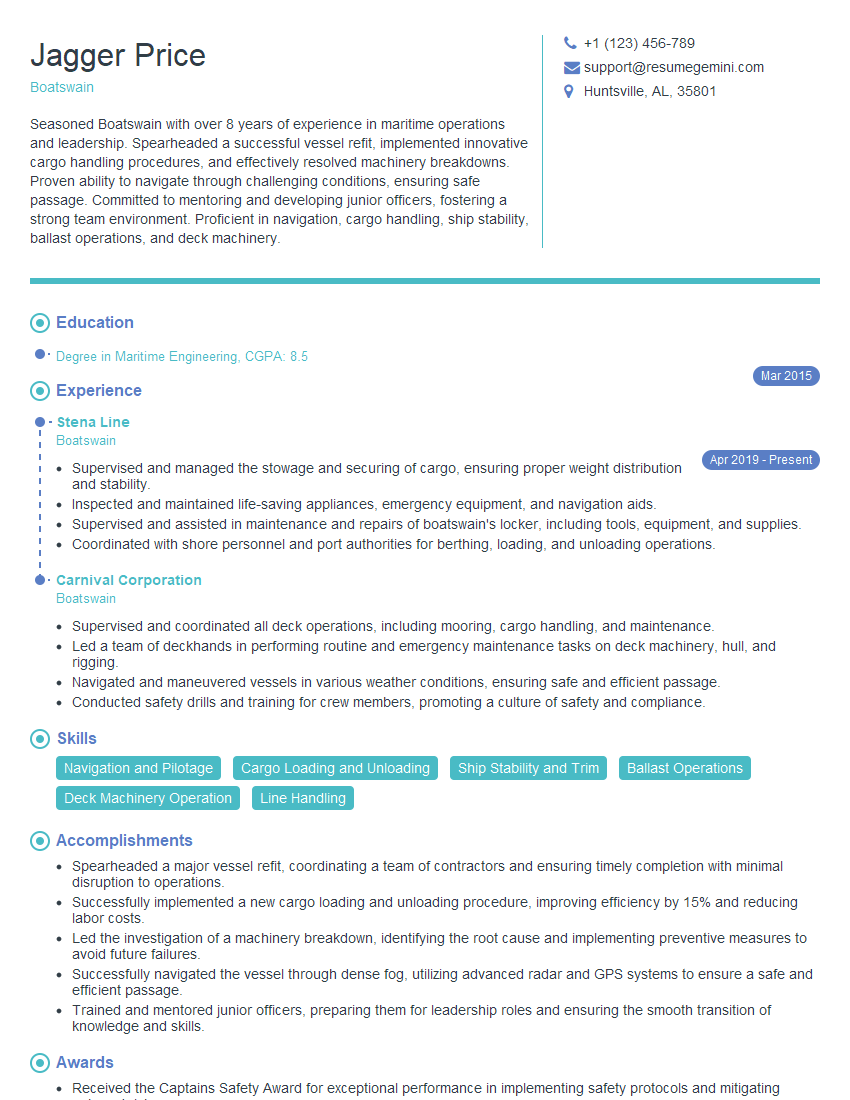
Boatswain Resume Sample
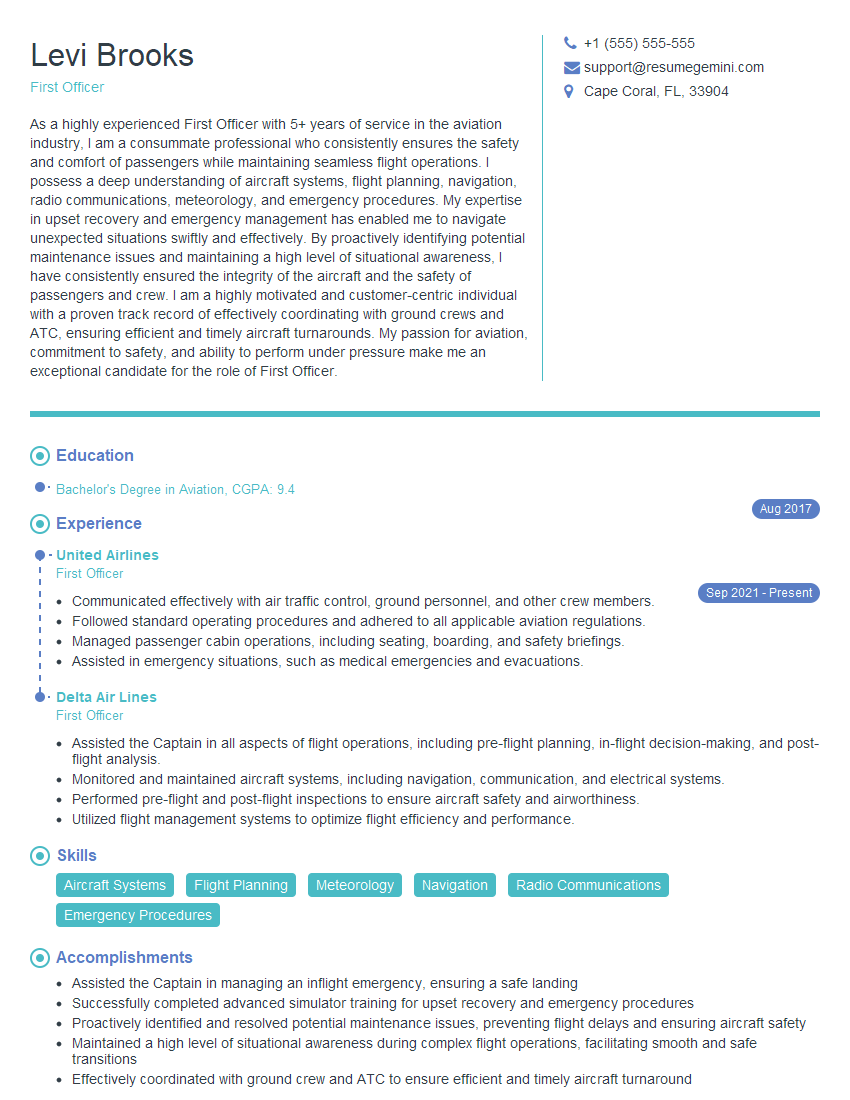
First Officer Resume Sample
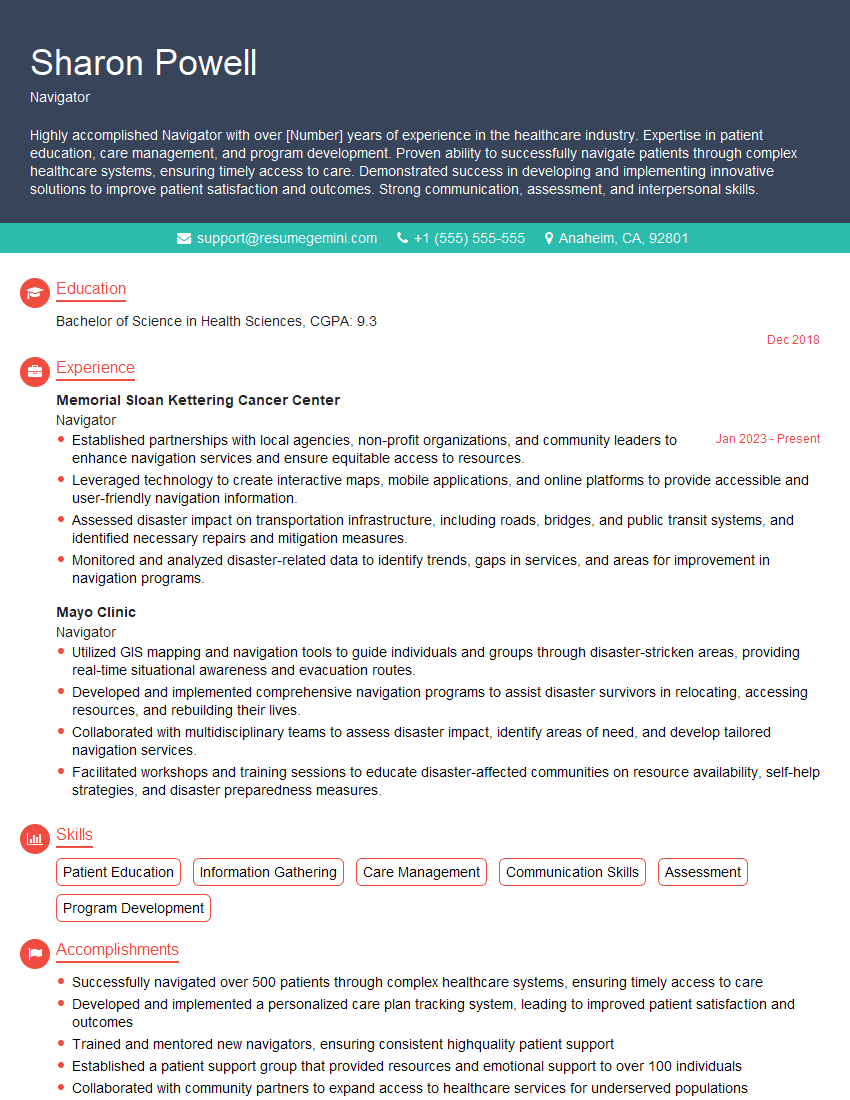
Navigator Resume Sample
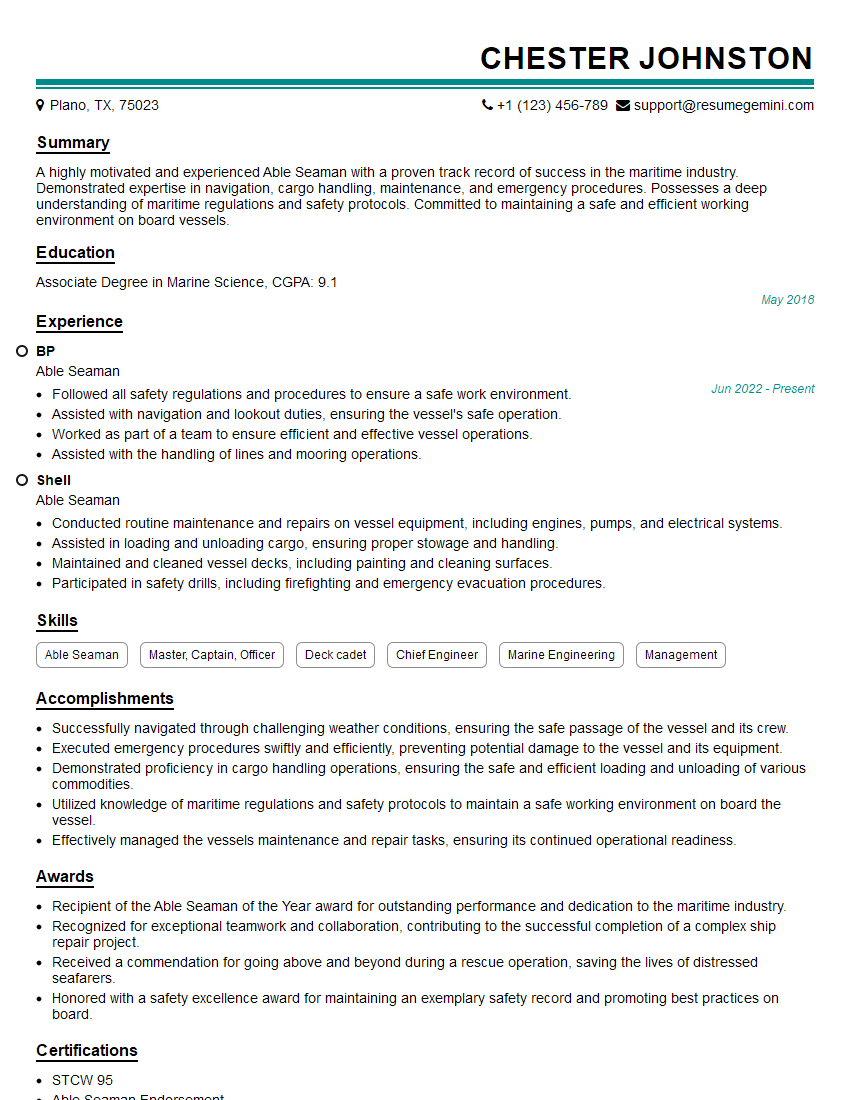
Able Seaman Resume Sample
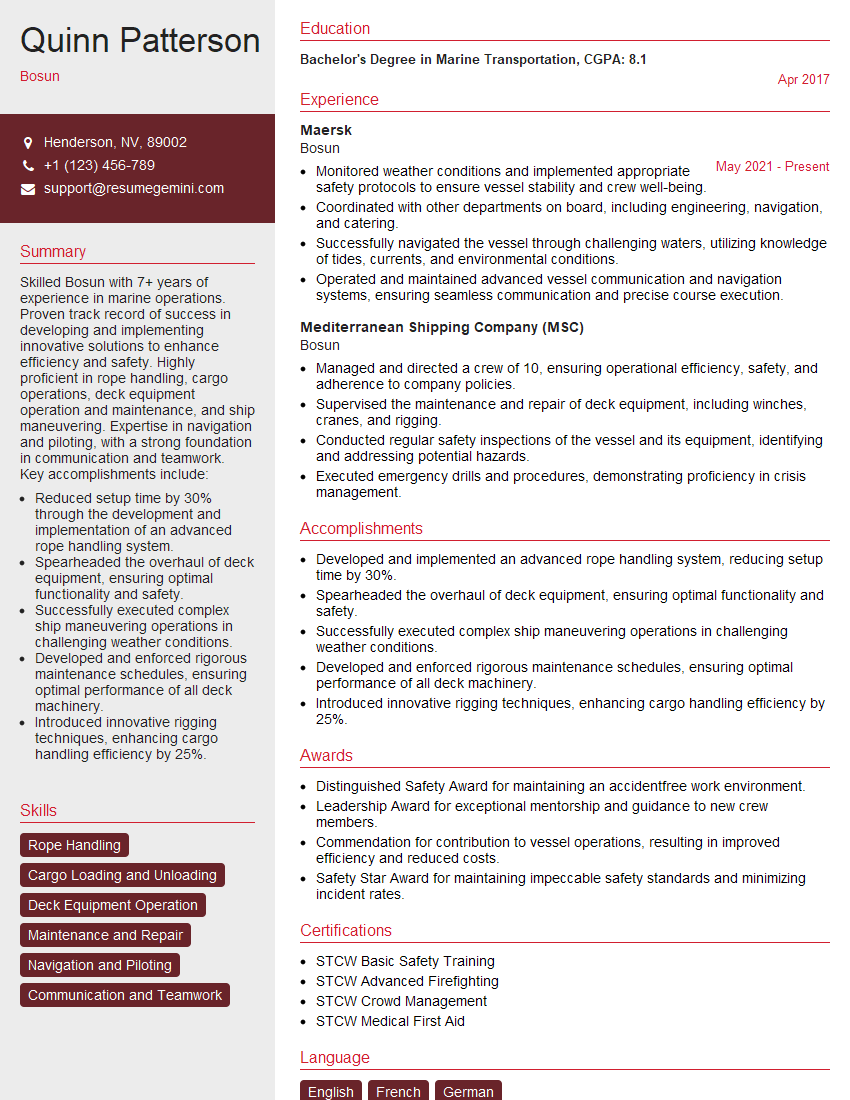
Bosun Resume Sample
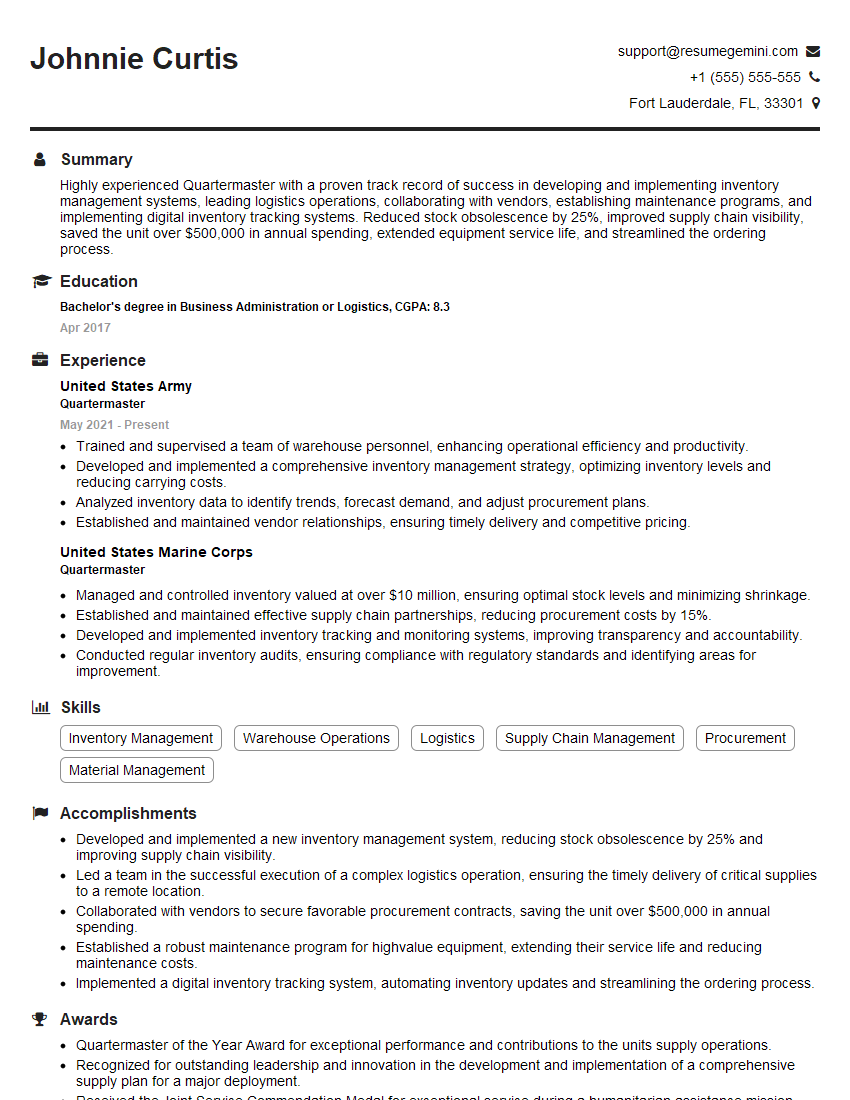
Quartermaster Resume Sample
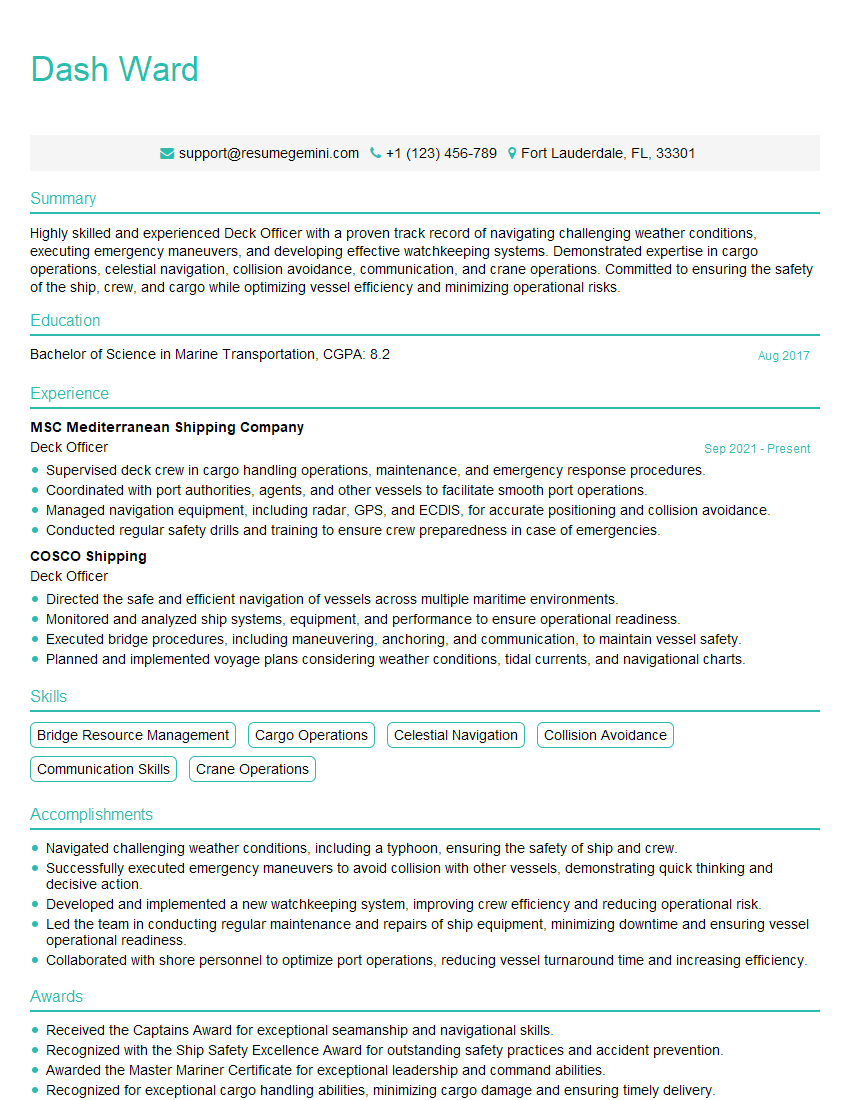
Deck Officer Resume Sample
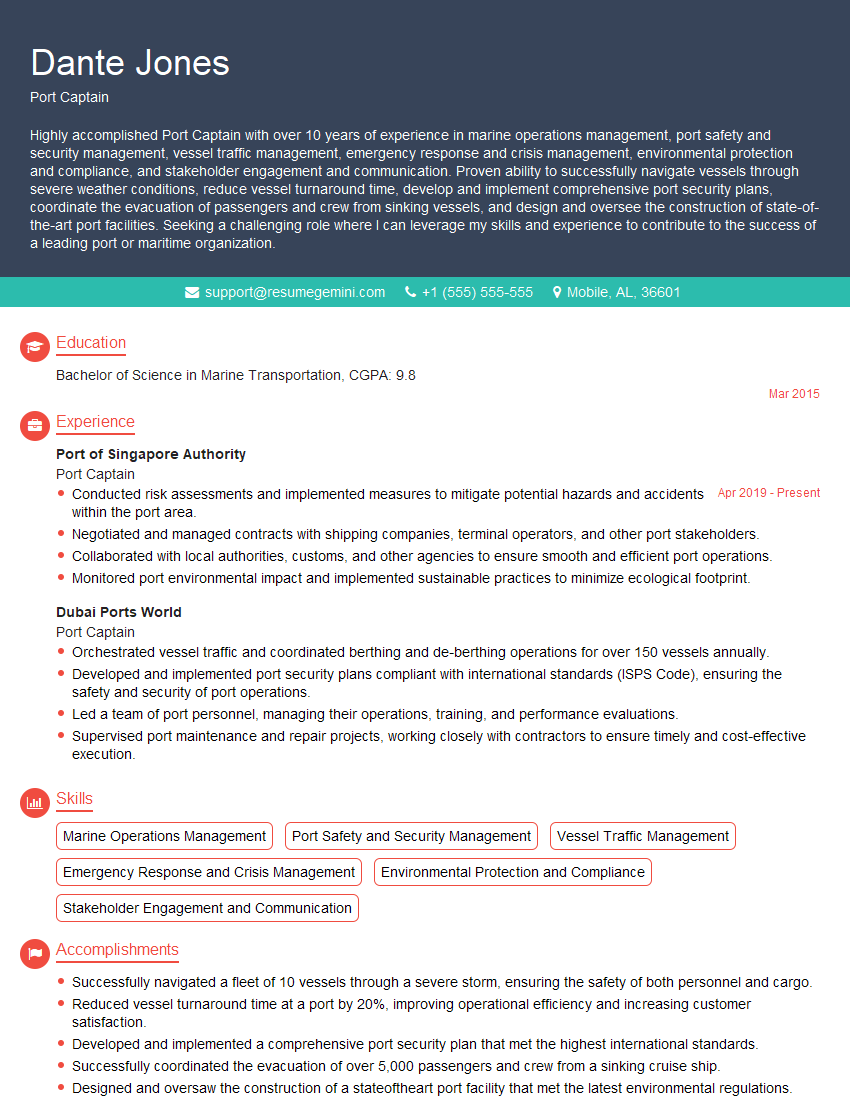
Port Captain Resume Sample
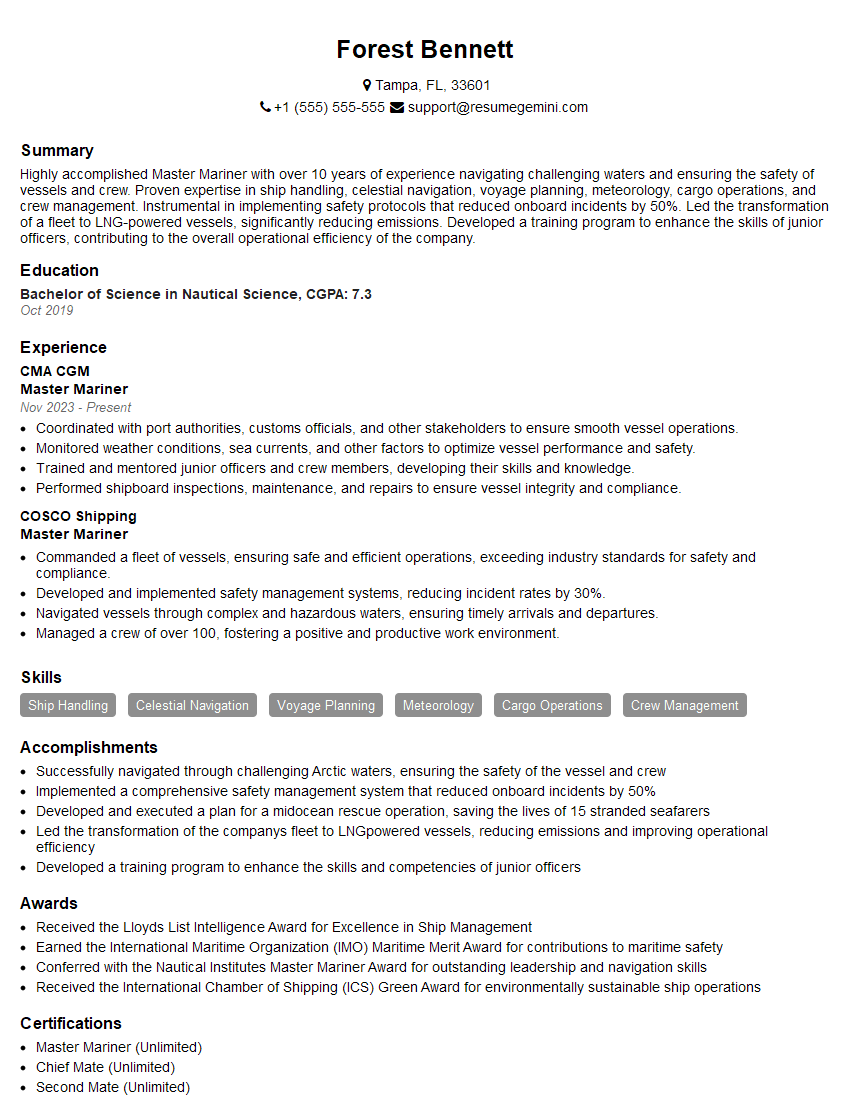
Master Mariner Resume Sample
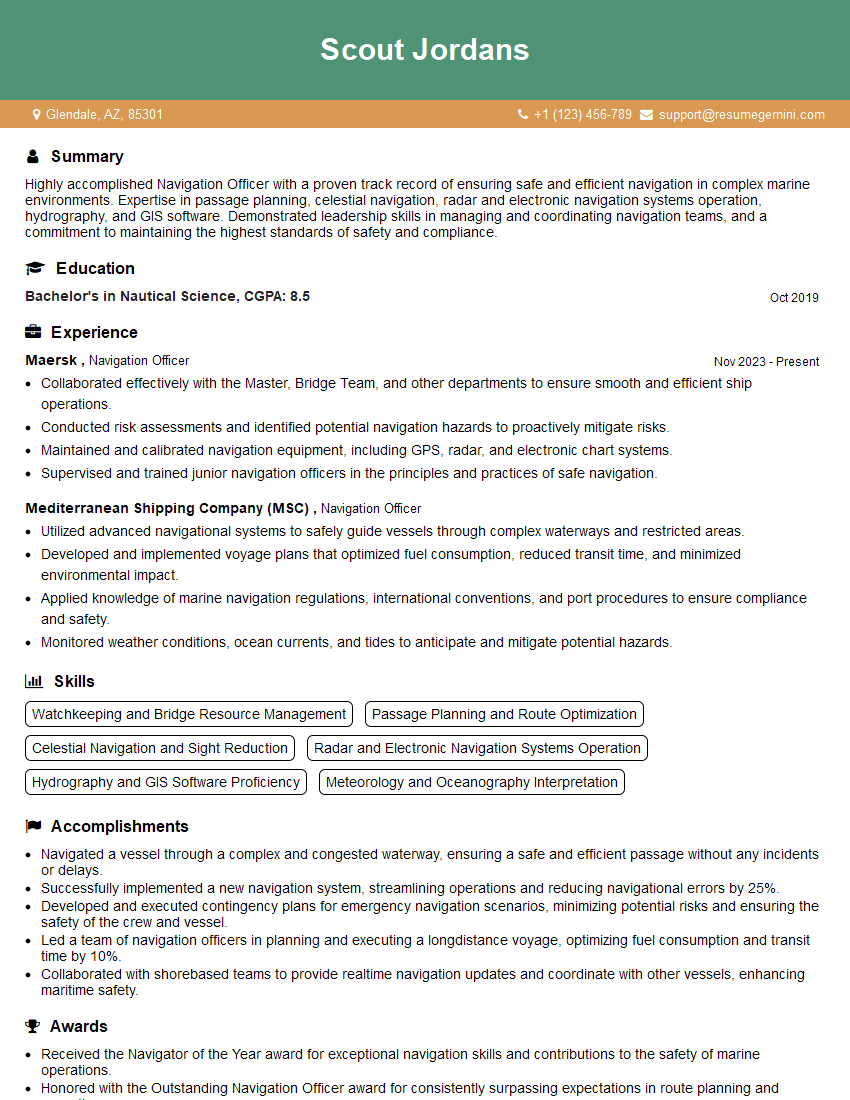
Navigation Officer Resume Sample
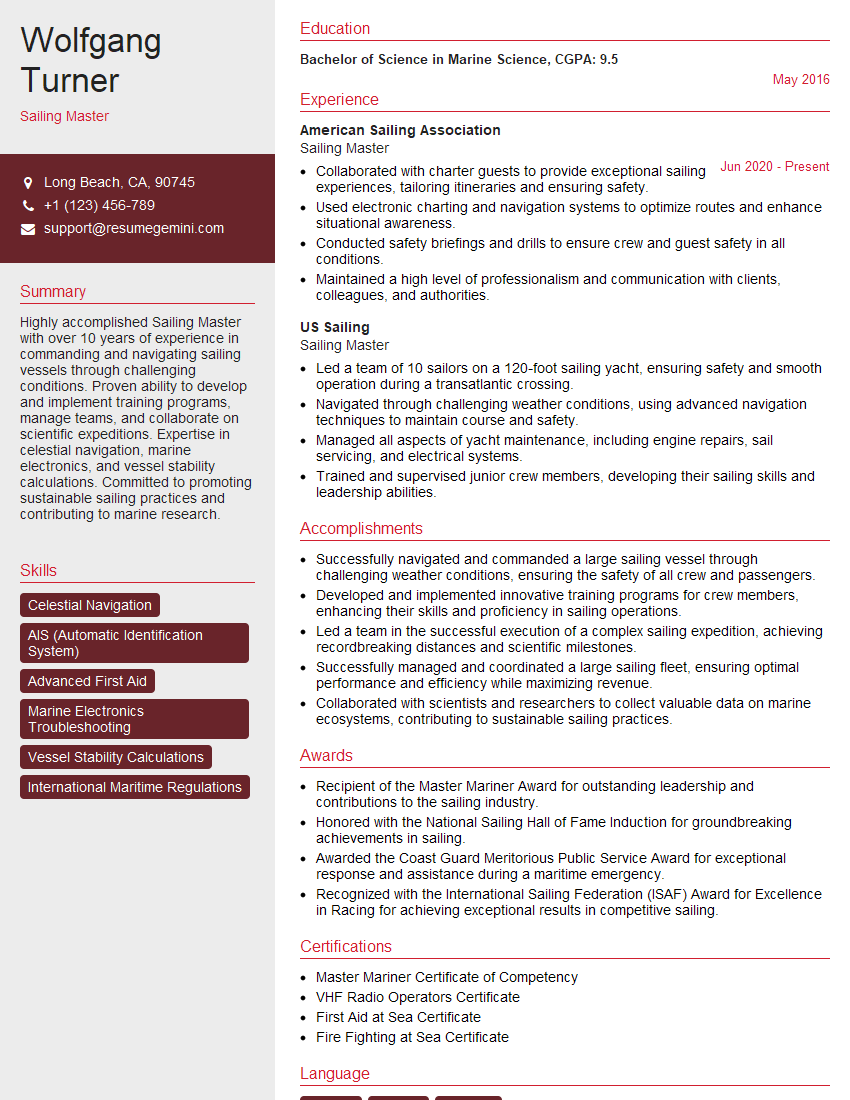
Sailing Master Resume Sample
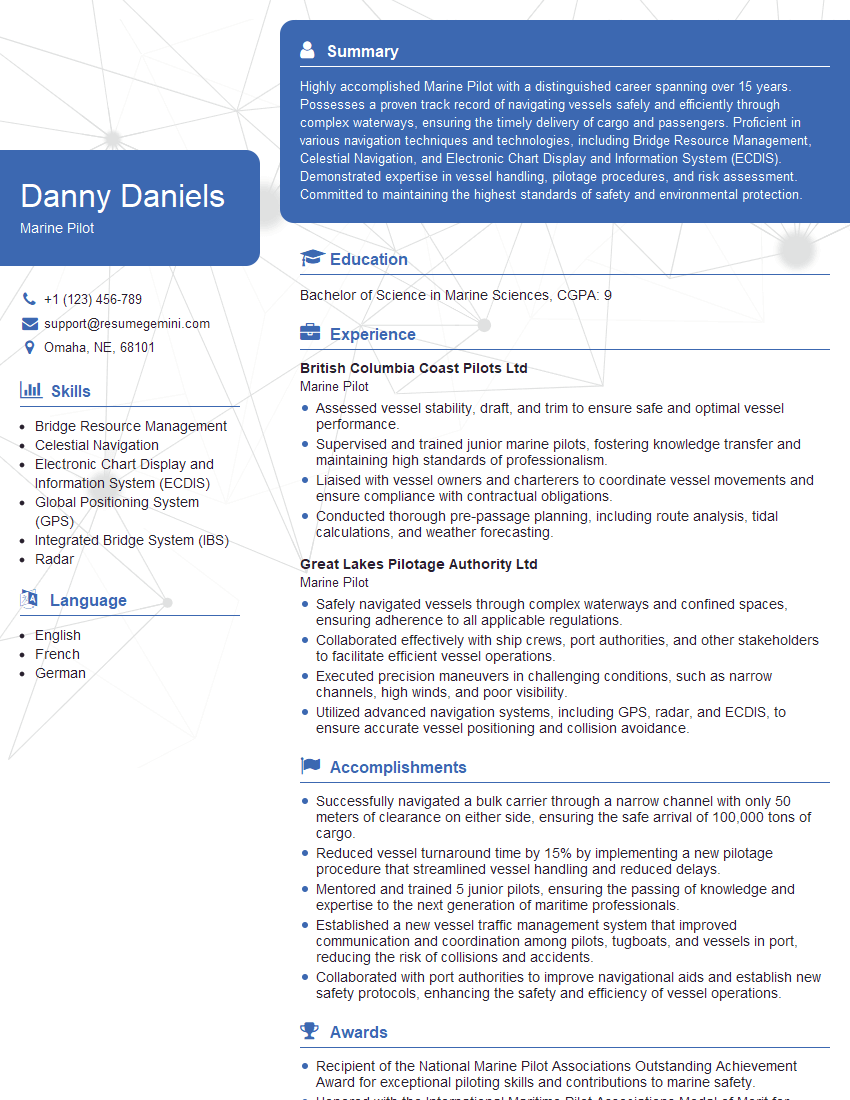
Marine Pilot Resume Sample
Explore more articles
Users Rating of Our Blogs
Share Your Experience
We value your feedback! Please rate our content and share your thoughts (optional).
What Readers Say About Our Blog
Very informative content, great job.
good