Cracking a skill-specific interview, like one for Soft Tissue Manipulation, requires understanding the nuances of the role. In this blog, we present the questions you’re most likely to encounter, along with insights into how to answer them effectively. Let’s ensure you’re ready to make a strong impression.
Questions Asked in Soft Tissue Manipulation Interview
Q 1. Describe the difference between superficial and deep tissue massage techniques.
Superficial and deep tissue massage techniques differ primarily in the depth of tissue addressed and the intended therapeutic effect. Superficial massage, often used for relaxation and lymphatic drainage, focuses on the skin and subcutaneous tissues using light to moderate pressure. Techniques include effleurage (long, gliding strokes) and petrissage (kneading). Think of it like gently skimming the surface of a pond. Deep tissue massage, conversely, targets deeper layers of muscle and fascia, using firmer pressure and slower, more deliberate strokes. This is akin to diving deeper into the pond to address underlying issues. The goal is to release chronic muscle tension and address deeper fascial restrictions. The depth of pressure and the techniques employed are significantly more intense.
For example, a client experiencing muscle soreness after exercise might benefit from superficial massage to promote relaxation and reduce inflammation. A client with chronic back pain stemming from tight muscles, however, might require deep tissue massage to address deeper fascial restrictions and release the underlying tension.
Q 2. Explain the principles of myofascial release.
Myofascial release is a manual therapy technique that addresses restrictions in the myofascial system – the network of connective tissue (fascia) that surrounds and connects muscles, bones, and organs. The principle lies in the understanding that fascia can become restricted or adhered due to trauma, inflammation, or postural habits, leading to pain and restricted movement. Myofascial release aims to gently restore the elasticity and glide of the fascia, freeing up movement and reducing pain. This is achieved through sustained, gentle pressure applied to restricted areas, encouraging the fascia to lengthen and release. The therapist uses their hands to palpate the tissues and identify areas of restriction, then uses various techniques such as sustained pressure, stretching, and traction to facilitate release.
Imagine the fascia as a spiderweb; when one part is stuck, it affects the whole structure. Myofascial release aims to gently untangle these adhesions, restoring the overall integrity and mobility of the system.
Q 3. What are the contraindications for soft tissue manipulation?
Contraindications for soft tissue manipulation are situations where such treatment could be harmful or exacerbate an existing condition. These can include:
- Acute injuries: Immediately after a fracture, sprain, or strain, manipulation can worsen the injury.
- Infections: Massage can spread infection.
- Skin conditions: Open wounds, rashes, or infections in the treatment area should be avoided.
- Deep vein thrombosis (DVT): Massage can dislodge a blood clot.
- Cancer: In certain cases, massage can stimulate the spread of cancer cells. This requires careful consideration and collaboration with the oncologist.
- Hemophilia or other bleeding disorders: Increased risk of bruising and bleeding.
- Pregnancy (certain areas): Some areas require caution during pregnancy.
It’s crucial to obtain a thorough medical history and carefully assess the client before beginning treatment to ensure safety.
Q 4. How do you assess a client’s posture and movement patterns to inform your treatment plan?
Assessing a client’s posture and movement patterns is crucial for developing an effective treatment plan. This involves a visual assessment, palpation, and active/passive range of motion tests. Visually, I observe the client’s standing posture from the front, side, and back, noting any asymmetries, imbalances, or deviations from ideal alignment. I then assess their movement patterns during functional tasks like bending, twisting, and reaching. Palpation helps me identify areas of muscle tension, tightness, or tenderness. Range of motion testing determines the extent of movement at different joints. Combining these observations, I can identify the root causes of their complaints – often stemming from postural imbalances or movement compensations.
For instance, a client with rounded shoulders might exhibit limited thoracic extension (back arching), leading to neck and upper back pain. Through my assessment, I can target specific muscle groups responsible for the postural deviation and design a treatment plan incorporating techniques to improve posture and restore mobility. The treatment may involve massage to release tight muscles, stretches to improve flexibility, and exercises to strengthen weakened muscles. This holistic approach allows me to address both symptoms and underlying causes.
Q 5. Describe your experience with trigger point therapy.
Trigger point therapy is a specialized technique focusing on identifying and treating hyperirritable spots (trigger points) in muscles. These points are typically palpable nodules or bands of tense muscle fibers that, when compressed, cause referred pain to other areas of the body. My experience involves using various techniques to inactivate these trigger points, including ischemic compression (sustained pressure), positional release (placing the muscle in a lengthened position), and dry needling (if certified). The goal is to reduce muscle tension, pain, and improve range of motion.
I recall a client who suffered from chronic headaches. After a thorough assessment, I identified trigger points in the upper trapezius and suboccipital muscles. Applying ischemic compression to these points, along with stretches and postural advice, significantly reduced their headache frequency and intensity. Trigger point therapy is often combined with other soft tissue techniques for optimal results.
Q 6. Explain the difference between ischemic compression and positional release.
Ischemic compression and positional release are both trigger point therapy techniques, but they differ in their approach. Ischemic compression involves applying sustained pressure directly to a trigger point, restricting blood flow to the area and causing the muscle fibers to relax. Think of it like squeezing a sponge to remove excess water. Positional release, on the other hand, involves passively positioning the muscle in a lengthened state and applying gentle pressure, which reduces tension without directly compressing the trigger point. This is more of a gentle coaxing of the muscle to release.
The choice between these techniques depends on the client’s pain tolerance and the specific characteristics of the trigger point. Ischemic compression is effective for tight, easily palpable trigger points, while positional release is gentler and more suitable for clients who find direct compression uncomfortable.
Q 7. How do you adapt your techniques for clients with different medical conditions (e.g., arthritis, fibromyalgia)?
Adapting techniques for clients with medical conditions requires careful consideration and collaboration, sometimes with their physician. For clients with arthritis, for example, I use gentler techniques and avoid deep pressure in inflamed joints. Instead, I might focus on improving range of motion through gentle mobilization and stretching, address muscle imbalances, and provide advice on joint protection. With fibromyalgia, which involves widespread musculoskeletal pain, I use extremely gentle techniques, focusing on relaxation, lymphatic drainage, and stress reduction. Deep tissue massage is usually contraindicated in acute fibromyalgia flare-ups.
In both cases, communication is key. I would discuss pain levels, limitations, and specific areas of concern with the client to tailor my approach. Respecting the client’s pain tolerance and making modifications as needed throughout the session is crucial for ensuring safety and effectiveness. I may also work in conjunction with their physician or other healthcare professionals to coordinate care and ensure a holistic treatment approach.
Q 8. What are the common signs and symptoms of muscle strain or injury?
Muscle strain or injury, often called a pulled muscle, presents with a range of signs and symptoms, varying in severity depending on the extent of the damage. Common indicators include:
- Pain: This is usually the most prominent symptom, ranging from mild aching to severe, sharp pain, especially with movement or palpation of the affected area. The pain might be localized to a specific spot or radiate to surrounding areas.
- Muscle spasms: Involuntary contractions of the muscle fibers can occur, causing stiffness and tightness. Think of it like the muscle ‘guarding’ itself from further injury.
- Swelling: Inflammation in the injured area causes swelling, often noticeable as a visible bulge or increased firmness to the touch. This is the body’s natural response to trauma.
- Limited range of motion: Difficulty or pain when attempting to move the affected muscle or joint is a common sign. This is due to both pain and the protective mechanism of the body limiting movement to prevent further damage.
- Bruising (contusion): In some cases, visible bruising may develop, indicating bleeding under the skin due to damaged blood vessels.
- Muscle weakness: The injured muscle may feel weaker than usual, leading to difficulty performing everyday tasks involving that muscle group. For example, a hamstring strain might make it difficult to walk or climb stairs.
- Loss of function: Severe injuries can result in a complete loss of function in the affected area, requiring rest and medical intervention.
It’s crucial to remember that these signs and symptoms can vary, and a proper diagnosis always requires a thorough evaluation by a qualified healthcare professional.
Q 9. Explain your understanding of neuromuscular techniques.
Neuromuscular techniques are a cornerstone of soft tissue manipulation, focusing on the intricate interplay between the nervous system and the muscles. These techniques aim to address muscle imbalances, improve joint mobility, and reduce pain by impacting the nervous system’s influence on muscle tone and function. They go beyond simply addressing the physical tissue; they target the neurological components contributing to the problem.
My understanding encompasses various techniques, including:
- Muscle Energy Techniques (MET): These involve using the patient’s own muscle contractions to lengthen shortened muscles and improve joint mobility. It’s like a gentle isometric exercise guided by the practitioner.
- Positional Release Therapy (PRT): This technique uses gentle pressure and positioning to release muscle tension and improve joint mechanics. It’s particularly effective for addressing fascial restrictions.
- Proprioceptive Neuromuscular Facilitation (PNF): This involves a combination of stretching and muscle contractions to improve flexibility and strength. It utilizes the body’s natural reflexes to achieve greater range of motion.
These neuromuscular techniques differ from simple massage by their focus on the neurological component. For example, instead of just rubbing out knots, I might use MET to isometrically contract a specific muscle group, then guide it into a lengthened position, helping reset the neuromuscular system’s perception of the muscle length.
Q 10. How do you assess the effectiveness of your treatment?
Assessing treatment effectiveness is crucial for ensuring optimal patient outcomes. My approach is multifaceted and combines objective and subjective measures:
- Pain scales: Before and after each session, I use a numerical rating scale (e.g., 0-10) to track the patient’s pain levels. This provides a quantifiable measure of pain reduction.
- Range of motion (ROM) measurements: Using a goniometer, I meticulously measure joint range of motion before and after treatment. Improvements indicate enhanced mobility and reduced restrictions.
- Functional assessments: I evaluate the patient’s ability to perform specific functional movements, such as reaching, bending, or lifting. This assesses their ability to engage in daily activities without pain or restriction.
- Palpation: Throughout the treatment process, I regularly palpate the affected area to assess muscle tone, texture, and the presence of any trigger points or knots. Changes in tissue texture and reduction in trigger point sensitivity signal positive progress.
- Patient feedback: Open communication with patients is vital. I regularly inquire about their perceived improvements in pain, function, and overall well-being. Their subjective experience is invaluable.
By combining these methods, I build a comprehensive picture of treatment progress, adjusting the treatment plan as needed to optimize outcomes.
Q 11. What is your approach to client communication and education?
Client communication and education are paramount to a successful treatment plan. I believe in a collaborative approach, where the client is an active participant in their recovery journey.
My approach includes:
- Thorough explanation of the condition: I explain the client’s diagnosis and the underlying cause of their pain in simple, understandable terms, avoiding excessive medical jargon.
- Detailed explanation of the treatment plan: I meticulously explain each treatment technique, what to expect during and after the session, and the rationale behind each step.
- Active listening and empathy: I actively listen to the client’s concerns and anxieties, creating a safe space for them to express themselves. Empathy helps build trust and ensures a personalized treatment experience.
- Home care instructions: I provide detailed home care instructions, including specific exercises, stretches, and self-massage techniques to aid in recovery between sessions. I often provide written materials to reinforce these instructions.
- Regular progress updates: I provide regular updates on their progress, addressing any concerns or questions they may have along the way. This open communication helps to build a strong therapeutic alliance and improve client compliance.
For example, I recently explained to a client with plantar fasciitis how the tight fascia was limiting their ankle mobility and how we would work together using various techniques to increase flexibility and manage pain. This empowered them to actively participate in their recovery.
Q 12. Describe your experience using various tools or modalities in soft tissue manipulation.
Throughout my career, I’ve extensively utilized various tools and modalities in soft tissue manipulation to tailor treatments to individual client needs. These include:
- Hands-on techniques: These form the foundation of my practice, encompassing various massage modalities such as myofascial release, trigger point therapy, and deep tissue massage.
- Instrument-assisted soft tissue mobilization (IASTM): I use tools like Graston Technique instruments to effectively break down scar tissue and adhesions, improving tissue mobility and reducing pain.
- Cupping therapy: I employ cupping to address muscle tension and promote blood flow. It can be highly effective for addressing myofascial restrictions and improving lymphatic drainage.
- Ultrasound: In appropriate cases, I utilize therapeutic ultrasound to reduce inflammation and promote tissue healing. This modality enhances the effectiveness of other manual techniques.
The selection of tools and modalities is always client-specific and based on a thorough assessment of their condition. For instance, I might use IASTM for a client with chronic shoulder pain caused by an old injury, but utilize cupping therapy for someone with muscle tension headaches.
Q 13. How do you manage client expectations regarding pain and recovery?
Managing client expectations regarding pain and recovery is crucial for setting realistic goals and avoiding disappointment. I achieve this through transparent and honest communication.
My approach includes:
- Realistic timelines: I emphasize that recovery is a process and that it varies depending on the severity of the injury and the individual’s healing capacity. I explain that immediate pain relief isn’t always possible and that gradual improvement is more likely.
- Education on the healing process: I educate clients on the physiological mechanisms of pain and healing, explaining how the body responds to injury and what to expect at different stages of the recovery process.
- Setting achievable goals: I work collaboratively with clients to establish realistic, short-term goals that are achievable within the timeframe of treatment. This allows for regular positive feedback and encouragement.
- Addressing individual needs and concerns: I take the time to listen to clients’ concerns and address their expectations honestly and openly. For example, I might discuss the possibility of some lingering discomfort even after successful treatment.
For example, when working with a client recovering from a severe ankle sprain, I might explain that while we aim for full mobility, it might take several weeks, and they need to focus on gradual weight-bearing and range of motion exercises. This prevents them from getting discouraged if immediate full functionality is not possible.
Q 14. How do you maintain professional boundaries with clients?
Maintaining professional boundaries with clients is essential for creating a safe and ethical therapeutic relationship. I adhere to strict professional guidelines to ensure this.
My approach includes:
- Appropriate attire and demeanor: I maintain a professional appearance and demeanor throughout all interactions, ensuring that my conduct remains appropriate and avoids any potential misinterpretations.
- Clear communication of boundaries: I clearly communicate professional boundaries from the outset, explicitly outlining the scope of treatment and the limits of the practitioner-client relationship.
- Appropriate physical touch: All physical contact is performed only within the context of treatment, ensuring that it is purposeful, professional, and explained to the client beforehand. I always prioritize the client’s comfort and consent.
- Confidentiality: I maintain strict confidentiality concerning client information, respecting their privacy and ensuring that all interactions remain within the parameters of professional ethics.
- Appropriate communication channels: All communication is limited to professional settings, using only appropriate communication channels such as email, phone, or in-person appointments. I avoid informal communication outside these professional channels.
Should a client exhibit behavior outside appropriate boundaries, I have a clear protocol for addressing the issue and ensuring the safety and well-being of both myself and the client. This may involve referring them to another professional if needed.
Q 15. Describe your knowledge of anatomy and physiology relevant to soft tissue manipulation.
My understanding of anatomy and physiology relevant to soft tissue manipulation is comprehensive. It encompasses a detailed knowledge of musculoskeletal structures – including bones, muscles, tendons, ligaments, fascia, nerves, and blood vessels – and their interrelationships. I understand the biomechanics of movement, how muscles contract and relax, and the role of various tissues in supporting and enabling movement. This includes a deep understanding of joint mechanics, muscle origins and insertions, and the fascial planes that connect different parts of the body. For example, I understand how the latissimus dorsi muscle connects to the humerus and its role in shoulder movement, and how restrictions in the thoracolumbar fascia can impact spinal mobility and posture. This foundational knowledge allows me to accurately assess and treat soft tissue restrictions and dysfunctions.
Further, I possess a strong grasp of the body’s neurological and vascular systems and their impact on soft tissue health. I understand how nerve impingements can manifest as pain and dysfunction and how to differentiate between neural and muscular origins of pain. Knowledge of vascular anatomy allows me to identify potential contraindications for treatment, such as deep vein thrombosis.
Career Expert Tips:
- Ace those interviews! Prepare effectively by reviewing the Top 50 Most Common Interview Questions on ResumeGemini.
- Navigate your job search with confidence! Explore a wide range of Career Tips on ResumeGemini. Learn about common challenges and recommendations to overcome them.
- Craft the perfect resume! Master the Art of Resume Writing with ResumeGemini’s guide. Showcase your unique qualifications and achievements effectively.
- Don’t miss out on holiday savings! Build your dream resume with ResumeGemini’s ATS optimized templates.
Q 16. Explain your understanding of the nervous system’s role in pain and muscle tension.
The nervous system plays a crucial role in both pain perception and muscle tension. Nociceptors, specialized nerve endings, detect noxious stimuli, transmitting signals along sensory nerves to the spinal cord and brain, where pain is perceived. This process can be influenced by various factors, including the intensity of the stimulus, individual sensitivity, and emotional state. Muscle tension is often a response to pain or perceived threat, a protective mechanism to stabilize the area. The nervous system, specifically the autonomic nervous system (sympathetic branch), triggers muscle contraction to protect the injured tissue, sometimes leading to muscle spasms and trigger points.
For example, chronic low back pain can result from a combination of nerve compression (e.g., due to a herniated disc) and muscle spasm (e.g., paravertebral muscles). Soft tissue manipulation aims to address both components by reducing nerve compression and releasing muscle tension, restoring normal nervous system function and reducing pain perception.
Q 17. How do you differentiate between muscular pain and pain originating from other sources?
Differentiating between muscular pain and pain from other sources requires a thorough assessment. Muscular pain is often localized, related to movement or palpation of the affected muscle, and may present with tenderness, stiffness, and reduced range of motion. Pain originating from other sources, such as joints, nerves, or internal organs, can have different characteristics. Joint pain is often localized to the joint, accompanied by swelling, crepitus (grating sound), and limited range of motion in specific directions. Nerve-related pain may follow a dermatomal or nerve pathway, exhibiting radiating pain or numbness. Visceral pain, stemming from internal organs, is often poorly localized, referred to other areas, and accompanied by other symptoms, like nausea or digestive issues.
A detailed history, coupled with a thorough physical examination – including observation, palpation, assessment of range of motion, and neurological testing – is essential. For example, pain in the shoulder could be muscular (rotator cuff strain), joint-related (rotator cuff tear, arthritis), or nerve-related (cervical radiculopathy). A skilled practitioner uses clinical reasoning to integrate all findings and form a differential diagnosis.
Q 18. What is your approach to addressing client concerns or discomfort during treatment?
Addressing client concerns and discomfort is paramount. My approach is built on open communication, active listening, and empathy. I begin by thoroughly explaining the treatment plan, including what to expect during and after the session. I encourage clients to provide feedback throughout the session, addressing any pain or discomfort immediately. I use a variety of techniques to modulate pressure and adjust my approach based on the client’s response. This might involve modifying the technique, adjusting the pressure, or taking breaks as needed. The comfort and safety of the client are my top priorities.
For example, if a client expresses discomfort during deep tissue massage, I might lighten the pressure, adjust my hand position, or switch to a gentler technique. I always obtain informed consent before commencing treatment and make sure the client feels empowered to communicate their needs throughout the process. This approach fosters trust and collaboration, leading to a positive treatment experience.
Q 19. Describe your understanding of ethical considerations in soft tissue manipulation.
Ethical considerations are fundamental to my practice. I adhere to professional guidelines and maintain appropriate boundaries with clients. This includes obtaining informed consent, maintaining client confidentiality, adhering to professional scope of practice, and avoiding dual relationships. I am aware of the importance of maintaining professional boundaries and respecting client autonomy. I am also conscious of the need to refer clients to other healthcare professionals when appropriate. I continually assess for any contraindications that might make treatment unsafe or ineffective.
Examples of ethical considerations include obtaining proper consent before beginning treatment, maintaining client confidentiality by not disclosing personal information to others, and accurately portraying the capabilities and limitations of soft tissue manipulation. Referrals are made to other professionals such as physicians and physical therapists when treatment is outside my scope.
Q 20. How do you handle unexpected situations or complications during treatment?
Handling unexpected situations requires preparedness and clinical judgment. If I encounter a complication during treatment, such as sudden increased pain or a client experiencing dizziness, I will immediately stop the treatment and assess the situation. This includes assessing vital signs, asking relevant questions, and identifying any potential underlying causes. I will then take appropriate actions, which may include modifying the treatment, providing first aid if needed, recommending rest, or advising the client to seek further medical attention, if necessary. Documentation of the incident is crucial, including the event, the actions taken, and any follow-up care recommended.
For instance, if a client experiences a sudden sharp pain during mobilization, I would cease the treatment, reassess the area, and potentially change the treatment approach or refer them to a physician to rule out more serious issues.
Q 21. What are your continuing education plans to enhance your skills?
Continuing education is vital for maintaining competence and staying abreast of advancements in the field. My continuing education plans include regular attendance at workshops and conferences focusing on advanced soft tissue manipulation techniques, such as myofascial release, visceral manipulation, and advanced neuromuscular techniques. I also plan to pursue further certifications in related fields to expand my expertise and enhance my ability to effectively treat a wider range of conditions. Furthermore, I actively seek out opportunities to review current research and engage in peer learning to continually refine my clinical skills and judgment.
Specific examples include attending courses on advanced myofascial release techniques, studying the latest research on the effectiveness of various soft tissue manipulation modalities, and actively participating in continuing education workshops in related fields like visceral manipulation. Staying current in the field ensures my clients receive the most effective and up-to-date care.
Q 22. Describe a challenging client case and how you addressed it.
One particularly challenging case involved a professional musician with chronic upper trapezius and neck pain impacting their ability to play their instrument. Initial assessment revealed significant muscle tightness, trigger points, and limited range of motion. Simply addressing the immediate pain wasn’t sufficient; the underlying cause needed to be identified and resolved.
My approach was multifaceted. Firstly, I used a combination of techniques including myofascial release to address the muscle tightness, trigger point therapy to deactivate hyperirritable points, and gentle joint mobilization to improve cervical spine mobility. Secondly, I incorporated postural education, teaching them proper ergonomic practices for playing their instrument and daily activities. Finally, I designed a home exercise program focusing on stretching and strengthening exercises to maintain the improvements gained during sessions. Through consistent application of these strategies over several weeks, the musician experienced significant pain reduction, improved range of motion, and ultimately, a return to their professional activities.
Q 23. What safety precautions do you follow during your treatments?
Safety is paramount in soft tissue manipulation. My routine begins with a thorough client intake and history, identifying any contraindications such as recent surgery, infections, or specific medical conditions. Throughout the treatment, I maintain open communication with the client, regularly checking for pain levels and adjusting pressure accordingly. I utilize appropriate draping to maintain client modesty and comfort. Furthermore, I adhere to strict hygiene protocols, ensuring proper handwashing and disinfection of equipment between sessions. Finally, I am mindful of the client’s overall physical condition and will immediately cease treatment and refer to a physician if any unexpected or concerning symptoms arise, such as dizziness, nausea, or increased pain.
Q 24. How do you document your treatment sessions?
Detailed documentation is crucial for legal and clinical reasons. For each session, I maintain a comprehensive record including the client’s subjective complaints, objective findings from palpation and range of motion testing, the specific techniques employed (e.g., type of massage, mobilization grade, duration), the client’s response to treatment, and any home care recommendations. I utilize a standardized charting system to ensure consistency and completeness. This record also tracks the client’s progress over time, allowing for modifications to the treatment plan as needed and providing valuable data for future reference.
Q 25. What is your understanding of different types of soft tissue mobilization techniques?
Soft tissue mobilization encompasses various techniques, each targeting different aspects of the musculoskeletal system.
- Myofascial Release: This addresses restrictions in the fascia, the connective tissue that surrounds muscles and organs. It involves applying sustained pressure to release tension and improve tissue glide.
- Trigger Point Therapy: This focuses on identifying and treating hyperirritable points within muscles, which can refer pain to other areas. Techniques range from direct compression to injection therapy.
- Strain-Counterstrain: This involves positioning the body to release muscle tension by identifying the position of ease for a specific muscle.
- Deep Tissue Massage: This technique applies deeper pressure to address chronic muscle tension and adhesions.
- Swedish Massage: This involves a range of techniques aimed at relaxing muscles, improving circulation, and reducing tension.
Q 26. How do you tailor your treatment approach to the individual needs of each client?
A successful treatment plan is always individualized. I begin with a comprehensive assessment, considering factors such as the client’s medical history, current symptoms, lifestyle, and goals. This includes a thorough physical examination to identify areas of restricted movement, muscle imbalances, and pain patterns. Following the assessment, I collaboratively develop a treatment plan that best addresses the client’s unique needs. This may include a combination of different soft tissue techniques, postural re-education, and a personalized home exercise program. Regular reassessments ensure the plan remains effective and adaptable to the client’s progress.
Q 27. Explain your knowledge of the biomechanics of the musculoskeletal system.
Understanding biomechanics is essential for effective treatment. The musculoskeletal system is a complex interplay of bones, joints, muscles, ligaments, and tendons. Forces acting on the body, whether from activity or posture, can cause imbalances and pain. My knowledge of levers, forces, and joint mechanics allows me to identify the root cause of musculoskeletal problems rather than just treating the symptoms. For example, understanding how the alignment of the pelvis influences the spine’s curvature helps determine appropriate treatment strategies to alleviate back pain. This holistic approach ensures treatments are targeted and effective in restoring proper biomechanical function.
Q 28. What are the potential risks and benefits of soft tissue manipulation?
Like any therapeutic intervention, soft tissue manipulation has potential benefits and risks. Benefits include pain reduction, improved range of motion, reduced muscle tension, improved circulation, and stress reduction. However, potential risks include temporary soreness, bruising, aggravation of existing conditions if not properly assessed, and rare instances of nerve damage if improper technique is used. To minimize risks, a thorough assessment and screening process is essential, along with adhering to strict safety protocols and continuous client monitoring throughout the session. Proper training and continuing education are critical to minimize risks and maximize the benefits.
Key Topics to Learn for Your Soft Tissue Manipulation Interview
- Anatomy and Physiology: Deep understanding of muscle structure, fascia, and connective tissue; knowledge of neuromuscular systems and their interrelationships.
- Palpation Techniques: Mastering accurate palpation to identify muscle tension, trigger points, and fascial restrictions; differentiating between various tissue textures and identifying areas needing intervention.
- Soft Tissue Manipulation Techniques: Proficient knowledge of various techniques like myofascial release, trigger point therapy, muscle energy techniques, and others; understanding the indications and contraindications for each technique.
- Biomechanics and Movement Analysis: Analyzing movement patterns to identify compensations and restrictions; relating soft tissue dysfunction to postural imbalances and movement limitations.
- Assessment and Treatment Planning: Developing comprehensive assessment strategies; formulating individualized treatment plans based on patient history, examination findings, and chosen techniques; understanding the rationale behind treatment choices.
- Therapeutic Exercise and Rehabilitation: Integrating therapeutic exercise and rehabilitation programs to enhance treatment outcomes and prevent recurrence; designing home exercise programs tailored to individual needs.
- Patient Communication and Case Management: Building rapport with patients; effectively explaining treatment plans and rationale; managing patient expectations and addressing concerns; documenting treatment sessions thoroughly.
- Ethical Considerations and Professionalism: Adherence to professional codes of conduct; understanding the legal and ethical implications of practice; maintaining appropriate boundaries and professional demeanor.
- Clinical Reasoning and Problem-Solving: Applying critical thinking skills to diagnose and manage complex cases; adapting treatment strategies based on patient response and progress; troubleshooting and resolving challenges encountered during treatment.
Next Steps
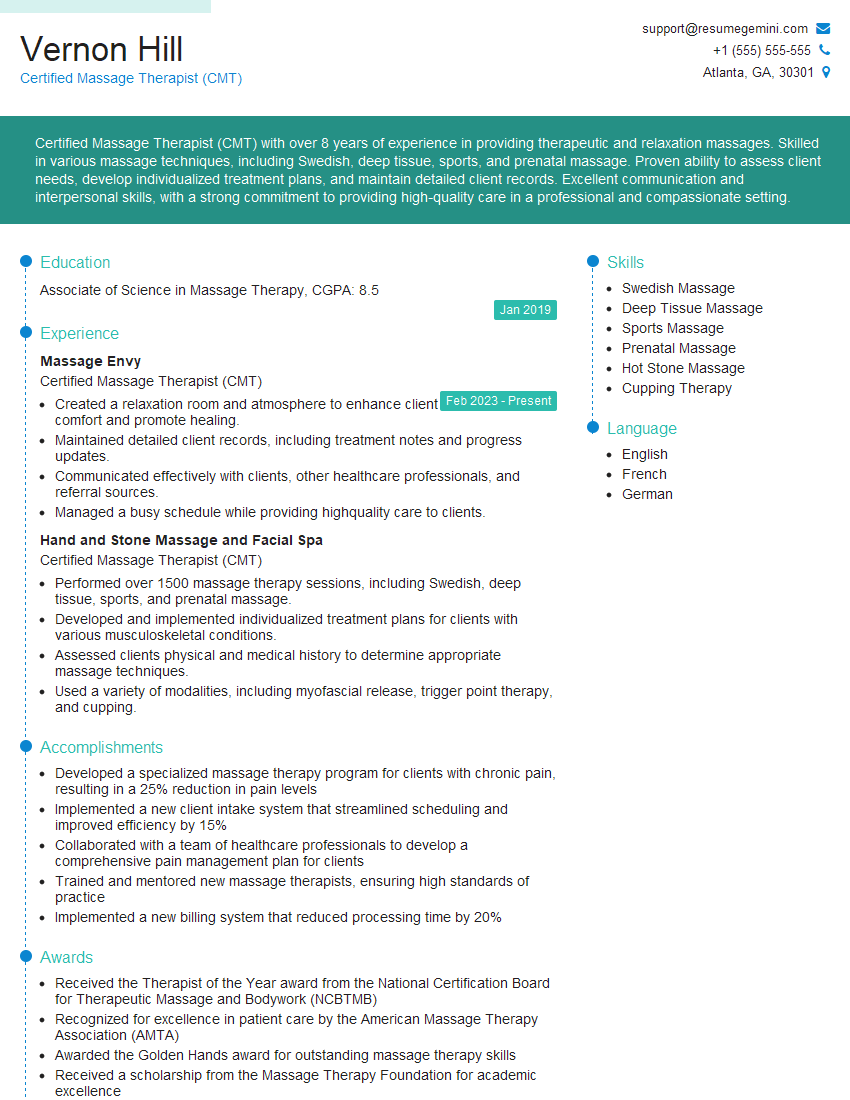
Mastering soft tissue manipulation opens doors to a rewarding career with diverse opportunities for growth and specialization. To maximize your job prospects, invest time in creating a strong, ATS-friendly resume that showcases your skills and experience effectively. ResumeGemini is a trusted resource that can help you build a professional and impactful resume, ensuring your application stands out. Examples of resumes tailored to the Soft Tissue Manipulation field are available to help you get started. Your journey to securing your dream role starts here!
Explore more articles
Users Rating of Our Blogs
Share Your Experience
We value your feedback! Please rate our content and share your thoughts (optional).
What Readers Say About Our Blog
Very informative content, great job.
good