Cracking a skill-specific interview, like one for Vibrato, requires understanding the nuances of the role. In this blog, we present the questions you’re most likely to encounter, along with insights into how to answer them effectively. Let’s ensure you’re ready to make a strong impression.
Questions Asked in Vibrato Interview
Q 1. Explain the physiological mechanisms behind vibrato production.
Vibrato, that beautiful, pulsating effect in a singer’s voice, isn’t just a stylistic choice; it’s a complex physiological phenomenon. It’s primarily achieved through subtle, rapid fluctuations in vocal fold tension, length, and position. Think of it like a finely tuned instrument, where the strings (vocal folds) are constantly adjusting to create this wavering effect. These adjustments aren’t just random; they’re controlled by intricate neuromuscular mechanisms involving the laryngeal muscles, the respiratory system, and even the resonating chambers in the vocal tract. The cricothyroid muscle, for instance, plays a key role in adjusting vocal fold tension, while the thyroarytenoid muscle fine-tunes the vibrations. The speed and depth of vibrato are governed by the precision and coordination of these muscle movements, resulting in the characteristic periodic variations in pitch and intensity.
Q 2. Describe different vibrato techniques (e.g., chest, throat, jaw).
There’s no single ‘correct’ vibrato technique; different singers find various approaches effective. However, common techniques often focus on specific muscle groups and their coordination.
- Chest Vibrato: This technique involves a feeling of pulsation originating from the chest cavity. While it’s often described this way, the actual muscle activity is primarily in the larynx and diaphragm working in tandem. Imagine a gentle, controlled rocking motion of the breath and voice, rather than a forceful push from the chest itself.
- Throat Vibrato: This often involves a more subtle, ‘throat-shaking’ sensation, but it’s crucial to avoid excessive tension. This feeling of shaking should be a relaxed, nuanced movement, not a forceful constriction. Proper technique focuses on controlled adjustments of the vocal folds, not forcing the throat muscles.
- Jaw Vibrato: This technique uses subtle jaw movements to influence vocal fold vibration. Think of a tiny, almost imperceptible tremor in the jaw, which subtly impacts the resonating spaces, affecting the sound’s pitch and intensity. However, overuse can lead to tension and jaw fatigue.
Many singers use a combination of these techniques, developing a unique approach that best suits their vocal anatomy and style. It’s important to note that focusing too much on the *feeling* of a specific technique can sometimes lead to poor practice; ultimately, the goal is the controlled modulation of the vocal folds for a rich and expressive vibrato.
Q 3. How does breath support influence vibrato quality?
Breath support is the bedrock of good vibrato. A steady, controlled airflow is essential for a consistent and even vibrato. Insufficient breath support results in a shaky, wavering vibrato or complete lack thereof. Conversely, excessive breath pressure can lead to strained, forced vibrato. Think of it as building a house: The breath support is the foundation, providing stability to the overall structure of the sound. A solid foundation, provided by proper breath control, allows the subtle vocal fold adjustments of vibrato to occur without strain. Good breath support allows for a flexible, resonant tone that easily accommodates the slight pitch variations of a beautiful vibrato. Practice focusing on a constant, even flow of air from the diaphragm, maintaining consistent sub-glottal pressure to create a stable foundation for your vibrato.
Q 4. Discuss the relationship between vibrato and resonance.
Vibrato and resonance are inextricably linked. The resonating chambers in your head, throat, and chest amplify and shape the sound produced by your vocal folds. A well-developed resonance enhances the richness and depth of your vibrato, making it sound full and resonant. Think of a violin: The instrument’s body resonates with the vibrations of the strings. Similarly, your body’s resonating spaces amplify and colour the vibrato, creating a more captivating sound. A poor resonating space can lead to a thin, weak, or unclear vibrato. Therefore, proper resonance technique is vital to producing a vibrant and beautiful vibrato.
Q 5. What are the common problems singers encounter when developing vibrato?
Many singers struggle with developing vibrato, facing common challenges such as:
- Tension: Excessive tension in the throat, jaw, or neck muscles can hinder the development of a relaxed and natural vibrato. This tension often manifests as a strained or uncontrolled vibrato.
- Inconsistent Vibrato: The rate and depth of the vibrato might vary unpredictably, making the sound uneven or erratic.
- Lack of Breath Support: Weak breath support leads to a wavering or unsteady vibrato, lacking the evenness and control needed for a polished sound.
- Poor Resonance: Inadequate resonance can result in a thin, weak, or unclear vibrato that lacks depth and richness.
These challenges often stem from a lack of proper vocal technique and efficient coordination between breath support, vocal fold adjustments, and resonance. Regular practice and focused attention on these areas are key to overcoming these hurdles.
Q 6. How do you address inconsistent vibrato?
Addressing inconsistent vibrato requires a systematic approach:
- Identify the cause: Is the inconsistency due to tension, breath support issues, or resonance problems? Careful self-assessment or guidance from a vocal coach can pinpoint the root cause.
- Focus on fundamentals: Reinforce breath support exercises and proper vocal posture to create a stable foundation for your vibrato. Address any tension by practicing relaxation techniques.
- Slow and steady: Instead of aiming for a fast vibrato immediately, begin by developing a slow, controlled vibrato. Gradually increase the speed as you gain control.
- Targeted exercises: Practice exercises specifically designed to improve vibrato control, such as scales or vocalises with a focused vibrato application. Record yourself to monitor progress and identify areas for improvement.
- Seek professional help: A vocal coach can provide personalized guidance and feedback, helping you pinpoint weaknesses and develop tailored strategies for improvement. They can identify and correct bad habits that may be causing the inconsistent vibrato.
Q 7. How do you teach vibrato to beginners?
Teaching vibrato to beginners requires patience and a gradual approach. Avoid pushing for a vibrato too early; focus first on developing a strong, consistent tone and proper breath support. Once a solid foundation is established, introduce simple vibrato exercises:
- Humming exercises: Start by humming on a comfortable pitch, and gradually experiment with adding a gentle, wavering effect. Focus on a feeling of relaxation rather than forcing the vibrato.
- Glide exercises: Practice gliding smoothly between two notes, and add subtle pitch variations within the glide to create a nascent vibrato feeling.
- Vocalises with gentle vibrato: Once comfortable, introduce simple vocalises or scales, gradually incorporating a controlled vibrato.
- Record and assess: Regular recording sessions help both the student and teacher monitor progress, identify areas for improvement, and refine technique.
Remember, developing vibrato takes time and dedication. Positive reinforcement and encouragement are essential for the beginner to build confidence and achieve success. It’s important to celebrate small victories, which build motivation and positive reinforcement.
Q 8. Explain the role of relaxation in achieving a good vibrato.
Relaxation is paramount to achieving a beautiful vibrato. Think of it like a gentle wave on the ocean – tense muscles create choppy, uncontrolled movements, while relaxed muscles allow for a smooth, even oscillation. A good vibrato isn’t forced; it emerges naturally from a balanced, supported breath and a relaxed vocal tract. Tension in the throat, jaw, or tongue will constrict the airflow and inhibit the natural pulsation required for vibrato. Instead, focus on releasing tension, allowing the voice to resonate freely. Imagine letting your breath flow effortlessly, like a gentle sigh. This relaxed approach will not only improve the quality of your vibrato but also protect your vocal cords from strain.
Practical Application: Before attempting vibrato, spend time warming up your voice with gentle humming and scales, consciously releasing tension in your jaw, neck, and shoulders. Practice breathing exercises to cultivate a feeling of effortless breath support. Regular massage and physical therapy can address long-term muscular tension issues contributing to poor vibrato.
Q 9. How does vocal range affect vibrato application?
Vocal range significantly influences vibrato application. In lower registers, the vibrato tends to be slower and wider, possessing a richer, fuller tone. As we ascend in pitch, the vibrato naturally becomes faster and narrower, with a lighter, more delicate quality. This isn’t a fixed rule, however, as individual vocal characteristics and stylistic choices can alter these tendencies. A singer with a wide range might find greater challenges maintaining consistent vibrato quality across all registers, while a singer with a smaller range might have greater ease. The key is to understand the natural tendencies of your voice and to develop techniques that accommodate the nuances of your particular range.
Example: A baritone’s vibrato on a low note will feel different compared to a soprano’s vibrato on a high note, with the baritone’s feeling more resonant, and the soprano’s feeling lighter and more agile. Successful vibrato across a wider range requires mastery over breath support, vocal placement, and consistent muscular coordination.
Q 10. Describe the ideal vibrato rate and width.
There’s no single ‘ideal’ vibrato rate and width; it’s highly dependent on the musical context, vocal style, and personal aesthetic. However, a generally pleasing vibrato often falls within a rate of 5-7 Hz (cycles per second) and a width of a half- to a whole-tone. A vibrato that is too fast or too narrow might sound thin or shaky, while one that is too slow or too wide can sound sluggish or wobbly. The ideal vibrato is characterized by its smoothness, evenness, and musicality—it should enhance the musical expression rather than detract from it.
Practical Application: Experiment with different rates and widths to find what suits your voice and the music you’re performing. Record yourself and listen critically to assess the effect of different vibrato parameters. It’s often helpful to get feedback from a qualified vocal coach to refine your vibrato technique and achieve a more consistent and expressive sound.
Q 11. How does vibrato contribute to vocal expressiveness?
Vibrato is a powerful tool for enhancing vocal expressiveness. It adds warmth, richness, and emotional depth to the tone. A well-controlled vibrato can convey a wide range of emotions, from tenderness and intimacy to power and passion. By subtly adjusting the rate and width of the vibrato, singers can nuance their phrasing and create a more compelling and engaging performance.
Example: A slow, wide vibrato might be used to express sadness or longing, while a faster, narrower vibrato could convey excitement or joy. The absence of vibrato can also be expressive, creating a sense of starkness or vulnerability.
Q 12. How do you assess a singer’s vibrato quality?
Assessing a singer’s vibrato quality involves considering several factors. Firstly, listen for consistency: does the vibrato maintain a relatively even rate and width throughout the phrase? Secondly, evaluate its smoothness: is the oscillation even and fluid, or is it shaky or jerky? Thirdly, consider its musicality: does the vibrato enhance the expression of the music, or does it sound distracting or forced? Finally, assess its appropriateness: does the vibrato style fit the musical genre and the overall aesthetic of the performance?
Practical Application: Use recordings to analyze vibrato objectively. Slowing down the playback can help identify inconsistencies or irregularities. Seeking feedback from experienced vocal coaches provides valuable insights into areas for improvement.
Q 13. What are the potential negative effects of improper vibrato use?
Improper vibrato use can lead to several negative effects. Vocal strain is a common consequence of forcing vibrato or using incorrect techniques. This can cause vocal fatigue, hoarseness, and even damage to the vocal cords. An inconsistent or poorly controlled vibrato can sound unpleasant or distracting, detracting from the overall musicality of the performance. Additionally, overuse of vibrato can lead to monotony, as it fails to effectively enhance expressive variations within the performance.
Practical Application: Prioritize proper vocal technique to avoid strain. Focus on relaxation and breath support. Practice regularly, but avoid overworking your voice. If you experience vocal problems, consult a qualified vocal coach or doctor.
Q 14. How can vibrato be incorporated into different musical styles?
Vibrato is incorporated differently across diverse musical styles. In classical music, it’s often a crucial element, adding richness and expressiveness to the vocal line. The rate and width might vary depending on the dynamics and emotional content of the piece. In pop music, vibrato can be more subtle and less prominent, often serving as a stylistic choice to enhance certain notes or phrases. In jazz and blues, vibrato can be much wider and more expressive, often used to create a soulful and improvisational feel. In folk music, vibrato might be less prominent or even absent, depending on the specific style and tradition. The key is to understand the aesthetic conventions of the genre and to use vibrato appropriately to serve the overall musical expression.
Example: Compare the vibrato in a classical aria by Verdi to a pop song by Adele or a jazz improvisation by Ella Fitzgerald. Notice how the application of vibrato differs in style and purpose across these genres.
Q 15. Explain the difference between a ‘good’ vibrato and a ‘bad’ vibrato.
A ‘good’ vibrato is characterized by its evenness, stability, and appropriate rate and width for the musical context and vocal type. It enhances the tone, adding warmth and expressiveness without sounding shaky or uncontrolled. Think of a perfectly ripe fruit—smooth, consistent, and bursting with flavor. A ‘bad’ vibrato, on the other hand, might be uneven, too fast or slow, too wide or narrow, or even wobbly and unstable. It can sound forced, distracting, or even unpleasant, like a jarring mechanical effect. The key difference lies in its integration into the overall vocal production—a good vibrato feels natural and musical, while a bad vibrato draws unwanted attention to itself.
For example, a good vibrato might have a rate of around 6-8 Hz (cycles per second) with a moderate width, seamlessly blending with the sustained tone. A bad vibrato might fluctuate wildly in rate and width, making the tone sound unsteady or shaky.
Career Expert Tips:
- Ace those interviews! Prepare effectively by reviewing the Top 50 Most Common Interview Questions on ResumeGemini.
- Navigate your job search with confidence! Explore a wide range of Career Tips on ResumeGemini. Learn about common challenges and recommendations to overcome them.
- Craft the perfect resume! Master the Art of Resume Writing with ResumeGemini’s guide. Showcase your unique qualifications and achievements effectively.
- Don’t miss out on holiday savings! Build your dream resume with ResumeGemini’s ATS optimized templates.
Q 16. How do you diagnose and correct vocal tension affecting vibrato?
Diagnosing vocal tension affecting vibrato requires careful observation and listening. Symptoms often include a strained or tight sound, a lack of free breath support, and a vibrato that is too narrow, fast, or unstable, or absent altogether. The singer might also exhibit physical tension in the neck, shoulders, or jaw.
Correction involves releasing this tension through various techniques. This might include:
- Relaxation exercises: Gentle stretching of the neck, shoulders, and jaw, along with deep breathing exercises to promote relaxation.
- Postural adjustments: Ensuring good posture to allow for optimal airflow and freedom of movement in the vocal tract.
- Breath support techniques: Focusing on diaphragmatic breathing to provide a steady foundation for the voice and vibrato.
- Vocal massage and release techniques: Gentle massage of the neck and throat muscles to relieve tension.
- Vocal function exercises: Specific exercises designed to improve vocal coordination and reduce tension.
Addressing tension is a holistic process; it’s not just about the vibrato itself but about the overall vocal health and technique.
Q 17. How do you modify vibrato technique based on a singer’s vocal type?
Vibrato technique should be adapted to the singer’s vocal type. A heavier voice, like a bass or mezzo-soprano, might naturally have a slower and wider vibrato compared to a lighter voice, like a soprano or tenor, who might have a faster and narrower vibrato.
For example, a bass singer might find that a slower, wider vibrato enhances the richness and depth of their voice, while a soprano might prefer a faster, narrower vibrato that adds brightness and agility. The goal is to find the vibrato characteristics that complement the voice’s natural timbre and enhance its expressive qualities. Pushing a vibrato beyond what is natural for a given vocal type can lead to vocal strain and damage.
Q 18. How can a singer maintain consistent vibrato across different vocal registers?
Maintaining consistent vibrato across different registers requires a deep understanding of vocal technique and breath support. The key is to keep the physiological mechanism generating the vibrato consistent throughout the vocal range.
This involves:
- Consistent breath support: Maintaining a steady airflow from the diaphragm across all registers.
- Relaxation: Avoiding tension in the throat, neck, and jaw, which can disrupt vibrato consistency.
- Vocal coordination: Ensuring smooth transitions between registers, avoiding abrupt changes in vocal placement or resonance.
- Targeted exercises: Practicing scales and arpeggios across the range with a focused intention on maintaining consistent vibrato rate and width.
Think of it like driving a car: a smooth transition between gears is crucial for a consistent ride, just as smooth transitions between registers are crucial for a consistent vibrato.
Q 19. What are some exercises to improve vibrato control?
Several exercises can enhance vibrato control:
- Humming with vibrato: Humming on a comfortable pitch, gradually adding vibrato and focusing on its smoothness and consistency.
- Scale practice with vibrato: Singing scales with a consistent vibrato across the range.
- Vibrato glides: Slowly gliding between two notes while maintaining a consistent vibrato.
- Trill exercises: Practicing trills (rapid alternation between two notes) to improve vocal agility and coordination, which can indirectly improve vibrato.
- “Ooh” and “mm” exercises: Sustaining vowels with focused vibrato, paying attention to the sensation in the vocal cords.
Remember to focus on the feeling of the vibrations in your chest and throat to cultivate a more natural and controlled vibrato.
Q 20. How does vocal health influence vibrato production?
Vocal health significantly influences vibrato production. A healthy vocal mechanism, including well-hydrated vocal folds and proper breath support, is essential for a strong, consistent vibrato. Conversely, vocal fatigue, illness, or injury can drastically impair vibrato production, causing it to become unstable, inconsistent, or absent altogether.
Think of it like a finely tuned instrument: if the instrument is not properly maintained, its sound will suffer. Similarly, neglecting vocal health can negatively impact the quality of the vibrato.
Q 21. How do you address vibrato issues caused by vocal fatigue?
Addressing vibrato issues stemming from vocal fatigue requires a two-pronged approach: rest and rehabilitation.
First, rest is paramount. The vocal folds need time to recover. Avoid singing or speaking extensively. Second, rehabilitation may include:
- Hydration: Drinking plenty of water to keep the vocal folds lubricated.
- Vocal rest: Complete vocal rest for a period to allow the vocal cords to heal.
- Gentle vocal exercises: Once the vocal folds have recovered, begin with gentle humming and lip trills to gradually reintroduce vocal activity.
- Humidification: Using a humidifier to add moisture to the air, which can prevent dryness and irritation of the vocal cords.
- Professional consultation: If the issues persist, consulting a vocal coach or an ENT specialist is recommended.
Rushing back into singing before the vocal folds have fully recovered can exacerbate the problem and lead to further injury.
Q 22. What are the differences between natural and artificial vibrato?
The core difference between natural and artificial vibrato lies in its origin. Natural vibrato emerges spontaneously from the coordinated actions of the vocal cords, respiratory muscles, and resonating cavities, resulting in a subtle, often imperceptible, fluctuation in pitch. Think of it like a naturally occurring ripple in a stream. It’s organic and deeply connected to the singer’s physical relaxation and vocal freedom. Artificial vibrato, on the other hand, is consciously produced through manipulation of the vocal cords or other muscles. It often lacks the organic quality of natural vibrato and can sound forced or mechanical, like a manufactured wave.
- Natural Vibrato: Unconscious, effortless, smooth, and musically expressive. Develops naturally with proper vocal technique and relaxation.
- Artificial Vibrato: Consciously produced, often shaky or uneven, can sound contrived, and is generally less aesthetically pleasing.
A good analogy would be comparing a naturally swaying tree in the wind to a mechanically shaking toy tree. While both exhibit movement, one is smooth and organic, while the other is artificial and somewhat rigid.
Q 23. Discuss the role of technology in the training of vibrato (e.g., software, biofeedback).
Technology plays a significant role in vibrato training, providing tools for objective assessment and targeted practice. Software applications can analyze vocal recordings, providing feedback on vibrato rate, depth, and consistency. This allows students to see their progress visually and identify areas needing improvement. Biofeedback devices, such as electromyography (EMG) sensors that measure muscle activity, provide real-time feedback on muscle tension during vibrato production. This helps students develop a greater sense of control and avoid unnecessary tension, leading to a more natural and relaxed vibrato.
For example, a student might use software to analyze their vibrato and discover that it’s too fast or inconsistent. They can then use this information to refine their technique. Similarly, biofeedback might show that they are using excessive tension in their throat while producing vibrato, allowing them to consciously relax those muscles and improve the quality of their vibrato.
Q 24. How can vibrato be used to enhance vocal projection?
Vibrato enhances vocal projection in several ways. Primarily, the subtle pitch fluctuations create a richer, more resonant tone that cuts through the mix better. It adds interest and warmth to the sound, making it more captivating to the listener. Furthermore, the slight variations in frequency can reinforce certain harmonics, leading to a more powerful and focused projection. Think of it as adding shimmering highlights to a painting; it doesn’t change the subject but significantly enhances its impact. It can also create an illusion of greater volume without necessarily increasing vocal effort.
For instance, a singer with a strong vibrato can project their voice further than a singer with a monotone voice, even if both have the same vocal power. This is because the vibrato creates a more focused and resonant sound that travels more effectively.
Q 25. How do you adapt vibrato teaching based on student learning styles?
Adapting vibrato teaching to different learning styles is crucial for success. Some learners respond best to visual demonstrations; for them, I might use video examples of excellent vibrato, or diagrams showing vocal cord movement. Others benefit from kinesthetic learning; I would guide them through physical exercises targeting the relevant muscles, focusing on feeling the vibrations in their body. Auditory learners might find it most effective to listen to recordings of their own vibrato and compare it to professional examples.
For instance, a visual learner might benefit from a slow-motion video demonstrating how the vocal cords move to produce vibrato. A kinesthetic learner might benefit from physical exercises that help them feel the vibrato in their chest and throat. An auditory learner might be helped by making recordings and listening back to identify areas for improvement.
Q 26. Explain the importance of listening skills in teaching vibrato.
Exceptional listening skills are fundamental to effective vibrato teaching. As a teacher, I need to discern subtle nuances in a student’s vocal production. I must be able to pinpoint inconsistencies, identify areas of tension, and distinguish between a natural and an artificial vibrato. Furthermore, I use attentive listening to understand the student’s perception of their own voice and to guide them toward a more accurate self-assessment. This creates a collaborative learning environment based on mutual understanding.
For example, a student might think they have a good vibrato, but their teacher’s careful listening might reveal inconsistencies or tension that the student hadn’t noticed. The teacher can then provide feedback and guidance to help the student refine their technique.
Q 27. Describe your approach to providing constructive feedback on vibrato.
My approach to constructive feedback is built on positivity and precision. I avoid criticism and instead focus on identifying specific aspects that can be improved. I use descriptive language to help students understand what they are doing and how to refine their approach. I frequently use analogies or metaphors to help illustrate the desired sound or feeling. This is combined with demonstrations and targeted exercises to directly address the identified issues.
For example, instead of saying, “Your vibrato is bad,” I might say, “Your vibrato is a little uneven right now; let’s focus on maintaining a consistent rate and depth by practicing this breathing exercise and focusing on relaxing your throat muscles.”
Q 28. How would you handle a student who struggles to develop vibrato?
Students struggling with vibrato often have underlying issues like vocal tension, improper breathing techniques, or a lack of vocal cord coordination. My approach involves a thorough assessment to pinpoint the root cause. This might include examining their breathing patterns, assessing their vocal cord function, and observing their posture. Once the underlying problem is identified, I develop a customized plan that addresses the specific challenge. This often involves a combination of vocal exercises, relaxation techniques, and targeted physical exercises to enhance coordination.
For example, if a student has excessive tension in their throat, I’d focus on relaxation techniques, breathing exercises, and potentially refer them to a vocal therapist. If the problem is a lack of coordination, I would introduce specific exercises designed to develop that control.
Key Topics to Learn for Vibrato Interview
- Vibrato Fundamentals: Understanding the core principles and functionalities of Vibrato. This includes its architecture, key features, and underlying technologies.
- Practical Application: Explore real-world use cases of Vibrato. Consider scenarios where you would utilize Vibrato’s capabilities to solve specific problems or improve workflows. Think about how you would leverage its features in a practical setting.
- Data Handling & Analysis within Vibrato: Mastering data manipulation, analysis, and reporting within the Vibrato platform. Practice extracting meaningful insights from data and presenting them effectively.
- Troubleshooting and Problem Solving: Develop your skills in identifying, diagnosing, and resolving common issues within the Vibrato system. Consider different approaches to problem-solving and how you would approach complex challenges.
- Integration & APIs: Understand how Vibrato integrates with other systems and technologies. Familiarize yourself with its APIs and the potential for extending its functionality.
- Security Best Practices within Vibrato: Learn about security protocols and best practices relevant to Vibrato. Demonstrate an understanding of data protection and secure system administration.
- Advanced Features and Configurations: Explore advanced features and customization options within Vibrato to showcase your depth of knowledge.
Next Steps
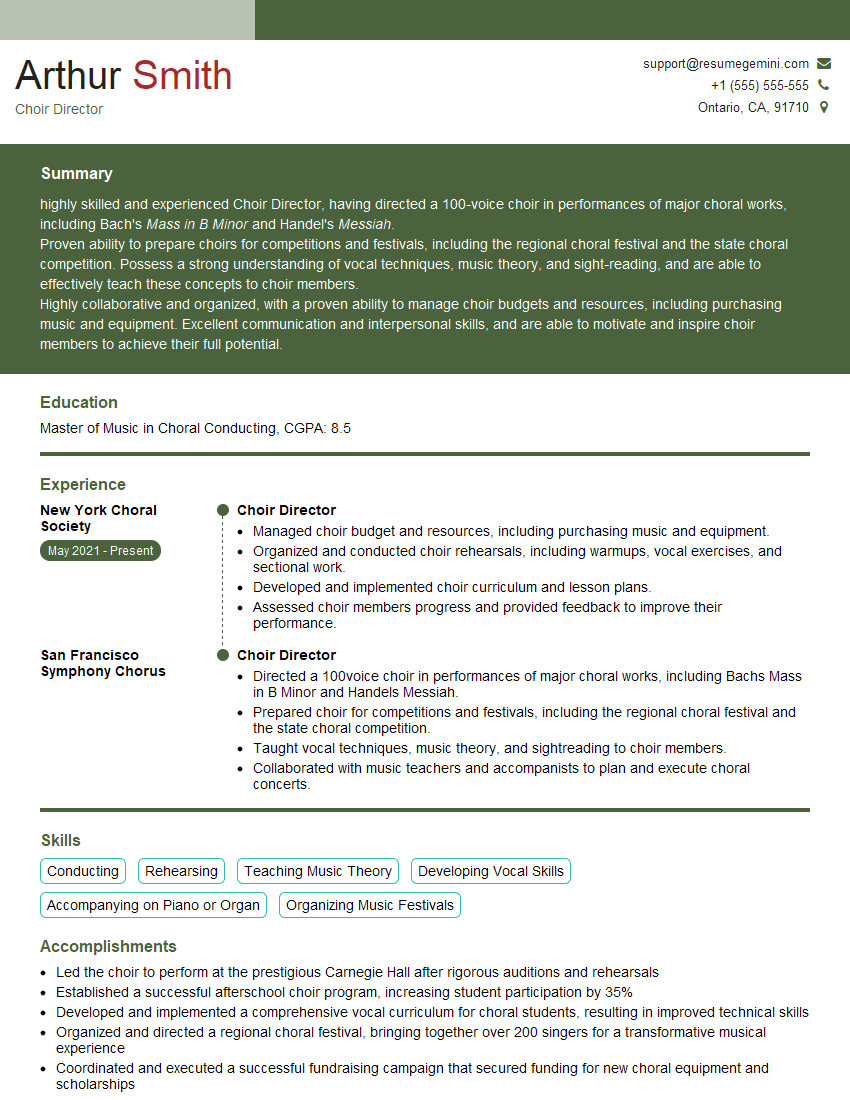
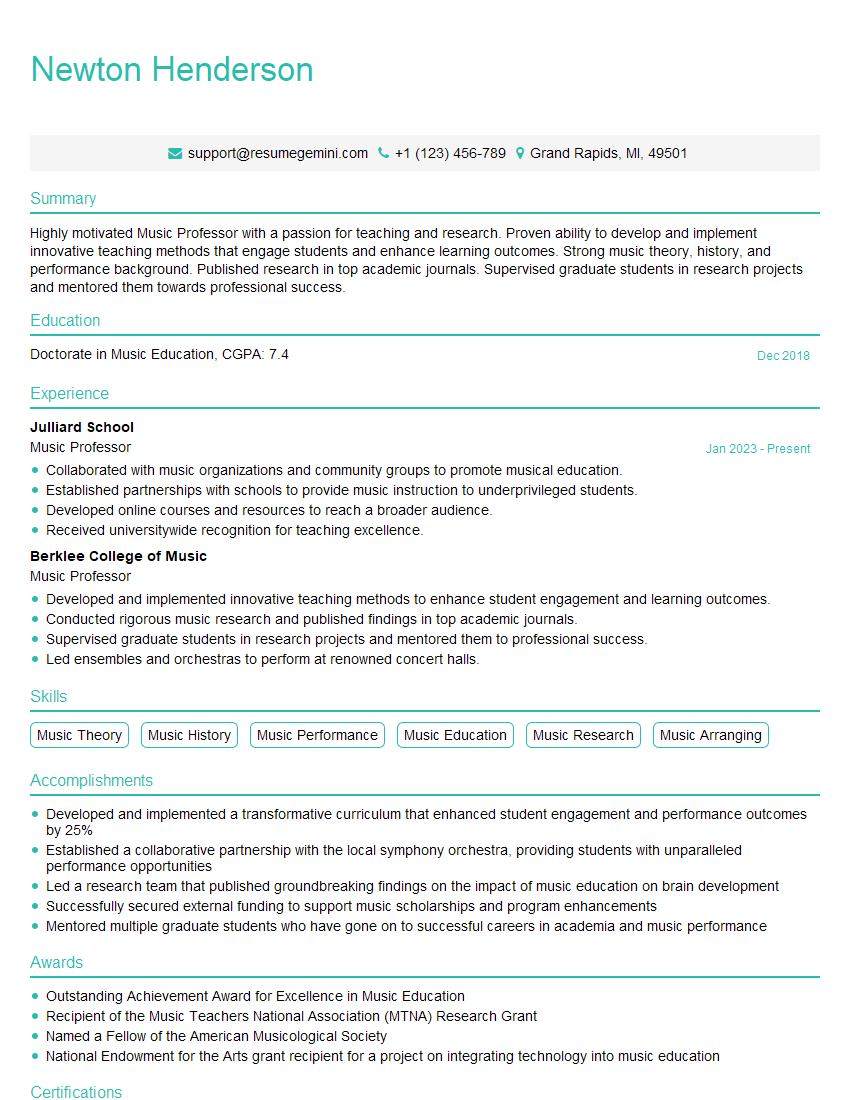
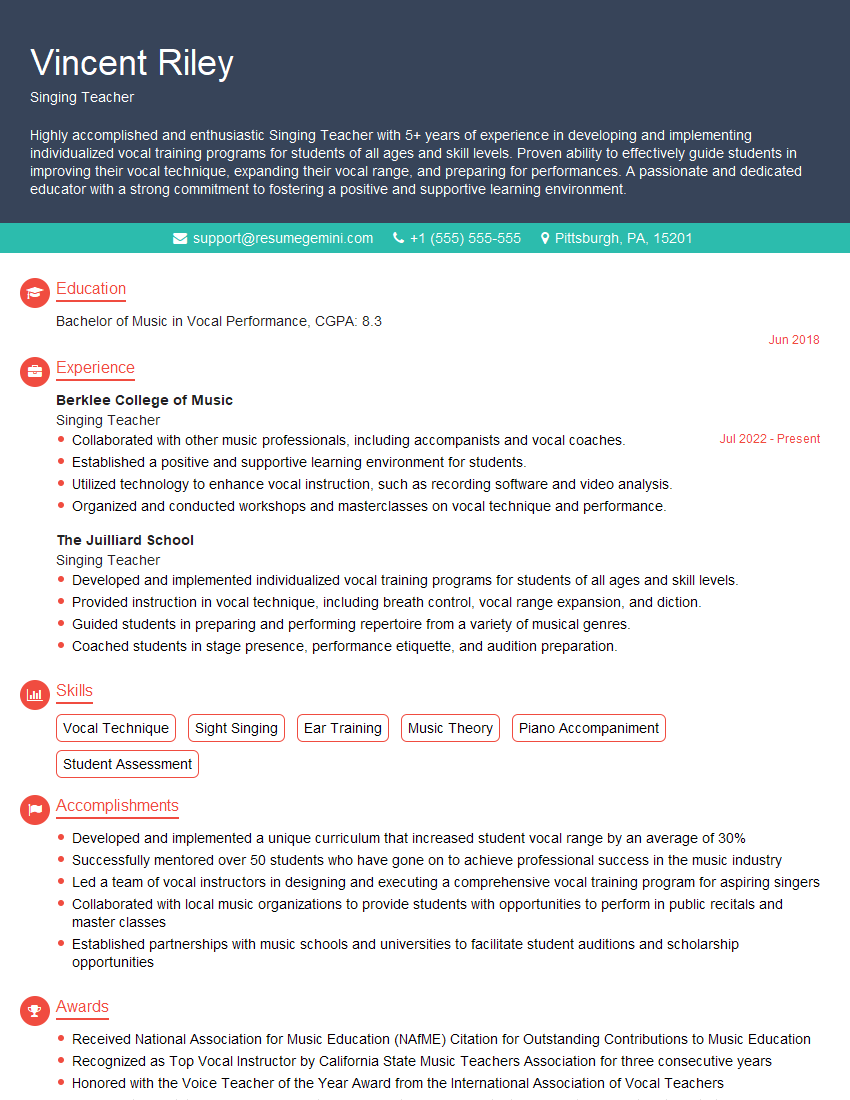
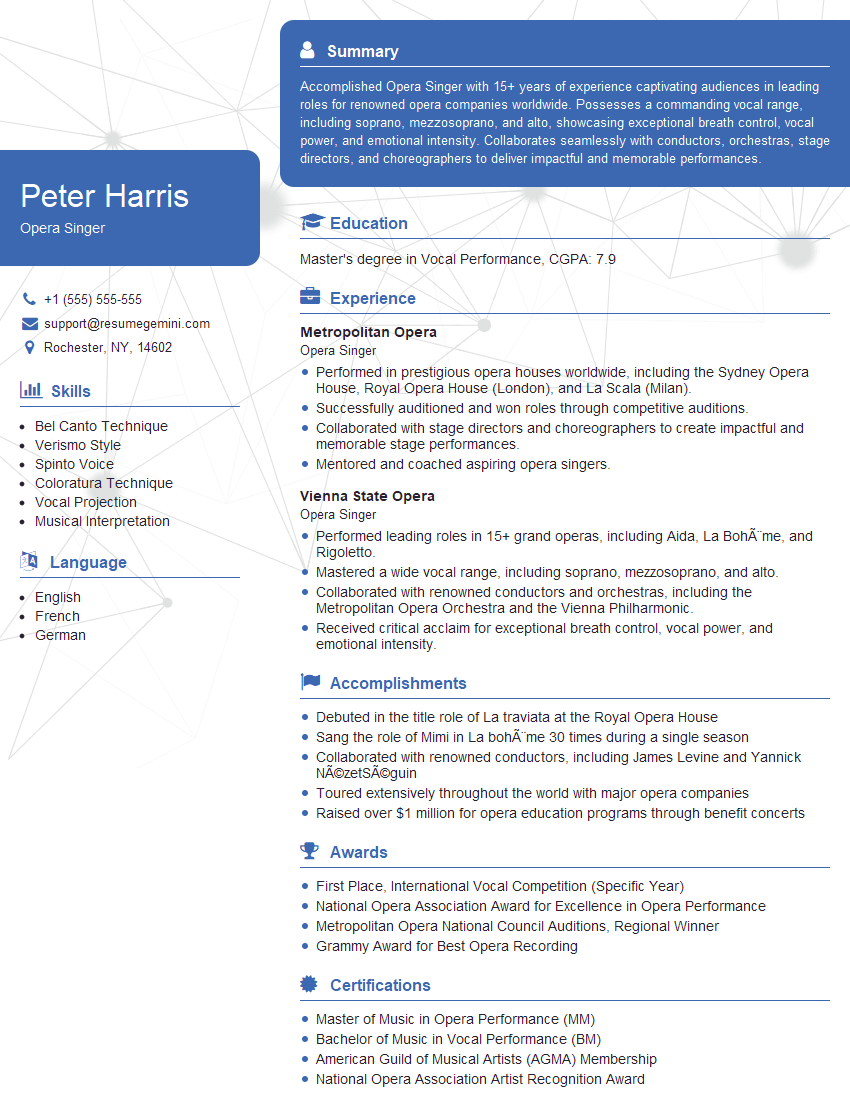
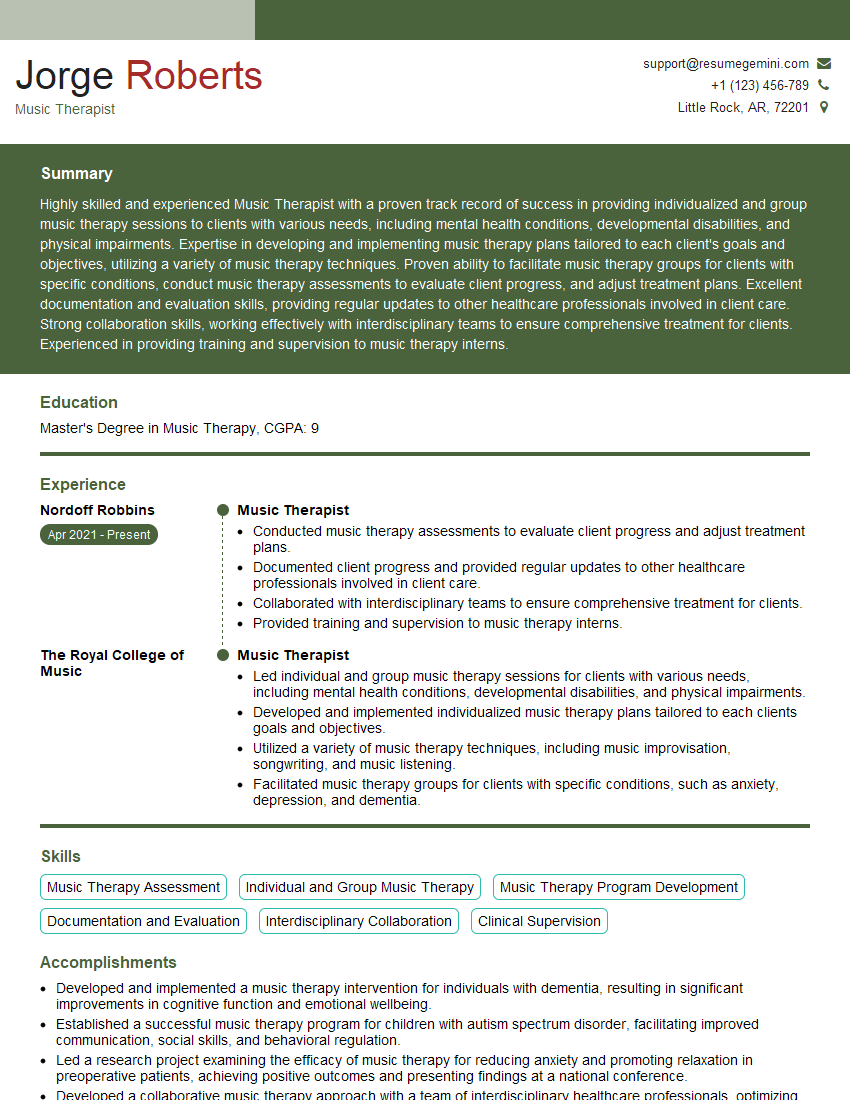
Mastering Vibrato opens doors to exciting opportunities in a rapidly evolving technological landscape. A strong understanding of its capabilities is highly valued by employers, significantly boosting your career prospects. To maximize your chances of landing your dream role, creating an ATS-friendly resume is crucial. This ensures your application gets noticed and considered. We highly recommend using ResumeGemini, a trusted resource for building professional and impactful resumes. ResumeGemini can help you craft a resume that effectively highlights your skills and experience, showcasing your readiness to excel in a Vibrato-related role. Examples of resumes tailored to Vibrato are available below to inspire your own creation.
Explore more articles
Users Rating of Our Blogs
Share Your Experience
We value your feedback! Please rate our content and share your thoughts (optional).
What Readers Say About Our Blog
Very informative content, great job.
good