Interviews are more than just a Q&A session—they’re a chance to prove your worth. This blog dives into essential Videoconferencing interview questions and expert tips to help you align your answers with what hiring managers are looking for. Start preparing to shine!
Questions Asked in Videoconferencing Interview
Q 1. Explain the difference between H.323 and SIP.
H.323 and SIP are both signaling protocols used in video conferencing, but they differ significantly in their architecture and approach. Think of them as two different languages that video conferencing systems use to communicate with each other.
H.323 is an older, more complex protocol that’s essentially a complete solution, defining everything from call setup to media transport. It relies heavily on gateways and uses a hierarchical structure with gatekeepers managing calls. This makes it robust but also more complex to manage and less flexible for integration with other systems.
SIP (Session Initiation Protocol), on the other hand, is a more lightweight and flexible protocol. It focuses primarily on call setup and teardown, leaving the media transport to other protocols like RTP (Real-time Transport Protocol). This modularity makes SIP highly adaptable and easier to integrate with various applications and platforms. It’s become the dominant protocol in modern VoIP and video conferencing systems due to its scalability and interoperability.
In short: H.323 is a comprehensive, older standard, while SIP is a more flexible and widely adopted modern alternative.
Q 2. What are the common codecs used in video conferencing and their advantages/disadvantages?
Several codecs are commonly used in video conferencing, each offering a trade-off between quality and bandwidth consumption. Think of codecs as the language that compresses and decompresses video and audio data for transmission.
- H.264 (AVC): A widely used standard offering a good balance between quality and compression. Advantages include good compression efficiency and widespread support. Disadvantages can be higher computational requirements, especially for encoding at high resolutions.
- H.265 (HEVC): A more recent standard offering even better compression than H.264, allowing for higher resolutions or lower bandwidth requirements. Advantages include higher compression efficiency and improved quality at lower bitrates. Disadvantages include higher computational complexity and potentially less widespread support in older systems.
- VP8/VP9: Open-source codecs developed by Google. VP9 is generally considered superior to VP8, offering better compression and quality. Advantages include royalty-free licensing and generally good performance. Disadvantages can include slightly lower compatibility than H.264 in some older systems.
- AV1: A newer, royalty-free codec developed by the Alliance for Open Media. It aims to provide even better compression than VP9. Advantages include superior compression and quality. Disadvantages include higher processing demands and may require more powerful hardware.
The choice of codec often depends on the network conditions, available bandwidth, and the processing power of the client devices. Higher quality codecs like H.265 and AV1 offer superior results but demand more computational resources and bandwidth.
Q 3. Describe your experience with troubleshooting video conferencing issues.
Troubleshooting video conferencing issues requires a systematic approach. I’ve encountered various problems, from simple network connectivity problems to complex codec incompatibility issues.
My approach typically involves:
- Gathering information: I start by asking the participants about their setup – their internet connection speed, the device they’re using, the software version, and any error messages they are encountering.
- Checking network connectivity: I then check network connectivity, looking for packet loss, latency, and jitter using tools like ping and traceroute. This helps to isolate whether the problem lies with the network or the conferencing software.
- Testing audio and video separately: I test audio and video separately to pinpoint whether the problem is with one or both. I might use simple test calls or diagnostic tools provided by the video conferencing platform.
- Checking firewall and NAT settings: Firewalls and NAT (Network Address Translation) can block video conferencing traffic. I’ll review these settings to make sure the necessary ports are open.
- Checking codec compatibility: If the problem seems to be related to video or audio quality, I investigate codec compatibility between the client devices and the video conferencing server.
- Software updates: I’ll often check for and install the latest software updates for both the client application and the server to ensure compatibility and bug fixes.
For instance, I once resolved a widespread issue where participants experienced frequent audio dropouts. After investigating, I found that a specific firewall rule on the company’s network was blocking the necessary RTP ports. Adjusting the firewall settings resolved the issue immediately.
Q 4. How do you ensure optimal video and audio quality in a video conference?
Ensuring optimal video and audio quality requires attention to several factors.
- High-quality hardware: Using a good quality microphone and webcam is crucial for clear audio and video. A dedicated USB headset is usually preferable to built-in microphones and cameras.
- Adequate bandwidth: Sufficient bandwidth is essential for high-quality video conferencing. A wired connection is generally more reliable than Wi-Fi. Participants should have a stable internet connection with sufficient upload and download speeds.
- Appropriate codec selection: Choosing the right codec for the available bandwidth and processing power ensures a balance between quality and performance.
- Proper lighting and background: Good lighting helps the webcam capture clear images, while a clutter-free background prevents distractions.
- Soundproofing: Minimizing background noise is essential for clear audio. This might involve using a quiet room or noise-canceling headphones.
- Testing the setup: Testing the setup beforehand helps to identify and resolve any potential issues before the actual conference begins.
For example, in a recent project, we improved the quality of online training sessions by upgrading participants’ microphones to noise-canceling models. This significantly reduced background noise and improved the overall audio experience.
Q 5. What are the key network considerations for successful video conferencing?
Network considerations are paramount for successful video conferencing. Think of the network as the highway that carries your video and audio data.
- Bandwidth: Sufficient upload and download bandwidth is crucial for smooth video and audio. The required bandwidth depends on the resolution, frame rate, and codec used. Higher resolutions and frame rates demand more bandwidth.
- Latency: Low latency (delay) is crucial for real-time communication. High latency leads to delays in audio and video, making the conversation unnatural and frustrating.
- Jitter: Jitter refers to variations in latency, leading to choppy audio and video. This is often caused by network congestion or packet loss.
- Packet loss: Packet loss occurs when data packets are lost during transmission. This can result in dropped frames, audio glitches, and broken video.
- Network infrastructure: A stable and reliable network infrastructure is necessary for smooth video conferencing. This includes sufficient network capacity, robust routing, and proper network management.
- Firewall and NAT configuration: Firewalls and NAT devices must be configured to allow the necessary ports and protocols used by the video conferencing system to pass through.
For example, if a video conference experiences significant jitter, it is likely because of network congestion or a poor connection on either participant’s side.
Q 6. Explain the concept of Quality of Service (QoS) in the context of video conferencing.
Quality of Service (QoS) is a set of techniques used to prioritize certain types of network traffic over others. In video conferencing, it ensures that video and audio packets are given preferential treatment, minimizing latency, jitter, and packet loss, and guaranteeing a better user experience, even under heavy network load. Think of it as a VIP lane for your video and audio data on the network highway.
QoS mechanisms include:
- Prioritization: Assigning higher priority to video and audio packets over other types of network traffic.
- Traffic shaping: Controlling the rate at which video and audio packets are sent to avoid network congestion.
- Resource reservation: Reserving specific network bandwidth for video conferencing sessions to ensure sufficient resources are available.
Implementing QoS often involves configuring network devices such as routers and switches to prioritize video and audio traffic based on criteria such as IP addresses, ports, and protocols. This ensures that video conferences receive the necessary bandwidth to function optimally, even during periods of high network demand.
Q 7. What are some common video conferencing security concerns and how do you address them?
Security is a major concern in video conferencing. Protecting the confidentiality, integrity, and availability of video conferencing sessions is essential.
Common security concerns include:
- Unauthorized access: Unsecured video conferencing systems can be vulnerable to unauthorized access, allowing intruders to eavesdrop on conversations or even take control of the session. Solutions include strong passwords, two-factor authentication, and restricting access to authorized users only.
- Data breaches: Video conferencing systems can be targets for data breaches, leading to the exposure of sensitive information. Encryption is crucial to protect the confidentiality of data transmitted during video conferences. End-to-end encryption is preferable for maximum security.
- Malware and viruses: Malicious software can be introduced into video conferencing systems, compromising the security of the devices and network. Using up-to-date software and employing robust security measures helps to mitigate this risk.
- Denial-of-service attacks: DoS attacks can disrupt video conferencing sessions by flooding the system with traffic. Implementing robust network security measures and having a plan for handling DoS attacks are essential.
Addressing these concerns requires a multi-layered approach involving strong passwords, encryption (ideally end-to-end), regular software updates, robust network security, and awareness training for users. Always ensure that your video conferencing system uses the latest security protocols and patches.
Q 8. Describe your experience with different video conferencing platforms (e.g., Zoom, Teams, WebEx).
My experience with video conferencing platforms is extensive, encompassing leading solutions like Zoom, Microsoft Teams, and Cisco WebEx. Each platform offers a unique set of features and strengths. Zoom, for instance, excels in its ease of use and widespread adoption, making it ideal for quick meetings and large-scale webinars. Teams integrates seamlessly with the Microsoft 365 ecosystem, providing a powerful collaboration hub for businesses already invested in that suite. WebEx, on the other hand, often shines in its enterprise-grade features and robust security capabilities, suitable for organizations with stringent security requirements. I’ve utilized these platforms for various purposes, from conducting one-on-one meetings and training sessions to managing large-scale international conferences. This hands-on experience has given me a deep understanding of their functionalities, strengths, and limitations, enabling me to choose the optimal platform for different scenarios.
- Zoom: Excellent for ease of use, large webinars, screen sharing.
- Microsoft Teams: Strong integration with Microsoft 365, ideal for internal collaboration.
- Cisco WebEx: Robust security, advanced features, suitable for enterprise-level deployments.
Q 9. How do you handle bandwidth limitations during a video conference?
Bandwidth limitations are a common challenge in video conferencing. My approach involves a multi-pronged strategy. First, I assess the participants’ internet connection speeds. If low bandwidth is identified, I recommend that participants: switch to a wired connection instead of Wi-Fi; close unnecessary applications; and adjust their video settings to reduce bandwidth consumption (e.g., lowering video resolution or disabling video altogether). Secondly, I advise the use of video conferencing features designed to optimize for low bandwidth conditions. Many platforms offer options to reduce video quality or frame rate dynamically based on network conditions. Finally, if the issue persists, I might suggest alternative solutions, such as using a phone line for audio or postponing the meeting until network conditions improve. Think of it like a river—if the river (bandwidth) is too narrow, we either reduce the flow (video quality) or find a wider river (better network).
Q 10. What is your experience with managing and maintaining video conferencing hardware?
My experience encompasses the full lifecycle of video conferencing hardware: from initial procurement and setup to ongoing maintenance and troubleshooting. This includes installing and configuring cameras, microphones, speakers, and codecs (devices that compress and decompress video and audio signals). I’m proficient in diagnosing hardware issues, such as connectivity problems, audio distortions, or camera malfunctions, often using diagnostic tools provided by the manufacturers. Regular maintenance tasks involve checking cable connections, cleaning equipment, and updating firmware to ensure optimal performance and security. For example, I once resolved a persistent audio feedback loop by carefully adjusting the microphone placement and gain settings. Proactive maintenance is crucial to prevent costly downtime and ensure the smooth operation of video conferencing systems.
Q 11. Explain your understanding of video conferencing gateways and their function.
Video conferencing gateways are essential components that bridge the gap between different video conferencing systems or networks. Imagine them as translators enabling communication between systems that wouldn’t otherwise understand each other. They allow users on different platforms (e.g., Zoom and Cisco) or using different protocols to participate in the same meeting. Gateways handle protocol conversions, media transcoding (converting between different video and audio formats), and signal routing to ensure seamless interoperability. In a real-world scenario, a company might use a gateway to connect its internal WebEx system with external participants using Zoom, making collaboration across different organizations easy and efficient.
Q 12. Describe your experience with multipoint control units (MCUs).
Multipoint control units (MCUs) are central components in multi-party video conferencing. They act as the central hub for managing and mixing audio and video streams from multiple participants, effectively combining various participants into a single meeting. Think of it as a sophisticated mixing console for video conferences. MCUs handle things like: video layout (how participants are displayed on screen), audio mixing, and managing control signals. My experience with MCUs includes configuration, monitoring performance, and troubleshooting connectivity and quality issues. Efficient MCU management is critical for high-quality multi-party video conferences, particularly for large-scale events or meetings with many participants.
Q 13. How do you troubleshoot audio problems in a video conference?
Troubleshooting audio problems in a video conference is a systematic process. First, I’d check the basic things: microphone settings (ensure it’s enabled and volume is adequate), input device selection (confirm the correct microphone is being used), audio levels (adjusting to avoid clipping or low volume), and speaker volume levels. Next, I’d examine potential environmental factors, such as background noise or interference. If these fail, I’d check the audio configuration in the software and look for potential conflicts with other applications or drivers. If issues persist, testing with an alternative audio device will isolate whether the issue is software or hardware related. A helpful tip is to test the audio in a separate test call with one participant before the full meeting.
Q 14. How do you troubleshoot video problems in a video conference?
Troubleshooting video problems follows a similar methodical approach. I begin with checking the camera connection, ensuring it’s correctly plugged in and recognized by the system. Next, I verify the video settings (resolution, frame rate, bandwidth) are appropriately configured for the available bandwidth. I then investigate network issues: checking internet connectivity and potential network congestion. Poor lighting conditions can also impact video quality, so optimizing camera placement and lighting is a key factor. Further checks might involve inspecting the camera’s firmware or drivers. Often, a simple restart of the video conferencing application or even the computer can resolve temporary glitches. Finally, If issues are persistent, testing with a secondary device will help to determine if the issue lies with the camera or with the system software.
Q 15. What is your experience with video conferencing recording and archiving?
Video conferencing recording and archiving is crucial for several reasons: it allows for later review, sharing of information with those who missed the meeting, and compliance with legal or regulatory requirements. My experience encompasses various platforms, from simple recording features built into applications like Zoom and Microsoft Teams, to more sophisticated enterprise-level systems with robust search and indexing capabilities. I’ve worked with solutions that support different formats, including MP4, WMV, and specialized formats for better security and accessibility. For instance, I once helped a large law firm implement a system that ensured all client meetings were securely recorded and archived, adhering to strict data retention policies. This involved careful selection of a platform with features like transcription services and granular access control.
In another project, I integrated a recording and archiving solution with a learning management system (LMS) to enable asynchronous learning. This involved developing custom integrations to ensure recorded webinars could be easily accessed and tracked within the LMS, improving the learning experience and streamlining administrative tasks.
Career Expert Tips:
- Ace those interviews! Prepare effectively by reviewing the Top 50 Most Common Interview Questions on ResumeGemini.
- Navigate your job search with confidence! Explore a wide range of Career Tips on ResumeGemini. Learn about common challenges and recommendations to overcome them.
- Craft the perfect resume! Master the Art of Resume Writing with ResumeGemini’s guide. Showcase your unique qualifications and achievements effectively.
- Don’t miss out on holiday savings! Build your dream resume with ResumeGemini’s ATS optimized templates.
Q 16. Explain the difference between hardware-based and software-based video conferencing solutions.
Hardware-based video conferencing solutions utilize dedicated hardware components, such as video conferencing codecs and endpoints, for all aspects of the meeting. These are typically high-end, often found in boardrooms and conference rooms. Think of a Polycom or Cisco TelePresence system – these are self-contained units handling encoding, decoding, and network connections. They generally offer superior quality and reliability but are considerably more expensive and require specialized technical expertise for installation and maintenance.
Software-based solutions, on the other hand, leverage the processing power of computers and mobile devices. They rely on software applications like Zoom, Google Meet, or Microsoft Teams. These are usually more affordable, easier to deploy, and require less specialized IT knowledge. However, their quality can depend heavily on the user’s internet connection and device capabilities. Imagine the difference between a high-definition TV (hardware) and watching a stream on your laptop (software) – the hardware solution offers a more consistent and potentially higher-quality experience, but the software solution is more accessible and flexible.
Q 17. What are your experiences with integrating video conferencing with other collaboration tools?
Integrating video conferencing with other collaboration tools is vital for a seamless workflow. My experience includes integrating video conferencing platforms with project management software (like Jira, Asana), calendar applications (like Outlook, Google Calendar), and enterprise resource planning (ERP) systems. For instance, I’ve automated meeting scheduling by integrating a video conferencing platform directly with a company’s calendar system, eliminating manual scheduling and reducing the risk of scheduling conflicts. This involved configuring webhooks and APIs to automatically add meeting links to calendar invites.
In another scenario, I integrated video conferencing with a CRM to allow sales teams to conduct virtual presentations and demonstrations directly from the CRM platform, streamlining the sales process. This involved using custom code and APIs to pull relevant client information directly into the video conferencing platform.
Q 18. How do you approach capacity planning for a video conferencing system?
Capacity planning for a video conferencing system is a critical process to ensure smooth and reliable operation. It involves estimating the number of concurrent users, the required bandwidth, and the processing power needed to support those users. I start by analyzing factors like the number of employees, the frequency of video conferences, the average duration of meetings, and the desired video resolution and quality.
The process often involves creating load tests to simulate peak usage scenarios and identify potential bottlenecks. For example, I recently helped a company plan for a significant increase in remote workers. We conducted load tests to determine the required bandwidth, upgraded their network infrastructure, and deployed additional video conferencing servers to handle the increased load. This ensured the system could handle the anticipated growth without performance issues. A key aspect is also considering future growth and planning for scalability.
Q 19. What is your understanding of video conferencing analytics?
Video conferencing analytics provide valuable insights into the usage, performance, and effectiveness of a video conferencing system. This data can be used to optimize the system and improve the user experience. My understanding encompasses various aspects, such as meeting participation rates, average meeting duration, network quality metrics (packet loss, jitter), and user satisfaction scores. I have used analytics to identify recurring issues, like poor network connectivity impacting specific locations or times of day, allowing for targeted improvements to infrastructure or training.
For example, analyzing meeting participation rates helped a client identify training sessions that weren’t engaging, prompting changes to the content and delivery method. Another instance involved using quality metrics to pinpoint network bottlenecks, leading to upgrades that reduced call drops and improved user experience.
Q 20. Describe your experience with implementing a video conferencing system from scratch.
Implementing a video conferencing system from scratch is a complex undertaking that requires careful planning and execution. My experience includes selecting appropriate hardware and software, designing the network infrastructure, configuring security protocols, and developing custom integrations. I typically begin with a thorough needs assessment, defining requirements for features, scalability, and security. This involves working closely with stakeholders to understand their specific needs and preferences.
Then, I select the appropriate hardware and software components based on the needs assessment. This might involve choosing between cloud-based and on-premises solutions, selecting appropriate codecs and endpoints, and setting up the necessary network infrastructure, including firewalls and load balancers. I would also develop a comprehensive testing and deployment plan to ensure a smooth rollout and minimize disruption. The final step would involve providing user training and ongoing support.
Q 21. How do you handle user support issues related to video conferencing?
Handling user support issues related to video conferencing requires a multi-faceted approach. I start by establishing a robust knowledge base, including FAQs, troubleshooting guides, and video tutorials, to empower users to resolve common problems independently. For more complex issues, I utilize a ticketing system to track and manage support requests, ensuring timely and efficient resolution. This involves prioritizing issues based on severity and impact.
My approach also involves proactive monitoring of the system to identify potential problems before they impact users. I leverage tools that provide real-time alerts and notifications, allowing for quick intervention and minimizing downtime. For instance, I’ve set up alerts to notify me of unusual network activity or system errors, enabling prompt troubleshooting and preventing widespread disruptions. Clear communication with users during the troubleshooting process is also paramount to ensure they understand the steps being taken to resolve the issue.
Q 22. What are your experience with different screen sharing technologies?
My experience with screen sharing technologies spans various platforms and methodologies. I’ve worked extensively with solutions that utilize different protocols, from simple screen mirroring via RDP (Remote Desktop Protocol) for basic presentations, to more sophisticated techniques like VP8 and H.264 encoding for high-quality video and application sharing in platforms such as Zoom, Google Meet, and Microsoft Teams. I understand the trade-offs between performance, quality, and bandwidth usage for different approaches. For instance, while RDP is simple to set up, it can struggle with high-resolution screens and complex applications; H.264 encoding, while more resource-intensive, provides superior video quality and smoother application sharing, especially for interactive applications. I’ve also worked with solutions that allow for selective screen sharing, sharing only a specific application window instead of the entire desktop, improving security and focusing attention on the relevant content.
In one project, we needed to share a complex CAD model in real-time with a remote team. Using simple screen mirroring proved too laggy and unstable. Switching to a solution with optimized H.264 encoding and a dedicated high-bandwidth connection drastically improved the experience, allowing for seamless collaboration on the design.
Q 23. What are your experiences with setting up and maintaining video conferencing rooms?
Setting up and maintaining video conferencing rooms involves a multifaceted approach encompassing hardware, software, and network infrastructure. This includes installing and configuring cameras, microphones, speakers, and displays, often integrating them with room scheduling systems and video conferencing platforms. Network optimization is crucial, ensuring sufficient bandwidth and low latency to avoid dropped frames and audio issues. Regular maintenance involves checking for hardware malfunctions, software updates, and network performance, proactively addressing potential issues before they impact meetings. I’ve successfully deployed and managed rooms utilizing various technologies, including Cisco Webex, Zoom Rooms, and Google Meet hardware kits.
For example, in a recent project, we encountered persistent audio feedback in a newly installed room. Through systematic troubleshooting, we identified the issue as an acoustic mismatch between the microphone and speakers, ultimately resolving the issue by carefully adjusting the microphone placement and utilizing digital signal processing (DSP) features within the conferencing system.
Q 24. Describe your experience with virtual event production using video conferencing technology.
My experience with virtual event production using video conferencing technology encompasses various aspects, from pre-event planning and technical rehearsals to live streaming and post-event analysis. This includes managing multiple video feeds, incorporating interactive elements such as Q&A sessions and polls, and ensuring a smooth and engaging experience for both presenters and attendees. I’ve worked with platforms like Zoom Webinar, Microsoft Teams Live Events, and dedicated streaming solutions to produce large-scale virtual conferences and webinars.
A particularly challenging project involved a multi-day virtual conference with multiple speakers across different time zones. To ensure a seamless transition between presentations, we meticulously planned each session, incorporating pre-recorded segments to manage time differences and employing robust backup systems to mitigate technical glitches. The result was a successful event with minimal disruptions.
Q 25. How do you ensure accessibility in video conferencing for users with disabilities?
Ensuring accessibility in video conferencing is paramount. This involves implementing features catering to users with various disabilities, including visual, auditory, and motor impairments. For visually impaired users, providing alternative text descriptions for images and videos, employing screen reader-compatible interfaces, and using clear audio descriptions are crucial. For hearing-impaired users, closed captioning and real-time transcription are essential. For users with motor impairments, offering keyboard-only navigation and support for assistive technologies is vital. Beyond technical considerations, designing inclusive meeting guidelines, such as ensuring speakers clearly identify themselves, is equally important.
In one instance, we integrated a real-time transcription service into a video conference to support hearing-impaired participants. This added another layer of accessibility that significantly improved the inclusivity and experience for all attendees.
Q 26. What is your experience with cloud-based video conferencing solutions?
I have extensive experience with cloud-based video conferencing solutions, including Zoom, Microsoft Teams, Google Meet, and Cisco Webex. My experience encompasses configuring user accounts, managing settings, integrating with other cloud services, and troubleshooting issues. Cloud-based solutions offer advantages like scalability, accessibility, and reduced infrastructure costs compared to on-premise solutions. However, managing security and data privacy are critical aspects I’ve addressed in each implementation.
For example, I’ve worked on migrating a large organization from an on-premise system to a cloud-based solution, carefully planning the migration process, ensuring data security during the transition, and providing training to users on the new platform.
Q 27. How would you measure the success of a video conferencing implementation?
Measuring the success of a video conferencing implementation involves evaluating multiple factors. Key metrics include user adoption rates (measuring the percentage of employees or users actively utilizing the system), meeting participation rates, user satisfaction scores (through surveys or feedback forms), and the overall reduction in travel costs and time saved. Analyzing technical metrics like network performance (latency, packet loss), call quality (audio and video clarity), and overall system uptime provides a view into the technical success. A holistic approach that considers both quantitative and qualitative data is necessary to achieve a complete picture.
For instance, we tracked the adoption rate of a new video conferencing solution in a company by monitoring logins and meeting usage. Alongside this, we conducted user satisfaction surveys to gain qualitative feedback, which helped us identify areas for improvement and fine-tune the implementation.
Q 28. Describe your experience with troubleshooting video conferencing issues in a hybrid environment.
Troubleshooting video conferencing issues in a hybrid environment (combining in-person and remote participants) requires a systematic approach. Issues can range from poor audio quality for remote participants due to microphone issues, network connectivity problems for remote users, to display or camera problems for in-person attendees. I utilize a step-by-step troubleshooting methodology. This includes checking network connectivity, verifying audio and video settings, testing hardware functionality, and examining the platform’s logs for error messages. Collaboration with IT support and users is vital for efficient diagnosis and resolution.
In one scenario, we had intermittent audio dropouts for remote participants during a hybrid meeting. By systematically checking the network configuration, we discovered a congested network segment impacting remote users. Redirecting traffic through a less congested route instantly resolved the issue, demonstrating the importance of proactive network management.
Key Topics to Learn for Videoconferencing Interview
- Technical Proficiency: Understanding various video conferencing platforms (Zoom, Teams, Google Meet etc.), their features, and troubleshooting common technical issues. Practical application: Imagine a scenario where your internet connection drops during a critical meeting – how would you handle it professionally?
- Professional Presentation: Mastering the art of presenting yourself effectively in a virtual environment. This includes aspects like appropriate attire, background setup, and nonverbal communication. Practical application: Consider how your body language and the visual environment impact your interviewer’s perception.
- Communication Skills: Adapting communication styles to the virtual setting and ensuring clear, concise, and engaging delivery. Practical application: How would you actively listen and participate in a virtual interview setting when facing potential audio or visual delays?
- Virtual Etiquette: Understanding and practicing proper online etiquette, including managing interruptions, muting when necessary, and utilizing chat features effectively. Practical application: Consider best practices for managing distractions during a virtual interview – both for yourself and others.
- Software & Hardware Knowledge: Familiarity with relevant software and hardware such as cameras, microphones, and lighting. This also includes understanding how to optimize these for optimal video and audio quality. Practical application: How would you troubleshoot poor audio quality during an interview or presentation?
- Security & Privacy: Understanding the security implications of video conferencing and best practices for protecting sensitive information. Practical application: How would you ensure the confidentiality of information shared during a virtual meeting?
Next Steps
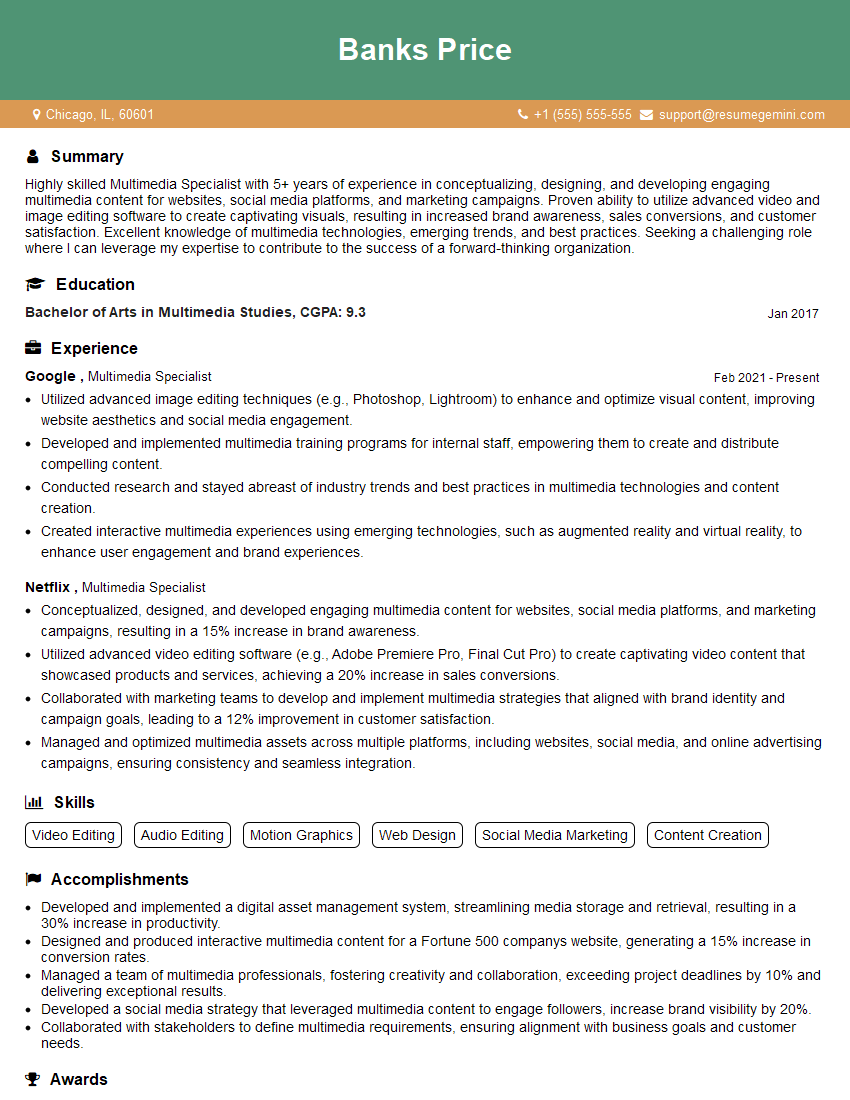
Mastering video conferencing skills is crucial in today’s interconnected world, significantly enhancing your career prospects across various industries. A strong presence in virtual meetings demonstrates professionalism and adaptability – highly valued attributes by employers. To increase your chances of landing your dream job, focus on crafting an ATS-friendly resume that highlights your relevant skills and experience. ResumeGemini can be a valuable tool in this process, helping you build a powerful and impactful resume that gets noticed. ResumeGemini provides examples of resumes tailored to Videoconferencing roles to help guide your creation. Take the next step towards a successful career by utilizing these resources!
Explore more articles
Users Rating of Our Blogs
Share Your Experience
We value your feedback! Please rate our content and share your thoughts (optional).
What Readers Say About Our Blog
Very informative content, great job.
good