Every successful interview starts with knowing what to expect. In this blog, we’ll take you through the top OSHA 1926.1450 Scaffolds interview questions, breaking them down with expert tips to help you deliver impactful answers. Step into your next interview fully prepared and ready to succeed.
Questions Asked in OSHA 1926.1450 Scaffolds Interview
Q 1. Describe the different types of scaffolds covered under OSHA 1926.1450.
OSHA 1926.1450 covers a wide range of scaffolds, broadly categorized by their design and construction. Think of it like choosing the right tool for the job – the type of scaffold depends on the height, the task, and the environment.
- Supported Scaffolds: These are the most common, relying on direct support from the ground or other stable structures. Imagine a simple, freestanding tower scaffold – that’s a supported scaffold. They come in various types, including:
- Frame Scaffolds: Pre-fabricated frames that are easily assembled.
- Tube and Coupler Scaffolds: Constructed using pipes and couplers, offering flexibility in design.
- Rolling Scaffolds: Mobile scaffolds with wheels, ideal for tasks requiring movement.
- Suspended Scaffolds: These hang from a structure above, ideal for high-rise buildings. Picture workers suspended from the top, working on the side of a skyscraper. Think of them as hanging platforms.
- Outrigger Scaffolds: These extend from a building’s edge, using outriggers for support, extending the work area beyond the structure itself.
- Other Scaffolds: This category encompasses less common types, such as trestle scaffolds, or those specifically designed for specialized tasks.
Understanding the differences is crucial for ensuring worker safety. Choosing the wrong type of scaffold for a given task is a recipe for disaster.
Q 2. What are the key requirements for scaffold planking?
Scaffold planking is critical for worker safety, essentially forming the working platform. Think of it as the floor of your elevated workspace. OSHA has strict requirements:
- Strength: Planks must be able to support at least four times the maximum intended load. This means they must be strong enough to handle not only the weight of workers and materials, but also unexpected impacts or stresses.
- Width: Planks should be a minimum of 12 inches wide to provide a stable working area, preventing accidental falls.
- Overhang: Planks should not extend beyond the scaffold supports by more than 12 inches to prevent tipping. Imagine if one end of your floor suddenly dropped – that’s what overhang can cause.
- Material: Suitable materials, such as lumber, must be free of defects, rot, and splits which could compromise their structural integrity.
- Secure Placement: Planks must be properly secured to the scaffold supports to prevent them from shifting or falling during use. We’re talking about securely locking them in place, not just resting them.
Failing to adhere to these requirements puts workers at significant risk of serious injury.
Q 3. Explain the requirements for scaffold guardrails and toeboards.
Guardrails and toeboards are safety essentials, preventing falls from the scaffold. Guardrails are like the walls of your elevated workspace while the toeboards are like a barrier at the bottom, acting as the first line of defense against falls.
- Guardrails: Must be at least 42 inches high, with a mid-rail at approximately 21 inches, and a top rail. These rails create a barrier to prevent falls. Imagine them as a safety net surrounding your work area.
- Toeboards: Must be at least 4 inches high and be capable of preventing materials and tools from falling from the scaffold. They act as a barrier to prevent small objects from causing accidents.
- Coverage: Both guardrails and toeboards must be installed along all open sides and ends of the scaffold platform to provide complete protection. There should be no gaps for anything to fall through.
Properly installed guardrails and toeboards are the foundation of a safe scaffolding system.
Q 4. How often should scaffolds be inspected?
Scaffolds must be inspected regularly, before each work shift, and after any event that could affect their structural integrity. Think of it as a daily safety check.
The frequency of inspections depends on factors such as weather conditions, work activity, and the scaffold’s design. Following a storm, for example, a thorough inspection is crucial. Any damage or potential hazard requires immediate attention.
Thorough inspections should also be conducted following any major modifications or repairs to the scaffold.
Q 5. What are the requirements for scaffold access and egress?
Safe access and egress are paramount. Imagine needing to quickly escape a scaffold in an emergency – easy and safe access is crucial.
- Access: Workers must be able to access the scaffold safely, using appropriate means such as stairways, ramps, or ladders securely attached to the scaffold structure. Using the scaffold itself is not appropriate for access and egress.
- Egress: Safe exit procedures must also be in place, ensuring workers can leave the scaffold quickly and easily in case of an emergency. The means of egress should be at least as safe as the means of access.
- Clearance: Sufficient clearance around the scaffold is also required to prevent obstructions or hazards.
Planning access and egress before starting any work is essential for preventing accidents.
Q 6. What are the permissible loading capacities for different scaffold types?
Permissible loading capacities vary greatly depending on the scaffold type, materials used, and design. It’s not a one-size-fits-all answer.
The scaffold manufacturer’s specifications should always be consulted to determine the safe working load capacity. Overloading a scaffold can lead to catastrophic failures, leading to serious injuries or fatalities. It is important to remember the safe working load is for the entire structure, not just a particular area. Calculations must take into account the weight of workers, materials, tools, and any additional equipment.
Never exceed the rated load capacity under any circumstances.
Q 7. Describe the proper procedures for erecting and dismantling a scaffold.
Erecting and dismantling a scaffold are complex tasks requiring careful planning and execution. Improper techniques lead to unstable scaffolds and increased risk of falls.
- Planning: A detailed plan outlining the steps for erection and dismantling must be developed and followed. This includes selecting appropriate tools and equipment and ensuring adequate worker training.
- Erection: Follow manufacturer’s instructions carefully. Components should be assembled correctly, ensuring stability at each stage. Regular inspections during erection are crucial.
- Disassembly: Disassembly should be done in reverse order of erection, taking extra care to prevent accidental dropping of components. The scaffold should be dismantled in a controlled and sequential manner, ensuring structural stability at each step.
- Training: Workers involved in erecting and dismantling scaffolds must be adequately trained in safe working procedures. It’s not a job for someone without proper training and experience.
Improper erection or dismantling is a leading cause of scaffold-related accidents. Following proper procedures is non-negotiable.
Q 8. What are the requirements for working near power lines with scaffolding?
Working near power lines with scaffolding presents a significant risk of electrocution. OSHA 1926.1450 doesn’t directly address scaffolding proximity to power lines; however, OSHA 1926 Subpart V, Electrical, dictates stringent safety measures. The key is maintaining a safe distance, which depends on voltage. Generally, a minimum clearance is required, often determined by a qualified electrician and based on factors including voltage, weather conditions, and the type of work being done.
For instance, you cannot simply erect a scaffold near power lines without a thorough risk assessment conducted by a competent person. This assessment must define a safe working distance, implement appropriate safety measures such as insulating tools and equipment, and possibly necessitate the de-energizing of the power lines. Failure to maintain safe distance can lead to serious injury or fatality. Imagine a scenario where a metal scaffold accidentally contacts a high-voltage line – the consequences would be catastrophic.
Q 9. How do you identify and address potential scaffold hazards?
Identifying and addressing scaffold hazards requires a proactive and systematic approach. A competent person must regularly inspect the scaffold before, during, and after each work shift, and following any event that could affect its structural integrity (e.g., strong winds, impact). The inspection should cover various aspects:
- Structural Integrity: Check for damaged or missing components, loose connections, overloaded platforms, and signs of instability.
- Proper Erection: Verify that the scaffold is erected according to manufacturer’s instructions and OSHA standards, with proper base support, bracing, and guardrails.
- Fall Protection: Ensure appropriate fall protection systems are in place and properly secured, such as guardrails, safety nets, or personal fall arrest systems.
- Access and Egress: Verify safe access and egress points, ensuring they are not obstructed and are properly maintained.
- Environmental Hazards: Assess for environmental hazards such as weather conditions (wind, rain, snow), ground conditions (soft ground, uneven terrain), and proximity to power lines or other potential hazards.
Addressing hazards involves immediate corrective actions. If a hazard is identified, work must cease on the affected portion of the scaffold until the hazard is eliminated. This might involve replacing damaged components, adding bracing, or implementing additional fall protection measures. Documenting all inspections and corrective actions is crucial for accountability and record-keeping.
Q 10. What is the role of a competent person in scaffold safety?
A competent person, as defined by OSHA, is someone who is capable of identifying existing and predictable hazards in the surroundings or working conditions which are unsanitary, hazardous, or dangerous to employees, and who has authorization to take prompt corrective measures to eliminate them.
In the context of scaffold safety, the competent person plays a vital role. They are responsible for the design, erection, alteration, moving, dismantling, and inspection of all scaffolds. This involves ensuring that the scaffold meets OSHA requirements, that the proper materials and procedures are used, and that all workers are trained in safe scaffold use and practices. Think of them as the ‘safety manager’ specifically for scaffold operations. They are the ones who ultimately sign-off on the safety of the structure.
Q 11. Explain the significance of fall protection systems in scaffolding.
Fall protection is paramount in scaffolding safety due to the inherent height-related risks. Falls from scaffolds are a leading cause of serious injuries and fatalities in construction. Fall protection systems prevent or mitigate the consequences of falls, minimizing the risk of death or serious injury. The significance lies in the prevention of catastrophic outcomes that can result in lifelong disabilities, hospitalizations, and even death for workers.
Imagine a scenario where a worker loses their balance on a scaffold and falls. Without adequate fall protection, the fall could result in severe trauma. With a properly installed and maintained fall protection system, however, the fall could be arrested, preventing or greatly reducing the impact and potential injuries.
Q 12. Describe the different types of fall protection used with scaffolds.
Several fall protection systems are used with scaffolds, depending on the specific application and height:
- Guardrails: These are the most common fall protection for scaffolds, providing a physical barrier to prevent falls. They should be at least 42 inches high, with a midrail and toeboard.
- Safety Nets: Nets are used beneath scaffolds to catch falling workers or objects. They require careful planning and installation to ensure proper coverage and strength.
- Personal Fall Arrest Systems (PFAS): These systems include harnesses, lanyards, and anchor points. They arrest a worker’s fall, preventing them from hitting the ground. Proper anchor points and training are critical for effective PFAS use.
- Personal Fall Restraint Systems (PFRS): These systems prevent falls from occurring in the first place by limiting the worker’s movement to a safe area. They often include a body harness and lanyard connected to a fixed point.
The selection of appropriate fall protection depends on various factors, including the height of the scaffold, the type of work being performed, and the potential fall hazards. A competent person must assess these factors to determine the most effective fall protection strategy.
Q 13. What are the requirements for using ladders with scaffolds?
OSHA requires that ladders used in conjunction with scaffolds provide safe access to and from the scaffold platforms. Ladders must extend at least 3 feet above the upper landing to allow safe access. They should be properly secured to prevent slippage and be of sufficient strength to support the weight of the worker and any equipment being carried. Ladders should be inspected regularly for damage or defects.
Improper ladder use can create a dangerous situation, where a worker may fall from the ladder while trying to access the scaffold. The ladder should be a stable, non-slip type, placed at the correct angle, and able to handle the user’s weight and the weight of any equipment they might be carrying.
Q 14. How do you ensure scaffold stability?
Scaffold stability is crucial for worker safety. It relies on several key factors:
- Proper Base Support: The scaffold must rest on a stable and level base capable of supporting the scaffold’s weight and any loads placed upon it. This may involve using mud sills, base plates, or other support mechanisms on uneven or soft ground.
- Adequate Bracing: Proper bracing, both longitudinal and transverse, is essential to prevent sway and collapse. Bracing must be securely fastened to both the scaffold and the ground.
- Correct Loading: The scaffold should never be overloaded. The weight of workers, materials, and equipment must be evenly distributed and kept within the scaffold’s rated capacity.
- Regular Inspection: Regular inspections are necessary to identify any signs of instability, such as loose connections, damaged components, or uneven settling. Immediate corrective actions must be taken if any instability is detected.
Imagine a scenario where a scaffold isn’t properly braced. Even a slight breeze could cause it to sway, putting workers at risk. Ensuring stability involves meticulous planning, proper materials, and diligent inspection. Ignoring these aspects can lead to catastrophic failure.
Q 15. What are the requirements for scaffold maintenance?
Scaffold maintenance is crucial for worker safety and preventing accidents. It’s not just about a quick visual check; it’s a systematic process ensuring the scaffold remains structurally sound and fit for purpose throughout its use. OSHA 1926.1450 requires regular inspections and prompt repairs.
- Regular Inspections: Competent persons must inspect all scaffolds before each work shift and after any event that could affect the scaffold’s integrity (e.g., strong winds, impacts). This includes checking all components for damage, looseness, or deterioration.
- Repair or Replacement: Any damaged or defective components must be immediately repaired or replaced with components of equal or greater strength. Improvised repairs are unacceptable.
- Documentation: Records of inspections and repairs should be maintained, documenting the date, time, findings, and any corrective actions taken.
- Protection from Damage: Scaffolds should be protected from damage during use and storage. This may involve using appropriate barriers or coverings to prevent accidental impact or damage from weather elements.
Example: Imagine a scaffold used for painting a building’s exterior. Before each workday, the supervisor must meticulously check all planks for cracks, ensure all couplers are tightly secured, and verify the base is stable. Any loose bolts or damaged planks necessitate immediate repair or replacement before work commences.
Career Expert Tips:
- Ace those interviews! Prepare effectively by reviewing the Top 50 Most Common Interview Questions on ResumeGemini.
- Navigate your job search with confidence! Explore a wide range of Career Tips on ResumeGemini. Learn about common challenges and recommendations to overcome them.
- Craft the perfect resume! Master the Art of Resume Writing with ResumeGemini’s guide. Showcase your unique qualifications and achievements effectively.
- Don’t miss out on holiday savings! Build your dream resume with ResumeGemini’s ATS optimized templates.
Q 16. What are the consequences of non-compliance with OSHA 1926.1450?
Non-compliance with OSHA 1926.1450 can lead to severe consequences, impacting both the employer and employees. The penalties can range from significant fines to workplace shutdowns, not to mention the potential for serious injuries or fatalities.
- Fines: OSHA can impose substantial fines for violations, the amount varying depending on the severity and nature of the infraction. Repeat offenders face even steeper penalties.
- Citations and Penalties: Employers receive citations detailing the violations, and these citations are often associated with significant monetary penalties.
- Legal Action: In cases of serious injuries or fatalities resulting from scaffold-related accidents caused by non-compliance, employers may face lawsuits and legal action from injured workers or their families.
- Reputational Damage: Non-compliance can severely damage an employer’s reputation, impacting their ability to secure future contracts and projects.
- Worksite Shutdowns: OSHA may order a complete or partial shutdown of the worksite until the violations are rectified, halting productivity and incurring additional costs.
Example: A construction company neglecting proper scaffold maintenance leading to a worker’s fall could face significant fines, legal battles, and reputational damage, potentially resulting in bankruptcy.
Q 17. How would you handle a situation where a scaffold is deemed unsafe?
If a scaffold is deemed unsafe, immediate action is paramount. The key is to prioritize safety and prevent accidents.
- Immediate Halt of Work: Stop all work activities on the affected scaffold immediately. Do not allow anyone to work on or near it until it’s deemed safe.
- Evacuation of Personnel: Ensure that all personnel are safely evacuated from the scaffold and the immediate area.
- Assess the Situation: A competent person must thoroughly inspect the scaffold to identify the cause of the unsafe condition. Detailed notes should be taken on the damage.
- Implement Corrective Actions: Implement the necessary repairs or replacements to bring the scaffold back to a safe condition. This may involve removing the scaffold entirely if major repairs are necessary.
- Re-inspection: Following repairs, another thorough inspection must be performed to verify that the scaffold is safe for use before work resumes. This should be conducted by a different competent person than the one initially reporting the problem.
- Documentation: Maintain meticulous records of all actions taken, including the date, time, nature of the problem, corrective actions taken, and the names of involved personnel.
Example: If a plank shows signs of significant cracking or weakness, work stops immediately. The damaged plank is replaced, and a competent person reinspects the scaffold before allowing work to recommence.
Q 18. Describe the proper use of personal protective equipment (PPE) when working on scaffolds.
Proper PPE is essential when working on scaffolds. The specific PPE depends on the tasks and hazards, but some are always crucial.
- Hard Hats: Always mandatory to protect against falling objects.
- Safety Harness and Fall Protection System: Essential to prevent falls from heights. The system must be properly anchored to a structurally sound point.
- Safety Shoes: Provide protection against punctures and falling objects.
- Eye Protection: Essential against flying debris or dust.
- Hand Protection: Gloves should be worn to protect against cuts, abrasions, and chemical exposure (depending on the task).
Example: A worker installing roofing tiles on a scaffold should wear a hard hat, safety harness with lanyard connected to a secure anchor point, safety shoes, eye protection, and work gloves.
Q 19. What are the requirements for using suspended scaffolds?
Suspended scaffolds, often used for high-rise building maintenance or construction, require strict adherence to safety regulations.
- Proper Suspension: The scaffold must be securely suspended from strong points capable of supporting the load. These points must be engineered and inspected by a competent person.
- Hoisting Equipment: All ropes, cables, and other hoisting equipment must be regularly inspected for wear and tear and in good working order.
- Safe Access and Egress: There must be safe access and egress methods to and from the scaffold.
- Guardrails and Toeboards: Adequate guardrails and toeboards are essential to prevent falls.
- Load Limits: The scaffold must not be overloaded, and load limits must be clearly defined and followed.
- Regular Inspections: The scaffold must be inspected before each shift and after any incident that could compromise its structural integrity.
Example: Swinging scaffolds used for window washing must have ropes and cables regularly checked for fraying, the scaffold platform must be protected by guardrails, and access should be provided by a stable and safe ladder or stair.
Q 20. What are the requirements for using rolling scaffolds?
Rolling scaffolds offer mobility but require careful attention to stability and safety.
- Level and Stable Base: Ensure the scaffold is placed on a level and stable surface to prevent tipping.
- Proper Locking of Wheels: Wheels must be properly locked before any work is performed.
- Load Capacity: Do not overload the scaffold; stay within the manufacturer’s specified load capacity.
- Guardrails and Toeboards: Guardrails and toeboards are essential to prevent falls from the platform.
- Proper Bracing: Rolling scaffolds must be adequately braced to ensure stability, especially when extended to greater heights.
- Regular Inspection: Inspect the scaffold before each use for any damage or defects.
Example: A painter using a rolling scaffold needs to ensure the wheels are locked before commencing work and the scaffold is positioned on a firm, level surface. They must never exceed the load limit.
Q 21. How do you inspect a scaffold for damage or defects?
Inspecting a scaffold for damage or defects is a critical safety procedure.
- Visual Inspection: Begin with a visual inspection of all components, including planks, uprights, bases, couplers, and guardrails.
- Check for Damage: Look for cracks, splits, bends, deformations, or any signs of rot or decay in the wooden components or signs of corrosion or damage in the metal parts.
- Examine Couplers and Connections: Ensure all couplers and connections are securely fastened and undamaged. Loose or damaged couplers can compromise the scaffold’s stability.
- Check Base Stability: Ensure the scaffold’s base is stable and level, free from obstructions and able to evenly support the scaffold’s weight.
- Assess Guardrails and Toeboards: Verify that guardrails and toeboards are properly installed, undamaged, and at the correct height.
- Check Load Capacity: Ensure the scaffold is not overloaded, taking into account the weight of the workers, materials, and tools.
- Documentation: Document all findings, including any damages or defects, and take corrective action.
Example: During an inspection, you notice a crack in a plank. This plank must be immediately replaced before work continues. If you find a loose coupler, it needs to be tightened or replaced with a new one.
Q 22. What are the requirements for the use of outrigger beams?
Outrigger beams are essential for extending the support base of a scaffold, particularly when it’s positioned near an edge or lacks adequate support. They significantly increase the scaffold’s stability and load-bearing capacity by transferring weight to a more stable point. Their use is mandatory whenever the scaffold’s load exceeds the safe working capacity of the main support structure.
- Proper Installation: Outriggers must be securely attached to the scaffold’s main frame and the supporting structure, typically a building or ground. This often involves using strong and appropriately sized bolts, clamps, or other suitable fastening mechanisms. Improper attachment is a major safety hazard.
- Load Distribution: The outrigger system should be designed to evenly distribute the scaffold’s weight, preventing overloading of any single component. This requires careful calculations based on the scaffold’s dimensions, materials, and anticipated loads.
- Safe Working Load: The combined working load capacity of the outriggers and the main scaffold must never be exceeded. This maximum capacity is often specified by the manufacturer and should be clearly marked on the equipment.
- Inspection: Regular inspections of outrigger beams are crucial to ensure that all connections are secure, there’s no damage, and the system is properly functioning. Any damage or loose connections should be immediately repaired or replaced.
Example: Imagine constructing a scaffold along the edge of a roof. Outrigger beams would extend from the scaffold’s frame outwards, resting on secure points on the roof or ground, thus preventing the scaffold from tipping over.
Q 23. How do you calculate the maximum load capacity of a scaffold?
Calculating the maximum load capacity of a scaffold is a critical safety step and involves several factors. It’s not a simple calculation but a process that requires careful consideration.
- Scaffold Type: The design and construction of the scaffold (e.g., tube and coupler, frame, etc.) drastically impact its load capacity.
- Material Strength: The strength of the materials used (e.g., steel, aluminum) directly affects the load they can bear.
- Component Dimensions: The size and dimensions of the scaffold’s components (e.g., tubes, planks) determine their load-bearing capabilities.
- Support Conditions: The nature of the ground or supporting structure plays a significant role. A solid foundation is crucial for a high load capacity.
- Load Distribution: How the weight is distributed across the scaffold (evenly or unevenly concentrated) alters its maximum capacity.
- Manufacturer’s Specifications: These should always be consulted. They often provide the safe working load (SWL) for each scaffold component and the complete structure.
Simplified Approach (Illustrative Only): A very basic (and oversimplified) calculation might involve summing the individual safe working loads (SWLs) of each component. However, this approach doesn’t account for complex factors like load distribution and structural integrity. Professional engineering calculations are always necessary for accurate results.
Professional Guidance: For complex scaffolding configurations, always consult with a qualified engineer to accurately determine the safe working load. OSHA recommends utilizing qualified personnel who understand these calculations to maintain safety.
Q 24. Describe the difference between a scaffold tag and a scaffold inspection report.
While both scaffold tags and inspection reports document the condition of a scaffold, they serve different purposes.
- Scaffold Tag: This is a brief, usually visually prominent label attached directly to the scaffold. It indicates whether the scaffold has passed a recent inspection and is safe for use. The tag usually includes a date of inspection, the inspector’s signature (or identifier), and the date it’s no longer valid. It’s essentially a quick pass/fail indicator.
- Scaffold Inspection Report: This is a more comprehensive document detailing the results of a thorough inspection. It includes the date of the inspection, the inspector’s name and qualifications, a detailed description of the scaffold’s condition (including any identified deficiencies), and any corrective actions that need to be taken. It provides a record of the overall state of the scaffold and serves as a legal document.
In essence: The tag is a visual summary, while the report provides a complete record of the inspection process.
Q 25. What are the limitations of using scaffolds in high wind conditions?
High winds pose significant risks to scaffold stability and worker safety. The limitations are substantial and require proactive measures to mitigate risk.
- Increased Risk of Collapse: High winds can create significant lateral forces on the scaffold, potentially causing it to overturn or collapse. The higher the scaffold, the greater the wind’s effect.
- Reduced Load Capacity: The effective load-bearing capacity of a scaffold is significantly reduced in high winds. Materials that might bear a certain load under normal conditions become much more vulnerable to failure under wind stress.
- Worker Safety: Workers are exposed to the danger of falling materials, being blown off the scaffold, and injury from the collapsing structure. Strong gusts can also impact the safe use of tools and materials.
Limitations in Practice: OSHA guidelines generally recommend that scaffolds should not be erected, used, or altered when winds exceed a specified limit. This limit is not fixed and varies based on the scaffold’s design, height, and other factors. Common practice is to cease scaffold work if winds are excessively high.
Mitigation Strategies: These include proper anchoring, bracing, and wind screens. However, even with these mitigation efforts, extremely high wind conditions may still necessitate suspending operations until safer conditions prevail.
Q 26. How do you ensure proper communication and coordination among workers on a scaffolding project?
Effective communication and coordination are fundamental to scaffold safety. A breakdown in these areas can quickly lead to accidents.
- Pre-Task Planning: Before any work begins, a thorough briefing should take place involving all workers. This should cover the scaffold’s layout, safe access and egress points, work procedures, and emergency plans. All personnel should understand their role and responsibilities.
- Designated Communication Channels: Clear and easily accessible communication channels (e.g., designated signal person, two-way radios, visual signals) should be established and understood by all workers.
- Regular Check-ins: Frequent check-ins and communication should occur throughout the project. Workers need to report any observed hazards or concerns immediately.
- Supervision and Training: Competent supervision is vital to ensure that all workers understand and adhere to safety protocols. Training should cover safe work practices, hazard recognition, and emergency procedures.
- Hazard Communication: Immediately communicate any identified hazards; don’t wait for scheduled check-ins.
Example: A signal person could direct the movement of materials to prevent collisions and maintain a safe work environment. This approach helps to minimize the risk of accidents, especially in high-traffic areas surrounding the scaffolding.
Q 27. Explain the emergency procedures in case of a scaffold collapse.
Emergency procedures for scaffold collapses are critical and must be clearly defined and practiced beforehand. They should emphasize immediate action to minimize injuries and further damage.
- Evacuation: Workers must immediately evacuate the scaffold and surrounding areas if a collapse occurs or is imminent. This should follow established escape routes clearly marked beforehand.
- Emergency Services: Call emergency services (911 or local equivalent) immediately to report the incident and request medical assistance and rescue personnel.
- First Aid: Provide first aid to injured workers as soon as possible. Designated personnel should be trained in basic first aid and CPR.
- Securing the Area: Secure the collapsed scaffold area to prevent further injuries and preserve evidence. This might involve establishing a safety perimeter and preventing unauthorized access.
- Incident Report: After the immediate emergency response, a thorough incident report must be prepared. This report will be crucial for investigation and implementing preventive measures to avoid future occurrences.
Regular Drills: Regular emergency drills are essential to ensure that all workers are familiar with the procedures and can respond effectively in case of a real emergency.
Q 28. What are your strategies for ensuring continued compliance with OSHA 1926.1450 regulations?
Ensuring continued compliance with OSHA 1926.1450 requires a proactive and multi-faceted approach.
- Regular Inspections: Regular and thorough scaffold inspections should be conducted before, during, and after each use. This should be done by a competent person who understands the regulations.
- Proper Training: All workers involved in scaffolding erection, use, or dismantling must receive appropriate training on safe practices, hazard recognition, and emergency procedures.
- Record Keeping: Detailed records of all scaffold inspections, training, and any incidents must be maintained. This documentation is essential for demonstrating compliance.
- Stay Updated: Keep abreast of changes and updates to OSHA 1926.1450 regulations. OSHA’s website and other relevant resources should be regularly consulted.
- Engineering Controls: Use engineering controls wherever possible to minimize risks. This includes using appropriate scaffold designs, materials, and equipment. For example, using guardrails, toeboards, and other safety devices.
- Employee Involvement: Encourage workers to report any safety concerns and participate in improving safety practices.
Proactive Culture: Compliance is not just about following rules but fostering a safety-first culture where all workers are actively involved in maintaining a safe working environment. This proactive approach is vital for preventing accidents and maintaining long-term compliance.
Key Topics to Learn for OSHA 1926.1450 Scaffolds Interview
Ace your OSHA 1926.1450 Scaffolds interview by mastering these key areas. Remember, understanding the “why” behind the regulations is as important as knowing the “what.”
- Scaffold Planking: Types of planking, load capacity, and proper installation techniques. Consider scenarios involving different materials and working heights.
- Scaffolding Types & Components: Familiarize yourself with various scaffold types (e.g., supported, suspended, rolling), their appropriate applications, and the function of each component (base plates, uprights, etc.). Be prepared to discuss the limitations of each type.
- Fall Protection: Understanding fall protection systems specifically related to scaffold use. This includes guardrails, safety nets, and personal fall arrest systems. Discuss scenarios where different systems might be necessary.
- Inspection & Maintenance: Regular inspection procedures, identifying potential hazards, and appropriate corrective actions. Consider practical examples of common deficiencies and their consequences.
- Erection, Alteration & Dismantling: Safe procedures for each stage, including proper sequencing, use of tools, and ensuring worker safety throughout the process. Think about how to address potential challenges during these phases.
- Load Capacity & Stability: Calculating safe working loads, understanding the impact of uneven terrain, and ensuring scaffold stability in various conditions. Be ready to discuss practical calculations and problem-solving.
- Access & Egress: Safe access and egress points, proper ladder placement, and maintaining safe working platforms. Consider scenarios with different scaffold configurations.
- Competent Person Responsibilities: Clearly understand the role and responsibilities of a competent person in relation to scaffold safety. What are their duties and legal obligations?
Next Steps
Mastering OSHA 1926.1450 Scaffolds demonstrates a commitment to safety and significantly enhances your job prospects in construction and related fields. This expertise is highly sought after, setting you apart from other candidates. To maximize your chances, invest time in crafting an ATS-friendly resume that showcases your skills and experience effectively. ResumeGemini is a trusted resource to help you build a professional and impactful resume. They offer examples of resumes tailored to OSHA 1926.1450 Scaffolds expertise, providing a great starting point for your job search. Take the next step towards your dream career today!
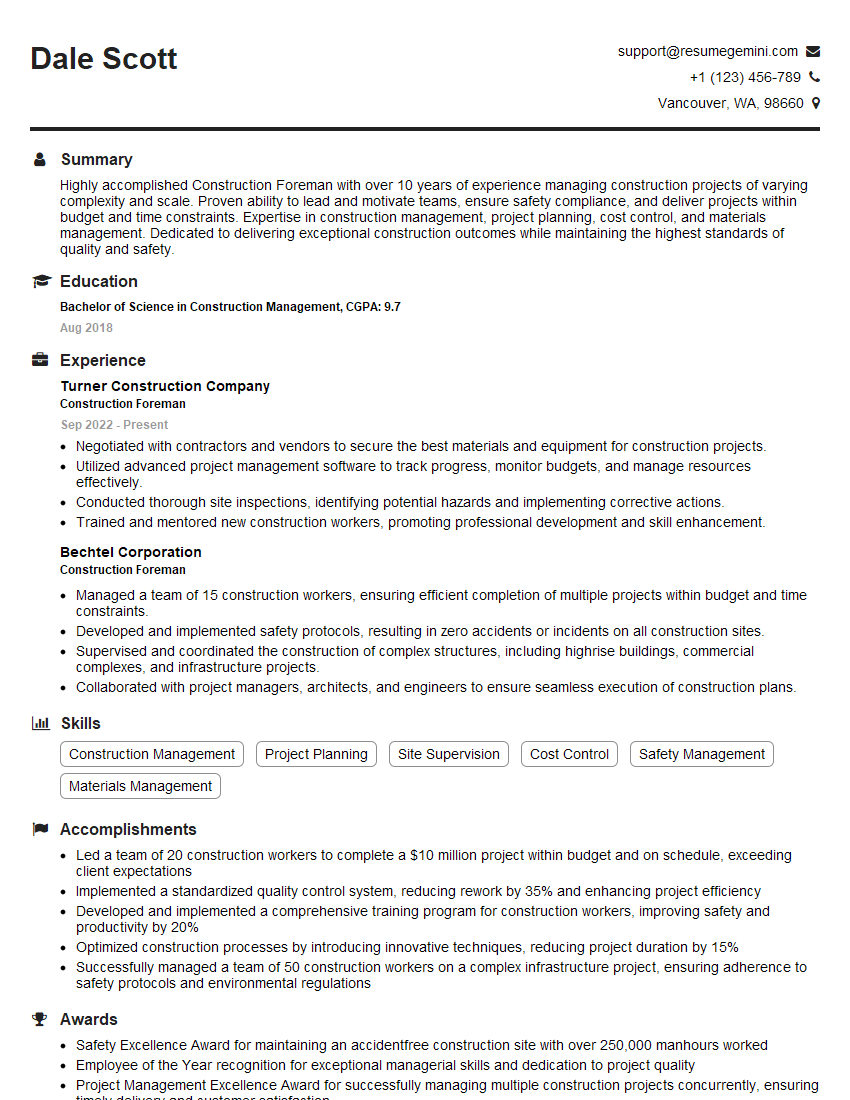
Construction Foreman Resume Sample

Construction Superintendent Resume Sample

General Contractor Resume Sample
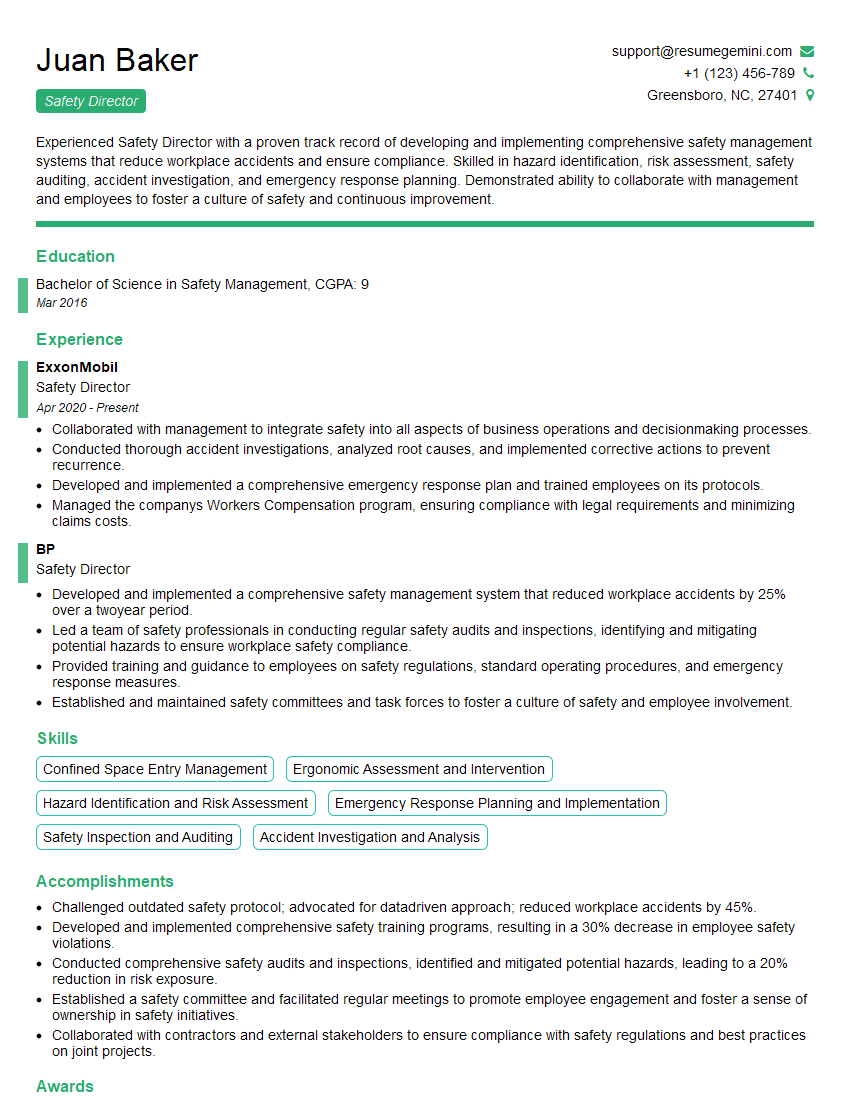
Safety Director Resume Sample

Environmental Health and Safety Manager Resume Sample

Safety Officer Resume Sample
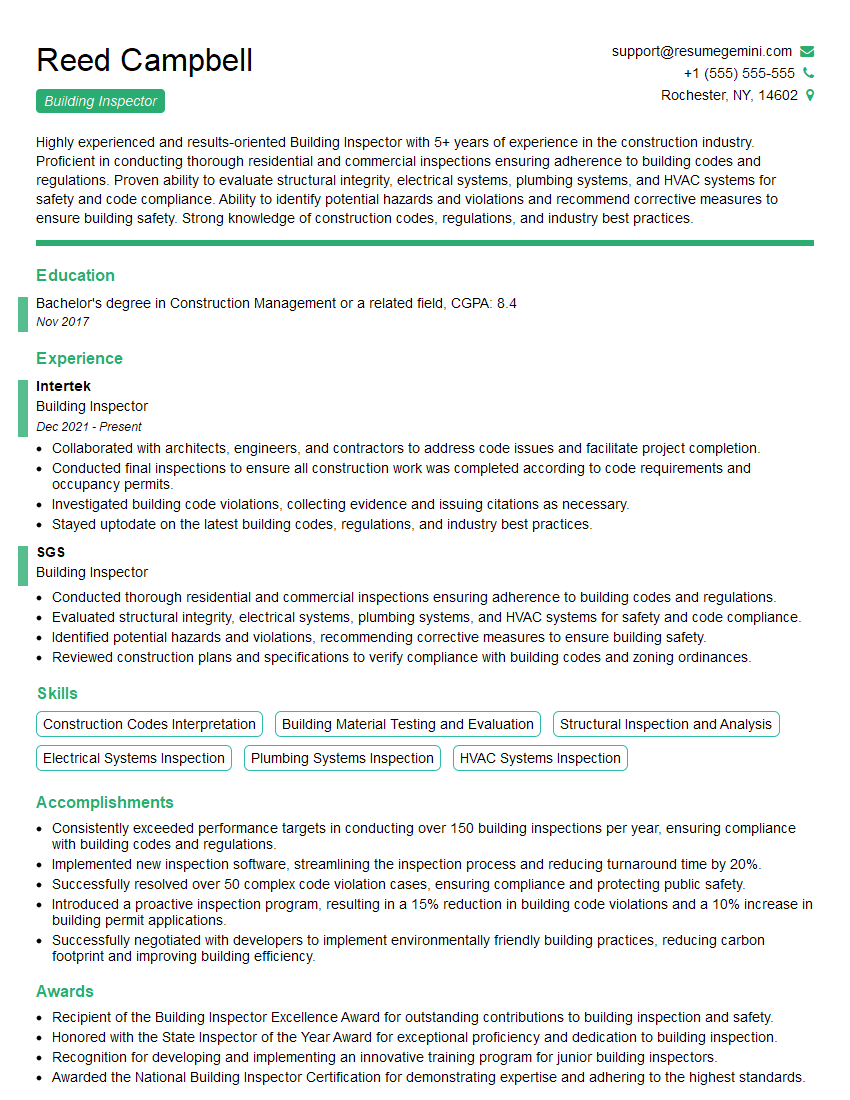
Building Inspector Resume Sample

Scaffold Erector Resume Sample
Explore more articles
Users Rating of Our Blogs
Share Your Experience
We value your feedback! Please rate our content and share your thoughts (optional).
What Readers Say About Our Blog
Very informative content, great job.
good