Preparation is the key to success in any interview. In this post, we’ll explore crucial Vinyl graphics application interview questions and equip you with strategies to craft impactful answers. Whether you’re a beginner or a pro, these tips will elevate your preparation.
Questions Asked in Vinyl graphics application Interview
Q 1. Describe your experience with different types of vinyl materials (e.g., cast, calendared, perforated).
My experience encompasses a wide range of vinyl materials, each with its own unique properties and applications. Let’s break down the most common types:
- Cast Vinyl: This is the workhorse of the industry, known for its exceptional durability and conformability. It stretches and conforms to curves incredibly well, making it ideal for vehicle wraps, complex signage, and applications requiring long-term exposure to the elements. I’ve used it extensively on fleet vehicles, where its resilience to weathering and UV degradation is crucial. Think of it like a really tough, flexible skin.
- Calendared Vinyl: Calendared vinyl is more economical and easier to work with, particularly for shorter-term applications or flat surfaces. It’s less flexible than cast vinyl, so it’s not suitable for highly contoured surfaces. I often use this for window decals or short-term promotional signage where budget is a key factor. Imagine it as a sturdy, but less pliable sheet.
- Perforated Vinyl (One-Way Vision): This is a special type of vinyl with small holes allowing vision through it from one side while maintaining a printed image on the other. I’ve used this extensively for window graphics on shopfronts, where you want to display advertising while still maintaining visibility from inside. Think of it like a mesh fabric that allows for both display and vision.
Understanding these material differences is critical for selecting the right vinyl for the job and ensuring a successful installation. Choosing the wrong material can lead to premature failure and wasted time and resources.
Q 2. Explain the process of weeding vinyl graphics.
Weeding vinyl is the meticulous process of removing the excess vinyl around the cut design, revealing the desired graphic. It requires patience and precision. Here’s a step-by-step approach:
- Prepare your workspace: Ensure you have good lighting and a clean, flat surface. A lightbox is incredibly helpful for seeing fine details.
- Carefully peel back a corner of the carrier sheet: Start with a small corner and gently peel back a portion of the carrier sheet. This reveals the vinyl graphic adhering to the backing.
- Use weeding tools: Tweezers, weeding hooks, and blades are your best friends. Use them to carefully remove the excess vinyl from around the design, paying close attention to intricate details. I often use a combination of tools depending on the complexity of the design.
- Inspect your work: Once weeded, thoroughly examine the design for any remaining pieces of vinyl or damage to the graphic itself. A little extra care here saves headaches later.
- Apply transfer tape: Once the weeding is complete, apply transfer tape (clear application tape) over the design to help transfer it to the application surface. This is crucial for handling smaller, intricate pieces.
Weeding is an art form; practice makes perfect. Precision weeding directly impacts the final appearance and longevity of the installed graphic.
Q 3. How do you ensure proper alignment and placement of vinyl graphics?
Precise alignment and placement are paramount for a professional-looking vinyl graphic installation. Here’s my approach:
- Accurate Measurements and Marking: I always start by precisely measuring the application area and marking the exact location for the graphic using a pencil or masking tape. This is crucial, especially for large-scale projects.
- Templates and Guides: For complex designs, creating a template from paper or cardboard ensures accuracy. This serves as a visual guide during placement, preventing misalignment.
- Laser Levels or Measuring Tools: For critical applications, using a laser level ensures perfect horizontal or vertical alignment. It’s an invaluable tool in my toolkit.
- Test Placement: Before committing to the final placement, I often perform a test application using a small piece of masking tape. This helps check alignment without damaging the actual graphic.
- Collaboration and Communication: For projects requiring multiple installers, open communication ensures alignment consistency across the entire design.
The key to perfect placement is planning and precision. Investing the time upfront prevents costly mistakes and ensures a quality result.
Q 4. What are the different application methods for vinyl graphics (e.g., wet application, dry application)?
There are two primary application methods for vinyl graphics: wet and dry application. Each has its advantages and disadvantages:
- Wet Application: This involves applying a solution of soapy water to the application surface before applying the graphic. This allows for repositioning and minimizes air bubbles. It’s ideal for larger, more complex installations or applications on curved surfaces where stretching is necessary. It’s like applying a decal to a wet surface, allowing for easy adjustments.
- Dry Application: This is a faster method, suitable for smaller graphics and flat surfaces. It involves applying the graphic directly to the clean surface. It’s preferred for applications where quick turnarounds are essential, but requires more precision.
The choice between wet and dry application depends on the size, complexity, and surface of the project. I’m proficient in both methods and select the appropriate approach based on the specific job requirements.
Q 5. Describe your experience with different application tools (e.g., squeegees, heat guns).
My tool kit includes a variety of essential tools for efficient and precise vinyl application:
- Squeegees: I use different squeegees depending on the project. Felt-edged squeegees are great for minimizing scratches, while hard plastic squeegees are better for larger, faster applications. The right squeegee ensures smooth application and prevents air bubbles.
- Heat Guns: Heat guns are indispensable for working with cast vinyl on curved surfaces, softening the vinyl to allow it to conform more easily to the contours. They’re also helpful for removing wrinkles or stubborn air bubbles. Careful temperature control is crucial to avoid damaging the vinyl.
- Utility Knives/Razor Blades: Precise cutting is sometimes necessary for trimming excess vinyl, particularly around edges or intricate details. A sharp blade ensures clean cuts.
- Measuring Tapes and Rulers: Accurate measurements are the foundation of successful vinyl application.
- Application Tape: Essential for transferring the weeded vinyl to the application surface, making handling easier, especially with complex designs.
The selection and proper use of these tools are key to ensuring a professional finish. A well-stocked toolkit is an investment in quality work.
Q 6. How do you handle air bubbles and wrinkles during vinyl application?
Air bubbles and wrinkles are common challenges during vinyl application, but they can be easily addressed with the right techniques:
- Preventing Air Bubbles: Proper squeegee technique is essential. Start from the center of the graphic and work outwards, applying even pressure to expel any trapped air. With wet application, the soapy water helps prevent the formation of bubbles.
- Removing Air Bubbles: Small air bubbles can often be worked out with a squeegee. Larger bubbles may require carefully lifting a corner of the vinyl, releasing the air, and then resqueegeeing to secure the vinyl back down.
- Dealing with Wrinkles: Wrinkles usually indicate improper application or adhesion. If caught early, you can often use a heat gun to gently stretch and smooth the vinyl. If the wrinkle is severe, it may be necessary to remove and reapply the vinyl.
Patience is key. Taking the time to properly apply the vinyl from the start minimizes the need for extensive bubble or wrinkle removal.
Q 7. What are the common challenges you face during vinyl installation, and how do you overcome them?
Vinyl installation presents several challenges, but experience helps overcome them effectively:
- Difficult Surfaces: Textured surfaces or surfaces with curves can pose challenges to adhesion. Solutions include using high-quality conformable vinyl, employing wet application, and using a heat gun to conform the vinyl to the surface.
- Environmental Conditions: Extreme temperatures or high humidity can impact adhesion and even distort the vinyl. I always check weather conditions and adjust my application techniques accordingly, sometimes postponing the project if necessary.
- Complex Designs: Intricate designs require meticulous weeding and application. Utilizing appropriate tools, taking breaks, and focusing on detail minimizes mistakes.
- Material Defects: Occasionally, I encounter issues with the vinyl itself, such as inconsistencies in the material or damage during shipping. Thorough inspection before installation prevents costly setbacks.
Problem-solving is a constant part of this job. My approach is to be thorough, prepared, and adaptable to any unexpected issues. Careful planning, precision, and experience are the keys to overcoming these common challenges.
Q 8. How do you prepare a surface for vinyl application (e.g., cleaning, priming)?
Proper surface preparation is paramount for long-lasting vinyl graphics. Think of it like painting a wall – you wouldn’t skip the prep work! The process involves thorough cleaning and, sometimes, priming.
- Cleaning: Begin by removing any dirt, grease, or dust with a suitable cleaner. Isopropyl alcohol is a common choice for many surfaces. For stubborn residues, a mild detergent solution might be necessary. Always ensure the surface is completely dry before proceeding. A final wipe-down with a lint-free cloth is crucial to avoid trapping debris under the vinyl.
- Priming (When Necessary): Priming is particularly important for porous surfaces like wood or untreated metal, or surfaces with low surface energy like Teflon. A primer promotes adhesion and prevents the vinyl from lifting or bubbling. The type of primer depends on the surface material; it’s crucial to choose a compatible option. Allow the primer to dry completely according to the manufacturer’s instructions.
Example: When applying vinyl lettering to a car window, I’d first clean the surface with isopropyl alcohol, ensuring no streaks or residue remain. This ensures optimal adhesion and prevents premature peeling.
Q 9. What safety precautions do you take when working with vinyl graphics?
Safety is my top priority. Working with vinyl involves sharp blades, potentially hazardous chemicals, and even the risk of static electricity. My safety protocol includes:
- Eye Protection: Always wear safety glasses to protect against flying debris from the cutting plotter.
- Proper Ventilation: Work in a well-ventilated area, especially when using solvents or adhesives. Fumes can be irritating or even toxic.
- Gloves: Wearing gloves protects hands from chemicals and adhesives, also preventing the transfer of oils or sweat which can affect the vinyl’s adhesion.
- ESD Precautions (Electrostatic Discharge): For delicate applications and certain vinyl types, using an anti-static wrist strap can help prevent static electricity from damaging components or causing the vinyl to adhere improperly.
- Blade Safety: Always handle blades with care. Use appropriate tools to change blades and properly dispose of used ones.
Example: I had an incident where static electricity caused some vinyl to stick to unintended areas. After that, I consistently used an anti-static mat and wrist strap, eliminating the problem completely.
Q 10. Describe your experience with different types of cutting plotters.
I’ve worked with a variety of cutting plotters, from basic consumer models to high-end professional machines. My experience encompasses:
- Roland GX series: Known for reliability and precision, ideal for both vinyl cutting and other applications like contour cutting.
- Graphtec CE series: Offers excellent speed and accuracy, perfect for high-volume production work.
- Silhouette Cameo/Portrait: Great entry-level plotters, perfect for smaller projects and hobbyists; also adept at intricate designs.
Each plotter has its nuances in terms of software compatibility, blade settings, and cutting pressure adjustments. I’m comfortable setting up and operating them all, knowing how to adjust parameters based on the type of vinyl used and the intricacy of the design.
Example: For a large, outdoor vinyl banner, I’d opt for a Roland GX series plotter for its speed and durability of cut. For a delicate, intricate design like a decal with fine details, a Silhouette Cameo’s precision would be essential.
Q 11. How do you troubleshoot common printing and cutting issues?
Troubleshooting is a significant part of the job. Common issues include:
- Cutting Issues: If the cut is incomplete or the plotter is skipping, I’d first check the blade’s sharpness and the blade’s offset setting. Ensuring the vinyl is correctly fed and that the cutting pressure is appropriate for the material is also crucial.
- Printing Issues (for print and cut): Streaks or color inconsistencies often point to printer head clogs, incorrect ink levels, or improper print settings. I’d clean the print heads and verify the color profile is correctly aligned with the vinyl.
- Weeding Problems: Difficulty weeding (removing excess vinyl) often indicates inadequate cutting pressure or a dull blade. Using a weeding tool correctly is also important.
My approach is systematic: I start with the simplest solutions and move toward more complex ones if necessary. I often consult the machine’s manuals and online resources for additional assistance.
Example: I once had a print-and-cut job where the cut lines were offset. It turned out to be a misalignment in the software’s registration marks. Recalibrating the plotter solved the problem immediately.
Q 12. Explain the importance of color management in vinyl graphics.
Color management is vital for ensuring the printed vinyl graphics match the design intent. Think about ordering a custom-printed t-shirt; you want the colors to be exactly as you designed them! In vinyl graphics, color management involves:
- Color Profiles (ICC Profiles): Using accurate color profiles for both the printer and the vinyl material ensures consistent color reproduction across different devices and media. These profiles provide instructions for translating the digital colors into the vinyl’s color space.
- Calibration: Regular calibration of the printer and monitor ensures that what you see on screen accurately reflects what will be printed.
- Proofing: Before printing a large batch, I always make a test print on the same material as the final print to verify the color accuracy.
Example: If I’m using a specific brand of vinyl with a specific color profile, I’ll incorporate that profile into my design software to ensure that the pantone colors I chose will be correctly reproduced on the vinyl.
Q 13. How do you measure and calculate the amount of vinyl needed for a project?
Accurate measurement is crucial to avoid waste. The process involves:
- Detailed Design: I start with a precise design in my software, ensuring all dimensions are accurately recorded.
- Material Calculation: Based on the design dimensions, I calculate the required vinyl area, adding extra material for trimming, weeding, and potential errors. This often includes adding a few extra inches on each side to accommodate for cutting and installation.
- Roll Width Consideration: I take into account the standard roll width of the vinyl to minimize waste. Strategic layout of multiple designs on the vinyl sheet is important.
Example: For a project involving 50 identical decals, I would first design one decal accurately, then calculate the total area required, taking into account the roll width and the number of decals that can efficiently fit onto each roll to reduce waste.
Q 14. What software programs are you proficient in for designing and preparing vinyl graphics?
Proficiency in design and preparation software is key. My expertise includes:
- Adobe Illustrator: This is my go-to for vector-based designs, allowing for precise control over shapes, text, and color. It’s the industry standard for many vinyl graphics projects.
- Adobe Photoshop: Used for raster-based image editing and manipulating photographs for use in vinyl graphics.
- CorelDRAW: Another powerful vector-based design program often used in sign making and vinyl graphic applications.
- Cutting Plotter Software: I’m proficient in the software that comes with various plotters (like Roland CutStudio, Graphtec Cutting Master, or Silhouette Studio), enabling me to send designs to the cutter and manage settings like cutting pressure and speed.
Example: For a complex design that involves both vector shapes and raster images, I would typically use Illustrator for the vector elements, Photoshop for raster image adjustments, and then import both into my plotter software for cutting.
Q 15. Describe your experience with vehicle wrapping.
Vehicle wrapping is a specialized area of vinyl graphics application that requires precision, skill, and attention to detail. My experience spans over [Number] years, encompassing a wide range of vehicles from cars and vans to trucks and buses. I’ve worked with various vinyl types, including cast and calendared films, and have completed projects involving full wraps, partial wraps, and decal installations. I’m proficient in all aspects of the process, from initial design consultation and template creation to the actual application and final inspection. For example, I recently completed a full wrap on a classic Mustang, meticulously aligning the complex curves and ensuring a seamless, flawless finish. Another project involved a fleet of delivery vans requiring consistent branding across multiple vehicles, demanding high levels of precision and efficiency.
Career Expert Tips:
- Ace those interviews! Prepare effectively by reviewing the Top 50 Most Common Interview Questions on ResumeGemini.
- Navigate your job search with confidence! Explore a wide range of Career Tips on ResumeGemini. Learn about common challenges and recommendations to overcome them.
- Craft the perfect resume! Master the Art of Resume Writing with ResumeGemini’s guide. Showcase your unique qualifications and achievements effectively.
- Don’t miss out on holiday savings! Build your dream resume with ResumeGemini’s ATS optimized templates.
Q 16. How do you ensure the longevity and durability of your vinyl installations?
Ensuring longevity and durability begins with meticulous surface preparation. This includes thoroughly cleaning the surface to remove any dirt, grease, or contaminants that could compromise adhesion. The next crucial step involves proper vinyl application, paying close attention to smoothing out air bubbles and ensuring a tight seal. I always use high-quality vinyl films known for their UV resistance and durability, and I carefully select the appropriate adhesive for the specific substrate and application. Post-installation, I advise clients on proper care and maintenance, including avoiding harsh chemicals and regular washing with appropriate detergents. This multifaceted approach, from substrate preparation to ongoing maintenance, significantly extends the life of the vinyl installation.
Q 17. How do you handle complex designs or curves during vinyl application?
Handling complex designs and curves requires patience, skill, and the right tools. I start by carefully planning the application, often creating a mock-up or template to visualize the process. For intricate curves, I use heat guns to gently stretch and conform the vinyl, ensuring a smooth, wrinkle-free finish. Precision cutting tools are essential for intricate details, and I always work methodically, section by section, ensuring proper alignment and overlap. A recent project involved wrapping a motorcycle with a complex, multi-colored design. By carefully heating and stretching the vinyl around the curves, I achieved a perfect fit with no visible seams or imperfections. This meticulous approach ensures that even the most challenging designs look professional and durable.
Q 18. What are your methods for maintaining precision and accuracy in vinyl application?
Maintaining precision and accuracy is paramount. I use various techniques to ensure accuracy, including precise measurements, the use of squeegees for proper film adhesion and removal of air bubbles, and employing alignment tools for perfect positioning. Before any vinyl is applied, I use a detailed template that is meticulously checked for accuracy. I consistently check my work throughout the application process and make adjustments as needed. My attention to detail ensures the final product is seamless and aesthetically pleasing. Taking my time and focusing on accuracy is a cornerstone of my methodology; I would rather take longer and get it perfect than rush and compromise quality.
Q 19. Describe your experience with different types of adhesives.
My experience encompasses various adhesive types, each with its own properties and applications. Removable adhesives are ideal for temporary installations or surfaces that may be sensitive to aggressive adhesives. Permanent adhesives offer superior durability for long-term projects. I carefully select the right adhesive based on the substrate (e.g., painted surface, plastic, metal), the environment (e.g., outdoor exposure), and the desired lifespan of the installation. For example, a car wrap would require a highly durable, weather-resistant adhesive, while a temporary promotional decal might use a removable adhesive. Understanding the characteristics of different adhesives is crucial for achieving successful and long-lasting installations.
Q 20. How do you manage time constraints and meet deadlines effectively?
Managing time constraints and meeting deadlines is a crucial aspect of this profession. I carefully review project requirements, plan ahead, and create a detailed schedule, breaking down the project into manageable tasks. Effective time management includes efficient use of tools and techniques, clear communication with the client, and a keen awareness of potential challenges. Prioritization is key; sometimes a small delay in a less critical section allows for more careful attention to a more critical part of the project, ensuring overall quality. I’ve learned to balance speed with accuracy, so I always deliver high-quality work within the agreed-upon timeframe.
Q 21. How do you handle client communication and manage expectations?
Client communication is paramount. I begin by actively listening to understand their needs and expectations, offering professional advice and guidance throughout the process. I provide realistic timelines, keep clients informed of progress, and address any concerns promptly. Clear and concise communication, both verbally and in writing, helps manage expectations and ensures client satisfaction. For instance, I always show clients samples of the vinyl to ensure the color and finish meet their expectations and discuss potential challenges, establishing transparency and trust which fosters a positive working relationship.
Q 22. Describe your experience with removing and replacing vinyl graphics.
Removing and replacing vinyl graphics requires a delicate touch and the right tools. The process starts with assessing the existing graphic. Is it cast or calendared vinyl? How old is it? This dictates the removal method. For older, stubborn graphics, a heat gun can soften the adhesive, making it easier to peel away. A plastic scraper is invaluable for loosening edges and removing any residual adhesive. Always use a low heat setting to avoid damaging the underlying surface. After complete removal, the surface needs thorough cleaning with a suitable solvent (isopropyl alcohol is often a good choice) to remove any leftover adhesive residue. Then, the new graphic is applied, meticulously ensuring no air bubbles are trapped. This involves using a squeegee to smooth out the vinyl from the center outwards, working slowly and steadily.
For example, I once worked on removing a large, sun-baked vinyl decal from a storefront window. The heat gun was crucial in softening the adhesive. The scraper, used carefully, prevented any damage to the glass. After a thorough cleaning, the new graphic went on flawlessly.
Q 23. What are your strategies for minimizing material waste during the application process?
Minimizing material waste is crucial for both cost-effectiveness and environmental responsibility. My strategies begin with precise measurements and accurate design planning. Before printing, I carefully check the dimensions and ensure that the design is optimized for the application area, minimizing the need for trimming. I also utilize design software that allows for efficient nesting of multiple designs on a single sheet, reducing material use. For complex designs or multiple applications, I create detailed templates to ensure accurate cutting and minimal waste during installation. Using offcuts for practice or smaller projects further reduces waste.
For instance, when working on a fleet of company vehicles, I created a template for each vehicle, optimizing the placement of the graphics to minimize material use for each individual car. This precision approach not only saved costs but also reduced environmental impact.
Q 24. How do you adapt to different types of surfaces (e.g., curved, textured)?
Adapting to different surfaces requires versatility and the right tools. Curved surfaces, such as vehicle wraps, require flexible vinyl films and careful application techniques to avoid stretching or wrinkling. A heat gun can help to conform the vinyl to complex curves. Textured surfaces, such as brick or concrete, pose a different challenge. In these cases, a more aggressive adhesive and a firm application technique is usually necessary to ensure the graphic adheres properly. I also select appropriate vinyl to match the surface texture; sometimes a textured vinyl itself can help create a more seamless look. It is essential to ensure the surface is properly cleaned and prepped before any application.
I recall a job where I had to apply vinyl graphics to a curved glass storefront. I used a high-quality cast vinyl film, applied heat carefully, and used a squeegee with firm but controlled pressure to avoid air bubbles or damage to the glass. The result was a perfectly smooth, wrinkle-free application.
Q 25. How do you maintain your tools and equipment to ensure optimal performance?
Maintaining tools and equipment is paramount for quality work and longevity. My squeegees are regularly cleaned with soap and water, ensuring no adhesive residue remains, which can scratch the vinyl during application. My blades need regular replacement to maintain a sharp edge for precise cutting. I also store all tools in a protective case, preventing damage. Heat guns are checked for consistent heat output and are stored safely to prevent accidental burns. Regular maintenance not only prolongs tool life, it ensures that every application is as precise and efficient as possible.
For instance, I always clean my squeegees after every project, regardless of size. This simple step saves me time and money in the long run, preventing the need to purchase a new squeegee prematurely due to damage caused by dried adhesive.
Q 26. What is your experience with large-format printing techniques?
I have extensive experience with large-format printing techniques, including various print methods (eco-solvent, UV-cured, latex) and their corresponding applications. I understand the importance of color profiles, resolution requirements, and media selection for optimum print quality and durability. I’m proficient in operating large-format printers and finishing equipment. I’m familiar with the nuances of different file formats and pre-press preparation to ensure a seamless printing process.
For example, I managed a large project involving printing and installing a massive mural on the side of a building. Careful consideration of the print method, the substrate, and the environmental conditions ensured the mural had the intended vibrancy and longevity.
Q 27. Describe your knowledge of different finishing techniques, such as laminating.
Laminating is a crucial finishing technique that protects vinyl graphics from UV damage, scratches, and abrasion. I’m experienced with different types of laminates—gloss, matte, and textured—each offering unique aesthetic and protective qualities. Gloss laminate provides a high-shine finish, while matte laminate provides a less reflective surface. Textured laminates can mimic the look of various materials. The choice of laminate depends on the specific application and the desired aesthetic. Proper application of laminate is essential to avoid air bubbles or wrinkles, maintaining the integrity of the graphic.
I once worked on a project that required a durable, weather-resistant finish for exterior graphics. Using a high-quality UV-resistant laminate ensured the longevity and vibrancy of the design despite prolonged exposure to the elements.
Q 28. How do you stay updated with the latest trends and technologies in vinyl graphics?
Staying updated is crucial in this rapidly evolving field. I regularly attend industry trade shows, such as FESPA and SGIA, to see new products and technologies firsthand. I subscribe to industry publications and online forums. I actively participate in online communities and workshops to learn from other professionals and share best practices. I’m always eager to research and experiment with new materials and techniques to enhance my skills and stay at the forefront of innovation.
For instance, I recently attended a workshop on the latest advancements in eco-friendly vinyl materials and application methods. It allowed me to incorporate more sustainable practices into my workflow.
Key Topics to Learn for Vinyl Graphics Application Interview
- Material Selection & Properties: Understanding different vinyl types (calendared, cast, monomeric, polymeric), their applications, and limitations. Knowing when to choose specific vinyl types based on project requirements (e.g., durability, flexibility, application surface).
- Design & Preparation: Mastering vector-based design software (e.g., Adobe Illustrator, CorelDRAW) for creating print-ready files. Understanding color profiles, resolution, and file formats crucial for vinyl printing.
- Cutting & Weeding: Proficiency in operating vinyl cutting plotters, including proper blade settings, material feed, and weeding techniques for intricate designs. Troubleshooting common cutting issues.
- Application Techniques: Understanding various application methods (wet application, dry application, heat application) and their suitability for different substrates and environments. Knowing how to properly remove air bubbles and wrinkles.
- Finishing & Laminating: Understanding the purpose and application of laminates to protect and enhance the longevity of vinyl graphics. Familiar with different laminate types and their properties.
- Troubleshooting & Problem Solving: Identifying and resolving common issues such as bubbling, wrinkles, peeling, and color inconsistencies. Understanding the impact of environmental factors on vinyl graphics.
- Health & Safety: Familiarity with relevant safety procedures and regulations related to working with vinyl materials and equipment (e.g., proper ventilation, PPE).
- Project Management & Estimation: Ability to estimate project timelines and costs, manage materials, and communicate effectively with clients.
Next Steps
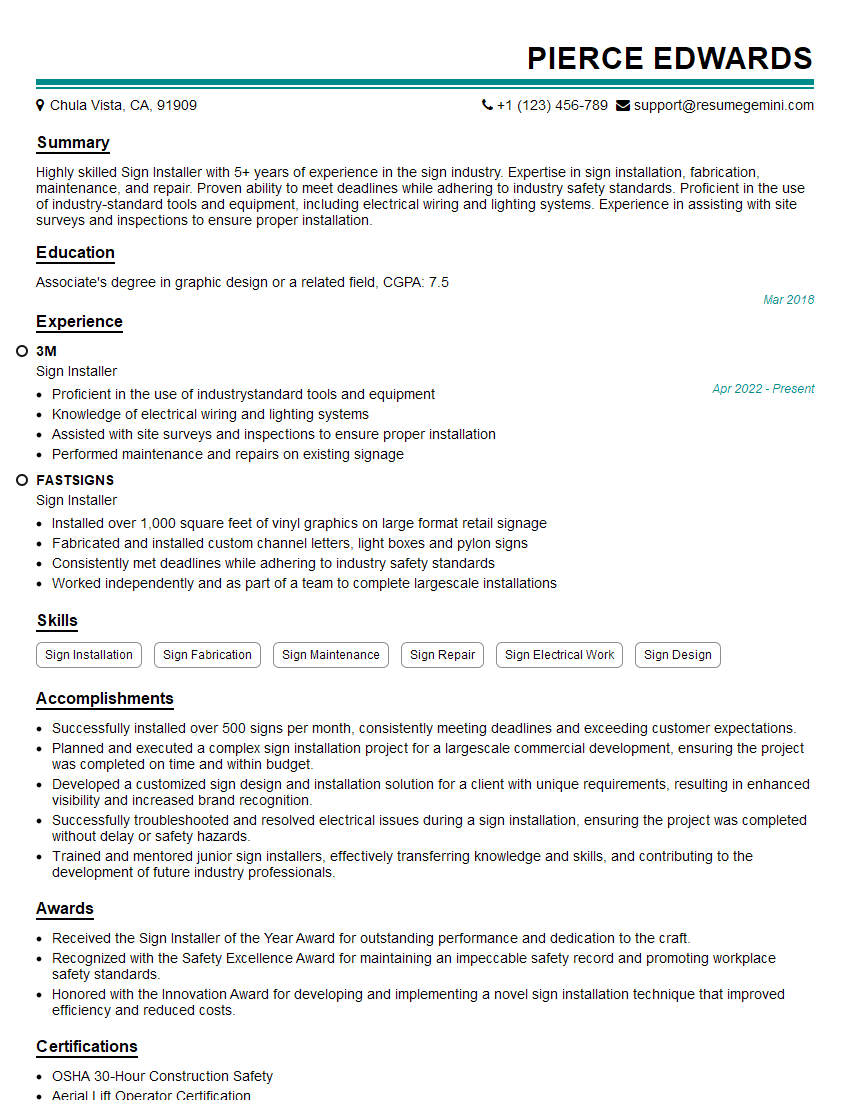
Mastering vinyl graphics application opens doors to exciting career opportunities in advertising, signage, vehicle wraps, and more. A strong understanding of these techniques is highly valued by employers. To significantly boost your job prospects, creating an ATS-friendly resume is crucial. ResumeGemini is a trusted resource to help you build a professional and impactful resume that gets noticed by recruiters. We offer examples of resumes tailored to the vinyl graphics application field to help you get started.

Explore more articles
Users Rating of Our Blogs
Share Your Experience
We value your feedback! Please rate our content and share your thoughts (optional).
What Readers Say About Our Blog
Very informative content, great job.
good