Interviews are opportunities to demonstrate your expertise, and this guide is here to help you shine. Explore the essential Violin Craftsmanship interview questions that employers frequently ask, paired with strategies for crafting responses that set you apart from the competition.
Questions Asked in Violin Craftsmanship Interview
Q 1. Describe your experience with different types of violin wood and their acoustic properties.
The choice of wood is paramount in violin making, directly impacting the instrument’s sound. Different woods possess unique acoustic properties, influencing resonance, tone color, and projection.
- Spruce, typically used for the top (soundboard), is prized for its lightness and flexibility, allowing for optimal vibrational response. The grain density and stiffness vary significantly depending on the region of origin – for example, Carpathian spruce is highly sought after for its exceptional acoustic qualities.
- Maple, commonly used for the back, ribs, and neck, contributes to the instrument’s overall strength and projection. The density and figure (the visual pattern of the wood grain) of the maple affect the sound; tighter, denser maple generally results in a brighter, more focused tone. European maple is a classic choice, renowned for its density and consistent tonewood qualities.
- Ebony is often used for the fingerboard and chinrest, contributing to their durability and aesthetic appeal. Its density helps to efficiently transmit vibrations from the strings.
I’ve personally worked with spruce from various regions, noting the subtle yet significant differences in their resonance. A top carved from high-quality Carpathian spruce can produce a breathtakingly rich and resonant sound compared to a similar top made from lower-grade spruce. This knowledge is crucial for selecting the appropriate wood for a specific sound profile the client desires.
Q 2. Explain the process of carving a violin top and back.
Carving the top and back of a violin is a meticulous process requiring years of experience and a keen understanding of wood behavior. It’s an art as much as a craft.
It begins with the careful preparation of the wood plates, working from a carefully-created outline. We use specialized carving tools to gradually thin and shape the plates, always keeping in mind the desired arching and thickness. The arching is not uniform; it’s carefully graduated to create specific vibrational patterns. This process often involves many hours of painstaking hand work, checking continually to ensure the correct thickness and arching are achieved.
Measuring the thickness and arching along various points is crucial, relying on tools like thickness gauges and arching templates. Throughout the process, we utilize a variety of techniques, such as using a specialized iron to shape and refine the curves. Mistakes at this stage are difficult, if not impossible, to correct, meaning the carver must be precise and patient.
The final stage involves careful attention to the edges of the plates, ensuring a smooth and consistent finish that complements the overall aesthetics and function of the instrument.
Q 3. What are the common issues encountered during violin restoration, and how do you address them?
Violin restoration presents a unique set of challenges. Common issues include cracks in the top or back, damage to the varnish, and loose joints.
- Cracks: These require careful assessment to determine their extent and cause. Small cracks can be repaired using traditional methods like injecting a carefully selected glue into the crack. Larger cracks may require more complex techniques, including adding new wood to reinforce the area.
- Varnish Damage: Scratches, chips, and other surface damage to the varnish can be addressed through various methods, from careful cleaning and touch-up work to more extensive refinishing. In more serious cases, the entire varnish layer might need to be removed and a new varnish layer carefully applied.
- Loose Joints: These are usually addressed by carefully regluing the components, ensuring proper alignment and clamping to prevent future issues. This might require careful cleaning of the surfaces to ensure proper adhesion.
One challenging case I remember involved a violin with a significant crack running along the top. It required not only meticulous repair of the crack but also painstaking analysis to determine its cause. It was a small but significant imperfection in the original wood that had worsened over time. The repair was successful, but it emphasizes the importance of careful inspection and a deep understanding of wood behavior in these procedures.
Q 4. How do you select and apply varnish to a violin?
Varnish selection and application are critical aspects of violin making, profoundly impacting the instrument’s sound and appearance. The varnish not only protects the wood but also enhances its acoustic properties.
Traditionally, varnish is made from natural resins, oils, and pigments, each having a unique influence on tone and appearance. I prefer using a spirit varnish, which offers a beautiful rich tone and is less prone to cracking than oil varnish. However, the selection depends on the desired acoustic and aesthetic properties.
The application process itself is meticulous. It typically involves multiple thin coats applied over several weeks or even months. Each coat must be carefully leveled and allowed to dry completely before the next is applied. The drying process must be carefully controlled for optimal results and avoid issues such as crazing (the formation of small cracks in the varnish). The final polishing brings out the beauty of the varnish and further enhances the instrument’s overall appearance. This is often done with pumice, rottenstone and other abrasives, carefully building up a smooth and even finish.
Q 5. What are the different types of violin bridges, and what are their characteristics?
Violin bridges are crucial for transmitting string vibrations to the body of the instrument, and there is a variety of bridge designs available, each with distinct characteristics.
- Standard Bridge: This is the most common design. The shape and dimensions of the feet are crucial for proper sound transmission.
- Aubert Bridge: Known for its highly responsive characteristics, these bridges typically have a slightly different shape to their feet and arch, enhancing sound and playability.
- Custom Bridges: These bridges can be made to specific specifications to meet the needs of a particular instrument or player, often crafted to address issues in sound projection or playing ease.
The height, shape and weight of the feet directly impact the instrument’s projection, tone, and response. The choice depends on the instrument’s characteristics and the player’s preferences. A bridge with a higher arch might project more sound, but too high could make the instrument difficult to play.
Q 6. Describe your experience with fitting and adjusting violin bridges.
Fitting and adjusting violin bridges requires a delicate touch and a keen ear. It is a critical step in setting up a violin for optimal playability and sound. I approach bridge fitting as a highly interactive process, fine-tuning the bridge through a series of adjustments based on the instrument’s response and the player’s feedback.
The process involves evaluating the bridge’s placement, height, and angle. A poorly fitted bridge can result in issues with intonation, tone, projection, and even playability. Minor adjustments in the bridge’s position, even millimeters, can have a profound impact on the instrument’s sound and responsiveness. I often start by looking at the bridge’s placement against the soundpost and make minor adjustments using a specialized bridge-shaping tool and sandpaper. This continues until an optimal sound and playing experience is achieved. The final check involves assessing the violin’s intonation across the entire range of the instrument.
I remember once working with a professional violinist who was having intonation issues. After carefully analyzing the bridge, I made some subtle adjustments to its height and angle, resulting in a significant improvement in the player’s ability to play perfectly in tune.
Q 7. How do you diagnose and repair cracks in a violin?
Diagnosing and repairing cracks in a violin is a complex process that requires experience and precision. The first step is a thorough inspection to determine the crack’s size, depth, and cause. Factors such as the age of the instrument, the type of wood, and the environment in which it’s stored all play a crucial role.
For smaller cracks, the crack is carefully cleaned, a suitable glue is applied (often hide glue), and the crack is then closed using clamps. For more significant cracks, additional support may be needed, such as applying cleats (small patches of wood) to reinforce the weakened area. The repair must be both structurally sound and aesthetically pleasing, blending seamlessly with the existing wood and finish.
In a particularly challenging case, a violin had a deep crack that had weakened the top near the soundpost. It required the construction of a new section of wood inside the crack for internal support. Then the external area was repaired, taking into consideration both the structural integrity and appearance. The successful repair highlighted the need for advanced techniques and deep understanding of wood mechanics.
Q 8. Explain the process of re-hair a violin bow.
Re-hairing a violin bow is a meticulous process requiring precision and patience. It involves replacing the worn-out horsehair with a new set. Think of it like replacing the strings on a guitar – essential for maintaining the bow’s functionality and sound quality.
- Preparing the Bow: First, the old hair is carefully removed using a specialized tool. The frog (the part of the bow holding the hair) is then disassembled.
- Preparing the Hair: High-quality, unblemished horsehair bundles are selected. The number of hairs depends on the bow’s size and desired tension.
- Inserting the Hair: The hair bundles are carefully inserted into the grooves of the frog, ensuring they’re evenly aligned. This requires a steady hand and attention to detail.
- Tightening and Shaping: The hair is then tightly wound and secured using the adjuster mechanism within the frog. The bow is then carefully shaped to ensure even tension across the entire length. This is the critical stage as it influences the bow’s playability significantly.
- Finishing Touches: The frog is reassembled, and any loose hairs are trimmed.
Improper re-hairing can lead to uneven tension, affecting the bow’s responsiveness and tone. Experience is key to mastering the nuances of this crucial task.
Q 9. What are the different types of soundposts, and how do you select the appropriate one?
The soundpost is a small, precisely shaped wooden dowel that sits inside the violin, transferring vibrations from the bridge to the back plate. It’s a crucial component for sound projection and tonal quality. There isn’t a wide variety of ‘types’ of soundposts, but rather variations in wood species, size, and shape. However, the choice is crucial.
- Wood Type: Spruce is most commonly used for its stiffness and responsiveness, but other woods like maple might be selected based on the instrument’s tonal characteristics. The grain direction is also critical – ideally, it should run parallel to the soundpost’s length.
- Size and Shape: Soundposts are delicately crafted with a slight taper. The precise dimensions influence the instrument’s response and projection. A slightly larger soundpost can create a richer tone but might also increase the risk of damage. Smaller ones might reduce the volume. The shape is often slightly curved to better distribute the vibrations.
- Selection: The soundpost’s selection isn’t based on a strict formula but on experience and careful listening. I often start with a soundpost of a standard size and then experiment with slight adjustments, evaluating the changes in tone and projection. The goal is to find the optimal soundpost for that particular instrument, maximizing its potential. Using a digital soundpost meter can aid in measuring the effect.
Choosing the wrong soundpost can dramatically impact the violin’s sound, leading to a dull, muffled tone or even damage to the instrument if it’s too large.
Q 10. How do you assess the playability and adjust the setup of a violin?
Assessing a violin’s playability involves evaluating several key aspects – it’s like giving the instrument a thorough physical examination.
- String Height (Action): Too high, and it’s difficult to press down; too low, and the strings may buzz against the fingerboard. We adjust the bridge’s height to find the sweet spot.
- Bridge Position and Alignment: The bridge’s placement is crucial for intonation and sound. It must be centered and perpendicular to the strings.
- Neck Angle and Set-up: The angle of the neck affects the playability and intonation. If the neck is too straight or too angled, it could be problematic.
- Fingerboard Condition: A worn or uneven fingerboard will hinder playing comfort and intonation. We carefully level and polish it as required.
- Sound Quality: We analyze tone, resonance, projection, and overall sound quality. This also involves fine-tuning the soundpost as necessary.
Adjusting the setup involves delicate changes to the bridge height, positioning, and string tension, to achieve optimal playability and sound.
Q 11. What are your methods for maintaining the humidity and temperature of your workshop?
Maintaining a stable humidity and temperature is crucial for preserving violins and bows. Wood is highly susceptible to changes in environment, causing warping, cracks, and tonal alterations. It’s like keeping a delicate piece of art in its ideal conditions.
- Climate Control System: My workshop uses a climate control system with humidifiers and dehumidifiers, maintaining a temperature around 70°F (21°C) and a humidity level of around 45-50%.
- Monitoring Devices: I use hygrometers and thermometers to monitor conditions consistently, ensuring they stay within the optimal range. I also use dedicated instruments to check specific violin internal humidity levels.
- Seasonal Adjustments: I adjust the system based on seasonal changes and ensure a gradual adjustment of temperature and humidity to avoid sudden changes. This is vital to preventing shock to the instruments.
- Air Circulation: Adequate airflow is essential, preventing mold growth and ensuring even humidity distribution. This often means making sure that temperature and humidity can be controlled individually in the workshop.
Maintaining these conditions requires constant vigilance. The payoff, however, is safeguarding the instruments from potentially damaging environmental fluctuations.
Q 12. Describe your experience working with various types of glue and adhesive materials used in violin repair.
Working with adhesives in violin repair requires a thorough understanding of their properties. Using the wrong glue can ruin an instrument! It’s like choosing the right screws for a piece of furniture.
- Hide Glue: This traditional animal-based glue is favored for its reversibility, allowing for easier repairs in the future. It’s ideal for many repairs, offering a strong, reliable bond.
- Synthetic Glues: Modern synthetic glues offer stronger bonds and faster drying times but are less reversible. These are valuable in specific situations and must be used with a complete understanding of the implications.
- Wood Adhesive: For specific applications, like minor cracks or inlay work, special wood adhesives are preferred. Their strengths vary, so choosing the proper one is critical.
I always meticulously select the glue best suited for each repair, carefully following the manufacturer’s instructions. Experience teaches you the best glue to use in various scenarios, to ensure a successful and durable repair.
Q 13. How do you identify and repair damage to violin finishes?
Repairing violin finishes requires a delicate touch and understanding of the finishing process. Think of it as restoring a masterpiece of art.
- Identifying Damage: We first identify the type and extent of the damage, from minor scratches to significant cracks or chips. This involves careful inspection under good lighting and sometimes magnification.
- Cleaning: The area is carefully cleaned to remove dirt, debris, and old varnish.
- Repairing Cracks/Chips: Minor cracks might be repaired using consolidants and appropriate glue, while more extensive damage might require filling with carefully matched materials followed by delicate retouching.
- Retouching: The repaired area requires color matching using pigments mixed with varnish to seamlessly blend with the existing finish. This is the most challenging part, requiring artistic skill and patience.
- Finishing: After the repair is completed, the area may be touched up with additional coats of varnish before a final polish.
Repairing finishes requires a combination of technical skill and artistic sensibility. A skilled luthier can make the repairs practically invisible.
Q 14. Explain the process of making a new sound post for a violin.
Making a new soundpost is a precise process requiring specialized tools and expertise. It is unlike simply creating a dowel.
- Wood Selection: A small piece of high-quality spruce is chosen, ideally with straight, even grain. The quality of the wood directly impacts the sound quality.
- Shaping: The wood is carefully shaped using specialized tools, such as a soundpost gouge and small files. The shape and taper must be precisely controlled to achieve a particular dimension and curvature.
- Sizing: Precise measurements are taken to ensure that the soundpost fits snugly within the violin’s interior, but not so tightly as to damage the wood. There are multiple ways to accomplish this; I use calibrated tools to create a precise fit.
- Testing: Before installation, I test the fit of the soundpost to ensure a proper fit and then proceed to install it carefully.
- Installation: A soundpost setter is used to place the soundpost accurately within the instrument. This is a crucial step, requiring a skilled hand and a practiced eye. An incorrectly placed soundpost can negatively impact the sound and even harm the violin.
Creating and installing a new soundpost demands extreme precision. Even a small deviation can significantly affect the instrument’s sound. It’s a crucial aspect of violin making and repair that requires much skill and practice.
Q 15. What is your experience with repairing fingerboards?
Fingerboard repair is a delicate process requiring precision and a steady hand. It often involves addressing cracks, leveling uneven surfaces, and refitting the fingerboard to the neck. I’ve repaired countless fingerboards over the years, ranging from minor cracks stabilized with hide glue and careful clamping to complete replacements, where I meticulously shape a new ebony fingerboard to the exact specifications of the violin’s neck.
One memorable case involved a valuable antique violin with a severely cracked fingerboard. After careful cleaning and assessment, I used a combination of hide glue and micro-cracking techniques to rejoin the pieces. Then, I painstakingly leveled and polished the surface to restore its original smooth playing feel. The final result was a near-invisible repair, preserving the integrity and value of the instrument.
Career Expert Tips:
- Ace those interviews! Prepare effectively by reviewing the Top 50 Most Common Interview Questions on ResumeGemini.
- Navigate your job search with confidence! Explore a wide range of Career Tips on ResumeGemini. Learn about common challenges and recommendations to overcome them.
- Craft the perfect resume! Master the Art of Resume Writing with ResumeGemini’s guide. Showcase your unique qualifications and achievements effectively.
- Don’t miss out on holiday savings! Build your dream resume with ResumeGemini’s ATS optimized templates.
Q 16. Describe your experience in repairing peg holes.
Repairing peg holes is crucial for ensuring tuning stability. Damage can range from slightly oversized holes, leading to loose pegs, to completely worn-out holes, rendering the pegs useless. My approach involves carefully assessing the damage. For slightly enlarged holes, I often use peg bushings, which are precisely sized inserts that restore the proper fit. For severely damaged holes, I might need to carefully fill and re-drill the hole, ensuring that the new hole is perfectly aligned and sized for the pegs.
I remember one instance where a student’s violin had a peg hole that had been significantly enlarged. By using a high-quality peg bushing made from a durable material, I successfully restored the peg’s stability. The student was thrilled to be able to tune their violin accurately again.
Q 17. How do you identify and address issues with violin pegs?
Identifying issues with violin pegs often begins with a visual inspection, checking for cracks, excessive wear, or improper fit within the peg holes. Testing the peg’s ability to hold tune is critical. Loose pegs, slipping pegs, or difficulty tuning are clear indicators of problems. Sometimes the issue isn’t the peg itself, but the peg hole. A visual inspection and possibly testing with a peg shaver tool can quickly diagnose any issues.
The solutions vary. Loose pegs often simply require a bit of peg compound to increase friction. If the peg is cracked, replacement is necessary, ensuring the new peg is the correct size and shape. Peg holes that are too large require repair as described above.
Q 18. What are the different types of violin strings, and what are their characteristics?
Violin strings are available in various materials, each impacting the tone and playability of the instrument. Common materials include:
- Steel: Offers a bright, clear tone, often used for solo playing and brighter orchestral sounds.
- Synthetic Core: These strings combine a synthetic core (often a nylon or composite material) with a metal winding. They offer a balance of warmth and brilliance, often preferred for their stability and even tone across the fingerboard.
- Gut: Historically popular, gut strings offer a warm, mellow tone, but they are less stable and require more frequent tuning.
- Gut Core with Metal Winding: Combines the warm character of gut with the greater projection and stability offered by a metal winding. They represent a blend of traditional sound with improved reliability.
The choice of string depends on the player’s preference, the type of music they play, and the characteristics of their violin.
Q 19. How do you assess the value of an antique violin?
Assessing the value of an antique violin is a complex process, requiring expertise in several areas. It’s not just about age but also about the maker, condition, and historical significance. Factors that significantly influence value include:
- Maker: A violin by a renowned maker like Stradivarius or Guarneri will command significantly higher prices than a less-known maker.
- Condition: The overall condition of the instrument including the wear and tear, previous repairs, and the presence of any cracks or damage will greatly affect its value. The integrity of the varnish is also critical.
- Provenance: A documented history, with records of ownership and any significant past events, significantly adds to the value.
- Tone and Playability: Even a well-preserved violin might not be highly valued if its tone and playability have been compromised over time.
Often, an expert appraisal by a qualified violin appraiser is necessary to determine the accurate value of an antique violin. This might also include a detailed examination, and consultation of historical records.
Q 20. What are the ethical considerations involved in restoring antique violins?
Ethical considerations in restoring antique violins are paramount. The primary goal is to preserve the instrument’s historical integrity while addressing necessary repairs. Avoidance of unnecessary interventions is important. Any repairs must be reversible, documented thoroughly, and use materials that are compatible with the original instrument, or are identifiable as additions.
For example, using modern glue to repair a crack might appear a sensible solution, however using original materials in keeping with the historic construction methods ensures future reversibility. Clearly documenting such interventions provides essential transparency and integrity.
Q 21. Describe your experience with different types of tools and equipment used in violin making and repair.
Violin making and repair require a diverse set of specialized tools. These include:
- Woodworking tools: Planes, chisels, gouges, saws (various types, including bow saws and coping saws), scrapers.
- Specialized violin-making tools: Violin making benches, bending irons, molds for shaping the violin body, specialized clamps.
- Measuring and marking tools: Calipers, marking gauges, rulers.
- Finishing tools: Brushes, sandpaper, polishing compounds, varnishes, and various finishing agents.
- Repair tools: Hide glue, clamps, specialized clamps for fingerboard repair, specialized peg shavers, peg reamers, and a range of small precision tools for repairs.
Modern technology has also impacted the field, with laser-based tools used for precise measuring, and advanced imaging techniques for non-invasive inspections. Throughout my career, I have accumulated and continually refine a collection of tools based on their effectiveness and reliability.
Q 22. How do you maintain your tools and equipment?
Maintaining my tools and equipment is paramount to my work. It’s not just about extending their lifespan; it’s about ensuring precision and safety. My process involves a multi-pronged approach.
Regular Cleaning: After each use, I meticulously clean my tools, removing any residual glue, varnish, or wood shavings. This prevents build-up and corrosion. I use specialized cleaning solutions for different materials, like a soft cloth and mineral oil for my plane blades and a dedicated brush for cleaning out gouges.
Sharpening and Honing: Sharpening is crucial for my chisels, gouges, and knives. I use honing stones and sharpening steels regularly to maintain a razor-sharp edge. A dull tool is not only inefficient but also dangerous. Think of it like a surgeon needing perfectly sharp scalpels.
Storage and Organization: Proper storage prevents damage and rust. Each tool has its designated place in my workshop, organized to maximize efficiency and prevent accidental damage. I use protective cases and covers for delicate instruments.
Periodic Maintenance: Beyond daily cleaning, I perform more thorough maintenance checks on my equipment. This includes oiling moving parts, tightening screws, and checking for any wear and tear that might need addressing. Preventive maintenance prevents costly repairs down the line. Think of it like regular car maintenance; you catch issues before they become major problems.
Q 23. Describe a challenging repair you completed and how you overcame the obstacles.
One of the most challenging repairs involved a 17th-century violin with a severely cracked top plate. The crack ran almost the entire length of the plate, and previous attempts at repair had only partially addressed the problem. The wood was extremely brittle and delicate, making it prone to further damage during the repair process.
Overcoming this obstacle required a meticulous and patient approach. First, I carefully cleaned the area around the crack, removing any loose debris or old glue. Then, I used a micro-spatula and extremely fine-grained wood filler to carefully fill the crack from the inside, ensuring no gaps remained. Next, I used a special clamp system designed to apply pressure along the crack without compromising the plate’s integrity. This involved careful measurements and pressure distribution across the whole top plate to prevent further stress.
Once the glue had set completely, I meticulously scraped and sanded the surface to achieve a seamless finish. Finally, I carefully applied varnish to match the existing patina, using techniques consistent with the age and style of the instrument. The repair not only successfully stabilized the crack but also restored the violin’s sound quality and aesthetic value, demonstrating the importance of attention to detail and precise techniques.
Q 24. Explain your understanding of violin acoustics and their impact on tone quality.
Violin acoustics is a fascinating field that directly influences the instrument’s tone quality. It’s a complex interplay of the wood’s properties, the shape and size of the body, and the interaction between the strings, bridge, soundpost, and air inside the instrument.
Wood Properties: The type of wood, its density, and its grain pattern significantly impact the vibration and resonance characteristics. For instance, spruce for the top plate and maple for the back offer the optimal combination of stiffness and flexibility for efficient sound transmission.
Body Shape and Size: The f-holes, the arching of the top and back plates, and the overall dimensions are carefully designed to optimize sound production and projection. Slight variations in these dimensions can dramatically affect the instrument’s tone.
Interaction of Components: The bridge acts as a critical link between the strings and the body, transmitting the vibrations to the soundboard. The soundpost, a small dowel inside the instrument, is precisely positioned to create optimal sound projection and stability. The air inside the violin resonates, further shaping the sound.
Understanding these factors is crucial for both instrument makers and repairers. A small change in any of these elements can significantly affect the tone – making it brighter, warmer, richer, or duller – illustrating the delicate balance involved in violin acoustics.
Q 25. What are your preferred methods for cleaning and polishing a violin?
Cleaning and polishing a violin requires a gentle touch and the right materials to prevent damage. I generally follow these steps:
Initial Cleaning: Begin with a soft, lint-free cloth to remove dust and loose debris. I often use a very slightly dampened cloth, careful not to get the wood excessively wet.
Polishing: For polishing, I typically use a specialized violin polish. I apply a small amount to the cloth and gently rub the surface in the direction of the wood grain. This helps maintain the finish and brings out the luster of the varnish.
Specific Areas: I pay particular attention to areas that accumulate more grime, such as the fingerboard and pegs. I often use a specialized cleaner for the fingerboard made for ebony or other fingerboard materials, again, being very gentle to avoid scratches.
Final Buffing: Finish by buffing the surface with a clean, dry cloth to remove any excess polish and restore a brilliant shine.
It’s crucial to avoid harsh chemicals and abrasive materials that can damage the varnish or the wood. Think of it like caring for a delicate piece of antique furniture; the process requires patience and careful attention.
Q 26. How do you ensure the structural integrity of a repaired violin?
Ensuring structural integrity after a repair is vital. My approach combines traditional techniques with modern understanding of wood mechanics.
Careful Assessment: I begin with a thorough assessment of the damage to determine the extent of the structural compromise. This often involves using specialized tools like wood moisture meters and ultrasonic testing devices to get a clear picture of the internal state of the wood.
Appropriate Repair Techniques: I choose repair techniques that best address the specific damage, often combining traditional methods like gluing and clamping with more modern approaches. For example, I might use carbon fiber reinforcement on particularly weakened areas or apply special bracing patterns to redistribute stress in the instrument.
Stress Testing: Once the repair is complete, I perform a series of stress tests to verify the structural integrity. This may involve gentle vibration testing or other methods to ensure the repair held up well.
Ongoing Monitoring: Even after the repair is considered successful, I often recommend regular check-ups to monitor the instrument’s stability and address any potential issues that may arise over time. Regular maintenance by the owner helps prolong the instrument’s lifespan.
Maintaining the structural integrity of a violin is paramount not only to the instrument’s longevity but also the safety of the player.
Q 27. How do you manage your time and prioritize tasks in a busy workshop?
Managing my time effectively in a busy workshop requires careful planning and prioritization. My approach combines several strategies.
Detailed Scheduling: I use a digital calendar to schedule all appointments and allocate time slots for specific tasks. This approach helps me visualize my workload and manage my time efficiently.
Task Prioritization: I prioritize urgent repairs and commissions that need prompt attention. This ensures that I fulfill my commitments and avoid delays that could affect my clients.
Batching Similar Tasks: I often group similar tasks together. For instance, I’ll dedicate a specific block of time to sanding, another to gluing, and so on. This minimizes the time switching between tasks, leading to greater efficiency.
Regular Breaks: I ensure I take regular breaks to prevent burnout and maintain focus. Short, frequent breaks are more effective than one long break.
This structured approach allows me to handle a considerable workload while maintaining the high quality of work I strive for. It’s like an orchestra conductor, carefully coordinating multiple tasks to create a harmonious outcome.
Q 28. What are your salary expectations?
My salary expectations are commensurate with my experience and expertise in violin craftsmanship. I am confident that my skills and dedication justify a competitive salary within the industry. A detailed discussion of my salary expectations can be addressed once the specific requirements of the position are outlined.
Key Topics to Learn for Violin Craftsmanship Interview
- Wood Selection and Preparation: Understanding the properties of different wood types (spruce, maple) and their impact on sound quality. Practical application includes identifying wood grain, assessing wood quality, and preparing wood for carving.
- Carving Techniques: Mastering the skills of carving the top, back, and ribs of the violin. This includes understanding the importance of accurate measurements, achieving proper arching, and creating a resonant chamber.
- Varnish Application and Finishing: Knowledge of traditional varnish recipes and application techniques, along with an understanding of how varnish affects the sound and appearance of the violin. Problem-solving includes troubleshooting issues like uneven varnish application or undesirable color.
- Assembly and Adjustment: Understanding the precise assembly process, including fitting the top and back, installing the neck, fingerboard, and bridge. Practical skills involve fine tuning the instrument for optimal playability and sound.
- Sound Post Placement and Adjustment: Understanding the critical role of the sound post in transferring vibrations and affecting the tone. Practical application involves adjusting the sound post for optimal resonance and addressing issues related to tonal imbalances.
- Repair and Restoration: Knowledge of common violin repairs, including crack repair, bridge replacement, and peg fitting. Problem-solving involves diagnosing the cause of damage and selecting appropriate repair techniques.
- Tool Knowledge and Maintenance: Familiarity with the specialized tools used in violin making and their proper maintenance. This includes understanding the functionality of each tool and its role in the craftsmanship process.
- Understanding Acoustic Principles: A foundational understanding of the physics of sound and how it relates to violin construction. This includes concepts like resonance, vibration modes, and the relationship between wood properties and sound production.
Next Steps
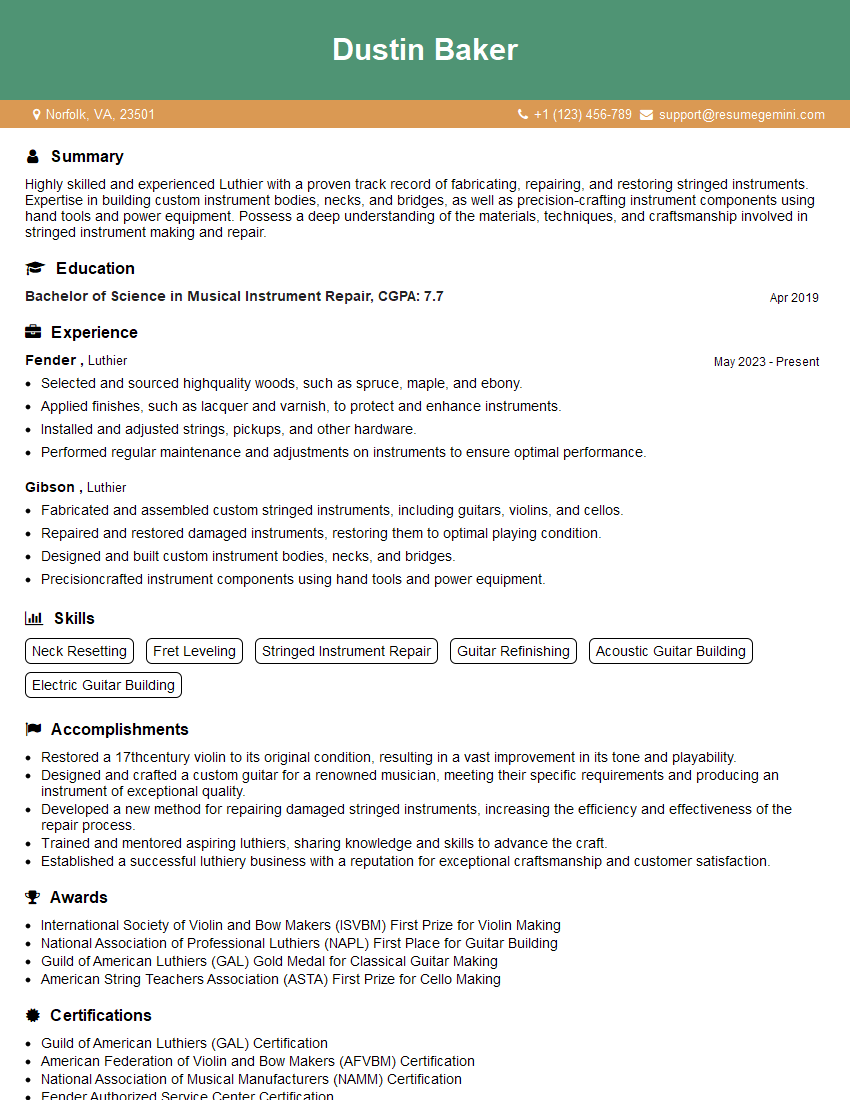
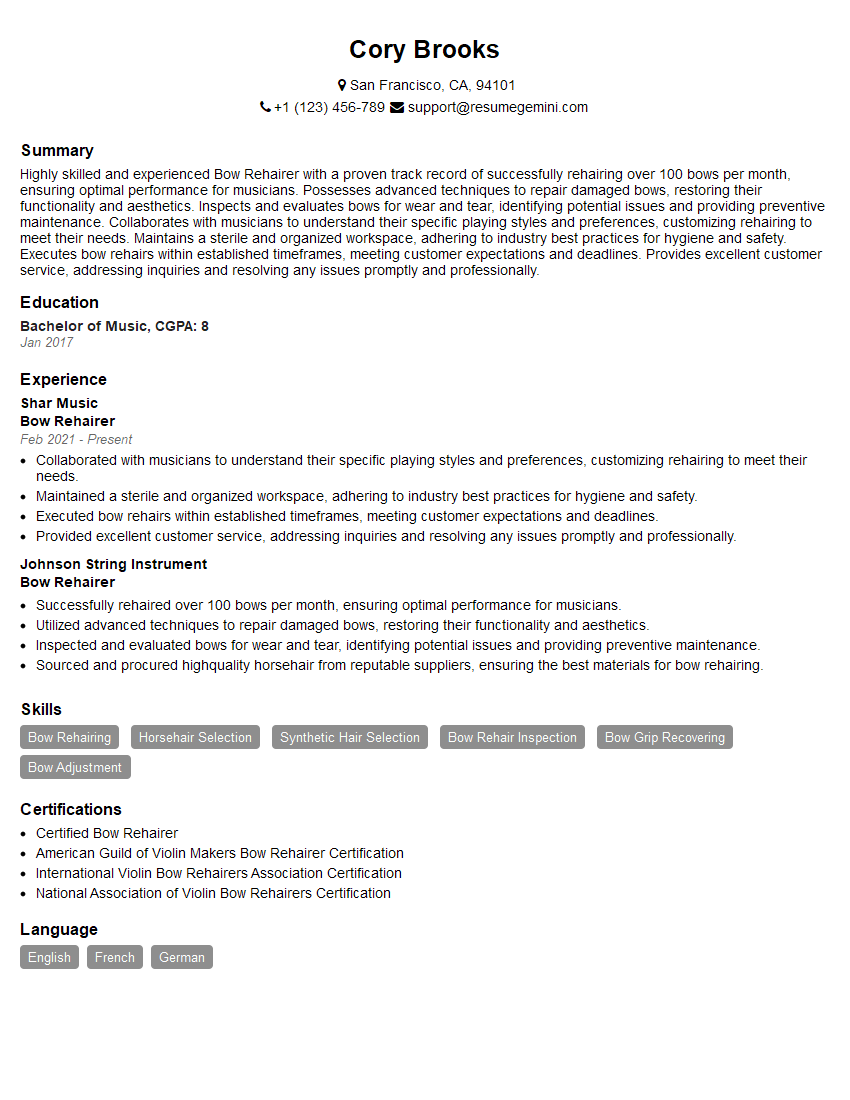
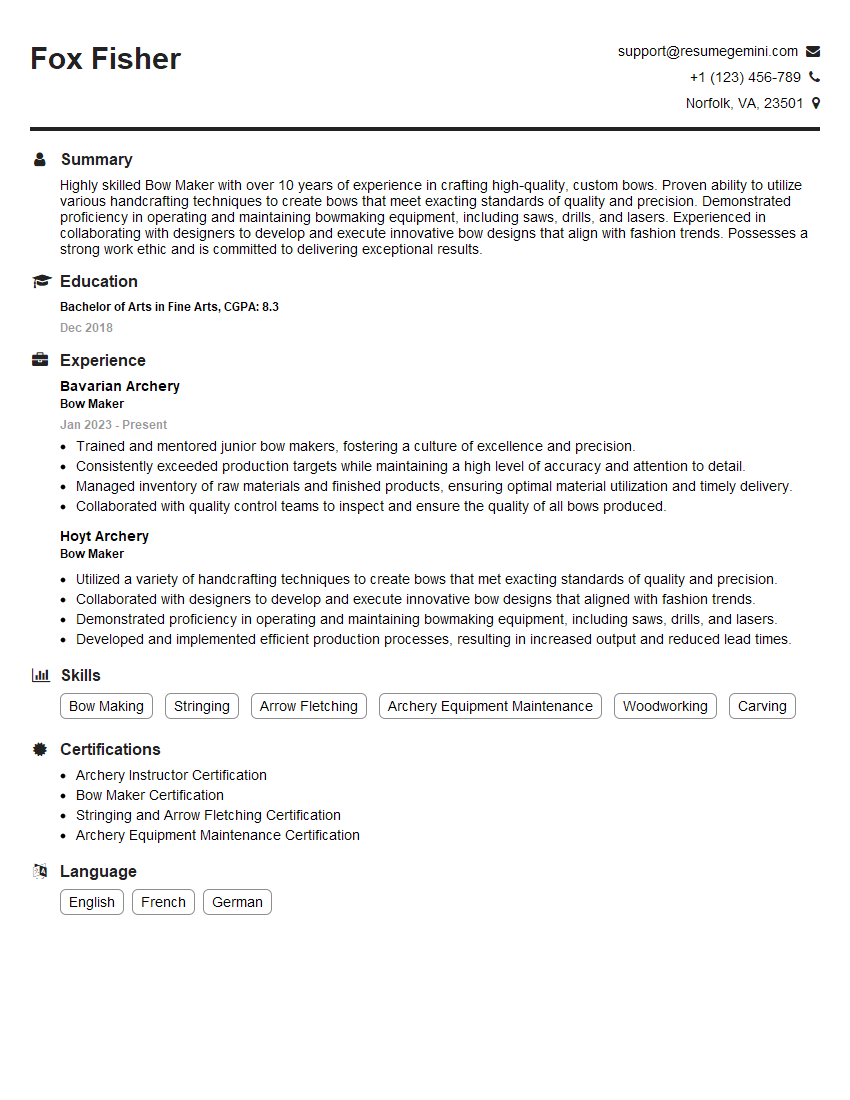
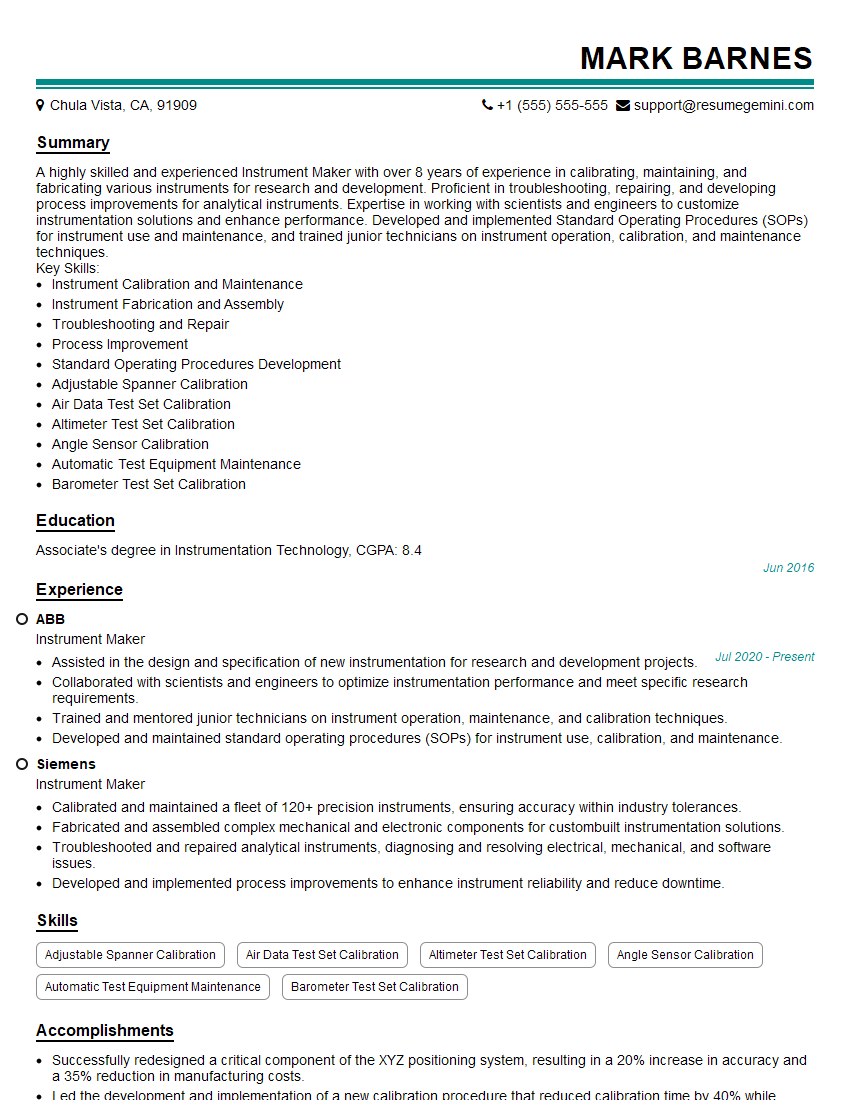
Mastering violin craftsmanship opens doors to a rewarding career, offering opportunities for creativity, precision, and contributing to the rich history of musical instrument making. To maximize your job prospects, creating an ATS-friendly resume is crucial. ResumeGemini is a trusted resource to help you build a professional and impactful resume that showcases your skills and experience effectively. Examples of resumes tailored to Violin Craftsmanship are available to guide you, ensuring your application stands out.
Explore more articles
Users Rating of Our Blogs
Share Your Experience
We value your feedback! Please rate our content and share your thoughts (optional).
What Readers Say About Our Blog
Very informative content, great job.
good