The right preparation can turn an interview into an opportunity to showcase your expertise. This guide to Visual merchandising and store layout planning interview questions is your ultimate resource, providing key insights and tips to help you ace your responses and stand out as a top candidate.
Questions Asked in Visual merchandising and store layout planning Interview
Q 1. Describe your experience creating visually appealing and effective store displays.
Creating visually appealing and effective store displays involves a blend of art and science. It’s about understanding your target audience, the brand’s story, and using visual elements to communicate a compelling message that drives sales. My approach focuses on several key areas:
- Understanding the product: Before even thinking about displays, I deeply understand the product’s features, benefits, and target customer. This informs every design decision.
- Theme and storytelling: I create a cohesive theme that tells a story around the product. This could be a seasonal theme, a lifestyle theme showcasing how the product fits into the customer’s life, or a theme highlighting specific product benefits.
- Color psychology and visual hierarchy: I leverage color psychology to evoke the desired emotions and guide the customer’s eye. For example, warm colors like oranges and reds are often associated with energy and excitement, while cool colors like blues and greens can create a calming and relaxing atmosphere. Visual hierarchy uses size, placement, and lighting to direct attention to key products or promotions.
- Effective use of space and props: Displays must be visually balanced and not overcrowded. Props and accessories should enhance the product, not distract from it. I often use a variety of textures and heights to create visual interest.
- Maintaining consistency: Consistency across all displays is key to reinforcing the brand identity. This includes consistent use of colors, fonts, and visual elements across different sections of the store.
For example, for a high-end jewelry store, I might use sleek, minimalist displays with subtle lighting to highlight the elegance of the pieces. In contrast, a children’s toy store might employ bright colors, playful props, and interactive elements to engage younger customers.
Q 2. Explain your process for designing a store layout that optimizes customer flow and sales.
Designing a store layout that optimizes customer flow and sales is a strategic process. It’s about understanding how customers naturally move through a space and strategically placing products and displays to maximize their exposure to merchandise. My process typically involves these steps:
- Analyzing the space: I start by thoroughly analyzing the store’s dimensions, entrances, exits, and any existing architectural features. I also consider factors like natural light and potential traffic bottlenecks.
- Defining customer journey: I map out the ideal customer journey, considering how customers typically enter the store, navigate through different sections, and eventually reach the checkout. This helps identify strategic locations for high-demand items and promotional displays.
- Strategic product placement: High-margin or impulse-buy items are placed in high-traffic areas, while essential items are located conveniently. I often use the “Decompression Zone” concept, acknowledging that customers need space to adjust to the store environment upon entry.
- Creating visual pathways: I use visual cues like lighting, signage, and flooring to guide customers through the store and encourage them to explore different sections. Creating clear sightlines prevents confusion and encourages exploration.
- Testing and refinement: Once the layout is implemented, I closely monitor customer flow and sales data. This helps identify areas for improvement and optimize the layout over time.
For example, I might place impulse buy items near the checkout counter or position seasonal displays in high-traffic zones to maximize visibility and sales.
Q 3. How do you incorporate brand identity and messaging into your visual merchandising strategies?
Incorporating brand identity and messaging into visual merchandising is crucial for creating a cohesive and memorable customer experience. It’s about translating the brand’s personality, values, and story into a visual language that resonates with the target audience. I achieve this by:
- Understanding the brand’s visual identity: I thoroughly research the brand’s logo, color palette, typography, and overall aesthetic. This forms the foundation of the visual merchandising strategy.
- Developing a visual vocabulary: I create a consistent visual vocabulary using the brand’s elements to create a unified look and feel throughout the store. This includes consistent signage, displays, and packaging.
- Storytelling through displays: I use displays to communicate the brand’s story and values. This might involve highlighting the brand’s history, manufacturing process, or commitment to sustainability. It’s crucial that each display complements and enhances the overall brand narrative.
- Maintaining brand consistency across all touchpoints: Visual merchandising should align with the brand’s online presence, marketing materials, and other customer touchpoints to create a consistent and memorable brand experience.
For instance, a sustainable clothing brand might use natural materials in its displays, highlight ethical sourcing practices, and employ earthy color palettes that reinforce its commitment to environmental responsibility.
Q 4. What software programs are you proficient in for visual merchandising and store planning?
Proficiency in relevant software is essential for effective visual merchandising and store planning. I am proficient in several programs, including:
- SketchUp: For creating 3D models of store layouts and displays, allowing for detailed planning and visualization before implementation.
- Adobe Creative Suite (Photoshop, Illustrator, InDesign): For creating marketing materials, designing graphics for displays, and producing high-quality images for online and print use.
- Planogram Software (e.g., JDA, Spaceman): For creating detailed planograms—visual representations of product placement within a store—that optimize shelf space and sales. This allows for precise forecasting and inventory management.
- Microsoft Office Suite (Excel, PowerPoint): For data analysis, creating presentations, and managing project documentation.
The use of these tools allows for collaborative design, accurate modeling, and efficient communication of plans to stakeholders.
Q 5. How do you measure the success of your visual merchandising efforts?
Measuring the success of visual merchandising efforts requires a multi-faceted approach. I utilize several key performance indicators (KPIs) to assess effectiveness:
- Sales data: Tracking sales figures before and after implementing new displays allows for direct measurement of impact. Analyzing sales data for specific products within different display areas helps pinpoint effective strategies.
- Conversion rates: This measures the percentage of customers who make a purchase after browsing specific displays. A higher conversion rate indicates effective visual merchandising.
- Customer feedback: Collecting customer feedback through surveys, focus groups, or social media monitoring can provide valuable insights into customer perceptions and preferences. This qualitative data supplements quantitative sales figures.
- Foot traffic analysis: Tracking customer traffic flow using heatmaps or other analytics tools helps identify areas of high and low engagement and inform future display adjustments.
- Inventory turnover: Monitoring inventory turnover rates for products featured in displays provides insights into product sell-through and helps optimize stock levels.
By tracking these KPIs, I can identify what’s working and what needs improvement, leading to data-driven refinement of future visual merchandising strategies.
Q 6. Describe a time you had to adapt a visual merchandising plan due to unexpected challenges.
During a recent project for a new clothing store launch, we experienced an unexpected delay in receiving key display fixtures. Our initial plan relied heavily on these fixtures to showcase the new collection effectively. To adapt, we had to quickly brainstorm alternative solutions:
- Repurposing existing resources: We used existing shelving and mannequins in creative ways to showcase the collection until the new fixtures arrived. We created temporary displays that focused on highlighting key features of the clothing items.
- Prioritizing key items: We prioritized showcasing the most important pieces of the collection, strategically placing them in prominent locations using the available resources. This maintained visual appeal even with limited display elements.
- Enhancing in-store experience: We temporarily increased the use of in-store signage and digital displays to showcase the collection, compensating for the delayed fixture installation.
- Open communication: Maintaining clear communication with the store management team and the marketing team was crucial to keep everyone informed and manage expectations.
While the initial delay was frustrating, the quick adaptation and creative problem-solving resulted in a successful launch, minimizing disruption to the overall store experience.
Q 7. How do you stay up-to-date with current visual merchandising trends and best practices?
Staying up-to-date with visual merchandising trends and best practices requires a proactive approach. My strategies include:
- Industry publications and blogs: I regularly read industry publications, blogs, and online resources focused on visual merchandising, retail design, and marketing. This keeps me abreast of current trends and new techniques.
- Trade shows and conferences: Attending trade shows and conferences allows for networking with other professionals and observing firsthand the latest trends and technologies in visual merchandising.
- Competitor analysis: Regularly analyzing competitors’ store layouts and visual merchandising strategies provides valuable insights into best practices and emerging trends in the industry.
- Social media and online communities: Following relevant influencers, professionals, and brands on social media platforms like Instagram and Pinterest exposes me to the latest visual merchandising styles and ideas.
- Continuing education: I actively seek out workshops, seminars, and online courses to refine my skills and deepen my knowledge in the field.
This multi-faceted approach ensures that my visual merchandising strategies remain current, relevant, and effective.
Q 8. Explain your understanding of different retail store formats and their impact on visual merchandising.
Retail store formats significantly influence visual merchandising strategies. A large department store, for instance, needs a vastly different approach compared to a small boutique or an online retailer. Understanding the format dictates space allocation, product presentation, and overall brand storytelling.
- Department Stores: These require zoning strategies to guide customer flow, often using distinct departments with unique visual identities. Visual merchandising focuses on creating impactful displays within these zones, balancing brand consistency with departmental variations.
- Boutiques: These smaller spaces allow for a more curated and intimate atmosphere. Visual merchandising emphasizes carefully selected displays and a cohesive narrative, creating a luxurious or unique shopping experience depending on the brand.
- Specialty Stores: Focus on a particular product category (e.g., electronics, books). Visual merchandising centers on product expertise, using detailed information, interactive elements, and potentially specialized fixtures to showcase the product’s features and benefits.
- Online Retailers: While lacking physical space, online stores leverage high-quality images, videos, 360° views, and interactive elements to create immersive visual experiences that build brand connection and drive sales. Detailed product descriptions and customer reviews are critical elements of visual merchandising in this format.
In essence, tailoring the visual merchandising approach to the specific retail format is crucial for maximizing its impact and aligning it with customer expectations.
Q 9. How do you balance visual appeal with practical considerations like product placement and inventory management?
Balancing visual appeal with practicality requires careful planning and a deep understanding of both aesthetics and store operations. It’s a constant negotiation – a beautiful display is useless if it’s inaccessible or hinders efficient inventory management.
For example, when designing a display for a new product launch, I would consider:
- Product Placement: High-demand items should be strategically located for easy access, ideally at eye level and in high-traffic zones. New products might be placed prominently to draw attention but still allow for easy replenishment.
- Inventory Management: Displays need to be designed so that restocking is efficient and doesn’t disrupt the visual flow. This often involves using modular shelving or fixtures that allow for quick adjustments. Backstock storage solutions should also be considered to maintain efficient stock levels without cluttering the sales floor.
- Visual Hierarchy: Using lighting, color, signage, and props to create a visually appealing narrative that naturally guides the customer through the space, leading them to key products and maximizing their dwell time.
- Traffic Flow: Displays should not impede customer movement, creating bottlenecks or making navigation difficult. This involves strategic placement of fixtures and understanding typical customer pathways.
This balance is achieved through thorough planning, detailed floor plans, and collaboration with store staff who understand the daily operational realities.
Q 10. Describe your experience working with diverse teams, including designers, buyers, and store staff.
My experience working with diverse teams has been fundamental to my success. Effective visual merchandising is a collaborative process, relying on input from various stakeholders.
- Designers: Collaboration with designers ensures alignment between the visual merchandising strategy and the brand’s overall aesthetic. We might discuss color palettes, material choices, and the overall mood the display should evoke.
- Buyers: Working closely with buyers is essential to understand the product assortment, sales targets, and promotional activities. This ensures that the visual merchandising plan effectively supports sales goals.
- Store Staff: Direct input from store staff who interact with customers daily is invaluable. They offer insights into customer behavior, product popularity, and practical issues regarding display functionality and maintenance.
I typically facilitate collaborative meetings and utilize project management tools to ensure seamless communication and efficient workflow. Active listening, clear communication, and valuing diverse perspectives are crucial to successful team collaboration.
Q 11. How do you manage budgets and timelines for visual merchandising projects?
Budget management and adherence to timelines are critical aspects of visual merchandising. I typically employ a phased approach.
- Budget Allocation: I start with a detailed budget breakdown, including costs for materials, labor, fabrication, and any outsourced services. I always explore cost-effective alternatives while maintaining quality.
- Project Timeline: I create a realistic timeline with clear milestones, assigning responsibilities and deadlines. This involves considering lead times for materials, fabrication, and installation. Regular progress reviews ensure we stay on track.
- Contingency Planning: Unforeseen delays or cost overruns are common. Building a contingency buffer into the budget and timeline allows for flexibility in case of unexpected issues.
- Reporting & Tracking: I maintain detailed records of all expenditures and progress, enabling accurate reporting and informed decision-making throughout the project lifecycle.
My approach is based on meticulous planning, proactive communication, and a flexible mindset to accommodate evolving project needs.
Q 12. How do you incorporate seasonal or promotional elements into your visual merchandising displays?
Seasonal and promotional elements are essential for keeping visual merchandising fresh and engaging. These add dynamism and tie into wider marketing campaigns.
I typically integrate seasonal themes by:
- Color Palettes: Shifting color schemes to reflect the season – warm oranges and reds for autumn, cool blues and greens for winter, etc.
- Props & Materials: Incorporating seasonal materials like pumpkins for autumn or snowflakes for winter into displays. Using textures and materials that evoke the season’s mood.
- Product Focus: Highlighting seasonal or promotional products through dedicated displays, window features, and in-store signage.
- Thematic Storytelling: Creating displays that tell a narrative linked to the season or promotion. For example, a winter display might focus on the theme of ‘cozy nights in’ featuring related products.
By strategically blending seasonal and promotional elements, we can create captivating and relevant displays that resonate with the current context and drive sales.
Q 13. What are some key considerations for designing window displays that attract customers?
Window displays serve as the storefront’s silent ambassador, attracting customers and creating a first impression. Key considerations for designing impactful displays include:
- Theme & Storytelling: A cohesive theme or narrative creates a stronger impact than a collection of unrelated items. The story should be easily understood and relevant to the target audience.
- Visual Hierarchy: Guiding the eye through the display, starting with a focal point and leading to secondary elements. This might involve using lighting, color, and size to create visual interest and emphasize key products.
- Lighting: Effective lighting is crucial to showcase products attractively and enhance the overall mood. Different lighting techniques can be used to highlight textures, colors, and shapes.
- Signage: Clear and concise signage can highlight promotions, prices, or key selling points. It should complement the overall aesthetic of the display without overwhelming it.
- Regular Updates: Regularly changing window displays keeps them fresh and exciting, preventing them from becoming stale and losing their effectiveness.
A well-designed window display transforms a storefront into a captivating showcase, attracting passersby and enticing them to enter the store.
Q 14. Describe your experience with creating digital or interactive visual merchandising elements.
I have experience integrating digital and interactive elements into visual merchandising. This extends the reach and engagement of displays significantly.
- Digital Signage: Using screens to display dynamic content like videos, animations, and interactive advertisements. This allows for more frequent updates and flexibility in messaging.
- Interactive Displays: Incorporating touchscreens or augmented reality (AR) experiences to engage customers and provide more information about products. For example, an AR experience might allow customers to virtually try on clothes or visualize furniture in their homes.
- QR Codes: Integrating QR codes into physical displays that link to online product information, videos, or exclusive offers. This bridges the gap between physical and digital shopping experiences.
- Social Media Integration: Encouraging customers to share photos of displays on social media using branded hashtags to boost visibility and engagement.
The integration of these elements not only makes the displays more engaging but also allows for data collection and performance analysis. Understanding what customers interact with helps refine future visual merchandising strategies.
Q 15. How do you ensure consistency in visual merchandising across multiple store locations?
Maintaining visual merchandising consistency across multiple store locations is crucial for brand identity and customer experience. It requires a multifaceted approach focusing on clear communication, standardized guidelines, and regular monitoring.
Detailed Style Guides: We create comprehensive style guides, including photography, color palettes, font styles, and display techniques. These guides serve as a central repository of visual standards, ensuring every store adheres to the same aesthetic.
Regular Training and Communication: Visual merchandising teams in each location receive thorough training on these guidelines. Regular meetings, webinars, and shared online resources ensure consistent understanding and address any emerging questions or challenges.
Visual Merchandising Audits: Regular store visits or virtual audits are conducted to assess adherence to the guidelines and identify areas for improvement. This provides valuable feedback and allows for proactive adjustments to maintain consistency.
Technology and Digital Tools: Using digital planograms (discussed further in question 6), shared online libraries for images and assets, and collaborative project management software ensures everyone works with the same up-to-date materials. This is especially crucial for large chains.
For example, a clothing retailer might use a standardized mannequin pose and arrangement across all stores, with only seasonal clothing changes implemented according to the style guide.
Career Expert Tips:
- Ace those interviews! Prepare effectively by reviewing the Top 50 Most Common Interview Questions on ResumeGemini.
- Navigate your job search with confidence! Explore a wide range of Career Tips on ResumeGemini. Learn about common challenges and recommendations to overcome them.
- Craft the perfect resume! Master the Art of Resume Writing with ResumeGemini’s guide. Showcase your unique qualifications and achievements effectively.
- Don’t miss out on holiday savings! Build your dream resume with ResumeGemini’s ATS optimized templates.
Q 16. Explain your approach to creating a cohesive and engaging customer journey within a store.
Crafting a cohesive and engaging customer journey involves strategically guiding customers through the store to maximize their interaction with the brand and its products. This is achieved through thoughtful store layout, product placement, and signage.
Decompression Zone: The entrance area should be designed to allow customers to decompress and adjust to the store’s environment, avoiding immediately confronting them with products. A calming display or a clear pathway helps.
Power Walls and Feature Zones: Strategically place high-demand or new products in prominent areas—often the power walls visible from the entry—to capture attention. Feature zones, featuring a specific theme or product category, can be created to pique interest.
Visual Hierarchy: Using color, lighting, and signage, we create a visual hierarchy to guide customers’ eyes to key products and promotions. Higher-priced items might be placed at eye level, while impulse buys are placed at checkout.
Flow and Navigation: Store layout should encourage a natural flow through the store, ensuring customers see a wide range of products. Avoid dead ends or confusing pathways.
Checkout Experience: The checkout area offers a final opportunity to engage customers. Display related products or promotions to encourage additional purchases.
Imagine a bookstore: the decompression zone might feature comfortable seating and new releases, followed by sections organized by genre, with featured authors in prominent spots. Impulse buys like mugs and notebooks might be placed near the checkout.
Q 17. How do you handle feedback and criticism on your visual merchandising work?
Feedback is invaluable for improvement. I view criticism as an opportunity for growth and refinement. My approach involves:
Active Listening: Carefully listening to feedback from customers, store managers, and colleagues, understanding their perspective.
Data Analysis: Correlating feedback with sales data and other metrics to identify trends and assess the impact of visual merchandising changes.
Objective Assessment: Analyzing the criticism objectively, separating subjective opinions from actionable insights.
Iterative Improvement: Implementing changes based on the constructive feedback and monitoring the results to see if adjustments are necessary.
Documentation: Maintaining detailed records of feedback and implemented changes to track progress and identify recurring issues.
For example, if customer feedback indicates difficulty navigating a certain section, I’d review sales data for that area. If sales are low despite prominent placement, the display needs redesign or perhaps the product selection itself needs review.
Q 18. Describe your understanding of ergonomics and accessibility in store design and layout.
Ergonomics and accessibility are paramount in store design. They ensure a comfortable and inclusive shopping experience for all customers. This includes:
Accessible Pathways: Wide aisles, ramps, and appropriate signage for customers with mobility challenges.
Product Placement: Positioning frequently accessed items at easily reachable heights. Considering the needs of customers using wheelchairs or other mobility aids.
Clear Signage: Using clear, concise, and large-font signage, ensuring readability for customers with visual impairments.
Lighting: Providing adequate lighting to prevent glare and ensure visibility for all customers.
Rest Areas: Incorporating comfortable seating areas for customers who may need to rest.
Staff Training: Training staff to be aware of accessibility needs and to provide assistance when needed.
For instance, placing frequently used items at a comfortable height for both standing and seated customers ensures ease of access for all.
Q 19. How do you utilize data and analytics to inform your visual merchandising decisions?
Data and analytics are crucial for evidence-based visual merchandising. We use data to inform decisions on:
Product Placement: Analyzing sales data to identify best-selling items and their optimal placement for maximum visibility and sales.
Display Effectiveness: Tracking sales data in relation to specific displays to assess their impact on customer engagement.
Customer Behavior: Using heatmaps and other tracking technologies to understand how customers move through the store and identify areas for improvement.
Promotional Campaign Analysis: Measuring the success of promotional displays by analyzing sales data before, during, and after the campaign.
Example: A heatmap might reveal that customers tend to bypass a particular aisle. This data would inform adjustments to product placement or store layout to draw more traffic to that area.
Q 20. What is your experience with planograms and how do you utilize them in your work?
Planograms are schematic diagrams showing the placement of products on shelves or displays. They’re essential for maintaining consistency and maximizing shelf space.
Consistency: Planograms ensure that products are placed consistently across all store locations, optimizing product visibility and sales.
Space Optimization: They help maximize shelf space by optimizing product placement based on sales data, product size, and customer behavior.
Assortment Planning: Planograms are integral in assortment planning, determining the quantity and variety of products to stock.
Technology: Many retailers use digital planogram software, allowing for easy updates, collaboration, and analysis of planogram effectiveness.
For example, a grocery store might use planograms to ensure that the most popular cereals are placed at eye level, while less popular ones are strategically positioned lower down to encourage exploration.
Q 21. How do you incorporate lighting and other environmental factors into your visual merchandising plans?
Lighting and environmental factors are key components of effective visual merchandising. They significantly influence mood, product presentation, and customer experience.
Ambient Lighting: Overall store lighting sets the mood. Warm light creates a welcoming atmosphere, while cooler light might suit a modern aesthetic.
Accent Lighting: Highlighting specific products or areas using spotlights or track lighting draws attention and emphasizes key features.
Color Temperature: Different color temperatures (Kelvin) influence mood and product perception. Warm light makes colors appear richer; cool light makes them brighter.
Music and Scent: Music and scent can subtly influence customer mood and shopping behavior. Music selection should be appropriate for the target audience and store environment.
Signage and Graphics: Signage and graphics should be well-lit and positioned to maximize visibility and impact.
For example, a high-end jewelry store might use warm, dim lighting to showcase the sparkle of diamonds, while a sporting goods store might use brighter, cooler lighting to highlight product functionality.
Q 22. How would you approach designing a visual merchandising strategy for a new product launch?
Designing a visual merchandising strategy for a new product launch requires a multifaceted approach, focusing on maximizing product visibility and creating a compelling brand narrative. I begin by thoroughly understanding the product’s features, target audience, and brand identity. This informs the overall aesthetic and messaging.
Next, I develop a detailed plan encompassing:
- Strategic Placement: High-traffic areas receive prime placement, leveraging sightlines and customer flow. For example, new, eye-catching products might be strategically placed near checkout counters or at the end of aisles to create impulse buys.
- Compelling Displays: I design visually appealing displays that highlight the product’s key features and benefits using a mix of lighting, props, and signage. A demonstration area might be effective for tech products or interactive displays for clothing.
- Storytelling: The display should communicate a story about the product, its origins, and its value proposition. This resonates more deeply with the customer than simply showcasing the item.
- Consistent Branding: Maintaining brand consistency is vital. The visual merchandising should align seamlessly with existing branding guidelines, ensuring a unified and recognizable brand experience.
- Pre- and Post-Launch Activities: This includes pre-launch teaser campaigns in-store, and post-launch analysis to track performance and make adjustments as needed. For example, we might A/B test different display arrangements to optimize sales.
Finally, I implement and monitor the strategy, making adjustments based on sales data and customer feedback. Think of it like a theatrical production: we set the stage, cast the ‘characters’ (products), and direct the ‘performance’ (customer journey) to achieve maximum impact.
Q 23. Describe your experience with different display materials and fixtures.
My experience encompasses a wide range of display materials and fixtures. I’m proficient in using various materials like wood, metal, acrylic, and sustainable alternatives like bamboo and recycled cardboard. The choice depends on the brand aesthetic and product type.
For example, I’ve used sleek metal fixtures for a high-end tech brand to project a modern, sophisticated image, while opting for rustic wooden shelves for a natural skincare line to emphasize its organic ingredients. I’ve also incorporated digital displays, interactive kiosks, and even video screens to enhance engagement for appropriate product categories.
Fixture types I’ve worked with extensively include:
- Shelving units: These come in various styles – gondola shelving, wall shelves, and customized units – offering flexibility in product presentation.
- Display cases: Perfect for showcasing delicate or high-value items, offering protection and visual appeal.
- Mannequins and bust forms: Essential for apparel merchandising, allowing for dynamic and stylish presentations.
- Signage and graphics: Crucial for communicating product information, promotions, and brand messaging.
I understand the importance of selecting fixtures that are not only aesthetically pleasing but also functional, durable, and adaptable to changing product lines or promotional needs. I always consider factors like cost-effectiveness, ease of assembly and maintenance, and brand compatibility when choosing display materials and fixtures.
Q 24. How do you incorporate sustainability principles into your visual merchandising practices?
Sustainability is a core principle in my visual merchandising approach. I believe that creating beautiful and engaging displays shouldn’t come at the expense of the environment. My strategies incorporate several key elements:
- Sustainable Materials: I prioritize using recycled, reclaimed, or eco-friendly materials for displays and fixtures. This could include using bamboo, recycled cardboard, or repurposed wood pallets.
- Reduced Waste: I minimize waste by designing displays that can be easily disassembled and reused for future campaigns. This reduces the need for constant replacement and minimizes landfill waste.
- Energy-Efficient Lighting: I opt for energy-efficient LED lighting to illuminate displays, significantly reducing energy consumption and carbon footprint.
- Digital Displays: Where appropriate, I utilize digital displays to reduce the need for printed materials, minimizing paper usage.
- Local Sourcing: I try to source display materials and fixtures from local suppliers, reducing transportation costs and environmental impact.
- Collaborations: Working with sustainable material suppliers, and participating in industry initiatives dedicated to eco-friendly practices.
For example, in a recent project, I designed a display using reclaimed wood and recycled cardboard, showcasing the brand’s commitment to environmental responsibility while creating a unique and eye-catching presentation. The combination of aesthetic appeal and sustainable practices enhanced the brand image and resonated with environmentally conscious customers.
Q 25. How do you prioritize tasks and manage multiple projects simultaneously?
Managing multiple projects simultaneously in a fast-paced retail environment requires effective prioritization and time management. I utilize a combination of techniques to stay organized and meet deadlines.
My approach involves:
- Prioritization Matrix: I use a matrix to categorize projects based on urgency and importance. This allows me to focus on the most critical tasks first. For instance, a crucial in-store promotion for a new product would be prioritized over a long-term visual merchandising plan.
- Project Planning Tools: I rely on project management software to track tasks, deadlines, and progress. This could be tools like Trello, Asana, or Monday.com. These tools ensure accountability and provide a clear overview of all active projects.
- Time Blocking: I allocate specific time blocks for each project to ensure focused work. This minimizes distractions and improves efficiency. I schedule meetings and brainstorming sessions thoughtfully, avoiding unnecessary interruptions.
- Delegation: When feasible, I delegate tasks to team members, ensuring they have the necessary resources and support. This allows me to focus on higher-level tasks and strategic planning.
- Regular Check-ins: I conduct regular check-ins with team members to monitor progress, address any roadblocks, and make necessary adjustments to the plan.
By combining these methods, I can efficiently manage multiple projects, ensuring timely completion and high-quality results, even in a fast-paced retail setting.
Q 26. Explain your approach to problem-solving in a fast-paced retail environment.
Problem-solving in a fast-paced retail environment requires quick thinking, adaptability, and a collaborative spirit. My approach involves a structured process:
- Identify the Problem: Clearly define the problem. Gather data and information to fully understand its scope and impact.
- Analyze the Situation: Analyze the root cause of the problem, considering all contributing factors. This could include factors like customer feedback, sales data, or logistical constraints.
- Brainstorm Solutions: Generate multiple potential solutions, exploring both short-term and long-term strategies. Involve team members in the brainstorming process to leverage collective expertise.
- Evaluate Options: Evaluate the feasibility and potential impact of each solution, considering factors like cost, time, and resources.
- Implement the Solution: Choose the best solution and implement it effectively. Communicate the plan to the team and ensure everyone is aligned.
- Monitor and Evaluate: Monitor the results of the implemented solution, track its effectiveness, and make adjustments as needed. Use data to inform decisions and continuously improve future problem-solving.
For instance, if a key display fixture malfunctions close to a major sale, I’d quickly assess the damage, find an immediate replacement (even a temporary one) while coordinating repairs. This prevents sales disruption and keeps the store’s visual appeal intact.
Q 27. How do you adapt your visual merchandising strategies for different customer demographics?
Adapting visual merchandising strategies for different customer demographics is essential for maximizing engagement and sales. My approach focuses on understanding each target group’s preferences, needs, and shopping behaviors.
I consider factors such as:
- Age: Younger demographics may respond better to bold colors, trendy styles, and interactive displays. Older demographics might prefer a more classic, sophisticated aesthetic with clear, concise messaging.
- Lifestyle: A display targeting active individuals would differ significantly from one aimed at professionals or families. The choice of products, display style, and messaging would be tailored accordingly.
- Cultural Background: Consider cultural nuances and preferences when selecting colors, imagery, and even product placement. What is appealing to one culture may be inappropriate or ineffective for another.
- Income Level: Displays targeting high-income customers may feature luxury brands and premium materials, whereas displays aimed at budget-conscious consumers might emphasize value and affordability.
For example, I might use vibrant colors and playful graphics for a display targeting young adults, while opting for a more refined color palette and elegant presentation for a display aimed at older, affluent shoppers. This ensures that the visual merchandising resonates with each specific demographic, maximizing its effectiveness.
Q 28. Describe a time you had to creatively overcome a space constraint in a store layout.
In one instance, I was tasked with creating an engaging display for a new line of seasonal clothing in a small, oddly shaped boutique. The space was severely constrained, with limited floor space and unusual angles.
To overcome this, I employed a multi-level approach:
- Vertical Merchandising: I maximized vertical space by using tall, slender shelving units and hanging displays that extended to the ceiling. This added depth to the display without cluttering the floor.
- Strategic Lighting: Strategic use of lighting drew attention to key areas and highlighted the textures and colors of the clothing.
- Mirrors: Strategically placed mirrors created the illusion of more space while also allowing customers to see themselves in the clothing.
- Minimalist Approach: I opted for a minimalist approach, avoiding overcrowding the display. This allowed the clothing to breathe and showcased each garment’s details effectively.
The result was a visually appealing and functional display that successfully showcased the new clothing line despite the space constraints. It demonstrated that creativity and clever design can overcome significant limitations.
Key Topics to Learn for Visual Merchandising and Store Layout Planning Interviews
- Understanding Customer Journey & Shopping Behavior: Analyze how customers navigate a retail space and apply this knowledge to optimize product placement and visual displays.
- Space Planning & Design Principles: Mastering concepts like zoning, flow, and sightlines to create engaging and efficient store layouts. Practical application: Designing a layout that maximizes impulse buys while maintaining a clear path to key items.
- Visual Merchandising Techniques: Explore methods like color psychology, storytelling through displays, and the use of lighting and signage to enhance the shopping experience. Practical application: Creating a window display that effectively communicates a brand’s message and attracts customers.
- Planogram Development & Implementation: Learn how to create detailed planograms (shelf layouts) to optimize product visibility and sales. Practical application: Justifying your planogram choices based on sales data and customer behavior.
- Branding & Brand Identity in Store Design: Understand how to translate a brand’s visual identity into the physical store environment. Practical application: Creating a cohesive visual experience that reflects the brand’s values and target audience.
- Inventory Management & Stock Rotation: Learn how visual merchandising impacts inventory control and optimizing stock levels. Practical application: Strategically placing fast-moving items to improve sales velocity.
- Data Analysis & Performance Measurement: Understand how to track and analyze the effectiveness of visual merchandising strategies using key performance indicators (KPIs). Practical application: Using sales data to make informed decisions about display adjustments and product placement.
- Technology in Visual Merchandising: Explore the use of digital tools and technologies such as virtual reality (VR) and augmented reality (AR) in visual merchandising. Practical application: Discussing how technology can enhance the customer experience and streamline processes.
- Sustainability and Ethical Considerations: Understand the importance of incorporating sustainable practices and ethical considerations into visual merchandising and store layout planning. Practical application: Discussing the use of eco-friendly materials and minimizing waste.
Next Steps
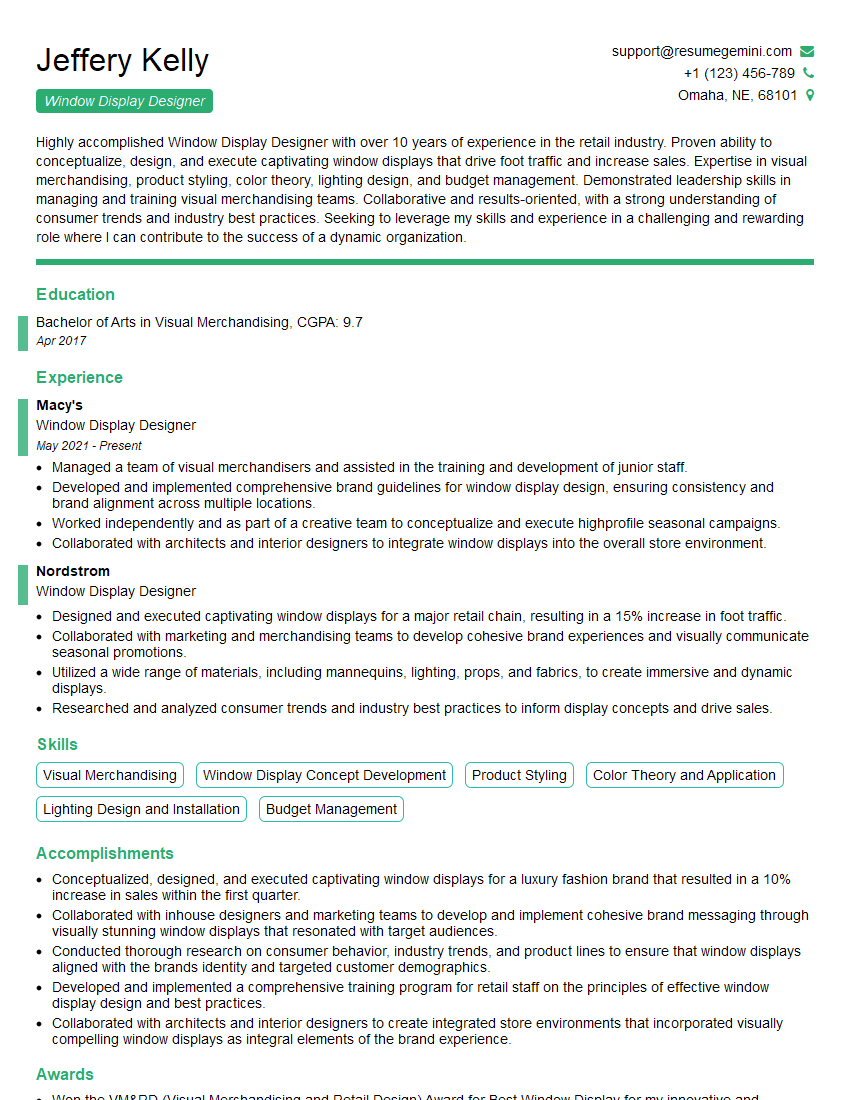
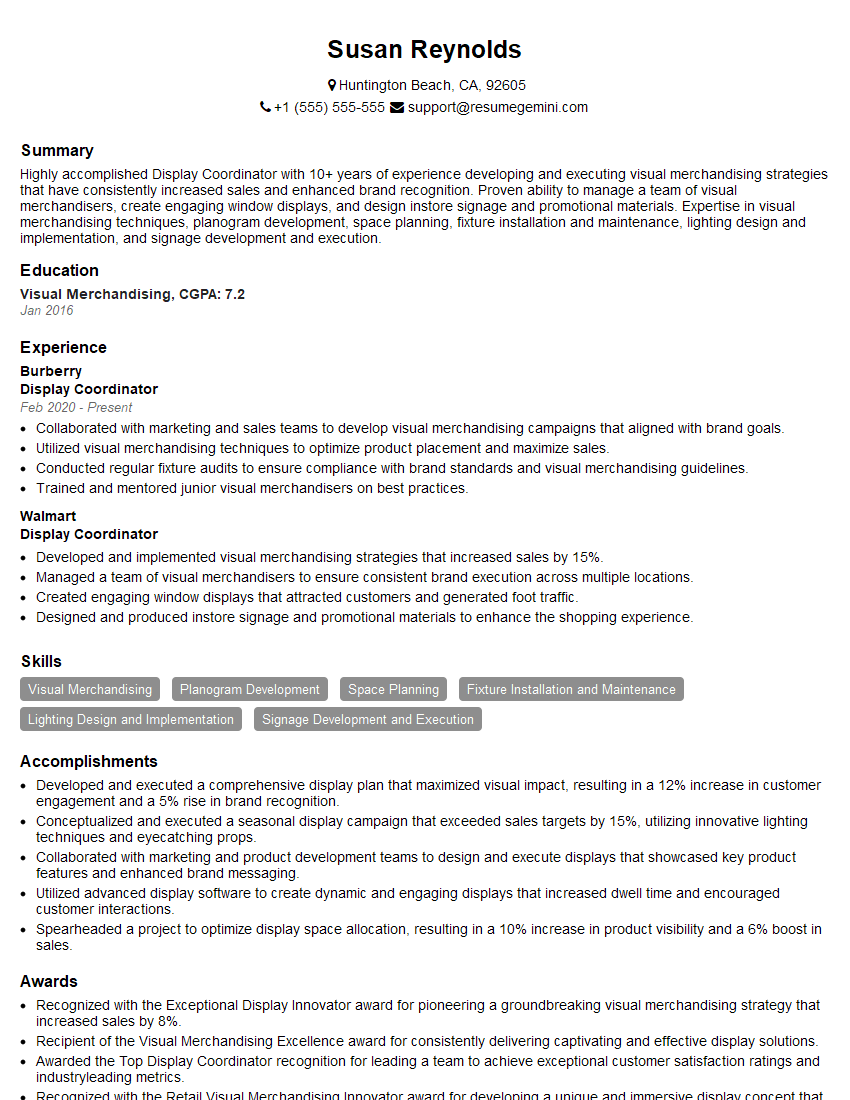
Mastering visual merchandising and store layout planning is crucial for career advancement in retail, offering opportunities for increased responsibility and higher earning potential. A strong, ATS-friendly resume is your key to unlocking these opportunities. ResumeGemini is a trusted resource that can help you craft a compelling resume highlighting your skills and experience. We provide examples of resumes tailored to visual merchandising and store layout planning to help guide you. Invest time in building a professional resume – it’s an investment in your future.
Explore more articles
Users Rating of Our Blogs
Share Your Experience
We value your feedback! Please rate our content and share your thoughts (optional).
What Readers Say About Our Blog
Attention music lovers!
Wow, All the best Sax Summer music !!!
Spotify: https://open.spotify.com/artist/6ShcdIT7rPVVaFEpgZQbUk
Apple Music: https://music.apple.com/fr/artist/jimmy-sax-black/1530501936
YouTube: https://music.youtube.com/browse/VLOLAK5uy_noClmC7abM6YpZsnySxRqt3LoalPf88No
Other Platforms and Free Downloads : https://fanlink.tv/jimmysaxblack
on google : https://www.google.com/search?q=22+AND+22+AND+22
on ChatGPT : https://chat.openai.com?q=who20jlJimmy20Black20Sax20Producer
Get back into the groove with Jimmy sax Black
Best regards,
Jimmy sax Black
www.jimmysaxblack.com
Hi I am a troller at The aquatic interview center and I suddenly went so fast in Roblox and it was gone when I reset.
Hi,
Business owners spend hours every week worrying about their website—or avoiding it because it feels overwhelming.
We’d like to take that off your plate:
$69/month. Everything handled.
Our team will:
Design a custom website—or completely overhaul your current one
Take care of hosting as an option
Handle edits and improvements—up to 60 minutes of work included every month
No setup fees, no annual commitments. Just a site that makes a strong first impression.
Find out if it’s right for you:
https://websolutionsgenius.com/awardwinningwebsites
Hello,
we currently offer a complimentary backlink and URL indexing test for search engine optimization professionals.
You can get complimentary indexing credits to test how link discovery works in practice.
No credit card is required and there is no recurring fee.
You can find details here:
https://wikipedia-backlinks.com/indexing/
Regards
NICE RESPONSE TO Q & A
hi
The aim of this message is regarding an unclaimed deposit of a deceased nationale that bears the same name as you. You are not relate to him as there are millions of people answering the names across around the world. But i will use my position to influence the release of the deposit to you for our mutual benefit.
Respond for full details and how to claim the deposit. This is 100% risk free. Send hello to my email id: lukachachibaialuka@gmail.com
Luka Chachibaialuka
Hey interviewgemini.com, just wanted to follow up on my last email.
We just launched Call the Monster, an parenting app that lets you summon friendly ‘monsters’ kids actually listen to.
We’re also running a giveaway for everyone who downloads the app. Since it’s brand new, there aren’t many users yet, which means you’ve got a much better chance of winning some great prizes.
You can check it out here: https://bit.ly/callamonsterapp
Or follow us on Instagram: https://www.instagram.com/callamonsterapp
Thanks,
Ryan
CEO – Call the Monster App
Hey interviewgemini.com, I saw your website and love your approach.
I just want this to look like spam email, but want to share something important to you. We just launched Call the Monster, a parenting app that lets you summon friendly ‘monsters’ kids actually listen to.
Parents are loving it for calming chaos before bedtime. Thought you might want to try it: https://bit.ly/callamonsterapp or just follow our fun monster lore on Instagram: https://www.instagram.com/callamonsterapp
Thanks,
Ryan
CEO – Call A Monster APP
To the interviewgemini.com Owner.
Dear interviewgemini.com Webmaster!
Hi interviewgemini.com Webmaster!
Dear interviewgemini.com Webmaster!
excellent
Hello,
We found issues with your domain’s email setup that may be sending your messages to spam or blocking them completely. InboxShield Mini shows you how to fix it in minutes — no tech skills required.
Scan your domain now for details: https://inboxshield-mini.com/
— Adam @ InboxShield Mini
support@inboxshield-mini.com
Reply STOP to unsubscribe
Hi, are you owner of interviewgemini.com? What if I told you I could help you find extra time in your schedule, reconnect with leads you didn’t even realize you missed, and bring in more “I want to work with you” conversations, without increasing your ad spend or hiring a full-time employee?
All with a flexible, budget-friendly service that could easily pay for itself. Sounds good?
Would it be nice to jump on a quick 10-minute call so I can show you exactly how we make this work?
Best,
Hapei
Marketing Director
Hey, I know you’re the owner of interviewgemini.com. I’ll be quick.
Fundraising for your business is tough and time-consuming. We make it easier by guaranteeing two private investor meetings each month, for six months. No demos, no pitch events – just direct introductions to active investors matched to your startup.
If youR17;re raising, this could help you build real momentum. Want me to send more info?
Hi, I represent an SEO company that specialises in getting you AI citations and higher rankings on Google. I’d like to offer you a 100% free SEO audit for your website. Would you be interested?
Hi, I represent an SEO company that specialises in getting you AI citations and higher rankings on Google. I’d like to offer you a 100% free SEO audit for your website. Would you be interested?