Preparation is the key to success in any interview. In this post, we’ll explore crucial Vocal Choreography interview questions and equip you with strategies to craft impactful answers. Whether you’re a beginner or a pro, these tips will elevate your preparation.
Questions Asked in Vocal Choreography Interview
Q 1. Explain your process for creating vocal arrangements.
Creating a vocal arrangement is like composing a tapestry with voices. My process begins with a deep understanding of the source material – whether it’s a pre-existing song or a newly composed piece. I analyze the melody, harmony, rhythm, and emotional intent. Then, I envision how different vocal parts can intertwine and complement each other to create a richer, more dynamic sound. This involves determining the overall texture – will it be lush and layered, or sparse and minimalist? I consider the range and capabilities of the singers involved, selecting harmonies that are both beautiful and achievable. I then meticulously craft each individual vocal line, paying close attention to phrasing, dynamics, and articulation. Finally, I refine the arrangement through repeated listening and revision, ensuring a cohesive and impactful final product. For example, for a pop song, I might layer background vocals with harmonies that accentuate the main melody, creating a fuller sound, while for a classical piece, I might focus on counterpoint and intricate interwoven vocal lines.
Q 2. How do you adapt vocal arrangements for different voice types and ranges?
Adapting vocal arrangements for different voice types and ranges requires flexibility and a deep understanding of vocal anatomy and technique. I start by analyzing the vocal range of each singer. Then, I transpose sections of the arrangement, or even entire parts, to suit individual capabilities. For example, a melody initially written for a high soprano might be lowered for an alto, while maintaining the harmonic structure. I might also simplify complex passages for less experienced singers, or add ornamentation for more skilled vocalists. This process often involves creative problem-solving. Sometimes, I need to rewrite sections entirely to accommodate the available vocal resources. In a recent project, I had a tenor and a baritone. The original arrangement was written for two sopranos. I had to carefully consider the timbre differences and re-harmonize the piece so that both the tenor and baritone could shine while maintaining the integrity of the original melody.
Q 3. Describe your experience with vocal percussion techniques.
Vocal percussion, or beatboxing, is a powerful tool in vocal arranging. My experience incorporates both the technical aspects of beatboxing – creating drum sounds, basslines, and rhythmic patterns with the voice – and its artistic application in musical contexts. I’ve used vocal percussion to create rhythmic foundations for songs, adding layers of texture and groove. I’ve also integrated it as a solo or ensemble element, creating unique sonic landscapes. For instance, I once worked on a project where vocal percussion formed the core rhythmic element, replacing traditional drum instrumentation. This allowed us to create a unique and intimate sound that was deeply connected to the vocal texture. The key is understanding how beatboxing can interact with other vocal parts, creating a balanced and dynamic soundscape.
Q 4. How do you maintain vocal health and prevent injury among singers?
Maintaining vocal health is paramount. I emphasize proper vocal technique throughout the rehearsal process, instructing singers on breathing exercises, posture, hydration, and vocal warm-ups and cool-downs. I encourage singers to listen to their bodies and take breaks when needed. I also work closely with vocal coaches and medical professionals, providing singers with resources and support for addressing any vocal issues that may arise. Furthermore, I limit rehearsal times to prevent vocal strain, and I always prioritize a positive and supportive rehearsal environment, reducing the psychological stress that can negatively impact vocal health. Think of it like training athletes: proper technique and rest are crucial to avoid injury.
Q 5. What software or tools do you use for vocal arrangement and editing?
My workflow relies on several software tools. I use Digital Audio Workstations (DAWs) such as Logic Pro X and Ableton Live for recording, editing, and mixing vocal arrangements. These programs allow me to create multi-track arrangements, manipulate individual vocal lines, and apply effects like reverb and delay to enhance the sonic quality. I also use notation software like Sibelius or Finale to create scores and parts for singers, especially for complex arrangements. Finally, audio editing software such as Audacity is helpful for quick tweaks and edits. The choice of software depends on the specific project and personal preference, but the overall goal is to create a polished and professional-sounding product.
Q 6. How do you incorporate vocal choreography with stage movement?
Integrating vocal choreography with stage movement is about creating a unified performance experience where the vocals and movements complement and enhance each other. I collaborate closely with choreographers to ensure the movements reflect the emotional content and musicality of the arrangement. For example, a crescendo might be accompanied by a gradual widening of the singers’ formations, while a quiet, intimate section might feature more contained and subtle movements. The choreography must be practical – allowing singers to breathe comfortably and execute their vocal parts effectively. The goal isn’t just to create visually appealing movements; it’s to create a holistic performance where the visuals tell a story alongside the music. I’ve found that careful planning and clear communication between the musical and choreographic teams are vital for success.
Q 7. Describe your approach to conducting rehearsals for a vocal ensemble.
Conducting rehearsals for a vocal ensemble requires a balance of precision and encouragement. I begin by setting clear goals for each rehearsal session, focusing on specific aspects of the arrangement. I use a combination of whole-group rehearsals and sectional work, allowing me to address individual and group challenges effectively. I provide constructive feedback, offering specific suggestions for improvement rather than generalized criticism. I foster a collaborative environment, encouraging singers to share their ideas and contribute to the creative process. I believe in creating a positive and supportive atmosphere where singers feel comfortable taking risks and experimenting. Regular breaks are crucial to maintain focus and energy levels. Regular listening sessions are part of the rehearsal process, where we listen critically as a group, identifying areas that need further work. It’s a collaborative refinement process where everyone feels valued.
Q 8. How do you address performance anxiety in singers?
Performance anxiety is a common challenge for singers, often manifesting as physical tension, vocal strain, or mental blocks. Addressing it requires a multifaceted approach. Firstly, I emphasize the importance of thorough preparation. Knowing your material inside and out significantly reduces anxiety. This includes not just mastering the vocal parts, but also understanding the emotional narrative of the song and connecting with it personally.
Secondly, I encourage mindfulness and breathing techniques. Deep, controlled breathing helps regulate the nervous system and reduces physical tension, which can directly impact vocal quality. We might practice progressive muscle relaxation exercises before performances to release built-up stress.
Thirdly, I focus on positive self-talk and visualization. Replacing negative thoughts with positive affirmations and visualizing a successful performance helps build confidence. Finally, I encourage singers to develop a pre-performance routine that includes warm-ups, mental preparation, and perhaps even listening to calming music to create a sense of calm and focus.
For instance, one singer I worked with struggled with stage fright. By incorporating visualization techniques, where she imagined herself confidently performing, and by focusing on breathing exercises to control her physical response, she significantly overcame her anxiety and delivered compelling performances.
Q 9. How do you handle conflicts or disagreements within a vocal group?
Conflicts within vocal groups are inevitable. My approach focuses on open communication and collaborative problem-solving. I create a safe space where group members feel comfortable expressing their concerns and opinions. I actively listen to each individual’s perspective, avoiding judgment and seeking to understand their underlying needs and motivations.
I facilitate constructive dialogue, helping members reframe disagreements as opportunities for growth. This often involves identifying shared goals and finding creative solutions that satisfy everyone’s needs. For instance, if there’s a conflict over vocal arrangements, I might suggest trying multiple arrangements, allowing everyone to input their ideas and helping them discover a version that blends individual preferences effectively.
If the conflict persists, I might suggest individual or group coaching sessions, focusing on communication skills and conflict resolution techniques. The goal is to foster mutual respect and understanding, transforming disagreements into opportunities for enhanced group cohesion and creativity. The ultimate aim is a collaborative environment where everyone feels valued and heard.
Q 10. Explain your experience working with diverse musical styles.
My experience spans a wide range of musical styles, from classical and opera to jazz, pop, and musical theatre. This versatility allows me to adapt my approach to meet the unique requirements of each style. In classical work, attention to detail, precision, and vocal technique is paramount. I focus on breath control, resonance, and accurate intonation.
With pop and jazz, the emphasis shifts towards expressiveness, groove, and improvisation. I work with singers to develop their stylistic authenticity, encouraging them to explore their unique vocal colors and interpretative skills. Working on a musical theatre piece demands a different skillset again; it needs storytelling, acting prowess, and a dynamic vocal range.
Adaptability is key. Whether I’m teaching vibrato techniques for classical singing or guiding a singer on adding syncopation to their rhythm in a pop song, my focus remains on ensuring that every artist is empowered to embody their personal artistic expression within the musical framework of the chosen style.
Q 11. How do you create a dynamic and engaging vocal performance?
Creating a dynamic and engaging vocal performance involves blending several key elements. Firstly, dynamic range is crucial. Varying volume, intensity, and tempo keeps the audience captivated. Think of a crescendo leading to a powerful climax followed by a quiet, intimate moment—this contrast builds excitement and emotional depth.
Secondly, vocal choreography is important. Strategic use of movement, facial expressions, and body language can enhance the delivery and amplify the emotional impact. This includes everything from subtle gestures to more elaborate dance moves, depending on the song’s style and the group’s capabilities. Thirdly, storytelling is integral. The performance should communicate the story of the song effectively.
Finally, creating a connection with the audience is key. Eye contact, smiles, and other forms of non-verbal communication can build a rapport that transcends the stage. One particularly memorable performance involved a gospel choir, and their infectious energy, movement, and interaction with the crowd were instrumental in creating a truly remarkable and engaging experience for all.
Q 12. What are your strategies for teaching complex vocal parts?
Teaching complex vocal parts requires a systematic and patient approach. I start by breaking down the music into smaller, manageable sections. This might involve dissecting complex harmonies or rhythms into simpler components. I then work with each singer individually, providing personalized guidance and support to overcome specific challenges.
I use a variety of teaching methods, including ear training, sight-reading exercises, and vocal exercises focusing on specific technical aspects. Technology plays a role too; I might use audio examples or recording software to help visualize and internalize the musical nuances. Frequent rehearsals and feedback sessions are crucial, ensuring that singers develop a thorough understanding of both their individual parts and the overall ensemble.
For instance, when teaching a particularly intricate choral piece with multiple interwoven melodies, I used a combination of individual coaching, sectional rehearsals, and full group practice, gradually increasing complexity. This scaffolding technique allows each individual to master the difficulty before moving on, ensuring a strong overall performance.
Q 13. Describe your approach to providing constructive criticism to singers.
Constructive criticism should be both specific and encouraging. I avoid vague statements and instead focus on observable behaviors. For example, instead of saying “Your singing was flat,” I might say, “I noticed your pitch drifted slightly in the second verse. Let’s work on strengthening your breath support to improve your intonation.”
I frame my feedback in a positive and supportive manner, emphasizing the singer’s strengths and progress. I actively listen to the singer’s response and adapt my approach accordingly. I always end by reiterating the singer’s potential and emphasizing that the feedback is meant to help them grow and improve their performance. A key principle is to build confidence, not diminish it.
The goal is to empower the singer, creating a collaborative learning environment where feedback is seen as a constructive tool for improvement, not as criticism.
Q 14. How do you incorporate audience engagement into your vocal arrangements?
Incorporating audience engagement is essential for creating a memorable performance. I often incorporate elements that directly invite audience participation. This might include call-and-response sections, singalongs, or even incorporating interactive elements within the stage choreography. The key is to choose engagement methods appropriate to both the song and the audience.
Creating an atmosphere of connection is also important. This involves making eye contact, smiling, and using gestures to connect with the audience. Using storytelling within the performance, and sharing the emotional narrative of the song, also creates a powerful bond between performers and audience. The goal is not simply to perform, but to share an experience, fostering a palpable connection with the audience.
For example, in one concert, we incorporated a call-and-response section where the audience was invited to sing along with a simple, easily learned melody, creating a feeling of shared joy and community.
Q 15. How do you evaluate the overall vocal quality of a performance?
Evaluating vocal quality goes beyond simply judging if a singer is ‘good’ or ‘bad’. It’s a nuanced process requiring attention to several key aspects. I assess tone (is it resonant, clear, and pleasing?), intonation (is the pitch accurate and consistent?), breath control (is the breath support steady, allowing for control and phrasing?), dynamics (does the singer utilize a range of volume effectively?), articulation (are words clear and distinct?), and expression (does the performance convey emotion and meaning?). For example, a powerful voice might lack emotional depth, while a technically proficient singer might struggle with consistent intonation. I use a scoring system to objectively track each aspect, and then consider the overall artistic impact. This holistic approach allows me to provide constructive feedback focused on both technical proficiency and artistic expression.
Career Expert Tips:
- Ace those interviews! Prepare effectively by reviewing the Top 50 Most Common Interview Questions on ResumeGemini.
- Navigate your job search with confidence! Explore a wide range of Career Tips on ResumeGemini. Learn about common challenges and recommendations to overcome them.
- Craft the perfect resume! Master the Art of Resume Writing with ResumeGemini’s guide. Showcase your unique qualifications and achievements effectively.
- Don’t miss out on holiday savings! Build your dream resume with ResumeGemini’s ATS optimized templates.
Q 16. How do you balance artistic vision with practical constraints?
Balancing artistic vision with practical constraints is a constant juggling act in vocal choreography. Let’s say the artistic vision calls for a complex, layered vocal arrangement with rapid tempo changes. However, the ensemble might have limited rehearsal time or varying skill levels. To manage this, I begin by establishing clear communication with the ensemble. We discuss the vision, potential limitations, and collaboratively adjust the arrangement if necessary. This might involve simplifying certain sections, breaking down complex harmonies into smaller, manageable chunks, or prioritizing sections to be fully realized within time constraints. Sometimes, I’ll incorporate strategic breaks into the choreography, allowing singers time to breathe and regroup. It’s about finding creative solutions that maintain the artistic integrity while acknowledging the realities of the situation. The result is a performance that honors the vision as best as possible given the specific circumstances.
Q 17. What are some common vocal challenges you’ve encountered and how did you overcome them?
Common challenges include vocal fatigue, inconsistent intonation, and difficulties with blending. Vocal fatigue often stems from improper breathing techniques or overuse. I address this by incorporating vocal warm-ups and cool-downs, teaching proper breathing exercises, and reminding singers to hydrate frequently. Inconsistent intonation can be tackled through ear training exercises, focusing on pitch matching, and using visual aids like a tuner. Blending problems usually arise from differences in vocal timbre and volume. To resolve this, I use microphone techniques, arranging harmonies carefully, and conducting focused blending exercises to develop uniformity in tone and volume.
Q 18. How do you ensure your vocal arrangements align with the overall musical concept?
Ensuring alignment between vocal arrangements and the overall musical concept is crucial. My process begins with a deep understanding of the music’s genre, mood, and story. If the piece evokes a sense of joy, the vocal arrangements will reflect this with bright harmonies and upbeat rhythms. For a more somber piece, I might opt for melancholic melodies and close harmonies. I also consider the instrumentation, ensuring the vocals complement, rather than compete with, other musical elements. For example, if the music features prominent string instruments, I’ll avoid vocal lines that fall within the same frequency range to prevent muddiness. This careful consideration of musical context allows for a cohesive and impactful final product where the vocal arrangements enhance the storytelling and overall emotional journey of the piece.
Q 19. Describe your experience working with recording equipment for vocals.
My experience with recording equipment spans various setups, from basic condenser microphones in a home studio to multi-track recording in professional facilities. I’m proficient in using digital audio workstations (DAWs) such as Pro Tools and Logic Pro X. This includes setting up microphones for optimal sound capture, using equalization (EQ) to shape the vocal tone, and employing compression to control dynamics. I understand the importance of microphone placement, using pop filters to minimize plosives, and experimenting with different microphone techniques to achieve the desired vocal quality. Furthermore, my experience extends to editing and mixing vocal tracks, ensuring a clean and polished final product. Understanding the technical aspects allows me to translate my artistic vision into a high-quality audio recording.
Q 20. How do you manage time effectively during the arrangement and rehearsal process?
Time management is essential. I begin with a detailed schedule that breaks down the arrangement and rehearsal process into smaller, manageable tasks. This includes allocating time for individual vocal parts, ensemble rehearsals, and recording sessions. I use project management tools to track progress, identify potential bottlenecks, and make adjustments as needed. Effective communication with the ensemble is key; I maintain regular communication, ensuring everyone is aware of expectations and deadlines. Flexibility is also vital. Unexpected challenges may arise, and I’m prepared to adapt the schedule accordingly. This organized approach ensures that we make the most of available time, optimizing the rehearsal process for efficient learning and creative output.
Q 21. What are your strategies for selecting appropriate music for a vocal ensemble?
Selecting appropriate music for a vocal ensemble requires careful consideration of several factors. First, I assess the ensemble’s vocal range and skill levels. A piece requiring high notes and complex harmonies wouldn’t be suitable for a beginner ensemble. I then consider the genre and style of music, ensuring it aligns with the ensemble’s interests and capabilities. The overall musical concept, the length of the piece, and the intended performance setting (concert hall, intimate venue, etc.) also play a significant role. I often involve the ensemble in the selection process, encouraging their input and fostering a sense of ownership. This collaborative approach guarantees that the chosen music is not only musically appropriate but also engaging and motivating for the singers, maximizing their performance potential.
Q 22. How do you incorporate improvisation or ad-libbing into your arrangements?
Improvisation, or ad-libbing, is a crucial element in creating dynamic and engaging vocal arrangements. I incorporate it strategically, not haphazardly. It’s less about random outbursts and more about planned opportunities for creative expression within the framework of the arrangement.
My approach involves identifying specific sections where improvisation could enhance the musical narrative. This might be a bridge, a chorus repeat, or even a brief instrumental break. Beforehand, I’ll establish a ‘palette’ of melodic or rhythmic ideas with the singers, exploring their vocal ranges and stylistic preferences. These become building blocks for spontaneous yet controlled improvisation.
For example, in a pop arrangement, I might teach the singers a series of melodic riffs or rhythmic variations they can choose from during the bridge. In a gospel setting, it could involve call-and-response improvisation based on pre-determined harmonic progressions. The key is providing structure within the freedom. This ensures coherence and prevents the improvisation from sounding disjointed or detracting from the overall piece.
Q 23. How do you assess the strengths and weaknesses of individual singers?
Assessing singers’ strengths and weaknesses is a multi-faceted process that goes beyond simply listening to their singing. It involves careful observation and active listening. I use a combination of formal assessments and informal observations.
- Formal Assessments: These include range tests, exercises to evaluate breath support, and assessments of their ability to maintain pitch and rhythm. I also use recordings to objectively analyze their performance.
- Informal Observations: This involves paying close attention to their vocal habits, body language, and their interactions within the group. I look for things like consistent vocal tone, efficient breathing, comfortable posture, and their responses to feedback.
Once I’ve gathered this data, I identify their individual strengths – perhaps a powerful belt, beautiful tone, impeccable rhythm, or natural stage presence. Weaknesses might include breath control issues, pitch inaccuracy, or limited vocal range. This detailed understanding informs how I structure rehearsals, assign parts, and provide personalized feedback to help each singer grow and reach their full potential.
Q 24. What are your preferred methods for teaching breath control and vocal technique?
Teaching breath control and vocal technique requires a holistic approach focusing on both physical and mental aspects. I utilize a variety of methods:
- Diaphragmatic Breathing Exercises: We start with fundamental exercises focusing on expanding the diaphragm, using visualization techniques and physical cues. I guide them through exercises such as controlled inhalations and exhalations, hissing, and sustained vowel sounds.
- Posture and Alignment: Proper posture is critical for efficient breathing and resonant sound. I guide singers on maintaining good posture, ensuring relaxed shoulders and an open chest cavity.
- Vocal Warm-ups: A tailored warm-up routine is essential for preparing the vocal cords for performance. This includes scales, sirens, and humming exercises designed to gradually increase vocal range and flexibility.
- Resonance Exploration: I use exercises to help singers understand how to resonate sound effectively. This includes exploring different areas of the body – the mask, chest, and head voice – to achieve optimal tone quality.
Throughout the process, I emphasize consistent practice and provide personalized feedback. I adapt my instruction based on each singer’s individual needs and progress, ensuring a supportive and encouraging learning environment.
Q 25. How do you maintain effective communication with singers and other team members?
Effective communication is paramount. I use a multifaceted approach:
- Open Dialogue: I create a safe space where singers feel comfortable expressing their ideas, concerns, and challenges. Regular one-on-one meetings, group discussions, and feedback sessions are crucial.
- Clear and Concise Instructions: I avoid technical jargon whenever possible and use clear, visual aids (videos, diagrams) to enhance understanding.
- Active Listening: I pay close attention to what each singer communicates, both verbally and nonverbally, and respond thoughtfully to their feedback.
- Constructive Criticism: Feedback is always delivered constructively, focusing on specific areas for improvement rather than general criticism. I emphasize positive reinforcement to build confidence and encourage growth.
- Team Building Activities: Informal gatherings and collaborative exercises foster a sense of camaraderie and mutual respect within the group.
With other team members (musicians, producers, etc.), I rely on clear communication channels, scheduled meetings, and prompt responses to emails and messages. Maintaining a professional and respectful tone is vital.
Q 26. Describe your experience with creating vocal arrangements for specific genres.
My experience spans various genres. I’ve arranged for:
- Pop/R&B: These arrangements often prioritize strong vocal harmonies, catchy melodies, and layered vocal textures. I focus on creating a polished, contemporary sound with clear vocal lines and rhythmic precision. I’ve worked with artists focusing on building dynamic arrangements that are both radio-friendly and engaging live.
- Gospel: Gospel arrangements require a deep understanding of call-and-response patterns, improvisation, and the emotional power of the genre. I’ve worked with choirs and small vocal groups, focusing on creating arrangements that are both spiritually uplifting and technically sound. The focus is often on rich harmonies and emotional delivery.
- Classical: Classical arrangements necessitate precision, vocal technique mastery, and a deep understanding of musical structure. I’ve worked on adapting classical pieces for smaller ensembles or modernizing existing arrangements while preserving their essence. The attention to detail and technical precision is paramount.
Adapting my style to each genre involves understanding the musical conventions, stylistic elements, and emotional expression associated with it. It’s about blending technical expertise with genre-specific sensibilities.
Q 27. How do you adapt your teaching style to different learning styles?
I believe in adapting my teaching style to suit various learning preferences. I employ a multi-sensory approach:
- Visual Learners: I use diagrams, charts, videos demonstrating proper vocal technique, and written materials to support auditory instruction.
- Auditory Learners: I rely heavily on verbal instruction, demonstrations, and interactive singing exercises. I encourage them to listen critically to their own voices and the voices of others.
- Kinesthetic Learners: I incorporate movement and physical exercises into vocal training, emphasizing posture, breathing techniques, and body awareness in relation to vocal production.
I also offer different levels of instruction. Some singers need detailed explanation and demonstration, others benefit from more independent practice, and some learn best through peer interaction and collaborative learning exercises. I try to cater to these individual differences by offering a variety of learning opportunities and resources. Regular feedback and open communication are also key to identifying and addressing individual learning needs.
Q 28. What are your strategies for maintaining the energy and engagement of a vocal group throughout a long performance?
Maintaining energy and engagement during long performances requires careful planning and execution:
- Strategic Setlist Design: I structure the performance to build momentum, incorporating a variety of tempos, styles, and dynamics to avoid monotony. High-energy songs are strategically placed to boost the audience and performers’ enthusiasm.
- Enthusiastic Stage Presence: I coach singers to engage with the audience, make eye contact, and convey the emotion of the music. This builds a connection between the performers and audience, maintaining everyone’s energy.
- Hydration and Breaks: Adequate hydration is crucial. We schedule short breaks between sets to allow singers to rest their voices and rehydrate.
- Positive Reinforcement: Throughout the performance, I offer encouragement and positive feedback to keep spirits high. Celebrating successful moments and fostering a sense of teamwork helps everyone stay motivated.
- Varied Performance Styles: Using different performance techniques— like incorporating movement, storytelling, or audience interaction—keeps the performance dynamic and interesting, increasing engagement.
Preparation is key. A well-rehearsed performance allows singers to focus on the artistic aspects, maintaining their energy and preventing fatigue.
Key Topics to Learn for Vocal Choreography Interview
- Musicality and Rhythm: Understanding how vocal phrasing interacts with musical rhythms and dynamics. Practical application: Analyzing existing vocal arrangements and suggesting improvements in rhythmic precision and phrasing.
- Vocal Technique and Placement: Knowledge of proper vocal techniques to ensure vocal health and expressive delivery within choreographed movements. Practical application: Demonstrating exercises to improve breath control and vocal projection while maintaining fluidity of movement.
- Choreographic Principles: Applying fundamental dance principles (space, time, energy) to vocal delivery, understanding how movement enhances vocal expression. Practical application: Designing a short vocal choreography piece that showcases specific choreographic concepts.
- Collaboration and Communication: Effective communication with singers, musicians, and directors to achieve a cohesive artistic vision. Practical application: Describing your experience working collaboratively in a vocal performance setting and resolving creative differences.
- Storytelling through Vocal Choreography: Using vocal choreography to convey emotion and narrative effectively. Practical application: Analyzing how vocal choreography is used to enhance storytelling in a specific musical performance.
- Technical Proficiency: Familiarity with vocal arrangement software and notation systems. Practical application: Discussing your experience with different notation systems and software used in vocal arrangement and choreography.
- Performance and Presentation: Understanding the practical aspects of staging and performing vocal choreography. Practical application: Describing strategies for ensuring a powerful and engaging performance.
Next Steps
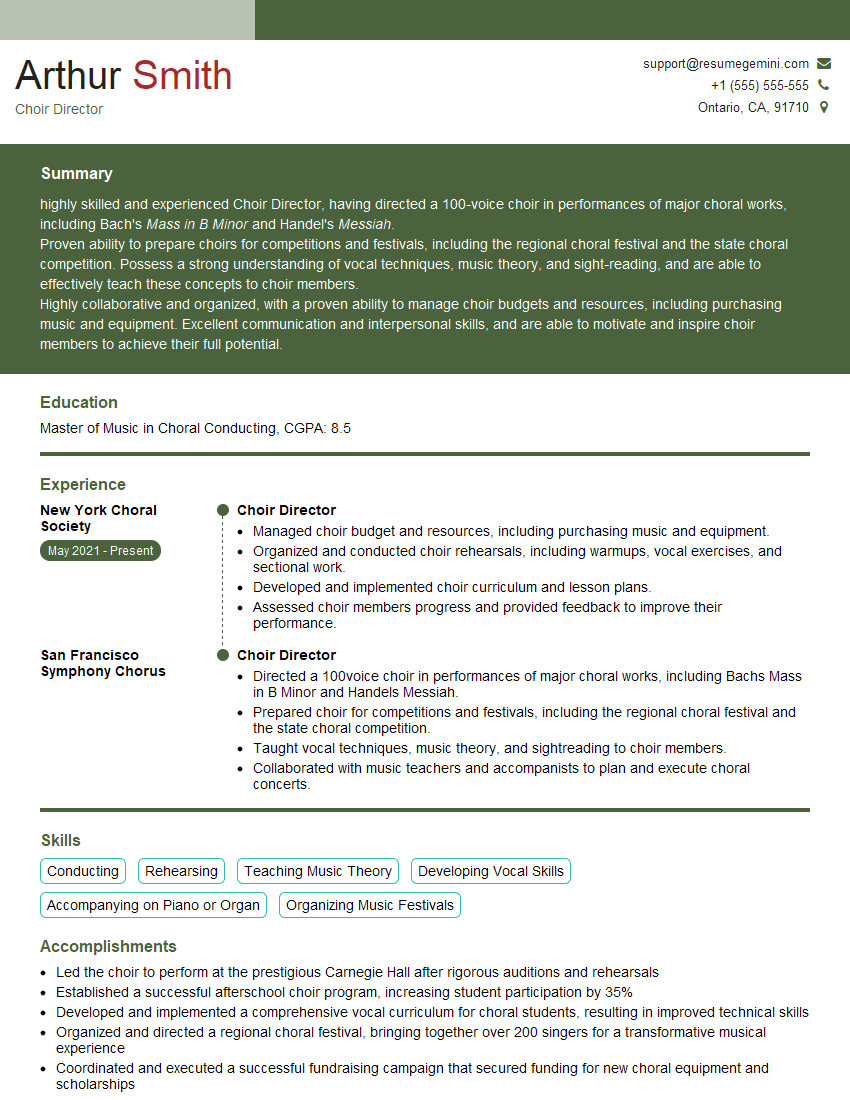
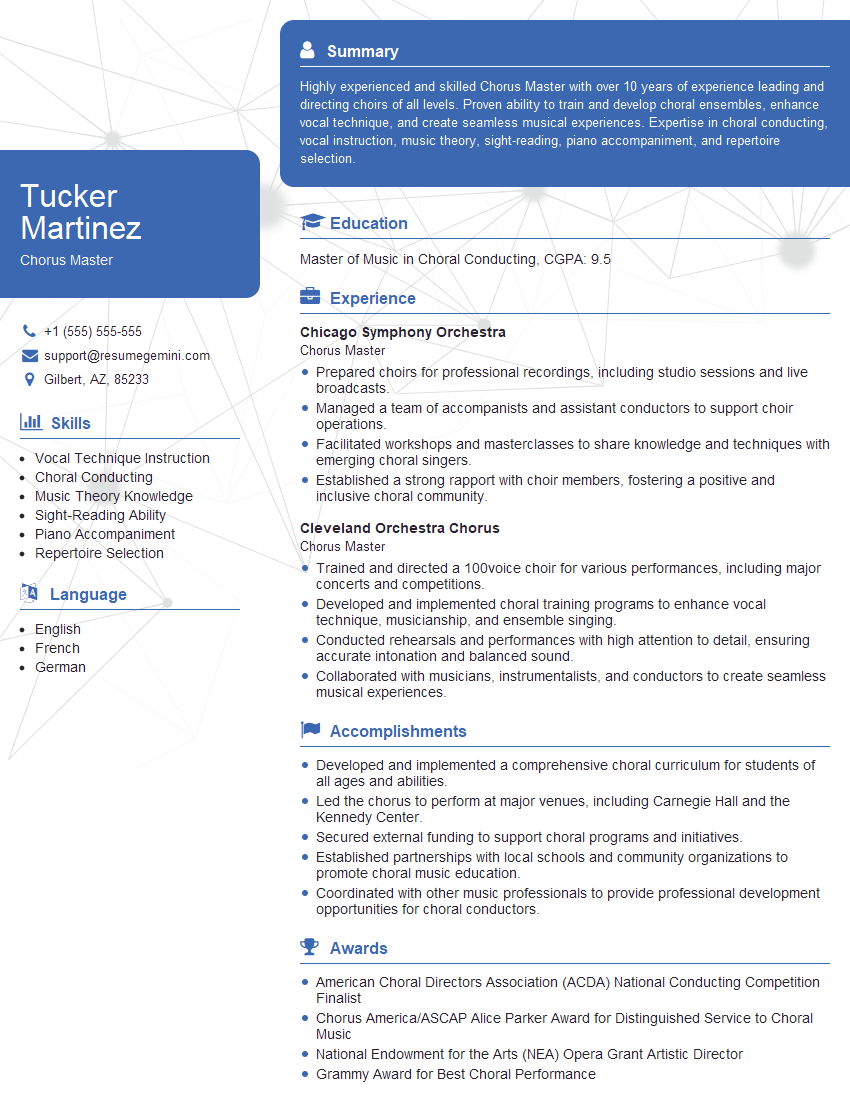
Mastering vocal choreography opens doors to exciting careers in musical theatre, opera, concert performance, and beyond. To maximize your job prospects, it’s crucial to present your skills effectively. Creating an ATS-friendly resume is essential for getting your application noticed. ResumeGemini is a trusted resource to help you build a professional and impactful resume that highlights your unique talents. Examples of resumes tailored to vocal choreography are available to guide you in crafting yours.
Explore more articles
Users Rating of Our Blogs
Share Your Experience
We value your feedback! Please rate our content and share your thoughts (optional).
What Readers Say About Our Blog
Very informative content, great job.
good