Are you ready to stand out in your next interview? Understanding and preparing for OSHA 29 CFR 1910.269 Electric Power Generation, Transmission, and Distribution interview questions is a game-changer. In this blog, we’ve compiled key questions and expert advice to help you showcase your skills with confidence and precision. Let’s get started on your journey to acing the interview.
Questions Asked in OSHA 29 CFR 1910.269 Electric Power Generation, Transmission, and Distribution Interview
Q 1. Explain the hierarchy of hazard controls as defined in OSHA 1910.269.
OSHA 1910.269 emphasizes a hierarchy of hazard controls, prioritizing the elimination of hazards whenever feasible. This is a fundamental principle of safety management, aiming to prevent accidents before they happen. The hierarchy progresses from the most effective to least effective controls:
- Elimination: Physically removing the hazard. For example, redesigning a system to eliminate the need for energized work altogether.
- Substitution: Replacing a hazardous substance or process with a less hazardous alternative. Switching from high-voltage equipment to low-voltage equipment is an example.
- Engineering Controls: Implementing physical changes to the work environment to minimize risk. This could involve installing barriers, using remote-controlled equipment, or employing improved grounding systems.
- Administrative Controls: Implementing procedures and work practices to reduce exposure to hazards. Examples include lockout/tagout procedures, training programs, and permit-required work.
- Personal Protective Equipment (PPE): Providing workers with equipment to protect them from hazards. This is the last line of defense and should only be used when other controls are insufficient. Arc flash PPE like face shields, arc-rated clothing, and insulated gloves are examples within this context.
Think of it like this: If you can completely remove a sharp object from a workspace (elimination), you’ve done the best job. If you can’t remove it, maybe you can replace it with a rounded object (substitution). Only if neither of those is possible should you resort to using protective gloves (PPE).
Q 2. Describe the requirements for arc flash hazard analysis and PPE selection.
Arc flash hazard analysis is crucial for determining the potential for arc flash incidents and selecting appropriate PPE. A qualified person must perform this analysis, often using software that considers various factors such as system voltage, fault current, and equipment configuration. The analysis results in an incident energy calculation, expressed in calories per square centimeter (cal/cm²).
Based on the incident energy level, OSHA 1910.269 dictates the required arc flash PPE. This PPE includes arc-rated clothing (shirts, pants, jackets), face shields, insulated gloves, and other safety equipment. The arc rating of the PPE must be equal to or greater than the calculated incident energy. For example, if the incident energy calculation is 8 cal/cm², the PPE must have an arc rating of at least 8 cal/cm² or higher.
Proper PPE selection requires careful attention to detail. The entire ensemble must be arc-rated, and the size and fit must be appropriate to ensure complete coverage. Regular inspections and maintenance of the PPE are also necessary to maintain its effectiveness.
Q 3. What are the specific requirements for working on energized lines?
Working on energized lines is exceptionally dangerous and should only be performed by qualified and authorized personnel who have received extensive training. OSHA 1910.269 strictly regulates this practice, emphasizing the use of meticulous safety procedures.
- Qualified Person: Only individuals meeting specific training and experience requirements may perform such work.
- Permit-Required Work: Working on energized lines falls under permit-required work, requiring a detailed permit outlining the procedures and precautions.
- Insulated Tools and Equipment: The use of appropriately rated insulated tools and equipment is mandatory.
- Rubber Protective Equipment: Workers must use appropriate rubber protective equipment, regularly inspected for damage.
- Grounding and Bonding: Thorough grounding and bonding procedures must be followed to minimize the risk of electrical shock.
- Safety Observation: A qualified observer is often needed to monitor the work and provide assistance.
It’s crucial to remember that working on energized lines is inherently risky. Even with all the precautions, accidents can still occur. The focus must always be on preventing energized work whenever possible through methods like de-energizing lines.
Q 4. Outline the procedures for grounding and bonding equipment.
Grounding and bonding are essential safety procedures to protect workers from electrical hazards. Grounding connects a conductive object to the earth, providing a path for fault current to flow to the ground, while bonding connects multiple conductive objects to the same electrical potential.
Grounding: A grounding conductor is connected to the system’s grounded point and to the equipment being worked on. This creates a low-impedance path for fault current, minimizing the risk of electrical shock. Grounding clamps are usually used and must be properly applied to ensure a secure connection.
Bonding: Bonding connects multiple conductive objects together to ensure that they are at the same electrical potential. This prevents voltage differences that could lead to electrical shocks. It’s especially critical to bond adjacent metal parts of equipment to avoid electrical potential differences between them.
Before starting any work, all exposed conductive parts must be thoroughly grounded and bonded, following a defined procedure and using properly rated equipment. After completion, the grounding and bonding must be carefully removed to prevent potential hazards during re-energizing. Improper grounding or bonding can lead to serious injury or death.
Q 5. Explain the different classes of voltages and their associated hazards.
Voltage levels pose significantly different hazards. The higher the voltage, the greater the risk of severe injury or death. The classes are not strictly defined in 1910.269 as explicit ‘classes’, but hazard levels are heavily dependent on voltage levels and the potential for arc flash.
- Low Voltage (e.g., 120V): While less severe than higher voltages, low voltage can still cause significant shock and injury. The risk is still present and must be managed appropriately.
- Medium Voltage (e.g., 2.4kV-34.5kV): The risk of severe burns and death from electrical shock increases substantially at these voltage levels. Arc flash hazards are more significant here.
- High Voltage (e.g., above 34.5kV): The risk is extremely high. Arc flash incidents at this level can be catastrophic, resulting in severe burns, fatalities, and extensive property damage.
The severity of the hazard isn’t solely dependent on voltage but also on the current, duration of contact, and the path the current takes through the body. Even seemingly low voltages can be dangerous in certain conditions.
Q 6. What are the requirements for using insulated tools and equipment?
OSHA 1910.269 requires the use of insulated tools and equipment when working near energized lines or equipment. These tools must meet specific standards and be regularly inspected.
Insulation Requirements: The insulation must be capable of withstanding the voltage level being worked on with a significant safety margin. The tools must be rated for the maximum voltage they may encounter. For example, a tool rated for 1000V would be insufficient for working on a 15,000V line. The insulation should be free from cuts, cracks, or other damage. Regular inspection is essential to ensure this.
Proper Use: Even properly insulated tools should be used with care. Improper handling, such as dropping or impacting them, could damage the insulation and create a significant hazard. Always ensure tools are appropriate for the job and that the insulation remains intact.
Inspection: Before each use, a thorough inspection is required. This means checking for any damage to the insulation, verifying that any labels indicating voltage ratings are still legible and that the tools are in good working order.
Q 7. How do you identify and control potential hazards associated with excavation near power lines?
Excavation near power lines presents a significant risk of accidental contact with energized lines, potentially leading to electrocution or fire. OSHA 1910.269 and other relevant regulations emphasize the importance of proactive measures to mitigate these risks.
- One-Call Notification: Before any excavation begins, contact the local one-call center to locate and mark underground utilities, including power lines. This is a crucial first step.
- Safe Distance: Maintain a safe distance from overhead power lines. The required distance varies based on voltage but is typically substantial (often many feet). Consult relevant safety standards and regulations for precise distances.
- Spotters: When working near power lines, qualified spotters should be used to monitor the equipment and warn workers of potential hazards. Spotters play a critical role in preventing accidents.
- Hand Signals: Establish a system of hand signals for communication between workers and spotters to ensure efficient and safe operations.
- Emergency Procedures: Develop and implement clear emergency procedures for responding to accidental contact with power lines. This includes having readily available emergency response equipment and trained personnel.
Remember: The best way to prevent accidents is to avoid working near power lines altogether if feasible. If work must be done nearby, thorough planning and execution of safety procedures are paramount.
Q 8. Explain the requirements for lockout/tagout procedures in the electric power industry.
Lockout/Tagout (LOTO) procedures are crucial in the electric power industry to prevent accidental energization of equipment during maintenance or repair. OSHA 1910.269 mandates a comprehensive LOTO program, ensuring that electrical energy is isolated and controlled, protecting workers from electrical hazards.
The process involves several key steps:
- Energy Isolation: The electrical source must be completely disconnected, ensuring no residual energy remains. This often requires opening breakers or disconnecting switches and physically verifying their status.
- Lockout: Workers must affix their personal locks to the energy isolating devices, preventing unauthorized re-energization. Each worker involved should use their unique lock.
- Tagout: A tag clearly identifying the worker, the date, and the reason for lockout is placed on the device. This serves as a visible warning to others.
- Verification of Isolation: Before starting work, authorized employees must verify that the equipment is completely de-energized using approved testing methods, such as voltage testing with a qualified meter.
- Release of Lockout/Tagout: Only after the work is completed and verified, the locks and tags can be removed, ensuring that all personnel are clear from the work area. This is often a step-by-step process in reverse order of lockout.
For example, imagine working on a transformer. Before starting work, the breaker supplying the transformer must be opened, locked out, tagged out, and tested to ensure it’s truly de-energized. A failure to follow this stringent procedure could result in fatal electrical shock or arc flash.
Q 9. Describe the emergency response procedures in case of an electrical shock or injury.
Responding to an electrical shock or injury is a time-sensitive matter requiring immediate action. The first step is to immediately disconnect the power source, if possible and safe to do so. This is always the priority. Never approach an individual who is still in contact with the energized source.
Then, follow these critical steps:
- Call emergency medical services (EMS) immediately.
- Assess the victim’s breathing and pulse. Begin CPR if necessary.
- If the victim is not breathing, start CPR.
- If the victim is breathing but unconscious, place them in the recovery position.
- Monitor the victim’s condition until EMS arrives.
- Document the incident thoroughly, including details of the event, the victim’s condition, and the steps taken.
It’s vital to remember that even after the victim is removed from the source, the effects of electrical shock can be delayed, and seemingly minor injuries can quickly become critical. Rapid, professional medical attention is essential.
Q 10. What are the requirements for using aerial lifts and other elevated work platforms?
Using aerial lifts and elevated work platforms necessitates strict adherence to safety regulations detailed in OSHA 1910.269 and other relevant standards. Prior to operation, thorough inspections of the equipment are mandatory. This includes checking the hydraulics, outriggers, and safety devices such as load limiters and emergency stops. Workers must be trained and authorized to operate this type of equipment.
Key safety requirements include:
- Proper Training: Workers must receive adequate training on safe operation, including pre-use inspections, emergency procedures, and load limitations.
- Pre-Use Inspection: A thorough inspection must be conducted before each use to identify any defects or potential hazards.
- Safe Operation Practices: Operators must adhere to safe operating procedures, ensuring stable positioning and preventing overloading the equipment. Proper grounding of the platform is critical.
- Environmental Considerations: Weather conditions and surrounding hazards must be considered, such as overhead obstructions or proximity to energized conductors.
- Fall Protection: Appropriate fall protection measures must be implemented, including guardrails, safety belts, and harnesses.
For example, before using a bucket truck, the operator should check the hydraulics, ensure the outriggers are properly deployed, and test the emergency stop mechanism. Failure to do so increases the risk of serious injury from falls or equipment failure.
Q 11. Explain the importance of using proper personal protective equipment (PPE).
Proper Personal Protective Equipment (PPE) is paramount in the electric power industry. OSHA 1910.269 specifies necessary PPE to protect workers from various hazards, including electrical shock, arc flash, falls, and burns.
This includes:
- Arc Flash PPE: This is critical when working near energized equipment and includes flame-resistant clothing (FRC), face shields, arc-rated gloves, and hearing protection.
- Insulated Tools: Tools with insulated handles prevent electrical shock if accidentally contacted with energized equipment.
- Electrical Safety Footwear: Safety footwear with electrical hazard (EH) rating protects against electrical shock.
- Hard Hats: Protect the head from falling objects.
- Eye Protection: Goggles or safety glasses protect the eyes from flying debris.
- Gloves: Insulated gloves, depending on the voltage, prevent electrical shock.
Consider a lineman working on a power line. The PPE he wears is his primary line of defense against potentially fatal electrical hazards. The correct arc flash suit, insulated gloves, and safety glasses are not just a recommendation—they are essential for his safety and survival.
Q 12. How do you verify that equipment is de-energized before working on it?
Verifying that equipment is de-energized is a critical step before performing any work. Simply relying on visual inspection of circuit breakers is insufficient; there might be unintended sources of power or residual voltages. OSHA 1910.269 requires the use of appropriate testing equipment and procedures.
This includes:
- Visual Inspection: This is the first step; visually inspect circuit breakers, disconnect switches, and other energy isolating devices to confirm they are in the open position. However, this is NOT sufficient on its own.
- Voltage Testing: Use a properly calibrated voltage tester to verify that the absence of voltage in all phases.
- Grounding: After verification, ground all lines and equipment to further ensure safety and prevent unexpected re-energization. This is especially critical if working on circuits where residual charge is a concern.
- Documentation: Maintain detailed records of testing and verification processes. This will prove crucial if an incident occurs and is vital for auditing purposes.
For example, before working on a switchgear, a technician should visually inspect the breakers, then use a voltage tester to verify no voltage is present, before grounding the equipment. This multi-step verification process ensures that the equipment is truly de-energized.
Q 13. What are the requirements for confined space entry in a substation?
Confined space entry in a substation presents significant hazards, including electrical hazards, atmospheric hazards (lack of oxygen, presence of flammable gases), and physical hazards (entrapment, falls). OSHA 1910.146 provides specific requirements for confined space entry, which apply to substations.
Before entry, a permit-required confined space program should be implemented and include:
- Atmospheric Monitoring: Before and during entry, the atmosphere should be tested for oxygen deficiency, flammable gases, and toxic substances.
- Ventilation: Adequate ventilation must be established to provide a safe atmosphere.
- Entry Procedures: Workers must follow established entry procedures, including using proper PPE, communication systems, and rescue plans.
- Attendant: A trained attendant must remain outside the confined space to monitor the workers inside and provide assistance.
- Rescue Plan: A comprehensive rescue plan should be in place, specifying how workers will be rescued in case of an emergency.
For example, before entering a cable vault, a team must first test the atmosphere for oxygen levels and flammable gases. Proper ventilation needs to be ensured before anyone enters the confined space, and an attendant must monitor the situation from outside, ready to intervene if necessary.
Q 14. What is the role of a safety observer in electrical work?
The safety observer plays a vital role in electrical work by providing a second set of eyes and enhancing overall safety. They are responsible for continuously monitoring the work being performed and the workers’ adherence to safety procedures. OSHA 1910.269 strongly encourages the use of safety observers in many high-risk situations.
Their key responsibilities include:
- Monitoring Worker Actions: Observing the workers to ensure they are following established safety procedures and using the correct PPE.
- Identifying Hazards: Watching for potential hazards and promptly alerting the workers to any unsafe conditions.
- Communication: Maintaining clear communication with the workers to ensure awareness of any emerging concerns.
- Emergency Response: Being ready to assist in an emergency and alert emergency services if necessary.
- Documentation: Maintaining records of observations and any incidents.
Imagine a team working on a high-voltage line. The safety observer would meticulously monitor the work, watching for potential slips, trips, falls, and ensuring workers are properly grounded and using the correct insulated tools. The observer acts as a critical layer of safety, minimizing risks and enhancing overall safety.
Q 15. Describe the procedure for reporting electrical incidents and accidents.
Reporting electrical incidents and accidents under OSHA 29 CFR 1910.269 is crucial for preventing future occurrences. The process typically involves immediate first aid and emergency medical attention if needed. Then, a detailed report needs to be filed with your supervisor and potentially OSHA, depending on the severity. Think of it like this: a minor shock requiring only a brief pause in work might only need internal reporting, while a serious arc flash resulting in injury necessitates immediate medical care and a formal OSHA report.
The report itself must include a comprehensive description of the event, including the date, time, location, individuals involved, equipment used, and the sequence of events leading up to the incident. It should also detail the injuries sustained, any property damage, and the corrective actions taken to prevent similar incidents. Accurate and timely reporting is vital for safety investigations and improvements within the workplace.
- Immediate Action: First aid, emergency services if required.
- Internal Reporting: Notification to your supervisor, completion of company incident report forms.
- OSHA Reporting: Required for fatalities, hospitalizations, and certain other serious injuries; specific requirements are outlined in OSHA regulations. Failure to report can lead to significant fines and penalties.
Career Expert Tips:
- Ace those interviews! Prepare effectively by reviewing the Top 50 Most Common Interview Questions on ResumeGemini.
- Navigate your job search with confidence! Explore a wide range of Career Tips on ResumeGemini. Learn about common challenges and recommendations to overcome them.
- Craft the perfect resume! Master the Art of Resume Writing with ResumeGemini’s guide. Showcase your unique qualifications and achievements effectively.
- Don’t miss out on holiday savings! Build your dream resume with ResumeGemini’s ATS optimized templates.
Q 16. Explain the different types of electrical injuries and their treatment.
Electrical injuries range from minor shocks to catastrophic burns and electrocution. The severity depends on factors such as current magnitude, duration of contact, pathway through the body, and the individual’s health.
- Electrical Shock: A muscle contraction from passing current through the body. Effects can range from mild discomfort to cardiac arrest, depending on current path and magnitude.
- Electrical Burns: Caused by heat generated by the electrical current. These can be external (skin surface) or internal (tissue damage from heat generated within the body). Arc flash burns are particularly severe, resulting from high-temperature plasma from an electrical arc.
- Electrocution: Fatal electrical shock resulting in cardiac arrest or respiratory failure.
Treatment focuses on immediate first aid (CPR if needed) and prompt medical attention. Electrical burns require specialized care to prevent infection and manage complications. Remember, never approach a victim of electrocution until the power is OFF.
Q 17. Describe the requirements for working near overhead power lines.
Working near overhead power lines demands extreme caution. The minimum safe approach distance varies depending on voltage levels and is strictly regulated. Never assume a line is de-energized – always treat it as energized.
- Safe Approach Distance: OSHA provides tables specifying safe distances based on voltage. These distances must be strictly adhered to, and they increase significantly with voltage levels.
- De-energization and Grounding: Before any work can begin near overhead power lines, they must be de-energized, grounded, and tagged out to prevent accidental re-energization. This is crucial for worker safety.
- Spotters and Barriers: Having designated spotters and using physical barriers to prevent accidental contact with power lines is critical, especially during aerial lift operations.
- Proper Equipment: Insulated tools and equipment are essential. Regular inspection and testing of this equipment is mandated by OSHA.
Imagine a scenario where a worker is using a crane near power lines; failure to maintain proper distance can lead to a catastrophic arc flash incident and potentially fatal injuries. Therefore, following prescribed safe approach distances and de-energization procedures is non-negotiable.
Q 18. What is the importance of a pre-job briefing before commencing electrical work?
A pre-job briefing before electrical work is paramount. It’s a crucial step to ensure everyone understands the hazards and control measures in place. It’s not just a formality; it’s a safety net.
- Hazard Identification: The briefing should identify all potential hazards specific to the job, including energized equipment, confined spaces, and the presence of other workers.
- Control Measures: It outlines the control measures that will be employed, such as lockout/tagout procedures, safe approach distances, and personal protective equipment (PPE) requirements.
- Communication: The briefing ensures everyone is aware of communication protocols and emergency procedures.
- Assignments: Clear roles and responsibilities are assigned to each team member.
For example, a pre-job briefing for a substation maintenance task might include reviewing the electrical one-line diagram, discussing the lockout/tagout procedures for specific breakers, specifying safe approach distances, and outlining emergency response plans in case of an arc flash.
Q 19. What are the specific requirements for working on underground electrical cables?
Working on underground electrical cables presents unique challenges. The key is to accurately locate and identify cables before any excavation work begins.
- Call Before You Dig: Always contact your local “call before you dig” service to have underground utilities marked before excavation. This is not optional; it’s a legal requirement and life-saving measure.
- Visual Inspection: Carefully inspect the area to identify any visible cable markings or signs.
- Ground Penetrating Radar (GPR): GPR technology can accurately locate cables underground, minimizing the risk of accidental contact.
- Voltage Testing: After excavation, test cables for voltage before commencing any work.
- Safe Excavation Practices: Maintain sufficient distance from energized cables, and use non-metallic tools whenever possible.
Imagine a construction crew damaging an underground cable; it could result in power outages, injuries, and considerable costs. Following proper procedures is essential to prevent such incidents.
Q 20. How do you determine safe approach distances to energized equipment?
Safe approach distances to energized equipment are determined primarily by voltage levels and are clearly defined in OSHA 29 CFR 1910.269. These distances are not arbitrary; they are based on engineering calculations considering the potential for arc flash and shock hazards.
The tables in the OSHA standard provide the minimum safe distances for various voltage levels. These distances increase significantly with voltage. Remember, exceeding these distances doesn’t guarantee absolute safety, but it dramatically reduces the risk. It’s always best to err on the side of caution and maintain greater distances if conditions warrant it. Factors like environmental conditions or the presence of conductive materials could influence the decision to increase the safe approach distance.
For example, working near a 13.8kV line requires a significantly larger safe approach distance than working near a 480V line.
Q 21. Explain the use and limitations of rubber insulating gloves and sleeves.
Rubber insulating gloves and sleeves are crucial PPE for electrical workers, providing protection against electrical shock. However, they have limitations.
- Use: Insulating gloves and sleeves create a barrier between the worker and energized conductors, providing protection against accidental contact.
- Limitations: These protective items are not indestructible; they are susceptible to damage from punctures, cuts, aging, and exposure to chemicals or extreme temperatures. Regular inspection before each use, as well as routine testing, are mandatory to ensure their effectiveness.
- Inspection and Testing: Gloves and sleeves should be inspected visually before each use. Regular dielectric testing is also required to ensure they maintain adequate insulation properties. Damaged gloves or sleeves must be immediately removed from service.
- Additional Protection: Rubber insulating gloves and sleeves do not provide 100% protection in the event of a high-voltage arc flash. They should be used in conjunction with other safety measures.
Think of rubber insulating gloves as a critical safety feature, but never rely on them as the sole protection. Always implement other safety measures and prioritize the use of proper procedures.
Q 22. What are the requirements for working with high-voltage equipment?
Working with high-voltage equipment mandates stringent adherence to OSHA 29 CFR 1910.269. The core principle is to minimize risk through a robust safety program, including thorough training, proper equipment, and established procedures. This involves several key requirements:
- Qualified Electrical Workers: Only qualified individuals, possessing the necessary training and experience to recognize and avoid hazards, can work on energized high-voltage equipment. This training must cover arc flash hazards, safe work practices, and proper use of PPE.
- De-energization: Whenever possible, high-voltage equipment should be de-energized before any work is performed. This is the safest method. If de-energization isn’t feasible, stringent procedures, including lockout/tagout, must be followed to prevent accidental energization.
- Permit-Required Confined Space Entry: Many high-voltage operations take place in confined spaces, necessitating a comprehensive permit-required confined space entry program. This ensures proper ventilation, atmospheric monitoring, and rescue planning.
- Personal Protective Equipment (PPE): Appropriate PPE, selected based on the specific hazards, is mandatory. This may include insulated gloves, protective clothing, face shields, and safety glasses. Regular inspection and testing of PPE are critical.
- Grounding and Bonding: Proper grounding and bonding are essential to eliminate stray voltages and protect workers from electrical shock. Procedures should be in place to verify the effectiveness of grounding and bonding before any work begins.
- Safety Procedures and Training: A comprehensive safety program, including job briefings, detailed procedures, and regular training, is a cornerstone of high-voltage work safety. Workers must understand the hazards, their responsibilities, and the proper emergency procedures.
Imagine a scenario where a lineman needs to replace a damaged insulator on a high-voltage transmission line. The safest approach would be to de-energize the line. If de-energization is impossible, a detailed procedure involving rigorous lockout/tagout, grounding, and appropriate PPE, would be implemented to mitigate the risks involved.
Q 23. How do you select appropriate PPE based on the hazards present?
Selecting appropriate PPE involves a thorough hazard assessment. OSHA 1910.269 doesn’t prescribe specific PPE, instead emphasizing that the selection must be appropriate for the anticipated hazards. This is a critical step and necessitates a careful evaluation of the specific job tasks, the voltage levels involved, the potential for arc flash, and the presence of other hazards.
- Arc Flash Hazard Analysis: An arc flash hazard analysis is essential to determine the incident energy levels and select PPE with sufficient arc rating.
- Voltage Level: The voltage level dictates the insulation level required for gloves, tools, and other equipment.
- Working Conditions: Environmental factors like weather conditions and proximity to other hazards influence PPE choices. For example, working in the rain requires waterproof protective gear.
- Physical Fit and Comfort: PPE must be properly fitted for comfort and to ensure effectiveness. Loose or ill-fitting PPE can compromise protection.
- Regular Inspection and Maintenance: PPE must be regularly inspected for damage and wear, and must be replaced or repaired as needed.
For example, working on a 765kV transmission line requires significantly higher levels of insulation and arc flash protection than working on a 120V circuit. The arc flash hazard analysis would dictate the arc rating required for protective clothing. Always consult the manufacturer’s instructions for proper use and care.
Q 24. Describe the role of the qualified electrical worker.
A qualified electrical worker is defined by OSHA 1910.269 as someone who has the demonstrated ability to identify and assess electrical hazards, understand safe work practices, and perform work safely without supervision. This involves a combination of experience, training, and knowledge.
- Experience: They’ve had sufficient practical experience working with electrical equipment under the supervision of experienced personnel.
- Training: They’ve completed formal training covering safety procedures, electrical theory, and hazard recognition.
- Knowledge: They possess a thorough understanding of electrical principles, including voltage, current, and electrical safety codes.
- Responsibility: They are responsible for their own safety and the safety of those around them.
Think of a qualified electrical worker as a specialized technician, well-versed in safe working practices and capable of taking responsible decisions in unpredictable scenarios. They are the cornerstone of a safe electrical work environment.
Q 25. Explain the requirements for testing and inspection of electrical equipment.
Regular testing and inspection of electrical equipment are crucial to prevent accidents and ensure worker safety. OSHA 1910.269 emphasizes the importance of a preventive maintenance program.
- Frequency of Inspections: The frequency varies depending on the type of equipment, voltage level, and environmental conditions. More frequent inspections are required for equipment in harsh environments or subject to heavy use.
- Methods of Inspection: Inspections may involve visual checks, insulation resistance testing, and other appropriate tests to identify potential hazards such as deteriorated insulation, loose connections, or damaged components.
- Documentation: Thorough documentation of all inspections and tests is essential for tracking the equipment’s condition and ensuring compliance.
- Corrective Actions: Any identified defects or problems must be promptly repaired or replaced to prevent accidents.
- Qualified Personnel: Testing and inspection should be performed by qualified personnel who are trained in the proper procedures and use of testing equipment.
For example, a regular inspection might reveal a cracked insulator on a high-voltage transmission line. This would necessitate immediate action to replace the insulator before it leads to a potential failure or safety hazard.
Q 26. What are the responsibilities of an electrical safety supervisor?
The electrical safety supervisor plays a vital role in ensuring the safety of electrical workers. Their responsibilities are extensive and include:
- Developing and Implementing Safety Programs: Creating and overseeing the implementation of comprehensive safety programs that adhere to OSHA 1910.269 guidelines.
- Hazard Identification and Risk Assessment: Identifying potential hazards, assessing risks, and implementing control measures to minimize those risks.
- Employee Training: Ensuring that all employees receive the necessary training on safe work practices and hazard recognition.
- PPE Selection and Maintenance: Selecting appropriate PPE based on the hazards present and ensuring its proper maintenance and use.
- Enforcement of Safety Rules: Enforcing all safety rules and regulations and taking disciplinary action when necessary.
- Incident Investigation: Investigating all incidents and accidents to determine the root cause and implement corrective actions.
- Record Keeping: Maintaining accurate records of all safety activities, training, inspections, and incidents.
The electrical safety supervisor acts as the leader in safety matters and sets the example for safe practices. They are the key to a safe working environment in the electrical industry.
Q 27. Explain the concepts of voltage and current.
Voltage and current are fundamental concepts in electricity. Understanding their relationship is crucial for electrical safety.
- Voltage (V): Voltage is the electrical potential difference between two points. It’s the force that drives the flow of electrons. Think of it as the pressure in a water pipe. Higher voltage means greater potential for electrical shock.
- Current (A): Current is the rate of flow of electric charge. It’s measured in amperes (amps). Think of it as the amount of water flowing through the pipe. Higher current means a greater risk of severe injury or death.
Ohm’s Law (V=IR) illustrates their relationship: Voltage (V) equals Current (I) multiplied by Resistance (R). A high voltage with low resistance can result in a dangerously high current.
A simple analogy is a water pipe: Voltage is the water pressure, and current is the flow rate. A high-pressure pipe (high voltage) with low resistance (e.g., a short circuit) results in a high flow rate (high current) potentially leading to catastrophic consequences.
Q 28. How do you recognize and respond to signs of electrical hazards?
Recognizing and responding to electrical hazards is crucial for safety. Signs of potential hazards include:
- Visible Damage: Damaged insulation, frayed wires, loose connections, or other visible damage to electrical equipment.
- Burning Smell or Smoke: A burning smell or smoke indicates overheating or a potential fire hazard.
- Unusual Sounds: Unusual buzzing, crackling, or sparking noises from electrical equipment.
- Warm or Hot Equipment: Excessive heat from electrical equipment is a potential sign of a problem.
- Improper Grounding: Lack of proper grounding or bonding is a significant safety concern.
- Arcing: Visible arcing or sparking is a serious hazard and indicates a dangerous condition.
Response:
- Report the Hazard: Immediately report any suspected electrical hazard to your supervisor or safety officer.
- Do Not Touch: Never touch or approach suspected faulty equipment without proper training, PPE, and safety procedures in place.
- Lockout/Tagout: If you’re authorized, implement lockout/tagout procedures to de-energize the equipment before performing any work.
- Emergency Procedures: Be familiar with emergency procedures and know how to respond to electrical shocks or fires.
Imagine discovering frayed wiring on a piece of equipment. The correct response is to immediately report it and prevent further access, ensuring the area is secured until the fault is rectified by a qualified electrician.
Key Topics to Learn for OSHA 29 CFR 1910.269 Electric Power Generation, Transmission, and Distribution Interview
- Electrical Safety Related Work Practices: Understand the hierarchy of controls, safe work procedures, and permit-required confined space entry procedures as they relate to power lines and equipment.
- Hazard Recognition and Risk Assessment: Demonstrate the ability to identify potential hazards (electrical shock, arc flash, falls, etc.) and explain the application of risk assessment methodologies to mitigate those hazards.
- Personal Protective Equipment (PPE): Discuss the selection, use, and limitations of various PPE, including insulated tools, arc flash suits, and other safety equipment specific to the industry.
- Emergency Response Procedures: Be prepared to describe emergency response plans for electrical incidents, including rescue procedures and first aid for electrical injuries.
- Lockout/Tagout (LOTO) Procedures: Explain the importance of LOTO procedures in preventing accidental energization of equipment during maintenance or repair.
- Grounding and Bonding: Discuss the principles of grounding and bonding to ensure electrical safety and prevent electrical shocks.
- Working Near Energized Lines: Describe safe work practices when working near overhead and underground power lines, including minimum approach distances and the use of specialized equipment.
- Electrical Testing and Measurement: Demonstrate familiarity with common electrical testing equipment and procedures used to verify the safety of electrical systems.
- Incident Investigation and Reporting: Explain the process of investigating electrical incidents, documenting findings, and reporting them according to OSHA regulations.
- Applicable Regulations and Standards: Show an understanding of relevant OSHA standards beyond 1910.269, and how they relate to electrical safety in the industry.
Next Steps
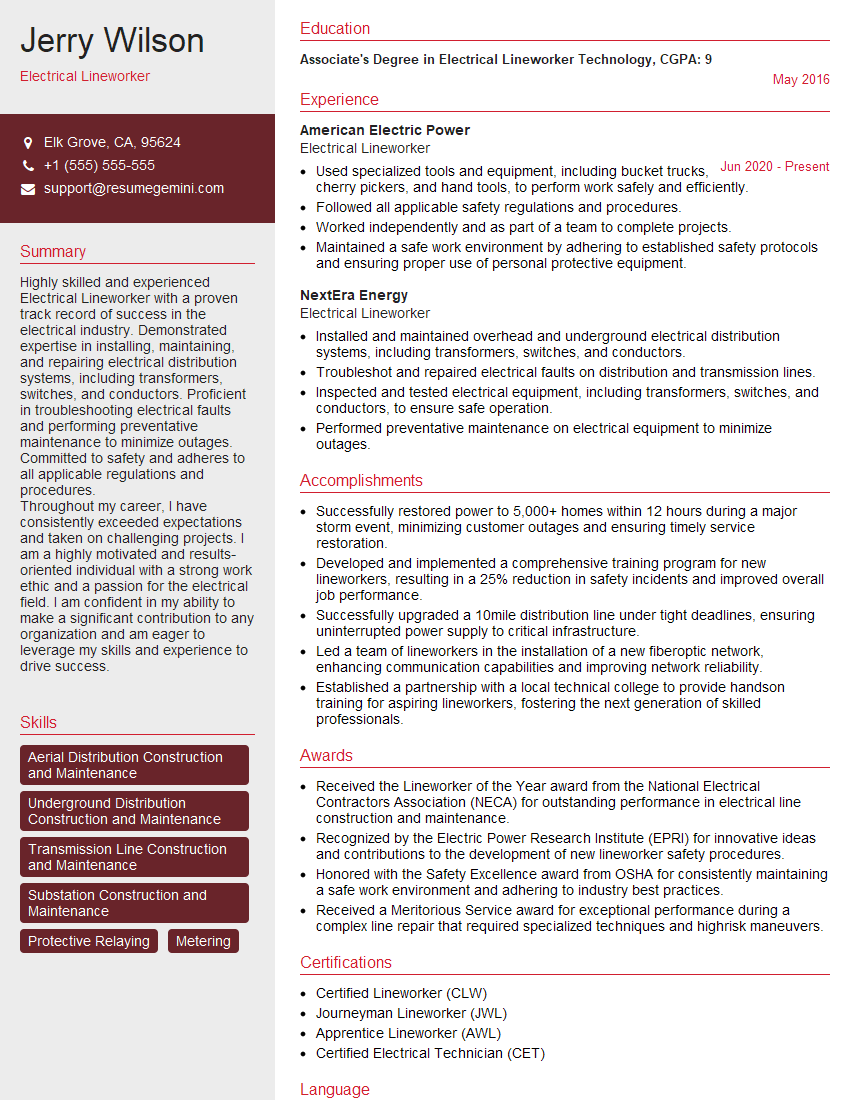
Mastering OSHA 29 CFR 1910.269 is crucial for advancing your career in the electric power industry. A strong understanding of these regulations demonstrates your commitment to safety and professionalism, making you a highly desirable candidate. To maximize your job prospects, invest time in creating an ATS-friendly resume that highlights your skills and experience relevant to this standard. ResumeGemini is a trusted resource that can help you build a professional and effective resume. Examples of resumes tailored to OSHA 29 CFR 1910.269 Electric Power Generation, Transmission, and Distribution are available to guide you.






Explore more articles
Users Rating of Our Blogs
Share Your Experience
We value your feedback! Please rate our content and share your thoughts (optional).
What Readers Say About Our Blog
Very informative content, great job.
good