Are you ready to stand out in your next interview? Understanding and preparing for Volunteer and Coaching Development interview questions is a game-changer. In this blog, we’ve compiled key questions and expert advice to help you showcase your skills with confidence and precision. Let’s get started on your journey to acing the interview.
Questions Asked in Volunteer and Coaching Development Interview
Q 1. Describe your experience in designing and implementing volunteer training programs.
Designing and implementing effective volunteer training programs requires a multifaceted approach. It starts with a thorough needs assessment, identifying the specific skills and knowledge volunteers need to successfully fulfill their roles. This assessment informs the curriculum development, which I approach by focusing on a blend of theoretical knowledge and practical, hands-on training. For example, in a program for a wildlife rescue organization, we might include modules on animal handling, first aid for wildlife, and ethical considerations in rescue operations.
The training itself is delivered through various methods including online modules, workshops, shadowing experienced volunteers, and role-playing exercises. I ensure the training is engaging and interactive, incorporating diverse learning styles. Post-training evaluation is crucial; we use surveys, feedback sessions, and performance observation to assess the effectiveness of the training and make improvements for future iterations. For instance, in a program for museum docents, we would assess the trainees’ ability to deliver engaging and accurate tours after completing the training.
Q 2. How do you measure the effectiveness of a volunteer program?
Measuring the effectiveness of a volunteer program goes beyond simply counting volunteer hours. A robust evaluation strategy utilizes a multi-faceted approach encompassing quantitative and qualitative data. Key Performance Indicators (KPIs) might include the number of volunteers recruited and retained, the number of volunteer hours contributed, the impact of volunteer efforts on the organization’s mission (e.g., number of people served, events supported), and volunteer satisfaction levels.
Qualitative data is equally important and can be gathered through surveys, focus groups, and interviews to capture the volunteer experience and its impact. For example, if we are evaluating a program supporting homeless youth, we would measure not only the number of youth served but also their feedback on the program’s effectiveness and their overall experience with the volunteers.
Analyzing this data helps identify areas for improvement, leading to a more effective and rewarding volunteer experience. By understanding what works and what doesn’t, we can continually refine the program to maximize its impact.
Q 3. Explain your approach to recruiting and retaining volunteers.
Recruiting and retaining volunteers requires a strategic approach focusing on creating a positive and rewarding experience. Recruitment begins with clear and compelling communication about the organization’s mission and the volunteer opportunities available. This includes utilizing diverse recruitment channels such as social media, community partnerships, and online volunteer platforms. I emphasize transparency regarding time commitments, required skills, and the impact of their contribution.
Retention strategies focus on building strong relationships with volunteers. This includes regular communication, appreciation events, opportunities for professional development and skill-building, and providing feedback and recognition for their contributions. Creating a supportive and inclusive environment where volunteers feel valued and appreciated is vital in fostering loyalty and longevity. For instance, providing volunteers with opportunities to lead workshops or train new volunteers can boost their engagement and commitment. Regular check-ins and feedback sessions further solidify the supportive nature of the program.
Q 4. What strategies do you use to motivate and engage volunteers?
Motivating and engaging volunteers is crucial for a thriving program. It begins with clear communication of goals and expectations, ensuring volunteers understand the impact of their contributions. Regular feedback and recognition for their efforts are key to fostering a sense of accomplishment and purpose. This can include certificates of appreciation, public acknowledgements, or opportunities for advancement within the volunteer program.
Creating a sense of community among volunteers through social events and team-building activities strengthens bonds and fosters a supportive environment. Providing opportunities for leadership and skill development increases engagement and allows volunteers to grow within their roles. Finally, flexibility and autonomy in tasks help ensure volunteers feel empowered and invested in their work. For example, allowing volunteers to choose projects that align with their interests and skills can significantly boost their motivation and engagement.
Q 5. How do you handle conflict resolution among volunteers?
Conflict resolution amongst volunteers requires a proactive and empathetic approach. It’s vital to establish clear guidelines and expectations from the outset, including a code of conduct to address potential disagreements. When conflicts arise, I encourage open communication and facilitate a neutral environment where volunteers can express their concerns and perspectives.
My approach involves active listening, seeking to understand the root cause of the conflict, and helping volunteers find common ground. Mediation may be necessary to help facilitate a resolution. Depending on the situation, this might involve separating conflicting individuals temporarily to allow emotions to de-escalate, or holding a facilitated meeting where each party can calmly explain their viewpoints. Confidentiality is paramount throughout the process. In cases where the conflict is severe or cannot be resolved internally, further action might be needed, potentially involving disciplinary measures. However, the goal always remains to preserve a positive and collaborative environment for all volunteers.
Q 6. What are your preferred coaching methodologies?
My preferred coaching methodologies are rooted in a strengths-based approach, emphasizing the individual’s capabilities and potential. I utilize a combination of techniques, including:
- Growth Mindset Coaching: Focusing on fostering a belief in continuous learning and development.
- Solution-Focused Coaching: Helping individuals identify and achieve their goals by focusing on desired outcomes.
- Appreciative Inquiry: Exploring what’s working well and building on existing strengths.
- Transformational Coaching: Facilitating significant personal and professional growth.
I adapt my approach based on the individual’s needs and learning style, creating a personalized coaching plan. This collaborative process ensures the coaching experience is relevant, engaging, and effective.
Q 7. Describe your experience in developing coaching curriculum.
Developing coaching curricula requires a deep understanding of coaching principles and the specific needs of the target audience. I begin by identifying the learning objectives and desired outcomes, considering the prior experience and skills of the participants. The curriculum is structured to provide a balance between theoretical knowledge and practical application. For example, a curriculum for new managers might include modules on communication styles, conflict resolution, performance management, and team building.
I incorporate various learning activities, including interactive exercises, case studies, role-playing, and group discussions. The curriculum is designed to be engaging, relevant, and adaptable to different learning styles. Evaluation strategies are integrated throughout the curriculum, using methods like self-assessments, peer feedback, and practical application exercises to ensure participants are mastering the concepts. Feedback and revision are ongoing parts of the development process, ensuring the curriculum remains current and effective.
Q 8. How do you assess the learning needs of volunteers or coachees?
Assessing the learning needs of volunteers and coachees is crucial for effective program design and individual development. It involves a multi-faceted approach, combining various methods to gain a comprehensive understanding of their current skills, knowledge gaps, and aspirations.
- Needs Assessments: I utilize structured questionnaires, surveys, and interviews to gather data on existing skills, desired outcomes, and learning preferences. For example, a questionnaire might assess volunteers’ comfort levels with specific software or their understanding of relevant policies.
- Observation and Feedback: Direct observation of volunteers in action provides valuable insights into their performance and areas needing improvement. Regular feedback sessions allow for open communication and identification of skill gaps. For example, observing a coach’s interactions with their coachee can reveal areas for improvement in active listening or providing constructive feedback.
- Performance Reviews: For coachees, performance reviews—coupled with self-assessments—provide a formal evaluation of progress and pinpoint areas needing further development. This involves setting clear objectives and measuring performance against those goals.
- Focus Groups and Interviews: Focus groups with volunteers and coachees can provide rich qualitative data, revealing underlying needs and challenges not readily apparent through other methods. Individual interviews allow for deeper exploration of specific issues.
By combining these approaches, I create a holistic picture of learning needs, allowing for targeted training and development programs that are both effective and relevant.
Q 9. How do you evaluate the effectiveness of coaching interventions?
Evaluating the effectiveness of coaching interventions is vital to ensure program impact and continuous improvement. I employ a mixed-methods approach, incorporating both quantitative and qualitative measures.
- Pre- and Post-Assessments: Measuring coachees’ skills or performance before and after the intervention provides quantifiable data on improvement. This could involve tests, questionnaires, or performance evaluations.
- Goal Achievement: Tracking the progress of coachees towards pre-defined goals provides evidence of coaching effectiveness. This requires clear, measurable, achievable, relevant, and time-bound (SMART) goals.
- Qualitative Feedback: Gathering qualitative feedback through interviews, surveys, or focus groups provides rich insights into coachees’ perspectives on the intervention’s impact, their satisfaction, and their perceived learning and growth.
- 360-degree Feedback: Gathering feedback from multiple sources—peers, supervisors, and clients—provides a holistic view of the coachee’s progress and effectiveness.
- Coaching Logs and Notes: Maintaining detailed logs and notes from coaching sessions allows for tracking progress, identifying recurring themes, and adapting the intervention as needed.
By integrating these evaluation methods, I gain a comprehensive understanding of the intervention’s effectiveness, allowing me to refine future programs and ensure optimal impact.
Q 10. What are some common challenges in volunteer management, and how have you overcome them?
Volunteer management presents unique challenges. Common issues include inconsistent availability, lack of training, burnout, and difficulty in matching volunteer skills with program needs.
- Inconsistent Availability: I address this by creating flexible scheduling options and utilizing various communication methods to keep volunteers informed of opportunities and expectations. This also involves fostering a strong sense of community and appreciation among volunteers.
- Lack of Training: Implementing comprehensive training programs, utilizing diverse methods such as online modules, workshops, and mentoring, ensures volunteers are equipped with the necessary skills and knowledge. Regular refresher training and ongoing support are also critical.
- Burnout: I promote volunteer well-being by emphasizing work-life balance, providing opportunities for recognition and appreciation, and offering support systems. This includes establishing clear expectations, ensuring adequate supervision, and creating a positive and supportive volunteer environment.
- Skill Matching: I address this by conducting thorough needs assessments, utilizing volunteer application forms with detailed skill sections, and creating a volunteer database to effectively match skills with program needs. This also involves establishing clear role descriptions and expectations for each volunteer position.
By proactively addressing these challenges, I ensure a smooth-running volunteer program that effectively leverages volunteer contributions while fostering a positive and sustainable volunteer experience.
Q 11. How do you ensure volunteer safety and well-being?
Ensuring volunteer safety and well-being is paramount. This involves a multi-pronged approach focusing on prevention, preparedness, and support.
- Background Checks: Depending on the nature of the volunteer roles and the vulnerability of the population served, background checks might be implemented. This helps mitigate risks.
- Orientation and Training: Comprehensive training covers safety procedures, risk management strategies, and appropriate conduct. For example, training could include information on recognizing and reporting abuse or harassment.
- Supervision and Support: Providing adequate supervision, clear guidelines, and access to support personnel creates a safer and more supportive environment for volunteers. This could include regular check-ins or access to a designated supervisor.
- Communication Protocols: Establishing clear communication protocols for reporting incidents, concerns, or emergencies ensures prompt response and effective risk management. This includes clear contact information for key personnel and an established reporting procedure.
- Incident Reporting and Investigation: Establishing a system for reporting and investigating incidents helps prevent future occurrences and ensures accountability. This system should be clear, accessible, and confidential.
By prioritizing safety and well-being, I cultivate a supportive environment that protects volunteers and enables them to contribute effectively.
Q 12. What is your experience with budgeting and resource allocation for volunteer programs?
Budgeting and resource allocation for volunteer programs require careful planning and strategic resource management. It involves balancing cost-effectiveness with the need to provide adequate support and resources for volunteers.
- Needs Assessment: I start by conducting a comprehensive needs assessment to identify the resources required to effectively support the volunteer program. This includes identifying training needs, materials, and administrative support.
- Budget Development: Based on the needs assessment, a detailed budget is developed, outlining anticipated expenses, including training materials, software, administrative costs, and potential volunteer stipends or reimbursements.
- Resource Allocation: Resources are allocated strategically to maximize impact and efficiency. This might involve prioritizing key training programs, purchasing essential equipment, or investing in software to manage volunteer scheduling and communications.
- Grant Writing and Fundraising: Securing funding through grant applications and fundraising initiatives supports program sustainability. This requires identifying potential funding sources and developing compelling grant proposals.
- Monitoring and Evaluation: Regular monitoring and evaluation of budget spending ensure efficient resource utilization and inform future budget decisions. This involves tracking expenses, analyzing program outcomes, and making adjustments as needed.
Effective budgeting and resource allocation are critical to the long-term success and sustainability of volunteer programs.
Q 13. Describe a time you had to adapt a volunteer program due to unexpected circumstances.
During a large-scale community event, an unexpected severe storm forced us to evacuate the volunteer team and postpone the event. Adapting quickly was crucial.
My immediate response involved ensuring the safety and well-being of all volunteers. We used pre-established communication channels (texts and emails) to reach all volunteers, guiding them to designated safe locations. Once the storm passed, we reassessed the situation, considering the damage to equipment and the volunteer team’s availability. We communicated the postponement, outlining the revised schedule and offering flexible options for volunteers. This included rearranging shifts and offering alternative volunteer opportunities. We also utilized social media and local news outlets to inform the community and solicit understanding for the changes.
This experience underscored the importance of having robust contingency plans, clear communication strategies, and a flexible approach to volunteer management, enabling a swift and effective response to unexpected circumstances.
Q 14. How do you build and maintain relationships with community partners?
Building and maintaining strong relationships with community partners is crucial for collaborative volunteer programs. This involves proactive engagement, mutual respect, and open communication.
- Networking and Relationship Building: I actively participate in community events and meetings to build relationships with potential partners. This involves fostering open communication and demonstrating mutual respect.
- Collaboration and Shared Goals: I work collaboratively with partners to define shared goals and develop mutually beneficial programs. This ensures that everyone is working towards a common objective.
- Regular Communication: I maintain regular communication with partners through meetings, emails, and progress reports. This ensures transparency and allows for timely resolution of any issues.
- Mutual Respect and Appreciation: I treat all partners with respect and acknowledge their contributions. Expressing appreciation for their time and effort strengthens the partnership and promotes mutual trust.
- Formal Agreements: When appropriate, I utilize formal agreements or Memoranda of Understanding (MOUs) to clearly define roles, responsibilities, and expectations. This ensures clarity and prevents misunderstandings.
Strong partnerships are essential for creating impactful volunteer programs that benefit the community as a whole.
Q 15. How familiar are you with different volunteer management software or platforms?
My familiarity with volunteer management software spans a range of platforms, from simple spreadsheet solutions to sophisticated CRM systems. I’ve worked extensively with platforms like VolunteerMatch, SignUpGenius, and even customized database solutions tailored to specific organizational needs. My experience includes not just using these platforms but also configuring them to optimize workflow, track volunteer hours, manage communication, and generate reports. For example, I helped a non-profit transition from a cumbersome paper-based system to VolunteerMatch, resulting in a 30% increase in volunteer recruitment efficiency. The choice of platform depends heavily on the organization’s size, budget, and specific requirements. Simple platforms suffice for small organizations, while larger organizations benefit from more comprehensive systems capable of handling a larger volunteer base and complex data management.
I’m also proficient in using software to streamline various aspects of volunteer management such as scheduling, training, and communication. This includes utilizing features for task assignment, event registration, and feedback collection, which are crucial for maximizing volunteer engagement and impact.
Career Expert Tips:
- Ace those interviews! Prepare effectively by reviewing the Top 50 Most Common Interview Questions on ResumeGemini.
- Navigate your job search with confidence! Explore a wide range of Career Tips on ResumeGemini. Learn about common challenges and recommendations to overcome them.
- Craft the perfect resume! Master the Art of Resume Writing with ResumeGemini’s guide. Showcase your unique qualifications and achievements effectively.
- Don’t miss out on holiday savings! Build your dream resume with ResumeGemini’s ATS optimized templates.
Q 16. Explain your understanding of volunteer liability and risk management.
Volunteer liability and risk management are crucial for protecting both the organization and its volunteers. It involves proactively identifying, assessing, and mitigating potential risks that could lead to accidents, injuries, legal issues, or reputational damage. This includes everything from ensuring adequate supervision and training to obtaining necessary insurance coverage and establishing clear policies and procedures.
A key aspect is creating comprehensive volunteer agreements that clearly outline expectations, responsibilities, and limitations of liability. These agreements should address issues like confidentiality, data privacy, and the use of organization property. For example, volunteers working with children should undergo background checks and complete mandatory training on child safety. Regular risk assessments, tailored to the specific activities and environment, are essential to identify potential hazards and implement preventative measures. This could involve reviewing safety protocols for outdoor events or establishing procedures for handling sensitive information. Furthermore, maintaining accurate records of volunteer activities, training, and incidents is critical for effective risk management and legal compliance.
Q 17. How do you ensure diversity and inclusion in volunteer recruitment and programs?
Ensuring diversity and inclusion in volunteer recruitment and programs requires a multifaceted approach that goes beyond simply checking boxes. It starts with actively seeking out and engaging diverse communities. This involves partnering with community organizations that represent a wide range of backgrounds and perspectives. Our recruitment materials and outreach strategies need to be inclusive and accessible to everyone, regardless of their background, abilities, or language. We must actively combat unconscious bias in our selection processes.
Creating inclusive programs means adapting activities and communication styles to meet the diverse needs of our volunteers. This may involve providing translation services, accommodating physical limitations, and creating a welcoming environment where everyone feels respected and valued. Regular evaluations of our volunteer base’s demographic makeup and feedback mechanisms to identify and address potential barriers to inclusivity are also critical.
For example, we might partner with local immigrant support organizations to recruit volunteers from diverse linguistic and cultural backgrounds, ensuring that our volunteer training materials are available in multiple languages. We also must be mindful of accessibility during program activities and events, ensuring that they are adaptable to various needs and circumstances.
Q 18. Describe your experience with performance management for volunteers.
Performance management for volunteers differs from traditional employee management, focusing less on formal evaluations and more on ongoing feedback and recognition. It involves providing regular opportunities for volunteers to receive constructive feedback and celebrate their accomplishments. This could be through informal check-ins, peer feedback, or short surveys.
Clear expectations and roles should be established at the outset. Volunteers should understand their tasks, the impact of their work, and how their performance contributes to the organization’s goals. Providing adequate training and support is also crucial for volunteers to succeed in their roles. Regular communication helps volunteers feel connected, informed, and appreciated. Recognizing and celebrating volunteer achievements, through formal events or informal acknowledgment, boosts morale and encourages continued participation.
A case study: I once implemented a peer-to-peer feedback system for a group of environmental volunteers. This provided a space for constructive feedback and recognition, leading to improved collaboration and overall team performance.
Q 19. What are your strategies for identifying and developing volunteer leaders?
Identifying and developing volunteer leaders involves observing individuals who demonstrate leadership qualities, such as initiative, communication skills, and teamwork. These individuals may show a willingness to take on extra responsibilities or mentor other volunteers. Providing opportunities for leadership development is crucial. This may involve assigning them to leadership roles on specific projects, offering training in leadership skills, or sponsoring them to attend leadership conferences or workshops.
Mentorship programs are beneficial, pairing emerging leaders with experienced volunteers or staff members to provide guidance and support. Regular feedback and recognition reinforce their leadership growth. For example, a volunteer who consistently goes above and beyond in organizing events may be identified as a potential team leader and given additional responsibilities, such as coordinating a larger event or mentoring new volunteers.
Q 20. How do you foster a positive and supportive volunteer environment?
Fostering a positive and supportive volunteer environment requires a multi-pronged strategy focusing on appreciation, communication, and community-building. Regular appreciation shows volunteers that their contributions are valued. This could involve expressing gratitude for their time, effort, and commitment. Providing opportunities for social interaction amongst volunteers creates a sense of community. This can be achieved through volunteer appreciation events, team-building activities, or informal gatherings.
Open communication channels allow volunteers to express concerns or suggestions. This can involve regular updates, surveys, or feedback sessions. Addressing concerns promptly demonstrates responsiveness and care. Creating a culture of mutual respect is vital. This means ensuring that volunteers feel comfortable expressing their opinions, sharing ideas, and seeking assistance without fear of judgment or criticism. A supportive environment fosters a sense of belonging and encourages continued engagement.
Q 21. How do you create a clear and effective communication plan for volunteers?
A clear and effective communication plan for volunteers involves utilizing various channels tailored to their preferences and needs. This may include email newsletters, text messages, online forums, or social media groups. The communication should be consistent, timely, and relevant to their roles and interests. It’s important to establish clear communication protocols to ensure that messages are received and understood. This includes using consistent branding and a clear, concise writing style.
A well-structured communication plan outlines the frequency and types of communication, the responsible parties, and the target audience. It should include channels for feedback and questions, allowing for two-way communication. For instance, a monthly newsletter summarizing recent accomplishments and upcoming events, combined with email updates for time-sensitive information and an online forum for discussions, creates a holistic communication strategy.
Q 22. What experience do you have with grant writing or fundraising related to volunteer programs?
My experience in grant writing and fundraising for volunteer programs spans over eight years. I’ve successfully secured funding from various sources, including foundations, corporations, and government agencies. I understand the importance of crafting compelling narratives that highlight the impact of volunteer initiatives. For example, in my previous role at the Community Action Network, I secured a $50,000 grant from the United Way by emphasizing the program’s measurable impact on youth literacy rates. This involved meticulous research into funder priorities, developing a budget that demonstrated fiscal responsibility, and crafting a proposal that showcased the program’s alignment with the funder’s mission. Another successful campaign involved a crowdfunding initiative, where I leveraged social media to build awareness and engage potential donors, ultimately exceeding our fundraising goal by 15%. My approach combines strategic research, compelling storytelling, and consistent follow-up to maximize funding opportunities.
Q 23. How do you track and report on volunteer program outcomes?
Tracking and reporting volunteer program outcomes requires a robust system that captures key performance indicators (KPIs). We use a combination of methods, starting with well-defined program goals and objectives. These are translated into measurable KPIs, which could include the number of volunteer hours contributed, the number of individuals served, and qualitative feedback on volunteer and participant satisfaction. We use a dedicated volunteer management system (VMS) to track volunteer hours, activities, and training. Data from the VMS is then integrated with other data sources, such as program surveys and feedback forms. This allows for a holistic view of program impact. Finally, we produce reports using data visualization tools to present our findings clearly and concisely, highlighting successes, areas for improvement, and return on investment. For example, we might show a graph illustrating the correlation between volunteer hours and the number of individuals helped, or a chart demonstrating the trend in volunteer satisfaction over time. These reports are crucial for demonstrating the value of the program to stakeholders and securing future funding.
Q 24. Describe your experience with coaching individuals with different learning styles.
Coaching individuals with diverse learning styles requires adaptability and a personalized approach. I employ a variety of techniques catering to visual, auditory, and kinesthetic learners. For visual learners, I use diagrams, charts, and presentations. For auditory learners, I facilitate discussions, provide audio recordings of key concepts, and encourage questions. Kinesthetic learners benefit from hands-on activities, role-playing, and practical application of concepts. I start by assessing the individual’s preferred learning style through observation and conversation. For example, if a volunteer struggles to grasp a concept through a written manual, I might switch to a hands-on demonstration or pair them with a peer who can explain it differently. Regular feedback sessions allow for adjustments in my approach based on individual needs and progress. My goal is to create a learning experience that is engaging, effective, and tailored to each individual’s strengths.
Q 25. How do you create a safe and confidential environment for coaching sessions?
Creating a safe and confidential coaching environment is paramount. This starts with establishing clear ground rules at the outset of the coaching relationship. This includes emphasizing confidentiality, respect, and a non-judgmental atmosphere. I clearly articulate the boundaries of coaching, specifying what information will be shared and with whom. Sessions are conducted in private settings, either in person or using secure video conferencing tools. I also ensure that the space is comfortable and free from distractions. Building rapport and trust is crucial. This involves active listening, empathy, and showing genuine interest in the individual’s growth and development. I am always mindful of power dynamics and ensure that the volunteer feels empowered and comfortable throughout the coaching process. Finally, maintaining appropriate professional boundaries is essential for preserving the integrity of the coaching relationship.
Q 26. What ethical considerations do you keep in mind when coaching volunteers?
Ethical considerations are central to my coaching practice. I uphold the highest standards of integrity, confidentiality, and impartiality. I avoid conflicts of interest and always prioritize the volunteer’s well-being. This means ensuring that coaching goals align with the organization’s mission and values, while respecting the individual’s autonomy and aspirations. I am mindful of potential biases and strive to create an inclusive and equitable coaching experience. I provide accurate and objective feedback, avoiding personal judgments or criticisms. In situations requiring additional support beyond my expertise, I ensure the volunteer has access to appropriate resources. Consent is fundamental. I obtain informed consent before commencing any coaching activity and provide the volunteer with the opportunity to withdraw at any time.
Q 27. How do you handle situations where a volunteer isn’t meeting expectations?
Addressing situations where a volunteer isn’t meeting expectations requires a structured and supportive approach. I begin with a private conversation, focusing on open communication and understanding the root cause of the issue. This might involve exploring challenges, offering additional training or support, or adjusting responsibilities. I use a collaborative problem-solving approach, working with the volunteer to identify solutions. If the issue persists, I follow a progressive discipline process, which might involve formal warnings and performance improvement plans. Throughout this process, I emphasize clear expectations, regular feedback, and opportunities for improvement. In some cases, mutual agreement to end the volunteer engagement might be necessary. Documentation of all communications and actions is essential for transparency and accountability. The goal is to provide support and guidance while upholding program standards and ensuring the wellbeing of both the volunteer and the organization.
Q 28. Describe your experience in mentoring or providing guidance to junior staff involved in volunteer programs.
My experience mentoring junior staff in volunteer programs involves providing guidance on various aspects of program management, including recruitment, training, volunteer engagement, and performance evaluation. I offer practical advice based on my experience, share best practices, and facilitate their professional development. I create opportunities for them to observe and participate in key program activities, providing constructive feedback and support. I encourage them to take ownership of their work and develop their leadership skills through delegating tasks and fostering teamwork. For example, I might mentor a junior staff member by assigning them the responsibility of developing a new volunteer training module, providing feedback on their progress and supporting them in overcoming challenges. This approach fosters growth, improves team morale, and enhances the overall effectiveness of the volunteer program.
Key Topics to Learn for Volunteer and Coaching Development Interview
- Understanding Volunteer Management: Explore the lifecycle of volunteer engagement, from recruitment and onboarding to training, retention, and recognition. Consider the challenges of managing diverse volunteer teams and fostering a positive volunteer experience.
- Coaching Models and Techniques: Familiarize yourself with various coaching approaches (e.g., GROW model, solution-focused coaching) and their practical applications in a volunteer context. Be prepared to discuss how you would adapt your coaching style to different personalities and learning styles.
- Volunteer Program Design and Evaluation: Learn how to design effective volunteer programs aligned with organizational goals. Understand the importance of program evaluation and how to measure the impact of volunteer contributions using both qualitative and quantitative data.
- Conflict Resolution and Team Dynamics: Practice strategies for resolving conflicts within volunteer teams and fostering positive team dynamics. This includes understanding different conflict management styles and how to facilitate constructive conversations.
- Motivating and Retaining Volunteers: Explore strategies to motivate volunteers, address burnout, and improve retention rates. This includes understanding volunteer needs and providing opportunities for growth and development.
- Legal and Ethical Considerations: Understand the legal and ethical responsibilities associated with managing volunteers, including issues related to confidentiality, background checks, and insurance.
- Technology and Volunteer Management: Explore how technology can enhance volunteer management, such as using volunteer management software or online platforms for communication and task assignment.
Next Steps
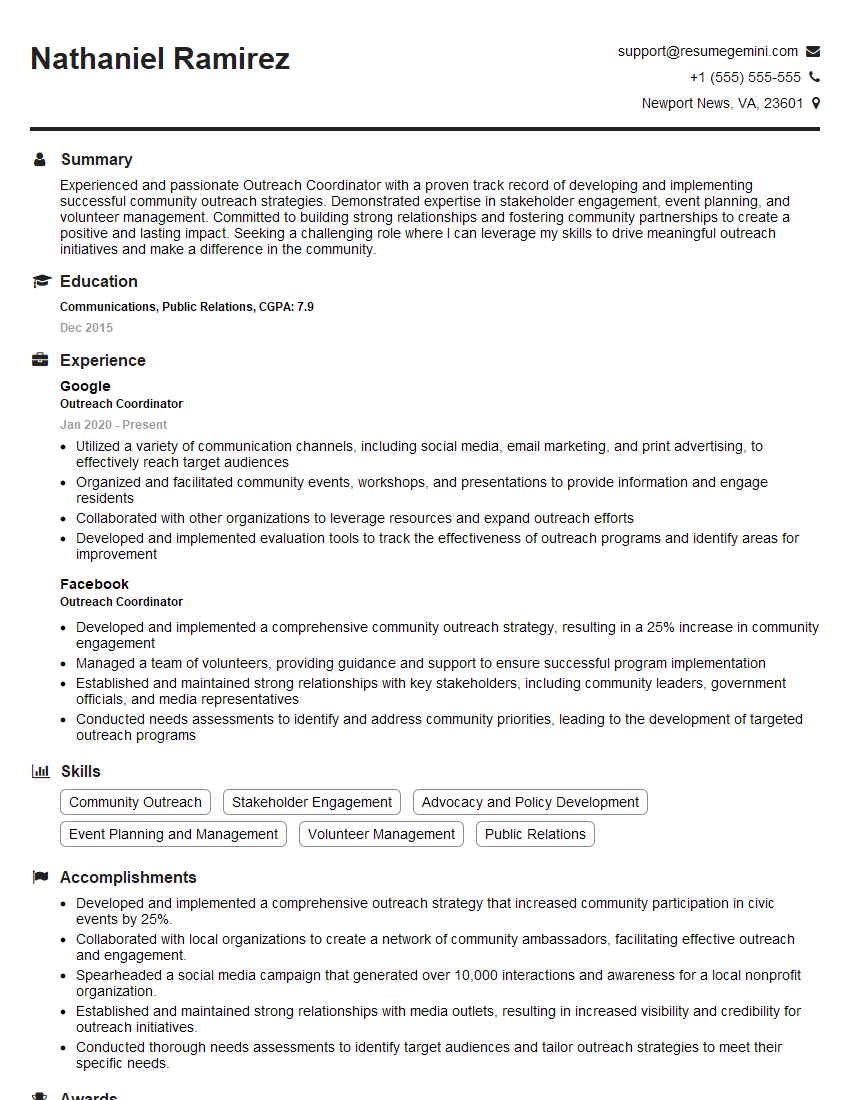
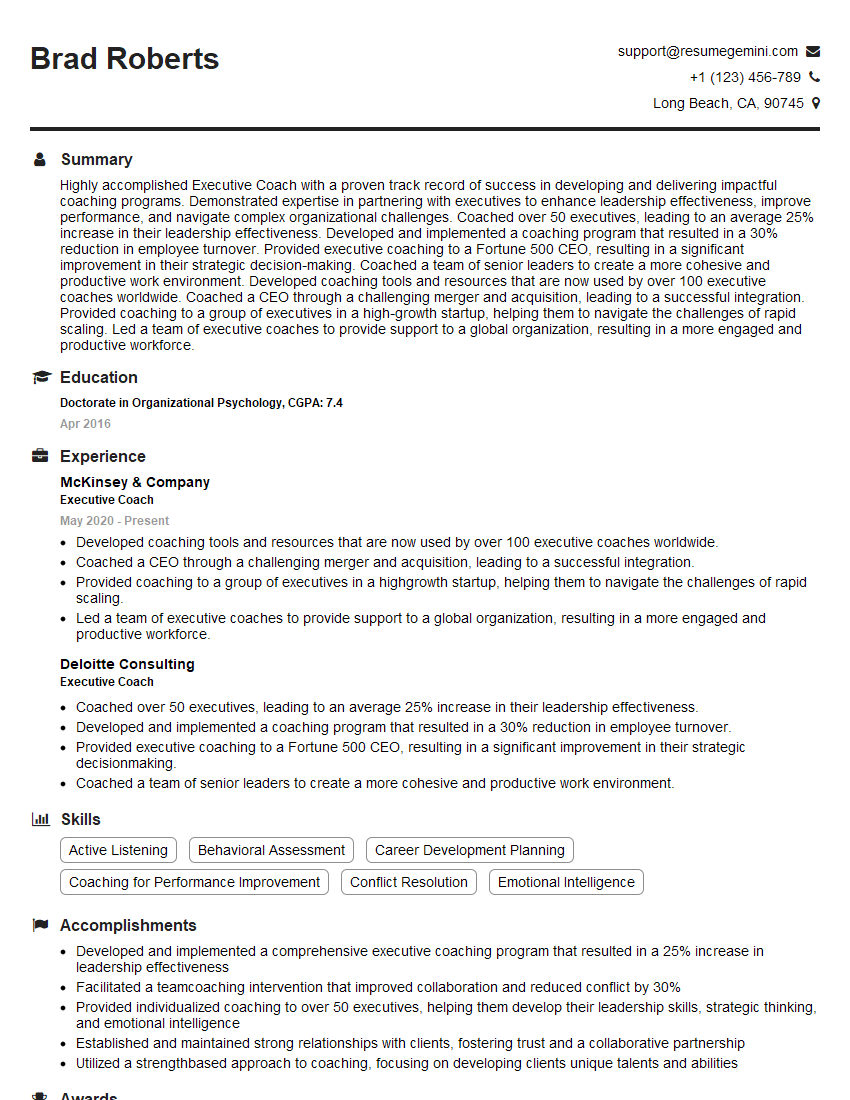
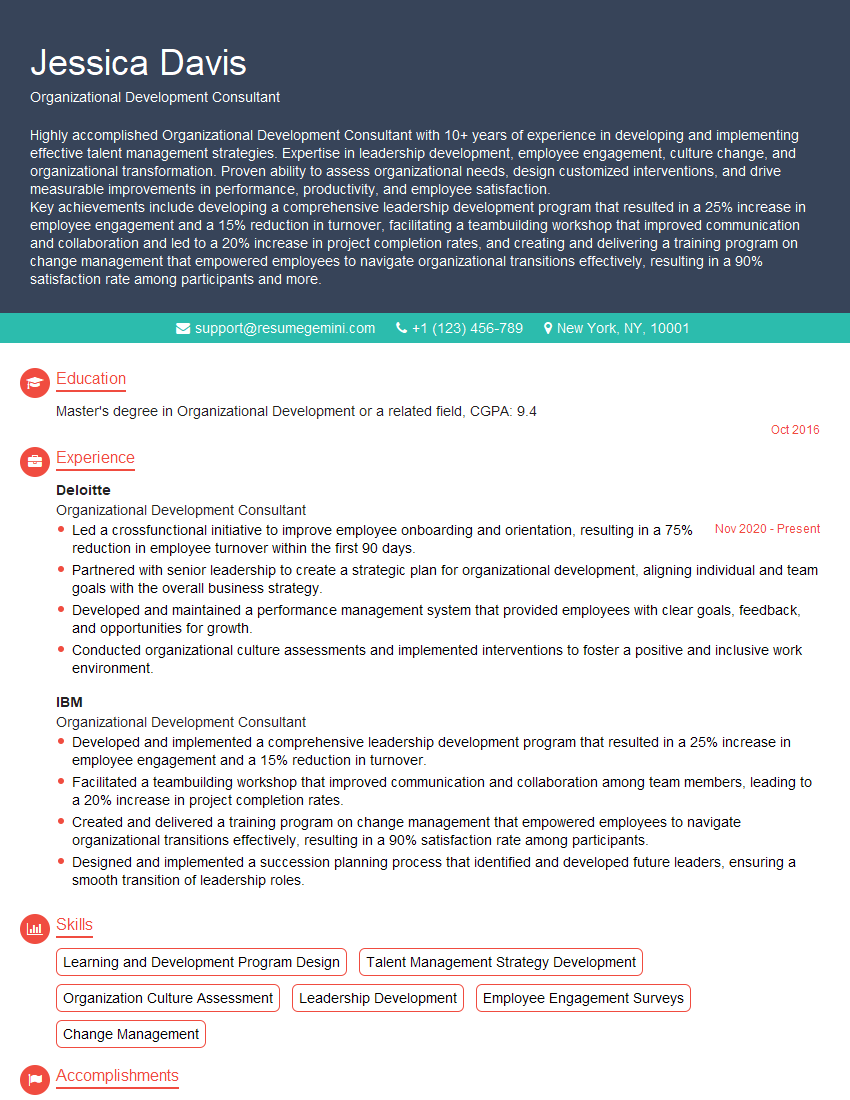
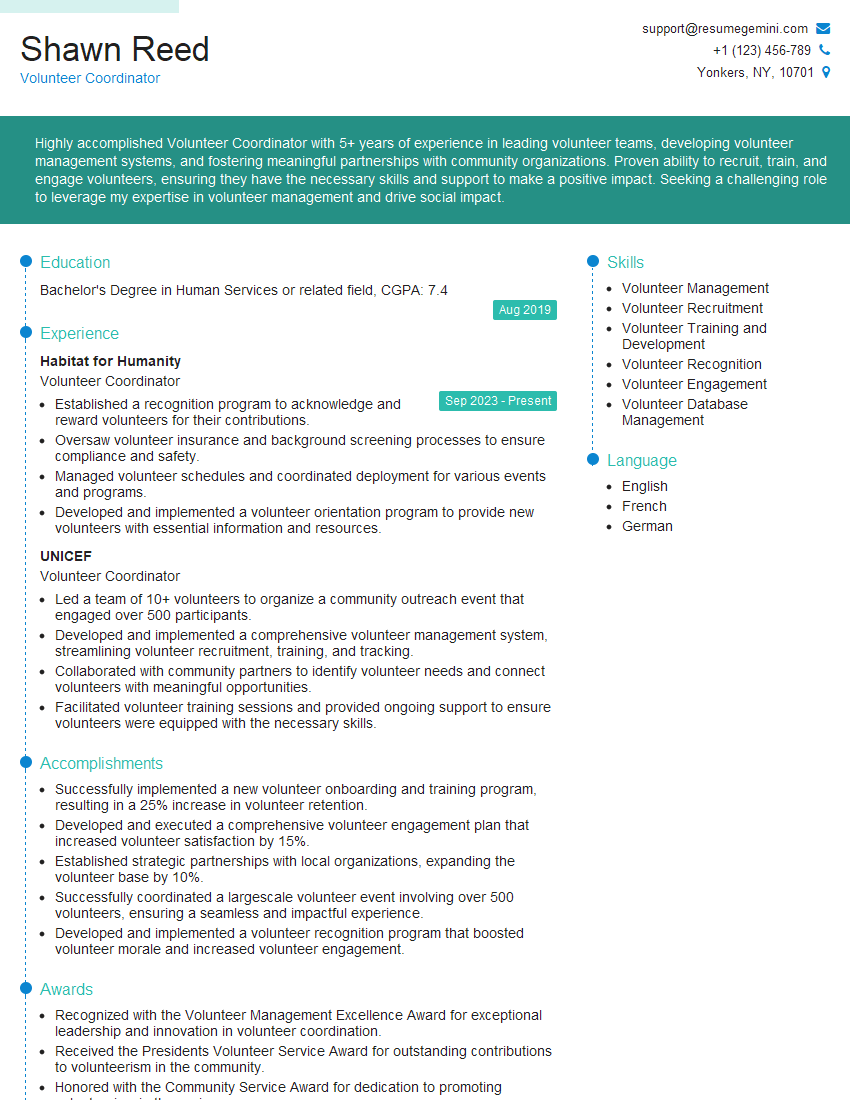
Mastering Volunteer and Coaching Development opens doors to rewarding careers in non-profit organizations, human resources, and community development. These skills are highly valued for their ability to build strong teams, enhance organizational effectiveness, and create positive social impact. To maximize your job prospects, creating a strong, ATS-friendly resume is crucial. ResumeGemini is a trusted resource that can help you craft a professional and impactful resume tailored to highlight your unique skills and experience. Examples of resumes tailored to Volunteer and Coaching Development are available to guide you through the process.
Explore more articles
Users Rating of Our Blogs
Share Your Experience
We value your feedback! Please rate our content and share your thoughts (optional).
What Readers Say About Our Blog
Very informative content, great job.
good