Cracking a skill-specific interview, like one for Waistband Overlock Seaming, requires understanding the nuances of the role. In this blog, we present the questions you’re most likely to encounter, along with insights into how to answer them effectively. Let’s ensure you’re ready to make a strong impression.
Questions Asked in Waistband Overlock Seaming Interview
Q 1. Describe the process of overlocking a waistband.
Overlocking a waistband involves using an overlock machine to create a neat, durable, and finished edge on the waistband fabric. This prevents fraying and provides a professional finish. The process generally involves feeding the waistband fabric through the overlock machine, which simultaneously cuts, stitches, and finishes the raw edge. Think of it like creating a secure and attractive hem, but specifically for the waistband.
The steps usually include: First, prepare the waistband by cutting it to the correct size and ensuring all raw edges are aligned. Then, feed the waistband into the overlock machine, adjusting the differential feed and stitch tension as needed. The overlock machine will then stitch the edges together, creating a neat and finished seam. Finally, trim any excess fabric.
Q 2. What types of overlock stitches are suitable for waistband construction?
Several overlock stitch types are suitable, each offering slightly different properties. The most common are a 3-thread overlock, a 4-thread overlock, and a 5-thread overlock with a rolled hem.
- 3-thread overlock: This stitch type is simple, fast, and economical, offering a basic, secure seam. It’s best for less bulky waistbands and lighter fabrics.
- 4-thread overlock: This provides a more durable and aesthetically pleasing seam than the 3-thread version, with better stretch recovery. It’s a great all-around choice for many waistband fabrics.
- 5-thread overlock (with rolled hem): This is ideal for fabrics prone to fraying, creating a finished, professional-looking edge. The rolled hem prevents fraying, and is commonly used for lightweight to medium weight fabrics.
The choice depends on the fabric type, waistband thickness, and desired aesthetic. For instance, a delicate silk waistband might benefit from a 3-thread or 5-thread rolled hem, whereas a sturdy denim waistband might use a 4-thread stitch.
Q 3. How do you adjust stitch tension for different fabric weights in waistband overlocking?
Adjusting stitch tension is crucial for achieving a professional finish. Heavier fabrics require more tension to prevent the stitches from being loose, whereas lighter fabrics need less tension to avoid puckering or distortion. Think of it like adjusting the tightness of a knot – too loose, and it comes undone, too tight, and it might break the string.
For heavier fabrics like denim, you’ll generally need to increase the differential feed and increase the tension on all threads. Lighter fabrics like silk may require a reduction in tension to prevent puckering. It’s an iterative process: adjust the tension slightly, test a small section, and make further adjustments based on the results. Many overlock machines have tension dials for each thread, allowing for precise control.
Experienced operators often rely on their touch and feel to determine the appropriate tension, learning to recognise the subtle differences in fabric behaviour during stitching. Proper testing on scrap fabric is always recommended before working on the final piece.
Q 4. Explain the importance of proper fabric alignment during waistband overlocking.
Accurate fabric alignment is paramount during waistband overlocking. Improper alignment will lead to uneven seams, a distorted waistband, and a less professional-looking garment. Imagine trying to build a house with uneven bricks – the structure would be weak and visually unappealing.
Before stitching, carefully ensure that all layers of the waistband fabric are precisely aligned along the raw edge. Use pins or clips to hold the fabric in place, paying close attention to the selvedge (the finished edge) of the fabric. Even a slight misalignment can be amplified during the stitching process. Pinning, or using a specialized seam guide on the machine, ensures that every stitch is made in the same relative position, resulting in a consistent and beautiful waistband.
Q 5. What are common challenges encountered during waistband overlocking and how do you resolve them?
Several challenges can arise during waistband overlocking. Common issues include:
- Uneven stitching: This often stems from incorrect stitch tension, differential feed settings, or inconsistent fabric feeding. Solution: Adjust the machine settings, check for any obstructions, and ensure smooth fabric feeding.
- Skipped stitches: This can be caused by dull needles, incorrect thread tensions, or lint buildup in the machine. Solution: Replace the needles, adjust the thread tension, and clean the machine.
- Fabric puckering: This is usually a result of too much tension on lighter fabrics or insufficient tension on heavier fabrics. Solution: Adjust the stitch tension and differential feed accordingly.
- Broken threads: This often points towards using damaged or incorrect thread, or problems with the threading of the machine. Solution: Use high-quality thread, inspect and correct threading, and ensure the machine is properly lubricated.
Troubleshooting often involves a systematic approach. Check the machine’s mechanics, then the thread, then the stitch settings. Experience allows for faster identification and solutions.
Q 6. How do you ensure consistent seam width and stitch length during waistband overlocking?
Maintaining consistent seam width and stitch length is crucial for professional results. Inconsistency leads to an unprofessional look and possible functional issues. This is achieved through proper machine setup and operator skill.
Most overlock machines offer adjustable settings for stitch length and differential feed. These settings should be adjusted before beginning the stitching process and remain consistent throughout. A seam guide, fitted on the machine, assists in maintaining a uniform seam width. Regularly checking the stitch quality during the operation, and making minor adjustments, prevents significant variation. The ability to judge stitch quality and make fine adjustments comes with experience.
Q 7. Describe your experience with different types of overlock machines.
Throughout my career, I’ve worked with a variety of overlock machines, from basic industrial models to high-end computerized machines. Each has its own strengths and weaknesses. Industrial models are often robust and durable, ideal for high-volume production, although they can be less user-friendly. Computerized machines offer greater precision and programmable stitch settings, allowing for fine-tuned control, but they require more technical expertise.
My experience includes using machines from brands like [Mention specific brands if comfortable, otherwise omit], each presenting unique features and operational nuances. I’m proficient in maintaining and troubleshooting various models, understanding their capabilities and limitations. I adapt my approach and skill set to the specific machine at hand.
Q 8. How do you maintain and troubleshoot an overlock machine used for waistband seaming?
Maintaining an overlock machine for waistband seaming is crucial for consistent quality and efficient production. Think of it like maintaining a finely tuned engine – regular care prevents major breakdowns. My routine involves daily cleaning, weekly lubrication, and monthly more thorough checks.
- Daily Cleaning: I remove lint and fabric scraps from the machine’s various parts, particularly the knife area, feed dogs, and looper mechanism. A small brush and compressed air are invaluable here. Failure to do this leads to skipped stitches and poor seam quality.
- Weekly Lubrication: Specific lubrication points are detailed in the machine’s manual. I use the recommended oil sparingly, focusing on moving parts. This reduces friction and extends the machine’s lifespan. Ignoring this can lead to excessive wear and tear.
- Monthly Inspection: This more in-depth check includes examining the tension discs for wear, checking the timing of the loopers, and ensuring the knives are sharp and properly aligned. I also clean the bobbin area thoroughly. A dull knife, for instance, can cause a messy, unprofessional seam.
- Troubleshooting: Common issues are easily solved. Skipped stitches often indicate tension problems; I adjust the tension discs systematically until I achieve the desired stitch. A broken needle is easily replaced. More complex issues require a service technician.
Regular maintenance prevents costly repairs and ensures high-quality waistband seams. It’s a preventative measure that saves time and resources in the long run.
Q 9. What safety precautions do you follow when operating an overlock machine?
Safety is paramount when operating an overlock machine. Think of it like driving a car – safety procedures are non-negotiable. My safety precautions include:
- Always unplug the machine before cleaning or making adjustments. This prevents accidental shocks.
- Keep my hands away from the moving parts while the machine is running. The knives are extremely sharp and moving parts can cause injury.
- Use a finger guard or other safety device when working with sharp needles. This prevents accidental needle pricks.
- Keep the work area clean and well-lit. A clutter-free space minimizes the risk of tripping and improves visibility, reducing chances of accidental injury.
- Wear appropriate clothing. Loose clothing can get caught in the machine. I always wear close-fitting attire.
- Follow the manufacturer’s instructions carefully and never attempt any repairs beyond basic troubleshooting without training.
These measures, while seemingly simple, significantly reduce the risk of accidents and injuries while ensuring a safe and productive working environment.
Q 10. How do you inspect a finished waistband for quality?
Inspecting a finished waistband involves a thorough visual and tactile examination. It’s like a final quality check before delivering a product to the customer. I check for several key aspects:
- Seam Straightness and Evenness: The overlock seam should be straight, consistent, and free of any puckering or distortion. Uneven seams indicate problems with the machine’s settings or fabric handling.
- Stitch Quality: Stitches should be consistent in length and tension, neither too loose nor too tight. Skipped stitches or broken threads are unacceptable. This is where experience plays a role in recognizing slight imperfections.
- Fabric Edges: The overlock seam should neatly finish the fabric edges, preventing fraying. Raw edges mean a failure to properly trim before seaming.
- Overall Appearance: The waistband should be free of any visible defects such as stains, tears, or loose threads. It’s crucial for a presentable finish.
- Measurement and Fit: The waistband’s dimensions must adhere to the specifications, and it should fit the garment properly.
By meticulously checking these points, I ensure that the finished waistband meets the highest quality standards and is ready for use.
Q 11. What are the quality control standards for waistband overlock seaming in your experience?
Quality control standards for waistband overlock seaming are rigorous. They go beyond just a visually acceptable seam; they incorporate consistency, durability, and compliance with industry best practices. In my experience, these standards include:
- Consistent Stitch Length and Tension: A specified range ensures strength and appearance, minimizing variations. Too loose, and the seam unravels; too tight, and the fabric wrinkles.
- Proper Edge Finishing: Neat, clean edges prevent fraying and maintain a professional look. Trimming before seaming is crucial here.
- Absence of Defects: No skipped stitches, broken threads, or inconsistencies in the seam are permitted. This reflects machine maintenance and operator skill.
- Adherence to Specifications: The waistband must meet the precise length, width, and other dimensional requirements.
- Use of Appropriate Thread: Correct thread type and color ensure durability and aesthetic appeal. Using the wrong thread compromises seam strength.
Meeting these standards ensures product quality and customer satisfaction. Regular checks and adjustments during the process, as well as final inspection, are essential.
Q 12. How do you handle defective or damaged fabric during waistband construction?
Handling defective or damaged fabric during waistband construction requires careful assessment and decision-making. It’s about minimizing waste and maintaining quality. My approach involves:
- Careful Inspection: I thoroughly examine the fabric for any flaws before starting the process. This helps avoid wasting time and material on a damaged piece.
- Damage Assessment: I determine the extent of the damage. Small imperfections may be workable; large tears or significant flaws usually lead to rejection.
- Repair or Replacement: If repairable, I may carefully mend the fabric using appropriate techniques. For extensive damage, replacement with a new piece is necessary.
- Documentation: I always document the reasons for rejection or repair to improve future material selection and production process.
- Waste Management: Damaged fabric is disposed of responsibly according to company policies and environmental regulations.
This process ensures that only high-quality waistbands are produced, minimizing defects and maximizing efficiency.
Q 13. What is your experience with different types of waistband fabrics (e.g., woven, knit)?
My experience encompasses a variety of waistband fabrics, each requiring a slightly different approach. Woven and knit fabrics present unique challenges:
- Woven Fabrics: These tend to be more stable and easier to work with. The overlock stitch is usually straightforward, focusing on neat edge finishing. Examples include cotton twill, denim, or linen.
- Knit Fabrics: Knit fabrics can be more stretchy and prone to distortion. Proper tension adjustments on the overlock machine are crucial to prevent stretching or puckering of the seam. Examples include jersey, interlock, or rib knit. Sometimes, a specialized stitch or a stabilizing technique like using a narrow zig-zag stitch before overlocking might be needed to ensure that the seam holds up.
- Other Fabrics: I’ve also worked with blends (e.g., cotton/polyester) and other fabric types, each requiring careful consideration of their unique properties to adapt my sewing methods accordingly.
Understanding the properties of each fabric is key to achieving a high-quality, durable waistband.
Q 14. How do you adapt your overlocking technique for different waistband designs?
Adapting my overlocking technique for different waistband designs requires flexibility and attention to detail. It’s about tailoring the process to achieve the specific aesthetic and functional requirements of the design.
- Simple Straight Waistbands: A straightforward approach is sufficient; focus is on consistent seam quality and precise cutting.
- Curved or Shaped Waistbands: Careful fabric manipulation and potentially smaller stitch length is needed to manage the curves, ensuring a smooth, non-distorted result.
- Waistbands with Multiple Layers: Additional care is required to ensure all layers are evenly fed into the overlock machine to avoid uneven stitching.
- Waistbands with Added Features: Features such as elastic casings or decorative stitching necessitate careful planning and execution to integrate these elements seamlessly into the overlock seaming process.
Experience in working with a variety of designs has enabled me to develop an adaptable technique, allowing me to tackle even the most complex waistband designs efficiently and effectively.
Q 15. What is your experience with sergers and their role in waistband finishing?
Sergers, also known as overlock machines, are indispensable in waistband finishing. They create a professional, clean, and durable edge by simultaneously cutting, stitching, and overlocking the raw fabric edges. My experience spans over 10 years, working with various serger models from industrial-grade machines like Juki and Brother to smaller, more compact models. I’m proficient in adjusting stitch length, tension, and differential feed to achieve the perfect seam for different fabric weights and types. For waistbands, the serger prevents fraying, adds strength to the seam, and contributes significantly to the overall garment quality. For example, a tightly-stitched overlock seam on a denim waistband will ensure long-lasting durability, preventing the seam from unraveling even after repeated wear and washing.
Career Expert Tips:
- Ace those interviews! Prepare effectively by reviewing the Top 50 Most Common Interview Questions on ResumeGemini.
- Navigate your job search with confidence! Explore a wide range of Career Tips on ResumeGemini. Learn about common challenges and recommendations to overcome them.
- Craft the perfect resume! Master the Art of Resume Writing with ResumeGemini’s guide. Showcase your unique qualifications and achievements effectively.
- Don’t miss out on holiday savings! Build your dream resume with ResumeGemini’s ATS optimized templates.
Q 16. How do you calculate the required amount of fabric for a waistband?
Calculating waistband fabric requires careful consideration. It’s not just about the waist circumference. You need to account for the desired waistband width, seam allowances, and any overlaps or closures. The formula generally looks like this:
Total Fabric Length = (Waist Circumference + desired overlap + seam allowance) * 2 + desired waistband width * 2
Let’s say we need a waistband for a 30-inch waist, a 2-inch overlap for a buckle, a ½-inch seam allowance on each side (1-inch total), and a 3-inch wide waistband. The calculation would be:
Total Fabric Length = (30 + 2 + 1) * 2 + 3 * 2 = 74 inches
This calculation provides a precise amount of fabric to minimize waste and ensure sufficient material for a perfect fit. Different closure types (zippers, hook-and-eye, buttons) require different overlap calculations. I’ve developed a spreadsheet to automate this calculation and adjust for various styles and sizes, maximizing efficiency in material usage.
Q 17. How do you manage your time and workload to meet production goals in waistband seaming?
Meeting production goals in a waistband seaming operation requires efficient time management. My strategy relies on a combination of careful planning and continuous monitoring. I begin by analyzing the order details, including quantity, fabric type, and waistband specifications. I then break down the overall task into smaller, manageable steps – cutting, serging, assembling, and quality control. This allows me to allocate time for each step realistically. I utilize time-study techniques to track my productivity on each process, identifying areas for improvement and optimizing my workflow. For example, using pre-cut fabric significantly reduces time spent on cutting and leads to greater efficiency. Regular breaks are crucial to maintain focus and prevent fatigue. My daily schedule includes dedicated periods for high-concentration tasks, interspersed with lower-focus tasks to maximize productivity throughout the day.
Q 18. Describe your experience working in a fast-paced production environment.
I thrive in fast-paced production environments. My previous role involved meeting daily quotas for various waistband styles, often under tight deadlines. I’m adept at prioritizing tasks, managing multiple projects concurrently, and adapting to unexpected changes in production schedules. I’ve honed my skills in maintaining consistent speed and quality even under pressure. For example, during a peak season with increased order volume, I successfully implemented a system of color-coded bins for different waistband styles and sizes, streamlining our production process and preventing delays. My ability to troubleshoot equipment issues and swiftly resolve jams or malfunctions minimizes downtime and ensures continuous workflow.
Q 19. How do you prioritize tasks when working on multiple waistband projects simultaneously?
When handling multiple waistband projects simultaneously, I employ a prioritization system based on several factors: urgency (due dates), complexity (fabric type, design), and quantity. I use a Kanban-style system to visually track the progress of each project. This allows me to easily identify potential bottlenecks and adjust my workflow accordingly. High-priority projects are tackled first, and I break down complex projects into smaller, manageable tasks. For example, if I have three projects – a large order of simple cotton waistbands, a smaller order of intricately designed silk waistbands, and an urgent rush order of basic denim waistbands, I would prioritize the rush order first, then the silk waistbands, and lastly the cotton waistbands, ensuring all orders are fulfilled within their respective deadlines.
Q 20. How do you handle constructive criticism and feedback on your waistband seaming work?
Constructive criticism is invaluable for improvement. I welcome feedback on my waistband seaming work as an opportunity to refine my techniques and enhance my skills. I approach criticism with a positive and receptive attitude. I carefully analyze the feedback, identifying specific areas for development, and actively implement the suggestions to improve my workflow. For instance, if feedback indicates inconsistency in stitch tension, I would meticulously examine my machine settings and my own techniques, making adjustments to achieve greater uniformity. I maintain open communication with supervisors and peers to ensure a collaborative environment where continuous improvement is valued.
Q 21. Explain your proficiency with various overlock stitch types and their applications.
My proficiency with various overlock stitch types is extensive. I’m familiar with the standard 3-thread, 4-thread, and 5-thread overlock stitches. The 3-thread stitch is suitable for lightweight fabrics, providing a neat and stretchy finish. The 4-thread stitch offers more strength and durability, ideal for medium-weight fabrics. The 5-thread stitch, with its additional cover stitch, provides maximum durability and a clean, professional finish – perfect for heavier fabrics like denim or canvas. I also have experience using rolled and safety stitches, employing them based on fabric type and garment requirements. Selecting the appropriate stitch type significantly impacts the overall quality and durability of the waistband, contributing to a finished product that is both aesthetically pleasing and functional.
Q 22. Describe a time you had to troubleshoot a problem with your overlock machine during production.
During a large production run of high-waisted trousers, our overlock machine started producing inconsistent stitching – some areas were tight, others loose. My initial troubleshooting involved checking the obvious: thread tension, needle condition, and stitch length settings. I found that the thread tension was slightly off, causing the inconsistent stitching. After adjusting the tension using the machine’s dials and testing on a scrap piece of fabric, the problem was resolved. I then went a step further and meticulously inspected the machine’s components, looking for loose screws or any signs of wear and tear. A preventative maintenance schedule would have caught this earlier.
This experience highlighted the importance of regular maintenance and preventative measures. A simple adjustment prevented significant downtime and costly rework.
Q 23. How do you ensure the durability and longevity of your waistband overlock seams?
Ensuring durable and long-lasting waistband overlock seams involves several key strategies. First, using high-quality, durable threads is essential. I prefer 100% polyester or a polyester-core wrapped thread for its strength and resistance to abrasion. Second, proper tension settings are paramount. Incorrect tension can lead to weak seams or skipped stitches. Third, the correct needle and blade combination is crucial for clean, secure stitches. For instance, a sharp, well-maintained blade prevents fraying and ensures a professional finish. And finally, proper seaming techniques, like maintaining consistent fabric feeding and using the correct stitch length, are crucial for long-term seam integrity. Think of it like building a strong brick wall; each brick (stitch) must be carefully placed and securely bound for ultimate stability.
Q 24. Explain the differences between different types of overlock machine blades and needles.
Overlock machine blades and needles come in various types, each designed for specific fabrics and stitch types. Blades are categorized by their function, primarily cutting and finishing. A standard blade is good for most fabrics. However, for delicate fabrics like silk, a micro-serrated blade reduces the chance of snagging. Needles also vary. You have standard needles, stretch needles (for knit fabrics), and ballpoint needles (to prevent snagging in knits). A wrong needle can result in broken needles, damaged fabric or poor stitch quality. For example, using a standard needle on a knit fabric will likely cause skipped stitches or needle breakage. Selecting the appropriate needle and blade combination is crucial for achieving quality results and preventing machine damage.
Q 25. What is your experience with different types of waistband closures (e.g., hooks, zippers)?
My experience encompasses a range of waistband closures. Hooks and eyes offer a classic, discreet closure, ideal for many types of trousers and skirts. They require precise placement and careful sewing to ensure a smooth finish and durability. Zippers, on the other hand, are more versatile, available in various materials and styles. They offer a more secure and robust closure, but require precise insertion and finishing to prevent bulkiness or visible stitching. I have also used hook-and-loop fasteners (Velcro) for less formal garments, providing ease of closure and removal. The choice of closure depends on the garment’s style, fabric, and desired level of durability and aesthetics.
Q 26. How do you maintain a clean and organized workspace during waistband overlock seaming?
Maintaining a clean and organized workspace is paramount for efficiency and safety. I follow a system of regularly clearing away scraps of fabric, empty spools, and any other debris. Tools are stored in designated places so they’re always within easy reach, thus preventing time wasted searching for items. My work surface is kept clean and free of clutter. This prevents accidents, improves the flow of work and allows for greater concentration, resulting in higher quality work and fewer mistakes.
Q 27. What are the different types of thread you typically use in waistband overlocking and why?
Thread selection is critical for overlocking waistbands. I often use a combination of thread types depending on the fabric and desired finish. Polyester thread is a popular choice for its strength and resistance to stretching and abrasion. It is particularly suitable for high-stress areas like waistbands. Cotton thread is softer and is better suited for softer fabrics but less durable. Sometimes, I’ll use a core-spun thread for added strength and even color. The color must match or complement the garment, often requiring using multiple colors for contrasting effects or to match multiple fabrics in the garment.
Q 28. How would you train a new employee on the proper techniques for waistband overlock seaming?
Training a new employee starts with safety – proper machine operation, maintenance, and safe handling of tools and materials. I then demonstrate the correct techniques for threading the overlocker, adjusting tension, selecting the appropriate stitch type, and setting stitch length. Practical exercises on various fabric types, including woven and knit materials, follow demonstrations. I emphasize the importance of consistent fabric feeding and maintaining even pressure to prevent puckering or stretching. Throughout the training, I offer feedback, highlighting areas for improvement and offering constructive criticism. The goal is not just to teach the skills but also build their confidence and make them self-sufficient. I also provide regular check-ins and supervision to ensure consistency and competence in their work.
Key Topics to Learn for Waistband Overlock Seaming Interview
- Understanding Overlock Stitch Types: Explore different overlock stitch configurations and their suitability for various waistband fabrics and thicknesses. Consider the impact of stitch density and tension on seam strength and aesthetics.
- Fabric Selection and Preparation: Discuss the importance of choosing appropriate fabrics for waistband construction. Analyze pre-seam preparation techniques like cutting, grading, and interfacing to optimize seam performance.
- Seam Construction Techniques: Master different techniques for creating neat and durable waistband seams, including flat-felled seams, French seams, and variations tailored to specific waistband styles (e.g., elasticated, non-elasticated).
- Machine Operation and Maintenance: Demonstrate familiarity with industrial overlock machines. This includes threading, tension adjustments, needle selection, and routine maintenance to prevent malfunctions and ensure consistent seam quality.
- Quality Control and Troubleshooting: Describe methods for identifying and correcting common overlock seaming issues, such as skipped stitches, uneven seam allowances, and fabric puckering. Showcase your ability to diagnose and resolve problems efficiently.
- Efficiency and Production Optimization: Discuss strategies for maximizing efficiency in waistband overlock seaming, including optimizing stitch settings, utilizing appropriate tools, and employing ergonomic practices.
- Safety Procedures and Best Practices: Highlight your understanding and adherence to relevant safety protocols related to industrial sewing equipment, including machine guarding, proper handling of needles, and maintaining a clean workspace.
Next Steps
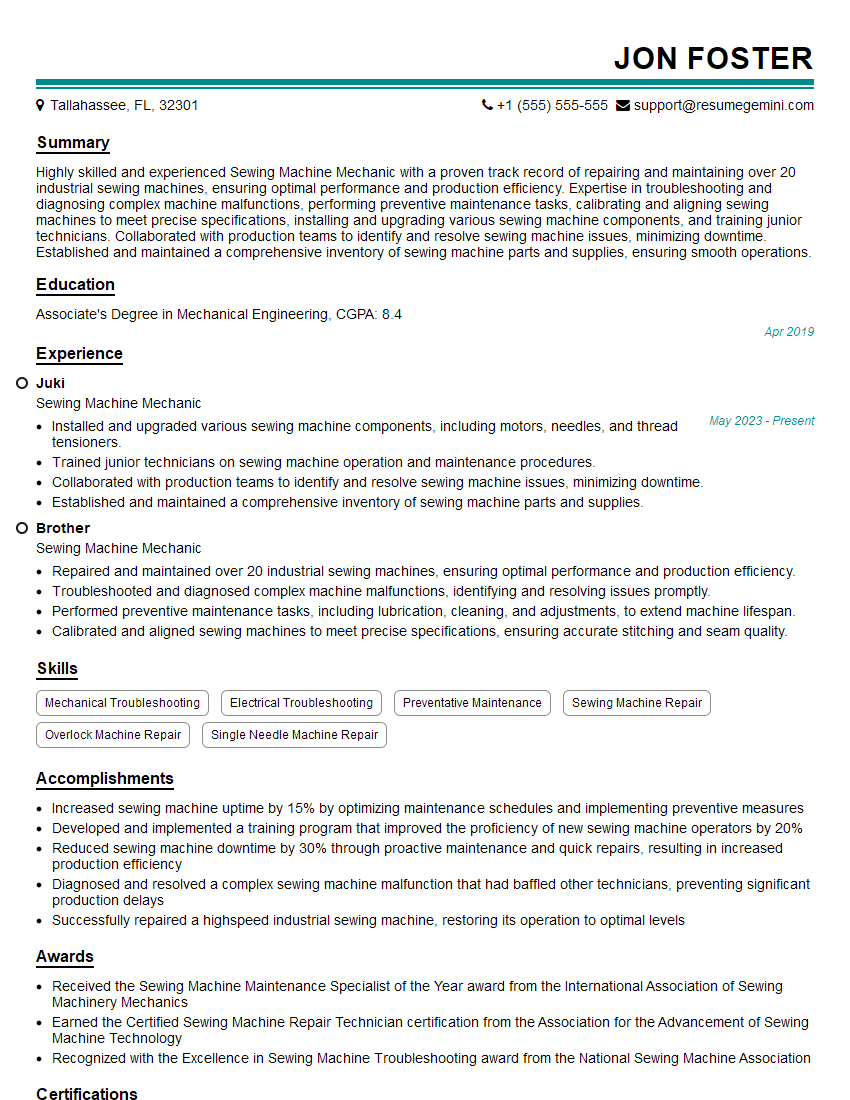
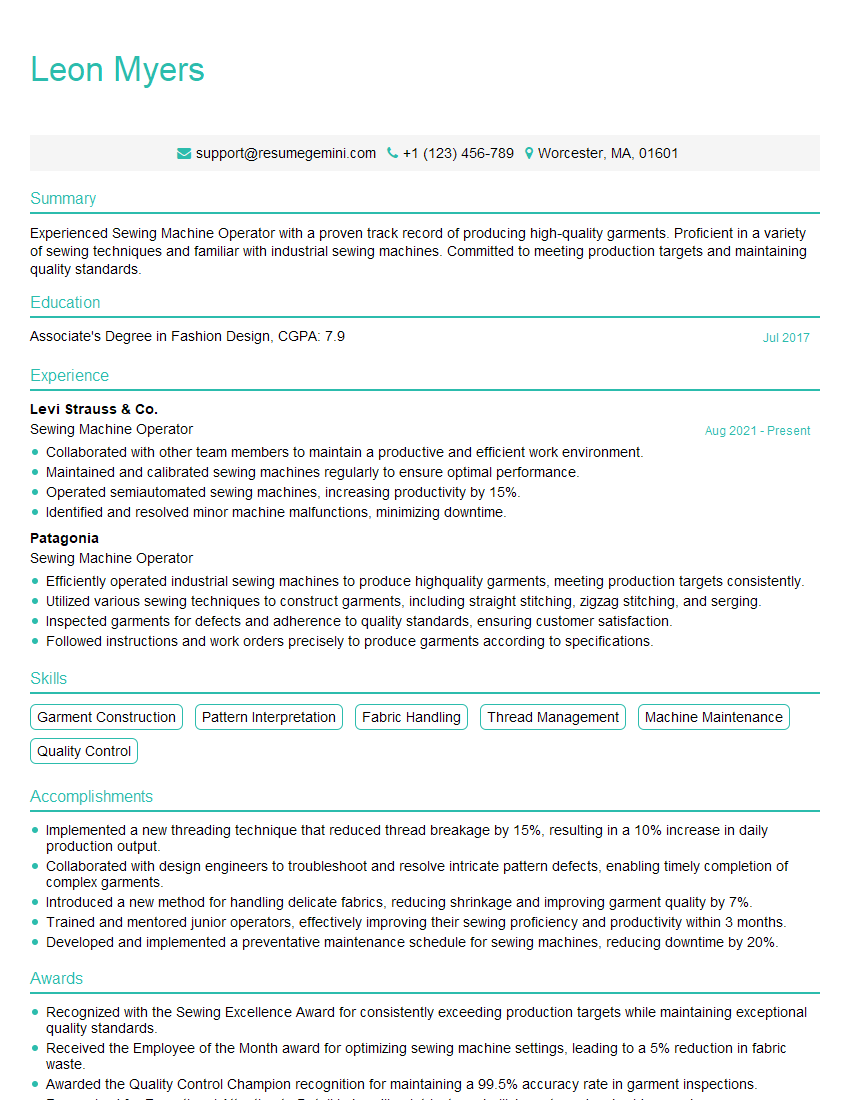
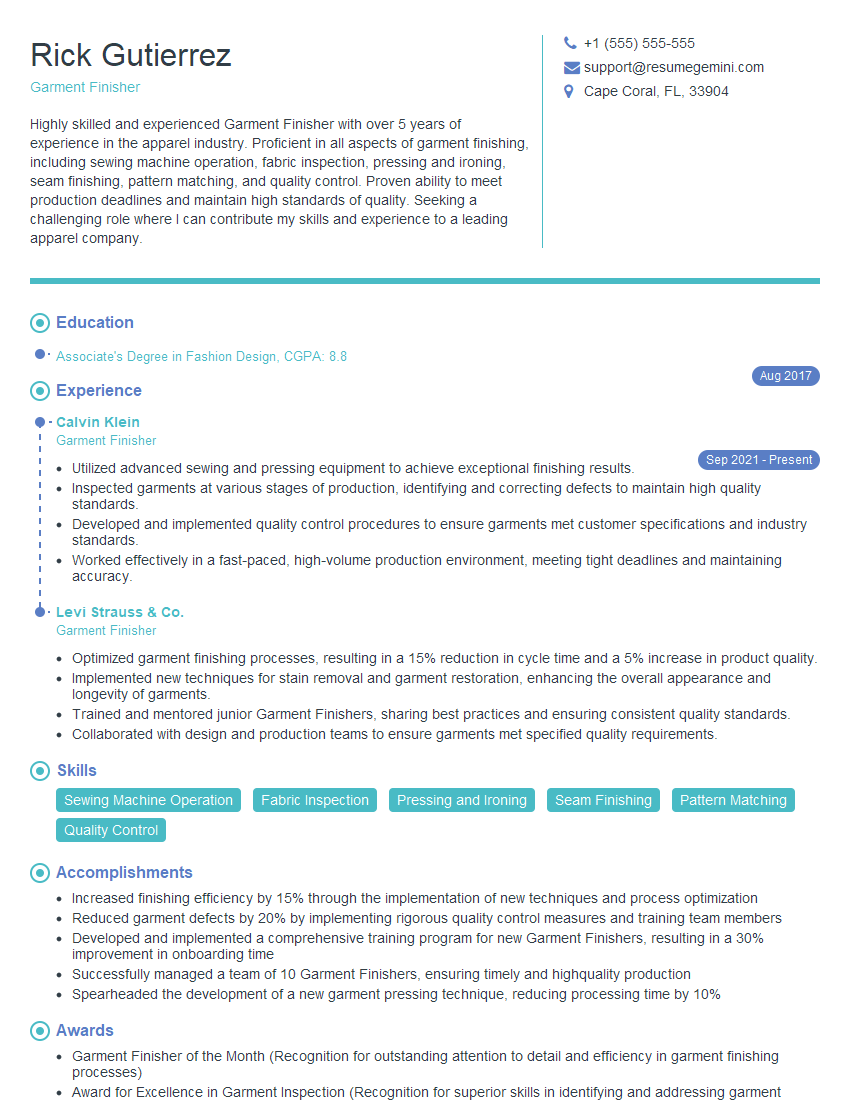
Mastering waistband overlock seaming is crucial for career advancement in the apparel manufacturing industry, opening doors to specialized roles and higher earning potential. A well-crafted resume is your key to unlocking these opportunities. Make sure your resume is ATS-friendly to ensure it gets noticed by hiring managers. ResumeGemini is a trusted resource to help you create a professional and effective resume that showcases your skills and experience. Examples of resumes tailored to Waistband Overlock Seaming expertise are available to guide you through the process.
Explore more articles
Users Rating of Our Blogs
Share Your Experience
We value your feedback! Please rate our content and share your thoughts (optional).
What Readers Say About Our Blog
Very informative content, great job.
good