Interviews are more than just a Q&A session—they’re a chance to prove your worth. This blog dives into essential Warehouse Management (if applicable) interview questions and expert tips to help you align your answers with what hiring managers are looking for. Start preparing to shine!
Questions Asked in Warehouse Management (if applicable) Interview
Q 1. Describe your experience with Warehouse Management Systems (WMS).
My experience with Warehouse Management Systems (WMS) spans over eight years, encompassing implementation, configuration, and ongoing optimization across various industries, including e-commerce and manufacturing. I’ve worked with leading WMS platforms like Manhattan Associates, Blue Yonder, and NetSuite, gaining proficiency in their core functionalities such as inventory management, order fulfillment, warehouse control, and reporting. I’m adept at integrating WMS with other enterprise systems like ERP and transportation management systems (TMS), ensuring seamless data flow and operational efficiency. For instance, at my previous role, I successfully implemented a new WMS, resulting in a 15% reduction in order fulfillment time and a 10% decrease in picking errors. This involved detailed process mapping, user training, and ongoing system optimization based on performance metrics.
Q 2. How do you optimize warehouse layout for efficient order fulfillment?
Optimizing warehouse layout for efficient order fulfillment is crucial for minimizing travel time and maximizing throughput. My approach involves a systematic process that starts with understanding the product assortment, order profile, and picking strategies. We begin by analyzing the frequency of picking for each item – high-volume items should be located closest to the picking and packing stations, following the principle of ‘A’ items (fast-moving), ‘B’ items (medium-moving), and ‘C’ items (slow-moving). Next, we consider the physical characteristics of the warehouse: the size, ceiling height, and the existence of any constraints. For example, a high-bay warehouse might benefit from vertical storage solutions like narrow aisle racking and automated guided vehicles (AGVs). We also need to factor in safety considerations, including sufficient aisle widths and clear signage. Finally, the layout should allow for smooth workflow – receiving, putaway, picking, packing, and shipping – minimizing cross-traffic and bottlenecks. A well-designed layout is almost like an orchestra, with every instrument (employee and equipment) playing its part harmoniously to achieve the overall goal of timely and efficient order fulfillment.
Q 3. Explain your approach to inventory control and cycle counting.
My approach to inventory control is multifaceted and relies on a combination of robust WMS features and diligent physical checks. Accurate inventory data is the lifeblood of any warehouse, and I ensure this through regular cycle counting. Instead of a full inventory count, which can be disruptive, cycle counting involves counting a small portion of inventory regularly, usually by item or location. This allows for the detection of discrepancies early on, preventing larger problems later. We use a pre-defined schedule, often prioritizing high-value or frequently-moved items. Discrepancies are investigated immediately, checking for potential causes such as picking errors, receiving errors, or damaged goods. Beyond cycle counting, we implement strong receiving and putaway procedures, including verification against purchase orders and regular audits of stock locations. The goal is to minimize the gap between physical inventory and the system’s record, a key metric reflecting inventory control accuracy. We also use ABC analysis to categorize our inventory, allowing us to focus cycle counting efforts on our most valuable and frequently moved items.
Q 4. What metrics do you use to measure warehouse performance?
Measuring warehouse performance requires a balanced scorecard of Key Performance Indicators (KPIs). Some of the essential metrics I use include:
- Order fulfillment rate: The percentage of orders fulfilled accurately and on time.
- Inventory accuracy: The degree of agreement between the physical inventory and the system record.
- Order cycle time: The time taken from order placement to shipment.
- Picking accuracy: The percentage of orders picked without errors.
- Warehouse space utilization: The percentage of available space utilized efficiently.
- Labor productivity: Units picked or shipped per labor hour.
- Inventory turnover rate: How many times inventory is sold and replenished in a given period.
These metrics provide a holistic view of warehouse efficiency and allow for data-driven decision-making and continuous improvement. For example, tracking order cycle time helps us identify bottlenecks and optimize processes.
Q 5. How do you handle discrepancies in inventory counts?
Handling inventory discrepancies requires a structured approach to identify the root cause and prevent recurrence. Upon detecting a discrepancy through cycle counting or other means, we initiate an investigation. This includes:
- Verification: Recounting the inventory at the location in question.
- Inspection: Checking for damaged or misplaced items.
- Review of transactions: Analyzing recent receipts, shipments, and picking transactions related to the affected items.
- System review: Ensuring the WMS is accurately reflecting transactions.
- Corrective action: Updating the inventory records to reflect the accurate count and implementing procedures to prevent similar discrepancies.
We document all findings and corrective actions, making adjustments to our processes where necessary to minimize future errors. In some cases, employee training may be needed to improve picking and receiving accuracy.
Q 6. Describe your experience with different types of inventory management techniques (FIFO, LIFO, etc.).
I have extensive experience implementing and managing various inventory management techniques, including FIFO (First-In, First-Out), LIFO (Last-In, First-Out), and FEFO (First-Expired, First-Out). The choice of method depends heavily on the nature of the inventory. FIFO is ideal for perishable goods or items with a short shelf life, ensuring the oldest items are used first to minimize spoilage. LIFO, on the other hand, can be advantageous for non-perishable items, as it can match the cost of goods sold more closely to current market prices. However, it’s less common in warehouse management because it requires careful tracking and potentially complex accounting considerations. FEFO is critical when dealing with products with expiration dates, preventing losses due to expiry. We carefully consider the implications of each method on inventory valuation, cost accounting, and potential obsolescence when choosing the right strategy for specific items. For example, a grocery warehouse would primarily use FIFO for produce and FEFO for packaged goods with expiration dates.
Q 7. How do you ensure the safety of warehouse employees and equipment?
Ensuring warehouse safety is paramount. My approach is multifaceted and incorporates several key strategies:
- Regular safety training: Conducting frequent safety training sessions for all employees covering topics such as safe equipment operation, proper lifting techniques, fire safety, and emergency procedures.
- Proper equipment maintenance: Implementing a rigorous preventative maintenance schedule for all warehouse equipment, including forklifts, conveyor systems, and racking to minimize the risk of accidents.
- Well-lit and organized workspace: Maintaining a well-lit and organized warehouse to minimize trip hazards and improve visibility.
- Clear safety signage: Implementing clear and concise safety signage throughout the warehouse, indicating potential hazards and emergency exits.
- Regular safety inspections: Conducting regular safety inspections to identify and address potential hazards promptly.
- Emergency preparedness: Developing and regularly practicing emergency response plans, including evacuation procedures and emergency contact information.
Safety is not just a policy but a culture that we foster within the warehouse team. We encourage employees to report any safety concerns immediately and actively promote a proactive safety environment.
Q 8. What is your experience with implementing and managing warehouse safety programs?
Warehouse safety is paramount. My approach to implementing and managing safety programs involves a multi-faceted strategy focusing on prevention, training, and continuous improvement.
Firstly, I conduct thorough risk assessments to identify potential hazards, from forklift operation to slips, trips, and falls. This involves physically inspecting the warehouse, analyzing accident reports (if any exist), and reviewing safety procedures. Based on this assessment, I develop a comprehensive safety plan outlining specific preventative measures, such as implementing clear signage, maintaining proper lighting, and ensuring adequate space for maneuvering equipment.
Secondly, robust training is crucial. All staff, regardless of their role, receive comprehensive safety training. This includes forklift certifications where applicable, emergency procedures, and the proper use of personal protective equipment (PPE). Regular refresher courses and safety drills keep these skills sharp and reinforce the importance of safety.
Finally, continuous improvement is key. I regularly review safety performance data, including incident reports and near-misses, to identify trends and areas for improvement. This data-driven approach allows for proactive adjustments to the safety program, ensuring its effectiveness in minimizing risks. For example, a spike in slip and fall incidents might lead to an investigation of floor conditions and the implementation of improved cleaning protocols.
Q 9. How do you handle peak seasons or unexpected surges in order volume?
Handling peak seasons requires proactive planning and flexible strategies. My approach begins with accurate forecasting to anticipate demand surges. This involves analyzing historical sales data, considering market trends, and collaborating with sales and marketing teams.
Once the forecast is established, I develop a contingency plan. This plan may include temporarily increasing staffing levels, utilizing overtime, optimizing warehouse layout to maximize throughput, and leveraging temporary storage solutions if needed. Technology plays a crucial role; implementing advanced warehouse management systems (WMS) with real-time tracking capabilities ensures efficient order fulfillment even during high-volume periods.
Beyond the proactive measures, I ensure our team is adaptable. Cross-training employees allows for flexibility in assigning tasks based on immediate needs. Clear communication channels are essential to keep the team informed and coordinated during these busy times, preventing bottlenecks and maintaining morale. For example, during a recent holiday rush, we implemented a color-coded system for prioritizing orders, which improved efficiency by 15%.
Q 10. Describe your experience with managing warehouse staff, including hiring, training, and performance management.
Managing warehouse staff effectively involves a holistic approach, encompassing hiring, training, and performance management.
Hiring begins with defining clear job descriptions that outline specific responsibilities and required skills. I utilize diverse recruitment strategies, including online job boards and partnerships with local employment agencies, to attract a qualified pool of candidates. The interview process focuses on assessing not only technical skills but also teamwork, problem-solving abilities, and safety awareness.
Once hired, comprehensive training programs are essential. This includes safety training (as mentioned earlier), equipment operation, warehouse procedures, and the use of the WMS. Regular performance evaluations provide constructive feedback and identify areas for improvement. I also focus on fostering a positive work environment that encourages teamwork and communication. Performance reviews are not just about assessment; they’re also opportunities for career development and advancement within the company. Implementing a mentorship program proved extremely beneficial in boosting team morale and productivity.
Q 11. What is your experience with different types of warehouse equipment (forklifts, conveyor belts, etc.)?
My experience encompasses a wide range of warehouse equipment. I am proficient in operating and maintaining various types of forklifts, including sit-down, stand-up, and reach trucks, ensuring all operators are properly certified and adhering to safety regulations.
Experience with conveyor systems extends to understanding their mechanics, troubleshooting malfunctions (e.g., belt misalignment, sensor failures), and coordinating maintenance schedules. I am also familiar with automated guided vehicles (AGVs) and other automated systems, understanding their operational parameters and safety protocols.
Beyond these, I have hands-on experience with other equipment such as pallet jacks, hand trucks, and order pickers. Regular equipment inspections and preventative maintenance are key to minimizing downtime and ensuring the safety of personnel.
Q 12. How do you troubleshoot equipment malfunctions or system errors in the warehouse?
Troubleshooting equipment malfunctions requires a systematic approach. I begin by identifying the problem, whether it’s a malfunctioning forklift, a jammed conveyor belt, or a system error within the WMS.
My approach involves checking for obvious issues first – are there any visible obstructions or signs of damage? If the problem is more complex, I consult manuals, diagrams, and technical support resources, if needed. If the issue is with the WMS, I typically work closely with the IT department to resolve system errors or bugs.
Documenting each step in the troubleshooting process is essential for future reference and allows for a faster resolution time should similar problems arise. Regular preventative maintenance, as discussed earlier, is also vital in reducing the frequency of equipment failures.
Q 13. How do you manage warehouse space efficiently?
Efficient warehouse space management is crucial for optimizing operational costs and throughput. My strategies focus on maximizing vertical space utilization, optimizing storage locations, and employing advanced inventory management techniques.
Vertical space is maximized by using high-bay racking systems and mezzanine floors to store goods effectively. Optimizing storage locations involves strategically placing frequently accessed items in easily accessible areas and less frequently accessed items further back. This reduces travel time for order picking.
Furthermore, I use slotting optimization techniques to dynamically adjust product locations based on demand and turnover. Implementing a robust WMS with real-time inventory tracking helps ensure accurate inventory levels and minimizes wasted space.
Q 14. What strategies do you use to reduce warehouse operating costs?
Reducing warehouse operating costs is an ongoing objective. My strategies involve a combination of process optimization, technology implementation, and negotiation with suppliers.
Process optimization includes streamlining workflows, eliminating unnecessary steps in order picking and packing, and improving the efficiency of inventory management. Implementing a WMS and warehouse automation technologies like conveyors and AGVs can significantly reduce labor costs and improve efficiency.
Negotiating favorable contracts with suppliers for logistics and warehousing services is also essential. This can include renegotiating rates with shipping carriers and exploring alternative transportation options to reduce shipping costs. Continuous monitoring of key performance indicators (KPIs) allows me to track progress and identify areas for further cost reduction.
Q 15. How do you prioritize tasks and manage your time effectively in a fast-paced warehouse environment?
In a fast-paced warehouse, effective task prioritization and time management are crucial. I use a combination of techniques to stay on top of things. First, I prioritize tasks based on urgency and importance using methods like the Eisenhower Matrix (urgent/important). This helps me quickly identify tasks that need immediate attention (e.g., fulfilling rush orders) versus those that can be scheduled later (e.g., inventory cycle counting).
Secondly, I leverage technology. Warehouse Management Systems (WMS) often provide task assignment and tracking features, helping me monitor progress and identify bottlenecks. I also utilize time-blocking techniques, scheduling specific time slots for particular tasks, such as receiving, picking, or shipping. This structured approach prevents multitasking and improves focus. Finally, I regularly review my schedule and adapt as needed, factoring in unexpected delays or urgent requests. Think of it like conducting an orchestra – you need to coordinate multiple instruments (tasks) to create a harmonious and efficient output.
For example, if a large order comes in unexpectedly, I’ll immediately adjust my schedule, prioritizing its fulfillment and potentially reassigning less urgent tasks to other team members. This flexible approach is key to success in a dynamic warehouse environment.
Career Expert Tips:
- Ace those interviews! Prepare effectively by reviewing the Top 50 Most Common Interview Questions on ResumeGemini.
- Navigate your job search with confidence! Explore a wide range of Career Tips on ResumeGemini. Learn about common challenges and recommendations to overcome them.
- Craft the perfect resume! Master the Art of Resume Writing with ResumeGemini’s guide. Showcase your unique qualifications and achievements effectively.
- Don’t miss out on holiday savings! Build your dream resume with ResumeGemini’s ATS optimized templates.
Q 16. Describe your experience with receiving, storing, and shipping goods.
My experience encompasses the entire goods lifecycle within a warehouse. Receiving involves verifying the quantity and quality of incoming shipments against purchase orders, checking for damages, and documenting everything meticulously. I’m proficient in using scanners for accurate data entry and familiar with various receiving procedures, including first-in, first-out (FIFO) and last-in, first-out (LIFO) inventory management. Storage involves strategically placing goods in designated locations based on factors like product size, weight, demand, and expiration dates (for perishable goods). I’ve utilized various storage methods including racking, shelving, and bulk storage. Shipping involves preparing goods for dispatch, ensuring correct labeling and packaging, generating shipping documents, and coordinating with carriers. I have experience using shipping software to manage logistics and track shipments.
In a previous role, I was responsible for receiving over 500 pallets of goods daily. Using a WMS, I streamlined the receiving process, reducing processing time by 15% by implementing a barcode scanning system and improving teamwork.
Q 17. What is your experience with order fulfillment processes?
Order fulfillment is a core competency of mine. My experience covers all aspects, from order receipt and validation to final delivery. I’m familiar with various fulfillment methods, including single-order picking, batch picking, zone picking, and wave picking. The choice of method depends on factors like order volume, product characteristics, and warehouse layout. I have experience using both manual and automated picking systems, including voice-directed picking and pick-to-light systems. Accurate picking and packing are paramount, and I’ve implemented and utilized quality control checks to minimize errors.
For example, in my previous role, we implemented a wave picking system, significantly improving order fulfillment speed by 20%. This involved grouping orders with similar characteristics, optimizing the picking routes, and improving communication between the picking and packing teams.
Q 18. How do you track and manage key performance indicators (KPIs) in the warehouse?
Tracking and managing KPIs is essential for warehouse efficiency and performance improvement. Key metrics I regularly monitor include order fulfillment rate, order accuracy, picking speed, inventory turnover rate, storage utilization, and receiving efficiency. I use a combination of WMS reports and data analysis tools to track these KPIs. A WMS typically provides pre-built reports, but I often create custom reports to gain deeper insights into specific areas of performance. I also analyze trends over time to identify areas needing improvement.
For instance, if the order accuracy rate is consistently low, I’ll investigate the root cause, possibly through employee training, improved picking processes, or better quality control measures. By regularly monitoring and analyzing KPIs, I can identify bottlenecks, improve processes, and ultimately enhance warehouse performance.
Q 19. How do you ensure accuracy in order picking and packing?
Ensuring accuracy in order picking and packing is paramount. I employ several strategies to minimize errors. Firstly, I ensure that all team members are properly trained on picking and packing procedures, emphasizing attention to detail and the importance of accuracy. Secondly, we use barcode scanners and WMS-integrated picking lists to guide pickers, minimizing manual data entry errors. Thirdly, we implement multiple quality checks at each stage: during picking, after picking (checking against the picking list), and during packing (verifying contents and ensuring correct labeling). Finally, we implement a system of feedback and continuous improvement, regularly reviewing errors to identify root causes and implement corrective actions.
We also use verification systems like double-checking processes or weight verification at the packing station to catch mistakes before they leave the warehouse. This multi-layered approach dramatically reduces inaccuracies and improves customer satisfaction.
Q 20. How do you maintain a clean and organized warehouse?
Maintaining a clean and organized warehouse is essential for safety, efficiency, and productivity. It’s not just about aesthetics; it directly impacts operational performance. I encourage a culture of cleanliness and organization by establishing clear procedures and assigning responsibilities. This includes regular cleaning schedules for different areas, designated areas for waste disposal, and a system for promptly addressing spills or obstructions. We utilize 5S methodology (Sort, Set in Order, Shine, Standardize, Sustain) to maintain a consistent level of cleanliness and organization. Proper storage of goods, including using appropriate racking and shelving, is crucial to prevent clutter and improve access to inventory. Regular inventory audits also help identify and address any organizational issues.
For example, regular sweeping, mopping, and equipment cleaning not only improves safety but also prevents the accumulation of debris that could cause accidents or damage goods. A well-organized warehouse improves efficiency by facilitating quick retrieval of items and reducing search time.
Q 21. What experience do you have with different warehouse layout designs?
I have experience with several warehouse layout designs, each suited to different operational needs. I’m familiar with U-shaped layouts, I-shaped layouts, L-shaped layouts, and more complex designs. The optimal layout depends on factors such as the volume of goods handled, the type of products, the order fulfillment strategy employed, and the use of automated systems. For example, a U-shaped layout can be efficient for smaller warehouses with a high volume of orders, while a more complex design with dedicated zones might be necessary for large warehouses with diverse product lines and automated systems. I understand the importance of optimizing flow paths to minimize travel time and maximize space utilization.
In a previous role, we transitioned from a less efficient layout to a U-shaped layout, which reduced travel time for pickers by 10% and improved overall order fulfillment efficiency. Proper layout planning significantly influences warehouse efficiency, and I can assess existing layouts and propose improvements based on data and best practices.
Q 22. Describe your experience with warehouse technology such as barcode scanners and RFID.
My experience with warehouse technology like barcode scanners and RFID is extensive. I’ve worked with both technologies in various warehouse settings, from small distribution centers to large fulfillment facilities. Barcode scanners are a fundamental tool for efficient inventory management. They allow for quick and accurate tracking of items as they move through the warehouse, from receiving to shipping. I’m proficient in using various scanner types, including handheld scanners and those integrated into mobile devices. I understand the importance of maintaining scanner accuracy through regular calibration and cleaning.
RFID (Radio-Frequency Identification) technology offers a more advanced level of tracking and automation. I’ve utilized RFID systems for real-time inventory tracking, providing a greater degree of visibility into stock levels and location. For example, in one project, implementing RFID enabled us to identify bottlenecks in our picking process and improve order fulfillment times by 15%. The reduction in manual data entry also reduced errors significantly. I’m familiar with various RFID frequencies and tag types, and understand the intricacies of implementing and maintaining a reliable RFID system, including considerations for signal strength and reader placement.
Q 23. How do you manage and resolve conflicts among warehouse staff?
Conflict resolution among warehouse staff requires a fair, consistent, and timely approach. My strategy involves:
- Active Listening: Understanding each individual’s perspective is crucial before attempting to mediate. I make sure each party feels heard and valued.
- Identifying the Root Cause: Conflicts often stem from misunderstandings or underlying issues like unclear responsibilities, inadequate training, or even equipment malfunctions. Addressing the root cause prevents future recurrence.
- Mediation and Facilitation: I guide staff towards finding a mutually acceptable solution, focusing on collaborative problem-solving. If necessary, I’ll involve HR or management for more serious issues.
- Fair and Consistent Enforcement of Policies: I ensure that all employees are treated equally and that company policies are applied consistently, preventing favoritism and creating a sense of fairness.
- Following Up: After resolving a conflict, I follow up with involved parties to ensure the solution is working and to address any lingering concerns.
For example, I once resolved a conflict between two team leads over allocation of tasks by clarifying their respective responsibilities in a team meeting, outlining clear performance expectations for each, and providing additional training on conflict resolution techniques for both parties.
Q 24. Explain your approach to improving warehouse efficiency and productivity.
Improving warehouse efficiency and productivity is a continuous process that involves a multi-faceted approach. My strategy focuses on:
- Process Optimization: Analyzing workflow processes to identify and eliminate bottlenecks. This often involves mapping current processes, identifying inefficiencies (e.g., excessive travel time), and suggesting improvements like implementing cross-docking or optimizing picking routes.
- Technology Implementation: Leveraging WMS, barcode scanners, RFID, and other technologies to streamline operations and reduce manual effort. For example, implementing a voice-picking system can significantly increase picking speed and accuracy.
- Space Optimization: Optimizing storage layouts to maximize space utilization and improve accessibility. This might involve implementing high-density storage solutions or implementing slotting optimization strategies.
- Employee Training and Empowerment: Providing employees with proper training and empowering them to suggest improvements. A well-trained workforce is crucial for effective warehouse operations.
- Data-Driven Decision Making: Utilizing key performance indicators (KPIs) like order fulfillment time, picking accuracy, and inventory turnover to track progress and make informed decisions. Regular reporting and analysis are vital.
In a previous role, I implemented a new slotting optimization system that reduced picking travel time by 20%, directly improving order fulfillment speed and overall efficiency.
Q 25. What experience do you have with supply chain management principles?
My experience with supply chain management principles is extensive, covering aspects from procurement to delivery. I understand the importance of optimizing each stage of the supply chain to ensure efficient flow of goods and information. This includes:
- Demand Forecasting: Accurately predicting demand to optimize inventory levels and prevent stockouts or overstocking.
- Inventory Management: Utilizing various inventory control techniques like FIFO (First-In, First-Out) and ABC analysis to manage inventory effectively.
- Supplier Relationship Management: Building strong relationships with suppliers to ensure timely delivery and quality of goods.
- Transportation Management: Optimizing transportation routes and modes to reduce costs and delivery times.
- Warehouse Management: Efficiently managing warehouse operations, including receiving, storage, picking, packing, and shipping.
I have practical experience in using various supply chain management software and tools to analyze data, track shipments, and manage inventory. In one project, implementing a Vendor Managed Inventory (VMI) system with our key supplier resulted in a 10% reduction in inventory holding costs and improved delivery reliability.
Q 26. How do you handle customer returns and damaged goods?
Handling customer returns and damaged goods requires a systematic approach to ensure efficient processing and minimal disruption. My approach involves:
- Clear Return Policy: Ensuring a clearly defined return policy is in place and readily accessible to customers.
- Efficient Receiving Process: Having a dedicated area and process for receiving returns to minimize delays.
- Inspection and Assessment: Thoroughly inspecting returned goods to determine their condition and eligibility for refund or exchange. Damaged goods are assessed for their potential for repair or disposal.
- Documentation: Maintaining detailed records of all returns, including the reason for return, condition of the goods, and disposition.
- Inventory Management: Updating inventory levels to reflect returns and disposals.
- Customer Communication: Keeping customers informed about the status of their return.
We also implement root cause analysis for recurring returns to identify product defects or process issues that need to be addressed. This helps improve product quality and reduce future returns.
Q 27. Describe your experience working with warehouse management software (WMS).
I have extensive experience working with various Warehouse Management Systems (WMS). My expertise spans from system selection and implementation to daily operation and optimization. I’m proficient in using WMS functionalities including:
- Inventory Management: Tracking inventory levels, location, and movement.
- Order Management: Managing order fulfillment from receiving to shipping.
- Receiving and Put-away: Managing the receipt and storage of incoming goods.
- Picking and Packing: Guiding workers through the picking and packing processes.
- Shipping and Dock Management: Managing outbound shipments and dock operations.
- Reporting and Analytics: Generating reports to track key performance indicators (KPIs).
I’ve worked with both cloud-based and on-premise WMS solutions and have experience integrating WMS with other enterprise systems like ERP (Enterprise Resource Planning). In a past role, I led the implementation of a new WMS, resulting in a 15% improvement in order accuracy and a 10% reduction in warehouse labor costs.
Q 28. What is your experience with implementing Lean principles in a warehouse environment?
My experience with implementing Lean principles in a warehouse environment is significant. Lean principles focus on eliminating waste and maximizing value. In a warehouse context, this translates to improving efficiency, reducing costs, and enhancing customer satisfaction. I’ve implemented various Lean techniques, including:
- 5S Methodology: Implementing a system for sorting, setting in order, shining, standardizing, and sustaining a clean and organized warehouse. This improves efficiency and safety.
- Value Stream Mapping: Mapping the entire workflow to identify waste and areas for improvement. This helps pinpoint bottlenecks and unnecessary steps.
- Kaizen Events: Holding regular improvement workshops with warehouse staff to brainstorm and implement quick improvements.
- Kanban Systems: Implementing visual systems to manage inventory flow and reduce excess inventory.
- Continuous Improvement: Fostering a culture of continuous improvement through regular monitoring, analysis, and adjustments.
In a previous warehouse, applying Lean principles resulted in a 20% reduction in lead times and a 10% improvement in inventory accuracy. This wasn’t just about implementing techniques; it involved creating a culture where continuous improvement was a core value.
Key Topics to Learn for a Warehouse Management Interview
- Warehouse Layout and Design: Understanding different warehouse configurations (e.g., U-shaped, I-shaped), their advantages and disadvantages, and the impact on efficiency.
- Inventory Management Techniques: Applying FIFO, LIFO, and other inventory control methods to minimize waste and optimize stock levels. Practical experience with inventory software is valuable.
- Warehouse Operations and Processes: Familiarity with receiving, putaway, picking, packing, and shipping processes. Understanding the role of technology in streamlining these operations.
- Supply Chain Management Principles: Connecting warehouse operations to the broader supply chain, understanding the impact of warehouse efficiency on overall supply chain performance.
- Warehouse Safety and Compliance: Knowledge of OSHA regulations and best practices for maintaining a safe and compliant warehouse environment.
- Technology in Warehouse Management: Understanding the use of WMS (Warehouse Management Systems), RFID, barcode scanning, and other technologies to improve efficiency and accuracy.
- Performance Metrics and KPIs: Familiarity with key performance indicators (KPIs) such as order fulfillment rate, inventory turnover, and storage costs. Understanding how to analyze and improve these metrics.
- Problem-Solving and Decision-Making: Demonstrate your ability to identify and solve problems related to warehouse efficiency, capacity, and resource allocation.
- Teamwork and Leadership: Highlight your experience working effectively in a team environment and leading or mentoring others (if applicable).
Next Steps
Mastering warehouse management principles is crucial for career advancement in logistics and operations. A strong understanding of these concepts will significantly improve your job prospects and open doors to leadership roles. To maximize your chances, create an ATS-friendly resume that effectively showcases your skills and experience. ResumeGemini is a trusted resource to help you build a professional and impactful resume that stands out to recruiters. Examples of resumes tailored to Warehouse Management are available within ResumeGemini to guide you.
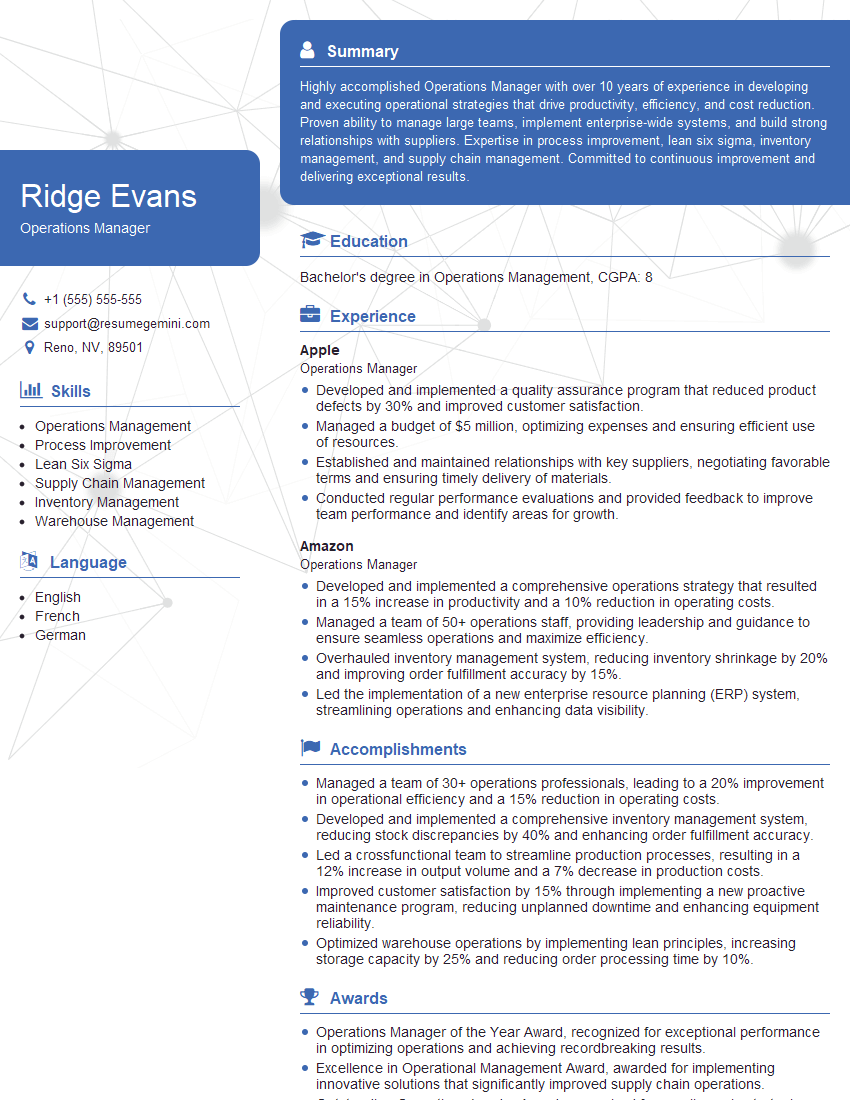
Operations Manager Resume Sample
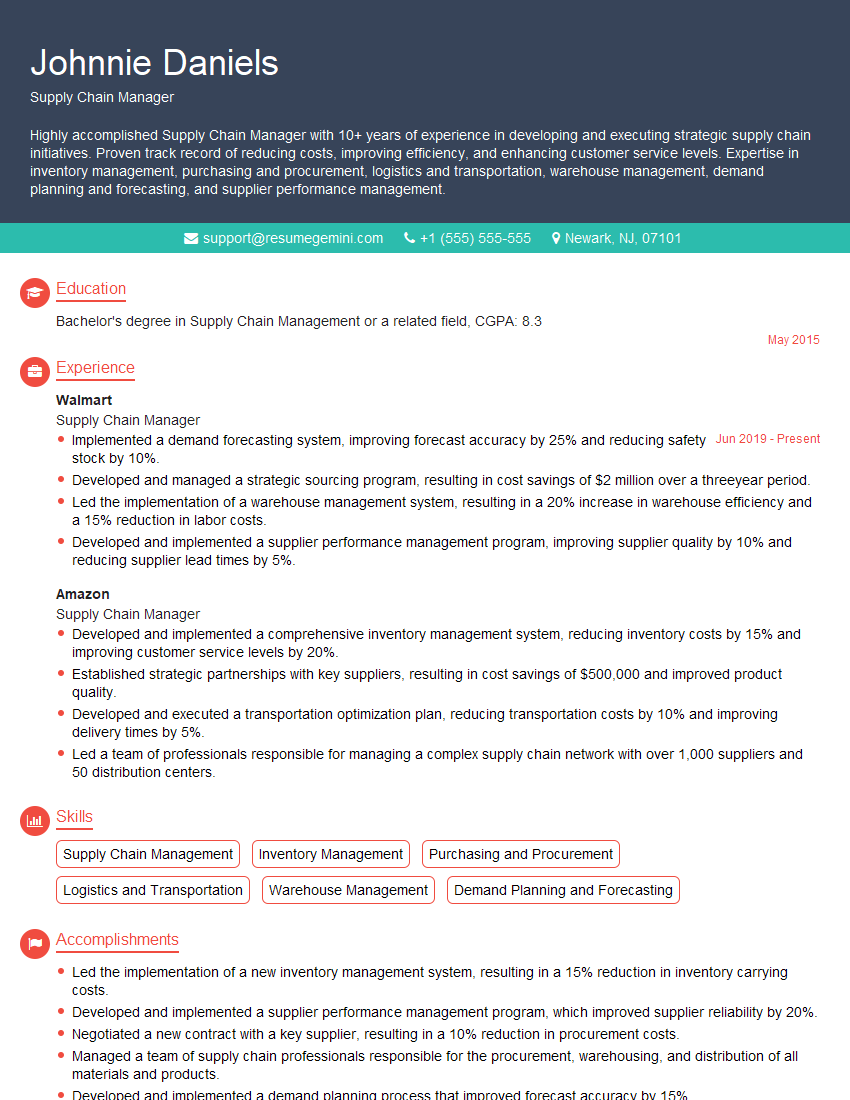
Supply Chain Manager Resume Sample
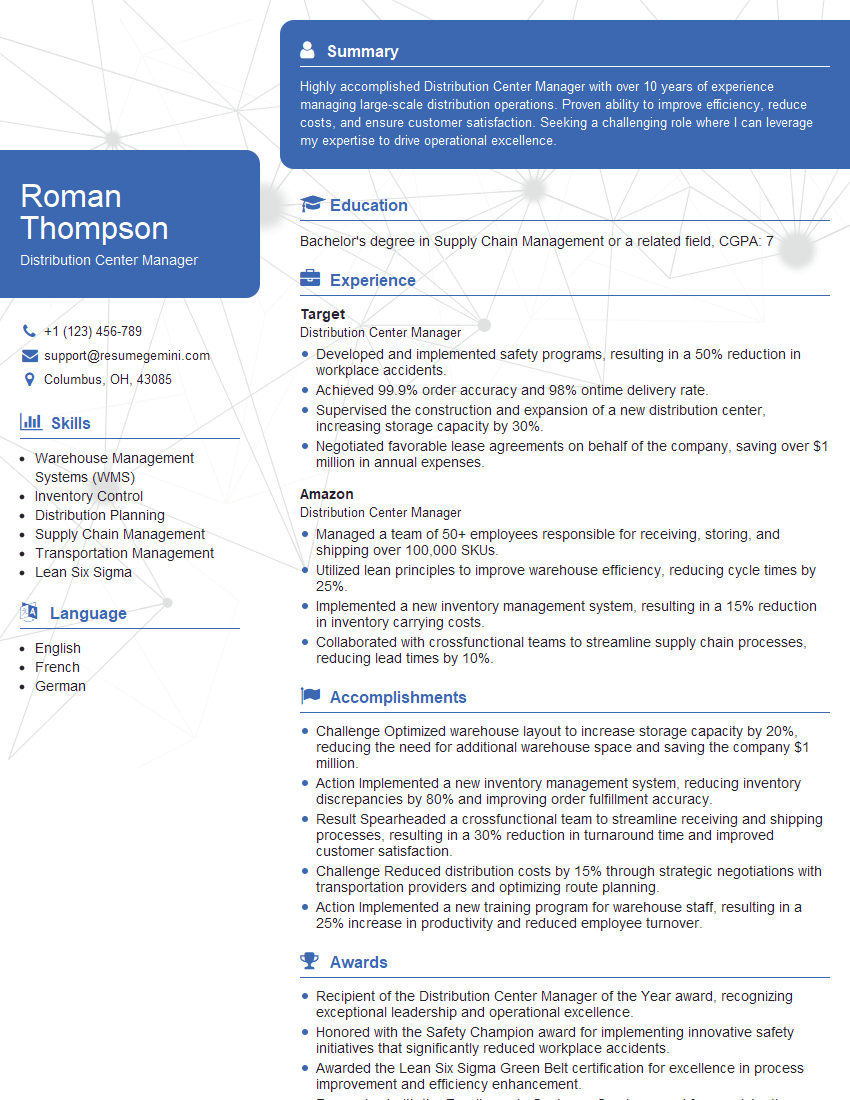
Distribution Center Manager Resume Sample
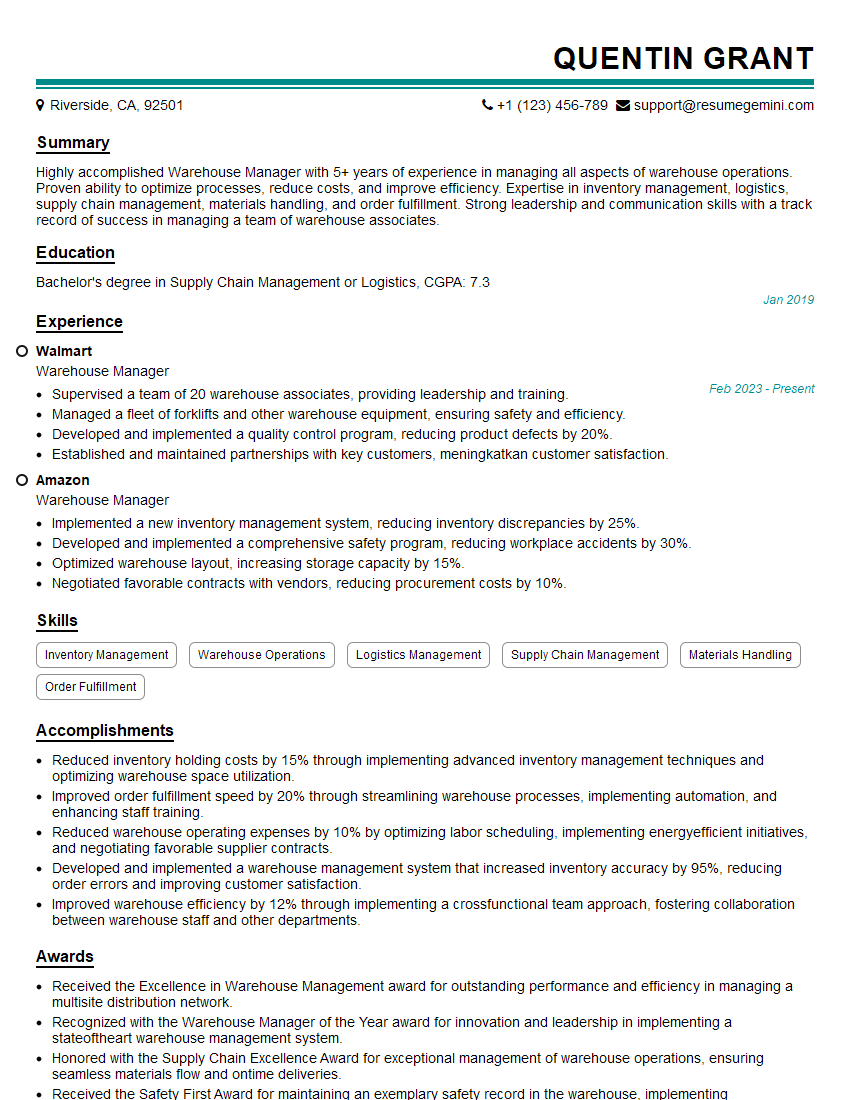
Warehouse Manager Resume Sample
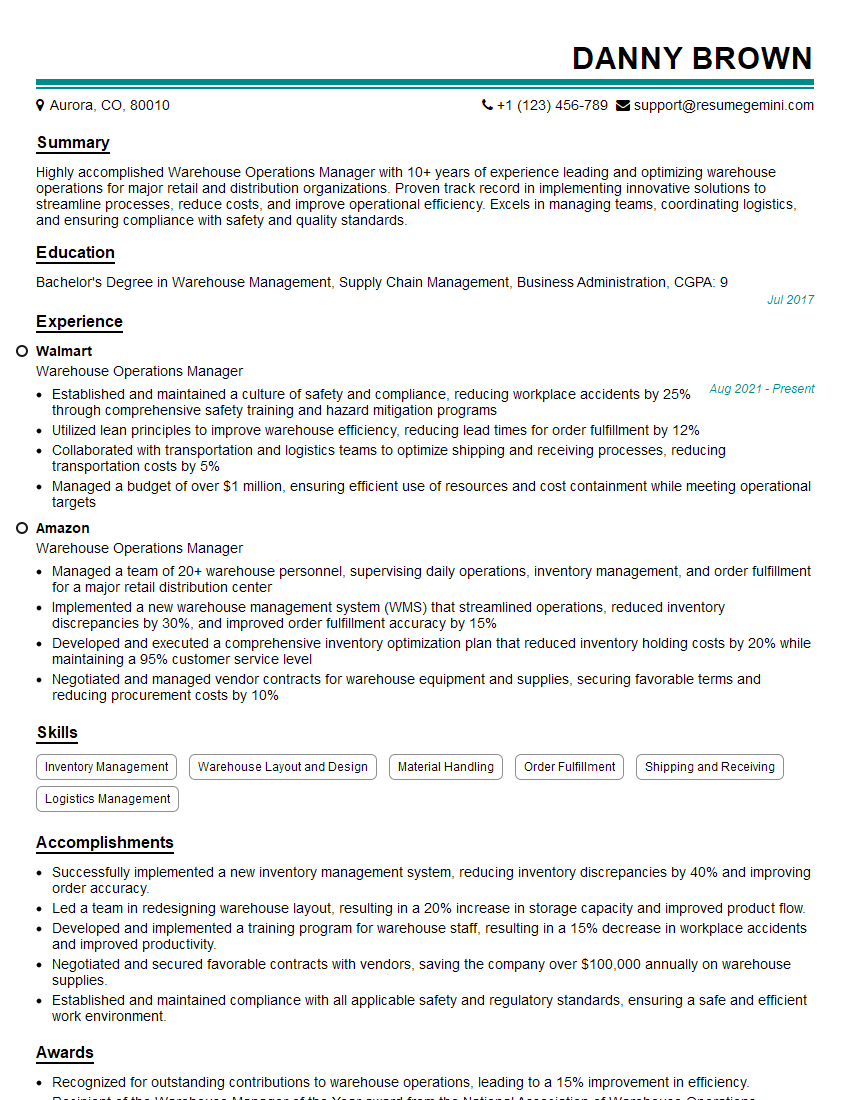
Warehouse Operations Manager Resume Sample
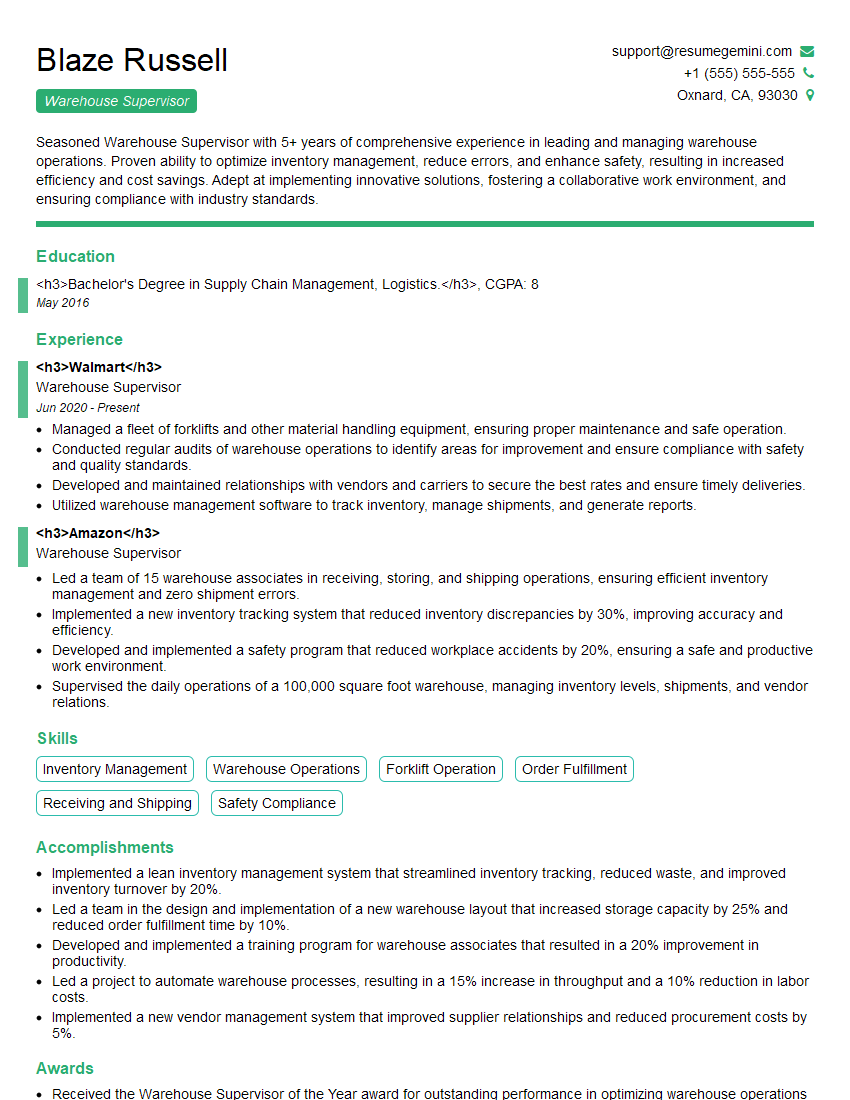
Warehouse Supervisor Resume Sample
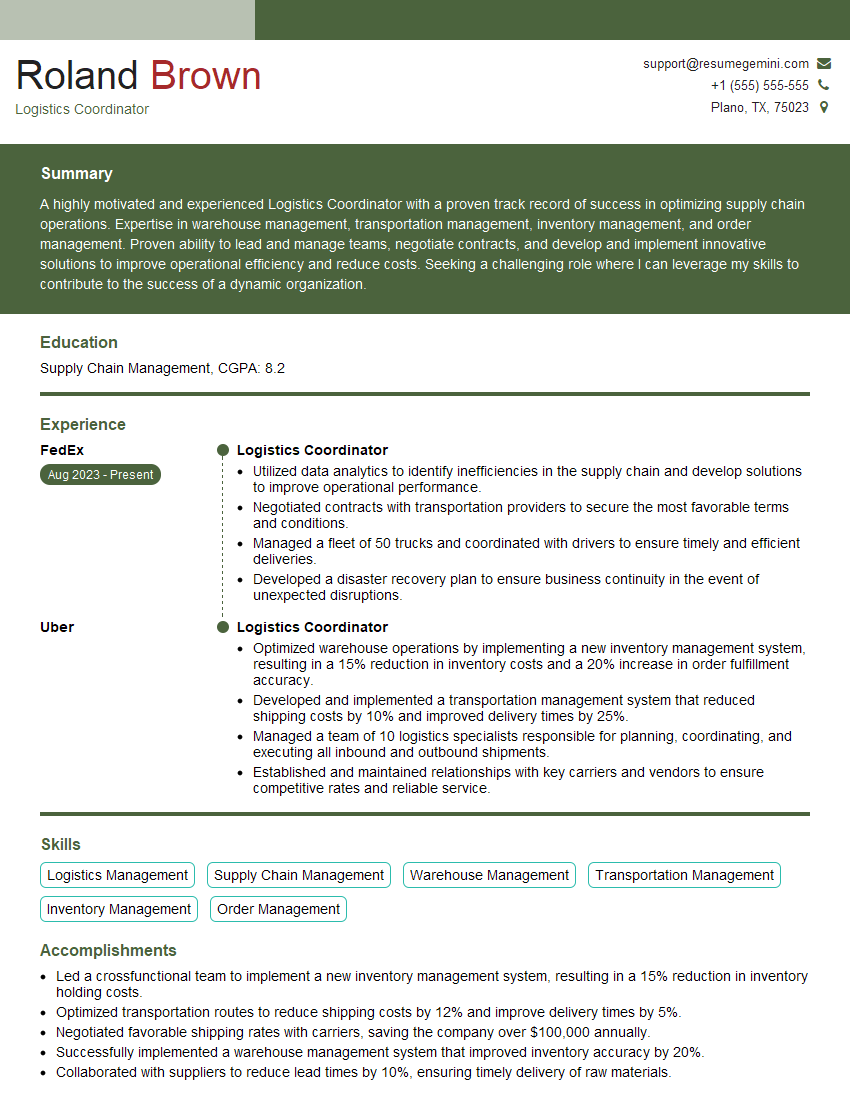
Logistics Coordinator Resume Sample
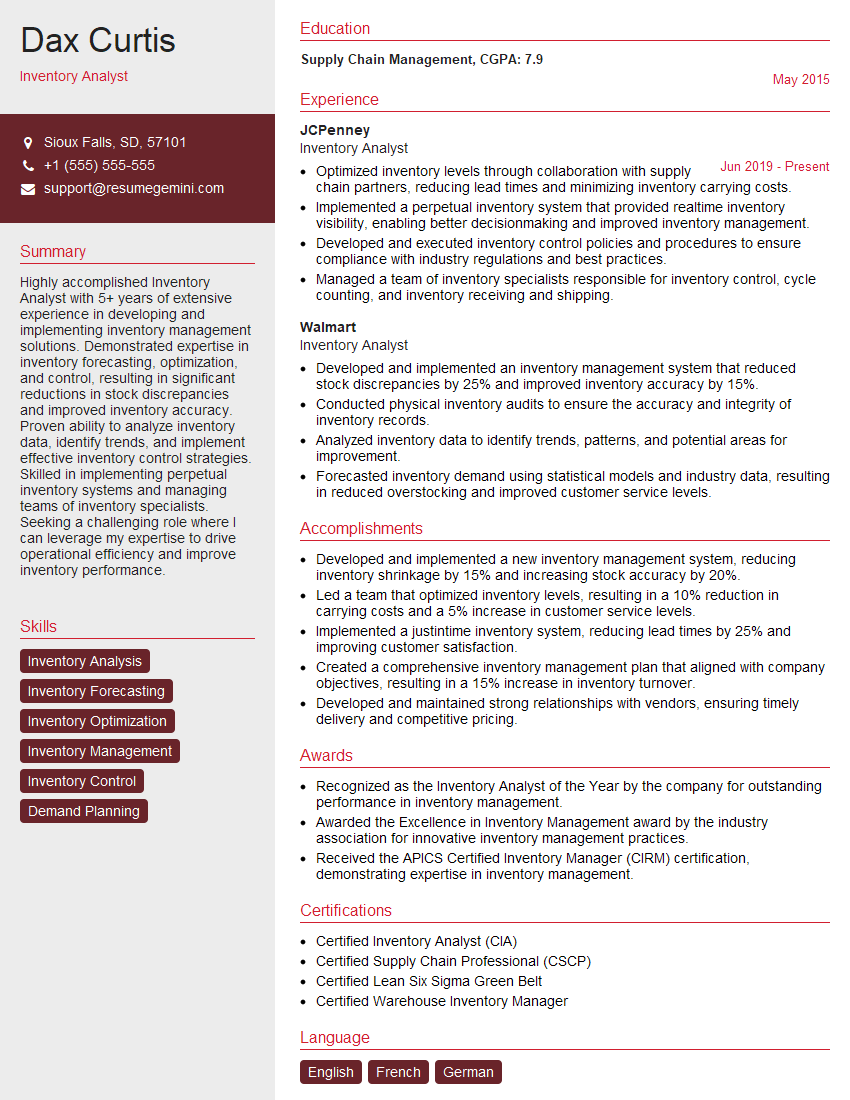
Inventory Analyst Resume Sample
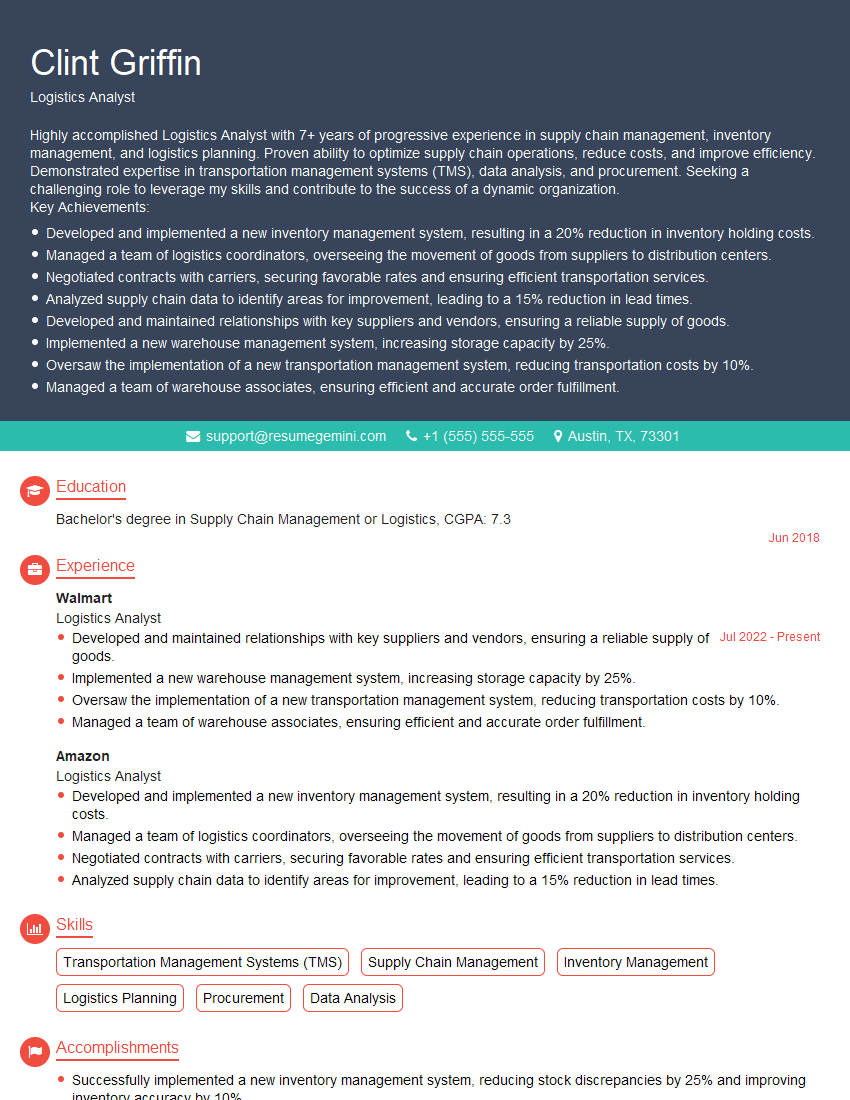
Logistics Analyst Resume Sample
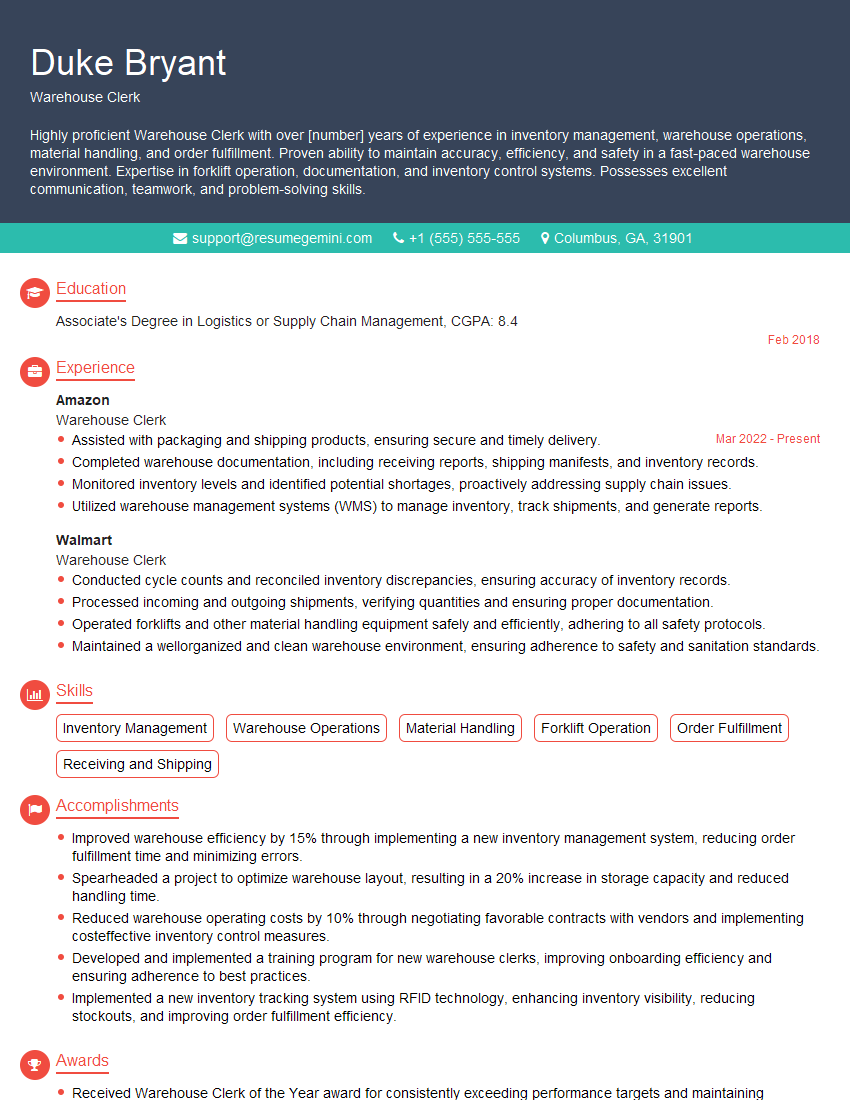
Warehouse Clerk Resume Sample
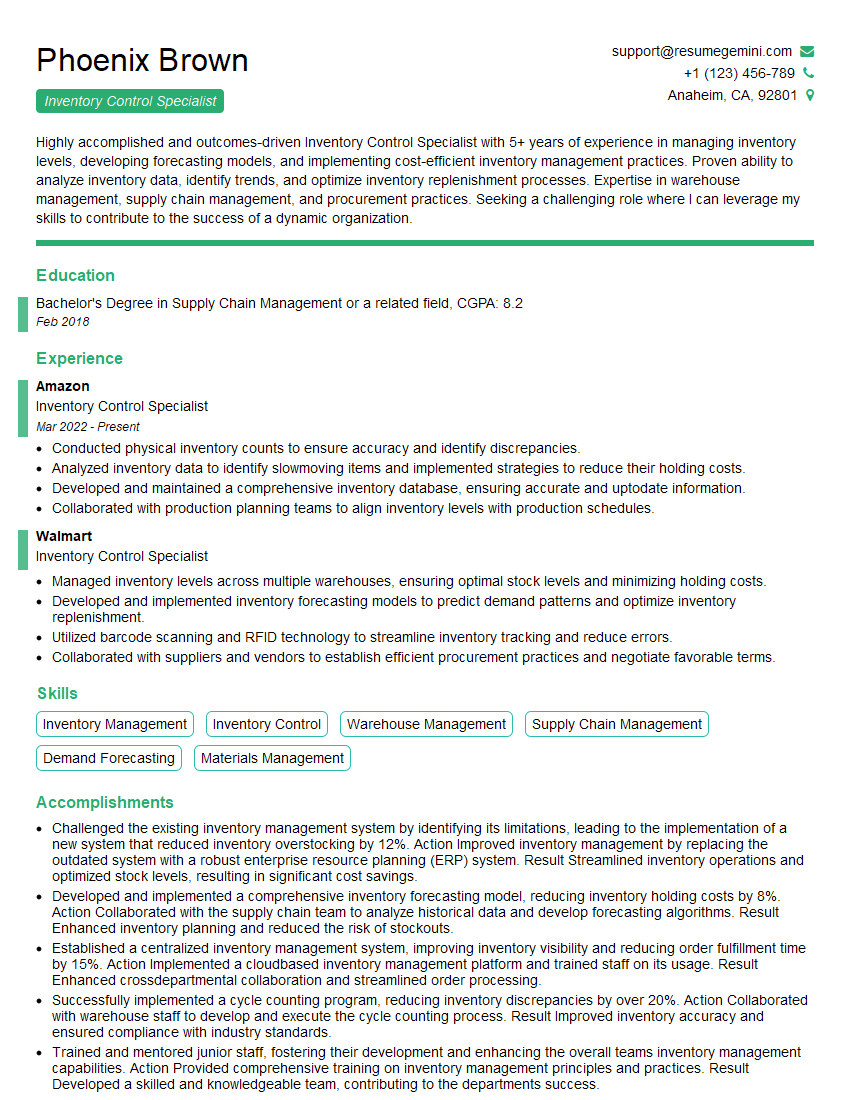
Inventory Control Specialist Resume Sample
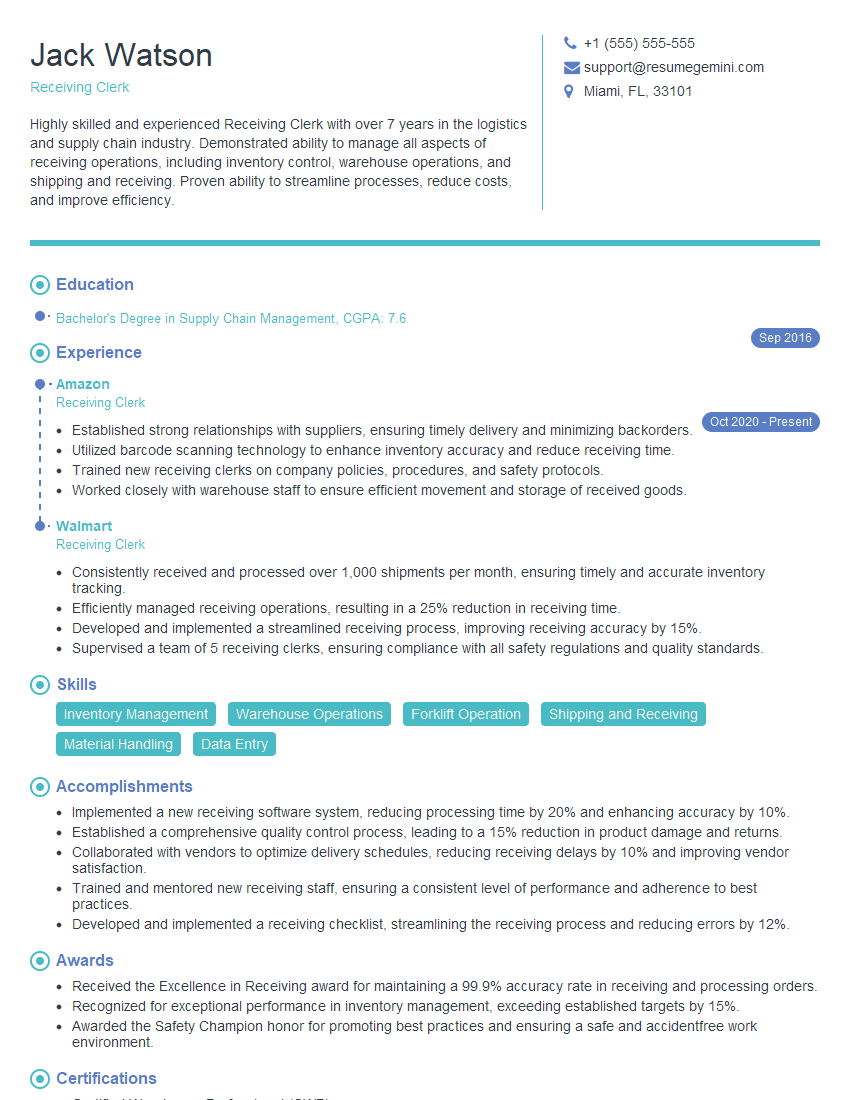
Receiving Clerk Resume Sample
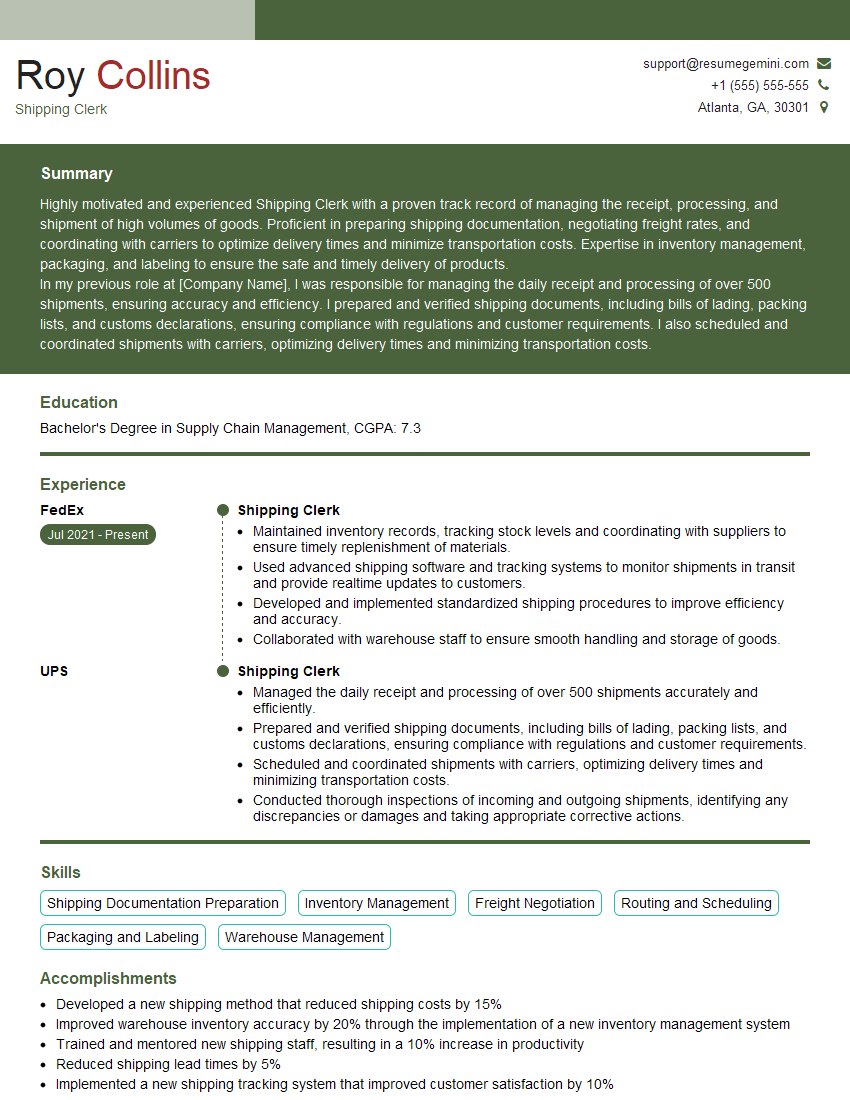
Shipping Clerk Resume Sample
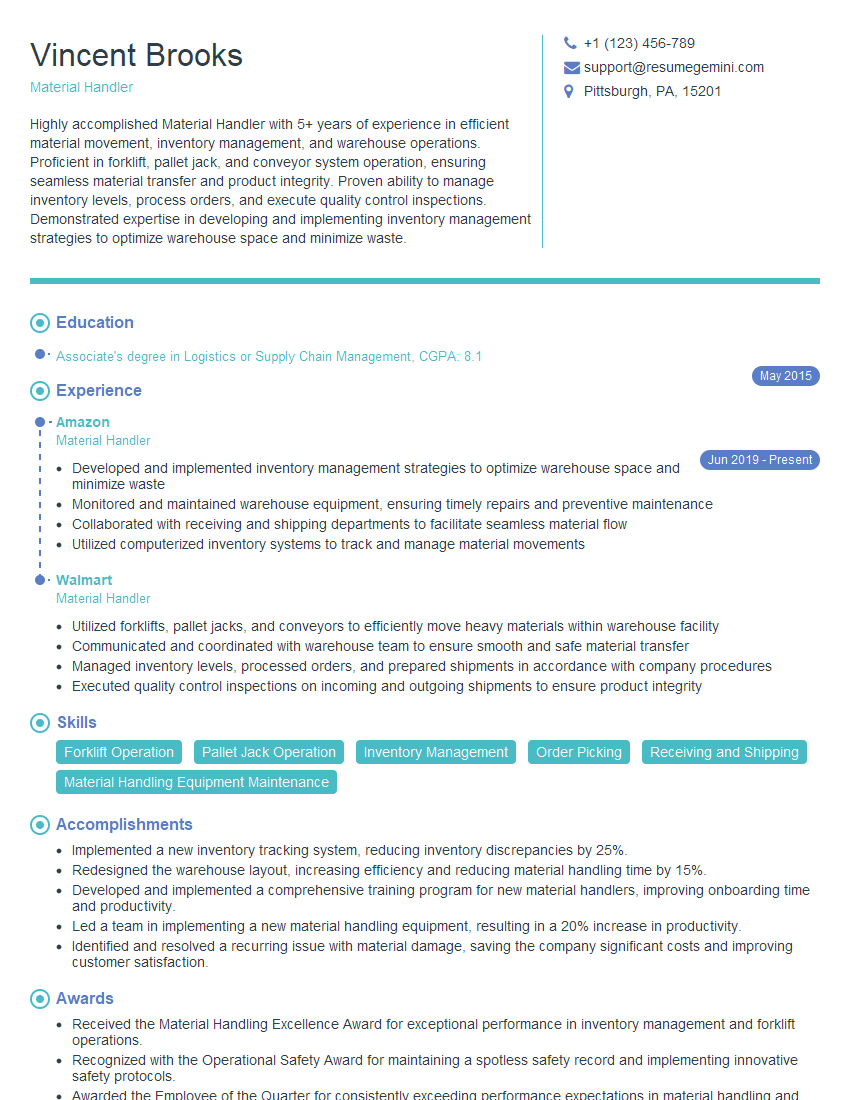
Material Handler Resume Sample
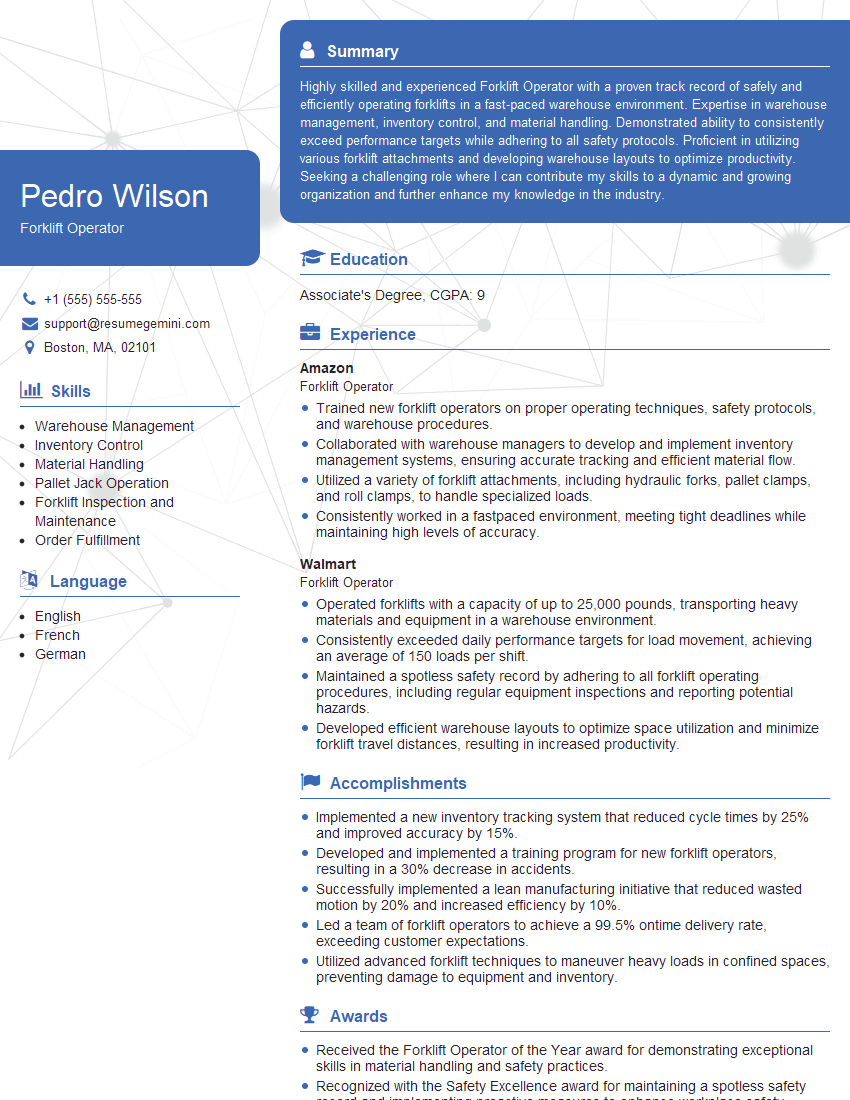
Forklift Operator Resume Sample
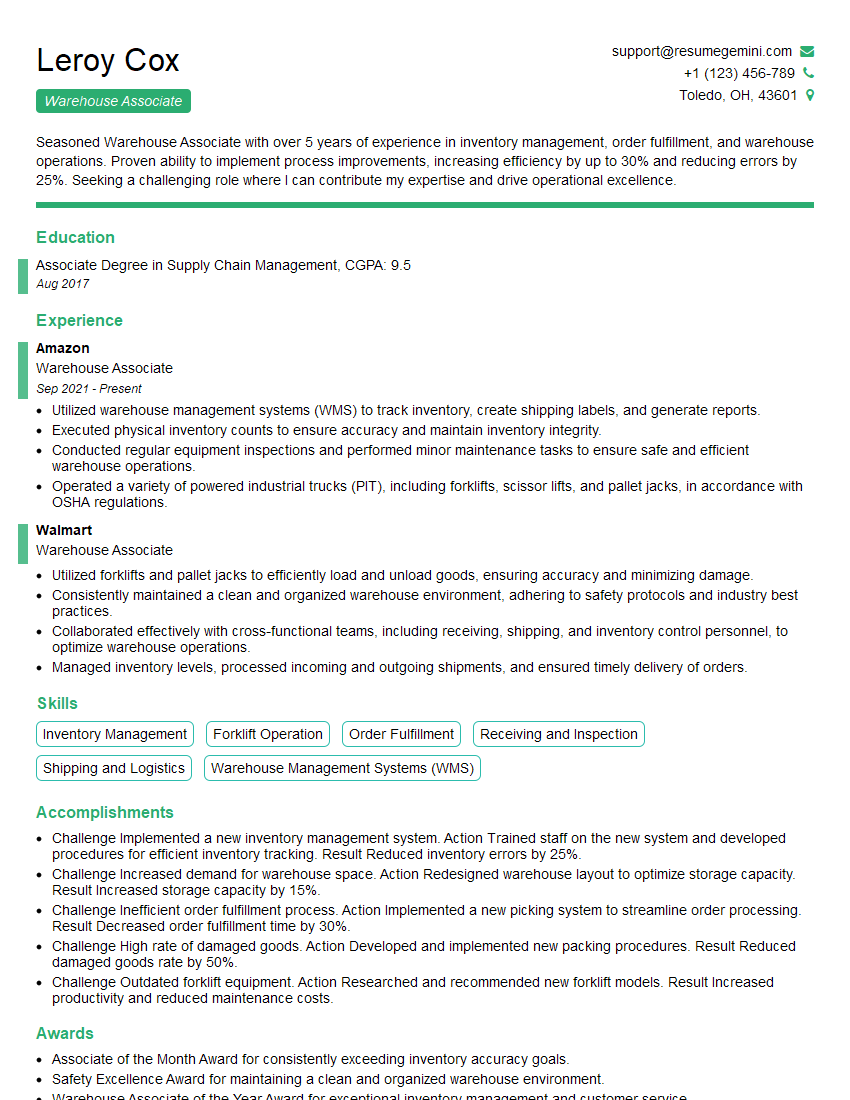
Warehouse Associate Resume Sample
- Operations Manager
- Supply Chain Manager
- Distribution Center Manager
- Warehouse Manager
- Warehouse Operations Manager
- Warehouse Supervisor
- Logistics Coordinator
- Inventory Analyst
- Logistics Analyst
- Warehouse Clerk
- Inventory Control Specialist
- Receiving Clerk
- Shipping Clerk
- Material Handler
- Forklift Operator
- Warehouse Associate
Explore more articles
Users Rating of Our Blogs
Share Your Experience
We value your feedback! Please rate our content and share your thoughts (optional).
What Readers Say About Our Blog
Very informative content, great job.
good