Are you ready to stand out in your next interview? Understanding and preparing for Warehouse or Storage Management interview questions is a game-changer. In this blog, we’ve compiled key questions and expert advice to help you showcase your skills with confidence and precision. Let’s get started on your journey to acing the interview.
Questions Asked in Warehouse or Storage Management Interview
Q 1. Explain your experience with warehouse management systems (WMS).
My experience with Warehouse Management Systems (WMS) spans over eight years, encompassing implementation, configuration, and daily operational management. I’ve worked with various WMS platforms, including Oracle WMS, Manhattan Associates, and Blue Yonder. My expertise includes not only the technical aspects, like data mapping and system integrations with ERP and transportation management systems (TMS), but also the crucial role WMS plays in optimizing warehouse operations. For example, in my previous role at Acme Distribution, we implemented a new WMS that streamlined our order fulfillment process, reducing order cycle time by 25% and improving picking accuracy by 10%. This involved extensive training of warehouse personnel and careful data migration to minimize disruptions. I understand the importance of choosing the right WMS based on business needs and scaling the system as the company grows. I’m proficient in utilizing WMS features such as inventory tracking, warehouse optimization, labor management, and reporting & analytics.
Q 2. Describe your experience with different inventory control methods (FIFO, LIFO, etc.).
I have extensive experience with various inventory control methods, including FIFO (First-In, First-Out), LIFO (Last-In, First-Out), and FEFO (First-Expired, First-Out). The selection of the appropriate method depends heavily on the nature of the inventory. FIFO is ideal for perishable goods, ensuring that the oldest items are used first to minimize waste. Think of a grocery store managing its dairy products. LIFO is often used for non-perishable goods, and can impact the cost of goods sold accounting. FEFO is critical for products with expiration dates, such as pharmaceuticals or food items. I’ve implemented and managed all three methods across different warehouse environments. For instance, at Beta Manufacturing, we employed FIFO for raw materials with short shelf lives, while LIFO was suitable for bulk materials with long shelf lives. Understanding the financial implications of each method and accurately tracking inventory levels under these different methods are critical to maintaining operational efficiency and profitability.
Q 3. How do you optimize warehouse layout for efficiency?
Optimizing warehouse layout is crucial for efficiency. My approach involves a multi-step process: First, I conduct a thorough needs assessment, understanding product flow, storage requirements, and order fulfillment processes. Then, I utilize data analytics to identify high-volume items and frequently accessed locations to strategically position them closer to shipping docks. This minimizes travel time and improves throughput. Next, I design the layout considering aisle widths, racking systems (including pallet racking, cantilever racking, etc.), and safety regulations. I also incorporate lean principles to eliminate waste and improve workflow. For example, at Gamma Logistics, I redesigned the warehouse layout, reducing travel time for pickers by 30% by implementing a cross-docking system and strategically placing high-demand items closer to shipping.
Q 4. What are your strategies for managing warehouse space effectively?
Effective warehouse space management is key to profitability. My strategies include: maximizing vertical space using high-bay racking; implementing efficient slotting techniques based on item popularity and velocity; regularly auditing inventory to identify and eliminate obsolete or slow-moving items; optimizing picking routes using software and technology (like WMS); and leveraging technology to improve inventory visibility and space utilization. For example, by implementing a dynamic slotting system at Delta Supply, we freed up 15% of our warehouse space. This involved analyzing inventory data, and adjusting locations based on demand and turnover rate. Another key strategy is to regularly review and reassess space allocation to ensure it aligns with current business needs. We regularly conduct space audits, factoring in seasonality, promotional periods, and changes in product mix.
Q 5. How do you ensure accurate inventory tracking and reporting?
Accurate inventory tracking and reporting are fundamental to warehouse management. I use a multi-pronged approach: Employing a robust WMS with integrated barcode scanning and RFID technology for real-time inventory updates. Conducting regular cycle counting to verify inventory accuracy and identify discrepancies. Implementing a system for managing inventory adjustments (e.g., damaged goods, returns). And utilizing reporting and analytics tools from the WMS to monitor key performance indicators (KPIs) like inventory accuracy, order fill rate, and stock turnover. For example, at Epsilon Trading, we integrated barcode scanning into our receiving and picking processes, achieving a 99.8% inventory accuracy rate. Regular cycle counting is crucial to catch potential errors early and prevent larger discrepancies.
Q 6. Explain your process for handling damaged or lost goods.
Handling damaged or lost goods involves a structured process. First, we document the damage or loss, including the cause (if known) and quantity. Then, we segregate the damaged goods from the salvageable inventory. We assess whether the damaged goods can be salvaged, repaired, or disposed of according to company policy and local regulations. If the goods are salvageable, we may send them to a rework area or a secondary market. For disposal, we follow environmental regulations and ensure proper documentation. For lost goods, we investigate potential causes (theft, error, etc.), update inventory records, and potentially file insurance claims if appropriate. We use this data to improve our processes and prevent future occurrences. Detailed records are kept of all damaged or lost goods, along with appropriate investigation and resolution steps.
Q 7. Describe your experience with warehouse safety procedures and regulations.
Warehouse safety is paramount. My experience includes implementing and enforcing safety procedures that comply with OSHA (Occupational Safety and Health Administration) regulations and other relevant industry standards. This includes providing regular safety training to employees, ensuring proper use of equipment (forklifts, hand trucks, etc.), maintaining clean and organized work areas, implementing appropriate lighting and signage, and using personal protective equipment (PPE). We also conduct regular safety inspections, document incidents and near misses, and address any safety hazards promptly. I’ve helped establish safety committees to foster a culture of safety within the warehouse environment. For example, at Zeta Corp, we implemented a comprehensive safety training program, leading to a significant reduction in workplace accidents.
Q 8. How do you manage warehouse staff and motivate your team?
Managing a warehouse team effectively hinges on a combination of clear communication, fair leadership, and fostering a positive work environment. I believe in a collaborative, empowering approach.
- Clear Expectations and Roles: I begin by clearly defining each team member’s roles and responsibilities, ensuring everyone understands their contribution to the overall warehouse operation. This includes providing comprehensive training and ongoing support.
- Open Communication: Regular team meetings, both formal and informal, are crucial for addressing concerns, celebrating successes, and brainstorming improvements. I encourage open dialogue and feedback from my team.
- Motivation and Recognition: I strongly believe in recognizing and rewarding exceptional performance. This can include things like employee of the month awards, bonuses, or simply a sincere thank you for a job well done. I also focus on creating a culture where individuals feel valued and respected.
- Delegation and Empowerment: I empower my team by delegating tasks and responsibilities based on individual skills and strengths. This not only lightens my workload but also develops their capabilities and increases their sense of ownership.
- Performance Management: Regular performance reviews are essential to provide constructive feedback, identify areas for improvement, and set achievable goals. I strive to be supportive and provide the necessary resources for success.
For instance, during a particularly busy period, I empowered a team member who showed aptitude for inventory management to lead a small team in optimizing our stock location strategy. This not only improved efficiency but also boosted the team member’s confidence and job satisfaction.
Q 9. How do you handle peak seasons or periods of high order volume?
Handling peak seasons requires a proactive and flexible approach. We prepare well in advance, anticipating the increased order volume and adjusting our operations accordingly.
- Demand Forecasting: Accurate forecasting based on historical data and market trends allows us to anticipate the surge in demand and plan for necessary resources.
- Staffing: We typically hire temporary staff to supplement our permanent workforce during peak periods. This ensures we have enough hands on deck to handle the increased workload without compromising service levels.
- Inventory Management: We optimize our inventory levels to ensure sufficient stock is available to meet the increased demand without incurring excessive holding costs. This often involves working closely with suppliers to ensure timely deliveries.
- Process Optimization: We streamline our processes to maximize efficiency. This could involve optimizing picking routes, improving packing procedures, or implementing new technologies to expedite order fulfillment.
- Overtime Management: Careful management of overtime for existing staff is crucial to avoid burnout while still meeting deadlines. Fair and transparent overtime policies are essential.
In one instance, we successfully managed a 50% increase in order volume during the holiday season by implementing a new warehouse management system (WMS) that optimized picking routes, reducing order fulfillment time by 15%. We also leveraged predictive analytics to forecast demand more accurately, minimizing stockouts.
Q 10. What metrics do you use to measure warehouse performance?
Warehouse performance is measured using a variety of key performance indicators (KPIs). These metrics provide insights into the efficiency and effectiveness of warehouse operations.
- Order Fulfillment Rate: The percentage of orders fulfilled on time and in full. This is a crucial metric reflecting customer satisfaction.
- Inventory Accuracy: The accuracy of inventory records compared to physical stock. This minimizes discrepancies and ensures smooth operations.
- Order Cycle Time: The time it takes to process an order from receipt to shipment. A shorter cycle time indicates efficiency.
- Inventory Turnover Rate: The number of times inventory is sold and replenished within a given period. This reflects how efficiently inventory is managed.
- Storage Capacity Utilization: The percentage of available storage space being used. Optimizing utilization minimizes waste.
- Labor Productivity: Measures the output per labor hour. This helps identify areas for improvement in efficiency.
- Damage Rate: The percentage of damaged goods during storage or handling. Reducing damage improves cost efficiency and customer satisfaction.
We regularly track and analyze these KPIs using dashboards and reports, identifying trends and areas for improvement. For instance, a consistently low inventory accuracy rate might indicate a need for improved inventory management practices or technology upgrades.
Q 11. Describe your experience with implementing new warehouse technologies.
I have extensive experience implementing new warehouse technologies to improve efficiency and accuracy. This includes the implementation of Warehouse Management Systems (WMS), Radio Frequency Identification (RFID) technology, and automated guided vehicles (AGVs).
- WMS Implementation: Successfully implemented a WMS in a previous role, resulting in a 20% reduction in order fulfillment time and a 10% increase in inventory accuracy. This involved careful planning, staff training, and data migration.
- RFID Technology: Implemented RFID tags to track inventory in real-time, significantly improving inventory accuracy and reducing stockouts. This required investment in new hardware and software, along with staff training on the new technology.
- AGV Integration: Successfully integrated AGVs into a warehouse operation, automating material handling and improving efficiency. This involved careful planning of warehouse layout and integration with existing systems.
The key to successful technology implementation is careful planning, comprehensive staff training, and change management. Addressing potential challenges proactively and ensuring buy-in from all stakeholders are crucial for a seamless transition.
Q 12. How do you manage supplier relationships and deliveries?
Managing supplier relationships and deliveries is critical for maintaining a smooth and efficient warehouse operation. I focus on building strong, collaborative relationships based on trust and mutual benefit.
- Supplier Selection: We carefully select suppliers based on factors such as reliability, quality, and on-time delivery performance. We regularly evaluate supplier performance and adjust our partnerships as needed.
- Communication: Clear and consistent communication with suppliers is essential. This includes regular updates on order forecasts, delivery schedules, and any potential issues. We utilize online portals and collaborative platforms to facilitate communication and information sharing.
- Delivery Management: We establish clear delivery procedures and receiving protocols to ensure smooth and efficient inbound logistics. This includes designated receiving areas, proper documentation, and quality checks upon arrival.
- Performance Monitoring: We closely monitor supplier performance metrics, including on-time delivery, order accuracy, and quality. We address any performance issues proactively and collaboratively with suppliers.
- Negotiation and Contracts: We negotiate favorable terms with suppliers, including pricing, payment terms, and service level agreements (SLAs). Clear contracts protect both parties and ensure mutual understanding.
For instance, we developed a strong partnership with one of our key suppliers by sharing our demand forecast information well in advance. This allowed them to optimize their production schedule, ensuring timely deliveries and minimizing stockouts on our end.
Q 13. What is your experience with different types of warehousing (e.g., cold storage, cross-docking)?
My experience encompasses various warehousing types, each with unique operational requirements.
- Cold Storage: I have managed cold storage facilities, requiring specific expertise in temperature control, specialized equipment, and adherence to strict food safety regulations. This includes experience with maintaining precise temperature ranges for different products, managing energy consumption, and ensuring compliance with relevant health and safety standards.
- Cross-Docking: I’ve overseen cross-docking operations, which involves receiving goods and immediately transferring them to outgoing shipments without intermediate storage. This requires efficient coordination between inbound and outbound logistics, precise scheduling, and effective communication between transportation providers.
- Conventional Warehousing: My background also includes managing traditional warehouses, encompassing receiving, putaway, picking, packing, and shipping operations. This involves optimizing storage space, managing inventory levels, and implementing efficient material handling techniques.
Understanding the specific requirements of each warehousing type is essential for optimizing operations and meeting specific client needs. For example, cross-docking requires a different level of coordination and technology integration compared to a conventional warehouse.
Q 14. How do you prioritize tasks and manage competing demands in a warehouse environment?
Prioritizing tasks and managing competing demands in a fast-paced warehouse environment requires a structured approach. I utilize a combination of techniques to ensure efficiency and meet deadlines.
- Prioritization Matrix: I use a prioritization matrix (such as an Eisenhower Matrix – Urgent/Important) to categorize tasks based on urgency and importance. This helps to focus on critical tasks first.
- Workflow Management: Implementing a well-defined workflow ensures tasks are processed efficiently and in a logical order. This often involves using workflow management software to track progress and identify bottlenecks.
- Communication and Coordination: Clear communication and coordination with the team are crucial to ensure everyone understands priorities and works collaboratively. Regular team briefings and huddles help to keep everyone informed.
- Resource Allocation: Efficient allocation of resources, including staff, equipment, and space, is vital. This often involves analyzing resource utilization data and optimizing resource deployment to meet demands.
- Contingency Planning: Developing contingency plans for unforeseen circumstances (e.g., equipment failure, unexpected order surges) is essential to ensure business continuity and minimize disruptions.
For example, during a period of high order volume and a simultaneous equipment malfunction, I prioritized critical orders using the Eisenhower matrix, reallocated resources to expedite fulfillment of those orders, and communicated the situation transparently to clients, keeping them informed of potential delays.
Q 15. Describe your experience with warehouse budget management.
Warehouse budget management is crucial for efficient operations. It involves planning, monitoring, and controlling all warehouse-related expenses to ensure cost-effectiveness without compromising service quality. My experience encompasses developing and managing budgets from scratch, forecasting future costs based on historical data and projected growth, and regularly analyzing variances to identify areas for improvement.
For example, in my previous role at Acme Distribution, I implemented a new inventory management system that reduced storage costs by 15% by optimizing space utilization. This involved analyzing storage needs, implementing a zone-based storage system, and negotiating better rates with our shelving supplier. I also consistently track expenses related to utilities, labor, maintenance, and supplies, using this data to justify budget requests and negotiate better deals with vendors.
Beyond cost reduction, budget management also entails securing funding for essential improvements. For instance, I successfully secured funding for new forklifts, demonstrating their ROI through improved efficiency and reduced labor costs in my proposal. This involved a detailed cost-benefit analysis, including projections of reduced downtime and increased throughput. Regular reporting and open communication with management ensured transparency and buy-in.
Career Expert Tips:
- Ace those interviews! Prepare effectively by reviewing the Top 50 Most Common Interview Questions on ResumeGemini.
- Navigate your job search with confidence! Explore a wide range of Career Tips on ResumeGemini. Learn about common challenges and recommendations to overcome them.
- Craft the perfect resume! Master the Art of Resume Writing with ResumeGemini’s guide. Showcase your unique qualifications and achievements effectively.
- Don’t miss out on holiday savings! Build your dream resume with ResumeGemini’s ATS optimized templates.
Q 16. What are your strategies for preventing warehouse theft and shrinkage?
Preventing theft and shrinkage requires a multi-pronged approach combining physical security measures, robust inventory control systems, and employee accountability. Think of it like building a fortress – multiple layers of protection working together.
- Physical Security: This includes installing surveillance cameras (both CCTV and potentially AI-powered systems for advanced analytics), secure access controls (e.g., keycard systems, biometric access), and well-lit areas to deter opportunistic thieves. Regular security audits are also vital.
- Inventory Control: Implementing a robust inventory management system, including regular cycle counting and stock reconciliation, is crucial. Discrepancies should be investigated immediately and thoroughly. Real-time tracking of goods, from receiving to shipping, using barcode or RFID technology minimizes opportunities for theft.
- Employee Accountability: Clear policies and procedures regarding theft and shrinkage must be communicated to all staff. Background checks for new employees, random audits, and ethical training are vital. Reward systems that encourage honesty and responsibility can be powerful motivators.
- Vendor Management: Careful vetting of vendors and thorough checks upon goods receipt minimize the risk of theft or discrepancies before items even enter the warehouse.
In a previous role, we experienced a significant reduction in shrinkage after implementing a combination of CCTV cameras with motion detection, improved access controls, and a more rigorous cycle counting procedure. This proactive strategy not only prevented losses but also boosted employee morale by creating a sense of security and responsibility.
Q 17. How do you ensure compliance with relevant health and safety regulations?
Ensuring compliance with health and safety regulations is paramount. It’s not just about avoiding penalties; it’s about creating a safe and productive work environment for everyone. My approach involves a proactive, multi-faceted strategy.
- Risk Assessment: Regularly identifying and assessing potential hazards throughout the warehouse, including slips, trips, falls, heavy lifting, and equipment operation. This often involves using standardized risk assessment forms and working with safety professionals.
- Training & Education: Providing comprehensive health and safety training to all employees, covering topics such as safe equipment operation, manual handling techniques, fire safety, and emergency procedures. Regular refresher training is essential.
- Equipment Maintenance: Ensuring all equipment, from forklifts to conveyor belts, is regularly maintained and inspected to prevent accidents. Proper maintenance logs and records are kept and regularly reviewed.
- PPE Provision: Providing appropriate personal protective equipment (PPE) such as safety shoes, gloves, high-visibility vests, and hearing protection, ensuring employees understand when and how to use them correctly.
- Emergency Procedures: Developing and regularly practicing emergency procedures, including fire drills and evacuation plans. Clear signage and emergency exits are vital.
- Compliance Audits: Conducting regular internal audits to ensure ongoing compliance with all relevant regulations. These audits should be documented and any corrective actions taken and documented.
For example, in one warehouse, we implemented a new system of color-coded floor markings to clearly delineate pedestrian and vehicle pathways, significantly reducing near-miss incidents. Regular toolbox talks covering specific safety concerns also proved highly effective.
Q 18. How do you deal with conflicts among warehouse staff?
Conflict resolution is a critical skill for a warehouse manager. My approach focuses on timely intervention, open communication, and fair resolution.
- Early Intervention: Addressing disagreements as soon as they arise, before they escalate into major conflicts. This often involves informal talks with the individuals involved.
- Active Listening: Actively listening to each party’s perspective, ensuring everyone feels heard and understood. This requires empathy and a non-judgmental approach.
- Facilitation: Facilitating a constructive dialogue between the conflicting parties, guiding them toward a mutually acceptable solution. This might involve mediation or conflict resolution training.
- Documentation: Documenting the conflict, the steps taken to resolve it, and the outcome. This provides a record for future reference and helps to prevent similar conflicts.
- Fairness & Consistency: Ensuring all disciplinary actions are fair, consistent, and in line with company policy. Transparency is crucial here.
I once had a conflict between two team leaders regarding the allocation of resources. By actively listening to both sides, I identified a misunderstanding about workload distribution. We worked together to develop a more equitable system, improving team cooperation and productivity.
Q 19. What is your experience with different types of warehouse equipment (e.g., forklifts, conveyors)?
My experience encompasses a wide range of warehouse equipment, including forklifts, conveyors, pallet jacks, order pickers, and automated guided vehicles (AGVs). I’m proficient in operating, maintaining, and troubleshooting these machines. My experience also extends to selecting appropriate equipment based on warehouse layout, throughput requirements, and budget constraints.
- Forklifts: I’m experienced in operating various types of forklifts, including sit-down, stand-up, and reach trucks. I understand the importance of proper training, maintenance schedules, and safety procedures.
- Conveyors: I have experience with different types of conveyors, from roller conveyors to belt conveyors and sortation systems. I understand how to optimize conveyor systems for efficient material flow.
- Other Equipment: My experience includes using and maintaining pallet jacks, order pickers, and other material handling equipment. I’m familiar with the safety procedures and maintenance requirements for each.
- Automated Systems: I have some experience with automated guided vehicles (AGVs) and warehouse management systems (WMS) that integrate with automated equipment. This includes understanding the integration process and troubleshooting potential issues.
In one project, I led the implementation of a new conveyor system that significantly improved the efficiency of our order fulfillment process. This involved careful planning, vendor selection, and integration with our existing WMS.
Q 20. How do you handle customer returns and processing?
Handling customer returns efficiently and accurately is crucial for maintaining customer satisfaction and minimizing losses. My process involves a systematic approach.
- Clear Return Policy: Establishing a clear and readily accessible return policy that outlines the process and conditions for returns. This should be easily understood by both customers and warehouse staff.
- Inspection & Verification: Upon receipt, returns are inspected to verify their condition and ensure they match the original order. This involves comparing the returned item with the original documentation.
- Data Entry: Accurate data entry into the warehouse management system (WMS) is essential to track the returned items and update inventory levels. This requires meticulous attention to detail.
- Quality Control: Implementing quality control checks to assess the condition of returned items and determine whether they can be restocked or need to be disposed of. This might involve sorting items into different categories: resalable, repairable, or scrap.
- Processing Refunds or Exchanges: Coordinating with the accounting department to process refunds or exchanges based on the company’s return policy. This involves prompt and accurate payment processing for the customer.
I developed a streamlined return process in my previous role that reduced processing time by 20% and minimized errors. This involved automating parts of the process, implementing better tracking methods, and clearly defining roles and responsibilities.
Q 21. Explain your experience with order fulfillment processes.
Order fulfillment is the heart of warehouse operations. My experience encompasses all aspects of this process, from receiving orders to shipping them out. I focus on speed, accuracy, and efficiency.
- Order Receiving: Efficiently receiving orders from various sources (e.g., online platforms, retailers). This involves accurate data entry into the WMS and proper allocation of storage space.
- Order Picking: Implementing optimized picking strategies (e.g., batch picking, zone picking) to maximize efficiency and minimize picking errors. This often involves using technology such as barcode scanners or voice-picking systems.
- Order Packing: Accurately packing orders to prevent damage during transit, using appropriate packaging materials and techniques. This also involves labeling packages clearly with shipping information.
- Shipping & Dispatch: Efficiently processing shipments using appropriate shipping carriers and methods. This includes generating shipping labels, tracking shipments, and managing delivery exceptions.
- Inventory Management: Closely monitoring inventory levels to ensure enough stock is available to meet demand and minimizing stockouts. This involves utilizing the WMS to manage inventory efficiently.
In one instance, I implemented a new picking strategy that reduced order fulfillment time by 15% and improved accuracy. This involved analyzing current processes, selecting an optimal picking method, and training the staff on the new procedures. Regular performance monitoring and staff feedback were critical to the success of this project.
Q 22. How do you improve warehouse efficiency and reduce costs?
Improving warehouse efficiency and reducing costs involves a multifaceted approach focusing on optimizing processes, technology, and workforce management. It’s like fine-tuning a well-oiled machine – each component plays a vital role.
Optimize Layout and Space Utilization: Implementing a well-designed warehouse layout using techniques like slotting optimization (strategically placing frequently accessed items in easily reachable areas) and utilizing vertical space with racking systems significantly improves picking efficiency and reduces travel time. For example, in a previous role, we redesigned our warehouse layout based on ABC analysis (classifying inventory by frequency of use), resulting in a 15% reduction in picking time.
Implement Warehouse Management System (WMS): A WMS automates many tasks, from inventory tracking and order fulfillment to labor management. This reduces manual errors, improves accuracy, and streamlines operations. Think of it as a central brain for your warehouse, coordinating all activities efficiently. In a past project, implementing a new WMS resulted in a 10% reduction in order processing time and a 5% decrease in inventory discrepancies.
Improve Inventory Management: Implementing robust inventory control methods, such as cycle counting (regularly checking inventory levels) and forecasting demand, reduces stockouts and overstocking, thus minimizing storage costs and preventing obsolescence. Predictive analytics can further enhance this, helping anticipate future demand and optimize stock levels proactively.
Optimize Labor Efficiency: This includes cross-training employees to handle multiple tasks, using productivity-enhancing technologies like RF scanners and voice-picking systems, and implementing lean methodologies to eliminate waste in processes. In one instance, we trained our team on voice-picking, boosting picking speed by 20%.
Negotiate Better Rates with Suppliers and Carriers: Securing favorable rates for transportation and storage can significantly impact overall costs. Analyzing different shipping options and negotiating contracts with multiple providers can yield substantial savings.
Q 23. What is your experience with warehouse reporting and data analysis?
My experience with warehouse reporting and data analysis is extensive. I’m proficient in using various tools and techniques to extract meaningful insights from warehouse data. This allows for proactive decision-making and continuous improvement.
Data Sources: I’ve worked with data from various sources including WMS, ERP systems, and other operational databases.
Reporting Tools: I’m familiar with business intelligence tools like Power BI and Tableau to create interactive dashboards and reports visualizing key metrics such as order fulfillment rates, inventory turnover, storage costs, and labor productivity.
Data Analysis Techniques: I utilize statistical analysis, trend forecasting, and root cause analysis to identify bottlenecks, inefficiencies, and areas for improvement. For instance, by analyzing picking data, we identified slow-moving aisles and rearranged the layout, reducing picking times.
KPI Tracking: I’ve designed and implemented KPI dashboards to monitor operational performance against established targets, providing real-time visibility into warehouse efficiency and highlighting areas needing attention.
Q 24. Describe your experience with quality control procedures in a warehouse.
Quality control in a warehouse is crucial for maintaining product integrity and customer satisfaction. My approach involves implementing procedures at various stages of the warehouse process.
Receiving Inspection: Thoroughly inspecting incoming shipments to ensure they match orders in quantity and quality. This involves checking for damage, verifying product codes, and comparing quantities against purchase orders. We use checklists and digital documentation for this to ensure accuracy and traceability.
Storage Conditions: Maintaining optimal storage conditions for temperature-sensitive goods or those requiring specific environmental controls. This includes regular monitoring of temperature and humidity levels.
Inventory Accuracy: Implementing cycle counting and periodic full inventory counts to ensure accuracy in stock records, reducing the risk of stockouts or discrepancies. We’ve used statistical sampling techniques to make this process more efficient.
Order Fulfillment Checks: Verifying order accuracy before shipment by double-checking items and quantities against the order and ensuring proper packaging to prevent damage during transit.
Damage Control: Implementing measures to minimize damage to goods during handling and storage, including proper use of equipment and training of staff in safe handling techniques.
Q 25. How do you maintain a clean and organized warehouse environment?
Maintaining a clean and organized warehouse is paramount for safety, efficiency, and operational effectiveness. It’s not just about aesthetics; it impacts productivity and reduces risks.
5S Methodology: We employ the 5S methodology (Sort, Set in Order, Shine, Standardize, Sustain) to create a structured and clean workspace. This promotes efficiency by minimizing search time and reducing workplace hazards.
Regular Cleaning Schedule: Implementing a regular cleaning schedule with designated responsibilities ensures the warehouse is kept clean and organized. We also incorporate daily spot checks to ensure compliance.
Designated Areas: Clearly defined areas for storage, receiving, shipping, and break areas help maintain orderliness and prevent clutter. Proper labeling is key to this.
Waste Management: Implementing an efficient waste disposal system to ensure proper removal of trash and recyclable materials prevents clutter and promotes a safer environment.
Employee Training and Accountability: Training employees on proper organization and cleaning procedures, along with holding them accountable for maintaining cleanliness, is essential for long-term success. We regularly provide refresher trainings and monitor performance via regular inspections.
Q 26. How familiar are you with Lean manufacturing principles?
I’m very familiar with Lean manufacturing principles, and I’ve successfully integrated them into warehouse operations. Lean focuses on eliminating waste and maximizing value for the customer. In a warehouse setting, this translates into improved efficiency and reduced costs.
Value Stream Mapping: I’ve utilized value stream mapping to visually represent the flow of materials and information within the warehouse, identifying bottlenecks and areas for improvement. This helps pinpoint where we are wasting time and resources. We use this to identify and eliminate non-value-added steps in our processes.
Kaizen Events: I’ve facilitated Kaizen events (continuous improvement workshops) to involve employees in identifying and solving problems. This fosters a culture of continuous improvement and empowers the workforce.
5S Methodology (mentioned above): 5S is a core Lean principle and highly beneficial for warehouse organization.
Just-in-Time (JIT) Inventory: I have experience implementing JIT inventory systems to reduce storage costs and minimize waste by ensuring that materials arrive only when needed. This requires close collaboration with suppliers and a high degree of accuracy in demand forecasting.
Q 27. What is your experience with implementing and managing KPI’s for warehouse operations?
Implementing and managing KPIs for warehouse operations is critical for monitoring performance and driving improvements. KPIs provide quantifiable measures to track progress and identify areas requiring attention.
Key Performance Indicators (KPIs): I’ve worked with a wide range of KPIs including order accuracy, order fulfillment rate, inventory turnover, storage costs per unit, picking accuracy, receiving efficiency, and labor productivity. I have chosen KPIs based on strategic goals and business objectives.
KPI Dashboard Development: I’ve developed dashboards using BI tools to visualize and monitor these KPIs. These dashboards provide real-time insights into warehouse performance and highlight deviations from targets. I can generate reports on a weekly, monthly and annual basis.
Data-Driven Decision Making: I use KPI data to identify areas for improvement, make informed decisions, and track the effectiveness of implemented changes. Regular reviews of these KPIs are essential to maintaining efficiency.
Benchmarking: I regularly benchmark our performance against industry standards to identify best practices and areas where we can improve. Using industry benchmarks allows us to understand how we compare to similar operations.
Q 28. Describe your approach to continuous improvement in warehouse operations.
My approach to continuous improvement in warehouse operations is iterative and data-driven. It involves a cycle of planning, implementation, monitoring, and adjustment. It’s about constantly striving for better efficiency and effectiveness.
Regular Performance Reviews: Conducting regular reviews of warehouse operations, analyzing KPIs, and identifying areas needing improvement. We do this monthly to ensure consistent performance monitoring.
Employee Feedback: Encouraging and actively soliciting feedback from warehouse staff to identify challenges and opportunities for improvement. Their firsthand experience is invaluable.
Process Optimization: Continuously refining and optimizing warehouse processes to eliminate waste, reduce cycle times, and enhance efficiency. We often apply Lean principles here.
Technology Adoption: Staying abreast of new technologies and exploring opportunities to leverage them for improved efficiency. This can range from automation to advanced analytics.
Training and Development: Providing ongoing training to warehouse staff to enhance their skills and knowledge, keeping them up-to-date with best practices.
Data Analysis and Reporting: Regularly analyzing data to identify trends, patterns, and areas for improvement. This allows for proactive adjustments and prevents issues from escalating.
Key Topics to Learn for Warehouse or Storage Management Interview
- Inventory Management: Understanding inventory control systems, cycle counting, and stock rotation methods. Practical application: Explain how you would address discrepancies found during a cycle count and propose improvements to prevent future issues.
- Warehouse Layout and Design: Optimizing space utilization, workflow efficiency, and safety considerations. Practical application: Describe how you would design a warehouse layout to maximize throughput for a specific product type, considering factors like receiving, storage, picking, and shipping.
- Warehouse Technology & Systems: Proficiency with Warehouse Management Systems (WMS), RF scanning, and other relevant technologies. Practical application: Explain your experience with a specific WMS and how you’ve used it to improve efficiency or solve problems.
- Supply Chain Management Principles: Understanding the flow of goods from supplier to customer, including forecasting, procurement, and logistics. Practical application: Describe a situation where you had to manage a supply chain disruption and explain how you resolved it.
- Health and Safety Regulations: Adherence to OSHA standards and other relevant safety protocols. Practical application: Explain your understanding of safe handling procedures for specific materials or equipment.
- Team Management and Leadership: Motivating and managing warehouse personnel, delegating tasks effectively, and fostering a positive work environment. Practical application: Describe your experience leading a team in a warehouse setting and the strategies you used to achieve team goals.
- Performance Metrics and KPIs: Understanding and analyzing key performance indicators (KPIs) such as order fulfillment rate, inventory turnover, and storage costs. Practical application: Explain how you would use KPIs to identify areas for improvement in warehouse operations.
Next Steps
Mastering Warehouse or Storage Management opens doors to exciting career opportunities with increasing responsibility and higher earning potential. To maximize your chances of landing your dream job, focus on creating a strong, ATS-friendly resume that highlights your skills and experience effectively. ResumeGemini is a trusted resource that can help you build a professional and impactful resume tailored to the specific demands of the Warehouse and Storage Management field. Examples of resumes tailored to Warehouse or Storage Management are available to help guide your creation. Invest time in crafting a compelling resume – it’s your first impression on potential employers.

Operations Manager Resume Sample

Supply Chain Manager Resume Sample
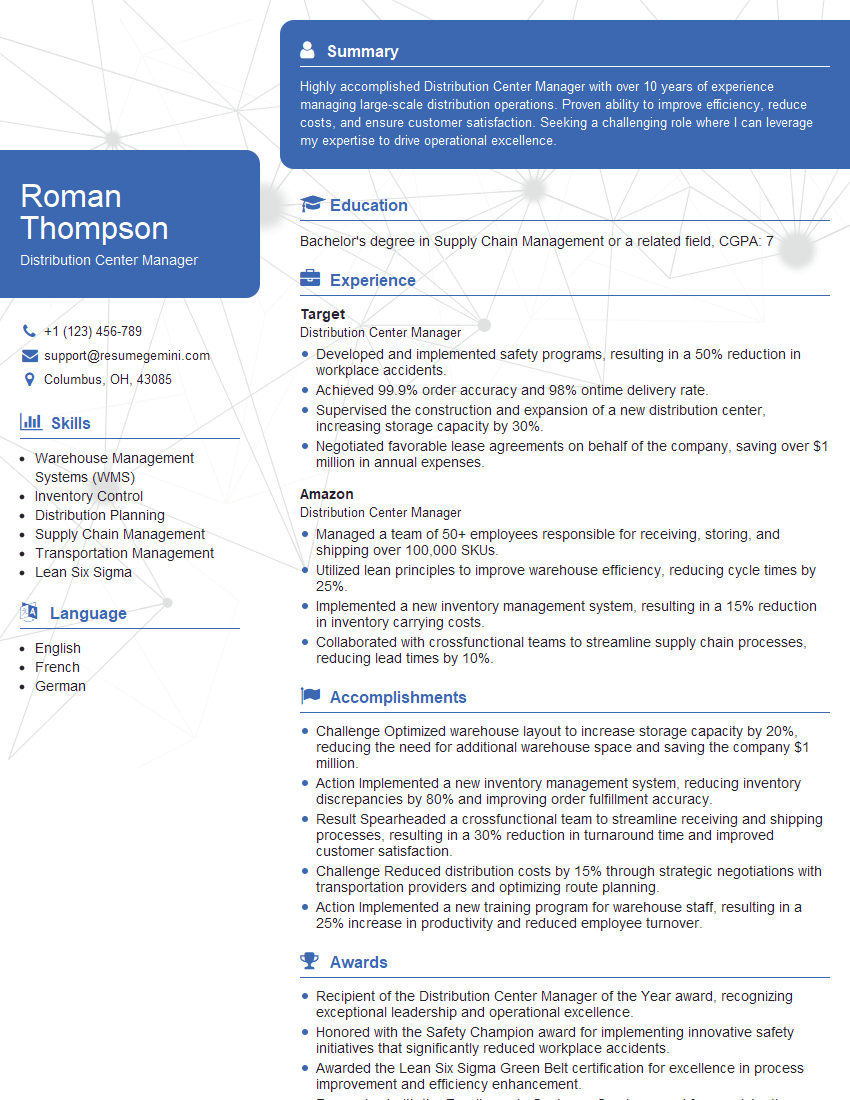
Distribution Center Manager Resume Sample
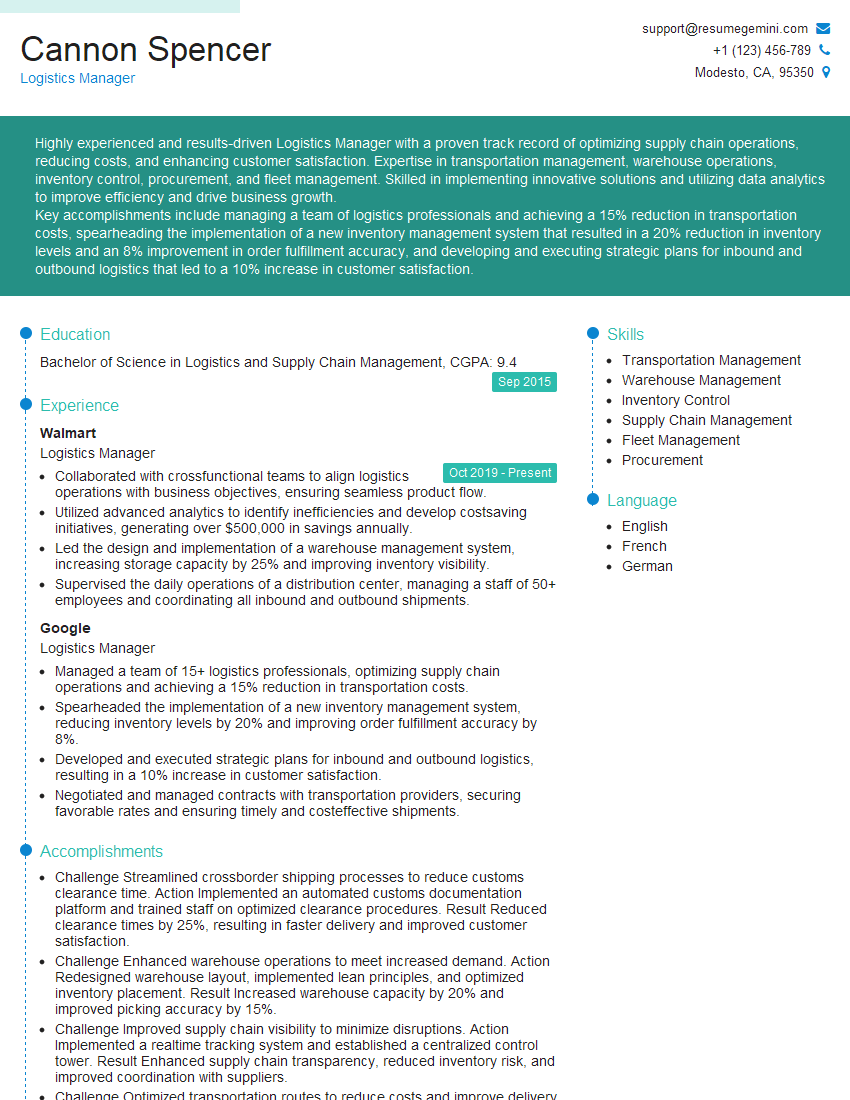
Logistics Manager Resume Sample
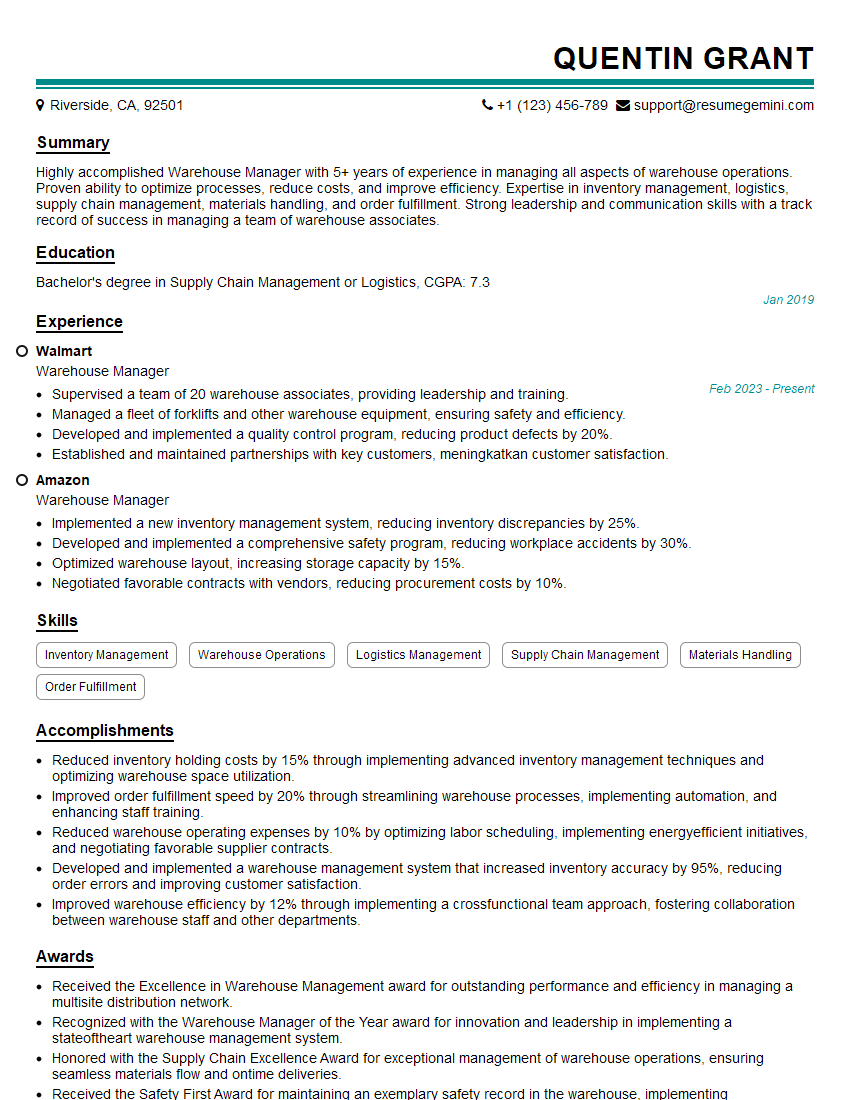
Warehouse Manager Resume Sample
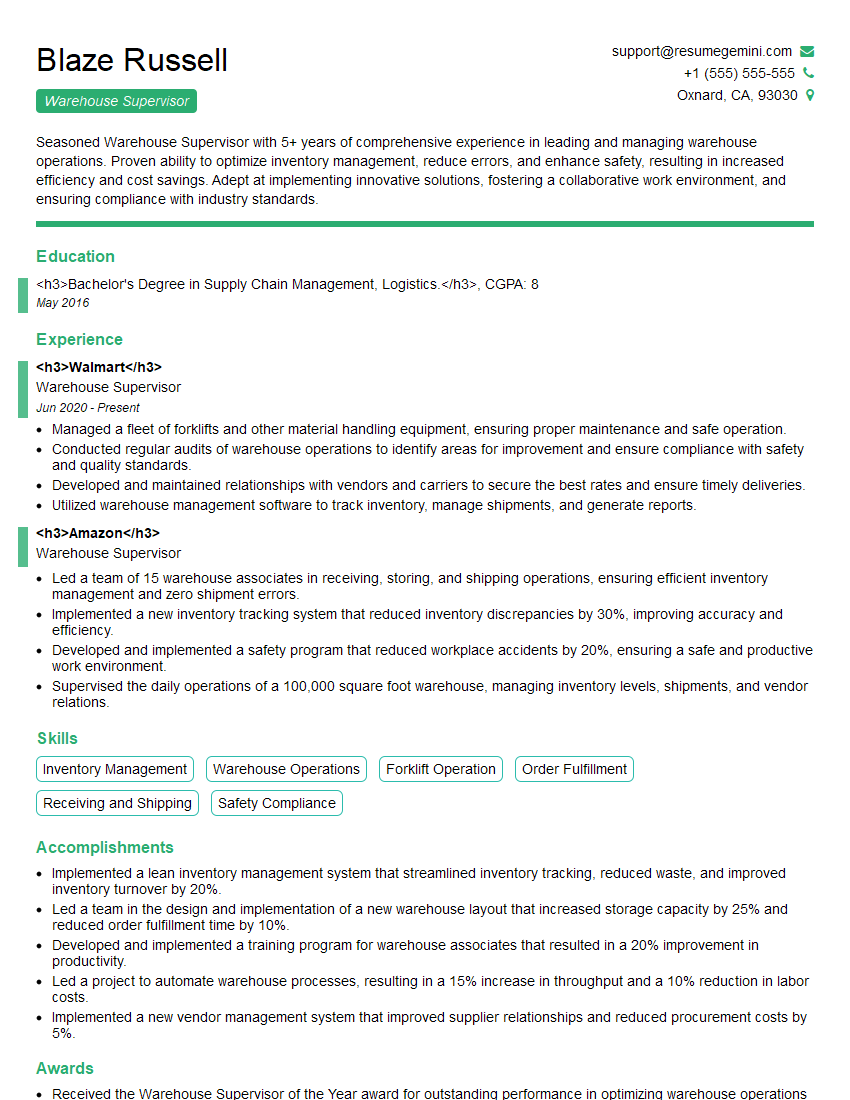
Warehouse Supervisor Resume Sample
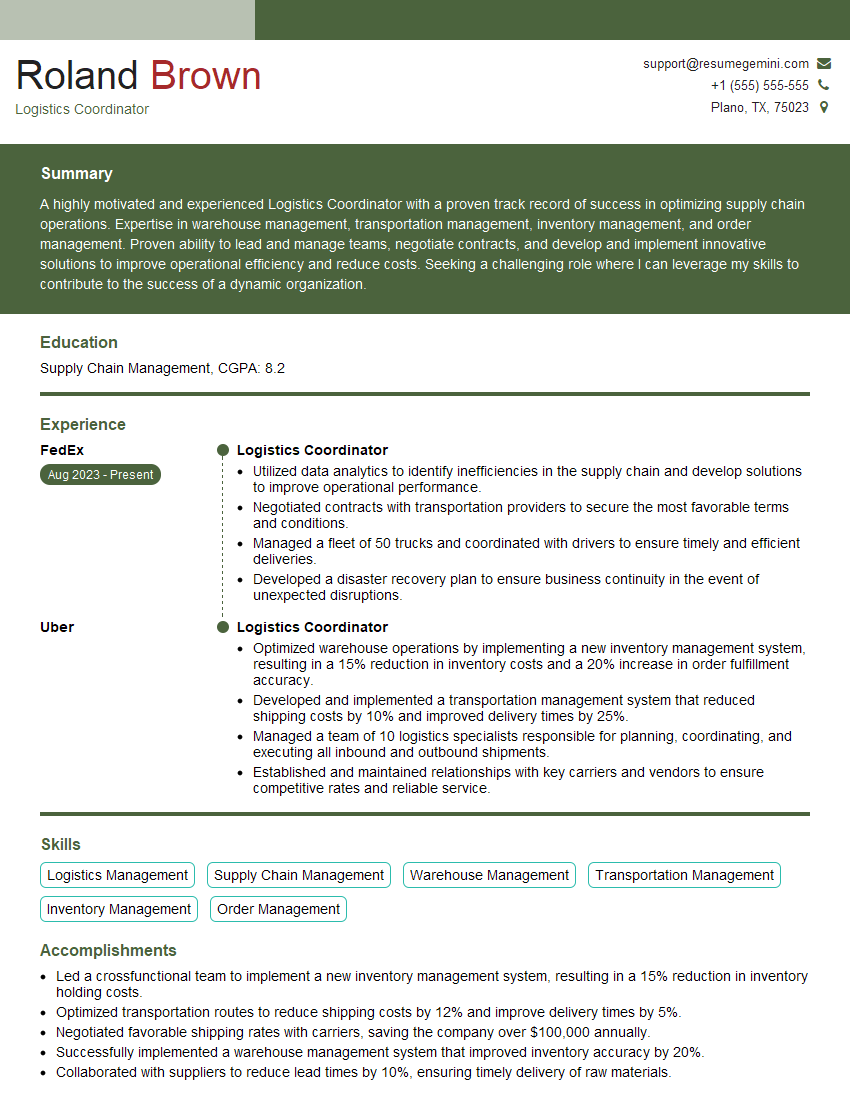
Logistics Coordinator Resume Sample
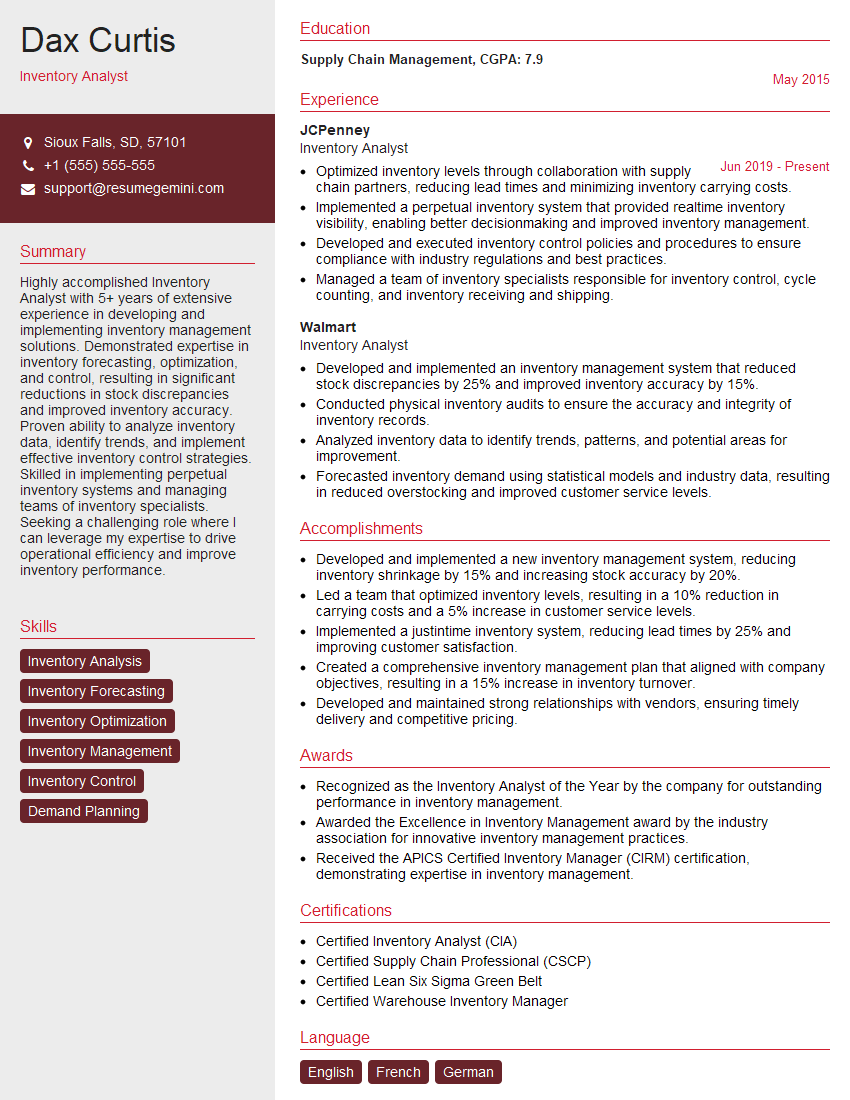
Inventory Analyst Resume Sample
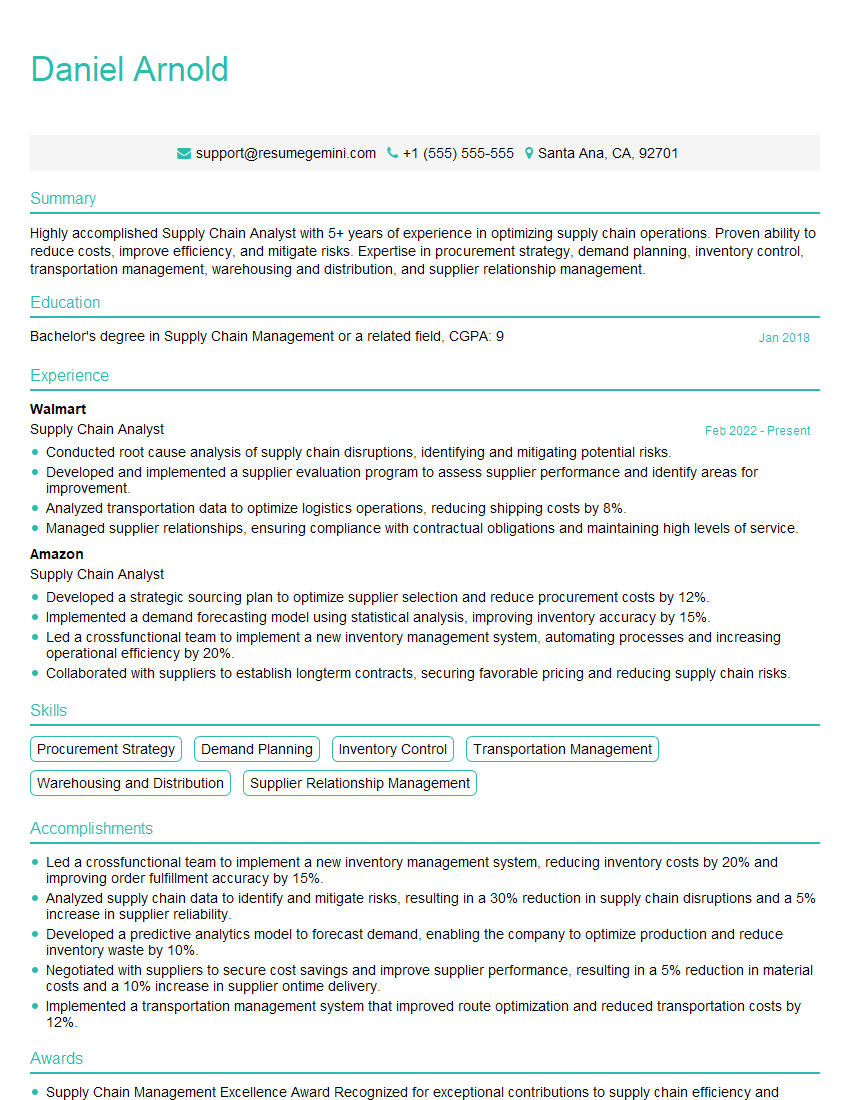
Supply Chain Analyst Resume Sample
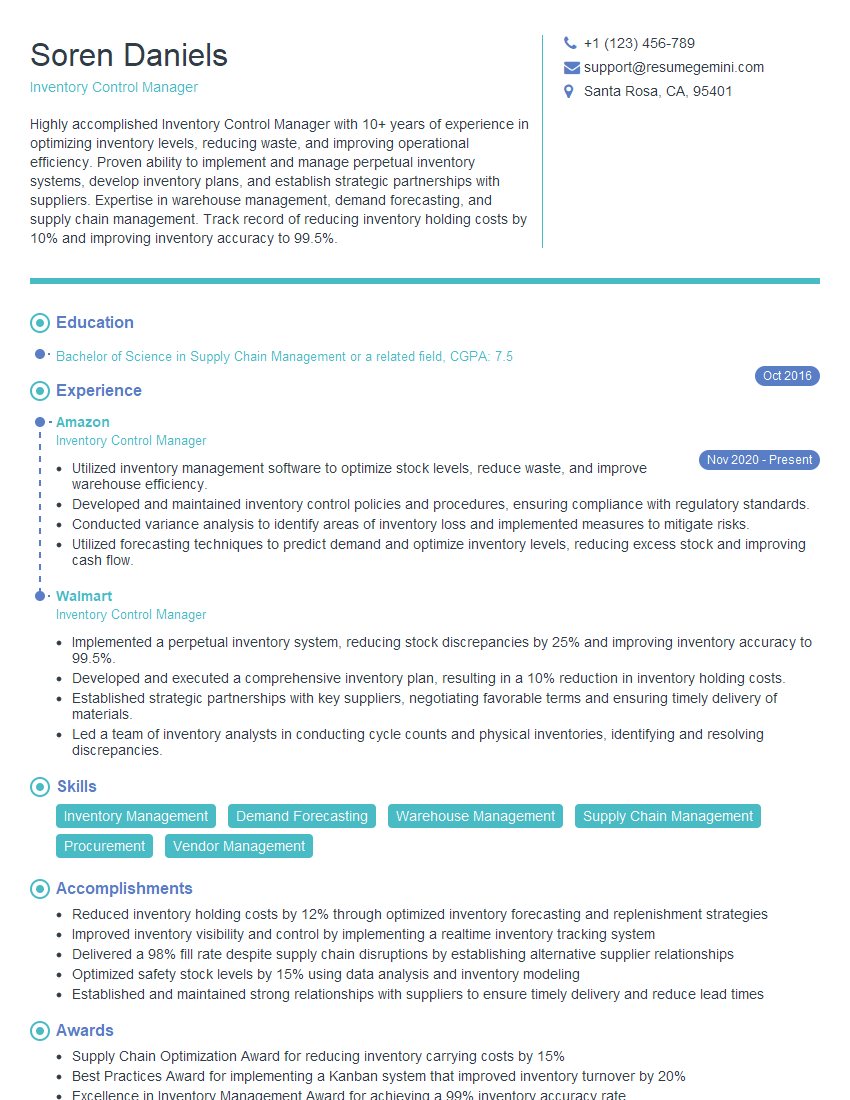
Inventory Control Manager Resume Sample
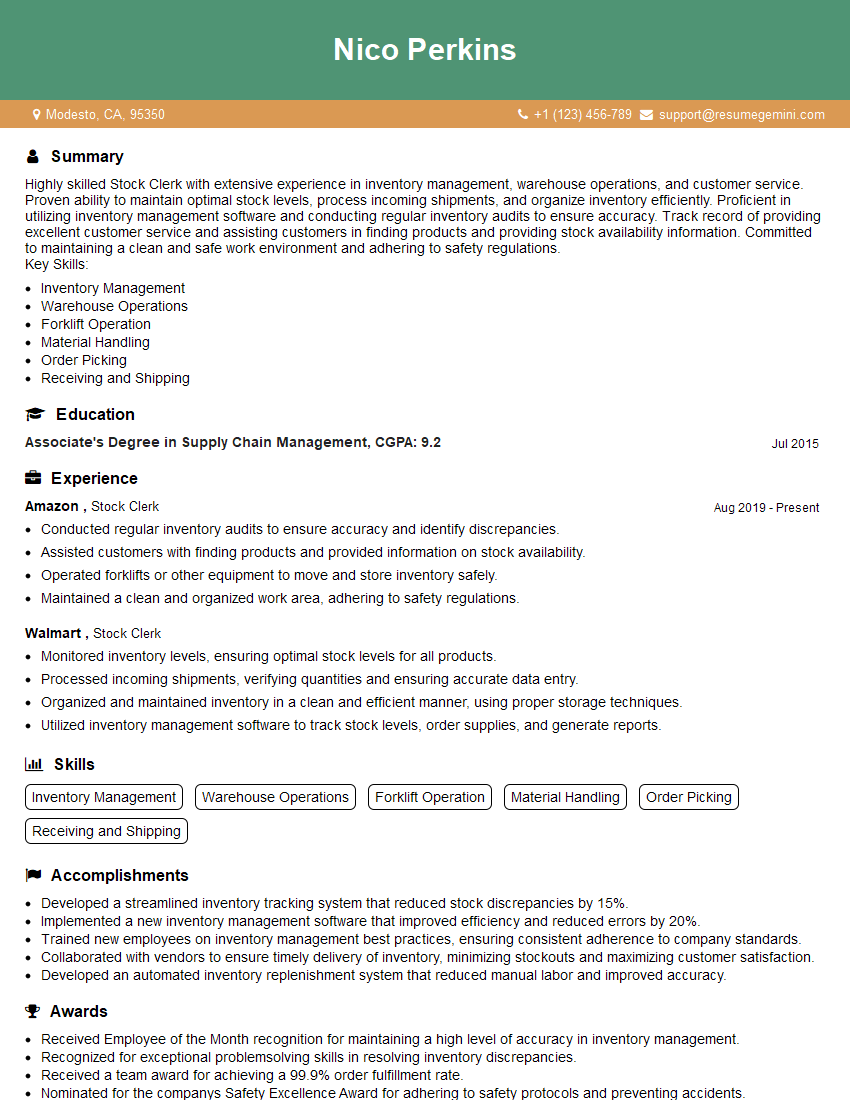
Stock Clerk Resume Sample
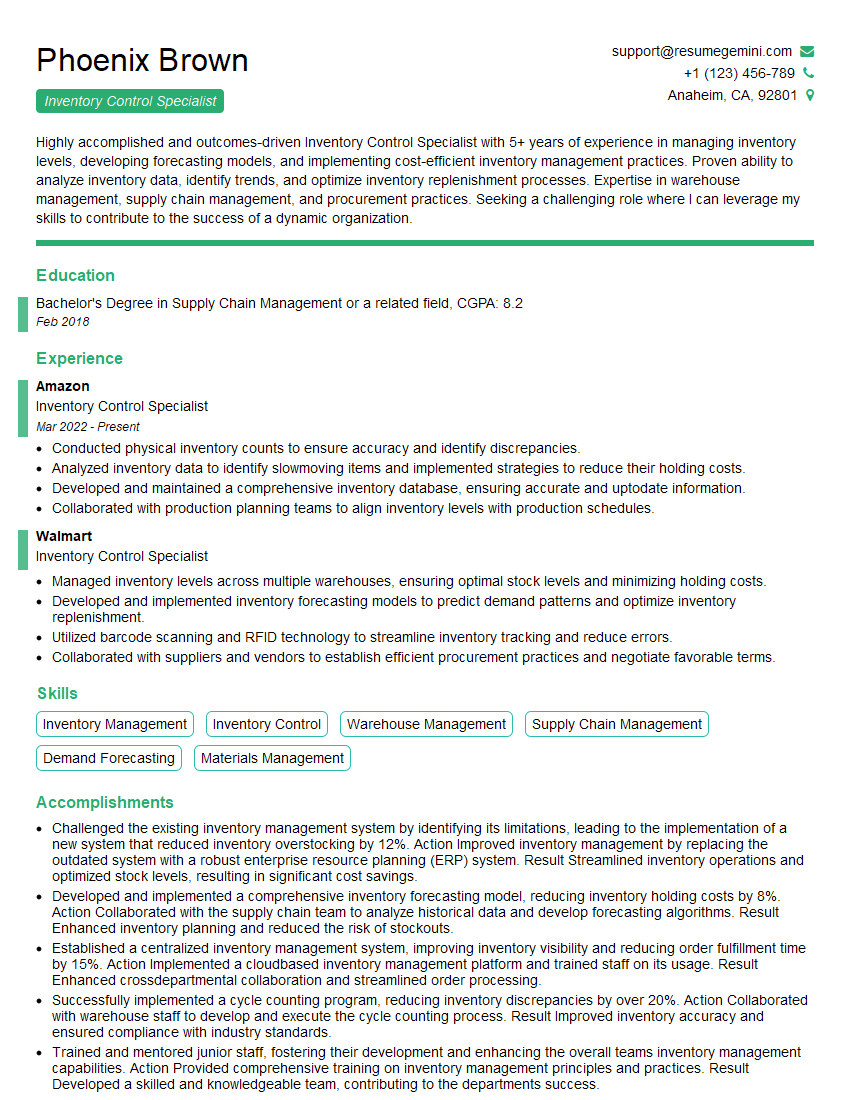
Inventory Control Specialist Resume Sample
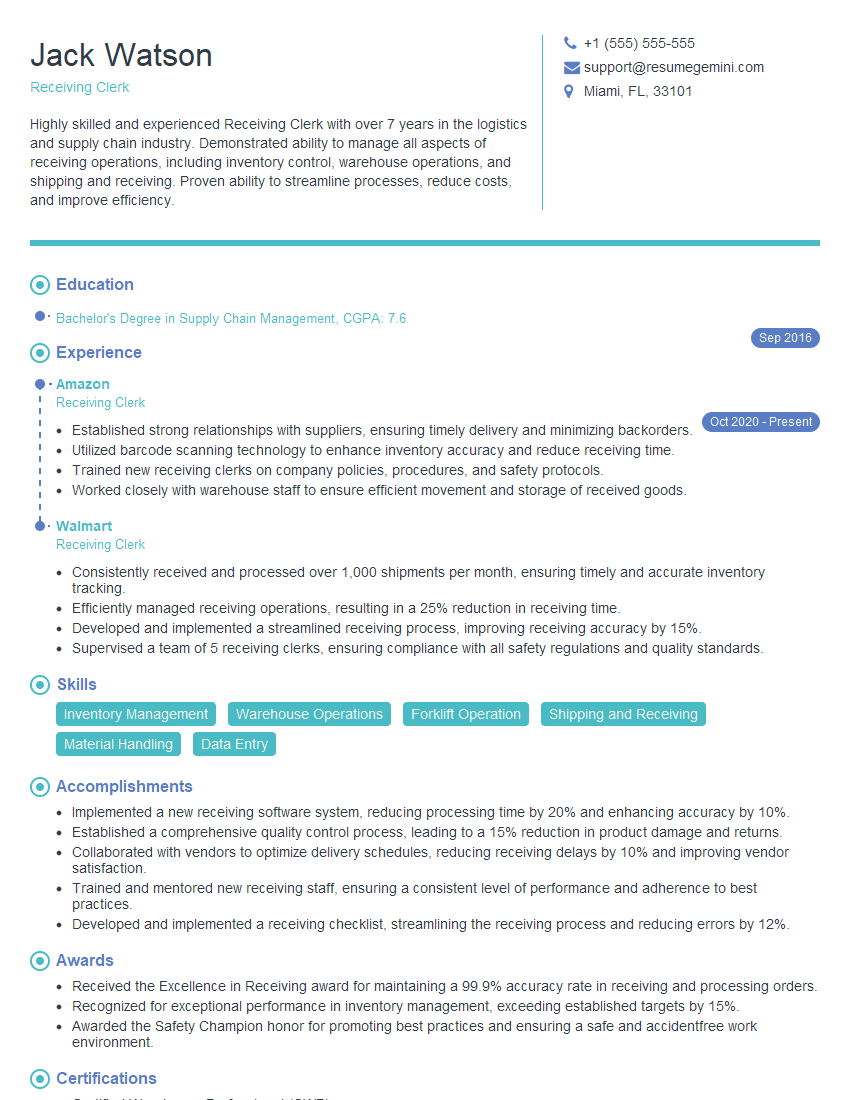
Receiving Clerk Resume Sample
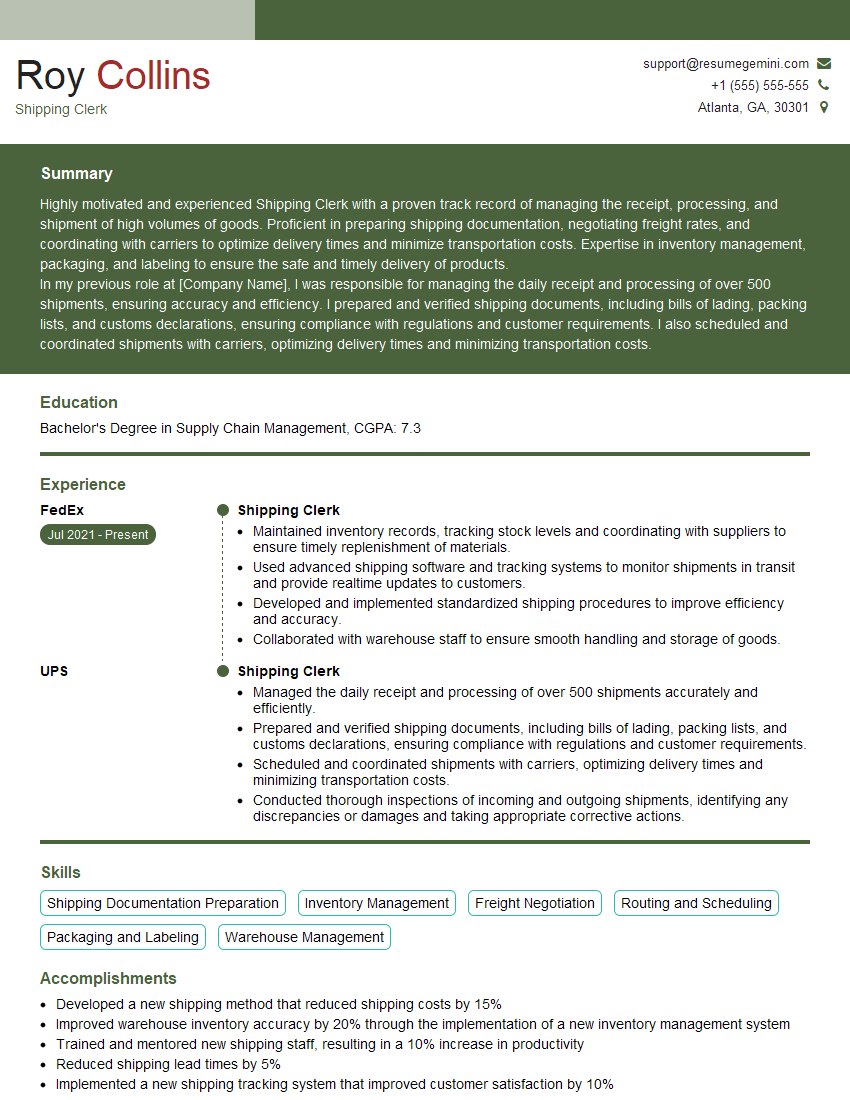
Shipping Clerk Resume Sample
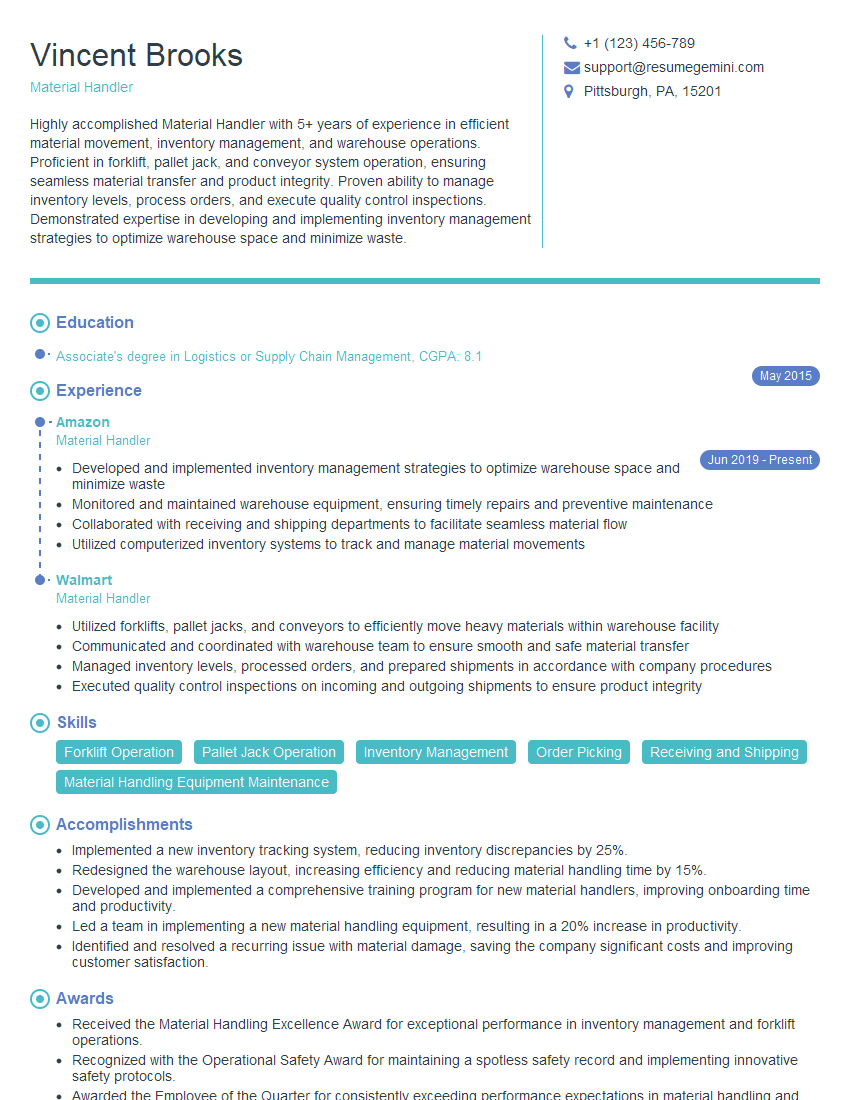
Material Handler Resume Sample
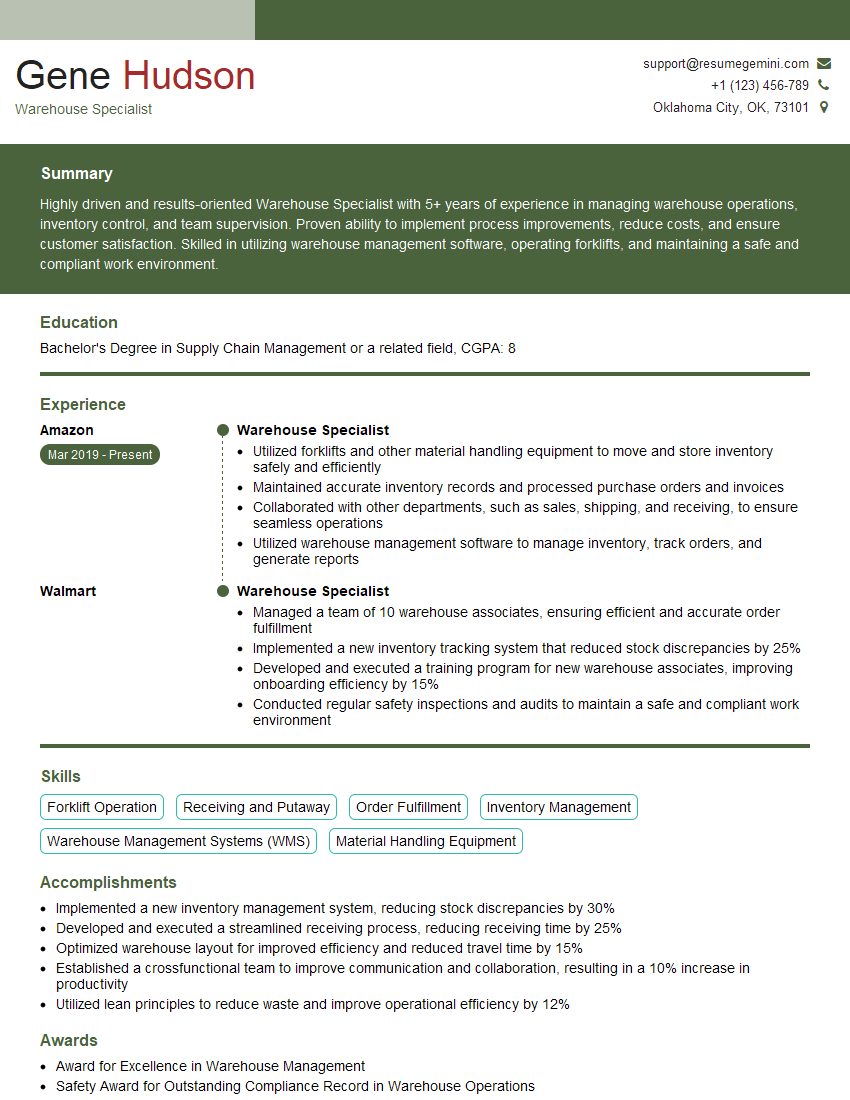
Warehouse Specialist Resume Sample
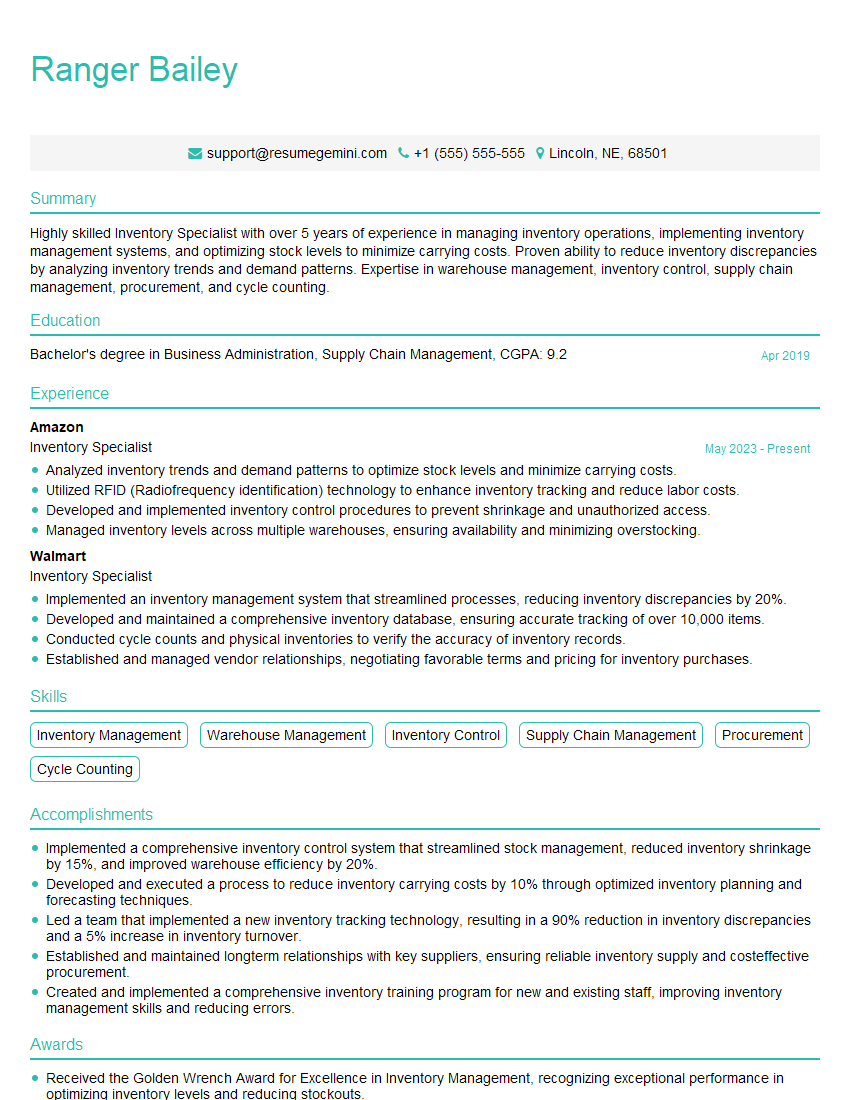
Inventory Specialist Resume Sample
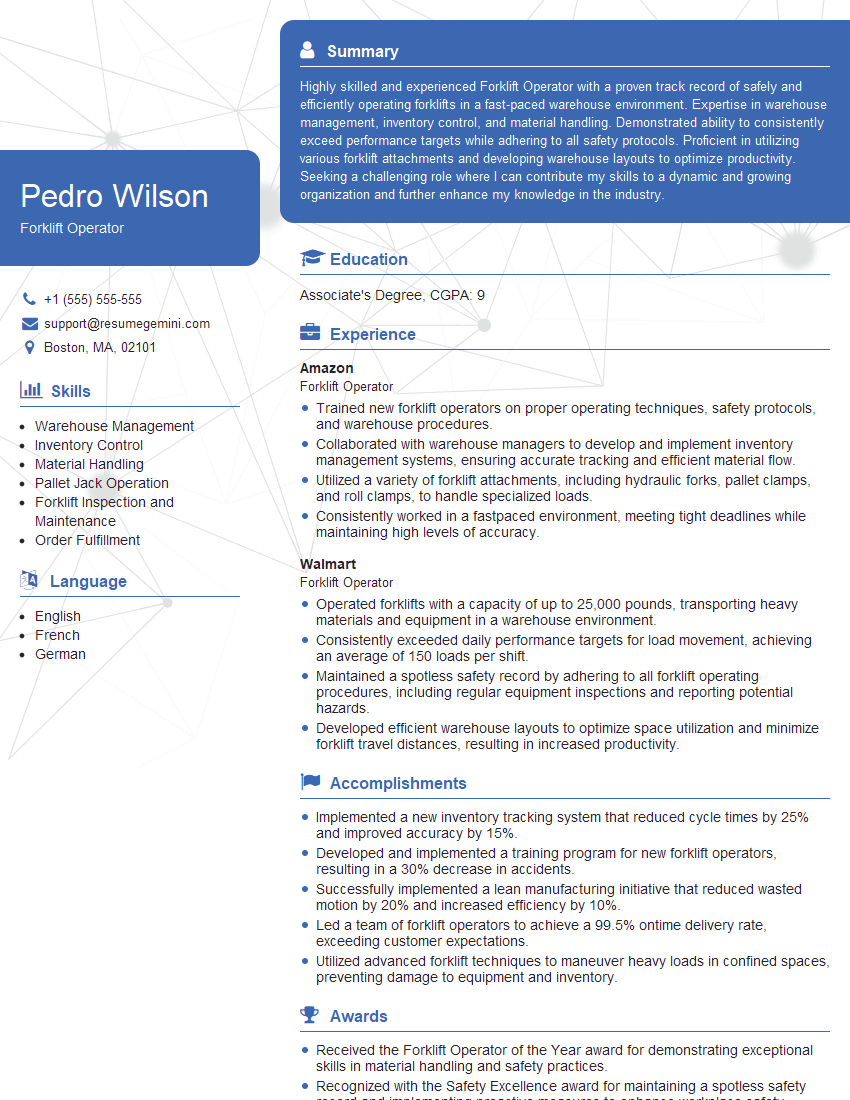
Forklift Operator Resume Sample
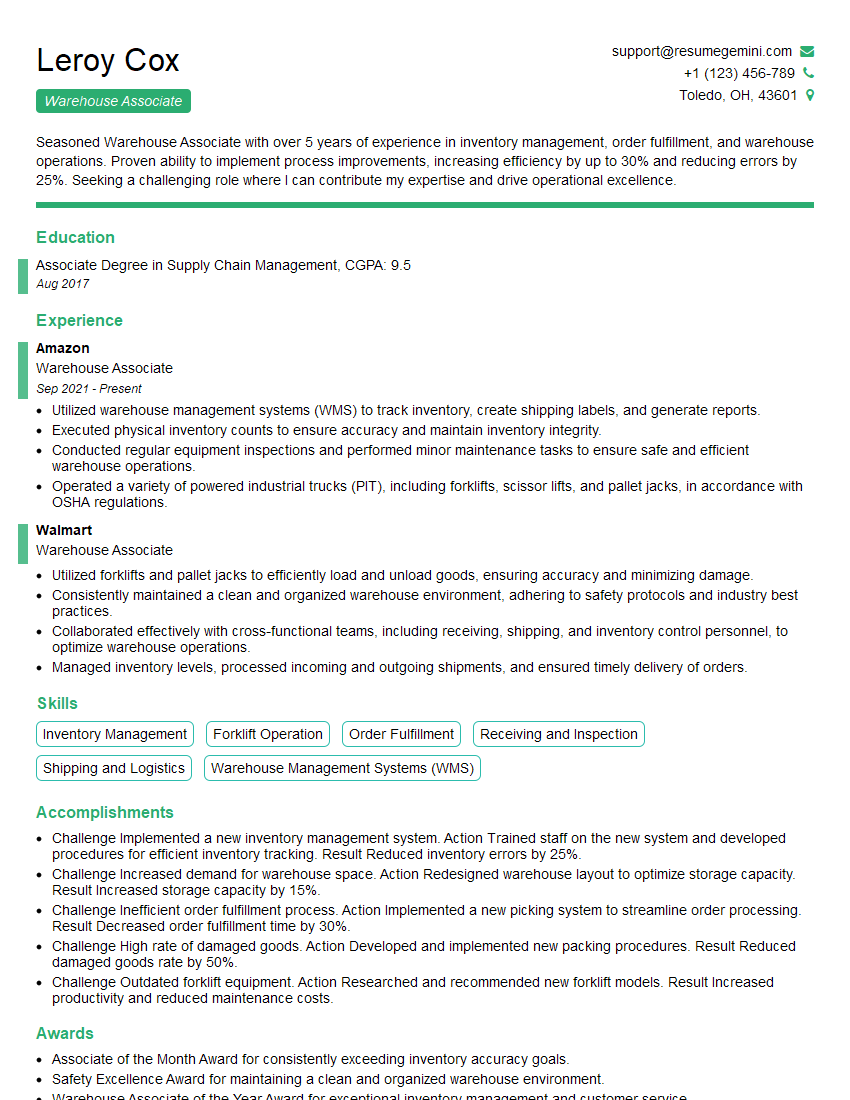
Warehouse Associate Resume Sample
- Operations Manager
- Supply Chain Manager
- Distribution Center Manager
- Logistics Manager
- Warehouse Manager
- Warehouse Supervisor
- Logistics Coordinator
- Inventory Analyst
- Supply Chain Analyst
- Inventory Control Manager
- Stock Clerk
- Inventory Control Specialist
- Receiving Clerk
- Shipping Clerk
- Material Handler
- Warehouse Specialist
- Inventory Specialist
- Forklift Operator
- Warehouse Associate
Explore more articles
Users Rating of Our Blogs
Share Your Experience
We value your feedback! Please rate our content and share your thoughts (optional).
What Readers Say About Our Blog
Very informative content, great job.
good