Preparation is the key to success in any interview. In this post, we’ll explore crucial Waste Reduction and Environmental Practices interview questions and equip you with strategies to craft impactful answers. Whether you’re a beginner or a pro, these tips will elevate your preparation.
Questions Asked in Waste Reduction and Environmental Practices Interview
Q 1. Describe your experience with different waste reduction strategies.
My experience spans a wide range of waste reduction strategies, from simple source reduction techniques to complex system-wide changes. I’ve worked on projects involving the 5 Rs – Refuse, Reduce, Reuse, Repurpose, and Recycle – implementing them across diverse sectors. For instance, in a manufacturing setting, we successfully implemented a source reduction strategy by optimizing packaging materials, leading to a 20% decrease in waste volume. In the food service industry, a comprehensive composting program significantly reduced organic waste sent to landfills. I’ve also been involved in designing and implementing waste audits, material flow analyses, and waste diversion programs, always tailoring the approach to the specific context and stakeholder needs. For example, a successful reuse program involved repurposing discarded pallets into shelving units, saving the company significant costs and diverting waste from landfills.
- Source Reduction: Minimizing waste generation at its source (e.g., designing products with less packaging).
- Reuse: Finding alternative uses for items before disposal (e.g., reusing containers).
- Recycling: Processing materials for reuse (e.g., paper, plastic, metal).
- Composting: Decomposing organic waste to create nutrient-rich soil.
- Energy Recovery: Utilizing waste as a fuel source (e.g., waste-to-energy plants).
Q 2. Explain the principles of a circular economy.
The circular economy is a regenerative system that aims to keep resources in use for as long as possible, extracting maximum value, and then recovering and regenerating products and materials at the end of each service life. It contrasts with the traditional linear economy (take-make-dispose) by focusing on three key principles:
- Design out waste and pollution: Products are designed from the outset with end-of-life considerations in mind, minimizing harmful substances and maximizing recyclability or reusability. Think of modular designs that allow for easy repair and component replacement.
- Keep products and materials in use: This involves extending the lifespan of products through reuse, repair, refurbishment, and sharing initiatives. Examples include product-as-a-service models or repair cafes.
- Regenerate natural systems: Waste is viewed as a resource, with organic waste being composted and other materials being recycled or upcycled. This minimizes environmental impact and conserves resources.
Imagine a closed loop: resources are extracted, used, recovered, and reused, mimicking natural cycles. A successful circular economy reduces our dependence on virgin materials, minimizes pollution, and creates economic opportunities.
Q 3. How do you measure the success of a waste reduction program?
Measuring the success of a waste reduction program requires a multi-faceted approach, combining quantitative and qualitative data. Key metrics include:
- Waste diversion rate: The percentage of waste diverted from landfills through recycling, composting, or other methods. A higher percentage indicates greater success.
- Waste generation rate: The amount of waste generated per unit of production or consumption. A decrease shows progress.
- Recycling rates for specific materials: Tracks the effectiveness of recycling programs for individual materials (e.g., paper, plastic).
- Cost savings: Reduction in waste management costs resulting from the program.
- Stakeholder satisfaction: Surveys and feedback from employees, residents, or other stakeholders assess program acceptance and effectiveness.
For example, tracking the weight of waste sent to landfills before and after implementing a composting program, combined with feedback from employees about the program’s ease of use, provides a comprehensive assessment of its success.
Q 4. What are the key challenges in implementing a zero-waste initiative?
Implementing a zero-waste initiative presents several significant challenges:
- High upfront costs: Investing in new infrastructure (e.g., composting facilities, recycling equipment) can be expensive.
- Lack of infrastructure: Inadequate recycling and waste processing facilities can limit waste diversion efforts.
- Contamination of recyclables: Improper sorting and contamination can render recyclable materials unusable.
- Consumer behavior: Changing consumer habits to embrace waste reduction requires extensive education and engagement.
- Technological limitations: Some materials are not yet easily recyclable or compostable.
- Policy and regulatory barriers: Lack of supportive policies or inconsistent regulations can hinder progress.
Overcoming these challenges requires a strategic approach that involves securing funding, partnering with stakeholders, investing in public awareness campaigns, and adopting innovative technologies.
Q 5. What are your strategies for stakeholder engagement in environmental projects?
Stakeholder engagement is crucial for the success of any environmental project. My strategy involves:
- Identifying key stakeholders: This includes residents, businesses, government agencies, NGOs, and community groups.
- Building relationships: Establishing trust and open communication channels through meetings, workshops, and online forums.
- Collaborative planning: Involving stakeholders in the design and implementation of the project to ensure their needs and concerns are addressed.
- Transparency and communication: Regularly sharing updates and progress reports with stakeholders.
- Feedback mechanisms: Creating opportunities for stakeholders to provide input and feedback.
- Capacity building: Providing training and resources to empower stakeholders to participate actively.
For example, in one community composting project, we held public forums, created an online feedback portal, and partnered with local schools to educate children about composting, fostering a sense of collective responsibility.
Q 6. Explain your understanding of life cycle assessment (LCA).
Life Cycle Assessment (LCA) is a comprehensive method for evaluating the environmental impacts of a product or service throughout its entire life cycle, from raw material extraction to disposal. It considers various environmental factors such as:
- Resource depletion: The amount of raw materials used.
- Energy consumption: The energy required for production, transportation, and use.
- Greenhouse gas emissions: The amount of greenhouse gases released into the atmosphere.
- Water usage: The amount of water consumed during the product’s life cycle.
- Waste generation: The amount of waste generated during production and disposal.
LCAs are used to identify environmental hotspots and inform design choices to minimize environmental impact. For instance, an LCA might reveal that a particular packaging material has a significantly larger carbon footprint than alternatives, leading to a change in packaging design.
Q 7. How do you identify and prioritize waste reduction opportunities?
Identifying and prioritizing waste reduction opportunities requires a systematic approach. I typically use a combination of methods:
- Waste audits: A detailed analysis of waste streams to identify the types and quantities of waste generated.
- Material flow analysis: Tracking the flow of materials throughout a system to understand where waste is generated and how it can be minimized.
- Benchmarking: Comparing performance to best practices in similar organizations.
- Stakeholder input: Gathering input from employees, customers, and other stakeholders to identify areas for improvement.
- Prioritization matrix: Using a matrix to rank opportunities based on factors such as cost savings, environmental impact, and feasibility.
For example, a waste audit might reveal that a significant portion of waste is comprised of packaging materials. This information, combined with cost analysis and stakeholder feedback, would inform the prioritization of strategies to reduce packaging waste.
Q 8. Describe your experience with different waste sorting and recycling methods.
My experience encompasses a wide range of waste sorting and recycling methods, from simple source separation programs to sophisticated multi-stream systems. I’ve worked with various municipalities and private companies implementing different approaches based on local contexts and available resources.
- Source separation: This involves residents separating waste at home into different bins for recyclables (paper, plastic, glass, metal), organics (food waste, yard waste), and residual waste. I’ve been involved in designing public awareness campaigns to improve participation rates in these programs, focusing on clear labeling, convenient collection schedules, and community engagement.
- Materials Recovery Facilities (MRFs): I’ve overseen the operations of MRFs, which are large-scale facilities that process collected recyclables. My expertise includes optimizing sorting technologies (e.g., automated sorters, manual sorting lines), ensuring quality control, and maximizing recovery rates. For example, I implemented a new optical sorter in one MRF, resulting in a 15% increase in plastic recovery.
- Composting and Anaerobic Digestion: I’ve implemented and managed composting facilities for organic waste, converting it into valuable compost for agricultural use. I also have experience with anaerobic digestion, a process that breaks down organic waste in the absence of oxygen to produce biogas, a renewable energy source. One project involved successfully transitioning a landfill to a composting and biogas facility, significantly reducing greenhouse gas emissions.
- Waste-to-Energy: I’ve worked on projects involving waste-to-energy incineration, focusing on minimizing environmental impact through advanced emission control technologies and energy recovery systems. This requires careful monitoring of air emissions and ash management to ensure regulatory compliance. For instance, I successfully negotiated with a local community to address their concerns about a proposed waste-to-energy plant, ultimately securing its approval.
Q 9. How would you address non-compliance with environmental regulations?
Addressing non-compliance with environmental regulations requires a multi-faceted approach, starting with proactive prevention and moving to corrective actions if necessary.
- Prevention: Regular internal audits and training programs ensure employees understand and follow regulations. Clear communication channels are crucial, keeping staff informed about changes in regulations and best practices.
- Detection: Environmental monitoring, both self-monitoring and through regulatory inspections, helps identify potential issues early. This may include regular testing of wastewater, air emissions, or soil samples.
- Corrective Actions: When non-compliance is detected, a thorough investigation determines the root cause. This might involve reviewing operating procedures, employee training, or equipment maintenance. Corrective actions are implemented to prevent recurrence, documented thoroughly, and reported to the relevant authorities.
- Enforcement: If violations persist, penalties may include fines or legal action. Transparency and cooperation with regulatory bodies are essential during this process.
For example, I once discovered a leak in a chemical storage tank during a routine audit. We immediately contained the leak, cleaned the affected area, and implemented a new inspection schedule to prevent future incidents. We also reported the incident to the EPA and implemented the necessary corrective actions, demonstrating our commitment to regulatory compliance.
Q 10. What are the common types of hazardous waste and their proper disposal methods?
Hazardous waste encompasses materials posing substantial or potential threats to public health or the environment. Proper disposal is crucial to mitigate risks. Common types and disposal methods include:
- Infectious Waste (e.g., medical waste): Requires incineration, autoclaving (sterilization using high pressure and steam), or chemical disinfection before disposal in a designated landfill.
- Toxic Waste (e.g., heavy metals, pesticides): Often requires specialized treatment, such as solidification/stabilization, chemical neutralization, or secure landfilling in designated hazardous waste landfills. This usually involves a licensed hazardous waste hauler.
- Reactive Waste (e.g., explosives, flammable materials): Requires careful handling and transport, with specialized containers and transportation methods to prevent accidents. Disposal often involves controlled detonation or chemical treatment.
- Radioactive Waste (e.g., nuclear waste): Needs exceptionally secure storage and disposal, often involving deep geological repositories or specialized facilities designed to contain radiation for extended periods.
- Electronic Waste (e.g., computers, phones): This contains hazardous materials and requires responsible recycling to recover valuable components and prevent environmental contamination. This usually involves dismantling and separating various components for reuse or proper disposal.
It’s critical to follow all relevant local, state, and federal regulations for hazardous waste disposal. Improper disposal can lead to severe environmental damage and legal penalties.
Q 11. What is your experience with waste audits and their benefits?
Waste audits are systematic evaluations of an organization’s waste generation, management, and disposal practices. They provide valuable data to identify opportunities for waste reduction and cost savings.
My experience includes conducting both internal and external waste audits for various clients, employing a range of techniques including waste characterization (weighing, sorting, and categorizing waste), data analysis, and identifying trends in waste generation. For example, I conducted a waste audit for a manufacturing company that identified significant opportunities for reducing packaging waste through process improvements and the use of recyclable materials. This resulted in cost savings of over $50,000 annually and a 20% reduction in landfill waste.
Benefits of Waste Audits:
- Identify Waste Reduction Opportunities: Pinpoint sources of waste generation and areas for improvement.
- Cost Savings: Reduce waste disposal costs and resource consumption.
- Regulatory Compliance: Ensure compliance with environmental regulations.
- Improved Efficiency: Optimize waste management processes.
- Data-Driven Decision Making: Provide quantitative data to inform strategic waste reduction initiatives.
Q 12. Describe your experience with developing and implementing environmental management systems (EMS).
I have extensive experience developing and implementing Environmental Management Systems (EMS), primarily using the ISO 14001 framework. This involves a structured approach to managing environmental responsibilities.
- Planning: This phase involves defining the scope of the EMS, setting environmental objectives and targets (e.g., reducing waste generation by 10% within a year), identifying legal and other requirements, and establishing a framework for achieving the objectives.
- Implementation: This includes establishing procedures, providing training, assigning responsibilities, and ensuring effective communication throughout the organization. It also involves resource allocation, such as assigning personnel and budgets, for EMS activities. For example, we created a standardized waste reporting system to ensure accurate data collection.
- Checking: This involves monitoring and measuring performance against the set objectives and targets, conducting regular audits (internal and external), and investigating any non-conformances. We used a combination of manual inspections, data analysis, and environmental monitoring tools to track performance.
- Action: This focuses on addressing any non-conformances, taking corrective actions, and implementing improvements to the EMS itself. For instance, we revised our waste management procedures after discovering inefficiencies during an internal audit. The system included regular performance reviews, corrective actions reports, and management review meetings to ensure continuous improvement.
Successfully implementing an EMS requires strong leadership commitment, employee engagement, and a clear understanding of the organization’s environmental aspects and impacts.
Q 13. How familiar are you with ISO 14001 or other environmental standards?
I am very familiar with ISO 14001, the internationally recognized standard for environmental management systems. I’ve led several organizations through the certification process, guiding them in implementing and maintaining compliant systems. My understanding extends beyond ISO 14001 to other relevant standards, including ISO 14064 (Greenhouse Gas accounting), and various industry-specific environmental regulations. I understand the principles of Plan-Do-Check-Act (PDCA) cycle used by many environmental standards. This understanding allows me to effectively develop and implement programs in diverse contexts.
Q 14. How do you ensure compliance with environmental regulations and permits?
Ensuring compliance with environmental regulations and permits requires a proactive and systematic approach.
- Permitting: Thorough understanding and adherence to all relevant permits and licenses (air, water, waste, etc.). This often involves working with regulatory agencies to obtain necessary permits and regularly updating them as required. We maintain detailed records of all permits and ensure they are always current.
- Monitoring and Reporting: Regular monitoring of environmental parameters (e.g., air emissions, wastewater discharges, waste generation) to ensure compliance. We utilize automated monitoring systems whenever possible and maintain comprehensive data records to comply with reporting requirements.
- Internal Audits: Conducting regular internal audits to identify potential non-compliances and implement corrective actions. These audits may focus on specific regulatory requirements, waste management practices, or environmental monitoring procedures.
- Training and Communication: Providing employees with ongoing training on environmental regulations and best practices. Clear communication ensures everyone understands their responsibilities in maintaining compliance.
- Emergency Preparedness: Developing and implementing emergency response plans to address potential environmental incidents. This often involves spill prevention and response plans and ensuring access to emergency equipment and personnel.
By employing this comprehensive approach, organizations can proactively prevent non-compliances and maintain a strong environmental compliance record. Transparency and collaboration with regulatory bodies are essential components of effective compliance programs.
Q 15. What are your strategies for minimizing waste generation at the source?
Minimizing waste at the source, also known as waste prevention, is the most effective approach to waste management. It focuses on reducing the amount of waste generated before it even enters the waste stream. This involves a multi-pronged strategy focusing on design, procurement, and operational changes.
- Product Design for Durability and Recyclability: Designing products with longer lifespans and using recyclable or compostable materials significantly reduces waste. For example, using durable, repairable electronics instead of planned obsolescence models minimizes e-waste.
- Sustainable Procurement Practices: Selecting suppliers committed to sustainable practices, prioritizing products with minimal packaging, and opting for recycled content materials are vital. For instance, choosing office supplies made from recycled paper reduces the demand for virgin timber and lowers landfill burden.
- Operational Efficiency and Waste Audits: Regular waste audits help identify areas where waste generation is highest. This might reveal inefficient processes, excessive packaging, or unnecessary material usage. Implementing lean manufacturing principles or process optimization can drastically reduce waste in production or office environments.
- Employee Engagement and Education: Training employees on waste reduction techniques, proper recycling procedures, and responsible consumption habits is crucial for success. This includes promoting the use of reusable containers, encouraging printing only when necessary, and establishing a culture of waste awareness.
For instance, in a previous role, we implemented a comprehensive waste audit, leading to a 25% reduction in overall waste generation within six months by focusing on improved packaging and streamlining our production process.
Career Expert Tips:
- Ace those interviews! Prepare effectively by reviewing the Top 50 Most Common Interview Questions on ResumeGemini.
- Navigate your job search with confidence! Explore a wide range of Career Tips on ResumeGemini. Learn about common challenges and recommendations to overcome them.
- Craft the perfect resume! Master the Art of Resume Writing with ResumeGemini’s guide. Showcase your unique qualifications and achievements effectively.
- Don’t miss out on holiday savings! Build your dream resume with ResumeGemini’s ATS optimized templates.
Q 16. How do you communicate environmental issues to diverse audiences?
Communicating environmental issues effectively to diverse audiences requires tailoring the message to the specific audience’s understanding, values, and concerns. A one-size-fits-all approach rarely works.
- Understand Your Audience: Before communicating, identify your target audience. Are they children, business executives, community members, or policymakers? Each group will require a different communication style and approach.
- Use Simple, Clear Language: Avoid technical jargon and complex terminology. Use visuals like charts, graphs, and infographics to illustrate key points and make the information more accessible.
- Highlight Relevance and Benefits: Frame the environmental issue in terms of its relevance to the audience’s interests, emphasizing the positive impacts of addressing the issue (e.g., cost savings, improved health, community benefits).
- Choose Appropriate Channels: Select communication channels that align with the audience’s preferences. This could include workshops, presentations, social media campaigns, website articles, community events, or even local newsletters.
- Engage in Two-Way Communication: Create opportunities for dialogue and feedback. Encourage questions and address concerns to foster trust and understanding.
For example, when communicating about composting to a community, we utilized a hands-on workshop demonstrating the process and its benefits, alongside a visually appealing infographic detailing the environmental advantages. For businesses, we focused on the financial incentives of waste reduction programs.
Q 17. Explain your understanding of different waste treatment technologies.
Waste treatment technologies are crucial for managing waste that cannot be reduced or reused. They range from simple to complex processes depending on the type of waste and desired outcome.
- Landfilling: This is the most common but least environmentally friendly method. It involves burying waste in designated areas. Modern landfills include liners and leachate collection systems to mitigate environmental impacts.
- Incineration: Waste is burned at high temperatures, reducing volume and generating energy (waste-to-energy). However, it releases air pollutants, requiring advanced emission control systems.
- Anaerobic Digestion: Organic waste is broken down by microorganisms in the absence of oxygen, producing biogas (methane) that can be used for energy generation and digestate, a nutrient-rich soil amendment.
- Mechanical Biological Treatment (MBT): This process involves the mechanical separation of waste materials, followed by biological treatment (e.g., composting or anaerobic digestion) of the organic fraction. It is commonly used to improve waste sorting efficiency and optimize recycling processes.
- Recycling: This involves processing used materials to create new products, conserving resources and reducing waste. Different recycling methods exist depending on the material (e.g., plastic, paper, metal).
Selecting the appropriate technology depends on various factors, including the type and quantity of waste, local regulations, available resources, and cost-effectiveness.
Q 18. What is your experience with data analysis and reporting related to waste management?
Data analysis and reporting are fundamental to effective waste management. It enables us to track progress, identify areas for improvement, and demonstrate the impact of our initiatives.
- Waste Characterization Studies: These studies involve analyzing the composition of waste to understand its sources and identify opportunities for waste reduction and resource recovery. We use statistical software to analyze data collected from waste audits and weigh-in stations.
- Benchmarking and Performance Tracking: We regularly track key performance indicators (KPIs) such as waste diversion rates, landfill tonnage, recycling rates, and composting rates. This enables us to compare performance against targets and identify trends.
- Data Visualization and Reporting: We use data visualization tools to create reports and dashboards, presenting findings in an accessible and informative manner. This helps stakeholders understand the progress made and the need for further action.
- Predictive Modeling: In some cases, we employ predictive modeling techniques to forecast future waste generation based on historical trends and projected growth. This allows for proactive planning and resource allocation.
For example, using data from waste audits, we were able to pinpoint the source of increased plastic waste in a particular department and implement targeted interventions to reduce it by 15% within a quarter.
Q 19. How do you manage conflicts related to environmental initiatives?
Managing conflicts related to environmental initiatives requires a collaborative and transparent approach.
- Active Listening and Understanding: The first step involves actively listening to all stakeholders’ concerns and perspectives. This helps identify the root causes of the conflict.
- Facilitation and Mediation: Act as a neutral facilitator to guide discussions and help stakeholders find common ground. Mediation techniques can be used to address opposing viewpoints.
- Collaboration and Compromise: Seek collaborative solutions that address the concerns of all parties involved. This may involve compromise and finding mutually acceptable alternatives.
- Clear Communication and Transparency: Maintain open and transparent communication throughout the process. Keep stakeholders informed of progress and decisions made.
- Stakeholder Engagement and Empowerment: Involving stakeholders in the decision-making process empowers them and fosters a sense of ownership, reducing the likelihood of conflicts.
In one instance, a conflict arose regarding the location of a new recycling facility. By engaging with the local community through public forums and addressing their concerns regarding noise and traffic, we were able to reach a mutually agreeable solution.
Q 20. How do you adapt waste management strategies to different organizational contexts?
Adapting waste management strategies to different organizational contexts requires a flexible and tailored approach. The size, type, and operations of an organization significantly impact its waste generation patterns and management needs.
- Needs Assessment: Conduct a thorough assessment of the organization’s waste generation patterns, existing infrastructure, resources, and regulatory compliance requirements.
- Tailored Strategies: Develop customized waste management strategies that address the specific needs and challenges of the organization. This may involve different combinations of waste reduction, reuse, recycling, and treatment technologies.
- Resource Allocation: Allocate appropriate resources (financial, human, technological) to support the implementation of the chosen strategies. This includes providing adequate training, equipment, and facilities.
- Stakeholder Engagement: Engage with all relevant stakeholders (employees, management, customers, community members) to secure buy-in and support for the initiatives.
- Monitoring and Evaluation: Regularly monitor and evaluate the effectiveness of the implemented strategies, making adjustments as needed to ensure continued improvement.
For instance, a waste management plan for a manufacturing facility would differ significantly from that of a hospital or an office building. Manufacturing may focus on source reduction and recycling of industrial waste, whereas a hospital might prioritize the safe disposal of medical waste.
Q 21. What are your experience with different composting methods?
Composting is a natural process that decomposes organic matter into a valuable soil amendment. Several methods exist, each with its own advantages and disadvantages.
- Home Composting (Backyard Composting): This involves composting organic materials in a backyard compost bin or pile. It’s suitable for small-scale applications and requires manual turning. Methods include static pile, three-bin systems, and tumblers.
- In-Vessel Composting: This method involves composting organic materials in enclosed vessels, providing better temperature and moisture control, leading to faster decomposition and higher-quality compost. These systems are commonly used in industrial and municipal settings.
- Aerated Static Pile Composting: This method involves creating large piles of organic materials and aerating them using forced-air systems. It’s a more efficient method than traditional static piles and suitable for large volumes of organic waste.
- Windrow Composting: Organic waste is arranged in long rows (windrows) and regularly turned to ensure proper aeration and decomposition. It’s widely used for large-scale composting operations.
The choice of composting method depends on factors like the scale of operation, available space, resource availability, and desired quality of compost. For example, a small-scale community garden might use backyard composting, while a large city might employ windrow or in-vessel composting systems.
Q 22. What is your experience with designing and implementing waste reduction training programs?
Designing and implementing effective waste reduction training programs requires a multi-faceted approach. I begin by conducting a thorough needs assessment to identify the specific knowledge gaps and behavioral changes needed within the target audience. This involves surveys, interviews, and observation of current waste management practices. Then, I tailor the program content, choosing the most appropriate delivery methods – workshops, online modules, interactive simulations, or a blended approach.
For example, in a previous role at a large manufacturing plant, we identified significant losses due to improper material sorting. Our training program incorporated hands-on sorting exercises, visual aids demonstrating proper techniques, and gamified elements to enhance engagement. Post-training assessments, including waste audits, showed a 25% reduction in incorrectly sorted waste within three months. Key to success is ongoing reinforcement through regular communication, visual cues, and feedback mechanisms.
I always emphasize practical application and behavior change, moving beyond simply providing information. My programs incorporate real-world case studies, best practice examples, and opportunities for participants to apply the learned skills in a simulated or real-world setting. Feedback mechanisms are crucial; they allow for continuous improvement and demonstrate a commitment to ongoing learning.
Q 23. How do you assess the economic and environmental impacts of waste management decisions?
Assessing the economic and environmental impacts of waste management decisions requires a holistic approach, integrating both quantitative and qualitative data. On the economic side, I analyze factors such as waste disposal costs, recycling revenue, the cost of implementing waste reduction strategies (e.g., new equipment, staff training), and potential fines for non-compliance. I use cost-benefit analysis to compare different waste management scenarios and determine the most financially viable option.
From an environmental perspective, I employ Life Cycle Assessment (LCA) methodologies to evaluate the environmental burdens associated with each stage of a product’s life cycle, from raw material extraction to disposal. Key metrics include greenhouse gas emissions, water consumption, energy use, and waste generation. Tools like SimaPro or GaBi software can help quantify these impacts. Qualitative aspects, such as the potential impact on biodiversity or human health, are also considered through stakeholder engagement and literature review.
For instance, when working with a client considering switching from landfill disposal to anaerobic digestion, I conducted a detailed LCA to compare the environmental footprint of both options. This analysis showed a significant reduction in greenhouse gas emissions and a positive impact on renewable energy generation, ultimately justifying the investment in anaerobic digestion despite the higher initial capital costs.
Q 24. Describe your experience with environmental impact assessments (EIAs).
My experience with Environmental Impact Assessments (EIAs) spans various projects, including large-scale infrastructure developments, industrial expansions, and renewable energy projects. EIAs are crucial for identifying and mitigating potential environmental impacts before a project commences. I am proficient in conducting all stages of an EIA, from scoping and baseline data collection to impact prediction, mitigation planning, and reporting. I understand the importance of regulatory compliance and the need for transparent and scientifically sound assessments.
In a recent EIA for a proposed wind farm, I led a team in conducting a comprehensive assessment of potential impacts on bird and bat populations. This involved field surveys, habitat mapping, and modeling potential collisions with turbine blades. Based on our findings, we proposed mitigation measures, such as adjusting turbine placement and operating strategies, which were successfully incorporated into the project design.
A key aspect of effective EIA is stakeholder engagement. I ensure that affected communities, regulatory bodies, and other stakeholders are actively involved in the process, contributing their knowledge and concerns, and fostering a sense of shared understanding and responsibility.
Q 25. What is your experience with using environmental management software?
I have extensive experience utilizing environmental management software, including specialized platforms for waste management tracking, LCA analysis, and EIA reporting. My proficiency extends to various software packages, such as (mention specific software used – e.g., WasteTrack, SimaPro, GaBi, etc.).
For example, in a previous role, we used WasteTrack to monitor waste generation, recycling rates, and disposal costs across multiple facilities. The software provided valuable insights into our waste management performance and helped us identify areas for improvement. The data collected and analyzed facilitated the creation of comprehensive reports for stakeholders and regulatory agencies. Proficiency in data analysis and interpretation is crucial in drawing meaningful conclusions from the data generated by these systems.
Beyond data management, many software packages offer features for modeling and forecasting waste generation or emission scenarios, assisting in informed decision-making regarding waste reduction strategies and their projected impact.
Q 26. How do you stay updated on best practices in waste reduction and environmental management?
Staying current in the dynamic field of waste reduction and environmental management requires a multi-pronged approach. I actively participate in professional organizations like the Institute of Environmental Management and Assessment (IEMA) or similar organizations. This provides access to conferences, workshops, and publications featuring the latest research and best practices.
I regularly review reputable scientific journals and industry publications, including those from organizations such as the EPA (Environmental Protection Agency). Online resources, such as government websites and reputable academic databases, also provide valuable updates on regulations, technologies, and emerging trends. Networking with colleagues and attending industry events enables the exchange of knowledge and experiences.
Continuous professional development is a personal commitment. I regularly pursue relevant training courses and certifications to deepen my expertise and expand my skill set. This ensures I remain at the forefront of advancements in this ever-evolving field.
Q 27. How do you handle pressure and deadlines in environmentally-sensitive projects?
Handling pressure and deadlines in environmentally sensitive projects requires a structured and proactive approach. I prioritize tasks based on urgency and impact, utilizing project management methodologies such as Agile or Scrum to ensure efficient workflow and timely completion. This approach provides flexibility to adapt to unforeseen challenges.
Effective communication is crucial; I maintain open and transparent communication with all stakeholders, keeping them informed of progress, challenges, and potential delays. Proactive risk assessment and mitigation planning help to identify and address potential roadblocks before they escalate. For example, I might incorporate buffer time into project schedules to accommodate unexpected delays or regulatory changes. I also know the importance of delegating tasks effectively to utilize team expertise.
Finally, maintaining a positive and collaborative work environment is essential for managing stress and maintaining focus under pressure. I believe a strong team dynamic fosters problem-solving and supports efficient project completion, even under tight deadlines.
Q 28. What are your salary expectations for this role?
My salary expectations are commensurate with my experience and expertise in waste reduction and environmental management, aligning with the industry standards for a professional with my qualifications and accomplishments in this specific role. I am open to discussing a competitive compensation package that reflects the value I bring to your organization. I would be happy to provide more detailed information after reviewing the full job description and learning more about your compensation structure.
Key Topics to Learn for Waste Reduction and Environmental Practices Interview
- Waste Hierarchy & Management Strategies: Understand the principles of the waste hierarchy (reduce, reuse, recycle, recover, dispose) and their practical application in various settings. Explore different waste management strategies including composting, anaerobic digestion, and incineration with energy recovery.
- Life Cycle Assessment (LCA): Learn how to conduct and interpret LCAs to evaluate the environmental impact of products and processes throughout their entire lifecycle. Be prepared to discuss case studies where LCA informed decision-making.
- Circular Economy Principles: Demonstrate understanding of the circular economy model and its application in waste reduction. Be ready to discuss examples of successful circular economy initiatives and their impact.
- Environmental Regulations & Compliance: Familiarize yourself with relevant environmental regulations and compliance procedures related to waste management in your target industry or region. Consider discussing specific legislation and reporting requirements.
- Sustainable Supply Chain Management: Discuss strategies for integrating sustainable practices into supply chains, including waste reduction, responsible sourcing, and eco-friendly transportation.
- Waste Reduction Technologies & Innovation: Explore emerging technologies and innovative solutions for waste reduction, such as advanced recycling methods, waste-to-energy technologies, and smart waste management systems. Be prepared to discuss their potential benefits and limitations.
- Stakeholder Engagement & Communication: Understand the importance of effective communication and stakeholder engagement in promoting waste reduction initiatives. Discuss strategies for engaging diverse stakeholders, including communities, businesses, and government agencies.
- Data Analysis & Reporting: Demonstrate your ability to analyze waste data, track progress towards reduction goals, and prepare comprehensive reports on waste management performance. Consider different data visualization techniques.
Next Steps
Mastering Waste Reduction and Environmental Practices is crucial for a successful and impactful career. This field offers significant growth opportunities as organizations increasingly prioritize sustainability. To maximize your job prospects, creating a strong, ATS-friendly resume is essential. ResumeGemini is a trusted resource that can help you build a professional and compelling resume that showcases your skills and experience effectively. Examples of resumes tailored to Waste Reduction and Environmental Practices are available to help you get started. Invest time in crafting a resume that highlights your contributions and makes you stand out from the competition. Your future in this vital field awaits!
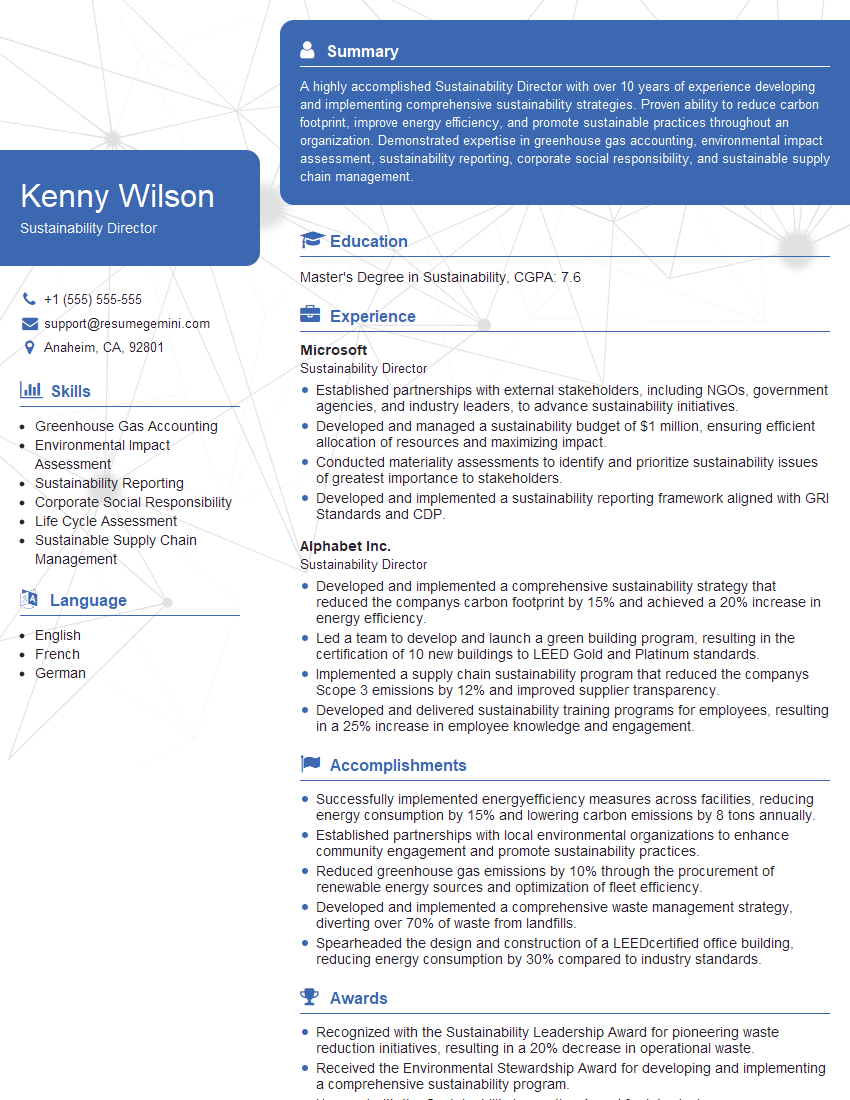
Sustainability Director Resume Sample
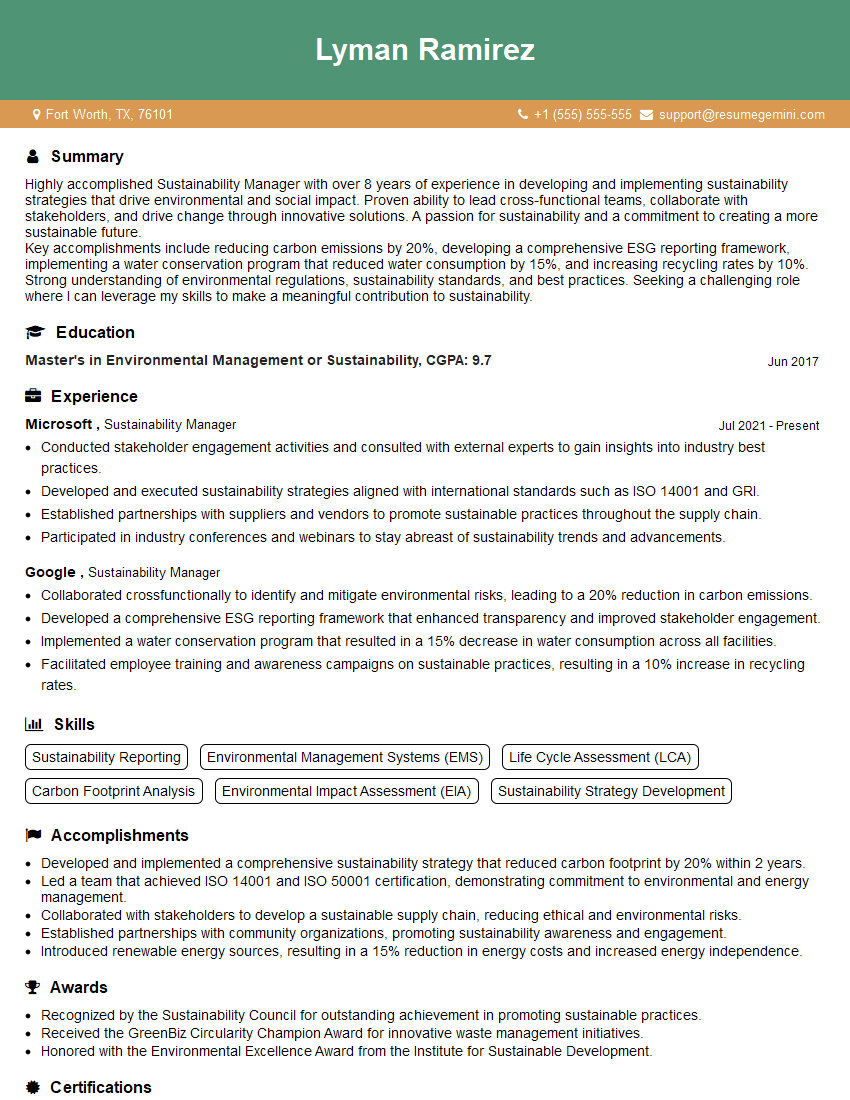
Sustainability Manager Resume Sample
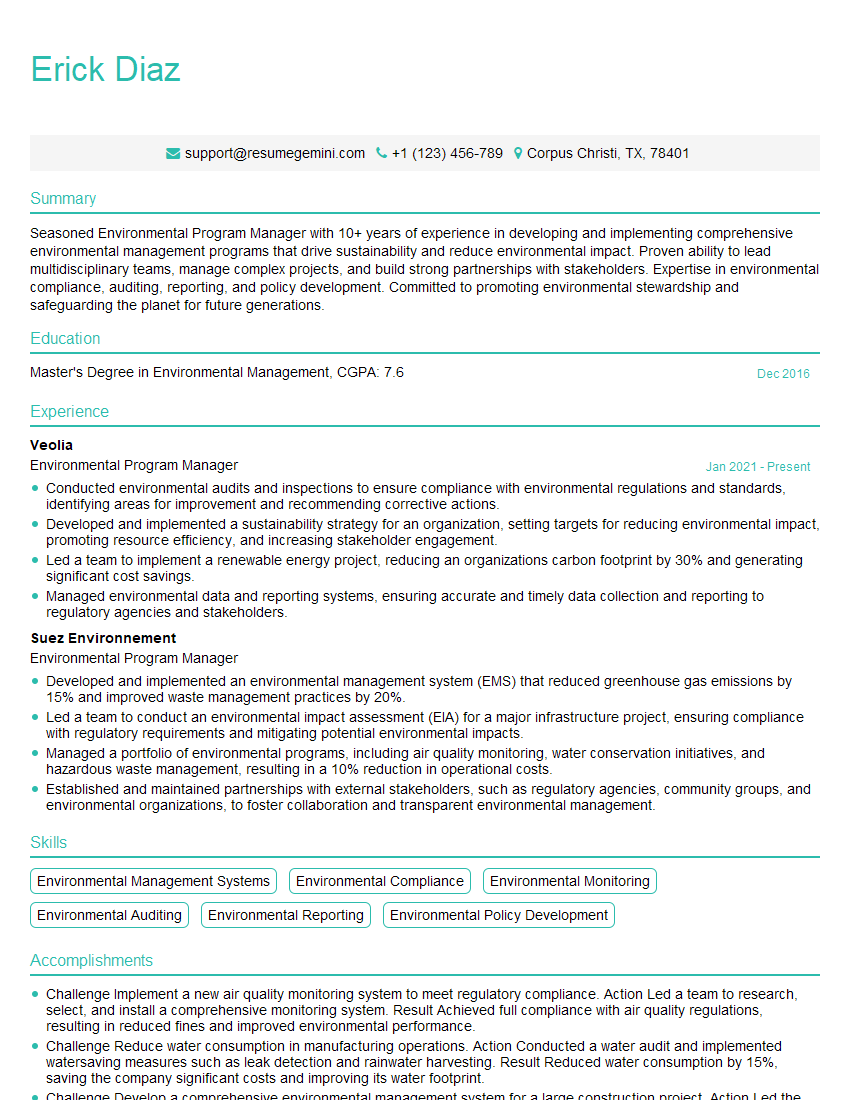
Environmental Program Manager Resume Sample
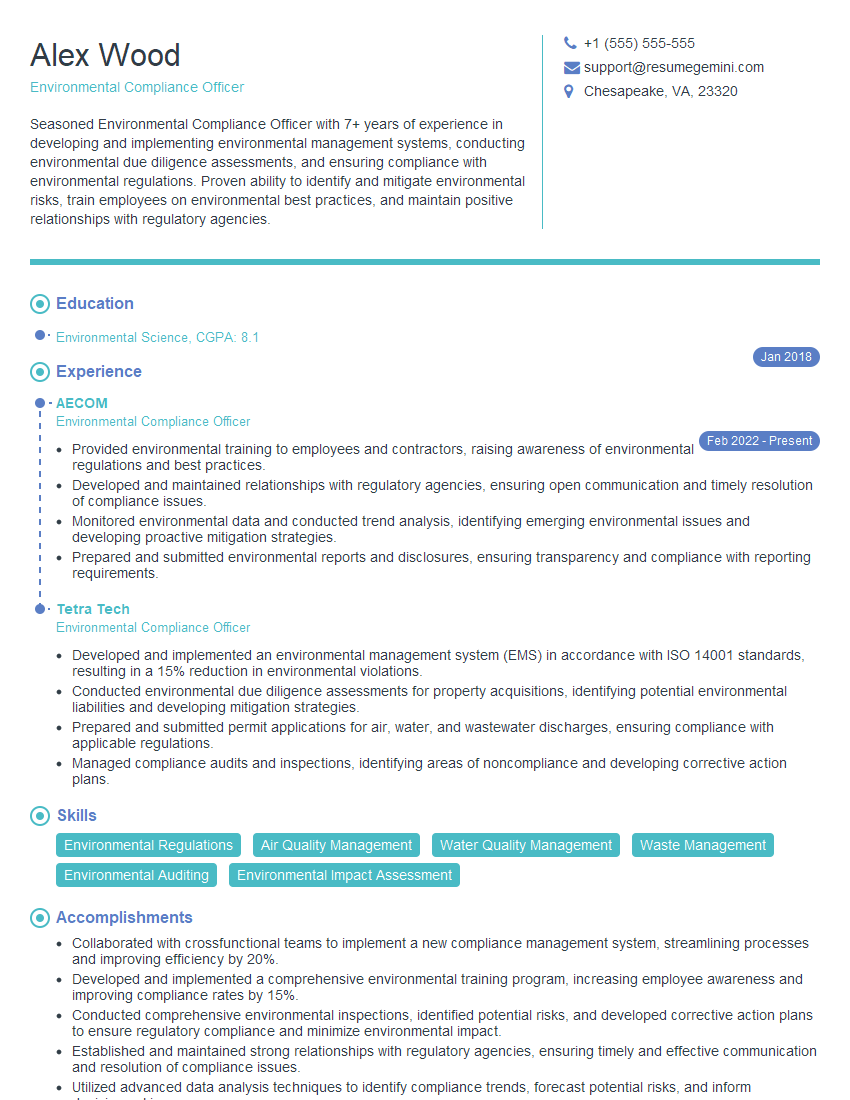
Environmental Compliance Officer Resume Sample
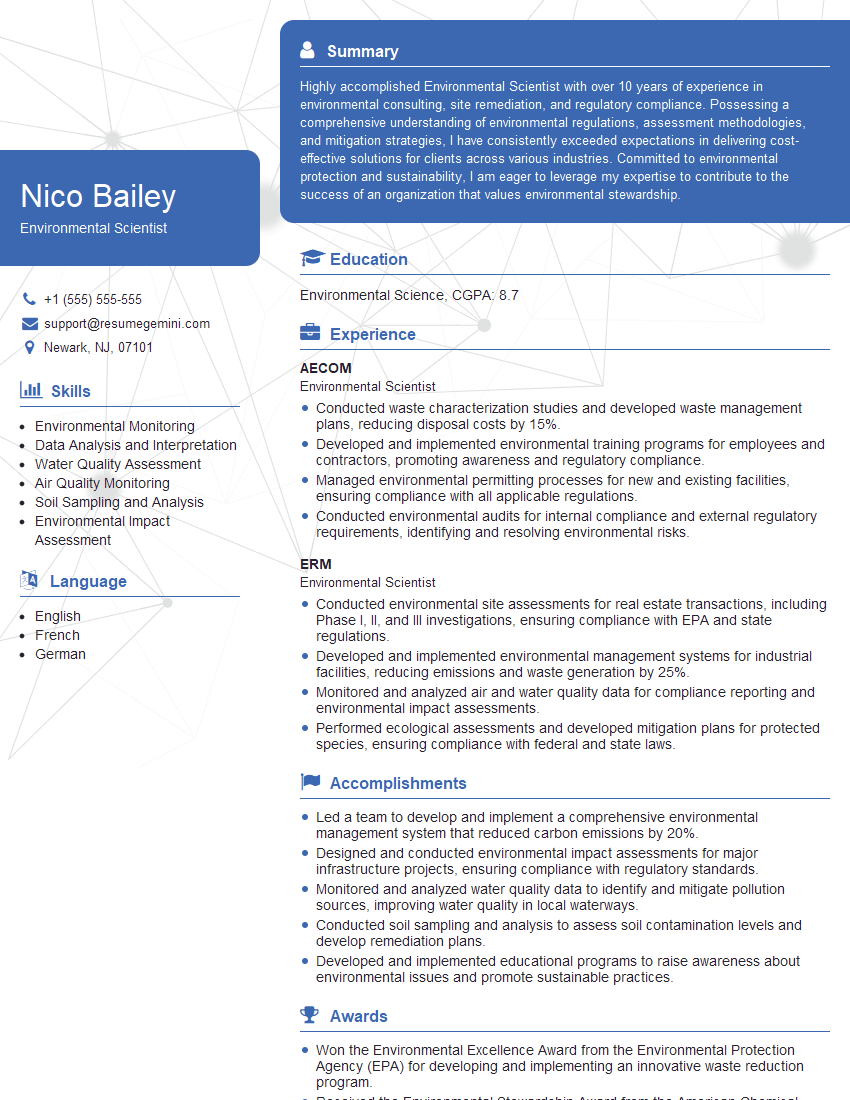
Environmental Scientist Resume Sample
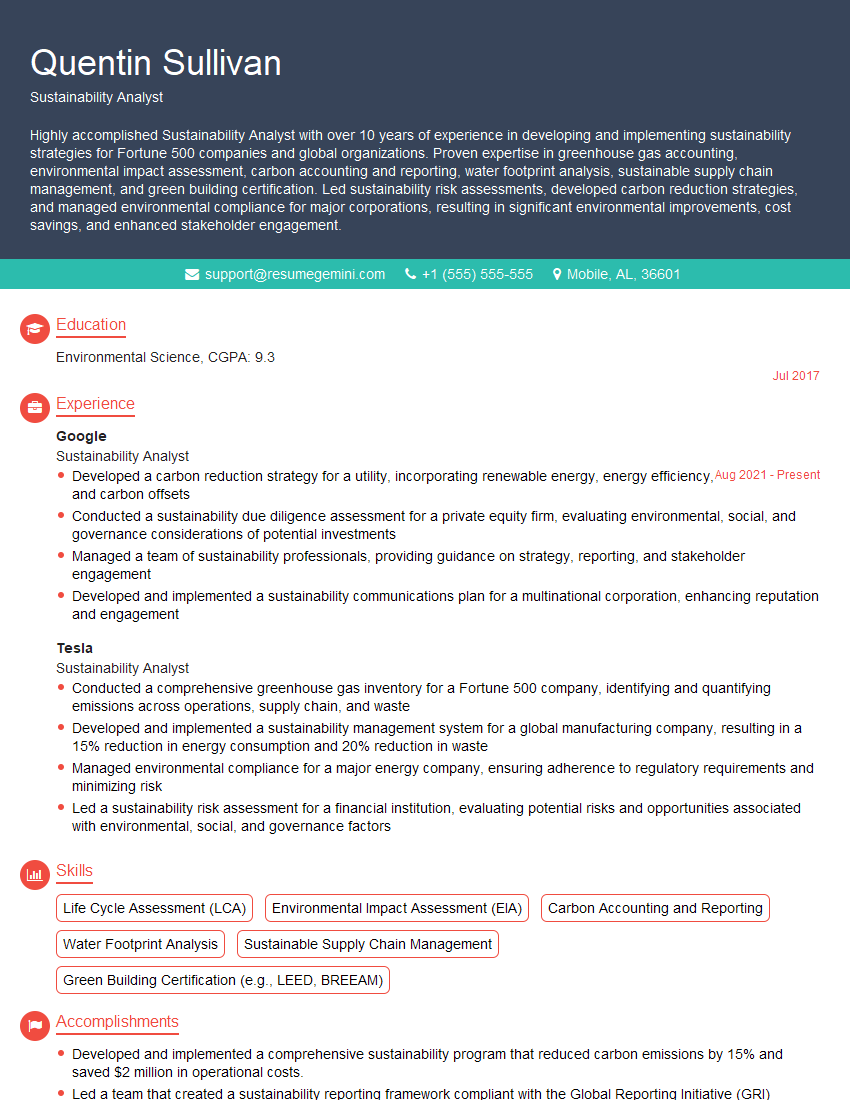
Sustainability Analyst Resume Sample

Sustainability Consultant Resume Sample
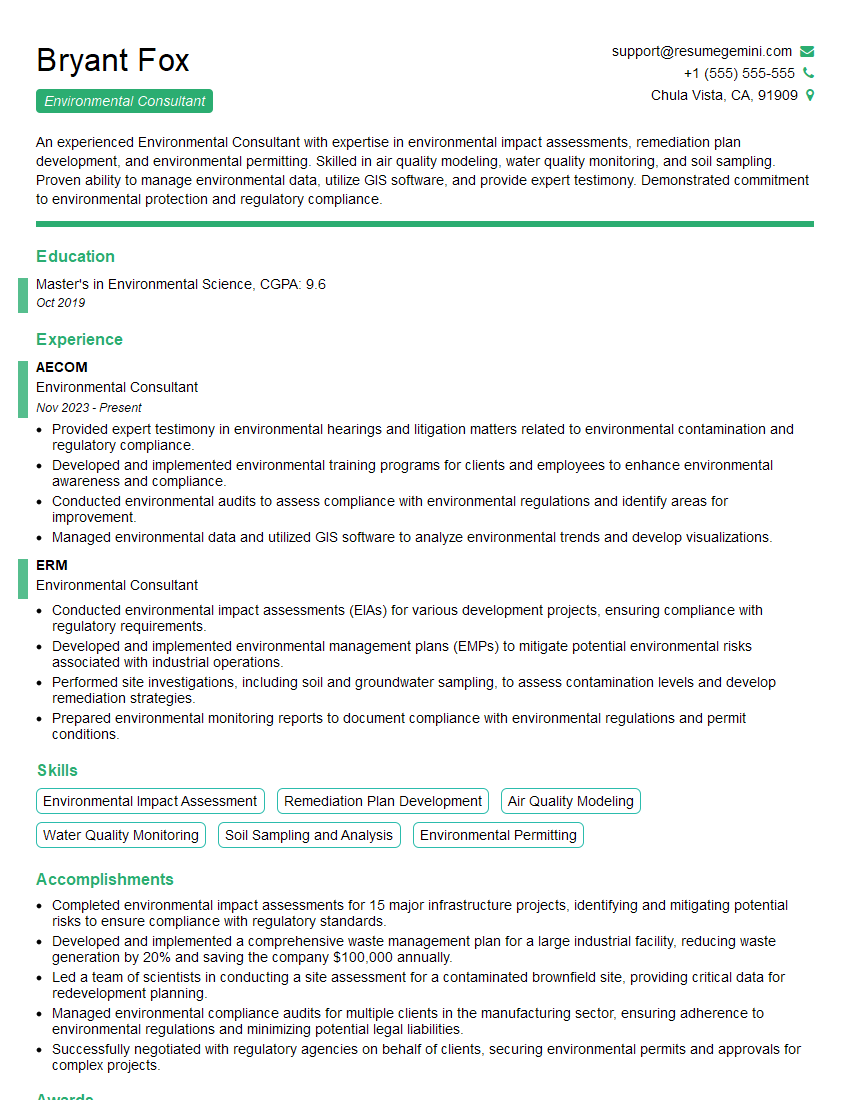
Environmental Consultant Resume Sample
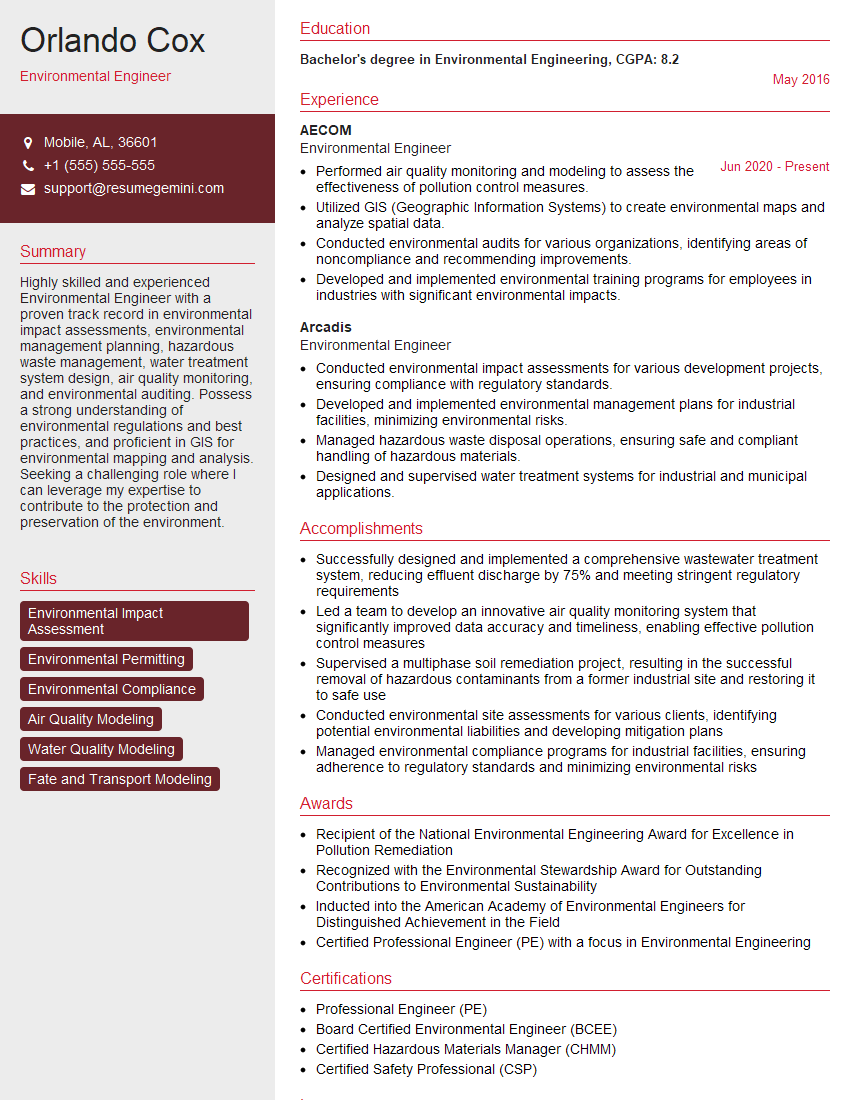
Environmental Engineer Resume Sample
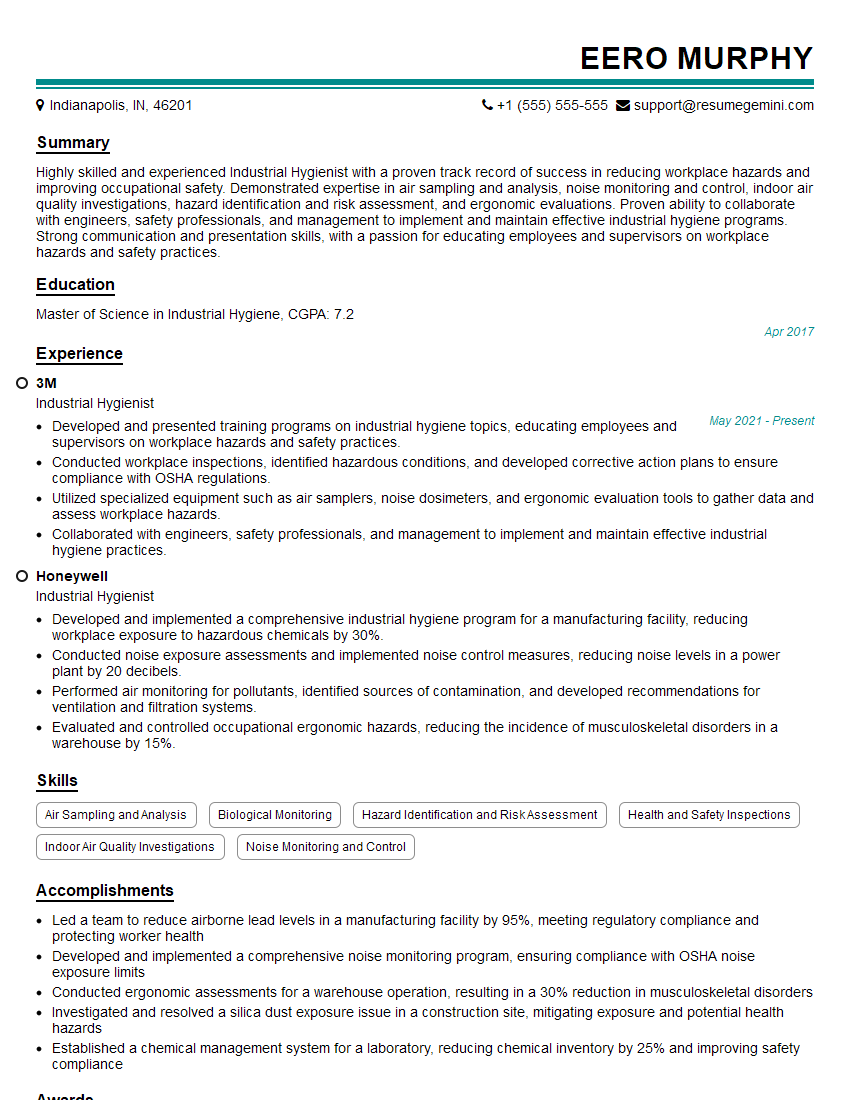
Industrial Hygienist Resume Sample
Explore more articles
Users Rating of Our Blogs
Share Your Experience
We value your feedback! Please rate our content and share your thoughts (optional).
What Readers Say About Our Blog
Very informative content, great job.
good