Preparation is the key to success in any interview. In this post, we’ll explore crucial Water Control Systems interview questions and equip you with strategies to craft impactful answers. Whether you’re a beginner or a pro, these tips will elevate your preparation.
Questions Asked in Water Control Systems Interview
Q 1. Explain the principles of open-channel flow.
Open-channel flow describes the movement of water in a channel where the flow is not completely confined by solid boundaries, unlike pipe flow. Think of a river, canal, or irrigation ditch – the water is free to interact with the atmosphere at the surface. The key principles governing this flow are:
- Gravity: Gravity is the primary driving force, causing the water to flow downhill.
- Friction: Friction between the water and the channel bed and sides slows the flow. This friction is influenced by the channel roughness and the water’s viscosity.
- Energy Conservation: The total energy of the water (potential, kinetic, and pressure) remains constant along the channel, except for energy losses due to friction. This is described by the energy equation.
- Continuity: The flow rate (volume of water passing a point per unit time) remains constant along the channel, assuming no inflow or outflow.
Understanding these principles is crucial for designing efficient irrigation systems, predicting flood behavior, and managing water resources effectively. For instance, a poorly designed canal with excessive roughness might lead to significant energy losses and reduced flow, impacting irrigation efficiency.
Q 2. Describe different types of water control structures (e.g., dams, weirs, spillways).
Water control structures are essential for regulating water flow, storage, and diversion. Some common types include:
- Dams: Large barriers built across rivers or streams to store water, create reservoirs, and control downstream flow. They can be used for hydroelectric power generation, flood control, and irrigation.
- Weirs: Low overflow structures built across channels to control the water level upstream. They allow water to flow over the top, creating a controlled discharge. Weirs are commonly used in irrigation and wastewater treatment.
- Spillways: Structures designed to safely release excess water from a dam or reservoir during high flow events. They prevent overtopping of the dam, which could cause catastrophic failure.
- Culverts: Closed conduits used to convey water under roads, railways, or other obstacles. They are essential for maintaining drainage and managing flow in urban and rural areas.
- Gates and Valves: These control devices regulate flow within canals, pipelines, and other water control systems. They allow for precise manipulation of water flow according to demand.
Each structure is designed with specific hydraulic characteristics to meet the needs of the project. For example, the design of a spillway considers factors like the reservoir’s capacity, the expected flood events, and the downstream channel’s capacity to safely handle the released water.
Q 3. What are the key components of a typical water distribution system?
A typical water distribution system, delivering potable water to consumers, consists of several key components:
- Source: The origin of the water, which could be a surface water source (river, lake) or a groundwater source (well, aquifer).
- Treatment Plant: Where raw water undergoes processes like coagulation, sedimentation, filtration, and disinfection to make it safe for consumption.
- Transmission Mains: Large-diameter pipelines that transport treated water from the treatment plant to distribution reservoirs or directly to service areas.
- Storage Reservoirs: Elevated or ground-level tanks that store treated water to meet peak demands and ensure a reliable supply.
- Distribution Network: A network of smaller-diameter pipes that delivers water to individual consumers through a system of branches and loops.
- Meters: Devices that measure water consumption, allowing for billing and demand management.
- Valves and Fire Hydrants: Control devices that regulate water flow and provide access for firefighting.
The design and operation of a water distribution system involve complex hydraulic modeling to ensure adequate pressure and flow throughout the network, catering to the diverse demands of consumers.
Q 4. How do you calculate water flow rate using different methods (e.g., Manning’s equation)?
Calculating water flow rate is crucial for water management. Manning’s equation is a widely used empirical formula for open-channel flow:
Q = (A * R^(2/3) * S^(1/2)) / n
Where:
Q= Flow rate (m³/s)A= Cross-sectional area of flow (m²)R= Hydraulic radius (A/P, where P is the wetted perimeter) (m)S= Channel slope (m/m)n= Manning’s roughness coefficient (dimensionless)
Steps to use Manning’s equation:
- Determine the cross-sectional area (A) and wetted perimeter (P) of the channel.
- Calculate the hydraulic radius (R = A/P).
- Measure or estimate the channel slope (S).
- Select the appropriate Manning’s roughness coefficient (n) based on the channel material (e.g., concrete, earth).
- Substitute the values into Manning’s equation and solve for Q.
Other methods for flow rate calculation include using flow meters, weirs, and flumes. Each method has its advantages and limitations depending on the specific application and available resources. For instance, a flow meter is suitable for closed conduits, whereas a weir is ideal for open channels with a controlled discharge.
Q 5. Explain the concept of hydraulic head and its significance in water control.
Hydraulic head represents the total energy of water at a given point in a water system. It’s the sum of three components:
- Elevation Head: The potential energy due to the water’s elevation above a reference point.
- Pressure Head: The potential energy due to the water’s pressure.
- Velocity Head: The kinetic energy due to the water’s velocity.
The equation representing this is: H = z + p/γ + v²/2g where:
- H = Total hydraulic head
- z = Elevation head
- p = Pressure
- γ = Unit weight of water
- v = Velocity
- g = Acceleration due to gravity
Hydraulic head is crucial for water control because it determines the direction and rate of water flow. Water always flows from areas of higher hydraulic head to areas of lower hydraulic head. This principle is essential for designing pipelines, canals, and other water systems to ensure adequate flow and pressure.
For example, in a water distribution system, maintaining sufficient pressure head is critical to ensure adequate water supply to consumers, especially in elevated areas. Insufficient pressure head can lead to low water pressure or no water at all.
Q 6. Describe various water quality parameters and their importance.
Water quality parameters assess the suitability of water for various purposes. Key parameters include:
- pH: Measures acidity or alkalinity. Impacts corrosion, aquatic life, and treatment processes.
- Turbidity: Measures water cloudiness due to suspended solids. Affects aesthetics and treatment efficiency.
- Temperature: Influences dissolved oxygen levels and aquatic life.
- Dissolved Oxygen (DO): Essential for aquatic life. Low DO indicates pollution.
- Biological Oxygen Demand (BOD): Measures the amount of oxygen consumed by microorganisms, indicating organic pollution.
- Chemical Oxygen Demand (COD): Measures the amount of oxygen required to chemically oxidize organic matter, giving a broader measure of pollution than BOD.
- Nutrients (Nitrogen, Phosphorus): Excess nutrients cause eutrophication (algal blooms).
- Heavy Metals (lead, mercury, arsenic): Toxic pollutants that can accumulate in organisms.
- Pathogens (bacteria, viruses): Disease-causing microorganisms.
Monitoring these parameters is essential for protecting public health, preserving aquatic ecosystems, and ensuring the efficient operation of water treatment and distribution systems. For example, high turbidity necessitates more stringent treatment to remove suspended solids, while low dissolved oxygen can harm aquatic life in a river.
Q 7. What are the different types of pumps used in water control systems?
Various pump types are employed in water control systems depending on the application and required flow rate and head. Some common types include:
- Centrifugal Pumps: Widely used for high flow rates and moderate heads. They use rotating impellers to increase water velocity and pressure.
- Axial Flow Pumps: Efficient for high flow rates with low head. The water flows parallel to the pump’s axis.
- Submersible Pumps: Located underwater, minimizing cavitation and priming issues. Commonly used for deep well pumping.
- Vertical Turbine Pumps: Suitable for high-head applications, such as pumping water from deep wells or to elevated storage tanks.
- Positive Displacement Pumps: Deliver a constant flow rate regardless of pressure fluctuations. Used for applications requiring precise control, such as chemical dosing.
Pump selection involves considering factors like flow rate, head, efficiency, maintenance requirements, and operating costs. For example, a water treatment plant might utilize centrifugal pumps for transferring large volumes of water between treatment stages, while a deep well might employ a submersible pump to draw water from the aquifer.
Q 8. Explain the function of a surge tank in a water pipeline.
A surge tank is a crucial component in water pipelines, primarily designed to mitigate the damaging effects of water hammer. Water hammer occurs when the flow of water in a pipeline is suddenly stopped or drastically changed, creating pressure surges that can cause significant damage to pipes and infrastructure. Imagine turning off a garden hose quickly – that’s a miniature version of water hammer. A surge tank acts as a pressure relief valve, absorbing these pressure fluctuations.
Here’s how it works: When a valve downstream closes rapidly, the kinetic energy of the flowing water is converted into pressure energy, causing a surge. This excess water flows into the surge tank, reducing the pressure in the pipeline. Conversely, when the valve opens, the water from the surge tank flows back into the pipeline, smoothing out the flow and preventing pressure drops.
The size and design of a surge tank are carefully calculated based on pipeline characteristics, flow rates, and the expected frequency of valve operations. They are commonly used in hydropower plants, long-distance water transmission lines, and irrigation systems to ensure pipeline integrity and operational safety.
Q 9. Describe different methods for controlling water levels in reservoirs.
Controlling water levels in reservoirs is vital for maintaining a consistent water supply, managing flood risks, and optimizing hydropower generation. Several methods are employed, often in combination:
- Spillways: These are controlled or uncontrolled channels that release excess water from the reservoir when the water level reaches a predetermined limit. Think of them as the reservoir’s overflow valves. They prevent overtopping and potential dam failure.
- Outlet Works: These structures, often including gates and valves, allow for regulated discharge of water from the reservoir. Operators can control the outflow to meet downstream demands or maintain a desired reservoir level. They are essential for maintaining optimal water levels and providing a controlled release.
- Pumped Storage Hydropower: In this method, excess water is pumped from a lower reservoir to a higher reservoir during periods of low demand or low electricity prices. This stored water can then be released during peak demand, generating hydropower. It simultaneously manages water levels and electricity generation.
- Sediment Control Structures: Reservoirs gradually fill with sediment over time. Structures are implemented to manage sediment accumulation, ensuring the reservoir retains its storage capacity. This maintains the reservoir’s function and extends its lifespan.
The choice of method, or combination of methods, depends on the specific reservoir’s characteristics, its intended purpose (drinking water, irrigation, hydropower), and the surrounding environment.
Q 10. How do you assess the risk of dam failure?
Assessing the risk of dam failure is a complex process involving a multidisciplinary approach. It requires meticulous examination of several factors:
- Dam Structure Integrity: Regular inspections assess the condition of the dam’s materials, identifying any signs of erosion, cracking, or seepage. Advanced techniques like geophysical surveys and remote sensing are used.
- Seismic Activity: Dams located in seismically active regions are vulnerable to earthquake damage. Risk assessments consider the likelihood and intensity of earthquakes and the dam’s ability to withstand such forces.
- Hydrological Conditions: Extreme rainfall or rapid snowmelt can significantly increase the water level in the reservoir, stressing the dam. Probabilistic modeling and flood forecasting are crucial tools.
- Spillway Capacity: Ensuring the spillway has sufficient capacity to handle extreme flood events is essential. Overtopping the dam is a major cause of failure.
- Instrumentation and Monitoring: Modern dams are equipped with instruments to continuously monitor key parameters such as water level, seepage, and stress levels. This data helps detect early warning signs of potential issues.
Risk assessment often employs probabilistic methods, quantifying the likelihood of failure and its potential consequences. This informs decision-making regarding maintenance, upgrades, and emergency preparedness.
Q 11. What are the common causes of water pipeline failures?
Water pipeline failures can have significant consequences, disrupting water supplies and causing environmental damage. Common causes include:
- Corrosion: This is a major cause of pipeline degradation, particularly in older systems. Corrosion weakens the pipe walls, leading to leaks and bursts. Different types of corrosion (e.g., internal, external) require specific mitigation strategies.
- External Loads: Ground movement due to earthquakes, landslides, or traffic vibrations can damage pipelines. Careful route selection and proper bedding are essential to reduce these risks.
- Construction Defects: Poor workmanship during installation, such as inadequate joint sealing or improper trenching, can lead to leaks and premature failure. Rigorous quality control is crucial.
- Material Degradation: Over time, pipe materials can degrade due to UV exposure (for above-ground pipes), chemical reactions with the water, or simply aging. Regular inspections and maintenance can help prolong lifespan.
- Root Intrusion: Tree roots can penetrate pipe joints, causing blockages or leaks. Proper trenching practices and root barriers can help mitigate this issue.
Understanding the specific causes of failure in a particular pipeline is critical for implementing effective preventive measures and minimizing disruptions.
Q 12. Explain the importance of water modeling in planning and design.
Water modeling plays a critical role in the planning and design of water control systems. It provides a powerful tool for simulating the behavior of water systems under various conditions, allowing engineers to optimize designs, predict performance, and assess risks. Imagine trying to design a complex irrigation system without knowing how water will flow – modeling provides that crucial foresight.
Water models can simulate:
- Hydrological processes: Rainfall-runoff relationships, groundwater flow, and water balance in catchments.
- Hydraulic processes: Water flow in pipes, channels, and reservoirs; pressure variations; and energy losses.
- Water quality: Transport and fate of pollutants in water bodies.
Using software and mathematical models, engineers can test different scenarios, such as changing rainfall patterns, population growth, or infrastructure upgrades, and assess their impacts on water availability and quality. This iterative process allows for optimization of designs and the selection of most efficient and resilient solutions.
Q 13. Describe different types of irrigation systems and their efficiency.
Irrigation systems are designed to efficiently deliver water to crops, maximizing yield while minimizing water waste. Different types exist, each with varying efficiencies:
- Surface Irrigation: This involves flooding or furrow irrigation, where water flows over the land surface. It’s relatively simple and inexpensive but can be inefficient due to high evaporation and runoff losses. Efficiency depends greatly on terrain and soil type.
- Sprinkler Irrigation: Water is sprayed onto the field using sprinklers. It’s more efficient than surface irrigation, reducing losses due to evaporation and runoff but still has some water loss through drift and evaporation.
- Drip Irrigation (Micro-Irrigation): Water is delivered directly to the roots of plants through a network of tubes and emitters. This is the most efficient method, minimizing water loss and optimizing water use. It’s expensive to install initially, but the long-term benefits outweigh the costs, especially in water-scarce regions.
- Subsurface Irrigation: Water is applied beneath the soil surface, reducing evaporation losses and improving water use efficiency. It requires specific soil conditions to function effectively.
Efficiency varies depending on factors like climate, soil type, crop type, and the quality of the system’s design and maintenance. Drip irrigation generally achieves the highest efficiency.
Q 14. How do you design a drainage system for a specific area?
Designing a drainage system involves a systematic approach to manage excess water and prevent flooding or waterlogging. The process includes:
- Hydrological Analysis: This assesses rainfall patterns, runoff characteristics, and soil infiltration rates. Rainfall intensity-duration-frequency curves are crucial for determining design rainfall.
- Topographic Survey: A detailed survey maps the land’s elevation, identifying low-lying areas prone to waterlogging.
- Drainage Network Design: This involves designing a network of ditches, channels, pipes, or a combination to collect and convey excess water to a suitable outlet (river, lake, or storm drain). Hydraulic modeling software helps optimize the design for efficient drainage.
- Hydraulic Design: This stage calculates the size and slope of channels or pipes to ensure adequate capacity for conveying the designed runoff. Considerations include flow velocities and erosion control.
- Outlet Structure Design: The design of the outlet structure ensures the efficient discharge of water without causing erosion or flooding at the outlet point.
- Material Selection: Materials selection considers factors like cost, durability, and resistance to corrosion or erosion. Concrete, corrugated metal pipes, or plastic pipes are common choices.
The design process is iterative, using simulations and adjustments to optimize the drainage system’s effectiveness, ensuring it provides adequate protection from flooding and waterlogging while meeting environmental regulations.
Q 15. Explain the principles of flood control and mitigation.
Flood control and mitigation involve a multi-pronged approach aimed at minimizing the destructive impact of floods. It’s about managing the flow of water to prevent excessive inundation. The principles revolve around reducing the risk through a combination of structural and non-structural measures.
Structural Measures: These involve physical constructions to control water flow. Examples include dams, levees (embankments), reservoirs, and floodways. Dams regulate water release, levees prevent river overflow, and reservoirs store excess water during periods of high rainfall.
Non-structural Measures: These focus on land use planning, community education, and early warning systems. Examples include zoning regulations restricting development in flood-prone areas, public awareness campaigns educating people about flood risks, and advanced warning systems allowing for timely evacuations.
Imagine a river prone to overflowing during heavy rains. A dam upstream could regulate the water release, preventing sudden surges downstream. Simultaneously, levees along the riverbanks would prevent water from spilling onto the surrounding land. A well-designed flood warning system would alert residents, giving them time to prepare or evacuate.
Career Expert Tips:
- Ace those interviews! Prepare effectively by reviewing the Top 50 Most Common Interview Questions on ResumeGemini.
- Navigate your job search with confidence! Explore a wide range of Career Tips on ResumeGemini. Learn about common challenges and recommendations to overcome them.
- Craft the perfect resume! Master the Art of Resume Writing with ResumeGemini’s guide. Showcase your unique qualifications and achievements effectively.
- Don’t miss out on holiday savings! Build your dream resume with ResumeGemini’s ATS optimized templates.
Q 16. What are the challenges of managing water resources in arid regions?
Managing water resources in arid regions presents unique and significant challenges. The scarcity of water necessitates careful planning and efficient utilization. Key challenges include:
Water scarcity: The most obvious challenge is the limited availability of water, demanding careful allocation for various uses like agriculture, industry, and domestic consumption.
High evaporation rates: Water loss through evaporation is substantial in arid climates, necessitating strategies for minimizing this loss, such as using covered canals and efficient irrigation techniques.
Water quality issues: Salinization of groundwater is a common problem in arid regions, reducing the suitability of water for many purposes. Desalination is often expensive and energy-intensive.
Over-extraction of groundwater: Over-reliance on groundwater can lead to depletion of aquifers and land subsidence, posing long-term risks to water security.
Conflict over water resources: Competition for scarce water resources can lead to conflicts between different users, such as farmers, industries, and urban communities.
For instance, in many arid regions, drip irrigation is employed to minimize water loss through evaporation and improve water use efficiency in agriculture. Desalination plants are sometimes implemented, but their high energy consumption is a major concern.
Q 17. Describe different methods for water treatment and purification.
Water treatment and purification methods aim to remove impurities and contaminants to make water safe for consumption and other uses. The specific method depends on the source water’s quality and intended use. Common methods include:
Coagulation and flocculation: Chemicals are added to clump together suspended particles, making them easier to remove through sedimentation.
Sedimentation: Allowing water to stand allows heavier particles to settle at the bottom.
Filtration: Passing water through filters of varying pore sizes removes remaining suspended solids and microorganisms.
Disinfection: Chemicals like chlorine or ultraviolet (UV) light are used to kill harmful bacteria and viruses.
Reverse osmosis: A membrane filtration process that removes dissolved salts and other impurities, crucial for desalination.
Boiling: A simple and effective method for killing most harmful microorganisms in water.
For example, municipal water treatment plants typically employ a combination of coagulation, sedimentation, filtration, and disinfection. In contrast, a simple household water filter might only involve filtration and disinfection using UV light.
Q 18. What are the environmental impacts of water control projects?
Water control projects, while crucial for managing water resources, can have significant environmental impacts, both positive and negative. Careful planning and mitigation strategies are essential to minimize adverse effects.
Habitat alteration and loss: Dam construction can lead to the inundation of habitats, affecting aquatic and terrestrial ecosystems. Changes in river flow patterns can also affect downstream habitats.
Changes in water temperature and flow regimes: Dams alter water temperature and flow regimes downstream, impacting aquatic life and ecosystem functions.
Sedimentation: Dams trap sediment that would naturally flow downstream, impacting river morphology and downstream ecosystems.
Greenhouse gas emissions: Reservoirs can release greenhouse gases like methane, contributing to climate change.
Water quality changes: Changes in water flow and temperature can affect water quality, potentially impacting aquatic life and human uses.
For example, the construction of large dams can lead to the displacement of human populations and the loss of biodiversity in affected areas. Mitigation strategies might involve implementing fish ladders to help migrating fish bypass dams or constructing bypass channels to maintain natural flow regimes.
Q 19. How do you ensure the sustainability of water resources?
Ensuring the sustainability of water resources requires a holistic and integrated approach that considers environmental, social, and economic factors. Key strategies include:
Improved water use efficiency: Implementing water-saving technologies in agriculture, industry, and domestic sectors.
Water reuse and recycling: Treating wastewater for reuse in agriculture or industry.
Sustainable water management practices: Adopting integrated water resource management (IWRM) principles, considering the needs of all users and the environment.
Groundwater management: Implementing regulations to prevent over-extraction and protect groundwater quality.
Public awareness and education: Educating the public about the importance of water conservation and sustainable water management.
Climate change adaptation: Planning for the impacts of climate change on water resources, such as increased drought or flood frequency.
For instance, promoting water-efficient irrigation techniques like drip irrigation can significantly reduce water consumption in agriculture. Investing in wastewater treatment plants and implementing water reuse schemes can augment available water resources.
Q 20. Explain the role of SCADA systems in water control.
Supervisory Control and Data Acquisition (SCADA) systems play a vital role in modern water control by providing real-time monitoring and control of water infrastructure. They allow operators to remotely monitor and manage various aspects of the system, enhancing efficiency and safety.
Real-time monitoring: SCADA systems collect data from various sensors throughout the water system, including water levels, flow rates, pressure, and water quality parameters. This data is displayed on a central control interface, providing operators with a comprehensive overview of the system’s status.
Remote control: SCADA systems allow operators to remotely control various components of the water system, such as pumps, valves, and treatment plant processes. This enables quick responses to changing conditions and efficient system management.
Alarm and event management: SCADA systems generate alarms when parameters deviate from set points, alerting operators to potential problems and enabling timely intervention.
Data logging and reporting: SCADA systems automatically log data and generate reports, providing valuable information for system optimization and maintenance planning.
For example, a SCADA system monitoring a reservoir could automatically adjust the outflow based on the reservoir level, preventing overflow while ensuring adequate water supply downstream. It would also alert operators if the water level drops below a critical level.
Q 21. Describe your experience with water control system design software.
Throughout my career, I’ve extensively utilized various water control system design software packages, including but not limited to, WaterGEMS, EPANET, and InfoWorks. My experience encompasses the full design lifecycle, from initial conceptualization and hydraulic modeling to detailed design and optimization.
In a recent project involving the design of a new water distribution network for a rapidly growing city, I used WaterGEMS to simulate the hydraulic performance of the proposed network under various operating conditions. This included optimizing pipe diameters, pump locations, and valve settings to ensure adequate water pressure and flow throughout the system while minimizing construction costs. The software’s powerful modeling capabilities allowed for a thorough analysis of different design scenarios, ultimately resulting in a cost-effective and efficient network design. Furthermore, I’ve utilized EPANET for smaller network simulations, leveraging its ease of use for quick analysis and design checks. InfoWorks has been instrumental in more complex projects, especially for storm water modeling and integrated water resource management where we needed to simulate water flow and quality in a comprehensive watershed model.
Q 22. How do you troubleshoot problems in water control systems?
Troubleshooting water control systems requires a systematic approach. Think of it like diagnosing a car problem – you need to identify the symptoms, pinpoint the cause, and then implement the fix. I typically start with a visual inspection, checking for obvious issues like leaks, blockages, or damaged equipment. Then, I move on to more advanced diagnostic tools, such as pressure gauges, flow meters, and data loggers, to assess the system’s performance. For example, if a section of irrigation is not receiving sufficient water, I might check the pressure at various points along the line to identify a blockage or a leak. If the problem is electrical, I’d use a multimeter to test circuits. Finally, I’ll consult system schematics and operational manuals to understand the system’s design and identify potential problem areas. Once the problem is identified, I’ll implement the necessary repair or replacement, always ensuring thorough testing before returning the system to operation.
- Visual Inspection: Checking for leaks, blockages, and damage.
- Data Acquisition: Using pressure gauges, flow meters, and data loggers to monitor system performance.
- Electrical Testing: Using multimeters to diagnose electrical faults.
- System Documentation Review: Consulting schematics and manuals for system understanding.
Q 23. What are the safety protocols related to working with water control systems?
Safety is paramount when working with water control systems. We always adhere to strict safety protocols, which include, but are not limited to, proper lockout/tagout procedures to prevent accidental energization of equipment, wearing appropriate personal protective equipment (PPE) such as safety boots, gloves, and eye protection, and being aware of confined space entry hazards. Before starting any work, we conduct a thorough risk assessment to identify potential hazards and implement control measures. For example, when working near high-pressure pipelines, we’ll ensure the system is properly depressurized before commencing any maintenance or repair activities. Training is crucial; all personnel working on water control systems must receive thorough safety training, covering all aspects of safe work practices.
- Lockout/Tagout Procedures: Preventing accidental energization of equipment.
- Personal Protective Equipment (PPE): Appropriate attire for the task.
- Risk Assessment: Identifying and mitigating potential hazards.
- Confined Space Entry Procedures: Safe practices for working in enclosed areas.
- Comprehensive Training: Ensuring personnel are adequately trained.
Q 24. Explain the importance of regular maintenance for water control infrastructure.
Regular maintenance of water control infrastructure is essential for ensuring efficient operation, preventing costly repairs, and protecting public health and the environment. Think of it like regular car maintenance – preventative measures are far more cost-effective than dealing with major breakdowns. Regular maintenance tasks include inspecting and cleaning pipes, valves, pumps, and other components; lubricating moving parts; and performing pressure tests to identify leaks. Failing to maintain these systems can lead to significant problems – from water shortages and crop failures to environmental contamination and public health crises. For example, a neglected valve could fail, leading to a major water loss or uncontrolled flooding. A systematic maintenance schedule, including preventative and predictive maintenance strategies, ensures optimal performance and longevity of the water control infrastructure.
Q 25. How do you manage conflicts between different water users?
Managing conflicts between different water users requires a fair and equitable approach, often involving negotiation, mediation, and sometimes arbitration. This is particularly critical in areas with water scarcity. I utilize a collaborative approach, engaging all stakeholders in open discussions to understand their needs and concerns. I focus on finding solutions that are acceptable to all parties involved, balancing the various demands and ensuring compliance with relevant regulations and water rights. Data-driven decision-making is key; using hydrological models and flow simulations helps to objectively assess the availability of water and develop equitable allocation strategies. In some cases, implementing water-efficient technologies and promoting water conservation practices can help to alleviate conflicts.
Q 26. Describe your experience with water quality monitoring and analysis.
My experience with water quality monitoring and analysis encompasses a wide range of activities, from collecting samples and performing laboratory tests to interpreting data and recommending corrective actions. I’m proficient in using various analytical techniques to assess parameters such as pH, turbidity, dissolved oxygen, and the presence of contaminants. For example, I’ve used advanced techniques like chromatography and mass spectrometry to identify and quantify specific pollutants in water bodies. I am familiar with both field-based and laboratory-based testing procedures. I can interpret water quality data to identify potential sources of contamination, assess compliance with regulatory standards, and recommend remedial actions to improve water quality. Data analysis and reporting are critical to effectively communicate findings to stakeholders. The ability to visualize trends and patterns in water quality data over time is essential for effective management.
Q 27. What are the legal and regulatory aspects of water control?
The legal and regulatory aspects of water control are complex and vary depending on jurisdiction. However, some common aspects include water rights, permits, environmental regulations, and liability issues. Understanding water rights is crucial – it determines who has the right to use water and under what conditions. Obtaining the necessary permits for water withdrawal, storage, and use is essential to avoid legal penalties. Environmental regulations, such as those related to water quality and discharge, are designed to protect water resources and the environment. Furthermore, liabilities related to water damage, pollution, or inadequate water management must be considered. Staying updated on changes in legislation and regulations is critical for ensuring compliance and avoiding legal problems. Working closely with legal counsel is often necessary to navigate the complex legal landscape.
Q 28. How do you stay updated with the latest advancements in water control technology?
Staying updated with the latest advancements in water control technology is an ongoing process. I actively participate in professional organizations, attend conferences and workshops, and read relevant publications to maintain my expertise. I regularly review industry journals, and utilize online resources such as research databases and technical articles. Networking with other professionals in the field is also valuable – it allows me to learn about new technologies and best practices from colleagues. Furthermore, I actively seek out opportunities for professional development, such as training courses on new technologies and software. Keeping abreast of these developments enables me to apply the most efficient, effective, and sustainable solutions in my work.
Key Topics to Learn for Water Control Systems Interview
- Hydraulics and Fluid Mechanics: Understanding pressure, flow, and energy relationships within water systems. Consider exploring pipe networks, head loss calculations, and pump performance curves.
- Water Treatment Processes: Familiarize yourself with various treatment methods (filtration, disinfection, etc.) and their application in different contexts (municipal, industrial). Think about the implications of different treatment choices on water quality and cost.
- Control System Components and Instrumentation: Learn about sensors, actuators, and control valves used in water management. Understand their function, maintenance, and troubleshooting procedures. Practical examples might include level sensors, flow meters, and automated control valves.
- SCADA Systems and Data Acquisition: Explore Supervisory Control and Data Acquisition (SCADA) systems used to monitor and control water distribution networks. Consider the role of data analysis and remote monitoring in efficient water management.
- Water Distribution Network Modeling and Simulation: Understand the use of software to model water flow and pressure in complex networks. This includes analyzing network performance, identifying vulnerabilities, and planning future infrastructure developments.
- Water Quality Monitoring and Management: Learn about the various parameters used to assess water quality and the strategies employed for effective water quality control and compliance with regulations.
- Sustainable Water Management Practices: Explore innovative solutions and technologies for water conservation, reuse, and responsible resource management. This could include rainwater harvesting, water recycling, and leak detection techniques.
- Problem-solving and Troubleshooting: Practice identifying and resolving common issues in water control systems. This may involve analyzing data, identifying faulty components, and developing effective solutions.
Next Steps
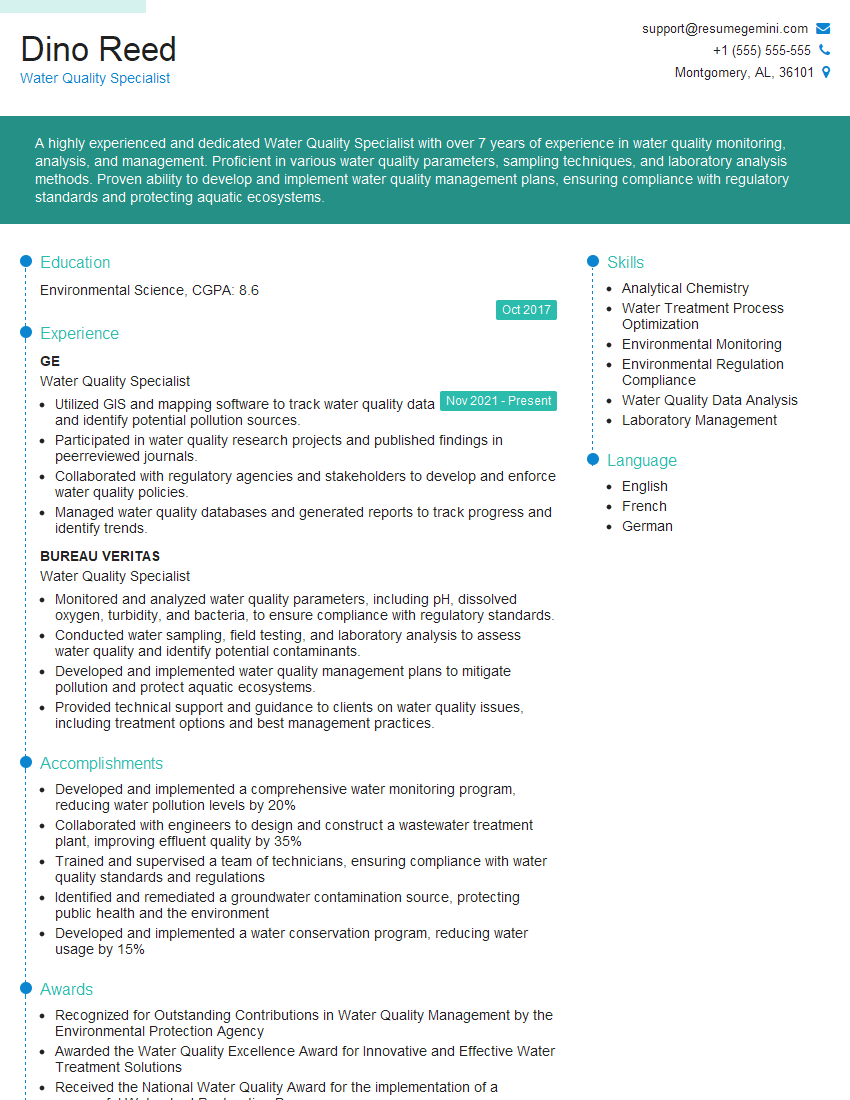
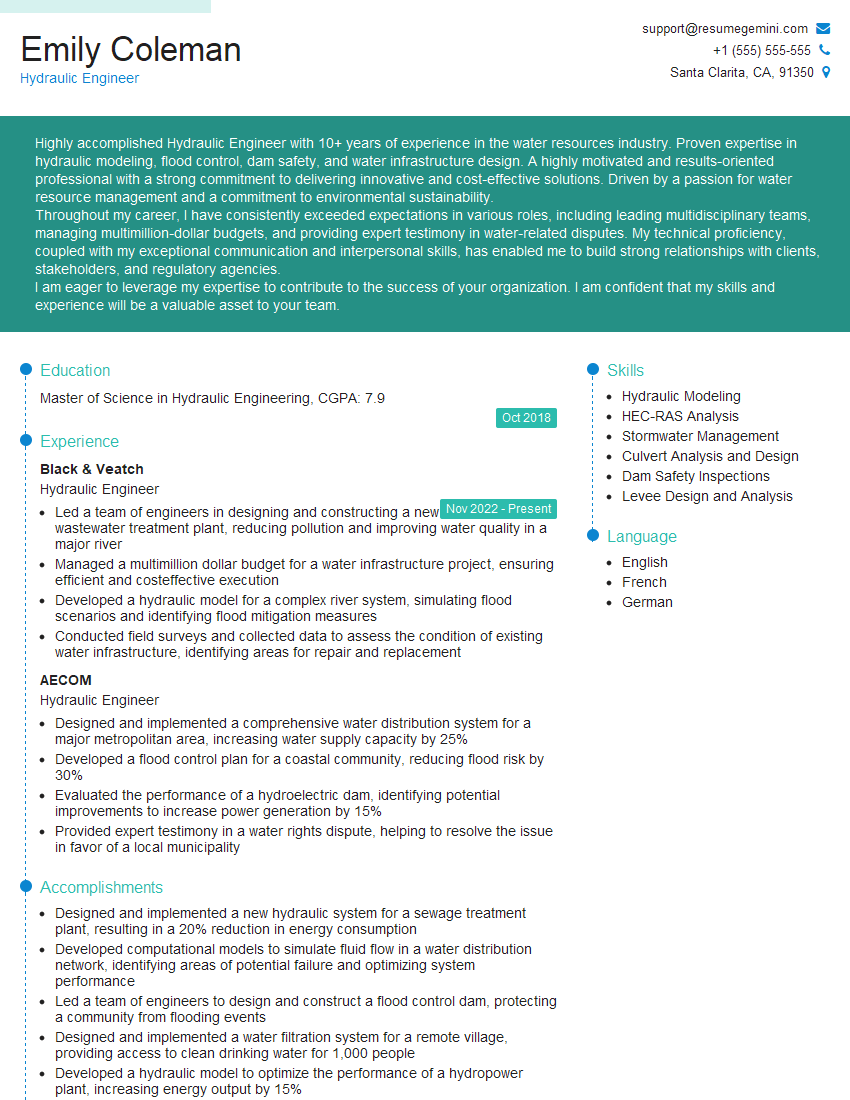
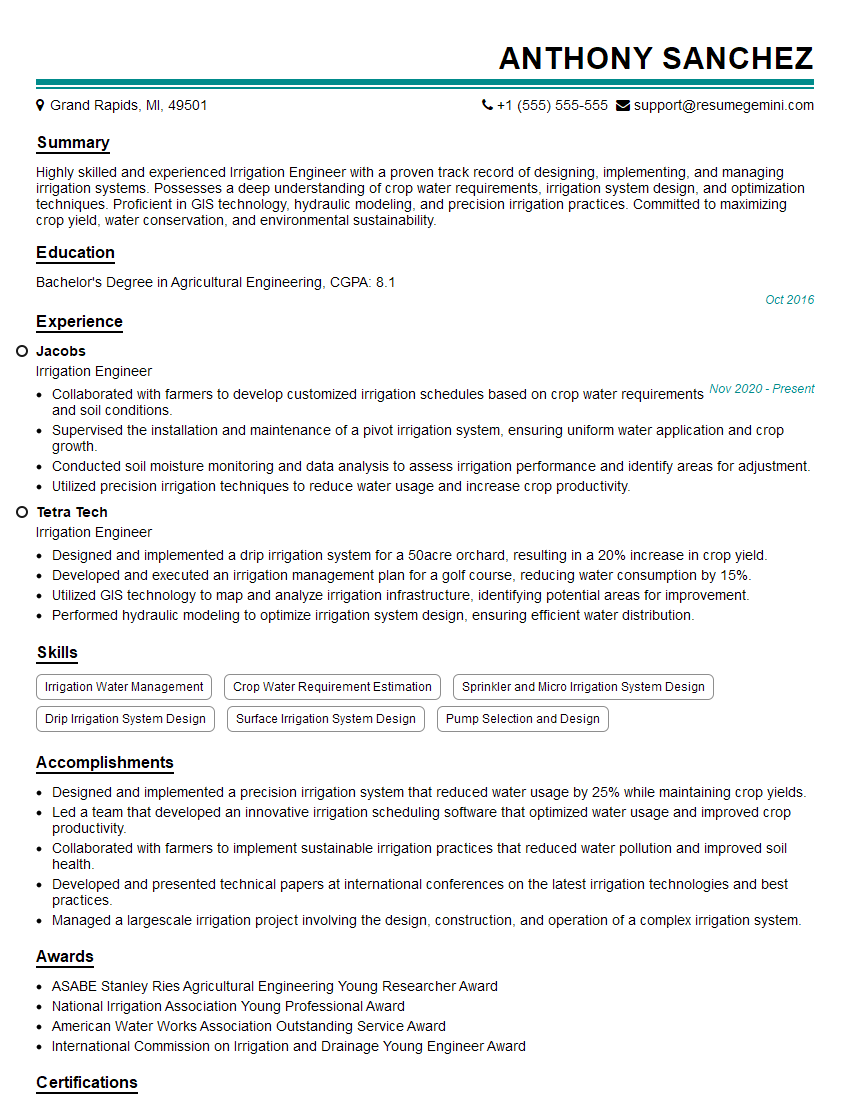
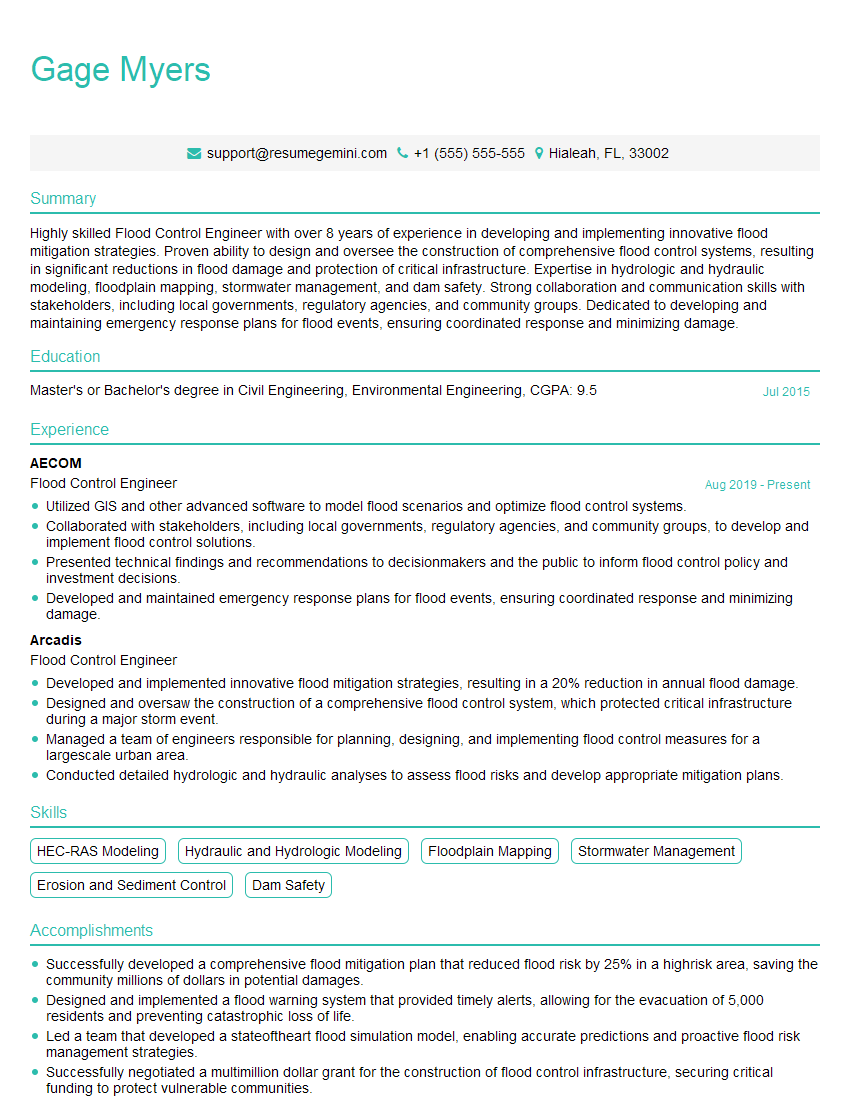
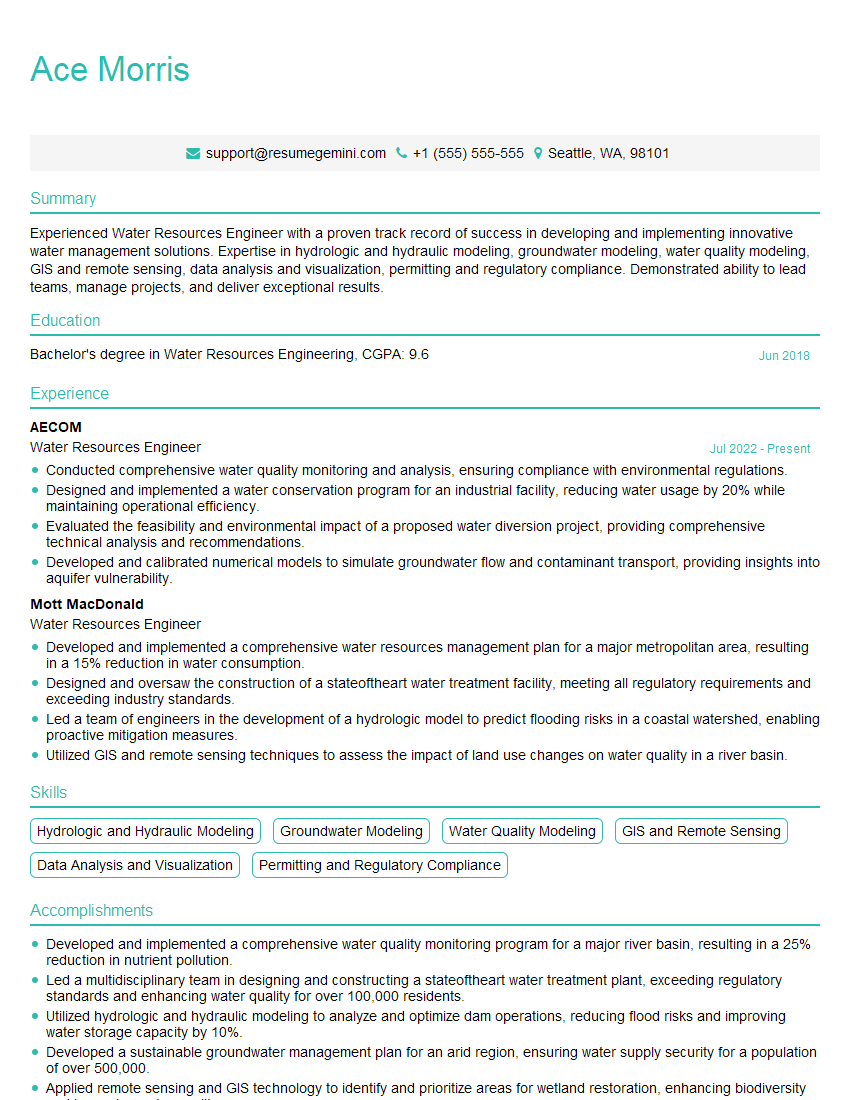
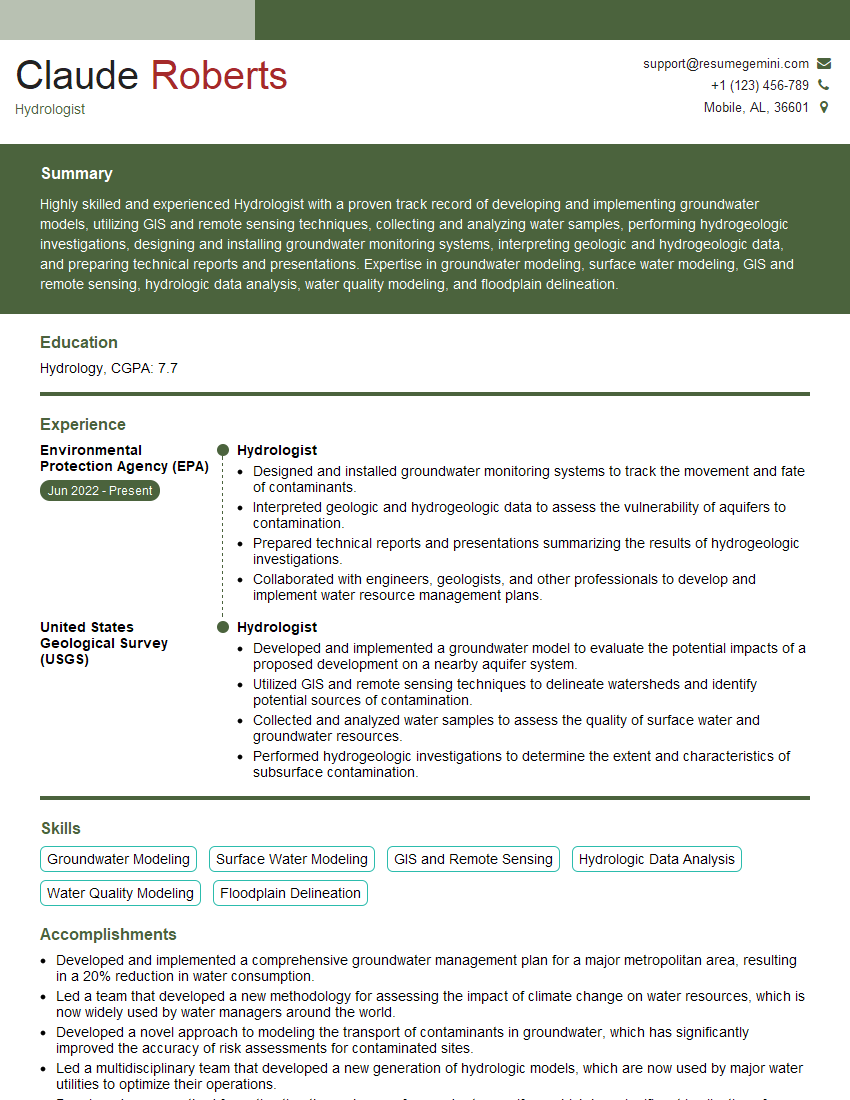
Mastering Water Control Systems opens doors to exciting and impactful careers, offering opportunities for innovation and contributing to essential infrastructure. To significantly boost your job prospects, crafting an ATS-friendly resume is crucial. This ensures your application is effectively scanned and considered by hiring managers. We highly recommend using ResumeGemini, a trusted resource, to build a professional and impactful resume tailored to the Water Control Systems field. Examples of resumes specifically designed for this sector are available to help you create a compelling application.


Explore more articles
Users Rating of Our Blogs
Share Your Experience
We value your feedback! Please rate our content and share your thoughts (optional).
What Readers Say About Our Blog
Very informative content, great job.
good