Preparation is the key to success in any interview. In this post, we’ll explore crucial Water Efficiency Strategies interview questions and equip you with strategies to craft impactful answers. Whether you’re a beginner or a pro, these tips will elevate your preparation.
Questions Asked in Water Efficiency Strategies Interview
Q 1. Explain the concept of water footprint.
A water footprint is the total volume of freshwater used to produce goods and services consumed by a person, community, or business. It’s not just the water we directly use from our taps; it encompasses the water used throughout the entire supply chain. Think of a cotton t-shirt: its footprint includes water used for irrigation to grow the cotton, processing the fibers, dyeing the fabric, and transporting it to the store.
There are three main components to a water footprint:
- Blue water: Surface and groundwater directly abstracted for use.
- Green water: Rainfall intercepted by plants and stored in the soil, used by crops and consumed through evapotranspiration.
- Grey water: Water polluted by human activities, requiring treatment before being returned to a water body.
Understanding a water footprint helps individuals, companies, and governments make informed decisions about resource consumption and environmental impact. For instance, a company might analyze its water footprint to identify areas where water efficiency improvements could be made, thereby reducing costs and environmental impact. A consumer might choose products with a lower water footprint.
Q 2. Describe different water metering technologies and their applications.
Several technologies exist for metering water use, each with specific applications:
- Mechanical meters: These traditional meters use gears to measure water flow. They are relatively inexpensive and reliable but may be less accurate than newer technologies. Common in residential settings.
- Electronic meters: These meters use electronic sensors to measure water flow, offering greater accuracy and the ability to transmit data remotely. This allows for real-time monitoring of water usage and facilitates leak detection. Frequently utilized in commercial and industrial applications.
- Smart meters: These advanced meters combine electronic metering with communication capabilities. They enable real-time data collection, remote monitoring, and automated billing, offering valuable insights into water consumption patterns for better management. Increasingly used in both residential and non-residential settings.
- Ultrasonic meters: These non-invasive meters measure water flow by analyzing sound waves. They are suitable for situations where installing traditional meters is difficult or impossible. This technology is often used for monitoring large-diameter pipes or difficult-to-access locations.
The choice of technology depends on factors like cost, accuracy requirements, application, and the need for remote monitoring and data management. For example, a large municipality might opt for smart meters for comprehensive water management, while a household might use a simpler mechanical meter.
Q 3. What are the key components of a successful water audit?
A successful water audit involves a systematic process of identifying and quantifying water use within a system or facility. Key components include:
- Data collection: Gathering baseline data on water consumption patterns, including water bills, meter readings, and equipment information. This involves understanding the various sources of water use within the system.
- Site inspection: A visual inspection of the facility to identify potential water losses, such as leaks, faulty equipment, and inefficient irrigation systems. This involves walking the premises and carefully observing every aspect of water use.
- Instrumentation: Employing measuring devices to accurately determine water flow rates and pressure in different parts of the system. This provides precise data to quantify water usage and pinpointing leaks.
- Leak detection: Employing specialized tools and techniques to identify and locate hidden leaks within pipes, fittings, and irrigation systems. Sometimes this might even require acoustic leak detection or other advanced methods.
- Analysis and reporting: Analyzing the collected data to identify areas of significant water use and potential water savings. This involves calculating flow rates, pressures, and comparing against baseline data.
- Recommendations: Developing and implementing a plan for reducing water consumption based on the audit findings. This involves practical measures to reduce leaks, upgrade equipment, and change operating procedures.
A well-executed water audit provides a clear picture of water usage, allowing for targeted interventions to improve efficiency and reduce costs.
Q 4. How do you calculate water savings from a conservation project?
Calculating water savings requires comparing pre- and post-conservation project water consumption. Here’s a common method:
- Measure baseline water use: Determine the average water consumption before implementing the conservation project. This could span several months to account for seasonal variations. Let’s say the baseline consumption was 100,000 gallons per month.
- Measure post-project water use: After implementing the conservation measures, measure the water consumption over a similar period. Suppose this new consumption is 75,000 gallons per month.
- Calculate the difference: Subtract the post-project consumption from the baseline consumption: 100,000 – 75,000 = 25,000 gallons per month.
- Calculate percentage reduction: Divide the difference by the baseline consumption and multiply by 100%: (25,000 / 100,000) * 100% = 25%.
Therefore, the conservation project resulted in a 25,000-gallon monthly savings, representing a 25% reduction in water consumption. It’s crucial to account for factors that might affect water use, such as weather patterns, and to ensure the comparison periods are truly comparable.
Q 5. What are some common water-efficient irrigation techniques?
Water-efficient irrigation techniques minimize water waste while maximizing crop yield. Some common techniques include:
- Drip irrigation: Delivers water directly to plant roots through a network of tubes and emitters, minimizing evaporation and runoff. This is highly efficient for various crops.
- Micro-sprinklers: Provide a gentle spray of water in a small radius, suitable for smaller areas and specific plants. This can supplement drip irrigation systems.
- Soaker hoses: Perforated hoses that release water slowly and evenly along their length. They are great for garden beds and shrubs.
- Rainwater harvesting: Collecting rainwater for irrigation. This drastically reduces reliance on municipal water supplies, reducing water consumption and bills.
- Smart irrigation controllers: These controllers use weather data and soil moisture sensors to optimize irrigation schedules, avoiding overwatering. They provide significant automation and water savings.
- Proper scheduling: Watering deeply but infrequently encourages deep root growth and reduces the need for frequent watering. Early morning watering helps minimize evaporation.
Choosing the right technique depends on the type of plants, soil conditions, and available resources. A combination of techniques is often the most effective approach.
Q 6. Discuss the role of water pricing strategies in promoting conservation.
Water pricing strategies play a crucial role in promoting conservation. Simply put, making water more expensive encourages people and businesses to use less. Different strategies exist:
- Increasing block pricing: Charging higher rates for increasing levels of water consumption. This incentivizes users to stay within lower consumption tiers.
- Time-of-use pricing: Charging different rates depending on the time of day or year, reflecting variations in demand and water availability. This can encourage water use during off-peak hours.
- Incentive programs: Offering rebates or discounts for installing water-efficient fixtures and appliances. This provides financial aid for conservation efforts.
- Water rationing: Restricting water use during periods of drought or shortage. While a last resort, it can be critical to managing limited supplies.
Effective water pricing should be transparent, fair, and reflect the true cost of providing water, including environmental costs. Combining pricing strategies with education and awareness programs is most effective in shifting consumer behavior towards conservation.
Q 7. Explain the benefits of greywater recycling systems.
Greywater recycling systems reuse non-contaminated wastewater from showers, sinks, and laundry for non-potable purposes like irrigation or toilet flushing. The benefits are numerous:
- Water conservation: Significantly reduces potable water consumption, lessening reliance on municipal water supplies.
- Reduced wastewater treatment loads: Less water entering the wastewater treatment system means reduced energy consumption and costs for treatment.
- Environmental benefits: Conserves freshwater resources and reduces the strain on water bodies by decreasing the amount of wastewater discharged.
- Cost savings: Reduced water bills and wastewater treatment fees contribute to significant cost savings in the long run.
However, it’s important to note that greywater must be treated appropriately to remove contaminants before reuse. Inappropriate treatment can lead to health and environmental hazards. Proper design and maintenance are crucial for the effective and safe operation of a greywater recycling system.
Q 8. Describe different methods for leak detection and repair.
Leak detection and repair is crucial for water conservation. Methods range from simple visual inspections to sophisticated technology.
- Visual Inspection: This is the first and often most effective method. Regularly check pipes, faucets, toilets, and irrigation systems for visible leaks – dripping faucets, wet spots on the ground, unusually high water meter readings are all telltale signs.
- Acoustic Leak Detection: This uses specialized equipment to pinpoint leaks by listening for the sounds of escaping water within pipes. It’s particularly useful for detecting leaks in underground pipes where visual inspection is impossible.
- Pressure Monitoring: Monitoring water pressure fluctuations can indicate leaks. A significant drop in pressure, especially overnight, suggests a leak somewhere in the system.
- Dye Testing: Adding a non-toxic dye to the water supply can help visualize leaks in toilets or other fixtures. If the dye appears unexpectedly, it indicates a leak.
- Correlation Leak Detection: This advanced technique uses sensors and data analysis to identify leaks based on water flow and pressure changes throughout a distribution system. This is especially useful for large-scale water networks.
Repairing leaks involves simply tightening connections, replacing washers, or calling a plumber for more extensive repairs depending on the severity and location of the leak. Remember, even small leaks can waste significant amounts of water over time.
Q 9. How can smart irrigation systems improve water efficiency?
Smart irrigation systems revolutionize water efficiency by optimizing water delivery based on real-time data. They use sensors, weather data, and soil moisture monitoring to avoid overwatering.
- Soil Moisture Sensors: These sensors measure the moisture level in the soil, preventing unnecessary watering when the soil is already sufficiently moist. Imagine it like having a built-in “thirsty” meter for your plants.
- Weather Sensors: These sensors monitor rainfall, temperature, and humidity, automatically adjusting watering schedules to account for natural precipitation. No more watering on a rainy day!
- Evapotranspiration Calculations: Smart systems often incorporate algorithms to calculate evapotranspiration – the amount of water lost to the atmosphere through evaporation and plant transpiration. This precise calculation ensures optimal watering based on environmental conditions.
- Remote Control and Monitoring: Many systems offer mobile app control, allowing users to monitor and adjust watering schedules remotely, even from their office or vacation home.
By using these technologies, smart irrigation significantly reduces water waste compared to traditional timer-based systems. For example, a smart system can cut water use by 30-50% in residential settings, saving both water and money.
Q 10. What are some strategies for reducing water use in landscaping?
Reducing water use in landscaping requires a holistic approach that considers plant selection, irrigation methods, and maintenance practices.
- Xeriscaping/Drought-Tolerant Landscaping: Choosing native or drought-tolerant plants significantly reduces the need for supplemental watering. These plants are naturally adapted to local climate conditions and require less irrigation.
- Efficient Irrigation Systems: Drip irrigation and soaker hoses deliver water directly to plant roots, minimizing evaporation and runoff, unlike traditional sprinkler systems which can lose a substantial amount of water to evaporation.
- Mulching: Applying a layer of mulch around plants helps retain soil moisture, reducing the frequency of watering. Think of it as a natural insulator for your plants’ roots.
- Proper Soil Preparation: Well-draining soil is crucial. Poor drainage leads to overwatering, and waterlogged soil can harm plant roots.
- Rainwater Harvesting: Collecting rainwater for irrigation can significantly reduce reliance on municipal water supplies. A simple rain barrel can make a noticeable difference.
Implementing these strategies can lead to substantial water savings. For instance, a community transitioning to xeriscaping can collectively reduce its water consumption by several million gallons annually.
Q 11. Explain the principles of water-sensitive urban design.
Water-sensitive urban design (WSUD) is a planning and design approach that prioritizes water conservation and management within urban environments. It emphasizes minimizing runoff, maximizing infiltration, and treating stormwater locally.
- Permeable Pavements: Using permeable paving materials like porous concrete or gravel allows rainwater to infiltrate the ground, replenishing groundwater supplies and reducing runoff into storm drains.
- Rain Gardens: These landscaped depressions capture and filter stormwater runoff, reducing pollutants and providing a beautiful aesthetic element.
- Green Roofs: Planting vegetation on rooftops helps absorb rainwater, reduce the urban heat island effect, and improve air quality.
- Bioswales: These vegetated channels are designed to collect and filter stormwater runoff, acting as natural drainage systems.
- Water-Sensitive Site Design: This involves careful consideration of the site’s natural hydrology, minimizing impervious surfaces, and promoting natural water infiltration.
WSUD principles contribute to improved water quality, reduced flooding risks, and enhanced biodiversity in urban areas. For example, a city implementing WSUD strategies can significantly reduce its reliance on expensive wastewater treatment facilities.
Q 12. Describe different types of water-efficient plumbing fixtures.
Water-efficient plumbing fixtures are designed to conserve water without compromising functionality.
- Low-Flow Toilets: These toilets use significantly less water per flush than older models, typically 1.28 gallons or less per flush (compared to older models using 3.5 gallons or more).
- Low-Flow Showerheads: These showerheads restrict water flow while maintaining adequate water pressure for a comfortable shower experience.
- Low-Flow Faucets: These faucets use aerators to mix air with water, reducing flow rate without sacrificing water pressure.
- Water-Efficient Washing Machines and Dishwashers: Modern appliances are designed with high-efficiency features that use less water per load.
The cumulative impact of installing water-efficient plumbing fixtures across a building or community can lead to substantial water savings. Replacing older, inefficient fixtures with high-efficiency models can significantly reduce household water bills.
Q 13. What are some common barriers to implementing water efficiency strategies?
Implementing water efficiency strategies often faces various barriers, including financial constraints, lack of awareness, and regulatory challenges.
- Upfront Costs: The initial investment for water-efficient technologies can be a deterrent for homeowners and businesses. Replacing older fixtures or installing new irrigation systems requires a financial commitment.
- Lack of Awareness: Many people are unaware of the potential benefits of water conservation or lack information about available technologies and incentives.
- Regulatory Hurdles: Building codes and regulations may not always mandate or incentivize the use of water-efficient technologies.
- Maintenance Challenges: Some water-efficient technologies require specialized maintenance, which may be costly or require specialized skills.
- Behavioral Change: Changing water usage habits requires conscious effort and behavioral adjustments from individuals and communities.
Addressing these barriers requires a multi-pronged approach involving financial incentives, public awareness campaigns, and supportive regulations.
Q 14. How do you evaluate the cost-effectiveness of a water efficiency project?
Evaluating the cost-effectiveness of a water efficiency project involves comparing the costs of implementation to the long-term benefits, typically using a lifecycle cost analysis.
- Capital Costs: This includes the initial investment in equipment, materials, and installation.
- Operating Costs: This involves the ongoing costs of maintenance, repair, and energy consumption.
- Water Savings: This is calculated based on the reduction in water consumption due to the project.
- Reduced Energy Costs: Some water efficiency measures (like smart irrigation) can lead to lower energy consumption for pumping and heating water.
- Potential Revenue from Water Savings: In some cases, saved water can be sold or credited back to the user.
The cost-effectiveness is often expressed as a simple payback period (the time it takes for the savings to offset the initial investment) or as a net present value (NPV), which considers the time value of money. A positive NPV indicates a cost-effective project.
For example, a project with a short payback period and a high NPV would be considered highly cost-effective. A detailed analysis must be conducted to factor all relevant costs and benefits over the project’s lifespan.
Q 15. Discuss the role of public awareness campaigns in promoting water conservation.
Public awareness campaigns are crucial for fostering a culture of water conservation. They work by educating the public about the importance of water, its scarcity in many regions, and the simple yet impactful actions individuals can take to reduce their water footprint. Effective campaigns use various channels – television ads, social media, educational materials in schools, community events – to reach diverse audiences.
For example, a campaign might highlight the environmental consequences of excessive water usage, like depletion of aquifers or damage to ecosystems. Another effective strategy is demonstrating the economic benefits of water conservation, such as lower water bills. Successful campaigns often incorporate compelling visuals, relatable stories, and clear calls to action, such as fixing leaky faucets or adopting water-wise landscaping.
A good campaign should be tailored to the specific needs and context of the community it targets, considering factors like local water resources, cultural norms, and literacy levels. Measuring the success of a campaign involves tracking changes in water consumption, public perception surveys, and media reach.
Career Expert Tips:
- Ace those interviews! Prepare effectively by reviewing the Top 50 Most Common Interview Questions on ResumeGemini.
- Navigate your job search with confidence! Explore a wide range of Career Tips on ResumeGemini. Learn about common challenges and recommendations to overcome them.
- Craft the perfect resume! Master the Art of Resume Writing with ResumeGemini’s guide. Showcase your unique qualifications and achievements effectively.
- Don’t miss out on holiday savings! Build your dream resume with ResumeGemini’s ATS optimized templates.
Q 16. Explain the concept of water reuse and its potential applications.
Water reuse, also known as water reclamation, involves treating wastewater to remove pollutants and make it suitable for non-potable uses. This reduces reliance on freshwater sources and offers a sustainable approach to water management. Potential applications are diverse.
- Industrial processes: Many industries, such as manufacturing and power generation, require large volumes of water for cooling or cleaning. Reused water can significantly reduce their freshwater demand.
- Irrigation: Treated wastewater can be effectively used for irrigating agricultural lands, parks, and golf courses, reducing strain on potable water supplies. This is particularly beneficial in arid and semi-arid regions.
- Toilet flushing and other non-potable uses: In some areas, reclaimed water is used for toilet flushing, which constitutes a significant portion of residential water use.
- Groundwater recharge: Treated wastewater can be injected into aquifers to replenish groundwater supplies, which are often over-exploited.
The key to successful water reuse lies in proper treatment to ensure the reclaimed water meets the required quality standards for its intended application. This requires careful monitoring and rigorous testing throughout the process to prevent any health risks or environmental damage.
Q 17. Describe the different types of water storage systems and their suitability.
Water storage systems are critical for managing water resources effectively, particularly during periods of scarcity or high demand. Several types exist, each with its own suitability depending on factors like climate, geography, and budget.
- Reservoirs: Large-scale storage systems built by damming rivers. Suitable for large communities and regions, providing consistent water supply but potentially impacting ecosystems and requiring significant investment.
- Underground aquifers: Natural storage systems formed by permeable rock layers. Sustainable if managed responsibly but vulnerable to over-extraction and contamination.
- Cisterns: On-site storage tanks that collect rainwater. Suitable for individual households or small communities, reducing reliance on municipal water supplies but dependent on rainfall.
- Surface storage tanks: Above-ground tanks used for storing treated water or rainwater. Relatively inexpensive and flexible but prone to evaporation and contamination.
The choice of a storage system often involves a trade-off between cost, capacity, environmental impact, and reliability. A comprehensive assessment considering these factors is vital for making informed decisions.
Q 18. What are the environmental impacts of water scarcity?
Water scarcity has far-reaching environmental consequences. Reduced water availability stresses ecosystems, causing:
- Habitat loss and biodiversity decline: Decreased water flow in rivers and wetlands affects aquatic life and dependent species.
- Land degradation and desertification: Lack of water leads to soil erosion and loss of vegetation cover, turning fertile land into barren deserts.
- Increased water pollution: As water becomes scarce, competition for available resources intensifies, potentially leading to less stringent pollution controls.
- Changes in water quality: Reduced water flow can lead to increased concentrations of pollutants, making water unfit for use.
- Increased frequency and severity of droughts: Water scarcity exacerbates drought conditions, leading to further environmental damage.
Addressing water scarcity requires integrated approaches that combine water conservation, efficient irrigation techniques, and sustainable water management practices.
Q 19. How do you assess the impact of climate change on water resources?
Climate change significantly impacts water resources through altered precipitation patterns, increased evaporation, and melting glaciers and snowpack. Assessing this impact involves analyzing:
- Changes in precipitation: Increased frequency and intensity of extreme rainfall events can lead to flooding and runoff, while prolonged droughts reduce water availability.
- Changes in temperature: Higher temperatures increase evaporation rates from reservoirs and lakes, reducing water storage capacity.
- Sea-level rise: Rising sea levels can contaminate coastal aquifers with saltwater, making them unusable.
- Glacier and snowpack melt: Melting glaciers and snowpack reduce the long-term water supply for downstream communities and ecosystems.
Assessment methods include climate modeling, hydrological modeling, and statistical analysis of historical data. These analyses inform the development of adaptation strategies to mitigate the adverse effects of climate change on water resources.
Q 20. Describe the role of technology in improving water efficiency.
Technology plays a vital role in enhancing water efficiency. Innovations such as:
- Smart irrigation systems: These systems use sensors and weather data to optimize irrigation scheduling, reducing water waste and improving crop yields.
Example: A smart irrigation system might use soil moisture sensors to deliver water only when needed, avoiding overwatering. - Leak detection and repair technologies: Acoustic sensors and pressure monitoring systems can quickly identify and locate leaks in water distribution networks, minimizing water loss.
- Water-efficient appliances: Low-flow showerheads, toilets, and washing machines significantly reduce domestic water consumption.
- Water treatment technologies: Advanced membrane filtration and other treatment methods improve the efficiency of wastewater reuse and desalination processes.
- Remote sensing and GIS technologies: Satellite imagery and geographic information systems help monitor water resources, identify areas of water stress, and optimize water management strategies.
The application of these technologies requires careful planning, integration, and maintenance to ensure their effectiveness and long-term sustainability.
Q 21. How do you prioritize water efficiency projects based on their impact and cost?
Prioritizing water efficiency projects requires a systematic approach that balances impact and cost. A cost-benefit analysis is crucial, considering both direct and indirect costs and benefits. Here’s a step-by-step framework:
- Identify potential projects: Compile a list of potential projects, ranging from small-scale interventions (e.g., replacing leaky faucets) to large-scale infrastructure upgrades (e.g., constructing a new reservoir).
- Assess the impact of each project: Quantify the potential water savings, environmental benefits (e.g., reduced greenhouse gas emissions), and social benefits (e.g., improved public health) for each project.
- Estimate the costs of each project: Include initial investment costs, operation and maintenance costs, and potential disruption costs.
- Conduct a cost-benefit analysis: Calculate the net present value (NPV) of each project, considering the discounted value of future benefits and costs. Projects with higher NPVs are generally prioritized.
- Consider other factors: In addition to financial considerations, factor in factors like environmental impact, social equity, and feasibility. A multi-criteria decision analysis can help incorporate these factors.
- Develop an implementation plan: Prioritize projects based on the analysis and develop a phased implementation plan, considering resource availability and project dependencies.
This framework helps ensure that resources are allocated efficiently to maximize the overall impact of water efficiency efforts.
Q 22. What are some best practices for managing water resources in agriculture?
Managing water resources in agriculture requires a multifaceted approach focusing on efficiency and conservation. Best practices center around optimizing water use at every stage of the agricultural process, from planting to harvest.
Precision irrigation: Techniques like drip irrigation and micro-sprinklers deliver water directly to plant roots, minimizing evaporation and runoff. Think of it like giving plants a targeted drink instead of flooding the entire field.
Soil moisture monitoring: Sensors and data-driven systems help farmers understand the precise water needs of their crops, preventing over- or under-watering. This is like having a personalized hydration plan for your crops.
Water-efficient crop selection: Choosing drought-resistant varieties reduces the overall water demand. It’s like selecting plants that are naturally better at conserving water.
Improved water infrastructure: Maintaining and upgrading irrigation systems reduces leaks and improves overall efficiency. This is like fixing leaky pipes in your home to avoid wasting water.
Rainwater harvesting: Collecting rainwater for irrigation supplements the need for external water sources, acting as a natural reservoir for your crops.
Integrated pest management: Healthy crops are more efficient at using water; hence, minimizing pest damage also minimizes water waste.
Implementing these best practices can significantly reduce water consumption while maintaining or even improving crop yields. For example, a farmer using drip irrigation instead of flood irrigation might see a 50% reduction in water use without impacting their harvest.
Q 23. Explain the concept of water balance and its importance.
Water balance refers to the relationship between water inflow (precipitation, irrigation, etc.) and outflow (evapotranspiration, runoff, drainage, etc.) within a specific area or system. It’s essentially an accounting of all the water entering and leaving a defined space over a certain period.
The importance of understanding water balance cannot be overstated. It allows us to:
Assess water availability: Knowing the balance helps determine whether enough water is available to meet the needs of a given area, such as for agriculture or urban development.
Manage water resources effectively: By analyzing the water balance, we can identify areas of excessive water use or loss and implement appropriate management strategies.
Predict water shortages: Monitoring changes in the water balance can help us anticipate potential shortages and develop strategies to mitigate their impact.
Evaluate the effectiveness of water management strategies: Water balance assessments are crucial for evaluating whether implemented water conservation or management strategies are working as intended.
Imagine a bathtub – the water inflow is like the faucet, the outflow is the drain, and the water level represents the water balance. A well-balanced system maintains a stable water level, while an imbalance can lead to either overflow or depletion.
Q 24. Describe different methods for monitoring water use in buildings.
Monitoring water use in buildings involves tracking water consumption to identify leaks, inefficiencies, and areas for improvement. Several methods are used:
Water meters: Installing sub-meters at various points within the building (e.g., individual toilets, faucets, or even appliances) provides detailed consumption data. This is like having a separate meter for each room or appliance to monitor its water usage.
Smart water meters: These advanced meters provide real-time data on water consumption, often transmitted wirelessly. They can alert building managers to unusual spikes in usage, indicating potential leaks.
Building Management Systems (BMS): Many modern buildings utilize BMS, which incorporate water meter data with other building systems data, allowing for integrated monitoring and control.
Leak detection technologies: Acoustic and ultrasonic sensors can detect leaks within walls or pipes, which are often hard to pinpoint visually.
Manual inspections: Regular visual inspections of plumbing fixtures and pipelines can identify obvious leaks and maintenance needs.
The choice of method often depends on the building’s size, complexity, and budget. For example, a large commercial building would likely benefit from a combination of smart meters and a BMS, while a smaller residential building might rely on a single water meter and regular inspections.
Q 25. How do you communicate complex water management concepts to a non-technical audience?
Communicating complex water management concepts to a non-technical audience requires clear, concise language and relatable analogies. Avoid jargon and technical terms whenever possible. Using visuals, such as charts, graphs, and infographics, can significantly improve understanding.
Use storytelling: Relate the information to everyday experiences or scenarios that resonate with the audience. For example, comparing water consumption to household energy use can make it more relatable.
Focus on the benefits: Highlight the positive outcomes of water conservation, such as cost savings, environmental protection, or community benefits.
Keep it simple: Avoid overwhelming the audience with too much information at once. Present the information in a logical, step-by-step manner.
Use interactive elements: Interactive tools, such as quizzes or simulations, can make the learning process more engaging.
Employ visual aids: Charts and graphs can effectively communicate complex data in a simplified way.
For example, instead of saying ‘reduce evapotranspiration,’ you might say ‘let’s save water by reducing evaporation from the soil and plants.’ This simple rephrasing makes the concept easier to understand.
Q 26. What are your experiences with water efficiency software and modeling tools?
I have extensive experience using various water efficiency software and modeling tools. My experience includes utilizing:
WaterGEMS: For modeling water distribution networks, optimizing pressure zones, and identifying leaks.
SWMM (Storm Water Management Model): For analyzing stormwater runoff and designing sustainable drainage systems.
ArcGIS: For integrating spatial data with water management models and visualizing results.
Various agricultural irrigation scheduling software: These tools use weather data and crop information to optimize irrigation practices.
These tools allow for accurate simulations, scenario analysis (e.g., ‘what if’ scenarios for drought conditions), and informed decision-making in water resource management. For example, using WaterGEMS, we can accurately predict pressure drops in a water distribution system to optimize pumping schedules and reduce energy consumption. This data allows us to strategically position new infrastructure or upgrade existing components to improve efficiency and reduce water loss.
Q 27. Describe a time you successfully implemented a water conservation program.
In a previous role, I led a water conservation program for a large-scale agricultural operation. The farm was experiencing declining yields due to inefficient irrigation practices and water scarcity. My team and I implemented a three-pronged approach:
Installation of a smart irrigation system: We replaced the existing outdated system with a precise drip irrigation system linked to soil moisture sensors and a weather station. This allowed for targeted water delivery based on real-time conditions.
Water-efficient crop selection: We introduced drought-tolerant varieties better suited to the region’s climate and soil conditions.
Farmer training and education: We provided comprehensive training to the farm workers on proper irrigation management and water conservation techniques.
Within one year, we achieved a 35% reduction in water consumption while maintaining or even slightly improving crop yields. The success of this program was due to a combination of technological improvements and a strong emphasis on farmer education and engagement. This demonstrated the importance of a holistic approach to water conservation, combining technological advancements with human capital development.
Q 28. How do you stay up-to-date on the latest advancements in water efficiency technology?
Staying updated on advancements in water efficiency technology is crucial in this field. I utilize several strategies to maintain my expertise:
Professional memberships: I actively participate in professional organizations such as the American Water Works Association (AWWA) and attend conferences and workshops.
Industry publications and journals: I regularly read publications like ‘Water Resources Research’ and ‘Journal of Irrigation and Drainage Engineering’ to stay informed about the latest research and technologies.
Online resources and webinars: I utilize online platforms and webinars offered by various organizations and companies to learn about new technologies and best practices.
Networking: I regularly network with other water professionals through conferences, online forums, and collaborations to share knowledge and learn from others’ experiences.
Continuing education: I actively pursue relevant continuing education courses and certifications to enhance my expertise in specific areas.
By combining these strategies, I ensure that my knowledge base remains current and relevant, allowing me to implement the most efficient and effective water management solutions.
Key Topics to Learn for Water Efficiency Strategies Interview
- Water Audit & Assessment: Understanding methodologies for identifying water loss and inefficiencies in various systems (residential, commercial, industrial).
- Water-Saving Technologies: Familiarity with low-flow fixtures, smart irrigation systems, rainwater harvesting, greywater recycling, and other relevant technologies; including their practical applications and limitations.
- Water Management Policies & Regulations: Knowledge of local, regional, and national water regulations and their impact on water efficiency strategies. This includes understanding water rights and permits.
- Water Conservation Planning & Implementation: Developing and implementing comprehensive water conservation plans, including budgeting, stakeholder engagement, and performance monitoring.
- Data Analysis & Modeling: Utilizing data to analyze water consumption patterns, identify trends, and predict future needs. Experience with water modeling software is a plus.
- Lifecycle Cost Analysis (LCCA): Evaluating the long-term economic viability of different water efficiency projects and technologies.
- Sustainable Water Management Principles: Understanding the principles of integrated water resource management (IWRM) and their application in achieving water sustainability.
- Problem-Solving & Case Studies: Ability to analyze real-world water challenges and propose effective, sustainable solutions. Prepare examples from your experience demonstrating problem-solving skills.
- Communication & Collaboration: Effectively communicating technical information to both technical and non-technical audiences; ability to work collaboratively with stakeholders.
Next Steps
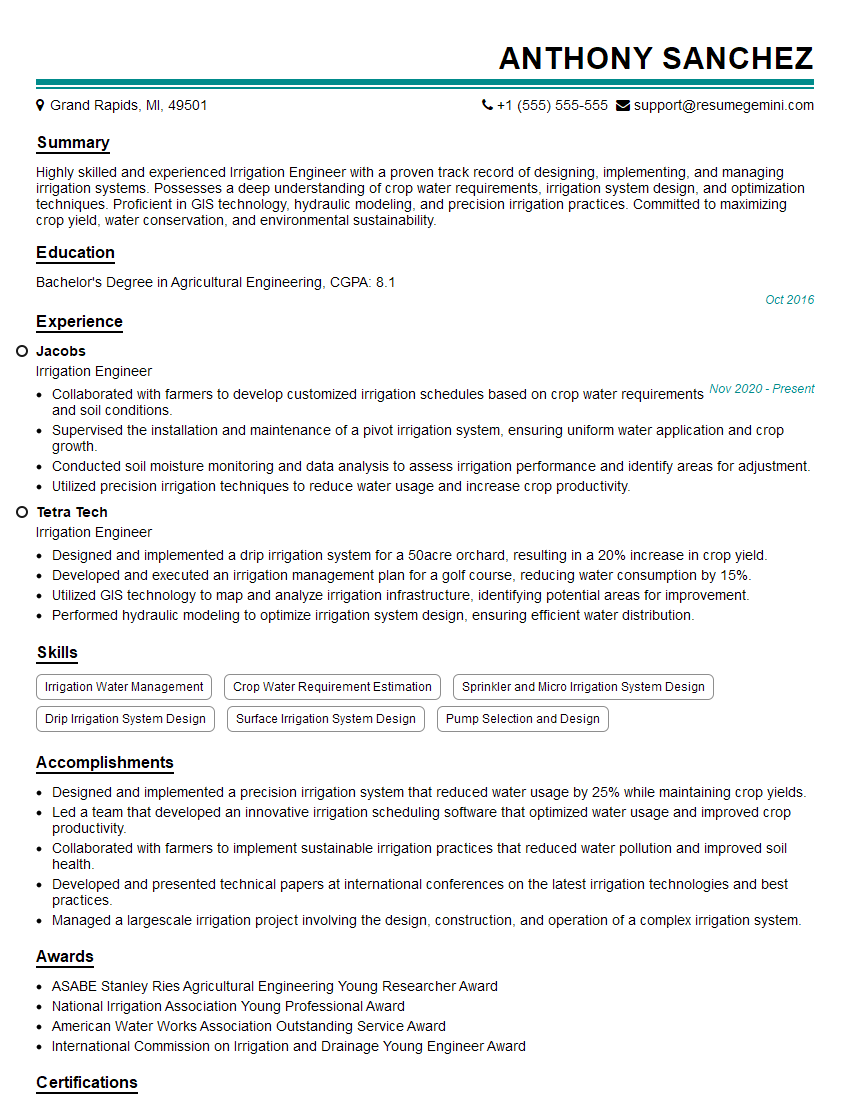
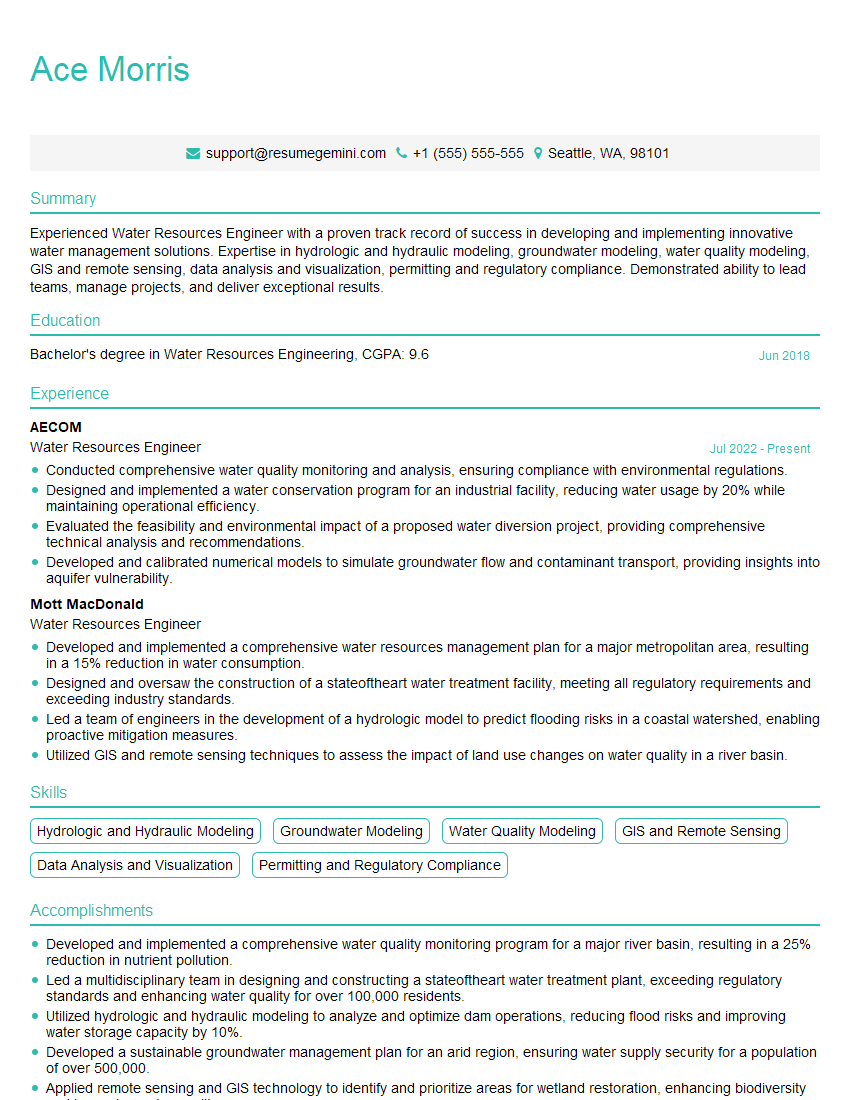
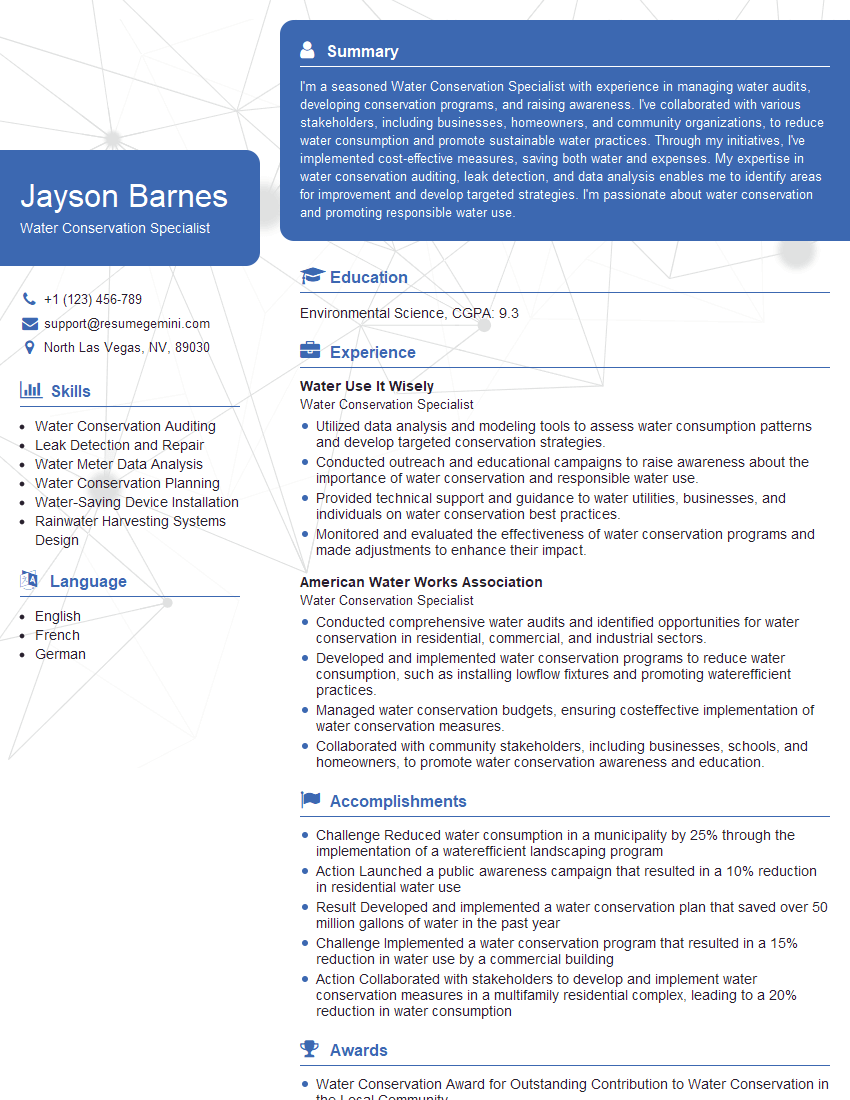
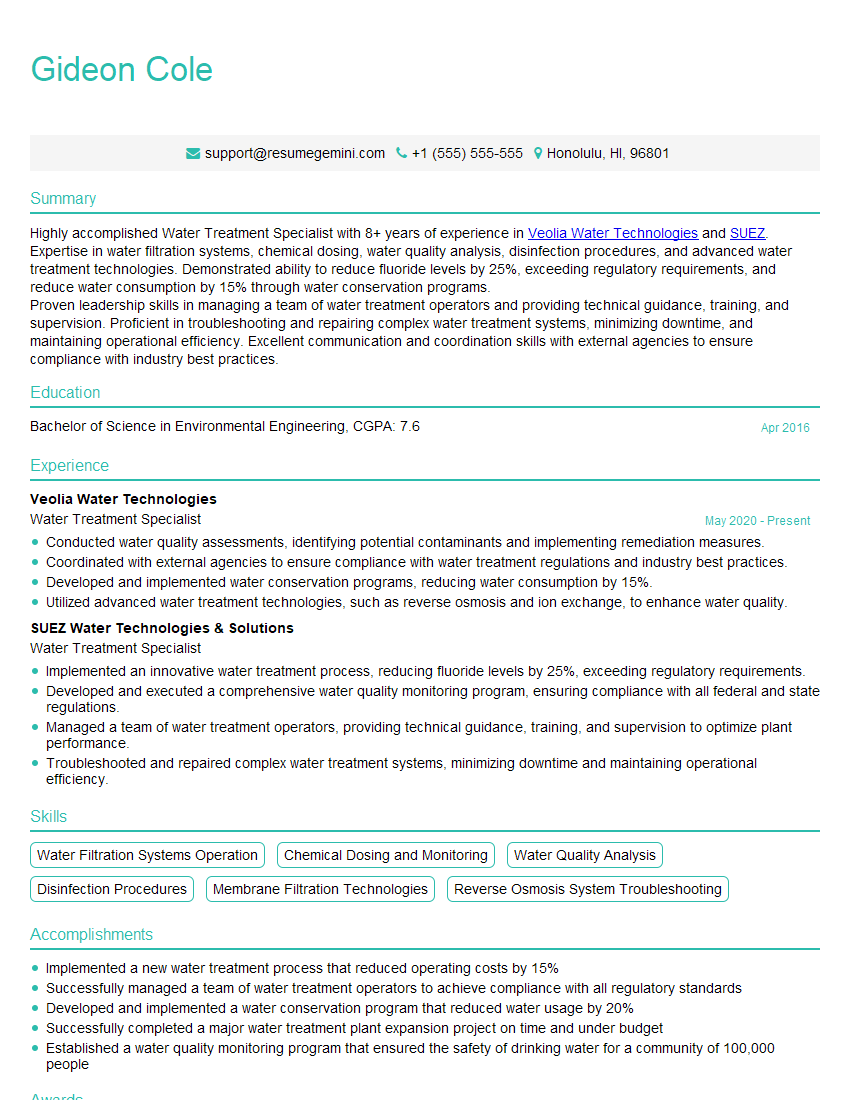
Mastering Water Efficiency Strategies is crucial for a successful career in a field increasingly focused on sustainability and resource management. These skills are highly sought after, opening doors to diverse and impactful roles. To maximize your job prospects, create a compelling and ATS-friendly resume that highlights your relevant skills and experience. ResumeGemini is a trusted resource to help you build a professional resume that showcases your qualifications effectively. We provide examples of resumes tailored to Water Efficiency Strategies to guide you in crafting a winning application. Take the next step towards your dream career today!
Explore more articles
Users Rating of Our Blogs
Share Your Experience
We value your feedback! Please rate our content and share your thoughts (optional).
What Readers Say About Our Blog
Very informative content, great job.
good