Are you ready to stand out in your next interview? Understanding and preparing for Water Resource Engineering interview questions is a game-changer. In this blog, we’ve compiled key questions and expert advice to help you showcase your skills with confidence and precision. Let’s get started on your journey to acing the interview.
Questions Asked in Water Resource Engineering Interview
Q 1. Explain the hydrologic cycle and its key components.
The hydrologic cycle, also known as the water cycle, describes the continuous movement of water on, above, and below the surface of the Earth. It’s a closed system, meaning the total amount of water remains relatively constant. Think of it like a giant, global recycling system for water.
- Evaporation: The sun’s energy transforms liquid water (from oceans, lakes, rivers, and even soil) into water vapor, which rises into the atmosphere.
- Transpiration: Plants also release water vapor into the atmosphere through their leaves – a process crucial for plant life and contributing significantly to atmospheric moisture.
- Evapotranspiration: This combines evaporation and transpiration, representing the total water loss from the land surface to the atmosphere.
- Condensation: As the water vapor rises and cools, it condenses into tiny water droplets or ice crystals, forming clouds.
- Precipitation: When these droplets or crystals become too heavy, they fall back to the Earth as rain, snow, sleet, or hail.
- Infiltration: A portion of precipitation seeps into the ground, replenishing groundwater supplies and soil moisture.
- Runoff: Water that doesn’t infiltrate flows over the land surface, eventually reaching rivers, streams, and ultimately the oceans, completing the cycle.
Understanding the hydrologic cycle is fundamental to managing water resources, predicting floods and droughts, and designing effective water management systems.
Q 2. Describe different types of water storage and their applications.
Water storage is crucial for managing water resources, ensuring availability during periods of scarcity. Different types cater to various needs:
- Surface Water Storage: This includes reservoirs, lakes, and ponds. Reservoirs, created by dams, are often used for flood control, irrigation, hydropower generation, and drinking water supply. For example, the Hoover Dam on the Colorado River provides water for millions and generates hydroelectric power.
- Groundwater Storage: Aquifers, underground layers of permeable rock or sediment containing water, are vital natural reservoirs. Groundwater is often used for irrigation and drinking water, but over-extraction can lead to depletion and land subsidence.
- Atmospheric Water Storage: While not directly managed, the water vapor in the atmosphere plays a vital role in the hydrologic cycle. Cloud seeding, a technique attempting to increase precipitation, is a form of atmospheric water management.
- Snowpack Storage: Snow accumulation in mountainous regions acts as a natural reservoir, releasing water gradually during the spring melt. This is crucial for downstream water supplies in many regions.
The choice of storage method depends on factors like geographic location, climate, water demand, and environmental considerations.
Q 3. What are the common methods for estimating evapotranspiration?
Evapotranspiration (ET) estimation is vital for water resource management and irrigation scheduling. Several methods exist, ranging from simple to complex:
- Pan Evaporation: A simple method using an evaporation pan to measure the water loss. It’s relatively inexpensive but can be affected by factors not representative of the actual ET from the surrounding area.
- Penman-Monteith Equation: A widely accepted and sophisticated method that considers meteorological parameters like temperature, humidity, solar radiation, and wind speed to estimate ET. It’s more accurate than pan evaporation but requires detailed climate data.
- Empirical Equations: These equations, often region-specific, relate ET to readily available data such as temperature and precipitation. They’re simpler than Penman-Monteith but less accurate.
- Remote Sensing: Satellite imagery and other remote sensing techniques can estimate ET over large areas. This is particularly useful for monitoring regional water balances and detecting changes in vegetation.
The choice of method depends on data availability, required accuracy, and the scale of the study.
Q 4. Explain the concept of Darcy’s Law and its application in groundwater flow.
Darcy’s Law is a fundamental principle governing groundwater flow. It states that the flow rate of groundwater through a porous medium is proportional to the hydraulic gradient and the hydraulic conductivity of the medium.
Mathematically, it’s represented as:
Q = -K A (dh/dl)Where:
Qis the discharge rate (volume per unit time)Kis the hydraulic conductivity (a measure of how easily water flows through the medium)Ais the cross-sectional area of flowdh/dlis the hydraulic gradient (change in hydraulic head per unit distance)
The negative sign indicates that flow occurs from high hydraulic head to low hydraulic head. Darcy’s Law is crucial for understanding and modeling groundwater flow in aquifers, predicting groundwater recharge and discharge, and designing groundwater wells and remediation systems.
For example, understanding Darcy’s Law is essential in assessing the impact of pumping wells on groundwater levels and predicting the spread of contaminants in aquifers.
Q 5. How do you determine the design flood for a given catchment area?
Determining the design flood for a catchment area is crucial for designing hydraulic structures like dams, bridges, and culverts. The process involves analyzing historical rainfall data and using statistical methods to estimate the probability of extreme events.
- Frequency Analysis: Statistical methods such as the Log-Pearson Type III distribution are often used to analyze historical streamflow data and estimate the magnitude of floods with a specific return period (e.g., the 100-year flood).
- Rainfall-Runoff Modeling: Hydrological models, such as HEC-HMS or SWAT, simulate the rainfall-runoff process in a catchment, translating rainfall into streamflow. These models require detailed information about the catchment’s characteristics.
- Regional Flood Frequency Analysis: When historical data for a specific catchment is limited, regional analysis methods can be used to estimate flood frequencies based on data from similar catchments.
The design flood is typically chosen based on a balance between the cost of construction and the risk of failure. For example, a dam designed for a 100-year flood event has a 1% chance of being exceeded in any given year.
Q 6. Describe various methods for water quality analysis.
Water quality analysis involves assessing the physical, chemical, and biological characteristics of water to determine its suitability for various purposes. Methods vary depending on the parameters of interest:
- Physical Parameters: These include temperature, turbidity (cloudiness), color, odor, and taste. Simple measurements using instruments like thermometers and turbidity meters are often used.
- Chemical Parameters: These include pH, dissolved oxygen, nutrients (nitrates, phosphates), heavy metals, and organic pollutants. Laboratory analysis using techniques like spectrophotometry, chromatography, and titration are employed.
- Biological Parameters: This involves identifying and quantifying microorganisms, such as bacteria, algae, and zooplankton. Microscopic examination and microbiological culturing are common methods.
The specific methods employed depend on the intended use of the water (e.g., drinking water, irrigation, industrial use). For instance, drinking water requires stringent testing for pathogens and chemicals that may pose health risks.
Q 7. Explain the principles of reservoir operation and management.
Reservoir operation and management involves the coordinated control of water release from a reservoir to meet various demands while optimizing overall benefits. Key principles include:
- Flood Control: Maintaining sufficient storage capacity to mitigate the impact of floods by storing excess water during high flow periods and gradually releasing it later.
- Water Supply: Meeting the demands for municipal water, irrigation, and industrial uses by strategically releasing water based on projected demand and reservoir levels.
- Hydropower Generation: Optimizing water releases to maximize energy generation from hydroelectric power plants, considering factors such as water availability and electricity demand.
- Environmental Considerations: Maintaining adequate downstream flows to support aquatic ecosystems, recreational uses, and navigation, preventing ecological damage.
- Sediment Management: Managing sediment accumulation in the reservoir to ensure its long-term storage capacity and prevent negative impacts on downstream areas.
Sophisticated computer models and optimization techniques are often used to manage reservoir operations, balancing competing demands and minimizing environmental impacts. For example, real-time monitoring and forecasting are used to optimize reservoir releases in response to changing conditions.
Q 8. What are the different types of irrigation systems and their efficiency?
Irrigation systems are crucial for agriculture, and their efficiency directly impacts water use and crop yields. Different systems vary in their application methods and water delivery mechanisms. Here are some key types:
- Surface Irrigation: This traditional method involves flooding fields with water. Examples include border, furrow, and basin irrigation. Efficiency is generally lower (60-80%) due to high water losses through evaporation and deep percolation.
- Sprinkler Irrigation: Water is sprayed onto the field through a network of pipes and sprinklers. It’s more efficient (80-90%) than surface irrigation because it reduces water losses, but it requires higher initial investment.
- Drip Irrigation (Micro-Irrigation): Water is delivered directly to the plant roots through a network of tubes and emitters. This is the most efficient method (90-95%), minimizing water waste, but can be more expensive and require more maintenance.
- Subsurface Irrigation: Water is applied beneath the soil surface, reducing evaporation losses and improving water use efficiency. Efficiency is comparable to drip irrigation, but suitable soil conditions are required.
The choice of irrigation system depends on factors like topography, soil type, crop type, water availability, and economic considerations. For instance, drip irrigation might be ideal for high-value crops in arid regions, while surface irrigation might be more suitable for large-scale farming in flat areas with abundant water resources.
Q 9. How do you assess the environmental impact of a water resource project?
Assessing the environmental impact of a water resource project requires a holistic approach, considering potential effects on various ecological components. A robust assessment typically involves:
- Baseline Studies: Gathering data on the pre-project condition of water quality, aquatic life, riparian vegetation, and surrounding ecosystems.
- Impact Prediction: Using models and expert judgment to predict the project’s potential impacts, including changes in water flow, water quality, habitat alteration, and greenhouse gas emissions.
- Mitigation Measures: Developing strategies to minimize negative impacts and enhance positive ones. Examples include fish passage structures, wetland creation, and water quality control measures.
- Monitoring and Evaluation: Tracking the actual impacts of the project during and after construction, making adjustments as needed.
- Stakeholder Engagement: Involving local communities, environmental groups, and other stakeholders in the assessment process ensures transparency and inclusivity.
For example, a dam construction project needs to consider the potential impact on downstream flow regimes, fish migration patterns, and sediment transport. A thorough Environmental Impact Assessment (EIA) is crucial for responsible water resource management.
Q 10. Discuss the different types of water treatment processes.
Water treatment processes aim to remove contaminants and make water safe for human consumption or other uses. The specific processes depend on the source water quality and desired level of treatment. Common processes include:
- Coagulation and Flocculation: Chemicals are added to the water to clump together suspended particles, making them easier to remove.
- Sedimentation: Allowing the larger particles to settle out of the water.
- Filtration: Passing the water through filters to remove smaller particles and impurities.
- Disinfection: Using chlorine, ozone, or UV light to kill harmful bacteria and viruses.
- Membrane Filtration (e.g., microfiltration, ultrafiltration, reverse osmosis): Removing dissolved solids and other contaminants using membranes with tiny pores.
- Advanced Oxidation Processes (AOPs): Employing powerful oxidizing agents to remove persistent organic pollutants.
The sequence and combination of these processes vary depending on the water source and intended use. For instance, drinking water treatment plants typically employ a multi-barrier approach, combining several processes to ensure high-quality potable water.
Q 11. Explain the principles of open channel flow and its applications.
Open channel flow refers to the movement of water in a channel without being completely enclosed, such as rivers, canals, and drainage ditches. It’s governed by principles of fluid mechanics, particularly the Manning’s equation and energy principles.
Manning’s Equation: This empirical equation relates the flow velocity (V) to the channel geometry (hydraulic radius, R) and the roughness (Manning’s roughness coefficient, n): V = (R^(2/3) * S^(1/2)) / n, where S is the slope of the energy line. This equation is fundamental in designing open channels and estimating flow rates.
Energy Principles: The total energy in an open channel flow is the sum of the elevation head, pressure head, and velocity head. The energy line represents the total energy along the channel. Understanding energy losses due to friction and other factors is crucial for designing efficient channels.
Applications: Open channel flow principles are widely applied in:
- Irrigation design: Designing canals and ditches to deliver water efficiently.
- Drainage systems: Managing runoff and preventing flooding.
- River engineering: Analyzing river flow, designing flood control measures, and managing water resources.
- Hydropower generation: Determining flow rates and energy potential for hydropower plants.
Understanding open channel flow is essential for any water resource engineer working on projects involving water conveyance or management.
Q 12. Describe various methods for groundwater recharge.
Groundwater recharge is the process of replenishing groundwater aquifers. Several methods can be employed, each with its own advantages and limitations:
- Artificial Recharge: This involves intentionally adding water to the aquifer. Techniques include spreading basins, injection wells, and recharge ponds. Spreading basins are common for surface water recharge, while injection wells are used for deeper aquifers.
- Managed Aquifer Recharge (MAR): A more sophisticated approach that involves controlled infiltration of surface water into aquifers, often incorporating treatment or pretreatment to remove contaminants. It’s gaining popularity due to its efficiency and sustainability.
- Watershed Management: Protecting and enhancing the natural recharge processes through practices like afforestation, soil conservation, and reduced land-use alteration.
- Rainwater Harvesting: Collecting rainwater and directing it into the ground through infiltration basins or wells.
The choice of method depends on local geological conditions, water availability, and cost considerations. For example, in arid regions where surface water is scarce, rainwater harvesting might be a crucial strategy for groundwater recharge. In areas with high groundwater demand, MAR might be more effective.
Q 13. What are the challenges associated with water scarcity and how can they be addressed?
Water scarcity is a global challenge with significant social, economic, and environmental consequences. Key challenges include:
- Unequal Distribution: Water resources are not evenly distributed geographically, leading to water stress in some regions while others have abundance.
- Population Growth: The increasing global population puts immense pressure on existing water resources.
- Climate Change: Changes in rainfall patterns and increased evaporation intensify water scarcity in many regions.
- Pollution: Contamination of water sources renders them unusable, exacerbating water shortages.
- Inefficient Water Use: Excessive water consumption in agriculture, industry, and households contributes to scarcity.
Addressing these challenges requires a multi-faceted approach:
- Improved Water Management: Implementing efficient irrigation techniques, promoting water conservation in industries and households, and reducing water losses through leakage detection and repair.
- Water Recycling and Reuse: Treating wastewater for reuse in agriculture or industrial processes.
- Water Pricing Mechanisms: Implementing water pricing policies that reflect the true cost of water and encourage conservation.
- Investing in Water Infrastructure: Developing and maintaining infrastructure for water storage, treatment, and distribution.
- International Cooperation: Collaborative efforts among countries to manage transboundary water resources.
Addressing water scarcity requires integrated water resource management, incorporating technological advancements and societal changes.
Q 14. Explain the concept of sustainable water management.
Sustainable water management is about managing water resources in a way that meets the needs of the present without compromising the ability of future generations to meet their own needs. It entails a holistic approach that integrates environmental, social, and economic considerations.
Key principles of sustainable water management include:
- Water Conservation: Reducing water consumption through efficient technologies and practices.
- Water Quality Protection: Preventing pollution of water sources and maintaining water quality.
- Integrated Water Resource Management (IWRM): Considering all aspects of the water cycle and managing water resources in an integrated manner.
- Community Participation: Involving local communities in water management decisions.
- Equitable Water Allocation: Ensuring fair and equitable access to water resources for all users.
- Adaptive Management: Adapting water management strategies to changes in climate, population, and other factors.
Sustainable water management is not just about technical solutions; it requires changes in policies, attitudes, and behaviors. It demands a shift towards valuing water as a precious resource and ensuring its responsible use for present and future generations.
Q 15. Discuss the role of GIS in water resource management.
Geographic Information Systems (GIS) are indispensable tools in water resource management. They allow us to visualize, analyze, and manage spatially referenced data related to water resources. Imagine trying to understand the complex interplay of rainfall patterns, groundwater levels, river flows, and water usage across a large region – GIS makes this possible.
- Data Integration: GIS integrates various datasets, such as elevation models (DEMs), rainfall data, soil types, land use maps, and water quality measurements, providing a comprehensive view of a water system.
- Spatial Analysis: We can perform spatial analyses like identifying areas prone to flooding, determining optimal locations for water infrastructure (dams, reservoirs, pipelines), and modeling groundwater flow using GIS.
- Decision Support: GIS helps in making informed decisions by visualizing scenarios and predicting the impacts of different management strategies. For instance, we can model the effects of a proposed dam on downstream water availability and ecological health.
- Public Participation: GIS tools can be used to create interactive maps that engage the public in water resource planning and management, fostering transparency and collaboration.
For example, in a drought scenario, GIS can help pinpoint areas experiencing the most severe water shortages, guiding efficient allocation of limited water resources. GIS is essentially a central nervous system for effective water management, bringing together disparate data streams into a coherent picture.
Career Expert Tips:
- Ace those interviews! Prepare effectively by reviewing the Top 50 Most Common Interview Questions on ResumeGemini.
- Navigate your job search with confidence! Explore a wide range of Career Tips on ResumeGemini. Learn about common challenges and recommendations to overcome them.
- Craft the perfect resume! Master the Art of Resume Writing with ResumeGemini’s guide. Showcase your unique qualifications and achievements effectively.
- Don’t miss out on holiday savings! Build your dream resume with ResumeGemini’s ATS optimized templates.
Q 16. How do you model water flow in a complex river system?
Modeling water flow in a complex river system is a challenging task often involving sophisticated numerical techniques. We typically use hydrodynamic models, which solve the equations governing water movement, considering factors like channel geometry, flow rate, and friction.
- 1D Models: Simpler models (1D) consider flow along the river’s longitudinal axis, suitable for larger river reaches. They are computationally efficient but neglect lateral variations in flow.
- 2D Models: More complex (2D) models account for flow variations in both the longitudinal and lateral directions, capturing details like flow separation and inundation in floodplains. These are ideal for areas with significant lateral features.
- 3D Models: For extremely detailed simulations, particularly involving complex hydraulic structures or intricate channel morphology, 3D models are employed. These capture vertical variations but demand considerable computational power.
The model selection depends on the specific needs of the project. We also must consider data availability; accurate input data on river bathymetry, rainfall, and boundary conditions are crucial for model accuracy. Calibration and validation using historical flow data are also essential steps.
A common software used for such modelling includes HEC-RAS, MIKE 11, and Delft3D. These tools allow users to define the river geometry, boundary conditions (inflows, outflows), and roughness parameters to simulate the water flow under different scenarios.
Q 17. What are the different types of water pollution and their sources?
Water pollution encompasses the contamination of water bodies by various pollutants, degrading its quality and rendering it unsuitable for intended uses. The sources and types are diverse.
- Point Source Pollution: This originates from identifiable locations, such as industrial discharge pipes, sewage treatment plants, or agricultural runoff from concentrated animal feeding operations (CAFOs).
- Non-point Source Pollution: This is more diffuse and challenging to manage. Examples include agricultural runoff containing fertilizers and pesticides, urban stormwater runoff carrying oil and heavy metals, and atmospheric deposition.
Types of Pollutants:
- Biological Pollutants: Bacteria, viruses, and parasites from sewage contaminate water, causing waterborne diseases.
- Chemical Pollutants: Heavy metals (lead, mercury), pesticides, fertilizers, and industrial chemicals alter water chemistry, impacting aquatic life and human health.
- Physical Pollutants: Sediments from erosion, plastics, and other debris affect water quality and habitat.
- Thermal Pollution: Heated water discharge from power plants raises water temperature, harming aquatic organisms.
Managing water pollution requires a multi-faceted approach involving legislation, pollution control technologies (wastewater treatment), best management practices in agriculture and urban areas, and public awareness campaigns. For example, implementing riparian buffers along streams can significantly reduce agricultural runoff pollution.
Q 18. Explain the concept of water rights and allocation.
Water rights and allocation deal with the legal and administrative framework governing the use of water resources. It’s about who has the right to use water and how much they can use. The complexity arises because water is a shared resource, often scarce, with competing demands from various sectors (agriculture, industry, domestic).
- Prior Appropriation Doctrine: Common in the western US, this allocates water rights based on historical use – “first in time, first in right.” The oldest user has priority.
- Riparian Rights Doctrine: More prevalent in the eastern US, this grants water rights to landowners adjacent to a water body. Each riparian owner has a reasonable use right, but overuse is limited.
- Permitting Systems: Many jurisdictions employ permitting systems to regulate water withdrawals and ensure sustainable use. Permits specify allowable amounts and conditions.
Water allocation strategies aim for equitable and efficient water distribution. This may involve water markets where users can buy and sell water rights, or prioritization schemes that allocate water based on societal needs or economic value.
For example, during droughts, water allocation might prioritize human consumption over irrigation, reflecting the inherent value of potable water. Efficient water allocation strategies are crucial for avoiding conflicts and ensuring sustainable use of water resources.
Q 19. Discuss the impact of climate change on water resources.
Climate change significantly impacts water resources, altering precipitation patterns, increasing evaporation rates, and accelerating the melting of glaciers and snowpack. These changes have far-reaching consequences.
- Changes in Precipitation: Some regions experience more intense rainfall events leading to increased flooding, while others face more frequent and severe droughts, disrupting water availability.
- Increased Evaporation: Higher temperatures increase evaporation from reservoirs and water bodies, reducing water storage and availability.
- Glacier and Snowmelt: Melting glaciers and snowpack, crucial sources of freshwater in many regions, diminish water supplies, especially during dry seasons.
- Sea Level Rise: Rising sea levels can lead to saltwater intrusion into coastal aquifers, contaminating freshwater sources.
- Changes in Water Quality: Altered temperature and flow regimes affect water quality, potentially promoting algal blooms and impacting aquatic ecosystems.
Adapting to these changes requires robust water management strategies. These include improving water storage capacity, implementing water conservation measures, developing drought-resistant crops, and investing in water infrastructure that’s resilient to extreme weather events.
For example, constructing strategically located water storage reservoirs can help mitigate the impacts of droughts, while promoting water conservation practices in agriculture and urban areas can reduce water demand.
Q 20. How do you design a stormwater management system?
Designing a stormwater management system aims to control and manage stormwater runoff, preventing flooding, erosion, and water pollution. The design involves several key considerations.
- Hydrological Analysis: This assesses the volume and intensity of rainfall expected in the area. The design must handle peak runoff volumes effectively.
- Drainage Network: A system of pipes, ditches, and channels collects and conveys stormwater to designated outlets, often incorporating detention basins or retention ponds.
- Best Management Practices (BMPs): These are practices that reduce runoff volume and improve water quality. Examples include green infrastructure (rain gardens, permeable pavements), bioretention cells, and constructed wetlands.
- Water Quality Control: Measures to remove pollutants from stormwater runoff, such as sediment basins, filter strips, and oil-water separators, are crucial for environmental protection.
The design process involves various software tools and modelling techniques to simulate runoff, determine appropriate pipe sizes, and evaluate the effectiveness of different BMPs. The system must be designed to handle both routine and extreme rainfall events.
For instance, a residential area might employ a combination of green infrastructure (rain gardens in yards) and a network of underground pipes to manage stormwater runoff, minimizing environmental impact and preventing flooding.
Q 21. Explain the principles of hydraulic structures like weirs and spillways.
Hydraulic structures like weirs and spillways are essential components of water management systems, controlling and regulating water flow in rivers, canals, and reservoirs. They operate based on fundamental hydraulic principles.
- Weirs: These are low structures across a channel, designed to control the flow rate by causing the water to flow over a sharp crest. The discharge over a weir can be calculated using empirical formulas, considering factors like weir height, crest length, and the upstream water level. Weirs are used in flow measurement, water level control, and irrigation systems.
- Spillways: These are controlled or uncontrolled structures that release excess water from a reservoir, typically during high flow conditions. They prevent overtopping of the dam, protecting the dam’s integrity and downstream areas from flooding. Spillway design involves complex hydraulic calculations to determine the required capacity, considering flood frequency analysis and the safety factors.
Both weirs and spillways operate based on the principles of fluid mechanics and energy conservation. The design requires accurate estimation of the flow discharge and careful consideration of factors such as the geometry of the structure, upstream and downstream water levels, and energy losses during flow. Improper design can lead to erosion, instability, and failure of the structure.
For example, a dam’s spillway is designed to safely pass the largest flood likely to occur within a specified timeframe, preventing catastrophic dam failure and downstream flooding.
Q 22. How do you assess the risk of dam failure?
Assessing dam failure risk involves a multifaceted approach, combining engineering analysis with probabilistic methods. We don’t just look at the dam itself; we consider the entire system, including the reservoir, the surrounding geology, and even the potential for human error.
The process typically starts with a thorough hazard identification. This involves identifying potential failure modes, such as overtopping, foundation failure, piping, and seismic events. We then quantify the likelihood of each hazard occurring through a combination of historical data, site-specific investigations (e.g., geological surveys, dam inspections), and expert judgment. For instance, we might use probabilistic seismic hazard analysis to estimate the chance of an earthquake exceeding a certain magnitude in a given time period.
Next comes vulnerability assessment. This determines the consequences of each failure mode. For instance, if the dam fails, how much water will be released? What areas will be flooded? What are the potential losses – in terms of lives, property, and the environment? This often involves sophisticated hydraulic modeling (like HEC-RAS) to simulate flood inundation and calculate potential damage.
Finally, we combine the likelihood and consequences to calculate the risk. This is typically expressed as an annual probability of failure or as a measure of expected losses. Risk assessment is an iterative process; as new data becomes available or as the understanding of the system improves, the assessment is refined. For example, we might incorporate advanced monitoring techniques, like using fiber optic sensors embedded in the dam structure, to improve the accuracy of our hazard and vulnerability assessments.
Q 23. What are the different methods for groundwater level monitoring?
Groundwater level monitoring is crucial for managing water resources, especially in arid and semi-arid regions. Several methods are employed, each with its advantages and limitations.
- Piezometers: These are simple, relatively inexpensive devices consisting of a perforated pipe installed in the aquifer. Water rises within the pipe to the level of the groundwater table. Regular measurements provide a time series of groundwater levels. Imagine it like a straw in a glass of water; the water level in the straw mirrors the water level in the glass.
- Observation Wells: Similar to piezometers but typically larger in diameter, allowing for more accurate and stable measurements. They can also accommodate water quality sampling devices.
- Telemetry Systems: These automate the data collection process, transmitting groundwater level readings wirelessly to a central monitoring station. This eliminates the need for frequent manual visits to the monitoring sites, improving efficiency and data availability.
- Remote Sensing Techniques: Methods like Gravity Recovery and Climate Experiment (GRACE) satellites can provide large-scale estimations of groundwater storage changes. While not as precise as in-situ measurements, they provide valuable regional context.
- Inclinometers: These measure changes in the inclination of the borehole wall, providing insights into aquifer deformation and potential instability. Useful for monitoring groundwater levels in situations where traditional methods are challenging.
The choice of method depends on factors like budget, required accuracy, access to the site, and the scale of the monitoring network. Often, a combination of methods is used to provide a comprehensive picture of groundwater conditions.
Q 24. Describe various techniques for water conservation.
Water conservation is essential for sustainable water management. Techniques span various sectors and involve both technological solutions and behavioral changes.
- Improved Irrigation Techniques: Drip irrigation and micro-sprinklers significantly reduce water losses compared to traditional flood irrigation. Think of it as giving plants a precise drink instead of flooding their surroundings.
- Water-Efficient Appliances: Using low-flow showerheads, toilets, and washing machines reduces household water consumption substantially.
- Rainwater Harvesting: Collecting rainwater for non-potable uses such as landscaping or toilet flushing can significantly reduce reliance on municipal water supplies. This is a great way to supplement water resources, especially in areas with seasonal rainfall.
- Water Recycling and Reuse: Treated wastewater can be used for industrial processes, irrigation, or even groundwater recharge. This closes the water cycle and reduces pressure on freshwater resources.
- Public Awareness Campaigns: Educating the public about water conservation practices and the importance of responsible water use is a fundamental aspect of any effective water conservation strategy.
- Leak Detection and Repair: Addressing leaks in water distribution systems reduces water losses and ensures efficient delivery of water to consumers.
The effectiveness of these techniques varies depending on the climatic conditions, the availability of technology, and the level of public participation. A holistic approach that integrates several methods is generally the most effective.
Q 25. How do you evaluate the economic feasibility of a water resource project?
Evaluating the economic feasibility of a water resource project requires a comprehensive cost-benefit analysis. This involves comparing the costs of the project (construction, operation, and maintenance) to the benefits it generates (increased water supply, flood protection, hydropower generation, improved irrigation, etc.).
The costs are relatively straightforward to estimate, based on engineering designs and market prices. However, the benefits are often harder to quantify, and this is where economic models and valuation techniques become crucial. We might use techniques like discounted cash flow analysis to compare the present value of costs to the present value of benefits over the project’s lifetime. We also need to consider things like the opportunity cost (what could we have done with that money instead?) and the social cost of carbon.
Intangible benefits, such as improved public health or enhanced environmental quality, are more challenging to assess but are often significant. We often use techniques like contingent valuation (surveying people’s willingness to pay) or hedonic pricing (analyzing how property values are affected by water quality improvements) to put a monetary value on these benefits. Sensitivity analyses are crucial, examining how the overall economic viability changes under different assumptions regarding key parameters, like water demand growth, interest rates, or construction costs.
Ultimately, the economic feasibility of a project depends on a careful balance between costs and benefits, with a thorough consideration of all relevant factors, including the long-term sustainability and resilience of the water resource system. A project may be economically sound but environmentally unsound, making integrated assessment approaches necessary.
Q 26. Explain the concept of water footprint and its calculation.
A water footprint represents the total volume of freshwater used to produce goods and services consumed by a person, a community, or a business. It’s a measure of the impact of our activities on water resources, encompassing both direct and indirect water use.
There are three main components of a water footprint:
- Blue Water Footprint: This refers to the freshwater withdrawn from surface or groundwater resources (e.g., rivers, lakes, aquifers) for production. Imagine the water used to irrigate a cotton field or that drawn to create bottled water.
- Green Water Footprint: This is the rainwater that evaporates or is incorporated into products during production. Think of the rain used to grow rice or the water that evaporates from an orange grove.
- Grey Water Footprint: This represents the volume of freshwater required to assimilate the pollutants generated during the production process. For example, the amount of water needed to dilute the chemicals used in textile manufacturing.
Calculating a water footprint requires detailed data on the production processes of different goods and services, water consumption rates, and pollution levels. Life cycle assessment (LCA) methodologies are often employed to map the entire flow of water through the production chain, from raw material extraction to final product disposal. Specialized software and databases are available to aid in these calculations.
Understanding one’s water footprint allows for informed decisions about consumption patterns and promotes responsible water management practices.
Q 27. Discuss the importance of integrated water resource management.
Integrated Water Resource Management (IWRM) is a holistic approach that recognizes the interconnectedness of water with other sectors like agriculture, energy, and the environment. It moves away from a fragmented, sectoral approach to water management towards a collaborative, integrated one. Imagine a river basin; IWRM considers the needs of all users – farmers, industries, municipalities, and ecosystems – within that basin.
The core principles of IWRM include:
- Participatory Decision-Making: Involving all stakeholders in planning and decision-making processes ensures that the needs and concerns of everyone are taken into account.
- Long-Term Perspective: Considering the long-term sustainability of water resources, ensuring that the needs of future generations are not compromised.
- Ecosystem Approach: Recognizing the importance of maintaining healthy ecosystems and considering the environmental consequences of water management decisions.
- Economic Efficiency: Optimizing the use of water resources to achieve maximum social and economic benefits.
- Environmental Protection: Prioritizing the conservation of water resources and the protection of aquatic ecosystems.
IWRM requires strong institutional frameworks, effective communication among stakeholders, and a commitment to sustainable water management practices. Its implementation contributes to efficient water allocation, conflict resolution, and the protection of valuable ecosystems. The success of IWRM depends heavily on effective governance and a shared understanding of water’s value.
Q 28. Describe your experience with water resource modeling software (e.g., HEC-RAS, MIKE SHE)
I have extensive experience using several water resource modeling software packages, most notably HEC-RAS and MIKE SHE. My expertise spans data input, model calibration and validation, and result interpretation and application to real-world problems.
HEC-RAS (Hydrologic Engineering Center’s River Analysis System) is my go-to tool for hydraulic modeling of rivers, streams, and canals. I’ve used it for projects involving flood inundation mapping, dam break analysis, and bridge hydraulic design. For example, I recently used HEC-RAS to model the potential impact of a proposed dam on downstream floodplains, ensuring the design minimized flood risks to downstream communities. This involved creating a detailed digital elevation model (DEM), defining cross sections along the river, and simulating various flow scenarios, including extreme flood events.
MIKE SHE (MIKE System Hydrological Engineering) is a powerful tool for integrated hydrological modeling. I’ve used it to assess groundwater recharge, surface runoff, and the impact of land use changes on water resources. In a past project, MIKE SHE was used to evaluate the long-term sustainability of groundwater abstraction in an agricultural region. We developed a detailed model that included groundwater flow, evapotranspiration, and irrigation demands, then used the model to explore scenarios for different water management strategies. The modeling predicted the impact of climate change on this water resource over time.
My proficiency in these software packages, combined with my understanding of hydrological processes and water resource management principles, enables me to develop robust and reliable models for solving complex water resource challenges.
Key Topics to Learn for Water Resource Engineering Interview
- Hydrology: Understanding hydrological cycles, rainfall-runoff modeling, and watershed analysis. Practical application: Designing efficient drainage systems for urban areas.
- Hydraulics: Mastering open channel flow, pipe flow, and water conveyance systems. Practical application: Optimizing irrigation canal designs for efficient water distribution.
- Water Quality Management: Familiarizing yourself with water treatment processes, pollution control, and water quality modeling. Practical application: Developing strategies for reducing nutrient pollution in lakes and rivers.
- Groundwater Hydrology: Understanding aquifer characteristics, groundwater flow, and well hydraulics. Practical application: Designing sustainable groundwater extraction strategies.
- Water Resources Planning and Management: Developing strategies for water allocation, reservoir operation, and integrated water resources management. Practical application: Creating a comprehensive water management plan for a drought-prone region.
- Environmental Impact Assessment: Understanding the environmental impacts of water resource projects and developing mitigation strategies. Practical application: Conducting an EIA for a proposed dam project.
- Water Resource Modeling and Simulation: Proficiency in using various software packages for hydrological and hydraulic modeling. Practical application: Predicting flood inundation areas using a hydrodynamic model.
- Irrigation and Drainage Engineering: Understanding irrigation system design, water scheduling, and drainage design principles. Practical application: Designing efficient irrigation systems for agricultural lands.
Next Steps
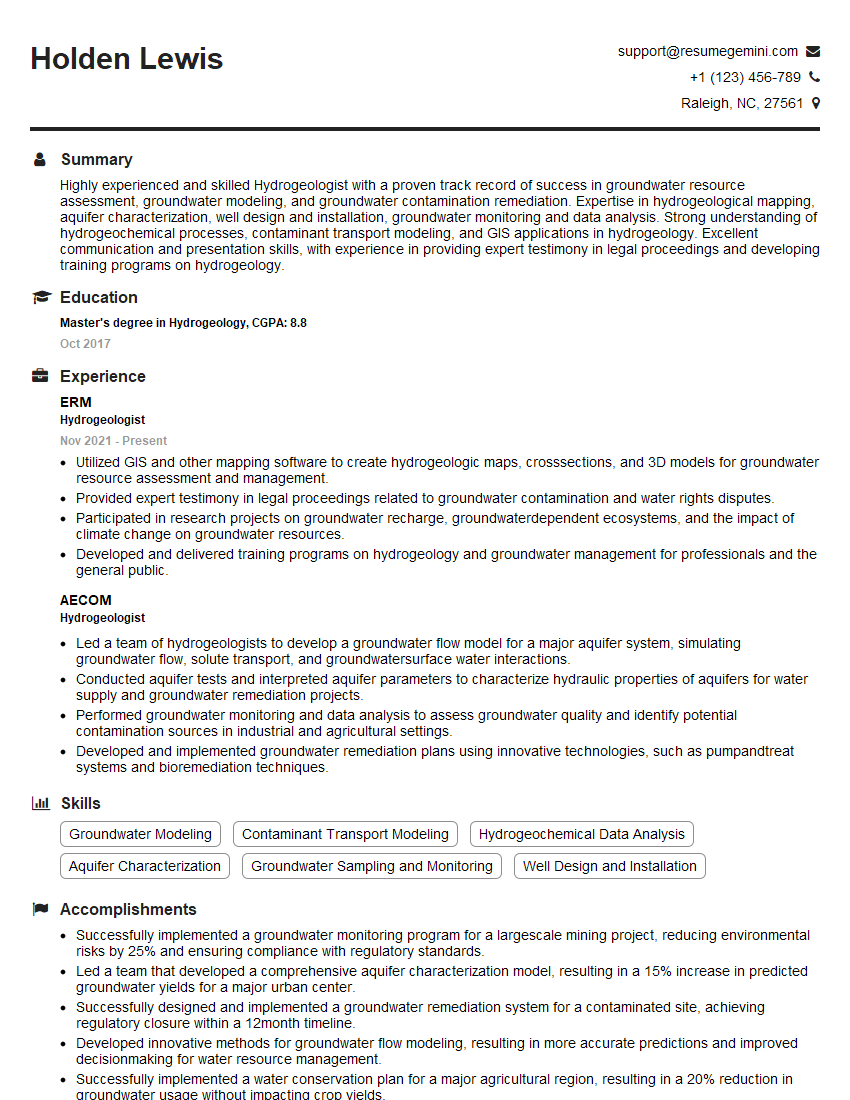
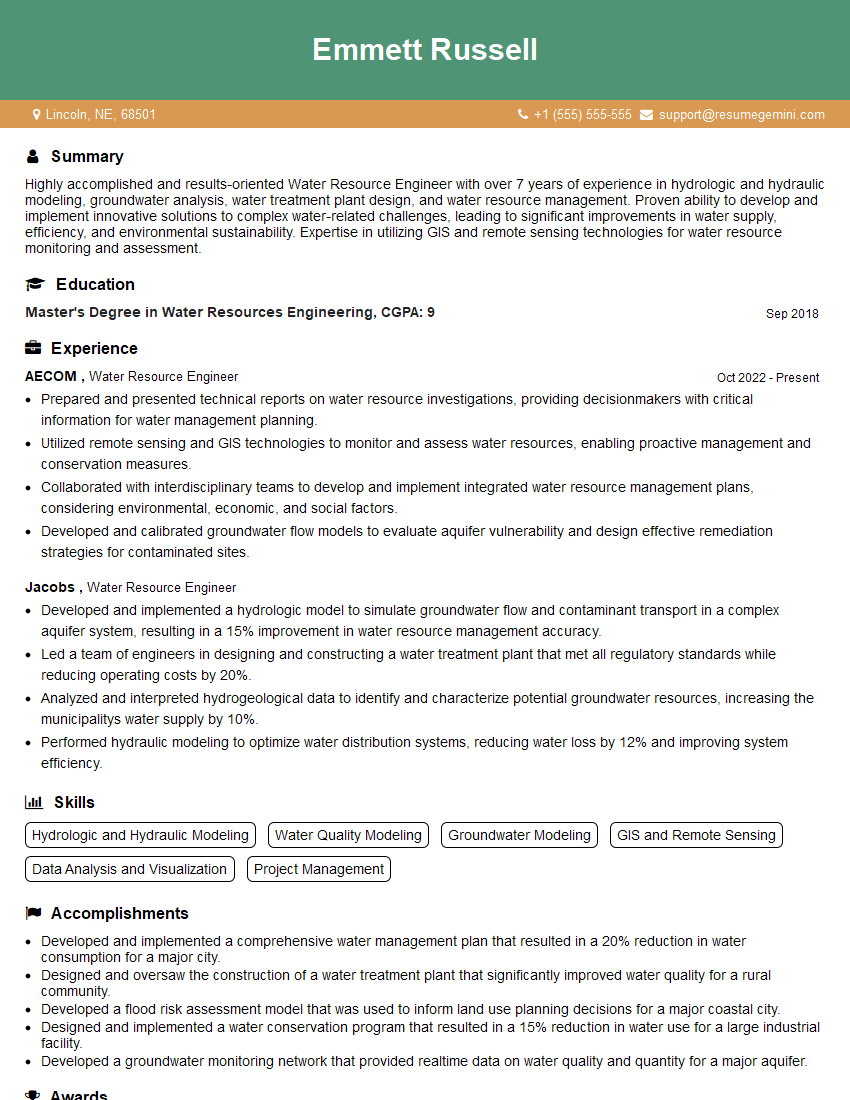
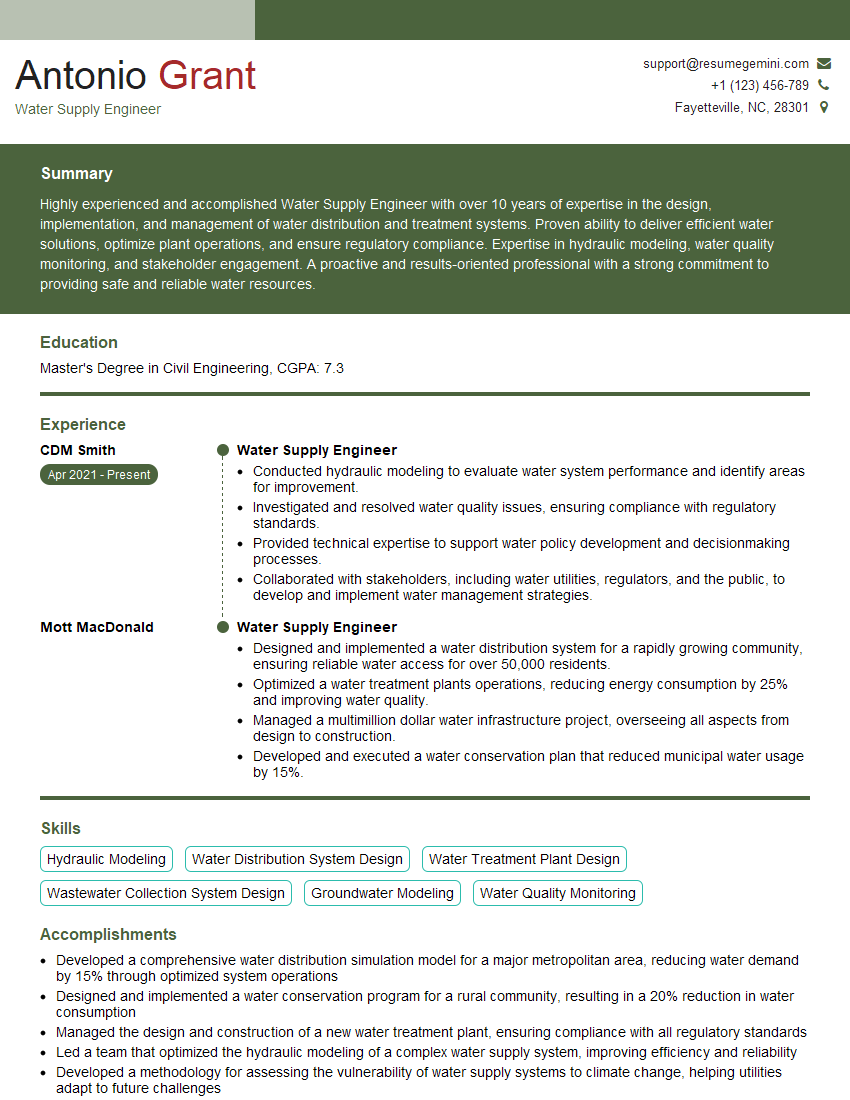
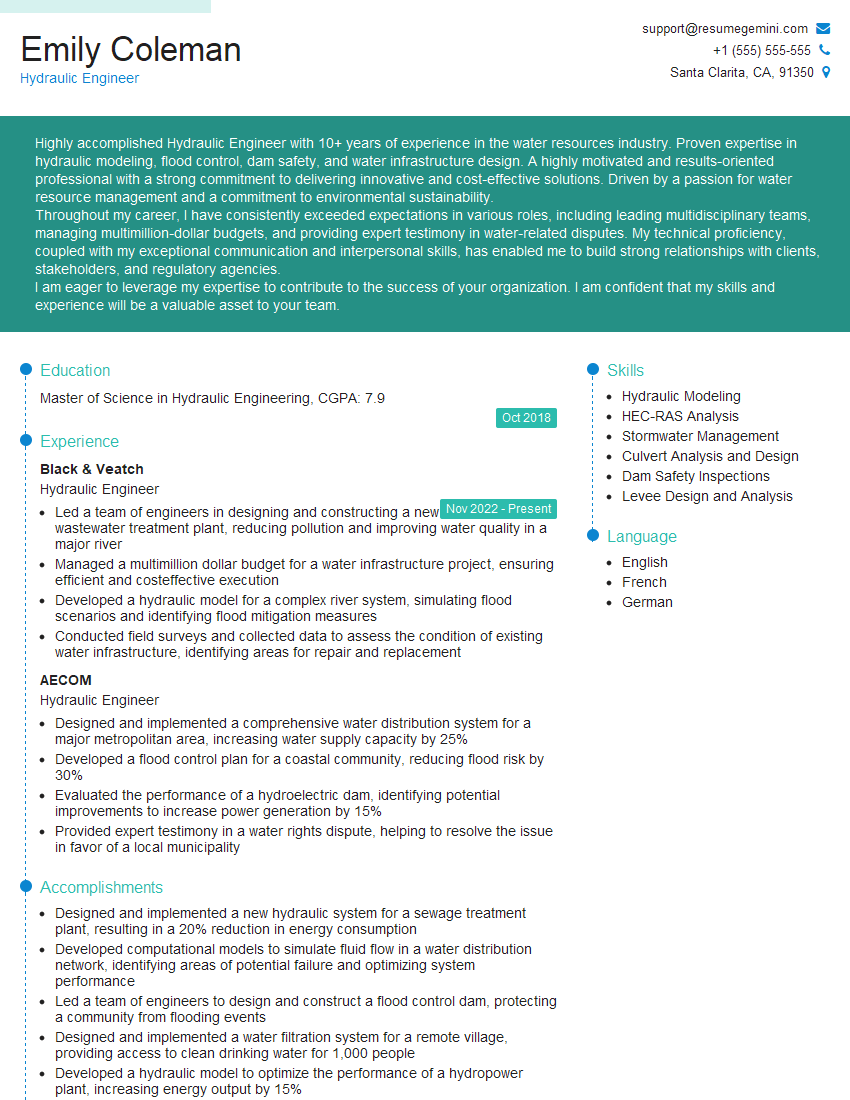
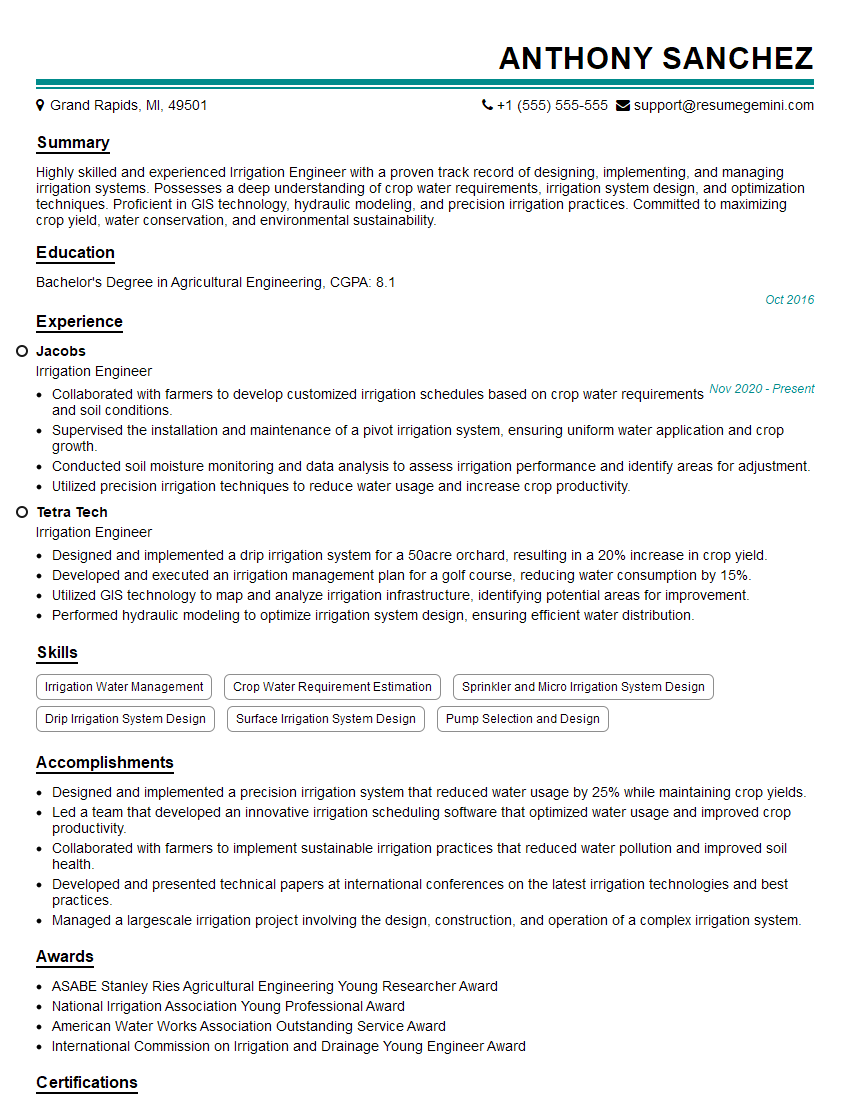
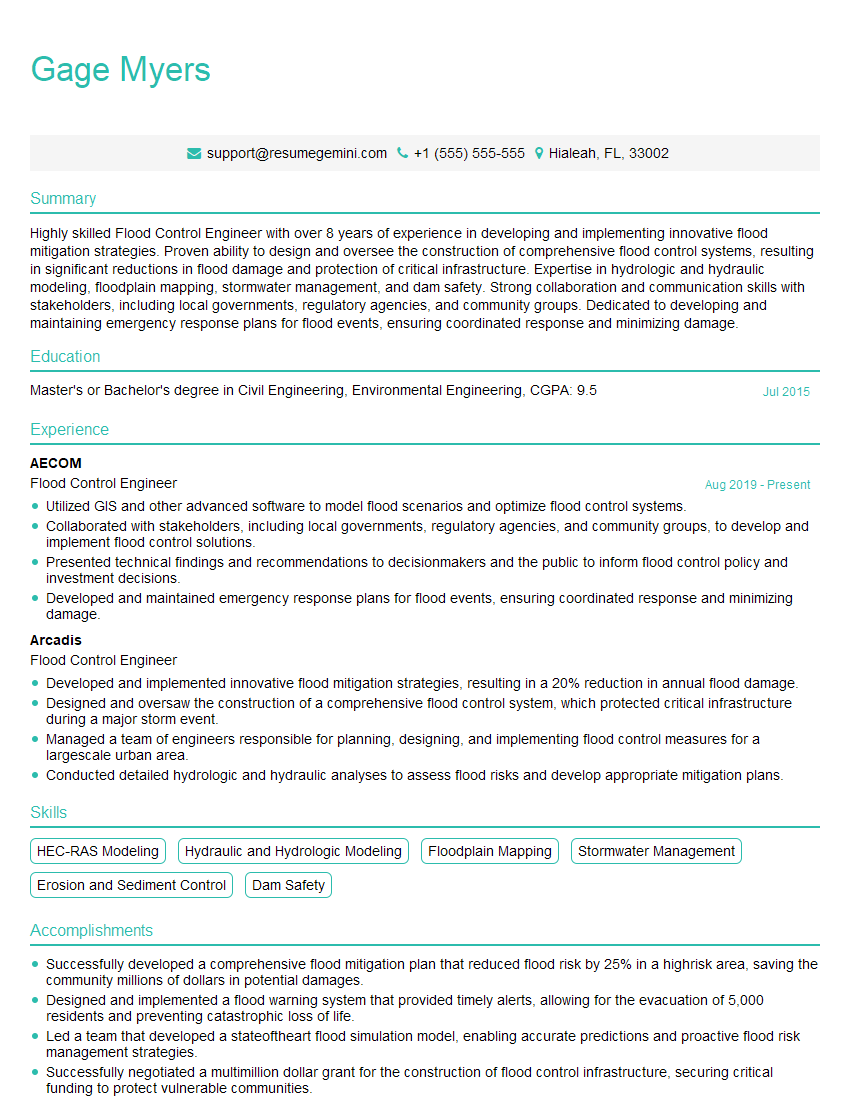
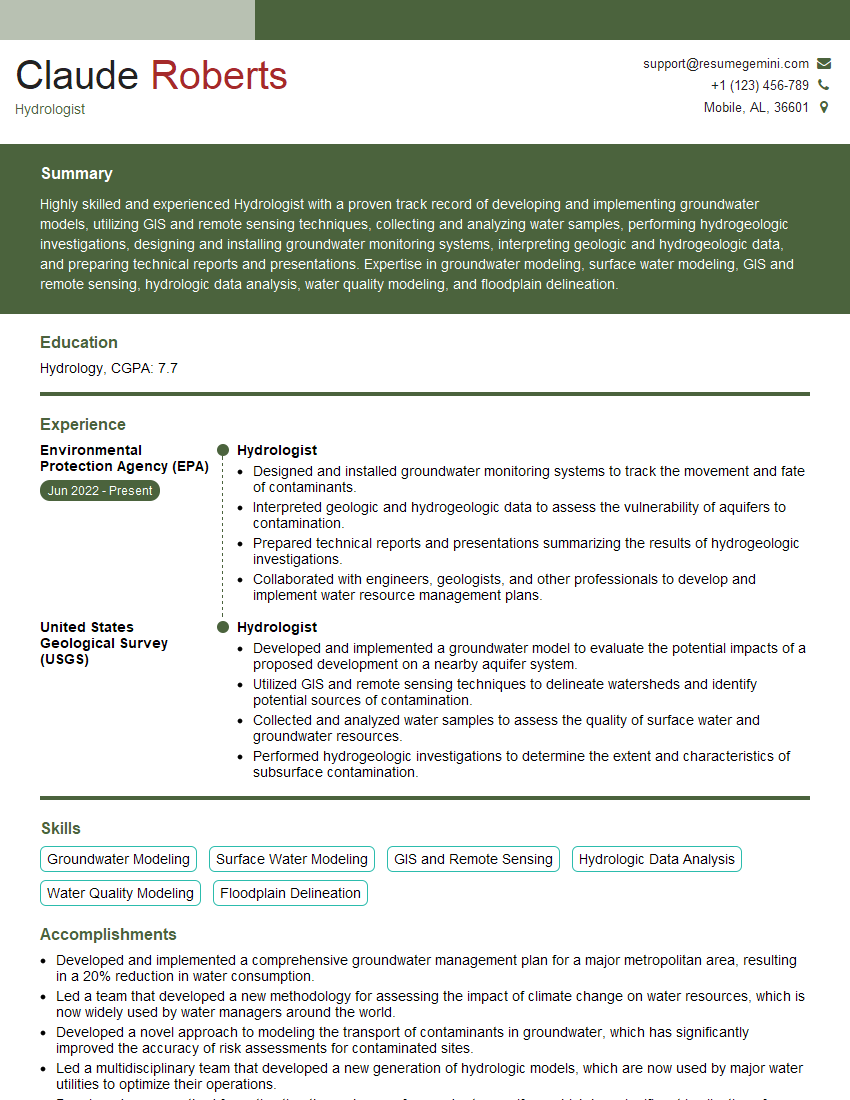
Mastering Water Resource Engineering opens doors to a rewarding career with opportunities in consulting, government agencies, research institutions, and the private sector. To maximize your job prospects, creating a strong, ATS-friendly resume is crucial. ResumeGemini is a trusted resource to help you build a professional and impactful resume that highlights your skills and experience effectively. Examples of resumes tailored to Water Resource Engineering are available to guide you, ensuring your qualifications shine through.

Explore more articles
Users Rating of Our Blogs
Share Your Experience
We value your feedback! Please rate our content and share your thoughts (optional).
What Readers Say About Our Blog
Very informative content, great job.
good