Feeling uncertain about what to expect in your upcoming interview? We’ve got you covered! This blog highlights the most important Water Survival interview questions and provides actionable advice to help you stand out as the ideal candidate. Let’s pave the way for your success.
Questions Asked in Water Survival Interview
Q 1. Describe the different types of water rescues.
Water rescues are categorized based on the environment, the victim’s condition, and the rescuer’s resources. There are several key types:
- Reach Rescue: Using a pole, branch, or other extending tool to reach a victim from a safe distance. This is ideal for victims near the shore who are conscious and able to grasp the rescue device.
- Throw Rescue: Throwing a buoyant object, like a life ring or rescue throw bag, to a victim. This allows for a safe distance while providing the victim with something to hold onto.
- Wade Rescue: Entering the water to reach a victim while maintaining a safe footing and stable position. Used for shallow water rescues where the rescuer can safely maintain their balance.
- Swim Rescue: Entering the water to reach a victim who is beyond reach of other rescue methods. This requires strong swimming skills and appropriate safety precautions.
- Boat Rescue: Using a boat or other watercraft to reach and retrieve a victim. This is often the most effective method in deeper or faster-flowing water.
- Shoreline Rescue: Organizing a rescue operation from the shore, often involving multiple rescuers and specialized equipment.
The choice of rescue method depends critically on the specific circumstances and should always prioritize the safety of both the victim and the rescuer.
Q 2. Explain the principles of buoyancy and flotation.
Buoyancy and flotation are crucial concepts in water survival. Buoyancy is the upward force exerted on an object submerged in a fluid (water). This force is equal to the weight of the water displaced by the object (Archimedes’ principle). Flotation refers to the ability of an object to float; an object floats when its buoyant force is greater than or equal to its weight.
A human body is slightly less dense than water. Therefore, it possesses inherent buoyancy but often not enough to keep the head above water, particularly without proper technique. Wearing a personal flotation device (PFD) significantly increases buoyancy, making flotation easier and more reliable. Proper swimming techniques, like back floating, can also utilize the body’s natural buoyancy to improve flotation and reduce energy expenditure.
For example, imagine a helium balloon. The helium is less dense than air, providing an upward buoyant force that overcomes the weight of the balloon, causing it to float. Similarly, a properly inflated PFD provides sufficient buoyancy to keep a person afloat.
Q 3. How do you assess a victim’s condition in the water?
Assessing a victim’s condition in the water is crucial for determining the appropriate rescue method and providing the best possible care. This assessment needs to be done quickly and efficiently, while maintaining the safety of both the rescuer and the victim.
The primary aspects to assess include:
- Level of Consciousness: Is the victim responsive? Can they follow simple commands?
- Breathing: Are they breathing normally? Look for chest rise and fall.
- Pulse: Check for a pulse, if possible, though this can be difficult in the water.
- Bleeding: Are there any visible injuries or bleeding?
- Body position: Is the victim floating, struggling, or submerged?
This initial assessment guides the immediate actions. For instance, an unresponsive, non-breathing victim requires immediate CPR and rescue, while a conscious but struggling victim might benefit from a throw rescue initially.
Q 4. What are the common causes of drowning?
Drowning is a leading cause of accidental death worldwide. Several factors contribute to it:
- Lack of swimming skills: Inability to stay afloat or swim to safety.
- Alcohol and drug use: Impairment of judgment, coordination, and physical abilities.
- Sudden immersion: Unexpected falls into water, such as from a boat or dock.
- Cold water: Hypothermia can quickly lead to loss of coordination and consciousness.
- Hidden dangers: Strong currents, underwater hazards, and unexpected drop-offs.
- Lack of PFDs: Failing to wear a properly fitted personal flotation device increases the risk of drowning.
- Seizures or medical emergencies: Sudden onset of medical conditions can lead to unconsciousness and drowning in water.
Understanding these causes allows for preventive measures, such as swimming lessons, responsible alcohol consumption near water, proper safety equipment use, and awareness of environmental hazards.
Q 5. Describe your approach to rescuing a conscious vs. unconscious victim.
Rescuing a conscious versus an unconscious victim requires different approaches. Safety is paramount in both cases.
Conscious Victim: Prioritize communication and reassurance. Use a reach or throw rescue if possible, maintaining a safe distance. If a swim rescue is necessary, approach from the rear to avoid being grabbed or pulled under. Support the victim and help them to safety.
Unconscious Victim: This is a life-threatening situation. If possible, use a reach or throw rescue first. If direct contact is required, approach cautiously and secure the victim’s head and support them to maintain an airway. Once safely ashore, initiate CPR and call emergency services immediately. Your safety is still critical here; don’t put yourself in danger unnecessarily.
A crucial difference lies in the immediate urgency and the necessity for rapid intervention in the case of an unconscious victim, emphasizing the importance of proper training and preparation.
Q 6. Explain the proper techniques for self-rescue.
Self-rescue techniques focus on maximizing your chances of survival until help arrives. These techniques depend heavily on the circumstances but generally involve:
- Conserving energy: Avoid unnecessary movements and stay calm. Float on your back, conserving energy to maintain your position.
- Attracting attention: Make yourself visible by waving arms, shouting, or using a whistle.
- Staying afloat: Utilize proper floating techniques or any available flotation device.
- Seeking shelter: If possible, seek refuge from adverse conditions.
- Making yourself buoyant: Use clothing or other materials to increase buoyancy if necessary.
Effective self-rescue depends on your preparedness and knowledge of water safety principles. Wearing a PFD, carrying a whistle or signaling device, and understanding proper floating techniques significantly improves your odds of survival.
Q 7. What are the limitations of personal flotation devices (PFDs)?
While PFDs are essential safety equipment, they have limitations:
- Proper fit is crucial: An ill-fitting PFD may not provide adequate buoyancy or protection.
- Not all PFDs are equal: Different types offer varying levels of protection, and some are designed for specific activities.
- PFDs don’t prevent all accidents: They cannot prevent impacts, entanglement, or certain types of drowning, such as unconsciousness from sudden submersion.
- Maintenance required: PFDs need regular inspection and maintenance to ensure they’re in good working order. Damage or improper inflation renders them useless.
- Environmental factors: Extreme cold or rough water can impact the effectiveness of a PFD.
Therefore, while PFDs greatly enhance safety, they should not be considered a complete guarantee against accidents. It’s vital to always combine PFD use with proper training, awareness of potential hazards, and adherence to water safety regulations.
Q 8. How do you perform a safe approach and entry into the water?
Approaching and entering water safely is paramount in water rescue. It’s about minimizing risk to yourself before even considering rescuing others. Never jump or dive into unfamiliar water; you don’t know what’s beneath the surface – submerged objects, uneven bottom, or strong currents could seriously injure you.
- Assessment: Before entering, assess the situation. Observe the water’s movement, clarity, and potential hazards. Check the weather conditions and look for any debris or obstacles.
- Entry Point: Find a stable, accessible entry point, preferably with a gradual slope. A shoreline with minimal obstacles is ideal. Avoid slippery rocks or steep banks.
- Controlled Entry: Slowly and cautiously enter the water, keeping a firm footing. If possible, use a wading technique to gauge the water depth and bottom conditions. If using a boat, ensure a secure entry/exit point.
- Equipment Check: Before committing to the water, double-check that all your personal protective equipment (PPE) is securely in place and functioning correctly.
Example: Imagine responding to a call where a person has fallen into a swift river. Instead of leaping in directly, you’d strategically approach from downstream, allowing the current to carry you closer to the victim while maintaining control.
Q 9. What are the signs of hypothermia?
Hypothermia, a dangerously low body temperature, presents a significant threat in water rescues. Recognizing its signs early is crucial for timely intervention. Symptoms can range from mild to severe, and their progression depends on the water temperature, duration of immersion, and individual factors.
- Mild Hypothermia: Shivering, confusion, clumsiness, slurred speech, drowsiness.
- Moderate Hypothermia: Severe shivering, muscle stiffness, impaired coordination, difficulty speaking, apathy.
- Severe Hypothermia: Loss of consciousness, slow or irregular pulse, shallow breathing, cessation of shivering.
Important Note: A victim may appear calm or even euphoric, masking the severity of the condition. Always err on the side of caution.
Q 10. How do you treat hypothermia in a water rescue situation?
Treating hypothermia in a water rescue is a priority. Immediate removal from the cold water is the first and most important step. Then you’ll need to focus on gradual rewarming, ensuring not to cause a sudden temperature shock which can be fatal.
- Remove from Water: Get the victim out of the cold water as quickly and safely as possible.
- Remove Wet Clothing: Gently remove wet clothing, replacing it with dry clothing or blankets. Avoid rubbing the skin, as this can damage it.
- Insulation: Wrap the victim in warm blankets or dry clothes, paying particular attention to keeping their head, neck, and torso insulated. Consider using a body bag if available.
- Gradual Rewarming: Avoid using direct heat sources, like hot water bottles, as this can cause further shock. Instead, focus on providing gradual warmth through blankets and body contact.
- Monitor Vital Signs: Keep a close eye on breathing, pulse, and body temperature. Administer CPR if needed.
- Professional Medical Attention: Transport the victim to a hospital immediately for further evaluation and treatment.
Example: Imagine rescuing someone who fell into an icy lake. Your first action would be to get them out, and then rapidly but gently wrap them in warm blankets, providing shelter from wind and additional dry clothing. You’d then monitor their vitals while waiting for emergency medical services (EMS).
Q 11. Explain the importance of teamwork in water rescue.
Teamwork is the backbone of any successful water rescue operation. It ensures safety, efficiency, and minimizes risk to both rescuers and victims. Individual skills are amplified through coordinated action.
- Communication: Clear and concise communication is essential. Designate roles and responsibilities, and maintain constant communication amongst team members and dispatch.
- Coordination: A coordinated approach avoids confusion and overlap, ensuring everyone’s actions contribute to the overall rescue plan.
- Safety: A team environment allows for greater safety measures. Rescuers can support and monitor each other, minimizing individual risk.
- Efficiency: A well-trained team can execute rescue procedures quickly and efficiently, improving the chances of a positive outcome.
Example: In a swift water rescue scenario, one team member might secure the victim while others set up a rope system for safe extraction. Continuous communication ensures everyone knows their role and is prepared for any eventuality.
Q 12. Describe the different types of water currents and their impact on rescue operations.
Understanding water currents is vital for safe and effective water rescue operations. Different currents present unique challenges and require different rescue strategies.
- Rips Currents: Powerful, narrow channels of fast-moving water flowing away from the shore. They can quickly pull even strong swimmers out to sea.
- Undertows: Subsurface currents pulling water and objects downward, towards the bottom. They can be very dangerous, unexpectedly pulling victims under the surface.
- Eddy Currents: Circular currents formed by water flowing around obstacles like rocks or bends in a river. They can trap rescuers as well as victims.
- Flood Currents: Rapid currents during periods of high water, such as flash floods. They pose extreme danger and require specialized equipment and training.
Impact on Rescue Operations: The type of current dictates the approach. For rip currents, rescuers may swim parallel to the shore to escape the current’s pull. In flood currents, a downstream approach might be necessary, using ropes and other safety gear to ensure both rescuer and victim safety.
Q 13. What safety equipment is crucial for water rescue operations?
Appropriate safety equipment is critical for water rescue. The specific equipment will depend on the environment and type of rescue, but some essential items include:
- Personal Flotation Device (PFD): A life jacket or buoyancy aid to maintain floatation and prevent drowning.
- Throw Bags: Bags filled with weighted rope for reaching and assisting victims from a safe distance.
- Rescue Lines/Ropes: Strong ropes for securing victims and rescuers, providing a means of support and retrieval.
- Helmets: Protection against impacts with submerged objects or riverbanks.
- Dry Suits/Wetsuits: Protection from cold water, minimizing the risk of hypothermia.
- Communication Devices: Radios or other means of communication to coordinate with other rescue teams or emergency services.
Example: In a swift-water rescue, a dry suit, helmet, PFD, and a throw bag are crucial. A PFD is indispensable in any scenario where there’s a risk of immersion.
Q 14. Explain the use of rescue throws and reaching assists.
Rescue throws and reaching assists are essential non-entry rescue techniques. They provide a means to assist a victim without putting the rescuer directly in harm’s way. Choosing the right method depends on the distance to the victim and environmental conditions.
- Reaching Assists: Used when the victim is within arm’s reach. Extend a pole, branch, or other object to allow the victim to grasp and pull themselves to safety. This method is also crucial if the person is unconscious and requires retrieval from the water.
- Throwing Assists (Throw Bags): Used when the victim is beyond arm’s reach. A throw bag contains a weighted rope that’s thrown to the victim. The rope allows for pulling them to safety.
Proper Technique: With throw bags, maintain a secure grip, aim for the center of the victim’s body, and throw using an underhand motion, letting the weight of the bag do the work. Always maintain a safe distance and avoid being pulled into the water.
Example: If someone is struggling near the bank of a river, a reaching assist with a branch might suffice. However, if they’re further out, a throw bag provides a safer means of rescue.
Q 15. How do you assess the environmental hazards during a water rescue?
Assessing environmental hazards in a water rescue is paramount to safety. It’s a systematic process involving observation and anticipation. I begin by considering the immediate surroundings: the type of water (river, lake, ocean), its current speed and direction, water temperature, visibility, and the presence of debris or obstacles like submerged rocks or logs. For example, a swift river current drastically changes rescue strategy compared to a calm lake. Then, I assess the weather conditions: rain, wind, fog, or thunderstorms can significantly impact visibility and create hazardous conditions. I also look for potential dangers on the shore, such as unstable banks or sharp objects. Finally, I consider the victim’s location and potential hazards around them. This holistic approach ensures a safer and more effective rescue plan.
- Currents: I assess the strength and direction of currents, understanding how they might influence the victim’s position and complicate the approach. Strong currents may necessitate the use of specialized equipment or a different rescue technique.
- Water Temperature: Hypothermia is a serious risk. Cold water saps body heat quickly, so knowing the water temperature helps determine the urgency of the rescue and the need for immediate warming measures.
- Obstacles: I look for and identify submerged hazards that could injure the rescuer or the victim. This often requires careful observation and possibly the use of sonar or other detection devices.
Career Expert Tips:
- Ace those interviews! Prepare effectively by reviewing the Top 50 Most Common Interview Questions on ResumeGemini.
- Navigate your job search with confidence! Explore a wide range of Career Tips on ResumeGemini. Learn about common challenges and recommendations to overcome them.
- Craft the perfect resume! Master the Art of Resume Writing with ResumeGemini’s guide. Showcase your unique qualifications and achievements effectively.
- Don’t miss out on holiday savings! Build your dream resume with ResumeGemini’s ATS optimized templates.
Q 16. Describe your experience with water rescue equipment maintenance.
Equipment maintenance is non-negotiable in water rescue. My experience includes regular inspections, cleaning, and repairs of all rescue gear, including personal protective equipment (PPE) such as life jackets, helmets, and dry suits. I meticulously check for wear and tear on ropes, ensuring they’re free from fraying or damage. I also ensure proper function of throw bags, ensuring the rope is correctly coiled and ready for immediate deployment. For watercraft, I conduct thorough pre- and post-operation checks, including engine maintenance, fuel levels, and the overall structural integrity of the boat. I maintain detailed maintenance logs for all equipment, recording inspections, repairs, and replacements, ensuring compliance with all safety regulations and best practices.
For instance, I recently discovered a small tear in a rescue raft’s inflatable chamber during a routine inspection. This was promptly repaired preventing a potential failure during a rescue operation. Regular maintenance isn’t just about functionality; it’s about minimizing risk and ensuring the safety of both the rescuer and the victim. Properly maintained equipment boosts confidence and allows me to focus on effective rescue techniques.
Q 17. What are the legal and ethical considerations in water rescue?
Legal and ethical considerations are paramount in water rescue. Legally, rescuers must act within the boundaries of their training and certification level. Overextending oneself can lead to legal liability. For example, attempting a rescue beyond one’s skill level can result in injury or death to the rescuer and the victim, leading to potential lawsuits. Ethically, the safety of the victim is the top priority, followed by the safety of the rescuer. We must make sound judgments and take only calculated risks. We must always strive to act in a way that demonstrates respect for human life, even when faced with challenging situations. Furthermore, maintaining confidentiality of the victim’s information is crucial. We always operate with due respect for their privacy.
- Duty of Care: We have a legal and moral obligation to act responsibly and provide reasonable assistance within our capabilities.
- Informed Consent: When possible, we must obtain informed consent from the victim before initiating rescue, if they are conscious and able to understand.
- Documentation: Thorough documentation of the rescue incident, including the methods used, actions taken, and any injuries, is essential for legal and safety review.
Q 18. How do you communicate effectively during a water rescue?
Effective communication is crucial for a successful water rescue. It involves clear and concise instructions to both the victim and the rescue team. During a rescue, I utilize a combination of verbal and non-verbal communication methods. This includes using hand signals, whistles, and radio communication when appropriate. Simple, clear instructions help reduce panic in the victim. For instance, shouting clear, concise commands like “Reach for the rope!” or “Keep your head above water!” are more effective than lengthy or complex directions. Within the rescue team, maintaining clear radio communication ensures coordinated efforts. We have established protocols for reporting the victim’s condition, location, and any challenges encountered during the rescue. Efficient communication also ensures that backup personnel are informed and can provide support or assistance.
For example, in a swift river rescue, clear visual signals would need to be used and constantly reconfirmed due to the increased noise from the rushing water.
Q 19. Explain your experience with different types of watercraft used in rescue.
My experience encompasses a variety of watercraft used in rescue situations. I’m proficient in operating inflatable rescue boats (IRBs), rigid hull inflatable boats (RHIBs), kayaks, and canoes. The choice of watercraft depends on the specific circumstances of the rescue. IRBs are highly versatile, suitable for navigating shallow waters and confined spaces. RHIBs provide more stability and speed, ideal for covering longer distances in open waters. Kayaks offer maneuverability in narrow channels or among obstacles. Canues are useful in calmer conditions where stealth and quiet approach is needed. I am familiar with the operational characteristics, limitations, and safety procedures associated with each type of watercraft.
In one instance, we used kayaks for a rescue in a heavily wooded area where access for larger boats was impossible. The maneuverability of kayaks allowed us to efficiently reach the victim and return safely.
Q 20. Describe your knowledge of water safety regulations.
My knowledge of water safety regulations is extensive. I’m familiar with local, regional, and national regulations governing boating safety, watercraft operation, and water rescue procedures. These regulations often involve licensing, safety equipment requirements, and operational restrictions for various water bodies. For example, regulations may dictate the minimum number of life jackets required on board or the mandatory use of personal locator beacons (PLBs) in specific areas. I’m also aware of environmental regulations concerning pollution and the protection of aquatic life during rescue operations. Understanding these rules is critical to conducting safe and lawful rescues, minimizing environmental impacts, and ensuring compliance with all the applicable rules and regulations.
Regular updates and professional development courses ensure my knowledge remains current.
Q 21. How do you prevent injuries to yourself and the victim during a rescue?
Preventing injuries to both the victim and rescuer is a top priority, requiring a multifaceted approach. Firstly, proper risk assessment and planning minimize potential hazards. This involves selecting the safest and most appropriate rescue technique for the given conditions. For example, using appropriate PPE, like helmets and life jackets, is crucial. The rescuer should always wear appropriate personal protective equipment. Additionally, appropriate lifting and carrying techniques should be employed when handling the victim to reduce the risk of back injuries. For example, we avoid sharp movements during the extraction process.
Secondly, clear communication and coordination between the rescue team members help avoid collisions or mishaps. Third, utilizing proper rescue techniques minimizes the risk of injury to both the victim and the rescuer. For example, we employ proper techniques for approaching and securing the victim, preventing sudden movements or struggles that could cause injury.
Finally, post-rescue care includes addressing any injuries sustained during the operation. The victim may require medical attention and the rescuer needs to also be checked for any injuries suffered.
Q 22. What is your understanding of risk assessment in water rescue situations?
Risk assessment in water rescue is a crucial first step, a systematic process of identifying hazards, analyzing their likelihood and potential consequences, and determining appropriate control measures. It’s like a pre-flight checklist for a pilot, ensuring we’re prepared for the challenges ahead. We consider factors such as the water’s characteristics (current speed, temperature, depth, visibility), environmental conditions (weather, lighting), the victim’s condition and location, and the available resources (equipment, personnel, communication). For example, a swift river rescue necessitates a different approach than a calm lake rescue, requiring specialized equipment and techniques. We use established risk assessment matrices to quantify the risks and develop mitigation strategies, prioritizing safety at every stage.
- Identifying Hazards: Strong currents, submerged objects, hypothermia, exhaustion of rescuers, and the victim’s physical state.
- Assessing Likelihood & Consequences: How probable is each hazard, and what are the potential negative outcomes (injury, fatality)?
- Control Measures: Employing appropriate rescue techniques, wearing personal protective equipment (PPE), utilizing safety lines, and having backup support readily available.
Q 23. How do you handle unexpected situations or emergencies during a rescue?
Unexpected situations are part and parcel of water rescue. My training emphasizes adaptability and problem-solving. If an unexpected event arises – for instance, a sudden change in weather, the victim becoming unresponsive, or equipment malfunction – my immediate response is to reassess the situation. This involves rapidly analyzing the new risk profile and adjusting the rescue plan accordingly. Effective communication with my team is paramount. I’d immediately inform my team of the change and together we’d collaborate to determine the safest and most effective course of action. Sometimes this might mean implementing a different rescue technique, calling for backup support, or even aborting the rescue if it becomes too dangerous. Prioritizing safety, both for the victim and the rescue team, is the unwavering guiding principle.
For example, if a sudden storm threatens, we would immediately prioritize getting the victim and ourselves to safety, even if it means temporarily abandoning the initial rescue plan. Safety is always the top priority.
Q 24. What is your experience with first aid and CPR in a water environment?
I’m certified in both wilderness first aid and CPR, with specific training for aquatic environments. This includes understanding the unique challenges of providing first aid in cold water, such as hypothermia and cold water shock, and adapting CPR techniques to an aquatic setting. We learn how to quickly assess the victim’s condition, stabilize the spine (especially important with potential spinal injuries from impact), and provide appropriate medical care while considering the limitations of working in or near water. This also involves managing potential hazards like the environment and risks to the rescuers.
A key aspect is recognizing the signs of hypothermia early and administering appropriate treatment, such as removing wet clothing and providing warmth. We practice these skills regularly through scenario-based training and drills to ensure we can respond effectively under pressure.
Q 25. Describe your swimming proficiency and rescue techniques.
I possess advanced swimming proficiency, capable of swimming long distances in various conditions. My training encompasses several rescue techniques including:
- Reach and Throw: Using extending tools like a shepherd’s crook or throwing a rescue rope to assist a victim from a safe distance.
- Wading Assistance: Approaching a victim cautiously in shallow water to offer support.
- Swimming Assist: Swimming to the victim and providing support to bring them to safety. This involves using various techniques to avoid endangering myself and the victim.
- Reach, Throw, Row, Go (with appropriate safety measures): A sequential approach to rescue, prioritizing the safest method before resorting to direct contact.
I regularly practice these techniques to maintain my skillset and refine my approach. Constant training is essential in water rescue to remain effective and safe.
Q 26. Explain your understanding of different water rescue strategies.
Water rescue strategies vary depending on the specific situation. Key strategies include:
- Self-Rescue: The victim attempts to save themselves. This is the ideal outcome and we will provide guidance where possible.
- Reach Rescue: Extending a pole or rope from a safe distance.
- Throw Rescue: Throwing a rescue line or ring buoy to the victim.
- Row Rescue: Using a boat to approach the victim.
- Swim Rescue: Swimming to the victim (only as a last resort and with proper training and safety measures).
The choice of strategy depends on factors such as water conditions, distance to the victim, the victim’s condition, and the rescuer’s capabilities. The ultimate goal is always the safest and most efficient rescue for everyone involved.
Q 27. How do you prioritize safety during a water rescue operation?
Safety is the paramount concern in any water rescue operation. We follow a strict protocol that prioritizes:
- Risk Assessment: Thorough evaluation of all potential hazards before entering the water.
- Personal Protective Equipment (PPE): Appropriate PPE, including life jackets, helmets, and dry suits where needed.
- Teamwork and Communication: Clear communication among team members and a coordinated rescue plan.
- Backup Support: Ensuring there’s readily available backup in case of emergencies.
- Post-Rescue Procedures: Following established procedures after the rescue to ensure the safety of both the victim and the rescue team (e.g. proper first aid and transport procedures).
Ignoring any of these elements can have catastrophic consequences. It’s not simply about saving the victim; it’s about saving everyone involved.
Q 28. Describe a challenging water rescue situation and how you handled it.
One particularly challenging situation involved a swift-water rescue in a raging river during a flash flood. The victim, clinging to a partially submerged log, was swept downstream rapidly. The strong current, debris in the water, and limited visibility created significant dangers. We initially tried a throw line but the current was too strong. A swift water rescue team was called in for support. Using specialized swift water rescue techniques, we successfully deployed a rescue boat and carefully extracted the victim. The crucial element was teamwork and the use of appropriate equipment designed for swift water conditions. The post-rescue procedures included immediately assessing the victim’s hypothermia risk, stabilizing them, and getting medical assistance. The experience emphasized the importance of proper training, readily available resources, and a well-coordinated team for dealing with high-risk rescues.
Key Topics to Learn for Water Survival Interview
- Water Entry and Exit Techniques: Understanding various entry and exit methods from different watercraft and scenarios, including safe and efficient procedures.
- Self-Rescue and Assisting Others: Practical application of techniques to self-rescue in various water conditions and safely assist others in distress.
- Floatation and Treading Water: Mastering efficient techniques to maintain buoyancy and conserve energy in different water temperatures and conditions.
- Hypothermia Awareness and Prevention: Theoretical understanding of hypothermia risks and practical application of preventative measures and recognition of symptoms.
- Emergency Signaling and Communication: Knowledge of various signaling methods to attract attention and communicate effectively in emergency situations.
- Survival Equipment Knowledge and Use: Practical understanding and safe use of essential survival equipment, including life vests, signaling devices, and other safety gear.
- Environmental Awareness and Hazards: Understanding potential environmental hazards like currents, tides, and wildlife, and how to mitigate risks.
- First Aid and CPR in Aquatic Environments: Theoretical knowledge and practical application of first aid and CPR procedures specifically adapted for aquatic rescue scenarios.
- Risk Assessment and Decision-Making: Analyzing potential risks in various water environments and making informed decisions to ensure safety.
- Legal and Ethical Considerations: Understanding relevant laws and ethical considerations related to water safety and rescue operations.
Next Steps
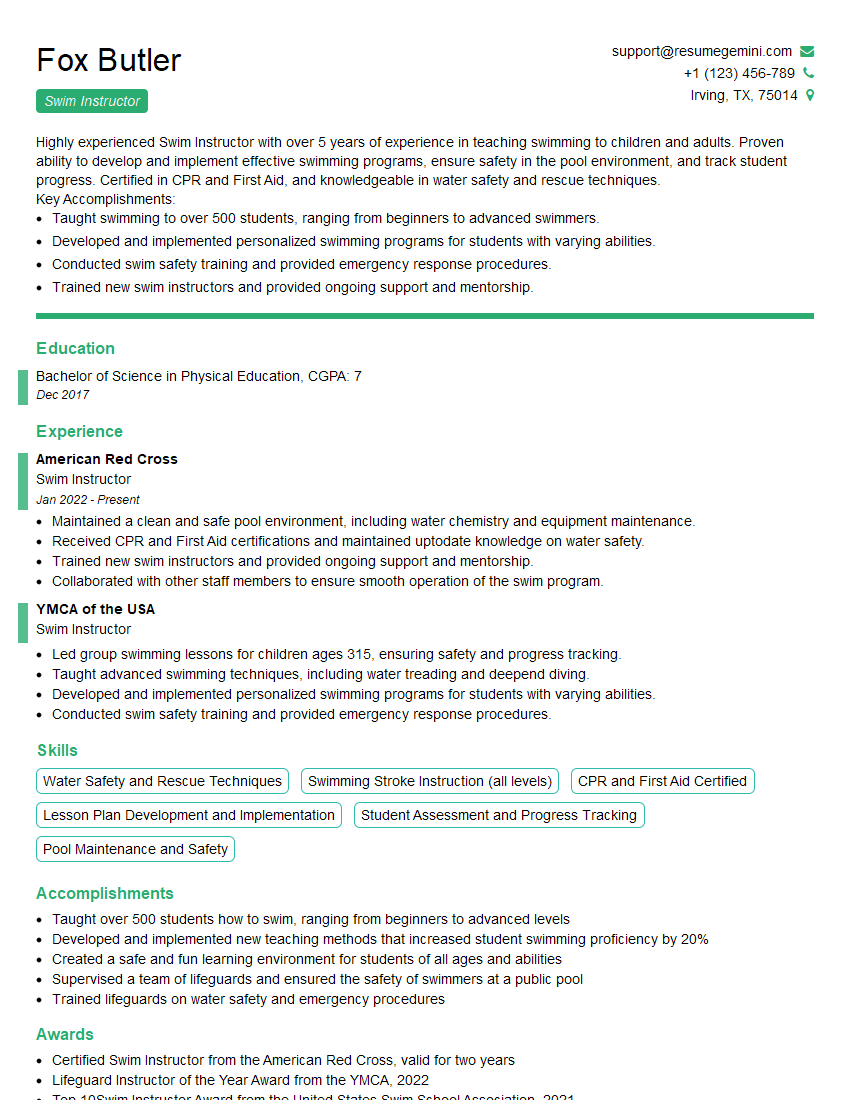
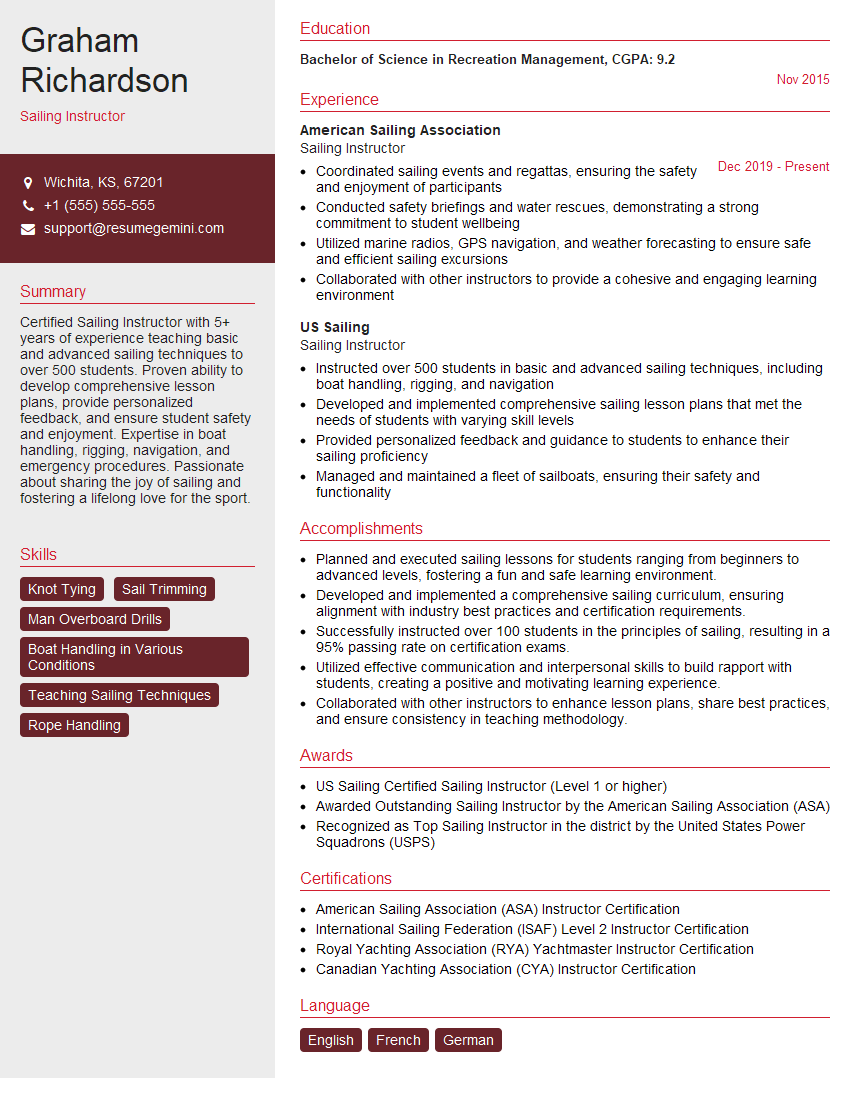
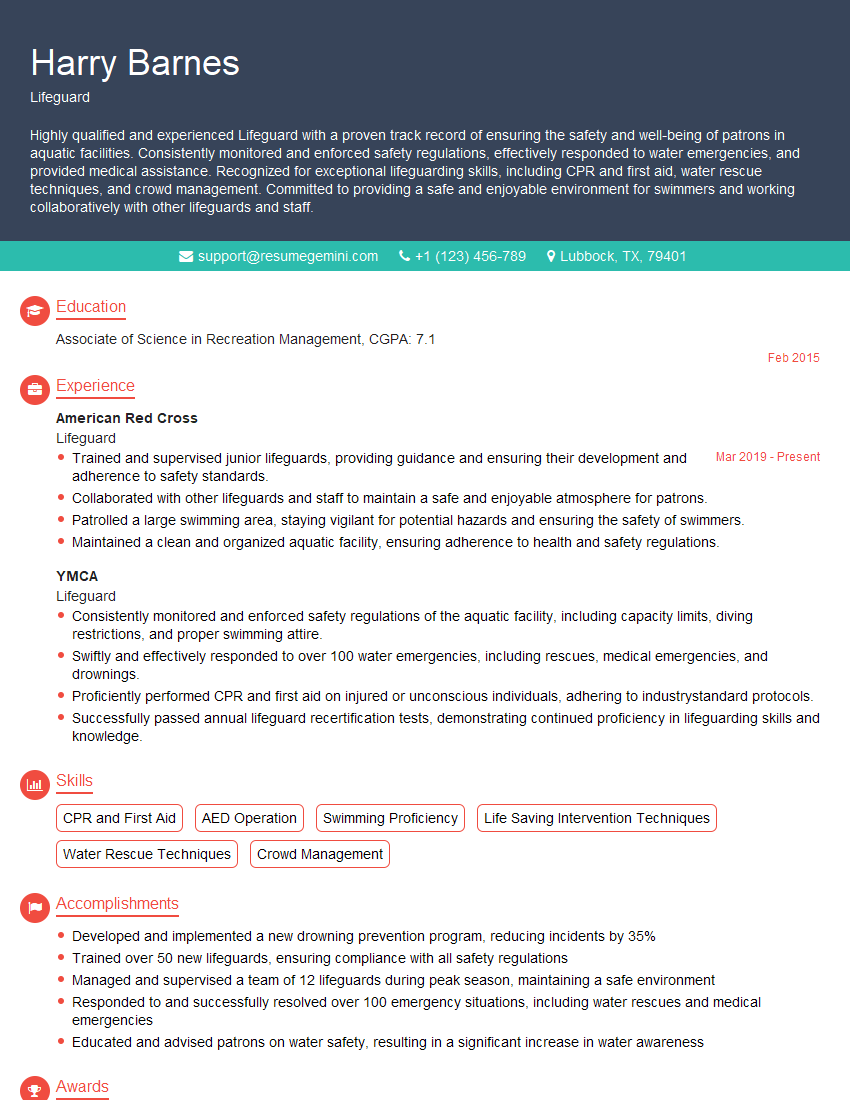
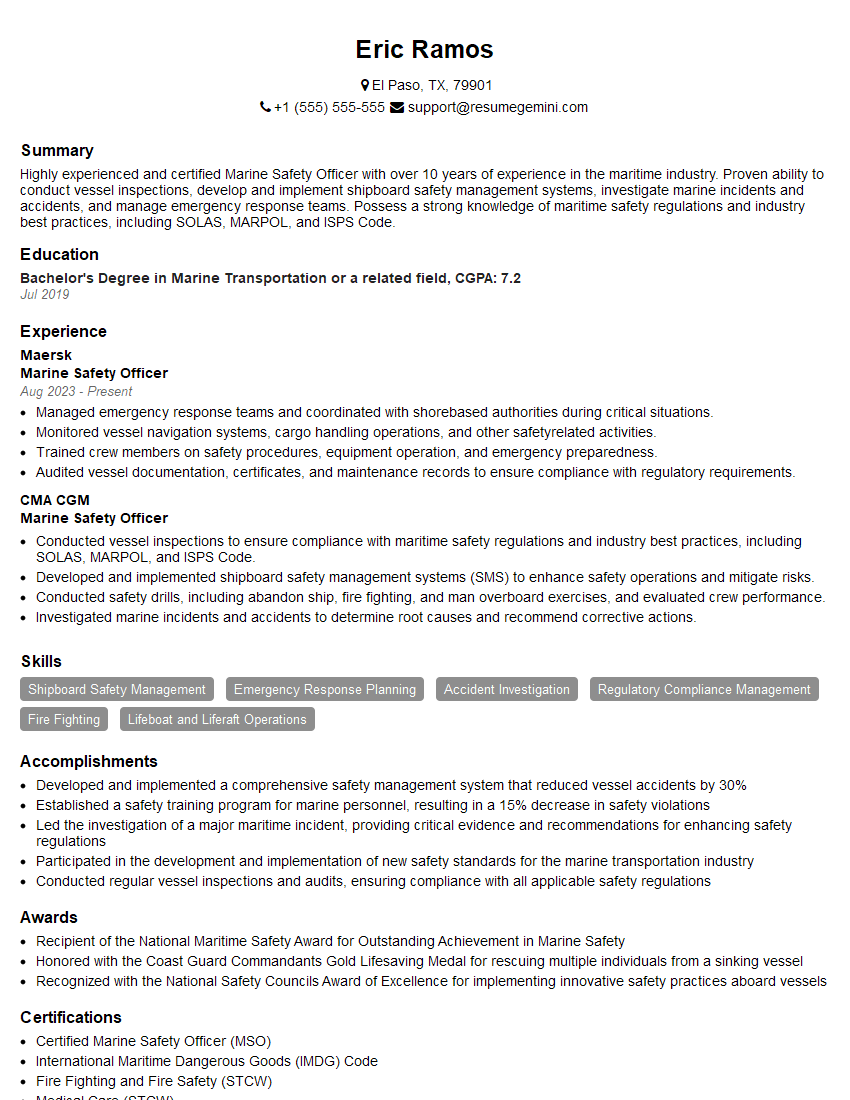
Mastering Water Survival skills is crucial for career advancement in various fields, opening doors to specialized roles and increased earning potential. To enhance your job prospects, create an ATS-friendly resume that highlights your qualifications effectively. ResumeGemini is a trusted resource to help you build a professional and impactful resume. We provide examples of resumes tailored specifically to Water Survival roles to help you get started. Invest in your future – craft a compelling resume that showcases your expertise and secure your dream job.
Explore more articles
Users Rating of Our Blogs
Share Your Experience
We value your feedback! Please rate our content and share your thoughts (optional).
What Readers Say About Our Blog
Very informative content, great job.
good