Unlock your full potential by mastering the most common Waterborne Operations interview questions. This blog offers a deep dive into the critical topics, ensuring you’re not only prepared to answer but to excel. With these insights, you’ll approach your interview with clarity and confidence.
Questions Asked in Waterborne Operations Interview
Q 1. Describe your experience with vessel maintenance and repair procedures.
Vessel maintenance and repair are critical for ensuring seaworthiness and operational efficiency. My experience encompasses both preventative and corrective maintenance, adhering strictly to manufacturer’s guidelines and industry best practices. This involves regular inspections of key systems – from engines and propulsion systems to hull integrity and onboard safety equipment.
For instance, I’ve overseen the complete overhaul of a main engine, a process requiring meticulous planning, coordination of specialized technicians, and strict adherence to safety protocols. This involved everything from disassembling and inspecting components to replacing worn parts and conducting rigorous testing before recommissioning. Another example involves managing the repair of a hull breach following a minor collision, which necessitated swift action to assess the damage, secure the vessel, and organize temporary repairs before dry-docking for comprehensive repair.
I’m proficient in using computerized maintenance management systems (CMMS) to track maintenance schedules, record repairs, and manage spare parts inventory. This ensures proactive maintenance and minimizes downtime.
Q 2. Explain your understanding of different types of marine navigation systems.
Marine navigation systems have evolved significantly, integrating various technologies for enhanced safety and efficiency. My understanding encompasses traditional systems like:
- Gyrocompass: Provides a stable heading reference, crucial even during adverse weather.
- Magnetic Compass: A backup system, susceptible to magnetic interference.
- GPS (Global Positioning System): Provides precise location data, although susceptible to signal disruptions.
- ECDIS (Electronic Chart Display and Information System): Integrates charts, navigation data, and other sensor inputs for comprehensive situational awareness.
- Radar: Detects objects and obstacles, essential in low visibility conditions.
- AIS (Automatic Identification System): Enables vessels to broadcast and receive identification and positioning data, improving collision avoidance.
In my experience, I’ve utilized all these systems and understand their limitations and complementary functionalities. For example, during a recent voyage, we experienced a temporary GPS outage due to atmospheric interference. We seamlessly switched to relying on the gyrocompass and ECDIS, which contained the necessary chart data, ensuring safe navigation until GPS service was restored. The integration of these systems is crucial for modern navigation, highlighting the importance of redundancy and fail-safe mechanisms.
Q 3. How familiar are you with international maritime regulations (SOLAS, MARPOL, etc.)?
I am intimately familiar with key international maritime regulations, particularly SOLAS (Safety of Life at Sea) and MARPOL (International Convention for the Prevention of Pollution from Ships). SOLAS dictates safety standards for ship construction, equipment, and operation, while MARPOL addresses marine pollution prevention.
My understanding extends to the specific requirements of each convention, including the International Maritime Organization (IMO) codes and guidelines. This includes knowledge of safety management systems (SMS), cargo securing arrangements, emergency preparedness, and pollution prevention measures. For example, I’ve been involved in ensuring our vessel’s compliance with MARPOL Annex I (oil pollution), including maintaining detailed oil record books and adhering to procedures for preventing oil spills. Similarly, I’m familiar with the intricacies of SOLAS Chapter II-1 (Construction – Structure, Subdivision and Stability, Machinery and Electrical Installations) and its impact on vessel maintenance and safety.
Compliance with these regulations is not merely a legal requirement; it’s a crucial element of responsible maritime operations, directly contributing to the safety of crew, passengers, and the marine environment.
Q 4. Describe your experience with cargo handling and stowage procedures.
Cargo handling and stowage are crucial aspects of safe and efficient shipping. My experience includes handling various types of cargo, from containers to bulk goods, ensuring proper stowage planning to maintain stability and prevent shifting during transit.
I’m proficient in using cargo securing devices, understanding their limitations and the impact of weight distribution on vessel stability. We use load plans and other documentation to optimize cargo placement, considering factors like weight, volume, and the center of gravity. A key element is understanding the dangers of improper stowage, which can lead to vessel instability, cargo damage, and even structural failure.
For example, during a recent shipment of heavy machinery, I meticulously planned the stowage locations, ensuring the weight was properly distributed to maintain the vessel’s stability. We utilized specialized securing equipment to prevent any shifting during rough seas.
Q 5. Explain your knowledge of different types of marine propulsion systems.
Marine propulsion systems can vary considerably depending on the vessel type and size. My knowledge spans several types:
- Diesel Engines: The most common type, offering a balance of power and fuel efficiency.
- Gas Turbines: High-power output but generally less fuel-efficient than diesel engines, often used in high-speed vessels.
- Steam Turbines: Traditionally used in large vessels but less common now due to maintenance complexities.
- Electric Propulsion: Increasingly popular, offering greater efficiency and maneuverability.
- Hybrid Propulsion: Combines different propulsion methods for optimized performance.
I understand the principles of operation, maintenance, and troubleshooting for each type. For instance, I’ve been involved in the maintenance and repair of diesel engines, including regular servicing, fault diagnostics, and component replacement. Understanding these systems is critical for ensuring efficient and reliable vessel operation.
Q 6. How would you handle a marine emergency situation?
Handling a marine emergency requires a calm, systematic approach. My training emphasizes immediate action based on the specific emergency. A typical response follows a structured procedure:
- Assessment: Identify the nature and extent of the emergency (e.g., fire, collision, flooding).
- Alerting: Triggering emergency procedures (e.g., activating the general alarm, contacting emergency services).
- Containment/Control: Implementing appropriate measures to contain the emergency and prevent further escalation.
- Evacuation (if necessary): Following established evacuation plans and procedures, ensuring crew and passenger safety.
- Damage Control: Implementing actions to minimize damage and restore vessel stability and seaworthiness.
- Post-Emergency Procedures: Documenting the incident, conducting investigations, and implementing corrective actions to prevent future occurrences.
During a simulated fire drill, I successfully coordinated the crew’s response, ensuring the timely deployment of fire-fighting equipment and the safe evacuation of personnel, demonstrating my ability to manage emergency situations effectively.
Q 7. What are your experience and expertise in marine safety protocols?
Marine safety is paramount. My experience encompasses a broad range of safety protocols, including:
- Personal Protective Equipment (PPE): Ensuring proper use and maintenance of PPE, such as life jackets, immersion suits, and safety footwear.
- Emergency Procedures: Training and drills for various emergency situations, including fire, flooding, and man overboard.
- Safety Management Systems (SMS): Understanding and applying SMS principles to proactively identify and mitigate risks.
- STCW (Standards of Training, Certification and Watchkeeping) Compliance: Ensuring adherence to STCW standards for crew training and certification.
- Risk Assessment: Conducting regular risk assessments to identify potential hazards and implement appropriate control measures.
I’ve participated in numerous safety drills and training exercises, enhancing my proficiency in emergency response and risk management. A significant part of my role involves promoting a strong safety culture onboard, emphasizing the importance of proactive risk management and compliance with all relevant safety regulations.
Q 8. Describe your experience with crew management and training.
Crew management and training are paramount to safe and efficient waterborne operations. My experience encompasses all aspects, from initial recruitment and vetting to ongoing professional development. I’ve successfully managed crews ranging from 5 to 25 personnel, across diverse roles including deckhands, engineers, and officers. My approach is deeply rooted in fostering a positive and collaborative work environment, based on open communication and mutual respect.
Training programs I’ve overseen included both classroom instruction and hands-on practical exercises covering emergency procedures (e.g., man overboard drills, fire fighting), operational safety (e.g., safe cargo handling, risk assessment), and specific equipment operation. For example, I implemented a new training module on the use of our vessel’s new dynamic positioning system, leading to a significant improvement in efficiency and safety during mooring operations. I also regularly conduct performance appraisals, identifying areas for improvement and creating tailored development plans for each crew member.
I’ve successfully resolved conflict within crews through mediation and clear communication, ensuring efficient task completion, even under pressure. Ultimately, effective crew management means building a team that understands its roles and responsibilities and works cohesively, prioritizing safety, efficiency, and environmental responsibility.
Q 9. How familiar are you with different types of marine charts and publications?
My familiarity with marine charts and publications is extensive. I regularly utilize various chart types, including paper charts (ENCs), electronic navigational charts (ECDIS), and raster navigational charts (RNCs). I understand the importance of chart datums, projections, and symbols. I am proficient in interpreting chart information, including depths, soundings, navigational hazards, and aids to navigation (ATONs).
Beyond charts, I am well-versed in utilizing relevant publications such as the International Regulations for Preventing Collisions at Sea (COLREGs), sailing directions, tide and current tables, light lists, and nautical almanacs. I understand how to select the correct charts and publications for a specific voyage and how to cross-reference information across various sources. For instance, I’ve used sailing directions and tide tables to plan a complex coastal passage, ensuring safe navigation through narrow channels with strong tidal currents. This involved careful interpretation of chart data, predicting tidal conditions, and adjusting our planned route to avoid potential hazards.
Q 10. Explain your understanding of tide and current calculations.
Tide and current calculations are crucial for safe and efficient navigation, especially in coastal waters. I understand that tides are the rise and fall of sea levels due to the gravitational forces of the moon and sun, while currents are continuous, horizontal water movements. I’m proficient in using tidal prediction tables and online resources to determine the time and height of high and low waters at specific locations.
Similarly, I use current atlases and vector current models to predict current speed and direction. This is vital for planning routes to account for current effects on vessel speed and heading, particularly during approaches and departures from ports. For example, when transiting a narrow strait with strong tidal currents, accurate prediction of current speed and direction is essential to avoid potential grounding or collision.
My understanding encompasses harmonic analysis, a mathematical approach to predicting tidal heights and currents, and I can apply this knowledge to improve navigational safety and efficiency. I often use computer-based tidal prediction software in conjunction with paper tables for redundancy and accuracy.
Q 11. How proficient are you in using marine communication systems (VHF, GMDSS)?
I am highly proficient in using marine communication systems, including VHF radio and the Global Maritime Distress and Safety System (GMDSS). I’m fully licensed and experienced in using VHF for routine communications, such as reporting positions, requesting pilotage, and communicating with other vessels. I understand the importance of proper radio etiquette and channel usage.
My GMDSS experience encompasses the use of various equipment, including the Inmarsat-C system for distress calls and routine communications when outside VHF range. I’m familiar with emergency procedures, including the proper use of distress signals and the communication protocols involved in coordinating search and rescue (SAR) operations. For instance, I’ve successfully coordinated with coastguard authorities to assist a vessel in distress and have initiated GMDSS procedures multiple times during long-range passages.
Q 12. Describe your experience with voyage planning and execution.
Voyage planning and execution are core competencies for me. My approach is methodical and thorough, encompassing risk assessment, route planning, fuel consumption calculations, and contingency planning. I utilize various tools such as ECDIS, electronic chart display and information systems, to plot courses, check clearances, and monitor progress.
A typical voyage plan would involve: 1) Defining the voyage parameters (origin, destination, cargo type); 2) Assessing potential risks (weather, piracy, navigational hazards); 3) Selecting the optimal route, considering factors such as distance, currents, and weather forecasts; 4) Calculating fuel consumption and provisions; 5) Developing contingency plans for various scenarios, including engine failure, medical emergencies and adverse weather.
During voyage execution, I continuously monitor weather conditions, vessel performance, and navigational safety, making adjustments as necessary. I’ve successfully completed numerous voyages across various geographical areas, adapting my plans and strategies to changing circumstances.
For example, during a recent voyage across the North Atlantic, I encountered unexpected adverse weather conditions. I immediately adjusted our course, reduced speed, and implemented additional safety measures, ensuring the safe and timely arrival of our vessel despite the challenging conditions.
Q 13. How familiar are you with marine environmental protection regulations?
I am very familiar with marine environmental protection regulations, including MARPOL (International Convention for the Prevention of Pollution from Ships), and their implementation through national and international laws. My understanding extends to various aspects of environmental protection at sea, including the prevention of oil spills, discharge of garbage, and the management of ballast water.
My practical experience includes the preparation and implementation of environmental protection plans, proper record keeping of discharges and waste management, and ensuring compliance with relevant regulations. I am well-versed in the different Annexes of MARPOL, covering oil, noxious liquid substances, garbage, sewage, and air pollution. I understand the penalties for non-compliance and have always prioritized strict adherence to these regulations. For example, I have successfully developed and implemented a comprehensive oil spill response plan for my previous vessel, ensuring the crew was properly trained and equipped to handle such an emergency.
Q 14. Explain your understanding of ballast water management.
Ballast water management is crucial for preventing the spread of invasive aquatic species. I understand the mechanisms of ballast water uptake and discharge, the potential environmental risks associated with the transfer of non-native organisms, and the various management strategies employed to mitigate those risks.
My knowledge includes the International Ballast Water Management Convention (BWM) and its requirements for ballast water exchange and treatment systems. I’m familiar with various treatment technologies, including UV irradiation, electrochlorination, and filtration, and their effectiveness in reducing the number of viable organisms in ballast water. I have experience in operating and maintaining ballast water management systems, ensuring compliance with regulatory requirements. For example, I’ve overseen the installation and commissioning of a new ballast water treatment system on a vessel, ensuring its proper operation and minimizing its impact on vessel operations.
Furthermore, I understand the importance of accurate record-keeping and reporting related to ballast water management. I’ve worked with various ballast water management plans and understand the importance of creating and maintaining accurate records to demonstrate compliance with BWM regulations.
Q 15. Describe your experience with port operations and procedures.
My experience in port operations encompasses all facets, from initial vessel arrival planning to final departure. I’m proficient in coordinating with harbor masters, port authorities, and terminal operators to ensure smooth and efficient berthing, unberthing, and cargo handling. This includes understanding and adhering to all port regulations, including those related to safety, security, and environmental protection. For instance, during my time at [Previous Company Name], I was responsible for managing the port calls of over 100 vessels annually, successfully navigating complex logistical challenges such as peak season congestion and unexpected weather delays. I am intimately familiar with various port procedures, including pilot boarding and disembarkation, line handling, mooring operations, and the proper communication protocols with all relevant parties. I’ve also been involved in port state control inspections and audits, ensuring full compliance with international maritime standards.
- Experience with various port types: Container, bulk, and general cargo ports.
- Proficient in utilizing Port Community Systems (PCS) for efficient data exchange.
- Skilled in managing port-related documentation and reporting.
Career Expert Tips:
- Ace those interviews! Prepare effectively by reviewing the Top 50 Most Common Interview Questions on ResumeGemini.
- Navigate your job search with confidence! Explore a wide range of Career Tips on ResumeGemini. Learn about common challenges and recommendations to overcome them.
- Craft the perfect resume! Master the Art of Resume Writing with ResumeGemini’s guide. Showcase your unique qualifications and achievements effectively.
- Don’t miss out on holiday savings! Build your dream resume with ResumeGemini’s ATS optimized templates.
Q 16. How familiar are you with various types of marine mooring systems?
My familiarity with marine mooring systems is extensive, covering a wide range of types and their applications. I understand the principles behind various systems, including their strengths and limitations, along with their appropriate selection based on vessel type, environmental conditions, and operational requirements. This includes:
- Conventional mooring systems: Using mooring lines, anchors, and winches – I’m adept at calculating the required number and type of lines, considering factors like wind, current, and vessel size. I understand the importance of proper line handling and tensioning techniques to ensure the safety of the vessel and crew.
- Modern mooring systems: Including automated mooring systems and dynamic positioning systems (DPS) – I’ve worked with systems that provide improved accuracy and efficiency, reducing the workload on the crew and improving safety. For example, using GPS-guided winches significantly enhances accuracy during berthing operations.
- Specialised mooring systems: I have experience working with specialized mooring systems used for offshore platforms, LNG carriers, and other vessels requiring specific mooring solutions. Understanding the nuances of each system is crucial for preventing costly accidents.
I’ve personally overseen the installation and maintenance of mooring systems, ensuring that they are in optimal condition and comply with all safety standards. A detailed understanding of these systems is critical for safe and efficient vessel operations.
Q 17. Explain your experience with vessel loading and unloading operations.
My experience with vessel loading and unloading operations spans diverse cargo types, including bulk carriers, containerships, and tankers. I’m adept at supervising and coordinating the safe and efficient transfer of cargo, ensuring adherence to international maritime regulations and company procedures. This encompasses the entire process, from pre-loading planning and inspections to post-loading verification and documentation.
For example, during my time at [Previous Company Name], I managed the loading of a bulk carrier with over 100,000 tonnes of iron ore. This involved meticulous planning to account for factors such as cargo stability and trim, ensuring the vessel’s stability throughout the loading process. I’ve also supervised the unloading of containerships, ensuring the swift and orderly removal of containers while maintaining safety standards and preventing damage to both the cargo and the vessel. My expertise also extends to the efficient management of stevedores and terminal operators, ensuring seamless communication and coordination to optimize loading and unloading times.
- Proficient in cargo handling procedures and safety protocols.
- Experienced in using various loading and unloading equipment, including cranes, gantry cranes, and conveyors.
- Skilled in managing cargo documentation and ensuring accurate inventory.
Q 18. What is your experience with marine survey procedures and documentation?
I possess significant experience in marine survey procedures and documentation. I’m familiar with various types of surveys, including pre-voyage inspections, damage surveys, and hull surveys. My expertise includes conducting thorough inspections, documenting findings accurately, and producing comprehensive reports that meet international standards. This includes using specialized software for creating detailed drawings and reports. I understand the importance of meticulous record-keeping, ensuring all documentation is properly completed and archived according to regulatory requirements. A specific example is when I conducted a post-collision survey, meticulously documenting damage to the vessel and cargo, and preparing a comprehensive report used in the subsequent insurance claim.
- Proficiency in using various survey instruments and equipment.
- Experience in preparing accurate and detailed survey reports.
- Knowledge of relevant international maritime regulations and conventions.
Q 19. How would you address a conflict amongst crew members?
Addressing conflicts amongst crew members requires a calm, professional, and fair approach. My strategy involves:
- Active listening: Understanding each party’s perspective without judgment.
- Mediation: Facilitating a dialogue where both parties can express their concerns openly and respectfully.
- Identifying the root cause: Determining the underlying reasons for the conflict, such as workload imbalances, personal issues, or misunderstandings.
- Collaborative problem-solving: Working together to find a mutually acceptable solution.
- Documentation: Recording the conflict, the resolution process, and the outcome for future reference.
- Enforcement: If necessary, enforcing company policies and regulations to maintain discipline and safety.
In a past situation, a disagreement arose between two engineers regarding responsibility for a minor equipment malfunction. By facilitating open communication and clarifying roles and responsibilities, I was able to resolve the conflict, preventing any negative impact on operational efficiency.
Q 20. Describe your experience with the use of nautical software and applications.
I’m proficient in using various nautical software and applications, including Electronic Chart Display and Information Systems (ECDIS), voyage planning software, and cargo management systems. My skills include using ECDIS for navigation, route planning, and collision avoidance. I’m also adept at using voyage planning software to optimize routes, considering factors such as weather conditions, fuel efficiency, and arrival times. Furthermore, I use cargo management systems for efficient tracking and monitoring of cargo throughout the voyage. For instance, I regularly use [Software Name] for voyage planning, which allows for real-time weather updates and route optimization based on various parameters. This ensures efficient and safe navigation, while minimizing fuel consumption and transit time.
Q 21. How would you handle a mechanical breakdown during a voyage?
Handling a mechanical breakdown during a voyage requires a systematic and decisive approach. My response would follow these steps:
- Assessment of the situation: Determining the nature and severity of the breakdown, and its potential impact on the vessel’s safety and operational capability.
- Emergency procedures: Implementing appropriate emergency procedures to ensure the safety of the crew and passengers, such as contacting relevant authorities and securing the affected area.
- Damage control: Taking immediate steps to minimize further damage or deterioration.
- Troubleshooting: Attempting to diagnose and repair the problem to the extent possible.
- Communication: Maintaining clear and consistent communication with the crew, relevant authorities, and the vessel’s owners or operators.
- Seeking assistance: If the problem cannot be resolved onboard, contacting external support, such as tugboats or repair crews.
- Documentation: Maintaining a detailed record of the incident, including the cause, the steps taken to address the problem, and any resulting damage.
A real-world example involves a main engine failure mid-voyage. Following the established procedures, we contacted emergency services, initiated damage control measures, and successfully contacted a tugboat, minimizing the delay and ensuring the safety of the crew and cargo.
Q 22. Explain your understanding of marine insurance and liability.
Marine insurance and liability are crucial aspects of waterborne operations, protecting vessel owners, operators, and cargo interests from various risks. Insurance covers potential financial losses due to accidents, damage, or loss of property, while liability addresses legal responsibility for harm caused to others.
Types of Marine Insurance: Common types include Hull and Machinery (covering the vessel itself), Protection and Indemnity (P&I) (covering third-party liability for accidents), Cargo insurance (protecting goods transported by sea), and Freight insurance (covering the cost of transporting goods).
Liability Aspects: Liability in marine operations encompasses several areas: collision liability (responsibility for damage caused by a collision), cargo liability (responsibility for damage or loss of cargo), and pollution liability (responsibility for environmental damage caused by oil spills or other pollution events). International conventions like the Collision Regulations and the International Convention on Civil Liability for Oil Pollution Damage (CLC) provide frameworks for liability claims and settlements.
Example: Imagine a collision between two vessels. Hull and Machinery insurance would cover repairs to the damaged vessel, while P&I insurance would address potential liability claims from the other vessel involved, including compensation for damage, loss of earnings, and injuries sustained by its crew.
Q 23. Describe your experience with managing marine budgets and resources.
Managing marine budgets and resources requires a meticulous approach, combining strategic planning with effective control. My experience involves developing and monitoring budgets encompassing vessel maintenance, crew salaries, fuel costs, insurance premiums, port fees, and other operational expenses.
Budgeting Strategies: I utilize various budgeting techniques, including zero-based budgeting (starting from scratch each year), incremental budgeting (adjusting the previous year’s budget), and activity-based budgeting (allocating resources based on specific activities). Regular monitoring of actual expenses against budgeted amounts, and variance analysis, are critical for timely corrective action.
Resource Management: Efficient resource management includes optimizing crew scheduling, fuel consumption, and vessel maintenance to minimize costs. Negotiating favorable contracts with suppliers, such as fuel providers and repair yards, is also crucial. Utilizing technological tools for tracking vessel location, fuel usage, and maintenance schedules enhances efficiency and cost-control.
Example: In a previous role, I implemented a fuel-efficiency program that reduced fuel consumption by 15% by optimizing vessel speed and routing, resulting in significant cost savings.
Q 24. How familiar are you with different types of marine weather forecasting tools and data?
I’m proficient in utilizing various marine weather forecasting tools and data sources to ensure safe and efficient operations. My familiarity encompasses:
- Global meteorological models: Such as the Global Forecast System (GFS) and European Centre for Medium-Range Weather Forecasts (ECMWF) models, providing global weather patterns.
- High-resolution regional models: Offering more detailed forecasts for specific areas, essential for navigating coastal regions or restricted waterways.
- Satellite imagery: Including infrared and visible imagery for real-time monitoring of weather systems and sea conditions.
- Weather routing software: Programs that analyze weather forecasts to optimize vessel routes for speed and safety, minimizing fuel consumption and risks associated with adverse weather.
- Onboard weather systems: Navigation systems with integrated weather data displays provide real-time information directly to the vessel’s bridge.
Data Interpretation: I’m skilled in interpreting weather data, including wind speed and direction, wave height and period, visibility, and sea surface temperature, to make informed decisions about route planning and vessel operations.
Q 25. Describe your experience in navigating restricted waterways.
Navigating restricted waterways demands precise planning, exceptional seamanship, and thorough knowledge of navigational rules and regulations. My experience includes navigating channels, canals, and other constrained areas, considering factors such as:
- Water depth and clearance: Ensuring sufficient depth for the vessel and overhead clearance for bridges and other obstacles.
- Currents and tides: Accounting for their impact on vessel maneuverability and timing of transit.
- Traffic density: Maintaining safe distances from other vessels and adhering to traffic separation schemes.
- Navigational aids: Utilizing buoys, beacons, and other aids to navigate safely.
- Local regulations: Adhering to specific rules and speed restrictions imposed by port authorities.
Example: While navigating the Panama Canal, I meticulously followed the instructions provided by the Canal pilots, maintaining precise speed and course to ensure safe passage through the locks and narrow channels.
Q 26. Explain your knowledge of various marine signaling systems.
Understanding marine signaling systems is critical for safe and efficient navigation. My knowledge encompasses:
- Visual signals: Including shapes, colors, and lights of buoys and beacons, as well as hand signals used by vessels.
- Sound signals: Utilizing foghorns, whistles, and other sound-producing devices to warn of presence in reduced visibility.
- Radio communication: Employing VHF radio for communication between vessels and shore stations, following established procedures.
- AIS (Automatic Identification System): Using this system to track vessel positions and exchange information with other ships.
- GMDSS (Global Maritime Distress and Safety System): Understanding its role in distress signaling and emergency communications.
Interpreting Signals: I’m adept at interpreting various signals to understand the intentions of other vessels and the navigational environment. Misinterpretation can lead to collisions or other dangerous situations.
Q 27. How would you respond to a search and rescue operation?
Responding to a search and rescue (SAR) operation requires a systematic and coordinated approach. My response would follow these steps:
- Assess the situation: Obtain information about the distress call, including location, nature of the emergency, number of persons involved, and any other relevant details.
- Coordinate with authorities: Contact the relevant coast guard or maritime rescue coordination center to report the situation and request assistance.
- Deploy resources: If the vessel is in a position to assist, deploy appropriate resources such as lifeboats, rescue equipment, and personnel.
- Search and rescue operations: Conduct a systematic search of the designated area, using available equipment and following established search patterns.
- Provide assistance: Provide medical aid, shelter, food, and water to survivors, as needed.
- Document the event: Maintain detailed records of the operation for post-incident analysis and reporting purposes.
Example: During a previous voyage, I assisted in a SAR operation by providing medical aid and shelter to survivors of a small fishing vessel in distress.
Q 28. Explain your understanding of maritime labor laws and regulations.
Maritime labor laws and regulations govern the employment conditions and rights of seafarers. My understanding covers several key aspects:
- International Labour Organization (ILO) conventions: These conventions set minimum standards for seafarers’ working and living conditions, including hours of work, rest periods, wages, and safety standards.
- National maritime laws: Each country has its own set of laws governing employment in its maritime sector. These often incorporate the ILO conventions but may also include specific national requirements.
- Crew contracts: Seafarers are typically employed under contracts specifying their terms of employment, including duration, wages, and responsibilities.
- Safety and health regulations: Regulations cover various aspects of onboard safety and health, including emergency procedures, personal protective equipment, and medical care.
- Enforcement and compliance: Port state control inspections and flag state audits ensure compliance with international and national regulations.
Example: I am familiar with the STCW Convention (Standards of Training, Certification and Watchkeeping for Seafarers), which sets the minimum requirements for competency for seafarers. Understanding and adhering to these standards is crucial for ensuring safe and efficient operations.
Key Topics to Learn for Waterborne Operations Interview
- Vessel Handling and Navigation: Understanding principles of navigation, chart reading, and safe vessel operation in various conditions (e.g., restricted waterways, adverse weather). Practical application: Describe your experience maneuvering a vessel in challenging circumstances.
- Cargo Handling and Management: Knowledge of different cargo types, loading/unloading procedures, and safety regulations. Practical application: Explain your experience with efficient and safe cargo handling, including potential challenges and solutions.
- Maritime Regulations and Safety: Familiarity with international and national maritime regulations, safety protocols, and emergency response procedures (e.g., SOLAS, MARPOL). Practical application: Discuss your understanding of relevant safety regulations and how you’ve ensured compliance in your past roles.
- Communication and Teamwork: Effective communication skills and ability to work collaboratively within a team, including bridge team coordination and communication with shore-based personnel. Practical application: Provide examples showcasing successful teamwork and communication in a waterborne operations setting.
- Maintenance and Repair: Basic understanding of vessel maintenance, troubleshooting, and minor repairs. Practical application: Describe your experience with preventative maintenance or troubleshooting minor issues on a vessel.
- Environmental Awareness: Knowledge of environmental regulations and best practices for minimizing environmental impact during operations. Practical application: Explain your understanding of responsible environmental practices in waterborne operations.
- Risk Assessment and Management: Ability to identify and mitigate risks associated with waterborne operations. Practical application: Describe a situation where you identified and managed a potential risk effectively.
Next Steps
Mastering Waterborne Operations opens doors to exciting and rewarding career opportunities, offering diverse roles and potential for advancement within the maritime industry. A strong resume is crucial for showcasing your skills and experience to potential employers. Creating an ATS-friendly resume significantly increases your chances of getting noticed. To help you build a compelling and effective resume, we recommend using ResumeGemini, a trusted resource for crafting professional resumes. Examples of resumes tailored to Waterborne Operations are available to guide you. Invest time in crafting a resume that highlights your qualifications—it’s your first impression and a key step towards your dream job.
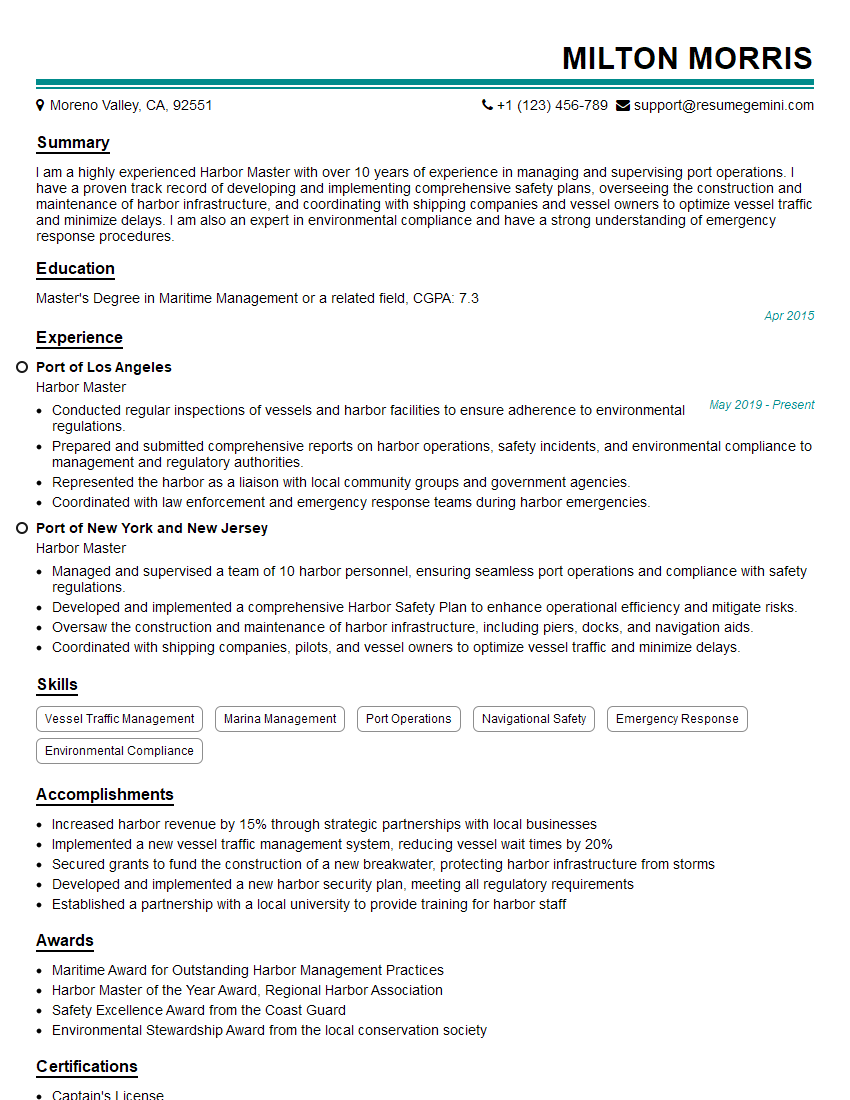
Harbor Master Resume Sample
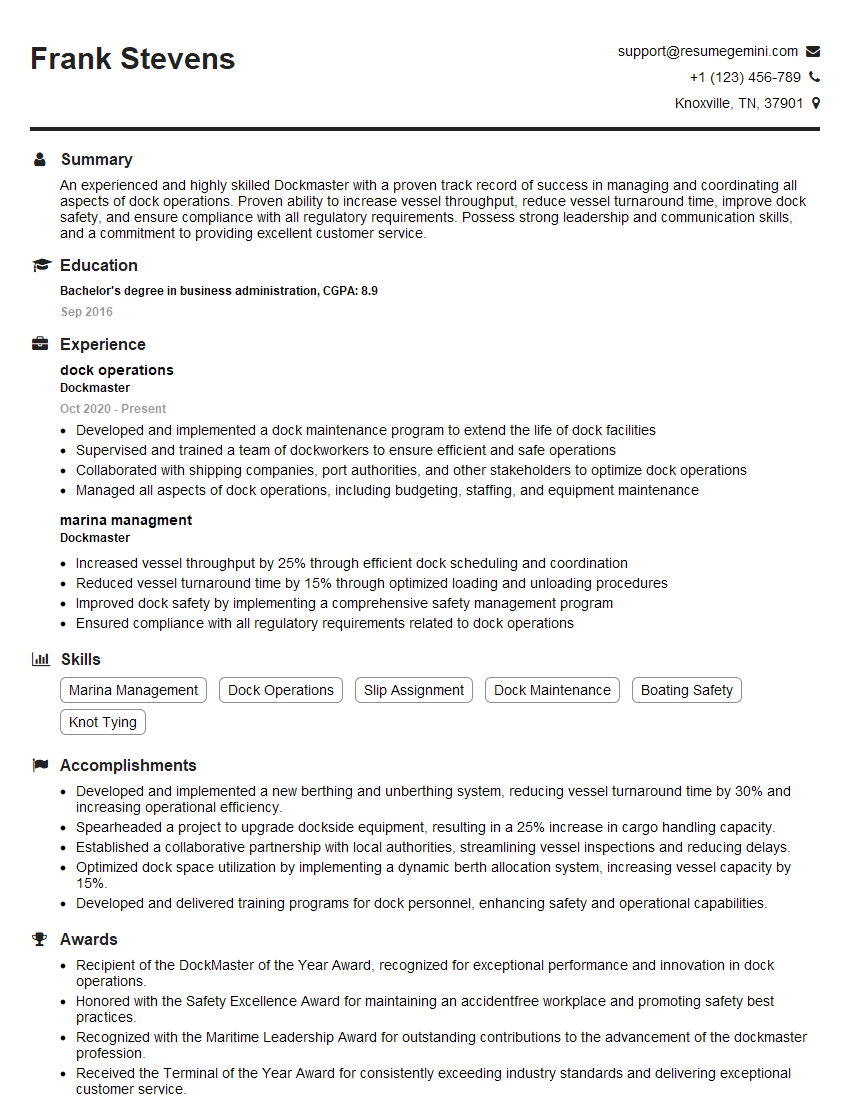
Dockmaster Resume Sample
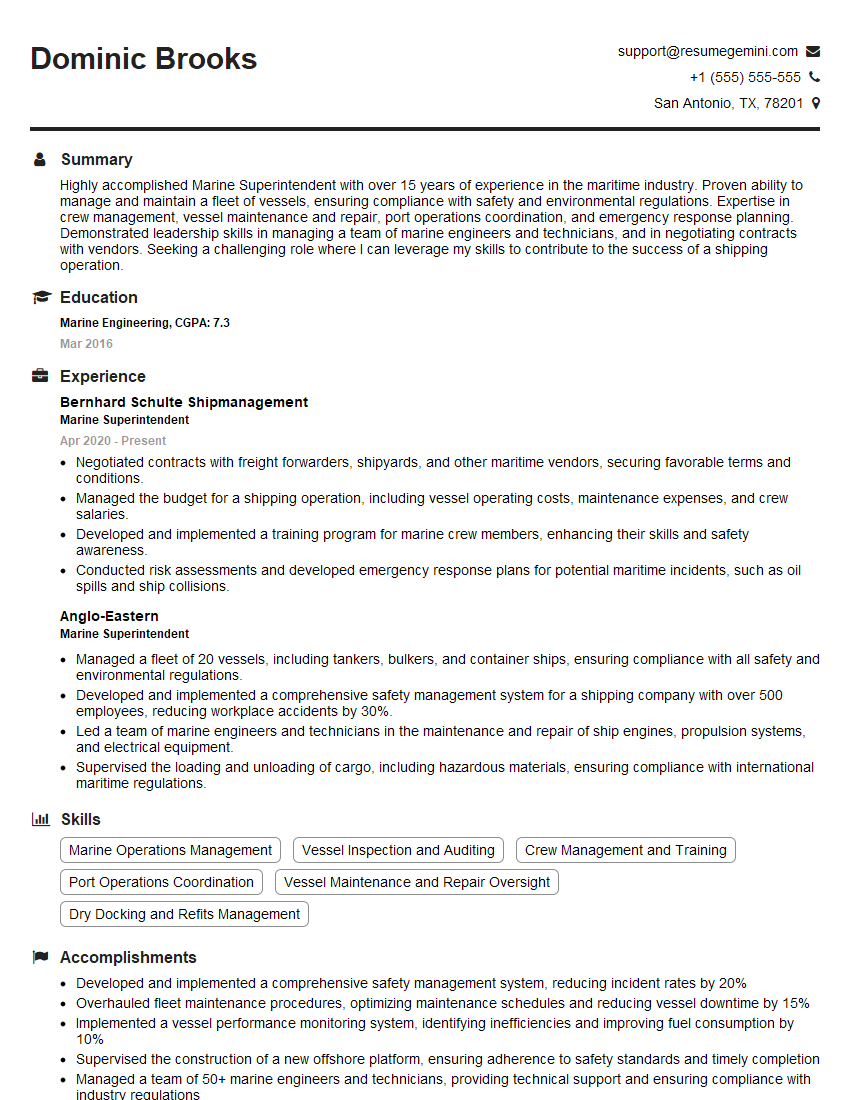
Marine Superintendent Resume Sample
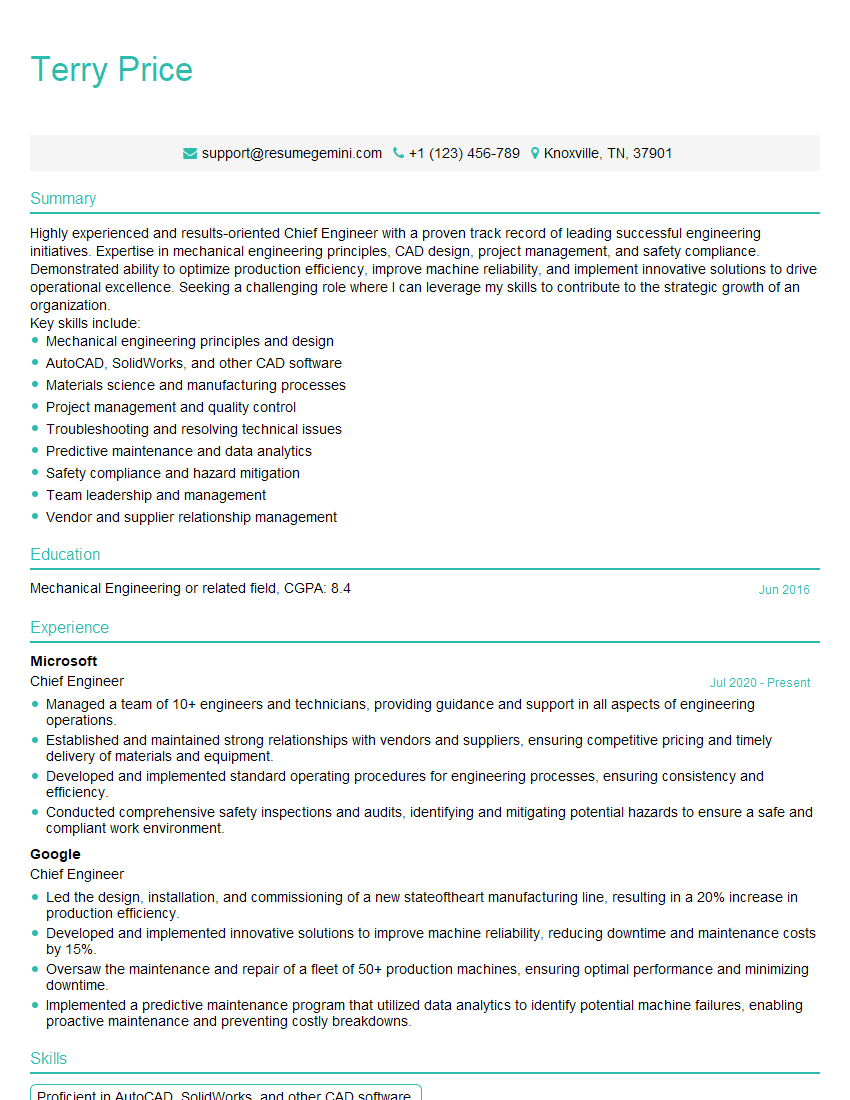
Chief Engineer Resume Sample
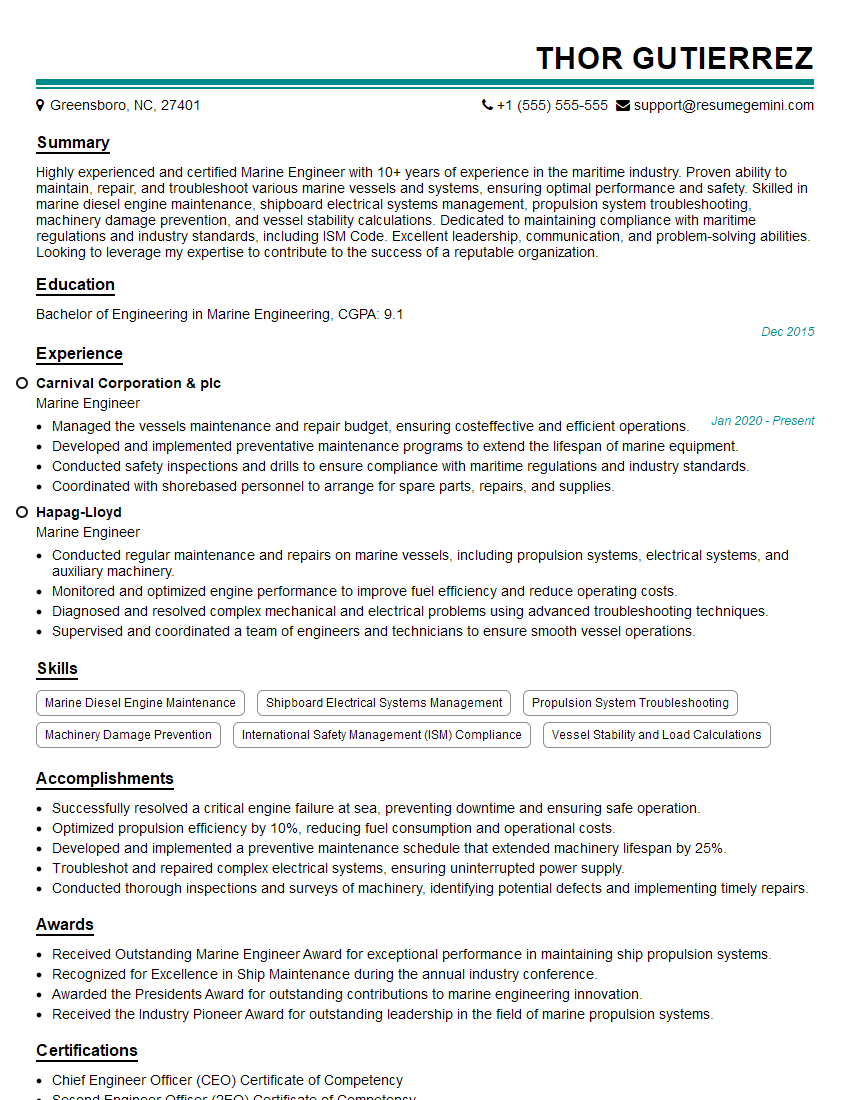
Marine Engineer Resume Sample
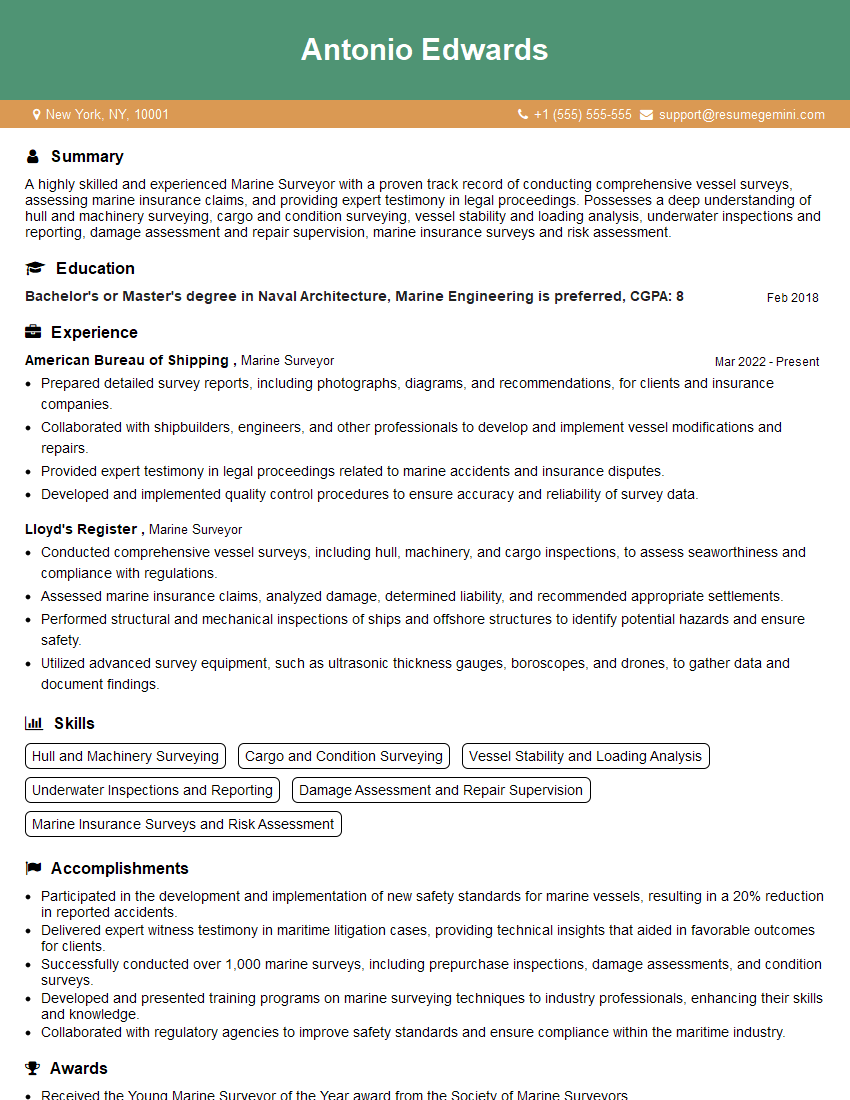
Marine Surveyor Resume Sample
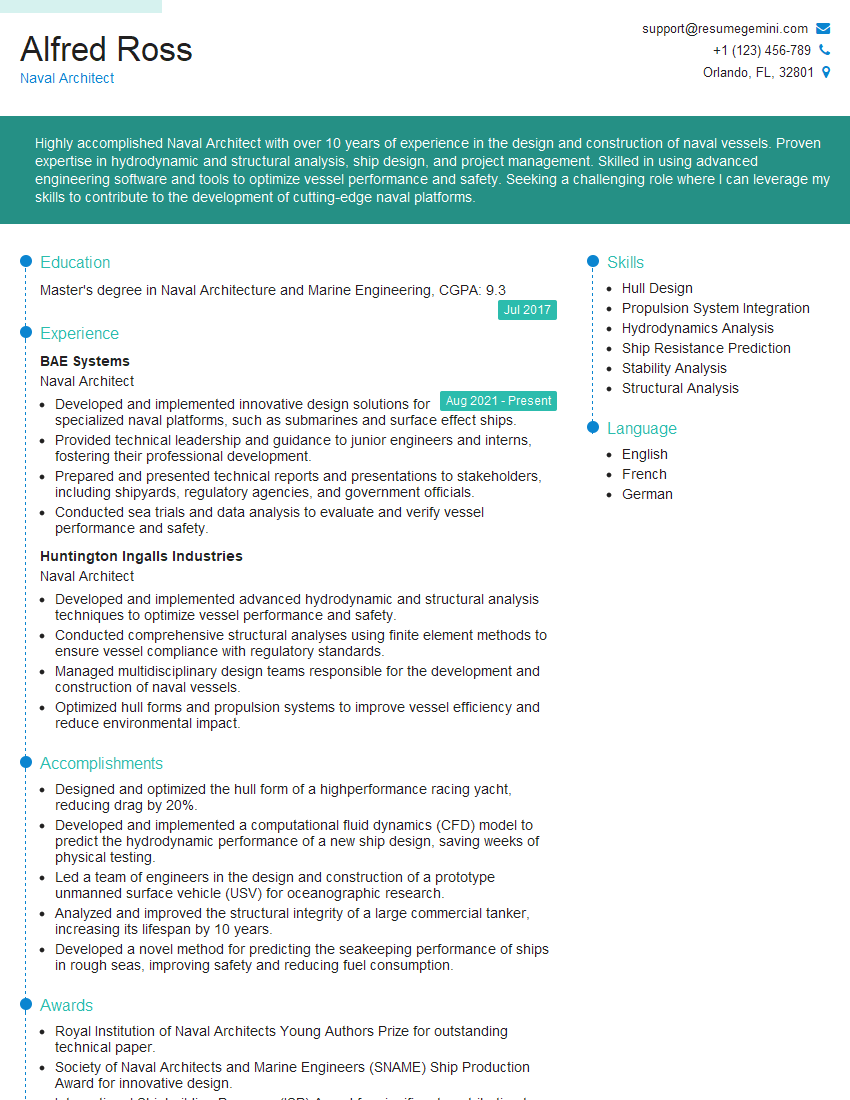
Naval Architect Resume Sample
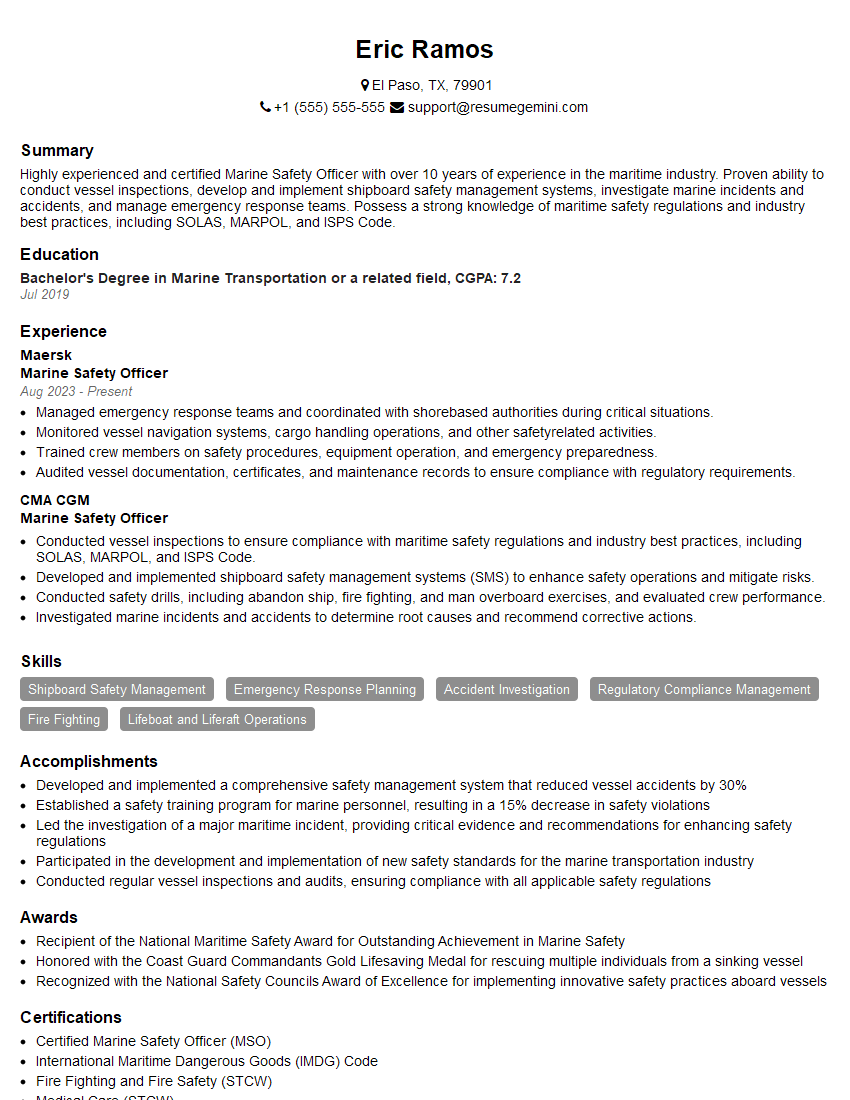
Marine Safety Officer Resume Sample
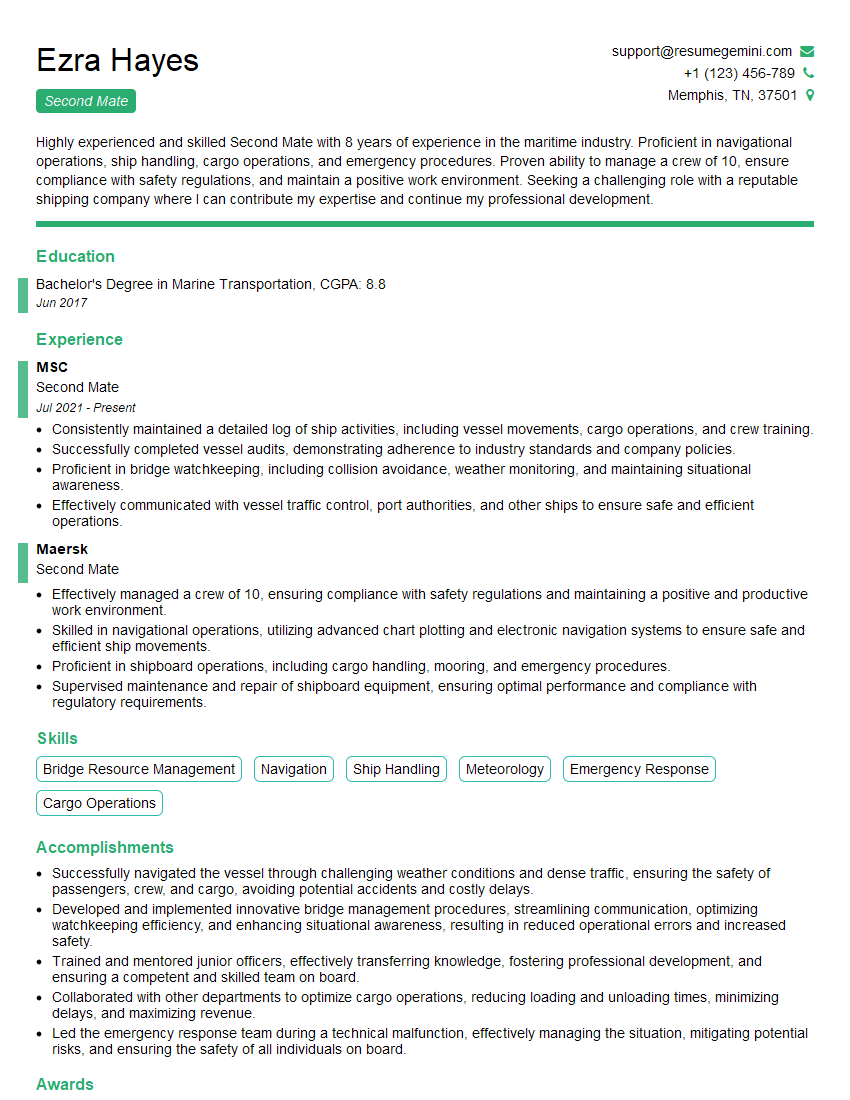
Second Mate Resume Sample
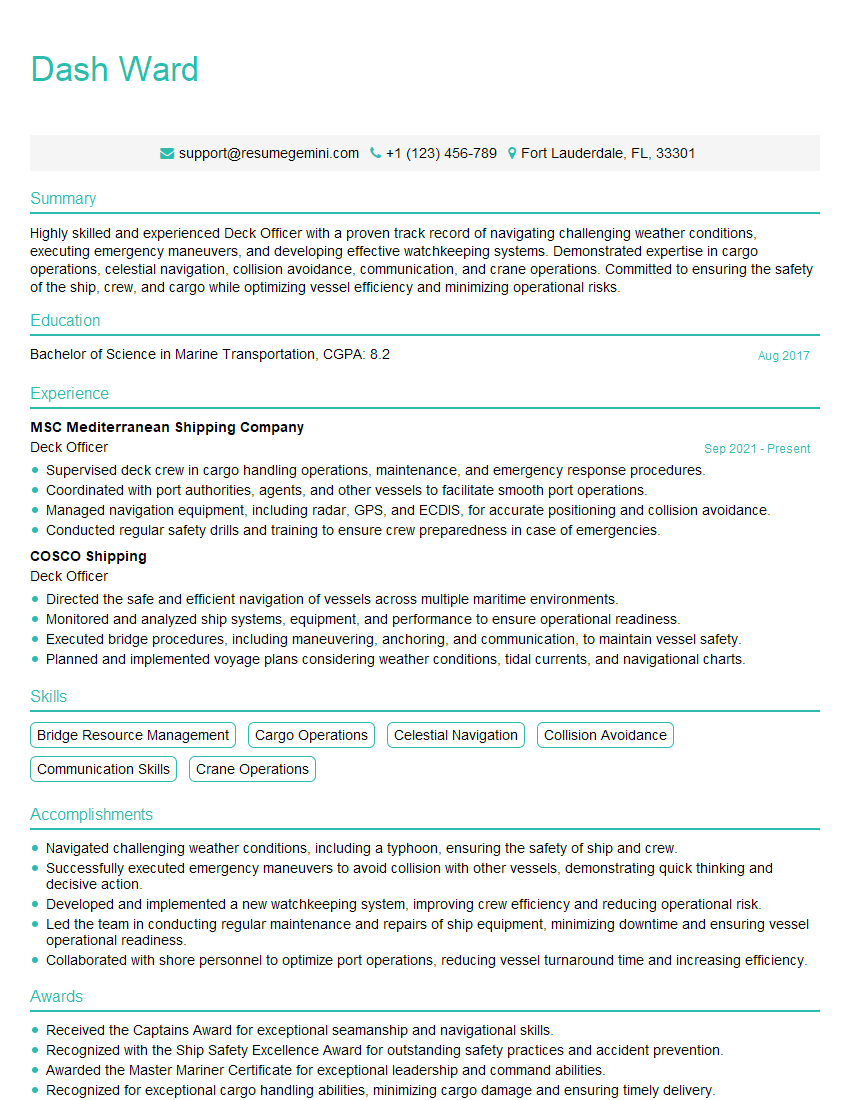
Deck Officer Resume Sample
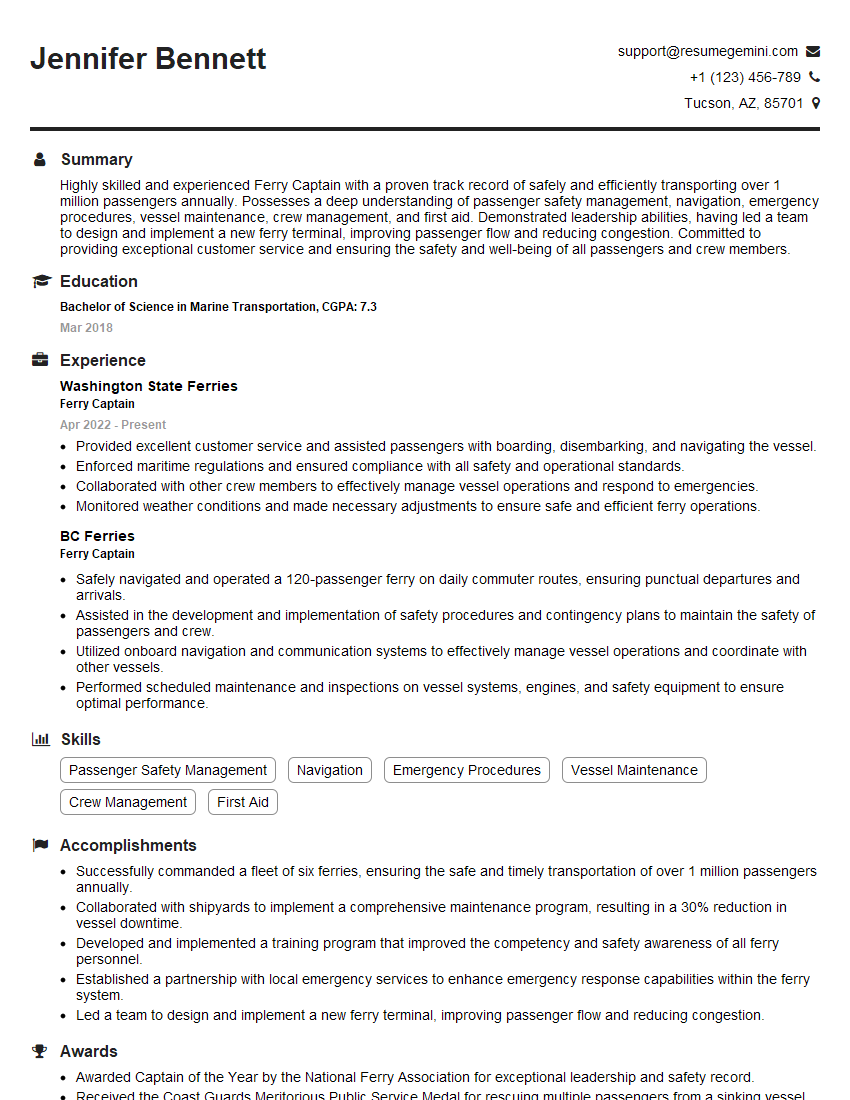
Ferry Captain Resume Sample
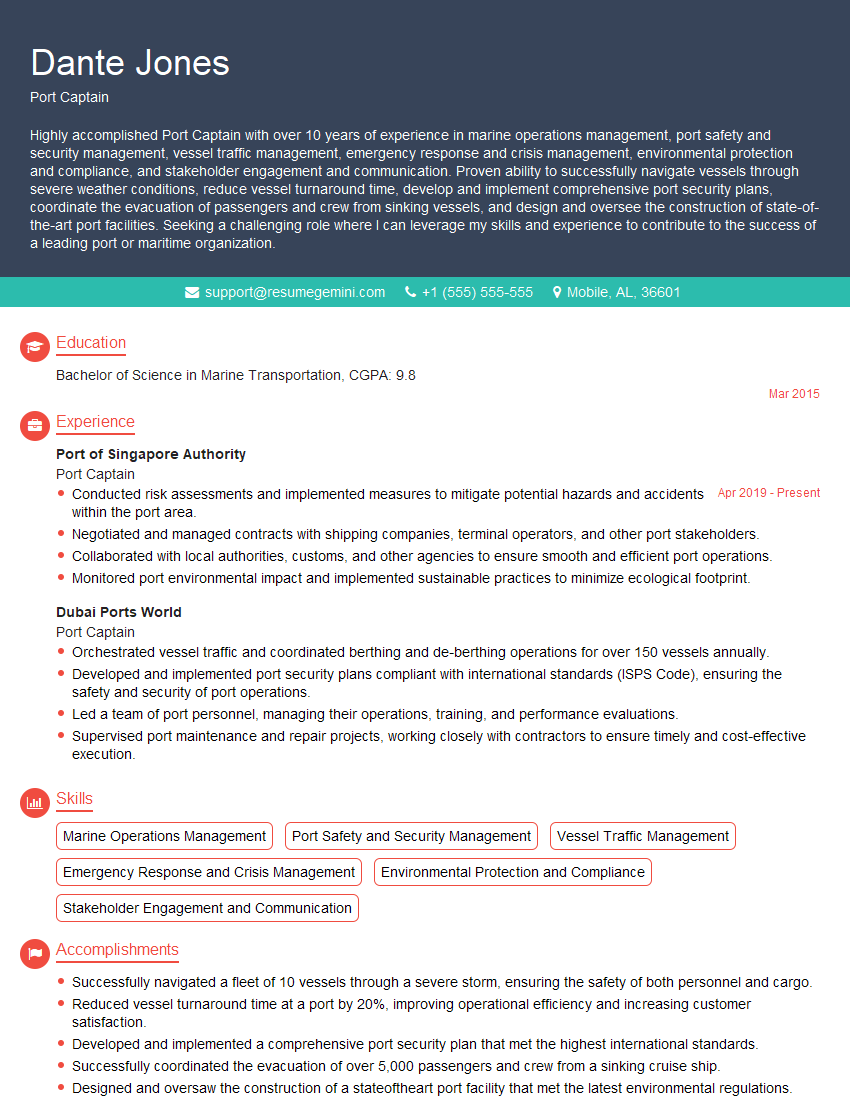
Port Captain Resume Sample
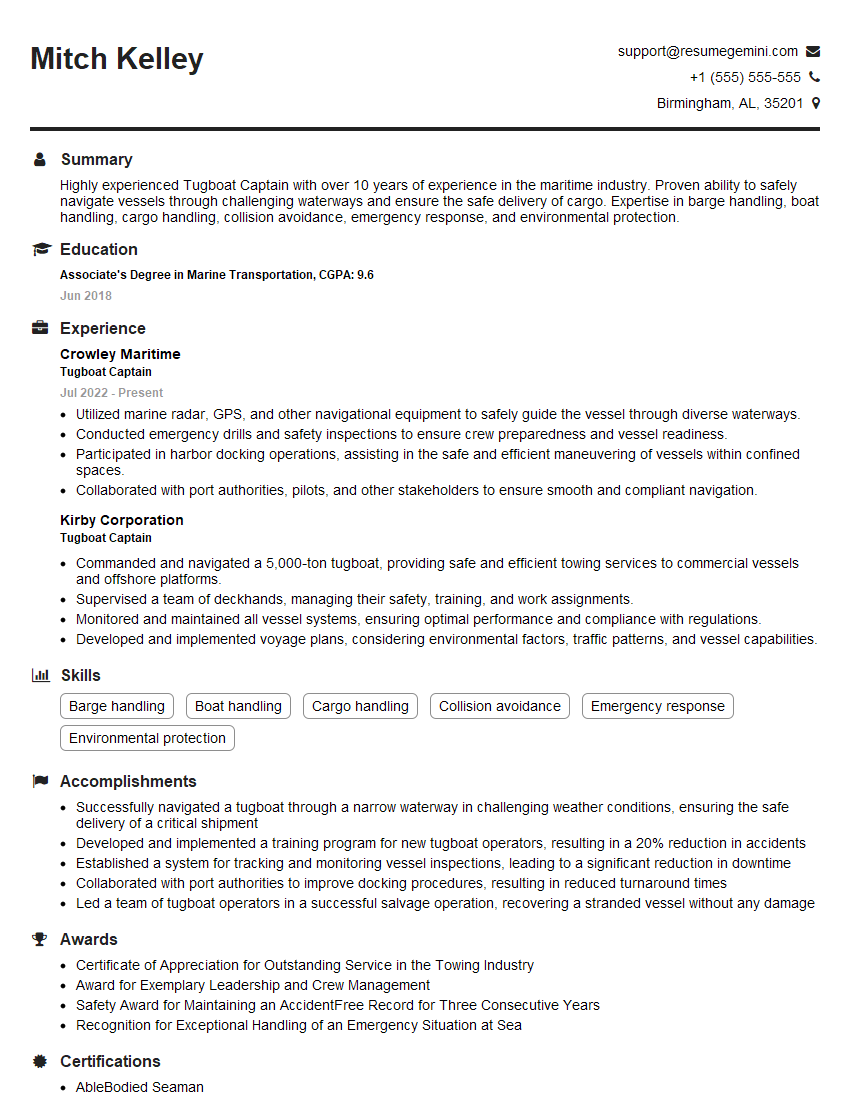
Tugboat Captain Resume Sample
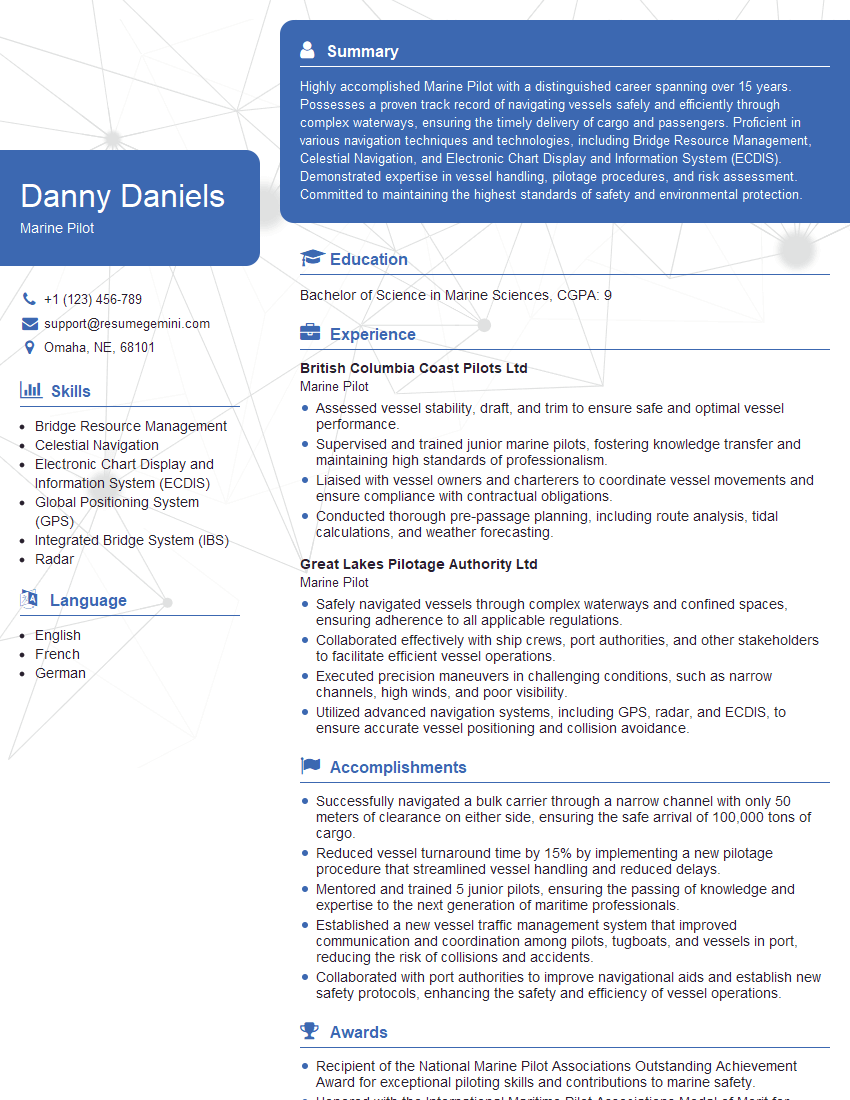
Marine Pilot Resume Sample
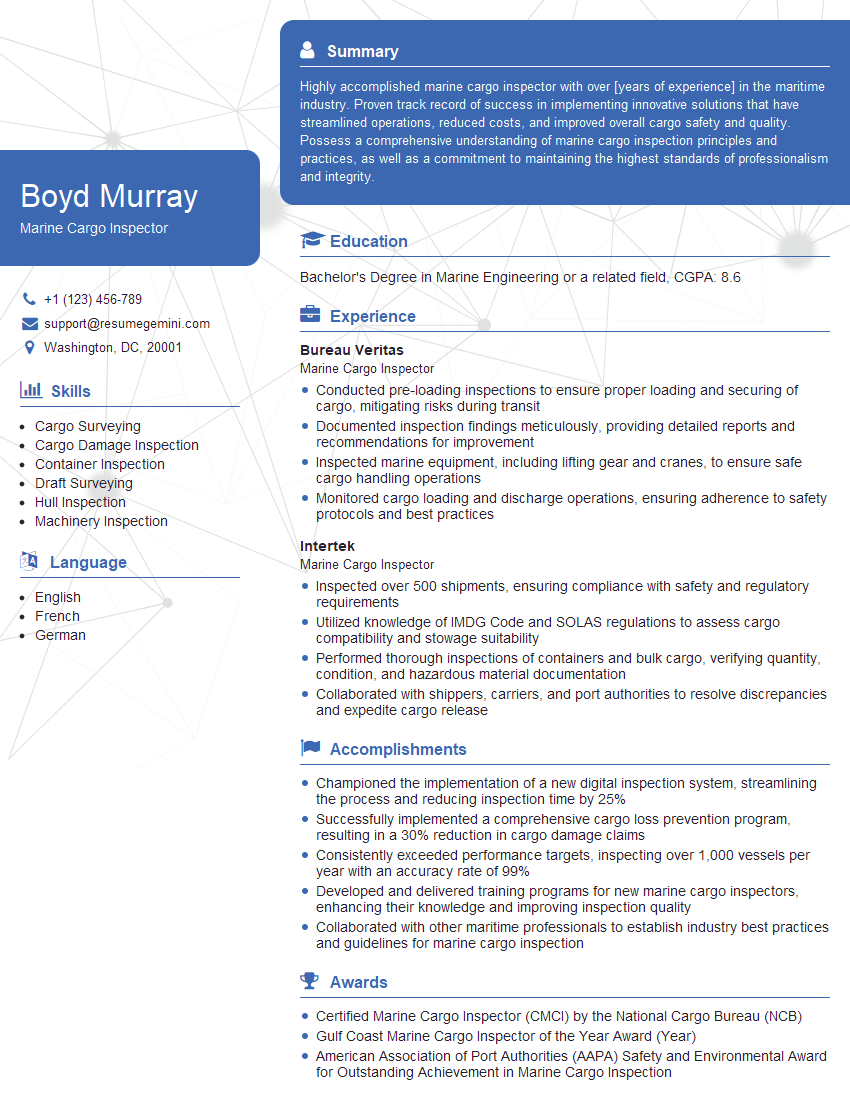
Marine Cargo Inspector Resume Sample
Explore more articles
Users Rating of Our Blogs
Share Your Experience
We value your feedback! Please rate our content and share your thoughts (optional).
What Readers Say About Our Blog
Very informative content, great job.
good