Feeling uncertain about what to expect in your upcoming interview? We’ve got you covered! This blog highlights the most important Wave Height Adjustment interview questions and provides actionable advice to help you stand out as the ideal candidate. Let’s pave the way for your success.
Questions Asked in Wave Height Adjustment Interview
Q 1. Explain the different methods for measuring wave height.
Measuring wave height involves a variety of techniques, each with its strengths and weaknesses. The choice of method depends on factors like the location, the required accuracy, and the available resources.
- Wave buoys: These sophisticated instruments are deployed in the ocean and directly measure wave height using accelerometers or pressure sensors. They provide continuous, real-time data, including significant wave height, peak wave period, and wave direction. Think of them as highly advanced, ocean-going weather stations specifically designed for waves.
- Wave radar: Remote sensing techniques, such as radar, use electromagnetic waves to measure wave height from a distance. This is particularly useful for covering large areas, making it invaluable for applications like offshore engineering and maritime forecasting. Different radar systems, such as HF radar and X-band radar, provide varying spatial and temporal resolutions.
- Visual observation: While less precise, visual observation from ships or coastal stations can provide a quick estimate of wave height, particularly useful in situations where more sophisticated instruments are unavailable. Experienced observers can often gauge wave height with reasonable accuracy, but this method is subjective and prone to error, especially in challenging conditions.
- Satellite altimetry: Satellites equipped with altimeters measure the distance between the satellite and the sea surface. By analyzing these measurements, they can infer wave height and other sea state parameters over vast oceanic regions. This offers a synoptic view, providing crucial data for climate studies and global weather modeling.
For example, during a recent project assessing coastal erosion, we used a combination of wave buoy data for precise local measurements and satellite altimetry data to understand the broader wave climate influencing the coastline.
Q 2. Describe the factors influencing wave height.
Wave height is a dynamic parameter influenced by several interacting factors. It’s like a complex recipe where each ingredient plays a crucial role in the final outcome. Understanding these factors is essential for accurate prediction and modeling.
- Wind speed and duration: Stronger and longer-lasting winds generate larger waves. Imagine blowing on the surface of a cup of water – the harder and longer you blow, the bigger the waves get.
- Fetch: The distance over which the wind blows across the water’s surface (fetch) is crucial. A longer fetch allows the wind to build larger waves. Think of a wind tunnel; the longer the tunnel, the more time the wind has to accelerate.
- Water depth: Waves behave differently in shallow versus deep water. As waves approach shallow water, their height increases due to energy conservation, while their speed decreases. This is why waves often get bigger near the shore.
- Seafloor topography: Underwater features such as reefs and shoals can significantly affect wave height through refraction and diffraction. The shape of the seabed acts like a lens, focusing or dispersing wave energy.
- Wave interactions: Waves can interfere with each other, leading to constructive or destructive interference, affecting the resulting wave height. Sometimes waves combine to create monstrous waves; other times, they cancel each other out.
Q 3. How do you account for wave refraction and diffraction in wave height calculations?
Wave refraction and diffraction are crucial considerations in accurate wave height calculations, especially in coastal areas and around complex bathymetry. Ignoring these effects can lead to significant errors in wave height predictions and engineering designs.
Refraction is the bending of waves as they pass from one medium to another, or as they encounter varying water depths. It’s similar to light bending when it passes through a prism. As waves approach the shore, they bend towards shallower water, focusing energy on headlands and spreading it out in bays. In calculations, we use Snell’s law and ray tracing techniques to account for refraction’s impact on wave height.
Diffraction is the spreading of waves as they pass around obstacles or through openings. Imagine waves encountering a breakwater—the waves will bend around the breakwater, reducing their height on the sheltered side but also causing some energy to diffract into the sheltered area. We use numerical wave models that incorporate diffraction effects to predict wave heights in complex environments such as harbors and around islands.
We often use numerical models incorporating both refraction and diffraction, such as mild-slope equations or Boussinesq equations, to simulate wave propagation and accurately predict the wave height along a coastline or in a specific area of interest. The choice of model depends on the specific application and the complexity of the bathymetry.
Q 4. What are the limitations of different wave height models?
Various wave height models exist, each with its own limitations. Understanding these limitations is critical for selecting the appropriate model and interpreting results responsibly.
- Linear wave models: These models are relatively simple and computationally efficient, but they are only accurate for small waves and neglect nonlinear effects which become significant in steeper waves. They don’t capture wave breaking accurately.
- Nonlinear wave models: These models capture nonlinear effects like wave breaking and interactions, but are computationally more demanding. The accuracy of these models depends on the quality of the input data and the model parameters.
- Spectral wave models: These models consider the wave field as a superposition of many waves with different frequencies and directions. They provide a detailed representation of the wave climate, but require extensive computational resources and high-quality input data, such as wind fields.
- Empirical wave models: Based on statistical relationships between wave height and environmental parameters, these are often used for quick estimates but are generally less accurate than numerical models, particularly in complex environments.
For example, a simple linear wave model might be sufficient for preliminary design calculations in deep water, but a more sophisticated nonlinear wave model would be necessary for accurate prediction of wave run-up on a coastal structure.
Q 5. Explain the concept of significant wave height.
Significant wave height (Hs) is a crucial parameter representing the average of the highest one-third of waves in a wave record. It’s not the average of all waves, but rather a statistical measure focusing on the more energetic waves in a given wave train. This is a more meaningful representation of the prevailing sea state than the average wave height which may be skewed by smaller waves.
Imagine measuring the height of all the waves at a beach over a 30-minute period. You might record many small waves and a few large ones. Significant wave height takes the highest one-third of those waves, averages their heights, and that average is what is called the significant wave height. It provides a good indication of the overall severity of the sea state and is commonly used in maritime forecasting and coastal engineering.
Q 6. How do you validate wave height data from different sources?
Validating wave height data from various sources requires a multi-faceted approach, ensuring consistency and reliability.
- Data comparison: Comparing wave height data from different sources, such as buoys, radar, and satellite altimetry, helps identify discrepancies. Ideally, you should find a reasonable agreement among the data sets, allowing you to gain confidence in their accuracy.
- Statistical analysis: Applying statistical techniques to assess the data’s consistency, including measures of central tendency (mean, median), dispersion (standard deviation), and correlation, is essential. Significant deviations may signal problems with instrumentation, data processing, or environmental variability.
- Error analysis: Carefully accounting for the errors inherent in each measurement technique is critical. For example, satellite altimetry is affected by orbital errors and atmospheric conditions, while wave buoys are subject to sensor drift and calibration issues. Understanding these errors and their potential impact allows for more reliable conclusions.
- External validation: Using independent sources of information, such as visual observations or historical wave records, can provide valuable corroboration. A match between different measurement methods increases confidence in the findings.
In one instance, I compared wave height data from a wave buoy with data from a nearby coastal radar. The data showed good correlation, but I also noticed a slight bias at higher wave heights. After a detailed error analysis, I found that the radar data was slightly overestimating wave heights in high-sea states due to a known limitation of the radar algorithm. This example underscores the importance of a detailed validation process.
Q 7. Describe your experience with wave height prediction models.
Throughout my career, I’ve worked extensively with various wave height prediction models, applying them to diverse projects ranging from offshore wind farm design to coastal erosion studies. My experience encompasses both empirical and numerical models.
I’ve used spectral wave models like WAVEWATCH III to simulate wave propagation across vast ocean areas, providing essential wave data for marine operations and offshore energy development. These models require extensive computational power, demanding efficient use of high-performance computing (HPC) clusters. I’ve also extensively worked with Boussinesq-type models for detailed wave transformation simulations in nearshore regions, focusing on areas with complex bathymetry and coastal structures. These models help with accurate wave run-up calculations and coastal risk assessments.
For instance, I was involved in a project assessing the potential impact of a proposed offshore wind farm on nearby coastal communities. Using a coupled hydrodynamic-wave model, we predicted the changes in wave heights and currents due to the installation of the wind turbines. The results informed the design of the wind farm and mitigation strategies to minimize potential environmental consequences. In another project, I used empirical wave models to establish a quick estimate of wave heights in a remote location where no wave measurements were available. The results were used to preliminarily evaluate the feasibility of constructing a floating platform in that region.
Q 8. What are the key differences between spectral and deterministic wave models?
The key difference between spectral and deterministic wave models lies in how they represent the sea surface. Deterministic models describe individual waves, each with a specific height, period, and direction. Think of it like tracking individual cars on a highway – you know the exact position and speed of each one. These models are useful for simulating relatively simple wave conditions, perhaps those generated by a single, localized storm. They are computationally less intensive but might miss the complexity of real-world ocean waves.
Spectral models, on the other hand, describe the sea state statistically using a wave spectrum. The spectrum shows the distribution of wave energy across different frequencies and directions. Instead of tracking individual waves, this approach describes the overall wave climate, like looking at the density of traffic on a highway rather than individual cars. This allows them to represent the complex superposition of many waves from various sources, making them more suitable for representing open ocean conditions and long-term wave statistics. They are more computationally intensive but more accurate for representing complex sea states.
- Deterministic: Simpler, computationally cheaper, suitable for simple scenarios.
- Spectral: More complex, computationally expensive, better represents realistic sea states.
Q 9. How do you account for wind speed and direction in wave height calculations?
Wind speed and direction are crucial inputs for wave height calculations, especially in wave generation models. The strength of the wind (speed) directly determines the energy transferred to the water, leading to wave growth. Higher wind speeds generally result in larger waves. The wind’s direction dictates the direction of wave propagation; waves typically travel in the direction of the wind, although complex factors like refraction and diffraction can alter this.
In spectral wave models, wind input is typically incorporated through source terms in the wave action balance equation. These source terms quantify the energy transfer from wind to waves. There are various formulations for these source terms, such as the ‘source function’ approach, which relies on empirical relationships between wind speed, wave parameters, and wave growth. Deterministic models might use simpler, empirical relationships linking wind speed to wave height after a certain fetch (distance over which the wind blows).
For example, a strong wind blowing consistently from the west for many kilometers will generate larger waves propagating eastward than a light wind blowing for a short distance. The accuracy of these calculations depends heavily on the accuracy of the wind data, ideally supplied from high-resolution weather models or in-situ measurements.
Q 10. How do you handle missing or erroneous data in wave height datasets?
Dealing with missing or erroneous data in wave height datasets is a common challenge. The best approach depends on the extent and nature of the data gaps. Simple methods include linear interpolation for small gaps, where the missing values are estimated by averaging the values before and after the gap. However, this can introduce errors if the data is highly variable.
For more sophisticated handling, techniques like spline interpolation or kriging can be used. Spline interpolation provides smoother estimates compared to linear interpolation, whereas kriging uses statistical methods to weigh surrounding data points, taking into account spatial correlation. If there is a large amount of missing data, employing a machine learning model might be appropriate. These models can be trained on the available data to predict wave heights in areas with missing values. It is important to carefully assess the uncertainty introduced by these methods and provide measures of uncertainty in the final results.
Error detection usually involves visual inspection of the data, identifying outliers that significantly deviate from surrounding values. Outliers might be due to sensor malfunctions or extreme weather events. Sometimes, outliers are corrected by replacing them with the average of neighboring values or using more robust statistical methods.
Q 11. Explain the role of wave height in coastal erosion.
Wave height is a primary driver of coastal erosion. Larger waves possess more energy and exert greater forces on the shoreline. This energy is dissipated through a variety of processes including wave breaking, which generates turbulent flows that erode the coast. The impact of breaking waves on the shoreline can dislodge and transport sediment, leading to beach erosion.
The frequency and intensity of high waves also influence erosion. A few storms with extremely high waves can cause significant damage and erosion in a short time, whereas frequent but smaller waves might cause gradual erosion. The type of coastline also plays a role. Cliffs are more vulnerable to direct wave attack leading to undercutting and collapse, while sandy beaches are subject to sediment transport and redistribution by waves.
For example, during a major hurricane, exceptionally high waves can severely erode beaches, removing significant amounts of sand. This can lead to coastal flooding and property damage. The erosive power of waves is a significant factor in shaping coastal landscapes over both short and long timescales.
Q 12. Describe the impact of wave height on marine structures.
Wave height significantly impacts marine structures like offshore platforms, breakwaters, and seawalls. Larger waves exert greater forces on these structures, potentially causing damage or even failure. The forces exerted by waves include direct impact forces, as well as hydrodynamic forces due to water pressure and movement. The design of marine structures must account for these forces, ensuring they can withstand the expected wave climate.
Wave height is often used in conjunction with wave periods to define design wave conditions. These design waves represent the extreme wave events that the structure is expected to encounter during its lifetime. The design process involves using statistical analysis of historical wave data to determine the probability of exceeding certain wave heights and periods. Structures are then designed to have a sufficient safety margin to withstand these extreme events.
For instance, offshore oil platforms must be designed to withstand extremely high waves that may occur during storms. The size and structural integrity of these platforms depend heavily on the design wave heights determined from the analysis of long-term wave climate data. A structure not designed properly to resist high wave action is at risk of structural failure and safety hazards.
Q 13. How do you use wave height data in coastal risk assessment?
Wave height data is indispensable for coastal risk assessment. It forms the basis for predicting coastal flooding and erosion, assessing the vulnerability of coastal communities and infrastructure, and informing adaptation strategies. Statistical analysis of wave height data (often combined with sea level data and storm surge information) can help determine the probability of extreme wave events exceeding certain thresholds.
This probabilistic approach allows for the estimation of coastal inundation risk. For example, we can assess the probability of a particular wave height leading to overtopping of a seawall or flooding of a coastal community. This information is crucial for developing and evaluating strategies to mitigate coastal hazards. Wave height data might be incorporated into numerical models to simulate coastal inundation scenarios under different climate change projections.
The frequency and intensity of high waves directly correlate with coastal erosion rates. Longer-term wave data analysis helps to identify trends and patterns in coastal erosion, informing measures to reduce the risk of coastal erosion and safeguard coastal ecosystems. Understanding this risk can inform crucial decisions about coastal development, infrastructure planning, and the creation of early warning systems.
Q 14. What are the applications of wave height adjustment in offshore engineering?
Wave height adjustment plays a crucial role in offshore engineering in several ways. Primarily, it’s vital for accurate load calculations for offshore structures. This involves adjusting measured or modeled wave heights to represent the actual wave conditions that a structure will experience. Adjustments might be needed to account for factors not explicitly included in the initial wave data, such as wave diffraction around structures or the presence of currents affecting wave heights.
It is also crucial in the design of mooring systems and other offshore support systems. Accurately predicting wave heights ensures that mooring lines are adequately strong to withstand the forces exerted by waves on the floating structures they support. Similarly, the design of subsea pipelines and cables must consider the wave-induced loads and potential scour around these structures. Wave height adjustments, often based on field measurements and hydrodynamic modeling, are essential for making sure the engineering design is fit for purpose.
Moreover, accurate wave height adjustment is crucial for optimizing the placement and design of offshore renewable energy devices like wind turbines and wave energy converters. Understanding the wave climate, including its variability and extremes, is critical for ensuring the structural integrity and operational safety of these devices. Misjudging wave heights can lead to failures and costly downtime.
Q 15. Explain your experience with wave data processing software.
My experience with wave data processing software spans over a decade, encompassing a wide range of tools. I’m proficient in using specialized software packages like WaveAnalysis Pro, SWAN (Simulating Waves Nearshore), and MIKE 21. These packages allow me to import, process, analyze, and visualize wave data from various sources, including buoys, radar, and numerical models. For example, in a recent project analyzing wave conditions for an offshore wind farm, I used WaveAnalysis Pro to filter out noise from the raw buoy data, identify significant wave height and periods, and ultimately generate wave rose diagrams to inform the design of the foundations.
Beyond these specialized packages, I’m comfortable working with general-purpose software like MATLAB and Python, which I use for custom data processing, statistical analysis, and visualization. This flexibility allows me to tailor my approach to specific project needs, whether it’s developing a bespoke algorithm for wave spectral analysis or creating interactive dashboards for presenting results to clients.
Career Expert Tips:
- Ace those interviews! Prepare effectively by reviewing the Top 50 Most Common Interview Questions on ResumeGemini.
- Navigate your job search with confidence! Explore a wide range of Career Tips on ResumeGemini. Learn about common challenges and recommendations to overcome them.
- Craft the perfect resume! Master the Art of Resume Writing with ResumeGemini’s guide. Showcase your unique qualifications and achievements effectively.
- Don’t miss out on holiday savings! Build your dream resume with ResumeGemini’s ATS optimized templates.
Q 16. What programming languages are you proficient in for wave height analysis?
My primary programming languages for wave height analysis are Python and MATLAB. Python offers a rich ecosystem of libraries like NumPy, SciPy, and Matplotlib, which are invaluable for numerical computation, data manipulation, and visualization. For instance, I often use NumPy for efficient array operations on large wave datasets and Matplotlib to create clear and informative visualizations of wave height time series and spectra. MATLAB, on the other hand, excels in its built-in functions for signal processing and statistical analysis, making it ideal for advanced wave analysis tasks. A recent example involved using MATLAB’s wavelet transform functions to decompose wave signals and identify different frequency components.
# Python example: Calculating the mean wave height
import numpy as np
wave_heights = np.array([1.2, 1.5, 1.8, 1.6, 1.9])
mean_height = np.mean(wave_heights)
print(f"Mean wave height: {mean_height}")
Q 17. How do you assess the accuracy and uncertainty in wave height estimations?
Assessing accuracy and uncertainty in wave height estimations is crucial for reliable engineering design. This involves a multi-faceted approach. First, I carefully examine the limitations of the wave measurement technique used. For instance, wave gauges may have inherent limitations based on their type and installation (e.g., pressure sensors might underestimate wave heights in shallow water, while radar altimeters can be affected by atmospheric conditions).
Second, I perform rigorous quality control checks on the data, looking for outliers, gaps, and inconsistencies. I use statistical methods such as time series analysis to identify and address these issues. Third, I consider the uncertainties associated with the data processing techniques applied, such as the choice of spectral analysis methods and the assumptions made during model calibration. Finally, I incorporate these uncertainties into the overall uncertainty budget using techniques like Monte Carlo simulations, providing a range of possible wave heights rather than a single point estimate. This ensures a more realistic and conservative approach to design.
Q 18. Describe your experience with different types of wave gauges.
My experience encompasses several types of wave gauges, each with its strengths and limitations. I’ve worked extensively with pressure sensors, which measure the pressure variations at the bottom of the water column to infer wave height. These are cost-effective and can be deployed in deep water. However, they require careful calibration and can be affected by factors like water density variations.
I also have experience with capacitance wave gauges, which use changes in capacitance to measure the water level and thus the wave height. These are precise and relatively easy to maintain. Finally, I’ve used radar-based systems for remote wave height measurement, which offer the advantage of covering a large area, but are more expensive and sensitive to atmospheric conditions. The choice of wave gauge depends heavily on the specific application, budget, and environmental conditions. A recent project required real-time data from a remote location, which led us to employ a radar system, while another coastal engineering project utilized cheaper pressure sensors.
Q 19. How do you use wave height data in the design of breakwaters?
Wave height data is paramount in breakwater design, determining the structural stability and functionality of the structure. We use wave height data, particularly the significant wave height (Hs) and its associated probability distribution, to estimate the maximum wave forces acting on the breakwater. This involves combining wave height data with information on wave periods and water depths to determine wave run-up and overtopping rates.
For example, we might use a statistical analysis of long-term wave height records to define design wave conditions for a certain return period (e.g., the 50-year wave), ensuring that the breakwater can withstand extreme events. This ensures sufficient freeboard, crest height, and structural strength to prevent damage or failure. Numerical models, incorporating wave height data as input, are employed to simulate wave action around the breakwater, allowing us to optimize its design for both wave protection and cost-effectiveness.
Q 20. Explain your understanding of wave attenuation.
Wave attenuation refers to the decrease in wave height as waves propagate across the ocean or approach a coastline. Several factors contribute to wave attenuation. Friction with the seabed is a significant factor, especially in shallow water. As waves move into shallower water, their energy is dissipated through bottom friction, causing a decrease in wave height and an increase in wave steepness.
Other factors include wave breaking, which dissipates a significant amount of wave energy, and energy spreading due to refraction and diffraction. These processes are complex and are typically modeled using numerical wave models like SWAN or MIKE 21. Understanding wave attenuation is critical for accurate wave forecasting near coastlines and for engineering designs, like determining the appropriate placement of offshore structures where wave attenuation can affect the forces on the structure. In my work, I often use numerical models to simulate wave attenuation to predict wave conditions in specific locations.
Q 21. How do you use wave height data for marine renewable energy projects?
Wave height data is fundamental to marine renewable energy projects, particularly for wave energy converters (WECs). Accurate wave height statistics are essential for assessing the power potential of a wave energy resource. We use wave height data, often from long-term time series, to estimate the energy flux available at a particular site and to characterize the wave climate.
This data is input into WEC performance models to predict energy output and to optimize the design of the devices for maximum efficiency. For example, we might analyze wave height distributions to determine the optimal size and operational strategy for a WEC to maximize its energy capture potential while withstanding extreme wave conditions. Detailed wave height information is also critical for the design of the mooring systems and supporting infrastructure for WECs, ensuring the structural integrity of these systems in even the most challenging wave conditions. Risk assessment and environmental impact studies also require this data.
Q 22. What is your experience with wave height forecasting?
Wave height forecasting is crucial for various applications, from coastal engineering and offshore operations to maritime safety and recreational activities. My experience encompasses using various methods, including numerical wave models, statistical approaches, and data-driven techniques. I’ve worked extensively with hindcast data to analyze past wave conditions and validate model performance, as well as with real-time buoy data and satellite altimetry to provide short-term forecasts. For instance, in a recent project for an offshore wind farm development, I used a coupled wave-current model to predict significant wave heights and periods over a 50-year design period, helping determine the optimal turbine foundation design.
My approach always involves considering the specific location, the temporal resolution required, and the uncertainties involved in the prediction process. I employ rigorous quality control procedures to ensure the accuracy and reliability of the forecasts.
Q 23. Describe your experience with hydrodynamic modeling software.
I’m proficient in several hydrodynamic modeling software packages, including SWAN (Simulating Waves Nearshore), MIKE 21, and Delft3D. These tools are essential for simulating wave propagation, transformation, and interaction with coastal structures. My experience includes setting up model domains, defining boundary conditions (such as wind fields and wave spectra from global wave models), calibrating models using observational data, and post-processing results to extract relevant wave parameters. For example, using SWAN, I once modeled wave propagation in a complex coastal environment with reefs and shoals to predict wave energy dissipation and its impact on beach erosion. The accuracy of the model predictions was crucial for designing effective coastal protection measures.
Beyond the technical aspects, I understand the limitations of each model and how to choose the appropriate one for a specific application. This involves careful consideration of computational costs, model resolution, and the accuracy required for the specific engineering problem.
Q 24. Explain the concept of wave energy spectrum.
The wave energy spectrum describes the distribution of wave energy across different wave frequencies or periods. Imagine the ocean surface as a superposition of many individual waves with varying heights and periods. The wave energy spectrum quantifies the contribution of each wave component to the total wave energy. It’s represented graphically, with frequency (or period) on the horizontal axis and energy density on the vertical axis. A broader spectrum indicates a wider range of wave periods present, while a narrower spectrum implies a more regular wave field.
Understanding the wave energy spectrum is vital because different wave components interact differently with coastal structures and the seabed. For instance, longer-period waves have greater energy and can penetrate deeper into the water column than shorter-period waves. This information is critical for designing structures that can withstand wave loading and also for studying sediment transport and beach morphology changes.
Q 25. How do you determine the appropriate wave height for a specific application?
Determining the appropriate wave height for a specific application is a multi-step process requiring careful consideration of various factors. First, we need to identify the design life of the project and the return period for the wave heights of interest. A common approach is to use statistical analyses of historical wave data to determine the wave height with a certain probability of exceedance over the design life (e.g., the 50-year return period wave height). This is often combined with projected changes in wave climate due to climate change, adding another layer of complexity.
Secondly, the specific application dictates the relevant wave parameter. For instance, a coastal structure might be designed based on the significant wave height (Hs), which is the average of the highest one-third of the waves. For offshore platforms, the maximum wave height (Hmax) might be a more critical parameter. Thirdly, wave height alone is insufficient; wave period and direction also significantly impact design parameters. For example, longer-period waves exert more significant forces on structures. Finally, appropriate safety factors are incorporated to account for uncertainties and model limitations.
Q 26. Describe the relationship between wave height and wave period.
Wave height and wave period are intrinsically linked. They are both fundamental characteristics of ocean waves, describing their size and timing. The relationship isn’t strictly defined by a single equation but varies depending on the wave generation mechanism and the water depth. Generally, longer-period waves tend to be associated with larger wave heights, reflecting a higher energy content. Think of a tsunami; it has a very long period and an enormous wave height. In contrast, short-period wind waves tend to have relatively smaller heights.
However, it’s essential to note that this correlation isn’t always straightforward. Multiple wave systems can coexist simultaneously, leading to complex wave fields with a wide range of periods and heights.
Q 27. How do you account for wave transformation in shallow water?
Wave transformation in shallow water is a critical aspect of coastal engineering. As waves propagate from deep water into shallower regions, their characteristics change significantly. Key transformations include shoaling (increase in wave height), refraction (bending of wave crests due to variations in water depth), diffraction (spreading of waves around obstacles), and breaking (collapse of waves due to exceeding a critical wave steepness). Accurately accounting for these transformations is crucial for predicting wave impacts on coastal structures and the shoreline.
Hydrodynamic models, like SWAN or MIKE 21, incorporate these transformation processes using numerical methods based on the shallow-water equations or Boussinesq equations. These models require bathymetric data (water depth information) as input and resolve the wave field evolution as it moves towards the shore. Careful consideration of bottom friction and energy dissipation processes is also essential for accurate simulations. Failure to account for these changes can lead to inaccurate design choices, potentially resulting in structural damage or coastal erosion.
Key Topics to Learn for Wave Height Adjustment Interview
- Fundamentals of Wave Propagation: Understanding wave characteristics (wavelength, frequency, period), wave generation mechanisms, and the factors influencing wave height.
- Wave Height Measurement Techniques: Familiarize yourself with various methods used to measure wave height, including buoys, radar, and satellite altimetry. Understanding the limitations and accuracies of each method is crucial.
- Wave Height Adjustment Models and Algorithms: Explore different mathematical models and computational algorithms used to predict, simulate, and adjust wave heights. This might include spectral analysis and numerical modeling techniques.
- Practical Applications in Coastal Engineering: Understand how wave height adjustment plays a critical role in coastal protection, harbor design, and offshore structure design. Consider examples of real-world applications.
- Data Analysis and Interpretation: Develop skills in analyzing wave height data, identifying trends, and drawing meaningful conclusions. This involves statistical analysis and data visualization techniques.
- Impact of Environmental Factors: Learn how factors like wind speed, water depth, and bottom topography influence wave height and its adjustment.
- Troubleshooting and Problem-Solving: Practice identifying and resolving issues related to inaccurate wave height measurements or model discrepancies. Develop a systematic approach to problem-solving.
Next Steps
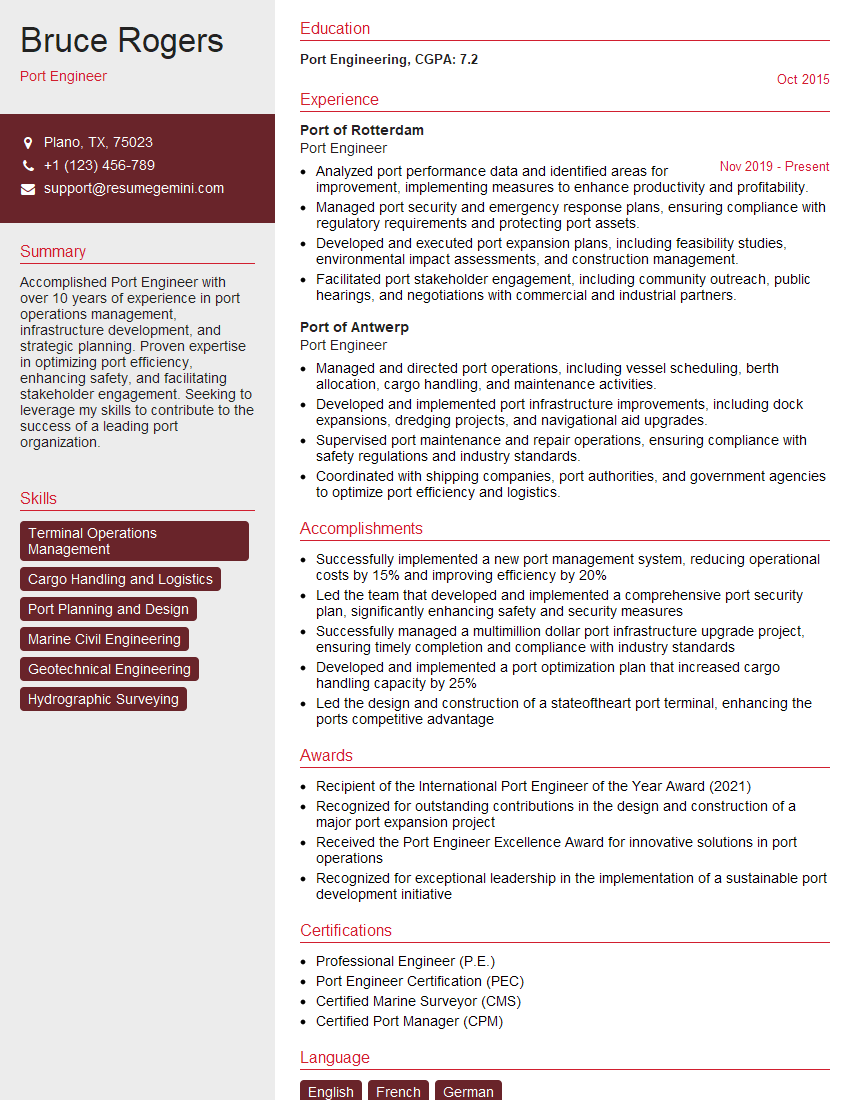
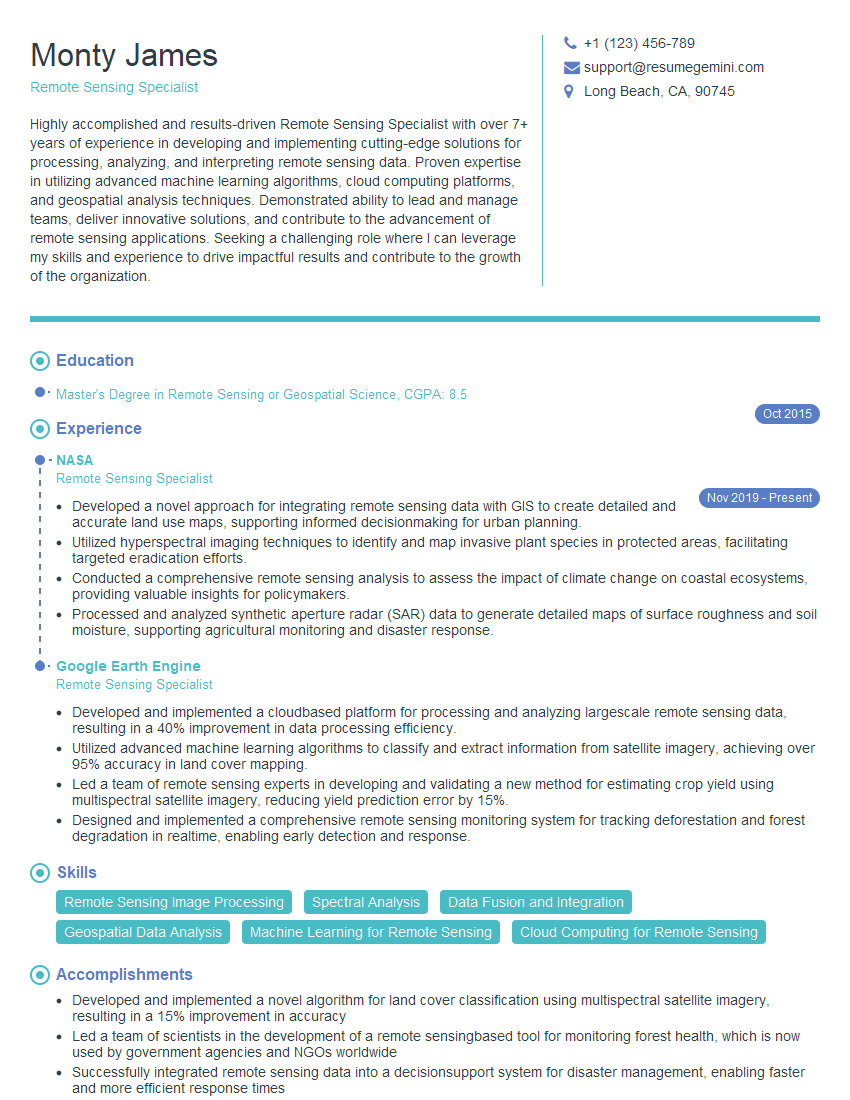
Mastering Wave Height Adjustment opens doors to exciting career opportunities in coastal engineering, oceanography, and environmental science. A strong understanding of these concepts is highly valued by employers. To significantly increase your chances of landing your dream job, focus on crafting an ATS-friendly resume that effectively highlights your skills and experience. ResumeGemini is a trusted resource that can help you build a professional and impactful resume. We provide examples of resumes tailored specifically to Wave Height Adjustment to help you get started. Take advantage of these resources and showcase your expertise confidently!

Explore more articles
Users Rating of Our Blogs
Share Your Experience
We value your feedback! Please rate our content and share your thoughts (optional).
What Readers Say About Our Blog
Very informative content, great job.
good