Feeling uncertain about what to expect in your upcoming interview? We’ve got you covered! This blog highlights the most important Weapon Systems Proficiency (Machine Guns, Mortars) interview questions and provides actionable advice to help you stand out as the ideal candidate. Let’s pave the way for your success.
Questions Asked in Weapon Systems Proficiency (Machine Guns, Mortars) Interview
Q 1. Describe the operation and maintenance of an M240 machine gun.
The M240 is a belt-fed, gas-operated machine gun known for its reliability and accuracy. Operation involves loading a pre-assembled ammunition belt, engaging the safety, and pulling the trigger. The gas-operated mechanism uses propellant gases to cycle the bolt, automatically chambering, firing, and ejecting rounds. Maintenance is crucial and involves regular cleaning, lubrication, and inspection of all components. This includes checking the barrel for wear and tear, ensuring the gas system is functioning correctly, and cleaning the receiver and feeding mechanism to prevent malfunctions. Think of it like a high-powered engine; regular servicing prevents breakdowns.
- Cleaning: Thorough cleaning after each use, removing carbon buildup and debris.
- Lubrication: Applying the correct lubricant to all moving parts to ensure smooth operation.
- Inspection: Regularly checking the barrel for wear, the gas system for leaks, and the feed mechanism for jams.
- Barrel Change: Replacing the barrel periodically to prevent overheating and maintain accuracy, especially during sustained firing.
Q 2. Explain the process of zeroing a machine gun.
Zeroing a machine gun, like any firearm, is the process of adjusting the sights to ensure the bullet impacts the target at the desired point of aim at a specific range. It typically involves firing groups of shots at a known distance, observing where the shots land, and then making adjustments to the sights (rear and front) based on the observed impact pattern. This process requires precision and the use of a target, ideally at 100 and 200 meters for an M240. For example, if the shots consistently land to the left, you would adjust the rear sight to the right.
The process involves:
- Establish a firing position: Secure, stable, and consistent.
- Use a known target: At a known and consistent range.
- Fire groups of shots: Observe bullet impacts and measure deviations.
- Adjust sights: Make incremental adjustments based on the observed impact, using the sights’ adjustment mechanisms.
- Re-fire and Verify: Repeat until impacts are at the desired Point of Aim.
Q 3. What are the common malfunctions of an M249 SAW and how are they rectified?
The M249 SAW, while robust, experiences common malfunctions. These include feeding problems (like stovepipes or double feeds), failures to extract or eject spent cartridges, and failures to fire. Think of it like a complex machine; a single problem with a cog can cause the whole thing to jam.
- Feeding Problems (Stovepipes, Double Feeds): Often caused by faulty ammunition, improper belt feeding, or a dirty feed tray. Rectification: Clear the malfunction, inspect the ammunition and feed mechanism, and clean any debris.
- Failure to Extract/Eject: This usually indicates a problem with the extractor, ejector, or excessive carbon buildup. Rectification: Clean the chamber and bolt components. A faulty extractor or ejector may require replacement.
- Failure to Fire: This can be due to a faulty firing pin, a bad round, or a malfunctioning bolt. Rectification: Check the firing pin, replace any faulty ammunition and conduct a thorough inspection of the bolt.
Troubleshooting requires a systematic approach: identify the issue, isolate the problem, and apply the correct solution. Always follow the weapon’s technical manual for detailed guidance.
Q 4. Detail the safety procedures for handling and firing a machine gun.
Safety is paramount when handling machine guns. Always treat every weapon as if it were loaded, even if you’ve personally checked it. The cardinal rule is to never point the weapon at anything you are not willing to destroy.
- Weapons Handling: Always keep the weapon on safe until ready to fire. Handle the weapon with care, ensuring proper grip and control.
- Ammunition Handling: Handle ammunition carefully, avoiding dropping or damaging cartridges. Store ammunition separately from the weapon.
- Firing Procedures: Never fire a weapon unless authorized and with a clear understanding of the target and surrounding area. Use appropriate hearing and eye protection. Observe the four fundamental rules of firearms safety.
- Clearing the Weapon: Properly clear the weapon and verify it’s unloaded before any cleaning, maintenance, or storage.
- Environmental factors: Always be aware of environmental hazards like wind and obstacles.
Q 5. What are the different types of ammunition used in machine guns and their applications?
Machine guns use various types of ammunition, each tailored for specific applications. The choice depends on the mission and target. For example, training exercises typically use less expensive tracer rounds.
- Ball Ammunition: Standard round-nosed bullets for general-purpose use. Provides high impact and penetration.
- Tracer Ammunition: These rounds have an incendiary trail to aid in sighting and target acquisition. Tracers enable shooters to see their rounds’ trajectory in flight but also give away their position.
- Armor-Piercing Ammunition: Designed to penetrate armored vehicles or fortifications. Typically involves a hardened core.
- Incendiary Ammunition: Intended to ignite fires or cause burning. Usually contains flammable substances.
The selection of ammunition is critical; the wrong choice can compromise the effectiveness of the mission.
Q 6. Explain the principles of direct fire.
Direct fire involves aiming and firing a weapon directly at a visible target. The projectile follows a relatively flat trajectory, unlike indirect fire which uses higher angles of elevation to hit distant targets. Accuracy depends heavily on the shooter’s skill, weapon accuracy, and environmental factors (wind, range). Think of throwing a baseball; you aim directly at the target.
Principles of direct fire:
- Line of Sight: The shooter must have a clear line of sight to the target.
- Range Estimation: Accurate estimation of the target’s distance is crucial for proper aiming.
- Weapon Zeroing: The weapon must be properly zeroed to ensure accuracy.
- Ammunition Selection: Appropriate ammunition choice for the target and range.
- Target Engagement: Rapid and accurate target engagement.
Q 7. Describe the operation and maintenance of an 81mm mortar.
The 81mm mortar is an indirect fire weapon. Operation involves assembling the tube, placing a bomb in the tube, aiming using a sight or other aiming mechanisms, and firing. It uses the force of gravity to project the bomb toward its target. After firing, the components need disassembly and cleaning. Maintenance includes regular inspection and cleaning of all parts to prevent corrosion and ensure proper functioning. The baseplate and bipod need checking frequently.
Operation:
- Assemble: Connecting the base plate, bipod, and mortar tube.
- Loading: Carefully placing the mortar bomb into the tube.
- Aiming: Using aiming devices to align the mortar to target coordinates.
- Firing: Igniting the fuse of the mortar bomb.
- Disassemble: Separating the mortar components after firing for cleaning.
Maintenance focuses on keeping the parts clean and free from debris. Regular inspection of wear-and-tear on moving parts is also essential.
Q 8. Explain the process of laying a mortar.
Laying a mortar refers to the process of aligning the mortar tube to accurately engage a target using indirect fire. It’s crucial for achieving the desired accuracy. This involves several steps, starting with determining the target’s location and then using a variety of tools – typically a compass, protractor, and possibly a laser rangefinder – to calculate the necessary aiming data. This data is then input into the mortar’s aiming mechanisms, setting the elevation and azimuth (direction). Think of it like aiming a very powerful, high-arcing slingshot – you need precise measurements to hit your target.
The process typically involves these steps:
- Target Location Determination: Identifying the target’s coordinates (grid reference or map coordinates).
- Mortar Data Calculation: Using firing tables or a computer-aided system to determine the elevation and azimuth angles needed for the selected ammunition and range.
- Mortar Alignment: Physically adjusting the mortar tube to match the calculated elevation and azimuth angles, usually using a combination of sighting devices and mechanical adjustments.
- Verification: Double-checking all settings before firing.
Improper laying can result in significant misses and endanger friendly forces. Experienced mortar crews often conduct a ‘trial shot’ to fine-tune adjustments based on the first round’s impact point, allowing for minor adjustments for windage or other environmental factors.
Q 9. What are the common malfunctions of an 81mm mortar and how are they rectified?
The 81mm mortar, while relatively reliable, is susceptible to several malfunctions. These can broadly be categorized into problems with the firing mechanism, the tube itself, or the ammunition. Here are some common issues:
- Misfire: The round fails to detonate after firing. This could be due to a faulty fuse, a problem with the primer, or a damaged round.
- Hangfire: A delayed detonation, posing significant danger to the firing crew. Immediate evacuation is critical.
- Round Jams in Tube: The round may become stuck in the mortar tube due to damage or a misaligned round. This requires careful and controlled extraction procedures.
- Cracked or Damaged Mortar Tube: This will render the mortar unsafe for use and requires immediate replacement or repair.
- Improper Function of the Base Plate: Can impact stability and firing accuracy.
Rectification: Misfires and hangfires demand immediate and safe procedures. For hangfires, the crew must evacuate immediately, waiting the maximum fuse delay time before inspecting the situation. Rounds jammed in the tube need a controlled extraction procedure to avoid injury, often involving specialized tools. Damaged mortar tubes necessitate immediate replacement, and a thorough investigation into the cause of the damage. Always follow the manufacturer’s instructions and safety procedures detailed in the weapon’s technical manual.
Q 10. Detail the safety procedures for handling and firing a mortar.
Safety is paramount when handling and firing mortars. The entire process must be conducted with meticulous care and adherence to strict procedures. Here are key safety aspects:
- Weapon Inspection: Thoroughly inspect the mortar tube, base plate, and ammunition for any damage before each use.
- Clearance: Ensure a large, safe firing zone free of personnel and obstacles is established. Accurate range determination is vital.
- Ammunition Handling: Handle ammunition with care, avoiding any impacts or drops. Never tamper with the fuse.
- Protective Gear: Appropriate hearing and eye protection must be worn by all personnel.
- Firing Positions: Mortar crews should utilize well-concealed and protected positions.
- Communication: Clear and concise communication between team members is essential during all phases of operation.
- Emergency Procedures: Establish and rehearse emergency procedures for misfires or hangfires. This includes procedures for immediate evacuation.
These procedures, emphasized through regular training and drills, significantly reduce risks. A culture of safety and attentiveness to detail is essential in mortar operations.
Q 11. What are the different types of mortar ammunition and their applications?
Mortar ammunition comes in various types, each designed for specific applications:
- High-Explosive (HE): The most common type, designed for general-purpose use, primarily causing blast and fragmentation damage.
- Illuminating (ILLUM): Contains a flare that provides illumination for night operations. Essential for target acquisition or reconnaissance.
- Smoke: Produces a dense smoke cloud, commonly used for screening, obscuring movement, or marking positions.
- White Phosphorus (WP): Creates an intense burning incendiary effect, useful in suppressing enemy positions or creating smoke screens.
- Practice rounds: Used for training, typically inert rounds that simulate the flight characteristics of live ammunition.
The choice of ammunition depends heavily on the mission objective. For example, illuminating rounds would be employed for night operations, while smoke rounds are better suited to masking troop movement. The HE round is a versatile workhorse, but specialized rounds can significantly enhance mission effectiveness.
Q 12. Explain the principles of indirect fire.
Indirect fire is a method of engaging targets that are beyond the line of sight. Unlike direct fire weapons (like rifles), mortars and artillery are used to lob projectiles in an arc over obstacles, striking targets unseen from the firing position. It’s like throwing a ball over a building to hit a target on the other side.
The principles involve:
- Target Location: Precisely identifying the target’s coordinates, often using maps, grid references, or other targeting data.
- Ballistics: Understanding the trajectory of the projectile, affected by factors like gravity, air resistance, and environmental conditions.
- Firing Tables/Calculators: Using pre-calculated data (firing tables) or computerized systems to determine the required elevation and azimuth angles based on the target’s range and other factors.
- Laying Procedure: Accurately aiming the weapon based on the calculated data.
Indirect fire provides the advantage of engaging targets from concealed positions, increasing survivability and allowing for the engagement of targets in areas otherwise inaccessible. However, precision requires careful calculations and considerations of environmental factors.
Q 13. How do you calculate the range and trajectory of a mortar round?
Calculating the range and trajectory of a mortar round isn’t done by simple observation. It relies on standardized ballistic tables or sophisticated computer fire-control systems which account for many factors.
Methods:
- Firing Tables: These are pre-calculated tables that provide the necessary elevation and azimuth angles for different ranges and ammunition types. They take into account various factors like air density, temperature, and the specific ammunition used. This method is used by crews without advanced fire-control systems.
- Fire-Control Systems: Modern systems incorporate digital fire-control technology, allowing for real-time calculations based on input parameters like target location, environmental conditions, and ammunition type. The calculations account for ballistic drop, wind drift and other variables offering greater precision.
The inputs needed are the target’s location (coordinates) and the type of mortar ammunition used. The output is the required elevation and azimuth angles required to hit the target. The calculations are complex and based on ballistic formulas, but the process is made user-friendly through the use of firing tables or computer systems.
Q 14. What are the limitations of machine guns and mortars?
While effective in their roles, both machine guns and mortars have limitations:
Machine Guns:
- Limited Range: Effective range is comparatively shorter than that of mortars.
- Direct Line of Sight Required: Typically limited to engaging targets within direct line of sight, unless coupled with advanced observation systems.
- Vulnerability: Their exposed position during use makes them vulnerable to enemy fire.
- Suppressive fire: Primarily effective in suppressing enemy movements.
Mortars:
- Indirect Fire Limitations: Requires precise calculations and can be affected by environmental factors.
- Recoil: The backward force of the round can affect stability and aiming accuracy.
- Slow Rate of Fire: Compared to machine guns, mortars have a significantly slower rate of fire.
- Limited Accuracy at Long Range: Accuracy can decrease significantly at longer ranges due to windage and other factors.
Understanding these limitations is vital for effective mission planning and task assignment. Employing a balanced approach that combines the strengths of both weapons systems often yields optimal results.
Q 15. How do you select the appropriate weapon system for a given tactical situation?
Selecting the right weapon system hinges on a thorough understanding of the tactical situation. Factors such as the target’s location, range, cover, and the overall mission objectives are paramount. For instance, a long-range, heavily fortified target might necessitate the use of mortars for their indirect fire capability, allowing engagement from a concealed position. Conversely, suppressing enemy fire at close range might call for the rapid, sustained fire of a machine gun. The type of terrain, the enemy’s strength and weaponry, and the available ammunition supply also influence the choice. Ultimately, selecting the optimal weapon system involves a careful risk assessment and a balancing act between firepower, accuracy, and survivability.
Think of it like this: a surgeon wouldn’t use a hammer to perform brain surgery; they’d choose the most precise and appropriate tool for the job. Similarly, selecting the wrong weapon system can compromise the mission and put soldiers at risk. A detailed mission brief, a solid understanding of weapon capabilities, and experience are crucial in making the best decision.
Career Expert Tips:
- Ace those interviews! Prepare effectively by reviewing the Top 50 Most Common Interview Questions on ResumeGemini.
- Navigate your job search with confidence! Explore a wide range of Career Tips on ResumeGemini. Learn about common challenges and recommendations to overcome them.
- Craft the perfect resume! Master the Art of Resume Writing with ResumeGemini’s guide. Showcase your unique qualifications and achievements effectively.
- Don’t miss out on holiday savings! Build your dream resume with ResumeGemini’s ATS optimized templates.
Q 16. Explain the importance of weapon system maintenance.
Weapon system maintenance is critical for ensuring reliability, accuracy, and safety. A poorly maintained weapon is not only inaccurate and prone to malfunctions but also poses a significant safety hazard to the user and those around them. Regular maintenance prevents mechanical failures in the field, extends the lifespan of the weapon, and guarantees optimal performance when needed most. This is particularly crucial in combat situations where weapon malfunction can have life-or-death consequences. Think of it like regular car maintenance; ignoring it can lead to catastrophic engine failure. In the military, consistent maintenance is a matter of life and death.
Maintenance encompasses a range of activities including cleaning, lubrication, inspection, and repair. A comprehensive maintenance schedule, adhering to strict protocols, is essential for maintaining peak weapon performance.
Q 17. Describe the process of cleaning and lubricating a machine gun.
Cleaning and lubricating a machine gun is a methodical process that prioritizes safety. Always ensure the weapon is unloaded and the safety is engaged before beginning. The process typically involves these steps:
- Disassembly: Carefully disassemble the weapon according to the manufacturer’s instructions. This usually involves removing the barrel, bolt, and other components.
- Cleaning: Use appropriate cleaning solvents and brushes to remove dirt, grime, and carbon residue from all components. Pay close attention to critical areas such as the barrel, gas system, and firing mechanism.
- Inspection: Thoroughly inspect all components for wear and tear or damage. Replace any damaged or worn parts immediately.
- Lubrication: Apply a suitable lubricant to all moving parts. Avoid over-lubrication, as this can attract dirt and cause malfunctions.
- Reassembly: Reassemble the weapon, carefully following the manufacturer’s instructions, ensuring all components are correctly seated and functioning smoothly.
- Function Check: Once reassembled, conduct a thorough function check (detailed in a later answer) to confirm the weapon is operating correctly.
Using the wrong cleaning solvents or lubricants can damage the weapon, so it’s vital to follow the manufacturer’s recommended procedures. Improper cleaning can lead to jamming or even catastrophic failures.
Q 18. Describe the process of cleaning and lubricating a mortar.
Mortar cleaning and lubrication focuses on the barrel and breech mechanism, as these components are most susceptible to fouling and wear. Safety is paramount: always ensure the mortar is unloaded and the firing pin is secured before commencing. The process generally includes:
- Barrel Cleaning: Use a bore snake or appropriate cleaning rod and patches to clean the barrel thoroughly, removing any residual propellant or debris.
- Breech Mechanism Cleaning: Clean the breech mechanism meticulously, removing any dirt, propellant residue, or corrosion. This may involve using compressed air and brushes.
- Lubrication: Apply a suitable lubricant to the breech mechanism to ensure smooth operation. Excessive lubrication should be avoided.
- Inspection: Carefully inspect the barrel and breech for any damage, wear, or signs of corrosion. Replace or repair any damaged parts.
Unlike machine guns, mortars require less frequent cleaning as the firing process doesn’t generate as much residue. However, regular inspection is crucial to identify any potential problems early on.
Q 19. What are the environmental factors affecting weapon system performance?
Environmental factors significantly impact weapon system performance. Extreme temperatures, humidity, and precipitation can affect lubrication, corrosion, and the overall functioning of the weapon. High temperatures can cause lubricants to degrade, leading to increased friction and wear. Low temperatures can thicken lubricants, causing stiffness and malfunction. High humidity can promote corrosion, while precipitation can cause fouling and jamming. Sand and dust can also severely impact moving parts, leading to malfunctions and premature wear.
Consider a machine gun operating in a desert environment: the intense heat and sand can rapidly degrade lubricants, causing malfunctions. Similarly, a mortar in a humid jungle environment is prone to corrosion and premature deterioration. Understanding these environmental challenges and employing appropriate preventive measures, such as specialized lubricants and protective coatings, is critical for ensuring weapon reliability in diverse conditions.
Q 20. How do you conduct a function check on a machine gun?
A function check on a machine gun verifies its operational readiness. This involves a series of steps designed to confirm the weapon cycles correctly and fires reliably. Always ensure the weapon is unloaded and the safety is engaged before commencing. The check typically includes:
- Visual Inspection: Visually inspect the weapon for any damage or debris.
- Dry Firing: (With a dummy round if possible) cycle the weapon manually, checking for smooth operation of all moving parts.
- Live Fire (controlled environment): Fire a few rounds to confirm proper functioning and accuracy. Observe the weapon’s operation for any signs of malfunction, such as jamming or erratic firing.
- Accuracy Check: Assess the weapon’s accuracy at various ranges.
A thorough function check provides confidence that the weapon will operate correctly under pressure. It’s a crucial step in ensuring the safety and effectiveness of the weapon system.
Q 21. How do you conduct a function check on a mortar?
A function check on a mortar verifies that the weapon is correctly assembled and fires accurately and safely. This should only be conducted by trained personnel in a designated safe area. The process involves:
- Visual Inspection: Inspect the mortar for any damage or obstructions.
- Assembly Check: Verify that the mortar is correctly assembled and that all components are securely fastened.
- Aiming and Laying: Practice aiming and laying the mortar to ensure the crew is comfortable and proficient in the procedure.
- Test Firing (controlled environment): Fire a few rounds at progressively longer ranges, observing the trajectory and impact point of the rounds. Any deviations from expected performance may indicate a malfunction.
- Data Recording: Record the test firing data to establish the mortar’s accuracy and performance capabilities.
Mortar function checks require a more extensive and controlled environment due to the inherent danger of handling explosives. The procedure ensures the safety of the crew and the weapon’s reliability in a combat scenario.
Q 22. What are the different types of sights used on machine guns and mortars?
Machine guns and mortars utilize a variety of sighting systems, depending on the model and intended role. Machine guns commonly employ iron sights (simple front and rear sights), optical sights (magnified lenses for increased accuracy at longer ranges), and sometimes even red dot sights (for quick target acquisition). The choice depends on the engagement range and the shooter’s preference. For example, a light machine gun used in close-quarters combat might rely on iron sights for their simplicity and ruggedness, while a heavier machine gun used for long-range suppressive fire might utilize an optical sight for better precision. Mortars, on the other hand, typically use indirect fire techniques. Their sighting systems are less about aiming directly at the target and more about determining the correct angle and direction for the mortar tube. This often involves a combination of aiming stakes, aiming circles, and sometimes even advanced digital fire control systems that calculate the necessary adjustments based on various factors such as wind, temperature, and projectile type. These systems ensure accuracy in indirect fire scenarios, where the target isn’t directly visible from the firing position.
Q 23. Explain the concept of suppressive fire.
Suppressive fire is a tactical technique used to pin down enemy forces, preventing them from effectively engaging your own troops. It doesn’t necessarily aim for immediate kills, but rather to force the enemy to take cover and reduce their combat effectiveness. Imagine it like this: if you’re playing a game of hide-and-seek, and someone keeps throwing rocks near your hiding place, you’re much less likely to come out and attack. The goal of suppressive fire is similar – it forces the enemy to remain hidden and reduces their ability to return fire accurately. This creates an opportunity for your own forces to advance, maneuver, or conduct other actions without facing concentrated enemy fire. The volume and accuracy of fire are crucial; a well-executed suppressive fire maneuver can disrupt enemy movements and significantly impact the battle.
Q 24. How do you employ a machine gun in a defensive position?
Employing a machine gun in a defensive position involves careful planning and execution. First, selecting a position is vital. It should offer good fields of fire – a clear view of likely enemy approach routes – while providing cover and concealment for the gunner and the crew. We want to minimize our exposure while maximizing our firepower. The position should also consider things like terrain, obstacles, and likely enemy movements. Next, preparing the firing position is crucial. This involves digging in, constructing fortifications, and setting up communications. Once the position is set, the crew must establish clear sectors of fire, defining specific areas each gunner is responsible for covering. This prevents friendly fire and ensures comprehensive coverage. Finally, the machine gun is systematically employed. The gunner must be disciplined, maintaining situational awareness while effectively suppressing any enemy advance. Communication with supporting elements is crucial; providing timely updates on the enemy’s location and actions enables coordinated responses. The crew needs to plan for ammunition resupply and potential changes in the tactical situation, ensuring they remain effective throughout the engagement.
Q 25. How do you employ a mortar in a supporting role?
Mortars, in a supporting role, provide indirect fire support to ground troops. Their key strength is reaching targets that are beyond the range or line of sight of other weapons. Employing mortars in this role begins with receiving the target information, often relayed through a fire support coordination center. This information specifies the target’s location, the type of ammunition to be used, and the desired effect (suppression, neutralization, etc.). The mortar crew then uses their aiming systems to calculate the firing solution and adjusts the angle and direction of the mortar tube. This isn’t a simple ‘point and shoot’ process but involves careful calculations to account for factors like wind, temperature, and the projectile’s ballistic trajectory. Once the solution is determined, the mortar is fired, with the rounds impacting the target area. Throughout the process, communication remains crucial, especially with forward observers or other ground units. This ensures that the mortars are effectively supporting the maneuver units and adjusting fire based on the ongoing situation. The effectiveness of mortar support often depends on the accuracy of target information and the crew’s proficiency in calculating and executing the firing solution.
Q 26. Describe your experience with crew-served weapons.
My experience with crew-served weapons is extensive. I’ve spent many hours training on, maintaining, and employing both machine guns (various calibers, including light, medium, and heavy machine guns) and mortars (60mm and 81mm). This includes participation in numerous live-fire exercises and field training operations. I’m proficient in all aspects of crew-served weapons, from the initial weapon setup and zeroing to ammunition handling and maintenance. I’ve been a part of teams responsible for the weapon’s overall functionality, performing preventative maintenance checks and conducting necessary repairs. My experience includes not just the technical aspects but also the teamwork and coordination required for effective crew-served weapons employment. I’ve learned the importance of communication, clear roles within the team, and the ability to work under stress and adapt quickly to changing situations. This experience has also instilled in me a deep understanding of the tactical employment of these weapons, including the planning, execution, and safety considerations involved.
Q 27. What is your understanding of the legal and ethical considerations of using lethal force?
The legal and ethical considerations of using lethal force are paramount. Legally, the use of lethal force is usually restricted to situations involving the immediate threat of death or serious injury to oneself or others. This aligns with the concept of self-defense or the defense of others. Furthermore, strict rules of engagement often govern the use of force, specifying the circumstances under which lethal force is authorized and the specific targets that can be engaged. Ethically, the use of lethal force demands a high degree of responsibility. There is a need to ensure that any use of lethal force is proportional to the threat, minimizing collateral damage and avoiding unnecessary harm. This means making every effort to avoid civilian casualties and to assess the situation carefully before resorting to lethal force. A constant reflection on the ethical implications of our actions is necessary in maintaining a high standard of conduct. In essence, employing lethal force requires adhering not only to legal rules but also to a strong ethical compass, with the principles of proportionality, necessity, and discrimination always in mind.
Q 28. Describe a time you had to troubleshoot a weapons system malfunction under pressure.
During a field exercise, under simulated combat conditions, the 81mm mortar experienced a misfire. The round failed to detonate upon impact. The pressure was significant – we were providing crucial supporting fire, and a malfunction at that moment could have had serious consequences. Following our established troubleshooting procedures, I first checked the fuses, ensuring they were correctly set and hadn’t been damaged. I then inspected the mortar tube for any obvious obstructions. Once we had ruled out those issues, we conducted a detailed check of the ammunition lot, ensuring there were no defects or anomalies. Simultaneously, another team member established communication with the fire support team, updating them on the situation and requesting instructions. After a thorough inspection, we identified a slight misalignment in the firing mechanism. By carefully adjusting the alignment, we were able to resume firing, and the situation was resolved within a few minutes. This situation highlighted the importance of training, established procedures, teamwork, and clear communication when dealing with weapons malfunctions under pressure.
Key Topics to Learn for Weapon Systems Proficiency (Machine Guns, Mortars) Interview
- Machine Gun Systems: Understanding various machine gun types (e.g., belt-fed, light, medium), their operating mechanisms, maintenance procedures, and effective firing techniques.
- Mortar Systems: Knowledge of different mortar systems, their capabilities, ammunition types, firing procedures, safety protocols, and crew coordination.
- Ammunition Handling and Safety: Safe storage, handling, and identification of various ammunition types for both machine guns and mortars. Emphasis on safety regulations and procedures.
- Ballistics and Trajectory: Understanding the principles of ballistics, factors affecting projectile trajectory, and the ability to adjust fire for accurate targeting.
- Weapon Maintenance and Troubleshooting: Proficiency in performing routine maintenance, identifying malfunctions, and troubleshooting common problems with both machine guns and mortars.
- Fieldcraft and Tactics: Applying knowledge of weapon systems within tactical scenarios, including setting up firing positions, employing cover and concealment, and coordinating fire with other units.
- Communication and Teamwork: Effective communication within a fire team or larger unit, understanding command structures, and the importance of clear communication during operations.
- Legal and Ethical Considerations: Understanding the rules of engagement, the laws of armed conflict, and the ethical implications of using lethal force.
- Practical Application: Be prepared to discuss real-world scenarios and how you would apply your knowledge and skills in various situations. Think through problem-solving approaches.
Next Steps
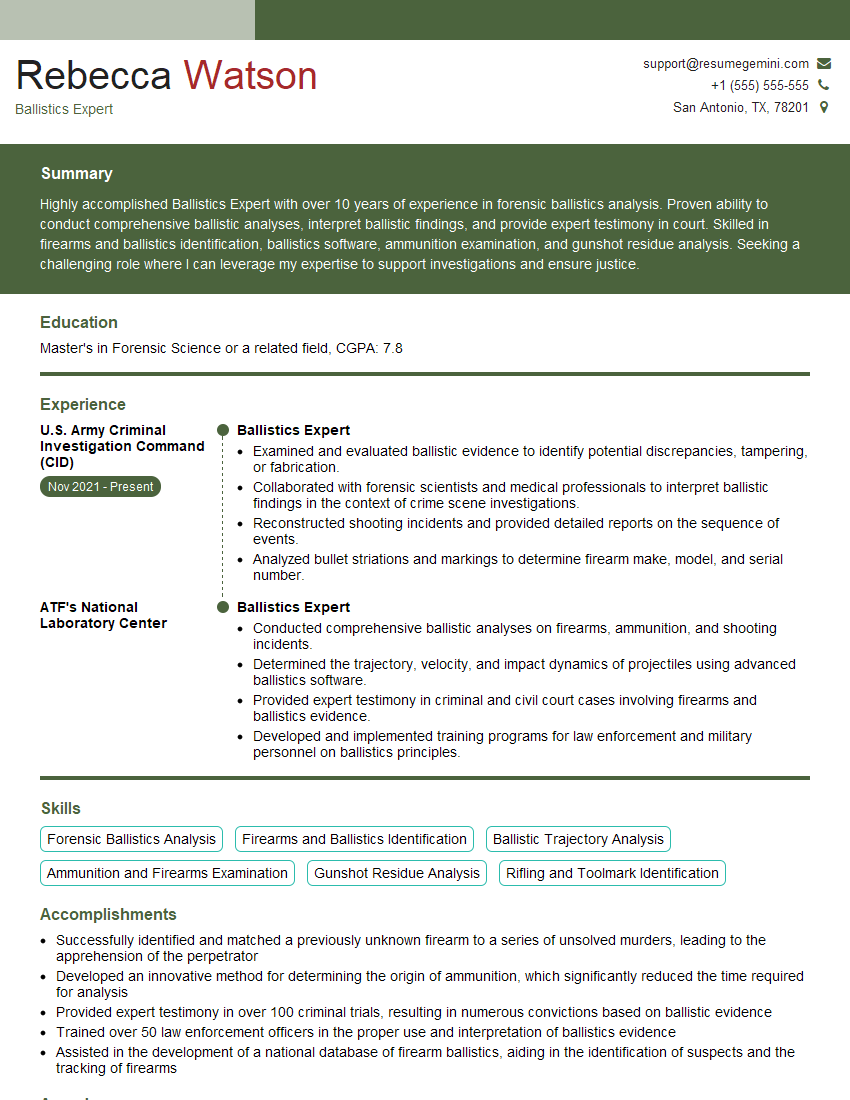
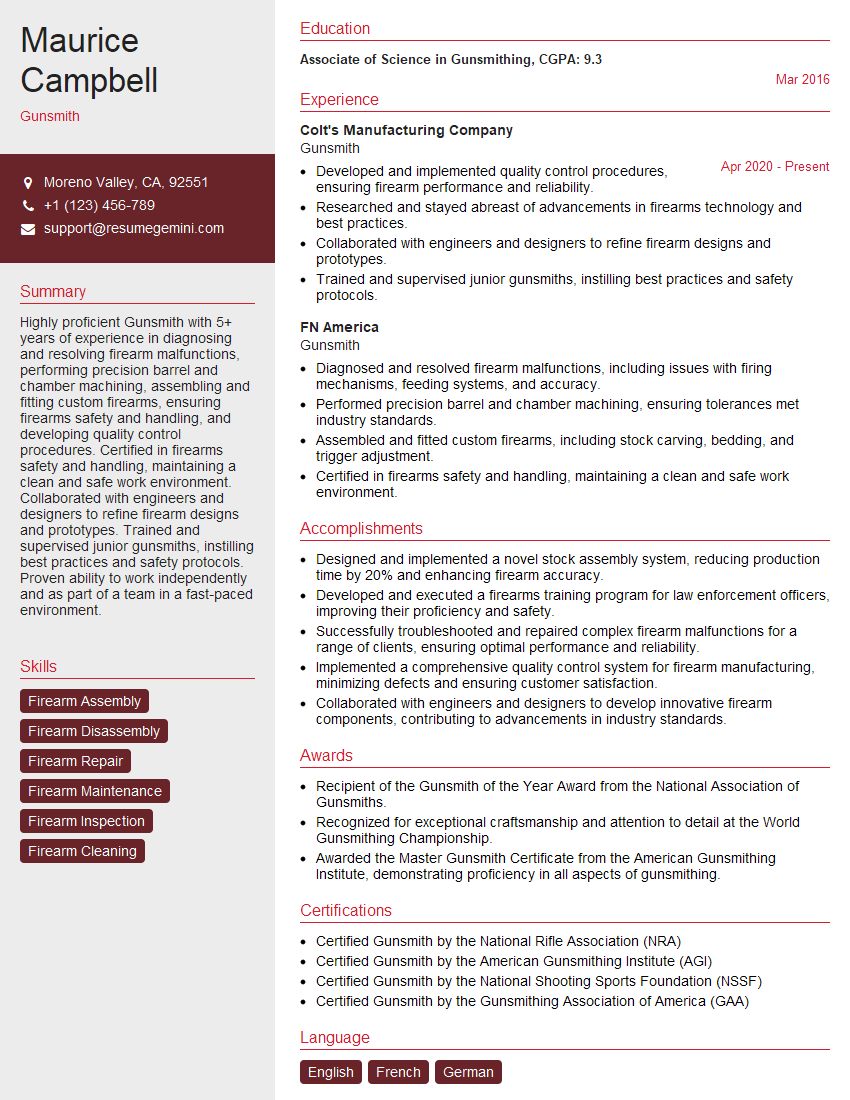
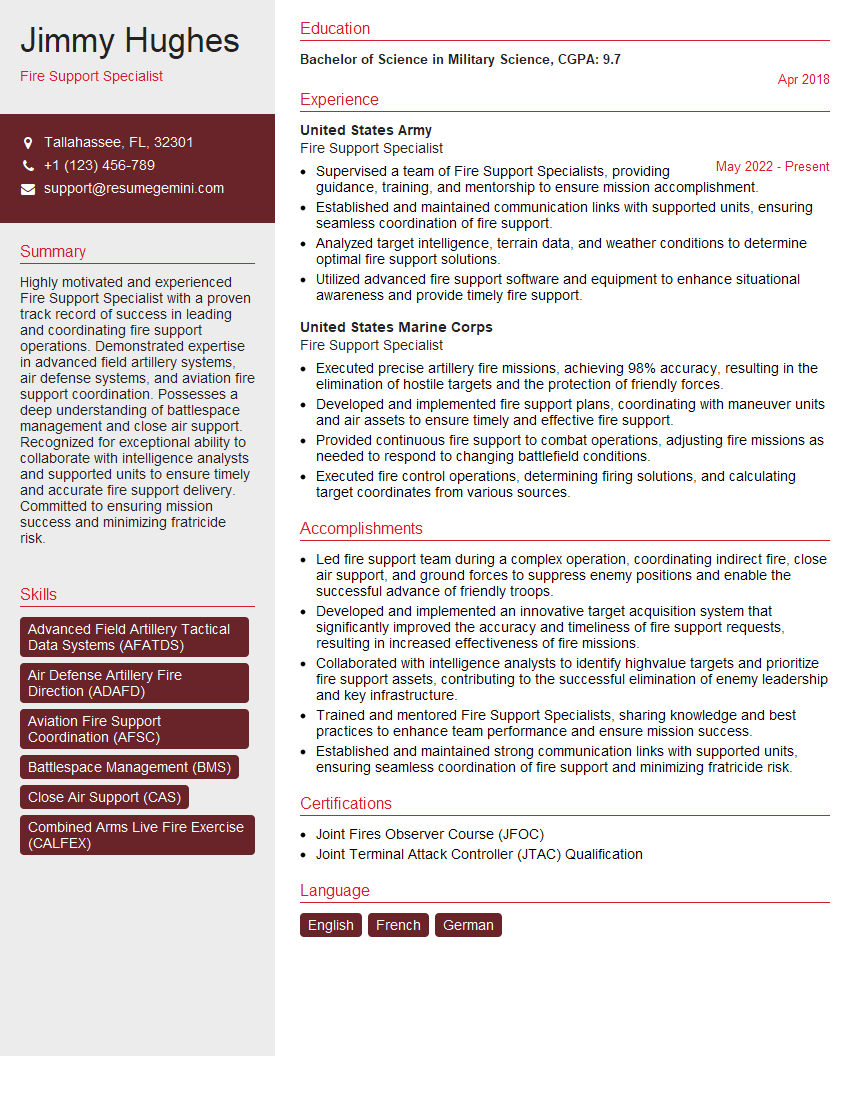
Mastering Weapon Systems Proficiency in machine guns and mortars is crucial for career advancement in the defense and security sectors. A strong understanding of these systems demonstrates competence, reliability, and a commitment to safety – highly valued qualities in this field. To significantly boost your job prospects, it’s essential to create a resume that effectively highlights your skills and experience using Applicant Tracking System (ATS)-friendly keywords. ResumeGemini is a trusted resource for building professional, ATS-optimized resumes that catch the eye of recruiters. We offer examples of resumes tailored to Weapon Systems Proficiency (Machine Guns, Mortars) to help you showcase your expertise and secure your dream role.

Explore more articles
Users Rating of Our Blogs
Share Your Experience
We value your feedback! Please rate our content and share your thoughts (optional).
What Readers Say About Our Blog
Very informative content, great job.
good