The thought of an interview can be nerve-wracking, but the right preparation can make all the difference. Explore this comprehensive guide to Weight Training interview questions and gain the confidence you need to showcase your abilities and secure the role.
Questions Asked in Weight Training Interview
Q 1. Explain the difference between concentric and eccentric muscle contractions.
Concentric and eccentric contractions are the two phases of a single muscle action, like lifting a weight. Think of a bicep curl: the concentric contraction is the shortening of the muscle as you lift the weight towards your shoulder. Your biceps are actively working to overcome the resistance. The eccentric contraction is the lengthening of the muscle as you slowly lower the weight back down. While this phase involves the muscle lengthening, it’s still actively working to control the movement and prevent it from dropping uncontrollably. Ignoring eccentric contractions is a mistake because they contribute significantly to muscle growth and strength development.
In short: Concentric is the lifting (muscle shortening), eccentric is the lowering (muscle lengthening, controlled).
- Concentric Example: The upward phase of a bench press.
- Eccentric Example: The downward phase of a squat.
Q 2. Describe the concept of progressive overload in weight training.
Progressive overload is the gradual increase in training demands over time to continuously challenge your muscles and promote growth. It’s the cornerstone of successful weight training. This ‘overload’ can manifest in several ways:
- Increasing weight: Adding more weight to the bar or machine.
- Increasing reps: Performing more repetitions with the same weight.
- Increasing sets: Adding more sets of the same exercise.
- Decreasing rest time: Shortening the rest periods between sets.
- Changing exercises: Progressing to more challenging variations of an exercise.
- Improving technique: Refining your form to allow for greater efficiency and heavier weights.
Imagine trying to build a house with only small bricks. You’d never finish! Progressive overload is like gradually moving to bigger bricks – constantly challenging your muscles to adapt and get stronger.
Q 3. What are the benefits and risks of using free weights versus machines?
Both free weights (dumbbells, barbells) and weight machines offer benefits, but they also carry different risks. The choice often depends on the individual’s training goals and experience level.
- Free Weights:
- Benefits: Improve balance, coordination, and core strength. Offer a wider range of motion and recruit more stabilizing muscles. Allow for more functional movements that translate better to real-life activities.
- Risks: Higher risk of injury due to improper form or instability. Require more skill and technique to perform correctly.
- Weight Machines:
- Benefits: Generally safer and easier to learn, making them ideal for beginners. Provide better isolation of specific muscle groups. Often have adjustable weight settings for easy progression.
- Risks: Limited range of motion, may not fully engage stabilizing muscles, potentially leading to muscle imbalances if relied on exclusively.
Example: A beginner might start with machines to build a foundation of strength and proper form before progressing to free weights. Experienced lifters often incorporate both into their routines to maximize benefits.
Q 4. How do you design a weight training program for a beginner?
A beginner weight training program should prioritize proper form, gradual progression, and injury prevention. Here’s a sample framework:
- Frequency: 2-3 full-body workouts per week, allowing for adequate rest between sessions.
- Exercises: Focus on compound movements that work multiple muscle groups simultaneously (squats, deadlifts, bench press, overhead press, rows). Include 1-2 isolation exercises to target specific muscle groups.
- Sets and Reps: Start with 2-3 sets of 8-12 repetitions for each exercise. This rep range promotes both strength and hypertrophy (muscle growth).
- Rest: 60-90 seconds rest between sets. Allow for adequate recovery between workouts.
- Progression: Gradually increase the weight, reps, or sets over time as you get stronger. Listen to your body and don’t push yourself too hard, especially initially.
- Warm-up: Begin each workout with 5-10 minutes of light cardio and dynamic stretching.
- Cool-down: End each workout with 5-10 minutes of static stretching.
It’s crucial to emphasize proper form over lifting heavy weight, especially during the initial phases.
Q 5. How do you assess a client’s fitness level before creating a program?
Assessing a client’s fitness level is crucial before designing a program. This involves a combination of methods:
- Health History Questionnaire: A detailed form collecting information about pre-existing medical conditions, injuries, and current activity levels. This helps identify potential limitations and contraindications.
- Movement Assessment: Evaluating posture, range of motion, and basic movement patterns to identify muscle imbalances or weaknesses.
- Fitness Testing: Performing simple assessments such as:
- Body Composition Measurement: Assessing body fat percentage to gauge overall health and fitness.
- Strength Testing: Using a 1-rep max (1RM) test to assess maximal strength in key lifts like squats, bench press, and deadlifts.
- Endurance Testing: Evaluating cardiovascular fitness using methods such as a timed run or step test.
Combining these methods paints a comprehensive picture of the client’s fitness level, enabling a tailored program that’s safe, effective, and progressive.
Q 6. Explain the importance of proper form and technique in weight training.
Proper form and technique are paramount in weight training. They directly impact the effectiveness of your workouts, minimize the risk of injury, and maximize results. Poor form can lead to:
- Reduced Muscle Activation: You may not be effectively targeting the intended muscle group, reducing the effectiveness of the exercise.
- Increased Risk of Injury: Incorrect form puts stress on joints and ligaments, increasing the risk of strains, sprains, and more serious injuries.
- Slower Progress: Inefficient movement patterns limit your ability to progressively overload your muscles.
Example: Improper form during squats can strain your knees or lower back, potentially leading to injury. Proper form ensures the weight is distributed evenly and the movement is controlled, protecting the joints and maximizing muscle activation.
It’s essential to prioritize learning and mastering correct technique, even if it means lifting lighter weights. Consider working with a qualified trainer to learn proper form for each exercise.
Q 7. How do you address muscle imbalances in a weight training program?
Muscle imbalances occur when some muscles are significantly stronger or more developed than their opposing muscles. This can lead to poor posture, reduced performance, and increased injury risk. Addressing them in a weight training program involves:
- Identifying Imbalances: Through movement assessments, observation, and possibly strength testing, pinpoint areas of weakness or disproportionate strength.
- Strengthening Weak Muscles: Focus on exercises targeting the weaker muscle groups. Use lighter weights and higher repetitions to build endurance and strength.
- Stretching Tight Muscles: In many cases, muscle imbalances involve tight muscles on one side paired with weak muscles on the opposite side. Incorporate static and dynamic stretching to improve flexibility and range of motion.
- Program Design: Balance your workouts to ensure both agonist (prime mover) and antagonist (opposing) muscles are adequately trained. For example, if you’re doing a lot of chest exercises, include plenty of back exercises to maintain balance.
- Prioritize Form: Even when targeting weaker muscle groups, maintaining good form is essential to avoid further imbalances or injuries.
Example: If someone has strong chest muscles but weak back muscles, they might experience rounded shoulders and back pain. The program should incorporate back exercises such as rows and pull-ups to strengthen the back muscles and improve posture.
Q 8. What are the common mistakes people make when lifting weights?
Many common mistakes hinder progress and can even lead to injury in weight training. These often stem from improper form, neglecting crucial elements like warm-up and cool-down, and a lack of understanding of progressive overload.
Poor Form: Lifting with incorrect technique compromises muscle activation, increases injury risk, and limits strength gains. For instance, rounding the back during squats puts immense strain on the spine. Think of it like trying to build a house on a shaky foundation – it won’t last.
Ignoring Warm-up/Cool-down: Skipping these crucial phases significantly increases the chance of strains and pulls. A proper warm-up prepares your muscles and joints, while a cool-down aids recovery.
Lack of Progressive Overload: The body adapts quickly. To continue making progress, you must consistently increase the challenge—whether by adding weight, reps, sets, or changing exercises. Simply doing the same routine week after week will plateau your results.
Ego Lifting: Lifting weights that are too heavy for proper form is a recipe for disaster. It’s far more effective to focus on controlled movements with perfect form using a weight you can handle.
Neglecting Rest and Recovery: Muscles grow during rest, not during workouts. Insufficient recovery between sets and workouts limits progress and increases the risk of overtraining.
Q 9. How do you motivate clients to adhere to their weight training program?
Motivating clients to stick with their weight training program requires a multifaceted approach that combines education, goal setting, and building a supportive relationship.
Setting Realistic Goals: Start with achievable goals that build confidence. Instead of aiming for a drastic transformation in a short time, focus on smaller, incremental milestones. Celebrating these successes keeps motivation high.
Education and Empowerment: Explain the ‘why’ behind the exercises and the program’s structure. Understanding the purpose fosters commitment. For example, explain how a specific exercise targets a particular muscle group and contributes to their overall fitness goals.
Tracking Progress: Use tools like workout logs, progress photos, or body measurements to showcase achievements visually. This provides tangible evidence of their hard work and fuels continued effort.
Building a Supportive Relationship: Create a positive and encouraging atmosphere. Be approachable, offer personalized feedback, and celebrate their successes. This fosters trust and builds motivation.
Finding Enjoyment: Help clients incorporate exercises they find fun. If they dread their workouts, adherence will suffer. Experimenting with different exercises and training styles can help.
Q 10. Describe different training splits (e.g., upper/lower, push/pull/legs).
Training splits are ways of organizing workouts to target different muscle groups on different days. This allows for adequate recovery and prevents overtraining.
Upper/Lower Split: This popular split divides workouts into upper body (chest, back, shoulders, arms) and lower body (legs, glutes) sessions. For instance, Monday could be upper body, Tuesday lower body, Wednesday rest, and so on.
Push/Pull/Legs Split: This focuses on movement patterns. ‘Push’ days involve pushing movements (chest, shoulders, triceps), ‘pull’ days involve pulling movements (back, biceps), and ‘leg’ days target the lower body. This allows for better muscle recovery as different muscle groups are targeted on different days.
Full Body Split: This involves working all major muscle groups in each workout. It’s a good choice for beginners or those with limited time. However, it requires careful consideration of volume and intensity to prevent overtraining.
Bro Split: This classic bodybuilding split focuses on one muscle group per day (chest, back, legs, shoulders, arms). It’s a higher volume split and requires more recovery time.
The best split depends on individual goals, experience level, and recovery capacity. A well-structured program considers these factors.
Q 11. Explain the principles of periodization in strength training.
Periodization is a systematic planning of training that involves varying the volume, intensity, and type of training over time to optimize performance and prevent overtraining. It’s like strategically planning a marathon – you don’t run at full speed the entire time.
Macrocycle: The longest phase, typically a year, encompassing the overall training plan.
Mesocycle: Intermediate phases (e.g., 4-8 weeks) within the macrocycle, each with a specific goal (strength, hypertrophy, power).
Microcycle: Shortest phase (e.g., 1-4 weeks) representing a weekly or bi-weekly training plan.
For example, a macrocycle could focus on improving strength. The mesocycles might prioritize strength building, peaking for competition, and active recovery. Microcycles would then detail the specific workouts within each mesocycle.
Q 12. How do you modify exercises for clients with injuries or limitations?
Modifying exercises for clients with injuries or limitations is crucial to prevent further harm and maintain progress. This requires careful assessment and adaptation.
Range of Motion Adjustments: Reduce the range of motion for exercises that cause pain. For example, instead of a full squat, a client with knee pain might perform partial squats or box squats.
Alternative Exercises: Replace exercises that aggravate injuries with suitable alternatives. For example, if bench presses are problematic, incline dumbbell presses might be a better option.
Assisted or Supported Movements: Use resistance bands, machines, or spotters to provide assistance or support, allowing the client to perform the exercise safely and effectively.
Reduced Weight or Resistance: Lower the weight or resistance used to reduce stress on the injured area while still stimulating muscle growth.
Proper Form Emphasis: Intensive focus on maintaining perfect form is paramount to prevent strain on compromised areas.
Always consult with a healthcare professional or physical therapist before modifying exercises for clients with injuries.
Q 13. What are the key components of a warm-up and cool-down?
Warm-up and cool-down are essential for injury prevention and enhanced performance. They prepare the body for exercise and aid recovery afterwards.
Warm-up (5-10 minutes): Includes light cardio (e.g., jogging, cycling) to increase blood flow and body temperature, followed by dynamic stretches (e.g., arm circles, leg swings) to improve joint mobility and muscle flexibility. Think of this as gently waking up your muscles and joints.
Cool-down (5-10 minutes): Focuses on static stretches (holding each stretch for 20-30 seconds), which lengthen muscles and improve flexibility, promoting blood flow and reducing muscle soreness. This helps your body gradually return to its resting state.
Proper warm-up and cool-down are not optional, but integral parts of any effective weight training program.
Q 14. Explain the importance of proper nutrition for weight training.
Proper nutrition is crucial for building muscle, recovering effectively, and maximizing the benefits of weight training. It fuels muscle growth and repair, and influences overall training performance.
Sufficient Protein Intake: Protein is the building block of muscle tissue. Aim for 1.6-2.2 grams of protein per kilogram of body weight daily to support muscle growth and repair.
Carbohydrate Consumption: Carbohydrates provide the energy needed for workouts. Consume enough carbohydrates to support training intensity and recovery. Focus on complex carbohydrates like whole grains and vegetables for sustained energy.
Healthy Fats: Essential fats are necessary for hormone production and overall health. Include sources like avocados, nuts, and olive oil in your diet.
Hydration: Water is vital for numerous bodily functions, including muscle function and recovery. Drink plenty of water throughout the day, especially before, during, and after workouts.
Micronutrients: Vitamins and minerals support various metabolic processes, including muscle growth and recovery. A balanced diet rich in fruits and vegetables ensures adequate intake.
Consult a registered dietitian or nutritionist for personalized dietary recommendations tailored to your individual needs and training goals. Nutrition is as important as the training itself.
Q 15. How do you incorporate plyometrics into a weight training program?
Plyometrics, or jump training, are explosive exercises that improve power. Incorporating them into a weight training program requires careful planning. It’s best to introduce plyometrics after a solid base of strength has been established. Otherwise, the risk of injury increases significantly.
Here’s how I would integrate plyometrics:
- Phase 1: Strength Base: Before beginning plyometrics, the client must demonstrate sufficient strength and stability in foundational movements like squats, lunges, and presses. This phase focuses on building a strong foundation to prevent injury during more explosive movements.
- Phase 2: Introduction of Plyometrics: Start with low-impact plyometrics like box jumps (low height), jump squats (controlled), and medicine ball throws. Focus on proper technique over intensity. Begin with fewer repetitions and sets.
- Phase 3: Progression: Gradually increase the intensity and volume of plyometric exercises. This could involve increasing the height of the box jumps, adding weight to medicine ball throws, or performing more advanced plyometric drills like depth jumps.
- Phase 4: Integration: Plyometrics can be incorporated into a weight training split, perhaps on a separate day or strategically placed within a circuit training session, ensuring adequate rest between sets to avoid fatigue.
Example: A client training for increased vertical jump height might start with bodyweight jump squats (Phase 2), then progress to jump squats with added weight (Phase 3) and finally integrate box jumps into their leg day (Phase 4). Always prioritize perfect form; improper technique can lead to serious injury.
Career Expert Tips:
- Ace those interviews! Prepare effectively by reviewing the Top 50 Most Common Interview Questions on ResumeGemini.
- Navigate your job search with confidence! Explore a wide range of Career Tips on ResumeGemini. Learn about common challenges and recommendations to overcome them.
- Craft the perfect resume! Master the Art of Resume Writing with ResumeGemini’s guide. Showcase your unique qualifications and achievements effectively.
- Don’t miss out on holiday savings! Build your dream resume with ResumeGemini’s ATS optimized templates.
Q 16. Discuss the role of flexibility and mobility in weight training.
Flexibility and mobility are crucial for optimal weight training performance and injury prevention. Flexibility refers to the range of motion at a joint, while mobility encompasses the ability to move through that range of motion efficiently and effectively.
Role of Flexibility: Adequate flexibility helps prevent muscle strains and tears. Tight muscles limit range of motion, reducing the effectiveness of exercises and increasing the risk of injury. For example, tight hamstrings can hinder proper squat depth, potentially causing lower back strain.
Role of Mobility: Mobility focuses on the control and coordination of movement through a full range of motion. Good mobility ensures that joints move smoothly and efficiently, leading to better performance, increased power output, and reduced injury risk. A lack of mobility in the shoulders can limit the effectiveness of bench presses, leading to compensatory movement patterns and potential injury.
Incorporating Flexibility and Mobility: I integrate flexibility and mobility work into training programs in several ways:
- Dynamic Stretching: Performed before workouts to increase blood flow and prepare muscles for activity (arm circles, leg swings).
- Static Stretching: Held stretches after workouts to increase flexibility (holding a hamstring stretch).
- Mobility Drills: Incorporating exercises to improve joint range of motion (foam rolling, dynamic warm-ups).
Regular flexibility and mobility work are essential for long-term training success and injury prevention. It’s often neglected, but it is as critical as the weight training itself.
Q 17. How do you progress a client’s training program over time?
Progressing a client’s training program requires a systematic approach focusing on gradual overload and individual needs. The key is to continuously challenge the body without causing overtraining or injury. I typically employ the following strategies:
- Progressive Overload: Gradually increasing the weight, reps, sets, or intensity over time. This could involve adding weight to the bar, increasing the number of repetitions or sets, reducing rest time, or incorporating more challenging exercises.
- Variation: Introducing new exercises or training methods to prevent plateaus and stimulate muscle growth. This might involve changing the rep range, adding variations of the same exercise, or including different training methods such as plyometrics or supersets.
- Periodization: Dividing the training program into cycles with specific goals (strength, hypertrophy, power) and adjusting the training volume, intensity, and frequency accordingly. This allows for planned rest and recovery periods, preventing overtraining.
- Listening to the Client: Monitoring progress closely, including physical and mental fatigue. Adjusting the program based on the client’s response to training, including any pain or discomfort.
Example: A beginner might start with 3 sets of 10 repetitions for each exercise. Over time, they might progress to 4 sets of 12 repetitions, then increase the weight, or introduce more advanced variations of the exercises.
Q 18. What are the signs of overtraining and how do you address them?
Overtraining is a state of exhaustion caused by excessive training without adequate rest and recovery. Recognizing the signs early is crucial for preventing serious issues.
Signs of Overtraining:
- Decreased Performance: Noticeable decline in strength, endurance, and speed.
- Increased Resting Heart Rate: A consistently elevated heart rate, even at rest.
- Fatigue and Exhaustion: Persistent tiredness, even after sufficient sleep.
- Muscle Soreness: Prolonged muscle soreness, even days after training.
- Sleep Disturbances: Difficulty sleeping or poor sleep quality.
- Mood Changes: Increased irritability, anxiety, or depression.
- Decreased Appetite: Loss of appetite or significant changes in eating habits.
- Frequent Illness: More susceptible to colds, flu, or other infections.
Addressing Overtraining:
- Reduce Training Volume: Decrease the number of sets, reps, or training days.
- Increase Rest and Recovery: Prioritize sleep, manage stress, and allow for adequate rest between workouts.
- Nutrition: Ensure adequate protein and calorie intake to support muscle recovery.
- Hydration: Drink plenty of water to support bodily functions.
- Consult a Professional: If symptoms persist, consult a physician or physical therapist.
Prevention is key. Incorporating deload weeks (reduced training volume) into a program helps prevent overtraining. Proper nutrition and sufficient sleep are also vital.
Q 19. How do you incorporate different training methods (e.g., hypertrophy, strength, power)?
Different training methods—hypertrophy (muscle growth), strength (maximal force production), and power (force x velocity)—require different approaches. I strategically combine them in a client’s program based on their goals and experience level.
Hypertrophy Training: Emphasizes higher repetitions (8-12 or even 15-20), moderate weight, shorter rest periods (60-90 seconds), and a focus on controlled movements. This stimulates muscle protein synthesis, leading to muscle growth.
Strength Training: Focuses on lower repetitions (1-5), heavier weights, longer rest periods (2-5 minutes), and maximal effort. This improves the nervous system’s ability to recruit muscle fibers, leading to increased strength.
Power Training: Combines strength and speed, using explosive movements with moderate weight and lower repetitions (1-5), with emphasis on fast concentric contractions (e.g., plyometrics, Olympic lifts). This improves power output.
Integration: I often use a periodization approach, cycling through different training methods over time. For example, a program might start with a hypertrophy phase to build a foundation of muscle mass, followed by a strength phase to increase maximal strength, and finally a power phase to improve power output. Within a single training week, I might incorporate strength training on one day and hypertrophy training on another.
Example Program (Simplified):
- Week 1-4 (Hypertrophy): 3 days/week; 3 sets of 10-12 reps; 60-90 second rest.
- Week 5-8 (Strength): 2 days/week; 3 sets of 3-5 reps; 2-3 minutes rest.
- Week 9-12 (Power): 2 days/week; 3 sets of 1-3 reps; 3-5 minutes rest. Incorporate plyometrics.
The specific combination and progression depend heavily on the individual’s goals and capabilities.
Q 20. Explain the concept of repetition maximum (RM).
Repetition Maximum (RM) refers to the maximum weight a person can lift for a given number of repetitions with proper form. For example, a 1RM is the heaviest weight you can lift for one repetition, a 5RM is the heaviest weight you can lift for five repetitions, and so on.
Importance of RM: RM is a crucial concept in weight training because it allows for a standardized measure of strength and helps to tailor training programs to individual capabilities. It helps to ensure that workouts are challenging enough to promote progress, but not so challenging as to risk injury.
Determining RM: Determining a client’s RM can be done through various testing protocols, involving attempts at lifting progressively heavier weights to find the limit for the desired repetition range. Safety is paramount; spotters should always be used when performing heavy lifts.
Practical Application: Once the RM is determined, I use this information to design training programs that are appropriately challenging. For example, if a client’s 1RM bench press is 100kg, we might work with weights representing 70-80% of their 1RM for hypertrophy training (higher reps), or 85-95% for strength training (lower reps).
Q 21. What safety precautions are essential when supervising weight training?
Safety is paramount in weight training. Here are essential precautions I take when supervising clients:
- Proper Warm-up: Ensure clients adequately warm up before each session, including dynamic stretching and light cardio.
- Correct Technique: Thoroughly teach clients the correct form and technique for each exercise. Observe closely during lifts and correct any errors immediately.
- Spotting: Utilize spotters when lifting heavy weights, especially for exercises like bench press, squats, and overhead press.
- Weight Selection: Guide clients in selecting appropriate weights that challenge them without compromising form or increasing injury risk.
- Equipment Maintenance: Ensure that all equipment is in good working order and properly maintained. Report any damage immediately.
- Emergency Procedures: Be aware of emergency procedures and have a plan in place in case of injury.
- Client Communication: Maintain open communication with clients, encouraging them to report any pain or discomfort immediately. Adjust the training plan accordingly.
- Sufficient Space: Ensure adequate space around equipment to avoid collisions or accidents.
- Appropriate Footwear: Insist that clients wear appropriate footwear suitable for weight training.
By consistently implementing these safety precautions, I create a safe and productive training environment minimizing the risk of injury and maximizing client success.
Q 22. How do you handle client plateauing in strength gains?
Plateauing in strength gains is a common challenge, but it’s rarely an insurmountable roadblock. It simply means your body has adapted to the current training stimulus. To overcome this, we need to strategically change the program. This involves manipulating several key variables: volume (total sets and reps), intensity (weight lifted), rest periods, exercise selection, and training frequency.
Periodization: Implementing a periodization plan is crucial. This involves cycling through different training phases (e.g., hypertrophy, strength, power) to continuously challenge the body. For example, after a strength phase focusing on heavy weights and low reps, we might shift to a hypertrophy phase with higher reps and moderate weight to promote muscle growth, which will, in turn, support further strength gains.
Progressive Overload: This fundamental principle requires consistently increasing the demands placed on the muscles. If a client can comfortably perform 3 sets of 10 reps with a given weight for several weeks, it’s time to increase the weight, reps, sets, or reduce rest periods. We might also introduce new exercises to target the muscles from different angles.
Addressing Technique: Sometimes a plateau is due to suboptimal form. A thorough assessment of their lifting technique helps identify and correct any inefficiencies. Proper form maximizes muscle activation and minimizes risk of injury.
Debloating: Sometimes plateaus are due to non-training factors, like lack of sleep, poor nutrition, stress, and overtraining. Addressing these factors is just as important as the workout itself.
Variation: Introducing new exercises, rep ranges, or training methods (e.g., drop sets, supersets) can stimulate further adaptations and break through plateaus. We can also explore different training splits (e.g., upper/lower, push/pull/legs).
For instance, I had a client who plateaued on his bench press. After assessing his technique and finding slight flaws, we corrected his form. We also incorporated drop sets and paused reps, increasing the training volume and intensity, which helped him break through the plateau.
Q 23. Describe different types of resistance training equipment.
Resistance training equipment comes in a wide variety, each with its own advantages and disadvantages. The choice depends on the client’s goals, experience, and access to resources.
Free Weights: These include dumbbells and barbells. They offer excellent functional strength development and require greater balance and stabilization, improving overall coordination. However, they necessitate proper technique to prevent injuries.
Machines: Machines offer a guided movement, making them easier to learn and reducing the risk of injury, especially for beginners. They are effective for isolating specific muscle groups but might limit functional strength development compared to free weights.
Resistance Bands: These are versatile and portable, providing variable resistance throughout the range of motion. They’re excellent for rehabilitation, warm-ups, and bodyweight exercises, but might not provide sufficient resistance for advanced lifters.
Cable Machines: These offer consistent tension throughout the range of motion, making them suitable for both strength and hypertrophy training. They allow for various exercises and can be adjusted for different levels of resistance.
Bodyweight Training: This uses the individual’s own body weight as resistance, offering a highly functional and accessible way to train strength. Examples include push-ups, pull-ups, squats, and lunges. It’s an excellent option for beginners or those with limited resources.
Q 24. How do you adapt a weight training program for different age groups?
Adapting weight training programs for different age groups requires careful consideration of physical capabilities and limitations.
Children and Adolescents: Focus should be on proper form, foundational movements, and building a base level of strength and fitness. Heavy weights are avoided, and the emphasis is on fun, engaging exercises to promote lifelong participation. A focus on proper technique and injury prevention is paramount.
Adults (18-65): This group enjoys a wider range of options. Programs can be tailored to specific goals (strength, hypertrophy, endurance). A combination of free weights and machines may be used, with progressive overload consistently applied.
Older Adults (65+): Program design prioritizes maintaining function and preventing injury. A focus on mobility, balance, and flexibility exercises is crucial. The use of lighter weights, higher repetitions, and longer rest periods is often necessary. Exercises that improve bone density are highly recommended. Careful consideration of pre-existing health conditions is essential.
For instance, while an adult might perform heavy squats, an older adult might focus on bodyweight squats or chair squats with lighter resistance bands to maintain functionality and prevent falls.
Q 25. Explain the difference between strength training and power training.
While both strength and power training involve resistance exercises, they differ significantly in their primary goals and methodologies:
Strength Training: Aims to maximize the amount of force a muscle can generate in a single maximal effort. This usually involves lifting heavy weights with low repetitions (1-5 reps) and longer rest periods. The focus is on maximal strength development.
Power Training: Focuses on maximizing the rate of force production, essentially how quickly you can move a weight. This involves incorporating exercises that emphasize speed and explosive movements, often using lighter weights and higher repetitions (3-5 reps) with shorter rest periods. Examples include plyometrics (box jumps, jump squats) and Olympic lifts (clean and jerk, snatch). The focus is on improving speed and power output.
Think of it this way: strength is how much weight you can lift, while power is how quickly you can lift it. Both are important aspects of fitness and can complement each other in a comprehensive training program.
Q 26. What is your experience with different testing methods for assessing strength?
Assessing strength involves various methods, each providing different insights. I have experience with several:
1-Rep Max (1RM): This is the gold standard for assessing maximal strength. It’s the heaviest weight an individual can lift for one repetition with proper form. While effective, it carries a higher risk of injury and is not suitable for everyone. We often estimate 1RM using submaximal testing protocols.
Submaximal Testing: This involves lifting weights at different percentages of the estimated 1RM, allowing us to predict the 1RM based on performance. It reduces the risk of injury compared to direct 1RM testing.
Isometric Testing: Measures the maximum force produced during a static contraction (no movement). This method is useful for assessing strength in specific joint angles or for individuals with injuries who can’t perform dynamic movements. Handgrip dynamometry is a common example.
Isokinetic Testing: This uses specialized equipment that controls the speed of movement, measuring the force produced at different speeds. It is valuable for assessing both strength and power capabilities. However, it requires access to specialized equipment.
The choice of testing method depends on the client’s goals, training experience, and available equipment. A combination of methods often provides the most comprehensive assessment.
Q 27. How do you educate clients about proper weight lifting techniques?
Educating clients on proper weightlifting techniques is fundamental to injury prevention and maximizing results. My approach is multi-faceted:
Demonstrations: I demonstrate correct form, emphasizing key checkpoints and cues. I use mirrors so clients can see their own form and compare it to mine.
Hands-on Coaching: I provide individual attention, making adjustments and corrections as needed. This direct feedback is essential for improving form.
Visual Aids: I utilize videos, diagrams, and other visuals to enhance understanding of the exercise and correct technique.
Verbal Cues: I provide concise and specific verbal cues to guide clients through the movement. For instance, “squeeze your glutes at the top of the squat,” or “keep your back straight during the deadlift.”
Progressive Loading: We start with lighter weights to focus on mastering technique before gradually increasing the load.
Regular Assessments: I regularly assess form to identify any deviations and make necessary adjustments to maintain safety and effectiveness.
I believe in making learning fun and engaging, often comparing movements to everyday actions to create relatable analogies.
Q 28. What is your experience with programming for different athletic populations?
My experience spans various athletic populations, requiring tailored program designs. I’ve worked with:
Endurance Athletes: Programs incorporate strength training to improve performance and injury prevention. This often involves moderate weight and higher repetitions to enhance muscular endurance.
Power Athletes (e.g., sprinters, jumpers): Focus is on power development through plyometrics and Olympic lifts to improve speed, agility, and explosiveness. This involves shorter rest periods and explosive movements.
Team Sport Athletes (e.g., basketball, football): Programs combine strength, power, and conditioning elements to enhance performance in their respective sports. Emphasis is on functional exercises simulating game-specific movements.
Combat Sport Athletes (e.g., MMA, Boxing): These programs emphasize strength, power, and explosive movements, along with core stability and conditioning, to improve speed, power, and overall performance.
Understanding the specific demands of each sport is crucial in developing a targeted program that complements their training and enhances their athletic performance. For example, a marathon runner’s program would differ significantly from a weightlifter’s program.
Key Topics to Learn for Weight Training Interview
- Exercise Physiology: Understanding the physiological adaptations to resistance training, including muscle hypertrophy, strength gains, and hormonal responses. Practical application: Explaining how different training programs (e.g., high-volume, low-volume) elicit specific adaptations.
- Program Design: Principles of exercise prescription, including setting appropriate training goals, selecting exercises, determining sets, reps, and rest periods, and periodization. Practical application: Designing a training program for a specific client goal (e.g., strength increase, muscle growth, fat loss).
- Biomechanics of Lifting: Understanding proper form and technique for various exercises to maximize effectiveness and minimize risk of injury. Practical application: Identifying and correcting common lifting errors and explaining the biomechanical reasons behind those corrections.
- Nutrition for Weight Training: The role of macronutrients (protein, carbohydrates, fats) and micronutrients in supporting muscle growth, recovery, and overall performance. Practical application: Developing a nutrition plan to complement a weight training program.
- Safety and Injury Prevention: Identifying potential risks associated with weight training and implementing strategies to mitigate these risks, including proper warm-up and cool-down procedures, spotting techniques, and recognizing signs of overtraining. Practical application: Developing safety protocols for a weight training facility or program.
- Client Communication and Motivation: Effective strategies for communicating with clients, motivating them to adhere to their training programs, and adapting programs to individual needs and preferences. Practical application: Describing methods for building rapport with clients and addressing common challenges in adherence.
- Advanced Training Techniques: Understanding and applying advanced training methodologies such as drop sets, supersets, rest-pause sets, and plyometrics. Practical application: Explaining the benefits and limitations of each technique and when to appropriately incorporate them into a program.
Next Steps
Mastering weight training principles and practical application is crucial for career advancement in the fitness industry. A strong understanding of these concepts will significantly improve your interview performance and open doors to exciting opportunities. To enhance your job prospects, create an ATS-friendly resume that highlights your skills and experience effectively. ResumeGemini is a trusted resource to help you build a professional resume that gets noticed. Examples of resumes tailored to the Weight Training field are available to help you get started.

Fitness Director Resume Sample

Wellness Coach Resume Sample

Rehabilitation Specialist Resume Sample
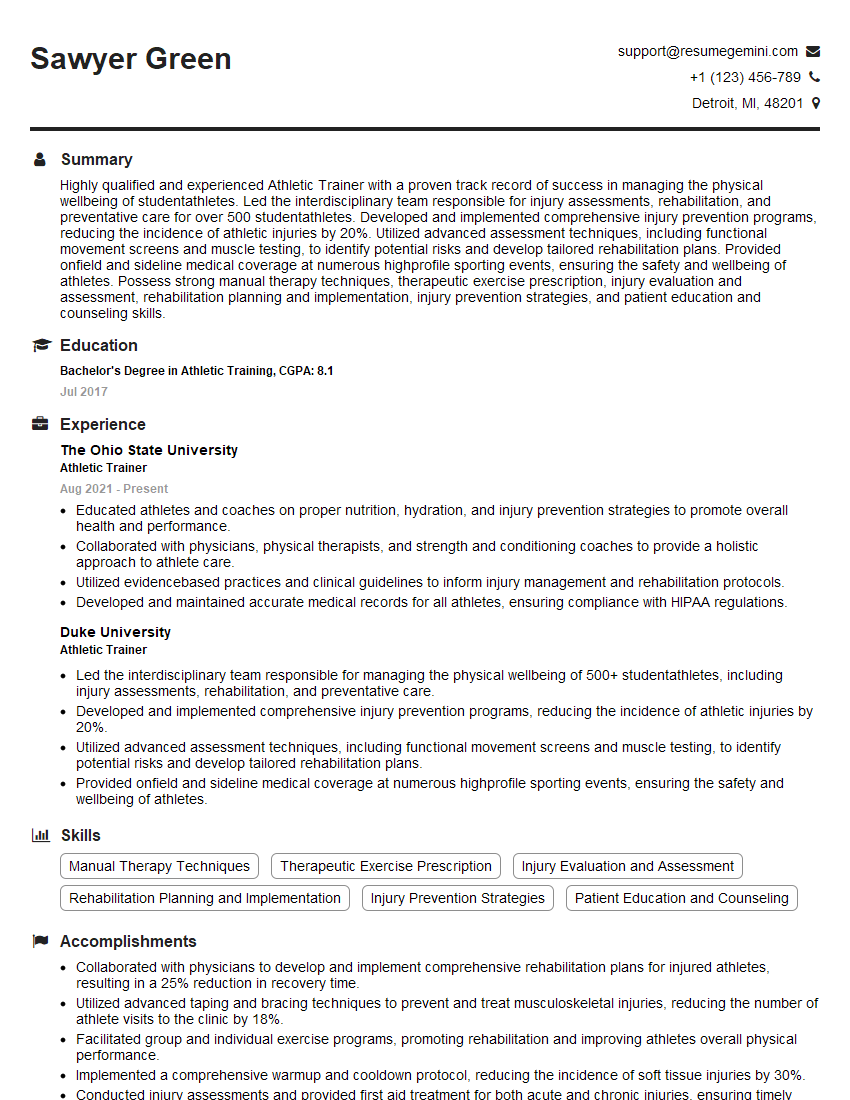
Athletic Trainer Resume Sample
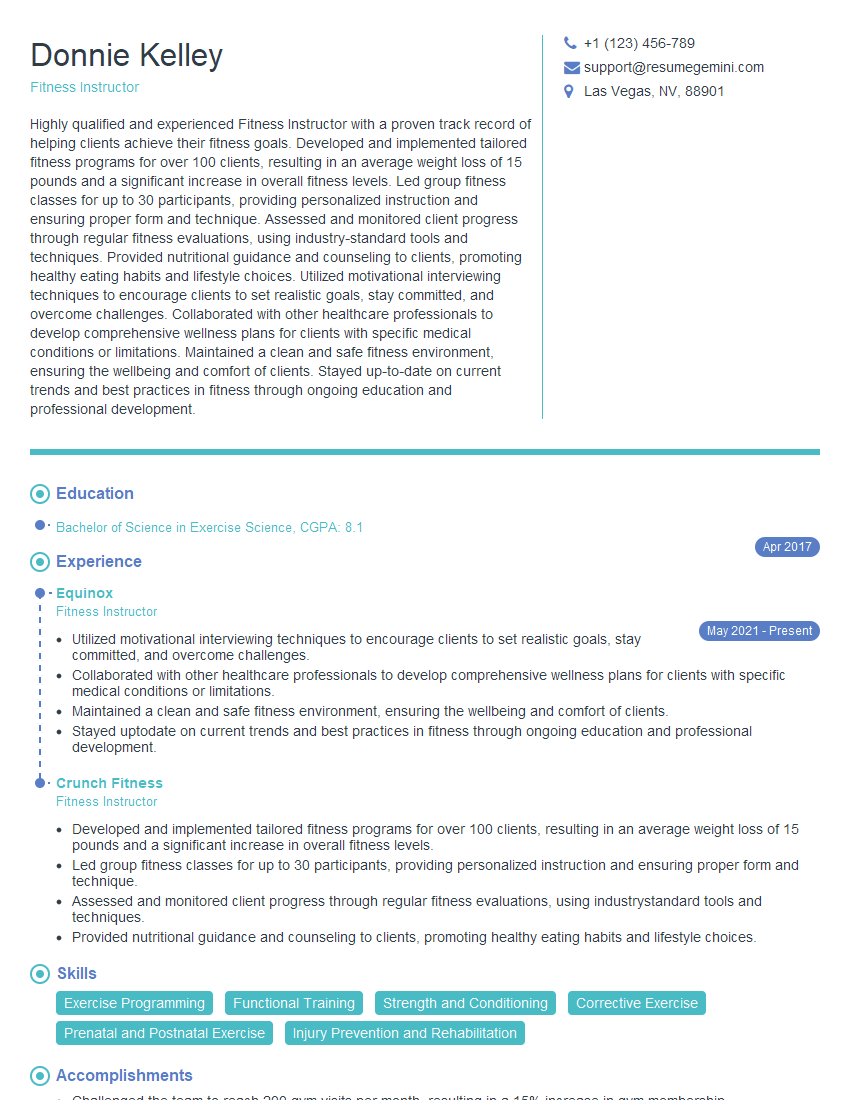
Fitness Instructor Resume Sample
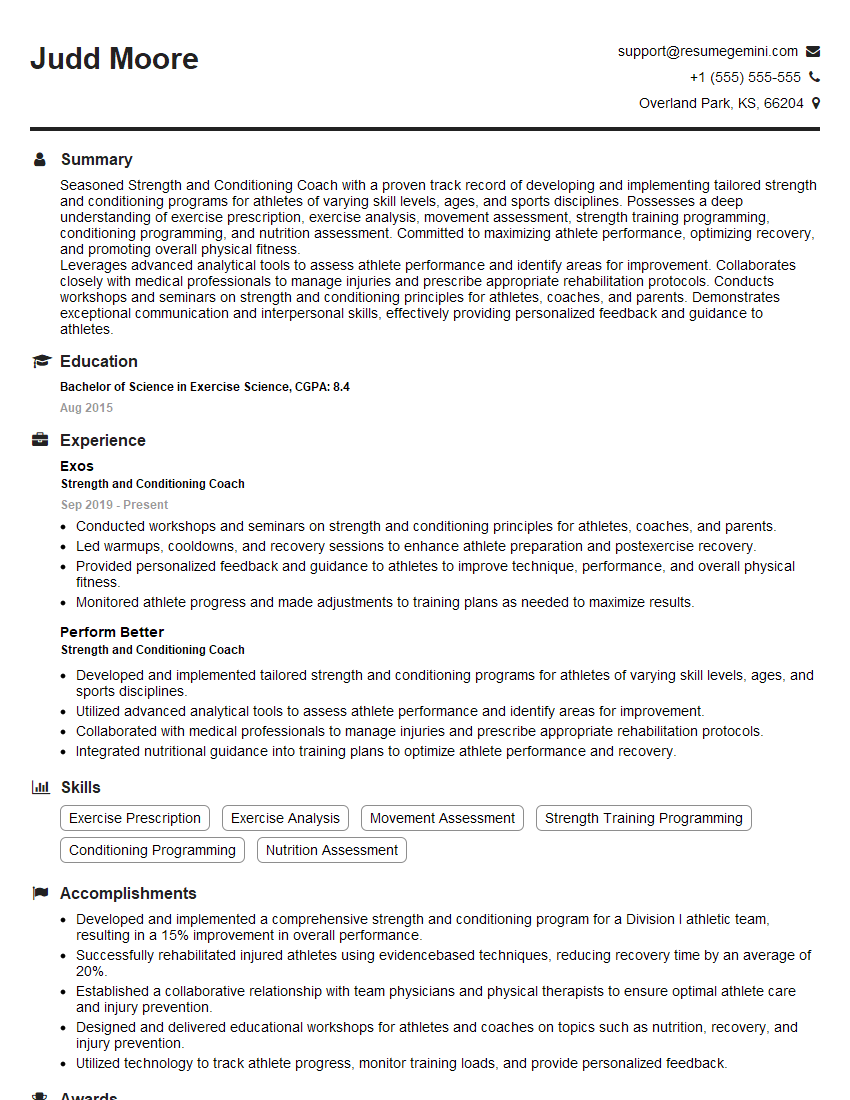
Strength and Conditioning Coach Resume Sample
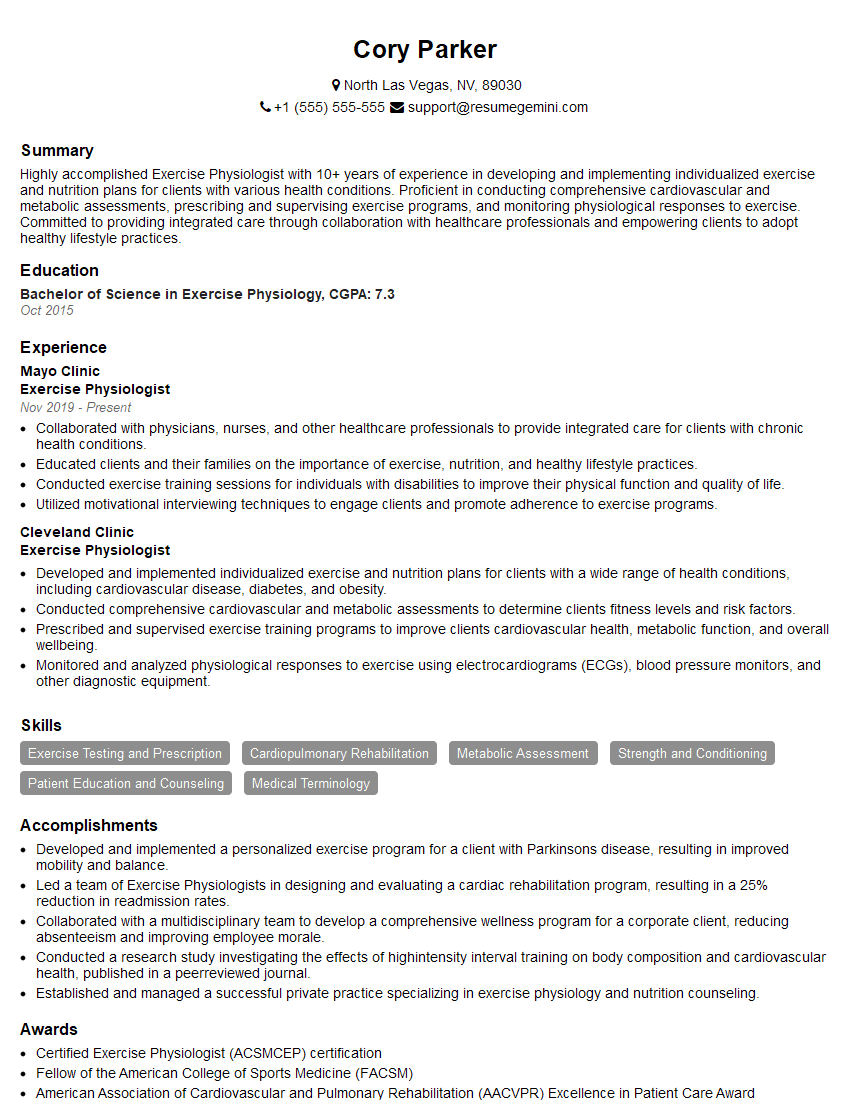
Exercise Physiologist Resume Sample
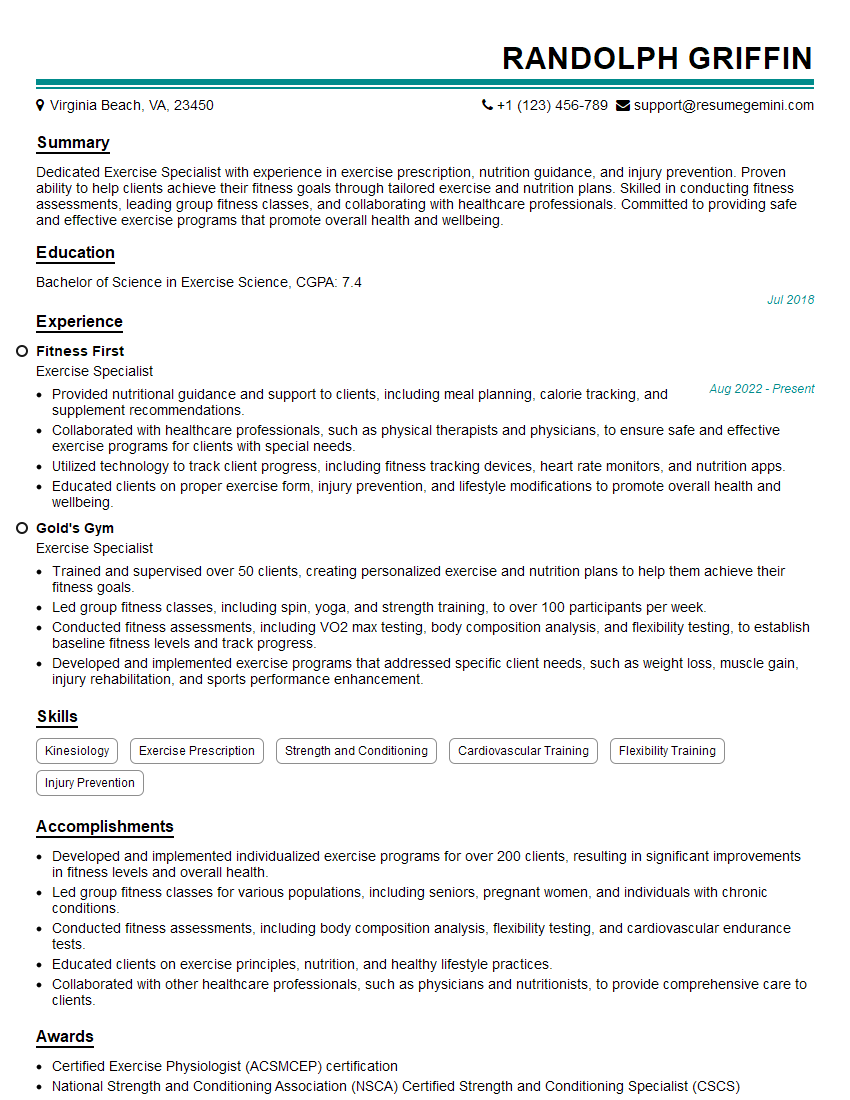
Exercise Specialist Resume Sample
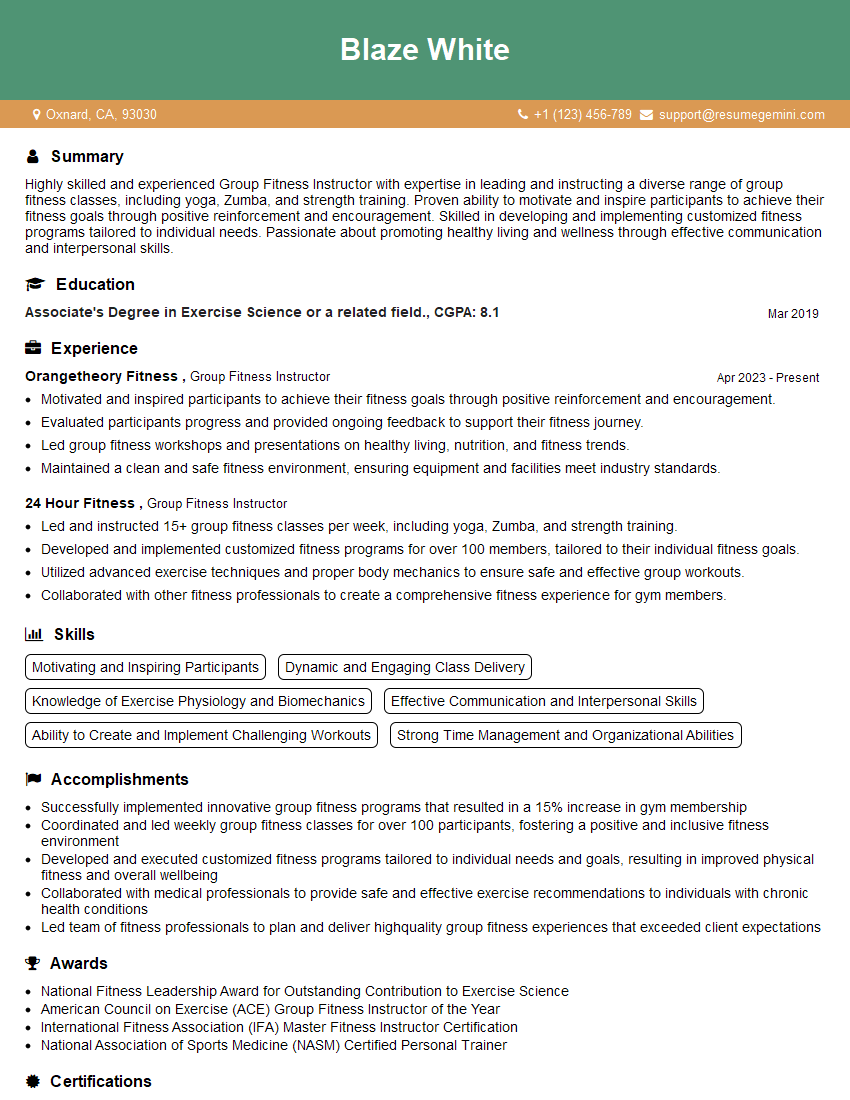
Group Fitness Instructor Resume Sample
Explore more articles
Users Rating of Our Blogs
Share Your Experience
We value your feedback! Please rate our content and share your thoughts (optional).
What Readers Say About Our Blog
Very informative content, great job.
good