The right preparation can turn an interview into an opportunity to showcase your expertise. This guide to Welding and Rigging interview questions is your ultimate resource, providing key insights and tips to help you ace your responses and stand out as a top candidate.
Questions Asked in Welding and Rigging Interview
Q 1. What welding processes are you proficient in?
Throughout my career, I’ve become highly proficient in several welding processes. My expertise primarily lies in Gas Metal Arc Welding (GMAW), often called MIG welding, Gas Tungsten Arc Welding (GTAW), better known as TIG welding, and Shielded Metal Arc Welding (SMAW), commonly referred to as stick welding. I also possess experience with Flux-Cored Arc Welding (FCAW), particularly useful for outdoor applications where shielding gas isn’t readily available. Each process offers unique advantages depending on the material, thickness, and desired weld quality. For example, MIG welding excels in speed and ease of use for thicker materials, while TIG welding provides exceptional precision and control for thinner materials and intricate welds. Stick welding is robust and portable, making it ideal for field work.
Q 2. Explain the difference between MIG and TIG welding.
MIG and TIG welding are both arc welding processes, but they differ significantly in their techniques and applications. MIG welding uses a continuously fed consumable electrode wire that acts as both the filler material and the electrode. The arc is shielded by a gas, usually CO2 or a mixture of argon and CO2. This process is fast and efficient, making it suitable for mass production and joining thicker materials. Think of it like a hot glue gun, but with molten metal.
TIG welding, on the other hand, employs a non-consumable tungsten electrode to create the arc. A separate filler rod is used to add material to the weld pool. The arc is shielded by an inert gas, usually argon. This method offers superior control and allows for incredibly precise welds on thinner materials and different metals. Imagine it as a more delicate, artistic approach to welding, ideal for detailed work and critical applications. The difference in speed and precision is a key factor in selecting between the two processes.
Q 3. Describe your experience with different types of welding consumables.
My experience with welding consumables is extensive, encompassing various electrode wires, filler rods, and shielding gases. In MIG welding, I’ve worked with solid wires of different compositions (e.g., steel, stainless steel, aluminum), each tailored to the base metal being welded. The choice of wire diameter also impacts penetration and weld bead characteristics. With TIG welding, I’ve used various tungsten electrodes (pure tungsten, thoriated tungsten, etc.), selecting the type based on the application and AC/DC power source. Filler rods are chosen to match the base metal and desired weld properties. In both processes, the selection of shielding gas is crucial. I have used argon, CO2, and various gas mixtures to optimize arc stability, penetration, and weld quality. For stick welding, my experience includes various electrode coatings (e.g., E6010, E7018), each designed for specific welding positions and metal types. Each consumable choice is a critical decision impacting the weld’s integrity.
Q 4. How do you ensure weld quality and consistency?
Ensuring weld quality and consistency is paramount. My approach is multi-faceted and begins with proper preparation. This includes cleaning the base material to remove any contaminants, selecting the correct welding process and consumables for the job, and setting the welding parameters (voltage, amperage, wire feed speed, etc.) based on the material thickness and type. During welding, maintaining a consistent arc length, travel speed, and weld pool control is vital. Regular monitoring of the weld bead appearance—looking for proper penetration, fusion, and lack of defects—is also essential. Finally, post-weld inspection, often involving visual inspection and potentially non-destructive testing (NDT) methods such as radiography or ultrasonic testing, verifies that the weld meets the required specifications. Documentation of all these steps is crucial for traceability and quality assurance.
Q 5. What are the common welding defects and how do you identify them?
Common welding defects include porosity (small holes in the weld), cracks (fractures in the weld metal), incomplete fusion (lack of bonding between the weld and the base metal), undercut (a groove at the edge of the weld), and excessive spatter (droplets of molten metal that are ejected from the weld pool). Identifying these defects involves careful visual inspection, often using magnification. For subsurface defects, NDT methods like radiography or ultrasonic testing are crucial. Understanding the cause of the defect is as important as its identification. For instance, porosity can be caused by moisture in the shielding gas or contaminated base material, while cracks may indicate excessive heat input or improper preheating. Addressing the root cause is key to preventing future defects.
Q 6. Explain the importance of pre-weld inspection.
Pre-weld inspection is critical for ensuring the quality and safety of the weld. It involves a thorough examination of the base materials to identify any potential problems before welding begins. This might include checking for surface contamination (oil, grease, rust, paint), checking for cracks or other flaws, ensuring proper fit-up of the joint, and verifying that the materials meet the specified requirements. Identifying and addressing issues during the pre-weld inspection stage prevents costly rework and ensures that the welding process is successful. It’s like performing a pre-flight check on an airplane—you wouldn’t want to take off without one!
Q 7. What safety precautions do you take while welding?
Safety is my utmost priority. While welding, I always wear appropriate personal protective equipment (PPE), including a welding helmet with a shade appropriate for the welding process, flame-resistant clothing, gloves, and safety shoes. The work area is well-ventilated to prevent inhalation of harmful fumes. Fire prevention measures are in place, including fire extinguishers readily available. I always follow lockout/tagout procedures when working with energized equipment. The area is clearly marked and kept free from obstructions to prevent accidents. Following established safety procedures and using proper equipment are crucial for ensuring a safe work environment for myself and others.
Q 8. What are the different types of rigging equipment?
Rigging equipment encompasses a wide array of tools and components used to lift, suspend, and move heavy objects. Think of it as the entire system that ensures a safe and controlled lift. This includes various types of slings, shackles, hooks, wire ropes, chains, and other hardware. Let’s break down some key categories:
- Slings: These are the primary load-bearing components, coming in various materials like wire rope, synthetic webbing, and chain. Each material has different properties and suitability for different loads and environments.
- Shackles: These are U-shaped metal connectors with a pin to attach slings to other rigging components or the load itself. They are crucial for connecting various parts of the rigging system.
- Hooks: These come in different styles (e.g., grab hooks, clevis hooks) and are used to connect slings to lifting equipment like cranes.
- Wire Rope and Chains: These are used as slings or in more complex rigging systems, providing strength and flexibility.
- Turnbuckles: These are adjustable devices used to fine-tune the tension in wire ropes or chains.
- Other Hardware: This includes items like rigging clamps, spreader beams (for distributing load over a wider area), and eye bolts.
The choice of equipment depends entirely on the specific load, its characteristics, and the lifting environment. For instance, a delicate piece of machinery might require a soft sling like webbing, while heavy steel might need a strong chain sling.
Q 9. Explain the safe working load (SWL) concept in rigging.
The Safe Working Load (SWL) is the maximum load a piece of rigging equipment can safely handle without risk of failure. It’s absolutely crucial to stay below the SWL at all times. Exceeding the SWL can lead to catastrophic equipment failure, potentially resulting in serious injury or even death. Think of it like the speed limit on a highway – you might be able to go faster, but exceeding the limit significantly increases the risk of an accident. Every piece of rigging equipment is marked with its SWL, and this information must be readily visible and always respected.
Q 10. How do you calculate the safe working load for a given lift?
Calculating the SWL for a given lift isn’t a simple equation. It’s a comprehensive process involving multiple factors:
- Weight of the load: This is the most obvious factor. Accurate weight measurement is critical.
- Angle of the lift: Lifting at angles reduces the effective SWL of the sling. The more acute the angle, the greater the reduction. Many rigging charts provide correction factors for different angles.
- Number of slings: Using multiple slings to lift a load distributes the weight. However, the angle between slings is crucial; wide angles reduce the effective SWL of each sling.
- Type of sling: Different sling materials (wire rope, chain, webbing) have different SWLs. The sling’s condition (wear, damage) also affects its SWL.
- Environmental conditions: Extreme temperatures, corrosive environments, or other factors can impact the SWL.
There are often charts or calculation tools based on these factors, which is why proper training and adherence to relevant standards are vital. Never guess or estimate; rely on documented guidelines and manufacturer’s specifications.
Example: If you’re lifting a 10,000 lb load with two chain slings at a 60-degree angle, you’d need to consult a rigging chart to determine the minimum SWL required for each sling, taking into account the angle reduction factor. This often involves a safety factor (e.g., a 5:1 safety factor means the SWL is five times less than the ultimate breaking strength).
Q 11. Describe your experience with different types of lifting slings.
My experience encompasses a wide range of lifting slings, including:
- Wire rope slings: I’ve extensively used these for heavy-duty lifting in various industries. Their strength and durability are excellent for high-capacity lifts, but careful inspection for kinks, broken wires, and corrosion is mandatory.
- Synthetic webbing slings: These are ideal for handling delicate or oddly shaped loads because they are softer than wire ropes or chains and offer good protection against surface damage. However, they are susceptible to UV degradation and abrasion, requiring regular inspection.
- Chain slings: These provide exceptional strength and resistance to abrasion. Regular inspections for stretching, cracks, and wear in links are crucial. I’ve utilized these extensively in construction and heavy lifting operations.
In each case, choosing the right sling is a critical step. Factors such as the load’s weight, shape, surface characteristics, and the lifting environment all dictate the best type of sling. I always ensure that slings are correctly sized, rated for the load and used according to the manufacturer’s specifications.
Q 12. What are the dangers of improper rigging techniques?
Improper rigging techniques are extremely dangerous, potentially leading to severe consequences:
- Equipment failure: Exceeding the SWL or using damaged equipment leads to slings, chains, or other components breaking, causing loads to fall.
- Injury or death: Falling loads pose a significant threat to workers below. Improper hitching can cause the load to shift unexpectedly, causing instability and potential injury.
- Property damage: Dropped loads can cause significant damage to equipment, structures, or materials.
- Lost productivity: Accidents cause delays, repair costs, and decreased efficiency.
Even minor errors can have catastrophic effects. For example, using a sling with the wrong hitch can significantly reduce its SWL, leading to failure under load. It’s imperative to follow safe rigging practices and receive proper training. One example I recall was witnessing a near-miss where an improperly hitched sling almost caused a large steel beam to fall, underscoring the importance of rigorous adherence to safety protocols.
Q 13. Explain the importance of pre-lift planning in rigging.
Pre-lift planning is paramount to a safe and efficient lift. It involves a thorough assessment of all aspects of the operation, preventing accidents and ensuring smooth execution.
- Load assessment: Determine the weight, center of gravity, and any unique characteristics of the load.
- Equipment selection: Choose appropriate rigging equipment with sufficient SWL, considering the load’s weight, shape, and environment.
- Lift path planning: Identify the lift path, ensuring clearance for the load throughout the movement.
- Personnel assignment: Assign tasks and responsibilities to qualified personnel, ensuring clear communication.
- Risk assessment: Identify potential hazards and develop mitigation strategies.
Without pre-lift planning, you’re essentially working blindly. It’s like navigating a complex city without a map—you might get there eventually, but the journey will be fraught with danger and inefficiency. A well-planned lift, on the other hand, guarantees a safe and productive outcome.
Q 14. How do you inspect rigging equipment before use?
Rigging equipment inspection is a critical safety procedure before each use. A thorough inspection covers:
- Visual inspection: Check for any visible damage, such as broken wires, cracks, kinks, cuts, excessive wear, corrosion, or deformations.
- Check for proper markings: Ensure all equipment is clearly marked with its SWL and manufacturer’s identification.
- Verification of attachments: Ensure all connections are secure and free from damage. Check shackles for proper pin engagement, and inspect hooks for cracks or damage.
- Functional inspection: Check the smooth operation of any moving parts in turnbuckles and other equipment.
- Documentation: Record the inspection findings. A signed inspection checklist is crucial to ensure accountability.
Any damaged or questionable equipment must be immediately removed from service and replaced with undamaged equipment. Regular maintenance and thorough inspections are crucial for preventing accidents and ensuring the longevity of rigging equipment. Think of it as a regular health checkup; you wouldn’t skip those for your body, and the same principle applies to your rigging gear.
Q 15. Describe your experience with different types of cranes and hoists.
My experience with cranes and hoists encompasses a wide range of equipment, from small chain hoists used in workshops to large tower cranes on construction sites and specialized heavy-lift cranes for industrial projects. I’m familiar with various types, including:
- Overhead Cranes: These are commonly found in factories and workshops, offering significant lifting capacity and horizontal movement. I have extensive experience operating bridge cranes, gantry cranes, and jib cranes, understanding their load capacity limitations and safety protocols.
- Mobile Cranes: These include rough-terrain cranes, all-terrain cranes, and crawler cranes. I’ve worked with various models, understanding the importance of proper outrigger setup and ground conditions for stability. Experience includes calculating lift plans and ensuring safe working loads.
- Tower Cranes: My experience includes working near and around tower cranes on large-scale construction projects, understanding their operational limits and potential hazards. I understand the importance of communication and coordination with crane operators.
- Hoists: From electric chain hoists to air hoists, I’m proficient in their safe operation, inspection, and maintenance. I understand the importance of regular lubrication and load testing to ensure reliability.
I understand the critical role of pre-operational checks, including inspecting the crane’s structural integrity, checking the load-bearing capacity, and verifying the functionality of all safety mechanisms. For instance, on one project involving a particularly heavy piece of machinery, I meticulously planned the lift using specialized software to ensure the crane’s stability and the safety of the crew.
Career Expert Tips:
- Ace those interviews! Prepare effectively by reviewing the Top 50 Most Common Interview Questions on ResumeGemini.
- Navigate your job search with confidence! Explore a wide range of Career Tips on ResumeGemini. Learn about common challenges and recommendations to overcome them.
- Craft the perfect resume! Master the Art of Resume Writing with ResumeGemini’s guide. Showcase your unique qualifications and achievements effectively.
- Don’t miss out on holiday savings! Build your dream resume with ResumeGemini’s ATS optimized templates.
Q 16. What are the different types of knots used in rigging?
Numerous knots are employed in rigging, each designed for a specific purpose. The choice of knot depends on the load, the material used, and the required level of security. Some commonly used knots include:
- Bowline: Forms a strong, easily untied loop that won’t slip under load. Excellent for attaching a sling to a load.
- Clove Hitch: A quick and easy knot for attaching a rope to a post or ring. Often used as a temporary securing knot.
- Figure Eight Knot: A simple stopper knot that prevents the rope from running through a pulley or through a device.
- Fisherman’s Knot: Used for joining two ropes of similar diameter. Important to ensure a secure and reliable connection.
- Sheet Bend: Used to join two ropes of different diameters. A reliable knot for securing dissimilar ropes.
Knowing the strengths and weaknesses of each knot is critical. For example, I would never use a clove hitch as the primary securing knot for a heavy lift; instead, I’d use a bowline or a more robust knot in conjunction with a safety device. Improper knot tying can lead to catastrophic failure, so I always double-check my work and ensure the knots are correctly tied and secured.
Q 17. How do you ensure the stability of a load during lifting?
Ensuring load stability during lifting involves careful planning and execution. Several key factors contribute to this:
- Proper Load Distribution: The load must be evenly distributed across the lifting points. Using multiple slings correctly configured prevents undue stress on any single point.
- Appropriate Sling Selection: Choosing the right type and size of sling (chain, wire rope, synthetic webbing) for the load’s weight and shape is crucial. The sling’s capacity should significantly exceed the load’s weight.
- Center of Gravity: Accurately determining the load’s center of gravity is essential. An improperly balanced load can swing unpredictably, creating a hazardous situation.
- Tag Lines: Using tag lines – smaller ropes or straps attached to the load – helps control its movement during lifting and prevents uncontrolled swinging.
- Careful Lifting Technique: Smooth, controlled lifting and lowering is crucial. Sudden movements can cause instability.
For instance, when lifting a long, heavy beam, we’d use multiple slings attached to strategically chosen points to ensure even weight distribution. The use of tag lines allows for fine adjustments, preventing the beam from swinging uncontrollably during the lift. Failing to account for any of these factors could lead to an unstable load, resulting in potential accidents.
Q 18. What are the signal procedures for crane operation?
Crane signal procedures are standardized to ensure clear communication between the crane operator and the signal person. Standard hand signals, which I am fully versed in, are generally employed. These signals are unambiguous and visually clear, even in noisy environments. Important elements include:
- Clear and Concise Signals: Each hand signal represents a specific action (hoist, lower, swing, travel, stop).
- Consistent Signaling: Maintaining a clear line of sight and using consistent hand motions are vital for preventing misinterpretations.
- Emergency Signals: Specific hand signals indicate immediate cessation of operations.
- Use of Radios or other Communication Devices: In complex lifting operations or for difficult-to-see situations, radios are utilized to supplement hand signals.
I have extensive experience using both hand signals and radio communication for crane operations. For example, on a recent project involving the placement of large HVAC units, clear communication between the signal person and the crane operator ensured the safe and precise positioning of the units. Effective communication in such operations is paramount to prevent mishaps and accidents.
Q 19. Describe your experience with working at heights.
Working at heights is a significant part of my experience in rigging and welding. I’m extensively trained and certified in fall protection and safety procedures. My experience includes:
- Fall Protection Equipment: Proficient in the use and inspection of harnesses, lanyards, lifelines, and other fall protection equipment.
- Scaffolding and Access Equipment: Experienced in erecting, inspecting, and using scaffolding, ladders, and other access equipment safely.
- Rescue Procedures: Trained in high-angle rescue techniques.
- Risk Assessments: Conducting thorough risk assessments before undertaking work at heights.
Safety is paramount. Before starting any work at heights, I always conduct a detailed risk assessment, ensuring that appropriate fall protection measures are in place. This includes checking the integrity of the equipment, establishing secure anchor points, and ensuring that all workers are properly trained and equipped. A thorough understanding of OSHA and other relevant safety regulations is crucial for the safe execution of work at height.
Q 20. What is your experience with confined space entry procedures?
Confined space entry procedures are meticulously followed to protect workers from hazards. My experience includes:
- Atmospheric Monitoring: Conducting atmospheric testing before entry to check for oxygen levels, toxic gases, and flammable materials.
- Permit-Required Confined Space Entry Procedures: Following established protocols and completing all necessary paperwork before, during, and after confined space entry.
- Rescue Procedures: Understanding and participating in confined space rescue drills and being familiar with rescue techniques.
- Personal Protective Equipment (PPE): Proper use of appropriate PPE, including respirators, harnesses, and other protective gear.
For example, when working in a confined space such as a storage tank, we always perform atmospheric testing to ensure that the air is breathable before entry. We also use a rescue system and have a standby person outside to monitor our activities. Any deviation from the established safety protocol would immediately halt work.
Q 21. How do you handle a rigging emergency?
Handling a rigging emergency requires immediate, decisive action. The response depends on the nature of the emergency. General procedures include:
- Immediate Evacuation: If there’s an immediate danger, evacuate the area and ensure the safety of all personnel.
- Assess the Situation: Quickly determine the cause of the emergency and the extent of any damage or injuries.
- Secure the Scene: Prevent further incidents by isolating the area and controlling any hazardous conditions.
- Alert Emergency Services: Contact emergency services (fire department, paramedics, etc.) as necessary.
- Follow Emergency Procedures: Adhere to established emergency response plans.
A crucial element is proactive risk mitigation. Regular inspections of equipment, adhering to safety procedures, and thorough planning can greatly reduce the likelihood of emergencies. However, despite preventative measures, unexpected events can occur. In such situations, a calm and methodical approach, coupled with sound judgment, is essential for managing the emergency and minimizing its consequences.
Q 22. What are the relevant safety standards and regulations for welding and rigging?
Safety in welding and rigging is paramount. Regulations vary by country and region, but common standards globally emphasize hazard prevention and control. Key regulations often cover personal protective equipment (PPE), workplace safety procedures, and equipment maintenance.
- OSHA (Occupational Safety and Health Administration) in the US: Provides comprehensive guidelines for welding safety, including respiratory protection, eye and face protection, fire prevention, and electrical safety.
- ASME (American Society of Mechanical Engineers) codes: These define standards for boiler and pressure vessel construction, relevant to welding procedures and quality control in those applications.
- CSA (Canadian Standards Association): Similar to OSHA, but for Canada, providing standards for welding safety and rigging.
- Specific regulations for rigging: These standards typically address safe lifting practices, load capacity calculations, inspection of rigging equipment (sling, chains, hooks, etc.), and the proper use of lifting devices like cranes.
Ignoring these standards can lead to severe consequences, including equipment failure, injuries, and fatalities. A thorough understanding of relevant standards is crucial for any professional in these fields.
Q 23. Describe your experience with different types of welding joints.
My experience encompasses a wide range of welding joints, each chosen based on the specific application and required strength. For instance:
- Butt joints: Used for joining two pieces of metal end-to-end, commonly used in pipelines or structural steel. I’ve extensively used both square butt and bevel butt joints, selecting the latter for thicker materials to ensure complete penetration and stronger welds.
- Lap joints: These overlap two pieces of metal, often simpler to weld than butt joints but generally with lower strength. I’ve applied these in less demanding situations where ease of fabrication is prioritized.
- T-joints: Where one piece of metal intersects another at a 90-degree angle. These require careful preparation to ensure proper penetration and avoid weld defects. I have experience with both fillet and groove welds in T-joints, choosing the appropriate type based on load requirements.
- Corner joints: Similar to T-joints but with both pieces at a 90-degree angle. These are often used in box-type structures and require precise positioning and welding techniques.
- Edge joints: Joining the edges of two overlapping pieces of metal. These are relatively simple to weld and often used for lighter duty applications.
My approach involves careful consideration of the joint design, the type of metal being used, and the intended function of the welded structure to select the most appropriate joint type and welding technique.
Q 24. Explain your experience with blueprint reading and interpretation for welding projects.
Blueprint reading is fundamental to successful welding projects. I’m proficient in interpreting welding symbols, dimensions, tolerances, and material specifications.
For example, I recently worked on a project involving a complex pressure vessel. The blueprint detailed the specific types of welds required (e.g., full penetration welds, fillet welds), the weld sizes, and the required inspection procedures. I accurately interpreted the symbols indicating the type, size, and location of each weld. My understanding of the blueprint allowed me to prepare the materials correctly, select the appropriate welding equipment and parameters, and ultimately produce a finished product that met all the required specifications.
I can confidently identify and interpret various welding symbols such as weld type, size, length, and other critical information. I also understand the importance of tolerances and how deviations might affect the structural integrity of the finished product.
Q 25. How do you manage multiple tasks in a fast-paced welding and rigging environment?
Welding and rigging environments often demand multitasking. My approach focuses on organization, prioritization, and effective time management. I utilize techniques like:
- Prioritization based on urgency and importance: I identify critical tasks that must be completed first and allocate resources accordingly.
- Detailed task lists and schedules: Creating a plan ensures I stay on track and allocate sufficient time for each step.
- Effective communication: Collaborating with team members keeps everyone informed and allows for problem-solving and adjustments as needed.
- Regular checks and adjustments: I regularly review progress to identify potential delays and adjust my plan proactively.
Think of it like a conductor leading an orchestra – each musician (task) needs to be coordinated to produce a harmonious result. Similarly, managing multiple tasks in welding and rigging requires careful planning and efficient execution.
Q 26. What are your strengths and weaknesses in welding and rigging?
My strengths lie in my meticulous approach to safety, my precision in welding, and my ability to troubleshoot problems efficiently. I am adept at reading blueprints, and I am skilled in a variety of welding processes. I am also a quick learner and am always eager to acquire new skills.
A weakness I’ve identified is my occasional tendency to be a perfectionist, which can sometimes slow down the work process. However, I’m actively working on balancing my attention to detail with efficiency by employing better time management techniques and prioritizing tasks effectively. This self-awareness and proactive approach to improvement ensures consistent progress and high-quality results.
Q 27. What is your experience with different types of metals and alloys?
My experience spans various metals and alloys, including:
- Steel: Including mild steel, stainless steel (various grades), and high-strength low-alloy steel. I understand the specific welding techniques required for each type, considering factors such as heat input, preheating, and post-weld heat treatment.
- Aluminum: Requiring specialized welding techniques (TIG, MIG) due to its high heat conductivity. I am proficient in techniques to minimize porosity and ensure strong welds.
- Stainless steel: This requires specialized knowledge to avoid weld decay and ensure corrosion resistance. I have extensive experience with various types and thicknesses.
- Other metals: I have experience with other materials including copper and various alloys, though perhaps not to the same extent as the above. I am adaptable and always willing to expand my knowledge in this area.
Knowing the properties of each metal – its melting point, thermal conductivity, susceptibility to cracking – is crucial for selecting the correct welding process and parameters to ensure a high-quality and safe weld.
Q 28. How do you maintain your welding equipment?
Maintaining welding equipment is critical for safety, productivity, and weld quality. My routine includes:
- Regular cleaning: Removing spatter and debris after each use to prevent build-up and malfunction.
- Checking gas lines and connections: Ensuring no leaks and proper gas flow for consistent welds.
- Inspecting consumables: Regularly checking welding wire, electrodes, and filler materials for damage or defects.
- Inspecting electrical connections: Making sure all connections are secure and free from damage to avoid electrical hazards.
- Lubrication: Regularly lubricating moving parts according to manufacturer’s recommendations to maintain functionality.
- Scheduled maintenance: Following manufacturer’s recommended maintenance schedules, which may involve professional servicing.
Proper maintenance prevents costly repairs, reduces downtime, and above all, ensures a safer working environment. I follow a proactive approach to maintenance, which I believe is vital for any professional welder.
Key Topics to Learn for Your Welding and Rigging Interview
- Welding Processes: Understand the principles and applications of various welding processes like SMAW, GMAW, FCAW, GTAW. Be prepared to discuss their suitability for different materials and applications.
- Weld Joint Design & Preparation: Know how to select appropriate weld joint designs for specific applications and explain the importance of proper surface preparation before welding.
- Weld Inspection & Quality Control: Familiarize yourself with common weld defects and non-destructive testing (NDT) methods used to ensure weld quality. Be able to discuss quality control procedures.
- Rigging Fundamentals: Master the principles of rigging, including safe lifting techniques, load calculations, proper sling selection and use, and understanding of rigging hardware.
- Safety Regulations & Procedures: Demonstrate a thorough understanding of OSHA regulations and industry best practices related to welding and rigging safety. This includes PPE, hazard identification, and emergency procedures.
- Material Properties: Understand the properties of various metals commonly used in welding and rigging, and how these properties impact welding techniques and rigging choices.
- Problem-solving & Troubleshooting: Be ready to discuss how you approach problem-solving in welding and rigging situations, including identifying and resolving common issues.
- Blueprint Reading & Interpretation: Demonstrate your ability to read and interpret welding and rigging blueprints, understanding symbols and specifications.
Next Steps: Secure Your Welding and Rigging Career
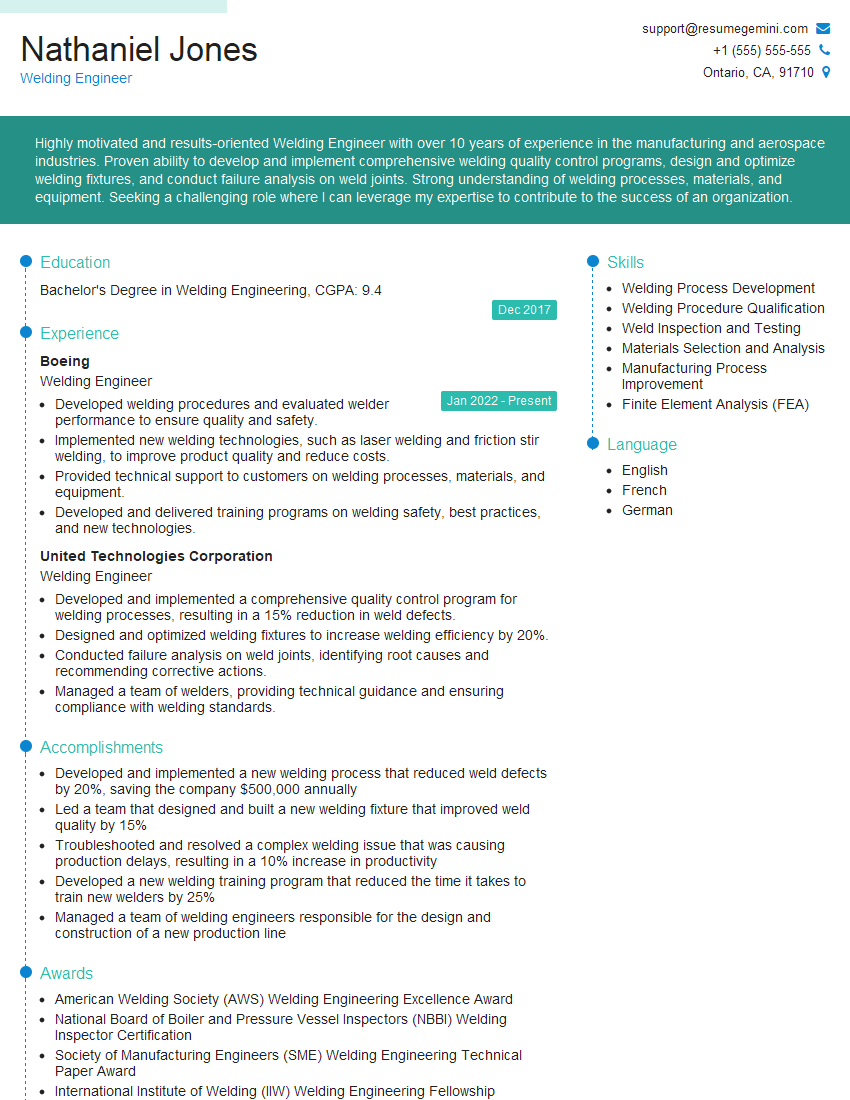
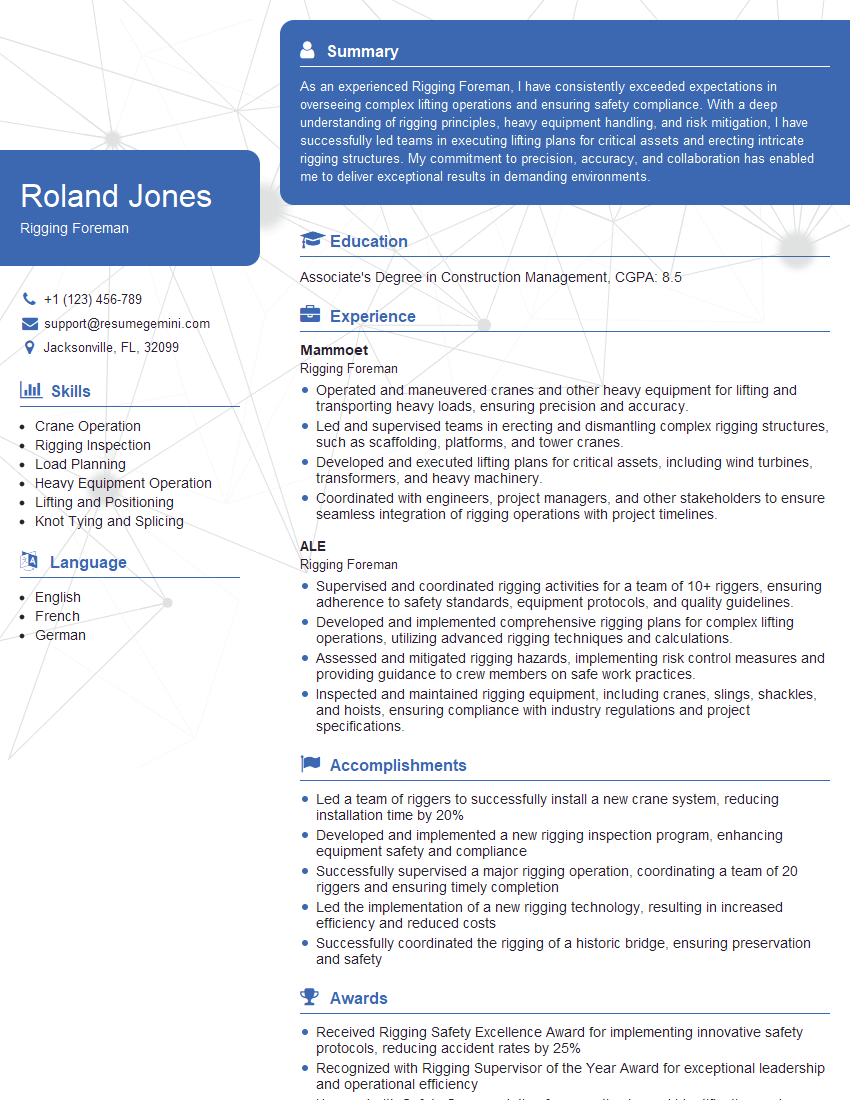
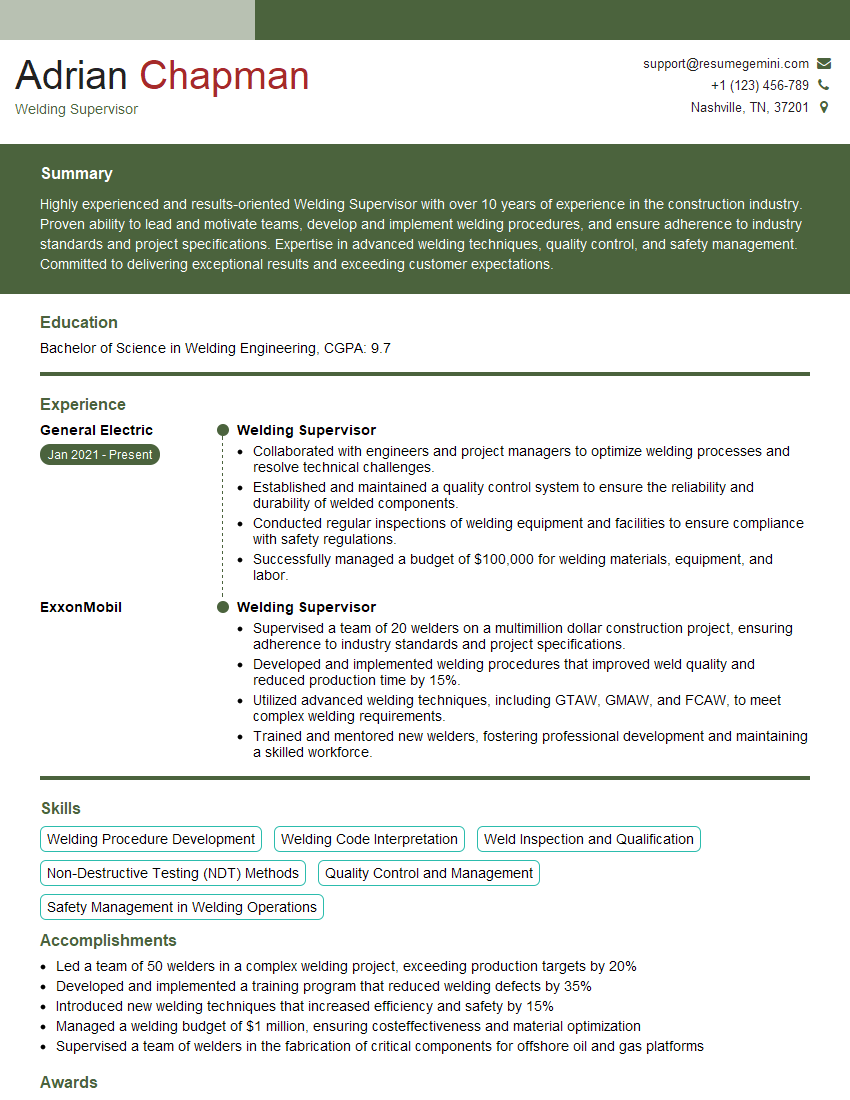
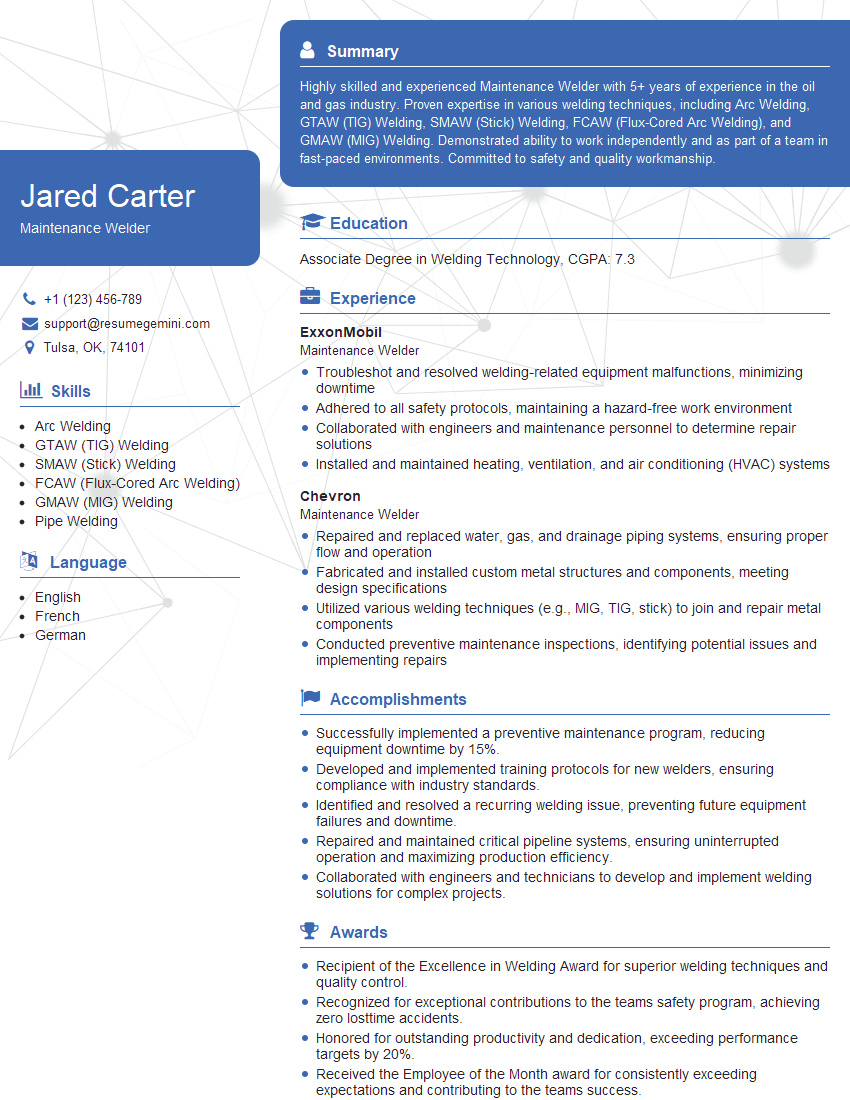
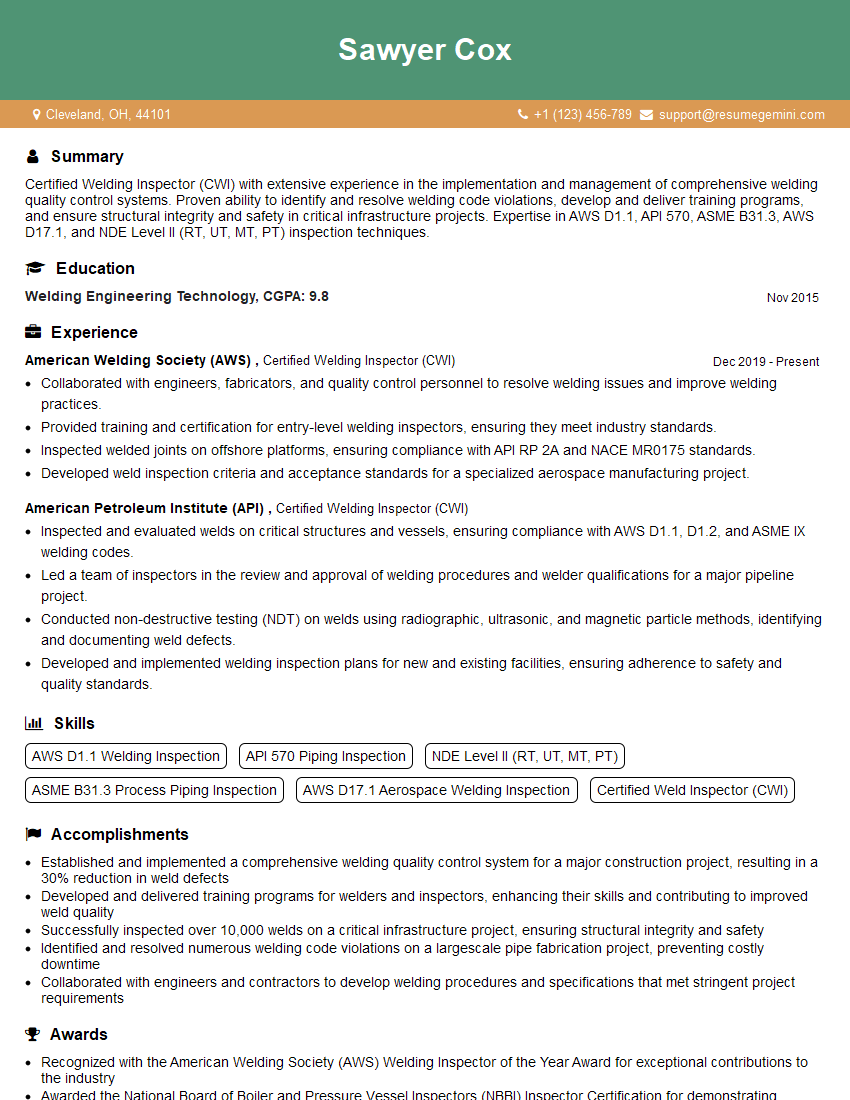
Mastering welding and rigging skills opens doors to a rewarding and in-demand career with excellent growth potential. To maximize your job prospects, crafting a strong, ATS-friendly resume is crucial. A well-structured resume highlights your skills and experience effectively, increasing your chances of landing an interview. We recommend using ResumeGemini, a trusted resource for building professional resumes that stand out. ResumeGemini provides examples of resumes tailored to the Welding and Rigging industry to help guide you. Take the next step towards your dream career – build a resume that showcases your expertise!


Explore more articles
Users Rating of Our Blogs
Share Your Experience
We value your feedback! Please rate our content and share your thoughts (optional).
What Readers Say About Our Blog
Very informative content, great job.
good