The thought of an interview can be nerve-wracking, but the right preparation can make all the difference. Explore this comprehensive guide to Wetland Restoration interview questions and gain the confidence you need to showcase your abilities and secure the role.
Questions Asked in Wetland Restoration Interview
Q 1. Explain the different types of wetlands and their ecological functions.
Wetlands are incredibly diverse ecosystems characterized by the presence of water, either permanently or seasonally, influencing the unique plant and animal communities they support. We classify wetlands based on several factors, including water chemistry, vegetation type, and hydrology. Some common types include:
- Marshes: These are characterized by herbaceous (non-woody) vegetation, often found in areas with slow-moving water. Think of the vast marshes of the Everglades, teeming with wading birds and diverse fish species.
- Swamps: Swamps are dominated by woody vegetation, such as trees and shrubs, and typically receive more water than marshes. Cypress swamps in the southeastern United States are a classic example, offering habitat for various amphibians, reptiles, and birds.
- Bogs: These are characterized by acidic, nutrient-poor conditions, often fed primarily by rainwater. Bogs support unique plant communities adapted to these harsh conditions and can serve as important carbon sinks.
- Fens: Similar to bogs, but they are fed by groundwater, making them less acidic and more nutrient-rich. They support a greater diversity of plant life compared to bogs.
- Estuaries: Where freshwater rivers meet saltwater oceans, creating brackish water environments rich in biodiversity. Estuaries are vital nurseries for many fish and shellfish species.
Ecological Functions: Wetlands play critical roles in maintaining environmental health. They act as:
- Natural water filters: Removing pollutants and excess nutrients from water.
- Flood control: Absorbing excess rainfall and reducing flood risks.
- Erosion control: Stabilizing shorelines and preventing soil erosion.
- Groundwater recharge: Replenishing underground aquifers.
- Habitat providers: Supporting a wide array of plant and animal life, including many endangered species.
- Carbon sequestration: Storing significant amounts of carbon, helping to mitigate climate change.
Understanding these types and functions is essential for effective wetland restoration and management.
Q 2. Describe the process of wetland assessment and delineation.
Wetland assessment and delineation involves determining the location and boundaries of a wetland, and evaluating its ecological condition. It’s a multi-step process combining field observations, data analysis, and regulatory guidelines (often using the 1987 Corps of Engineers Wetland Delineation Manual or regional equivalents).
- Preliminary Assessment: We begin by reviewing available data like aerial photos, topographic maps, and soil surveys to get a preliminary understanding of the area’s potential for wetland presence.
- Field Investigation: This is crucial. We visit the site to identify hydric soils (soils that are saturated or flooded long enough to support hydric vegetation), hydrophytic vegetation (plants that grow in wet conditions), and evidence of wetland hydrology (water saturation, frequency of flooding). We use standardized methods for sampling soil and identifying plant species.
- Delineation: Based on field data, we draw the boundaries of the wetland on a map. This involves identifying the transition zone between wetland and upland areas. The location of the boundary often hinges on the presence of hydric soils and hydrophytic vegetation.
- Assessment of Ecological Condition: Beyond delineation, we assess the wetland’s health. This involves considering factors like vegetation diversity, water quality, and the presence of invasive species. This evaluation informs restoration strategies.
For example, in a project I worked on in Florida, we used soil probes to determine the presence of hydric soils, and identified dominant plant species to establish the wetland boundary. The data was then used to create a precise map for the regulatory authorities.
Q 3. What are the key indicators of wetland health?
Wetland health is assessed using a combination of indicators reflecting the physical, chemical, and biological aspects of the ecosystem. Key indicators include:
- Hydrology: Water levels, flow regimes, and water quality parameters (e.g., dissolved oxygen, nutrient levels, pH). Consistent water levels are crucial. A wetland that dries out completely is unhealthy.
- Vegetation: Species composition, diversity, and abundance of plant communities. A healthy wetland will exhibit diverse plant species adapted to wet conditions. The presence of invasive species indicates a problem.
- Soil: Presence of hydric soils, organic matter content, and soil redox potential (a measure of oxygen levels in the soil). Hydric soils indicate adequate saturation.
- Fauna (Animals): Species diversity and abundance of various animal groups, including invertebrates, amphibians, reptiles, birds, and mammals. A rich diversity demonstrates a healthy ecosystem.
- Water Quality: Nutrient levels, presence of pollutants, turbidity (cloudiness). High nutrient levels can cause algal blooms, harming water quality.
For instance, a significant decline in amphibian populations might indicate a problem with water quality or habitat loss. Similarly, the dominance of a single plant species might point to nutrient pollution or invasive species pressure.
Q 4. How do you assess the success of a wetland restoration project?
Assessing the success of a wetland restoration project requires a long-term perspective and a multi-faceted approach. We don’t just look at immediate results; we monitor changes over years, even decades. Assessment methods include:
- Monitoring of Hydrological parameters: Measuring water levels, flow rates, and groundwater fluctuations to ensure the restored hydrology is stable and supports the desired vegetation and wildlife.
- Vegetation surveys: Tracking the establishment and growth of native plant communities, documenting species richness and diversity, and assessing the suppression of invasive species.
- Faunal surveys: Monitoring the presence and abundance of various animal species to evaluate the restored habitat’s ability to support wildlife.
- Water quality monitoring: Analyzing water chemistry parameters to evaluate the effectiveness of pollutant removal and nutrient cycling.
- Soil analysis: Assessing changes in soil characteristics like organic matter content, redox potential, and nutrient levels.
- Remote sensing and GIS: Using aerial imagery and Geographic Information Systems to track changes in vegetation cover and water extent over time.
Success is measured against pre-restoration conditions and established restoration goals. For example, a successful project might demonstrate a return of key indicator species, improved water quality, and the establishment of a self-sustaining wetland ecosystem. We often compare the restored wetland to nearby reference wetlands to gauge its health.
Q 5. What are the common challenges encountered during wetland restoration?
Wetland restoration is challenging, often encountering hurdles related to:
- Hydrology: Altered drainage patterns, inadequate water supply, groundwater depletion, and difficulties in controlling water levels are frequent problems. Restoring natural hydrology is often the most complex aspect of restoration.
- Invasive species: Invasive plants and animals can outcompete native species, hindering the establishment of desired plant communities and impacting wildlife. Control measures can be expensive and labor-intensive.
- Soil conditions: Compacted or degraded soils may lack the necessary structure and nutrients to support wetland vegetation. Soil amendment may be required.
- Funding limitations: Wetland restoration projects can be expensive and require long-term funding commitments. Securing adequate funding is often a major challenge.
- Regulatory hurdles: Navigating environmental regulations and obtaining necessary permits can be time-consuming and complex.
- Public perception and land use conflicts: Public understanding and support for wetland restoration is essential, but conflicts with existing land uses can arise. Community engagement is crucial.
For example, in one project, we struggled with invasive phragmites (a tall reed), requiring repeated control efforts and hindering the establishment of diverse native vegetation. Effective restoration requires careful planning to address these potential obstacles.
Q 6. Describe various wetland restoration techniques.
Wetland restoration techniques are tailored to the specific site conditions and restoration goals. Common methods include:
- Hydrological restoration: This involves manipulating water levels and flow regimes to restore natural hydrological processes. This may include dam removal, ditch blocking, or the construction of water control structures.
- Vegetation restoration: Planting native wetland species to re-establish desired plant communities. This might involve direct seeding, planting plugs or seedlings, or utilizing natural regeneration.
- Soil improvement: Improving soil conditions by removing pollutants, adding organic matter, or aerating compacted soils.
- Invasive species control: Implementing strategies to control or eradicate invasive plant and animal species, including mechanical removal, herbicide application, or biological control methods.
- Water quality improvement: Reducing nutrient loads from surrounding areas through practices like buffer strips or constructed wetlands.
- Sediment management: Removing or managing excess sediment that may be impacting water quality or habitat.
Sometimes, a combination of techniques is required. For instance, we might first restore hydrology by blocking drainage ditches, then plant native vegetation, and finally manage invasive species. Each technique’s effectiveness depends heavily on the context.
Q 7. Explain the role of hydrology in wetland restoration.
Hydrology is the lifeblood of a wetland. It dictates the entire ecosystem, influencing water chemistry, soil conditions, and the types of plants and animals that can thrive there. In restoration, manipulating hydrology is often the most crucial step. A wetland without the right water regime simply won’t function correctly.
Key aspects of hydrology in restoration include:
- Water levels: Maintaining appropriate water levels is critical for supporting the desired plant and animal communities. Too much or too little water can lead to ecosystem degradation.
- Water flow: Restoring natural flow patterns is essential for nutrient cycling and maintaining healthy water quality. Altered flow patterns can cause stagnant water, leading to oxygen depletion.
- Groundwater interaction: Understanding the relationship between surface water and groundwater is important, as groundwater can be a significant source of water for some wetlands. Restoring this connection can be crucial.
- Water quality: The chemical composition of water influences the types of plants and animals that can survive. Reducing pollutants and managing nutrient levels are essential.
For example, restoring the natural flow of a river into a degraded wetland by removing a dam can drastically improve the wetland’s health, leading to increased biodiversity and improved water quality. Hydrological restoration is the foundation upon which other restoration efforts are built. Without it, success is unlikely.
Q 8. How do you manage invasive species in a wetland restoration project?
Managing invasive species is crucial for successful wetland restoration. These species outcompete native plants and disrupt the delicate ecosystem balance. Our approach is multifaceted, starting with early detection and rapid response. We use a combination of methods tailored to the specific invasive species and the wetland environment.
- Mechanical Removal: Physically removing invasive plants, like manually pulling weeds or using specialized equipment for larger infestations. This is effective for smaller areas but labor-intensive for widespread problems.
- Herbicide Application: Using herbicides selectively to target invasive species while minimizing harm to native plants. This requires careful planning and adherence to environmental regulations. We often employ integrated pest management (IPM) principles to minimize herbicide use.
- Biological Control: Introducing natural predators or pathogens of the invasive species. This is a long-term solution but requires rigorous research to ensure the introduced organism doesn’t become another invasive threat. For example, introducing specific insects to control certain invasive plants.
- Restoration of Native Vegetation: Planting native species helps outcompete invasives by creating a healthier, more resilient ecosystem. This is a key part of long-term management.
For example, in a project restoring a coastal marsh impacted by Phragmites australis (common reed), we might use a combination of herbicide application followed by planting native grasses and sedges to re-establish the native plant community. Careful monitoring is essential to ensure the effectiveness of our strategies and adjust our approach as needed.
Q 9. Discuss the importance of water quality monitoring in wetland restoration.
Water quality monitoring is paramount in wetland restoration, providing crucial insights into the health and functionality of the restored ecosystem. It allows us to track progress, identify problems, and make informed management decisions. We typically monitor parameters such as:
- Dissolved Oxygen (DO): Essential for aquatic life. Low DO indicates potential problems like pollution or eutrophication.
- pH: Measures acidity or alkalinity, affecting the survival of many organisms.
- Nutrients (Nitrogen & Phosphorus): Excess nutrients lead to algal blooms and oxygen depletion (eutrophication).
- Turbidity: Measures water clarity, impacting light penetration and plant growth.
- Temperature: Affects many biological processes and can indicate pollution sources (e.g., thermal discharge).
- Heavy Metals & Pesticides: Presence of pollutants indicates contamination requiring remediation.
Data collected through regular monitoring helps us assess the effectiveness of restoration efforts, identify unforeseen issues, and adapt our strategies. For instance, a sudden drop in dissolved oxygen might signal a problem with organic matter decomposition or pollution, prompting an investigation and potential corrective action.
Q 10. What are the regulatory requirements for wetland restoration projects?
Wetland restoration projects are subject to a complex web of regulatory requirements, varying by location and the project’s scale. These regulations are designed to protect these vital ecosystems. Key considerations include:
- Clean Water Act (CWA): In the US, the CWA is the primary legislation, regulating the discharge of pollutants into waters, including wetlands. Section 404 governs the discharge of dredged or fill material.
- Endangered Species Act (ESA): Projects must avoid harming listed endangered or threatened species and their habitats.
- State and Local Regulations: Many states and localities have their own wetland protection laws and permitting processes, often stricter than federal regulations.
- Army Corps of Engineers (ACOE): The ACOE is responsible for permitting activities under Section 404 of the CWA.
- Environmental Impact Assessments (EIAs): Large-scale projects often require comprehensive EIAs to assess potential environmental impacts and mitigation measures.
Navigating these regulations requires expertise and careful planning. Failure to comply can lead to significant delays, penalties, and even project termination. Working with experienced environmental consultants and regulatory agencies from the project’s inception is crucial for success.
Q 11. Explain the concept of wetland mitigation banking.
Wetland mitigation banking is a proactive approach to wetland conservation. It involves the creation or restoration of wetlands in advance of unavoidable impacts to other wetlands. Essentially, it’s a form of environmental banking where credits are generated for wetland creation or enhancement and then sold to developers or other entities who need to compensate for unavoidable wetland losses due to development.
This system allows for net gains in wetland acreage and ecological function. The process includes:
- Site Assessment & Design: Identifying suitable sites for wetland creation or restoration, considering hydrology, soil conditions, and vegetation.
- Permitting: Obtaining necessary permits from regulatory agencies.
- Construction & Monitoring: Implementing the restoration plan and rigorously monitoring the site for success.
- Credit Sales: Selling the generated mitigation credits to offset unavoidable wetland losses elsewhere.
Mitigation banking provides a streamlined approach to wetland compensation compared to individual project-specific mitigation. It ensures that wetland losses are offset with high-quality wetland gains, leading to overall ecological benefits.
Q 12. How do you integrate community involvement in wetland restoration?
Community involvement is crucial for successful and sustainable wetland restoration projects. Engaging local residents, stakeholders, and volunteers fosters a sense of ownership and ensures long-term stewardship. Our approach involves:
- Community Workshops & Meetings: Holding public meetings to inform the community about the project and gather input.
- Volunteer Programs: Recruiting volunteers for planting, monitoring, and maintenance activities.
- Educational Programs: Conducting educational programs for schools and community groups to raise awareness about wetland ecosystems.
- Partnerships with Local Organizations: Collaborating with local environmental groups, conservation organizations, and government agencies.
- Transparency & Communication: Maintaining open communication channels to keep the community informed about project progress and any challenges.
For example, we’ve successfully incorporated local school children in planting native species, creating a connection with the restored wetland that fosters stewardship for future generations. Community participation enhances project success, ensures long-term sustainability, and creates a sense of shared responsibility for the restored environment.
Q 13. What are the long-term maintenance requirements for restored wetlands?
Restored wetlands require long-term maintenance and monitoring to ensure their continued success. The specific needs vary based on the site’s characteristics and restoration goals. Our long-term maintenance plan typically includes:
- Invasive Species Control: Ongoing monitoring and management of invasive plants and animals.
- Water Level Management: Maintaining appropriate water levels through measures like ditch maintenance or water control structures.
- Vegetation Monitoring: Tracking the growth and health of planted vegetation and addressing any issues.
- Water Quality Monitoring: Regular monitoring of water quality parameters to detect and address any problems.
- Adaptive Management: Adjusting management strategies as needed based on monitoring data and changes in environmental conditions.
Long-term maintenance is essential to prevent the reversion of the restored wetland to its degraded state. A well-defined and implemented maintenance plan is a cornerstone of successful and sustainable wetland restoration.
Q 14. How do you choose appropriate plant species for wetland restoration?
Selecting appropriate plant species is critical for successful wetland restoration. The chosen species must be well-suited to the site’s specific environmental conditions, including soil type, hydrology, and salinity. Our selection process includes:
- Site Assessment: A thorough assessment of the site’s soil, hydrology, and existing vegetation.
- Species Selection: Choosing native plant species adapted to the site conditions and with appropriate functional roles (e.g., emergent, submerged, floating). We prioritize species with high ecological value and resilience.
- Seed Source: Procuring seeds or plant materials from local sources to maintain genetic diversity and ensure adaptation to the local environment.
- Propagation & Planting: Proper propagation and planting techniques to maximize survival and establishment.
- Monitoring & Evaluation: Monitoring the growth and survival of planted species and adjusting planting strategies as needed.
For example, in a freshwater marsh restoration, we might select native emergent species like cattails and sedges, ensuring a diverse mix to support a range of wildlife. Careful species selection leads to a more resilient and functional restored wetland ecosystem.
Q 15. Describe your experience with soil analysis and its relevance to wetland restoration.
Soil analysis is crucial in wetland restoration because it provides the foundation for understanding the site’s potential for successful restoration. We need to understand the soil’s physical and chemical properties to determine its suitability for supporting wetland vegetation and the overall health of the ecosystem.
My experience involves conducting a range of analyses, including:
- Particle size analysis: Determining the proportion of sand, silt, and clay influences water retention and nutrient availability.
- Organic matter content: High organic matter is key to nutrient cycling and soil structure in wetlands. We analyze this to assess the soil’s overall health and fertility.
- pH testing: Soil pH affects nutrient availability and plant growth. Highly acidic or alkaline soils may require amendment before planting.
- Nutrient analysis: Testing for nitrogen, phosphorus, and other nutrients is vital because deficiencies or excesses can impede plant growth and water quality.
- Toxicity testing: Assessing the presence of heavy metals or other contaminants is essential for determining the extent of remediation required before restoration can begin.
For example, on a recent project in a former agricultural field, soil analysis revealed high levels of phosphorus, impacting water quality. This informed our restoration plan, which included the implementation of bioremediation techniques to reduce phosphorus levels before planting native wetland vegetation.
Career Expert Tips:
- Ace those interviews! Prepare effectively by reviewing the Top 50 Most Common Interview Questions on ResumeGemini.
- Navigate your job search with confidence! Explore a wide range of Career Tips on ResumeGemini. Learn about common challenges and recommendations to overcome them.
- Craft the perfect resume! Master the Art of Resume Writing with ResumeGemini’s guide. Showcase your unique qualifications and achievements effectively.
- Don’t miss out on holiday savings! Build your dream resume with ResumeGemini’s ATS optimized templates.
Q 16. Explain your understanding of wetland permitting processes.
Wetland permitting is a complex process involving multiple agencies at federal, state, and often local levels. My understanding encompasses navigating this regulatory landscape to obtain the necessary permits for wetland restoration, creation, or enhancement projects. This typically involves:
- Identifying the relevant regulatory agencies: This often includes the Army Corps of Engineers (under Section 404 of the Clean Water Act), the Environmental Protection Agency (EPA), and state environmental agencies.
- Preparing and submitting a permit application: This requires comprehensive documentation including project plans, site assessments, and justifications demonstrating the project’s ecological benefits and compliance with environmental regulations.
- Conducting environmental assessments: This may involve detailed field surveys, hydrological analysis, and impact assessments to evaluate potential effects on water quality, aquatic life, and other resources.
- Public consultation and stakeholder engagement: Effective communication with neighboring communities and other interested parties is crucial to ensure their concerns are addressed.
- Mitigation and monitoring plans: Permits often require mitigation plans to compensate for any unavoidable impacts, and monitoring plans to track the effectiveness of the restoration project and ensure compliance with permit conditions.
A successful permit application requires meticulous attention to detail and a thorough understanding of the relevant regulations. I’ve successfully guided several complex projects through this process, working closely with permitting agencies to secure approvals.
Q 17. Describe your experience using GIS software for wetland mapping and analysis.
GIS software is indispensable for wetland mapping and analysis. My expertise includes using ArcGIS and QGIS to:
- Create detailed wetland maps: Using high-resolution imagery (aerial photos, LiDAR), I delineate wetland boundaries, identify different wetland types, and assess their spatial extent.
- Analyze hydrological data: GIS allows integration of data on elevation, drainage patterns, and water flow to model hydrological processes and assess their impact on wetland function.
- Assess habitat connectivity: I use GIS to analyze the connectivity of wetland patches and corridors, crucial for understanding wildlife movement and the overall ecological integrity of the wetland system.
- Conduct spatial analysis: This allows me to analyze the relationships between various environmental factors and wetland characteristics, such as proximity to pollution sources or changes in land use over time.
- Develop restoration plans: GIS is used to visualize and optimize restoration designs, considering factors such as topography, hydrology, and vegetation patterns.
For instance, in one project, I used GIS to analyze the impact of a proposed development on a nearby wetland. My analysis demonstrated potential impacts on water quality and habitat, prompting modifications to the development plan that minimized environmental harm.
Q 18. How do you assess the economic feasibility of a wetland restoration project?
Assessing the economic feasibility of a wetland restoration project involves a cost-benefit analysis. We consider both the direct costs of restoration (e.g., land acquisition, engineering, planting) and indirect costs (e.g., project management, monitoring). The benefits are then evaluated, considering both quantitative and qualitative factors.
Quantitative benefits may include:
- Improved water quality: Reduced nutrient loads and improved water clarity can translate into cost savings for water treatment.
- Flood mitigation: Wetlands can reduce flood risk, lessening the costs associated with flood damage.
- Carbon sequestration: Wetlands act as carbon sinks, contributing to climate change mitigation. This can be monetized through carbon credit programs.
- Increased property values: Restored wetlands can enhance the aesthetic value of the area and boost property values.
Qualitative benefits are harder to quantify but equally important:
- Enhanced biodiversity: Restored wetlands provide habitat for a variety of plants and animals.
- Recreational opportunities: Improved wetlands can support recreational activities like bird watching and fishing.
- Improved public health: Cleaner water and improved air quality contribute to better public health.
A robust economic analysis requires a comprehensive understanding of both the costs and benefits, and often incorporates techniques such as discounted cash flow analysis to compare present and future values.
Q 19. Explain the difference between restoration, rehabilitation, and creation of wetlands.
While all three—restoration, rehabilitation, and creation—aim to improve wetland functions, they differ in their approach and goals:
- Restoration: Aims to return a degraded wetland to its historic condition, as closely as possible to its pre-degradation state. This involves reversing the damage and restoring the ecological processes and functions that were lost.
- Rehabilitation: Focuses on improving the ecological function of a degraded wetland without necessarily aiming for complete historical accuracy. It often involves enhancing existing features or introducing new elements to improve habitat or water quality.
- Creation: Involves constructing a new wetland in an area where one did not previously exist. This is often undertaken where wetlands have been lost or degraded beyond repair, and aims to establish a wetland that provides similar ecological functions.
Imagine a degraded marsh. Restoration would focus on removing pollutants, re-establishing native vegetation, and restoring natural hydrology to match historical records. Rehabilitation might focus on removing invasive species and improving water quality, even if the vegetation isn’t precisely the same as historically. Creation would be building a new marsh entirely on previously non-wetland land.
Q 20. What is your experience with different types of wetland monitoring techniques (e.g., vegetation surveys, water quality sampling)?
Effective wetland monitoring is crucial for evaluating the success of restoration efforts. My experience involves a range of techniques, including:
- Vegetation surveys: These involve mapping plant communities, assessing species diversity, and tracking changes in vegetation cover over time. We use standardized methods to ensure data consistency and comparability.
- Water quality sampling: We collect water samples at regular intervals to analyze parameters such as pH, dissolved oxygen, nutrients, and contaminants. This helps track water quality changes and assess the effectiveness of restoration efforts in improving water quality.
- Soil analysis (as mentioned previously): Regular soil testing monitors changes in soil properties over time, which provide insights into soil health and nutrient cycling.
- Hydrological monitoring: This includes measuring water levels, flow rates, and groundwater levels to assess the hydrology of the restored wetland and how it changes over time.
- Wildlife surveys: We conduct surveys to assess the presence and abundance of various wildlife species, including birds, amphibians, reptiles, and mammals. This provides insights into the effectiveness of restoration in providing habitat for these species.
- Remote sensing: Using aerial photography and satellite imagery allows for large-scale monitoring of changes in vegetation cover, water extent, and other key wetland characteristics.
Data collected from these monitoring activities is used to assess the effectiveness of the restoration, to make adjustments to management strategies, and to inform future restoration projects.
Q 21. How do you address stakeholder conflicts related to wetland restoration?
Stakeholder conflicts are common in wetland restoration projects. Addressing them requires proactive communication, transparency, and a collaborative approach. My strategy involves:
- Early and frequent communication: Engaging stakeholders early in the process is essential. This includes holding public meetings, distributing informational materials, and actively seeking feedback.
- Transparency in decision-making: Clearly communicating project goals, methods, and potential impacts builds trust and fosters collaboration. Sharing data and analysis supports informed decision-making.
- Mediation and conflict resolution: If conflicts arise, I utilize mediation techniques to help stakeholders find common ground and reach mutually agreeable solutions. This involves facilitating communication, clarifying misunderstandings, and exploring compromise.
- Building consensus through compromise: Finding solutions that balance the needs and interests of all stakeholders requires flexibility and willingness to compromise. This may involve adapting project plans or finding alternative solutions that address stakeholders’ concerns.
- Highlighting the benefits of wetland restoration: Emphasizing the multiple benefits of restored wetlands—from improved water quality and flood control to enhanced biodiversity and recreational opportunities—can help generate support for the project.
Successful wetland restoration relies not just on ecological expertise but on strong communication and collaboration. By actively engaging stakeholders and finding mutually acceptable solutions, we can foster support for these vital projects.
Q 22. Describe your experience working with different stakeholders (e.g., government agencies, landowners, community groups).
Successfully restoring wetlands requires collaboration. My experience spans working with diverse stakeholders, including government agencies like the Environmental Protection Agency (EPA) and the Army Corps of Engineers, private landowners, and community groups. I’ve found that effective communication is paramount.
- Government Agencies: I’ve navigated permitting processes, secured funding, and ensured projects align with regulatory requirements. For example, on a project in coastal Louisiana, we collaborated with the EPA to secure permits under the Clean Water Act, ensuring the restoration complied with all environmental regulations.
- Landowners: I’ve worked directly with landowners to understand their perspectives, address their concerns, and create mutually beneficial agreements. In one instance, a landowner initially hesitant about a restoration project on their property became a strong supporter after understanding the ecological and economic benefits, including improved property values and enhanced wildlife habitat.
- Community Groups: Engaging community groups builds support and ensures local knowledge is incorporated. For instance, in a project focused on restoring a riparian zone, we worked with local conservation groups to organize volunteer planting days, fostering community ownership and increasing project success. Regular updates and transparency were key to maintaining trust and cooperation.
Q 23. How do you handle unexpected challenges or setbacks during a wetland restoration project?
Unexpected challenges are inevitable in wetland restoration. My approach focuses on proactive planning and adaptive management.
- Contingency Planning: Before starting any project, we develop detailed contingency plans addressing potential issues like extreme weather, invasive species, or unexpected soil conditions. This involves identifying potential risks and outlining mitigation strategies beforehand.
- Monitoring and Evaluation: Regular monitoring allows for early detection of problems. For instance, if unexpected erosion occurs, we can adjust our techniques to address it promptly. This also ensures we are meeting the project objectives.
- Collaboration and Expertise: When unforeseen difficulties arise, I leverage my network of experts—hydrologists, botanists, engineers—to find solutions. This collaborative approach, along with my experience in problem-solving, ensures we can overcome setbacks efficiently.
- Adaptive Management Framework: We use an adaptive management approach, regularly evaluating progress, adjusting our strategies as needed based on the data we collect. It’s like navigating with a map that we constantly update during our journey.
Q 24. What are some innovative approaches in wetland restoration you are familiar with?
Wetland restoration is a dynamic field with constant innovation. I’m familiar with several promising approaches:
- Biochar Application: Biochar, a charcoal-like material produced from biomass pyrolysis, improves soil structure, water retention, and nutrient availability in degraded wetlands. This is especially useful in restoring wetlands impacted by agriculture or other forms of land degradation.
- Hydrological Restoration Techniques: These include techniques like restoring natural water flow patterns by removing drainage ditches, constructing water control structures, and re-establishing natural hydrological connections. For instance, we use innovative techniques to mimic natural flooding patterns, which are crucial for many wetland species.
- Use of Native Plant Species and Mycorrhizal Fungi Inoculation: Using locally sourced native plants ensures ecological integrity and resilience. Inoculating plants with mycorrhizal fungi enhances their establishment and growth, speeding up the restoration process.
- Drone Technology and Remote Sensing: Drones and satellite imagery allow for efficient and cost-effective monitoring of large wetland areas, providing valuable data for assessment and management.
Q 25. Describe your experience with budget management and reporting for wetland restoration projects.
Budget management is critical for successful wetland restoration. My experience involves detailed budgeting, tracking expenses, and preparing comprehensive reports.
- Detailed Budgeting: I develop comprehensive budgets that include all aspects of the project, from permitting and land acquisition to planting materials, labor, and monitoring. This ensures that we have a clear financial picture from the outset.
- Expense Tracking: We use project management software to meticulously track all expenses against the budget, providing real-time insights into project financial health.
- Reporting: We provide regular reports to funders that showcase our progress, expenditure, and any deviations from the budget. This transparency builds trust and ensures accountability.
- Value Engineering: Where possible, we employ value engineering techniques to optimize costs without compromising project quality or ecological objectives. This might involve exploring alternative materials or construction methods.
Q 26. What are the key ethical considerations in wetland restoration?
Ethical considerations are paramount in wetland restoration.
- Ecological Integrity: We prioritize restoring the ecological integrity of the wetland, ensuring the restored ecosystem functions properly and supports native biodiversity. This includes avoiding the introduction of invasive species and employing sustainable practices.
- Social Equity: Restoration projects should benefit the entire community, not just a select few. This includes engaging with marginalized communities and addressing any potential negative impacts on local livelihoods.
- Transparency and Accountability: We maintain transparency in our operations and are accountable for our actions. This includes open communication with stakeholders, adherence to regulations, and rigorous monitoring and evaluation.
- Scientific Rigor: Restoration efforts should be guided by the best available science, ensuring that our interventions are effective and do not cause unintended harm.
Q 27. How do you ensure the long-term sustainability of a restored wetland ecosystem?
Long-term sustainability requires a multifaceted approach:
- Adaptive Management: Continuous monitoring and adjustments based on data collected allow the project to adapt to changing conditions and unexpected challenges.
- Community Engagement: Engaging local communities ensures long-term stewardship and ownership of the restored wetland. This might include educational programs or citizen science initiatives.
- Funding Mechanisms: Securing long-term funding through conservation easements, partnerships, or sustainable financing mechanisms is vital to ensure continued maintenance and management.
- Post-Restoration Monitoring: Regular monitoring provides insights into the success of the restoration and allows for timely intervention if necessary. This data also informs future projects.
- Invasive Species Management: A plan for managing invasive species is crucial to prevent their re-establishment and protect the native plant and animal communities.
Q 28. Describe your experience with data analysis and interpretation in the context of wetland restoration projects.
Data analysis and interpretation are crucial in guiding effective restoration.
- Baseline Data Collection: Before starting any project, we collect baseline data on hydrology, water quality, soil characteristics, and vegetation. This provides a benchmark against which to measure restoration success.
- Monitoring Data Analysis: We use statistical methods to analyze data collected during the monitoring phase. This might involve using software such as R or Python to analyze water quality parameters, vegetation cover, or wildlife populations.
- Remote Sensing Data: We utilize remote sensing data from satellites and drones to assess large areas, providing insights into vegetation changes, water levels, and habitat patterns over time. This allows for efficient and cost-effective monitoring across large areas.
- Data Visualization: We use various methods to visualize the data, such as graphs, maps, and dashboards, making it easily understandable for both technical and non-technical audiences. This ensures transparency and effective communication of project progress and results.
Key Topics to Learn for Wetland Restoration Interview
- Hydrology and Hydrology Modeling: Understanding water flow patterns, water budgets, and the use of hydrological models to predict wetland response to restoration efforts.
- Wetland Ecology and Plant Communities: Knowledge of wetland plant species, their ecological roles, and the factors influencing their distribution and abundance. Practical application: Designing plant palettes for specific wetland types and restoration goals.
- Soil Science and Geomorphology: Understanding soil types, their properties, and how they influence wetland function. Practical application: Assessing soil conditions for suitability of restoration techniques.
- Restoration Techniques and Planning: Familiarity with various restoration methods (e.g., water level management, sediment manipulation, invasive species control). Practical application: Developing and implementing restoration plans considering site-specific constraints and objectives.
- Wetland Assessment and Monitoring: Methods for assessing wetland condition, monitoring restoration progress, and evaluating project success. Practical application: Designing and implementing monitoring programs using appropriate indicators.
- Regulatory Framework and Permitting: Understanding environmental regulations (e.g., Clean Water Act) and the permitting process for wetland restoration projects. Practical application: Navigating the permitting process and ensuring compliance.
- Project Management and Budgeting: Experience in managing wetland restoration projects, including budgeting, scheduling, and stakeholder communication. Practical application: Developing and managing project budgets and timelines.
- Data Analysis and Interpretation: Ability to analyze ecological data, interpret results, and draw conclusions to inform management decisions. Practical application: Using statistical software to analyze wetland monitoring data.
Next Steps
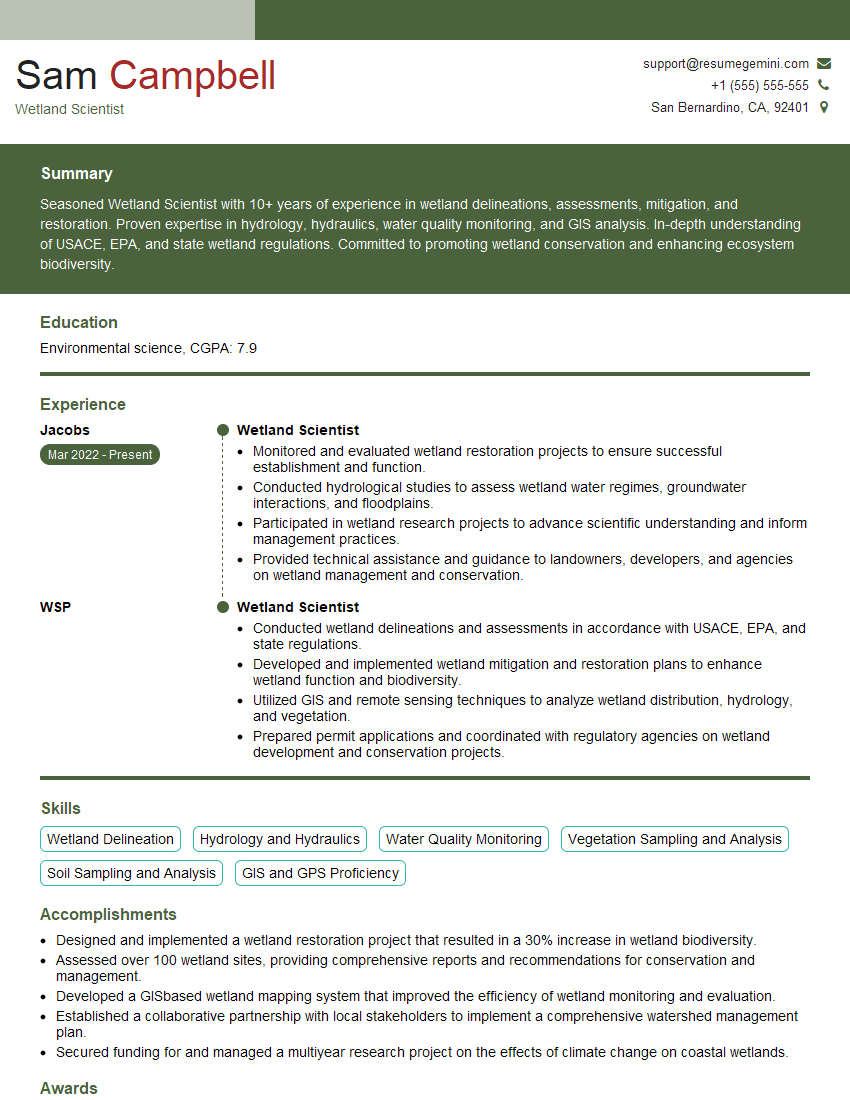
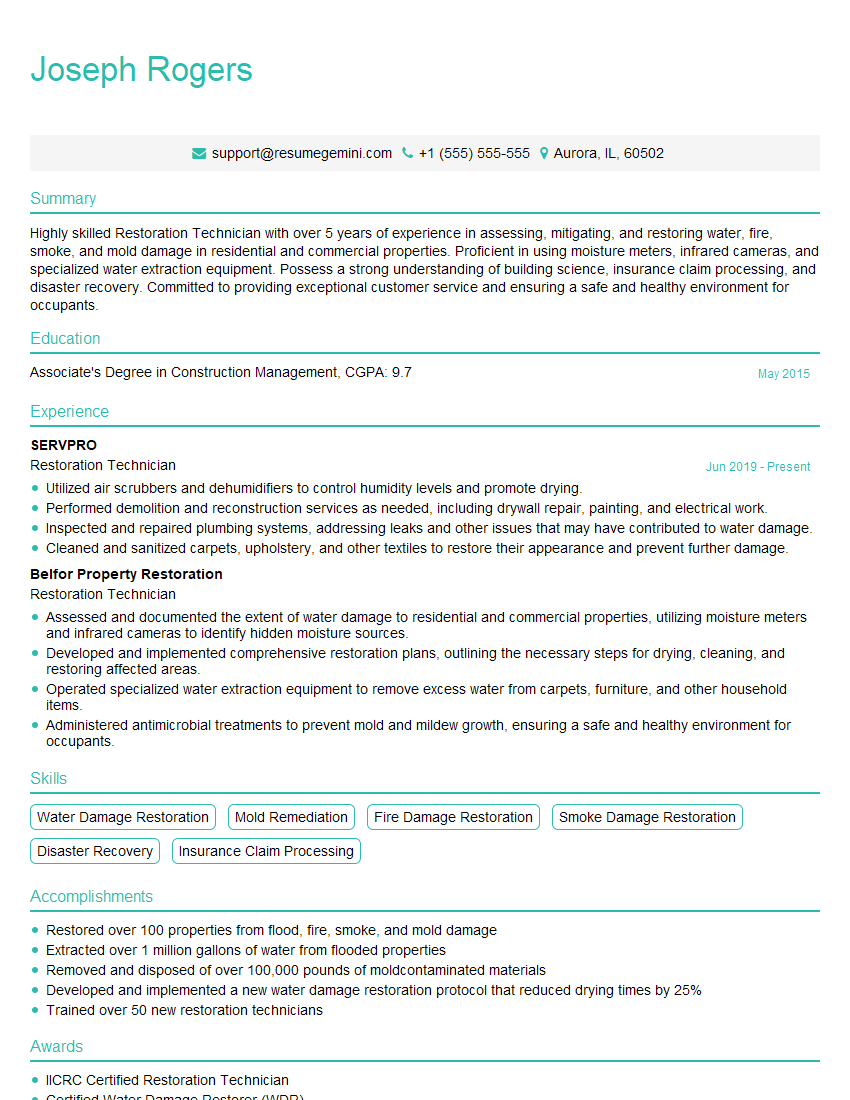
Mastering wetland restoration principles is crucial for a successful and rewarding career, opening doors to diverse opportunities in environmental consulting, government agencies, and non-profit organizations. A strong resume is your key to unlocking these opportunities. Creating an ATS-friendly resume is essential for getting your application noticed by potential employers. We highly recommend leveraging ResumeGemini to build a professional and impactful resume that highlights your skills and experience effectively. ResumeGemini provides examples of resumes tailored to Wetland Restoration to help you craft the perfect application. Take the next step towards your dream career today!
Explore more articles
Users Rating of Our Blogs
Share Your Experience
We value your feedback! Please rate our content and share your thoughts (optional).
What Readers Say About Our Blog
Very informative content, great job.
good