The right preparation can turn an interview into an opportunity to showcase your expertise. This guide to Whip Stitching interview questions is your ultimate resource, providing key insights and tips to help you ace your responses and stand out as a top candidate.
Questions Asked in Whip Stitching Interview
Q 1. Describe the whip stitch technique in detail.
Whip stitching is a simple yet incredibly versatile hand sewing technique used to join two pieces of fabric, often with a decorative effect. Imagine it as a series of tiny, slanted stitches that run along the edge of the fabric, creating a neat and secure seam. Unlike other stitches, it doesn’t penetrate the full thickness of both fabrics; instead, it essentially ‘wraps’ the thread around the edges, holding them together. This makes it ideal for situations where a less bulky seam is required.
The process involves using a needle threaded with a single strand of thread, taking small stitches that catch the edges of both fabric pieces, forming a continuous line along the seam. Each stitch is slightly angled, giving it the characteristic appearance of a whip.
Think of it like gently tying a series of tiny knots along the edge of your fabric. Each knot secures the fabric layers, and when done correctly, it creates a strong and elegant seam.
Q 2. What types of materials are best suited for whip stitching?
Whip stitching works beautifully with a variety of materials, though some are better suited than others. Lighter weight fabrics like cotton, linen, silk, and even lightweight leather work particularly well, as the thread can easily grip the edges. Heavier fabrics can also be whip stitched, but you may need a sturdier thread and slightly larger stitches to ensure adequate strength.
The type of thread you choose will also impact the final result. For delicate fabrics, choose a fine thread that matches or complements the fabric color. For heavier materials or more visible seams, a slightly thicker thread might be preferable. The texture of the thread can also contribute to the overall aesthetic; a matte thread may be suitable for a rustic look, while a glossy thread could add a touch of elegance.
Q 3. Explain the difference between a single and double whip stitch.
The difference between single and double whip stitch lies primarily in how many threads encircle the edge of the fabric at each stitch. A single whip stitch uses a single strand of thread, creating a more delicate and less bulky seam. This is often preferred for finer fabrics or when a less prominent seam is desired. It’s quicker too!
A double whip stitch, on the other hand, uses two strands of thread. This creates a stronger, more durable seam that’s better suited for heavier fabrics or applications where added strength and durability are needed. The double whip stitch also offers a slightly more textured and visible seam.
Imagine the single whip stitch as a single wrap around a finger, securing it lightly, and the double whip stitch as two wraps, securing it firmly.
Q 4. How do you adjust the tension when whip stitching?
Controlling tension is crucial for a successful whip stitch. Too tight, and the seam will be puckered and unattractive; too loose, and it will be weak and prone to unraveling. The key is to maintain consistent, gentle tension throughout the stitching process.
Imagine you are holding a delicate flower; you wouldn’t squeeze it too tightly, right? Similarly, keep your tension light yet firm. As you stitch, guide the thread with your fingers, feeling for the right amount of resistance. Don’t pull the thread too hard as you make each stitch. Practice is key; the more you stitch, the better you’ll become at maintaining a consistent tension.
Q 5. What are some common mistakes to avoid when performing a whip stitch?
Several common mistakes can lead to an uneven or weak whip stitch. One frequent error is inconsistent tension, resulting in a bumpy, uneven seam. Another common mistake is making stitches that are too large or too small. Large stitches make the seam weak, while small stitches can make it difficult to maintain even tension.
Furthermore, failing to catch both fabric edges equally with each stitch can lead to an uneven or insecure seam. Finally, not using the correct type of thread for the fabric can also negatively impact the outcome. For example, using a thick thread on a thin fabric can cause the fabric to pucker, while a flimsy thread on a sturdy fabric might break easily.
Careful attention to detail and consistent practice will help you avoid these common pitfalls.
Q 6. How do you prepare your materials before beginning to whip stitch?
Proper preparation is essential for a clean and efficient whip stitch. Begin by selecting the appropriate needle and thread for your fabric. Use a sharp needle that easily penetrates the fabric without damaging it. The thread should be strong enough to withstand the tension but fine enough to work well with the fabric’s weight and texture.
Next, carefully prepare the fabric edges. Ensure they are neatly trimmed and even to prevent any bulkiness or unevenness in the seam. If needed, press the edges for a cleaner finish. Having everything ready – fabric, thread, needle, scissors, and a comfortable workspace – is vital for a smooth process.
Q 7. How do you finish a whip stitch to prevent fraying?
Finishing the whip stitch correctly is crucial for preventing fraying and ensuring durability. One effective method is to weave the thread into the final few stitches, essentially burying the loose end within the seam. Alternatively, you can secure the thread with a small knot, ensuring that the knot lies flat against the fabric. For added security, consider using a tiny amount of fabric glue on the knot.
Another technique involves creating a ‘hidden’ finish by carefully tucking the thread under a few existing stitches before snipping off the excess. This prevents visible thread ends, maintaining a clean, professional finish. Remember, a well-finished whip stitch not only looks better but also lasts longer.
Q 8. Describe different needle sizes and thread types suitable for whip stitching.
Choosing the right needle and thread is crucial for successful whip stitching. The needle size depends on the thickness of the materials you’re joining. For delicate fabrics like silk or fine leather, a very fine needle, size 70/10 or smaller, is ideal. For heavier materials like canvas or thick leather, a larger needle, size 18/100 or even larger, might be necessary. The needle should easily pierce the material without tearing it.
Thread selection is equally important. A strong, smooth thread is preferred. For fine work, use a high-quality embroidery thread like cotton or silk. For heavier materials, linen thread or even waxed nylon thread can offer superior strength. The thread should complement the material’s weight and color without overpowering it. Think of it like choosing the right paintbrush for a painting—a fine brush for details, a larger one for broad strokes.
- Fine fabrics (silk, linen): Size 70/10 or smaller needle, fine cotton or silk thread.
- Medium fabrics (cotton, upholstery): Size 9/100 or 12/100 needle, medium-weight cotton or linen thread.
- Heavy fabrics (canvas, leather): Size 18/100 or larger needle, linen thread or waxed nylon thread.
Q 9. How does stitch length affect the strength and appearance of a whip stitch?
Stitch length significantly impacts both the strength and aesthetics of a whip stitch. Shorter stitches create a more secure seam, less prone to unraveling. They also yield a neater, more refined appearance. However, extremely short stitches can be time-consuming and might make the seam overly stiff. Longer stitches, on the other hand, might be faster to execute but compromise the seam’s strength and can result in a less polished finish. Think of it like building a wall—smaller bricks provide a sturdier structure, but require more effort.
A good rule of thumb is to maintain a consistent stitch length slightly shorter than the thickness of the material being stitched. For example, for a 2mm thick leather, a 1.5mm stitch length would be suitable. Experimentation is key to finding the perfect balance between strength, appearance, and efficiency. Inconsistent stitch lengths, however, create an uneven, unprofessional look.
Q 10. How do you repair a broken whip stitch?
Repairing a broken whip stitch involves carefully re-stitching the broken section. First, assess the damage. If only a few stitches are broken, you can simply re-stitch them, matching the original stitch length and tension. If a longer section is damaged, you’ll need to re-stitch the whole area. Always use the same or a very similar type of thread to the original.
To start, carefully separate the edges where the stitch broke and insert the needle back into the original stitch holes. Re-stitch the section, ensuring the new stitches seamlessly blend with the rest of the seam. Remember, precision and attention to detail are vital for an almost invisible repair. Consider using a thimble to protect your finger.
- Assess the damage
- Match the original thread
- Insert needle in original stitch holes
- Re-stitch the section matching original tension and length.
Q 11. Explain the importance of consistent stitching in whip stitching.
Consistent stitching is paramount in whip stitching for both aesthetic and functional reasons. Consistent stitch length and tension create a uniform, professional-looking seam. Inconsistencies lead to an uneven appearance, highlighting the repair and detracting from the overall quality. Furthermore, irregular tension can weaken the seam, making it more prone to failure. Inconsistency is like a poorly-built bridge—it’s structurally weak and unsightly.
Practicing consistent stitching requires patience and attention to detail. Work slowly and deliberately, focusing on maintaining an even tension throughout the entire seam. Use a thimble for added comfort and control. Regular practice will significantly improve your technique and lead to more impressive results. Consistency truly speaks volumes about the quality of your craftsmanship.
Q 12. How do you handle curves and corners when whip stitching?
Handling curves and corners in whip stitching requires adapting your technique. On curves, the stitches need to be shorter and more closely spaced to maintain a smooth, even line and prevent puckering. Think of it like navigating a winding road—you need to make tighter turns to stay on course. You might need to slightly adjust the angle of your needle insertion to follow the curve smoothly.
For corners, you’ll need to carefully plan your stitches. Reduce the stitch length to minimize bunching. You may even want to use very small, almost invisible stitches at the very point of the corner. A well-executed corner should appear seamless and not disruptive to the flow of the stitch line. Mastering corners comes with practice and patience, but it is a mark of a skilled craftsperson.
Q 13. What tools are essential for accurate and efficient whip stitching?
The tools needed for whip stitching are relatively simple, but their quality can significantly impact the outcome. A good quality needle, appropriately sized for the material, is paramount. A thimble protects your finger and allows for better control and even tension. Sharp, small scissors are essential for precise thread trimming. An appropriate thread, based on the material and project, is critical.
While not strictly essential, a small magnifying glass can prove invaluable for detailed work, especially on delicate fabrics or miniature projects. For very large projects or those involving heavier materials, a stitching pony can provide better support and stability. Finally, good lighting is crucial to ensure you can see your work clearly and maintain consistent stitch length and tension.
Q 14. How do you select the appropriate thread color and weight for a specific project?
Thread color and weight selection depend entirely on the project. The most important consideration is matching the thread color to the material being stitched. The goal is to either create an invisible seam or to use the thread as a decorative element. In either case, the color should blend seamlessly or create a pleasing aesthetic contrast.
Thread weight should be matched to the weight of the material. Too light a thread can be too fragile for the material and might tear, while too heavy a thread could overpower the material or create an awkward seam. Always aim for a thread weight that provides enough strength without compromising the aesthetic qualities of the final work. Think of it like choosing the right tie to match a suit—the color and style must complement the overall look.
Q 15. Compare and contrast whip stitching with other hand stitching techniques.
Whip stitching is a versatile hand-sewing technique known for its strength and decorative qualities. Unlike many other stitches that create interlocking loops, the whip stitch forms a series of wrapped stitches, similar to a tightly wrapped thread around a rope. Let’s compare it to a few others:
- Running Stitch: This is a basic stitch used for basting or temporary stitching. It’s much simpler and less durable than whip stitching. Think of it as a quick sketch compared to a carefully crafted drawing – functional but less refined.
- Saddle Stitch: Often used for bookbinding or leatherwork, the saddle stitch creates a more durable closure than whip stitching, particularly in thicker materials. However, the whip stitch excels in its ability to neatly join edges.
- Backstitch: A strong stitch often used for seams, it creates a continuous line. Backstitching lacks the flexibility and decorative potential of whip stitching. Imagine trying to mend a delicate lace fabric with backstitching – a whip stitch would be far more appropriate.
In essence, the whip stitch occupies a unique niche, bridging the gap between purely functional stitches like running stitches and more robust stitches like saddle stitches, while offering considerable aesthetic appeal.
Career Expert Tips:
- Ace those interviews! Prepare effectively by reviewing the Top 50 Most Common Interview Questions on ResumeGemini.
- Navigate your job search with confidence! Explore a wide range of Career Tips on ResumeGemini. Learn about common challenges and recommendations to overcome them.
- Craft the perfect resume! Master the Art of Resume Writing with ResumeGemini’s guide. Showcase your unique qualifications and achievements effectively.
- Don’t miss out on holiday savings! Build your dream resume with ResumeGemini’s ATS optimized templates.
Q 16. How does the thickness of the material affect the whip stitch technique?
Material thickness significantly impacts whip stitching. With thinner materials like silk or fine leather, a finer needle and thread are crucial to avoid puncturing the material or making the stitches overly prominent. A smaller, more frequent stitch is needed for control and neatness. Think of sewing a delicate silk scarf – you wouldn’t use a heavy-duty needle and thick thread!
Conversely, thicker materials like heavy canvas or thick leather require a sturdier needle and possibly a thicker thread for strength. The stitches can be spaced slightly further apart because the material provides more support. Using too fine a needle or thread on thick leather would result in weak stitching and a less durable result. It’s like trying to tie a sturdy knot with thin twine – it simply won’t hold.
In short, successful whip stitching requires adapting the needle, thread, and stitch size to the material’s thickness to achieve both strength and aesthetics.
Q 17. Describe different applications of the whip stitch in various industries.
The whip stitch’s versatility makes it invaluable across various industries:
- Leather Goods: Joining leather pieces, creating decorative edges on belts, wallets, and bags.
- Bookbinding: Attaching covers to the text block, creating decorative elements on covers.
- Clothing and Textiles: Mending tears, creating decorative seams, attaching appliqués.
- Upholstery: Joining fabric edges neatly and securely.
- Surgical Applications (rare, specialized): In delicate surgical procedures, a highly refined whip stitch might be employed for extremely precise joining of tissues.
The strength and aesthetic appeal of the whip stitch make it a preferred choice in applications where both durability and visual appeal are essential.
Q 18. Explain how you would troubleshoot uneven stitching during a whip stitch.
Uneven whip stitching often stems from inconsistent tension or stitch length. Here’s a troubleshooting approach:
- Check your tension: Ensure consistent tension on the thread. Too loose a thread leads to gaps, while too tight a thread can distort the material and create puckers. Practice maintaining even tension throughout the stitch.
- Examine stitch length: Aim for consistent stitch length. Using a ruler or marking tool can help. Inconsistent stitch length will create an uneven appearance.
- Needle and thread suitability: Verify that your needle and thread are appropriate for your material. A blunt needle or improper thread size can lead to skipped stitches or inconsistent tension.
- Material preparation: Ensure the material edges are clean and even before beginning. Uneven material edges contribute to uneven stitching.
- Practice: Sometimes, uneven stitches are simply due to a lack of practice. Practicing on scrap material can help hone your technique.
By systematically checking these aspects, you can identify the root cause of uneven stitching and correct it.
Q 19. How would you adjust your technique for stitching different thicknesses of leather?
Adapting the whip stitch for different leather thicknesses involves adjusting the needle, thread, and stitch length. For thin leather, a finer needle and thread are necessary to avoid creating holes or prominent stitches. The stitches should be closely spaced for greater control and a refined look. For thicker leather, a sturdier needle and thread are recommended for strength and durability. The stitches can be spaced slightly further apart because the material provides more support. It’s about finding the right balance— a delicate touch for thin leather and a firm hand for thicker leather.
Consider also using a thimble to protect your finger, especially when working with tougher leathers. Remember that practice is key to mastering this adaptation.
Q 20. What are the advantages of using a whip stitch over a machine stitch in certain applications?
While machine stitching offers speed and efficiency, hand-stitching with a whip stitch offers distinct advantages in certain applications:
- Durability in high-stress areas: A well-executed whip stitch can be incredibly strong, particularly in areas prone to stress, exceeding the strength of some machine stitches, especially on curves and corners.
- Flexibility and precision in intricate work: The whip stitch allows for exceptional control and precision, making it ideal for complex shapes and curves where a machine would struggle.
- Aesthetic appeal: A whip stitch offers a unique visual appeal, creating a neat, decorative finish that is difficult to replicate with a machine.
- Material preservation: The whip stitch minimizes material damage, making it ideal for delicate materials. A machine can be more likely to puncture or cause fraying.
Therefore, in applications where strength, precision, aesthetics, and minimal material damage are paramount, the whip stitch surpasses machine stitching.
Q 21. Describe a situation where you had to adapt your whip stitching technique.
I once had to adapt my whip stitching technique when repairing a vintage leather-bound journal. The leather was extremely thin and fragile, and a standard whip stitch risked causing further damage. To overcome this, I opted for a modified whip stitch using a very fine needle and thread. I used exceptionally small stitches and took great care to minimize tension. I also employed a very fine, slightly waxed thread to add a little extra strength without compromising the delicate nature of the leather. The result was a seamless and discreet repair that preserved the journal’s integrity and aesthetic value. It reinforced my understanding of the importance of material consideration when selecting and adapting stitching techniques.
Q 22. How do you maintain consistent stitch tension throughout a long whip stitch?
Maintaining consistent stitch tension in whip stitching, especially over long distances, is crucial for a neat and professional finish. Think of it like playing a musical instrument – you need a steady hand and consistent pressure to produce a harmonious sound. Inconsistent tension leads to loose, uneven stitches that are less durable and aesthetically pleasing.
To achieve this, I focus on a few key techniques. Firstly, I use a consistent, gentle pulling motion on the needle and thread. Avoid jerky movements. Secondly, I keep my fingers close to the work, using my thumb and forefinger to control the thread tension as I pull each stitch through. Thirdly, I regularly check my work for any inconsistencies in stitch length or tightness, making minor adjustments as needed. Imagine you’re drawing a perfectly straight line – you wouldn’t expect it to be perfectly smooth if you used a jerky, uneven stroke.
Finally, practice plays a huge role. The more you whip stitch, the better you’ll become at intuitively maintaining consistent tension. Regular practice will build muscle memory and improve your control.
Q 23. What are the safety precautions you take while whip stitching?
Safety is paramount when working with needles and thread. I always prioritize these precautions:
- Sharps Management: I use a needle sharpener to keep the point sharp, preventing the need to push and strain which reduces the risk of pricking myself. When not stitching, I place the needle in a designated container.
- Proper Lighting: Sufficient and appropriate lighting is essential to avoid eye strain and accidental pricks.
- Working Space: I ensure a clutter-free and well-lit workspace to avoid accidental needle pricks.
- Material Safety: I handle materials carefully to prevent cuts or abrasions. For example, if working with leather, I might use a thimble.
- First Aid: A basic first aid kit is always within reach for any minor accidents.
Following these steps allows me to work efficiently and safely, avoiding injuries.
Q 24. How do you measure the stitch length for whip stitching?
Stitch length in whip stitching is a matter of personal preference and the project’s requirements. However, consistency is key. I usually determine my stitch length by visually estimating and then using a ruler or a measuring device on a test piece of similar material. I generally aim for a consistent stitch length, often between 1/8 inch to 1/4 inch, depending on the fabric and the desired aesthetic.
For instance, I would use shorter stitches for delicate fabrics, like silk, ensuring a more secure seam. On thicker materials, such as canvas or leather, I might use slightly longer stitches, balancing durability and appearance. It’s always a good idea to practice a few sample stitches to determine the best length for your project and material before starting.
Q 25. What kind of needle is best for thick and thin materials in whip stitching?
Needle selection is crucial in whip stitching, especially when working with diverse materials. For thick materials like leather or heavy canvas, a strong, slightly larger-eyed needle with a sharp point is ideal – say a size 18 or larger, depending on the material’s thickness. The larger eye allows the thicker thread to pass easily.
Conversely, when dealing with delicate fabrics such as silk or chiffon, a much finer needle – size 7 or smaller – is essential. A sharp point helps avoid snagging or tearing the delicate fibers, while a smaller eye accommodates finer thread. The choice is dictated by the material; too large a needle on fine material will leave significant holes, while too small a needle on thick material will bend or break easily.
Always remember to select a needle that matches the thread weight; otherwise, you’ll risk breaking needles, damaging fabric, or creating an uneven stitch.
Q 26. Explain the importance of using proper lighting while whip stitching.
Proper lighting is critical for accuracy and comfort in whip stitching. Poor lighting can strain your eyes, leading to fatigue and potentially even affecting the quality of your work. It also increases the risk of accidental needle pricks, as you may not be able to see your work clearly.
I always ensure that I have adequate, even lighting without harsh shadows. A combination of overhead lighting and a task lamp focused on my workspace is ideal. Natural light is great when available, but it’s important to supplement with artificial light to ensure consistent brightness.
Think of it as trying to paint a picture in a dimly lit room – you wouldn’t get the precision or detail needed. Similarly, good lighting is key to creating quality and even whip stitching.
Q 27. How do you ensure even spacing between stitches in whip stitching?
Achieving even spacing between stitches is key to a professional-looking whip stitch. Irregular spacing can make the seam look uneven and unprofessional. I employ a couple of techniques for consistent spacing.
Firstly, I use a consistent pulling motion and try to maintain a steady rhythm. Secondly, and perhaps more importantly, I practice regular visual checks throughout the process, adjusting my stitch length as needed. Think of it as maintaining a steady beat while walking – you wouldn’t expect your steps to be even if you were rushing or not paying attention. I also use a light ‘guide’ line made with chalk or tailors’ pencil to help me keep a constant distance between the stitching line. This helps me make adjustments.
This process takes practice and patience, but consistent checking and a steady rhythm will significantly improve your stitch spacing.
Q 28. How would you explain the whip stitch technique to a beginner?
The whip stitch is a simple yet versatile hand stitch used for joining two pieces of fabric or finishing edges. It creates a strong, neat seam that is almost invisible from the right side. Imagine you are wrapping thread around a fence post to secure a wire – that is the basic concept of this stitch.
Here’s a step-by-step guide for beginners:
- Hold the two edges of fabric together, aligning the raw edges.
- Insert your needle through both layers of fabric from the underside.
- Bring the needle up to the top, leaving a short length of thread exposed.
- Catch a small portion of the edge of one fabric layer with the needle.
- Bring the needle back down through the fabric near the first stitch.
- Repeat steps 4 and 5, taking small, consistent stitches, each stitch catching a portion of the fabric.
- Continue along the seam, keeping the stitches close and even.
- Tie off the thread securely once you reach the end of the seam.
Practice is key. Start on a scrap piece of fabric to get a feel for the stitch before working on your project. Remember to maintain consistent tension and stitch length for the best results.
Key Topics to Learn for Whip Stitching Interview
- Understanding the Stitch: Master the fundamental principles of whip stitching – its purpose, variations, and applications in different contexts.
- Material Selection & Preparation: Learn how to choose the appropriate thread and materials based on project requirements and demonstrate knowledge of pre-stitching preparations.
- Hand Techniques & Precision: Develop proficiency in consistent stitch length, tension control, and maintaining neatness. Practice various hand positions for optimal control and efficiency.
- Applications in Different Materials: Gain experience working with a variety of materials, including leather, fabric, and potentially other substrates commonly used in whip stitching.
- Troubleshooting Common Issues: Understand how to identify and resolve common problems like uneven stitches, inconsistent tension, and broken threads. Develop problem-solving skills to adapt to unexpected challenges.
- Stitch Variations & Adaptations: Explore different variations of whip stitching and demonstrate an understanding of how to adapt the technique for specific projects or design requirements.
- Safety Procedures & Best Practices: Understand and be prepared to discuss safe handling of needles and materials and best practices for maintaining a clean and organized workspace.
Next Steps
Mastering whip stitching opens doors to diverse and rewarding career opportunities in crafts, design, and restoration. A strong understanding of this essential skill is highly valued by employers. To maximize your job prospects, focus on creating an ATS-friendly resume that highlights your skills and experience effectively. ResumeGemini is a trusted resource that can help you build a professional and compelling resume. We provide examples of resumes tailored to the Whip Stitching field to guide you in showcasing your expertise. Take advantage of these resources to present yourself as the ideal candidate!

Production Supervisor Resume Sample

Instructor Resume Sample
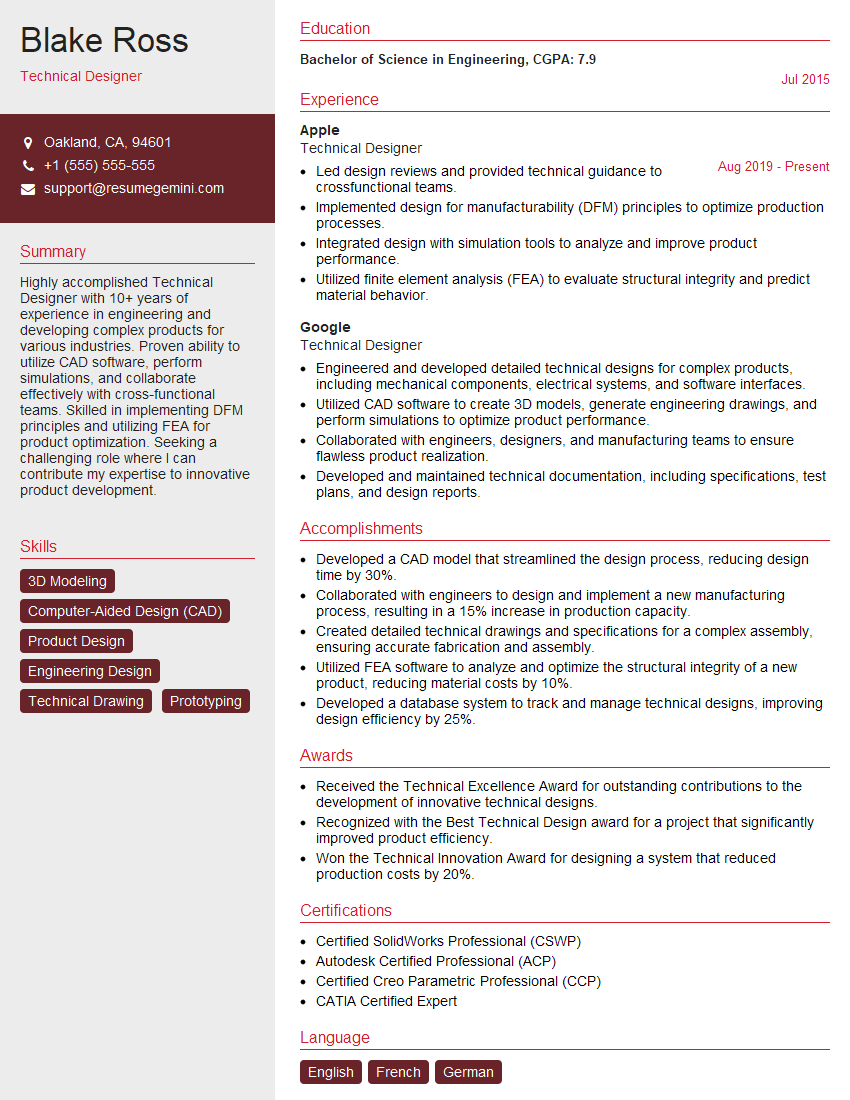
Technical Designer Resume Sample

Conservator Resume Sample

Artisan Resume Sample
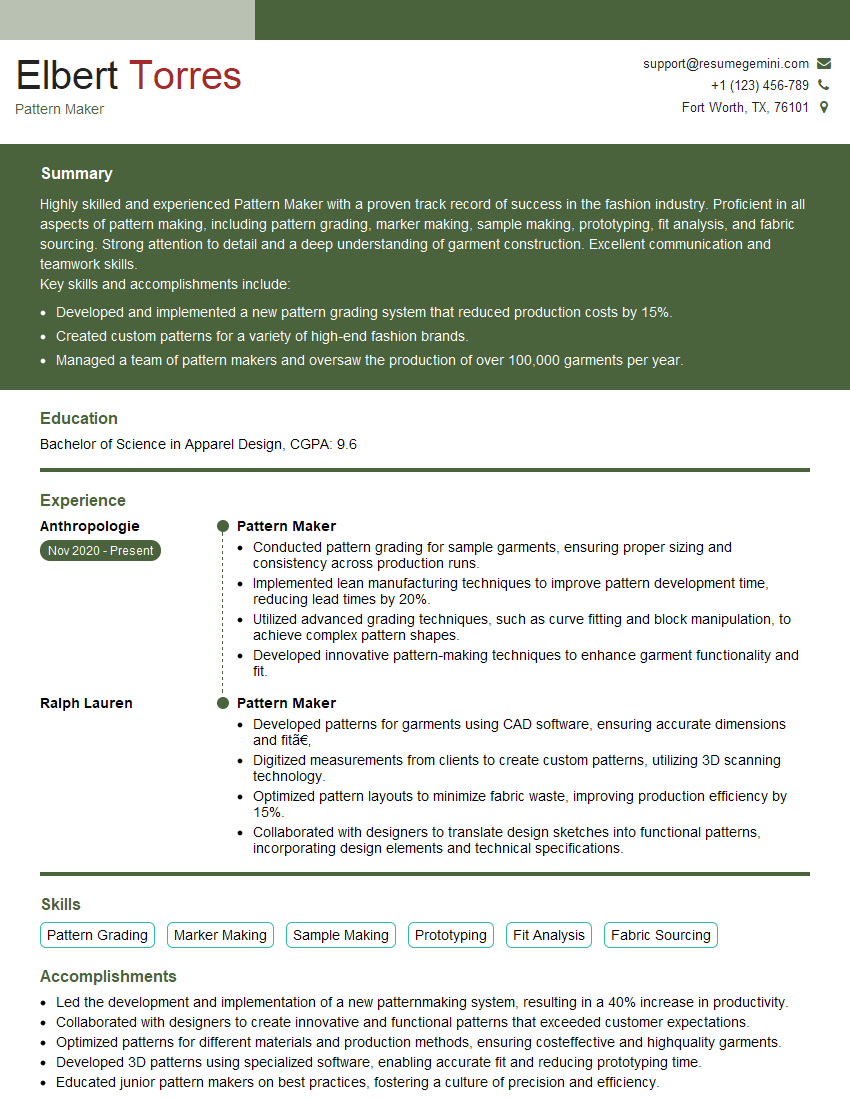
Pattern Maker Resume Sample
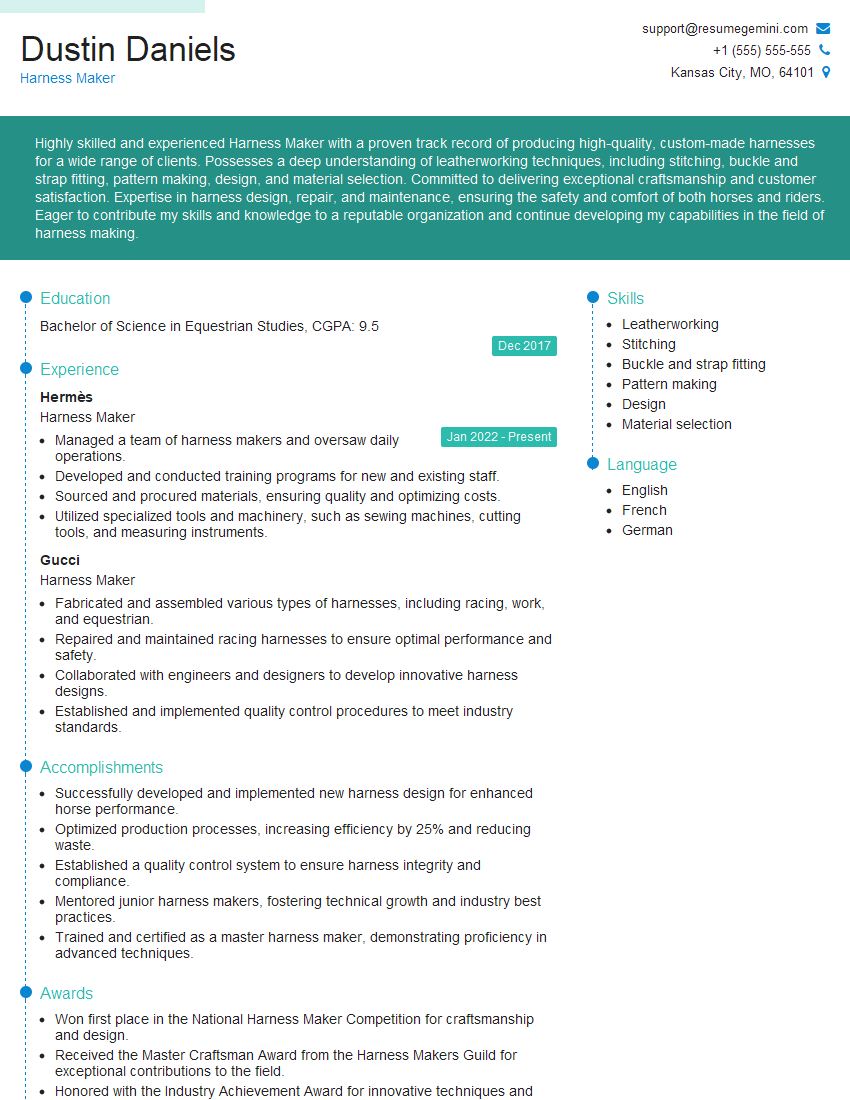
Harness Maker Resume Sample

Luggage Maker Resume Sample

Shoemaker Resume Sample

Hand Stitcher Resume Sample
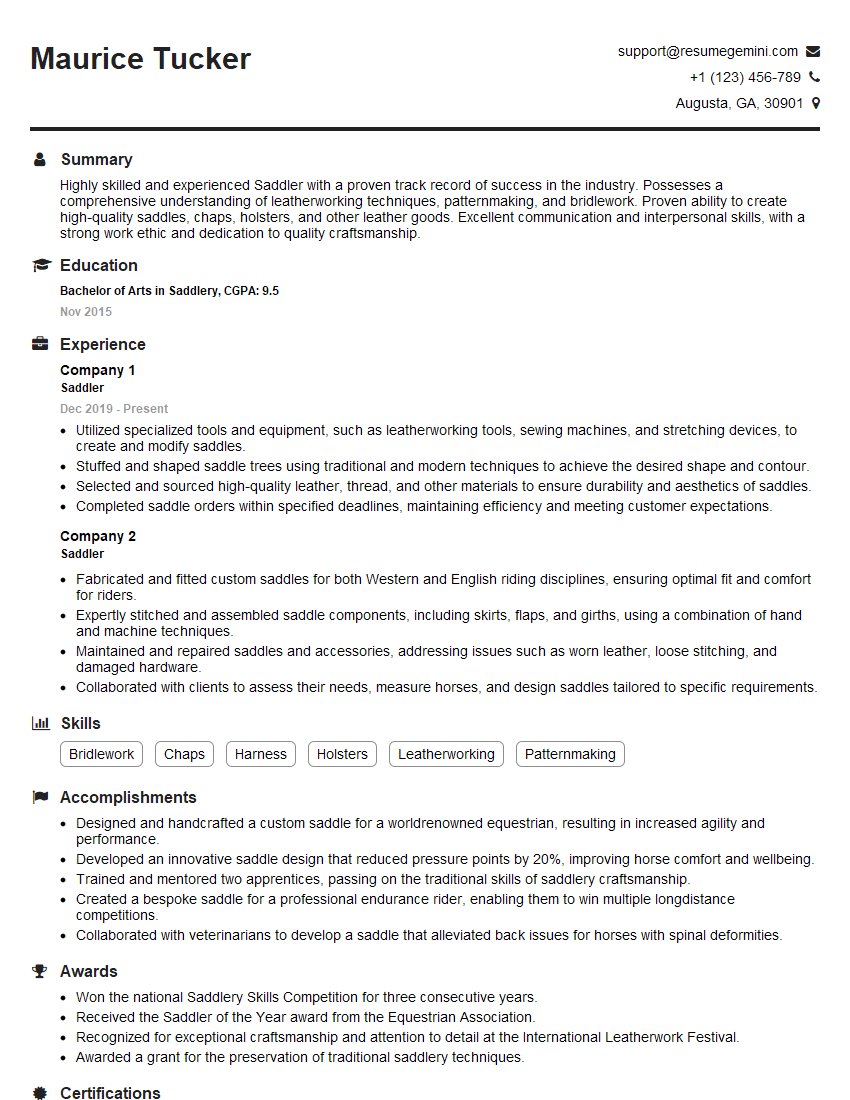
Saddler Resume Sample

Quality Control Inspector Resume Sample

Bookbinder Resume Sample
Explore more articles
Users Rating of Our Blogs
Share Your Experience
We value your feedback! Please rate our content and share your thoughts (optional).
What Readers Say About Our Blog
Very informative content, great job.
good