Unlock your full potential by mastering the most common Ability to create and implement engaging worship experiences interview questions. This blog offers a deep dive into the critical topics, ensuring you’re not only prepared to answer but to excel. With these insights, you’ll approach your interview with clarity and confidence.
Questions Asked in Ability to create and implement engaging worship experiences Interview
Q 1. Describe your experience in leading congregational singing.
Leading congregational singing is more than just playing music; it’s about facilitating a powerful, unified expression of faith. My approach focuses on creating a safe and encouraging environment where everyone feels comfortable participating, regardless of their musical ability.
For example, in my previous role at [Church Name], I implemented a system of visual cues, like projected lyrics and hand signals, to guide the congregation during complex songs. This significantly improved participation, particularly among those less familiar with the music. I also prioritize teaching the congregation the songs beforehand, whether through rehearsals, online resources, or simply highlighting key phrases during the service. This proactive approach ensures a smoother and more engaging experience for everyone. Furthermore, I focus on selecting songs that resonate with the congregation’s emotional and spiritual needs, ensuring the music supports, rather than distracts from, the message of the service.
Q 2. What software or technologies are you proficient in for worship planning and execution?
Proficient use of technology is essential for seamless worship planning and execution. I’m adept at using several software solutions, including ProPresenter for presentations and live switching, Planning Center Online for scheduling and communication with the worship team, and various Digital Audio Workstations (DAWs) like Logic Pro X and Ableton Live for pre-production and sound design.
For example, I use Planning Center Online to manage song selection, create run-of-show documents, and share these with the team, ensuring everyone is on the same page. ProPresenter allows for seamless transitions between songs, video clips, and announcements, creating a professional and engaging visual experience. My DAW proficiency enables me to create custom backing tracks, enhance existing recordings, and tailor the sound to suit the acoustics of the worship space.
Q 3. How do you incorporate diverse musical styles into your worship services?
Incorporating diverse musical styles is crucial for creating an inclusive and relevant worship experience. It’s about reflecting the rich tapestry of cultures and backgrounds within the congregation and beyond. My approach involves carefully selecting songs that represent a variety of genres, such as contemporary Christian, gospel, traditional hymns, and even incorporating elements of world music, depending on the congregation’s preferences and the overall theme of the service.
For example, I might start the service with a traditional hymn to establish a sense of reverence, followed by a contemporary praise song to build energy, and then conclude with a more reflective gospel piece. This variety keeps the service dynamic and engaging while still maintaining a cohesive spiritual message. I also actively seek input from the congregation about their musical preferences, ensuring the music resonates with their hearts and speaks to their diverse experiences.
Q 4. Explain your process for selecting and preparing worship songs.
Selecting and preparing worship songs is a multi-step process that requires careful consideration of various factors. It begins with prayerful discernment to ensure the chosen songs align with the overall message and theme of the service. I then consider the theological depth, lyrical content, and musical style to make sure the songs resonate with the congregation and create the desired atmosphere.
Practical considerations such as key, tempo, and instrumentation also play a significant role. Once a song list is finalized, we rehearse as a team, ensuring everyone is comfortable with their parts and the overall flow of the music. Furthermore, I might arrange specific parts, create custom charts or backing tracks, and even incorporate creative elements like visual aids or choreography to elevate the overall performance. This meticulous preparation results in a polished and meaningful worship experience.
Q 5. How do you ensure the worship experience is inclusive and accessible to all?
Creating an inclusive and accessible worship experience is paramount. This involves going beyond simply selecting diverse music. It means ensuring the service is welcoming to individuals with disabilities, diverse linguistic backgrounds, and various learning styles.
For example, I incorporate large-print hymnals and provide audio descriptions for visual elements during the service. We utilize assistive listening devices for hearing-impaired individuals, and ensure the physical space is wheelchair-accessible. Moreover, I might offer translations of songs or announcements in different languages. By proactively addressing potential barriers and considering the needs of all attendees, we can create a truly inclusive and welcoming environment where everyone feels valued and connected.
Q 6. How do you handle technical difficulties during a worship service?
Technical difficulties are an unfortunate reality in live events. My strategy focuses on proactive prevention and effective problem-solving. Thorough pre-service checks of all equipment and a backup plan for every piece of technology are essential. Having a dedicated tech team well-versed in troubleshooting is also crucial.
If a problem occurs during the service, my approach is calm and decisive. We have established protocols for addressing common issues, ranging from microphone malfunctions to computer crashes. For example, we have a readily available backup sound system and a secondary projector. If a problem arises, a designated team member immediately addresses it while I maintain the flow of the service, perhaps with an impromptu moment of prayer or a brief interaction with the congregation, thereby turning a potential disruption into an opportunity for connection and resilience.
Q 7. Describe your experience in managing and mentoring a worship team.
Managing and mentoring a worship team involves fostering a collaborative, supportive, and spiritually nourishing environment. It’s about nurturing individual talents while striving for a unified vision. I prioritize open communication and regular feedback sessions, providing opportunities for team members to share their ideas, concerns, and growth aspirations.
My mentoring focuses on both technical skill development and spiritual growth. I provide training on various instruments and technologies, but also encourage prayer and spiritual reflection as part of our team meetings. I believe a strong team dynamic is built on mutual respect, trust, and shared commitment to serving God through music. This creates not just a proficient team but a spiritually unified one dedicated to serving the congregation.
Q 8. How do you balance traditional and contemporary elements in worship?
Balancing traditional and contemporary elements in worship is about creating a service that honors the heritage of the faith while resonating with the present generation. It’s not about choosing one over the other, but finding creative ways to blend them seamlessly.
For example, we might begin with a traditional hymn played on an organ, setting a reverent tone. This could then transition into a contemporary worship song with a live band, creating energy and engaging a younger demographic. The sermon might incorporate both classical theological interpretations and relevant modern-day applications. The key is to use both styles to enhance the overall spiritual experience, ensuring neither overshadows the other but rather complements it.
Another example would be incorporating traditional liturgical elements, like the Lord’s Prayer, within a more contemporary service structure. This creates a sense of continuity and familiarity while maintaining a fresh feel.
Q 9. How do you create a worship atmosphere that fosters spiritual connection?
Creating a worship atmosphere that fosters spiritual connection involves careful attention to various aspects of the service. It starts with the environment: a space that feels welcoming, peaceful, and conducive to reflection. Soft lighting, comfortable seating, and intentional use of space are key.
Music plays a vital role. Choosing songs that are theologically rich and emotionally resonant creates a powerful connection. The lyrics should speak to the heart, prompting introspection and adoration. The style of music should be considered carefully based on the context and target audience.
Beyond music, intentional pauses for silence, heartfelt prayers, and a message that speaks to the congregation’s spiritual needs are all essential components. A welcoming attitude from the worship team, actively engaging in interactions with the attendees after the service, further establishes a close-knit community.
One successful example was incorporating a time of shared communion, not just receiving, but a time of quiet reflection and shared prayer, fostering a deeper sense of unity and connection amongst the congregation.
Q 10. What strategies do you use to engage different age groups in worship?
Engaging different age groups in worship requires a multi-faceted approach. It’s about recognizing that each age group has different learning styles, preferences, and ways of connecting spiritually.
- Children: Incorporate children’s moments, age-appropriate songs, and visual aids into the service. Dedicated children’s programs or designated areas can also be helpful.
- Youth: Involve youth in the worship team, use contemporary music, and address relevant issues they are facing. Creating space for questions and discussions related to the message can foster engagement.
- Adults: Offer thoughtful, relevant sermons, utilize varied musical styles, and encourage active participation through prayer, singing, and communal responses.
- Seniors: Ensure accessibility with clear audio and visuals, offer familiar hymns, and create a comfortable and supportive environment.
Using a variety of media, like video clips, visual projections relevant to the sermon, and using different musical styles that span generations, is crucial. Creating a diverse worship team also models inclusivity and appeals to a broader audience. The goal is to create a sense of belonging for everyone, regardless of their age.
Q 11. Describe your experience in creating a worship plan for a special event.
Planning worship for a special event, like Christmas or Easter, requires careful consideration of the specific themes and the overall message. The plan usually starts with identifying the core message of the event and then building the service around that message. I always begin by asking what themes we want to emphasize and how to best communicate them to the congregation.
For example, for Easter, I might focus on the themes of resurrection and new life. The music selection would reflect this, choosing uplifting and celebratory songs. The sermon would delve into the theological significance of the resurrection. I might incorporate visual elements, such as symbolic imagery or a dramatic reading, to enhance the narrative and emotional impact. For a Christmas service, the focus might be on the birth of Christ and the message of hope, employing appropriate music, readings and a narrative sermon that weaves together the history and significance of the event.
In both cases, active participation is crucial. This might involve congregational singing, responsive readings, or a special offering moment. The service structure should also be carefully designed to maintain a balance between solemnity and celebration.
Q 12. How do you involve the congregation in active participation during worship?
Involving the congregation in active participation is essential for creating a dynamic and engaging worship experience. It moves worship from a passive observation to an active participation in God’s presence.
Strategies include incorporating responsive readings, where the congregation reads alternating verses with the worship leader; encouraging congregational singing; using call-and-response elements in prayers or songs; and incorporating moments of silent reflection or personal prayer. Providing opportunities for testimonies or sharing personal experiences can also foster a deeper sense of community and involvement.
Furthermore, I believe in empowering congregants to use their gifts and talents. This could involve inviting them to lead in prayer, sing solos, or share readings. This not only enriches the service but also strengthens the sense of ownership and participation within the community.
Q 13. How do you assess the effectiveness of your worship services?
Assessing the effectiveness of worship services is a continuous process. I utilize a multi-pronged approach to evaluate this.
- Attendance: While not the sole indicator, consistent attendance can suggest engagement.
- Feedback: Post-service surveys, informal conversations, and suggestion boxes allow me to gather direct feedback from the congregation.
- Observations: Paying close attention to the congregation’s responses during the service – their level of engagement, participation in singing and prayer – provides valuable insights.
- Social Media Monitoring: Observing social media conversations about the service helps me understand the resonance and impact.
Qualitative data, such as written comments and anecdotal feedback, complements quantitative data. Analyzing these various indicators allows for a comprehensive understanding of what aspects resonated with the congregation and areas for potential improvement.
Q 14. What are your strengths and weaknesses in leading worship?
My strengths lie in creating a welcoming and inclusive atmosphere, fostering active congregational participation, and crafting engaging worship experiences that blend traditional and contemporary elements. I’m also skilled at adapting to different contexts and tailoring services to meet the specific needs of the congregation.
An area I’m continually working on is improving my ability to incorporate diverse musical styles while maintaining the theological integrity of the service. I also recognize the importance of continually learning and growing in my leadership skills, seeking opportunities for feedback and professional development.
I am always striving for a balance between preparing meticulously and allowing for spontaneity and flexibility, enabling me to respond effectively to the Spirit’s leading during worship.
Q 15. How do you adapt your worship style to different contexts and settings?
Adapting worship style requires a deep understanding of the congregation’s demographics, cultural background, and spiritual maturity. It’s not just about changing the music genre; it’s about tailoring the entire experience to resonate authentically.
- Contextual Analysis: Before planning a service, I conduct thorough research. This includes understanding the age range, ethnic diversity, musical preferences, and overall spiritual climate of the congregation. For example, a younger, more contemporary congregation might appreciate a more upbeat, modern worship style with contemporary Christian music and informal elements, while an older, more traditional congregation may prefer hymns, organ music, and a more formal setting.
- Flexibility in Music Selection: My music selection is always diverse. I might incorporate traditional hymns alongside contemporary praise songs, or blend different genres to cater to diverse tastes. This requires careful consideration of song arrangements and tempo, ensuring transitions feel natural and engaging.
- Adapting the Flow: The overall structure and flow of the service should also adapt. A shorter, more focused service might be appropriate for a community with young children, while a longer, more contemplative service might be suitable for a more reflective community. This might involve adjusting the length of sermons, incorporating more interactive elements, or adjusting the overall pacing.
- Visual & Sensory Adaptations: Visual elements, lighting, and even the physical space itself play a crucial role. Simple adjustments, such as lighting styles or projection choices, can drastically change the mood and feel. A more subdued setting might enhance a reflective service, while brighter, more energetic lighting might suit a celebration.
Ultimately, adapting worship style is about creating a space where everyone feels seen, heard, and connected to God.
Career Expert Tips:
- Ace those interviews! Prepare effectively by reviewing the Top 50 Most Common Interview Questions on ResumeGemini.
- Navigate your job search with confidence! Explore a wide range of Career Tips on ResumeGemini. Learn about common challenges and recommendations to overcome them.
- Craft the perfect resume! Master the Art of Resume Writing with ResumeGemini’s guide. Showcase your unique qualifications and achievements effectively.
- Don’t miss out on holiday savings! Build your dream resume with ResumeGemini’s ATS optimized templates.
Q 16. Describe a time when you had to overcome a challenge in planning a worship service.
During the planning of our annual Easter sunrise service, a severe thunderstorm threatened to cancel the outdoor event entirely. We had already invested significant time and resources in preparation—from securing the location and arranging musicians to distributing promotional materials. The challenge wasn’t just logistical, but also pastoral; the cancellation would have deeply disappointed many congregants.
To overcome this, we implemented a multi-pronged approach:
- Contingency Planning: We immediately developed a backup plan—moving the service indoors to a smaller, but suitable, space within the church building. This required a rapid reassessment of seating, sound systems, and lighting.
- Communication is Key: We swiftly communicated the situation to our congregation through emails, social media, and text messages, outlining the contingency plan and reassuring them about the altered arrangements. Transparency was essential.
- Teamwork & Flexibility: The team adapted seamlessly; the tech team efficiently adjusted audio-visual equipment, while the worship team adjusted their setup and song choices to suit the smaller venue. The sermon was also adjusted slightly to address the unexpected change of environment.
Despite the unexpected weather, the sunrise service was still a resounding success. The shift to the backup plan, while stressful, demonstrated our preparedness and adaptability, reinforcing the faith of the congregation. This experience highlighted the importance of preemptive planning and collaborative problem-solving.
Q 17. What is your theological understanding of worship?
My theological understanding of worship centers on the idea of a holistic response to God’s revelation in Jesus Christ. It’s not merely a performance or a ritual, but an act of adoration, confession, thanksgiving, and supplication. It’s a multifaceted experience that engages the mind, body, and spirit.
- Communion with God: At its core, worship is about communion with God. It’s an encounter where we acknowledge God’s sovereignty, express our love for Him, and receive His grace and blessings. This includes both personal and corporate aspects of worship.
- Transformation and Renewal: Worship is also a transformative experience. Through engaging with scripture, prayer, music, and the sacraments, we are renewed spiritually and challenged to live more faithfully. The goal is not just feeling good but being changed by the encounter.
- Corporate Expression of Faith: Worship isn’t just a private act; it’s a corporate expression of faith. The shared experience of worship unites believers, strengthens community bonds, and creates a space for mutual encouragement and support.
- Mission and Service: A biblically informed understanding of worship always considers the role of worship in our mission and service to others. Our acts of worship shape our lives and call us to live out our faith through service to our communities and the world.
In essence, my theological perspective views worship as a vibrant and dynamic expression of our relationship with God, impacting not only our individual lives, but also the broader community.
Q 18. How do you integrate visual elements (lighting, projections) into worship?
Visual elements are integral to creating a powerful and engaging worship experience. They should enhance the message, not distract from it. Careful planning and execution are key.
- Coordination with Music and Message: Lighting and projections should complement the music and the sermon’s theme. For instance, during a reflective moment, dim lighting and evocative imagery can enhance the atmosphere. Conversely, brighter lighting and dynamic projections can accompany an upbeat worship song.
- Color Psychology: I understand the impact of color. Warm colors (reds, oranges, yellows) can create a sense of energy and joy, while cooler colors (blues, greens, purples) can promote calmness and reflection. Color should be used strategically to guide emotion and focus.
- Simplicity and Clarity: Avoid overwhelming the congregation with too many visual elements. Simplicity is key; projections should be easy to read and aesthetically pleasing. Overly complex graphics or distracting animations can be counterproductive.
- Technological Proficiency: I make sure the technology is reliable. This involves regular checks on equipment and having backup systems in place. Technical malfunctions during a service can be disruptive and should be minimized.
- Accessibility: Ensure visual elements are accessible to all, including those with visual impairments. Consider using clear fonts, sufficient contrast, and audio descriptions when appropriate.
The goal is to create a cohesive and intentional visual narrative that enhances the overall worship experience and supports the spiritual message.
Q 19. How do you incorporate prayer and scripture reading effectively in worship?
Prayer and scripture reading are foundational elements of worship. They provide opportunities for spiritual reflection, confession, and intercession. Effective integration requires careful thought and planning.
- Contextualization: Scripture readings should be selected in relation to the theme of the service and the overall message. The chosen passage should be relevant to the congregation’s life and offer encouragement or challenge.
- Variety in Prayer: Incorporate different styles of prayer, such as corporate prayer, congregational prayer, pastoral prayer, and silent prayer, to cater to various preferences and comfort levels. The prayer style should reflect the mood and tone of the service.
- Meaningful Delivery: Prayer and scripture readings should be delivered with sincerity and conviction. Good vocal projection and clear articulation are essential. A conversational tone can often be more engaging than a formal or overly theatrical delivery.
- Interactivity: Engaging the congregation in prayer or scripture responses can increase participation and engagement. This could involve responsive readings, periods of silent reflection, or prompted prayers from the congregation.
- Reflection and Application: After the scripture reading, provide brief reflection or connect the passage to the service’s theme. This helps the congregation to grasp the significance of the scripture and apply it to their lives.
By carefully weaving prayer and scripture into the worship service, we encourage a deeper connection with God and create a space for spiritual growth and reflection.
Q 20. How do you handle feedback from congregants regarding the worship service?
Feedback is vital for continuous improvement. I actively seek feedback through various channels and use it constructively.
- Formal Feedback Mechanisms: I implement structured feedback mechanisms, such as comment cards, online surveys, or focus groups, to collect feedback regularly and systematically. These methods allow for anonymity and encourage honest responses.
- Informal Conversations: I also engage in informal conversations with congregants after services or throughout the week. This allows for more personal and spontaneous feedback.
- Attentive Listening: I listen carefully to both positive and critical feedback, striving to understand the perspective of the individual providing the feedback.
- Actionable Steps: I identify recurring themes and patterns in the feedback and prioritize those issues that require immediate attention. I translate feedback into actionable steps, such as adjusting the music selection, changing the service flow, or enhancing visual elements.
- Transparency & Communication: I communicate the steps taken in response to feedback to the congregation, demonstrating that their input is valued and actively used for improvement. This helps maintain a culture of openness and collaboration.
Handling feedback effectively is about creating a two-way dialogue that fosters growth and strengthens the community.
Q 21. What is your understanding of copyright law as it applies to church music?
Copyright law, specifically as it relates to music used in church services, is complex but crucial to understand. It centers on the legal rights of songwriters and publishers to their creative works.
- Copyright Ownership: Music used in church services is usually protected under copyright law. This means that performing or reproducing a copyrighted song without permission is illegal. The copyright generally belongs to the songwriter or music publisher.
- Licensing Agreements: Churches can obtain licenses (often through organizations like CCLI or OneLicense) to legally perform copyrighted music in their services. These licenses provide permission to reproduce and perform specific songs for a fee, often based on factors like church size and attendance.
- Public Domain Music: Music in the public domain is not subject to copyright restrictions and can be used freely. However, determining whether a particular piece of music is truly in the public domain requires careful research.
- Fair Use Exceptions: The doctrine of “fair use” allows limited use of copyrighted material without permission under specific circumstances. This is generally not applicable to widespread performances in church settings.
- Legal Compliance: Understanding copyright law is vital to avoid potential legal issues and ensure that the church acts ethically and responsibly. Ignoring copyright laws can result in legal penalties, including fines and lawsuits.
It is crucial for churches to obtain the necessary licenses for any copyrighted music used in their services to ensure legal compliance and support the musicians and composers whose work enriches our worship experiences.
Q 22. What is your approach to creating a budget for worship ministry resources?
Creating a worship ministry budget requires a strategic approach that balances artistic vision with financial responsibility. I begin by outlining all anticipated needs for the year, categorizing them into essential and desirable items. Essential items include things like instrument maintenance, software licenses, and essential consumables like sheet music. Desirable items might include new sound equipment upgrades or specialized training for the team.
Next, I research costs for each item, comparing vendors and exploring options for cost savings, such as seeking sponsorships or grants. I then prioritize items based on their impact on the overall worship experience and align the budget with the church’s overall financial plan. This often involves presenting multiple budget scenarios to the leadership team, showcasing different levels of investment and their corresponding benefits. For instance, a higher budget might allow for professional sound engineering for special events, improving the audio quality significantly. A lower budget might require us to rely more heavily on volunteer technical support, requiring more training and careful planning.
Finally, I regularly monitor expenses throughout the year, tracking actual costs against budgeted amounts and making adjustments as needed. This proactive approach ensures we stay within budget and remain financially responsible while delivering engaging and high-quality worship experiences.
Q 23. Describe your experience working with volunteers in a worship ministry setting.
Working with volunteers in worship ministry is crucial and deeply rewarding. My approach centers on creating a supportive and empowering environment. I begin by clearly defining roles and responsibilities, ensuring each volunteer understands their contribution to the overall worship experience. This includes regular training sessions tailored to their roles, such as technical training for sound and lighting volunteers or vocal technique workshops for singers.
Open communication is key. I establish regular team meetings to discuss upcoming services, address concerns, and celebrate successes. I foster a culture of mutual respect and appreciation, recognizing the significant time and effort volunteers contribute. For example, I’ve implemented a volunteer appreciation event at the end of each year, where we celebrate their contributions with a meal and testimonials. This helps to boost morale and demonstrates the church’s gratitude.
I also actively seek feedback from volunteers, valuing their insights and suggestions. By empowering volunteers and fostering a sense of ownership, I build a strong, dedicated team committed to creating a meaningful worship experience.
Q 24. How do you ensure the worship service reflects the overall vision of the church?
Ensuring the worship service reflects the church’s overall vision requires constant communication and collaboration. I start by actively participating in leadership meetings, understanding the church’s mission, values, and strategic goals. I then translate these into actionable elements for the worship service. For instance, if the church emphasizes community outreach, the worship style might incorporate elements that highlight global justice or compassion.
I use the church’s sermon series and theological themes as inspiration for song selection and other aspects of the service, ensuring a cohesive and intentional message. I also ensure that the worship style is appropriate for the church’s demographic and cultural context. For example, a church with a younger demographic might benefit from more contemporary worship styles, while a church with an older demographic might prefer a more traditional approach.
Finally, I regularly seek feedback from church members and leadership to assess how well the worship service reflects the church’s overall vision. This feedback loop helps me make adjustments and ensure the service remains relevant and impactful.
Q 25. How do you measure the success of a worship service?
Measuring the success of a worship service goes beyond simply counting attendance. I use a multi-faceted approach, combining quantitative and qualitative data. Quantitative data includes attendance figures, offering amounts (where applicable), and feedback forms. Qualitative data includes observations of congregational engagement during the service, post-service conversations, and feedback from team members.
For example, observing the level of participation during congregational singing or the attentiveness during prayers can provide valuable insight. Post-service conversations with attendees can offer personal perspectives on the service’s impact. I also analyze the feedback forms, paying attention to both positive and negative comments, identifying areas for improvement.
Ultimately, the goal is not to simply achieve high attendance but to create a worship experience that is spiritually meaningful, engaging, and reflective of the church’s mission. A successful service leaves people feeling uplifted, connected to God, and inspired to live out their faith.
Q 26. How do you handle conflict within the worship team?
Conflict within the worship team is inevitable, but it can be constructively managed. My approach emphasizes proactive communication and conflict resolution. I encourage open dialogue and create a safe space for team members to express their concerns without fear of judgment.
When conflict arises, I facilitate a respectful conversation where each person can share their perspective. I focus on understanding the underlying issues rather than focusing on assigning blame. This often involves active listening and asking clarifying questions to ensure everyone feels heard. If the conflict cannot be resolved within the team, I might involve a neutral third party, such as a church leader or counselor, to mediate.
The goal is to resolve conflicts fairly and efficiently, strengthening the team’s unity and commitment to creating a unified worship experience. I emphasize the importance of forgiveness and reconciliation, helping team members move forward and maintain healthy working relationships.
Q 27. Describe your experience working with a church’s leadership team.
Working with a church’s leadership team requires strong communication, collaboration, and mutual respect. I maintain open and transparent communication, providing regular updates on the worship ministry’s activities, plans, and budget. I actively seek their input and guidance, considering their feedback in decision-making.
For instance, I frequently present proposals for new initiatives, budget requests, or changes in worship style, ensuring alignment with the church’s overall vision and strategic goals. I proactively identify potential challenges and propose solutions, ensuring a collaborative approach to problem-solving.
Building strong relationships with leadership is vital. I demonstrate my commitment to the church’s mission and values, showing respect for their authority and expertise. This collaborative approach strengthens the overall ministry and ensures that the worship experience effectively serves the needs of the church community.
Q 28. What are your future goals for your professional development in worship ministry?
My future goals for professional development in worship ministry include expanding my knowledge of various worship styles and theological traditions. I plan to pursue additional training in areas such as worship leading, music production, and team leadership. I am interested in exploring innovative technologies that enhance the worship experience, while remaining sensitive to the spiritual aspects of worship.
I also aim to develop stronger mentoring skills, guiding and nurturing the next generation of worship leaders. Furthermore, I want to become more proficient in leading worship in diverse cultural contexts, building inclusive and welcoming worship experiences. My ultimate goal is to contribute to the growth and development of worship ministries, equipping others to lead meaningful and transformative worship experiences.
Key Topics to Learn for Ability to create and implement engaging worship experiences Interview
- Understanding Your Congregation: Analyzing demographics, spiritual maturity levels, and cultural backgrounds to tailor worship experiences effectively. Practical application: Developing pre-service surveys or focus groups to gather valuable insights.
- Crafting a Compelling Narrative: Designing worship services with a clear and engaging storyline that connects with the hearts and minds of attendees. Practical application: Creating a thematic structure for a service, linking scripture readings, music choices, and sermon to a central theme.
- Selecting and Utilizing Music and Media: Choosing music and multimedia elements that enhance the worship experience, considering style, tempo, and emotional impact. Practical application: Creating a playlist that flows logically and builds emotional intensity throughout the service.
- Leading and Facilitating Worship: Developing confidence and skills in leading congregational singing, prayer, and responsive readings. Practical application: Practicing vocal projection, utilizing effective body language, and creating a welcoming and inclusive atmosphere.
- Incorporating Diverse Worship Styles: Understanding and incorporating various worship styles (traditional, contemporary, liturgical, etc.) to create a diverse and inclusive atmosphere. Practical application: Researching different styles and integrating elements that resonate with a broad range of congregants.
- Managing Technical Aspects of Worship: Understanding and coordinating audio-visual equipment, lighting, and other technical elements to create a seamless worship experience. Practical application: Creating a detailed technical run-of-show for services, coordinating with technical staff.
- Evaluating and Improving Worship Services: Developing methods for gathering feedback and evaluating the effectiveness of worship services. Practical application: Implementing post-service surveys, informal feedback sessions, or observation techniques.
Next Steps
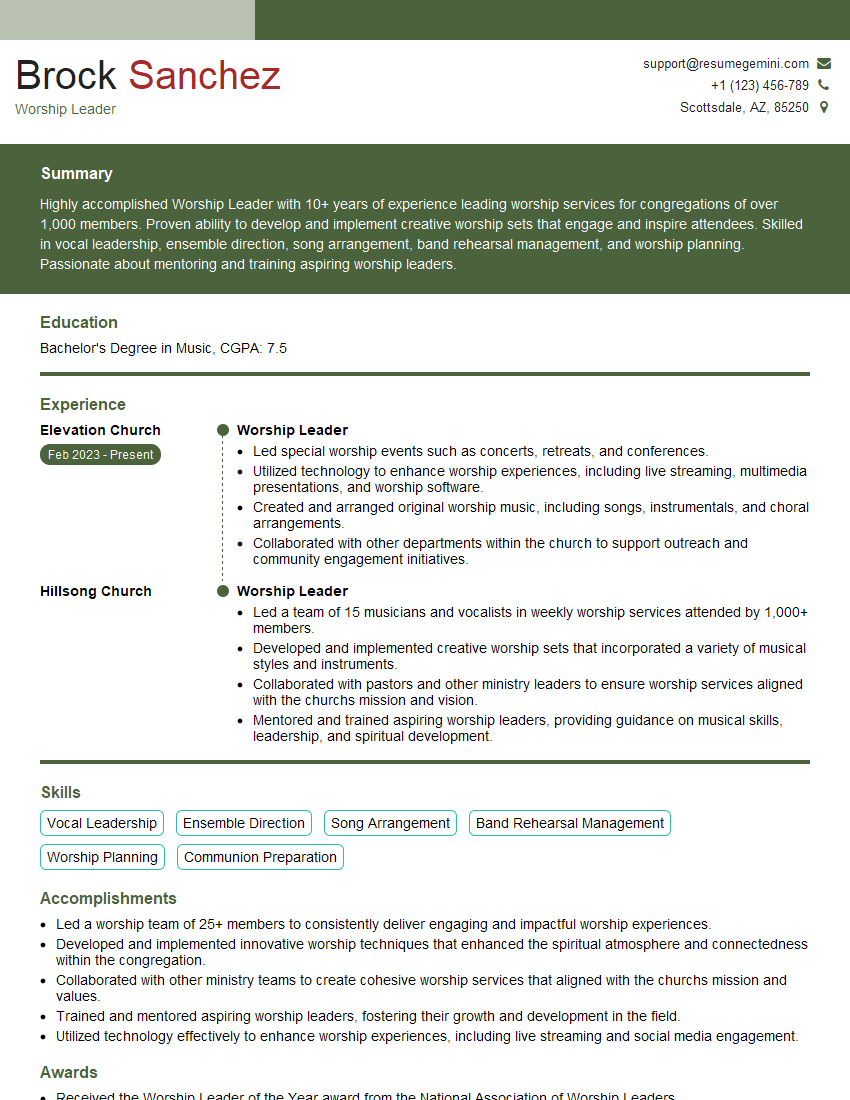
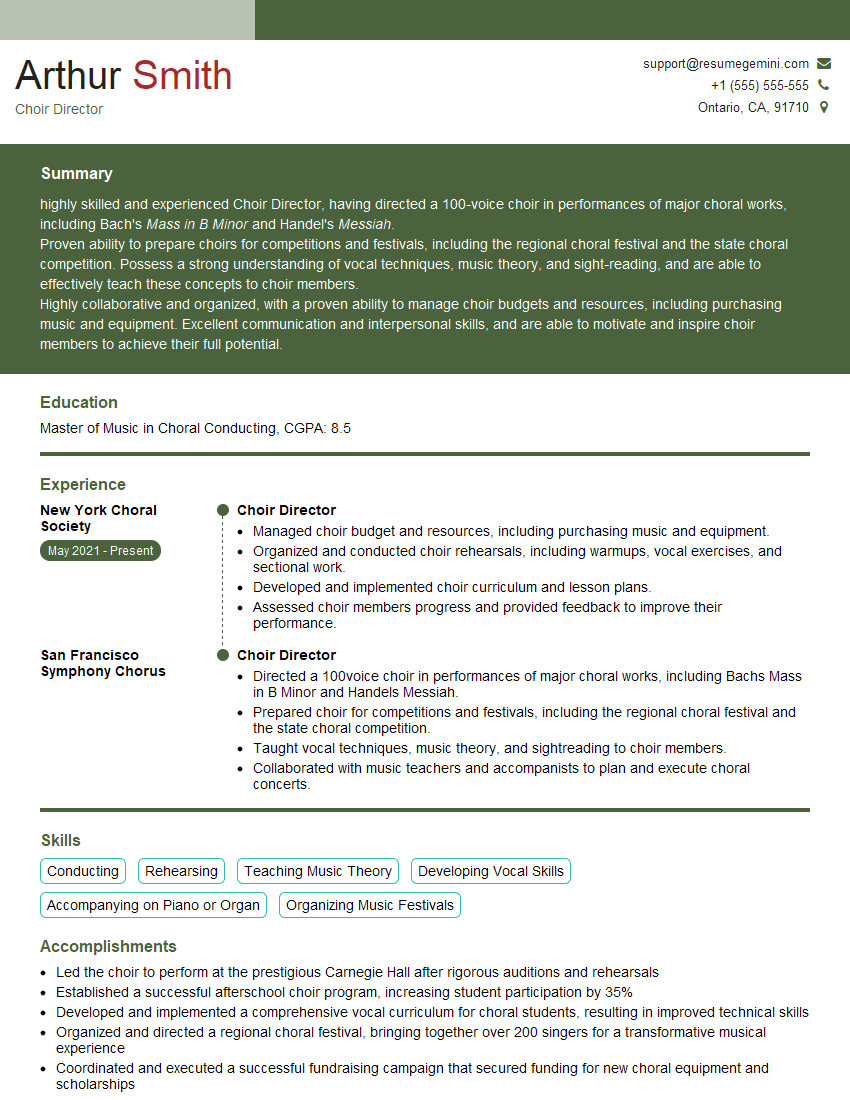
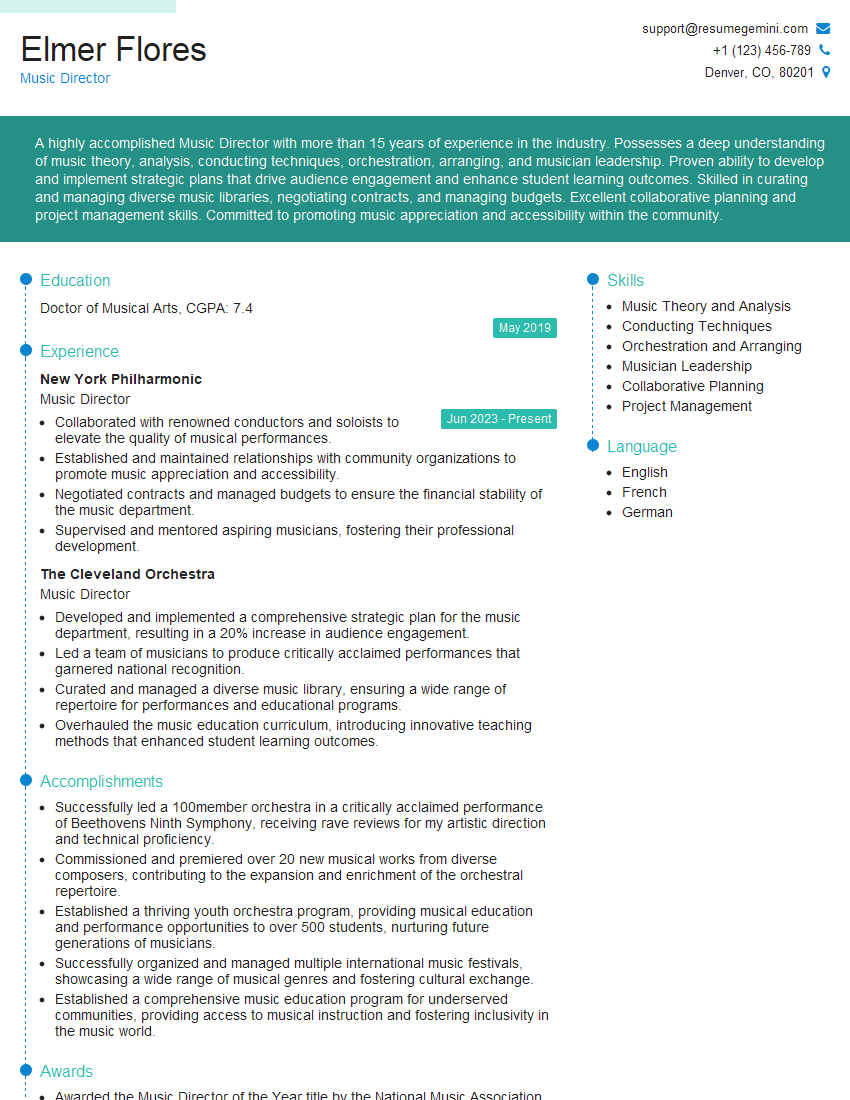
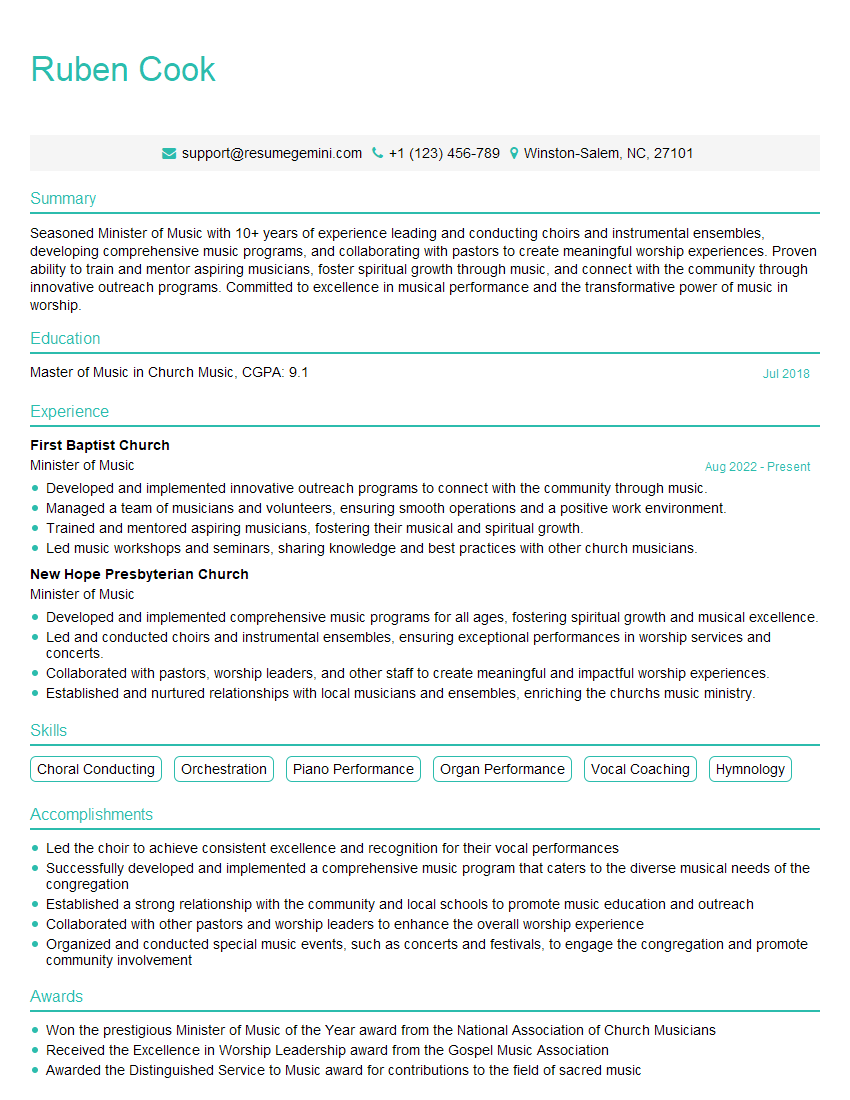
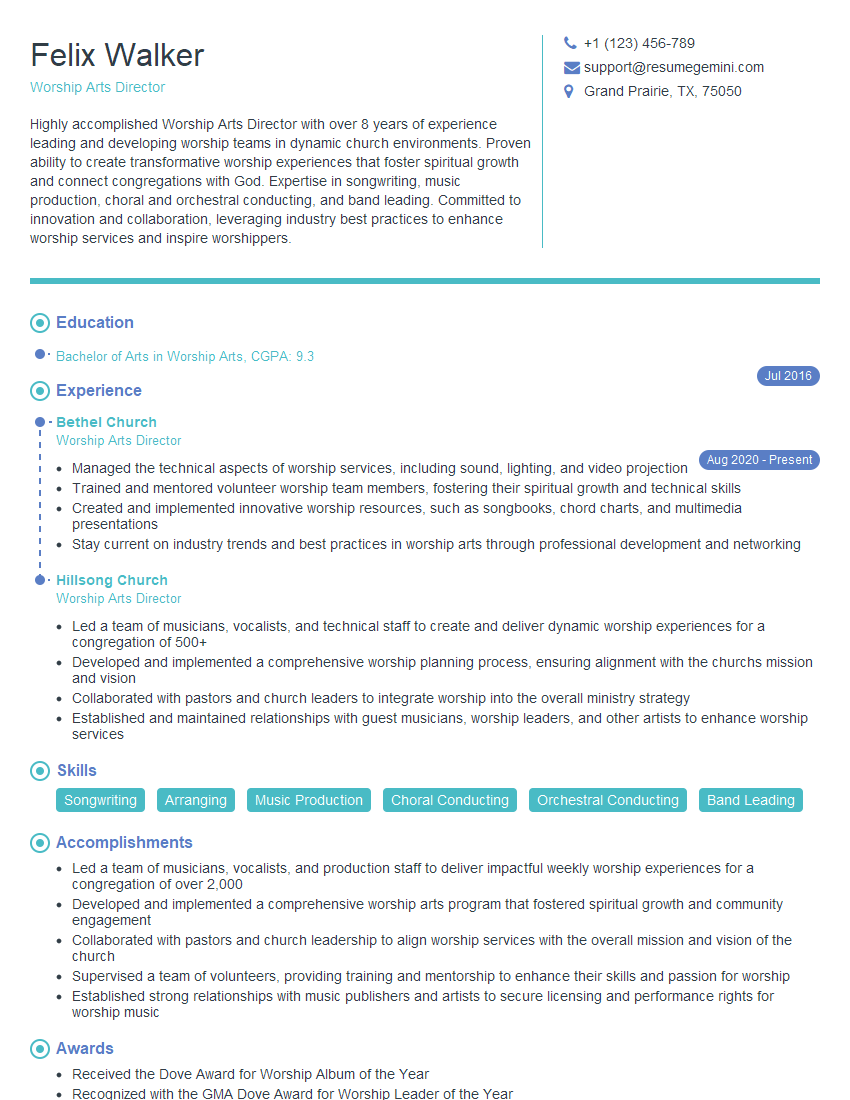
Mastering the ability to create and implement engaging worship experiences is crucial for career advancement in ministry and related fields. It demonstrates your leadership capabilities, your understanding of congregational needs, and your ability to create meaningful and impactful worship services. To maximize your job prospects, crafting an ATS-friendly resume is essential. ResumeGemini is a trusted resource that can help you build a professional and impactful resume highlighting your skills and experience. Examples of resumes tailored to showcasing your ability to create and implement engaging worship experiences are available to further guide you.
Explore more articles
Users Rating of Our Blogs
Share Your Experience
We value your feedback! Please rate our content and share your thoughts (optional).
What Readers Say About Our Blog
Very informative content, great job.
good