The right preparation can turn an interview into an opportunity to showcase your expertise. This guide to Wildfire Prevention and Suppression interview questions is your ultimate resource, providing key insights and tips to help you ace your responses and stand out as a top candidate.
Questions Asked in Wildfire Prevention and Suppression Interview
Q 1. Describe the different stages of a wildfire.
Wildfires progress through several distinct stages, each characterized by different fire behavior and intensity. Think of it like the life cycle of a fire.
- Preignition: This phase involves the heating of fuels (grass, shrubs, trees) to the point where they release volatile gases. This is like preparing kindling for a campfire – getting it ready to burn.
- Ignition: This is the moment when the fuel reaches its ignition temperature and combustion begins. This is like striking a match to light the kindling.
- Combustion: This is the active burning stage, encompassing three phases: preheating (continued heating of adjacent fuels), flaming combustion (rapid oxidation of volatile gases), and glowing combustion (slow oxidation of solid fuels like embers). This is the main part of the fire, like the campfire burning brightly.
- Extinction: This is the final stage when the fire is depleted of fuel or suppressed by firefighting efforts. This is like putting out the campfire completely with water.
Understanding these stages is crucial for effective wildfire suppression. Knowing which stage the fire is in dictates the most effective response strategy.
Q 2. Explain the fire triangle and how it relates to wildfire suppression.
The fire triangle illustrates the three essential elements required for fire to exist: heat, fuel, and oxygen. Remove any one of these, and the fire will extinguish.
- Heat: The energy source that initiates and sustains combustion. This could be lightning, a discarded cigarette, or even sunlight focusing on dry grass.
- Fuel: The combustible material, ranging from dry leaves and grass to trees and even structures. The amount, type, and arrangement of fuel heavily influence fire behavior.
- Oxygen: The oxidizer that reacts with the fuel to produce fire. Air provides this oxygen.
Wildfire suppression tactics directly target these elements. For example, firefighters might use water to cool the fuel and reduce heat, create firebreaks to remove fuel, or use fire retardants to reduce oxygen availability to the flames.
Q 3. What are the primary methods used for wildfire prevention?
Wildfire prevention focuses on proactive measures to minimize the risk of wildfires. It’s about reducing the likelihood of a fire starting in the first place.
- Prescribed burns (controlled burns): Carefully planned and controlled burns remove excess fuel from the landscape, reducing the intensity of future wildfires. This is like tidying up leaves around your house to prevent a larger fire.
- Fuel reduction treatments: These involve mechanically removing excess fuels, such as thinning forests, clearing brush, or creating fuel breaks. This is like clearing brush around your property.
- Public education and awareness campaigns: Educating the public about fire safety, responsible campfire practices, and the importance of reporting wildfires promptly. This is crucial for community engagement.
- Early detection and reporting systems: Implementing systems like fire lookouts, weather monitoring, and public reporting mechanisms to rapidly detect and respond to potential wildfire starts.
- Community wildfire protection plans: These plans involve community collaboration to identify hazards, develop strategies for fuel reduction, and improve emergency response.
A comprehensive approach that integrates several of these strategies is essential for effective prevention.
Q 4. Detail the various types of wildfire suppression techniques.
Wildfire suppression involves a range of techniques aimed at controlling or extinguishing an active wildfire.
- Direct attack: Firefighters engage the fire directly, using water, foam, or earth to extinguish flames. This is risky and only feasible with smaller fires or under safe conditions.
- Indirect attack: Firefighters work to control the fire’s spread indirectly, by constructing firebreaks, using strategic burning (backfires) to remove fuels ahead of the fire’s path, or letting the fire burn itself out naturally where safe to do so.
- Aerial attacks: Air tankers, helicopters, and other aircraft drop water or retardants on the fire from above. This is essential for reaching remote or inaccessible areas.
- Ground crews: Teams of firefighters using hand tools, fire engines, and other equipment to build firebreaks, extinguish flames, and contain the fire’s spread. Their coordinated effort is paramount.
The choice of suppression technique depends on several factors, including the size and intensity of the fire, the terrain, weather conditions, and available resources.
Q 5. What are the key components of a wildfire risk assessment?
A wildfire risk assessment is a systematic process to identify and evaluate the potential for wildfires in a specific area. It’s like a home insurance inspection, but for wildfires.
- Fuel assessment: Identifying the types, amounts, and distribution of flammable materials (vegetation, structures).
- Weather analysis: Evaluating historical and current weather patterns, including temperature, humidity, wind speed, and precipitation.
- Topography assessment: Analyzing the land’s features such as slope, aspect (direction the slope faces), and elevation, which influence fire spread.
- Ignition sources assessment: Identifying potential sources of ignition, such as lightning strikes, human activities, or power lines.
- Values at risk assessment: Identifying structures, infrastructure, and natural resources that are at risk of damage or destruction.
The outcome of a risk assessment informs the development of prevention and suppression strategies and helps prioritize resource allocation.
Q 6. How do you identify and mitigate potential wildfire hazards?
Identifying and mitigating wildfire hazards involves a multi-pronged approach, similar to fixing vulnerabilities in a computer system.
- Regular inspections: Routine inspections of properties and landscapes to identify potential hazards, such as dead vegetation, overgrown brush, and faulty electrical equipment. This is like regularly checking your house for fire hazards.
- Fuel management: Removing excess vegetation through controlled burns, thinning forests, or creating defensible space around structures. This is like cleaning your gutters and trimming branches around your house.
Implementing these measures helps reduce the probability of a wildfire starting and minimizes potential damage.
Q 7. Explain the concept of fuel breaks and their importance.
Fuel breaks are strategically placed gaps in vegetation designed to slow or stop the spread of wildfires. They’re like firewalls in a computer system.
They are created by removing flammable materials, creating a wide area where the fire is less likely to spread. These can be natural features such as rivers or roads or constructed by mechanical clearing or prescribed burning. The effectiveness of a fuel break depends on its width, construction, and maintenance. Wider fuel breaks are generally more effective. Proper maintenance is crucial. Overgrown fuel breaks lose their effectiveness.
Fuel breaks are an essential component of wildfire prevention and suppression strategies, often integrated into larger landscape-level fuel management plans. They can provide firefighters with a safe location to work and assist in containing the fire’s spread, protecting valuable assets and lives.
Q 8. Describe different types of fire behavior and how they influence suppression strategies.
Wildfires exhibit diverse behavior influenced by factors like fuel type, topography, and weather. Understanding this behavior is crucial for effective suppression. We categorize fire behavior into several key types:
- Running Fire: A fire spreading rapidly with a noticeable head, flanks, and rear. This often occurs in areas with continuous fuels and strong winds, requiring aggressive suppression tactics like direct attack or flanking maneuvers.
- Creeping Fire: A fire spreading slowly, typically with low intensity. It’s often found in areas with sparse fuels or low wind speeds. Suppression might involve careful monitoring and patrolling, possibly using hand tools to extinguish.
- Spot Fire: Fires ignited outside the main fire perimeter by embers carried by wind. These require immediate attention as they can quickly become independent fires and outflank suppression efforts. Detection and rapid suppression of spot fires are critical.
- Backing Fire: A fire spreading slowly against the wind. This type often burns less intensely than a running fire and can be more predictable. It can be strategically used in prescribed burns or as a control line in suppression.
- Flaming Fire: Characterized by intense flames and rapid spread, fueled by actively burning surface materials. This type requires immediate and forceful action, often using air support like helicopters or airplanes.
- Smoldering Fire: A fire burning with low flames or no visible flames, primarily consuming subsurface fuels like peat or duff. This can be insidious because it can smolder underground for long periods, re-igniting unexpectedly. Suppression involves thorough examination and often the use of specialized tools to ensure complete extinguishment.
For example, a running fire in a steep, windswept area necessitates a different approach than a creeping fire in a sparsely vegetated area. A running fire may need aerial support and a strategic retreat to establish a fireline, whereas the creeping fire might only require ground crews and hand tools. The fire behavior dictates the strategy and the type of resources we deploy.
Q 9. What are the safety protocols you follow during wildfire suppression operations?
Safety is paramount during wildfire suppression. We adhere to strict protocols, including:
- Personal Protective Equipment (PPE): This includes fire-resistant clothing, helmets, eye protection, gloves, and respiratory equipment. We ensure all equipment is properly maintained and inspected before deployment.
- Lookouts and Communication: Maintaining constant communication with the Incident Commander and other crew members is essential. Designated lookouts monitor fire behavior and changing conditions, alerting the crew to any potential hazards.
- Safety Briefings: Before each operation, we have detailed briefings outlining the fire behavior, planned tactics, escape routes, and emergency procedures. This ensures everyone is aware of the risks and knows their role in maintaining safety.
- Weather Monitoring: We constantly monitor weather patterns, as sudden changes in wind speed and direction can significantly alter fire behavior and create dangerous situations. We are prepared to adjust tactics based on the forecast.
- Emergency Action Plans (EAPs): Each team has an EAP detailing escape routes and rally points in case of unexpected fire behavior changes or emergencies. Regular EAP drills ensure crew proficiency.
- Fireline Safety: We maintain safe distances from the fire edge, use appropriate tools and techniques, and establish clear communication lines to avoid accidents.
A real-world example: During a wildfire suppression operation, a sudden shift in wind direction forced us to retreat to our pre-planned escape route. Our adherence to safety protocols prevented injuries and allowed us to regroup and reassess our approach.
Q 10. How do you use weather forecasts to predict wildfire behavior?
Weather forecasting is integral to predicting wildfire behavior. We utilize various meteorological data sources to anticipate fire spread and intensity. Key weather parameters we consider include:
- Temperature: Higher temperatures increase fuel dryness and flammability, leading to more intense fires.
- Relative Humidity: Lower humidity indicates drier fuels, thus higher fire risk.
- Wind Speed and Direction: Wind is a primary driver of fire spread. Strong winds can rapidly spread flames, creating erratic fire behavior and challenging suppression efforts. Wind direction determines where the fire will likely spread.
- Precipitation: Rain can significantly reduce fire risk, but sudden changes can also affect the moisture content of fuels.
- Fuel Moisture Content: This measures the moisture within the vegetation, which directly impacts flammability. This information is obtained via weather stations and specialized equipment.
We use this information to build predictive models that help estimate the rate of fire spread, potential fire growth areas, and the likelihood of extreme fire behavior. For instance, a forecast predicting high temperatures, low humidity, and strong winds would indicate a high risk of rapid fire spread, necessitating a more aggressive initial attack strategy.
Q 11. Explain the role of prescribed burns in wildfire prevention.
Prescribed burns, also known as controlled burns, are planned and controlled fires set under specific conditions to reduce wildfire risks. They are a crucial tool for wildfire prevention. The process involves carefully planning and executing a burn under controlled conditions to reduce the amount of fuel available for future wildfires.
- Fuel Reduction: Prescribed burns consume underbrush, dead trees, and other flammable materials, reducing the amount of fuel available for a wildfire to spread rapidly.
- Improved Forest Health: By removing excess fuel and underbrush, prescribed burns can improve forest health, promoting the growth of healthier trees and reducing the risk of insect infestations and disease.
- Habitat Improvement: Controlled burns can create a mosaic of habitats, benefiting various wildlife species. Some species require fire to maintain their habitats.
- Ecosystem Restoration: Prescribed burns can be used to restore ecosystems that have been impacted by fire suppression, allowing them to function more naturally.
For example, in a pine forest with a dense understory of dry needles and brush, a prescribed burn can reduce the risk of a devastating wildfire by removing the easily combustible materials. This creates a more fire-resistant landscape.
Q 12. Describe your experience with different types of fire suppression equipment.
My experience encompasses a wide range of fire suppression equipment, including:
- Hand Tools: Shovels, rakes, axes, and pulaskis are fundamental for creating firelines and extinguishing smaller fires. I’m proficient in their safe and effective use.
- Engines: I have extensive experience operating fire engines, which provide water for fire suppression, and are often used to create firebreaks and support other suppression efforts. This includes pump operation and hose management.
- Water Tenders: These large vehicles transport vast amounts of water to remote fire locations, supplying water for engines and other equipment. I understand their maintenance and operational capabilities.
- Air Support: I’ve worked with air tankers and helicopters for aerial water and retardant drops, understanding their capabilities and communication protocols.
- Specialized Equipment: I am familiar with equipment like drip torches (for controlled burns), chainsaws (for clearing fuel), and GPS mapping systems for tracking fire perimeters and resource locations.
Experience using this equipment has instilled an understanding of its limitations, maintenance requirements, and proper techniques for safe and efficient operations. For example, I’ve used drip torches in many prescribed burns, understanding how to manage the fire’s spread carefully.
Q 13. How do you communicate effectively during a wildfire incident?
Effective communication is critical during wildfire incidents. We utilize various methods:
- Two-way Radios: These are the primary means of communication within the incident command structure, allowing for real-time updates on fire behavior, resource deployment, and safety concerns. Clear and concise radio communication is essential.
- Satellite Phones: These are used in areas with limited or no cell service for communication with remote crews or the incident command post.
- Incident Command System (ICS): The ICS provides a standardized framework for communication and coordination among various agencies and personnel involved in the incident. Regular briefings and updates ensure everyone is informed.
- Mapping and Geographic Information Systems (GIS): GIS software and mapping technologies support visual communication regarding the fire’s spread, resource locations, and strategic deployment decisions.
- Written Reports: Post-incident reports provide a record of events, lessons learned, and recommendations for improvement.
During an incident, I emphasize clear, concise communication, actively listening to others and ensuring all team members understand their roles and responsibilities. This ensures everyone operates safely and efficiently.
Q 14. Explain your understanding of Incident Command System (ICS).
The Incident Command System (ICS) is a standardized, on-scene management system designed to enable effective and efficient command, control, and coordination of emergency response. It’s essential for managing large-scale incidents like wildfires, ensuring a coordinated and consistent response.
- Modular Organization: ICS is built on a modular organization, which means it can adapt to the size and complexity of any incident. Smaller incidents require a simpler structure, while larger ones need a more complex one.
- Unified Command: ICS allows for a unified command structure, where multiple agencies can work together collaboratively under a shared incident command structure. This ensures efficient resource allocation and coordinated actions.
- Common Terminology: ICS utilizes standardized terminology and procedures to prevent communication confusion. Everyone understands what tasks are needed and how they are progressing.
- Defined Roles and Responsibilities: ICS clearly defines the roles and responsibilities of each person or team, reducing ambiguity and ensuring accountability. This is paramount for safety and efficiency.
- Manageable Span of Control: ICS establishes a manageable span of control, ensuring that each supervisor has a reasonable number of subordinates to manage effectively.
In practice, ICS provides a framework for communication, resource allocation, and decision-making during a wildfire. It ensures all personnel, regardless of their agency, work together efficiently and safely to suppress the fire, minimize damage, and ensure the safety of the public and responders.
Q 15. What are the common causes of wildfires?
Wildfires, devastating and unpredictable, stem from a variety of causes, often interacting in complex ways. We can broadly categorize them into human-caused and natural causes.
- Human Causes: These are the most frequent igniters. Examples include:
- Unattended campfires: Embers left smoldering can easily ignite dry brush and quickly escalate.
- Equipment use: Sparks from machinery like chainsaws, lawnmowers, or even vehicles’ exhaust systems can ignite dry grass, especially in hot and windy conditions.
- Power lines: Faulty or downed power lines are a significant source, particularly during storms.
- Arson: Deliberately set fires, sadly, contribute significantly to wildfire outbreaks.
- Discarded cigarettes: A seemingly small act can have catastrophic consequences, especially in arid regions.
- Natural Causes: While less frequent than human causes, natural ignitions are powerful and often difficult to control:
- Lightning strikes: A common natural source, particularly during summer thunderstorms, which can ignite large areas of forest simultaneously.
- Volcanic activity: Lava flows and volcanic heat can ignite surrounding vegetation.
Understanding these causes is crucial for effective prevention strategies, focusing on public education and responsible land management practices.
Career Expert Tips:
- Ace those interviews! Prepare effectively by reviewing the Top 50 Most Common Interview Questions on ResumeGemini.
- Navigate your job search with confidence! Explore a wide range of Career Tips on ResumeGemini. Learn about common challenges and recommendations to overcome them.
- Craft the perfect resume! Master the Art of Resume Writing with ResumeGemini’s guide. Showcase your unique qualifications and achievements effectively.
- Don’t miss out on holiday savings! Build your dream resume with ResumeGemini’s ATS optimized templates.
Q 16. Describe your experience working within a team during a wildfire.
During the Biscuit Fire in Oregon, I was part of a 20-person hand crew. Our team comprised firefighters with diverse backgrounds and skill sets – experienced veterans alongside newer recruits. Effective teamwork was paramount. We relied heavily on clear communication, using both verbal commands and hand signals to coordinate our actions amidst the chaos and smoke.
One instance stands out: we were tasked with creating a fireline using chainsaws and hand tools to contain the fire’s spread along a steep ridge. The terrain was treacherous, and smoke made visibility poor. Our team leader strategically assigned tasks based on individual strengths, ensuring everyone felt confident in their role. We regularly conducted safety checks, rotated tasks to prevent exhaustion, and maintained open communication, reporting any difficulties or changes in the fire’s behavior immediately.
This experience highlighted the importance of clear leadership, robust communication systems, and mutual respect within the team. A cohesive, well-trained crew is essential for overcoming the challenges of fighting wildfires.
Q 17. How do you handle stress and pressure during emergency situations?
Wildfire fighting is inherently stressful. The intensity, danger, and unpredictable nature of the work create immense pressure. My approach to stress management is multifaceted:
- Physical Preparedness: Maintaining a high level of physical fitness is crucial. This improves stamina, reaction time, and resilience to stress.
- Mental Fortitude: I practice mindfulness techniques and stress-reduction exercises, such as deep breathing, to remain calm under pressure.
- Team Support: Relying on my crew for mutual support is vital. We check in with each other regularly, offer encouragement, and share responsibilities.
- Professional Training: Regular training keeps skills sharp and increases confidence, which reduces stress levels.
- Post-Incident Debriefing: Discussing challenges and successes after an incident helps process emotions and learn from experiences.
Essentially, managing stress is not just about coping with the immediate pressure, but proactively building resilience through physical and mental preparation.
Q 18. What are the environmental impacts of wildfires?
Wildfires have profound and often long-lasting environmental impacts. The effects are widespread and interconnected.
- Loss of Biodiversity: Fires destroy habitats, resulting in the loss of plant and animal life. Some species are more vulnerable than others, leading to shifts in ecological balance.
- Soil Degradation: The intense heat of wildfires can destroy soil structure, increasing erosion and reducing its ability to retain water and nutrients.
- Air and Water Pollution: Wildfires release significant amounts of smoke and ash into the atmosphere, impacting air quality and posing respiratory health risks. Ash and runoff can contaminate water sources.
- Greenhouse Gas Emissions: Burning vegetation releases substantial amounts of carbon dioxide and other greenhouse gases, contributing to climate change.
- Changes in Landscape: Wildfires can alter the landscape drastically, changing vegetation patterns and increasing the risk of future landslides and flooding.
The severity of these impacts depends on factors like fire intensity, vegetation type, and the overall health of the ecosystem. Understanding these impacts is critical for implementing effective post-fire restoration strategies.
Q 19. How do you ensure the safety of yourself and your crew during a wildfire?
Ensuring the safety of myself and my crew is my top priority. This involves a multi-layered approach:
- Pre-Incident Planning: Detailed planning before deployment includes analyzing weather patterns, assessing terrain, and identifying potential hazards.
- Proper Equipment: Using appropriate personal protective equipment (PPE), such as fire-resistant clothing, helmets, and eye protection, is non-negotiable.
- Communication: Maintaining constant communication within the crew and with command using radios is vital for coordinating actions and responding to emergencies.
- Safety Briefings: Regular safety briefings before and during operations reinforce procedures and address potential risks.
- Fire Behavior Awareness: Understanding fire behavior patterns – such as rate of spread, intensity, and potential for extreme fire behavior – helps us make informed decisions about safety and tactical approaches.
- Emergency Procedures: Having well-rehearsed emergency escape routes and procedures in place is crucial for reacting swiftly to unexpected events.
Safety isn’t just a checklist; it’s a mindset. A culture of safety within the crew ensures everyone prioritizes risk mitigation.
Q 20. Describe your experience with using GPS and mapping tools in wildfire operations.
GPS and mapping tools are indispensable in modern wildfire operations. They provide real-time situational awareness and support critical decision-making.
I have extensive experience using handheld GPS units, GIS software, and aerial imagery to track fire perimeters, monitor crew locations, and plan suppression strategies. For example, during the King Fire, we used real-time GPS data to track the location of multiple crews and equipment, allowing for efficient resource allocation. We also employed GIS mapping to overlay fire behavior models with topographic information to predict fire spread and identify potential threats to structures and personnel.
The ability to accurately map fire perimeters, analyze terrain, and integrate real-time data enhances safety and efficiency. It enables us to make informed decisions, improving response times and optimizing resource deployment. This technology is not just a tool but a crucial component of modern wildfire management.
Q 21. What is your understanding of wildland urban interface (WUI)?
The Wildland Urban Interface (WUI) describes the zone where undeveloped wildland and human development meet. It’s a critical area for wildfire management because it’s where the risk of wildfire impacts to human life and property is highest.
In the WUI, homes and other structures are often built in close proximity to flammable vegetation. This creates a unique and dangerous situation, as wildfires can quickly spread from wildlands into residential areas. Effective WUI management requires a multi-pronged approach:
- Fuel Management: Reducing the amount of flammable vegetation around homes, through techniques like prescribed burns or creating defensible space, is crucial.
- Building Codes: Enforcing stricter building codes that require fire-resistant materials and construction techniques helps protect homes from fire.
- Public Education: Educating residents about wildfire risks and promoting proactive measures to protect their homes is vital.
- Community Preparedness: Establishing community-based evacuation plans and developing effective communication strategies for emergencies are key components of WUI safety.
Understanding the unique challenges and risks of the WUI is essential for minimizing wildfire impacts on communities and protecting human lives and property.
Q 22. How do you assess the potential spread of a wildfire?
Assessing wildfire spread potential involves understanding the interplay of several factors. Think of it like this: a wildfire is like a hungry animal, and the landscape provides its ‘food’ (fuel) and ‘pathways’ (topography). We use a combination of tools and observations to predict its ‘appetite’ and movement.
Fuel Assessment: This examines the type, amount, and arrangement of combustible materials (grass, shrubs, trees). Denser fuels, like a tightly packed pine forest, burn hotter and faster than sparse fuels, like a grassy field. We use fuel models, which categorize different fuel types, to estimate fire behavior.
Weather Conditions: Wind speed and direction are crucial. Strong winds act like bellows, fanning flames and rapidly spreading the fire. Temperature, humidity, and precipitation all influence fuel moisture content; drier fuels ignite and burn more easily. We use weather forecasting models, combined with on-site weather observations, to determine fire behavior.
Topography: Slopes influence fire behavior significantly. Fires burn uphill faster than downhill due to preheating effects of rising hot air. Canyons and narrow valleys can channel wind, accelerating fire spread. We use topographic maps and satellite imagery to understand the terrain’s influence.
Fire Behavior Prediction Models: We use sophisticated computer models that integrate fuel, weather, and topographic data to predict fire spread rate, intensity, and potential impact area. These models provide crucial information for decision-making during suppression efforts.
For example, during a recent wildfire, we used a combination of aerial surveys to assess fuel loads, real-time weather data from nearby stations, and a fire behavior prediction model to estimate the fire’s spread rate to be approximately 1 mile per hour in a westerly direction, allowing us to strategically position resources.
Q 23. What are the different types of fire retardants and their applications?
Fire retardants are essentially chemicals that slow or stop the spread of wildfires by disrupting the combustion process. They work in different ways, leading to different applications.
Water: The most common and environmentally friendly retardant. Its primary function is to cool burning fuels below their ignition temperature. Effective but requires large quantities and is limited in effectiveness on steep slopes.
Phosphate-based retardants: These are water-based solutions containing ammonium phosphates or other similar compounds. They create a coating on fuels, reducing their flammability and inhibiting further ignition. Effective, but can have environmental impacts, particularly on waterways.
Polymer-based retardants: These are also water-based but include polymers that create a sticky gel-like coating. They are effective at suppressing flames and holding the retardant in place on steep slopes. They tend to be more expensive than phosphate-based options.
The choice of retardant depends heavily on the fire’s characteristics and the environment. For instance, in areas with sensitive ecosystems, we might prioritize water or a retardant with minimal environmental impact, whereas in steep terrain, a polymer-based retardant might be more appropriate due to its ability to adhere to the slopes and withstand runoff.
Q 24. Describe your experience with post-fire recovery and rehabilitation.
Post-fire recovery and rehabilitation is a crucial, long-term process that focuses on restoring the ecological balance and mitigating the impacts of wildfires. It’s like tending a garden after a storm – requires careful planning and patient execution.
Erosion Control: Wildfires remove vegetation, leaving the soil vulnerable to erosion. We use techniques such as seeding, mulching, and installing erosion control blankets to prevent soil loss and runoff.
Revegetation: Re-establishing vegetation helps restore soil stability, improve water quality, and provide habitat for wildlife. We select native plant species suited to the site’s conditions and implement techniques like direct seeding, planting seedlings, or utilizing cuttings.
Water Resource Management: Wildfires can impact water quality and quantity. We monitor water resources, implement measures to improve water quality (e.g., sediment removal), and address potential impacts on water availability.
Hazardous Fuels Reduction: Post-fire fuel cleanup reduces the risk of future fires. This can involve removing dead trees and underbrush while also considering the need to maintain biodiversity and ecological balance.
Community Engagement: We work closely with affected communities to develop and implement post-fire recovery plans that address their needs and concerns. This includes informing residents about safety measures, assisting with property restoration, and providing emotional support.
For example, after a large wildfire in a mountainous region, we implemented a comprehensive rehabilitation program that included seeding with native grasses and shrubs, installing erosion control measures on steep slopes, and working with local communities to restore water systems.
Q 25. Explain your knowledge of different types of fuel loads.
Fuel loads refer to the amount of combustible material available for a wildfire to consume. It’s like the amount of kindling and wood you have for a bonfire – the more you have, the bigger and longer the fire will burn.
Live Fuels: These are living plants such as grasses, shrubs, and trees. The amount of live fuel varies significantly depending on factors such as species composition, climate, and management practices. For instance, a dense forest will have a much higher live fuel load than a sparsely vegetated grassland.
Dead Fuels: This encompasses dead plant material, including leaves, needles, twigs, branches, and logs. Dead fuels are categorized by size class (e.g., 1-hour fuels, 10-hour fuels, 1000-hour fuels), reflecting the time it takes for them to reach a specific moisture content. Size class is critical in determining how quickly they will ignite and burn.
Surface Fuels: These are fuels located on the ground, including grasses, litter, and small woody debris. Surface fuels are highly flammable and play a major role in the initial spread of wildfires.
Ladder Fuels: These are fuels that provide a continuous path for fire to spread from the surface to the crowns of trees. Ladder fuels may include shrubs, small trees, and low-hanging branches. They’re extremely important in determining the intensity and behavior of crown fires.
Understanding fuel loads is essential for predicting fire behavior and developing effective wildfire prevention and suppression strategies. For example, reducing surface fuel loads through prescribed burns can significantly decrease the risk and intensity of wildfires.
Q 26. How do you maintain and inspect firefighting equipment?
Maintaining and inspecting firefighting equipment is paramount for safety and operational effectiveness. It’s like regularly servicing your car – essential for reliable performance and to avoid breakdowns during critical situations.
Pre-deployment Inspections: Before each deployment, we meticulously check all equipment, including engines, pumps, hoses, nozzles, communication systems, and personal protective equipment (PPE). This involves visual checks for damage, leaks, or wear and tear, as well as functional tests to ensure everything is working properly. We document all inspections.
Regular Maintenance: Engines and pumps require regular servicing, including oil changes, filter replacements, and lubrication. Hoses are checked for cracks and damage and are replaced when necessary. PPE is inspected for any damage or wear and tear and replaced if needed.
Calibration and Testing: Pressure gauges, flow meters, and other instruments are regularly calibrated to ensure accurate readings. Communication systems are tested regularly to ensure clear and reliable communication.
Storage and Handling: Equipment is stored in a clean, dry place, protected from the elements. Proper handling prevents damage and extends the equipment’s lifespan.
For instance, during a routine inspection, we discovered a small crack in a high-pressure hose. Replacing it prevented a potential failure during a fire, which could have jeopardized the safety of firefighters and the effectiveness of suppression efforts.
Q 27. Describe a time you had to make a critical decision during a wildfire.
During a large wildfire, we faced a situation where a rapidly spreading fire threatened a small, isolated community. The fire was moving quickly up a steep canyon, and we only had limited resources available. I had to make a critical decision: whether to commit all available resources to directly attacking the fire’s head, potentially risking firefighter safety, or to prioritize creating a defensive line around the community, sacrificing some acreage to buy time and reduce the risk to lives and property.
After a quick assessment of the situation, weighing the risks and considering the available resources and predicted fire behavior, I opted for the latter approach. We strategically positioned our crews and equipment to establish a defensive line around the community, protecting homes and infrastructure. While some acreage was lost, the community was successfully saved. This taught me the importance of carefully evaluating risk, adapting strategies based on available information, and prioritizing human safety.
Q 28. How do you stay updated on the latest wildfire prevention and suppression techniques?
Staying updated in wildfire prevention and suppression requires a multi-faceted approach. It’s a constantly evolving field.
Professional Development: I regularly attend conferences, workshops, and training sessions offered by organizations like the National Wildfire Coordinating Group and other relevant agencies. This allows me to learn about the latest techniques, technologies, and best practices.
Peer Networks: I maintain strong relationships with other wildfire professionals, exchanging knowledge and experiences. This informal learning is invaluable.
Publications and Research: I subscribe to relevant journals and regularly read research papers on fire science and management. This keeps me abreast of the latest scientific findings and developments.
Technology and Data: I utilize various technologies, including Geographic Information Systems (GIS), remote sensing data, and fire behavior modeling software to improve my understanding and decision-making capabilities.
For example, recently I learned about a new type of fire retardant with enhanced effectiveness and lower environmental impact. Incorporating this knowledge allows me to utilize more effective and environmentally responsible methods in my work.
Key Topics to Learn for Wildfire Prevention and Suppression Interview
- Wildland Fire Behavior: Understanding fire behavior principles (fuel, weather, topography), predicting fire spread, and applying this knowledge to prevention and suppression strategies.
- Fire Suppression Techniques: Direct attack methods (e.g., hoselays, hand tools), indirect attack strategies (e.g., firebreaks, controlled burns), and the selection of appropriate techniques based on fire behavior and resource availability.
- Fuel Management: Methods for reducing fuel loads (e.g., prescribed burns, mechanical thinning), the importance of fuel breaks, and the impact of fuel management on fire risk.
- Fire Prevention Strategies: Public education and outreach, identifying and mitigating ignition sources (e.g., equipment, campfires), and the role of community involvement in wildfire prevention.
- Safety Procedures and Regulations: Understanding and adhering to safety protocols in wildfire operations, including personal protective equipment (PPE), communication procedures, and emergency response plans. Familiarity with relevant regulations and legal frameworks.
- Incident Command System (ICS): Knowledge of the ICS framework, roles and responsibilities within an incident management team, and effective communication within a team environment.
- Technology and Equipment: Familiarity with common wildfire suppression equipment (e.g., pumps, hose, engines), mapping and GIS technologies for fire management, and the use of weather forecasting tools.
- Environmental Considerations: Understanding the ecological impacts of wildfires and the importance of minimizing environmental damage during suppression efforts.
- Problem-Solving and Decision-Making: Demonstrating the ability to analyze complex situations, make informed decisions under pressure, and adapt strategies as needed during wildfire events.
Next Steps
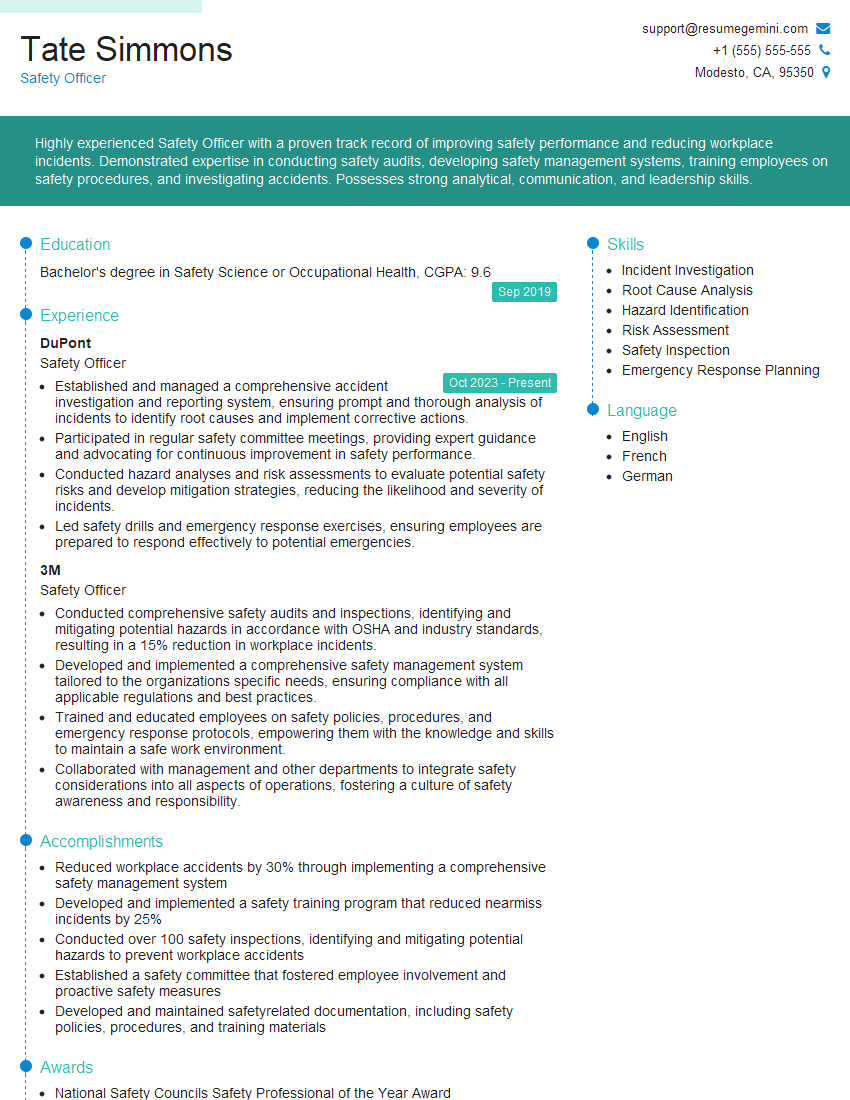
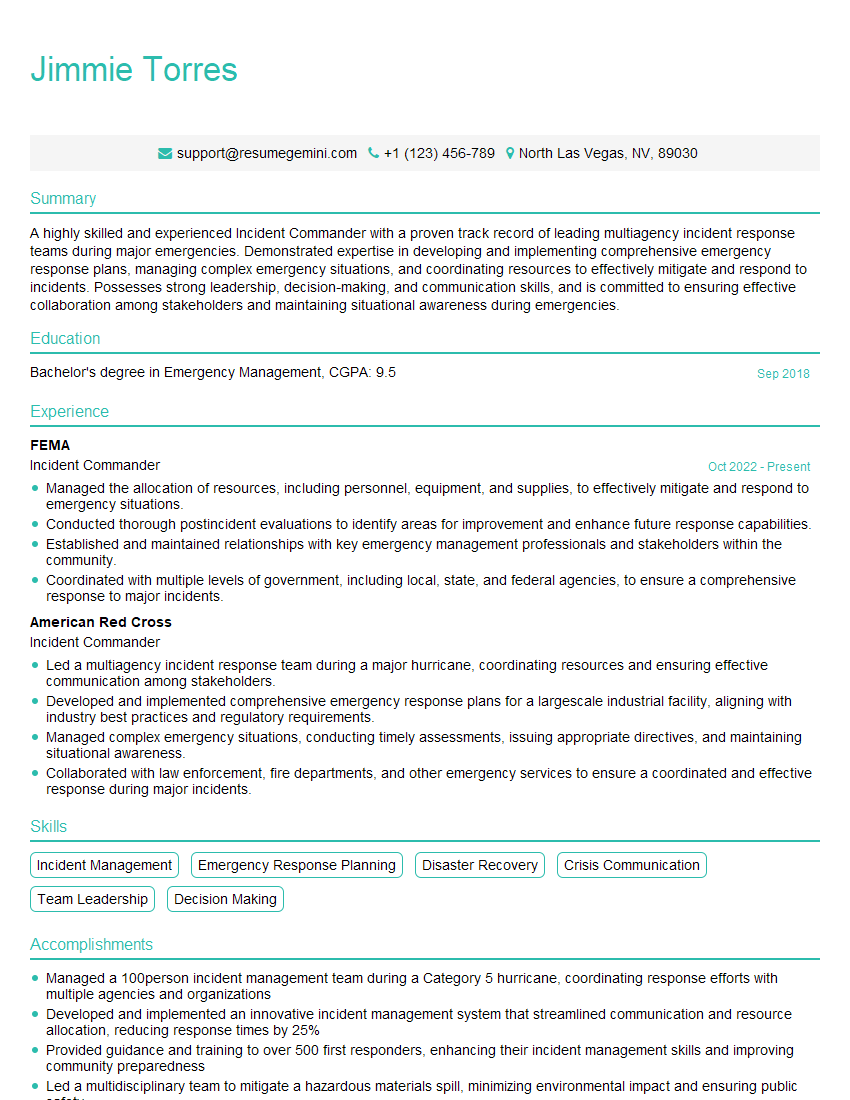
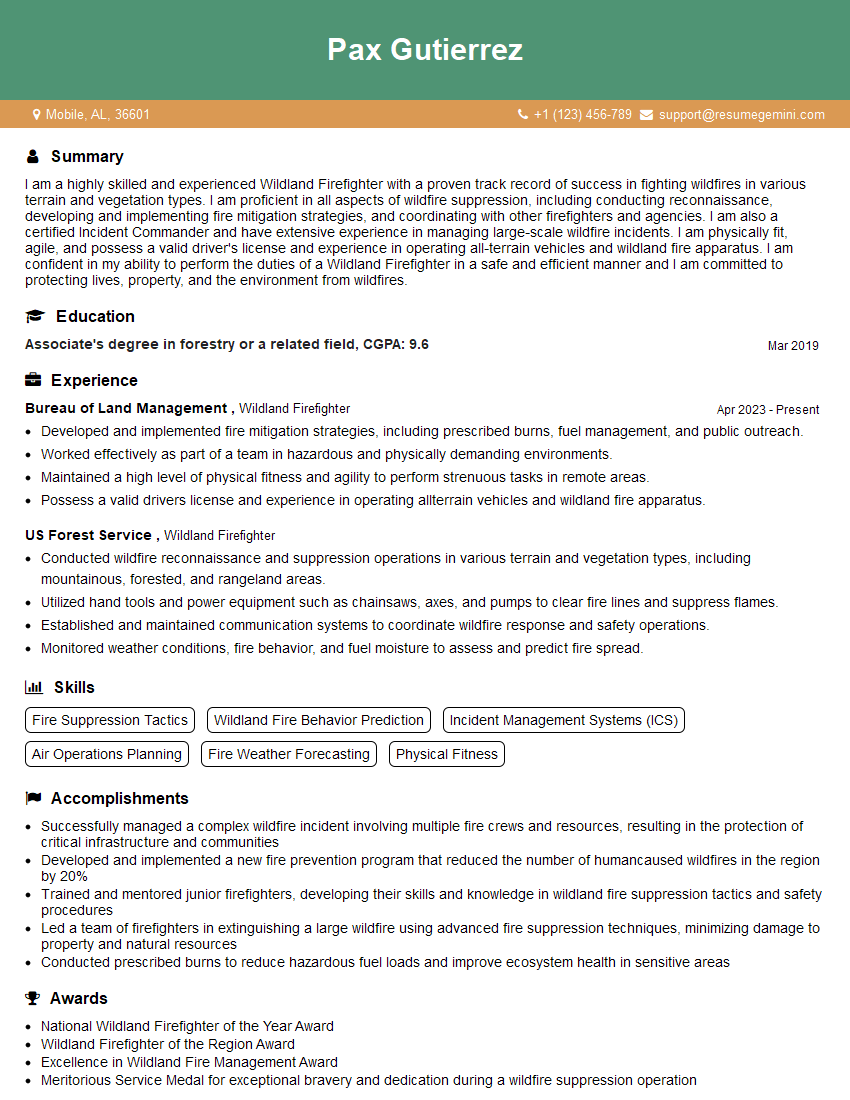
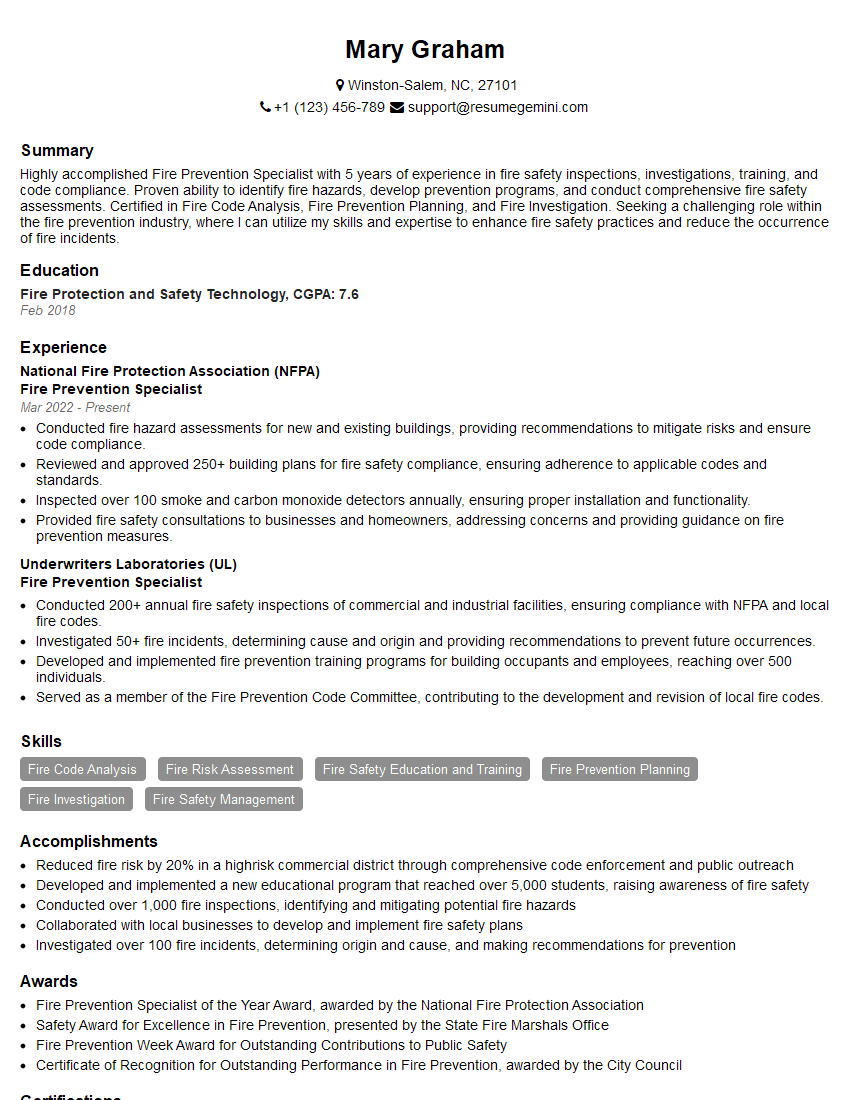
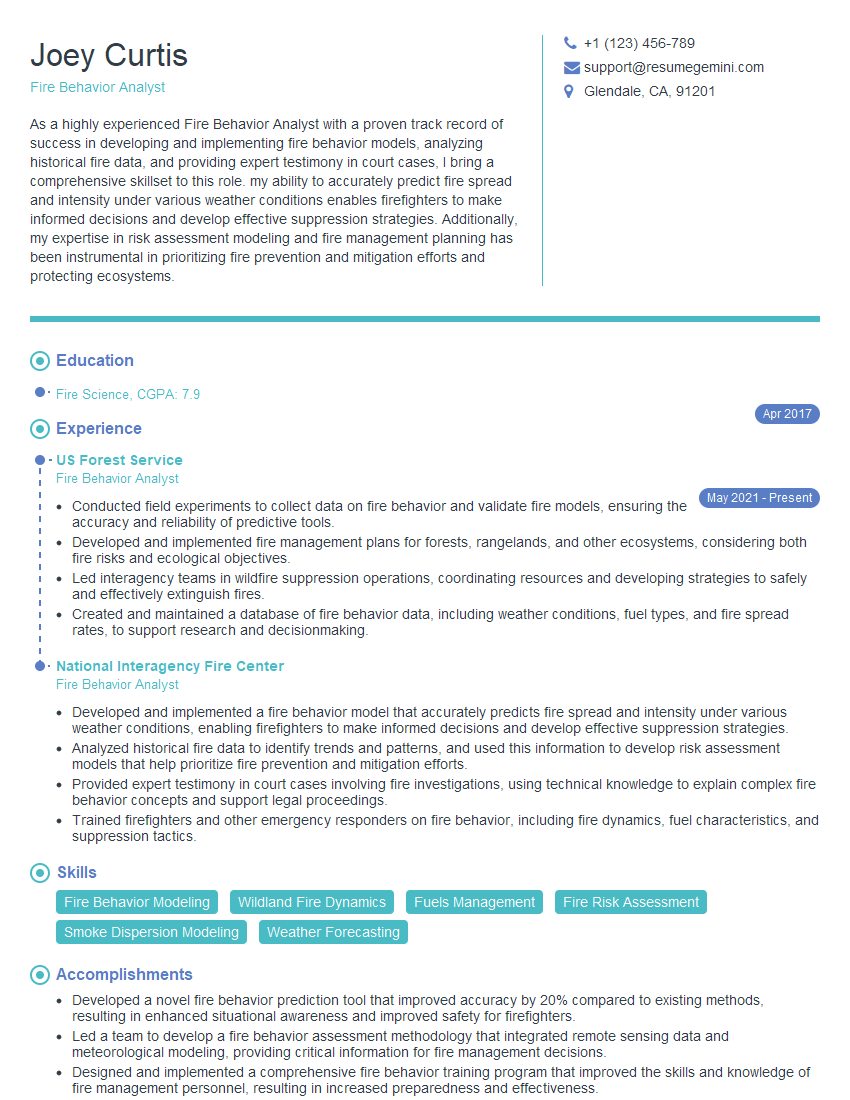
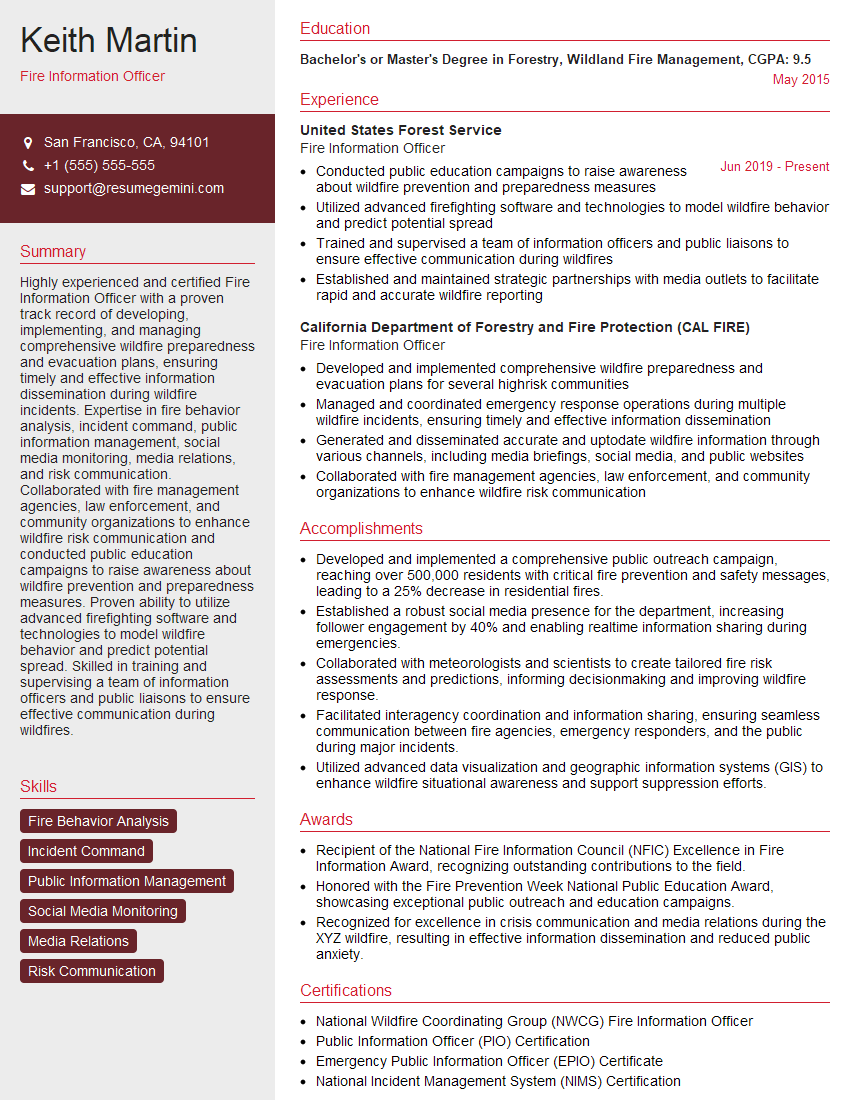
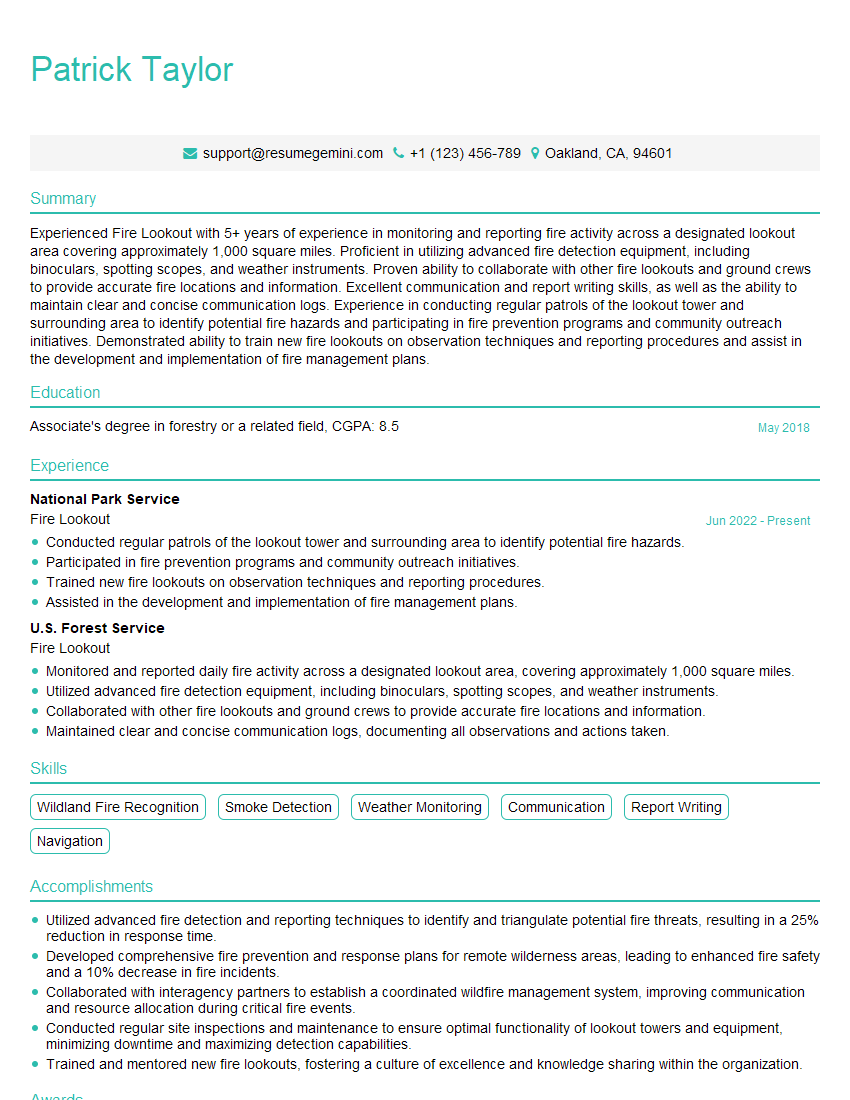
Mastering Wildfire Prevention and Suppression opens doors to a rewarding career with opportunities for growth and specialization. To maximize your job prospects, crafting a strong, ATS-friendly resume is crucial. ResumeGemini is a trusted resource that can help you build a professional and impactful resume that highlights your skills and experience effectively. ResumeGemini provides examples of resumes tailored to Wildfire Prevention and Suppression, ensuring your application stands out. Invest the time to create a compelling resume – it’s your first impression with potential employers.

Explore more articles
Users Rating of Our Blogs
Share Your Experience
We value your feedback! Please rate our content and share your thoughts (optional).
What Readers Say About Our Blog
Very informative content, great job.
good