Feeling uncertain about what to expect in your upcoming interview? We’ve got you covered! This blog highlights the most important Wildland Fire Behavior interview questions and provides actionable advice to help you stand out as the ideal candidate. Let’s pave the way for your success.
Questions Asked in Wildland Fire Behavior Interview
Q 1. Explain the fire triangle and how it relates to wildland fire suppression.
The fire triangle is a fundamental concept in understanding combustion. It illustrates that three elements – fuel, heat, and oxygen – must be present and in the right proportions for a fire to ignite and burn. Remove any one of these elements, and the fire will extinguish.
In wildland fire suppression, understanding the fire triangle is crucial. Firefighters employ various tactics to interrupt this triangle. For instance, removing fuel involves creating firebreaks (removing vegetation) or using controlled burns to reduce fuel load ahead of a wildfire. Reducing heat can be achieved by using water or retardant to cool the fire. Cutting off oxygen supply can involve strategic deployment of fire crews to contain the fire’s spread.
Think of it like this: If you’re cooking with a gas stove (fuel), a lit match (heat), and the air provides the oxygen. If you turn off the gas (remove fuel), the fire goes out. Similarly, covering the burning pan with a lid (reducing oxygen) or pouring water (reducing heat) also stops the fire. In wildland firefighting, it’s the same principle, just on a much larger scale.
Q 2. Describe the different types of wildland fire behavior.
Wildland fire behavior is incredibly diverse and dynamic. We generally categorize it based on intensity and rate of spread.
- Surface Fires: These fires burn along the ground, consuming litter, underbrush, and low-lying vegetation. They tend to spread relatively slowly and are often easier to control.
- Crown Fires: These are highly dangerous fires that spread through the canopies of trees. Driven by strong winds and high fuel loads, they can advance rapidly and are incredibly difficult to suppress.
- Ground Fires: These fires burn within the soil itself, often smoldering slowly and deeply. They are challenging to detect and extinguish, often requiring significant time and resources.
- Running Fires: These fires spread quickly, driven by strong winds and topography. They are characterized by rapid advancement and high intensity.
- Spot Fires: These are fires that ignite ahead of the main fire front, usually carried by wind-blown embers. They can quickly create new fire starts and significantly complicate suppression efforts.
The behavior of a wildfire can shift dramatically depending on various factors, transitioning between these types throughout its progression. Understanding these different behaviors is vital for predicting fire spread and developing effective suppression strategies.
Q 3. What are the key factors influencing fire spread?
Many factors influence the spread of a wildland fire. They can be broadly grouped into three categories: fuel, weather, and topography.
- Fuel: This refers to the available vegetation that can burn. Factors like fuel type (grass, brush, timber), fuel moisture content, fuel loading (amount of fuel per unit area), and fuel arrangement (continuous vs. patchy) all play a significant role. Drier fuels ignite and burn more readily.
- Weather: Temperature, wind speed and direction, humidity, and precipitation significantly influence fire behavior. High temperatures and low humidity dry out fuels, making them more flammable. Wind drives fire spread and increases its intensity.
- Topography: Slope, aspect (direction a slope faces), and elevation all impact fire spread. Fires burn faster uphill due to preheating of fuels, and south-facing slopes tend to be drier and thus more flammable. Canyons can act as wind tunnels, accelerating fire spread.
The interaction of these factors creates complex fire behaviors. A seemingly small change in one factor can dramatically alter fire spread, highlighting the importance of accurate prediction and monitoring.
Q 4. How do weather conditions affect wildland fire behavior?
Weather conditions are arguably the most significant influence on wildland fire behavior. Even small changes can have a dramatic impact.
- Temperature: Higher temperatures increase fuel moisture loss, making fuels easier to ignite and burn more intensely.
- Relative Humidity: Low humidity increases flammability. The lower the humidity, the drier the fuels, and the more readily they burn.
- Wind: Wind is a primary driver of fire spread, accelerating the rate of advance and increasing intensity. Wind also carries embers, potentially creating spot fires ahead of the main fire front. The direction of the wind dictates which way the fire will spread.
- Precipitation: Rainfall reduces fuel moisture, temporarily suppressing fire activity, but prolonged periods of drought exacerbate fire risk.
Firefighters constantly monitor weather forecasts and use weather data to predict fire behavior and adjust suppression strategies accordingly. A sudden wind shift can drastically change a fire’s direction and intensity, requiring immediate tactical changes.
Q 5. Explain the concept of fuel loading and its impact on fire intensity.
Fuel loading refers to the amount of combustible material (fuel) available within a given area. This is typically expressed as the weight of fuel per unit area (e.g., tons per acre). High fuel loading means a greater amount of fuel to burn, which directly impacts fire intensity.
High fuel loading leads to more intense fires that spread rapidly and are more difficult to control. Conversely, low fuel loading results in less intense fires that spread more slowly. The type of fuel also matters. Dense, continuous stands of dry timber will burn much more intensely than sparse, patchy grass.
Imagine two identical areas. One is covered with dense, dry underbrush (high fuel loading), while the other has only scattered grass (low fuel loading). If both catch fire, the area with high fuel loading will produce a much larger, hotter, and faster-moving fire, creating a significantly greater challenge for firefighters.
Q 6. Describe different methods used for wildland fire suppression.
Wildland fire suppression employs a variety of methods, often used in combination:
- Direct Attack: This involves placing firefighters directly on the fireline to extinguish the flames. This requires specialized equipment (hose lines, pumps, shovels) and may involve building fire lines to contain the fire.
- Indirect Attack: This involves suppressing the fire indirectly, often by constructing firebreaks (wide gaps in vegetation) to stop the fire’s spread. This approach is commonly used when conditions are too dangerous for a direct attack.
- Aerial Suppression: Air tankers and helicopters drop water or retardant (fire-resistant chemicals) on the fire to slow its spread. This is particularly useful in accessing remote or steep terrain.
- Controlled Burning (Prescribed Fire): This involves intentionally setting fires under controlled conditions to reduce fuel loads and create firebreaks. It requires careful planning, execution, and monitoring.
- Mechanical Methods: Bulldozers and other heavy equipment can be used to create firebreaks and remove fuel.
The choice of method depends on factors such as fire size, intensity, terrain, weather conditions, and available resources. Often, a combination of methods is used to achieve effective suppression.
Q 7. What are the safety precautions when fighting wildland fires?
Wildland firefighting is inherently dangerous. Safety precautions are paramount.
- Personal Protective Equipment (PPE): This includes fire-resistant clothing, helmets, gloves, boots, and eye protection. PPE significantly reduces the risk of burns and injuries.
- Crew Communication: Clear and constant communication within the fire crew is critical. This ensures everyone is aware of the fire’s behavior, location of team members, and any potential hazards.
- Safety Briefings: Before each deployment, comprehensive safety briefings must be conducted, covering potential hazards, escape routes, and communication procedures.
- Watchout Situations: Firefighters must be aware of the common ‘watchout’ situations, which highlight potentially dangerous situations. These include unsafe terrain, changing weather patterns, rapidly approaching fire fronts, and the presence of snags (dead trees) that could fall.
- Emergency Action Plans: Well-defined emergency action plans must be developed and regularly practiced. These plans describe the procedures to follow in case of a sudden shift in fire behavior or an emergency situation.
- Medical preparedness: Having first aid and medical support close by is important in case of any injuries.
Adherence to safety protocols is not merely a suggestion; it is essential for the survival of firefighters and the successful completion of fire suppression efforts.
Q 8. Explain the role of prescribed fire in forest management.
Prescribed fire, also known as controlled burning, plays a crucial role in forest management by mimicking natural fire processes in a safe and controlled manner. It’s a powerful tool for reducing hazardous fuels that build up over time, creating a landscape more resilient to large, catastrophic wildfires.
- Fuel Reduction: Prescribed fires consume underbrush, deadwood, and other flammable materials, lessening the intensity and spread of future wildfires. Imagine it like cleaning out a cluttered attic – less flammable material means a smaller fire.
- Forest Health Improvement: Fire is a natural part of many forest ecosystems. Prescribed fire can help promote the growth of certain tree species that require fire for seed germination or to clear the way for new growth. Some pine species, for instance, rely on fire to open their cones and release seeds.
- Habitat Restoration: Certain plant and animal communities thrive in fire-maintained landscapes. Controlled burns can create open areas that are beneficial to wildlife, such as creating foraging areas or encouraging the growth of fire-dependent plants.
- Disease Management: Prescribed fire can help control some forest diseases and pests by eliminating infected vegetation.
For example, in areas with dense pine forests, prescribed burns can reduce the risk of crown fires – highly destructive wildfires that spread through the treetops – by thinning out the lower vegetation and creating firebreaks. However, prescribed fires require meticulous planning, precise execution, and careful monitoring to ensure safety and effectiveness.
Q 9. How do you assess fire risk and danger?
Assessing fire risk and danger involves considering a combination of factors related to weather, fuels, and topography. We use standardized systems, like the Canadian Forest Fire Danger Rating System, to quantify these factors.
- Weather: Temperature, humidity, wind speed, and precipitation all significantly impact fire behavior. High temperatures, low humidity, and strong winds create conditions ripe for rapid fire spread. We use weather forecasts and real-time weather data to understand the current and predicted fire weather.
- Fuels: The type, amount, and moisture content of available fuel (vegetation) directly influence fire intensity and rate of spread. Dense forests with dry underbrush pose a higher risk than sparsely vegetated areas. We assess fuel type and moisture using ground observations and satellite imagery.
- Topography: Slope, aspect (direction a slope faces), and elevation all affect fire behavior. Steep slopes can accelerate fire spread, while aspect influences the amount of sunlight and therefore fuel dryness. We use topographic maps and LiDAR data to understand the terrain’s influence on fire.
The combination of these factors determines the Fire Danger Rating, which helps us prioritize resources and implement appropriate suppression strategies. A high fire danger rating calls for increased vigilance and preparedness, potentially involving restrictions on outdoor activities.
Q 10. What are the different fire behavior prediction models used?
Several fire behavior prediction models are used to forecast fire spread and intensity. These models integrate weather, fuel, and topographic data to simulate fire behavior.
- BehavePlus: A widely used model that considers fuel type, slope, wind, and other factors to predict fire spread rate, intensity, and flame length.
- Prometheus: Another powerful model, especially useful for predicting the behavior of large, complex fires. It integrates detailed fuel data with sophisticated algorithms to simulate fire spread over extensive areas.
- FARSITE: A spatial model that provides a visual representation of fire spread over a landscape, considering fuel and topography effects.
These models are not perfect predictors, as fire behavior can be unpredictable. However, they provide valuable tools for strategic planning, resource allocation, and fire suppression efforts. Think of them as sophisticated weather forecasts for fire; they give us a best estimate, allowing us to make informed decisions.
Q 11. Describe the process of constructing fireline.
Constructing a fireline, a barrier created to stop the advance of a wildfire, is a critical aspect of fire suppression. The process involves removing fuel from a strip of land to create a break in the fire’s path.
- Strategic Planning: The location of the fireline is crucial. It should be situated in a place that considers topography, wind direction, and fuel availability to maximize its effectiveness. We often strategically place firelines to utilize natural barriers like rivers or roads.
- Fuel Removal: This can be accomplished through various methods: hand-cutting, using bulldozers to create a wide swathe of bare earth, or through prescribed burning to clear the immediate area.
- Reinforcement and Monitoring: Once the fireline is established, it’s often reinforced to ensure its integrity. Continuous monitoring is necessary to identify potential breaches or areas where the fire may be pushing through.
For example, a fireline might be constructed on a ridgeline to take advantage of the natural barrier to the wind-driven fire. The precise techniques used will depend on the fire’s intensity, the available resources, and the terrain.
Q 12. How do you utilize topographic features to your advantage during fire suppression?
Topographic features are essential in wildland fire fighting; understanding and utilizing them effectively is critical for efficient and safe suppression.
- Ridgelines and saddles: Ridges often provide natural barriers to fire spread, offering strategic locations for firelines. Saddles, lower points in a ridgeline, can create areas where a fire can rapidly spread and are often targeted for fireline construction.
- Swales and drainages: These lower lying areas can hold moisture and offer areas where the fire may slow or stop. They can also serve as natural firebreaks.
- Water sources: Rivers, lakes, and streams are invaluable resources for water drops and as natural firebreaks. Firelines are often positioned to use water bodies as strategic barriers.
For instance, during a fire on a steep slope, we might prioritize constructing a fireline along a contour line – a line of constant elevation. This helps prevent the fire from running downhill rapidly, allowing more controlled suppression efforts.
Q 13. What are the common types of fire equipment used in wildland fire fighting?
Wildland fire fighting involves a diverse range of equipment, chosen depending on the fire’s size, location, and intensity.
- Hand Tools: Shovels, axes, rakes, and pulaskis are used for creating firelines and clearing fuels in smaller fires.
- Engines: These are smaller vehicles with water tanks and pumps, used for initial attack and providing water for suppression.
- Bulldozers: Heavy equipment used to quickly create wide firelines by removing fuel. They are essential for larger fires and can effectively create barriers in challenging terrain.
- Air Support: Helicopters and air tankers play a vital role in aerial water drops and retardant deployment. These provide crucial support for large, rapidly spreading fires.
- Communication Equipment: Radios, satellite phones, and GPS devices are indispensable for coordinating efforts and ensuring safety. Effective communication is paramount.
Choosing the right equipment is critical; for example, a small fire might only require hand tools and an engine, while a large wildfire will necessitate deploying a wide range of heavy equipment and air support.
Q 14. Explain the importance of effective communication during a wildland fire incident.
Effective communication is absolutely paramount during a wildland fire incident, as it is the backbone of coordinated efforts, safety, and successful suppression. Chaos and miscommunication can have disastrous consequences.
- Incident Command System (ICS): A standardized management system ensures clear roles, responsibilities, and communication channels. It’s like an orchestra conductor ensuring everyone plays their part harmoniously.
- Radio Communications: Handheld radios and base stations are used for real-time updates on fire behavior, resource allocation, and safety concerns. Clear and concise radio communications are critical for coordination and ensuring safety.
- Situational Awareness: Sharing regular updates on fire behavior and location keeps everyone informed and enables adaptive strategies. This avoids dangerous surprises and ensures timely response.
- Public Information: Keeping the public informed of the fire’s progress, evacuation orders, and safety guidelines is equally important. Misinformation can lead to panic and hinder response efforts.
Imagine a fire spreading rapidly; without clear communication, firefighters might be sent to the wrong location, resources could be misallocated, and individuals might be put in danger. A well-coordinated communication system is a critical factor in a successful fire suppression operation.
Q 15. How do you manage a wildland fire crew?
Managing a wildland fire crew requires a blend of strong leadership, effective communication, and a deep understanding of fire behavior. It’s not just about giving orders; it’s about fostering a team environment where everyone feels safe, valued, and empowered to contribute their expertise.
My approach centers around:
- Clear Communication: Pre-incident briefings are crucial, outlining objectives, safety protocols, and individual roles. During an incident, clear and concise communication through radios or direct observation is paramount to avoid misunderstandings that could compromise safety.
- Safety First: I consistently emphasize safety procedures, ensuring everyone understands and adheres to them. This includes daily safety talks, regular equipment checks, and immediate action in response to any safety concerns. I’ve had to halt operations numerous times due to weather shifts or unsafe working conditions, preventing potential accidents.
- Situational Awareness: Constant monitoring of fire behavior, weather changes, and crew fatigue is essential. I use this information to adjust strategies, rotate personnel to avoid burnout, and make critical decisions quickly. For example, during a particularly intense fire, I shifted a team to a safer location due to unexpected wind shifts, avoiding a potential entrapment.
- Empowerment and Teamwork: I encourage my crew to actively participate in decision-making. By leveraging their expertise and encouraging open communication, we develop a strong sense of shared responsibility and a more effective response. I once had a rookie spot a hidden ember bed, preventing a potential flare-up. This highlights the importance of fostering a collaborative environment.
Career Expert Tips:
- Ace those interviews! Prepare effectively by reviewing the Top 50 Most Common Interview Questions on ResumeGemini.
- Navigate your job search with confidence! Explore a wide range of Career Tips on ResumeGemini. Learn about common challenges and recommendations to overcome them.
- Craft the perfect resume! Master the Art of Resume Writing with ResumeGemini’s guide. Showcase your unique qualifications and achievements effectively.
- Don’t miss out on holiday savings! Build your dream resume with ResumeGemini’s ATS optimized templates.
Q 16. Describe your experience with incident command systems (ICS).
Incident Command Systems (ICS) are the backbone of effective wildland fire management. ICS provides a standardized, flexible organizational structure that ensures efficient resource allocation and clear lines of communication, particularly during large-scale incidents.
My experience spans various roles within the ICS structure, including crew member, task force leader, and division supervisor. I’m proficient in all five functional areas: Command, Operations, Planning, Logistics, and Finance/Administration. I have participated in numerous incidents ranging from small prescribed burns to large, complex wildfires. In one instance, my ability to effectively coordinate resources through the ICS structure contributed to the containment of a rapidly spreading wildfire, minimizing property damage and protecting lives.
Understanding the ICS structure, its common terminology, and the responsibilities of each position is vital for seamless collaboration. For example, during a large-scale incident, clear communication between the Operations Section Chief and the Logistics Section Chief is critical to ensure that crews have the necessary equipment and supplies at the right time and place. A breakdown in this communication could lead to significant delays and increased risks.
Q 17. How do you handle stress and fatigue during a wildland fire incident?
Wildland firefighting is inherently stressful and physically demanding. Fatigue, dehydration, and heat stress are constant threats, and managing them effectively is crucial for both safety and performance.
My approach to stress and fatigue management includes:
- Prioritizing Rest and Hydration: Regular breaks, adequate sleep, and consistent hydration are non-negotiable. I actively monitor crew members for signs of fatigue and dehydration, ensuring everyone takes necessary breaks. This isn’t just about efficiency, it’s about preventing serious health problems like heatstroke.
- Mental Health Awareness: We prioritize open communication about stress and mental health. Access to mental health resources and peer support are essential. I encourage debriefing sessions after incidents to help process experiences and build resilience. Talking about challenges isn’t a sign of weakness, it’s a sign of strength and self-care.
- Physical Fitness: Maintaining a high level of physical fitness is essential for endurance and safety. Regular training exercises help to build stamina and improve teamwork. A physically fit team can handle greater workloads with less fatigue.
- Effective Communication: Clear and consistent communication allows me to address concerns promptly and ensure that team members feel supported.
Q 18. What are the different types of fuel models and how are they used?
Fuel models are standardized classifications that describe the type, quantity, and arrangement of combustible materials in a wildland environment. They are essential for predicting fire behavior. Different fuel models exhibit vastly different flammability, rate of spread, and intensity.
Some common fuel models include:
- Grasslands: Characterized by fine fuels like grasses, with varying densities and moisture content. These models can exhibit rapid rates of spread under certain conditions.
- Shrublands: Dominated by shrubs, with varying heights and densities. These fuels can sustain longer-burning, more intense fires.
- Timber: These models include various tree species and sizes, along with understory fuels. Fire behavior in timber fuels is complex and highly influenced by factors like tree spacing, crown closure, and moisture content.
Fuel models are used in conjunction with weather data and topography to predict fire behavior using tools like the Fire Behavior Prediction (FBP) system. This helps wildland firefighters anticipate the fire’s potential spread, intensity, and behavior, allowing for better planning and resource allocation. For example, knowing we’re facing a grassland fuel model with high winds predicted, allows for pre-positioning of resources to protect structures in the path of a rapidly spreading fire.
Q 19. Explain the concept of firebrands and their role in fire spread.
Firebrands are burning embers, pieces of burning material, or other flaming material that are carried by wind or other means ahead of the main fire front. They are a significant factor in spot fires and the rapid spread of wildfires, especially in areas with discontinuous fuels.
Firebrands can include:
- Burning leaves and twigs
- Embers from burning trees
- Burning pieces of wood
- Even burning pieces of roofing materials from structures ignited by the fire.
The distance firebrands can travel depends on factors such as wind speed, the size and type of burning material, and the presence of updrafts. They can ignite spot fires that are far ahead of the main fire front, making fire containment more challenging. Imagine embers traveling a mile, starting a new fire in an unburned area; this is a major concern for firefighters. Our strategies involve identifying areas prone to firebrand ignition – especially downwind – and setting up firebreaks or establishing suppression lines in advance.
Q 20. Describe your experience with using fire weather forecasts.
Fire weather forecasts are crucial for wildland fire management. They provide detailed information on atmospheric conditions that influence fire behavior, including temperature, humidity, wind speed and direction, and precipitation. Accurate fire weather forecasts are vital for planning suppression strategies, resource allocation, and predicting fire spread.
My experience involves regularly consulting fire weather forecasts from sources such as the National Weather Service. I’m proficient in interpreting these forecasts, understanding parameters like the Haines Index (a measure of atmospheric instability) and the Energy Release Component (ERC), which indicates the potential for fire intensity. For example, a high Haines Index combined with strong winds would indicate a high risk of extreme fire behavior, requiring increased vigilance and a more aggressive suppression strategy.
I also utilize this information to inform pre-emptive action, such as initiating controlled burns during favorable weather conditions or modifying suppression tactics based on shifting weather patterns. Understanding the potential impacts of changing weather conditions is essential for preventing unexpected fire behavior and maintaining crew safety.
Q 21. How do you identify and mitigate potential hazards during wildland firefighting operations?
Identifying and mitigating hazards is a paramount concern during wildland firefighting operations. These hazards can be broadly categorized into:
- Fire-related hazards: These include rolling logs, falling trees, snags (dead trees), intense heat, smoke inhalation, and rapidly changing fire behavior.
- Environmental hazards: These include steep slopes, unstable terrain, canyons, and hazardous weather conditions such as lightning storms or strong winds.
- Equipment-related hazards: These include malfunctioning equipment, improper use of equipment, and fatigue leading to errors.
Mitigation strategies involve:
- Risk assessment: Before starting any operation, a thorough risk assessment is performed to identify potential hazards and develop mitigation strategies. This involves analyzing the terrain, fuel type, weather conditions, and the planned operation.
- Safety briefings: Crew members receive thorough briefings on all identified hazards, emphasizing safe operating procedures and emergency action plans. This includes training on proper equipment use, communication protocols, and emergency escape routes.
- Hazard control measures: These include establishing firebreaks, creating safe anchor points, using appropriate personal protective equipment (PPE), and implementing traffic control measures. I’ve personally overseen the establishment of firebreaks using bulldozers to create strategic barriers for containment.
- Contingency planning: This involves developing plans for handling unexpected events such as rapid fire growth, equipment failure, or injuries. Regular drills and exercises enhance the effectiveness of these contingency plans.
- Constant monitoring: Ongoing monitoring of fire behavior, weather conditions, and crew status is crucial to adjust strategies as needed and to address emerging hazards promptly.
Q 22. What is your understanding of smoke management strategies?
Smoke management strategies aim to minimize the adverse impacts of wildfire smoke on air quality, human health, and visibility. This involves a multifaceted approach that considers both suppression efforts and post-fire recovery. Effective smoke management isn’t just about putting out the fire; it’s about understanding how smoke behaves and strategically influencing its dispersal.
- Strategic Fire Suppression: Techniques like controlled burns and strategic firebreaks can influence fire behavior, creating smaller, less intense fires that produce less smoke. This involves predicting wind patterns and terrain to minimize smoke plumes in populated areas.
- Prescribed Fire: Planned low-intensity burns can reduce fuel loads and prevent larger, smokier wildfires in the future. These are often conducted under carefully monitored conditions with precise weather forecasting.
- Smoke Dispersion Modeling: Sophisticated computer models utilize meteorological data and fire behavior predictions to forecast smoke plumes. This allows for better resource allocation and public advisories.
- Public Health Advisories: Providing timely and accurate information to the public about air quality and health risks associated with smoke is critical. This includes issuing air quality alerts and recommendations for vulnerable populations.
- Post-Fire Smoke Monitoring: Continuing to monitor smoke levels after the fire is extinguished is important, as smoldering debris can continue to release smoke for days or even weeks.
For example, during a large wildfire in a mountainous region, we might use dispersion modeling to predict smoke movement and advise communities downwind to take precautions. This could involve closing schools, limiting outdoor activities, or providing respirators to vulnerable individuals.
Q 23. Explain the importance of post-fire rehabilitation and recovery efforts.
Post-fire rehabilitation and recovery are crucial for restoring ecosystem health, preventing erosion, and minimizing the risk of future wildfires. It’s about moving from an emergency response to a long-term recovery effort focused on ecological and community well-being.
- Erosion Control: Wildfires remove vegetation cover, leaving the soil vulnerable to erosion. Rehabilitation efforts include seeding, mulching, and constructing erosion barriers to stabilize the landscape.
- Water Quality Protection: Ash and debris from wildfires can contaminate water sources. Rehabilitation focuses on restoring stream banks, controlling sediment runoff, and monitoring water quality.
- Reforestation and Revegetation: Planting native trees and shrubs helps to restore vegetation cover, prevent erosion, and support wildlife habitat. Seedling selection is crucial, focusing on species adapted to the area and resistant to future fires.
- Community Recovery: Rehabilitation efforts often involve helping communities rebuild their homes, infrastructure, and livelihoods. This might include providing financial assistance, support for rebuilding, and mental health services.
- Fuel Reduction: Following a fire, fuel reduction treatments are crucial to prevent future large fires. This involves carefully removing excess debris and creating firebreaks.
I once worked on a project where we used drone imagery to assess post-fire erosion and targeted reforestation efforts to areas most vulnerable to landslides. This allowed us to allocate resources effectively and expedite the recovery process.
Q 24. How do you adapt your firefighting strategies based on different fire types (e.g., crown fire, surface fire)?
Firefighting strategies dramatically change depending on the fire type. A surface fire, for instance, requires different tactics than a crown fire. Understanding these differences is crucial for effective suppression.
- Surface Fires: These fires burn primarily through the surface litter and underbrush. Strategies often involve direct attack, using hand crews and fire lines to contain the fire’s perimeter. Water and fire retardant are effective tools for surface fire suppression.
- Crown Fires: These intense fires burn through the tree canopies. Direct attack becomes incredibly dangerous, so strategies often shift to indirect attack. This involves constructing fire lines ahead of the fire’s advance and using controlled burns to create firebreaks. Air support, such as aerial water and retardant drops, plays a crucial role in crown fire management.
- Ground Fires: These fires burn below the surface, often in peat or other organic materials. They are notoriously difficult to extinguish and often require long periods of monitoring and suppression.
For example, during a surface fire in a grassland, we may use hand crews and bulldozers to create fire lines and directly attack the flames. In contrast, a crown fire in a dense forest might require air support, backburns, and a prolonged strategy to control the fire’s spread.
Q 25. Describe your experience with using Geographic Information Systems (GIS) in wildland fire management.
GIS is indispensable in wildland fire management. It allows for the integration and analysis of diverse spatial data, providing crucial insights for decision-making during all phases of a wildfire event.
- Mapping and Visualization: GIS allows for the creation of detailed maps of fire perimeters, fuel types, topography, and infrastructure. This visualization is crucial for strategic planning and resource allocation.
- Predictive Modeling: GIS integrates with fire behavior models to predict fire spread, smoke dispersion, and potential impacts on communities and infrastructure. This supports proactive measures to protect lives and property.
- Resource Management: GIS helps track and manage fire resources, including personnel, equipment, and supplies. Optimizing resource deployment is crucial during rapidly evolving fire situations.
- Post-Fire Assessment: GIS is essential for assessing post-fire damage, planning rehabilitation efforts, and monitoring recovery progress. This provides a long-term perspective on ecological and community impacts.
In my previous role, we used GIS to identify areas with high fire risk based on factors like fuel load, vegetation type, and topography. This allowed us to proactively manage fuel loads and implement preventive measures in vulnerable areas.
Q 26. What are your skills in using and interpreting fire behavior prediction tools?
My proficiency with fire behavior prediction tools is a core element of my expertise. I’m adept at using various models and interpreting their outputs to make informed decisions during wildfire incidents.
- BehavePlus and FARSITE: I have extensive experience with these widely used models, capable of simulating fire spread under different fuel and weather conditions. This involves inputting data such as fuel type, wind speed, slope, and moisture content to predict fire behavior.
- Data Interpretation: I can accurately interpret model outputs, understanding the uncertainties and limitations inherent in fire behavior prediction. This involves evaluating model accuracy against observed fire behavior and adjusting parameters as needed.
- Scenario Planning: I use these tools to develop different scenarios for fire spread under varying conditions, enabling proactive planning and decision-making in dynamic situations.
For example, during a wildfire incident, I used BehavePlus to simulate potential fire spread under different wind scenarios. This allowed us to identify high-risk areas and prioritize resource deployment accordingly. The ability to interpret the model’s output helped us strategize effectively.
Q 27. How do you ensure the safety of both the firefighters and the public during a wildland fire?
Ensuring the safety of both firefighters and the public is paramount. This requires a multi-layered approach that prioritizes risk assessment, communication, and robust safety protocols.
- Risk Assessment: A thorough risk assessment is conducted before any firefighting operation, considering factors such as weather conditions, fire behavior, terrain, and the presence of infrastructure and populations. This includes identifying potential hazards like falling trees, rolling debris, and rapid fire spread.
- Safety Briefing and Training: Firefighters receive thorough briefings and ongoing training on safe operating procedures, including personal protective equipment (PPE) use, communication protocols, and emergency escape routes.
- Communication and Coordination: Effective communication is essential, both within the firefighting team and with external agencies, including law enforcement and emergency medical services. Real-time communication systems are crucial to responding to changing situations.
- Public Awareness and Evacuation: Keeping the public informed about the fire’s progress, potential risks, and evacuation orders is critical. This involves clear and consistent communication through multiple channels.
- Incident Management System: Adherence to the Incident Command System (ICS) ensures organized and efficient management of resources and personnel, crucial for maintaining safety in chaotic situations.
In one instance, we had to evacuate a community ahead of a rapidly spreading crown fire. Effective communication with local authorities and residents, aided by GIS mapping of evacuation routes, ensured a safe and orderly evacuation.
Q 28. Explain your understanding of the legal and regulatory frameworks governing wildland fire management.
Wildland fire management operates within a complex web of legal and regulatory frameworks designed to protect lives, property, and natural resources. Understanding these frameworks is crucial for responsible and effective management.
- National and State Laws: Fire management is governed by a range of national and state laws related to land ownership, environmental protection, and emergency response. These laws often define responsibilities for fire prevention, suppression, and recovery.
- Environmental Regulations: Environmental regulations dictate how fire suppression and rehabilitation activities can impact air and water quality, wildlife habitats, and cultural resources. Compliance with these regulations is mandatory.
- Liability and Insurance: Understanding liability issues associated with fire suppression and prevention is critical. This often involves insurance policies and legal responsibilities for damage caused by fires.
- Permitting and Regulations for Prescribed Fires: Conducting prescribed burns requires obtaining permits and adhering to strict regulations designed to minimize risks and environmental impacts.
For example, before initiating any prescribed burn, we must obtain the necessary permits and demonstrate compliance with all relevant environmental regulations to ensure the legal and environmental soundness of the operation.
Key Topics to Learn for Wildland Fire Behavior Interview
- Fuel Characteristics: Understanding fuel types (grass, brush, timber), loading, moisture content, and their impact on fire behavior. Practical application: Analyzing fuel conditions to predict fire spread and intensity.
- Fire Weather: The critical role of temperature, humidity, wind speed, and direction in fire behavior. Practical application: Interpreting weather forecasts and using this information to make informed decisions on fire suppression strategies.
- Fire Spread: Factors influencing fire spread rate and patterns, including topography, slope, aspect, and fuel arrangement. Practical application: Predicting fire growth and identifying potential flanking or backing fire spread.
- Fire Behavior Prediction: Using tools and models (e.g., fire behavior prediction software) to forecast fire behavior. Practical application: Developing effective fire suppression plans based on predicted fire growth.
- Fire Effects: Understanding the ecological impacts of wildfires on vegetation, soil, and air quality. Practical application: Assessing post-fire damage and planning for restoration efforts.
- Fire Suppression Strategies: Direct and indirect attack methods, considerations for safety and effectiveness. Practical application: Selecting appropriate strategies based on fire behavior and environmental conditions.
- Fire Safety and Prevention: Understanding risk assessment and mitigation, personal protective equipment (PPE), and incident command system (ICS). Practical application: Ensuring personal and team safety during fire operations.
- Wildland-Urban Interface (WUI) Fires: Unique challenges and mitigation strategies in areas where wildland and urban areas meet. Practical application: Developing community-level fire protection plans.
Next Steps
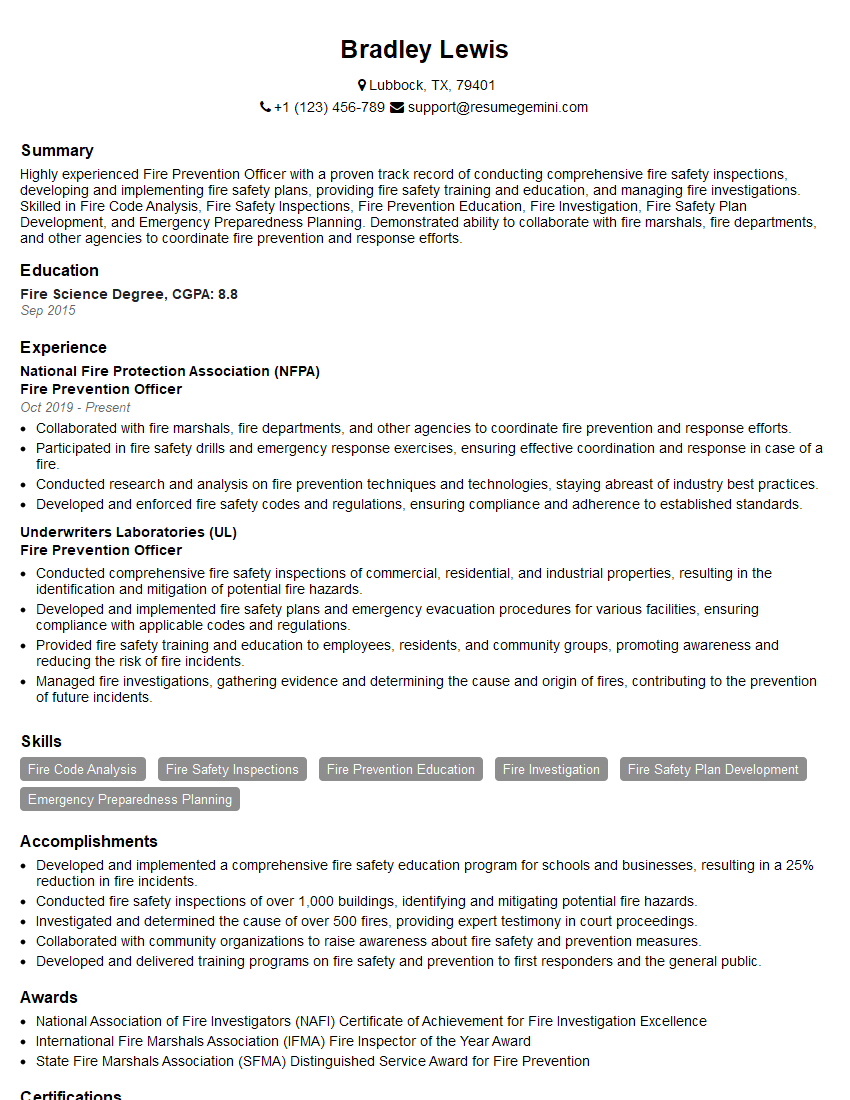
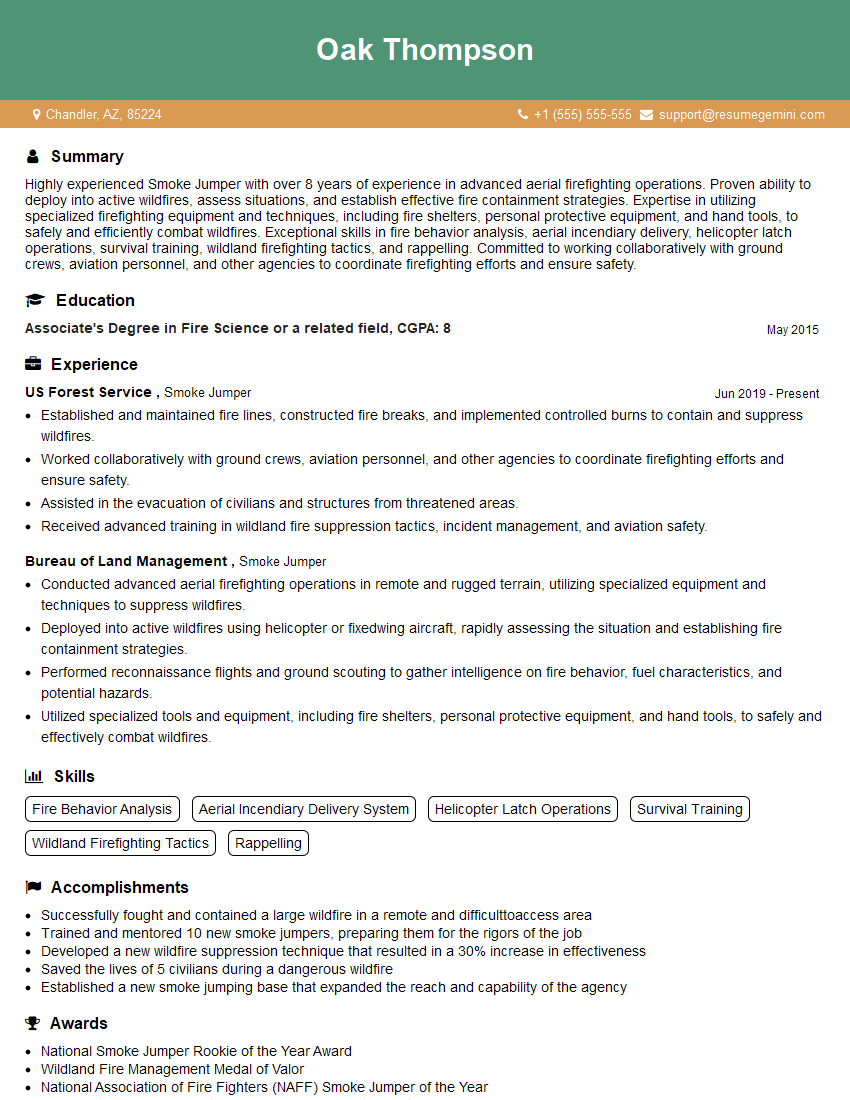
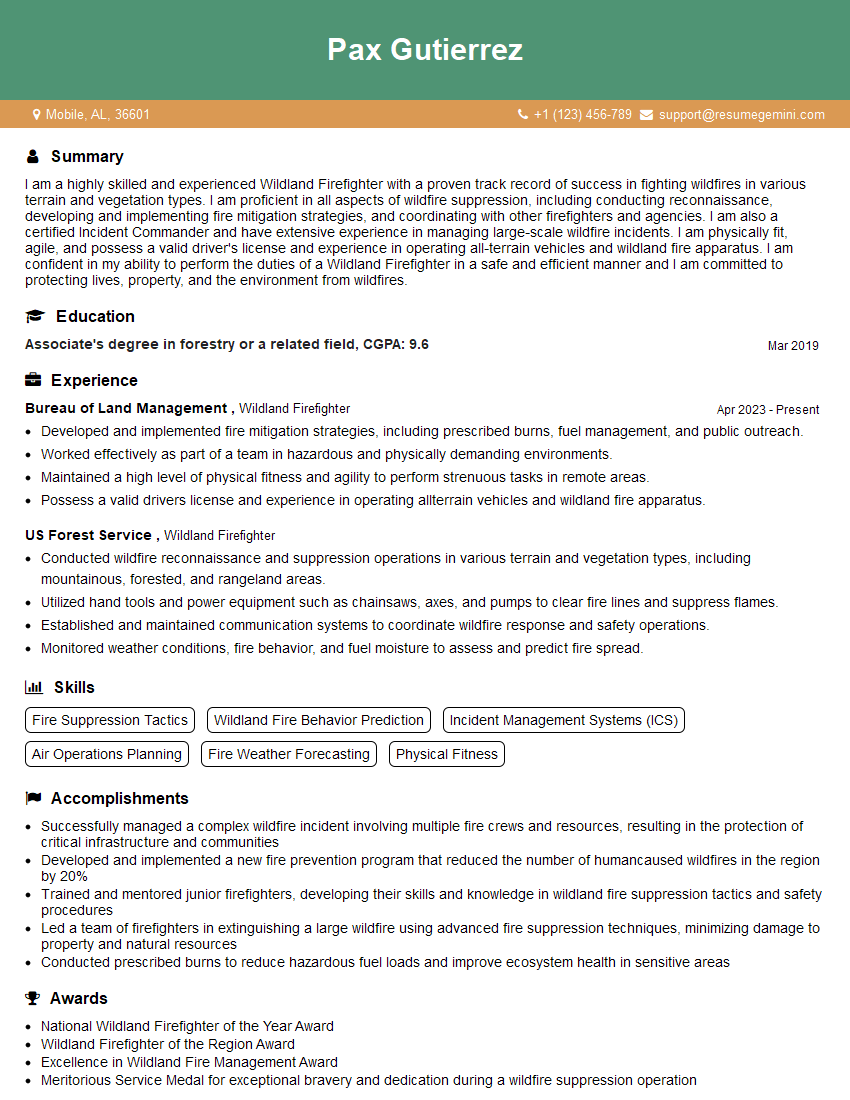
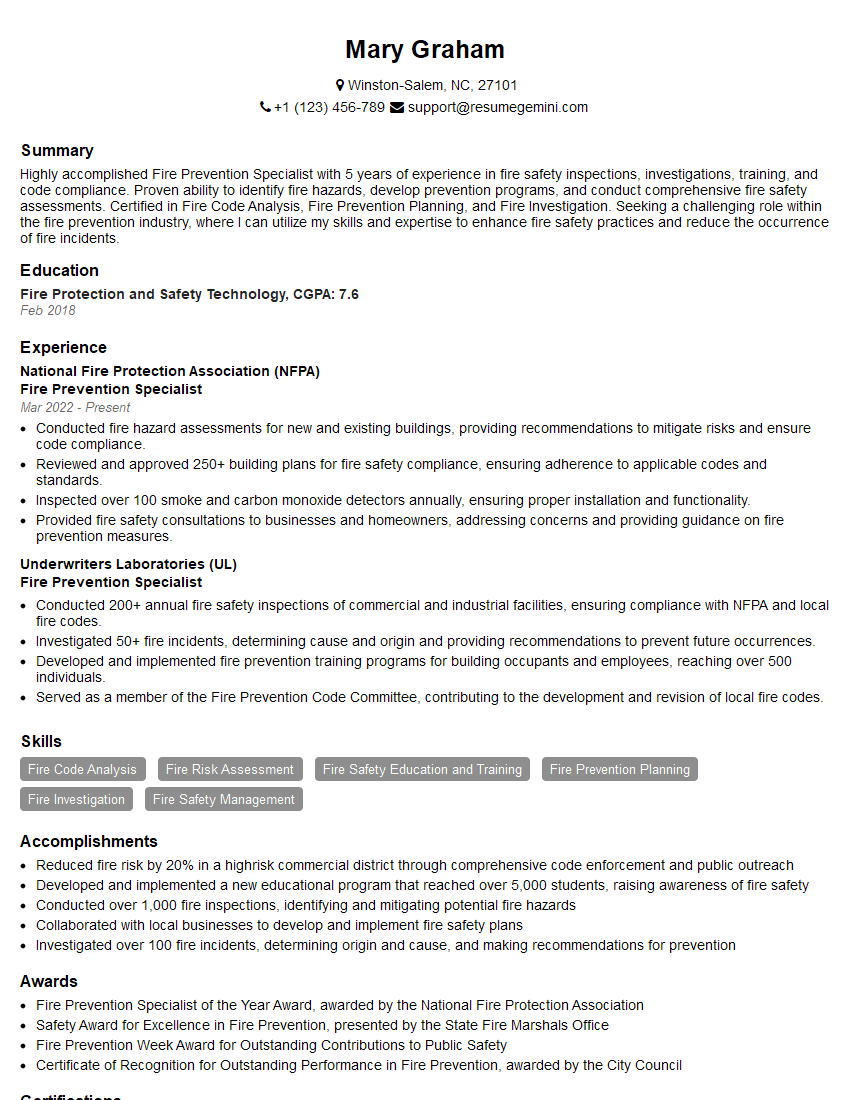
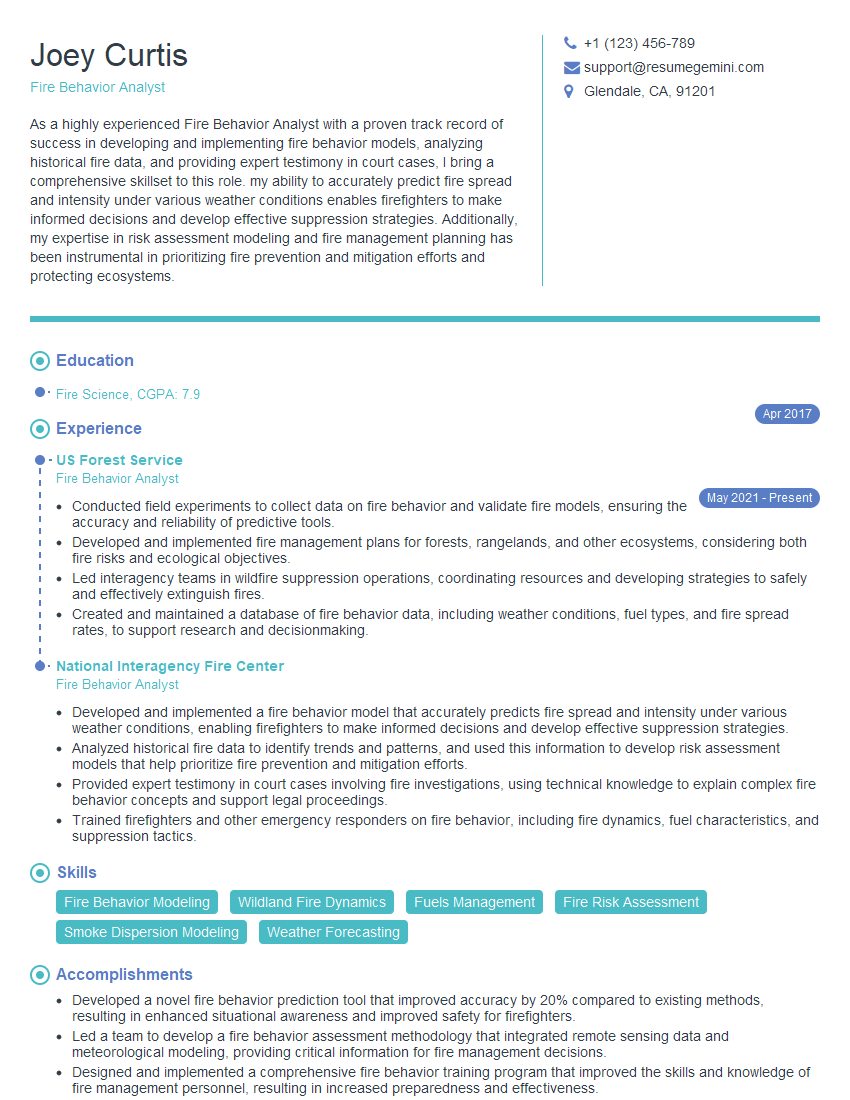
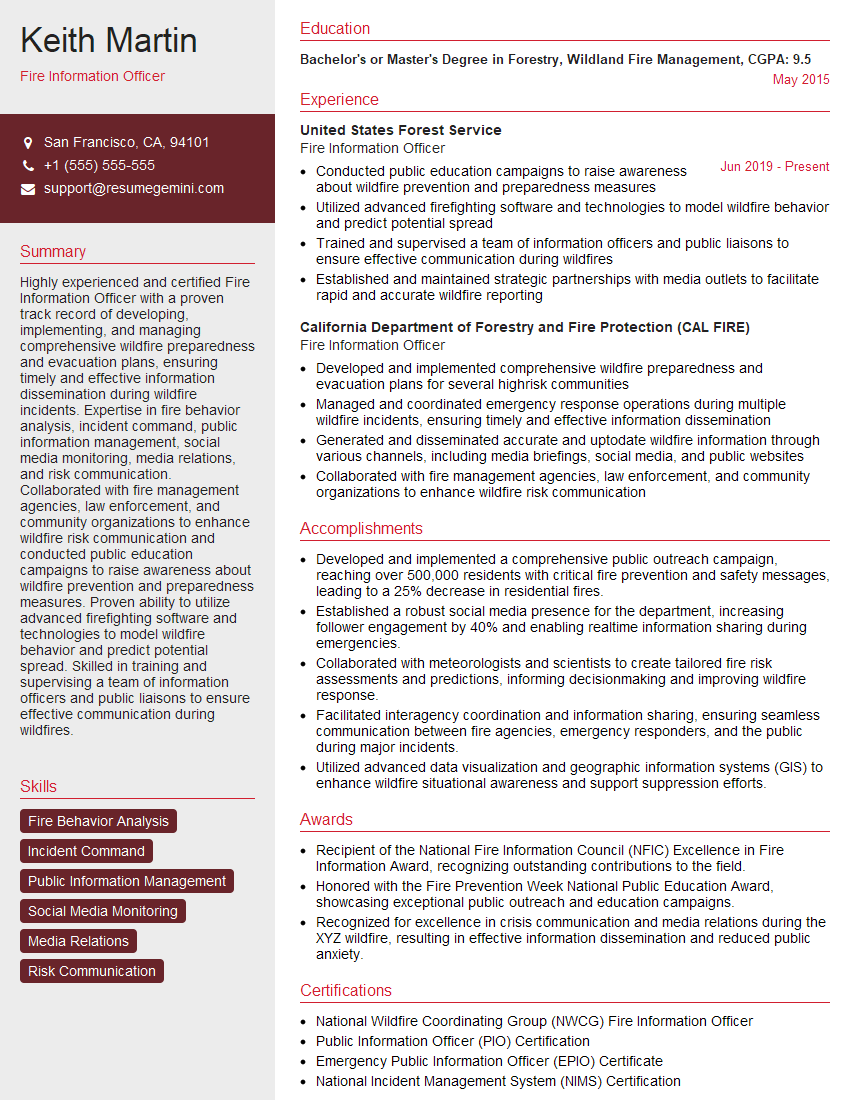
Mastering Wildland Fire Behavior is crucial for career advancement in this dynamic field. A strong understanding of these concepts will significantly enhance your interview performance and open doors to exciting opportunities. To maximize your job prospects, creating an ATS-friendly resume is essential. ResumeGemini is a trusted resource that can help you build a professional resume that highlights your skills and experience effectively. Examples of resumes tailored to Wildland Fire Behavior are available to help guide you. Invest the time in crafting a compelling resume – it’s your first impression and a key to unlocking your career aspirations.

Explore more articles
Users Rating of Our Blogs
Share Your Experience
We value your feedback! Please rate our content and share your thoughts (optional).
What Readers Say About Our Blog
Very informative content, great job.
good