Preparation is the key to success in any interview. In this post, we’ll explore crucial Wildland Fire Protection interview questions and equip you with strategies to craft impactful answers. Whether you’re a beginner or a pro, these tips will elevate your preparation.
Questions Asked in Wildland Fire Protection Interview
Q 1. Explain the fire triangle and its relevance to wildland fire suppression.
The fire triangle is a fundamental concept in wildland fire behavior, illustrating the three essential elements needed for combustion: heat, fuel, and oxygen. Think of it like a three-legged stool – if you remove any one leg, the stool (and the fire) collapses.
In wildland fire suppression, understanding the fire triangle is crucial because it dictates our strategies. We aim to interrupt the cycle by removing or reducing one or more of these elements. For example, removing fuel might involve creating firebreaks (removing vegetation to stop fire spread). Reducing heat could involve using water or retardants to cool the fire down. Cutting off oxygen might involve strategic backburning to remove burnable material ahead of the fire front, thereby depleting the available oxygen.
For instance, during a wildfire, a firebreak acts by removing the fuel, thus breaking the fire triangle and preventing its spread. Similarly, using water drops from an air tanker reduces the heat component of the fire triangle.
Q 2. Describe the different classes of wildland fires (e.g., ground, surface, crown).
Wildland fires are classified based on the part of the vegetation they consume. We have:
- Surface Fires: These fires burn the surface litter, grass, and underbrush. They are relatively easy to control, though they can spread quickly under favorable conditions. Think of a fast-moving grass fire.
- Ground Fires: These fires burn slowly beneath the surface, smoldering in the organic matter like peat or duff. They are difficult to detect and extinguish, often burning for days or weeks underground. These fires are like slow-burning embers beneath the soil.
- Crown Fires: These are the most intense and dangerous type of wildfire. They burn through the crowns (tops) of trees and shrubs, often spreading rapidly with high flames. Crown fires can be extremely difficult to control and pose significant risks to firefighters and property. Imagine a large forest fire with flames reaching high into the treetops.
Q 3. What are the common methods used for wildland fire ignition?
Wildland fires can be ignited by a variety of causes, both natural and human-caused. Some common methods include:
- Lightning: A significant natural ignition source, particularly in dry climates.
- Human carelessness: This is a leading cause, including discarded cigarettes, campfires left unattended, equipment sparks (chainsaws, etc.), and even power lines.
- Arson: Deliberately set fires are a serious threat and can have devastating consequences.
- Debris burning: Escaped pile burns are a frequent source of wildland fires, especially during dry conditions.
It’s crucial to emphasize the importance of fire safety practices to prevent human-caused wildfires. Education and responsible land management are key.
Q 4. What are the key factors influencing fire behavior?
Numerous factors influence fire behavior, and these factors are often interconnected. The most crucial include:
- Fuel: The type, amount, and arrangement of combustible materials (e.g., grasses, shrubs, trees, litter). Denser fuels burn more intensely.
- Weather: Wind speed and direction, temperature, humidity, and precipitation significantly impact fire spread rate and intensity. High winds and low humidity create dangerous conditions.
- Topography: Slope, aspect (direction a slope faces), and elevation affect fire behavior. Fires spread faster uphill due to preheating and wind effects.
- Terrain: The physical features of the land, such as canyons or rock formations, can channel or block fire spread.
For example, a steep, south-facing slope with dry, dense brush and strong winds will experience much faster and more intense fire spread than a flat, moist area with sparse vegetation and little wind.
Q 5. Explain the concept of fire spread rate and how it is influenced by weather conditions.
Fire spread rate refers to how quickly a fire advances across the landscape. It’s measured in chains per hour (or meters per minute) and is highly variable depending on the conditions. Weather is a dominant factor influencing this rate.
Wind is a primary driver. Strong winds dramatically increase spread rates by carrying embers ahead of the main fire front, starting spot fires, and accelerating the consumption of fuel. Temperature plays a role, as hotter temperatures dry out fuels, making them more easily ignited and consumed. Humidity is inversely proportional to fire spread: lower humidity leads to faster spread. Precipitation can reduce fuel moisture content and decrease spread rate. Even slight changes in these weather parameters can drastically alter the fire spread rate, making accurate prediction crucial for effective wildfire management.
Q 6. Describe different wildland fire suppression tactics (e.g., direct attack, indirect attack).
Wildland fire suppression employs diverse tactics, tailored to specific fire behavior and environmental conditions. Two main approaches are:
- Direct Attack: This involves directly engaging the fire’s edge with fire crews and equipment, using water, retardants, and hand tools to extinguish the flames. This is effective for smaller, less intense fires or specific parts of a larger fire’s perimeter.
- Indirect Attack: This approach focuses on containing the fire’s spread by creating firebreaks or using controlled burns ahead of the fire’s main front to remove burnable fuels. This strategy is useful for large, rapidly spreading fires where a direct attack may be too risky or ineffective.
Other tactics include using aerial resources (air tankers, helicopters), constructing fire lines, employing specialized equipment like bulldozers, and implementing prescribed burns for fuel reduction in advance of the fire season.
The choice of tactic often depends on the fire’s size, intensity, location, and available resources.
Q 7. Explain the importance of safety procedures in wildland firefighting.
Safety is paramount in wildland firefighting. The environment is inherently hazardous, with unpredictable fire behavior, extreme heat, difficult terrain, and potential for injuries and fatalities. Rigorous safety procedures are essential for firefighter survival and mission success. Key aspects include:
- Pre-fire planning: Thorough risk assessment, communication plans, and establishing clear safety zones.
- Personal protective equipment (PPE): Firefighters must wear appropriate gear, including fire-resistant clothing, helmets, gloves, and eye protection.
- Lookouts and communication: Maintaining constant situational awareness and using effective communication systems to monitor fire behavior and coordinate actions.
- Emergency response plans: Procedures for dealing with injuries, equipment failure, rapid fire changes, or other emergencies.
- Crew integrity: Maintaining constant awareness of crew members’ positions and well-being.
Violating safety procedures can result in serious consequences, emphasizing the critical need for disciplined adherence to established protocols.
Q 8. What are the different types of Personal Protective Equipment (PPE) used in wildland firefighting?
Personal Protective Equipment (PPE) in wildland firefighting is crucial for safeguarding firefighters from the inherent dangers of the job. It’s not a single item but a system designed to protect different parts of the body from heat, flames, flying debris, and hazardous materials. Key components include:
- Helmets: Provide head protection from falling branches, impacts, and radiant heat. They often incorporate face shields for additional protection.
- Eye Protection: Safety glasses or goggles are essential to shield eyes from smoke, embers, and flying debris. Prescription eyewear needs to be compatible with the PPE system.
- Protective Clothing: This is the core of the PPE system, typically composed of flame-resistant materials like Nomex® or similar blends. It includes jackets and pants designed to resist heat and flames. The clothing’s fit is critical for optimal protection and mobility.
- Gloves: Wildland firefighting gloves are heavy-duty and heat-resistant, protecting hands from cuts, burns, and abrasions. They often feature reinforced palms and fingertips.
- Boots: Wildland fire boots are designed for rugged terrain and provide ankle support and protection from heat, punctures, and impacts. They are often made of leather or fire-resistant materials.
- Respiratory Protection: Depending on the situation, firefighters may use respirators to protect their lungs from smoke inhalation and hazardous particles. This can range from simple dust masks to sophisticated self-contained breathing apparatus (SCBA).
Regular inspection and maintenance of all PPE are paramount to ensure its effectiveness. Damage, even minor, must be addressed immediately to prevent injury.
Q 9. Describe your experience with wildland fire equipment (e.g., chainsaws, pumps, hoses).
My experience with wildland fire equipment is extensive, spanning over fifteen years. I’m proficient in the operation and maintenance of various tools. This includes:
- Chainsaws: I’ve used chainsaws extensively for creating firebreaks, felling trees to create defensible space, and removing hazardous fuels. Safe chainsaw operation is crucial, including proper felling techniques, maintenance, and using appropriate safety gear.
- Pumps: I’m experienced with a variety of pumps, from portable pumps used for initial attack to larger pumps used for establishing water sources and supplying long hoselays. Understanding pump pressure, flow rates, and maintenance is vital for efficient fire suppression.
- Hoses: I have extensive experience laying, deploying, and maintaining fire hoses in challenging terrain. Proper hoselay techniques are essential to ensure water delivery to the fireline. Knowing how to quickly repair damaged hose sections is a critical skill.
Beyond this, I’m skilled with other tools like pulaskis (for digging firebreaks), shovels, axes, and backpack pumps. Regular maintenance and understanding the limitations of each piece of equipment are crucial aspects of my expertise.
Q 10. How do you assess fire danger and risk?
Assessing fire danger and risk involves a multifaceted approach. We use a combination of factors to determine the potential for a wildfire to start and its potential impact.
- Weather Conditions: Temperature, humidity, wind speed, and precipitation are critical factors. High temperatures, low humidity, and strong winds significantly increase fire danger. We utilize tools like the Canadian Forest Fire Weather Index (FWI) System to quantify this risk.
- Fuel Conditions: The type, amount, and moisture content of available fuel (vegetation) are essential. Dry, dense vegetation presents a much higher risk than sparse, moist vegetation. Fuel moisture content is typically measured with specialized tools.
- Topography: Steep slopes and canyons can dramatically influence fire spread and behavior. Fire tends to burn faster uphill and can be difficult to control in steep or rugged terrain.
- Human Activity: Human-caused wildfires are a significant concern. We consider factors like population density, proximity to ignition sources (power lines, campfires), and the level of public awareness in assessing risk.
By combining these factors, we develop a comprehensive understanding of fire danger and risk, informing decisions about prevention, suppression strategies, and resource allocation. This assessment is often displayed in visual formats, such as fire danger maps, which allow for easy understanding and communication.
Q 11. Explain the role of firebreaks in wildfire suppression.
Firebreaks are strategically constructed breaks in the vegetation designed to control the spread of wildfires. They act as barriers that prevent or slow down the advancement of a fire. They are crucial components in wildfire suppression strategies.
Firebreaks are typically created by removing flammable vegetation along a predetermined line. This can be done using a variety of methods:
- Mechanical Methods: Using bulldozers, excavators, or other heavy equipment to clear vegetation.
- Manual Methods: Using hand tools such as chainsaws, axes, and pulaskis to remove vegetation, this is often labor-intensive and is used in areas inaccessible to heavy equipment.
- Prescribed Burns: Strategically burning areas of vegetation under controlled conditions to create a firebreak. This is a precise method requiring careful planning and execution.
The effectiveness of a firebreak depends on its width, location, and maintenance. Wider firebreaks are more effective, and their placement is vital, often creating barriers along ridges, natural breaks, or other strategic locations. Regular maintenance is essential to prevent vegetation regrowth, ensuring their continued effectiveness.
Q 12. What are the common types of wildland fire retardants?
Wildland fire retardants are chemicals used to slow or stop the spread of wildfires. They are typically dropped from aircraft or applied with ground-based equipment. Common types include:
- Phosphate-based retardants: These are the most commonly used, creating a water-resistant layer on the vegetation, reducing its flammability. They are relatively environmentally friendly compared to other options.
- Ammonium phosphate-based retardants: Similar to phosphate-based retardants, but often provide longer-lasting suppression capabilities.
- Polymer-based retardants: These form a more durable barrier and are effective in various conditions but are often more expensive and can have greater environmental impact.
The choice of retardant depends on several factors, including the type of fire, weather conditions, and environmental concerns. Careful consideration is given to the potential impact on the ecosystem and water sources.
Q 13. Describe your experience with prescribed burns and their role in forest management.
Prescribed burns, also known as controlled burns, are planned and controlled fires used to reduce hazardous fuels in a forest or other landscapes. They are a critical component of forest management, mimicking natural fire cycles to maintain ecosystem health.
My experience with prescribed burns encompasses various aspects of planning, execution, and post-burn monitoring. This involves:
- Planning: Detailed planning is essential, considering weather conditions, fuel types, topography, and potential risks. This often involves creating a detailed burn plan that outlines objectives, safety measures, and contingency plans.
- Implementation: Safe execution requires trained personnel, appropriate equipment, and continuous monitoring throughout the burn. The burn is carefully controlled to ensure it stays within the designated area and meets the prescribed objectives.
- Post-burn monitoring: Following the burn, monitoring is vital to assess its success and identify any potential issues, like spot fires or unwanted effects. This provides valuable data for future management practices.
Prescribed burns are effective in reducing the risk of large, uncontrolled wildfires, improving forest health, and promoting the growth of certain plant species. However, they must be carefully executed to minimize potential negative impacts on the environment and human safety.
Q 14. Explain the importance of fuels management in wildland fire prevention.
Fuels management is the process of manipulating the amount, type, and distribution of flammable vegetation (fuels) to reduce the risk of wildfires. It’s a proactive approach to wildfire prevention rather than solely relying on suppression methods.
Effective fuels management involves several key strategies:
- Mechanical treatments: Using machinery to clear vegetation, create firebreaks, and reduce fuel loads. This might involve thinning forests, mowing grass, or using specialized equipment.
- Prescribed burns: As discussed previously, controlled burns are an excellent way to reduce hazardous fuels and improve forest health.
- Grazing management: Using livestock grazing to control vegetation growth and reduce fuel loads in specific areas. This is often implemented in rangelands and grasslands.
- Forest thinning: Reducing tree density to create more space between trees, reducing the risk of crown fires. This is essential in dense forests.
By reducing the amount and continuity of flammable materials, fuels management dramatically reduces the intensity and spread of wildfires, creating more resilient landscapes and enhancing the effectiveness of wildfire suppression efforts.
Q 15. What are the common communication methods used in wildland firefighting?
Effective communication is paramount in wildland firefighting, where split-second decisions can mean life or death. We utilize a multi-layered approach combining various methods for optimal efficiency and safety.
- Two-way radios: These are the backbone of our communication system. Handheld radios allow for immediate communication between crews on the ground, while mobile radios in vehicles enable broader coordination. We use specific radio channels to avoid interference and ensure clear communication between different teams (e.g., fire crews, air support, command).
- Satellite phones: In remote areas with poor cellular service, satellite phones provide crucial backup communication, connecting us to incident command and other support resources.
- Incident Command System (ICS) software: This integrates various communication tools, allowing for real-time updates, resource tracking, and situation awareness across the entire incident. It enables efficient coordination between multiple agencies and personnel.
- Infrared cameras and aerial surveillance: These technologies help us assess fire behavior and location, relaying crucial data to incident commanders and ground crews for strategic decision-making. Images can be transmitted in real-time, providing a comprehensive picture of the fire.
- Face-to-face briefings: Before and during an incident, we conduct briefings to ensure everyone understands the strategy, assigned roles, safety protocols, and communication procedures. This ensures everyone is on the same page.
For example, during a recent wildfire, our team used handheld radios to coordinate the deployment of fire crews to contain a rapidly spreading flank while simultaneously using satellite phones to update the incident commander about fuel conditions in a remote area, allowing for informed strategic decisions on resource allocation.
Career Expert Tips:
- Ace those interviews! Prepare effectively by reviewing the Top 50 Most Common Interview Questions on ResumeGemini.
- Navigate your job search with confidence! Explore a wide range of Career Tips on ResumeGemini. Learn about common challenges and recommendations to overcome them.
- Craft the perfect resume! Master the Art of Resume Writing with ResumeGemini’s guide. Showcase your unique qualifications and achievements effectively.
- Don’t miss out on holiday savings! Build your dream resume with ResumeGemini’s ATS optimized templates.
Q 16. How do you handle stressful situations during a wildfire incident?
Wildland firefighting is inherently stressful. Managing stress effectively is critical for both personal well-being and operational effectiveness. My approach is multifaceted:
- Maintaining physical fitness: Regular exercise and healthy eating habits build resilience and improve stress response. Physical preparedness directly translates to mental toughness on the fire line.
- Teamwork and mutual support: We rely heavily on each other for support, both during and after incidents. Open communication and a strong sense of camaraderie are crucial for managing the psychological toll of the job. We frequently conduct post-incident debriefings to discuss experiences and provide peer support.
- Stress management techniques: I utilize techniques like mindfulness, deep breathing, and progressive muscle relaxation to manage stress in the moment. It’s important to take breaks and engage in relaxation exercises whenever possible.
- Professional counseling and support: The psychological impact of wildfire incidents can be profound. Our organization provides access to mental health professionals for those who need it. Seeking help is a sign of strength, not weakness.
- Maintaining a healthy work-life balance: This aspect is often overlooked. Wildland firefighting is demanding, and dedicating time to family and personal interests helps prevent burnout and maintain mental well-being.
During a particularly intense wildfire, I recall utilizing deep breathing techniques while coordinating a crew’s retreat from a rapidly changing fire situation. This helped me stay calm and make rational decisions under pressure, ensuring the safety of my team.
Q 17. Explain your experience with incident command systems (ICS).
Incident Command System (ICS) is the standardized management system used for all types of emergencies. It’s a flexible, adaptable framework that ensures efficient and coordinated responses. My experience with ICS spans several years and includes various roles within the command structure.
- Experience with different ICS positions: I’ve served in roles such as Single Resource Boss, Division Supervisor, and Unit Leader. This provides a well-rounded understanding of the system from different perspectives.
- Multi-agency coordination: I have extensive experience working with diverse agencies, including local, state, and federal, utilizing ICS to achieve a unified command structure. This involves integrating various communication styles, procedures, and resource allocations seamlessly.
- ICS software proficiency: I’m proficient in using various ICS software applications for resource tracking, situation assessment, and communication management, enabling informed decisions and efficient resource allocation.
- ICS training and certifications: I hold numerous ICS certifications, demonstrating a commitment to maintaining a high level of competency in the system. This includes ICS 100, 200, 300, and 400.
In one specific instance, I played a key role as a Division Supervisor during a large-scale wildfire. Utilizing ICS principles, I successfully coordinated the efforts of multiple fire crews and support resources, resulting in the efficient suppression of the fire and minimizing property damage.
Q 18. Describe your experience with mapping and geographic information systems (GIS) in wildland fire management.
Mapping and Geographic Information Systems (GIS) are integral to modern wildland fire management. They provide crucial spatial data for effective planning, suppression, and post-fire recovery.
- Fire perimeter mapping: GIS allows for real-time mapping of the fire’s perimeter, providing crucial data for strategic decision-making concerning resource allocation and suppression efforts. This often utilizes aerial imagery and GPS data from ground crews.
- Fuel type mapping: Identifying fuel types and densities is vital for predicting fire behavior and planning suppression tactics. GIS helps create detailed fuel maps, enabling accurate predictions of fire spread.
- Terrain analysis: GIS helps analyze topographic features, identifying areas vulnerable to rapid fire spread, and informing decisions on crew deployments and fireline construction.
- Resource allocation: GIS facilitates optimal deployment of resources (crews, equipment, aircraft) by analyzing spatial data and prioritizing areas needing immediate attention.
- Post-fire assessment: GIS is instrumental in assessing post-fire damage, identifying areas requiring restoration, and planning recovery efforts.
In a recent incident, using GIS to analyze terrain data, we identified a steep, heavily forested area highly susceptible to rapid fire spread. This allowed us to proactively deploy crews to that area, establishing a containment line before the fire could reach it, preventing a significant escalation of the incident.
Q 19. What are the common types of aircraft used in wildland fire suppression?
Aircraft play a vital role in wildland fire suppression, providing aerial perspectives, water or retardant drops, and assisting with crew transport.
- Air tankers: Large aircraft that carry and drop large quantities of fire retardant, slowing fire spread and allowing ground crews to gain control. Examples include the DC-10 and the BAe-146.
- Helicopters: Versatile aircraft used for water bucket drops, transporting personnel and equipment to remote areas, and aerial reconnaissance. Different types of helicopters are used based on their lifting capacity and maneuverability.
- Single-engine air tankers (SEATS): Smaller aircraft that carry and drop smaller amounts of retardant. They are useful in accessing difficult terrain and can be deployed quickly.
- Lead planes/scooper planes: Lead planes guide air tankers to their targets, while scooper planes directly scoop water from lakes and reservoirs and drop it on the fire.
The choice of aircraft depends on various factors, such as fire size, terrain, and available resources. For instance, during a large, fast-moving fire, we might utilize multiple air tankers and helicopters in a coordinated effort to control the fire’s spread.
Q 20. Describe the various types of weather monitoring equipment used in wildland firefighting.
Accurate weather information is critical for predicting fire behavior and making informed decisions in wildland firefighting. We employ various weather monitoring tools:
- Automated weather stations: These stations provide real-time data on temperature, humidity, wind speed and direction, precipitation, and fuel moisture. Data is transmitted wirelessly to incident commanders.
- Portable weather meters: Handheld devices provide on-site weather measurements, crucial for assessing immediate conditions within the fire area.
- Remote sensing technology: Satellites and other remote sensing tools provide larger-scale weather data, encompassing the broader region and assisting in predicting fire behavior.
- Weather balloons and radiosondes: These tools are used to collect detailed atmospheric data at various altitudes, providing a comprehensive understanding of atmospheric conditions influencing fire behavior.
- Lightning detection systems: Crucial for identifying lightning strikes, a common cause of wildfires. These systems help pinpoint potential ignition points and enable rapid response.
During a wildfire, our team used data from automated weather stations to predict a sudden increase in wind speed and shift in direction. This allowed us to preemptively reposition crews and deploy resources to vulnerable areas, preventing a significant escalation of the fire.
Q 21. What are the legal considerations in wildland fire suppression?
Legal considerations in wildland fire suppression are complex and multifaceted, encompassing various aspects of liability, property rights, and environmental regulations.
- Liability and negligence: Firefighters and agencies involved in suppression must adhere to established safety protocols to minimize the risk of liability for injuries or property damage. Proper training, risk assessment, and adherence to safety regulations are essential.
- Property rights and access: Gaining access to private property during a wildfire can be legally complex, requiring proper authorization and adherence to established procedures. This frequently involves coordinating with landowners and obtaining necessary permits.
- Environmental regulations: Suppression efforts must comply with environmental laws and regulations. The use of chemicals, impact on water sources, and habitat protection are all critical considerations.
- Legal frameworks and jurisdiction: Legal authority and responsibility for suppression often involve multiple agencies and jurisdictions, requiring coordination and adherence to different legal frameworks.
- Post-fire investigations: Following a wildfire, thorough investigations are often conducted to determine the cause and to assess any legal liabilities.
For example, before entering private property to fight a fire, we are required to obtain permission from the landowner or relevant authorities. Any use of retardant or other chemicals must also comply with environmental regulations to minimize ecological damage.
Q 22. Explain your understanding of the National Interagency Incident Management System (NIIMS).
The National Interagency Incident Management System (NIIMS) is a standardized, comprehensive approach to managing incidents, including wildland fires, across various agencies at the local, state, and federal levels. It ensures consistent communication, resource allocation, and operational procedures, regardless of the responding agency or the incident’s complexity. Think of it as a common operating system for emergency response.
NIIMS uses a modular organization, with specific roles and responsibilities clearly defined within the Incident Command System (ICS). This modularity allows scalability; a small wildfire might only need a basic ICS structure, while a large, complex fire would utilize a significantly larger and more sophisticated organization with specialized teams (e.g., logistics, planning, finance).
Key components of NIIMS include:
- Incident Command System (ICS): The framework for managing resources and personnel.
- Common Terminology: Standardizes communication across agencies, eliminating confusion.
- Resource Management: Efficient tracking and allocation of personnel, equipment, and supplies.
- Information Management: Ensuring accurate and timely information flow.
In practice, NIIMS allows for seamless transitions of command and control as incidents escalate. For instance, an initially small fire managed by local firefighters might transition to a larger, multi-agency response coordinated through a unified command structure under NIIMS as the situation worsens, ensuring a coordinated and effective response.
Q 23. Describe your experience working as part of a team in a high-pressure environment.
Working as part of a wildfire team in a high-pressure environment demands exceptional teamwork and communication. I’ve been involved in numerous large-scale wildfire responses, often with limited sleep and under intense physical and emotional strain. My experience emphasizes the importance of clear roles, shared situational awareness, and unwavering mutual support.
For example, during a particularly intense wildfire in [mention a location or type of fire, e.g., Southern California chaparral fire], we faced extreme heat, unpredictable fire behavior, and limited visibility. Our team’s success hinged on effective communication. We used pre-established communication channels (radios, satellite phones) to relay critical information about fire spread, resource needs, and personnel safety. Each member of the team, from the Incident Commander to the firefighters on the line, understood their responsibilities, and everyone trusted each other’s expertise and judgment. This trust enabled us to adapt quickly to changing conditions and make life-saving decisions under duress.
Working collaboratively, we meticulously planned our strategies, anticipating potential challenges and adapting swiftly to unexpected developments. Trust, clear communication, and mutual respect were crucial factors in our collective success. We regularly conducted briefings and debriefings to maintain clear understanding of the situation and address any concerns.
Q 24. What are some effective strategies for public education and outreach related to wildland fire prevention?
Effective public education and outreach are crucial for wildland fire prevention. It’s about empowering communities to understand the risks and take proactive steps. Strategies should be multi-faceted and tailored to different audiences.
- Targeted Campaigns: Develop campaigns specifically aimed at different groups (e.g., homeowners, hikers, campers). Messages should be clear, concise, and easily understood.
- Community Events: Engage directly with the public through workshops, demonstrations, and presentations at local fairs or events.
- Educational Materials: Create informative brochures, website resources, and social media content that provide practical advice on fire prevention.
- Partnerships: Collaborate with local organizations, schools, and media outlets to reach a wider audience.
- Early Warning Systems: Utilize technology and media channels to alert communities of elevated fire risks and inform about safety precautions.
For instance, a successful campaign could target homeowners with information about creating defensible space around their homes – clearing brush, using fire-resistant landscaping, and storing flammable materials safely. For hikers and campers, educational efforts could focus on responsible campfire practices and awareness of fire dangers.
Q 25. How do you identify and mitigate potential hazards during wildland firefighting operations?
Identifying and mitigating hazards during wildland firefighting is paramount for personnel safety and operational efficiency. A thorough hazard analysis is conducted before, during, and after operations.
Hazard Identification: This involves assessing factors such as:
- Terrain: Steep slopes, canyons, and unstable ground increase risks of falls, rollovers, and entrapment.
- Weather: High winds, low humidity, and high temperatures can rapidly increase fire intensity and spread.
- Fuel Types: Dense vegetation, dry brush, and dead trees create intense and unpredictable fire behavior.
- Fire Behavior: Understanding fire spread, intensity, and potential for extreme fire events (crown fires, spotting) is crucial.
- Wildlife: Encounters with wildlife can pose risks.
Mitigation Strategies: Once hazards are identified, mitigation strategies are implemented, including:
- Pre-fire planning: Utilizing mapping, weather forecasts, and fuel modeling to anticipate fire behavior and plan effective strategies.
- Establishing control lines: Creating firebreaks to stop the spread of the fire.
- Using protective equipment: Ensuring firefighters use appropriate personal protective equipment (PPE).
- Strategic deployment of resources: Positioning personnel and equipment strategically to minimize exposure to hazards.
- Safety briefings: Conducting regular safety briefings to ensure personnel are aware of potential hazards and safety protocols.
For example, on a steep slope, we might utilize specialized equipment like ropes and harnesses to enhance safety, and strategies would be designed to minimize exposure to rolling debris. In areas with high winds, we would focus on establishing strong control lines and utilize more defensive strategies.
Q 26. Explain your understanding of different fire suppression strategies.
Wildland fire suppression strategies vary greatly depending on fire size, behavior, location, and available resources. The goal is to contain and extinguish the fire with minimal environmental impact and risk to life and property.
Direct Attack: This involves directly engaging the fire’s edge using water, fire retardant, and hand tools. It’s effective for smaller, less intense fires in manageable terrain. This might involve establishing a fire line directly on the fire’s edge, using water hoses and hand tools.
Indirect Attack: This involves establishing control lines some distance from the fire’s edge, allowing the fire to burn towards the established lines. This is used when conditions are too hazardous for a direct attack. This might involve constructing a firebreak using bulldozers, creating a wide fire-resistant area.
Strategic Planning: This includes long-term considerations such as controlled burning or prescribed fires during safe conditions to reduce future fuel loads.
Other Tactics: Depending on circumstances, other tactics might be utilized, such as:
- Fuel breaks: Creating gaps in flammable material to prevent fire spread.
- Water drops: Using aircraft to drop water or retardant.
- Backburns: Deliberately igniting controlled fires to consume fuel and create firebreaks.
Choosing the appropriate strategy requires a comprehensive understanding of fire behavior, available resources, and safety considerations. A poorly chosen strategy can lead to rapid fire spread and endanger personnel and property.
Q 27. How do you handle conflict resolution among team members during wildfire events?
Conflict resolution is a critical skill in wildfire management, where teams operate under immense pressure. Early intervention and a proactive approach are crucial.
My approach centers on:
- Open Communication: Encouraging open and honest dialogue between team members.
- Active Listening: Carefully listening to each person’s perspective to understand their concerns.
- Mediation: If necessary, acting as a mediator to help resolve disagreements fairly and efficiently.
- Focus on Shared Goals: Reminding the team of their common goal—safely suppressing the fire—to foster collaboration.
- Respectful Dialogue: Ensuring that all discussions are conducted with respect and professionalism.
- Documentation: Maintaining clear records of incidents and resolutions.
For instance, if disagreements arise regarding fire suppression tactics, I would facilitate a discussion, encouraging each party to present their reasoning. By focusing on the safety and efficiency of the operation, we can often reach a consensus. If a more formal approach is required, I would involve the Incident Commander or other appropriate leadership.
Q 28. Describe your experience with post-fire rehabilitation and restoration efforts.
Post-fire rehabilitation and restoration are essential for ecological recovery and reducing the risk of future wildfires. My experience involves various aspects of this crucial phase.
Erosion Control: Immediate actions are taken to prevent soil erosion caused by the loss of vegetation. This often involves seeding burned areas with native plants, using erosion control blankets, and constructing check dams in watercourses.
Reforestation: Reforestation efforts vary based on the severity of the burn and the desired outcome. This may involve natural regeneration or planting seedlings of native tree species.
Hazardous Fuel Reduction: After the fire, there’s often a need to reduce hazardous fuels to mitigate the risk of future fires. This can involve controlled burns under specific conditions or mechanical treatments (e.g., thinning vegetation).
Water Quality Monitoring: Post-fire assessments are conducted to monitor the effects of the fire on water quality. This may involve testing water sources for contaminants and implementing measures to mitigate pollution.
Wildlife Habitat Restoration: Restoration efforts often focus on improving habitat for native wildlife species that were impacted by the fire. This might include creating artificial nesting sites or planting vegetation that provides food and shelter for wildlife. For example, in a recent project, we partnered with local conservation groups to plant native grasses and shrubs that provide habitat for local bird and small mammal species impacted by the fire.
Key Topics to Learn for Wildland Fire Protection Interview
- Fire Behavior: Understanding fire triangles, fuel types, weather influences (wind, temperature, humidity), and fire spread prediction models. Practical application: Explain how different fuel types impact fire intensity and behavior.
- Suppression Strategies & Tactics: Direct attack, indirect attack, point protection, and the use of various tools and equipment (e.g., hand tools, engines, helicopters). Practical application: Describe a scenario where you would choose an indirect attack strategy over a direct attack.
- Wildland Fire Safety: Personal protective equipment (PPE), communication protocols, safety zones, and emergency procedures. Practical application: Explain the importance of Lookouts, Communications, Escape Routes, and Safety Zones (LCES).
- Incident Command System (ICS): Understanding the organizational structure, roles, and responsibilities within an ICS framework. Practical application: Describe your experience (even simulated) working within an ICS structure.
- Environmental Considerations: Impact of wildfires on ecosystems, soil erosion, water quality, and air quality. Practical application: Discuss mitigation strategies to minimize environmental damage after a fire.
- GIS and Mapping: Utilizing Geographic Information Systems for fire mapping, incident management, and resource allocation. Practical application: Describe your experience (or willingness to learn) using GIS technology in a wildland fire context.
- Post-Fire Rehabilitation and Monitoring: Understanding the process of restoring burned areas and monitoring for erosion or re-ignition. Practical application: Explain the importance of post-fire monitoring and the different techniques employed.
Next Steps
Mastering Wildland Fire Protection is crucial for a successful and rewarding career. It demonstrates a deep understanding of complex systems and your commitment to safety and environmental responsibility. To significantly increase your chances of landing your dream job, crafting a compelling and ATS-friendly resume is paramount. ResumeGemini is a trusted resource that can help you build a professional resume tailored to the specific demands of this field. They provide examples of resumes specifically designed for Wildland Fire Protection professionals, ensuring your qualifications shine.
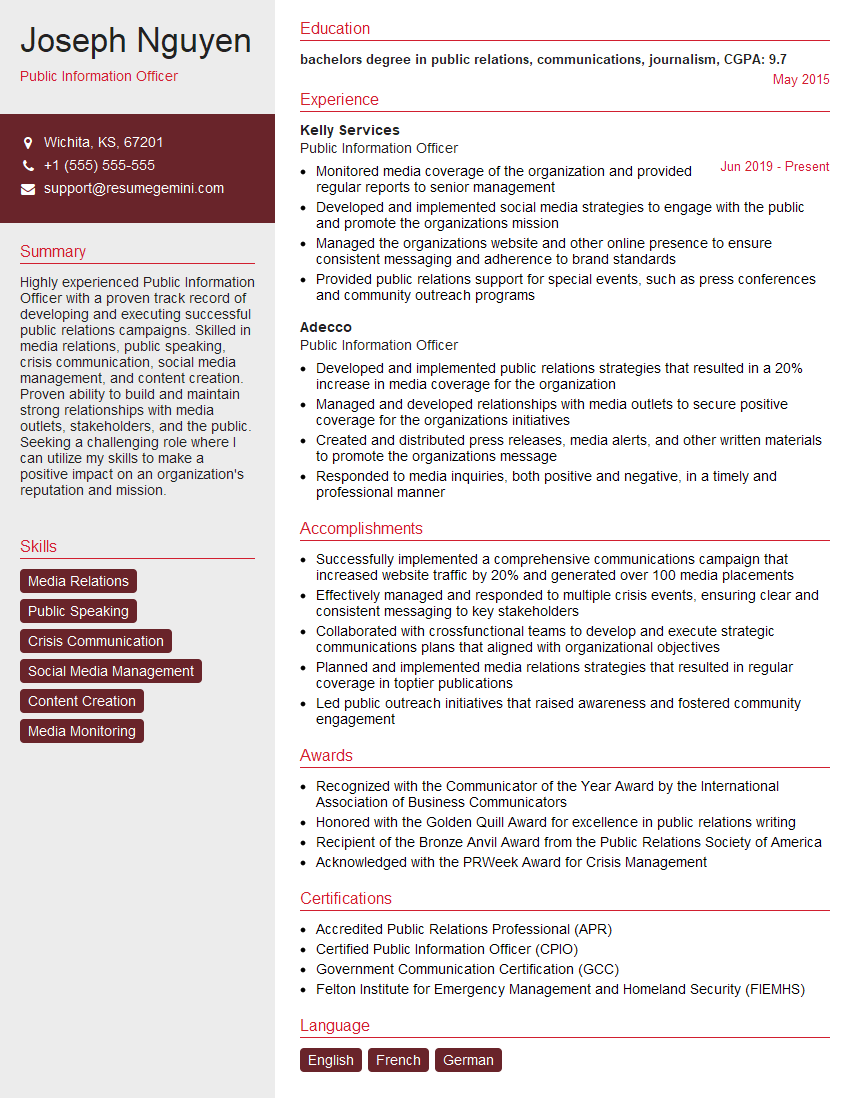
Public Information Officer Resume Sample

Training Specialist Resume Sample
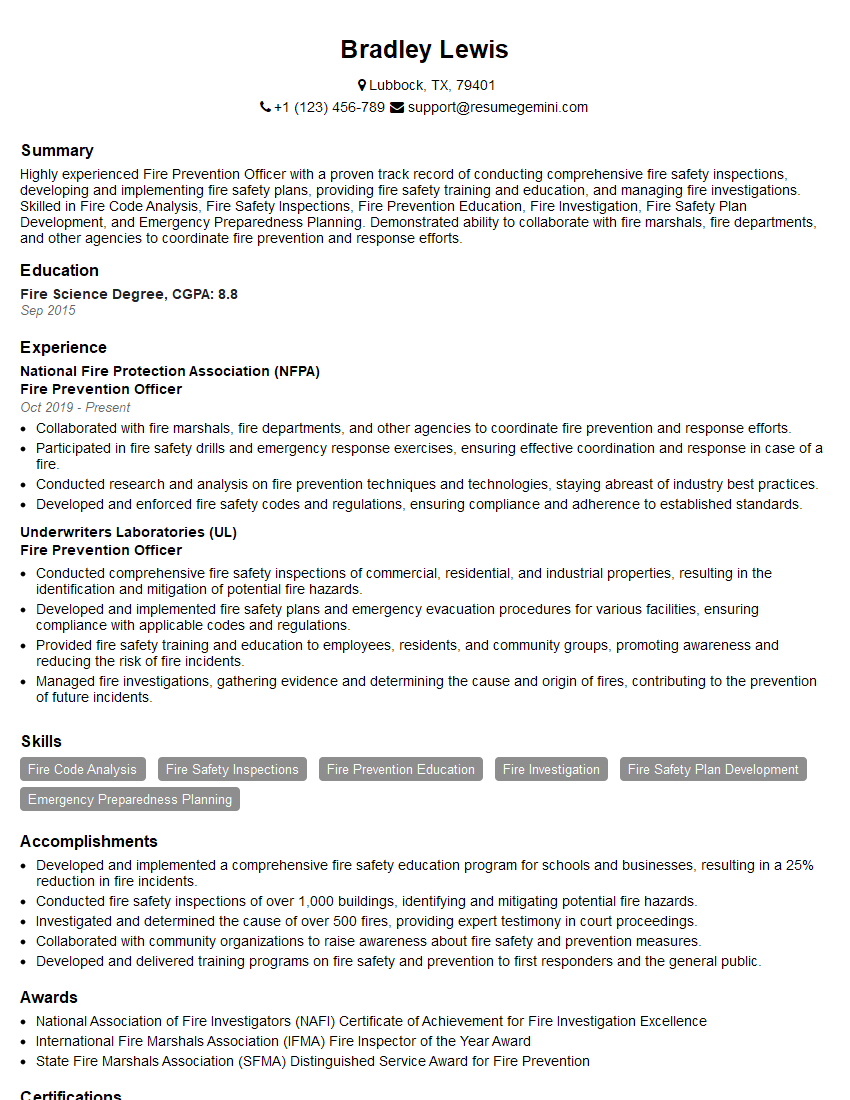
Fire Prevention Officer Resume Sample
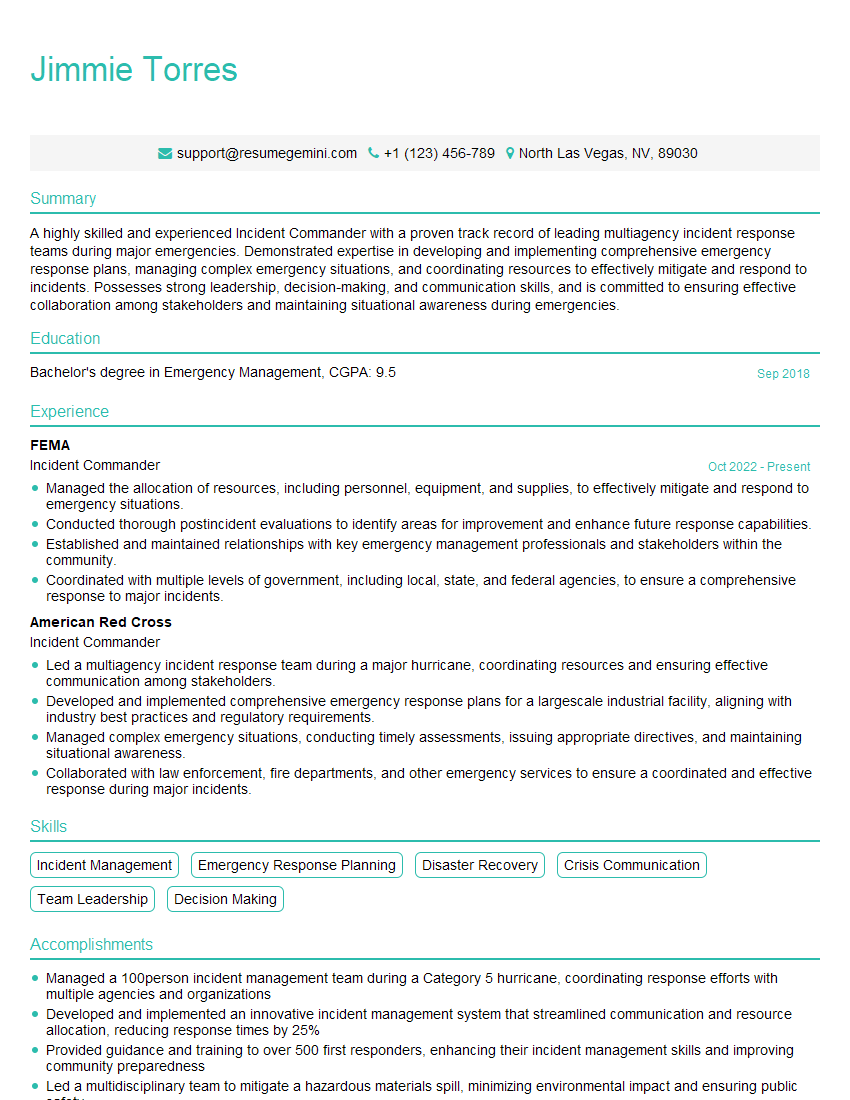
Incident Commander Resume Sample
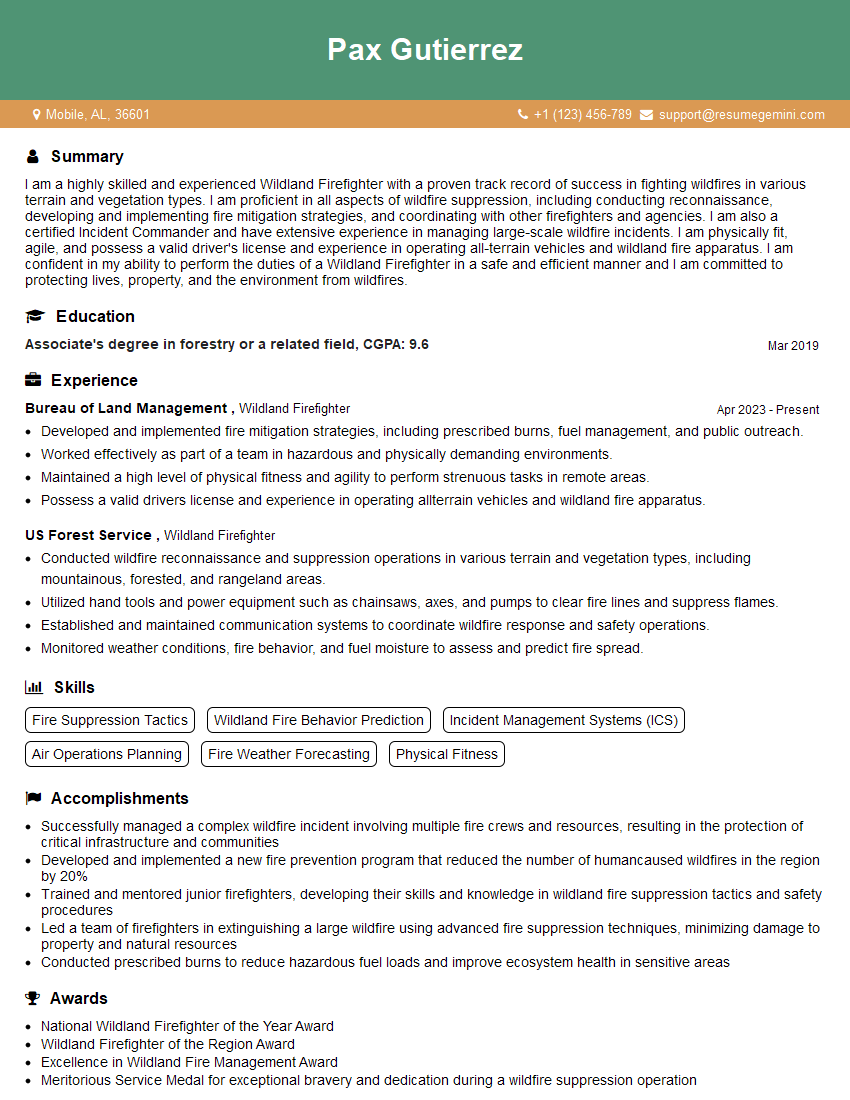
Wildland Firefighter Resume Sample
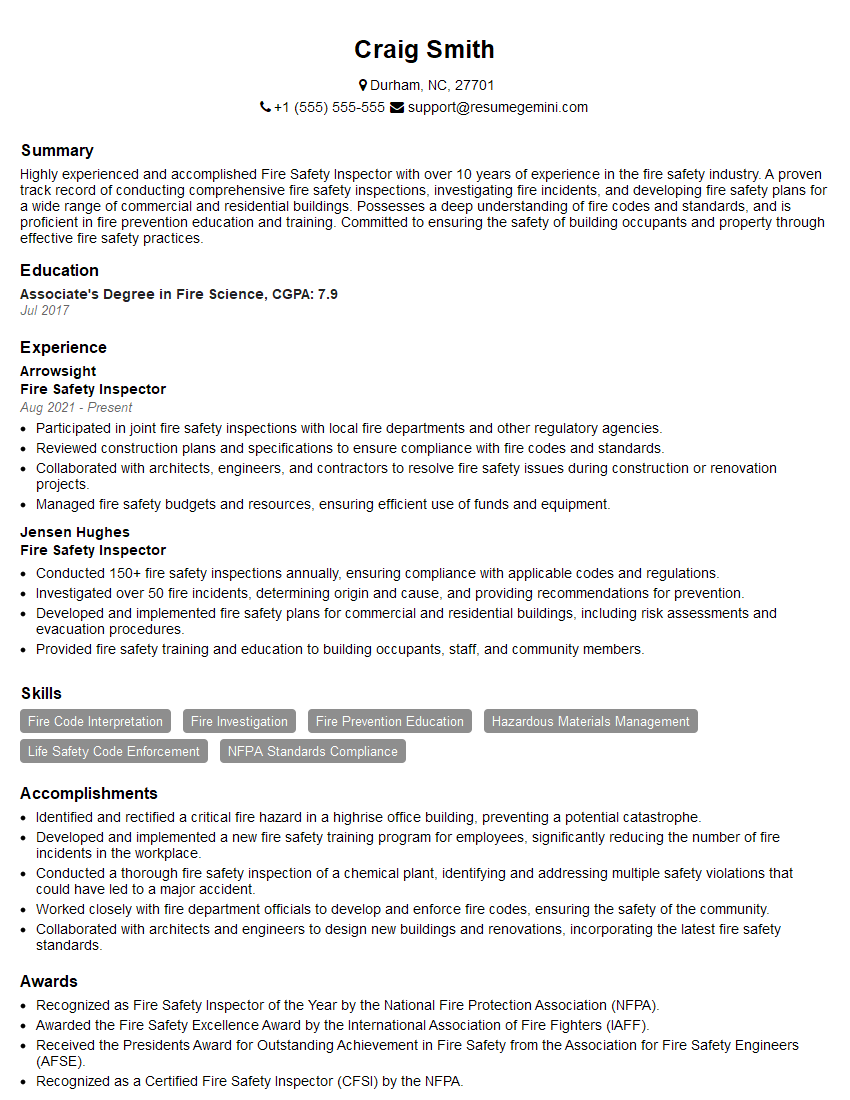
Fire Safety Inspector Resume Sample
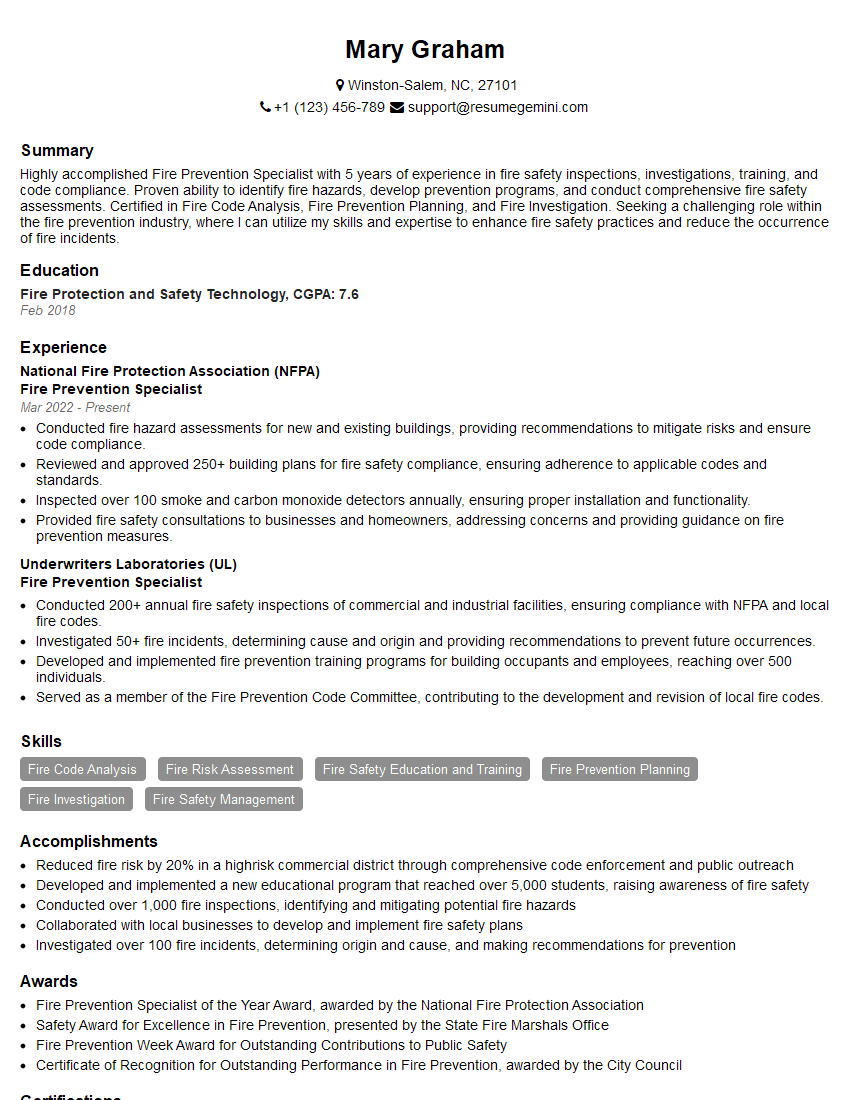
Fire Prevention Specialist Resume Sample
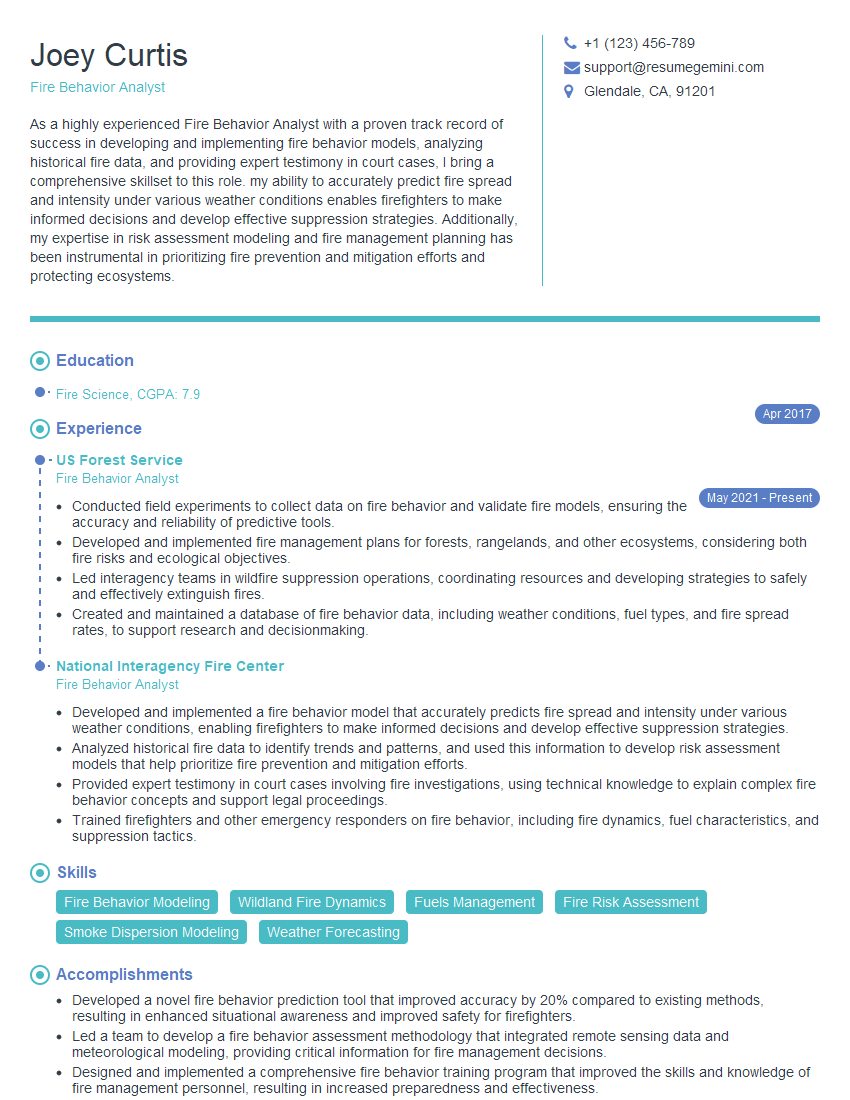
Fire Behavior Analyst Resume Sample
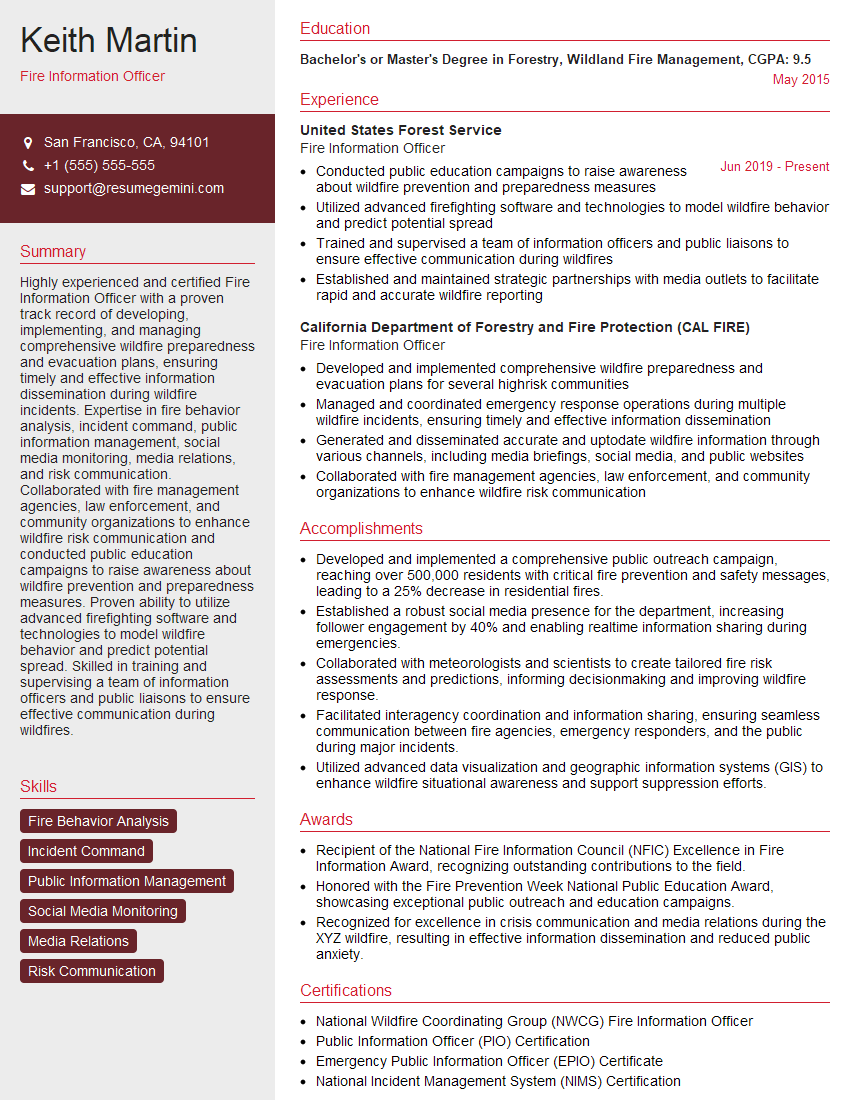
Fire Information Officer Resume Sample
Explore more articles
Users Rating of Our Blogs
Share Your Experience
We value your feedback! Please rate our content and share your thoughts (optional).
What Readers Say About Our Blog
Very informative content, great job.
good